Toilet Paper Calculator
Have you ever wondered how many toilet rolls you need to buy?
Those clever mathematicians at Omni, have now come up with a Toilet Paper Calculator.
It’s just one of their suite of Coronavirus Calculators.
I use their other calculators regularly.
This suite of calculators have a slightly humorous edge, that I find acceptable in these troubling times.
Siemens Gamesa Begins Operation Of Its Innovative Electrothermal Energy Storage System
The title of this post, is the same as that of this press release from Siemens Gamesa.
This is the introductory paragraph.
In a world first, Siemens Gamesa Renewable Energy (SGRE) has today begun operation of its electric thermal energy storage system (ETES). During the opening ceremony, Energy State Secretary Andreas Feicht, Hamburg’s First Mayor Peter Tschentscher, Siemens Gamesa CEO Markus Tacke and project partners Hamburg Energie GmbH and Hamburg University of Technology (TUHH) welcomed the achievement of this milestone. The innovative storage technology makes it possible to store large quantities of energy cost-effectively and thus decouple electricity generation and use.
This second paragraph gives a brief description of the system.
The heat storage facility, which was ceremonially opened today in Hamburg-Altenwerder, contains around 1,000 tonnes of volcanic rock as an energy storage medium. It is fed with electrical energy converted into hot air by means of a resistance heater and a blower that heats the rock to 750°C. When demand peaks, ETES uses a steam turbine for the re-electrification of the stored energy. The ETES pilot plant can thus store up to 130 MWh of thermal energy for a week. In addition, the storage capacity of the system remains constant throughout the charging cycles.
This system is a pilot plant and will test the system thoroughly.
They state that the long term aim is to store energy in the gigawatt range and be able to provide the enough power for the daily electricity consumption of around 50,000 households.
The method of energy storage would appear to be inherently simple.
- Heat rocks to a high temperature using a gigantic electric heater and blower.
- Use the heat when required to boil water to create steam.
- Pass the steam through a conventional steam turbine.
I can envisage a clever computer system, controlling the hot air and water flows into the vessel to get the correct level of steam out, as needed for the amount of electricity required.
I suspect the biggest problem is where do you keep a thousand tonnes of hot rock?
The answer is given in this article on the American Society of Mechanical Engineers, which is entitled Heated Volcanic Rocks Store Energy.
This paragraph describes the storage.
A key finding from an earlier, smaller project proved greater efficiency of a round shape for the container holding the rock. It has an increasing diameter on both ends, where inflow and outflow openings are located. It has a total content of 800 cubic meters of rock with a mass of 1,000 tonnes, covered with a one-meter-thick layer of insulation.
I estimate that the diameter of a 800 cubic metre rock sphere would be just 11.4 metres, so perhaps around fourteen with the insulation.
The sphere would need to be a pressure vessel, as it would contain high-pressure steam.
The process looks to be simple, efficient and scalable.
The article also makes the following points.
- Eighty percent of the components are off-the-shelf.
- There are no hazardous materials involved.
- High efficiencies are claimed.
- Siemens Gamesa are aiming for a 1 GWh system.
- The German government has provided development funds.
It is being built on the site of an old aluminium smelter, so I suspect, the site has good connections to the electricity grid.
In the early 1970s, I was involved in the design and sizing of chemical plants for ICI. In one plant, the process engineers and myself proposed a very large pressure vessel, that would have been larger than the one, Siemens Gamesa are using in Hamburg. But then the domes of pressurised water reactors, like this forty-six metre diameter example at Sizewell B are even larger.
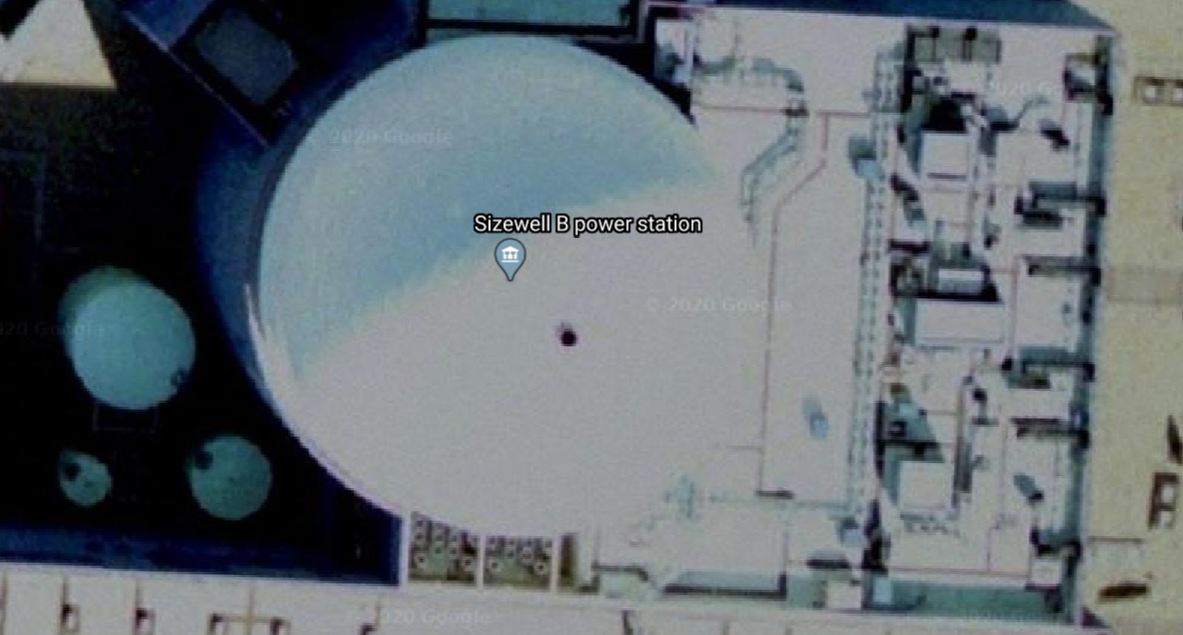
I very much believe, that design and construction of the pressure vessel to hold the hot rocks for Siemens Gamesa’s system could have been performed by the team I worked with in 1972
How Big Would The Sphere Be For A One Gigawatt-hour System?
- The current pilot system has a 130 MWh thermal capacity and uses a thousand tonnes of volcanic rock.
- The rock occupies 800 cubic metres.
I estimated that the pressure vessel with insulation could have a diameter of fourteen metres.
A system with a 1 GWh thermal capacity would be 7.7 times larger.
- It would need 7,700 tonnes of volcanic rock.
- The rock would occupy 6,160 cubic metres.
I esimate that the pressure vessel with thermal insulation would have a diameter of twenty-five metres.
How Much Power Could Be Stored In A Sizewell B-Sized Dome?
Out of curiosity, I estimated how much power could be stored in a pressure vessel, which was the size of the dome of Sizewell B power station.
- The dome would have a diameter of forty-two metres if the insulation was two metres thick.
- This would store 39,000 cubic metres of rock.
- This would be 48,750 tonnes of rock.
Scaling up from the pilot plant gives a 6.3 GWh thermal capacity.
I would suspect that Siemens know an engineer, who has worked out how to build such a structure.
- A steel pressure vessel wouldn’t be any more challenging than the dome of a pressurised water reactor.
- It would be built in sections in a factory and assembled on site.
- Rock would probably be added as the vessel was built.
I can certainly see one of these energy stores being built with a multi-gigawatt thermal capacity.
Would This System Have A Fast Response?
Power companies like power stations and energy storage to have a fast response to sudden jumps in demand.
This section in the Wikipedia entry for Electric Mountain, is entitled Purpose and this is said.
The scheme was built at a time when responsibility for electricity generation in England and Wales was in the hands of the government’s Central Electricity Generating Board (CEGB); with the purpose of providing peak capacity, very rapid response, energy storage and frequency control. Dinorwig’s very rapid response capability significantly reduced the need to hold spinning reserve on part loaded thermal plant. When the plant was conceived the CEGB used low efficiency old coal and oil fired capacity to meet peaks in demand. More efficient 500 MW thermal sets were introduced in the 1960s, initially for baseload operation only. Dinorwig could store cheap energy produced at night by low marginal cost plant and then generate during times of peak demand, so displacing low efficiency plant during peak demand periods.
Given that we are increasingly reliant on intermittent sources like wind and solar, it is surely getting more important to have energy storage with a fast response.
Consider.
- Gas turbine power stations are very quick to start up, which is a reason why, they are liked by power companies.
- As Wikipedia says pumped storage systems like Electric Mountain usually have a fast response.
- Lithium-ion batteries have a very fast response.
I think the Siemens Gamesa ETES system could have a medium-fast response, provided there was enough heat in the rocks to raise steam.
Could This System Be Placed In A Town Or City?
Consider.
- The system doesn’t use any hazardous materials.
- The footprint of a 1 GWh system would probably be football pitch-sized.
- The system could probably be designed to blend in with local buildings.
This picture shows the Bunhill 2 Energy Centre in London, which extracts waste heat from the Underground and uses it for district heating.

When I took the picture, the system wasn’t complete, but it shows how these types of developments can be fitted into the cityscape.
The Mysterious 150-hour Battery That Can Guarantee Renewables Output During Extreme Weather
The title of this post, is the same as that of this article on Recharge.
The article talks starts by talking about Form Energy, who I wrote about in 150 Hours Of Storage? Company Says That’s True To Form.
As to Form Energy’s technology, they say that there is speculation, that sulphur is the main ingredient.
The article, then lists other technologies, that are under development to store energy.
- Zinc8 – The headline on their web-site is Zinc8 is redefining long-term energy storage.
- Highview Power – Who seem to be close to commercial operation.
- Siemens Gamesa ETES – Hot rock storage now under test in Hamburg.
- Stiesdal Storage Technology GridScale – Under development
- Malta’s molten salt system – See Malta Energy Storage System Is Looking Forward To First Pilot
There’s certainly no lack of entrants for the contest to provide long-term energy storage.
The article is a summary of both Form Energy and the others in the field.
Renewable Roundup: Big Banks Lining Up To Finance Big Batteries
The title of this post, is the same as that of this article on Red, Green and Blue.
This is the introductory paragraph.
We’ve reached a significant tipping point in how the battery storage market is financed, shifting from expensive private equity investments to ordinary bank finance. Which will be another factor leading to a terawatt of storage by 2040.
The article contains an impressive graph showing the growth of energy storage world-wide, broken down into China, United States and the Rest of the World, showing that by 2040, there’ll be that terawatt of storage.
There are also some stories of companies trying to get funding for battery projects in the United States, which enforce the message of the title.
But then, I wrote World’s Largest Wind Farm Attracts Huge Backing From Insurance Giant in 2018, where I said this.
Aviva will have a billion pounds invested in wind farms by the end of the year.
As ever, it looks like, it has taken longer for the penny to drop on the other side of the pond.
But at least it seems to have finally done so!
Delivery Drone Flies Medical Supplies To Britain’s Isle of Wight
The title of this post, is the same as that of this article on Reuters.
This is the introductory paragraph.
A new drone service will reduce delivery times for urgent medical supplies to a hospital on the Isle of Wight, which lies about 8 kilometres off the south coast of England.
In some ways the most remarkable thing about this project, was that the drone was developed by Southampton University to deliver medical supplies in remote parts of Africa.
- It is twin-engined.
- It has a range of 100 km.
- It can carry a 100 kg payload.
- It can take off and land on short grass runways.
More details can be found on this page of the Southampton University web site.
This is a video of the first delivery.
Dr. Gerhard Cromme Joins Highview Power’s Board of Directors
The title of this post, is part of the title of this press release from Highview Power.
This is the introductory paragraph.
Highview Power, the global leader in long-duration energy storage solutions, is pleased to announce that Dr. Gerhard Cromme, former Chairman of the Supervisory Board at Siemens AG and ThyssenKrupp AG, will join its Board of Directors.
I think this could be a game-changing appointment.
Hydrostor Announces Australia’s First CompressedAir Energy Storage Project Secures Funding From Arena And South Australia Renewable Technology Fund
The title of this post, is the same as that of this article on the Australian Energy Storage Alliance.
This is the introductory paragraph.
Hydrostor Inc., a leader in Advanced Compressed Air Energy Storage (A-CAES), is pleased to announce that its subsidiary, Hydrostor Australia Pty Ltd, has been awarded a combined total of $9 million of grant funding from the Australian Renewable Energy Agency (ARENA) and the Government of South Australia Renewable Technology Fund for Australia’s first A-CAES project, to be sited at a mine outside of Adelaide—the Angas Zinc Mine near Strathalbyn, currently in care and maintenance.
I’ll answer a few questions.
Who Are Hydrostor?
They appear to be a Canadian company based in Toronto according to their web site, which has this prominent statement.
Hydrostor is the world’s leading developer of Advanced Compressed Air Energy Storage (A-CAES)
projects, enabling the transition to a cleaner, more affordable and more flexible electricity grid.
There is also a video on the home page.
What Technology Do They Use?
This description is from the AESA article.
The technology works by using electricity from the grid to run a compressor, producing heated compressed air. Heat is extracted from the air stream and stored inside a proprietary thermal store preserving the energy for use later in the cycle. Compressed air is then stored in a purpose-built underground cavern, which is kept at a constant pressure using hydrostatic head from a water column. During charging, compressed air displaces water out of the cavern up a water column to a surface reservoir, and during discharge water flows back into the cavern forcing air to the surface under pressure where it is re-heated using the stored heat and then expanded through a turbine to generate electricity on demand.
An animation describing Hydrostor’s A-CAES system is available on YouTube.
I found the video worth watching, as it answered most of my questions.
Where Could Systems Be Installed?
This paragraph from the AESA article talks about the location of the energy store in South Australia.
By selecting the Terramin Angas Zinc Mine, the project will repurpose existing underground mining infrastructure as the A-CAES system’s sub-surface air storage cavern, benefiting both the electricity grid in South Australia and the local community by converting an unused brownfield site into a clean energy project that drives economic development. Hydrostor acknowledges Terramin Australia Limited’s support in developing the project and the technology’s beneficial application to South Australia.
I can think of a couple of mines in the UK, where such a system can be installed.
Conclusion
Hydrostor’s technology is standard process engineering, with all components and construction techniques well-proven in many decades of use.
I shall be watching Hydrostor with interest.
Contenders: Long Duration Energy Storage Technologies, And Who’s Behind Them
The title of this post, is the same as that of this article on Energy Storage News.
It is a must-read for anybody interested in the technology of storing energy.
There are certainly some companies, I will add to my watch list.
Colne – Skipton Reopening Moves Closer
The title of this post, is the same as that of this article on the Railway Gazette.
This is the introductory paragraph.
Rail minister Chris Heaton-Harris has confirmed that investigations have been commissioned into the proposed reinstatement of the 19·3 km Colne – Skipton ‘missing link’ connecting east Lancashire and west Yorkshire.
Investigations will look into.
- Capital costs
- Passenger demand forecasts
- Service options.
- Gauge enhancement measures necessary to increase rail freight capacity on TransPennine routes including between Accrington and Todmorden stations.
- Proposals for a rail freight terminal on the site of the demolished Huncoat power station near Accrington.
This sounds more than a simple proposal to reopen the route between Skipton and Colne stations.
These are a few of my thoughts.
The Rail Route Between Preston And Skipton
The rail route between Preston on the West Coast Main Line and Skipton can be summarised as follows.
- Preston and Rose Grove via Huncoat – double-track – electrification at Preston
- Rose Grove and Colne – single-track
- Colne and Skipton – to be reinstated – electrification at Skipton
Colne and Skipton might not be the easiest route to reinstate, as a dual carriageway has been built across the route to the North of Colne station.
Could Colne And Skipton Be Double-Track All The Way?
Consider.
- The new section between Skipton and Colne could be built with single or double tracks.
- The section between Rose Grove and Colne stations was built as a double-track and singled in 1971. British Rail’s accountants strike again!
- The single-track section includes the Bank Top Viaduct, in the centre of Burnley.
- Trains currently take twenty-one minutes between Rose Grove and Colne stations.
This picture shows Bank Top Viaduct.
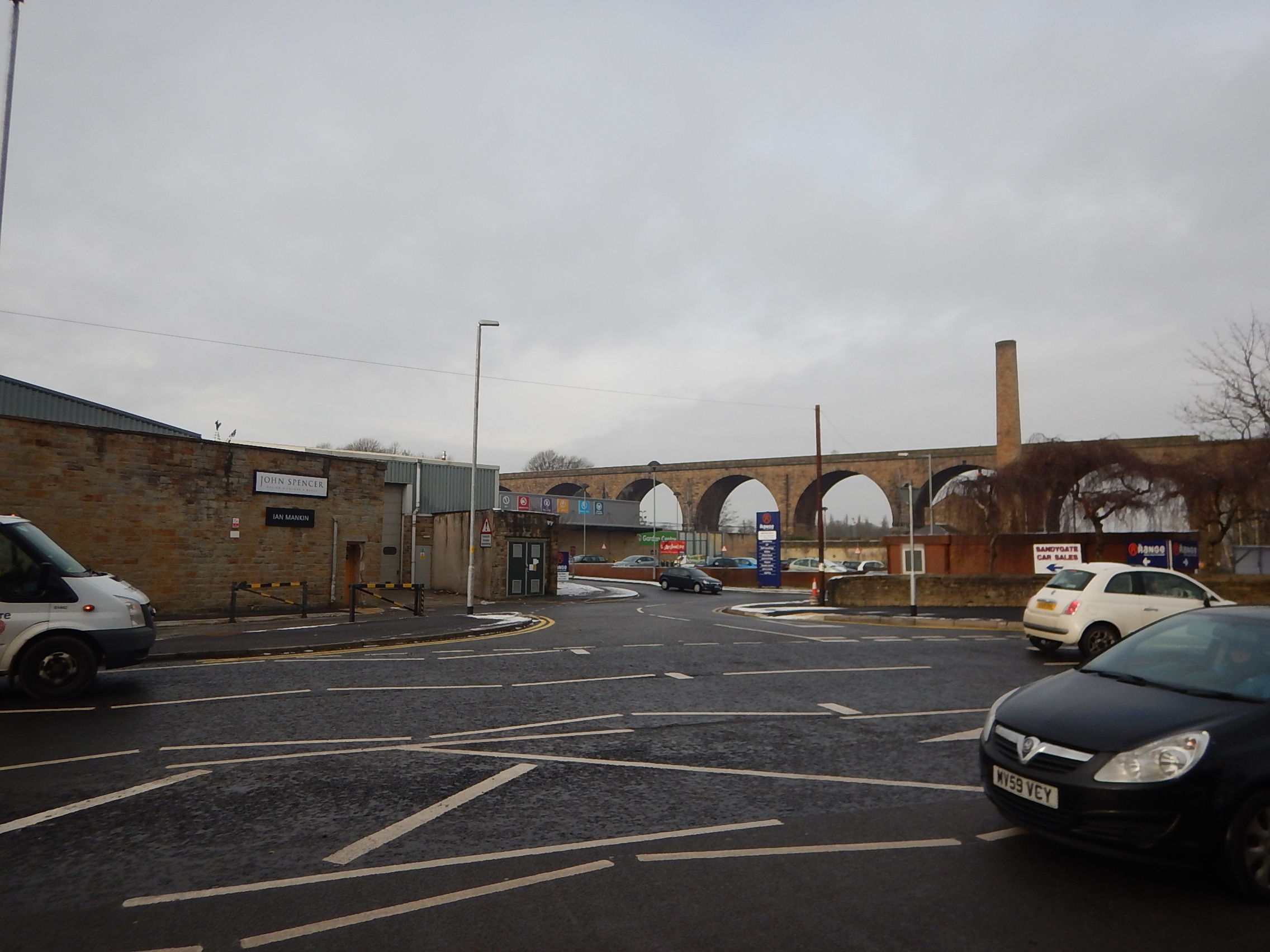
I think the viaduct could be key to whether the route is double-track all the way.
- If the redoubling can be performed at a reasonable cost, then that will be the way to go, as it might be possible to squeeze up to three trains per hour (tph) between Skipton and Rose Grove via Colne.
- If on the other hand, doubling is too difficult or expensive, I estimate that no more than two tph would be possible.
For both solutions, there will need to be double track or a long passing loop, between Skipton and Colne.
Could Colne And Skipton Be Electrified?
Consider.
- Preston is a fully-electrified station on the West Coast Main Line.
- Skipton is a fully-electrified station with electric trains to and from Leeds.
- Full electrification would create an electrified route between Leeds and Blackpool, Liverpool and Preston.
- It could be a useful diversion route for electric passenger trains across the Pennines, when their are engineering works on the Huddersfield Line or due to the building of Northern Powerhouse Rail.
- Electrification of the route, would allow electric haulage of freight trains to and from the proposed Huncoat Rail Freight Terminal.
- Electrification of the Calder Valley Line between Preston and Leeds is always being proposed.
- Electrication of Bank Top Viaduct could be tricky!
It should also be noted that this article on Rail Magazine was published on May 12th, 2020 and is entitled Electrification Key to Decarbonisation – Government. Views in Government about electrification have changed, so this might affect the decision to electrify the route.
The power is already there at both ends and electrification systems with low visual intrusion could be used.
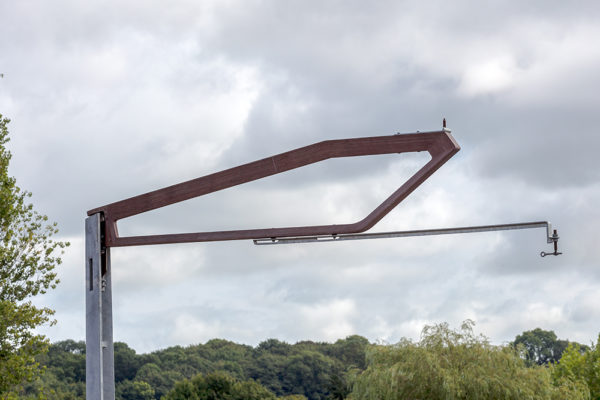
On the other hand, some might consider electrification of the route inappropriate.
Could Colne And Skipton Be Partially Electrified?
Consider.
- I estimate that the distance between Preston and Skipton will be 41 miles.
- If Blackpool North station were the final destination, there would be 34 miles (2 x 17) to charge the batteries.
- If Liverpool Lime Street station were the final destination, there would be 70 miles (2 x 35) to charge the batteries.
- If Leeds station were the final destination, there would be 52 miles (2 x 26) to charge the batteries.
- Manufacturers’ estimates of distances, indicate that battery electric trains could cover up to 65 miles on battery power.
As both ends of the route are electrified and trains would run extra miles under the wires, it would seem likely that a battery electric train could run between Preston and Skipton, without needing a charge en route.
Drax Group And Colne And Skipton Reinstatement
Drax power station uses Flue Gas Desulphurisation. Wikipedia says this about the process at Drax.
All six units are served by an independent wet limestone-gypsum flue gas desulphurisation (FGD) plant, which was installed between 1988 and 1996. This diverts gases from the boilers and passes them through a limestone slurry, which removes at least 90% of the sulphur dioxide (SO2). This is equivalent to removing over 250,000 tonnes of SO2 each year. The process requires 10,000 tonnes of limestone a week, sourced from Tunstead Quarry in Derbyshire. A byproduct of the process is gypsum, with 15,000 tonnes produced each week. This goes to be used in the manufacture of plasterboard. The gypsum is sold exclusively to British Gypsum, and it is transported by rail to their plant at Kirkby Thore (on the Settle-Carlisle Line).
The gypsum trains go through Skipton to access the Settle-Carlisle Line.
Drax power station is part-fuelled with biomass, which comes from all over the place including the United States via the Port of Liverpool.
It is no surprise that Drax Group are in favour of the Colne and Skipton reinstatement, as it would give them a new route between Drax and the Port of Liverpool.
This press release from Drax Group gives more details including this paragraph.
It will have a direct impact on improving our supply chain at Drax, allowing freight trains to travel much more quickly to the power station in North Yorkshire – reducing journey times from the Port of Liverpool to less than three hours, a journey which can take up to nine hours at the moment.
Trains will avoid the busy Huddersfield Line and Manchester Victoria station.
Drax’s statement would appear to be a powerful reason to reinstate Colne and Skipton.
These smart new or refurbished wagons, used by Drax to move woodchip should be much faster than the typical 20-30 mph freight speed of TransPennine routes.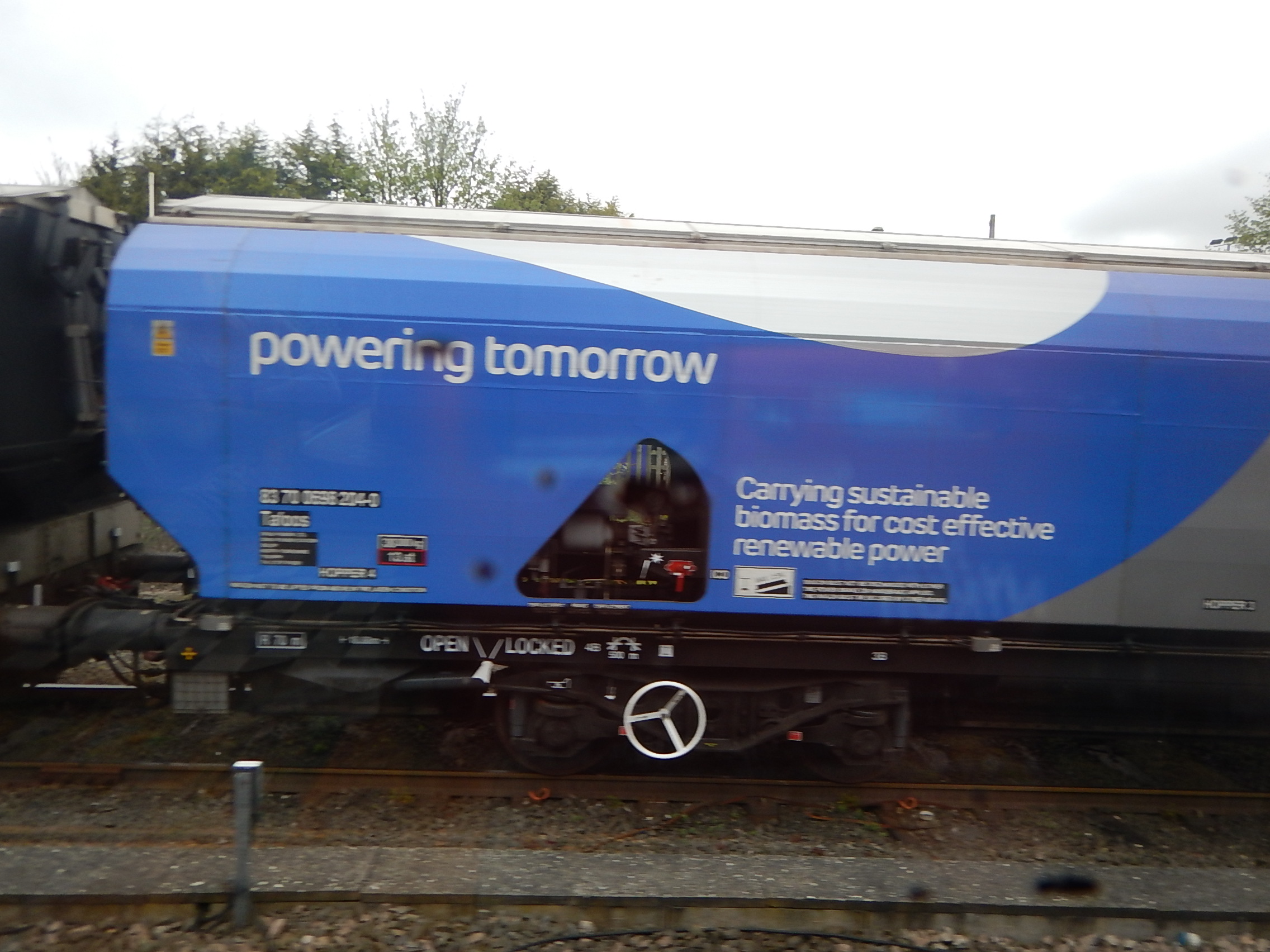
This page on the Drax web site, is entitled This train isn’t like any other in the UK, and it gives more details about the wagons.
- They were custom-designed and built in the last few years.
- The roofs open automatically for loading.
- A twenty-five wagon train can be loaded in 37 minutes.
- A full train can carry between 1,700 and 1,800 tonnes of biomass.
- Each train can unload in forty minutes.
- They are the largest wagons on UK railways by a margin of 30 %.
- Each wagon is nineteen metres long and can carry over seventy tonnes of biomass.
- Approximately 14 trains per day arrive at Drax, bringing 20,000 tonnes of biomass.
I suspect to minimise journey times, Drax would like to see a fully electrified route between Preston and Skipton and a new double-track route between Colne and Skipton.
The Huncoat Rail Freight Terminal
This Google Map shows the position of the former Huncoat power station.
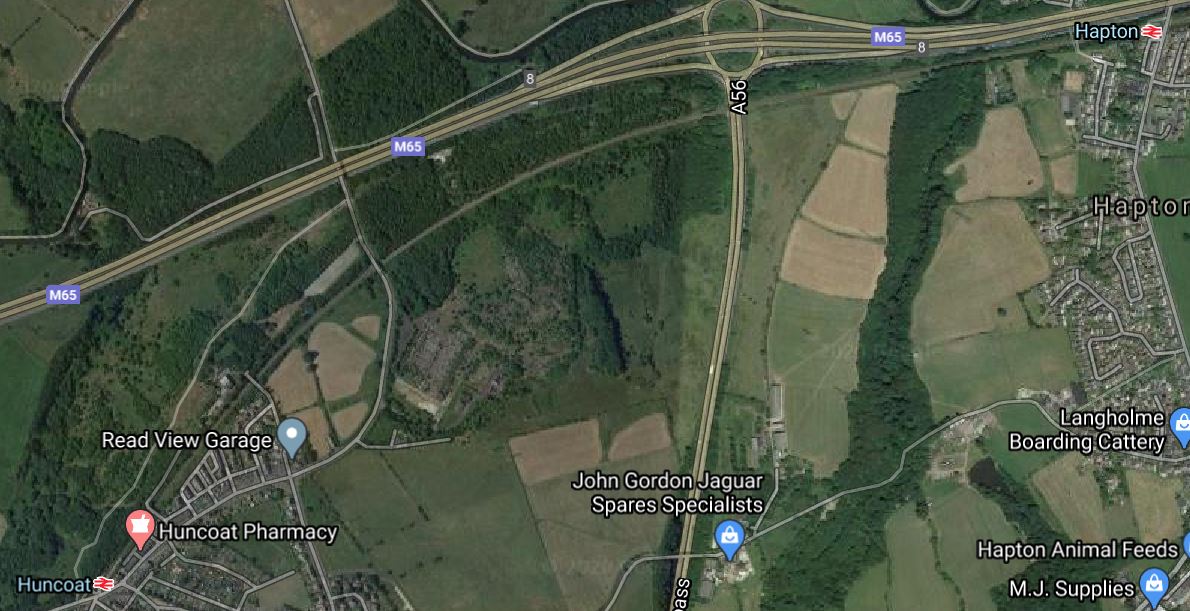
Note.
- Hapton station in the North-East corner of the map.
- Huncoat station in the South-West corner of the map.
- The East Lancashire Line running between the two stations.
- The M65 running across the top of the map.
- The A56 or Accrington bypass running North-South from the motorway junction at the top of the map.
Huncoat power station appears to have been in the South West corner of the rough-looking area, South of the M65 and the railway and West of the A56.
There is no Wikipedia entry for the demolished power station, but this page on The View From The North has some details and pictures.
It does appear to be a well connected site for a Rail Freight Terminal.
- There could be a direct connection to the motorway network.
- There is space for a connection with the East Lancashire Line, that would allow trains to access the interchange from both directions.
- Trains could go West to the Port of Liverpool and the West Coast Main Line via Preston.
- Trains could go East to Leeds and Yorkshire and on to the East Coast ports of Felixstowe, Hull, Immingham and Teesport.
- If the East Lancashire Line were to be electrified, electric haulage could be used.
The Rail Freight Terminal could be bigger than a hundred hectares.
Gauge Enhancement On TransPennine Routes Including Between Accrington And Todmorden
Consider
- Most freight trains passing through Hebden Bridge station use the route via Rochdale and Todmorden to get to and from Liverpool and the West.
- Few if any use the East Lancashire Line via Accrington.
- Some passenger trains do take the Accrington route.
- There are five tunnels between Accrington and the Todmorden Curve.
- The building of the Huncoat Rail Freight Terminal, must mean that trains between the Rail Freight Terminal and Leeds and the East would need to use the Calder Valley Line as far as the Todmorden Curve. or the East Lancashire Line to Colne for the new route.
As freight trains rarely seem to use the East Lancashire Line to the East of Accrington could it be that this section of track needs gauge enhancement?
But if this gauge enhancement were to be completed, that could give two routes between Huncoat Rail Freight Terminal and the East, for the largest freight trains.
Thoughts On The Project Management
It would appear that there are a series of sub-projects to be done.
- Perform gauge enhancement and route improvement on the East Lancashire Line between Rose Grove and Colne. This would include any doubling of the route, if that were to be done.
- Start building the link between Skipton and Colne.
- Start building the Huncoat Rail Freight Terminal.
- Finish building the link between Skipton and Colne.
- Start passenger and freight services between Skipton and Colne.
- Finish building the Huncoat Rail Freight Terminal.
- Perform gauge enhancement on the Calder Valley Line between Accrington and Todmorden.
My objectives would be.
- Open the Skipton and Colne route as a TransPennine diversion, as early as possible.
- Upgrade the East Lancashire Line between Rose Grove and Colne with minimum disruption.
- Open the Huncoat Rail Freight Terminal as early as possible.
- Create multiple freight routes to and from Huncoat Rail Freight Terminal.
Electrification would be a future aspiration.
Whither Drax?
Drax Gtroup and their flagship power station have a major environmental problem in that the power station is a large emitter of carbon dioxide.
They also run a lot of diesel locomotive hauled trains carrying biomass, fly ash, gypsum, limestone and other materials to and from Drax power station, which is on the Drax branch of the Pontefract Line.
- The Pontefract Line was built to serve the coalfields in the area.
- It runs between Leeds and Hull via Pontefract and Goole.
- It is not electrified, but it connects to the electrification at Leeds.
- In the East is has good connections to Cleethorpes, Goole, Grimsby, Hull and Immingham.
- The Port of Immingham is a major port, that is used by Drax to import biomass, which is hauled to the power station by diesel locomotives.
- The route between Drax and Immingham has been improved recently, by the addition of the North Doncaster chord.
- High Speed Two will run alongside the Pontefract Line on its approach to Leeds.
- Freight trains between Drax and Skipton use an electrified diversion South of Leeds via Armley, that avoids the need for freight trains to pass through Leeds station.
I can see that in a more favourable climate for electrification, that electrification of the Pontefract Line would be recommended.
Given, the environmental record of Drax, which is both good and bad, I would suspect they would like to see electrification of the Pontefract Line, as it would create a lower carbon route for biomass trains between Immingham and the power station.
A New Electrified TransPennine Route For Passengers And Freight
I sense that a grander plan might exist behind all my thoughts.
If the following routes were to be electrified.
- Preston and Skipton
- The Pontefract Line between Leeds and Hull.
- Knottingley and Immingham via Thorne
Hull and Liverpool would be connected for passenger electric trains and Liverpool and Immingham would be connected for freight.
Drax could also be on an electrified branch and they could say, they were hauling all their trains using renewable electricity. Marketing and environment are always important
Are Coeliacs More Risk-Averse?
I am coeliac, which means, that I am allergic to gluten!
So I have to be very careful about what I eat.
I have perhaps been glutened two or three times in the twenty years since I was diagnosed. With me it is nothing serious, but it does mean being close to a toilet for some hours.
If I look at my behaviour generally, I sometimes wonder, if I have become more risk-averse since my diagnosis.
I think too, that I’ve probably become more risk-averse since my stroke, after which, one of the world’s leading cardiologists told me, that if I got the Warfarin right, I’d never have another stroke.
I intend to prove him right! So I watch my INR like a Control Engineer would monitor reactor temperature in a nuclear power station.
I would assume that my risk-averse behaviour is fairly normal.
So if you have had a serious illness or near-death experience from which you have been able to almost fully recover, are you doing your best to make sure that you avoid COVID-19?
 The Anonymous Widower