Low Moor Station
I arrived at Low Moor station on a direct service from Kings Cross.


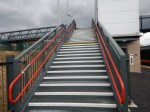


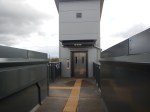

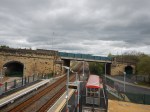

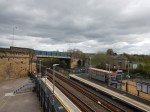


As with several other new stations, it has been fairly very well-constructed, but the design has a few failings.
There Are Not Enough Trains
I was at Low Moor station for an hour taking pictures. In that time several local services went throiugh, but then only one train per hour stops in each direction.
At least two and possibly four trains per hour, as at Halifax, should stop.
Passengers on a wet, cold day will soon get fed up with waiting an hour for another train.
Trains to and from Manchester Airport should also stop.
It Is A Very One-Sided Station
The car park and the main access to the station appear to be on the Bradford-bound side of the station.
Lea Bridge station, that I use regularly near where I live, was built like this and you have to leave extra time to catch a train, as you have to cross the tracks on the footbridge, to go in one direction.
However at Ilkeston station, which I wrote about in Ilkeston Station Opens, the station footbridge replaces one that existed before the station was built. Passengers arrive on top of the station and then descend to the appropriate platform. Or they can walk-in at ground level from the car-drop-off areas or car parking on either side of the tracks!
What makes it worse at Lea Bridge station, is that they could have designed the station to have walk-in access from the road bridge over the lines, as the station does not have ticket gates.
There Should Be Ticket Machines On Both Platforms
I didn’t see the ticket machine, when I arrived, but one is not enough.
Imagine, you are in a hurry and have booked on-line for the 07:01 Grand Central train to Kings Cross and need to retrieve a ticket.
Will you be able to park your car, retrieve the ticket and cross the line before the train comes, especially if there is a queue for the sole ticket machine?
Surely too, ticket machines on the platforms are less likely to be vandalised, as CCTV will be expected.
Why Is There No Direct Access Between The Car Park And The Bradford-Bound Platform?
Both Lea Bridge and Ilkeston stations allow walk-in access to the one or both platforms. Why isn’t there a short flight of steps between the car park and the Bradford-bound platform?
I hope it’s not different rules being applied by different councils? It has been allowed at Kirkstall Forge station.
There Should Be Drop-Off/Pick-Up Areas On Both Sides Of The Station
Obviously, this can’t be arranged at all platforms at all stations, but many stations manage it for at least one, with a step-free bridge across the tracks.
Low Moor station doesn’t score well in this.
Poor Access With Bicycles To The Platforms
Cyclists come in all shapes and sizes, but many will find the steps unacceptably steep and will not use this station.
Or put their muddy bikes in the lifts!
Conclusion
It is a well-built, but rather poorly designed station.
I don’t think, it will attract the number of passengers it should!
Across South Yorkshire On A Grand Central Train
If you take a Grand Central West Riding train between Kings Cross to Bradford Interchange stations, as I did, the route could be considered somewhat of a Cook’s Tour of the South of Yorkshire.
There are stops at Doncaster, Pontefract Monkhill, Wakefield Kirkgate, Mirfield, Brighouse, Halifax and Low Moor stations. I alighted at the last station, which only opened on the second of this month.
I took these pictures on the route between Doncaster and Low Moor


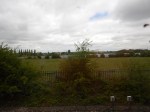


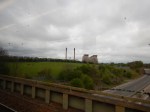


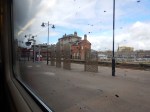


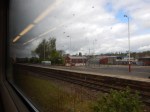


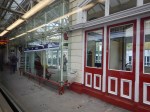


These are some notes on the journey.
Hambleton Junction
Hambleton Junction was created as part of the Selby Diversion, where the East Coast Main Line was diverted away from the possible subsidence, that could have been created by the giant Selby Coalfield.
This Google Map shows the layout of the junction.
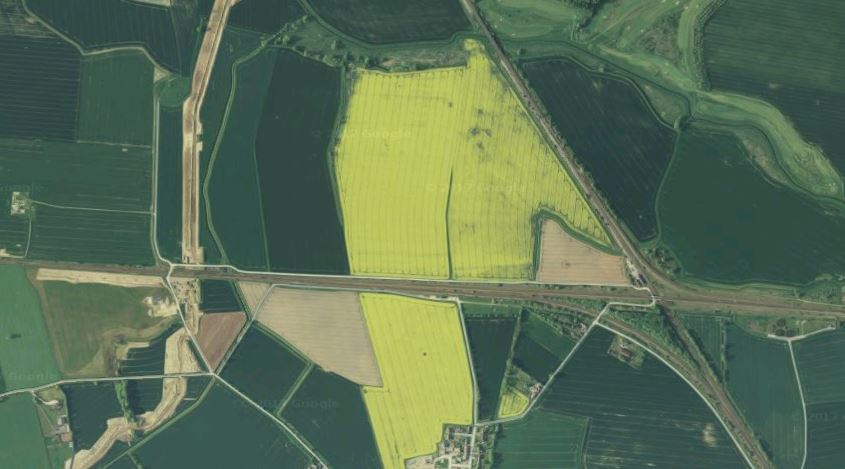
The Grand Central train turned West at Hambleton Junction to take a South-Westerly route to Pontefract Monkhill station.
It should be noted, that the mistake of the 1980s, when the Selby Diversion was created off not electrifying the Leeds to Selby Line may be rectified in the near future, according to this section in Wikipedia. This is said.
In 2009 the Network Rail route utilisation strategy electrification paper identified the North Cross-Pennine route including the Leeds-Selby-Hull Line as a high ranking option for future electrification, in terms of benefits to passenger services.[70] In 2011 funding for the electrification in CP5 (see Network Rail Control Periods) of the section from Leeds to Micklefield was announced. Funding for the section of the line from Micklefield to Selby was added to the electrification schedule in 2013.
As with all electrification in the UK, I’ll believe it, when I see it.
Ferrybridge Power Stations
The power stations at Ferrybridge, have been a landmark on the A1 since the 1960s.
This Google Map shows the large site, surrounded by major roads.
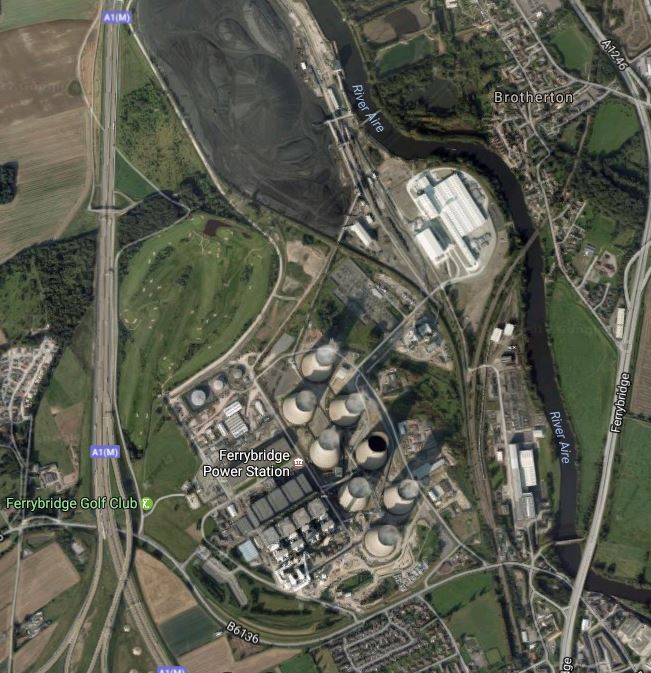
There is now a Ferrybridge Multifuel power station, but at 68 MW compared to the 2034 MW of the 1960s-built Ferrybridge C., it isn’t very large.
For comparison, according to these statistics in Wikipedia, the UK had installed 11,562 MW of solar power, which generated 10,292 GwH or 3.4% of our total electricity consumption in 2016, which was a thirty-six percent increase on 2015.
Perhaps it was a better summer!
Pontefract Monkhill Station
Pontefract Monkhill station is a simple affair, with just two platforms and no permanent buildings or ticket machine.
This Google Map shows the location of the station.
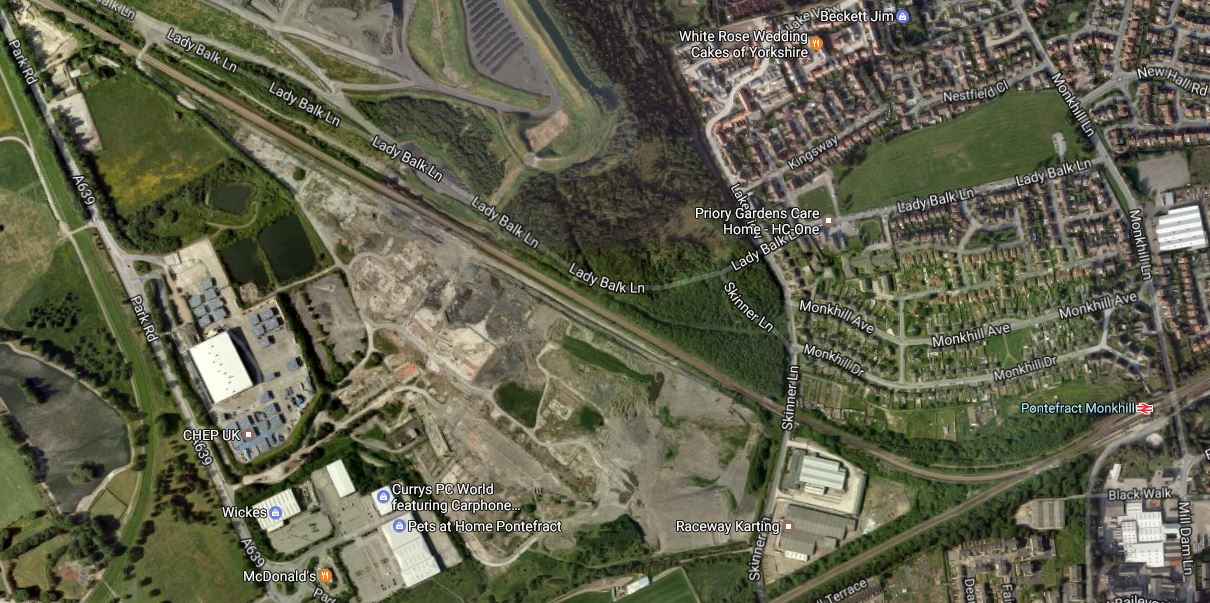
Note in the North West corner of the map is Pontefract racecourse, where C and I once had a winner.
I think it is true to say, that passenger use of Pontefract Monkhill station would improve with a few more facilities.
The train took the line past the racecourse on the way to Wakefield Kirkgate station.
Wakefield Kirkgate Station
Wakefield Kirkgate station, has been refurbished recently and whether it will see increased usage, is something on which I can’t or won’t speculate.
This Google Map shows the relationship between Kirkgate and Wakefield Westgate station, which is served by electric trains to Leeds and London.
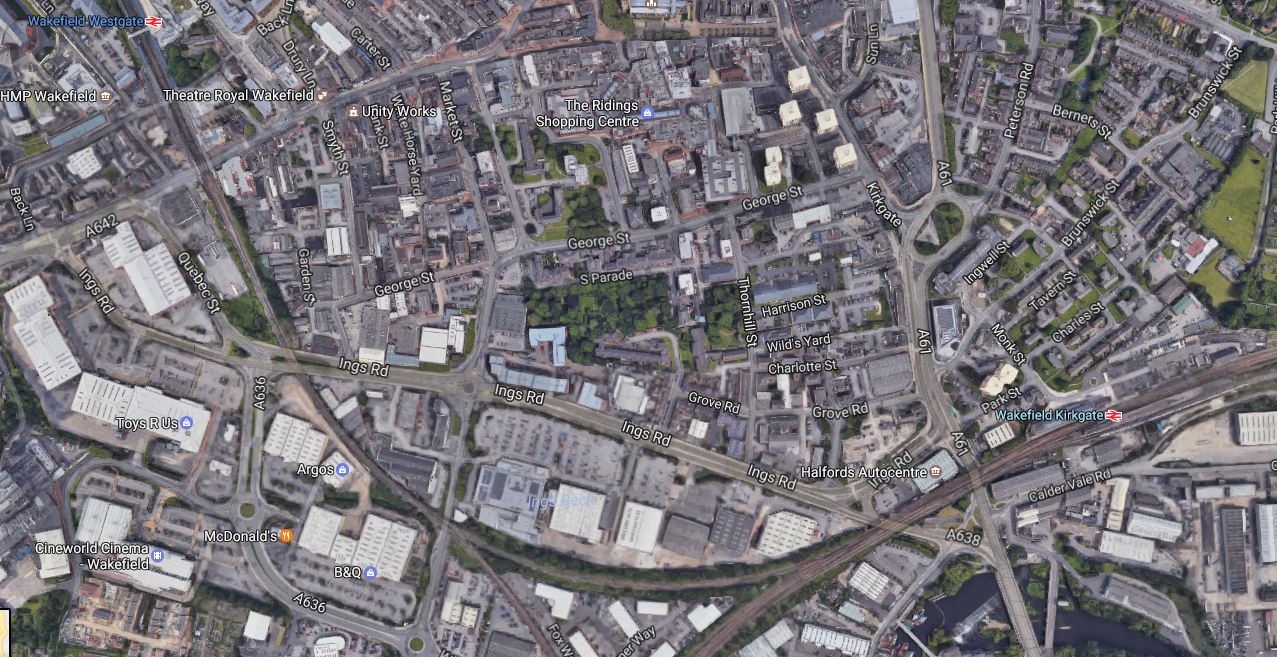
Grand Central probably have a marketing problem with Kirkgate station, as to tickets too and from London, as they have only four trains per day and they take around two and a quarter hours, as opposed to Virgin’s two trains per hour, which take around two hours.
Their major weapon must be price.
Mirfield Station
Mirfield station is another simple station, with minimal facilities.
Brighouse Station
Brighouse station is a station that closed in 1970 and reopened in 2000.
That explains, why when I had to go to Brighouse to see a client of mine in the early 1970s, in the town, I had to drive.
It was typical of the projects, I got involved in at the time, as I was helping Allied Mills to optimise what flours they used to make bread. I was using simple linear programming with an objective function.
I can’t leave Brighouse without a few stories.
- All the Senior Management I dealt with had been bakers and didn’t eat the company product, preferring to bake their own.
- Bread was sold on commission to the delivery van drivers. As you could get more square sliced loaves in a van, they ignored fancy loaves, as it dropped their income. Did this infuence the UK’s like of bad bread?
- Bread was sold on sale or return. The returned bread was put to use in animal and pet food.
- Harold Wilson thought this was waste and banned the practice, meaning the secondary uses dried up and a lot of products became more expensive.
- One particular recycled bread, was supposedly very suitable for grewyhounds.
- Dartmouth Naval College insisted that the bread they received was yesterday’s as it discouraged cadets fromj eating too much!
If I remember a few more, I’ll add them.
Halifax Station
Halifax station is probably one of the busiest on the route.
This Google Map shows the station and the nearby Nestle factory.
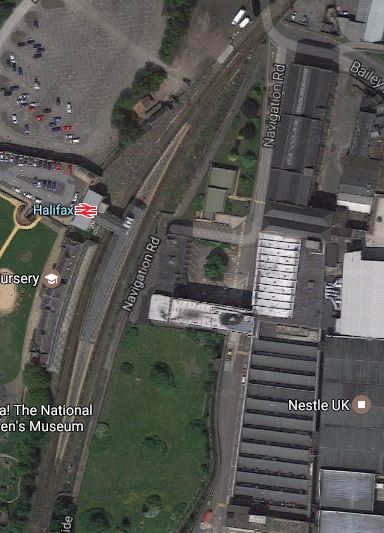
Halifax station has a four trains per hour service to Bradford Interchange and Leeds. This is also said in Wikipedia.
On Sundays there is an hourly service to Manchester Victoria and to Blackpool North and one train every two hours to Huddersfield. New Northern Rail franchisee Arriva Rail North plans to introduce additional services to Leeds & Manchester in 2017, many of which will run through to either Liverpool Lime Street or Chester.[16][17] Through services to Manchester Airport will also operate once the planned Ordsall Chord is built.
So it will be getting better and Halifax could be the station where you go to to the West.
These extra services and after a couple of visits to the station, suggest to me that the station needs a bay platform or even a third one, that can act as bay platforms looking both ways.
This is said in Wikipedia.
In October 2014 plans were submitted to bring an old platform back into use to create three platforms together with signalling improvements.
Perhaps my feelings are correct.
Conclusion
It is a well-thought out route, through some of the least developed parts of Yorkshire, where I suspect car ownership is not on the high side.
The route, which goes in a curve from Bradford to Doncaster, South of the cities of Bradford and Leeds, does a similar job to that of the Gospel Oak to Barking Line in London, as a compliment to the radial routes.
But four trains per day is not enough and the route has the sense of dereliction that Gospel Oak to Barking and North London Lines had in London.
Perhaps the solution, is to run one of the Class 319 Flex trains every hour between Bradford Interchange or Halifax and Doncaster in both directions to tie everything together.
Currently, Grand Central’s Class 180trains take the following times.
- Doncaster to Bradford Exchange – 90 minutes
- Doncaster to Halifax – 75 minutes
The Class 319 Flex trains could probably match these times if they ran on electric power between Doncaster and Hambleton Junction.
Even if they stopped more often, they might even be able to run between Halifax and Doncaster in under ninety minutes. This would mean that three trains could provide a stopping service between Halifax and Doncaster.
Hitachi Class 385 Trains, Batteries And Charging Stations
This article in the International Railway Journal is entitled JR Kyushu battery EMU to enter service in October.
This is said.
JAPAN’s Kyushu Railway Company (JR Kyushu) announced on August 24 that its pre-series Dual Energy Charge Train (Dencha) battery-assisted EMU will enter revenue service on the 11km Orio – Wakamatsu section of the Chikuho Line on October 19.
The two-car 819 series set draws power from the 20 kV ac 60Hz electrification system to feed a bank of onboard batteries, which give the train a wire-free range of up to 90km.
At least it can do 11 km. This is said about the train’s manufacture.
The 819 series is based on the existing 817 series EMU and was built by Hitachi at its plant in Kudamatsu in Yamaguchi prefecture.
Note the word Hitachi!
Hitachi call it a BEC819 train and it is one of their ubiquitous A-trains.
On the Hitachi Rail Europe web site, three new trains are mentioned.
All are A-trains and on all pages, the word battery is mentioned under power supply.
So will Scotrail’s new Class 385 trains have a battery capability?
Probably not initially!
But Hitachi have obviously been doing a lot of research into battery trains and the JR Kyushu is the first practical application.
Scotland’s rail system outside Edinburgh and Glasgow is not electrified, but it is well-known that Scotland’s Government would like more electrified services and also links to places like Leven and St. Andrews.
Both of these places, and there are probably others as well, are a few miles from a main line, that is very likely to be electrified.
So could we see a battery train charged as the JR Kyushu train on a main line, serving these branch lines on battery power?
I feel that the chance of this happening is very high.
Put a charging station, like a Railbaar at the terminal station and it could be done as soon as the train is built.
An Idea From India
This article from Global Rail News is entitled India’s Minister for Railways launches glass-roof scenic rail cars.
Why not?
Scotrail’s plans for shortened HST train sets to go between the major cities will hopefully carried out with style and a great deal of respect for the scenery.
For a start, will the seats be arranged like these in Chiltern’s Mark 3 coaches.
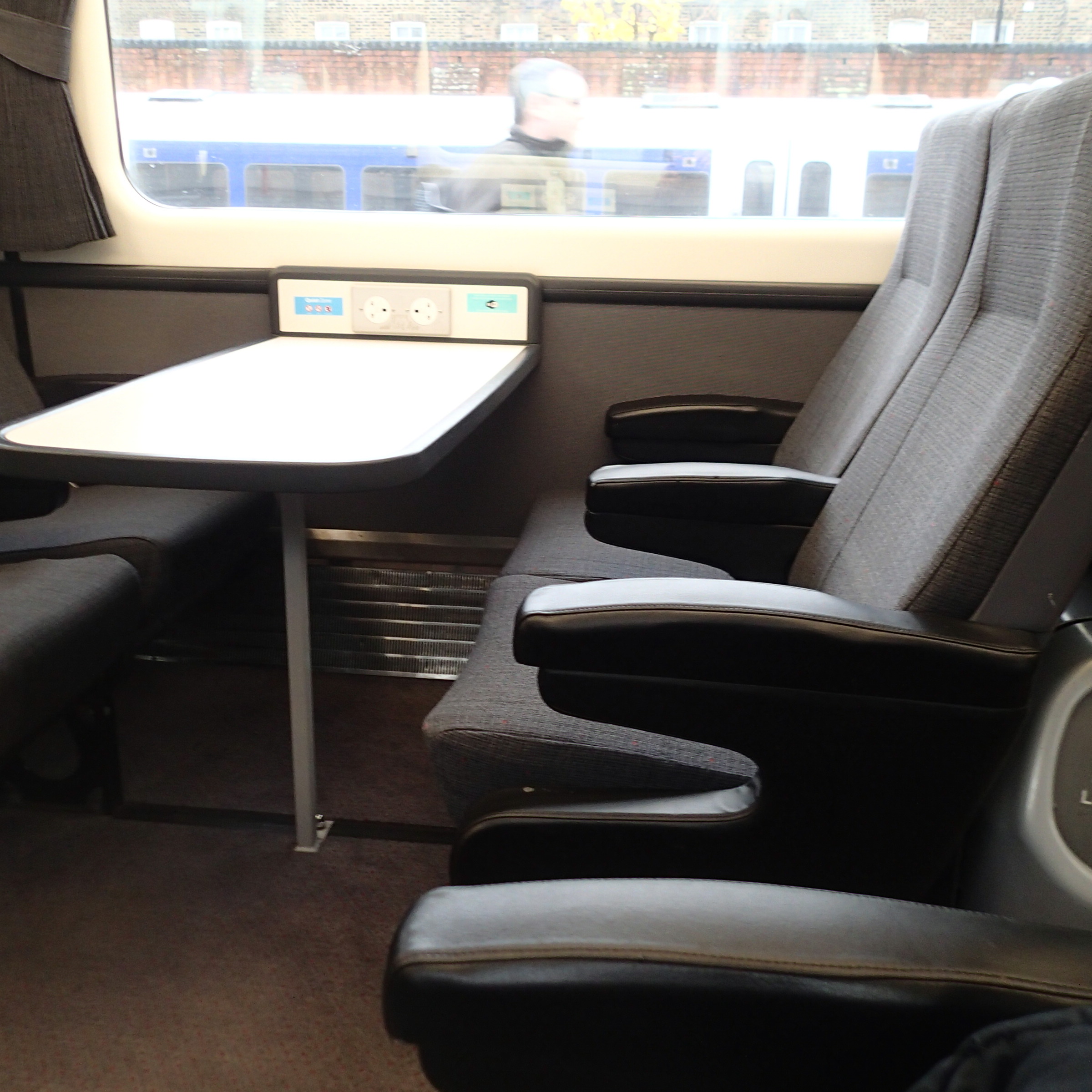
Note that the picture was taken in Standard Class.
There can’t be more stylish, comfortable and practical rides in a train of this Class anywhere in the world.
What is not shown is the cheery staff with the snacks and drinks trolley.
All of this too comes from a subsidiary of Deitsche Bahn and it is far superior to anything I’ve ridden in Germany.
I wonder if windows can be put in the roof of a Mark 3?
Probably! Engineers certainly have ways of making Mark 3 coaches do anything they want
But there’s always the option of connecting cameras to the train’s wi-fi.
Serial Cooking – Cod And Tomato With Basil
I created this out of one of Lyndsey Bareham’s recipes from The Times.




I aimed to make it something i cook cook quickly from the store-cupboard and the freezer.
The Subway Is Finally Exposed
These pictures show the subway and a few other things at Hackney Wick station.


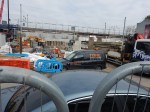
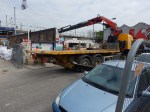
It looks to my untrained eye, that now, the builders can get on with putting in the stairs and lifts and then fit out the station ready for opening.
This visualisation shows how the station will look on completion.
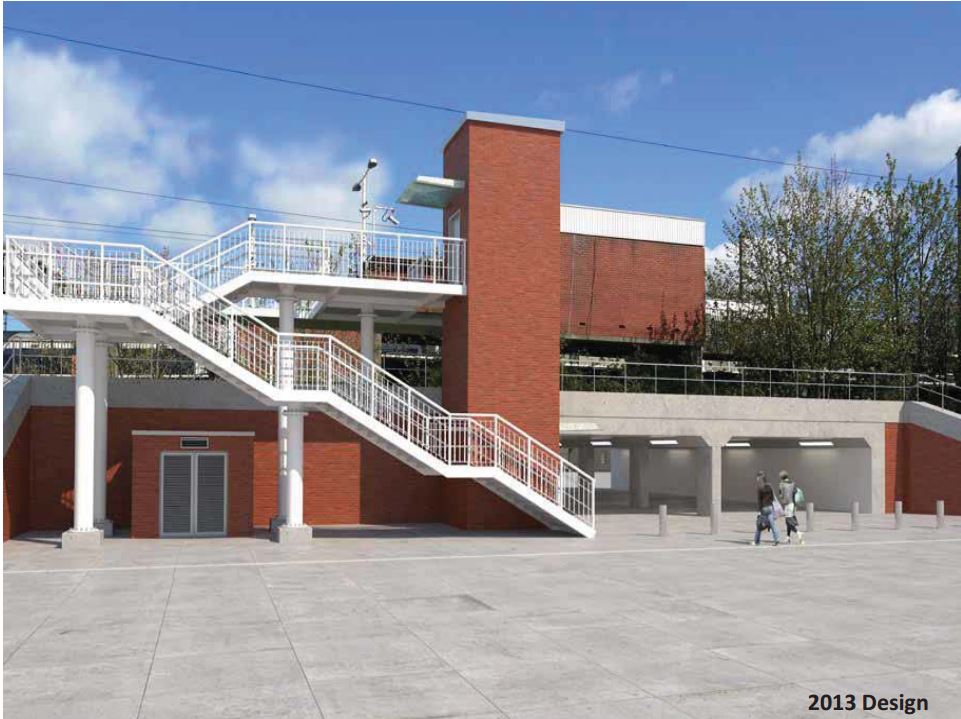
Hackney Wick Station South Elevstion
I do hope they leave the approach to the station clear, as in the visualisation.
The Importance Of Speed On A Railway
I have just looked at the suburban services out of Waterloo and written Increasing Capacity On Waterloo Suburban Services.
In the Conclusion of that post I said this.
This calculation shows that you can sometimes replace a large number of 75 mph trains with a significantly smaller number of 100 mph units and still attain the same service frequency.
Effectively, the faster journey time, enables the train to go out and back on a route in a shorter time, which means that to do a given service frequency.you need less trains.
If a service takes 35 minutes with eight stops in a 75 mph Class 156 train, this would mean to go out and back would take around 90 minutes, if it took 10 minutes for the driver to change ends.
So the 07:00 train, would be back at the start to run the 08:30 service.
To run two trains per hour (tph) would require three trains, starting their diagrams at 07:00, )7:30 and 08:00.
Suppose the 75 mph train is replaced by a faster modern 100 mph train, that can perform very quick stops at a station, due to powerful brakes and strong acceleration, which can save a minute at each stop.
The faster train might be able to do the complete out and back journey in under an hour, which would mean only two trains could run the same 2 tph service.
This would give the following benefits.
- Passengers wold get a faster journey.
- The operator would need one train less to run the same service.
There are also several smaller benefits to the operator, like less crew and smaller depots.
Since the turn of the century, increasingly, there has been efforts to squeeze more and more services onto rail lines.
In the following sections, I’ll discuss how various factors affect capacity.
Faster Trains
On a simple out-and-back route, the faster a train can get to the destination and back again, the better.
- In the 1980s, suburban trains like a Class 455 train had a speed of 75 mph.
- In the 2000s, a train like a Class 377 train have a speed of 100 mph.
- In the 2010s, a modern train like a Class 387 train have a speed of 110 mph.
Trains are certainly getting faster.
Trains Stop Quickly At A Station
Train manufacturers are spending a lot of time, shaving seconds off the time it takes a train to do the following.
- Brake from line speed.
- Stop precisely in the station.
- Drop off and board any passengers.
- Accelerate back to line speed.
Techniques employed include.
- Better brakes
- Wide lobbies and doors
- Fast door-opening systems.
- Step-free train access
- Fast acceleration.
- Automation and better systems.
- Staff on the platform from first to last train.
In the next few years, stops will get even quicker.
- Regenerative braking using batteries to store energy on the train for a fast getaway, will also cut energy use.
- CCTV systems for door opening and closing on the train, rather than the platform.
- Automatic stopping of the train at the correct place, after the driver presses a stop button perhaps two hundred metres from the station.
- Automatic acceleration of the train back to line speed.
Victoria Line trains have been using the last two since 1967.
Modelling And Analysis
We’ll also be seeing a lot more Modelling of systems and analysis of performance, to find how perhaps small amounts of investment can provide a better service.
Conclusion
Trains are going to get faster.
Railway Stations As Marketing Tools
It goes without saying that, one of the ways to get a passenger contribution to the cost of a station, is for the station to attract passengers to use the trains calling at the station.
Ilkeston
Look at this picture of Ilkeston station.
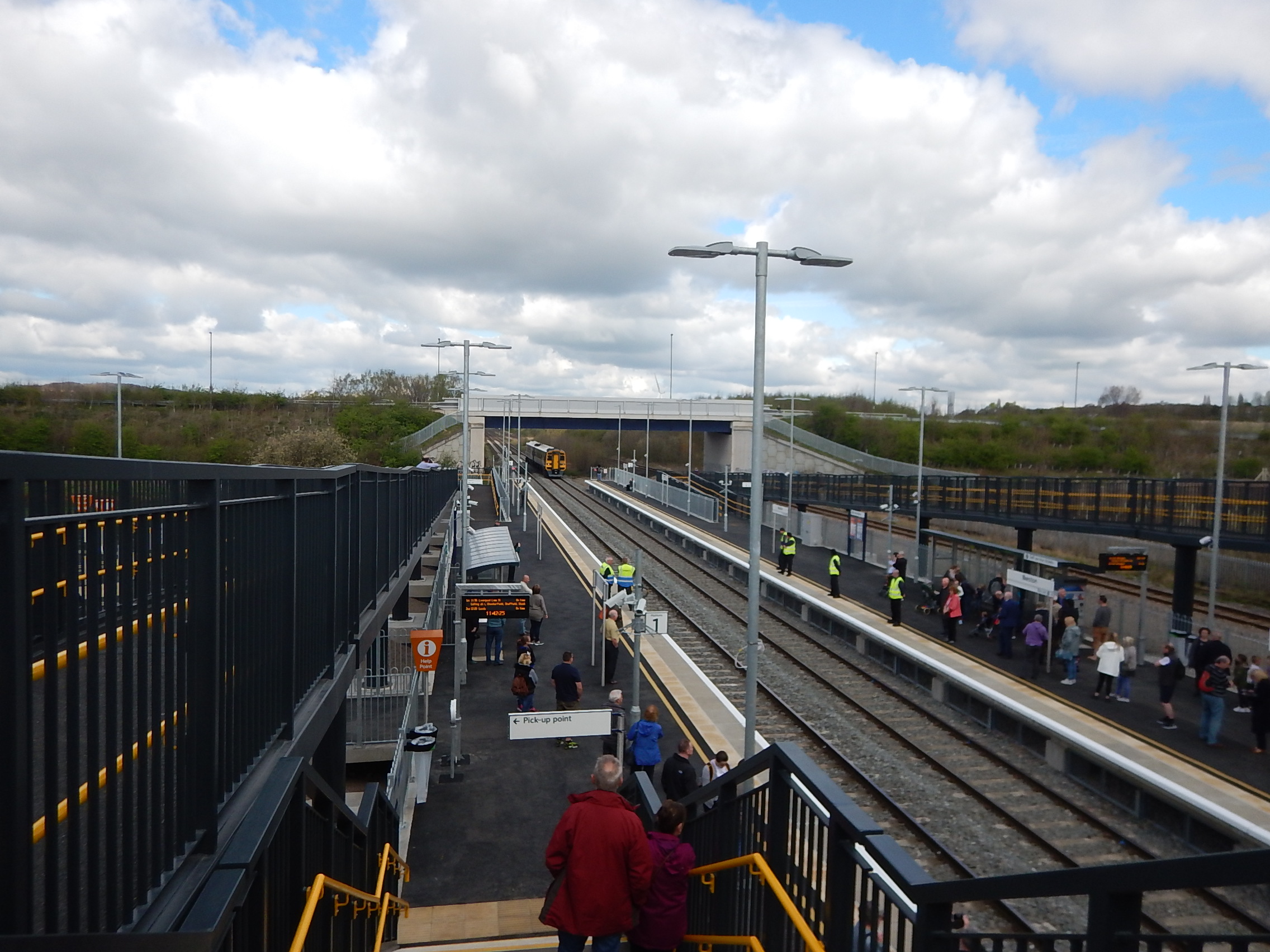
It was taken from the footbridge over the railway and shows that Ilkeston station is effectively two single platform stations on either side of the double-track railway.
Each platform has a ticket machine and a shelter, so all passengers arriving without tickets have no trouble getting one. I know of lots of stations, where the ticket machine is tucked away, almost as if to discourage travel.
But the real marketing trick at Ilkeston is the station footbridge replaces a footpath alongside of Station Road.
This Google Map shows, the station during construction and the old footbridge is clearly visible to the North side of Station Road.
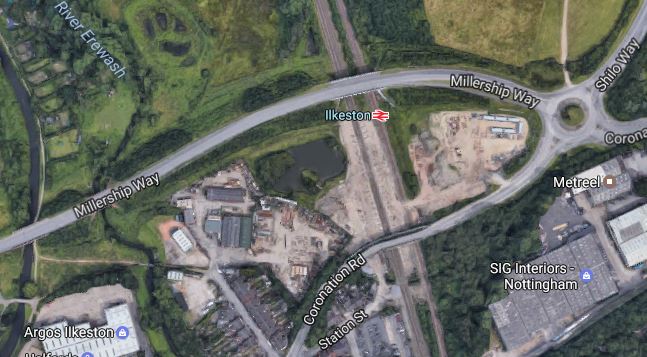
Now the station is open with its new footbridge, how many people will walk past the station, as they go about their business and get curious and perhaps use the trains next time they go into Nottingham.
Hackney Wick
Hackney Wick station is going to be a much grander affair, than Ilkeston, as this visualisation shows.
Hackney Wick Station South Elevstion
But London Overground can be accused of very direct marketing in the design.
Note the double subway under the railway. One section leads into the actual station and the railway and the other is a pedestrian route under the railway.
They will be separated by an artistic glass wall.
How many people will be encouraged to use the railway by this design?
Lea Bridge
Lea Bridge station has been designed as a simple station, although it does have lifts.

But it was designed before Ilkeston with the entrance at one side, rather than on the bridge, where it used to be sixty years ago.
It will be interesting to see how passenger numbers stack up at Lea Bridge.
Kirkstall Forge
Kirkstall Forge station is a new station near Leeds.
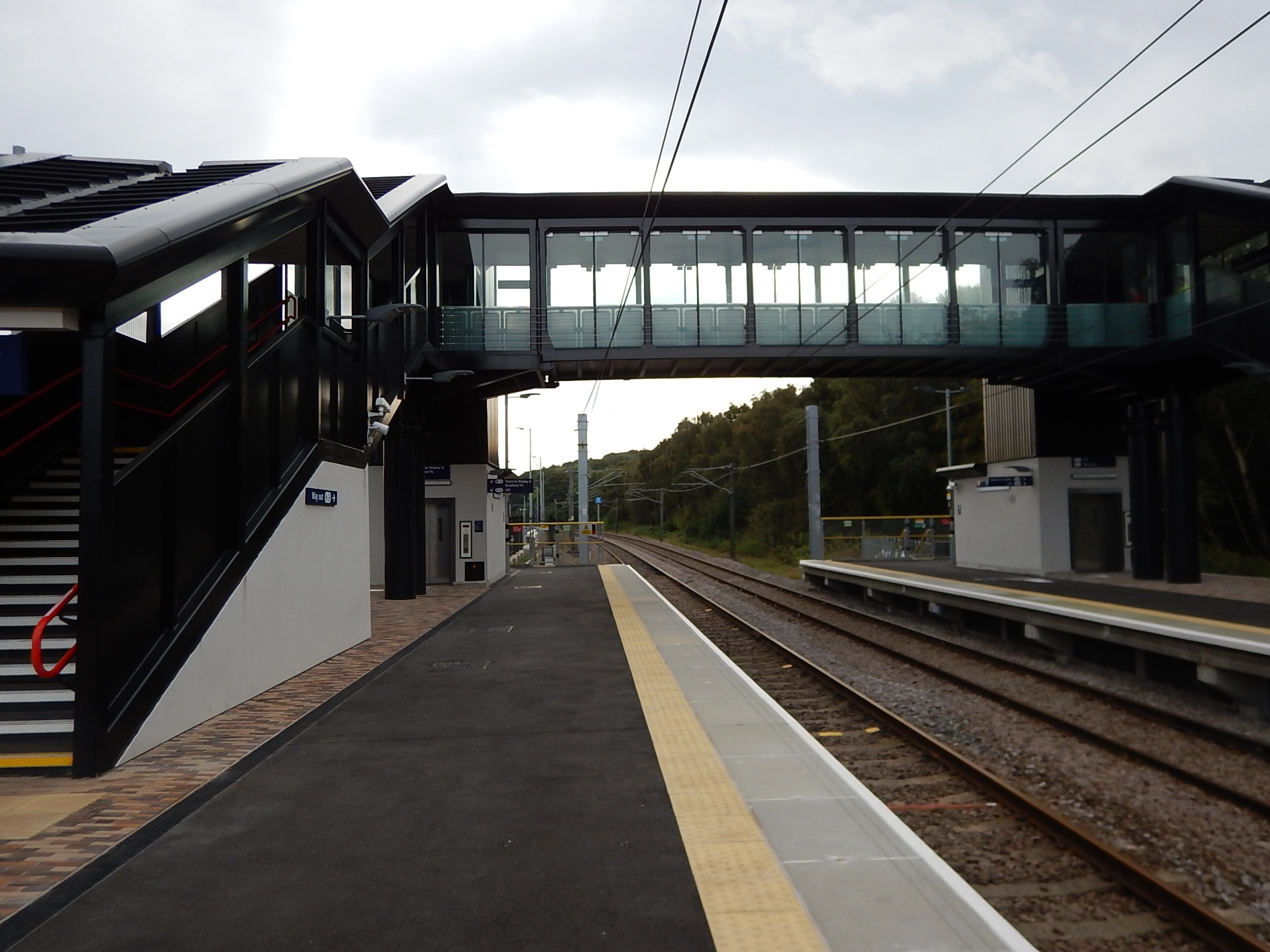
It is a fully-equipped station, that relies on position, new developments and a large car-park to bring in the passenger traffic.
Ebbw Vale Town
Ebbw Vale Town station is a station of a different type, but because of a prominent location, It looks to have been a success.

When you consider that it only has an hourly service to Cardiff to pull in 168,000 passengers in its first year of operation is very creditable.
An Energy Analysis Of Merseyrail’s New Trains
Various factors come into this anaysis and I’ll detail them first.
Merseyrail’s New Trains
Merseyrail‘s new trains from Stadler have the following known characteristics, according to various sources I quote in Thoughts On Merseyrail’s New Trains
- The trains will have regenerative braking.
- The trains will weight in at 99 tonnes.
- The trains will have a capacity of 486 passengers.
- The trains are four cars and 64 metres long.
It should also be noted that the current trains have a maximum speed of 121 kph, although the Northern Line has a maximum speed of 97 kph and the Wirral Line one of 110 kph.
I also suspect that the trains will be pretty good aerodynamically, as most modern trains are. My linked article quotes an energy saving of twenty per cent.
Merseyrail’s Tunnels
Merseyrail’s tunnels date from the Loop and Link Project of the 1970s, where the three electrified lines coming into Liverpool, were connected together.
- The Loop Line allows trains from the other side of the Mersey to access four stations in Central Liverpool and gave a substantial capacity increase.
- The Link Line joined the Northern suburban lines to Kirkby, Ormskirk and Southport to the Southern suburban line to Hunts Cross.
Currently, the Loop Line is having a major upgrade with slab track and other goodies and if it is not to the same standard, I wouldn’t be surprised to see the Link Line improved as well.
I suspect that when the work is finished, Merseyrail’s tunnels will not offer much resistance to the trains passing through.
If the new trains use regenerative braking with batteries, there is one big advantage in the tunnels.
Some braking energy is stored on the train and used to accelerate the train when needed. So hopefully, the flow of electricity between track and train is reduced, which means less heat generation in the tunnel as the currents flow through to and from the train.
Let’s assume that a train running at line speed in a tunnel has X KwH of kinetic energy. For a stop, this energy must be absorbed by the regenerative brakes and turned into electrical energy. It won’t be 100 % of the energy but I suspect that with modern systems it could be as high as 80%. Batteries are an efficient way to store this energy and I suspect, with the best systems, virtually every KwH you put in the battery can be retrieved later, if the battery is large enough.
Merseyrail’s Branches
Unlike Manchester, Liverpool is not surrounded by hills, so I would expect that most of the lines have fairly gentle gradients.
These are a few altitudes.
- Aintree – 13 m.
- Chester – 32 m.
- Garston – 23 m.
- Hunts Cross – 40 m.
- John Lennon Airport – 24 m.
- Kirkby – 26 m.
- New Brighton – 43 m.
- Ormskirk – 52 m.
- Southport – 6 m.
- West Kirby – 9 m.
These examples, show that the network is not an arduous one. I suspect that the lowest part of the network is in the tunnels under Liverpool. Judging by the escalator lengths, I suspect it could be around thirty metres below ground.
Kinetic Energy Of A Full Train
The mass of a train is 99 tonnes plus say 70 kg for each of 486 passengers.
This gives a mass of 133 tonnes for the fully-loaded train.
Suppose it is travelling at 100 kph.
This gives a kinetic energy of 51.3 MJ.
Or converting that to everyday units we get 14.25 KwH.
As a typical transport battery for somethig like a hybrid bus is around 75 KwH, I would think that such a battery could handle regenerative braking on the trains with ease.
How Far Could A Train Run On Batteries Away From Electrification?
This is a bit like asking the old question about how long is a piece of string.
Merseyrail’s lines are generally fairly flat and if the trains have regenerative braking with batteries, I suspect the range could be longer than expected.
Other factors will also affect the range.
- Driving aids.
- Wheel-slip protection.
- Good driving.
- The weather.
- Accurately-positin slab track.
I also think the range on batteries will be deliberately restricted to a conservative distance, as running out of energy, would not be tolerated.
I would also expect the achievable range to get longer, as the operator and its drivers, learn how to conserve energy.
The Female Of The Species Is More Deadly Than The Male
The title of this post is from a poem by Rudyard Kipling, but could the 2017 General Election be a rerun of the 1983 General Election, where Margaret Thatcher gave Michael Foot, the order of the boot?
Jeremy Corbyn is actually two years younger than Michael Foot was at the 1983 General Election, which was incidentally when he was elected for the first time.
At the 1983 General Election Margaret Thatcher was in her late-fifties and now Theresa May is in her early-sixties.
I think that humorists and cartoonists will be having a good election, drawing comparisons.
Thatcher won her biggest victory in the Falklands, so will May win her victory in the Brexit negotiations?
I certainly feel that far outposts like the Falklands and Gibraltar could figure in this election.
 The Anonymous Widower