I’ve Now Got A Back Garden!
On BBC Breakfast this morning, the weather is coming from Woodberry Wetlands, which is London’s newest Nature Reserve, that opens to the public today, after being opened by Sir David Attenborough yesterday.
This Google Map shows the area.
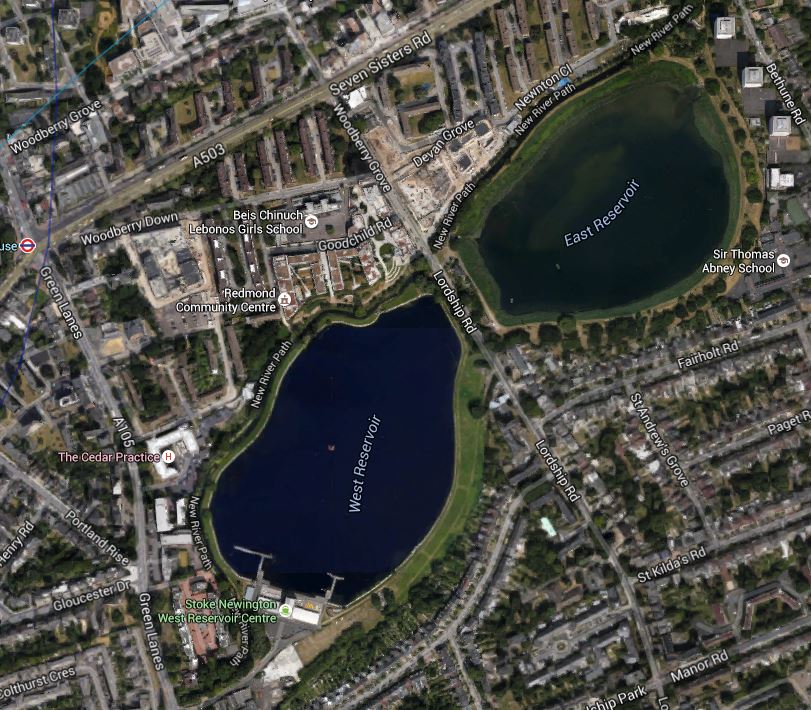
Woodberry Wetlands
One entrance is on the road between the two reservoirs and I think there is a second one by the Castle.

To get there, I just walk across the road by my house and get a 141 bus to the castle. It takes me about ten minutes.
How many readers of this blog realised that North London had such an impressive castle?
It was built to keep Tottenham and Arsenal supporters apart. Tottenham is to the North-East and Arsenal is to the South-West.
This morning, I visited Woodberry Wetlands.
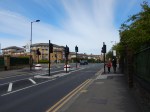
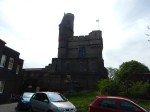
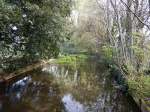
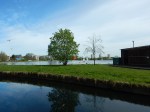


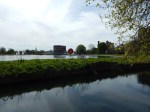
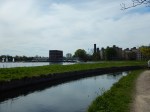



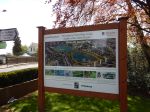

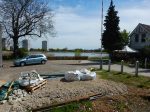
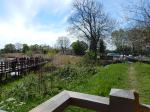
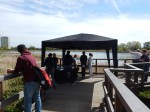
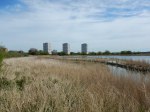

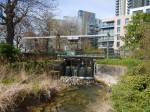




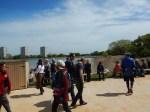


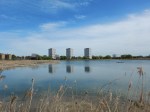
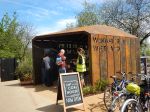
I walked across from where the 141 bus dropped me by the Castle along the New River Walk.
It was crowded, as would be expected on the first day.
One thing that surprised me was that I saw a fox in broad daylight, strutting about as cool as you like.
I think it will turn out to be a popular attraction, but I think that transport bus, bicycle and walking access should be improved.
- Probably the easiest way to go is to walk from Manor House station. Some signs showing the shortest walking route would help.
- The maps on the web site need updating with buses from both entrances.
- Bicycles were everywhere and there needs to be better storage.
- A bus running between the reservoirs would certainly help.
It is the sort of attraction, that would benefit from some Boris bike stations.
- Manor House station
- Finsbury Park station
- The Castle
- The entrances to the attraction.
The first two would also serve Finsbury Park.
Discontinuous Electrification Using IPEMUs
In Basingstoke To Exeter By Electric Train, I started to work through, how short lengths of third-rail electrification could be used to power an electric train with an IPEMU-capability.
Third-Rail Electrification
This picture shows typical third-rail electrification at Kidbrooke station in South East London.
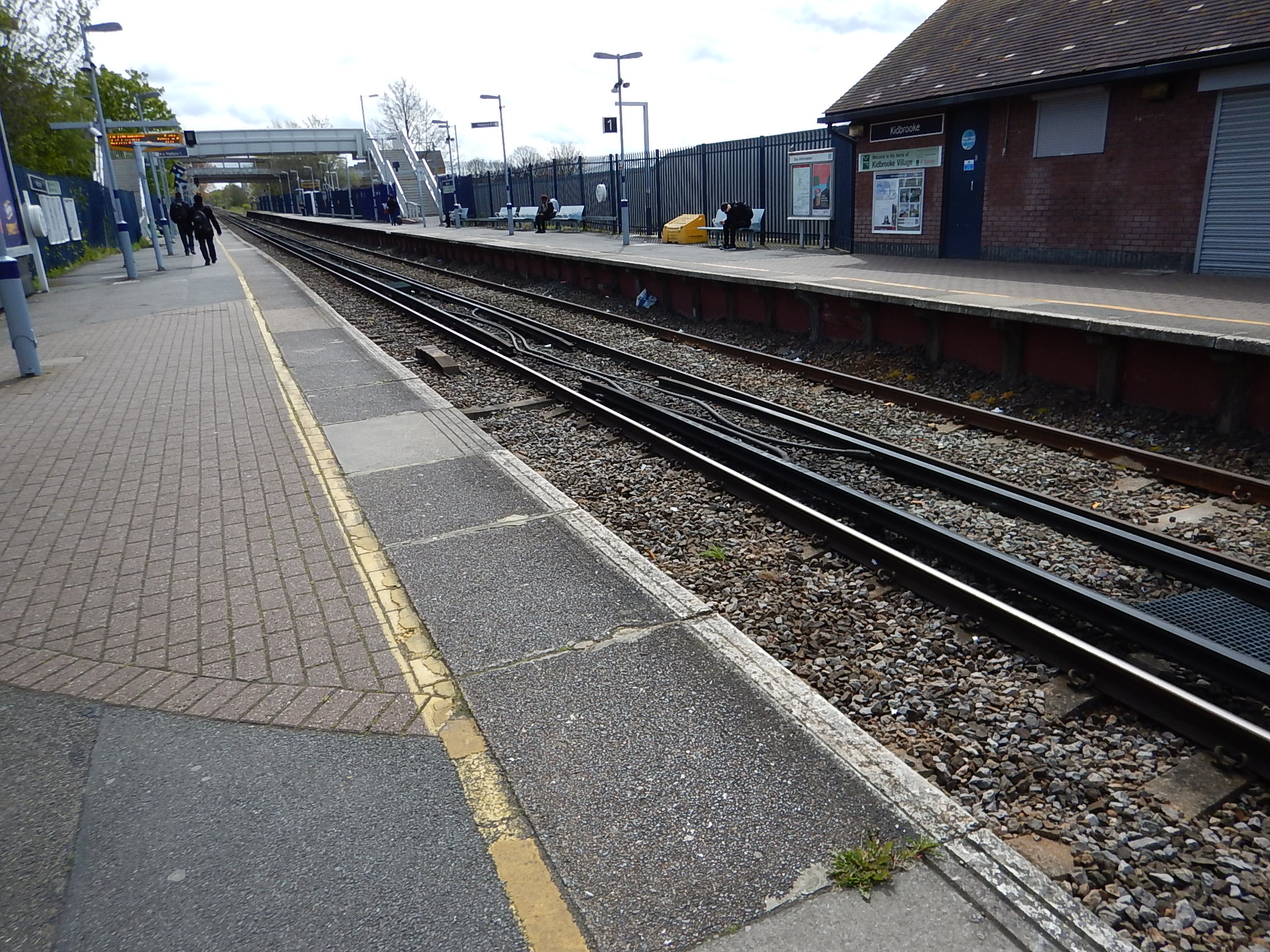
Note the following about the station and the electrification.
- The two tracks are between two platforms connected by a footbridge, which is a typical layout for hundreds of stations. Some stations might use a subway for connection.
- The two 750 VDC conductor rails are placed together in the middle of the track, well away from the passengers.
- There is a gap in the third rail, which I assume is for staff or emergency services personnel to cross the track in an emergency.
It is a simple and very safe layout.
With many years of installing third-rail systems in stations, Network Rail has the expertise to create safe systems in stations with island or just a single platform.
A Typical Electrical Multiple Unit
The Class 377 train is a typical modern electrical multiple unit common on third-rail routes.
- There are a total of 239 trainsets in service with lengths of three, four and five cars.
- The trains can work in combinations of two and three trainsets.
- The trains are a member of Bombardier’s Electrostar family.
- The slightly older Class 375 trains can be converted into Class 377 trains.
- The first trains entered service in 2003, so they still have many years of life.
- Some of the trains are dual-voltage and all could be equipped to use 25 kVAC overhead line equipment.
- They have a top speed of 90 mph.
- Bombardier have stated that these trains can be given an IPEMU-capability.
In addition everything said about the Class 377, can also be said about the later Class 379 and Class 387 trains, although these trains are faster.
The traction current supply to the trains has a very comprehensive design, that ensures trains get the electricity they need. Wikipedia says this.
All units can receive power via third-rail pick-up which provides 750 V DC. There are eight pick-up shoes per unit (twice the number of previous generation 4-car Electric multiple units), and this enables them to ride smoothly over most third-rail gaps. The units in the 377/2, 377/5 and 377/7 sub-classes are dual-voltage, and are fitted with a pantograph to pick up 25 kV AC from overhead lines. On these units the shoe mechanism is air-operated so that when powered down, or working on AC overhead lines, they are raised out of the way.
You don’t hear many reports of trains being gapped these days, when they are unable to pick-up electricity at somewhere like a level crossing.
So there could be a large number of electrical multiple units available with an IPEMU capability, which could be ostensibly 25 kVAC units, but could also pick up electricity from a 750 VDC third-rail.
A Charging Station At Oxted
I feel that Network Rail has the expertise to fit short lengths of third-rail electrification into stations, so that IPEMUs could pick up power, when they are stopped in the station.
These pictures show the recent installation of third-rail in the bay Platform 3 at Oxted station.

Note how the conductor rail is enclosed in a yellow shield.
Could this installation at Oxted, have been done, so that IPEMUs can run a shuttle to Uckfield?
Staff at the station didn’t know, but said the platform is used to terminate or park the occasional train from East Grinstea
d
IPEMUs To Lowestoft
Imagine such an installation at a station like Lowestoft, which has been suggested as a destination for trains with an IPEMU-capability.
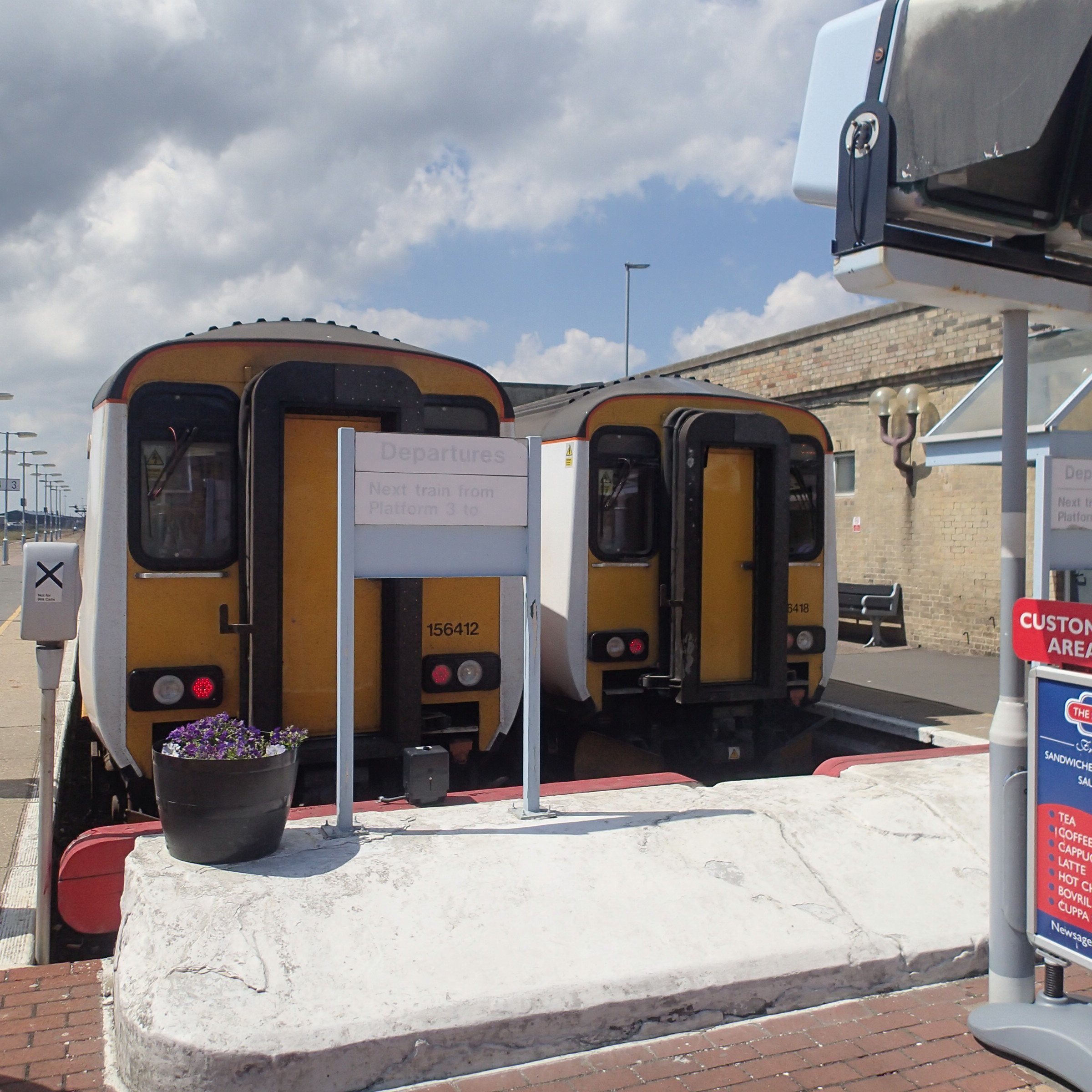
The picture shows two Class 156 trains at Lowestoft station.
Surely, two lengths of 750 VDC third-rail can be fitted between the tracks.
- The electrified lines would be no closer to passengers, than the third-rail installation at Oxted.
- The power supply would only be needed to supply electricity to charge the batteries.
- When no train was in the platform, the electricity supply to that platform would be switched off.
- The waiting time in the station would need to be sufficient to make sure the battery had enough charge to get to the overhead wires at Ipswich or Norwich.
- There would be little or no modification to the structure of the station.
- There would be no electrification needed between Lowestoft and both Ipswich and Norwich.
The biggest problem would be installing the power supply, but it would only be a transformer and rectiofier to provide 750 VDC. It would not have to cope with all the problems of regenerative braking, as the IPEMU capability of the train would take care of that.
It would appear that by using trains with an IPEMU-capability and well-proven simple technology at Lowestoft, the town can be provided with direct electric train services to Ipswich, Norwich and London.
At present the only trains with sufficient speed to not be a restriction on the Great Eastern Main Line, that can be given an IPEMU-capability are Class 379 and Class 387 trains. But Bombardier told Modern Railways, that a 125 mph Aventra is possible.
It would appear that the infrastructure modifications could be very affordable too!
The major cost would be the extra trains, but hopefully an increase in passenger numbers because of the better service would create the cash flow to lease them!
Perhaps the biggest advantage of using IPEMU trains to Lowestoft, is that electrification of the tracks through a beautiful part of East Anglia will not need to be performed.
It should also be said, that what works for Lowestoft, would also work for services to Sheringham and Great Yarmouth.
The technique would also work for branch lines from an electrified main line, where the out and back distance was more than the range of an IPEMU running on batteries. Examples would include.
- York to Scarborough
- Doncaster to Hull
- Edinburgh to Tweedbank
- Peterborough to Lincoln
- Manchester to Sheffield
But there are many more lines, where a charging station would bring much-needed electric trains to all over the UK.
Longer Lines
Some longer lines, where both ends are electrified and the distance is less than sixty miles, like Norwich to Cambridge and Carlisle to Newcastle, could be served by an IPEMU with sufficient range, that was charged at both ends of the line.
So that leaves longer lines over sixty miles, with no electrification at either end or just one electrified end.
Many, but not all, are through beautiful countryside and would the heritage lobby accept miles of overhead line gantries, marching through the hills and valleys.
I believe that on some longer lines, by using short lengths of third-rail electrification in selected stations, services could be run by electric trains with an IPEMU-capability.
Imagine an electric train an IPEMU-capability, approaching a station on a typical fast line with perhaps a 90 mph speed limit, like say the West of England Main Line, which is not electrified past Basingstoke.
- As the IPEMU applies its brakes, all of the energy generated by the regenerative braking would be stored in the train’s on-board energy storage, ready to be used to accelerate the train back up to line speed after the station.
- When the train makes contact with the third rail in the station, if the battery is not full, it can start to charge the battery from the rail.
- Once the battery is full, the charging would stop.
- On starting away from the station, the train could use power from the third rail, until it lost contact, after which it would use the energy stored on the train.
I think it should be possible that the train would leave the station with a full battery.
I would suspect that Bombardier and Network Rail are doing all sorts of calculations to find the best strategy, so that IPEMUs can be used to avoid the problems and costs of electrification.
Lines that could be electrified in this way would be ones, where trains stop at several stations along the route. Electricity supply at the stations, is no problem these days, as it could be connected to the mains or to some form of local generation.
It could be a very green concept!
Lines that could be electrified in this way would include.
- Cumbrian Coast Line
- Far North Line
- North Wales Coast Line
- Settle To Carlisle
- West of England Main Line
Selected stations would be fitted with charging and the trains would stop accordingly.
I’ve included the Far North Line because I believe it is possible to electrify the line in this way provided you could get a good enough electricity supply to the required number of stations. Obviously, you may decide not to do it, as you may have enough quality diesel trains.
Conclusion
If you could run electric trains on the Far North Line using charging at stations, you could run electric trains on any line in the UK.
My Father Has Been Proved Right!
My father described himself as a left-wing Tory. Today, he would probably have approved of the views of the likes of Michael Hesseltine or Kenneth Clarke.
I’m not sure what he actually did in politics, but I do know that he once worked at the League of Nations in Geneva before the Second World War. During the war, he was for some time a Civil Servant, but apart from one or two clues, I don’t know much. I should have a look at Kew and the web site.
I also know that I never heard him say anything racist and when someone questioned why he actually printed letterheads and wedding stationery for the local black community in Wood Green, he rebuked them by saying that as long as their money had the Queen’s head on it, he’d do business with everyone.
I also know that he was firmly anti-fascist and was at the Battle of Cable Street, where as he said, all the East End stopped Mosley and his Blackshirt thugs, marching through.
Recently, I took a taxi, where the driver had had talks with his Jewish grandfather, who had also been at Cable Street. His grandfather, like my father was adamant that it was not just the communists who stopped Mosley, but a wide alliance of right-thinking people in the East End.
I use the term London Mongrel to describe myself and my father used it himself, in my presence a couple of times, which is where I picked it up. You have to remember that the Nazis referred to people who were part-Jewish as mischling, which roughly means mongrel or half-breed. My father wasn’t Jewish but his great-great-grandfather, who I refer to as the Tailor of Bexley, was probably a Prussian Jew, who had run away from Napoleon.
As the term dates from the Nuremberg Laws of 1935, it would very much have been a term of the time my father was on the fringe of politics, so it is no surprise that he used it.
Incidentally, I’m probably more of a mongrel than my father, as my mother’s father was a Huguenot engraver and her mother was a posh lady born in Dalston Junction from Devonian yeoman stock with the surname of Upcott. Cullompton Museum told me that the family were very much involved in the development of worsted serge and made a fortune from it. This section in the Cullumpton Wikipedia entry, says more about the cloth trade and the Upcotts.
I once asked my father, if he’d ever wanted to stand as an MP and he replied that he’d been asked to put his name forward as a candidate for a by-election, but a young Duncan Sandys was chosen instead, which my father thought was probably the right choice.
Searching Wikipedia says that this was the Norwood By-election of 1935. Wikipedia says this.
The by-election was held due to the resignation of the incumbent Conservative MP, Walter Greaves-Lord. It was won by the Conservative candidate Duncan Sandys.
An Independent Conservative candidate was fielded at the by-election by Randolph Churchill, who sponsored Richard Findlay, a member of the British Union of Fascists to stand. This got no support from the press or from any Members of Parliament, despite Randolph being the son of Winston Churchill. Ironically, in September that year, Duncan Sandys became son-in-law of Winston and brother-in-law of Randolph by marrying Diana, the former’s daughter.
Knowing my father’s strong anti-fascist views, it fits with his version of the tale. The other thing that fits, is that although my father had met and liked Winston Churchill, he had no time for his son, Randolph.
Indirectly, I think I benefited from my father’s political contacts, as after the war, when he rebuilt his printing business in Wood Green, his largest customer was Enfield Rolling Mills, whose Managing Director was John Grimston, the Earl of Veralem, who was eight years younger than my father and had been MP for St. Albans a couple of times.
When in the early sixties I needed a summer job to earn money and I couldn’t have my usual one in his print works, as my father’s business was bad, my father phoned the Earl and asked if he had something that would suit.
The Earl of Veralem said yes and I had a very good job in the Electronics Laboratory for two summers, where I learned an amazing amount about life and making things.
I have no idea of the Earl’s politics except that he was a Conservative MP and very much thought to be a good boss of the company, by those with whom I worked.
One view of my father’s though, was that as he hated the likes of Hitler and Stalin equally, he said several times to me, that the extreme left are no different to the extreme right.
Reading this article on the BBC entitled Livingstone Stands By Hitler Comments, I can only conclude that the Labour Party has proved my father to be right.
Around Kidbrooke Station
In Development At Kidbrooke Station, I wrote about how a partnership had been formed between Transport for London and developers, that is aimed at creating revenue for London.
I also said I would be going with my camera.


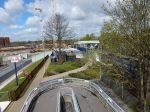

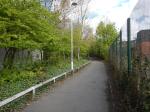
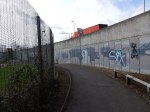

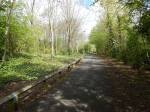
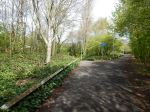


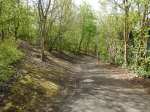
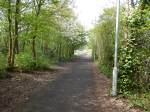
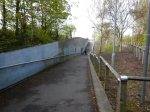
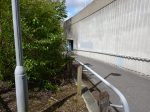
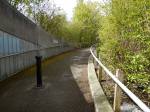
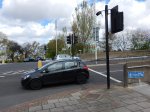

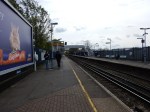
In some ways it was all a bit depressing.
This Google Map shows the area where I walked.
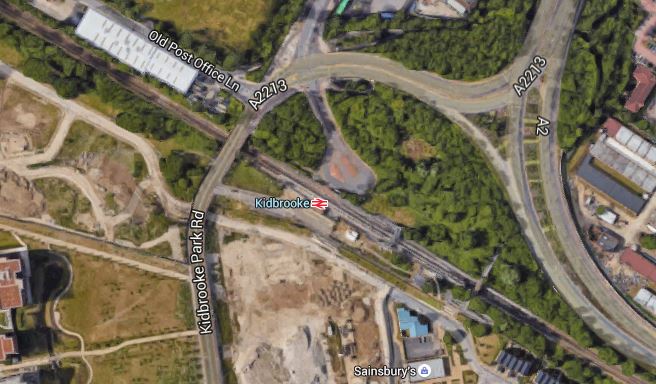
Kidbrooke Station
It looked like a rather nice wooded landscape had been trashed to build the A2 through the area in the last century.
Pretty it is not!
I would hope if housing is developed at Kidbrooke to the north of the station, that something could be done to improve the dreadful feel of the area.
Is This The Worst-Placed Bus Map In London?
These pictures show the bus map at Kidbrooke station.

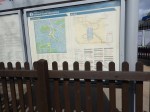
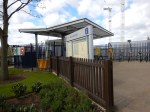
I was checking if I could get a bus to Abbey Wood station.
To read anything, you had to stand in the flower bed, but then the fence was in the way of the entries under A.
You can’t! But how could I find out?
The Millwall Path
This path wasn’t here, the last time I walked this way. So I had to explore.


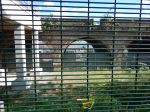
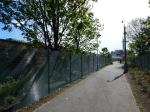


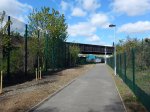

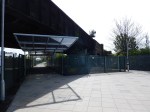

It eventually led to South Bermondsey station.
I think that this could become a popular walking route, as it links up to the path I took from Surrey Quays station, that goes to the still-to-br-built New Bermondsey station and on to Queens Road Peckham station.
It would appear that there is the possibility of opening another path through the arches close to the Millwall Path.
This would probably.
- Give good walking and cycling access between the development between the railway lines of the dive-under and South Bermondsey station.
- Open up more uses for the land between and the buildings under the dive-under.
- Create a direct walking route between the Surrey Quays area and Millwall Football Ground.
I think the whole area could make a very good designer shopping outlet or perhaps a high-technology or design cluster, as there are stations at each of the three corners of the site.
It is certainly a site with possibilities!
Walking Beneath The Dive-Under
I took these pictures, as I walked along the path beside the London Overground between Surrey Quays station and Millwall Football Ground.


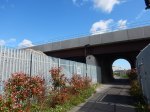
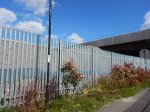
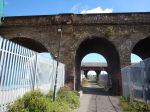


The path is crossed by the massive arches and viaducts of the various tracks that form the Bermondsey Dive-Under.
If you look at A Tribute To Victorian Engineering, it shows the structure from a train on the last viaduct I walked under.
I was talking to a lorry driver, who was probably on standby with a powerful road-sweeper, in case the road got covered in mud. He said it was impressive from inside and that it looks like they are creating a lot of small business units.
He also speculated, that there might be cafes and some retail.
But whatever happens, it looks like London is getting an impressive railway structure, to rival some of the best in the world.
It’s Less Than Twenty Days Until The Rail Timetable Change
The new rail timetable for the UK comes into affect on the 15th May 2016.
The Oracle (the National Railweb site) has a page that lists all the timetable changes. This page gives all the changes for December 2015.
But where is the page for May 2016?
Some of the changes are reflected in the timetables, like the start of services from Lea Bridge station, which I wrote about in The Full Service From Lea Bridge Station Starts On The 16th May 2016.
But other services are not in the on-line timetable!
Some companies also seem to have decided that not to publicise their plans for May 2016.
It is just not good enough!
Work On The Platforms At Hayes And Harlington Station
I took these pictures of the extended Platforms 4 and 5 at Hayes and Harlington station on Wednesday.
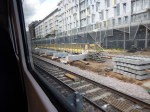

Obviously, there would appear to be some work needed before the services to Hayes can start, as I wrote about in Hayes Shuttles To Start.
Basingstoke To Exeter By Electric Train
In Where Are The Battery Trains? – Part 2, I suggested that short lengths of electrification could be used, so that trains with an IPEMU capability could work a longer route.
I suggested that the West of England Main Line might be handled this way between Basingstoke and Exeter.
The distances from London of the main stations in this part of the line are.
- Basingstoke – 47.76
- Salisbury – 83.48
- Yeovil Junction – 122.60
- Exeter St. Davids – 172.15
Each section would be capable of being run by an IPEMU with a more-or-less fully charged battery.
So if the train could be charged sufficiently at Salisbury, Yeovil Junction and Exeter St. Davids, the line could be worked by electric trains. Intriguingly, eight minutes is shown for the stop at Salisbury on the 07:10 train from Waterloo to Exeter.
It has been regularly said in the last few years, that there will be no new third-rail electrification, but as it looks like Network Rail have electrified some short sections and platforms like the bay platform at Oxted station. So I don’t think a few short lengths of third-rail electrification would be a problem.
To me, as an Electrical Engineer, creating a charging station is one of those problems, that should have an affordable and practical solution.
You have to remember that many of the stations on this line are simple ones with the two tracks, having a platform on either side. So to electrify a station to charge an IPEMUs batteries, there would just need to be two third-rail lines between the tracks at the station. Stations could probably be electrified very easily with little disruption.
The picture shows some very typical third-rail electrification at Kidbrooke station. Note the gap in the third rail, which I assume is for staff or emergency services personnel to cross the track in emergencies. Third rail like this, could be put into all stopping stations.
The West of England Line has a 90 mph speed limit, so a train stopping at a station would charge the batteries with all the train’s kinetic energy as it stopped and the electrification would just be needed to top up the batteries and get the train moving again.
What would also help, is that later four-car Electrostars have eight contact shoes to give better electricity pick up when there are gaps in the third-rail, as you can see in the picture above. So the train would be able to draw electricity from the time the first shoe made contact to the time the last shoe lost contact.
The electrification would also be simple from the electrical point of view, as because the train would be handling the regenerative braking, all the rail would need to be able to do was supply sufficient 750 VDC, whilst the train required it.
If the West of England Line can be electrified, it has three further benefits.
- Salisbury is also on the Wessex Main Line, that I wrote about in Cardiff to Southampton By Electric Train. So if IPEMUs were to work the Cardiff to Southampton route, they could top-up at Salisbury.
- Yeovil Junction is on the Heart of Wessex Line and as the Weymouth end is electrified and the Bristol end will be in a few years, this line must be another that could be served by IPEMUs.
- If Exeter had the ability to fast-charge IPEMUs, then the various branch lines in the area could be given electric trains.
Just when new third-rail electrification has been declared a blind alley, has it found an important niche market?
If the only electrification in the area was third-rail, then there wouldn’t even be a need to build new trains, as a few of the extremely numerous 100 mph-capable Class 377 trains, built in the last few years, could be refurbished and given an IPEMU capability. These could also be converted to dual-voltage, so they could serve Bristol, when that area is electrified.
In my view the second and third routes are the more interesting, as these lines are sold to passengers as a picturesque journey through beautiful countryside. So imagine it with quiet new electric trains instead of noisy and smelly 1980s diesels.
I can’t believe that someone isn’t looking seriously at a plan like this to bring electric trains to Wessex.
 The Anonymous Widower