Equinor And SSE Eye Green Hydrogen Production For 1.32 GW Dogger Bank D
The title of this post, is the same as that of this article on offshoreWIND.biz.
This is the sub-heading.
SSE Renewables and Equinor, the developers of the Dogger Bank Wind Farm in the UK, are exploring two options for Dogger Bank D, the fourth wind farm the partners are looking to build as part of the development. These include using Dogger Bank D for electricity that would feed into the UK grid and/or for green hydrogen production.
This says to me, that depending on need, electricity from the Dogger Bank Wind Farms and D in particular, can be distributed in the grid or converted into green hydrogen.
- The article says that the electrolyser could become the UK’s largest green hydrogen project
- There will be plenty of hydrogen storage in the salt caverns at Aldbrough, which can currently store the equivalent of 320 GWh of electricity, It is currently being expanded to be one of the largest hydrogen stores in the world according to this page on the SSE web site.
- There are currently two gas-fired power stations at Keadby and they will in a few years be joined by a third, that will be fitted with carbon-capture and a hydrogen-fueled power station.
The various wind farms, power stations and gas storage on Humberside are growing into a very large zero-carbon power cluster, with an output approaching six GW.
Any shortfall in wind output, could be made-up by using the Keadby 3 gas-fired power station with carbon capture or the Keadby hydrogen power station.
Conclusion
Humberside is getting a cluster of power stations and wind farms, that can produce almost twice the electricity of Hinckley Point C nuclear power station.
Kittiwake Compensation
The title of this post, is the same as that of this page of Ørsted’s Hornsea Three web site.
The first section of the page gives the background.
Hornsea 3 Offshore Wind Farm received planning permission in December 2020. As part of our Development Consent Order, a requirement was included for ecological compensation measures for a vulnerable seabird species whose populations could be affected by wind farms – the Black-legged kittiwake (Rissa tridactyla).
Our compensation plan focusses on providing artificial nesting structures for kittiwake along the east coast of England. This project is the first of its kind and we are working on new and innovative designs for the artificial nesting structures. Each structure will be purpose-built, bespoke and specific to the landscape characteristics of each location. The structures also present an educational opportunity, allowing researchers to better understand kittiwake.
Developing effective environmental compensation measures is essential to ensure the UK Government’s targets for offshore wind can be realised, to deliver a net zero-carbon future.
So kittiwakes are not being paid compensation, as I don’t suspect many have bank accounts.
But they are being built a few new nesting structures.
Wikipedia has an entry on kittiwakes.
It notes that all European kittiwakes are of the black-legged variety and this is a picture, I took of some on the Baltic in Newcastle.

I’ve seen several pictures of kittiwakes lined up like these.
The document goes on to describe the work being done for the kittiwakes and this is said about work in East Suffolk.
Lowestoft and Sizewell are the only locations between Kent and Humberside with thriving kittiwake colonies. Kittiwake normally nest on steep cliffs with narrow ledges. East Anglia doesn’t have these natural nesting spaces, so kittiwake have reverted to colonising urban areas, for example on windowsills and ledges of buildings. Kittiwake breeding for the first time are most likely to find artificial structures that are situated close to these urban areas. They are less likely to find structures in places where there are not already kittiwake. Lowestoft and Sizewell are therefore two of the few places in East Anglia where artificial structures could be colonised quickly. These purpose-built nesting sites would improve breeding conditions for kittiwake, whilst successfully achieving our compensation requirements to unlock the world’s biggest offshore wind farm.
I took this picture of kittiwakes at Sizewell.
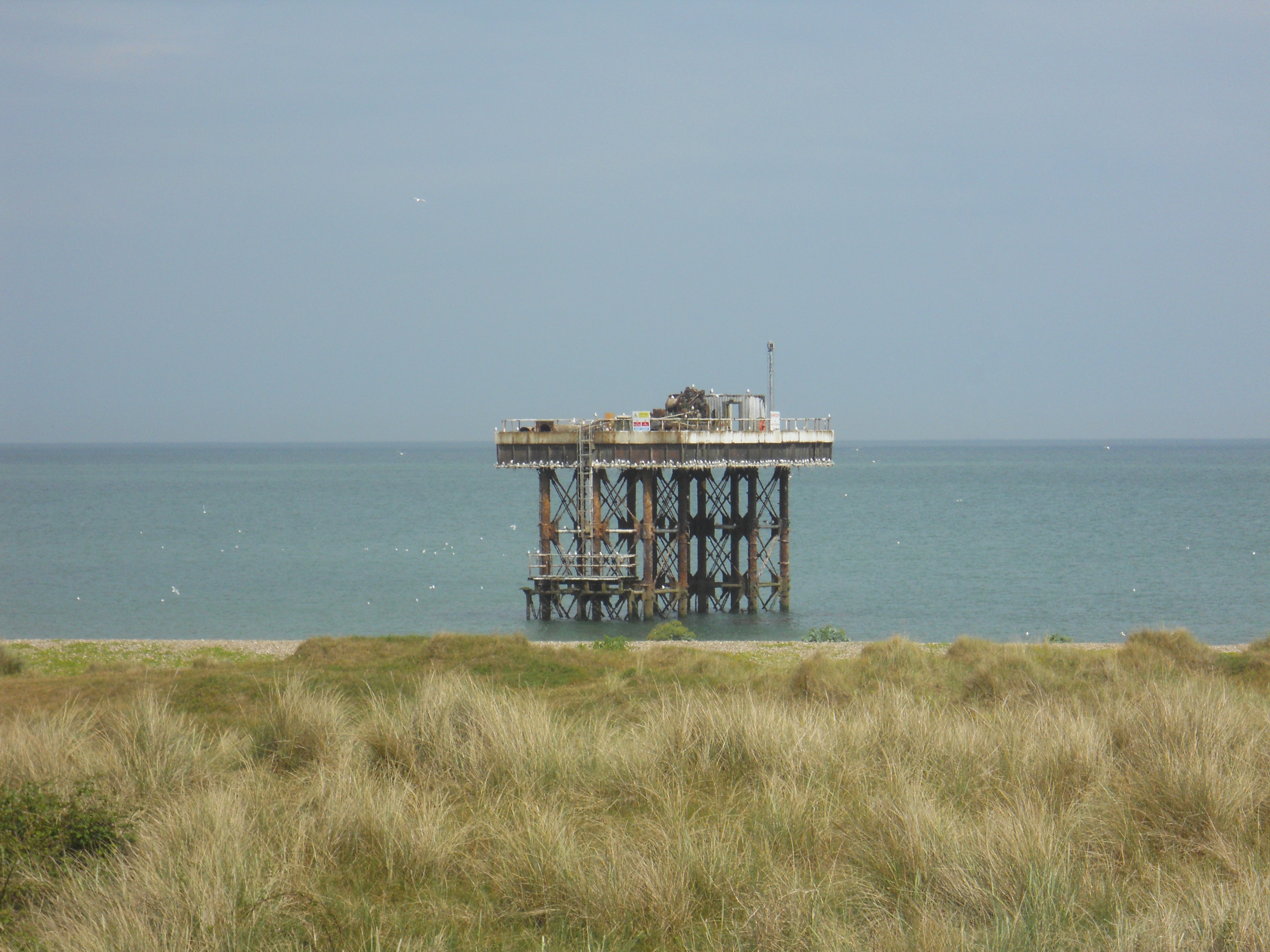
It doesn’t seem too unlike the structure on the Hornsea 3 web site.
JCB: Building A Hydrogen Future
The title of this post, is the same as that of this page on the JCB web site.
The page contains this statement from Lord Bamford, who is JCB’s chairman.
I’m often asked, why hydrogen? Two years ago, I set the challenge that we should be making hydrogen engines for the construction industry and for agriculture. Two years later, we have hydrogen engines working in the kind of equipment that JCB makes. A solution that delivers power in the same way as conventional engines, but with none of the fossil fuels. We’re proving daily that hydrogen does work, that it’s a clean, renewable, transportable fuel.
Bold thinking, a lot of hard work, a lot of innovation – the kind of thing JCB has been delivering for over 75 years.
It is followed by a series of articles on hydrogen and JCB.
An Elegant Solution
There’s an old English expression about couples lying in bed like spoons.
I wonder, if this analogy is used in other languages like Swedish.
Swedish company; Bassoe Technology have certainly used the stacking technique of spoons or bodies in the design of their innovative wind-turbine floats, which they call D-Floaters.
This visualisation shows five D-floaters being transported on a ship.
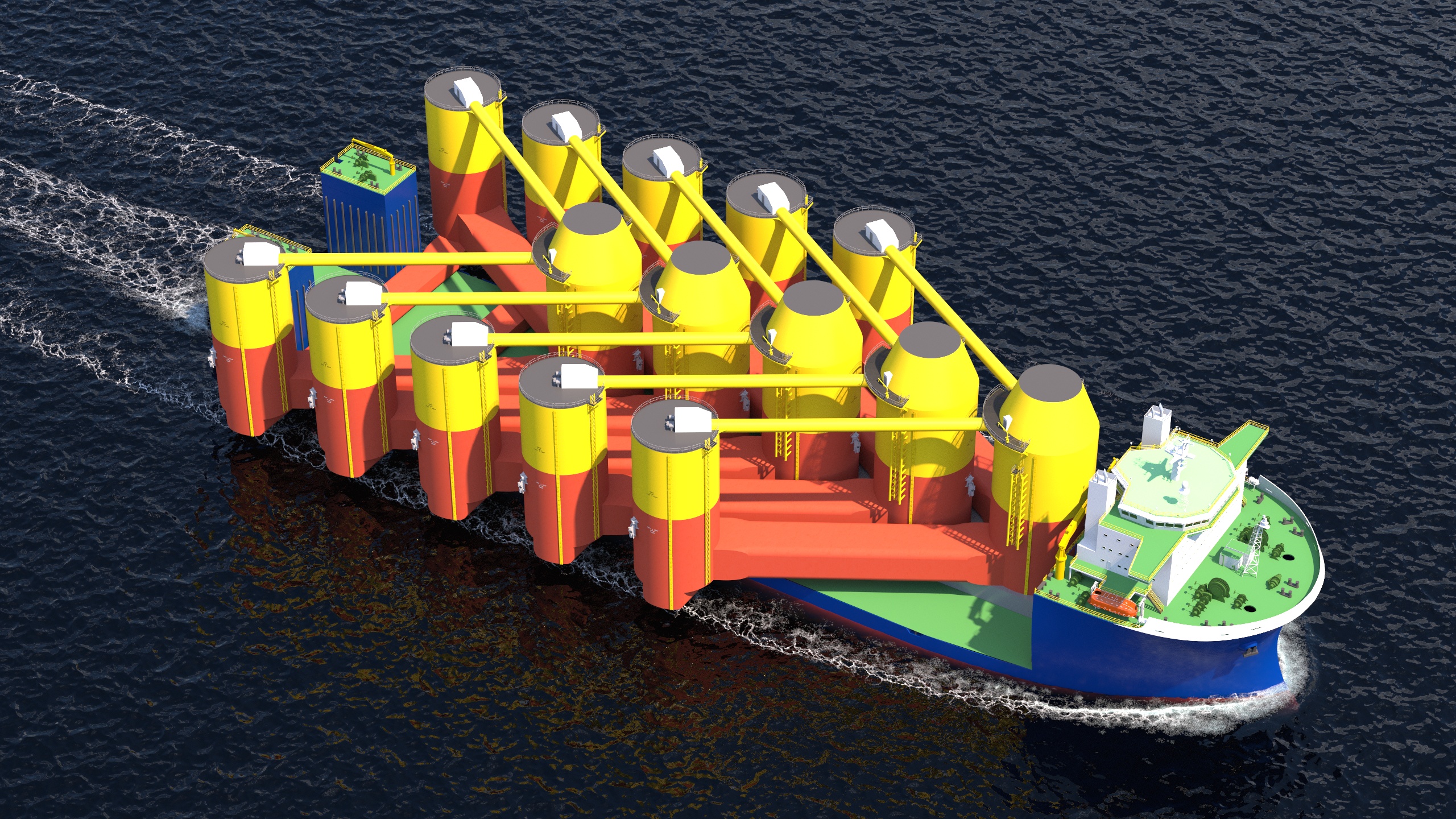
Note.
- The D-Floaters do look strong and sturdy.
- There are several competing floats for wind turbines based on triangles.
- There is probably an optimal cost between transporter ships and D-Floaters.
Given that these structures may be moved thousands of miles before installation, this method of transportation must be economic.
The loaded ship does remind me of one of the bath toys my kids had in the 1970s.
MPS Floating Platform To Feature FibreMax Tendons
The title of this post, is the same as that of this article on offshoreWIND.biz.
This is the sub-heading.
Welsh company Marine Power Systems (MPS) has joined forces with FibreMax to provide integrated floating foundation and tendon solutions to the growing floating offshore wind sector.
And these three paragraphs outline the design.
The tendon solution will be used in the anchoring and moorings of MPS’ tension leg platform (TLP), called PelaFlex, to deliver the highest system stability and zero tilt, the partners said.
It will be the “world’s first” TLP with FibreMax tendons, made with Twaron fiber from Japan-headquartered Teijin.
Compared to traditional steel moorings synthetic cable offers a much better strength-to-weight ratio, longer operational life, and lower levels of maintenance, according to the partners.
Note.
- PelaFlex tension leg platforms are used in the project I wrote about in Simply Blue Group And Marine Power Systems To Pursue INTOG Innovation Project Opportunity.
- Wikipedia is a good source of information on tension leg platforms, where there is a large section on how they could be used for wind turbines.
- Twaron has an informative product page.
- There is more about PelaFlex on the PelaFlex web page including a video.
- The press release for the joint Simply Blue/MPS project talks of six turbines totalling up to 100 MW, which is probably around 17 MW per wind turbine.
It looks to me, that the PelaFlex design is getting better by the simple process of adding lightness and therefore being able to have a higher energy density in a deep area of the sea.
The amount of innovation involved probably makes PelaFlex an ideal component for the upcoming INTOG leasing round.
Centrica Announces Hydrogen Ready Combined Heat And Power Partnership With 2G
The title if this post is the same as that of this press release from centrica.
This is the sub-heading.
Centrica Business Solutions is partnering with 2G Energy AG to provide customers with 100% hydrogen ready Combined and Heat Power (CHP) systems.
This paragraph outlines the project.
The move is in response to the growing need for integrated hydrogen solutions which are a key tool in the decarbonisation of decentralised energy. As the hydrogen network develops, the highly efficient units can continue to run on traditional fuel sources, helping future proof investments by ensuring an extended life for the assets.
It does appear that the 2G units can run on biogas or natural gas and switch to hydrogen, when it is available.
2G Energy have a web site, with lots of case studies.
World’s First Semi-Submersible Floating Offshore Wind Farm Exceeds Expectations
The title of this post, is the same as that of this article on offshoreWIND.biz.
The article is based on this news item from WindFloat Atlantic, which is entitled WindFloat Atlantic Closes 2022, Reaching 78GWh.
These are the first three paragraphs of the news item.
WindFloat Atlantic, world’s first semi-submersible floating offshore wind farm, that was connected to the grid by the end of 2019 and commissioned in 2020, now finishes its full second year in operation.
After nearly 2 years and a half in fully operation, WindFloat Atlantic closes 2022 with an electricity production of 78GWh (+5% more than its first year). This production enables the supply of green energy to more than 25,000 households, as well as the avoidance of 33,000 tones of CO2.
These favourable data show Portugal’s potential on offshore wind energy, which is reflected in the annual availability of the wind farm, which was between 93-94%, as well as showing the success of WindFloat Atlantic’s innovative technology, being a benchmark within the offshore sector.
These points are from the news item.
- The wind farm is only 25 MW. So it is only a small wind farm.
- There were no lost time accidents in the last year of operation.
- It produced more electricity in 2022 than 2021.
- I have calculated the capacity factor at 36 %.
It certainly looks to be a successful application of floating wind power.
US Utility Xcel To Put Form Energy’s 100-hour Iron-Air Battery At Retiring Coal Power Plant Sites
The title of this post is the same as that of this article on Energy Storage News.
This is the first two paragraphs.
‘Multi-day’ battery storage startup Form Energy’s proprietary iron-air battery is set to be deployed at the sites of two US coal power plants due for retirement.
Form Energy said yesterday that definitive agreements have been signed with Minnesota-headquartered utility company Xcel Energy for the two projects, one in Minnesota and the other in Colorado.
On their Technology page, they say this about their battery storage technology.
Our first commercial product is an iron-air battery capable of storing electricity for 100 hours at system costs competitive with legacy power plants. Made from iron, one of the most abundant minerals on Earth, this front-of-the-meter battery will enable a cost-effective, renewable energy grid year-round.
They also seem to be very much into grid-modelling technology. As I’ve build mathematical models for sixty years, I like that!
It does seem Form Energy is on its way.
Green Hydrogen Powered, Off-Grid Data Center-As-A-Service Is A World First
The title of this post, is the same as that of this article on Hydrogen Fuel News.
This is the first paragraph.
ECL has announced the world’s first off-grid Datacenter-as-a-Service, fully powered by green hydrogen, with 99.999% uptime at a much lower cost compared to traditional colocation data centers.
This paragraph gives details of an installation.
It runs with zero emissions at very low noise levels. The data center’s modularity combined with having no need to depend on local utilities means that it can be designed and delivered far more rapidly than other companies’ data centers. Instead of typical construction cycles that take between 18 – 24 month, ECL’s data centers take between six and nine months.
The product looks like a promising development.
I think this is the company’s web site.
Germany Pinpoints 36.5 GW Of Offshore Wind Areas, Publishes Development Plan
The title of this post is the same as that of this article on offshoreWIND.biz.
This is the sub-heading.
Germany’s Federal Maritime and Hydrographic Agency (BSH) has published a new area development plan for the expansion of offshore wind energy. The plan maps out the build-out of offshore wind by 2030, by when the country is to reach 30 GW of capacity connected to its grid, and sets the stage for further deployment of wind turbines at sea, with the 2035 target of 40 GW estimated to be exceeded.
30 GW of offshore wind by 2030 and 40 GW by 2035 are ambitious targets, but how do we compare?
This news story on the UK Government web site is entitled UK Signs Agreement On Offshore Renewable Energy Cooperation, contains this statement.
The initiative is expected to support the UK’s ambitious targets to increase offshore wind fivefold to 50GW, and deliver 18GW of electricity interconnector capacity – up from 8.4 GW today – by 2030.
I don’t think we compare badly.
 The Anonymous Widower