Hywind Tampen
In Equinor Sets Sights On Gigawatt-Scale Floating Offshore Wind Projects In Celtic Sea, I said this about Hywind Tampen.
Equinor is also currently constructing the 88 MW Hywind Tampen project in Norway, which will be the largest floating offshore wind farm in the world when completed in 2023.
This page on the Equinor web site gives more details of Hywind Tampen.
- Hywind Tampen is a floating wind farm under construction that will provide electricity for the Snorre and Gullfaks oil and gas fields in the Norwegian North Sea.
- It will be the world’s first renewable power for offshore oil and gas.
- With a system capacity of 88 MW it will also be the world’s largest floating offshore wind farm.
- The wind farm will consist of eleven 8 MW turbines.
When Hywind Tampen is operational, Equinor will operate nearly half (47 percent) of the world’s floating wind capacity.
This paragraph from the Equinor web page is significant.
The wind farm is estimated to meet about 35% of the annual electricity power demand of the five Snorre A and B, and Gullfaks A, B and C platforms. In periods of higher wind speed this percentage will be significantly higher.
I take this to mean that the gas turbines that currently supply the five platforms will be left in place and that their output will be replaced by wind power, when it is available.
The INTOG Program
I described this in What Is INTOG?, and it is the UK’s program, that includes electrification of rigs and platforms.
The first leases under INTOG would appear to be expected in March 2023.
Decarbonisation Of Offshore Operations Around The World
I’m sure that if Hywind Tampen and/or INTOG is successful, that the technology will be used where possible around the world.
Equinor Sets Sights On Gigawatt-Scale Floating Offshore Wind Projects In Celtic Sea
The title of this post, is the same as that of this article on offshoreWIND.biz.
This is the opening paragraph of the article.
Equinor has disclosed its interest in developing gigawatt-scale floating offshore wind in the Celtic Sea, with the upcoming Celtic Sea floating wind seabed leasing round in view.
These are some other points from the article.
- The Crown Estate is planning a seabed leasing round in the Celtic Sea in 2023.
- As the developer and soon-to-be operator of two of the world’s first floating offshore wind farms, Equinor said it views new floating opportunities in the Celtic Sea with great interest.
- Project development areas are being prepared by The Crown Estate for the development of gigawatt-scale floating offshore wind projects.
Equinor could move into the Celtic Sea in a big way.
On the Projects page of the Blue Gem website, this is said about floating wind in the Celtic Sea.
Floating wind is set to become a key technology in the fight against climate change with over 80% of the worlds wind resource in water deeper than 60 metres. Independent studies have suggested there could be as much as 50GW of electricity capacity available in the Celtic Sea waters of the UK and Ireland. This renewable energy resource could play a key role in the UK meeting the 2050 Net-Zero target required to mitigate climate change. Floating wind will provide new low carbon supply chain opportunities, support coastal communities and create long-term benefits for the region.
How much of this possible 50 GW of offshore wind in the Celtic Sea will be leased by the Crown Estate in 2023?
Ireland Releases Offshore Wind Auction Rules, Expects To Secure 2.5 GW In Capacity
The title of this post, is the same as that of this article on offshoreWIND.biz.
This is the sub-heading for the article.
The Irish Government has approved terms and conditions for the country’s first auction to supply electricity from offshore wind under the Renewable Electricity Support Scheme (ORESS 1) which is expected to secure up to 2.5 GW of offshore wind capacity.
Pre-qualification will start soon, with contract awards in 2023.
The Wikipedia entry for Wind Power In Ireland, starts like this.
As of 2021 The island of Ireland has 5,585 megawatt and the Republic of Ireland has 4,309 MW of installed wind power nameplate capacity, the third highest per capita in the world. In 2020 wind turbines generated 36.3% of Ireland’s electrical demand, one of the highest wind power penetrations in the world.
Ireland certainly seems to be serious about building a lot of wind farms; both onshore and offshore.
Odfjell Oceanwind and Source Galileo Norge Forge Floating Offshore Wind Alliance
The title of this post, is the same as that of this article on offshoreWIND.biz.
The first highlighted paragraph outlines the possible deal.
Odfjell Oceanwind and renewable energy developer Source Galileo’s Norwegian branch, Source Galileo Norge, have signed a memorandum of understanding (MoU) to cooperate on developing floating offshore wind farms using Odfjell Oceanwind’s technology.
Note.
- Odfjell is a Norwegian shipping company, with this web site.
- Odfjell Oceanwind has a web site, with a mission statement of We are shaping the future of floating offshore wind power.
- Source Galileo style themselves as a Developer of Large-Scale Renewable Projects on their web site.
These three paragraph outline the cooperation’s plans.
- The cooperation will target wind farms for the electrification of oil and gas installations, the Utsira Nord seabed development, and selected floating wind parks in Europe.
- According to the partners, they also plan to apply for a seabed lease on Utsira Nord where the project, named UtsiraVIND, will use Odfjell Oceanwind’s proprietary solutions for cost-competitive, industrial production of floating offshore wind units.
- Odfjell Oceanwind is developing the Deepsea Semi floating wind foundation design which could be used in floating wind farms and for off-grid applications including temporary electrification of oil and gas installations in harsh environments.
They seem to have large ambitions, but then the money is available to fulfil the ones that work in Norway.
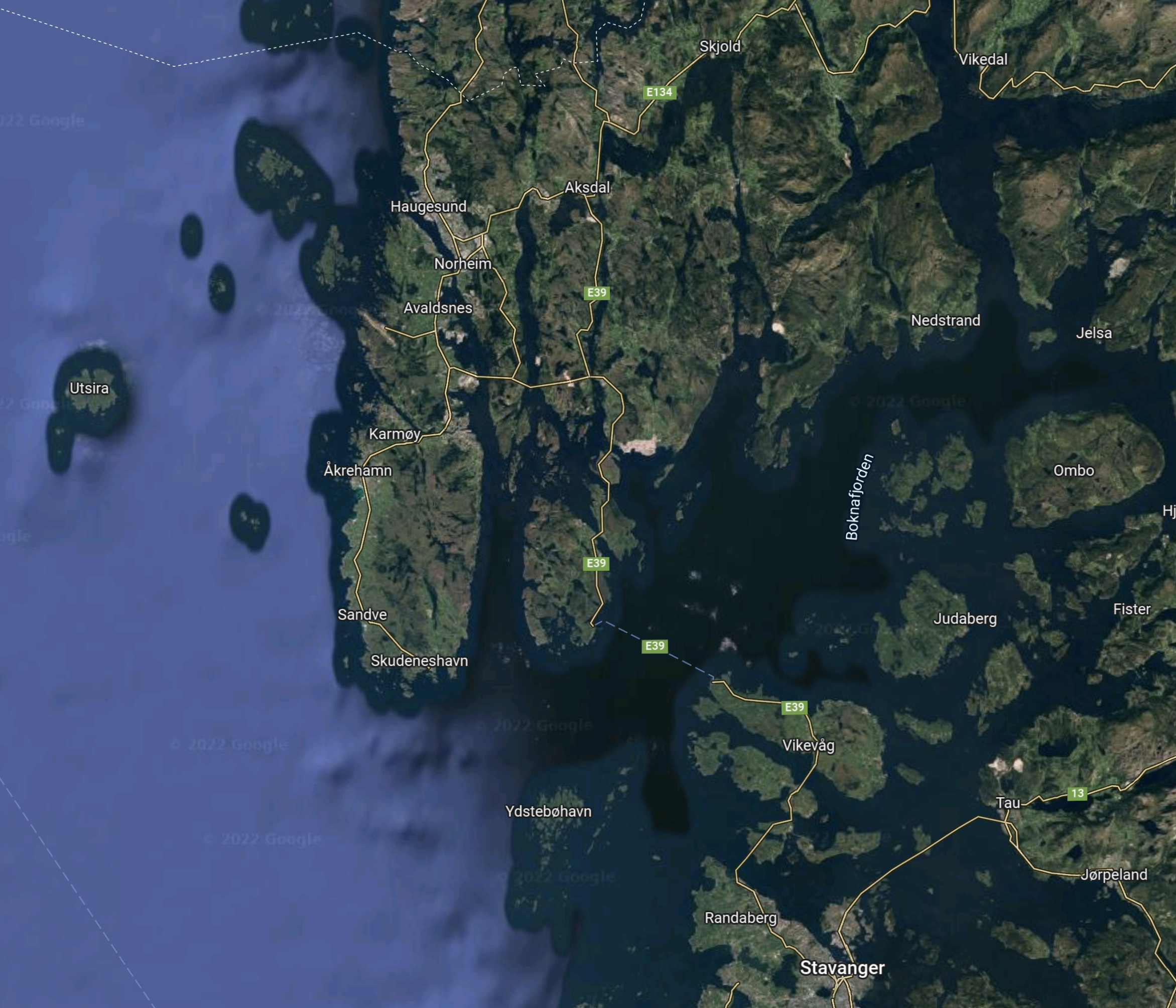
This Google Map shows area of Norway, that includes Utsira, Haugesund and Stavanger.
Note.
- Utsira is the largest island at the West of the map.
- Haugesund is on the coast to the North-East of Utsira.
- Stavanger is the fourth largest city in Norway and is at the bottom of the map.
There would appear to be plenty of space to place floating wind turbines between all the islands and the coast.
These are some other points from the article.
- Odfjell Oceanwind floats appear to be able to handle 15 MW turbines.
- In May, Norway initiated an investment plan to reach 30 GW of offshore capacity by 2040.
- Work has started to prepare Norway for floating offshore wind.
- Norway’s next offshore wind auction is in 2025.
Norway’s going large for wind!
Is Hydrogen The Fuel Of The Future?
The title of this post, is the same as that as this article on Engineering and Technology Magazine.
The article is a must read about hydrogen.
bp And Mauritania To Explore Green Hydrogen At Scale
The title of this post, is the same as that of this press release from BP.
I’m fairly certain, that this post is the first on this blog about Mauretania.
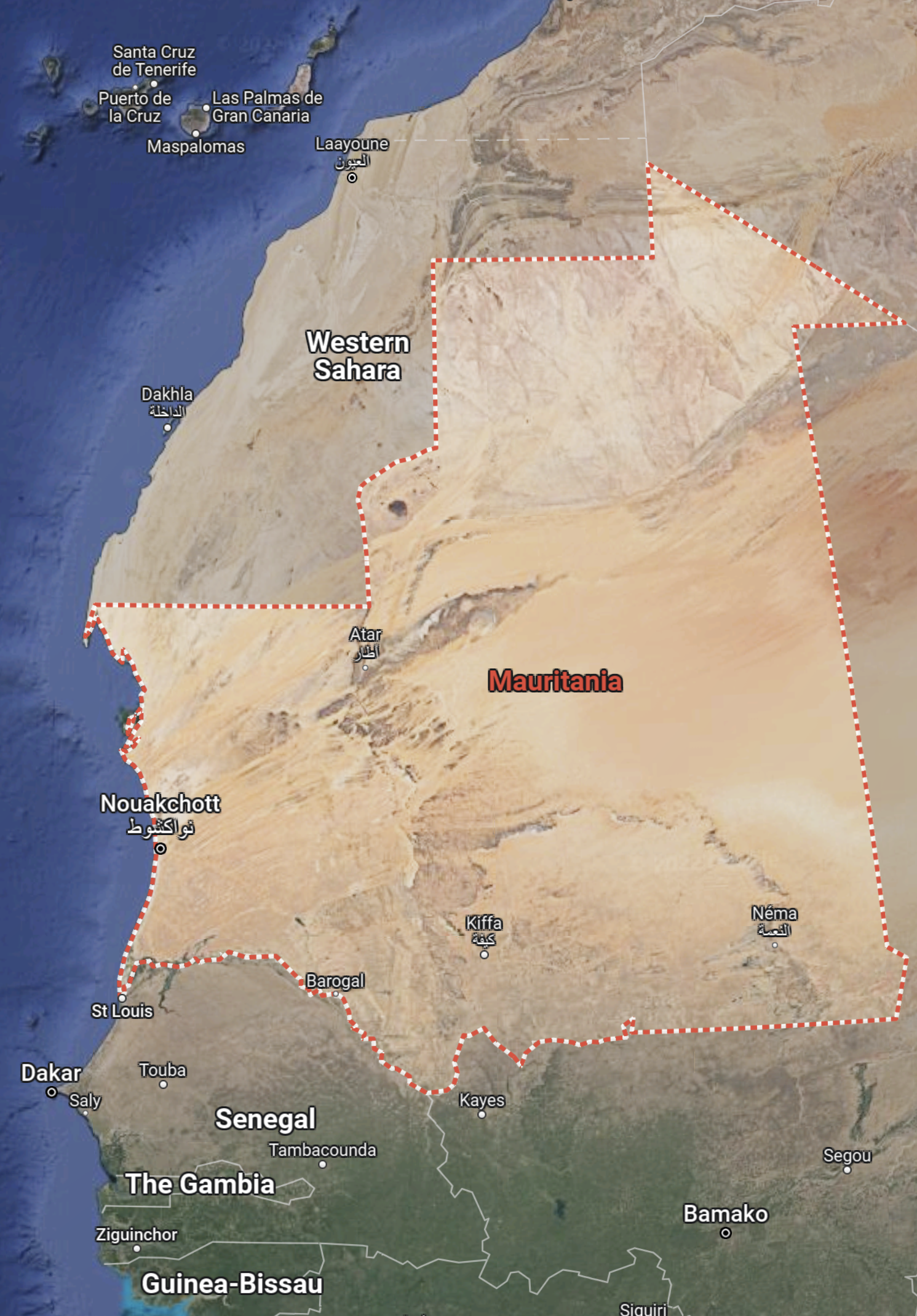
This Google Map shows the country’s position in West Africa.
Note.
- The population is about ten percent more than Wales.
- But the land area is fifty times as large.
- Most people live in the South-West of Mauretania.
The weather appears very different in the two countries.
This is the first paragraph of the press release.
bp today signed a Memorandum of Understanding (MoU) with the Government of Mauritania under which it will deliver an innovative programme exploring the potential for large-scale production of green hydrogen in the country. Building on bp’s existing strong relationships with the country, the agreement could be an important step towards the development of significant green hydrogen production in Mauritania.
There’s certainly a large area to explore.
The MoU was signed today in a meeting alongside COP27.
This paragraph outlines what will be done.
Under the agreement, bp will carry out a number of studies to evaluate the technical and commercial feasibility of producing green hydrogen in Mauritania. Green hydrogen is produced by the electrolysis of water, powered by renewable energy.
Given the area of Mauretania, there could be a substantial tonnage of green hydrogen produced.
BP And Mauritania
This paragraph details the current relationship between BP and Mauretania.
bp and Mauritania already have a long-standing relationship. bp and partners, including Mauritania’s Société Mauritanienne Des Hydrocarbures (SMH), are now working toward the completion of the Greater Tortue Ahmeyim (GTA) Phase 1 liquefied natural gas project. The development of this innovative offshore project on the border of Mauritania and Senegal was approved in 2018. It is set to produce around 2.3 million tonnes of LNG per year, with sufficient resources to support production for over 20 years. Earlier this year, bp also announced the signature of an Exploration and Production Sharing Contract for the BirAllah gas resource in Mauritania.
There could be scope to move Mauretania towards net-zero.
Electrolysis Of Salt Water
Typically electrolysis for hydrogen uses pure water, but companies like Torvex Energy, which I covered in a post called Torvex Energy can electrolyse salt water.
Surely, in a country like Mauretania, where water is much more precious than the UK, salt water electrolysis should be used.
I wouldn’t be surprised to see a major gas company like BP or Shell form a very strong relationship with Torvex Energy.
Isle of Man Steam Packet Fears Wind Farm Plans May Disrupt UK Routes
The title of this post, is the same as that of this article on the BBC.
These are the first four paragraphs.
Plans to build two new offshore wind farms in the Irish Sea could disrupt Isle of Man ferry services, a Manx operator has warned.
Energy firms have proposed projects named Morgan and Morecambe in areas between the island and Lancashire.
The Isle of Man Steam Packet Company said the developments could cause navigation issues for its sailings to Liverpool and Heysham in bad weather.
But the project’s backers said it was possible to find “ways to co-exist”.
Given, that the approaches to the Ports of Felixstowe, Immingham, Leith, Liverpool, London Gateway and Tilbury, are littered with hundreds of wind turbines, I would suspect that finding a solution will not be difficult.
Perhaps, The Isle of Man Steam Packet Company is angling for a subsidy.
The Isle of Man Steam Packet Company has a current fleet of three ships.
- The company serves Belfast, Dublin, Heysham and Liverpool.
- All routes will likely be through wind farms in a few years.
- The ships were all built in 1998.
- A new ship is being built in South Korea for delivery in 2023.
- All ships are diesel-powered.
Does The Isle of Man Steam Packet Company have a decarbonisation policy?
With the three wind farms having the following sizes.
- Mona – 1500 MW
- Morgan – 1500 MW
- Morecambe – 480 MW
Perhaps, some of the nearly 3.5 GW could be used to power electric or hydrogen ships to the Isle of Man.
The Isle of Man is also powered currently by the Isle of Man to England interconnector and an 85 MW combined cycle gas turbine power station at Pulrose, in the capital, Douglas.
With all of the wind power surrounding the island, perhaps there is some scope for repurposing the island’s economy.
It’s not the island for steelmaking or heavy industry, but what about a few data centres?
First-Ever Subsidy-Free Offshore Wind Farm Halfway Done
The title of this post, is the same as that of this article on offshoreWIND.biz.
These three paragraphs, outline the project.
Cadeler’s wind turbine installation vessel Wind Osprey has installed the 70th Siemens Gamesa 11 MW wind turbine at the 1.5 GW Hollandse Kust Zuid offshore wind farm in the Dutch North Sea.
The installation of the 70th turbine marks the halfway milestone on the 140-turbine project, Cadeler said.
Once fully installed and commissioned in the summer of 2023, Hollandse Kust Zuid will become the largest operating offshore wind farm, as well as the first one built without government subsidies.
I very much believe that in the near future many, if not all wind farms will be built without subsidy.
Morecambe Offshore Windfarm
I found this article on beyondradio, which is entitled Plans Unveiled To Build New Offshore Windfarms Off Morecambe Bay.
These care the first two paragraphs.
Plans are being developed to build new offshore windfarms off the Morecambe Bay coast.
Proposals have been unveiled for ‘Morecambe’ and ‘Morgan’, two new offshore wind farms being developed in the Irish Sea.
I’ve discussed Morgan and its sister; Mona before in Mona, Morgan And Morven, which describes the three projects BP are developing in a joint venture with enBW.
I haven’t come across the Morecambe Offshore Windfarm before and it has its own web site.
It has this summary of the wind farm.
Renewable energy is central to supporting the UK’s ambitions to lead the world in combatting climate change, reducing our reliance on fossil fuels and embracing a future where renewable energy powers our homes and businesses.
Morecambe Offshore Windfarm which has a nominal capacity of 480MW. That’s enough to power over half a million households. It will also contribute to the UK Government’s commitment to:
- Generate 50GW of power from offshore wind by 2030
- Reach net zero by 2050.
It is located approximately 30km from the Lancashire coast.
This EnBW-BP infographic describes the Morgan and Mona projects.

it appears that the proposed Morecambe Offshore Windfarm will fit in the notch on the Eastern side of EnBW-BP’s two wind farms; Mona and Morgan.
- All three wind farms are fixed foundation wind farms.
- They have a total output of just under 3.5 GW.
- Could they share infrastructure like cables and substations?
- Heysham 1 is a 485 MW nuclear station, that will be decommissioned in 2024.
- Heysham 2 is a 1815 MW nuclear station, that will be decommissioned in 2028.
- What’s left of the two Heysham nuclear stations can probably generate 2.3 GW
Could it be that over 2.3 GW of wind power is being planned in the Irish Sea to make up for the loss of the four reactors at Heysham?
Could also the 480 MW Morecambe Bay wind farm be replacing what’s left of Heysham 1?
There would probably need to be a battery at Heysham, but it looks like the wind farms could be replacing the Heysham nuclear power station!
There will be consultation with the locals about the Morecambe ans Morgan wind farms, which will take place on Saturday, November 19, 2.30pm – 6.30pm, at Morecambe War Memorial Hall on Church Street.
I think, I might go!
Shannon Estuary Could Support Build-Out of 30 GW Of Floating Wind, House 2 GW of Electrolysis Capacity
The title of this post, is the same as that of this article from offshoreWIND.biz.
This is the opening paragraph.
The Shannon Estuary in Ireland can support the build-out of up to 1.8 GW of floating wind per year and up to 30 GW by 2050. In addition, it could accommodate a 2 GW electrolyser for hydrogen and downstream e-fuels production, according to the US-headquartered company Bechtel, which reviewed the Shannon Foynes Port Company’s Vision 2041 masterplan.
The island of Ireland will truly be going green.
The Turbine Production Figures
The headline talks about rolling out 1800 MW of floating wind turbines per year and in the body of the article it says this.
At peak, up to 120 floating turbines could be installed offshore per year.
This would imply 15 MW turbines, which is entirely feasible.
As all these figures were produced and/or fully checked by Bechtel, I would suspect that they are very sound.
So does this imply that 120 floating wind turbines is a typical production limit of this type of turbine assembled in a custom-built facility in a port?
 The Anonymous Widower