Germany Pinpoints 36.5 GW Of Offshore Wind Areas, Publishes Development Plan
The title of this post is the same as that of this article on offshoreWIND.biz.
This is the sub-heading.
Germany’s Federal Maritime and Hydrographic Agency (BSH) has published a new area development plan for the expansion of offshore wind energy. The plan maps out the build-out of offshore wind by 2030, by when the country is to reach 30 GW of capacity connected to its grid, and sets the stage for further deployment of wind turbines at sea, with the 2035 target of 40 GW estimated to be exceeded.
30 GW of offshore wind by 2030 and 40 GW by 2035 are ambitious targets, but how do we compare?
This news story on the UK Government web site is entitled UK Signs Agreement On Offshore Renewable Energy Cooperation, contains this statement.
The initiative is expected to support the UK’s ambitious targets to increase offshore wind fivefold to 50GW, and deliver 18GW of electricity interconnector capacity – up from 8.4 GW today – by 2030.
I don’t think we compare badly.
SSE Renewables Lays Out Plans To Bolster Ties With Fishing Industry
The title of this post, is the same as that of this article on offshorewind.biz.
This is the sub-heading.
SSE Renewables has published a report that sets out the company’s vision to better co-exist with fisheries when building and developing offshore wind energy.
Sounds like a good idea on the line of Jaw, jaw is better than war, war!
The original press release is here.
Suffolk: Sizewell C To Explore ‘Innovative’ Waste Heat Lido
The title of this post, is the same as that, of this article on the East Anglian Daily Times.
This is the sub-heading.
The developers of the new Sizewell C nuclear power station have expressed an interest in an “innovative” plan to use waste heat from the plant to heat a new lido.
And this is the first paragraph.
Creating the outdoor pool was one of a number of ideas contained within the Leiston masterplan – a blueprint for transforming the Suffolk town – and now the Sizewell C company has pledged to explore the proposal with the town council.
This map shows the town of Leiston and the Sizewell power stations site.
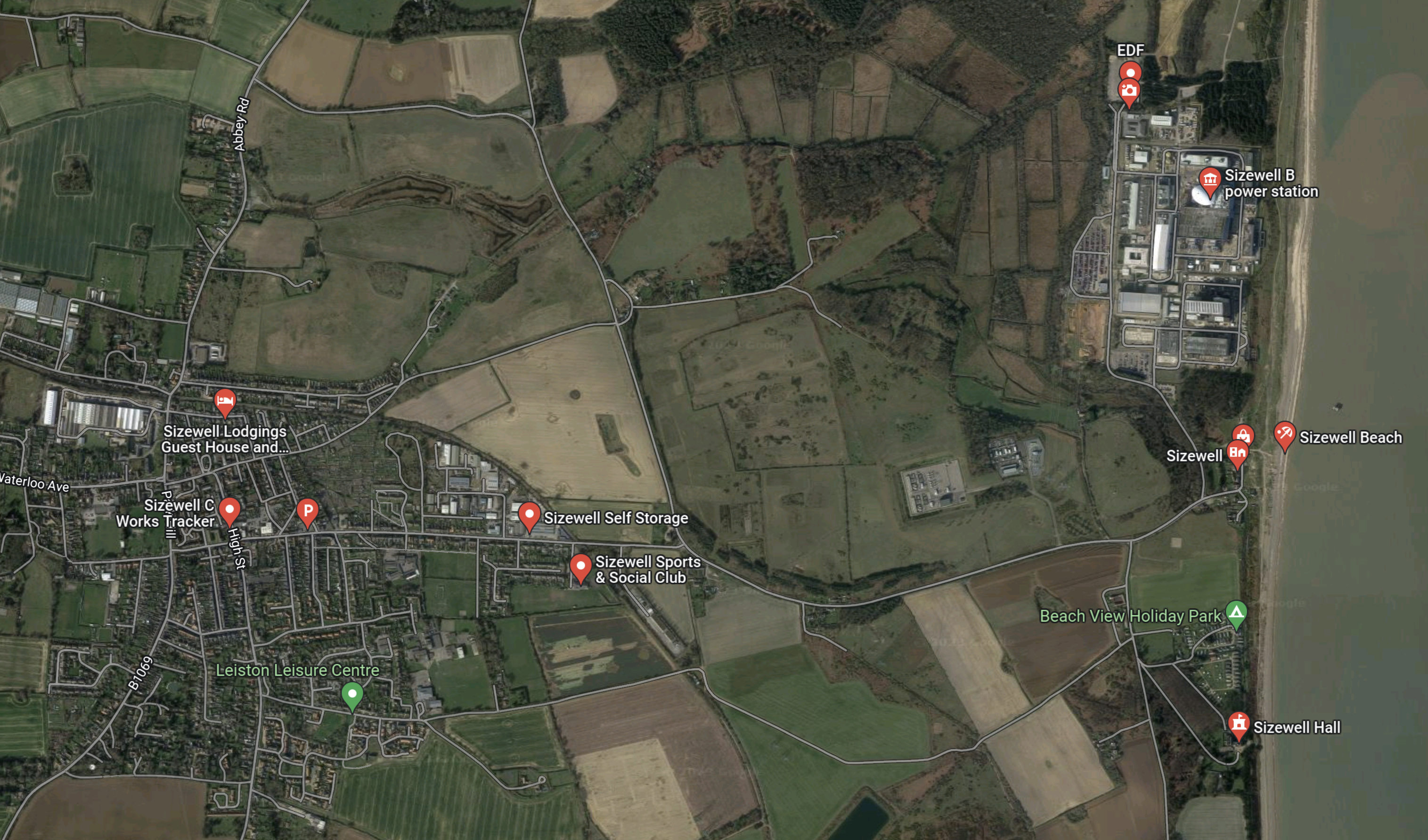
Note.
- Leiston is in the South-West corner.
- The power station site is in the North-East corner.
I have a few thoughts.
Pink Hydrogen
Pink hydrogen is zero-carbon hydrogen produced using nuclear power.
The production of hydrogen is already part of the plans for Freeport East, which I wrote about in Ryze Hydrogen’s Suffolk Freeport Hydrogen Vision Takes Shape.
In that article, I said this.
This would mean that Sizewell’s 6 MW electrolyser could be producing around a thousand tonnes of hydrogen per year or 2.6 tonnes per day.
The more efficient high temperature electrolysis can be used, using some of the waste heat from the nuclear power station. I wrote about this in Westinghouse And Bloom Energy To Team Up For Pink Hydrogen.
I also suspect that it may be more efficient to use seawater to produce the hydrogen.
Could high temperature electrolysis be used at Sizewell?
District Heating
The waste heat can also be used for district heating.
A Train Service To Ipswich
This Google Map shows the railway through Leiston, which is currently used to bring fuel to Sizewell B power station and remove waste.

Note.
- The railway starts in the North-West corner of the map.
- The green dot in that corner marks Leiston cemetery.
- The railway then goes East before turning to the South-East corner of the map.
- In that corner, there are two sidings for loading and unloading the flasks.
Surely, Leiston also needs a new railway station, with at least an hourly service to Saxmundham, Wickham Market, Woodbridge and Ipswich. And possibly even Aldeburgh!
This map from OpenRailwayMap shows the route of the Aldeburgh branch.
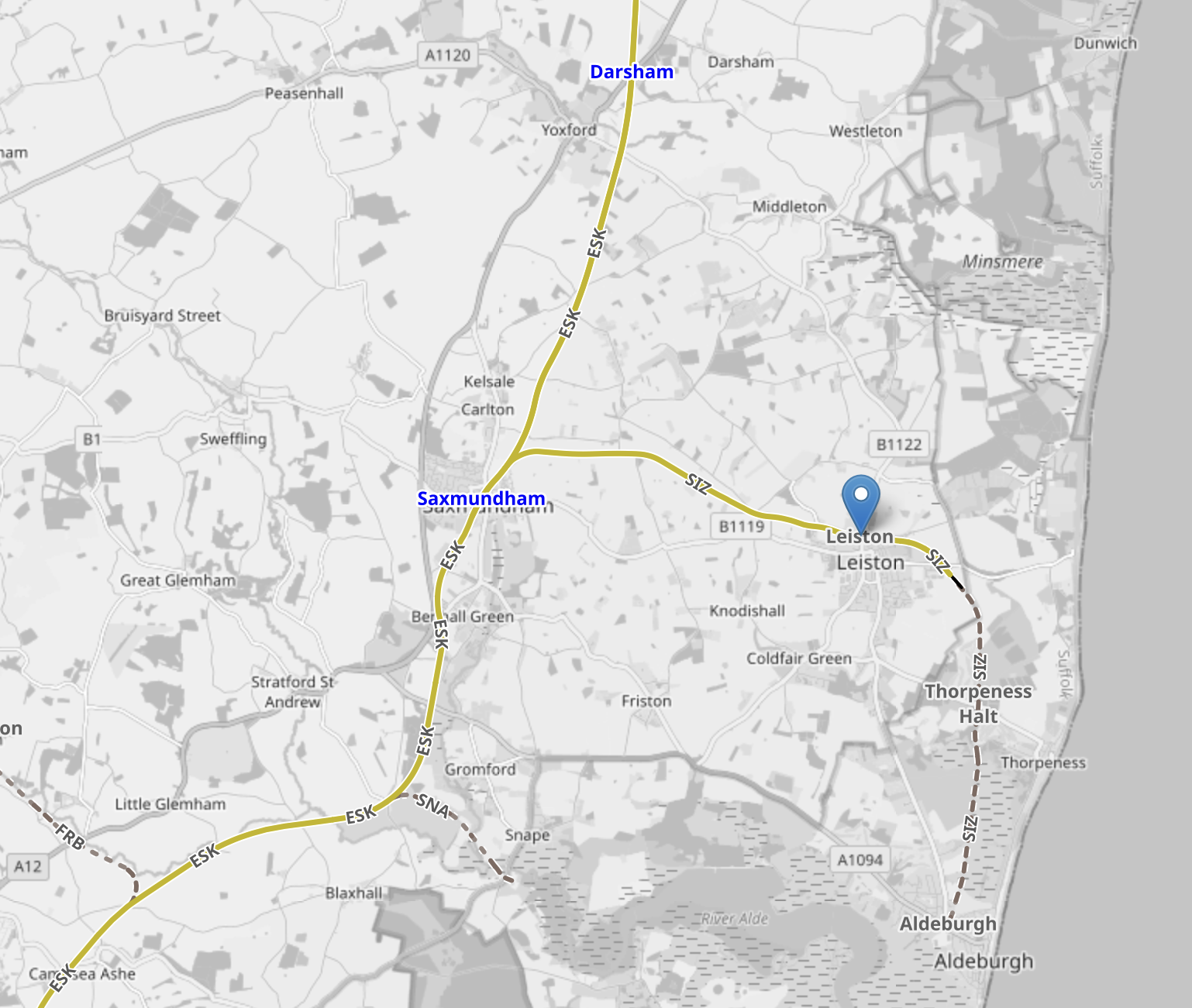
Note.
- The North-South yellow line is the East Suffolk Line.
- Their were three stations; Leiston, Thorpeness Halt and Aldeburgh.
- Leiston station was in the North of the town.
The intact section of the branch is shown in yellow.
There would be no need for any electrification, as Stadler, who built Greater Anglia’s Class 755 trains, are the masters of battery-powered trains and could convert these trains to battery operation. Recently, one of the smaller metro trains, that Stadler are building for Liverpool, ran for nearly 90 miles on battery power alone, which I wrote about in New Merseyrail Train Runs 135km On Battery.
An hourly train service would double the frequency of the train service between Saxmundham and Ipswich.
Does the Leiston masterplan include a train service?
And if it does, does it terminate at a new Aldeburgh station?
Conclusion
Integrating development around a nuclear power station could be a way of levelling up.
It would bring electricity, heat, a rail link and jobs to an area.
Will Rolls-Royce use these benefits to sell one of their SMRs to those living around a site?
Rolls-Royce Successfully Tests mtu Engines With Pure Hydrogen
The title of this post, is the same as that of this press release from Rolls-Royce.
These are the two bullet points.
- mtu gensets and cogeneration units to be further developed for 100% hydrogen use
- First use in the new CO2-neutral container terminal in the German inland port of Duisburg
This is the first paragraph.
Rolls-Royce (LSE: RR., ADR: RYCEY) today announces that it has conducted successful tests of a 12-cylinder gas variant of the mtu Series 4000 L64 engine running on 100% hydrogen fuel. The tests, carried out by the Power Systems business unit, showed very good characteristics in terms of efficiency, performance, emissions and combustion. These tests mark another important step towards the commercial introduction of hydrogen solutions to meet the demand of customers for more sustainable energy.
Note.
- Rolls-Royce mtu have converted and tested a natural gas version of the Series 4000 L64 engine.
- The Class 43 power cars used in the iconic InterCity 125 train and powered by mtu V16 4000 R41R engines.
Are the two engines related? If so, can Rolls-Royce mtu build a hydrogen engine that could power an InterCity 125?
It was a rapid development.
Andrea Prospero, an engineer at Rolls-Royce responsible for the development of the hydrogen engine, is quoted as saying.
We are very pleased with the rapid progress. The very low engine emissions are well below the strict EU limits, no exhaust gas aftertreatment is required.
Due to the different combustion behaviour of hydrogen compared to natural gas, some engine components including fuel injection, turbocharging, piston design and control, were modified in the test engine. However, by using proven technologies within the Power Systems’ portfolio, such as mtu turbochargers, injection valves, and engine electronics and control, the development of the engine to use hydrogen was advanced quickly and efficiently.
Diesel and natural gas internal combustion engine manufacturers like Cummins, Rolls-Royce mtu and several other companies, have a long history of research, that they have the knowledge to convert diesel or natural gas engines to hydrogen.
So far only Cummins, JCB and Rolls-Royce mtu have disclosed a multi-fuel line of engines.
First Deployment For CO2-Neutral Power Supply At Duisport
There is a section in the press release called First Deployment For CO2-Neutral Power Supply At Duisport, where this is said.
Duisport, one of the world’s largest inland ports, is working with several partners to build a hydrogen-based supply network for its new terminal, ready for operation in 2024. In the future, most of the electricity required by the port itself will be generated directly on site from hydrogen in a CO2-neutral manner. This will be achieved by two combined heat and power plants with mtu Series 4000 hydrogen engines (with a total installed capacity of 2MW) as well as three mtu fuel cell systems (with a total installed capacity 1.5MW).
As part of its sustainability program, Rolls-Royce is realigning the product portfolio of Power Systems towards more sustainable fuels and new technologies that can further reduce greenhouse gas emissions.
There is also this Rolls-Royce graphic, which shows the energy sources.

It would appear batteries, combined heap and power (CHP), grid electricity, hydrogen electrolyser, hydrogen storage and renewable electricity are being brought together to create a climate-neutral energy system.
Is this a world-first, where hydrogen engines and fuel cell systems will be working together?
UK Round 4 Offshore Wind Winners To Start Paying Option Fees With Lease Agreements Now Signed
The title of this post, is the same as that of this article on offshoreWIND.biz.
This is the sub-heading.
The Crown Estate has signed Agreements for Lease for all six offshore wind projects selected in the UK’s Round 4 offshore wind seabed leasing. This enables the developers to now further progress their plans and also kicks off the period in which they will be paying annual option fees of almost GBP 900 million to The Crown Estate and HM Treasury.
The article then lists the wind farms.
- RWE’s Dogger Bank South East & West (3 GW).
- EnBW and BP’s Morgan and Mona (3 GW).
- TotalEnergies and Corio Generation’s Outer Dowsing (1.5 GW).
- Cobra and Flotation Energy’s Morecambe (480 MW).
This is just under 8 GW.
The article then goes on to show what developers will pay to the Crown Estate.
These two paragraphs explain the fees paid.
By signing the Agreements for Lease, which can be in effect for a maximum of ten years, the developers have committed to at least three years of option payments and will pay an annual option fee for each project until they are ready to enter into a lease for the seabed site.
The option payments, totalling some GBP 979 million per year, reduce as a project moves into a lease, or leases, and cease when a lease(s) for the maximum capacity/whole site is granted, at which point developers will move to paying rent.
It looks to me that developers will pay nearly a billion pounds per year for at least a minimum of three years and not more than ten years.
Once a project moves into a lease, rent will be paid.
It seems to be a very profitable occupation to own loads of empty sea!
European Company To Make All Wind Turbine Blades 100 % Recyclable, Plans To Build Six Recycling Factories
The title of this post, is the same as that, of this article on offshoreWIND.biz.
This sub-heading outlines what the company plans to do.
A Denmark-based company Continuum plans to make all wind turbine blades fully recyclable and stop landfilling and their emissions-intensive processing into cement with six industrial-scale recycling factories across Europe, backed by investment from the Danish venture capital firm Climentum Capital and a grant from the UK’s Offshore Wind Growth Partnership (OWGP).
Other points in the article include.
- Continuum plan six factories.
- The first factory will open at Esbjerg in Denmark in 2024 and will be able to accept end-of-life blades this year.
- The second factory will be in the UK and it will be followed by others in France, Germany, Spain, and Turkey.
- Each factory will have the capacity to recycle a minimum of 36,000 tonnes of end-of-life turbine blades per year.
This paragraph describes, what will happen to the recycled turbine blades.
The company will recycle wind turbine blades into composite panels for the construction industry and the manufacture of day-to-day products such as facades, industrial doors, and kitchen countertops.
Looking at their description of their mechanical separation process, I suspect that they could recycle other products and manufacture lots of others.
GeoPura’s Construction World First
On the GeoPura web site there is a case study, which is entitled Construction World First.
These two paragraphs outline what was done.
Working in partnership with Siemens Energy our hydrogen fuel cell system, has provided off grid power and heat to National Grid’s UK Viking Link construction site.
The fuel cell system removes the need for diesel generators and provides innovative, sustainable, low carbon energy to the Viking Link interconnector project site.
The interesting thing, is that the heat that the hydrogen fuel cell gives out is collected and used to heat the remote site.
This last paragraph, explains the need for off grid power.
Off grid power is needed as this site didn’t have a grid connection for at least six to eight months, and the fuel cell system provided enough heat and power for the construction village during that time, removing the need for diesel generators.
There’s more in this Siemens Energy report.
Lithuanian Gas Pipeline Hit By Large Explosion
The title of this post, is the same as that of this article on the BBC.
This is the sub heading.
A large blast has hit a gas pipeline in the Pasvalys region of northern Lithuania, near the Latvian border.
This Google Map shows the location of the explosion.
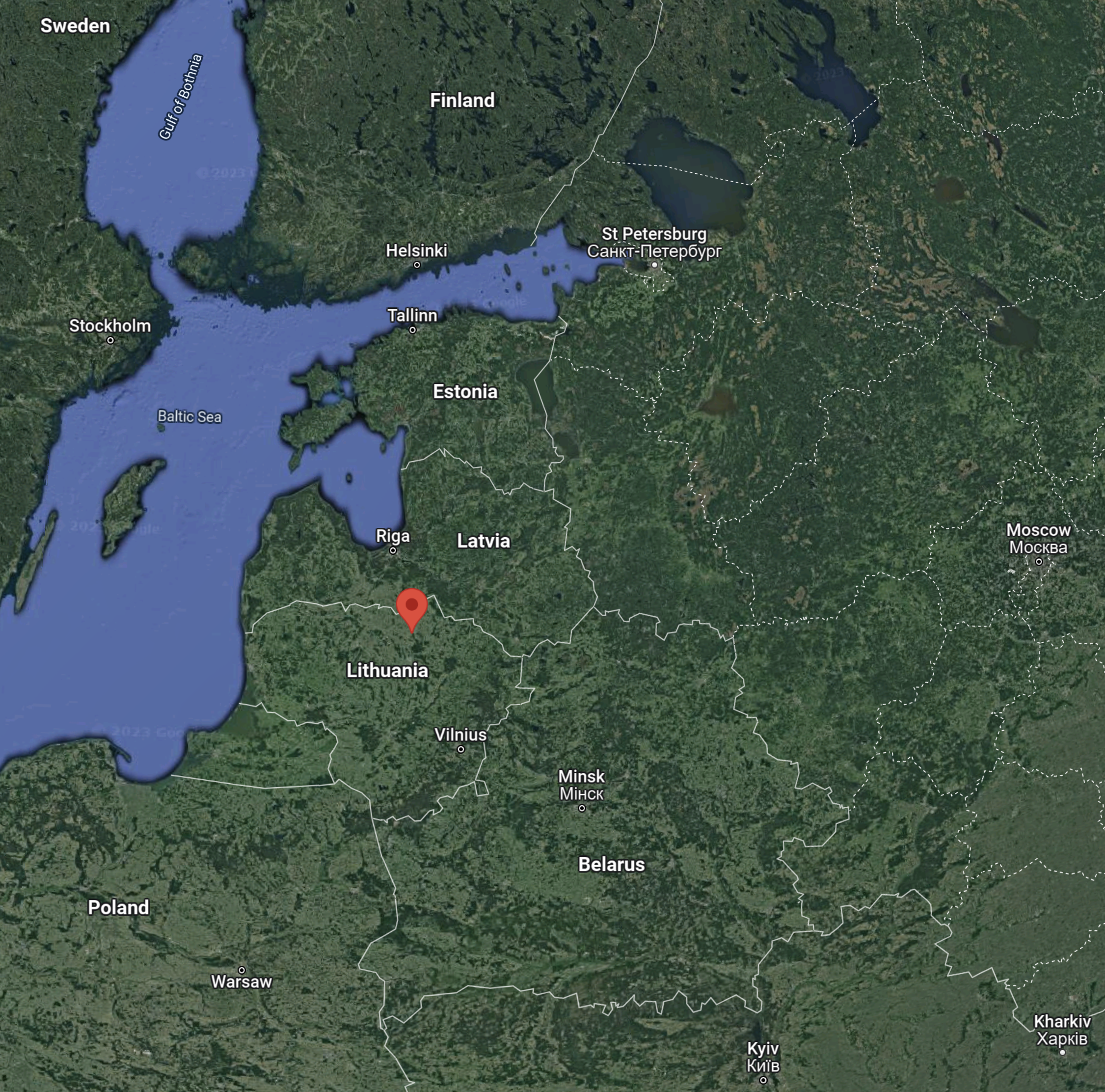
Note.
- Country borders are marked as white lines.
- The site of the explosion at Pasvalis Vienkiemii, is marked with a red arrow.
- Pasvalis Vienkiemii is about a hundred miles from Vilnius.
- About a hundred miles to the East of Pasvalis Vienkiemii, is the point, where Belarus, Latvia and Lithuania meet.
- Russian territory is about a hundred miles further to the East.
I have experience of the quality of borders in that area.
South-West of Lithuania and lying between that country and Poland, there is the small Russian enclave of Kaliningrad.
These pictures show the border between Poland and the Kaliningrad enclave of Russia.





If the borders between Belarus, Latvia and Lithuania are as secure as this, they are almost an open invitation to saboteurs to enter and do damage.
First Offtake Deal Signed For 500MW/4,000MWh Advanced Compressed Air Energy Storage Project In California
The title of this post, is the same as that of this article on Energy Storage News.
These three paragraphs explain the deal.
Advanced compressed air energy storage (A-CAES) company Hydrostor has signed a power purchase agreement (PPA) for one of its flagship large-scale projects in California.
Central Coast Community Energy, one of California’s several dozen Community Choice Aggregator (CCA) non-profit energy suppliers, has signed a 200MW/1,600MWh energy storage PPA with a 25-year term with Toronto-headquartered Hydrostor for its Willow Rock Energy Storage Center.
That’s just under half of the output and capacity of the planned 8-hour, long-duration energy storage (LDES) facility, which is designed to be 500MW/4,000MWh. This is its first offtake deal, but the company is in discussion for others to take the rest of the plant’s available resource.
The article says that Hydrostor aim to have the plant online by 2028.
This segment describes their current projects.
It is currently working on large-scale projects with around 9GWh storage capacity in total across two sites in California as well as another in Australia.
Together with Willow Rock in Kern County, Hydrostor is developing the 400MW/3,200MWh Pechos Energy Storage Center in San Luis Obispo County, California, and the 200MW/1,500MWh Silver City Energy Storage Center in Broken Hill, New South Wales, Australia.
On its UK Projects page, Highview talks about a 200MW/2.5GWh facility in Yorkshire, which puts the two companies in similar markets, with Hydrostor appearing to have slightly larger systems under development.
Conclusion
It will be interesting to see how this technology progresses and which company does best in what is a very large energy storage market.
Zero-Carbon Lighting Of Large Spaces
In Cockfosters Train Depot – 12th January 2023, I took a series of pictures of Cockfosters Train Depot, of which these are a selection.








Note, the lamp clusters on top of tall poles to light the area.
You see lots of these lights to illuminate play areas, car parks, rail sidings and truck depots.
Could a SeaTwirl or another vertical wind turbine be placed as high as possible up the pole, that supports the lights?
- A battery would be needed for when the wind doesn’t blow.
- A control system would be used to use the lights, when they are needed.
- The poles would be able to be laid down, like many lights can be, for servicing from the ground.
Cockfosters would be an excellent location for a test, as the wind is always blowing and the site has an altitude of nearly a hundred metres.

