Masdar To Invest In Iberdrola’s 1.4 GW East Anglia Offshore Wind Project
The title of this post, is the same as that of this article on offshoreWIND.biz.
This is the sub-heading.
Iberdrola and Masdar have signed a strategic partnership agreement to evaluate the joint development of offshore wind and green hydrogen projects in Germany, the UK, and the US, which also includes an investment in Iberdrola’s 1.4 GW East Anglia 3 offshore wind project in the UK.
These first two paragraphs outline the del.
After the parties’ successful co-investment in the Baltic Eagle offshore wind farm in Germany, the new milestone of this alliance will be to achieve a further co-investment concerning the 1.4 GW East Anglia 3 offshore wind project in the UK, said the companies.
According to the partners, the deal has been under negotiation for the last few months and could be signed by the end of the first quarter of 2024. Masdar’s stake in the wind farm could be 49 per cent.
This deal appears to be very similar to Masdar’s deal with RWE, that I wrote about in RWE Partners With Masdar For 3 GW Dogger Bank South Offshore Wind Projects.
- The Iberdrola deal involves the 1.4 GW East Anglia 3 wind farm, which has a Contract for Difference at £37.35 £/MWh and is scheduled to be completed by 2026.
- The RWE deal involves the 3 GW Dogger Bank South wind farm, which doesn’t have a Contract for Difference and is scheduled to be completed by 2031.
- Both deals are done with wind farm developers, who have a long track record.
- Both wind farms are the latest to be built in mature clusters of wind farms, so there is a lot of production and maintenance data available.
I suspect, that many capable engineers and accountants can give an accurate prediction of the cash flow from these wind farms.
I will expect that we’ll see more deals like this, where high quality wind farms are sold to foreign energy companies with lots of money.
Just over five years ago, I wrote World’s Largest Wind Farm Attracts Huge Backing From Insurance Giant, which described how and why Aviva were investing in the Hornsea 1 wind farm.
Conclusion
It appears that Masdar are doing the same as Aviva and usind wind farms as a safe investment for lots of money.
RWE Partners With Masdar For 3 GW Dogger Bank South Offshore Wind Projects
The title of this post, is the same as that of this article on offshoreWIND.biz.
This is the sub-heading.
RWE has signed an agreement with UAE’s Masdar as a partner for its 3 GW Dogger Bank South (DBS) offshore wind projects in the UK.
These three paragraphs outline the deal.
The partners acknowledged the signing of the new partnership during a ceremony at COP28 in Dubai.
Masdar will acquire a 49 per cent stake in the landmark renewables projects while RWE, with a 51 per cent share, will remain in charge of development, construction, and operation throughout the life cycle of the projects.
RWE’s proposed DBS offshore wind project is made up of two offshore wind farms, Dogger Bank South East and Dogger Bank South West (DBS East and DBS West), each 1.5 GW, which are located over 100 kilometres offshore in the shallow area of the North Sea known as Dogger Bank.
Note.
- Masdar is an energy company headquartered in Abu Dubai.
- The Chairman of Masdar is President of COP28.
Does this deal indicate that wind farms are good investments for those individuals, companies and organisations with money?
UK And South Korea Help Secure Millions For World’s Largest Monopile Factory
The title of this post, is the same as that of this article on offshoreWIND.biz.
This is the sub-heading.
UK Export Finance (UKEF) and South Korea’s export credit agency Korea Trade Insurance Corporation (K-Sure) have helped SeAH Wind to secure GBP 367 million in Standard Chartered Bank and HSBC UK financing to build the world’s largest wind monopile manufacturing facility.
These three paragraphs outline the story.
UKEF and K-Sure have secured support worth GBP 367 million for South Korean manufacturer SeAH Steel Holding’s construction of a wind tech factory near Redcar, in the Tees Valley.
Issuing its first-ever “Invest-to-Export” loan guarantee to secure overseas investment in British industry, UKEF together with K-Sure has ensured that SeAH Wind UK can fund the construction project – worth almost GBP 500 million – with GBP 367 million in financing from Standard Chartered Bank and HSBC UK.
SeAH Wind UK, a subsidiary of South Korean steel company SeAH Steel Holding, announced its decision to invest and broke ground at Teesworks Freeport last summer.
The article also says.
- This is SeAH Wind’s first such investment outside Korea.
- The factory will make between 100 and 150 monopiles a year.
- The factory will create 750 jobs when it opens in 2026.
- The factory is conveniently placed for transport to the North Sea.
Everybody seemed to have worked hard during the state visit of the Korean President and his wife.
Bristol-Based Manufacturer And Centrica Agree Solar Power Purchase Agreement
The title of this post, is the same as that of this article on BusinessLive.
These three paragraphs outline the story.
A Bristol-based architectural aluminium manufacturer has agreed a power purchase agreement and long term lease of 7,000 solar panels on the roof of its UK headquarters.
Smart Architectural Aluminium (Smart) agreed the deal with Centrica Business Solutions, which will see the 2.94MW installation provide Smart with green energy for the next 25 years whilst servicing 20% of the sites current energy needs.
Centrica Business Solutions has started construction on the 7,000 solar panel array, across the roofs of three buildings at the manufacturing site in Yatton, near Bristol. The 2.94MW installation is the result of a long -term lease agreement between Smart and Centrica Business Solutions, which will see Centrica lease the roof space, finance the project and agree a power purchase agreement with Smart.
Some cynics will look at this deal and think that someone is getting ripped off.
- But the project starts with a non-productive asset; three roofs, which Centrica cover with solar panels.
- Most of the electricity generated will go to Smart and be paid for, as they would do, if they get it from the grid.
- Smart gets paid for the lease of the roofs.
- Centrica gets paid for any electricity that is fed into the grid.
- The leasing company gets paid by Centrica.
Centrica would appear to be the company taking the risk and if they do their sums correctly, they should make a profit.
Octopus Energy Creates GBP 3 Billion Offshore Wind Fund
The title of this post, is the same as that of this article on offshoreWIND.biz.
This is the sub-heading.
Octopus Energy’s generation arm has launched a dedicated fund with Japan’s Tokyo Gas to invest GBP 3 billion (approximately EUR 3.5 billion) in offshore wind globally by 2030.
This is the first paragraph.
The fund, set up with a GBP 190 million (about EUR 217 million) cornerstone investment from Tokyo Gas, will invest in the development, construction, and operational stage offshore wind farms, as well as companies creating new offshore wind, with a focus on Europe, said Octopus Energy.
It’s almost as if Octopus Energy are planning to do for offshore wind power, what Gore Street and Gresham House Energy Storage Funds have done for battery storage.
It strikes me that a detailed purpose-built financial model, as I have built several times could give a lot of insight into the wind farms and their financing.
There is also a lot of technology coming on stream, that will help this sort of wind fund.
- In-farm energy storage will happen and this will be the obvious place to use energy storage to smooth out the power from offshore wind farms.
- Floating wind farms are becoming mature technology and appear to offering higher capacity factors.
- Floating wind farms may offer lower maintenance costs.
- Multi-Purpose Interconnectors are starting to be installed and will allow power to be sent to more than one destination in different countries.
- Wind farms are increasingly being linked to battery storage to smooth out the power from offshore wind farms.
- Electrolysers are being built offshore.
- Data analysis is playing its part in improving operational efficiency.
Now could be the time to take the plunge and build that offshore wind farm.
Octopus Energy Forays Into German Offshore Wind Market With Butendiek Acquisition
The title of this post, is the same as that of this article on offshoreWIND.biz.
This is the sub-heading.
Octopus Energy’s generation arm has made its first offshore wind investment in Germany with the acquisition of a 5 per cent stake in the 288 MW Butendiek offshore wind farm from Ewz, the Zurich Municipal Electric Utility.
This paragraph introduces the wind farm.
Located 32 kilometres west of Sylt Island in the North Sea, the Butendiek offshore wind farm features 80 3.6 MW Siemens Gamesa wind turbines. The project has been operational since 2015, generating enough clean power for 370,000 homes.
It appears to be a mature smaller wind farm. As it has been operating for eight years, the electricity generates and any costs associated with the farm, will be well defined.
If someone made an investment, the return could probably be fairly accurately predicted.
These paragraphs outline Octopus’s strategy for investing in wind farms.
According to Octopus Energy, the deal marks the next step in the company’s global offshore wind strategy and follows its decision to channel more than EUR 1 billion of investment into green energy infrastructure in Germany by 2030.
Since entering the market last year, the company invested in four onshore wind farms with a combined capacity of 100 MW.
Octopus Energy plans to unleash USD 20 billion in offshore wind investment globally.
Besides Germany, the company invested in offshore wind farms in the UK and the Netherlands, as well as in developers of new offshore wind projects including Norway, Sweden, and South Korea.
In World’s Largest Wind Farm Attracts Huge Backing From Insurance Giant, I explain how Aviva invest in wind farms to get a return to back up their pension and insurance businesses.
As Octopus probably understand wind farms as well as, if not better than Aviva, what better place is there for the company to invest their spare cash and customers’ balances?
Octopus and Aviva are almost showing how wind farms can be used as deposit accounts, that generate a predicable return.
I suspect that other assets like energy storage, interconnectors and solar farms, where there is a history of electricity flows and maintenance costs, can also be run as deposit accounts for investors.
I can also see individuals being able to put their money into a bank account backed by renewable assets.
Note.
Plus Power Raises USD 1.8bn For Energy Storage In Texas, Arizona
The title of this post, is the same as that of this article on Renewables Now.
These two paragraphs outline the story.
Houston-based battery systems developer Plus Power LLC unveiled on Tuesday the completion of USD 1.8 billion (EUR 1.7bn) in new financing for the construction and operation of five standalone energy storage projects in Texas and Arizona.
The financing commitments, arranged in the form of construction and term financings, letters of credit, and tax equity investments, are dedicated to five projects with a combined capacity of 1,040 MW/2,760 MWh.
Note.
- This financing indicates how those banks and financial institutions with masses of money are prepared to put that money into energy storage.
- It is also good to see, that the journalist who wrote the story has given both the output of these batteries and their storage capacity.
- I can see many deals like this being done in the next few years.
But when will we see a financing deal like this for some of the other methods of storage that are being developed?
ILI Group To Develop 1.5GW Pumped Storage Hydro Project
The title of this post, is the same as that of this article on the Solar Power Portal.
This is the sub-heading.
The pumped hydro facility will be located at Loch Awe, which is also home to Kilchurn Castle.
These paragraphs outline the story.
Clean energy developer ILI Group has begun the initial planning phase for a new pumped storage hydro project in Scotland.
The Balliemeanoch project at Loch Awe, Dalmally in Argyll and Bute will be able to supply 1.5GW of power for up to 30 hours. It is the third and largest of ILI’s pumped storage hydro projects, with the other two being Red John at Loch Ness and Corrievarkie at Loch Ericht.
The Balliemeanoch project will create a new ‘head pond’ in the hills above Loch Awe capable of holding 58 million cubic meters of water when full.
Note.
- At 1.5 GW/45 GWh, it is a large scheme and probably the largest in the UK.
- This is the third massive pumped storage hydro scheme for the Highlands of Scotland after SSE’s 1.5 GW/30 GWh Coire Glas and 152 MW/25 GWh Loch Sloy schemes.
- I describe the scheme in more detail in ILI Group To Develop 1.5GW Pumped Storage Hydro Project.
The article also has this paragraph.
It follows a KPMG report finding that a cap and floor mechanism would be the most beneficial solution for supporting long duration energy storage, reducing risks for investors while at the same time encouraging operators of new storage facilities to respond to system needs, helping National Grid ESO to maintain security of supply.
A decision on funding would be helpful to all the energy storage industry.
UK Investor Takes Stake In Hornsea Two Transmission Assets
The title of this post, is the same as that of this article on offshoreWIND.biz.
This is the sub-heading.
London-based international investor and manager, John Laing Group, has acquired a stake in the transmission assets for the 1.3 GW Hornsea Two offshore wind farm in the UK, as part of a portfolio acquisition from HICL Infrastructure.
These two paragraphs outline the deal.
John Laing Group has agreed to acquire HICL Infrastructure’s entire equity interest in four UK public-private partnership projects, including a 37.5 per cent stake in the Hornsea Two offshore transmission assets for a total consideration of GBP 204 million (EUR 236 million).
All five acquisitions are expected to be completed before the end of March 2024.
I wrote World’s Largest Wind Farm Attracts Huge Backing From Insurance Giant in November 2018.
Funds and investors with money don’t seem to be losing their appetite for assets, that can provide a regular income.
Silvertown Tunnel Works – 24th September 2023
I took these pictures of the Silvertown Tunnel works on the North Bank of the Thames today.


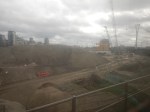
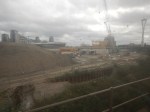

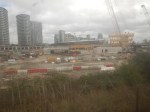
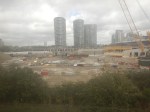
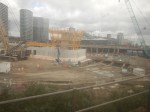



I was on a train going to Woolwich Arsenal.
What Is The Silvertown Tunnel?
The title of this section, is the same as that of this article on the Londonist, which is an excellent description of the Silvertown Tunnel.
The article says this about tolls.
The new tunnel will require you to part with some pounds if you want to use it. Despite the consultation on this taking place a decade ago, the final details have yet to be publicised. We can expect something similar to the Dartford Crossing (currently £2.50 for cars etc, free for motorbikes/mopeds).
As there is a mayoral election next year, I doubt that Sadiq Khan will announce the charge on the Silvertown and Blackwall Tunnels before the election.
Let’s Play Accountants
This is a paragraph in the Londonist Article.
Construction of the tunnel is eating up something like £1.2 billion (2020 estimate). It’ll then cost another estimated £1 billion over 25 years to pay for maintenance, financing and operation. Riverlinx paid up-front costs and will be paid back by TfL through money collected from tolls.
The running costs would appear to be a billion over 25 years, which is £ 40,000,000 in a year.
This is said on this page on the Greater London Assembly web site.
Blackwall tunnels (northbound and southbound) each carry approximately 50,000 vehicles per day in only two lanes of traffic.
That means that each tunnel handles approximately 18,250,000 vehicles per year.
Dartford Crossing charges are according to the Wikipedia entry are as follows.
- Cars, motorhomes, small minibuses – £ 2.50
- 2-axle buses, coaches, vans, goods – £ 3.00
- Multi-axle goods, coaches – £ 6.00
The Wikipedia entry also says this about the capacity and traffic through and over the Dartford Crossing.
The design capacity is 135,000 vehicles per day, but in practice the crossing carries around 160,000.
My good friend; Bob from the 1970s had an impeccable cv.
- Chief Accountant of Vickers.
- Chief Management Accountant of Lloyds Bank.
He was also one of two outstanding practical accountants I have known.
Several of his practical tips on how to handle money in computers, ended up in Artemis; the project management computer system, I wrote in the 1970.
Bob and I would solve problems in Mother Bunches Wine Bar and I suspect, we’d come to the conclusion, that an average charge of £3 per vehicle will be charged in the Blackwall and Silvertown Tunnels.
I also believe from my fluid flow experience, that a proportion of the excess traffic through and over the Dartford Crossing will divert to the new Silvertown Tunnel.
- Together the Blackwall and Silvertown Tunnels will have four lanes in both directions.
- The Silvertown Tunnel will hopefully designed to modern standards and be more free-flowing, than the Blackwall.
- Sat-navs will direct drivers to the quickest routes.
Just as water finds its own level, an equilibrium will develop between the flows.
- I suspect that during the day, the flow over the Dartford Crossing will drop to the design capacity of 135,000
- At night, will vehicles divert through the free-flowing Blackwall and Silvertown Tunnels?
- Will those living in North Central London inside the North Circular Road drive through the Blackwall and Silvertown Tunnels?
- Will the free-flowing Blackwall and Silvertown Tunnels encourage people crossing the Thames to use their car, rather than the train, as the car is more convenient and the toll will be less than the train fare?
- We should also beware that new roads, railways and tunnels generate new traffic, that no-one predicts.
My feeling is that combined traffic through the four lanes of the Blackwall and Silvertown Tunnels will be upwards of seventy thousand per day.
I can now calculate revenue for different levels of combined traffic through the Blackwall and Silvertown Tunnels.
- 40,000 vehicles in each direction per day is a total of 29,200,000 vehicles per year, which would raise £ 87.6 million per year in toll charges.
- 50,000 vehicles in each direction per day is a total of 36,500,000 vehicles per year, which would raise £ 109.5 million per year in toll charges.
- 60,000 vehicles in each direction per day is a total of 43,800,000 vehicles per year, which would raise £ 131.4 million per year in toll charges.
- 70,000 vehicles in each direction per day is a total of 51,100,000 vehicles per year, which would raise £ 153.3 million per year in toll charges.
- 80,000 vehicles in each direction per day is a total of 58.400,000 vehicles per year, which would raise £ 175.2 million per year in toll charges.
I am assuming the following.
- All days of a 365-day year have similar traffic.
- Everybody pays without fuss, by technology like number-plate recognition.
- The average toll chare paid is £ 3.
I am drawn to the conclusion, that the contract signed between Transport for London and Riverlinx, is a licence to print money.
Even, if the tunnels only attract 40-50,000 vehicles per day, the revenue is way in excess of the £40 million needed for maintenance, financing and operation of the Silvertown Tunnel.
I have a few further thoughts and questions.
Who Are Riverlinx?
This is said on the About Roverlinx page of the Riverlinx web site.
TfL awarded Riverlinx SPV (Special Purpose Vehicle) the contract for financing and overseeing the design, build and maintenance of the Silvertown Tunnel in 2019.
The Riverlinx CJV (Construction Joint Venture) is contracted by TfL and Riverlinx SPV to complete the design and construction works, delivering the Silvertown Tunnel on time and on budget.
Riverlinx CJV is a joint venture, a partnership bringing together international, market leading expertise from three civil engineering and construction companies: BAM Nuttall, Ferrovial Construction and SK ecoplant.
In collaboration with TfL, our supply chain and other key stakeholders in the project, Riverlinx CJV will complete construction of the Silvertown Tunnel in Spring 2025.
Note.
- BAM Nuttall is a construction and civil engineering company, that is a subsidiary of the Dutch Royal BAM Group.
- Ferrovial Construction is the construction subsidiary of Spanish company; Ferrovial.
- SK ecoplant is a subsidiary of the South Korean conglomorate; SK Group.
These companies should be capable of building the Silvertown Tunnel.
Where Will The Money To Build The Tunnel Come From?
In World’s Largest Wind Farm Attracts Huge Backing From Insurance Giant, using an article in The Times, I explain how Aviva invest our pensions and insurance money in wind farms.
Strangely, a tolled tunnel is a bit like a wind farm financially, in that if it’s working and the wind is blowing or the traffic is coming, it will continue to generate an income.
Built by quality construction companies, as most tunnels are, they will be the sort of investment, that would satisfy the Avivas of this world.
Will Riverlinx Get All The Tolls From The Tunnel?
Nothing is said about how the excess of income over expenditure will go.
I suspect, as the project is being designed, financed and built by Riverlinx, that they will not go unrewarded.
Will The Mayor Set The Toll Charges?
I suspect that the Mayor and TfL will set the charges.
These are some figures with different charges for 70,000 vehicles in each direction per day or a total of 51,100,000 vehicles per year.
- £3 in each direction would raise £ 153.3 million per year in toll charges.
- £4 in each direction would raise £ 204.4 million per year in toll charges.
- £5 in each direction would raise £ 255.5 million per year in toll charges.
- £6 in each direction would raise £ 306.6 million per year in toll charges.
Note.
- Some of the papers are talking of a four pound charge.
- A pound increase may not be much to the average driver, but they will certainly mount up.
Higher toll charges could be used by an unscrupulous Mayor to deter vehicles entering Central London or nudge people towards public transport.
What Happens If The Tunnel Springs A Leak?
I can remember the following tunnels being built under the Thames in my lifetime.
- Blackwall Tunnel – second bore
- Dartford Tunnel
- DLR to Greenwich and Lewisham
- DLR to Woolwich
- Elizabeth Line to Woolwich
- Jubilee Line – four crossings
- Victoria Line to Vauxhall
None of these seven seems to have sprung a leak recently. And neither have the older Victorian tunnels.
Tunnels with an income stream, appear to be a good risk, if they don’t spring a leak.
But London tunnels don’t seem to have a high likelihood of leaking.
Fines
Fines could be a problem, but this article on Kent Online, which is entitled Dartford Crossing Continues To Generate more Than One-Third Of Income From Fines As Profits Total More Than £100m, says otherwise.
Conclusion
This would appear to be a low risk venture and I suspect it will make Riverlinx and TfL a lot of money.
 The Anonymous Widower