Binge Drinking And Obesity Behind Bowel Cancer Surge In Under-50s
The title of this post, is the same as that of this article in The Times.
This is the sub-heading.
Deaths this year are set to be a third higher than in 2018 with biggest increase among young women
These three paragraphs introduce the article.
Obesity and binge drinking are causing a surge in bowel cancer among young British adults, research shows.
Deaths in those aged under 50 are set to be about a third higher this year than in 2018, with the highest increase in young women.
Bowel cancer is the third most common cancer in the UK, after breast and prostate cancers, and there are 43,000 new cases and 16,000 deaths a year. More than nine in ten cases are in those over 50, but the disease is increasingly being diagnosed in those under 50, in whom it is more likely to be aggressive and deadly.
I am coeliac and whenever, I see some illness that is more common in females, I wonder, if this is down to the fact, that female coeliacs are more common than males. This page on the NHS web site flags it up with this sentence.
Reported cases of coeliac disease are higher in women than men.
This could be because coeliac disease can cause complications in pregnancy, so more women get tested.
The NHS web site also links coeliacs with bowel cancer, but it does say this.
Once you’ve been following a gluten-free diet for some time, your risk of developing these types of cancer is the same as that of the general population.
My son was an undiagnosed coeliac, who worked in the music business. He lived on a diet of ciggies, cannabis and Subways and contracted pancreatic cancer, which killed him at just 37.
He should have got himself tested, as the NHS says, that if you have a first degree relative (Me!), who has coeliac disease, then you should get tested.
So if you think, you have a problem with gluten, get yourself tested!
If not for yourself for your family!
I am surprised that the Italian lead researcher doesn’t mention coeliac disease as Italy has lots of it! All that pasta and pizza!
The Cure For White Coat Hypertension
At one of my previous GP practices the two excellent nurses had banned my GP from taking blood pressure as she always raised the patient’s blood pressure, by the way she took the pressure.
This page on a blog at the London Cadiovascular Clinic is entitled White Coat Hypertension, gives this definition.
White coat syndrome, also known as white coat hypertension is a phenomenon in which your blood pressure is artificially raised due to the stress of being in a clinic, hospital, or even just taking your own blood pressure. This usually happens due to the stress and anxiety associated with having medical investigations done. Your reading will be higher than it would be if you measured it at home.
A week ago, I had a message from my GP practice to come in and measure my blood pressure in their machine in the waiting room.
So I went in and took my blood pressure about an hour ago.


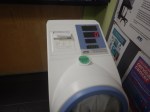


I just put my hand in the hole at the front, shook hands with the machine, pressed the green button on top and it inflated a glove around my hand and lower arm to take the pressure.
Ears Are A Black Body
When I worked for ICI in Runcorn in 1968, one of my colleagues; John Baxendale developed or acquired one of the first remote infra-red thermometers.
ICI needed one for taking the temperature of hot vessels , pipes and reactors on chemical plants and in laboratories. John’s thermometer solved the problem, by measuring the black body radiation of the object.
John found that to calibrate his instrument he could point it at a colleague’s ear. As the ears emit black body radiation, the device should have read 36.9°C, as it generally did.
These so-called tympanic thermometers are now in regular use and cost about twenty pounds.
John is one of those people that has stuck in my mind from all those years in the past. He was a surfer and probably the only one, I’ve ever met in my life. I remember some weekends, he used to take his Morris Minor Traveller all the way to the North of Scotland to go surfing. Visiting that area has been on my bucket list for years. The closest I got, was to fly in my Cessna 340A to the Orkneys.
The Weather And My INR
I measure my own INR and adjust my levels of Warfarin accordingly.
I typically take 4 mg of Warfarin one say and 3.5 mg the next, as this average dose of 3.75 mg, seems to keep my INR around the required 2.5.
Recent readings have been as follows.
- 18th December – 2.5
- 21st December – 2.5
- 25th December – 2.7
- 28th December – 1.9
Note.
- I test on Mondays and Thursdays.
- Today’s test was a bit low at 1.9.
- I should also say my left humerus was uncomfortable. Was it because bone was unhappy being in a dry body?
Today I took 5 mg of Warfarin to kick the INR the right way. I shall also test my INR tomorrow, just to be sure.
So why did my IRN drop by an unusual amount between Monday and Thursday?
We have just had storm Gerrit (Who thinks up these names? Donald, Nigel or Vladimir would be better, as they’re Low-life!)
So does the the low pressure suck the water out of my body, thus lowering the INR? And bring pain to my injured arm?
Wood Burning At Home
The title of this post, is the same as that of the title on the home page of this web site.
I actually accessed the page as it appeared as an advert on something I was looking at on the Internet.
This is the sub-heading.
How do you feel about open fires, wood burners and even wood smoke?
These four paragraphs make up the home page.
It has long been known that the small particles released by solid fuel burning can stay in the air and even travel long distances. These small particles, when inhaled, can increase your risk of stroke, asthma, lung cancer, heart disease and dementia.
It is estimated that around 4,000 premature deaths occur each year in London due to long-term exposure to air pollution, of which about 284 are attributable to domestic wood burning. Every one of those 284 deaths is completely avoidable.
Domestic wood burning has a health and economic cost of about £187 million per year in London. That’s a cost of £24 for every London resident, whether you burn solid fuels or not.
The most effective way of reducing pollution and protecting everyone’s health is simply to avoid burning any wood, coal, or other solid fuels at home.
As I don’t have naked flames at all in my house, this doesn’t apply to me.
When I helped to fund two guys, who were developing a metered dose inhaler for asthma drugs, I did my due diligence before I invested.
I found some research, that said that naked flames and the oxides of nitrogen they produce, were one of the main causes of asthma.
So I avoid them and don’t do barbecues, bonfires, gas cookers or gas fires.
Incidentally, the two guys did develop the metered dose inhaler for asthma drugs and it is now prescribed as Respimat. It is totally mechanical, with no compressed gases or batteries.
‘Breakthrough’ Blood Test For Sepsis To Save Lives
The title of this post, is the same as that of this article in the Sunday Times.
This is the sub-heading.
If the trial is a success it could allow speedy diagnosis for a condition that kills 48,000 people a year
These two paragraphs introduce the story.
A blood test is being trialled that can rapidly detect whether a patient has sepsis, in what could be a breakthrough for a condition that is notoriously difficult to diagnose.
Sepsis, which occurs when the immune system overreacts to an infection, kills about 48,000 people each year in the UK. More people die of it annually than of breast, prostate and bowel cancer put together. In severe cases, it can kill within hours.
A friend had sepsis and it nearly killed her. A test like this would probably have shortened her time in hospital.
I am coeliac and also a mathematical modeller and statistician.
- If you are coeliac and stick to your gluten-free diet, which now includes delicious real ale, you are 25 % less likely to suffer from cancer than the general population, according to research at Nottingham University.
- The reverse of this means that an undiagnosed coeliac living a rock ‘n’ roll lifestyle with lots of smoking, cannabis and a diet of gluten-rich junk food, you will have a higher chance of contracting cancer. Just as my undiagnosed coeliac son did, who died of pancreatic cancer at just 37.
- Coeliac testing was difficult until around 1960, when a method using endoscopy was developed. Then in the 1990s, a general test using blood was developed.
I have analysed NHS cancer statistics and there is a step-reduction in cancer rate for those born after 1960 and 1990.
A simple blood test for coeliac disease has found a lot more coeliacs and saved a lot of lives.
My analysis is shown in detail in Hospital Pioneers Cancer Service For Over 70s That Saves Lives And Money.
For that reason, I believe that this new sepsis test could also save a lot of lives.
Coeliac Disease And Risk Of Sepsis
The title of this section, is the same as that of this paper on the British Medical Journal.
This is the conclusion of the paper.
This study showed a modestly increased risk of sepsis in patients with coeliac disease with the highest risk for pneumococcal sepsis. This risk increase was limited to those with coeliac disease diagnosed in adulthood. Potential explanations include hyposplenism, increased mucosal permeability and an altered composition of the intestinal glycocalyx in individuals with coeliac disease.
Perhaps anyone, who goes into hospital, should also be tested for coeliac disease?
Nitrous Oxide–Induced Vitamin B12 Deficiency
The title of this post, is the same as that of this peer-reviewed paper on the National Library of Medicine.
This is the abstract.
Nitrous oxide is a gas that is odorless, colorless, and has a sweet taste at room temperature. Nitrous oxide has several uses, including in surgery and dentistry (referred to as “laughing gas”), in automotive racing, and in aerosol spray propellants. The aerosol spray propellants that typically use nitrous oxide are whipped cream canisters and cooking sprays. Unfortunately, these over-the-counter household items are a source of nitrous oxide that can be used for recreational use. The most popular is the use of industrial-grade canisters having the slang term “whippets.” The nitrous oxide can be extracted by pushing the nozzle down slightly to the side and catching the released gas with a balloon. The contents of the balloon can then be directly inhaled, giving an instant feeling of euphoria. This is not a benign means to achieve a euphoric state but can cause severe nitrous oxide–induced B12 deficiency, which is presented in this case report.
An estimated 800,000 young adults abuse inhalants every year, and almost 11% of high school seniors report using inhalants at least once in their lifetime . Heavy inhalant abuse can result in a variety of side effects, including cardiac arrhythmias, hypoxia, metabolic acidosis, and neurologic deficits. Of all inhalants, nitrous oxide is particularly toxic due to its conversion of the active monovalent form of vitamin B12 to its inactive bivalent form. We present a case of subacute combined degeneration of the spinal cord due to nitrous oxide–induced vitamin B12 deficiency.
Basically, don’t inhale nitrous oxide, unless it’s being administered by a anaesthetist or a dentist.
Interestingly, because I was an undiagnosed coeliac my vitamin B12 was running on empty for much of the first fifty years of my life.
As my B12 was so low and didn’t really respond to regular injections, I was sent off to Addenbrooke’s, where they quickly diagnosed coeliac disease.
I wonder what would happen to an undiagnosed coeliac, who was low in B12, who got addicted to nitrous oxide.
The abstract implies that inhalants can cause cardiac arrhythmias, which has this Wikipedia entry, where this section talks about atrial fibrillation.
Arrhythmia affects millions of people. In Europe and North America, as of 2014, atrial fibrillation affects about 2% to 3% of the population. Atrial fibrillation and atrial flutter resulted in 112,000 deaths in 2013, up from 29,000 in 1990. However, in most recent cases concerning the SARS-CoV‑2 pandemic, cardiac arrhythmias are commonly developed and associated with high morbidity and mortality among patients hospitalized with the COVID-19 infection, due to the infection’s ability to cause myocardial injury. Sudden cardiac death is the cause of about half of deaths due to cardiovascular disease and about 15% of all deaths globally. About 80% of sudden cardiac death is the result of ventricular arrhythmias. Arrhythmias may occur at any age but are more common among older people. Arrhythmias may also occur in children; however, the normal range for the heart rate varies with age.
Doctors tell me, that my stroke was caused by atrial fibrillation.
Hospital Pioneers Cancer Service For Over 70s That Saves Lives And Money
The title of this post, is the same as that of this article in The Times.
This is the sub-heading.
Treatment is adapted to take into account age-related illnesses, such as heart disease, diabetes and dementia.
These three paragraphs outline, what the Christie Hospital is doing.
The Christie Hospital in Manchester is pioneering a specialist cancer service for elderly patients under plans to tackle a “silver tsunami” of cases.
More than 200 patients have been treated by the new team, which was set up to meet the more complex care needs of an ageing population.
The service has nearly halved the number of unplanned hospital admissions among older cancer patients, improving survival and quality of life.
But it’s the graph that follows that I find interesting.
It shows the cancer incidence rate (per 100,000 population) in 2020 by gender and age at diagnosis.
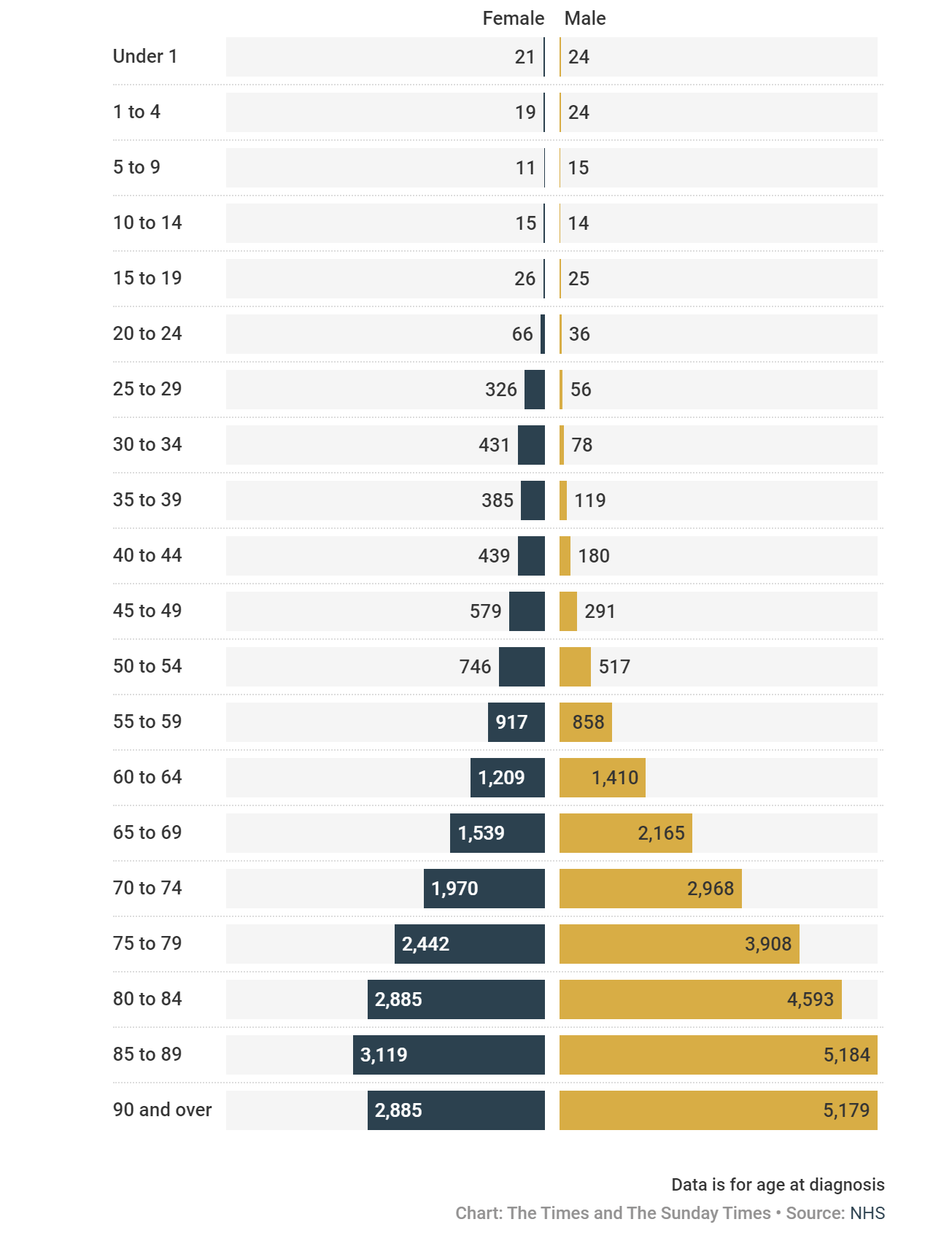
I am a control engineer and statistician and one of the most interesting things in a graph like this is the rate of increase or in this graph’s case the rate of decrease, as the graph effectively has the present at the top.
I have used an old trick and looked at the difference between the groups and the difference between the difference.
Note.
- It seems that the rate of increase of cancer diagnosis with age seems to increase with ages of 60-64 and 25-29.
- This would seem to correspond to those born before 1960 and those born before 1995.
- As a coeliac, I know that the first test for coeliac disease, which used endoscopy was introduced around 1960.
- The modern genetic test for coeliac disease was developed in the 1990s.
Is it coincidence, that the rate of increase of cancer diagnosis with age seems to increase, when a better diagnosis for coeliac disease was introduced?
These are my thoughts!
Coeliac Disease And Me
I am coeliac and I was born in 1947. I wasn’t diagnosed as coeliac until 1997.
I was an unhealthy child, with all sorts of avenues being chased, so in the end they just took my tonsils out.
- It should be remembered, that there was no test for coeliac disease in children until 1960.
- I’ve also only met one coeliac older than me and both her parents were GPs and she was diagnosed by food elimination.
- In fact, I never met a coeliac until I was about 25. He was the two-year-old son of one of C’s friends.
At fifty, an elderly locum gave me a present of a blood test to clear up my long-term health problems. The results showed that my body had very little Vitamin B12. Injections didn’t improve the level, so my GP sent me to Addenbrooke’s.
It was a Monday and all the consultant did was ask a nurse to take several vials of blood. He didn’t ask me any relevant questions or even touch me.
On the Wednesday morning, I got a letter from the hospital saying I was probably coeliac and it would be confirmed by endoscopy.
I must have been one of the first to have been diagnosed by a genetic test on a sample of blood.
Coeliac Disease And My Youngest Son
My youngest son was born in 1972 and after my diagnosis, my late wife felt he was coeliac, as physically he was so like me. But neither him nor our other two sons would get themselves tested.
I am now sure he was coeliac, as his daughter was born with a congenital hernia of the diaphragm and Swedish research says can happen with coeliac fathers. Luckily, she was born in the Royal London Hospital and thanks to heroic surgery at a few days old, she survived and is now in her first year at Southampton University.
Sadly my youngest son died of pancreatic cancer in 2011.
Coeliac Disease And Cancer
Nottingham University have shown that if you are coeliac and stick to a gluten-free diet, you are twenty-five percent less likely to suffer from cancer.
Cancer in the Over Sixties
The following is an extract from A Thought On Deaths Of The Elderly From Covid-19, which I wrote in April 2020.
How many undiagnosed coeliacs are there in those over seventy, who because they are coeliacs, have a compromised immune system?
I would be undiagnosed but for that elderly locum!
How many other coeliacs are there in the UK population?
- Age UK has a figure of twelve million who are over 65 in the UK.
- If 1-in-100, as stated by Coeliac UK, in the UK are coeliac, that is 120,000 coeliacs over 65, who are too old to have been diagnosed as a child, because no test existed.
Note that as of today 177,388 have been diagnosed with Covid-19.
Could the drop in the cancer rate of those born before 1960 be because of the availability of a test for coeliac disease, so that if they were a sickly child like me, they would be diagnosed? As I said earlier diagnosed coeliacs have a lower cancer rate than the general population.
Cancer in the Under Thirties
I was diagnosed in 1997 by a genetic blood test and there is no doubt that I have coeliac disease.
As the test is so simple, I wonder what proportion of coeliacs born since the Millennium have been diagnosed.
And how does this contribute to the drop in cancer cases?
More Research Needs To Be Done
It is obvious to me, that research needs to be done into the link between undiagnosed coeliacs and cancer.
It might be prudent to test every cancer patient for coeliac disease. My GP told me, that the test is not expensive and generally gives the right result.
Is There A Research Dermatologist Out There?
Consider.
- I have mused about my skin before in My Strange Skin.
- I have been feeling a bit odd because of Babet.
- I have had problems with my left humerus for a few days now and my left hand has not been very co-operative.
- Yesterday, I kept dropping my bag for a start.
- Last night, I needed to go to the loo in the middle of the night. I could hardly walk, because of pain in my right lower leg.
- But I’d forgotten to put the magic Udrate on my feet, before I went to bed. It does seem to stop the water leaking out of my skin.
This picture shows my left hand.
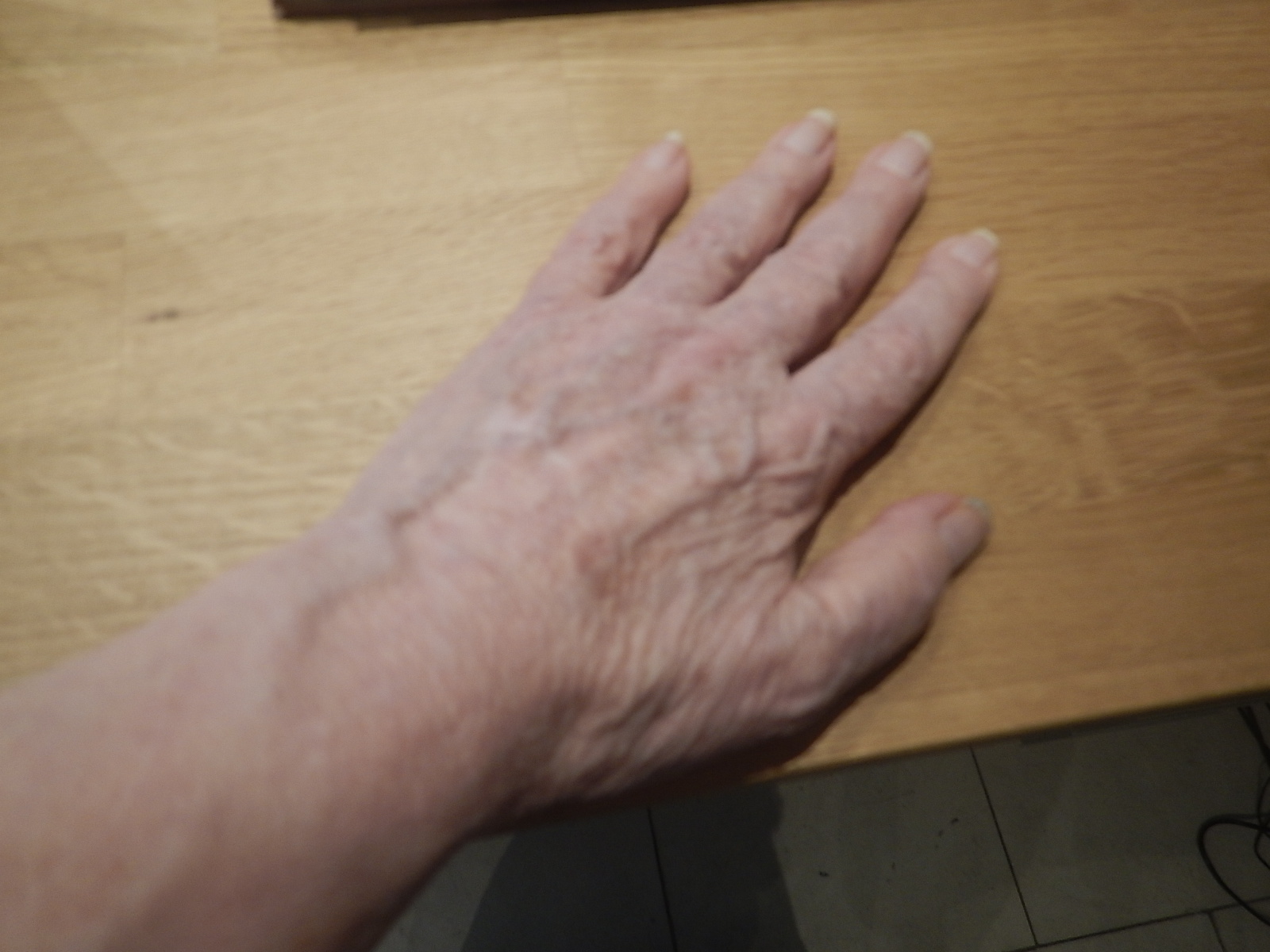
I damaged it badly in a fall, where I took the back off on the edge of a glass door. But with some glue from the Royal London and some TLC from the practice nurse, there are no scars. Surely, it shouldn’t mend that well.
As my ancestors include both Jews and Huguenots, did all those centuries in poor living conditions ghetto-harden my skin?
I hate mysteries and I suspect some of my questions could be answered by an experienced dermatologist.
Is Liverpool, England’s Biarritz?
Earlier in the week, I was feeling terrible, with pains in both lower legs.
This has been typical for some months and on Sunday, it was so bad in my right foot, that I tried a new cream called Udrate, that my GP prescribed for me last year.
It seemed to do the trick and I now rub it on twice a day.
On Thursday, I went to Liverpool and in the pouring rain at Euston, as I walked to the train, my legs were feeling terrible.
Throughout the day they improved and at the end of the day, I walked across the City Centre from Liverpool Central to the Albert Dock with no problem at all.
My legs have gradually got worse since I returned.
They are not bad now, but they are certainly worse than when I left Liverpool.
I wrote Would I Go Back To Biarritz Again?, after my one and only visit to the French resort, where I said this.
Of course I would!
Especially, if I could be guaranteed some weather like I had just experienced. The temperature had been about 14 °C with a humidity of over 50%
I do wonder about my father’s health. He suffered from a similar catarrh to that I’ve suffered for the last couple of years and he had lots of skin problems. He always put the latter down to the solvents he used in his printing business. I’m pretty certain he was a coeliac too, as I must have got the genes from somewhere.
I also remember him saying once that he had been to Biarritz. So did he go because he felt healthy there, as I just had?
I don’t know and there’s no-one I can ask who knew him, who’s still alive.
But as I seem to feel better in Biarritz, if I think I need a break in the winter, I think I’ll go.
Liverpool was warm and sunny on Thursday.

The picture shows the new Everton stadium being constructed at Bramley-Moore Dock in Liverpool, was taken as I returned from Headbolt Lane station.
This picture shows Biarritz in early December.

Both cities are bathed in sunshine.
Consider.
- Both cities have seafronts that face West.
- The prevailing winds are from the South-West.
- Both cities have land masses with mountains or hills to their South-West.
Do the hills induce turbulence to the air, which gives both cities, a healthy Autumnal climate that I find acceptable?
Do Thunderstorms Cause Strokes?
On Saturday evening, we had a severe thunderstorm in North London.
All day long, I’d been drinking heavily, but as it was only tea and low-alcohol Adnams Ghost Ship 0.5 %, the worst that could happen is an accident on an extra visit to the toilet.
I came to the conclusion though, that most of the fluids was leaving my body through my skin.
Does this lower my INR? I do know that in hot and humid weather, I have difficulty raising it. In the last week or so, it has been hovering around 2.2, but yesterday, it was a very safe 2.7.
But as I test regularly, this may well help to protect me from another stroke.
Typing “Thunderstorms and Strokes” into Google, I found this paper on the National Library of Medicine, which is entitled Relationship Between Weather Conditions And Admissions For Ischemic Stroke And Subarachnoid Hemorrhage.
It is an interesting read.
This was the aim of the study.
To assess impacts of different weather conditions on hospitalizations of patients with ischemic strokes and subarachnoid hemorrhages (SAH) in South Florida.
And this was the conclusion.
Higher number of ischemic stroke and SAH cases can be expected with the daily lowest and highest air pressure, highest air temperature. Presence of hurricanes or tropical storms increased the risk of ischemic stroke but not the SAH. These findings can help to develop preventive health plans for cerebrovascular diseases.
From my own observations on INR for nearly ten years, I certainly believe that INR moves up and down with the weather because of the laws of physics.
Next time a severe thunderstorm is forecast, I will track my INR throughout the day.
 The Anonymous Widower