How Would HS4Air Affect The Western Rail Approach to Heathrow?
The Western Rail Approach to Heathrow (WRAtH), is a proposed new rail route to Heathrow from Reading and Slough.
It has a similar objective to HS4Air’s connection to the Great Western Main Line at Iver.
Both railways would connect Reading and Slough to stations in the Airport.
But in my view the HS4Air approach has several advantages.
- HS4Air connects to both Heathrow and Gatwick airports and Ashford, whereas WRAtH only connects to Heathrow.
- It would connect high speed trains from Bristol, Cardiff, Oxford, South Wales and the West of England to Heathrow, Gatwick and Ashford for Continental services.
- As an example a direct Cardiff-Ashford service would take three hours twenty minutes.
- Trains would be faster, with an operating speed between Reading and Heathrow of at least 140 mph.
But perhaps most importantly, HS4Air could be a totally privately-funded project.
Conclusion
I feel Network Rail’s proposal for a Western Rail Approach to Heathrow is not needed, if HS4Air is built.
How Will HS4Air Affect Heathrow Southern Railway?
Heathrow Southern Railway will be an East-West railway through Heathrow using the existing tunnels, which will connect Basingstoke and Woking to Pasddington via Heathrow and Old Oak Common.
On the other hand HS4Air will be a North-South railway through Heathrow probably in a deep tunnel.
I suspect that numerous escalators, lifts and travelators will be the only connections between the two railways and the various terminals in the airport.
Conclusion
I can see no reason, why both railways can’t be built separately.
Co-operation could be useful to both railways.
If the two railways have a well-designed interchange under Heathrow, this would open up journey possibilities like Southampton-Paris with a change at the airport.
HS4Air is more than just a railway connecting airports and the North of England to the Channel Tunnel.
HS4Air And Heathrow Airport’s Third Runway
HS4Air will pass under Heathrow Airport in a tunnel, where there will be a new station.
Look at how Crossrail hasn’t resulted in major demolition in Central London.
For this and other reasons, I believe that HS4Air can be built underneath the Airport without affecting what Heathrow do on the surface.
The only effect that a possible third runway and an extra terminal at Heathrow, would be minor changes to the route of the tunnel and the layout of the station.
But I suspect that HS4Air will be built, so that it is totally future-proofed for all possible developments at Heathrow.
On the other hand, HS4Air might have effects on Heathrow Airport.
- Passengers from the North of England would be more likely to come by high speed train from Birmingham and Manchester.
- Passengers from South Wales and the West of England would be more likely to come by high speed train from Bristol and Cardiff.
- The transfer between Heathrow and Gatwick would be less than twenty minutes. HS4Air claim just fifteen.
- If there was sufficient demand there could be a Heathrow-Gatwick shuttle every 10-15 minutes.
Just as some of these effects will be positive for Heathrow, they will also be positive for Gatwick.
Conclusion
I am led to the conclusion, that some politicians, who are seriously against a third runway at Heathrow, could manage to get the runway blocked or delayed for a decade, by citing HS4Air and Gatwick as a viable alternative.
But that won’t matter, as Gatwick will build the much-needed runway for the South-East and it will be less than twenty minutes from Heathrow.
HS4Air’s Connections To HS2, The Great Western Main Line And Heathrow
This map clipped from the Expedition Engineering web site, shows the route of HS4Air to the West of London.
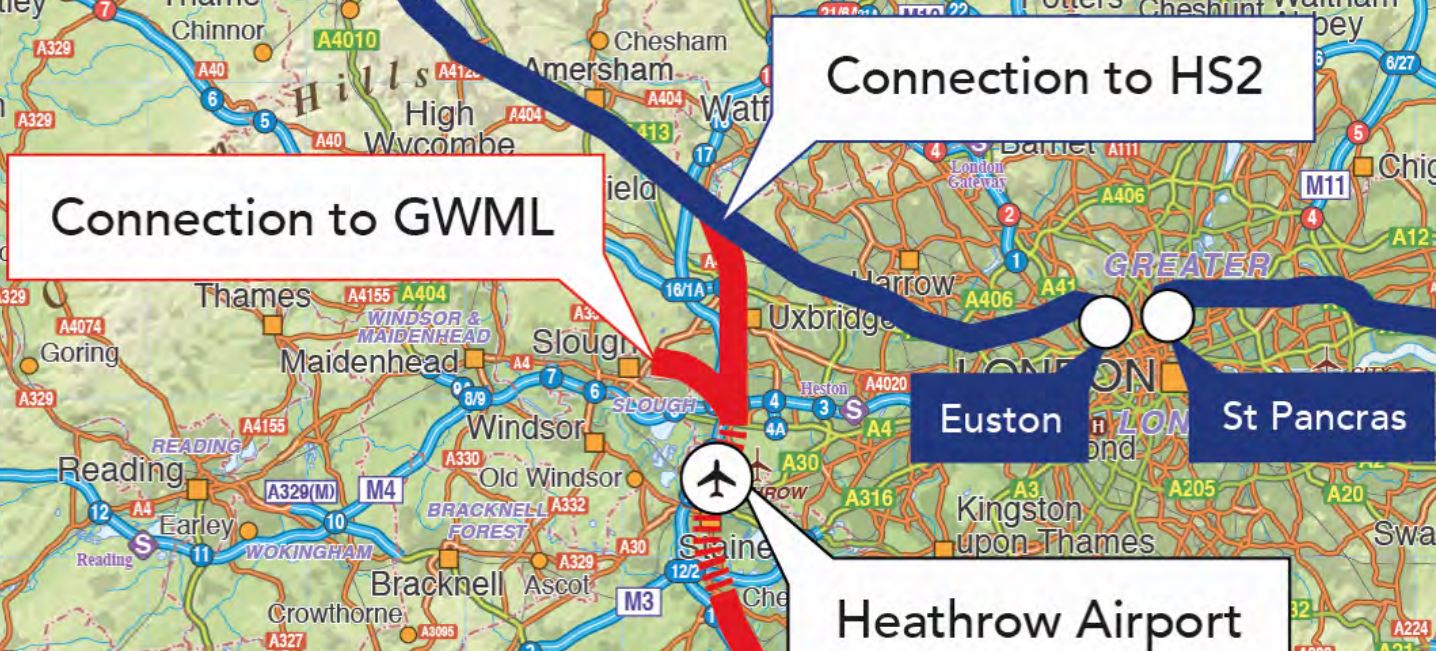
Note the M25 running North-South through the area.
The HS4Air And HS2 Junction
This Google Map shows the area, where HS4Air will join HS2.

Note.
- The M25 running North-South.
- The Chiltern Main Line running East-West.
- The two stations shown are Denham Golf Club and Denham.
- At the top of the map, just to the East of the M25 is a large quarry, which shows up in a beige colour.
The route of HS2 as it passes through the area from North-West to South-East is as follows.
- HS2 crosses the M25 in a tunnel, at the point where the lane crosses just below the M25 label, at the top of the map.
- HS2 then goes South East towards Denham on a mixture of cuttings, embankments and viaducts.
- HS2 then follows the Chiltern Main Line in a cutting towards London.
- HS2 goes into a tunnel just to the West of West Ruislip station.
It looks to me, that HS4Air will branch off HS2, just to the East of the M25, in the area of the quarry, which is shown in this Google Map.
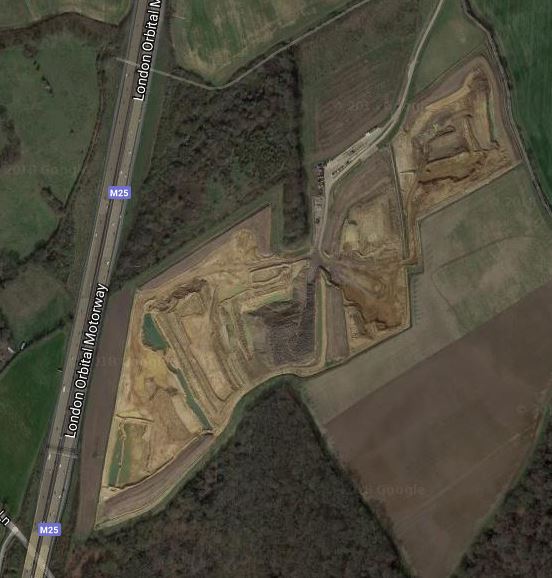
HS4Air would continue along the M25 motorway towards the South, whilst HS2 will continue in to the South East.
The HS4Air And Great Western Main Line Junction
This Google Map shows the area, where HS4Air crosses the Great Western Main Line.

Note.
- The M25 running North-South
- The M4 running East-West
- The Great Western Main Line running East-West.
- The two stations are Langley and Iver.
- Iver North Water Treatment Works sitting to the North East of where the M25 and the Great Western Railway cross.
This Google Map shows the area, where the M25 and the Great Western Main Line cross in more detail.

Consider.
- HS4Air would be following the M25 North-South.
- Two links to allow trains to go both ways from the Great Western to the Southbound HS4Air, would be needed.
- These links could loop over the Water Treatment Works.
- As the M25 will probably need widening, combining both projects would probably benefit both.
I think we could see a spectacular junction.
HS4Air North Of Heathrow
|As the first map shows HS4Air goes underneath Heathrow Airport in a tunnel, where there will be a station in the tunnel.
This map shows the M25 to the North of the Airport.
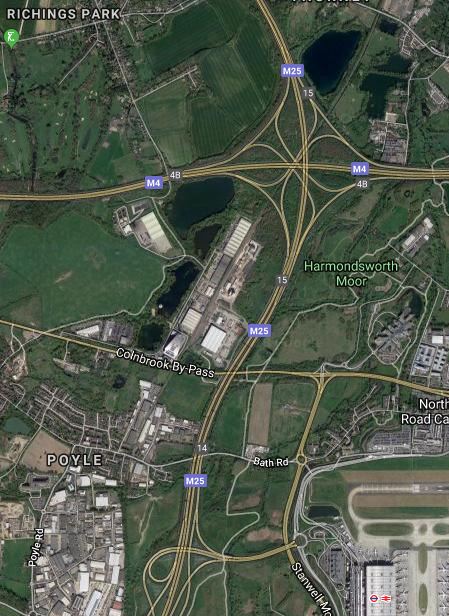
Terminal 5 at Heathrow is picked out with a station symbol.
I suspect that HS4Air will cross the massive M25/M4 junction on a viaduct and then descend into a tunnel for the Airport.
Or if the third runway at Heathrow is built, the railway could go into tunnel to the North of the motorway junction.
I suspect, the rail tunnels will be very deep under the airport, which will mean the following.
- They won’t disturb the existing airport.
- All the existing Crossrail design and construction expertise will be useful.
- The station could be as large as needed, with through and terminal platforms.
With its connections to Crossrail, it would also be West London’s high speed railway station.
HS4Air South Of Heathrow
South of Heathrow, the first map, shows that the Heathrow tunnel will emerge close to the M25, South of the major junction between the M25 and the M3.
This Google Map shows the area.
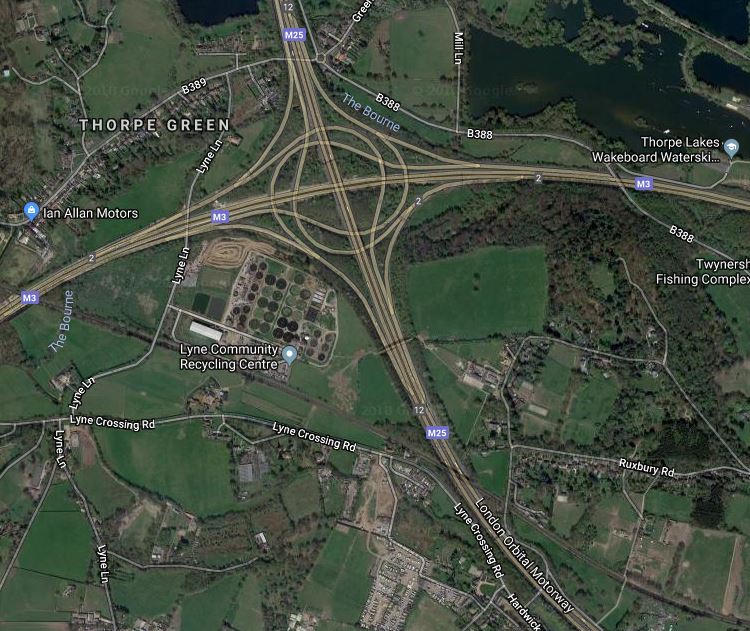
I will investigate where the Heathrow Tunnel emerges in HS4Air Between Heathrow And Gatwick Airports.
Conclusion
This section of HS4Air looks to be a railway that can be slotted through alongside the M25 with very little disturbance to existing traffic routes.
I doubt that few houses or other buildings will need to be demolished.
The two major junctions with HS2 and the Great Western Railway will cause little disruption during construction, as the former will be over a quarry and the second is by a sewage works, which could be moved if necessary.
This first section is so obvious, I am surprised it hasn’t been included with the building of HS2.
Improvements On Platforms 13 And 14 At Manchester Piccadilly Station
The through platforms 13 and 14 at Manchester Piccadilly station have in the past when I’ve used them been very congested and crowded.
But look at these pictures.
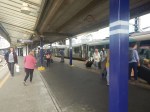
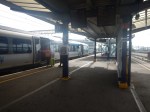
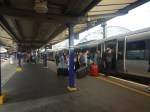





Compare them with this picture taken in April 2018.
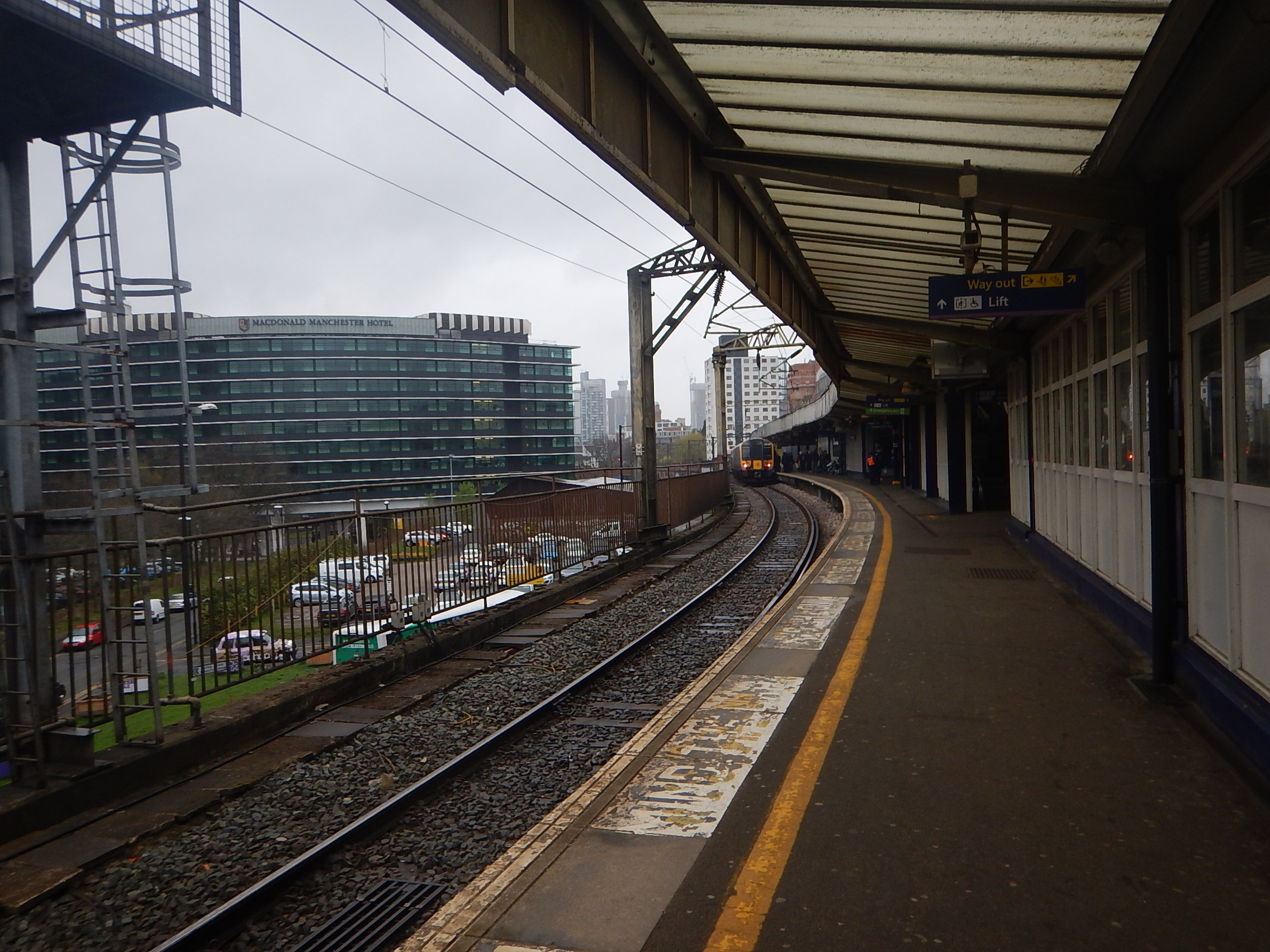
Where has all the platform clutter in the earlier picture gone?
It certainly enabled travellers to get on and off the trains easier, although many were still crowding around the stairs at the Western end of the platforms.
I asked a Network Rail guy on the platform, if it was better without the buildings on the platform. He said two things.
- Passengers don’t move down the platforms.
- Drivers don’t tend to stop in the best place for passengers.
I do wonder, if the large number of two-car trains, that seem to use the platform doesn’t help.
- Class 175 trains operated by Arriva Trains Wales.
- Single Class 142, Class 150, Class 156 and Class 158 trains operated by Northern.
- Class 158 trains operated by East Midlands Trains.
The pictures show, that I’d arrived in a six-car Class 185 train, which because of its length stopped towards the Eastern end of the platform.
There was a bit of crowding as the train loaded, but not as bad as that on the four-car Class 319 train to Blackpool, when I left. But it was a sunny Saturday!
I do wonder, if passengers think, that their train will be only two cars, they tend to get to the platform early and create overcrowding.
It seems to me, that it will be quite likely, that the length of trains will be increased in the next few years.
- As electrification increases, some of Northern’s two-car diesel trains will be replaced with four-car electric trains.
- Transport for Wales have said they’ll run longer trains.
- TransPennine Express will replace the Class 185 trains with longer units.
Although this will probably increase traffic to these platforms, paradoxically, the longer trains might reduce congestion.
It should also be noted that most trains going through Platforms 13 and 14 at Manchester Piccadilly station call at one or more of the following stations.
In addition, Salford Central station may be expanded with extra platforms.
The more stations each train calls at in Central Manchester, the less will be the passenger footfall at each station, as not everybody wants to use Piccadilly.
As an aside, I wonder if more trains should call at Deansgate, which has excellent Manchester Metrolink connections, which are certainly less walking than those at Piccadilly.
Conclusion
I’m led to the conclusion, that the various plans for Manchester’s railways may lead to taking the pressure from the through platforms at Piccadilly.
By making it easier for passengers on these platforms, better access and facilities can be added as required.
I think it is highly likely, that with modern digital signalling and improvements to Deansgate, Oxford Road and Piccadilly stations, that it may be possible to avopid adding extra platforms at Piccadilly,
A Class 321 Renatus
I finally got to ride in a Class 321 Renatus today.
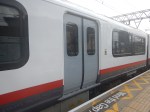
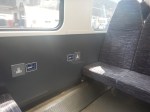
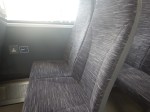

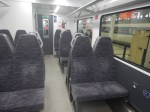
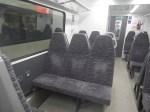

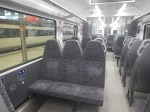
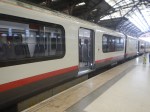
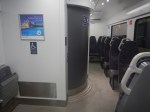
Quite frankly I was impressed.
- The seats were more comfortable than those in a Class 700 train.
- There was wi-fi.
- There were plugs to charge a phone or a laptop everywhere.
- There was air-conditioning.
- There was a new Universal Access Toilet.
- There was new lighting.
Generally, the trains also seemed to have more space.
Will Alstom’s hydrogen-powered version of the Class 321 train have interiors as good as these?
Grayling Confirms Electrification Will Form Part Of £3bn TransPennine Upgrade
The title of this post is the same as that of this article on Rail Technology Magazine.
his is a key section of the article.
But now, in a letter to the Railway Industry Association (RIA), Grayling has finally confirmed that the TransPennine upgrade will be a “rolling programme of enhancements,” including both major civil engineering projects and electrification.
He wrote: “The key to delivering improved journey times on what is a very circuitous route through the Pennines involves rebuilding and relaying most of the track bed from Manchester to York.
“We are awaiting Network Rail’s final project plan, but we have instructed them to prioritise those elements which bring the quickest passenger benefits. This will include things like straightening lengths of track to improve line speed.”
If nothing else Chris Grayling’s comments appear to have been measured ones and not a quick response to ht out to shout down the various groups for whom nothing short of full electrification is an acceptable solution.
The Routes Across The Pennines
There are three main routes across the Southern section of the Pennines. From North to South they are.
The Calder Valley Line from Manchester Victoria and Preston in the West to Leeds, Selby and York in the East via Hebden Bridge, Halifax and Bradford.
The Huddersfield Line from Manchester Airport, Piccadilly and Victoria in the West to Leeds, Hull and York in the East via Stalybridge, Huddersfield and Dewsbury.
The Hope Valley Line from Manchester Piccadilly in the West to Sheffield in the East.
Note.
- The three routes are much of a muchness with operating speeds in the region of 70-90 mph.
- There are good connections in the West with Blackpool, Chester, Liverpool and the West Coast Main Line.
- There are good connections in the East with Hull, Newcastle, York and the East Coast Main Line.
- Some connecting routes like the East and West Coast Main Lines are electrified 125 mph routes, but others like the connections to Chester, Hull and Scarborough are slower diesel routes.
- Some electrified routes like Liverpool to Manchester via Chat Moss, although they are electrified need speed improvements.
- The four major cities served by the three cross-Pennine routes; Leeds, Liverpool, Manchester and Sheffield all Have sizeable local tram or rail services.
If all these routes could be improved, they would create a core network of cross-Pennine routes.
There is also two other secondary routes that could be improved or created as diversion routes, whilst work is carried out on the main routes.
- A conductor pointed out to me, that passenger trains can go between Blackburn and Leeds via the Ribble Valley Line and Skipton with a reverse at Hellifield station.
- And then there’s the reopening of the route between Sklipton and Colne, which appears to be top of a lot of politicians and train companies lists.
Surely, these could be used to provide extra capacity if one of the Calder Valley or Huddersfield Lines was closed for improvement.
Some suggestions, I’ve seen about the Skipton to Colne Line, even say it could be used for freight.
I believe that with some measure of careful planning, the number of train paths across the Pennines can be increased, to an extend that would ease the improvement of the three main routes.
The Project Has A High Degree Of Difficulty and Complexity
The biggest upgrades of a UK railway in my time has been the electrification of these three main lines from London.
- West Coast Main Line, which was modernised and electrified by British Rail in the 1960s and 1970s.
- East Coast Main Line, which was electrified by British Rail in the 1980s.
- Great Western Main Line, which has been undergoing a tortuous and expensive upgrade and electrification for several years.
So how did Network Rail mess up on the Great Western, when British Rail completed the other lines without massive amounts of trouble?
Various reasons have been put forward, but I believe it has a lot ot do with the change of attitudes on the public’s behalf and new regulations in the intervening forty years.
As an example consider the electrification of the Grade II* Listed Digswell Viaduct in the 1970s. British Rail just did it and I don’t even know, if there were any objections.
Today, the Heritage lobby and various other pressure groups, would have had a field day. In the 1970s, most people accepted that the Government and Bitish Rail knew best.
Forty years ago, passengers accepted the disruption caused by works on the railways. Now they don’t and there are millions more regular travellers to complain.
Upgrading the main routes across the North have a lot of problems that will rear their ugly heads as the routes are upgraded.
- Many of the routes are double-track lines hemmed in by cuttings, villages and towns.
- There are large numbers of bridges, viaducts and level crossings on the routes.
- Many of the routes have speed limits around 80 mph.
- How good is the documentation of the routes?
- Sitting in the middle of the routes is the Grade I Listed Huddersfield station and the Grade II Listed Hebden Bridge station.
To see the problem of these lines take the following trains.
- Blackburn to Hebden Bridge
- Hebden Bridge to Leeds
- Leeds to Huddersfield
- Huddersfield to Manchester Airport.
Take a break at the three intermediate stations.
- Hebden Bridge station is a gem of a Victorian station.
- Leeds is a modern station overflowing with passengers.
- Huddersfield station is one of the North’s great buildings.
In addition, note the number of arched stone bridges, that are probably not high enough for electrification.
To upgrade and electrify these lines is not the simpler project of say electrifying the Midland Main Line, where much of the route is in flat open country.
Throw Every Possible Proven Technique At The TransPennine Improvement
If ever there was a project, where one method doesn’t fit all, then this is that project.
Every sub-project of the work must be done in the best way for that sub-project.
Decisions must also be taken early, about factors that will influence the overall project.
I believe that Crossrail and the new South Wales Metro were designed using an holistic approach.
- New trains have been designed in conjunction with the route.
- Electrification has been simplified by innovations, like batteries on the trains.
- Trains and platforms will fit each other.
- Station design has evolved for efficient train operation.
- Signalling will be digital to allow higher frequencies.
Because of the complexity and importance of the overall TransPennine project, only the best solutions will do!
Some will definitely not be invented here!
A few of my thoughts follow!
A Rolling Programme Of Improvements
This would be a good idea, as improvements can be done in what is the best order for all the stakeholders.
For instance there might be a bridge that will need to be replaced because it is too low and/or structurally, it is approaching the end of its life.
- But it will cause massive disruption to replace.
- On the other hand once replaced it might cut perhaps ten minutes from journeys passing through, as the track can be straightened.
Perhaps it will be better to bite the bullet and get this project done early? In the past, I feel Network Rail has often delayed tackling difficult projects. But if they did a good on-time job, it might help to convince people, that they mean what they say in future.
Improving The Tracks
I said earlier, that Chris Grayling wrote this.
The key to delivering improved journey times on what is a very circuitous route through the Pennines involves rebuilding and relaying most of the track bed from Manchester to York.
No building, no matter how humble or grand can be built without sound foundations.
What Chris Grayling said would be a good way to start the project.
It would give the following benefits.
- Operating speeds might be raised in places.
- Important loops and crossovers, that have been needed for decades could be added.
- Structures like bridges, past their useful life could be replaced.
- Some level crossings could be removed.
If it were done thoroughly, passengers would see reduced journey times.
The new rolling stock that is already on order for the route would be able to work the various TransPennine routes when they are delivered.
At the end of the work, Network Rail would also have a fully-surveyed railway in tip-top condition.
Electrification
It is my belief that to electrify a new or well-surveyed rebuilt existing railway, is much easier than electrifying an existing route.
If parts of the improved route are to be electrified, it would be like electrifying a new railway.
These points should be noted.
- Old mine workings and other Victorian horrors were found, when trying to electrify through Bolton.
- On the Gospel Oak to Barking Line in North London, they found an undocumented sewer.
- To sort out the electrification between Preston and Blackpool, Network Rail shut the route and rebuilt the railway before electrifying it.
A similar approach to Preston and Blackpool might help on sections of the main TransPennine routes.
It may be a more expensive process with all the surveying and rebuilding, but it would appear to a more safety-first approach.
The Stone Bridges And Discontinuous Electrification
I’d be very interested to know how many of those bridges could be handled using discontinuous electrification.
The wires go through the bridge in the normal way, but the section under the bridge that possibly could be a safety hazard, is earthed so that there is a dead section of wire.
The section is insulated from the 25 KVAC wires on either side by something like a ceramic rod, so that the trains’ pantographs can ride through easily under the bridge.
The disadvantage is the trains need batteries for power, where there is none coming from the overhead wire.
The technique has already been earmarked for the electrification of the South Wales Metro.
Tunnel Electrification
Crossrail and the Severn Tunnel do not use conventional electrification. A rail is fixed in the roof and the pantograph runs on the rail.
The TransPennine routes have numerous tunnels and I believe that many could be electrified in this way.
It might even be possible to automate the process, as it was in the Crossrail tunnels. But they were modern concrete tunnels, not Victorian ones with uneven surfaces.
On the other hand there are a lot of old tunnels in the UK, that need to be electrified.
Viaduct Electrification
This picture shows Bank Top Viaduct in Burnley
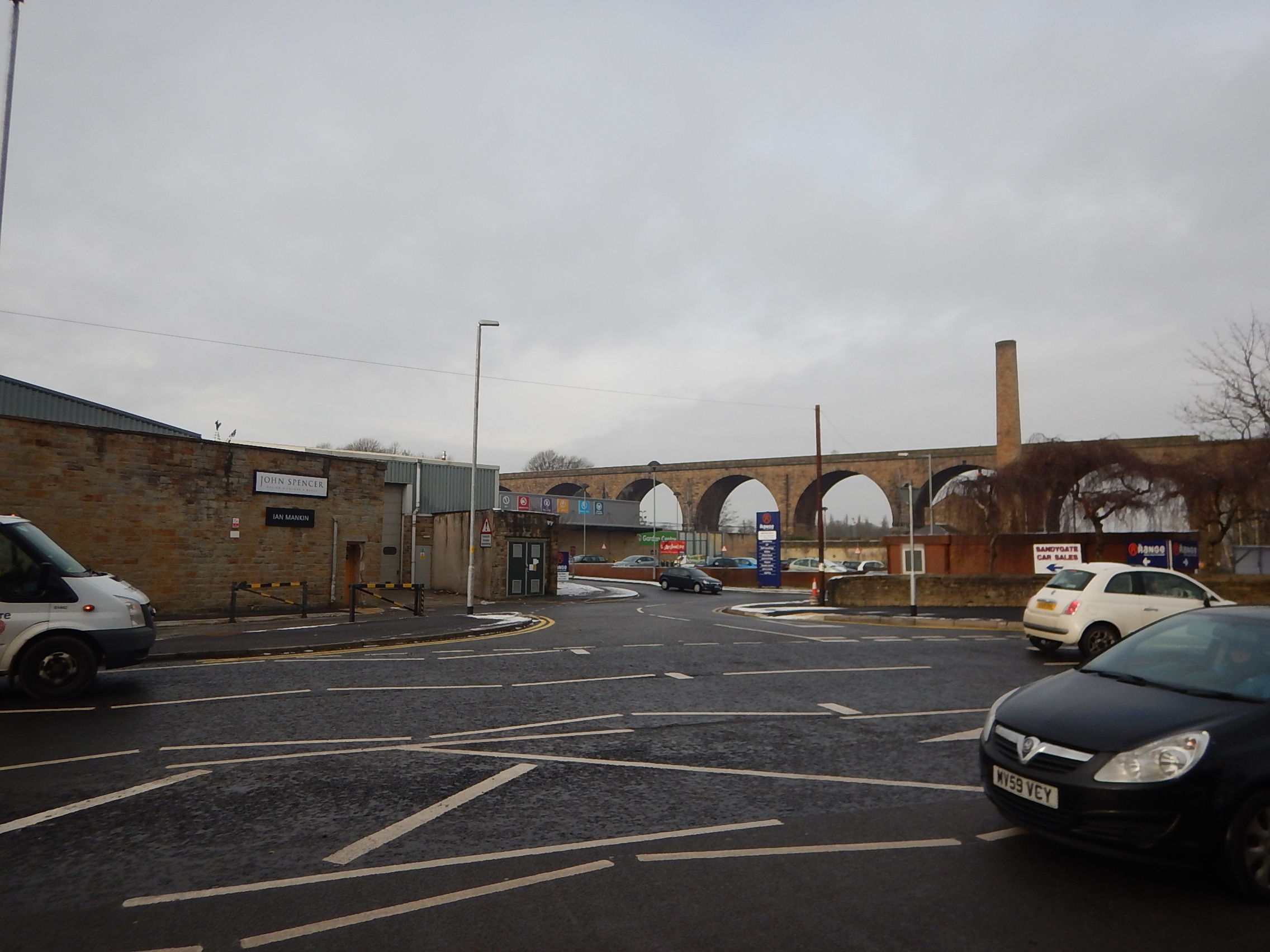
I can’t understand why, viaducts like these aren’t electrified using a third-rail.
- Third rail electrification works for most applications as well as overhead.
- Working on overhead electrification on a viaduct, is not a job for some.
- There is no visual intrusion with third rail.
- The power could only be switched on, when a train is connected.
On the other hand dual-voltage trains, that could switch quickly between systems at line speed would be needed.
Station Electrification
I also think that third-rail electrification can be used in stations where overhead electrification would be difficult or intrusive.
Battery,Bi-Mode And Hydrogen Trains
Train manufacturers are not stupid and want to increase their profits.
- Alstom are developing fleets of hydrogen trains.
- Bombardier are developing 125 mph bi-mode trains with batteries.
- CAF are developing battery and bi-mode trains.
- Stadler are developing trains with batteries and/or diesel power.
I suspect all these companies and others, see more trains can be sold, if innovative trains can run without the necessity of full electrification.
I also suspect many rail operators would prefer to spend money on shiny new trains, than on disruptive and ugly electrification.
Remember too, that batteries will improve.
Conclusion
I can see several techniques that could be applied to make electrification of some parts of the TransPennine routes.
Plans Revealed For £10bn High-Speed Railway To Connect Britain’s Busiest Airports, HS1 and HS2
The title of this post is the same as this article on Global Rail News.
This is the first two paragraphs.
Developers are submitting plans for a new high-speed line to the UK’s Department for Transport (DfT) in response to a call for market-led proposals.
Named ‘HS4Air’, the proposed £10 billion railway will connect HS1 at Ashford to HS2 North West of London with stops at Heathrow and Gatwick airports and a spur connection to the Great Western main line.
This map from Expedition Engineering shows the route.

To minimise environmental disruption, the following should be noted.
- There is a North-South tunnel under Heathrow Airport.
- HS4Air follows the M25 to the South-West of London.
- Several miles of the route between Heathrow and Gatwick is in tunnel to the West of Horsham.
- There is a West-East tunnel under Gatwick Airport.
- The Ashford to Tonbridge Line would become part of HS4Air.
There will also be stations at Ashford, Tonbridge, Gatwick and Heathrow.
This further diagram from Expedition Engineering shows the various possible routes.
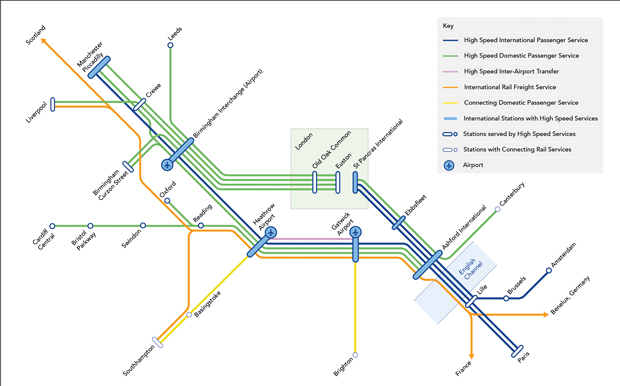
Note the following about HS4Air.
- Four major airports; Gatwick, Heathrow, Birmingham and Manchester, will be connected to the Channel Tunnel.
- Wikipedia suggests, that the line could be extended to a reopened Manston Airport.
- A Paris to Manchester passenger service via Gatwick, Heathrow and Birmingham, is proposed.
- High-speed connecting services from Cardiff, Oxford and Manchester to Ashford are proposed.
- HS2’s major interchanges of Birmingham International and Crewe, are served.
- Freight routes from Liverpool and Southampton to the Channel Tunnel will be enabled.
It looks a good basis to connect the rest of the UK to the services through the Channel Tunnel.
The article also gives some sample journey times.
- Ashford-Gatwick: 25 minutes
- Manchester-Heathrow: 1 hour 10 mins
- Heathrow-Gatwick: 15 minutes;
- Cardiff-Heathrow: 1 hour 40 mins
- Birmingham-Paris: 3 hours
- Manchester-Paris: 3 hours 40 minutes (My Estimate)
Intriguingly, the Manchester-Paris time, is the same as Eurostar’s current time between London and Amsterdam.
Conclusion
The plan seems to be well-thought out and it gives a good increase in connectivity from Wales, the West Country and the Midlands and North of England to Heathrow, Gatwick and the Channel Tunnel.
But I can see a few problems.
- Will the residents of the North Downs accept a high-speed railway through their area?
- If freight routes from Liverpool and Southampton to the Channel Tunnel are established, will residents object to masses of noisy freight trains?
- Will there be pressure for more tunnels?
On the other hand Expedition Engineering are saying that needed extensions to the UK’s electricity grid can be laid underground along the same route.
ERTMS Rollout Between London-Paris-Brussels Agreed
The title of this post, is the same as that of this article on Global Rail News.
This is the first paragraph.
An agreement has been reached by the infrastructure managers of the high-speed railway between London, Paris and Brussels – one of Europe’s busiest routes – to coordinate the rollout of European Rail Traffic Management System (ERTMS).
Rollout of ERTMS on these important routes must surely be a good idea, if it can enable extra and faster services on these busy routes.
Class 230 Trains On The Conwy Valley Line
I suspect to some people, the use of Class 230 trains, which are rebuilt London Underground D78 Stock on the Conwy Valley Line is a challenge to far.
Class 230 Trains
I wrote about these trains in First D-Train With Transport for Wales In March 2019, where I stated that the train formation will be.
- DM – Driving Motor with battery
- T – Trailer with four generators
- DM – Driving Motor with battery
As the trains will have regenerative braking, this will be used to help charge the batteries.
Note that batteries and traction motors are only in the Driving Motor cars.
The Conwy Valley Line
The route of the single-track Conwy Valley Line can be summsarised as follows.
- From Llandudno to Llanrwst it is a fairly level route alongside the River Conwy.
- From Llanwrst the line climbs to a 240 metre summit in the Ffestiniog tunnel, with gradients as steep as 1-in-47.
- From the summit, the train descends into Blaenau Ffestiniog with gradients as steep as 1-in-43.
It has some of the characteristics of a roller-coaster.
Class 230 Trains On The Conwy Valley Line
Provided the trains can handle the gradients either side of the summit, they can just roll down the other side. During the descent, the regenerative braking will charge the batteries.
This will have the following effects.
- Trains on the downhill sections will not need to use their diesel engines.
- Trains waiting in Blaenau Ffestiniog station, won’t need to use their diesel engines until they start back to Llandudno.
- I suspect some Northbound services, trains would be able to reach Llandudno without using their diesel engines.
Gravity is being used as an energy store to create an efficient railway!
Energy Of A Class 230 Train On The Conwy Valley Line
I am curious to know how much energy is needed to get a fully-loaded train up the hill from Llandudno to Blaenau Ffestiniog.
Consider the following.
- A D78 Driving Motor car weighs 27.5 tonnes
- A D78 Trailer car weighs 19 tonnes
- Wikipedia says “For the Country layout, each D-train unit is to be a three-car formation, which would accommodate 163 seats along with a total capacity of 291.”
- I assume each passenger weighs 90 Kg with baggage, buggies and bicycles.
- I think it is fair to say that each generator and battery weighs about a tonne.
- The summit of the line in the Ffestiniog Tunnel is 240 metres above sea level.
- I will assume that the coastal end of the route is at sea level.
This means that the empty train weighs eighty tonnes and a full load of passengers weighs twenty-six tonnes.
Using Omni’s Potential Energy Calculator, this gives a potential energy for the train of seventy kWh, at the summit with a full load of passengers.
This figure means that if two 55 kWh batteries from a New Routemaster bus were used on the train and they were fully-charged, then they could power the train to the summit and on to Blaenau Ffestiniog.
It should be noted that Vivarail talk about using 106 kWh battery rafts on the Class 230 train.
A Few Questions
I have these questions.
Are These Class 230 Trains Serial Hybrids?
I ask this question, as it could be key to making the operation of the trains more efficient on this line.
The train would always be powered directly from the batteries.
- The diesel engines would cut in to charge the batteries, when the battery charge level got to a certain low level.
- The diesel engines would cut out, when the battery charge level, got to a certain high level.
As the train has four generator sets, an appropriate number could be used as required.
A well-trained driver or an intelligent control system could make these trains very efficient.
In this article on RAIL Magazine, this is stated.
Shooter told RAIL that the trains will save around 20% on fuel consumption.
Adrian Shooter is Chairman of Vivarail, who are creating the Class 230 trains.
Possible Electrification Of The Ffestiniog Tunnel
The Class 230 trains are created from London Underground D78 Stock and I suspect it would be possible for the Class 230 trains to be powered by third-rail electrification.
The Ffestiniog Tunnel is the summit of the Conwy Valley Line.
- It is a single-track.
- It is 3.5 kilometres long.
- One end of the tunnel is close to Blaenau Ffestiniog.
Would it be a sensible idea to electrify the tunnel either fully or partially, to top up the batteries?
Consider.
- The third-rail electrification would be no intrusion in the landscape.
- The electrification could only be switched on when a train is present.
- I don’t think supplying power would be difficult.
- There could be less need to run on diesel.
The electrification could even be extended to wards Blaenau Ffestiniog station, so that trains leaving the station could have electrical power to climb to the summit.
Will The Class 230 Trains Attract Passengers?
I think that the Class 230 trains have several passenger-friendly features.
- All new interiors.
- Ten percent more seats and almost twice the capacity.
- Lots of space for bicycles
- Large windows
- Wi-fi and power sockets
- Accessible toilet
Hopefully, there will also be step-free access between train and platform.
This package of improvements should encourage more to travel.
I also suspect, that having a decent train with a novelty appeal that connects to the Ffestiniog Railway will tap a new market of travellers.
Conclusion
I have no doubt, that Class 230 trains will be able to provide a successful service on the Conwy Valley Line.
 The Anonymous Widower