Germany Approves Alstom’s Hydrogen Train For Passenger Service
The title of this post is the same as that of this article on Railway Technology.
The title says most of the article, but it also states that the first passenger services in Germany are scheduled for late summer.
Business Case Requested For Middlewich Reopening
The title of this post is the same as that of this article on Rail Magazine.
The Northwich to Sandbach Line provides a link between Northwich station on the Mid-Cheshire Line and Sandbach station on the Crewe-Manchester Line.
In the Wikipedia entry for the Mid-Cheshire Line, this is said under Reopening The Northwich To Sandbach Line To Passenger Trains.
This would allow a direct train service from places on the line to Crewe, which will should reduce journey times to destinations south of Chester, as well as reducing fares to those destinations. It would also allow the former station at Middlewich to re-open, and the possibility of a new station opening at Rudheath. An independent feasibility report found the Benefit to Cost Ratio for the reopening to be 5:1, which is almost four times higher than the recently reopened Borders railway in Scotland
5:1 sounds like a good financial case.
The Rail Magazine article also has this quote from Chris Grayling.
There are two routes in the North that I feel particularly keen to look at seriously reopening. One is the line from Skipton to Colne, the other is the line that passes through Middlewich that, in my view, should be a commuter railway into Manchester.
There is also the question as to whether the Northwich to Sandbach Line should be electrified.
But at 8.5 miles, I suspect that it will be an ideal line for a battery train, if both of the lines it connects, are electrified.
- The Crewe-Manchester Line was electrified in 1959.
- Electrification of the Mid-Cheshire Line has a high priority.
In addition, the Crewe-Chester Line could be electrified to allow Chester to have direct electric trains from London and Manchester.
It was good to see that Chris Grayling also endorsed Skipton to Colne.
Hydrogen Is Really Happening
The title of this post, is the same as that of this opinion in Energy Voice.
It is a good summary of where we are with hydrogen.
One interesting point of several is that researchers in the US and Spain can extract hydrogen from plastic waste.
This article from FuelCellWorks describes the Spanish research.
That would surely be a real zero-carbon fuel!
Poland Investigates Use Of Hydrogen Fuel For Rail Freight
The title of this post is the same as that of this article in the International Railway Journal.
This first paragraph, outlines the project.
Polish coal mining company JSW and national rail freight operator PKP Cargo have agreed to cooperate to research, analyse and possibly produce new types of hydrogen-powered freight wagons and shunting locomotives.
Note that one of the collaborating companies is a coal company.
Statements later in the article indicate that JSW can create commercial quantities of hydrogen, as a by-product of making coke.
Some of us of a certain age, still remember coal gas, which was replaced by natural gas from the North Sea in the 1970s.
It looks like Poland are still using the same process to obtain coke and probably other products like coal tar, sulphur and ammonia.
According to Wikipedia, UK coal gas had the following composition.
- Hydrogen 50%
- Methane 35%
- Carbon monoxide 10%
- Ethylene 5%
It was one of the suicide methods of choice for the unhappily married. I don’t miss the foul stuff, with its poisonous carbon monoxide.
But as you can see, it does have a high percentage of hydrogen!
Conclusion
I’m not a fan of using coal gas, but these two Polish companies are another group investigating the use of hydrogen as a method of powering trains and other rail vehicles.
The New Trimley Freight Loop And Trimley Station
Felixstowe Port is the UK’s largest container port and it generates a lot of freight traffic on the Felixstowe Branch Line.
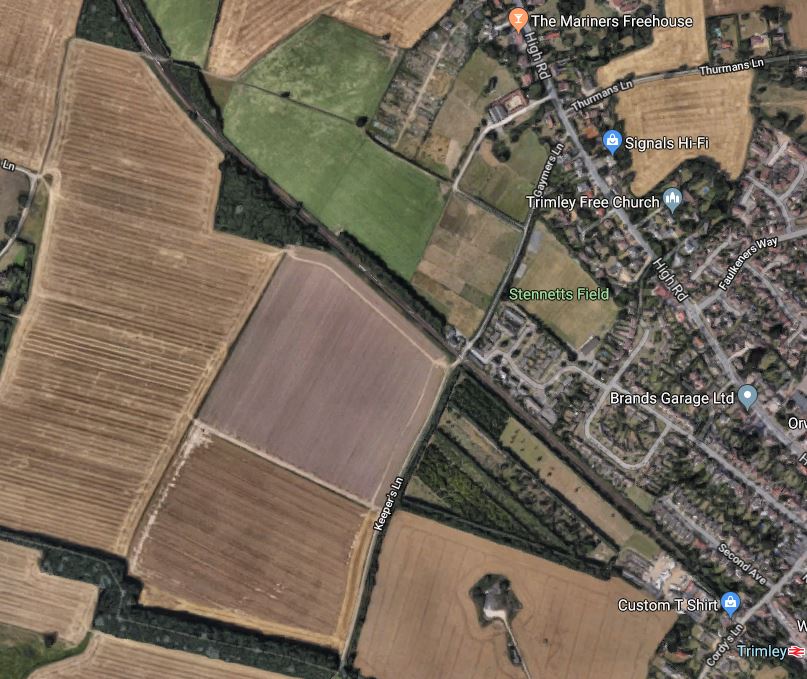
So a 1.4 km. loop is being added to the line at Trimley to enable more freight trains to enter and leave the port.
I took these pictures as I went to and from Trimley station.
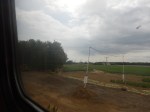


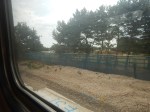



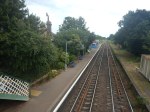
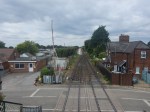



This Google Map shows the section of line, that will effectively be doubled.
I do have a few thoughts on various issues.
How Many Extra Freight Trains Will Be Possible?
This page on the Network Rail web site, is entitled Felixstowe Branch Line Works To Unlock More Freight And More Reliable Passenger Services.
This is said.
The work on the branch line in this area will support up to 10 additional trains in each direction to move goods to and from the Port of Felixstowe.
I assume the frequency is in trains per day.
I would assume that with careful scheduling of the freight trains, one train per hour (tph) will be able to move reliably to and from each of the two rail freight terminals at the Port.
There are certainly upwards of thirty scheduled trains per day to and from the Port at the present time, so another ten will obviously need the ability to run two tph both ways for most of the day.
Is The Loop Long Enough?
Network Rail are working towards the UK network being able to handle freight trains up to a maximum length of 775 metres.
At a length of 1.4 km, the loop may not be long enough to accommodate two maximum length trains, if perhaps something goes wrong on the Great Eastern Main Line, like a track or signalling failure.
I would hope Network Rail have done their track planning!
Passenger Services
The Network Rail web page implies that passenger services will be more reliable.
So how would a freight loop improve passenger services?
I suspect that just as the number of freight paths each way will be a reliable two in every hour, the number of passenger paths will also be doubled.
The second path in the hour would be useful for two reasons.
- If say there was a train or signalling failure, then the service can be recovered once the fault is fixed using the second path.
- If demand on the branch were to increase substantially or a boost was needed for a special event, Greater Anglia could put on a second service.
Greater Anglia have ordered 38 Class 755 trains and they will be running direct routes to five destinations from Ipswich, so I suspect the operator could station a spare train at Ipswich to deal with disruptions, like the inevitable level crossing accidents that happen in East Anglia.
Will The Felixstowe Branch Line Ever Be Electrified?
This picture is from the Network Rail web page.
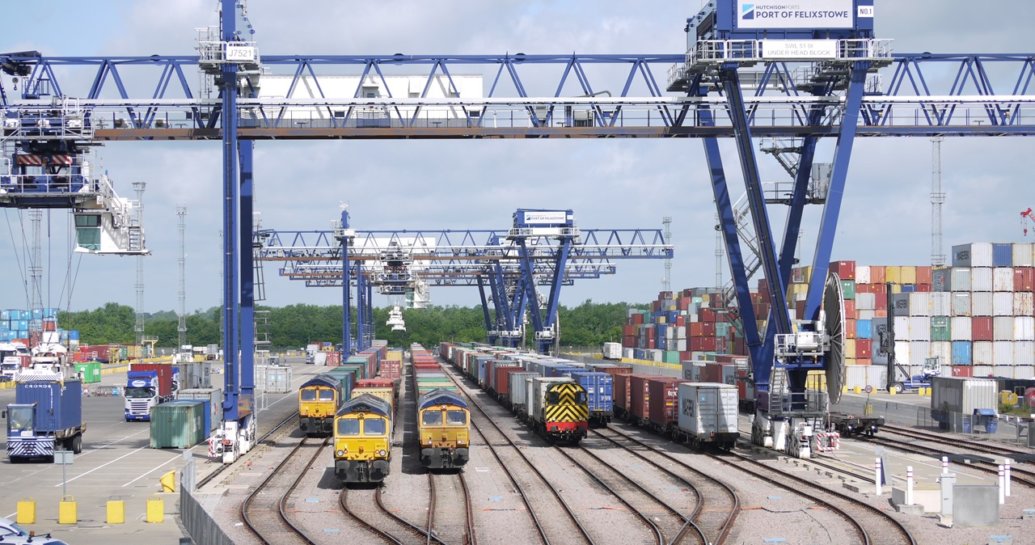
It illustrates why ports are not keen to electrify.
Containers do get dropped and a single mistake by a crane driver or the controlling automation could shut the rail terminal.
Class 66 locomotives may be an environmental disaster, but they are an affordable and reliable locomotive for ports and freight operators.
New locomotive types like the Class 88 locomotive are being ordered, which could work a port without electrification and change to and from electrification at a safe distance outside the port. The Class 88 locomotives can even do this at line speed.
There would also be no point in electrifying the Felixstowe branch line without electrifying the route all the way between Felixstowe and Nuneaton, which is the route a lot of freight trains take.
I think it is more likely, that innovative locomotive engineers will design a locomotive capable of pulling the longest trains on electricity or diesel, efficiently across the country. After all, using large environmentally unfriendly diesel locomotives is not a problem confined to the UK, so there are millions to be made, by designing the right locomotive for today.
The Last Unmodified Rakes Of Mark 3 Coaches In Front Line Service
Greater Anglia runs the last rakes of the unrivalled Mark 3 coaches, with their original doors, on their services between London and Norwich.




This set was going North pushed by an immaculate Class 90 locomotive, which like the coaches is no spring chicken.
The Swiss-built Class 745 trains, will have to be very good, to gain the same hard-won reputation.
One of these rakes of coaches is going to be hauled by 60163 Tornado.
I suspect other rakes will find specialist uses. If not in the UK, then in other countries with standard gauge railways.
Is Platform 1 At Ipswich Station Big Enough?
For some years, trains for Felixstowe and Lowestoft have usually shared Platform 1 at Ipswich station.


But with the new longer Class 755 trains replacing the current Class 150 or Class 153 trains, I suspect this will no longer be possible.
I was going to Felixstowe and my train left and returned to Platform 2B, which in the fourth picture is occupied by the back end of Norwich to London Express.
It looks like when all the new trains are in service, Platform 2 will be used by the following trains.
- Three trains per hour (tph) from Norwich to London.
- One tph From Peterborough to Colchester
- One tph to and from Felixstowe
In addition four Lowestoft services per day will go to and from London.
It strikes me, trains will have to keep very much to time or there is a need for an extra platform.
Free Water At Ipswich Station
I hope this is the shape of things to come.
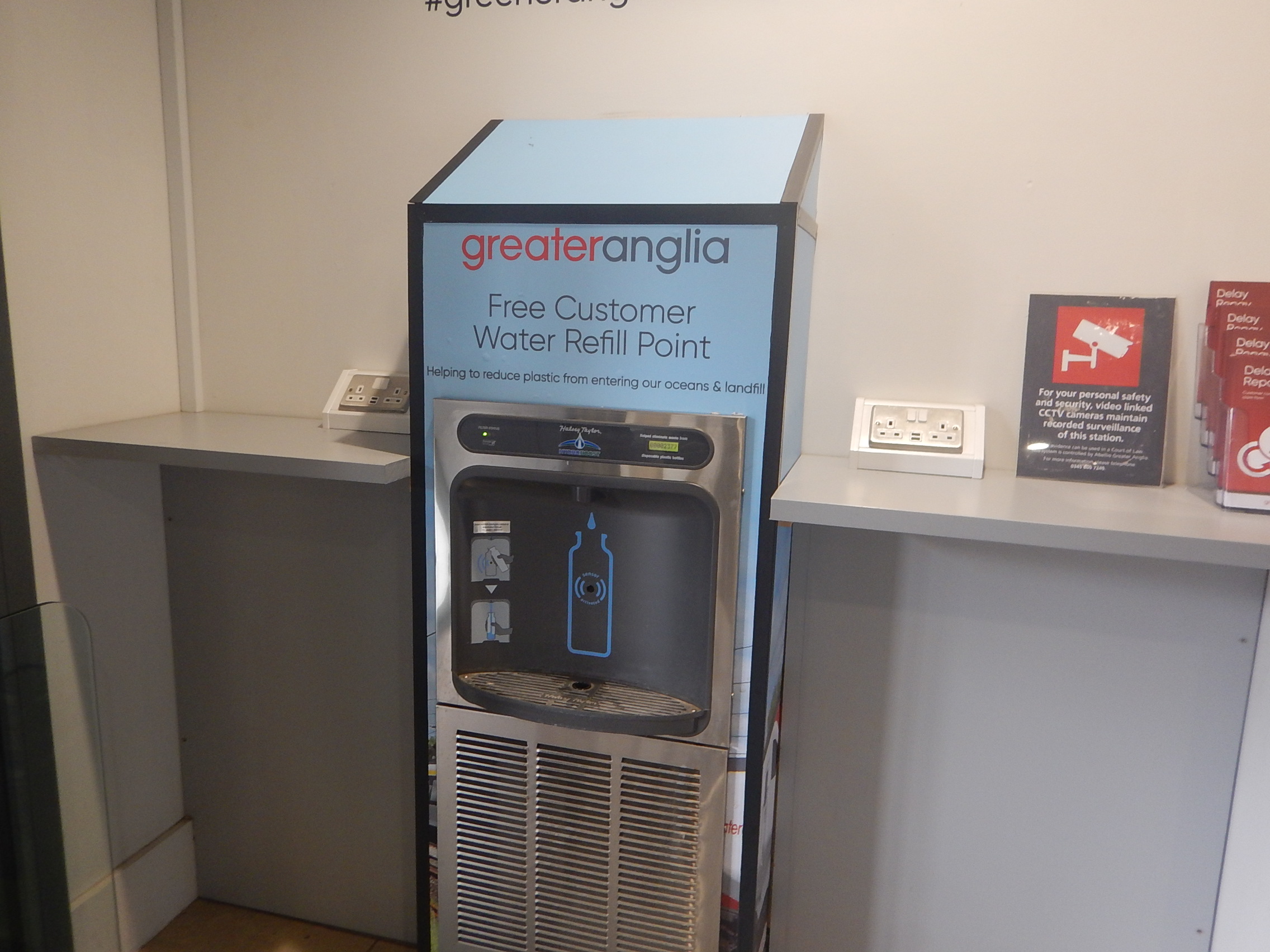
Greater Anglia give more details on this page on their web site.
By Class 345 Train To Shenfield
This morning, I took one of Crossrail’s Class 345 train between Liverpool Street and Shenfield.
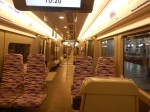
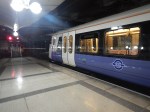
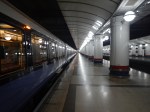
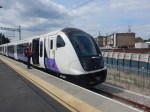
Even these initial trains, which are a couple of cars short of a full train, are a long walk from end-to-end.
I actually followed the driver, who was changing ends, by walking along the platform.
Two school parties of young children had arrived on the train, and she took time out from her walk, to chat to a couple of teachers and some of the children.
If you look at the second and last pictures, you’ll notice a door on the side of the cab. But the driver left and entered the train through the passenger compartment. In the last picture another driver is entering the train.He was perhaps taking over the train.
So it does seem, that drivers are happy to enter and leave the train, via the passenger compartment, which it appears they will be doing in the New Tube for London.
Is It Back To The Future In Manchester?
In the 1970s British Rail, proposed three tunnel projects in the North
- A Loop and Link in Liverpool that linked railways from North, South and the Wirral underneath the City Centre.
- A tunnel under Newcastle.
- The Picc-Vic Tunnel, under Manchester.
All three tunnels were designed to connect the railways on both sides of the cities.
- Liverpool got the much-loved and successful Northern and Wirral Lines of Merseyrail in 1977.
- Newcastle got the much-loved and successful Tyne and Wear Metro in 1980.
- Manchester got nothing, as Harold Wilson cancelled it, like Maplin Airport and the Channel Tunnel.
Am I right in thinking that the Channel Tunnel was resurrected later and opened in 1994? It is now much-loved and successful!
Finally, the Government and a lot of opposition MPs and unions have decided that Maplin be replaced by a third runway at Heathrow.
Will that be cancelled by Boris, David, Jeremy, Ruth or Vince?
Today, this article has been published on Rail Magazine, which is entitled Option For Underground Station At Manchester Piccadilly.
Apparently, to integrate Northern Powerhouse Rail into the HS2 station at Manchester Piccadiily station, one option is to go underground.
So are those ideas and surveys of the 1970s being looked at for a solution?
 The Anonymous Widower