Cross City Rail Lines
This list of cross-city rail lines is for my own information.
The line must go from one side of the city to another, with at least one stop in the City or Town Centre.
United Kingdom
Birmingham
- Camp Hill Line – West-East to South of the City Centre
- Chase Line – North-East – South-West through City Centre
- Cross-City Line – North-East – South-West through City Centre
- Midland Metro – North-West – South-East through the City Centre
- Snow Hill Lines – North-South through the City Centre
- West Coast Main Line – North-West – East through City Centre
Brighton
- East Coastway and West Coastway – West-East through City Centre
Liverpool
- Northern Line – North-South through City Centre
- Wirral Line – Loop to/from Wirral under City Centre
London
- Bakerloo Line – North-West – South-East through City Centre
- Central Line – West-East through City Centre
- Crossrail – West-East through City Centre
- District Line – West-East through City Centre
- East London Line – North-South to East of City Centre
- Gospel Oak to Barking Line – West – East to North of City Centre
- Hammersmith and City Line – West – East through City Centre
- Jubilee Line – North-East through City Centre
- Metropolitan Line – West – East through City Centre
- Northern Line – North-South through City Centre
- North London Line – West – East to North of City Centre
- Piccadilly Line – North – West through City Centre
- Thameslink – North – South through City Centre
- Victoria Line – North-East – South-West through City Centre
- West London Line – North-South to West of City Centre
Northern City Line and Waterloo and City Line go partly under the City Centre, but not across it.
Birmingham Airport Mulls Plan For Terminal Inside HS2 Station
This is the title of an article in Construction News.
This Google Map shows Birmingham Airport, the current Birmingham International station, the NEC, with the M42 Motorway going North-South down the Eastern side.
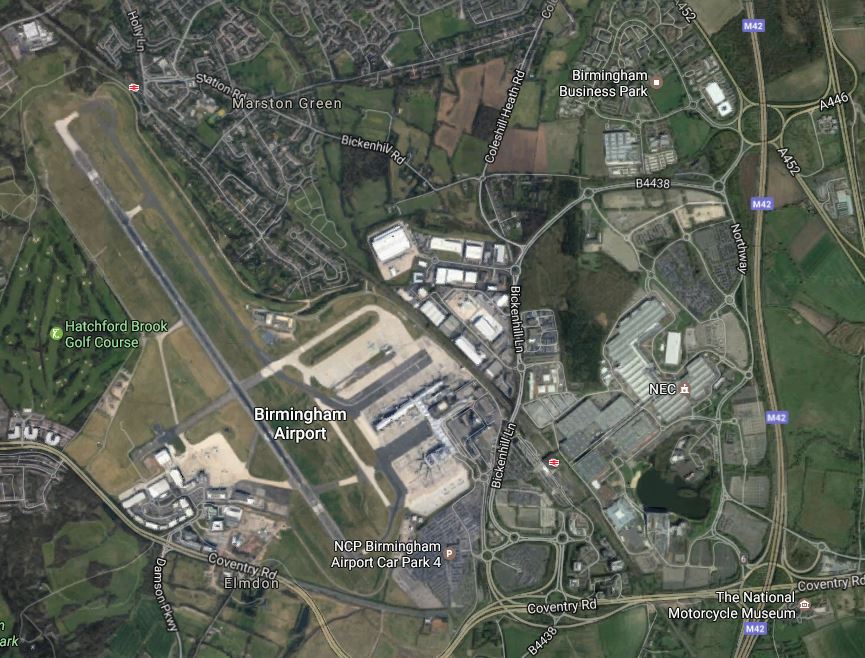
Currently, it is planned that the Birmingham Interchange station for HS2, would be on the other side of the M42 to the NEC.
Surely, the Construction News headline is indicating that something better can be done.
In an ideal world, Birmingham Airport would have one station for HS2, West Coast Main Line and local train and tram services, with a step-free lift/escalator connection between all platforms and both Departures and Arrivals at the Airport.
Conservative Manifesto On The Railways
The Conservative Manifesto says this on railways.
We will focus on creating extra capacity on the railways, which will ease overcrowding, bring new lines and stations, and improve existing routes – including for freight. We will increase services on our main lines and commuter routes, and launch new services to places which are poorly served or host major new housing projects.
This would seem a sensible policy and it is probably very little different to what has been done over the last fifteen years.
- Quite a few new trains have been procured.
- New rail and tram lines like the London Overground, the Borders Railway, the Manchester Metrolink, the Midland Metro and others have been opened.
- Around seventy new stations have been opened.
- Some lines have been electrified.
- Some lines have been improved and resignalled.
- Mechanisms have been developed , so that developers can help to provide stations for their new developments.
But there is one big difference.
A lot of quality trains are now being replaced by new or much better trains in the next few years.
- Virgin Trains East Coast‘s and First Great Western‘s InterCity 125s are being replaced by new Class 800 trains.
- Thameslink’s Class 319 trains are being replaced by new Class 700 trains.
- Greater Anglia‘s Class 90 locomotives and Mark 3 coaches are being replaced by new Stadler FLIRTs.
- Greater Anglia’s Class 379 trains are being replaced by new Stadler FLIRTs.
- Greater Anglia’s Class 156 trains are being replaced by new Stadler FLIRTs
- Greater Anglia’s Class 170 trains are being replaced by Stadler FLIRTs.
- Greater Anglia’s Class 321 trains are being replaced by new Class 720 trains.
- Greater Anglia’s Class 317 trains are being replaced vt new Class 720 trains.
- Greater Anglia’s Class 360 trains are being replaced by new Class 720 trains.
- London Overground‘s Class 172 trains are being replaced by new Class 710 trains.
- Various operators have Class 317 trains, which will be replaced by new trains.
- Heathrow Connect’s Class 360 trains are being replaced by new Class 345 trains.
- TransPennine Express wil be returning twenty-two Class 185 trains to the leasing company.
- TrnsPennine Express’s Class 350 trains will be replaced by new Class 397 trains.
Some of these were built this century and will have plenty of takers, whilst others despite being a lot older have already been earmarked for substantial refurbishment.
Remember that, just as our architects and builders are good at taking ruins and creating high quality dwellings, offices or commercial buildings, our engineers, designers and train building and refurbishment companies are good at taking trains of an advanced age and creating high quality trains and locomotives, as comfortable, reliable, safe and passenger, crew and operator-friendly, as new ones straight from the factory.
In What Train Is This?, I show a refurbished Great Western Railway Class 150 train. This picture shows the quality that can be achieved, by refurbishing a thirty-year-old Mark 3-based train.
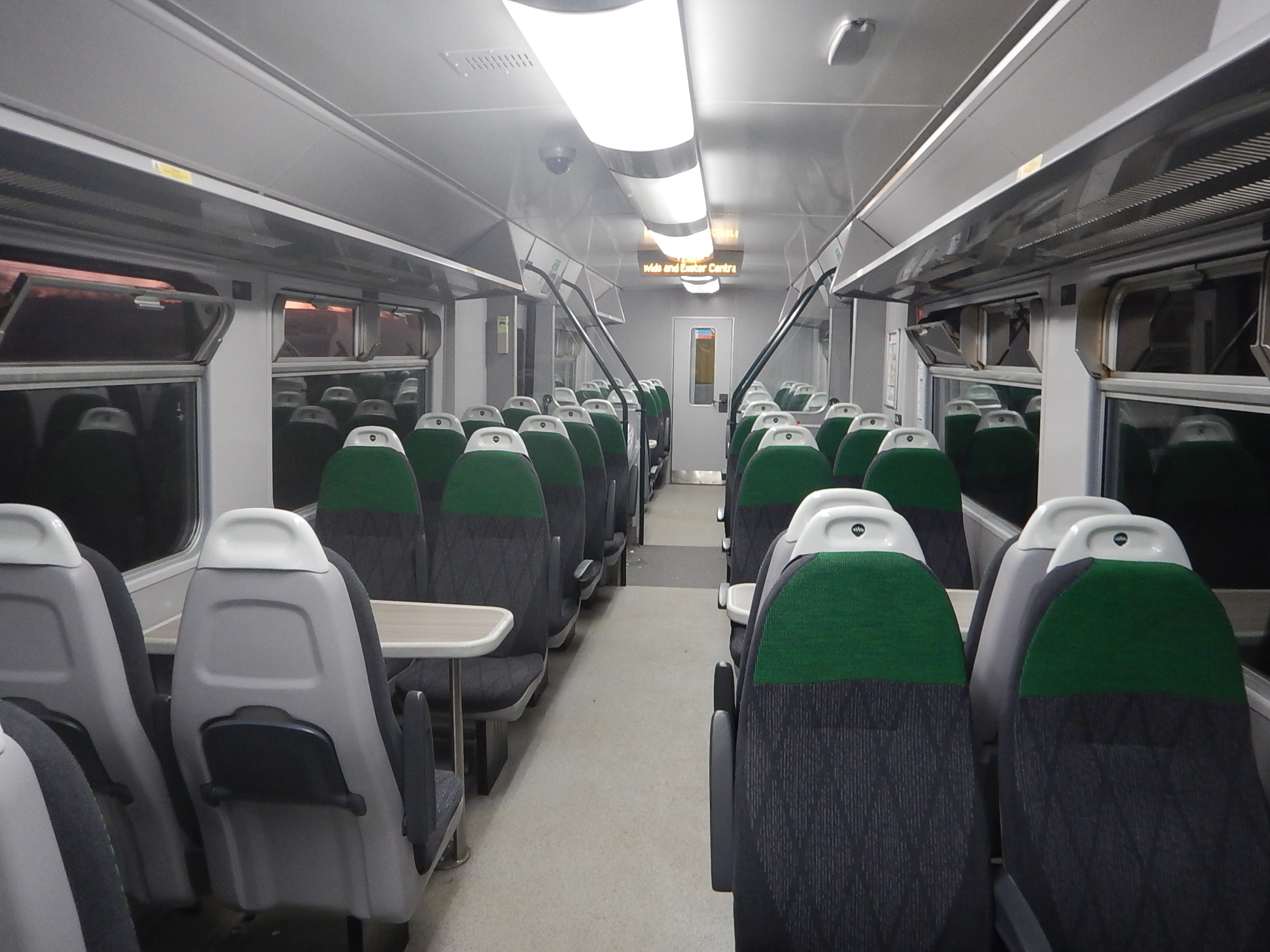
Who would complain about this superb refurbishment, which I suspect was done by Great Western Railway’s depot at Laira in Plymouth?
This table summarises what has been planned and what trains are worth saving.
- Forty of the hundred InterCity 125 sets are being converted into quality four and five carriage trains for ScotRail and Great Western Railway – Equivalent to forty four-car diesel trains.
- Some InterCity 125 sets might end up as high-speed parcel trains. Although if Scotrail and Great Western Railway prove the Pocket Rocket four-car HST to be viable, other companies may copy the concept.
- Will the 137 Class 150 trains be refurbished to the standard shown in the picture?
- The 114 Class 156 trains can be refurbished to a high standard for local routes. – Perhaps half will go to new operators.
- The twelve Class 170 trains were built in 1999 and will go to another oiperator – Probably equivalent to another six four-car diesel trains,
- The 72 Class 317 trains are in surprisingly good condition for thirty-year-old trains. They are also 100 mph units and Mark 3-based. If Network Rail were good at electrification, they would find a home. They are seventy-two four-car electric trains.
- The 86 Class 319 trains will find homes, with some converted into Class 319 Flex bi-mode trains. – Probably equivalent to another thirty four-car trains, of which some would be electric and some bi-mode.
- The Class 90 locomotives will go to freight operators.
- The 130 Mark 3 carriages will find a use, as they always do. Chiltern probably need some more.
- The 100 Class 321 trains could be refurbished and go to another operator. They are 100 four-car electric trains .Some could even be converted to bi-modes.
- The 10 Class 350 trains were built in 2013 and will go to another operator. They are 10 four-car electric trains.
- The 26 Class 360 trains were built in 2002 and will go to another operator. They are twenty-one four-car and five five-car electric trains.
- The 30 Class 379 trains were built in 2010 and will go to another operator. They are thirty four-car electric trains.
The totals in four-car trains are roughly as follows.
- Diesels and bi-mode – 100 – 50 already allocated
- Electric – 170
These totals don’t include all the plans.
What will the new owners of these franchises do?
- East Midlands
- London Midland
- Southeastern
- South West Trains
- Wales
Only South West Trains has been settled and it looks they’ll be releasing the new Class 707 trains.
Conclusion
It does look that there could be enough diesel trains.
- There could be quite a number of Sprinters, Class 170, Class 172 and Class 185 trains, which after refurbishment could be providing excellent service for perhaps another twenty years.
- The pride of lions in the room will be the shortened InterCity 125s, that Scotrail and First Great Western are creating and introducing in the next couple of years.
- Will they have cubs or be imitated, by creating rakes of four or five Mark 3 coaches, with a Class 43, Class 68 or Class 88 locomotive at each end?
- TransPennine Express have already ordered Mark 5 coaches and Class 68 locomotives to do the same thing.
- A hybrid electric/diesel/battery locomotive could be used with the coaches. Hitachi created such a beast from a Class 43 some years ago and the Germans are experimenting.
Terry Miller should be awarded a posthumous knighthood, as his amazing stop-gap design that saved British Rail forty years ago, could be about to play an encore.
If there is a problem, it is that there are a lot of electric trains.
- The more recent ones like Class 379, Class 350, Class 360 and Class 707 trains will probably find homes in places like Birmingham, Leeds, Liverpool, Manchester and Scotland.
- Surely, Class 379 trains would be ideal on shorter distance services to Manchester Airport, as they were designed for Stansted services.
- If the Class 319 Flex train is a success, expect to see more of these trains converted to 100 mph dual-voltage four-car bi-modes trains.
There is still a lot of electric trains to be allocated.
The Class 319 Flex train may be based on the forty-year-old Mark 3 coach design, but I believe it fits the specification of the train we need to expand our rail services.
- 100 mph on either 25 KVAC overhead or 750 VDC third-rail electrification.
- 90 mph on diesel.
- Four-coaches meeting all regulations laid out to the operator’s required configuration.
- Can work in eight and twelve car formations.
- Ability to go on virtually all rail lines in the UK.
- Proven reliable systems.
- In service by the end of 2017.
- Liked by the drivers
- Fits the niche below the five-car Hitachi Class 800 bi-mode.
But above all there are numerous Class 319 trains available for conversion and they are affordable.
If the concept takes off in a big way, then the engineers would just move on to the Class 321 trains.
But there will still be a lot of quality electric trains left over.
They will have to be scrapped or exported, unless Network Rail can get its electrification work into line.
Perhaps we will see limited electrification between existing electrification and major cities and junctions, with services run by bi-mode, battery or diesel trains to jump the missing electrification.
Areas where this approach might work could include.
- South Yorkshire between Leeds, Wakefield, Doncaster, Sheffield and Rotherham.
- North Yorkshire between Leeds, Skipton, Harrogate, Ripon and York.
- East Yorkshire between Doncaster, Hull, York and Scarborough.
- Blackpool, Preston, Blackburn, Clitheroe, Burnley, Colne and Hebden Bridge.
- Southport, Preston, Kirkby, Wigan and Manchester.
- Crewe, Chester, Wrexham, Shotton and the Wirral.
- Darlington, Middlesbrough and Teesside.
- Birmingham, Snow Hill and Camp Hill Lines
- Edinburgh to Dundee and the branches to Leven and St. Andrews.
Engineering is the Science of the Possible, whereas Politics is Dreaming of the Impossible.
A Class 345 Train Passing Stratford Station
I took these pictures of a Class 345 train, as it passed through Stratford station.




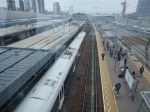

The pictures were taken from the pedestrian bridge that connects Eastfield to the station.
Note.
- Pantographs on cars two and six.
- Both pantographs are up.
- The rounded ends of each car.
- The generally smooth roof.
Points 3. and 4. are probably there to improve the aerodynamics.
I found this snippet on the Internet which gives the formation of the new Class 345 trains.
When operating as nine-car trains, the Class 345 trains will have two Driving Motor Standard Opens (DMSO), two Pantograph Motor Standard Opens (PMSO), four Motor Standard Opens (MSO) and one Trailer Standard Open (TSO). They will be formed as DMSO+PMSO+MSO+MSO+TSO+MSO+MSO+PMSO+DMSO.
So as both PMSO cars are there, I would assume that the current seven-car trains are two MSO cars short of a full-train.
The power cars/total cars ratio will be as follow.
- Seven-car train – 0.86
- Nine-car train – 0.89
Could this mean that the full nine-car trains will accelerate faster?
I suspect Bombardier know a lot about passenger behaviour in walk-through trains running in the UK and London in particular, as London Underground’s S Stock and London Overground’s Class 378 trains have similar layouts, with all and eighty percent of the cars powered respectively.
If passengers even themselves out between the cars and most cars are powered, this must surely help the dynamics of the train.
Passengers too, probably have a better ride if they are spread out along the train.
It will be interesting to ride in a full train between Shenfield and London, to see how the Self Loading Cargo behaves.
Close Up To A Class 345 Train At Liverpool Street Station
These pictures of a Class 345 train, were taken in Liverpool Street station.


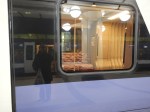


I also had a chat with a group of drivers.
- The drivers find the trains well-built, quiet and fast.
- One driver said they were effectively two half trains.
- Drivers seemed enthusiastic or jealous depending if they’ve driven one.
- Greater Anglia’s drivers were crawling all over the cab!
- There is masses of space under the trains.
- They are virtually silent as they move off!
The services start on Tuesday, the 23rd of May.
Vivarail Reveals New D-Trains Will Be Available In 2018
This is the title of an article in Rail Magazine.
I don’t know about the Class 230 train.
It could be an interesting concept, but when I read my brochure of the Class 319 Flex train, I fear it has got very strong competition.
- The 319 Flex, is a true 100 mph bi-mode train.
- There are 86 Class 319 trains, that could be converted.
- The Class 319 train has proven reliability.
- There is a large volume of knowledge about refurbishing, upgrading and converting Class 319 trains.
- Four 319 Flex trains will be available this year.
If more trains to convert are needed, there are other classes.
A Policy For Brexiteers
As to why people voted to Leave, I have found this academic document from NatCen, which is entitled Understanding the Leave vote.
The summary of their findings are as follows.
- Identity politics played a role
- Voters not persuaded by arguments about economic risks
- ‘New voters’ leant towards Leave
- The vote split across traditional party lines
- Turnout favoured Leave
- Leave brought together a broad coalition of voters
I think it is important that to do well in the General Election, parties must surely key in to the Brexiteers!
Wikipedia gives the Results of the United Kingdom European Union membership referendum, 2016 and from that I have extracted all areas that voted over seventy percent for Brexit.
- Ashfield – 70.5%
- Barnsley East – 70.7%
- Bolsover – 70.8%
- Boston And Skegness – 74.9%
- Castle Point – 72.7%
- Clacton – 70.0%
- Doncaster North – 72.0%
- Dudley North – 71.4%
- Dudley South – 70.2%
- Great Grimsby – 71.4%
- Great Yarmouth – 71.5%
- Kingston-upon-Hull East – 72.6%
- Mansfield – 70.9%
- South Basildon And East Thurrock – 73.0%
- South Holland And The Deepings – 71.1%
- Stoke-on-Trent North – 72.1%
- Stoke-on-Trent South – 70.7%
- Walsall North – 74.2%
By comparison, these cities voted for over sixty percent for Brexit.
- Kingston-upon-Hull – 67.6%
- Stoke-on-Trent – 69.4%
- Sunderland – 61.3%
- Wakefield – 66.4%
- Wolverhampton – 62.6%
It is an interesting set of statistics, with most of the areas not having the best of economic prospects
So far none of the leaks and policies from the various parties seem to be aimed at the areas of the UK, where there was a strong Leave vote.
Those that voted to Leave probably did so for a variety of reasons, but if you look at many with a high proportion of Brexiteers, they are areas with not the best economic circumstances.
I haven’t gone through all the constituencies, but I will, but several feature in A Look At New Station Projects, where I looled at all proposed projects.
In January 2017, I wrote Government Focuses On New Stations And Trains and I just wonder, if we will see a substantial New Stations Fund from the Conservatives, so that some of these places get better connections to where there is work, housing, education, leisure or opportunities.
It seems £10million, buys a reasonable station, so £100million a year would over the life of a parliament create up to fifty stations, especially if they built them like Ilkeston station in under a year.
I will now look at the individual constituencies.
Ashfield
Ashfield is based on the towns of Sutton-in-Ashfield and Kirkby-in-Ashfield, both have which have stations on the Robin Hood Line.
Plans exist to develop this line along existing freight routes in good condition with perhaps two or three simple stations. Add in some better trains and make the frequency two trains per hour (tph) seven days a week and it could have a large positive effect.
Barnsley East
Barnsley East is centred on the town of Wombwell.
Wombwell station is on these two lines.
- The Hallam Line between Leeds, Wakefield and Sheffield.
- The Penistone Line, which links Sheffield and Huddersfield.
Both lines go through Barnsley.
Both lines are in good condition, but the trains are dreadful. Northern will be replacing these with better rolling stock, with the eventual aim of having new Class 195 trains in service by 2020.
If you wanted to give the area a quick fix, you could send in the Class 319 Flex trains at the end of this year.
Bolsover
Bolsover is centred on the town of Bolsover.
There are vague plans to link Bolsover to the rail network using the partly mothballed Doe Lea Line, but nothing concrete. Wikipedia says this.
The Doe Lea line south from Seymour Junction to Bolsover has been mothballed as it runs through the new Markham Vale Enterprise Zone at M1 Junction 29A. It is hoped that someone will invest in this infrastructure to create road-rail interchange facilities.
I can find no reference to any progress.
Note that Bolsover’s MP is left-wing Labour veteran; Dennis Skinner.
Boston And Skegness
Boston And Skegness is a rural constituency in South incolnshire.
The Poacher Line links Skegness and Boston to Nottingham via Sleaford and Grantham.
There is an approximately hourly service along the line, using Class 156 trains and Class 158 trains, but the line probably needs two tph, with good connections to the Peterborough to Lincoln Line at Sleaford.
Castle Point
Castle Point is in South |East Essex.
The railways in this area are generally good, but c2c has expansion and fleet renewal plans.
Clacton
Clacton is in North East Essex.
The railways in this area are gebnerally good, but Greater Anglia have expansion and fleet renewal plans.
Doncaster North
Doncaster North is in South Yorkshire.
The railways in this area suffer because of bad rolling stock and not being electrified.
Note that Doncaster North’s MP is Ed Milliband.
New diesel or bi-mode trains between Doncaster and Sheffield via Rotherham would make a great difference.
If you wanted to give Doncaster North a quick fix, you could send in the Class 319 Flex trains at the end of this year.
Dudley North And Dudley South
Dudley North and Dudley South are the two constituencies for Dudley.
The Wednesbury – Merry Hill Extension of the Midland Metro, is planned to connect Dudley to Birmingham, Wolverhampton and the Merry Hill area.
Great Grimsby
Great Grimsby is centred on Grimsby.
Grimbsy Town station doesn’t receive the best of services. Changes are happening according to Wikipedia.
Great North Eastern Railway had put forward proposals in 2014 to create a rail link between Cleethorpes and London Kings Cross, calling at Grimsby Town, Habrough, Scunthorpe and Doncaster, arriving at a new modern Kings Cross station. This service would have been introduced by December 2017 if Alliance Rail’s plans had been accepted by the Office of Rail Regulation and would create the first direct link to London since 1986. In May 2016, it was announced by the ORR that GNER had been refused permission to operate these services.
In October 2017, services between Cleethorpes and Barton-on-Humber will be transferred to East Midlands Trains – the only remaining Northern operated service left at Grimsby thereafter will be the Saturdays-only one between Sheffield and Cleethorpes via Brigg.
Like most of Lincolnshire, improvement is needed.
Great Yarmouth
Great Yarmouth is at the Eastern side of Norfolk.
The railways in this area are gebnerally good, but trains are infrequent.
Greater Anglia have expansion and fleet renewal plans, with some new infrastructure from Network Rail.
If you wanted to give Great Yarmouth a quick fix, you could send in the Class 319 Flex trains at the end of this year.
Kingston-upon-Hull East
Kingston-upon-Hull East is the Eastern side of Kingston-upon-Hull.
For one of the major cities in the UK, Hull has once of the worst train services.
New trains and the development of the existing lines with perhaps electrification to the East Coast Main Line could give the area improvement.
Mansfield
Mansfield is in North Nottinghamshire.
Mansfield station is on the Robin Hood Line.
Plans exist to develop this line along existing freight routes in good condition with perhaps two or three simple stations. Add in some better trains and make the frequency two trains per hour (tph) seven days a week and it could have a large positive effect.
South Basildon And East Thurrock
South Basildon And East Thurrock is in South Essex.
The railways in this area are generally good, but c2c has expansion and fleet renewal plans.
South Holland And The Deepings
South Holland And The Deepings is another Lincolnshire constituency.
The Peterborough to Lincoln Line and the Poacher Line cross at Sleaford station, but passenger trains are elderly and infrequent.
Stoke-on-Trent South
Stoke-on-Trent South is one of the constituencies in the city of Stoke-on-Trent.
Reading the Wikipedia entry for Stoke-on-Trent station, you get the impression, that train companies have dealt Stoke a bad hand in recent times.
I have no doubt that if Stoke were in France or Germany, there would be a tram or light rail system i the city.
Walsall North
Walsall North is a constituency in the North of the West Midlands.
Walsall station is on the Chase Line between Birmingham and Rugeley.
The line is being fully-electrified, but Network Rail are badly suffering from the E-word.
If you wanted to give Walsall a quick fix, you could send in the Class 319 Flex trains at the end of this year.
Summing Up The Brexit Areas
I think that the rail industry and the politicians who control them have let down some of these constituencies.
The electrification of the Chase Line is a classic Network Rail failure, possibly cheered on by a nimby MP, actually objecting to a faster rail service.
Other areas like South Yorkshire, North Nottinghamshire and Lincolnshire, need plans to widen the benefits of good public transport. Interestingly, all of these areas have good freight lines, often going through the sites of closed and much-needed stations.
I will ignore Essex in this analysis, as the county is getting improvement and the good people of the County, are just following their usual independent line.
If I can be criticised, it is that I have drawn my cut-off limits too high.
Go further down the list and you can add more constituencies to the South Yorks, North Notts, Lincoln area, which all scored nearly 70%.
- Bassetlaw
- Cleethorpes
- Don Valley
- Rotherham
- Scunthorpe
- Wentworth and Dearne
A lot more Essex and East London constituencies creep in as do a few in the West Midlands.
Conclusion
It is surprising how many of these depressed Brexit areas have a poor train service and probably bad bus services too. If you haven’t got a car, then you just vegetate and fade away.
Perhaps, improvement of our secondary rail routes, with more trains and stations, should be given a high priority.
Class 345 Trains At Stratford Station
I was waiting on Platform 8 at Stratford station and I was able to take these pictures of two Class 345 trains going through the station.
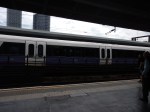
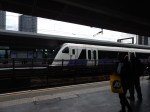

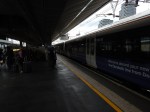
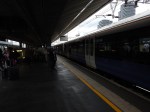
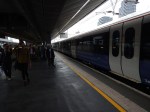
They were not in passenger service, but probably running up and down for purposes of driver training and showing off!
As you can see I was fairly close to the train that passed through Platform 8. The pass left me with the impression that these trains are rather quieter than the Class 315 trains currently working through Platform 8.
Quietness And Aerodynamics
I suspect that this quietness could be down to the better aerodynamics of the modern train and the fact that it was not carrying any passengers.
Remember too, that Bombardier build airliners, so have the various parts of the train, seen the inside of a wind tunnel?
Looking at other photos of the Class 345 on the web, it would appear that especial care has been taken around the join between the articulated carriages, but no-one has published a close-up yet.
One Or Two Pantographs?
I didn’t look and on a crowded platform, it would have been difficult to see, but was the train running on one or two paragraphs?
As pantographs are a source of noise, running on one would be quieter.
They Are Long Trains
As I left Stratford, on the North London Line, a Class 345 train was stationary to the West of Stratford. One impression it gave was that of length.
But then this seven-car train is about one hundred and sixty metres long or the same length as an eight-car Class 315 formation.
Some Videos
Video of the Class 345 trains are starting to appear.
Note.
- The first video shows some internal details through the windows.
- In the second video both pantographs are up.
- You can clearly see the articulated sections between cars.
The first video does raise the question that Crossrail might be extended to Southend Victoria station.
Forest Gate Station – 15th May 2017
These pictures of Forest Gate station, shows that the three lift towers have been installed.
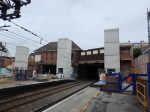
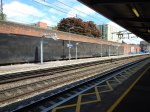
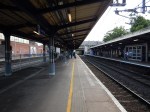
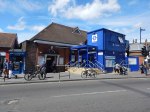


I think the pictures might show that a walkway behind the station building will connect to the three lift towers and staircases beside them.
I also suspect that quite a lot of the walkways, lifts and stairs at Manor Park, Seven Kings and Forest Gate stations will be built from the same factory-made components.
 The Anonymous Widower