Improvements To The East Coast Main Line Through West Yorkshire
This article in Rail Technology Magazine is entitled West Yorkshire to agree £3bn ‘whole route ethos’ investment in ECML.
The article doesn’t go into much detail, but it does explain how a lot of work is needed not only to improve London to Newcastle and |Edinburgh times, but to accommodate high speed services across the North of England.
Looking at the East Coast Main Line on Wikipedia, throws up these improvements.
- Creation of a platform 0 at Doncaster station, which was completed in December 2016.
- Improvements through York station.
- South of Newcastle to Northallerton (which is also predominately double track), leading to proposals to reopen the Leamside line to passenger and freight traffic.
- Electrification of Northallerton to Middlesbrough.
- Electrification the line between Leeds and York (Neville Hill Depot to Colton Junction) as a diversionary route and a route for Liverpool to Newcastle services via Manchester and Leeds.
- Upgrade the line for 140 mph running under ERMTS.
I also think that the Treasury-specified economy electrification should be upgraded to a modern standard. They didn’t make much of a saving as upgrading the line to a modern standard will cost £1.3billion.
Hopefully, these improvements will allow London to Edinburgh in four hours.
Also helping with this goal is the project announced in this article on the Rail Magazine web site, which is entitled NR seeks fourth track north of Huntingdon. The article indicates that this work together with improvements at Werrington Junction, which I wrote about in To Dive Or Fly At Werrington, would improve capacity on the East Coast Main Line.
Driver Only Train Operation In Yorkshire
One of my readers has just sent me this story from the Yorkshire Post, which is entitled Commuter chaos in Yorkshire after train driver leaves conductor behind.
No-one seems to have been hurt in this demonstration of Driver Only Operation, so perhaps as a matter of honour, the RMT should look at more efficient ways of train operation.
Worcester Parkway Station Given The Green Light
According to this article in the Worcester News, Worcester Parkway station has been given the green light by the Government.
Clearing of the site will start this winter.
This is another station project to be given the go-ahead, since I wrote Government Focuses On New Stations And Trains. So it could be that Chris Grayling has changed direction at the Department of Transport.
The Worcester News article gives more details of the station.
- New Class 800 trains will go direct on the Cotswold Line to Oxford and Paddington.
- Services between Gloucester and Birmingham will also stop.
- The station is close to Junction 7 of the M5.
- The station will have 500 parking spaces.
It should be noted that Worcester Foregate Street station is on a restricted site and has no parking and Worcester Shrub Hill station has only 121 spaces. I suspect that the two current stations don’t probably encourage mode shift from car to train by travellers.
The article says this about funding.
The majority of the budget for the scheme will be self-funded through station car park fees and access charges levied on the Train Operating Companies, along with £8.3 million from the Worcestershire Local Enterprise Partnership through the Government’s Growth Deal.
Worcestershire Local Enterprise Partnership is very hopeful that the new station will be good for the local economy and employment.
It certainly looks like it will improve the journey of commuters and travellers from the Worcester area to Birmingham and London.
I also wonder, if once the station is built, there will be opportunities for the train companies to use trains more efficiently and add extra services to and from Worcester. Could some of these inefficiencies release valuable development land in the centre of Worcester?
Worcester Parkway is not a normal station project reliant on a lot of local and central government funding, but one with several different ways of raising the finance.
Will Passengers Step Up Into Scotland’s New Trains?
Obviously, I’ve not seen a new Class 385 train in the metal yet, but I despair at this picture.
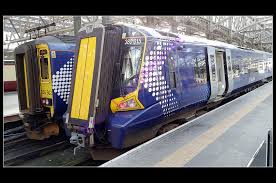
As I wrote in A Design Crime – Class 395 Train Platform Interface, which is about another Hitachi product; the Class 395 train, it appears that the train-platform interface is no better.
It could be that the train was not in one of the platforms that it will actually serve, but if the Overground and its Class 378 trains were able to get it substantially right in 2010, then surely new trains and a rebuilt railway should be tip-top.
A Visit To The Design Museum
I visited the Design Museum yesterday.


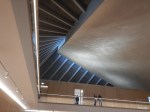

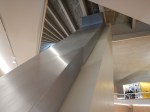
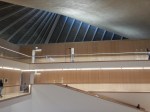
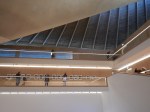

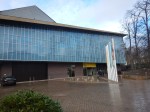
It is an interesting concept and I think as it settles down it will be worth visiting again.
One problem, I had with the Museum is getting to and from the site in Holland Park.
I went by the Underground to High Street Kensington station and took about ten minutes to walk along to the museum.
Coming back, I thought I’d go a different way after a walk.
But after emerging from the Museum, there were none of London’s excellent Legible London maps and signs to be seen.
Eventually, I walked through Holland Park, but it was the same story on the other side of the Park; no maps or signs to the Underground. There were several fingerposts in the Park, but none pointed to the Underground.
I suppose if you’re in a Chelsea Tractor, many of which were rushing around the area, you’re not interested in walking maps and are against your Council spending monry on them, as it might attract more visitors.
Echoes Of The Past At South Kensington Tube Station
South Kensington Tube Station has been through many changes, since it opened in 1868.
This map from carto.metro.free.fr shows the layout of the lines at the two stations.
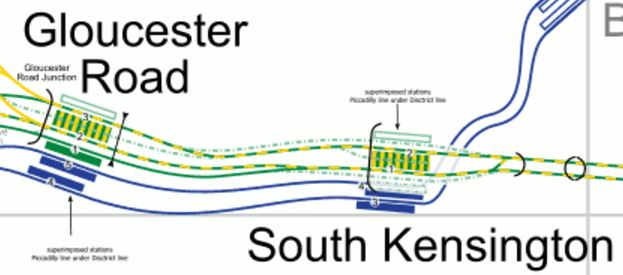
Unusually for the Circle/District Lines, both these stations are island platforms. But note how there used to be platforms on the outside of the lines we see today.
These are some pictures I took today.

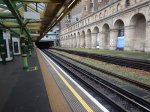
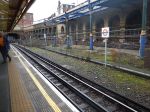
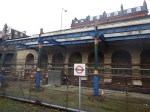
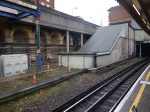
There certainly quite a bit of space and abandoned infrastructure in the station.
In the Wikipedia entry for the station, under Future Proposals, failed plans for developing above the station are detailed.
It’s certainly puzzling, why the space isn’t used better, as it is a site of 0.77 hectares.
It might also be a space large enough to put in an extra platform, if that were needed.
Passengers At Cambridge Station
I found a reference to the passenger growth at Cambridge station, which is confirmed in Wikipedia.
In 2011/12 passengers at the station were around 9 million and in 2015/16 that had grown to around 11 million.
Consider.
- Cambridge North station opens in May this year.
- Thameslink will start services to Cambridge from all over London in 2018.
- Greater Anglia will be increasing capacity and frequency to Bury St. Edmunds, Colchester, Ipswich, Norwich, Peterborough and Stansted Airport.
So what will be the traffic in say 2020?
Westminster Council To Trial Diesel Parking Charge
The title of this post is the title of an article on the BBC web site.
There will be a lot of complaints, but just as the Congestion Charge was accepted, this charge will be too!
And if it works for Westminster, how long before other Boroughs in London introduce it?
I do think though, that cities that cut pollution will benefit from the good publicity, that could generate extra visitors and increased business activity.
Are The Trains In Ely Finally To Be Sorted?
Railways in Ely must be a bit of a problem as they have their own section in Wikipedia.
This map shows the lines in the area.
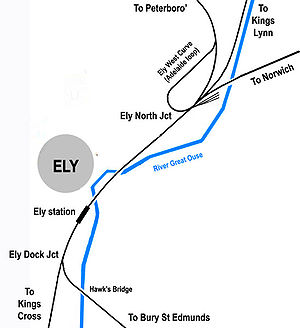
Ely Lines
This is a Google Map of the area.
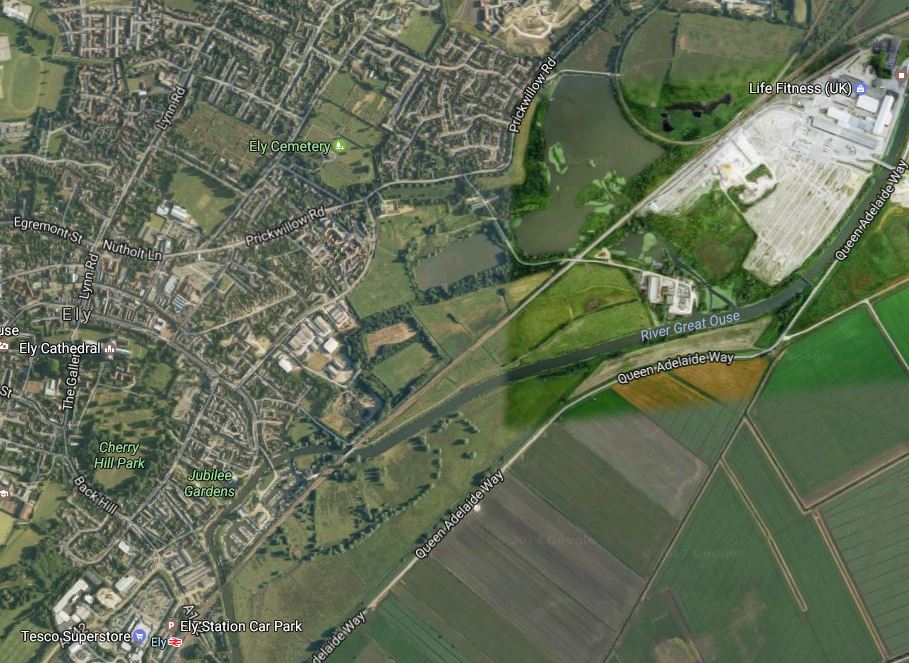
The current Ely station is towards the South-West corner, with the iconic cathedral to the North. The main line goes South-West to North-East across the map with Ely North Junction alongside the white chalky area in the North-East corner.
What suggested that I write this post was this article in the Eastern Daily Press, which is entitled Talks in Downham Market hear work to end East Anglia’s rail bottleneck at Ely could begin in three years’ time.
Reading the title, is a good summary of the article.
So what are the problems at Ely?
Ely Station
Ely station was not designed for efficient operation.
The following services call at the station.
- Ipswich and Peterborough.
- Cambridge and Norwich.
- London, Cambridge and King Lynn.
- Stansted Airport and Birmingham.
- Norwich and Liverpool.
To make matters worse. the Norwich-Liverpool service has to reverse in the station.
Connectivity between services can be bad and I have read that passengers between Kings Lynn and Ipswich may have to wait up to nearly an hour for a connection.
Because the station has only three platforms, organising the trains into a sensible pattern, for train operators and passengers. must be a difficult process.
The station is not step-free and relies on long ramps to cross the lines.
The Low Road Bridge On The A142 At Ely Station
This is said in Wikipedia about the low bridge just to the North of the station.
The height available for road traffic passing beneath the bridge is only 9.0 feet (2.7 m) which is unusually low for a bridge over an A-road. Despite the various warnings, the limited headroom is a frequent cause of accidents.[12] High vehicles must use a level crossing next to the bridge.
East Anglia’s legendary bad drivers, who seem to find new ways to cause chaos on the railways, must have real fun with this crossing.
According to this article on the BBC web site, the bridge was hit twelve times in 2015/16.
This Google Map shows Ely station.
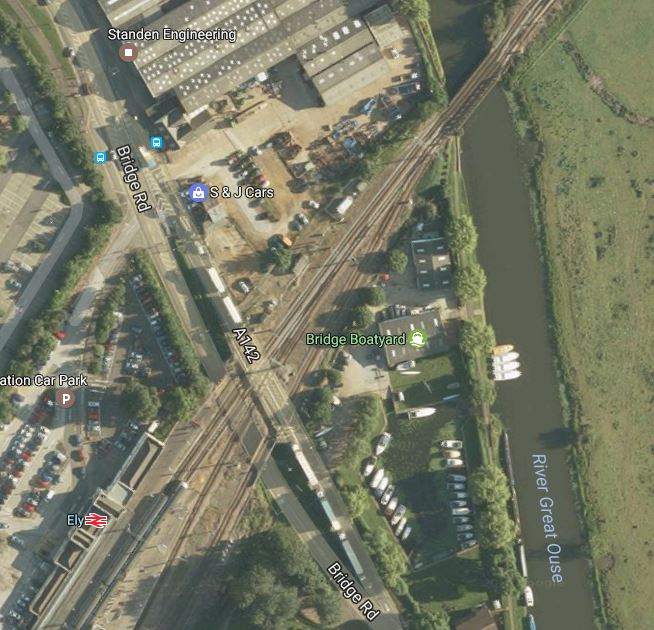
Note that the level crossing is closed.
The Large Number Of Freight Trains Between Felixstowe And Peterborough
In Along The Felixstowe Branch, I said that the number of trains on the Felixstowe Branch could rise to 47. Not all will come through Ely station, but there could be a couple of long container trains in both direction every hour.
Note.
- The number of freight trains will increase.
- These freight trains can be up to 775 metres long and the average length will grow.
- Hawk Bridge over the Great Ouse on the Ipswich-Ely Line is only single-track, as is several miles of the line to Kennett station, where the Cambridge and Peterborough branches join.
All of these trains have to pass over the low bridge and through the level crossing.
Ely North Junction
Ely North Junction is a busy junction, where services to Kings Lynn, Norwich and Peterborough split.
This Google Map shows the junction.
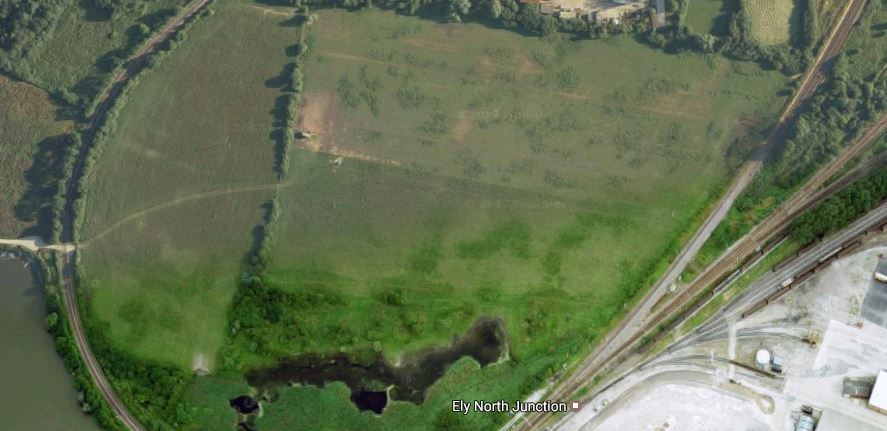
Note the tracks come from Ely station to the South-West and split into three separate lines.
- Ely-Peterborough Line
- Fen Line to Kings Lynn.
- Breckland Line to Norwich.
There is also.
- A single-track loop line called the West Curve, that allows traius to go between Peterborough and Norwich.
- A distribution depot by the junction.
One of the problems is that freight trains between Peterborough and Felixstowe pass on the Southern side of Ely station and need to cross the lines to connect to Peterborough.
Footpaths
Footpaths and where they cross the railway are a sensitive issue in the Ely area. This document on the Network Rail web site, illustrates some of the problems.
This is said in the document.
The railway at this level crossing carries passenger and freight trains with a line speed of 60 mph. There are generally 194 trains passing throughthis level crossing per day.
That sounds like a recipe for a serious accident to me.
The Opening Of Cambridge North Station
The new Cambridge North station is scheduled to open on the 21st May, 2017 and will initially be just a stop on all services passing through.
The Cambridge Effect
Cambridge is successful and overflowing.
Towns and cities like Bury St. Edmunds, Ely, Haverhill, Huntington, Newmarket and Peterborough will increasingly find that they become satellites of the East Anglian Mega-Powerhouse.
These towns and cities will need good transport links to Cambridge.
Rail links to both Cambridge and Cambridge North stations will be important.
The New Greater Anglia Franchise
Greater Anglia have published plans that will affect Ely.
- They will run an hourly service between Peterborough and Colchester via Bury St. Edmunds and Ipswich to replace the current less frequent service between Peterborough and Ipswich.
- They will run an hourly service between Norwich and Stansted Airport to replace the current less frequent service between Norwich and Cambridge.
- I have also read somewhere, that Greater Anglia would like to run a direct service between Cambridge North and Ipswich via Bury St. Edmunds.
- Fordham and Soham stations could be reopened.
Some of these changes will put more pressure on Ely, but they will have two very beneficial effects.
- A North-facing bay platform will be released at Cambridge station.
- There will be two trains per hour (tph) between Kennett and Ipswich via Bury St. Edmunds.
I suspect that Greater Anglia will bring in other changes.
The Reopening Of March To Spalding Via Wisbech
Network Rail has spent £330million on upgrading the Great Northern Great Eastern Joint Railway into a freight link between Peterborough and Doncaster, which I wrote about in Project Managers Having Fun In The East.
It might never happen, but why shouldn’t the route be extended from Spalding to March on the Peterbough-Ely Line via Wisbech?
This would open up two main possibilities.
- Freight trains between Felixstowe and Doncaster would avoid the East Coast Main Line to the South of Doncaster.
- A passenger service from Cambridge to Wisbech could be opened.
Other longer distance passenger services might be viable.
The East West Rail Link
The East West Rail Link will provide a new route from Cambridge to the West, via a new Cambridge South station.
It will add to the numbers of passenger trains through Ely, as services will probably go from Oxford to Norwich and Ipswich via all three Cambridge stations.
But will the East West Rail Link be used to route freight trains between Felixstowe and Wales and the West?
A Proposed Ely North Station
I have found this article on the Ely Standard web site, which is entitled Could railway revolution see new station built at Ely North?.
The article says a new four-platform station would allow.
- Two tph on the Fen Line
- Connections reduced to no more than eight minutes.
- The introduction of a Kings Cross to Norwich service.
The new station would probably have the following.
- More passenger-friendly features.
- A lot more car parking.
- Good walking access to the City Centre.
- Trains between Norwich and Liverpool would stop in the station and would use the West Curve to avoid reversing in the station.
With all the water in the area, there must be scope for an architecturally excellent station.
From a project management view, this station is a good idea.
- It could probably be built fairly easily without causing too much interruption to current services, as Cambridge North station seems to have been.
- Once open, the current Ely station could be demolished or simplified.
- The low bridge and the level crossing could then be replaced with a modern traffic underpass capable of handling trucks.
- Ely Dock Junction and the lines South of the City could be remodelled to speed the freight trains through the area.
There might even be a dive-under to simplify operations.
I have no idea if the good people of Ely will like the idea of a new station.
Conclusion
The extra freight traffic and the published plans of the Greater Anglia franchise will mean, that substantial work will have to be done at Ely.
- Network Rail have a long term ambition of dualling the whole route between Ely and Kennett including Hawk Bridge over the Great Ouse, which would certainly ease the problems of the freight trains.
- A new Ely North station may be created.
- Closing the level crossing and creating an underpass for traffic at Ely station, would be an obvious thing to do, but could this be done without closing the railway for several months? Construction companies could always use the technique they did at Silver Street station in the 1990s, to get the North Circular Road under that station.
- Eventually, there will be a need for a chord at Ely Dock Junction, so that trains can go direct from Cambridge to the Ipswich to Ely Line without a reverse in Ely station.
I’ll be interested to see what Network Rail propose.
 The Anonymous Widower