Oxford Parkway Station
This is Oxford Parkway station on the day it opened.
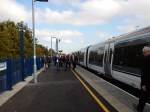
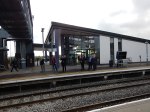

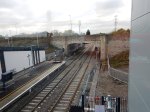
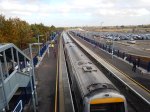



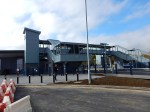

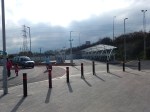
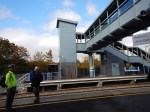
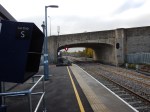
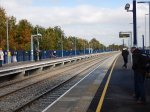


I like it except for the blue bricks.
Otherwise it ticks a lot of boxes.
- Plenty of car parking.
- Two trains per hour service
- A last train to London at 22:45
- Regular buses to Oxford City Centre
- A coffee shop
- A covered waiting area with seats.
The only thing I’d like would be an M & S Simply Food.
I thin that because of the traffic problems in Oxford, that this station may have the problem of being too successful!
Whitechapel Station – 26th October 2015
The floors are going in at Whitechapel station.
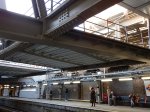
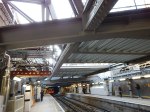
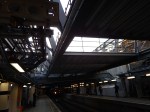
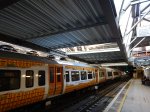
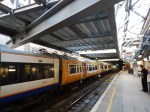


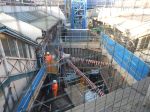
It does seem that progress is being made.
The New Service Between Oxford Parkway And Marylebone Starts Today
Chiltern are starting their new service to and from Oxford Parkway station today and this article in the Bucks Free Press entitled Commuters predict overcrowding when ‘major’ changes are made to train services has a distinct feel of gloom.
Here’s a flavour.
Some features of the new timetable include scrapping the 7.40 Gerrards Cross to Marylebone service, leaving passengers to catch the 7.49 to London, which will be formed of seven carriages instead of five.
But I liked this comment added to the article.
Is this the same part of South Bucks that has been campaigning vociferously against building new railways? That’s fine, but you can’t then complain when the existing ones run short of capacity which has to be redistributed occasionally.
My only worry about the service, is whether Marylebone is big enough to cope with all the new traffic.
Although, as someone who’s only ever commuted for perhaps a year in his life, I can’t understand why anybody would want to spend three hours or more of every working day on the train!
I do actually think, that when Crossrail has opened and Great Western Railway starts running electrified services to Paddington and effectively the West End, the City and Canary Wharf, there will be a swing back to the traditional route.
Will IPEMU Trains Transform The Greater North-East?
I think before I write this, I should define a few terms.
The Greater North East
By this area, I mean that area of England, that is North of the River Humber and is bordered in the West by those towns and cities that lie on or just to the West of the electrified East Coast Main Line. So they would be working Northwards up the line.
- Doncaster – On the ECML
- Sheffield – Including Meadowhall
- York – On the ECML
- Leeds – On the ECML
- Bradford – Electrified from Leeds
- Darlington – On the ECML
- Newcastle – On the ECML
It would also include those branches that reach to the West to places like Bishop Auckland, Carlisle, Halifax and Hexham.
IPEMU Trains
IPEMU stands for Independently Powered Electric Multiple Unit and is a normal train, that has on-board energy storage which is uses on lines that are not electrified to power the traction and other systems on the train.
To a passenger they would appear to be a normal four-car electric muliple unit. I described my ride in the prototype between Manningtree and Harwich in Is The Battery Electric Multiple Unit (BEMU) A Big Innovation In Train Design?
I was extremely sceptical until I rode the train and looked into the physics.
Bombardier are developing a new train called the Aventra, which will be wired so that it can be converted to an IPEMU, if operators need the capabilities.
An Aventra IPEMU have at least the following properties.
- At least a sixty mile range on the stored energy (Batteries or perhaps KERS?)
- Identical passenger experience to a standard train.
- The energy storage would be charged when the train was running on electrified lines.
- Regenerative braking would also be used to charge the energy storage.
- The energy storage could be used to move the trains around depots and sidings that were not electrified.
These trains sound almost too good to be true!
But as a Control Engineer by training, I have a feeling that the Ultimate Aventra IPEMU might be an impressive beast with a two hundred kilometre per hour top speed under wires, a range greater than sixty miles on energy storage and a very impressive electrical efficiency, which would make the train more affordable to operate.
I would also feel that the trains could use some form of mechanical energy storage like KERS in Formula One. Batteries are rather naff, but using something lifted from Formula One could be rather sexy and high-performance.
IPEMU Hubs
Suppose you were to build a series of IPEMU hubs, where the storage on IPEMU trains could be charged.
In several cases these hubs already exist, as they are stations with electrified platforms.
- Carlisle
- Darlington
- Doncaster
- Leeds
- Newcastle
- York
Some like Carlisle, Darlington and York would only need a couple of extra platforms to be electrified.
There would also possibly be other stations, where some form of charging would need to be provided, so that trains could be topped up with energy before returning to a main hub.
Stations in this category might include.
- Cleethorpes
- Hull
- Scarborough
- Sheffield
- Whitby
Sheffield will get fully electrified under the Midland Main Line electrification program anyway.
Services
The big route that could be run by IPEMUs would be North TransPennine, as IPEMUs would be capable of bridging the gap between Leeds and Manchester.
Also given the right structure of IPEMU hubs, virtually every passenger service in the Greater North East could be run using IPEMUs.
Conclusion
Who needs conventional electrification?
Freight services do!
So eventually the main freight routes will need to be electrified. This will mean that the primary use for the energy storage in the IPEMUs would be to make the trains more efficient.
Better East-West Train Services Across Suffolk
The east-west train service across Suffolk is better than it was, but I’ve just read in a Network Rail study entitled Improving Connectivity, about a radical proposal to greatly improve services.
At present at Ipswich station, in addition to the main line services, there are hourly services to Cambridge, Felixstowe and Lowestoft, with a two-hourly service to Peterborough.
From a passenger point of view it is not good at times. In the past I have been irked by.
- Trying to get between Newmarket and Felixstowe, which often means a not very short wait on Ipswich station.
- The lack of a late night train back to Newmarket from Ipswich.
- Bad connectivity between London services and the various branches.
It may be better now and some of the proposals in the latest franchise documents will certainly help.
One document I’ve read, talked about direct services between London and Lowestoft. When I moved to Suffolk in the 1970s, this route was served a couple of times a day.
But one proposal in the Network Rail study must be taken seriously.
The study proposes creating an island platform at an updated Newmarket station and running a direct service between Newmarket and Peterborough via Ely. The study describes the proposal like this.
To solve this dilemma, The direct Ipswich to Peterborough service is replaced by a Newmarket to Peterborough service, running via a reinstated Warren Hill Junction – Snailwell Junction chord, as shown in Figure 3.2. A semi-fast Ipswich to Cambridge train connects into this service with a cross-platform connection at a reconstructed Newmarket station.
No services are duplicated and connections at Ipswich are simplified: the East Suffolk line arrival need only connect with the Cambridge train. This method of operation combines two markets on one train, achieving a 35 per cent reduction in train miles and halving the number of passenger train paths required on this busy freight corridor. In addition, Newmarket gains a direct service to Peterborough.
So one new short chord and a reconstructed Newmarket station, dramatically improve the passenger train services across Suffolk, whilst giving more much-needed space in the schedules for freight trains.
This map shows the area between Newmarket station and Warren Hill – Snailwell.

Newmarket’s Railways, Racecourses and Training Grounds
Note that the line through Newmarket station goes in a tunnel under the training grounds of Warren Hill before turning to the East to connect to Bury St. Edmunds and Ipswich. The new chord would connect between the Newmarket to Bury Line and the Ely to Bury Line.
Hopefully, Network Rail has safeguarded the route and hasn’t sold the land to some, who would oppose the plan.
If I read Network Rail’s proposal correctly, there would be an hourly Newmarket to Peterborough service, which would provide a cross-platform interchange with an hourly semi-fast Ipswich to Cambridge service.
Given that Abellio Greater Anglia were part of the IPEMU tests between Manningtree and Harwich, I suspect that both the Peterborough to Newmarket and Ipswich to Cambridge services would be run with four-car IPEMUs.
In my view it is a very good starting plan, but it does raise a few questions and interesting possibilities.
- IPEMUs would be faster than the current diesel trains and would also offer an increase in capacity.
- Would IPEMUs take over the Cambridge to Norwich, Ipswich to Lowestoft and Ipswich to Felixstowe services?
- Newmarket racecourse is an incredibly popular venue and the current Newmarket station has inadequate capacity for racegoers. More four-car IPEMU trains from Cambridge, Ipswich, Ely and Peterborough calling at the station can only increase total capacity.
- As now, I suspect a shuttle bus will be provided, between station and racecourse.
- A simple one-platform Newmarket Racecourse station could even be built on land owned by the Jockey Club on the single-line section of line to the West of the town, which would be about a kilometre walk from both racecourses.
- Cambridgeshire County Council have had plans for a long time to reopen Soham station. This would be on the hourly Newmarket to Peterborough service, which would men that with one change you could be in Cambridge or Ipswich.
- If Soham is worth reopening, why not reopen Fordham station.
- How would the new station at Cambridge North fit in and affect services in the area?
I think that when and if the full proposals arrive, they will have some extra features.
An uprated service from Cambridge to Ipswich will require some reorganisation at Ipswich.
Over the last few years, freight traffic through Ipswich station has eased due to ther opening of the Bacon Factory Chord which allows diesel-hauled freight trains to go directly between the Felixstowe branch and the Midlands and North via Stowmarket.
The Newmarket reorganisation will also release extra paths through Ely and Peterborough and there could be scope for improving the efficiency of Ipswich station.
Given that services will arrive from and leave to Cambridge, Lowestoft and Felixstowe, every hour. Surely, a platform layout could be found, so that they all used the same part of the station and passengers just walked across.
Imagine the benefits to passengers if say you were going between Beccles and Peterborough and you just walked across between trains at Ipswich and Newmarket.
I suspect that Network Rail and Abellio have an excellent idea for Ipswich station, filed under Cunning Plans.
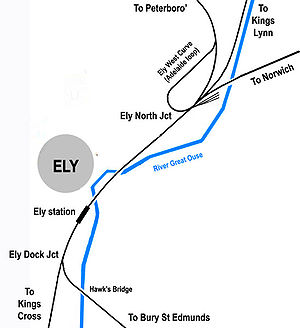
Would it also be worth improving patterns at Ely?
This Google Map is from Railways in Ely in Wikpedia.
Ely Lines
It is complicated. These are my thoughts.
- The layout would appear to work quite well now,but will it cope with Cambridge North station?
- Cambridge North station will probably generate a lot of traffic and with some reorganisation, passengers might even be able to walk across or just wait for the next train at Cambridge or Ely, to be on their way.
- But in some cases, changing will mean climbing over the bridge at Cambridge or using the subway at Ely.
- Ely station should cope with any extra services on the lines to Ely and Norwich.
- There is also the issue of a possible Wisbech branch at March.
So will we see changes to the track layout at Ely?
I think the answer is yes!
But upgrading Ely does throw up one important question.
When the Cambridge Guided Busway was built, I didn’t think it was the best solution, but I had no real idea what would have been best.
I now wonder, if the ideal transport system for the route of the Cambridge Busway has arrived in the form of the tram-train!
If you look at the route from Huntingdon through Cambridge to Addenbrookes, it’s very much linked to the railway lines through the city. Most of the extensions proposed for the busway could be performed by tram-trains in tram mode. One proposal from Huntingdon to Peterborough, is typical of many systems, I’ve seen in Germany.
But it is too late now to change that decision.
One thing though that surprises me, is the amount of undeveloped land there is on either side of the railway line, where the Cambridge North station is being built. It could be possible to create a a tram line to connect Cambridge North station to the Cambridge to Ipswich Line. Thus tram-trains could go from both Cambridge North and Cambridge stations to Newmarket and then on past Fordham and Soham to Ely, where with a short chord they could turn south to the Cambridge stations.
Obviously, a real route would be based on the proposed developments and passenger traffic, but there are a lot of possibilities to use tram-trains to serve the towns and villages around Cambridge from the existing heavy rail lines.
At the Southern end, how about Shelford to Haverhill and onto Sudbury to then take the Gainsborough Line to Marks Tey?
I suspect that a single-track tram with passing places could handle tram-trains on a route not far removed from the route of the old Stour Valley Railway.
A lot of serious thinking can be done!
Improving Connectivity On UK Railways
When I was writing D-trains For East Anglia, I came across this study by Network Rail entitled Improving Connectivity, published in December 2014.
This is taken from the Executive Summary.
Improving Connectivity is a long-term methodology being investigated to deliver improved rail connectivity across Britain. The improvements would be achieved by devising a new connectivity-based timetable, to be facilitated by alterations to the infrastructure. This document explores a case study of how the project might be applied to rail services in Anglia. Inevitably, such an ambitious project also raises a number of trade-offs and changes would be required to the way the industry plans services and allocates capacity on the network. We are seeking your views on this potential approach and would welcome your participation in this consultation.
As it talks about East Anglia, which is an area, I know well, I found it a fascinating document.
It talks about three principles.
Principle 1
Principle 1 uses cross-platform interchanges to simplify connections and avoid train service duplication. This principle is explained using the following case studies from Anglia.
One case study is Newmarket which is a station I know well. My life would have been so much better after my stroke, if Newmarket had had an updated station and rail service as talked about in the document. This is the study’s suggestion.
To solve this dilemma, Principle 1 is applied. The direct Ipswich to Peterborough service is replaced by a Newmarket to Peterborough service, running via a reinstated Warren Hill Junction – Snailwell Junction chord. A semi-fast Ipswich to Cambridge train connects into this service with a cross-platform connection at a reconstructed Newmarket station
The report sums up what this does and details the knock-on effects at Ipswuch.
No services are duplicated and connections at Ipswich are simplified: the East Suffolk line arrival need only connect with the Cambridge train. This method of operation combines two markets on one train, achieving a 35 per cent reduction in train miles and halving the number of passenger train paths required on this busy freight corridor. In addition, Newmarket gains a direct service to Peterborough.
It all sounds good to me. In fact, I use such a connection at Canonbury regularly to travel from Stratford to Dalston Junction on the London Overground. You could also argue that the Clapham Kiss is another well-designed cross-platform interchange.
But why not arrange that at Ipswich, there is a simple cross-platform connection between the East Suffolk and Cambridge trains? At present to change between the three branches at Ipswich; Cambridge, East Suffolk and Felixstowe, it inevitably involves a trip over the footbridge.
Principle 2
Principle 2 is all about scheduling trains to minimise the time passengers wait.
Principle 2 orders arrivals and departures at interchange stations to minimise waiting times between connecting trains.
I agree with it totally. In my meandering around the UK and Europe, I’m always spending a half-hour or more waiting for trains on a draughty platform.
Principle 3
Principle 3 is about getting the timetable right.
Principle 3 is a method of constructing a consistent timetable with sufficient flexibility to respond to variations in demand. The resulting timetable comprises a Core service, as its basic skeleton, with additional trains overlaid as required.
As someone, who made his money by writing computer schedulers for projects, it has always been my feeling, that underneath any well-run project there is a good structure.
Conclusions
Every rail system in the world could possibly benefit from the application of these principles.
D-Trains For East Anglia?
This article in Rail Magazine is entitled D-Trains For Anglia and says this.
Vivarail spokesman Alice Gilman told RAIL on October 19 discussions have been held about the possibility of the rebuilt D-Trains being used as part of the new Anglia franchise.
She suggested that North Norfolk and the Marks Tey-Sudbury routes could be homes for the Class 230s, which are being converted from redundant London Underground D-Stock.
Who knows what will happen?
Remember that the trial of the IPEMU happened in East Anglia and I suspect that the current franchise holder, Abellio; knows the capabilities and costs of the two train types as good as anybody does.
So if Abellio is talking to Vivarail about D-trains they must have good reason.
Platform Lengthening
Could it be that it would need some expensive platform lengthening to accommodate the four-car IPEMU on the Gainsborough Line and the Bittern Line in North Norfolk!
I’m not sure, but I think all the other branches in East Anglia have platforms that are long enough for four-car trains, so they could accept IPEMUs tomorrow, if any were available.
London To Lowestoft
The latest franchise documents show direct trains between London and Lowestoft. Modern Railways in November 2015 says this.
Lowestoft is to regain direct services to the capital, with four through journeys in each direction.
The old direct services were well supported in the 1970s, so I suspect that they will be whenever they start.
The services would need an IPEMU, a Class 800 electro-diesel or diesel-hauled coaching stock, so you can take your pick on what ends up running these services. But it won’t be a D-train.
I wouldn’t be surprised to see all services on the Lowestoft branch were run by IPEMUs, with some extended all the way to London.
Extension From Sheringham And The Norfolk Orbital Railway
Also in Norfolk, the Bittern Line is now connected to the North Norfolk Railway at Sheringham station over a new level crossing.
Are there moves afoot in Norfolk to extend the Bittern Line to Holt? Or perhaps to even create the Norfolk Orbital Railway from Sheringham to Wymondham via Holt and Fakenham?
The campaigners for the North Norfolk Railway have created this web site.
I can’t believe Norfolk Orbital Railway will ever open, but after the successful recreation of the Borders Railway, the rules for the creation of new rail routes must have changed.
Could D-trains be an ideal way of providing rolling stock on a line with no electrical connections?
Lowestoft To Yarmouth
There must be lots of good reasons concerning commerce, tourism, leisure and families to connect the two biggest towns in the East of England by rail. Great Yarmouth is slightly bigger with a population of 70,000 to Lowestoft’s 60,000.
Because no connection exists, I’d always thought that to provide one was difficult, as it would envisage building a large bridge across the water in the area. But I have just read a section entitled Direct Yarmouth Services in the Wikipedia entry for Lowestoft station. This is said.
In January 2015, a Network Rail study proposed the reintroduction of direct services between Lowestoft and Yarmouth by reinstating a spur at Reedham. Services could once again travel between two East Coast towns, with an estimated journey time of 33 minutes, via a reconstructed 34-chain (680 m) north-to-south arm of the former triangular junction at Reedham, which had been removed in c. 1880.The plans also involve relocating Reedham station nearer the junction, an idea which attracted criticism.
Surely if Network Rail has suggested this link in this study on their web site, it must be fairly easy to reinstate, as they don’t want to start any more fiascos.
There are several possible reasons.
- Has the Todmorden Curve shown that these links generate traffic and revenue for Network Rail? Perhaps, they’ve even got the maps out and looked for similar curves to Todmorden.
- Does this link give an extra route between Norwich and Ipswich, that makes it easier for passengers to do certain journeys without changing trains?
- There is a significant number of journeys betwen Lowestoft and Yarmouth by rail and road.
- Does it make it easier for IPEMUs to serve Lowestoft and Yarmouth?
- Perhaps reorganising the rail lines and station at Redham realises a sizable piece of land for development.
- Do Network Rail want to create a record for reopening the oldest closed railway line? 135 years has probably not been beaten.
This map shows the area of the proposed junction.
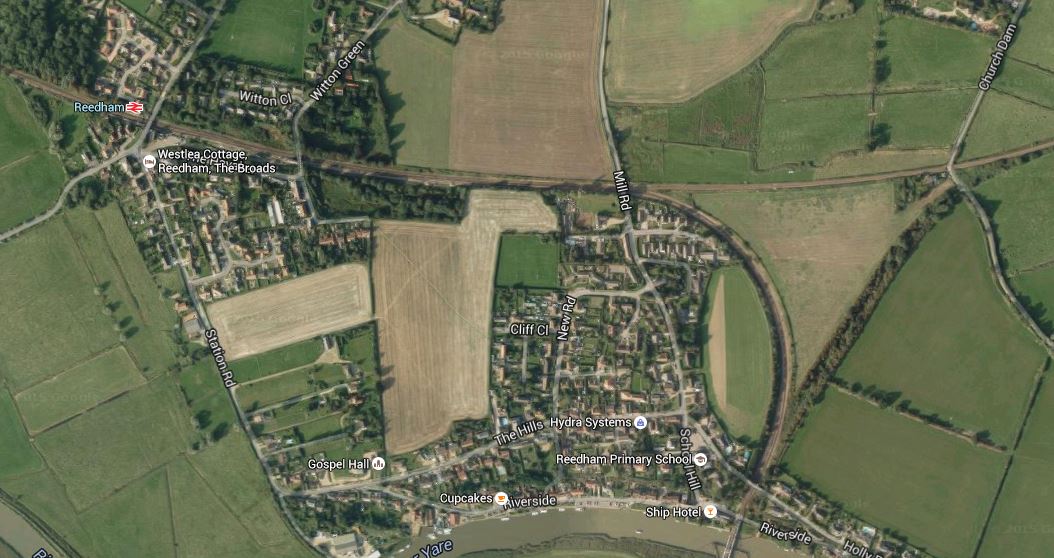
Reedham Station And Junction
Dspite being removed in 1880, the line of the third side of the junction is still visible.
But there is opposition as this article in the Great Yarmouth Mercury details. Perhaps, the locals don’t want any more housing?
The article mentions a cost of a billion pounds, which would make it a no-no! However the Todmorden scheme cost less than ten million pounds for a similarly-sized curve.
If a simple shuttle was to be run between Lowestoft and Yarmouth, this could be handled with ease by a D-train. But where would you charge an IPEMU?
A New Route To The City Ground, Nottingham
Ipswich Town went to play Nottingham Forest at the City Ground today.
Usually, I walk from Nottingham station using Trent Bridge to cross the Trent.
But today, I decided to use the extended tram route to go to the stop at Meadows Embankment, from where I walked along the river to the ground.

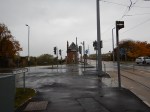
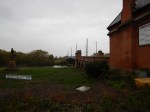
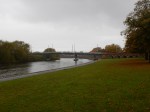


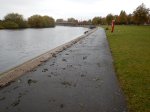






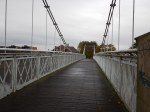





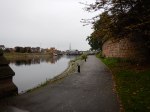
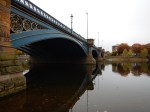
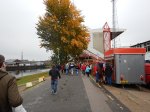



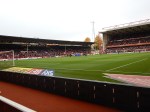
I did cross the Trent once on the Wilford Suspension Bridge that carries utilities over the river, but it is a much more pleasant route, that is less crowded and away from the traffic.
This Google Map allows a comparison of the distances.
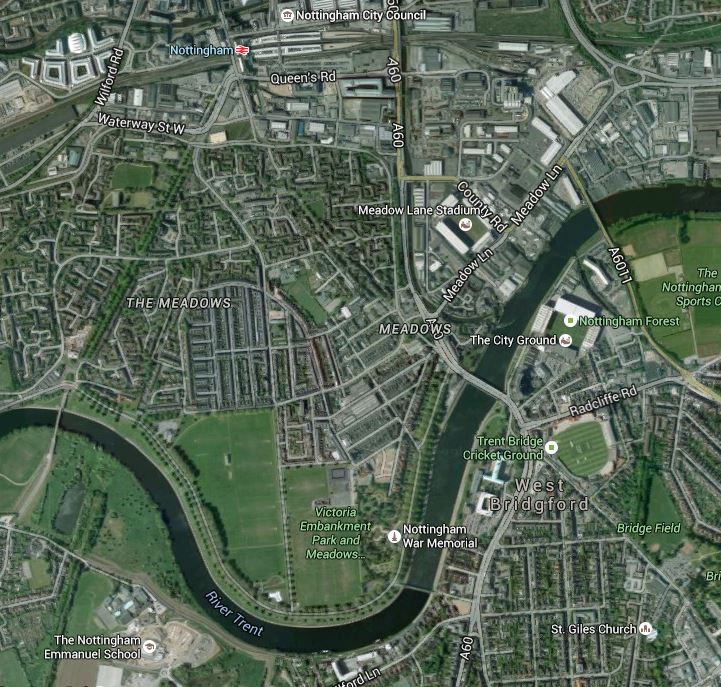
Walking To The City Ground
The Wilford Toll Bridge, where the trams cross the Trent, is the westernmost bridge on this map, whilst the Wilford Suspension Bridge is just South of the Nottingham War Memorial.
As an aside the Wilford Toll Bridge, is the only bridge which says it is a toll one, but doesn’t even allow vehicles to cross, let alone charge them for it?
If you are driving to a match at any of the three grounds by Trent Bridge, you can go to the Park and Ride at Clifton South and then get a tram to Meadows Embankment and walk. I think that the Park and Rid could be free if you use the tram.
I walked the obvious route from the tram to the ground, but there may be a shorter route that cuts out the bend in the river or cuts through the houses after crossing the suspension bridge.
Perhaps, Nottingham City Council should signpost the best route!
Yorkshire Dales And Lake District National Parks To Be Extended
This article on the BBC gives full details on the extension of these National Parks, which now almost meet along the M6.
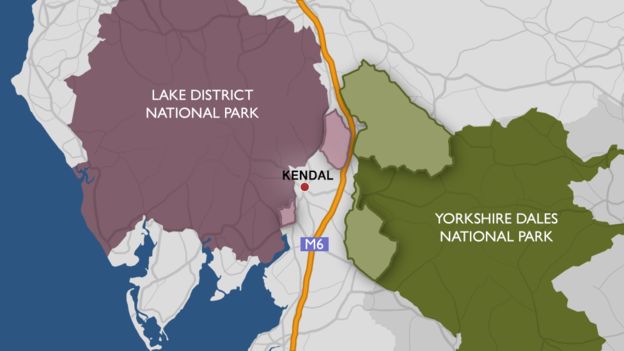
Lake District And Yorkshire Dales National Parks
This map was taken from the BBC article. The extensions are shown in lighter colours.
I haven’t seen an accurate map yet, but it does appear that more of the southern end of the iconic Settle and Carlisle Line is now included in a National Park.
Could We See Some Packaged Inclined Lift Applications?
I liked the inclined lift at Greenford, that I saw yesterday.
There are many stations in the UK and across the wider world, where access to the trains is down a long staircase from a road or bridge that crosses the platforms at a right angle.
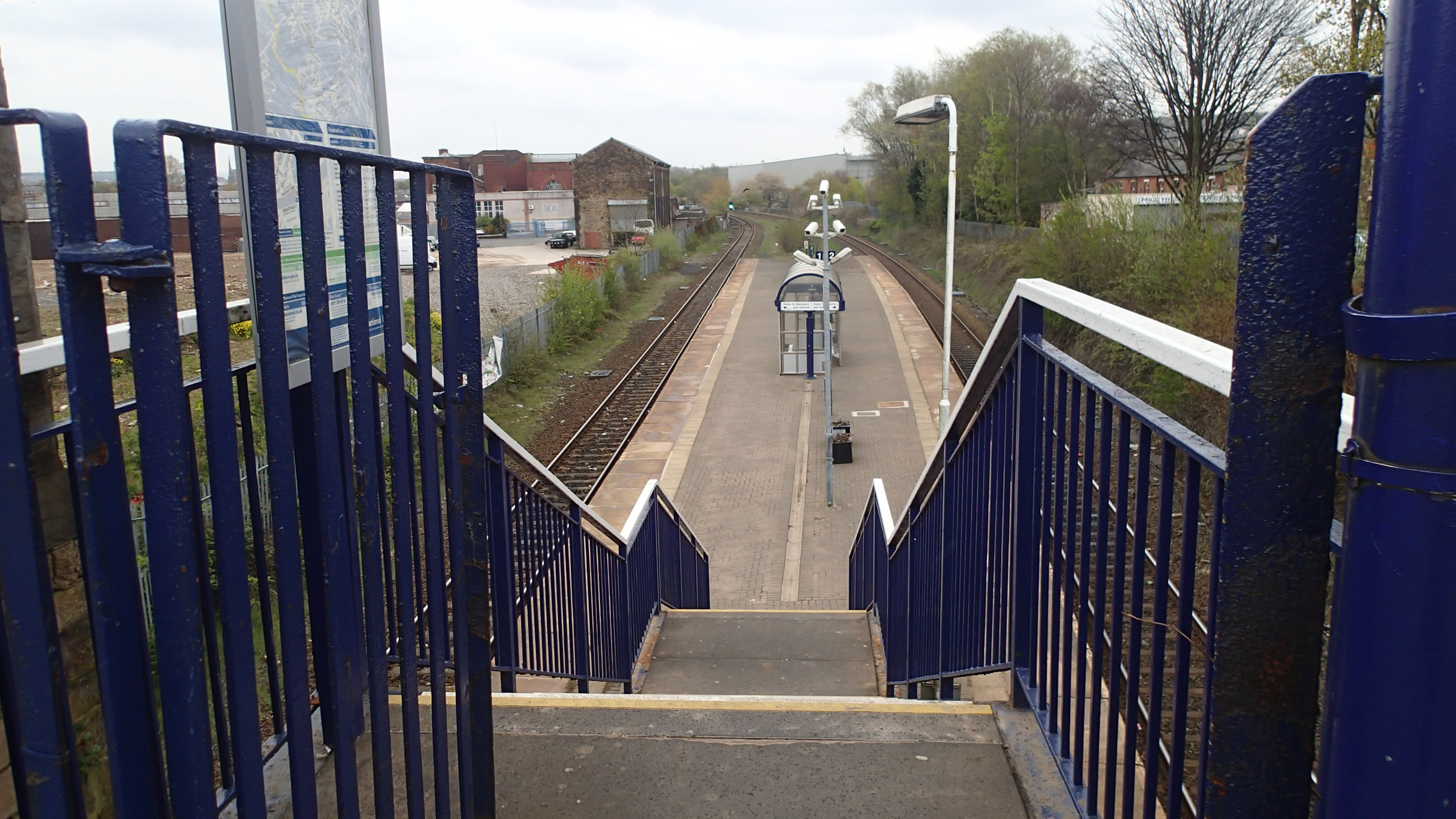
So could a simple inclined lift be fitted alongside these stairs, at Mill Hill station in Blackburn?
I think that you could build a lift in its own glass module in a factory, make an appropriate hole in the bridge parapet and lift the inclined lift into position on the platform.
There could be several advantages.
- The preparation work at the station would not be major construction.
- It would surely be more affordable for stations with low usage for passengers, who need full step-free access. Mill Hill might be an example., as the station isn’t used by more than 70,000 passengers in total in a year.
- If say the station were to be rebuilt, the lift could be saved and used elsewhere.
- The installation of the lift could be a very fast process, perhaps done over a weekend.
- The package could include a staircase, which could be covered if desired.
I think that when architects see the stairs/escalator/inclined lift combination at Greenford station, they’ll get some very imaginative ideas.
 The Anonymous Widower