The Minimum Payment On Contactless Payment
On Saturday, I went out without my real handkerchief, so just before I got my train, I popped into Boots at Liverpool Street station and bought a pack of tissues for the princely sum of forty-five pence.
As I always do in Boots, I used a self-service till, but this time I used my contactless American Express card for the purchase, by just tapping it on the reader.
In some ways that seemed a bit cheeky to me and it certainly raised a smile in myself.
So now, my on-line American Express statement has an entry for 0.45p against Boots.
It got me thinking and yesterday I was taken short in Nottingham station.
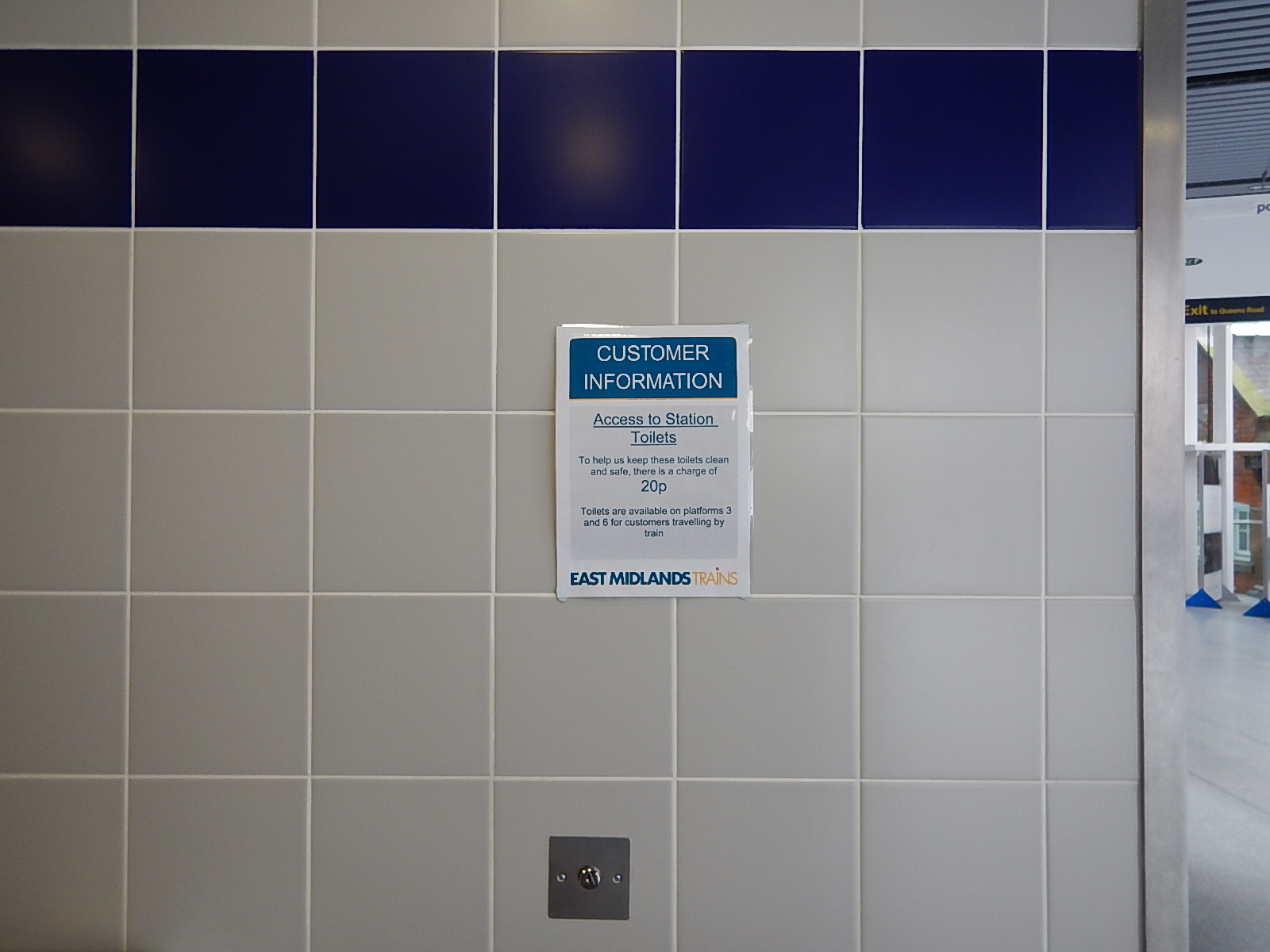
Using The Toilet In Nottingham Station
How long before public toilets like these in stations gocredit contactless?
A Perfect Storm In Ilford
This article from the Ilford Recorder is entitled Redbridge Council leader says Ilford town centre has ‘the perfect storm’ for regeneration.
It talks about a billion pound of investment in the next six years.
So it does look like one of the more dreary parts of East London is going to be improved.
In my view, it shows how Crossrail is going to regenerate large swathes of London.
Although, in the article, I do think that that the design for homes on the Sainsburys site on Roden Street, is very much out of the design manual of Soviet Russia, that I saw in Nova Huta.
Does Jeremy Corbyn Really Support Coal?
I am very surprised by this report in the Daily Mirror, which talks about Jeremy Corbyn and coal. Here’s the first paragraph.
Jeremy Corbyn could bring back coal mines despite vowing to ‘keep fossil fuels in the ground’.
The article goes on to talk about carbon capture technology to burn coal without producing any carbon dioxide.
I have been to learned lectures on this technology and there’s about as much chance of making it work economically, as landing an astronaut on the Sun.
I may be wrong about carbon capture technology, but we would be better spending the investment on insulating our woefully energy-inefficient buildings, so everybody had a lower energy bill.
We obviously need more electricity and there are better ways of generating it without the carbon problem.
My preferred methods would be.
- Importing electricity generated by geothermal and hydroelectric power stations in Iceland using an undersea cable. The so-called IceLink is described on this page on the National Grid web site.
- Tidal power in the Severn and other western estuaries. The Swansea Bay Tidal Lagoon is a project that has started.
- Offshore wind and wave.
- Solar panels on buildings. Technology is improving and costs are falling.
- Local energy generation using small-scale systems like the Bunhill Energy Centre in Islington.
I also believe that if we funded research in our best Universities, we could fundamentally change our energy use, generation and conservation.
We might even be able to do without using more of the following types of power generation in the future.
- Coal, with all its problems of pollution and the carbon dioxide it generates.
- Nuclear, with all its problems of high cost and unacceptability by certain sections of the population.
- On-shore wind, with all its visual intrusion.
I think the future is going to be scientifically green.
I suspect that in twenty or thirty years time, our main uses of fossil fuels, like oil and gas, will be in the production of needed chemicals, heat energy for industrial processes and powering transport.
Memorials On The Liverpool Pier Head
Liverpool is proud of its maritime heritage and the Pier Head on the Mersey is part of a UNESCO World Heritage Site called the Liverpool Maritime Mercantile City.
When Celia and I met in Liverpool in the 1960s, it was a simpler place, where we would walk to take the ferry across the Mersey.
These pictures show the Pier Head today.
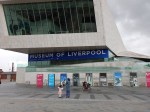
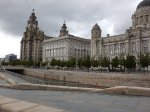
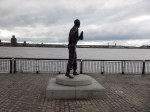
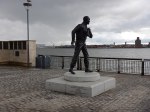
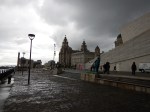
I’d never realised that the road across the Pier Head, had been named Canada Boulevard in honour of Canadians, who lost their lives in the Battle of the Atlantic or the war against German U-boats.
Shown in the pictures is the memorial to Captain Johnnie Walker, one of the leading British commanders in the battle.
The scale of the battle is shown by the fact that according to Wikipedia the Allies lost over 70,000 sailors, 3,500 merchant ships and 175 warships, whereas the Germans lost 30,000 sailors and 783 submarines.
One thing that wasn’t there in the 1960s is the canal that links the Leeds and Liverpool Canal to the Stanley Dock, so narrow-boats can visit the city centre.
A Wet Morning In Liverpool
Everybody likes to view places in the sun. But it was wet in Liverpool, as I walked around.


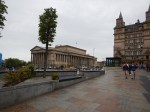
Liverpool’s town centre is almost unique, in that the whole area is mainly traffic-free and the new shopping centre of Liverpool One has been designed as an extension to the existing main shopping street. The main centre is also ringed by four railway stations, two bus stations, car parks and a three-lane dual carriageway, which separates the shops from the waterfront. Crossing between the waterfront with its attactions, museums and hotels, and the shops, is not by some dingy urinal-soaked subway, but by one of several light-controlled pedestrian crossings.
What is missing from Liverpool is the Overhead Railway or a modern replacement. This Google Map shows the Waterfront, the Albert Dock, where I stayed and the dual carriageway.

Liverpool Waterfront
Note how the dual carriageway has a wide central reservation. Surely Liverpool could run a tram or perhaps even a tram-train linked to the Northern Line down the Waterfront?
The Smart Money’s On Isis Destroying Itself
This is the headline on a serious piece in the Times by Ed Conway, which talks about Islamic State and there adoption of gold as their currency!
If you can get a copy of yesterday’s Times read it.
There’s more details here in Wikipedia.
Ed’s piece is a fascinating article and it shows how crazy these cruel male chauvinist pigs are!
I know we have problems with our current monetary standard, but no serious central banker or politician would suggest opting for a metal based currency.
I wonder what Islamic State think of bitcoins?
We Don’t Fight Wars Like That Anymore!
There is an obituary in The Times today of John Campbell, who won a Military Cross and Bar, whilst serving in Popski’s Private Army, which was officially the No 1 Demolition Squadron and a unit of British Special Forces in World War II.
I grew up just after the Second World War and just as newspapers today, use the actions of C-list celebrities, in those days, Sunday papers like the Express and Dispatch, were full of tales of derring-do, as the Nazis and the Japanese were eventually defeated.
As my next door neighbour, a sometime Colonel in the Engineers, once said, there’s only one rule in the British Army – In case of War, ignore the rule books.
Vladimir Peniakoff or Popski wrote them.
We probably can’t do what he did these days, when we’re trying to curb the atrocities of groups like Islamic State, but I’m sure he’d have had an innovative solution.
This paragraph from the Wikipedia entry for the PPA is informative.
PPA was unusual in that all officer recruits reverted to lieutenant on joining, and other ranks reverted to private. The unit was run quite informally: there was no saluting and no drill, officers and men messed together, every man was expected to know what to do and get on with it, and there was only one punishment for failure of any kind: immediate Return To Unit. It was also efficient, having an unusually small headquarters.
Isn’t that how you’d run a company to develop new technology?
Is My Life Going Round In A Curious Circle?
In the 1970s, my late wife; Celia and myself lived, with our then three sons, on the eleventh floor of Cromwell Tower in the Barbican.
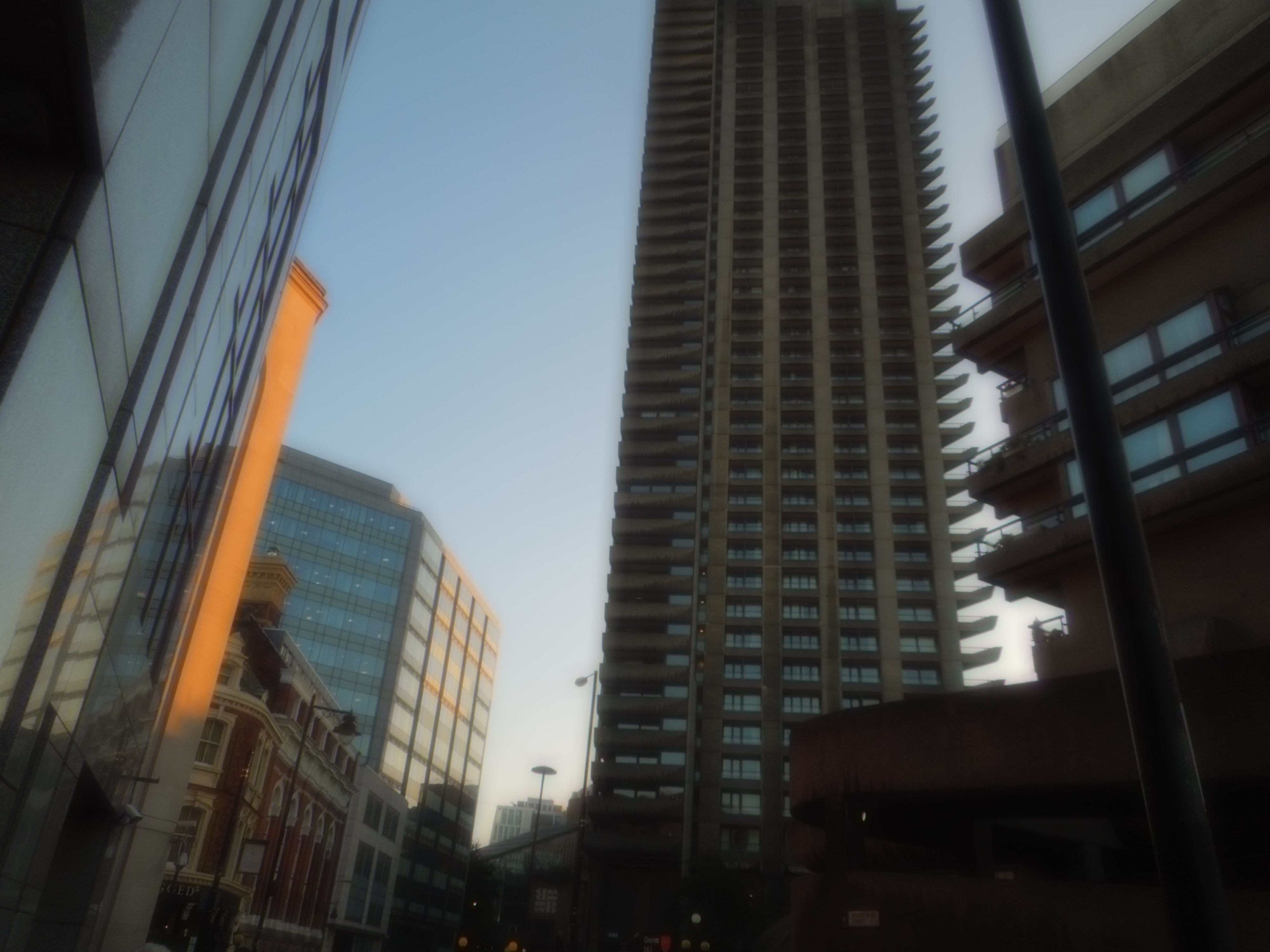
The shops in those days in the area were not very numerous and with the exception of the excellent market in Whitecross Street, getting everything we needed wasn’t easy. There was no supermarket, unlike today where there is a Waitrose in Whitecross Street.
So often on a Saturday, we’d take the boys up the hill to the Angel and shop in the Marks and Spencer and the Woolworths in Liverpool Road opposite the Underground station.
I’ve since found out that the Marks at the Angel is a long-established store and it may have been the one my grandmother spoke about, that she used around the time of the First World War, when she and her family lived just down from the Angel by the Regent’s Canal.
Woollies went a few years ago and much to the regrets of many of the locals is now a Waitrose.
My friends, who knew Celia, and myself often share a laugh over the fact that when I can get it, I drink a Czech gluten-free lager called Celia. A few weeks ago, I heard that the beer will be stocked in Waitrose, so I wrote to them asking where it will be stocked locally. This is an extract from their reply.
I’ve looked into this and I’m pleased to tell you that this should be available at both our Islington and Barbican branches from tomorrow.
As these are two branches, that we would have walked past together in the 1970s, long before they opened, I just can’t help thinking that life is truly strange!
Could anybody, who spots Celia lager in their local Waitrose please let me know?
Thanks!
From Walthamstow To Hackney
The space in the East of London up the Lea Valley between Walthamstow and Hackney is all grass, scrub, reservoirs, canals, rivers and railways.
These pictures were taken on a train between Walthamstow James Street and Clapton stations.
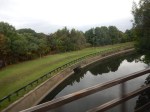


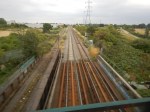

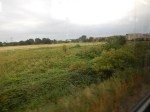


It is a very underused area and lies just to the south of the proposed Walthamstow Wetlands. The only development that will happen here is to reinstate the Hall Farm Curve to enable trains from Walthamstow and Chingford to join the Lea Valley Line to Lea Bridge and Stratford. It will probably end up though, ringed by high-rise housing, like you can see along the River Lea.
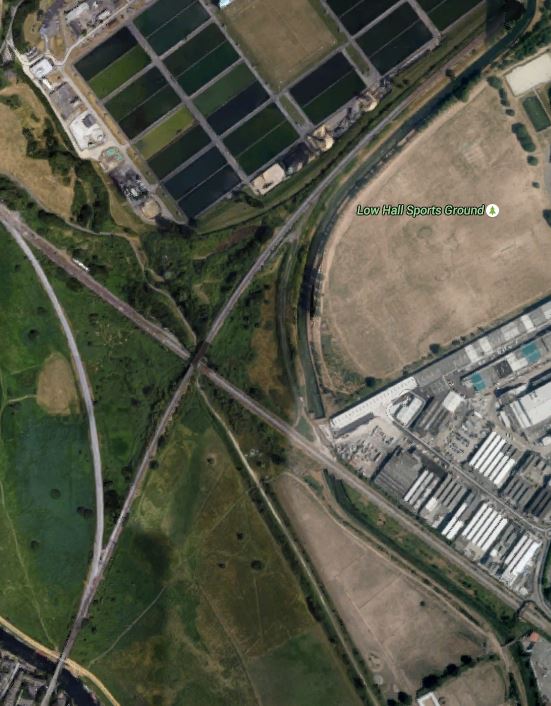
London is a surprising city. Soon it will be a City with a world-class nature reserve just a few minutes from the business heart of the City, This is a Google Map of the area.
Walthamstow To Hackney
Note the two rail lines crossing in the middle. The route of the Hall Farm Curve can be made out, as it hugs the boundary of the unmanaged area.
At the top of the picture you can see the filter beds of Thames Water’s giant water factory, that provide a lot of London with water using the massive reservoirs of the Lea Valley, some of which will form part of the Walthamstow Wetlands.
If you take a train from Liverpool Street to Stansted Airport or Cambridge, you’ll come over the River Lea and then take the curve to join the main line before passing through the Walthamstow Wetlands and stopping at Tottenham Hale.
Something To Bragg About!
A few days ago, someone asked me about the overhead wires of a railway and the pantographs, that pick up the 25,000 Volts AC current.
I can’t remember what their question was, but I said it is a difficult problem, as a train like a Virgin Class 390 Pendelino might be travelling at 125 mph in bad weather, so maintaining contact with a constant pressure between the pantograph and the overhead wire isn’t easy.
I was reading something else and found this article on the Rail Engineer web site. Research has been going on at the City University to develop a sensor that monitors the forces at the pantograph head. As you can imagine it is a particularly harsh environment and the engineers have bean using a technology called a Fibre Bragg Grating (FBG) developed in the 1990s, based on the work by the Nobel Prize-winning scientists William Lawrence Bragg and his father; William Henry Bragg.
I won’t paraphrase the article, but it is a must read. Where it will all lead to I don’t know, but I will repeat this last paragraph.
In the long term, the FBG sensor system offers the ability to detect contact forces from the entire service fleet if combined with GPS and suitable telemetry. This offers the potential of continuous real-time monitoring of the entire overhead line network. Then the Braggs’ work on X-ray diffraction of crystals a hundred years ago could well have made overhead line dewirements also a thing of the past.
Just imagine what it would mean to the operators of our increasingly electrified rail network, if delays caused by trains bringing down the overhead wires were to be reduced.
I’ve met people at Cambridge University for whom William Lawrence Bragg was their tutor and they have described him as a quiet man, who was superb in getting brilliant work out of the students, he tutored.
This tale illustrates why we must do more and more research and often that the solution to a difficult problem is unexpected, but brilliant.
 The Anonymous Widower