Centrica Energy, Bord Gáis Energy And Mitsubishi Power Announce Development Of Europe’s First Ammonia Fired Power Generation Facility
The title of this post, is the same as that of this press release from Centrica.
This is the sub-heading.
Centrica plc and Mitsubishi Power Europe Limited “Mitsubishi Power Europe” have signed a Memorandum of Understanding (MOU) to explore the development, construction, and operation of Europe’s first-ever ammonia-fired power generation facility at Bord Gáis Energy’s Whitegate Combined Cycle Gas Turbine (CCGT) power station in Cork, Ireland.
These four paragraphs outline the project.
The project is being led by Centrica through its Bord Gáis Energy and Centrica Energy businesses and Mitsubishi Power Europe and would become Europe’s inaugural ammonia-fired power generation facility and one of only two such facilities in the world.
The utilisation of low carbon ammonia as a clean and sustainable fuel source for power generation has the potential to provide security of supply while reducing greenhouse gas emissions. Low carbon ammonia has a higher volumetric density than hydrogen, enabling the utilisation of low carbon hydrogen in a form which is easy to transport and store, resulting in a fuel that can be combusted with no carbon emissions at point of use. Its use as a fuel is a promising long-term energy solution for the transition to a low-carbon energy value chain.
Bord Gáis Energy’s facility at Whitegate CCGT power station would serve as a global demonstration site for ammonia-fired power generation technology, providing insight into the feasibility and scalability of low carbon ammonia as a green fuel and shaping the future of power generation worldwide, with low carbon ammonia being sourced through Centrica Energy’s global trading network.
Following the signing of the MOU, the project team is being established to commence project feasibility assessments. Upon the successful outcome of this assessment, extensive local stakeholder engagement will commence.
Note.
- No mention of the size of the new power station is given in the press release.
- Whitegate power station is a 445 MW combined cycle gas turbine (CCGT), that was built in 2010.
- It can meet ten percent of Ireland’s electricity demand.
I have a few thoughts.
Will The Existing Power Station Be Converted To Ammonia Or Will A New Ammonia-Fired Power Station Be Built Alongside?
Consider.
- If the second station doesn’t work, there’s no reduction in power.
- If a replacement station doesn’t work, ten percent of Ireland will be in the dark.
- Ireland will be needing more power in the next few years.
- A second power station can be appropriately-sized.
- Japanese don’t like to lose face!
Prudence probably says that building a second station alongside is the least risky route.
Wind Power In Ireland
This Wikipedia entry is entitled Wind Power In Ireland.
This is the first paragraph.
As of 2021 the island of Ireland has 5,585 megawatt and the Republic of Ireland has 4,309 MW of installed wind power nameplate capacity, the third highest per capita in the world. In 2020 wind turbines generated 36.3% of Ireland’s electrical demand, one of the highest wind power penetrations in the world.
There is also one 500 MW interconnector between the islands of Great Britain and Ireland, with another similar-sized one under construction.
As the wind doesn’t blow all the time, the island of Ireland will need some low-carbon backup.
Why Ammonia?
This paragraph from the press release gives several reasons.
The utilisation of low carbon ammonia as a clean and sustainable fuel source for power generation has the potential to provide security of supply while reducing greenhouse gas emissions. Low carbon ammonia has a higher volumetric density than hydrogen, enabling the utilisation of low carbon hydrogen in a form which is easy to transport and store, resulting in a fuel that can be combusted with no carbon emissions at point of use. Its use as a fuel is a promising long-term energy solution for the transition to a low-carbon energy value chain.
There may also be secondary issues here.
If you read the Applications section in the Wikipedia entry for ammonia, you will realise, what a useful chemical ammonia is.
As Ireland has a lot of agriculture, a fertiliser plant could be located close to the power station.
If the ammonia was green ammonia, then this will help to decarbonise the island of Ireland.
Where Will The Green Ammonia Come From?
These posts deal with the production and distribution of green ammonia.
- Could West Africa Become A Green Energy Powerhouse?
- H2U Eyre Peninsula Gateway Hydrogen Project Begins Largest Green Ammonia Plant
- KEPSA Signs Large-Scale Green Energy Projects MoU In Kenya
- Namibia Is Building A Reputation For The Cheapest Green Hydrogen
- Uniper To Make Wilhelmshaven German Hub For Green Hydrogen; Green Ammonia Import Terminal
Note.
- A continent with a lot of renewable energy like Africa or Australia can create lots of green ammonia.
- As the press release says, ammonia is easier to transport and store compared to hydrogen.
- The press release says that low carbon ammonia will be sourced through Centrica Energy’s global trading network.
- Fortescue Future Industries is mentioned in several posts, as producers of green hydrogen and green ammonia.
- Centrica is big enough to stand up to Andrew “Twiggy” Forrest and Fortescue Future Industries.
As in a few years, we will have many GWs of renewable energy, could we be making green ammonia for the Irish?
This news story on the UK Research and Innovation web site is entitled Designs For Green Ammonia Plant Become Reality.
This is the sub-heading.
Science and Technology Facilities Council (STFC) researchers are building a small-scale plant to generate ammonia using only renewable energy sources.
These two paragraphs outline the story.
Ammonia is a promising carbon-free fuel source of the future and so if successful, the plant has the potential to considerably advance the UK’s net zero ambitions.
It marks the second phase of the Ammonia Synthesis Plant from Intermittent Renewable Energy (ASPIRE) initiative which will be led by STFC in conjunction with the University of Bath, Johnson Matthey, and Frazer-Nash Consultancy.
The UK Research and Innovation news story has this description of the ASPIRE technology.
Current commercial ammonia synthesis is optimised for near steady production requiring constant power.
The first phase of ASPIRE however saw the design of a patented modular reactor and thermal management system that should enable operation from an intermittent renewable power supply.
The new plant will have three core elements:
- a pressure swing adsorption system which extracts nitrogen from air
- a modular electrolyser which splits hydrogen from water
- a synthesis loop that uses the modular reactor and a thermal management system to combine hydrogen and nitrogen to make ammonia
This will enable the entire production process to operate autonomously, powered by a small wind turbine and series of solar canopies with an ammonia generation rate proportional to the available renewable power.
There is even this quote from a Dr. Alan Partridge.
Thanks to the incredible work on this initiative by the team at Rutherford Appleton Laboratory as well as the University of Bath and private sector partners, we are closer than ever to producing industry-scale green ammonia for the UK and the world.
Perhaps, this technology will allow the island of Ireland to make all the green ammonia it needs.
Will Centrica Be Going Into The Green Ammonia Business?
The Centrica press release says they will be dealing in green ammonia for the benefit of Ireland. So Yes!
Conclusion
The news story on the UK Research and Innovation web site is a must-read.
As we have so much renewable energy in the UK, some company will build an ASPIRE-based green ammonia plant in the UK.
Merthyr Tydfil Station – 28th November 2023
Yesterday, I went to South Wales to look at the progress of the South Wales Metro.
I took these pictures at the station and in the town.
















Note.
- It is only a single-platform station.
- The platform and track appear to be reasonably flat.
- Several bay terminal platforms in the UK like four of those at Dalston Junction and Highbury & Islington stations near me are able to handle four trains per hour (tph).
- The Class 150/2 trains in the are 19.74 metres long and have a maximum capacity of 149.
- The new electric Class 398 tram-trains are 40.07 metres long and have a capacity of 252.
The platform appears to be long enough for the new trains.
These are my thoughts.
Capacity To And From Merthyr Tydfil
Consider.
- Currently, there are two Class 150/2 tph.
- This means current capacity is 298 passengers per hour.
- After electrification, there will be four Class 398 tph.
- This means future capacity is 1008 passengers per hour.
That is an increase of 238 % in the capacity.
Where Is The Electrification?
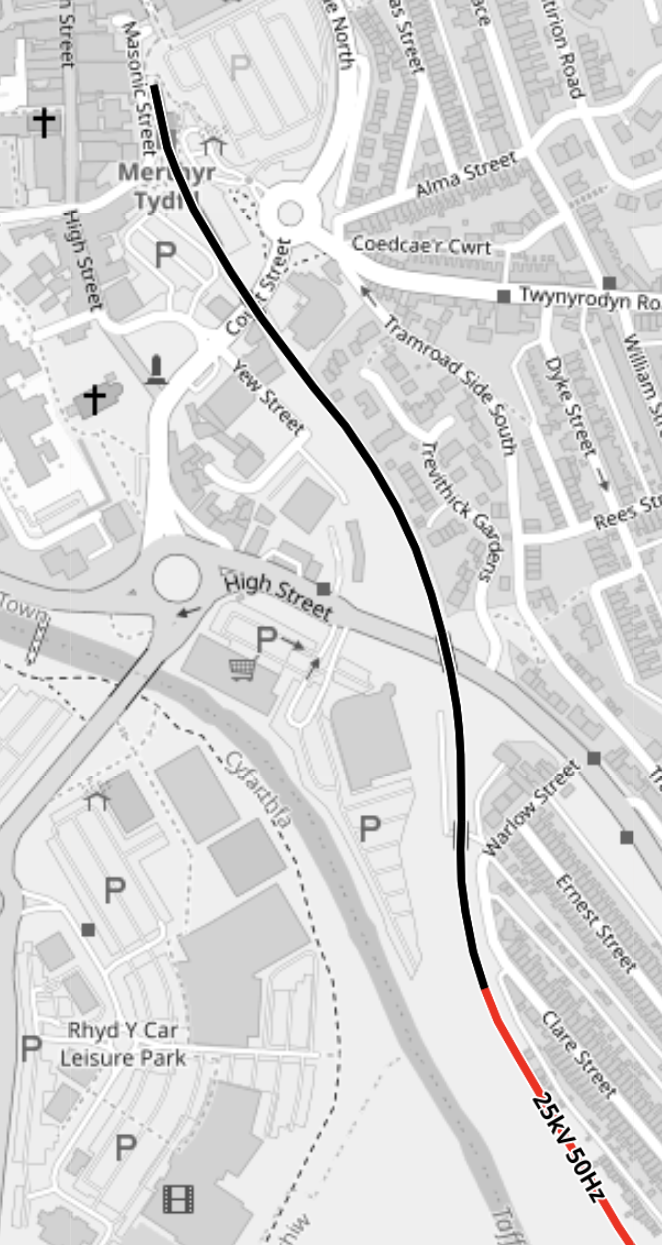
This OpenRailwayMap shows the proposed electrification at Merthyr Tydfil station.
Note.
- Electrified lines are shown in red.
- Unelectrified lines are shown in black.
- The railway is single-track until past Troed-y-Rhiw, after which it is double track to Merthyr Vale station.
- Between Merthyr Vale and Abercynon is single-track, with a short length of unelectrified double-track at Quaker’s Yard station.
It appears that the section of the Merthyr Line at Merthyr Tydfil station will not be electrified.
- The tram-trains’ batteries must be large enough to climb the unelectrified section .
- There must also be enough power to nudge the tram-train back down the hill, after the climb has been completed.
- At least the pictures show, that the track in Merthyr Tydfil station, is reasonably flat.
It looks to be a neat piece of cost-saving design.
Why Did I Feel Better In Merthyr Tydfil?
I have been feeling under the weather lately, but I felt a lot better in Merthyr!
Was it the altitude of 180 metres?
My cardiologist friend, says most people feel worse at altitude. But I seem to be the other way round.
My wife was certainly feeling rough, when I drove a car up to 13,000 feet in the Andes of Ecuador, whereas I was fine.
Incidentally, the car was coughing and wheezing like a good ‘un.
Malaysian Fabrication Company Enters Offshore Wind Market With IJmuiden Ver Alpha Contract
The title of this post, is the same as that of this article on offshoreWIND.biz.
This is the sub-heading.
Malaysia Marine and Heavy Engineering Holdings Berhad (MHB), through its wholly-owned subsidiary Malaysia Marine and Heavy Engineering (MMHE), has secured a subcontract for its first offshore substation high-voltage direct current (HVDC) platform required for TenneT’s 2 GW offshore wind project in the Netherlands
These two paragraphs outline the project.
The Malaysian contractor confirmed the award from Petrofac on 29 November and said the OSS HVDC platform consists of a topside and jacket for the IJmuiden Ver Alpha project.
The subcontract scope consists of construction engineering, fabrication, mechanical completion, load out and sea fastening, and architectual works on engineering, procurement, and construction (EPC) basis.
A third paragraph, indicates, that this contract could be the first of a few.
In addition, the parties will also collaborate towards the possibility of fabrication works for two additional offshore substation units of similar size.
This story illustrates how wind farm developers are looking for more places to build their infrastructure.
In An Elegant Solution, I talked about an idea called a D-Floater. Five are shown being transported in this picture.
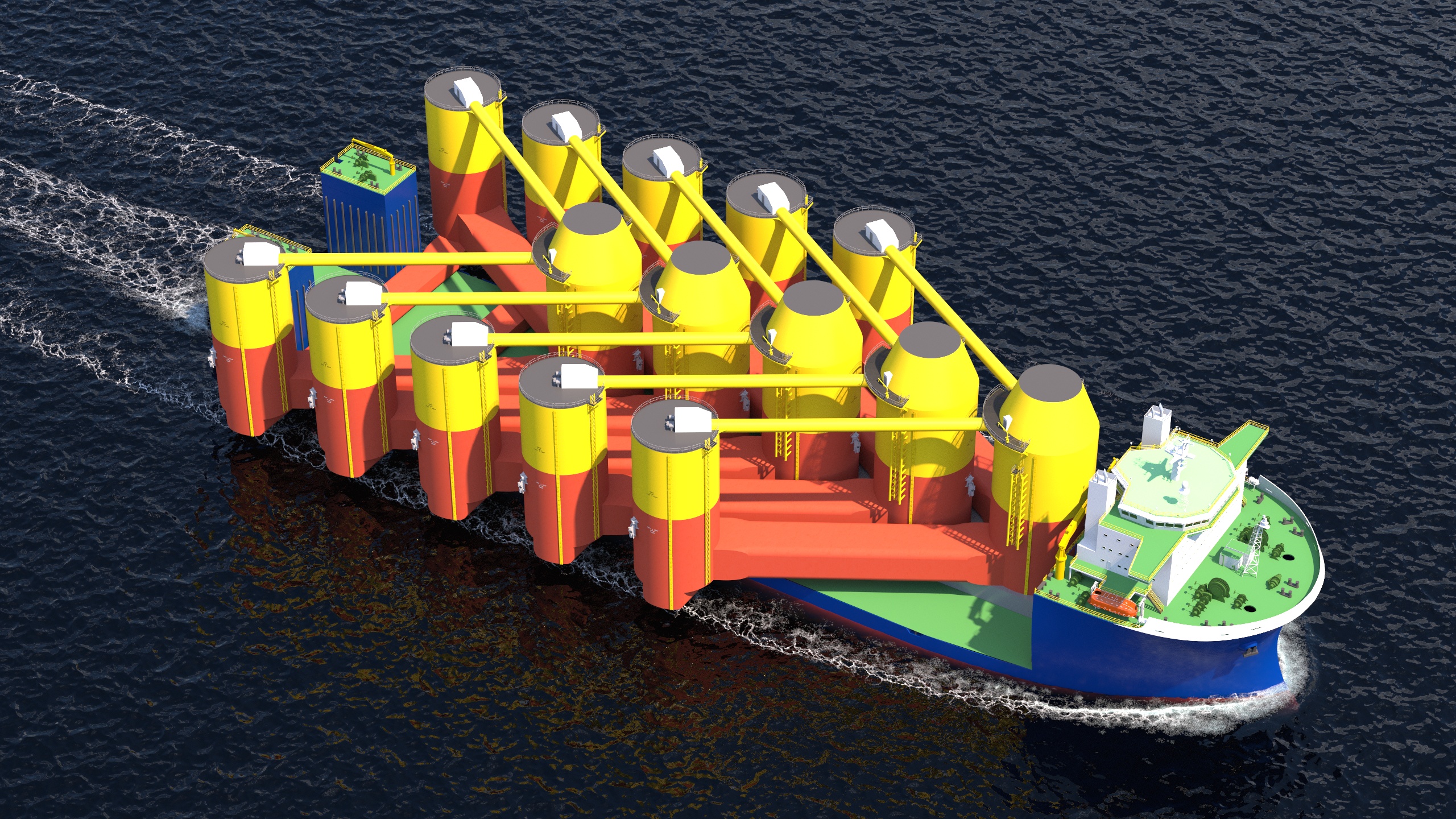
The idea is from a Swedish company; Bassoe Technology.
This would enable transport costs from faraway places to be reduced.
Nearer to Europe, the Black Sea ports of the Ukraine could be an ideal place to build infrastructure, as the country used to have the required skills, ports and steel-making capabilities.
But first Putin must be put back in his box!
UK Offshore Wind And CCS Colocation Projects Kick Off
The title of this post, is the same as that of this article on offshoreWIND.biz.
This is the sub-heading.
The Offshore Wind and Carbon Capture and Storage (CCS) Colocation Forum (the Forum), set up to provide strategic coordination of colocation research and activity on the nation’s seabed, has commissioned two research projects.
These first two paragraphs, which set objectives and possible methods for the two projects.
The projects are designed to inform the best approach to test and demonstrate the colocation of offshore wind and CCS activities in the future.
The research projects – Project Colocate and Project Anemone – build on the Forum’s Spatial Characterisation Report, which identified areas of potential overlap for offshore wind and CCS on the seabed, and NSTA’s Seismic Imaging Report, which explored various options for monitoring carbon storage and offshore wind sites to help resolve possible colocation issues.
These are the two projects.
Project Colocate, which is described in the article like this.
Delivered by the University of Aberdeen with funding from the Crown Estate and Crown Estate Scotland, Project Colocate will investigate the viability of areas on the seabed for colocation of CCS and offshore wind, with bespoke monitoring plans for each area.
Researchers from the University of Aberdeen will focus their investigations on the East Irish Sea and Central North Sea, both of which have been identified as having significant potential for future colocation of CCS and offshore wind, according to the Crown Estate.
Project Anenome, which is described in the article like this.
The complementary Project Anemone will explore mutually beneficial opportunities arising from the colocation of these developing industries.
The project aims to identify and map the routes to realising these opportunities to create practical guidance for how offshore wind and CCS technologies can operate alongside each other – from construction to decommissioning.
It does appear to be a lot of sensible thinking and words, although neither project appears to yet have a website.
This paragraph is a nice tailpiece to the article.
To achieve the UK’s net zero targets, the UK Government is targeting the delivery of 50 GW of offshore wind energy and the capture of 20-30 million tonnes of CO2 per year by 2030.
I’ve mentioned 50 GW of offshore wind before, but 20-30 million tonnes is a lot of CO2.
Centrica’s Rough Storage Facility Pumps Gas Into Grid To Meet Increased Demand
The title of this post, is the same as that of this press release from Centrica.
This is the sub-heading.
The UK’s largest gas storage facility, Rough, has released stored gas into the grid to help the UK both manage higher heating demand during the current cold weather and keep prices down. This is the first time Rough has released gas this winter.
These three paragraphs describe how Centrica are using Rough and how they will use it in the future.
This year, Centrica has filled Rough with the equivalent of 18 LNG tankers. Rough provides enough energy to heat over 3 million homes, every day, all winter, keeping families warm and bills down.
Rough is the UK’s largest gas storage facility. It stopped storing gas in 2017 but was re-opened for gas storage in October 2022, and its capacity was doubled in the summer of 2023. The facility, which is 18 miles off the coast of East Yorkshire, now provides half of the UK’s total gas storage.
Centrica’s long-term ambition is to turn the Rough gas field into the largest long duration low carbon energy storage facility in the world, capable of storing both natural gas and hydrogen.
It does seem that Centrica have handled the Rough facility well.
But I do feel that Centrica are playing a bigger game.
- In Lhyfe And Centrica To Develop Offshore Renewable Green Hydrogen In The UK, I talk about how Centrica will produce hydrogen offshore.
- Would this hydrogen be conveniently produced near to Rough?
- Rough allow Centrica to buy gas at a low price and sell high. Rough could be a neat little profit centre?
- I suspect lessons learned at Rough, could be applied to other gas storage facilities?
- Centrica have taken a substantial stke in HiiROC, who are developing a new way of producing green hydrogen.
- In Centrica Partners With Hull-Based HiiRoc For Hydrogen Fuel Switch Trial At Humber Power Plant, I talk about how Centrica are helping HiiROC with full scale trials.
I certainly like what they’re doing.
First Digitally Signalled Passenger Train Comes To Northern City Line
The title of this post, is the same as that of this article on Rail Advent.
These two paragraphs introduce the article.
The Northern City Line experienced its first taste of digital signalling, as a passenger train controlled by the in-cab technology ran between Finsbury Park and Moorgate on Monday the 27th of November.
The introduction of this type of signalling – known as the European Train Control System, or ETCS – is a first step towards wider adoption across the rail network and represents an important milestone in the government-backed £1.4bn East Coast Digital Programme (ECDP). The programme is designed to improve journeys between London and north of Peterborough, with reliability and environmental outcomes at the forefront of the project’s deliverables.
I hope that one of the benefits will be more trains between Moorgate and Hertford North, Stevenage and Welwyn Garden City.
German Company To Build XXL Monopile Factory in Denmark
The title of this post, is the same as that of this article on offshoreWIND.biz.
This is the sub-heading.
German-based Baltic Structures Company (BSC) has revealed that it will build an XXL monopile production factory in Esbjerg, Denmark
These are the first three paragraphs that outline the project.
BSC will build “Europe’s biggest” foundation fabrication site in the Esbjerg Port where it will be able to offer various foundations structures with a more than 100,000-square-metre production area under the roof and an output of up to 200 XXL monopiles per year.
The German company said that the focus of the plant is on structures with dimensions of up to 15 metres in diameter, up to 130 metres in length, and single unit weights of up to 4,000 tonnes.
In addition to monopiles, transition pieces, pin piles, and components for jackets, floating foundations will also be offered, said BSC.
These last three paragraphs sum up, where we are at the moment with European wind turbine foundation manufacture.
In September 2022, Esbjerg Port (Denmark), Oostende Port (Belgium), Groningen Seaports/Eemshaven (the Netherlands), Niedersachsen Port/Cuxhaven (Germany), Nantes-Saint Nazaire Port (France), and Humber (the UK) signed a partnership agreement with an aim to minimise capacity issues.
At the beginning of this year, the six largest European wind ports also signed a mutual declaration to collaborate on an operational and practical level to help bring the new offshore wind capacities across Europe as smoothly as possible.
In January, the Port of Esbjerg, together with US-based Moffatt & Nichol, deployed digital twin technology which could triple the port’s offshore wind capacity.
I also wrote UK And South Korea Help Secure Millions For World’s Largest Monopile Factory, this morning about a new monopole factory on Teesside.
- The Teesside factory is described as the world’s largest.
- On the other hand the Esbjerg Port facility is described as Europe’s biggest foundation fabrication site.
I suspect the Germans and the Koreans are using different engineering dictionaries.
European Offshore Wind Power Targets
Out of curiosity, I looked up the offshore wind capacity, the UK and neighbouring countries are planning before 2030.
- UK – 50 GW
- Germany – 30 GW
- Norway – 30 GW
- The Netherlands – 21 GW
- France – 18 GW
- Denmark – 13 GW
- Italy – 10 GW
- Portugal – 10 GW
- Belgium – 5.4-5.8 GW
- Republic of Ireland – 5 GW
- Spain – 3 GW
Note.
- Norway’s figure relates to 2040.
- Northern Ireland have a target of 1 GW, which I assume is included in the UK total.
- The total is between 195.4 and 195.8 GW.
Given that we could be producing over a quarter of Western Europe’s offshore wind power, the Gods of the Winds must have been British.
Climbing The Valley Lines In The South Wales Metro
There are five terminal stations on the Cardiff Valley Lines, of which four will be served by battery-electric trains or tram-trains from Cardiff.
In this post, I will show how they will achieve this feat.
Consider.
- To get to Aberdare, Merthyr Tydfil or Treherbert, a tram-train must first get to Pontypridd.
- To get to Rhymney, a train must first get to Caerphilly.
I will now deal with the seven stations in alphabetic order.
Aberdare
This OpenRailwayMap shows the three branches of the Cardiff Valley Lines, that go through Pontypridd.

Note.
- Electrified lines are shown in red and unelectrified lines are shown in black.
- The branch to Aberdare is the middle of the three branches.
- It is planned that the service on the Aberdare branch will be provided using Class 398 tram-trains, that will be fitted with batteries.
- Electrification will be complete between Aberdare and Pontypridd.
It would appear that a tram-train could run between Aberdare and Pontypridd using the complete electrification.
Caerphilly
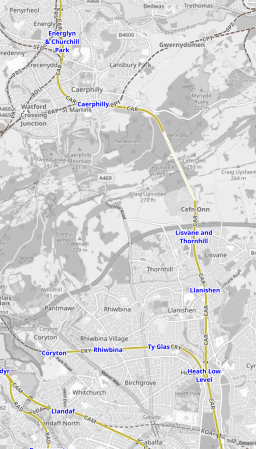
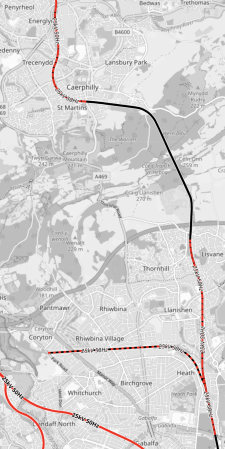
These two OpenRailwayMaps show the tracks through Caerphilly.
Note.
- The map on the left shows infrastructure, with the Rhymney Line shown in yellow.
- Caerphilly station is in the top third of the map.
- The white section of the Rhymney Line is the Caerphilly tunnel.
- The map on the right shows electrification, with the sections of the Rhymney Line that will be electrified are shown in red.
- Black sections will not be electrified.
- North of Caerphilly, the Rhymney Line is electrified, but through the station and the Caerphilly tunnel, there will be no electrification.
Trains will use battery power, where there is no electrification.
Ebbw Vale Town
This OpenRailwayMap shows the Ebbw Valley Railway.
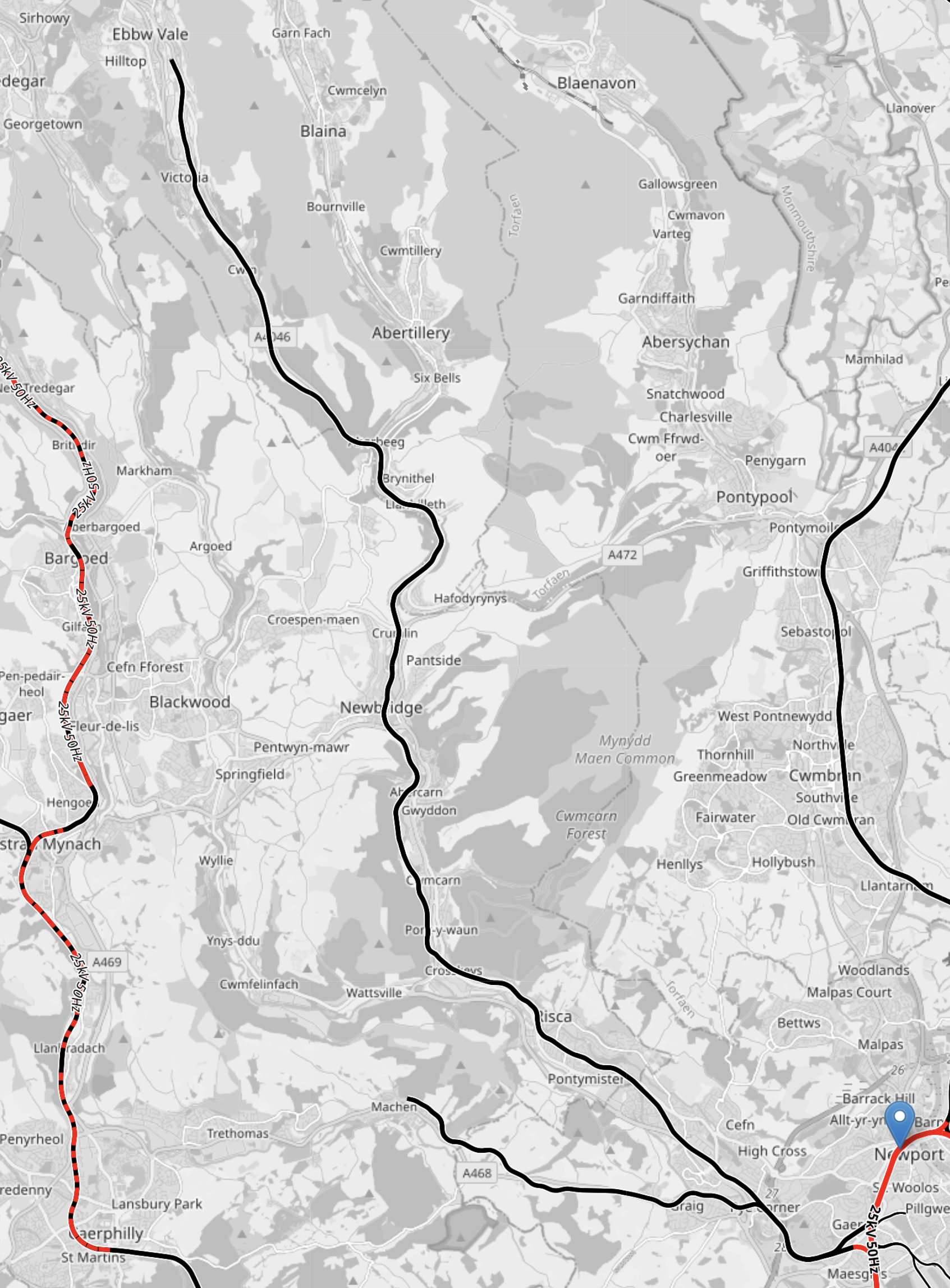
Note.
- Electrified lines are shown in red and unelectrified lines are shown in black.
- Lines where electrification will be installed are shown in red and black.
- Newport is marked by the blue arrow.
- The North-South Line at the left is the Rhymney Line.
- The North-South Line in the middle is the Ebbw Valley Railway.
- The North-South Line at the right is the Marches Line to Hereford and Shrewsbury.
Trains will use diesel power on the Ebbw Valley Railway, as there is no electrification and no means of charging battery-electric trains.
It does seem strange that no electrified solution has been proposed for the Ebbw Valley Railway.
Consider.
- An Abertillery branch has been proposed.
- A Newport and Ebbw Vale Town service has been proposed and will be implemented.
- Perhaps the line is difficult to electrify.
It could just be, the electrifying the Ebbw Valley Railway, was a step too far.
Merthyr Tydfil
This OpenRailwayMap shows the three branches of the Cardiff Valley Lines, that go through Pontypridd.
Note.
- Electrified lines are shown in red and unelectrified lines are shown in black.
- The branch to Merthyr Tydfil is the rightmost of the three branches.
- It is planned that the service on the Merthyr Tydfil branch will be provided using Class 398 tram-trains, that will be fitted with batteries.
- Electrification will be complete between Merthyr Tydfil and Pontypridd, except for two short sections.
- I would assume that the short unelectrified sections can be handled using the tram-trains battery power.
It would appear that a tram-train could run between Merthyr Tydfil and Pontypridd using the electrification and the tram-trains batteries.
This shows the track layout at Quaker’s Yard station.
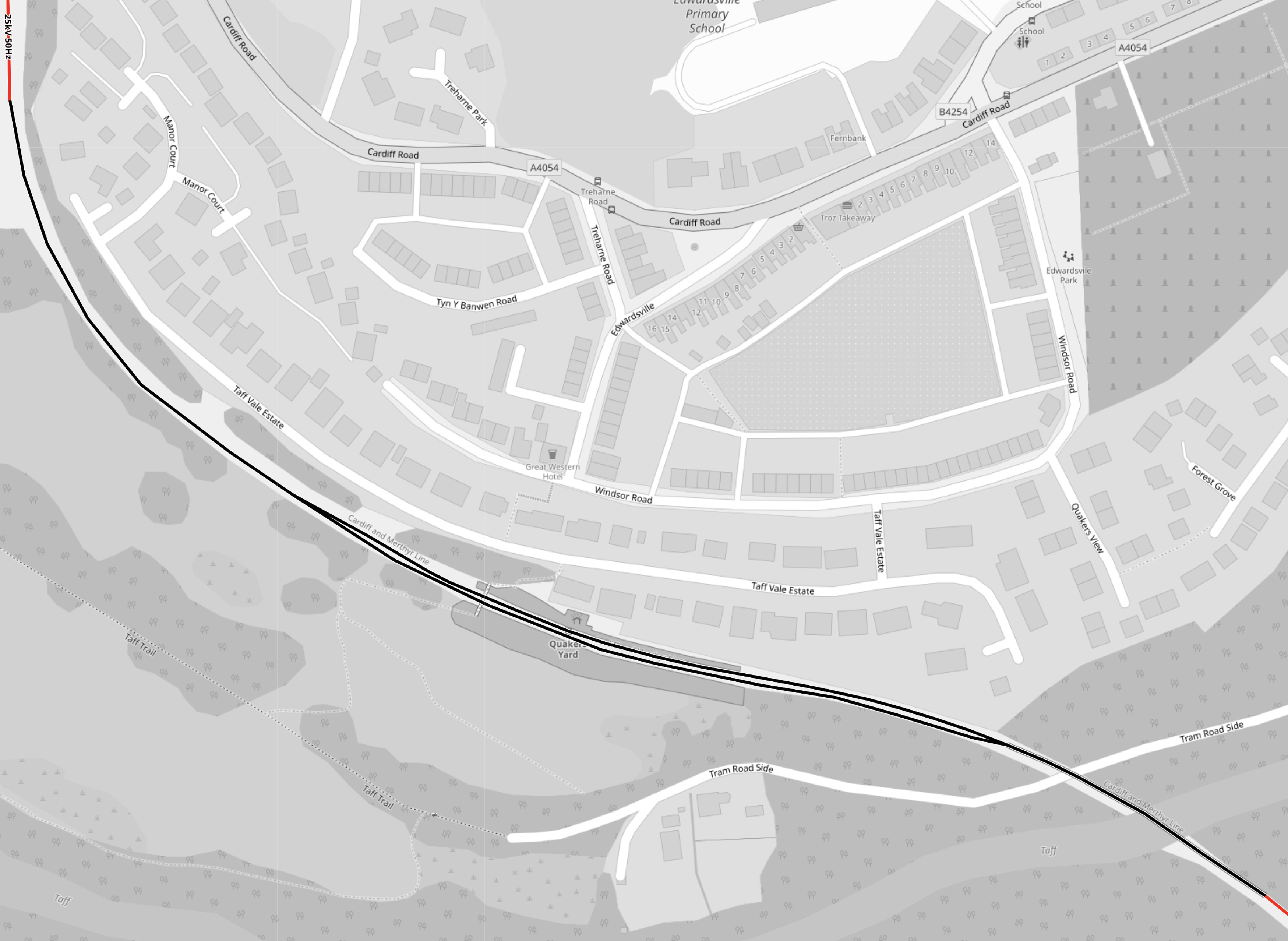
Note.
- Electrified lines are shown in red and unelectrified lines are shown in black.
- There are only two short length of electrification shown in the corners the map.
- Quaker’s Yard station has two platforms.
- The track layout appears to have single- and double-track sections.
It looks like it has been decided not to electrify this section. Perhaps, it was just too complicated to electrify easily?
This 3D Google Map shows the terminal station at Merthyr Tydfil.
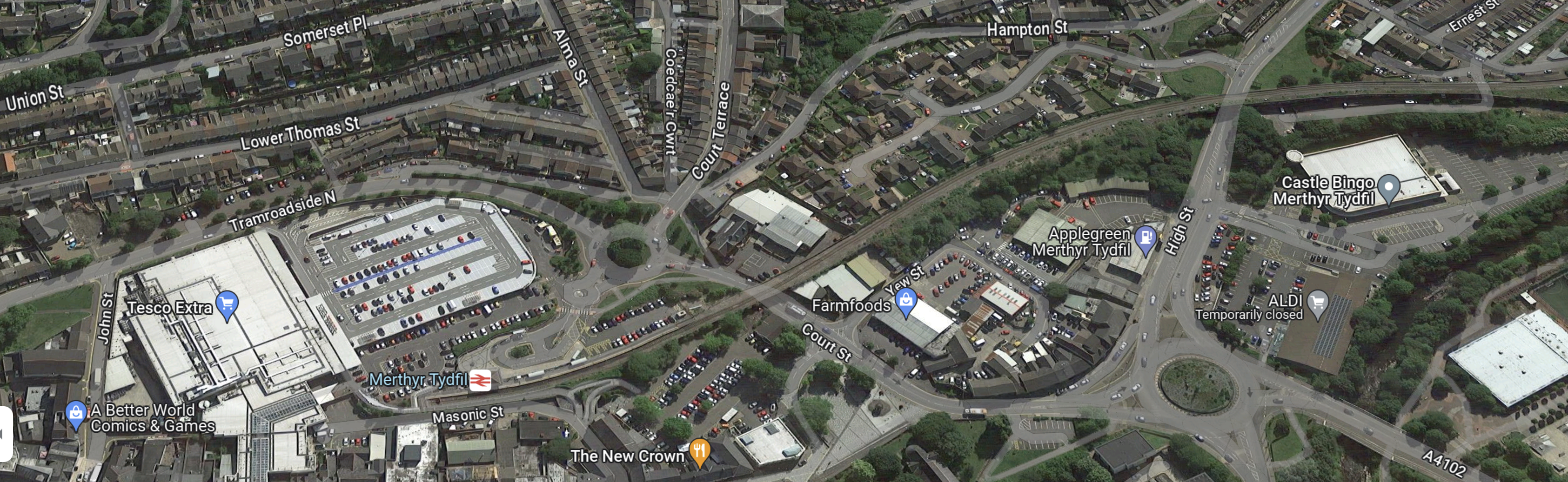
It looks like the railway runs through the town to the station. So perhaps leaving out the electrification made everything safer?
Pontypridd
This OpenRailwayMap shows the tracks through Pontypridd.
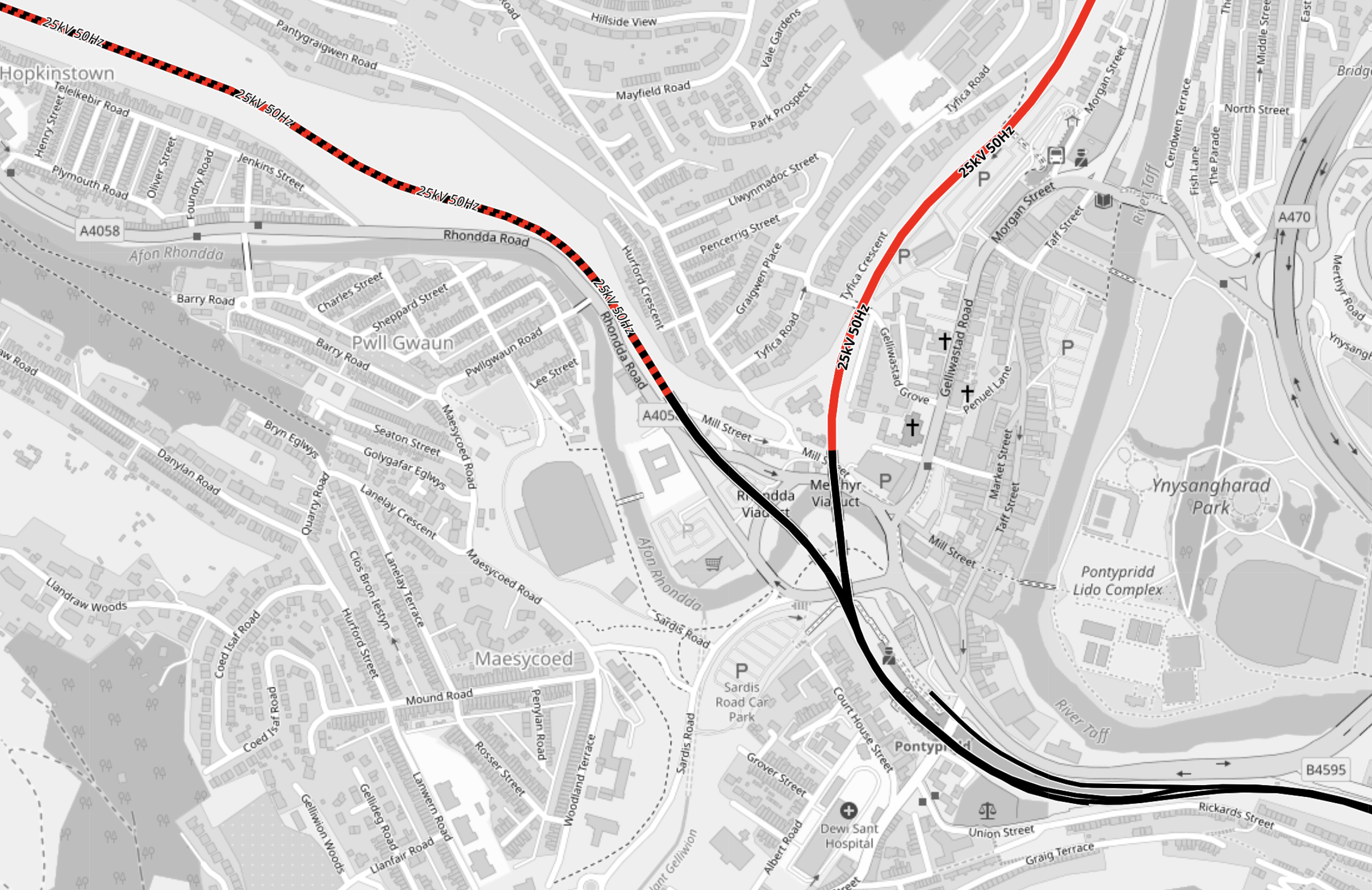
Note.
- Electrified lines are shown in red and unelectrified lines are shown in black.
- Lines where electrification will be installed are shown in red and black.
- The line leaving the map in the South-East corner is the line to Cardiff.
- The line leaving the map in the North-West corner is the Rhondda Line to Treherbert.
- The line leaving the map in the North-East corner is the Merthyr Line to Aberdare and Merthyr.
Pontypridd stations lies at the junction of the three lines.
This OpenRailwayMap shows the platforms at Pontypridd.
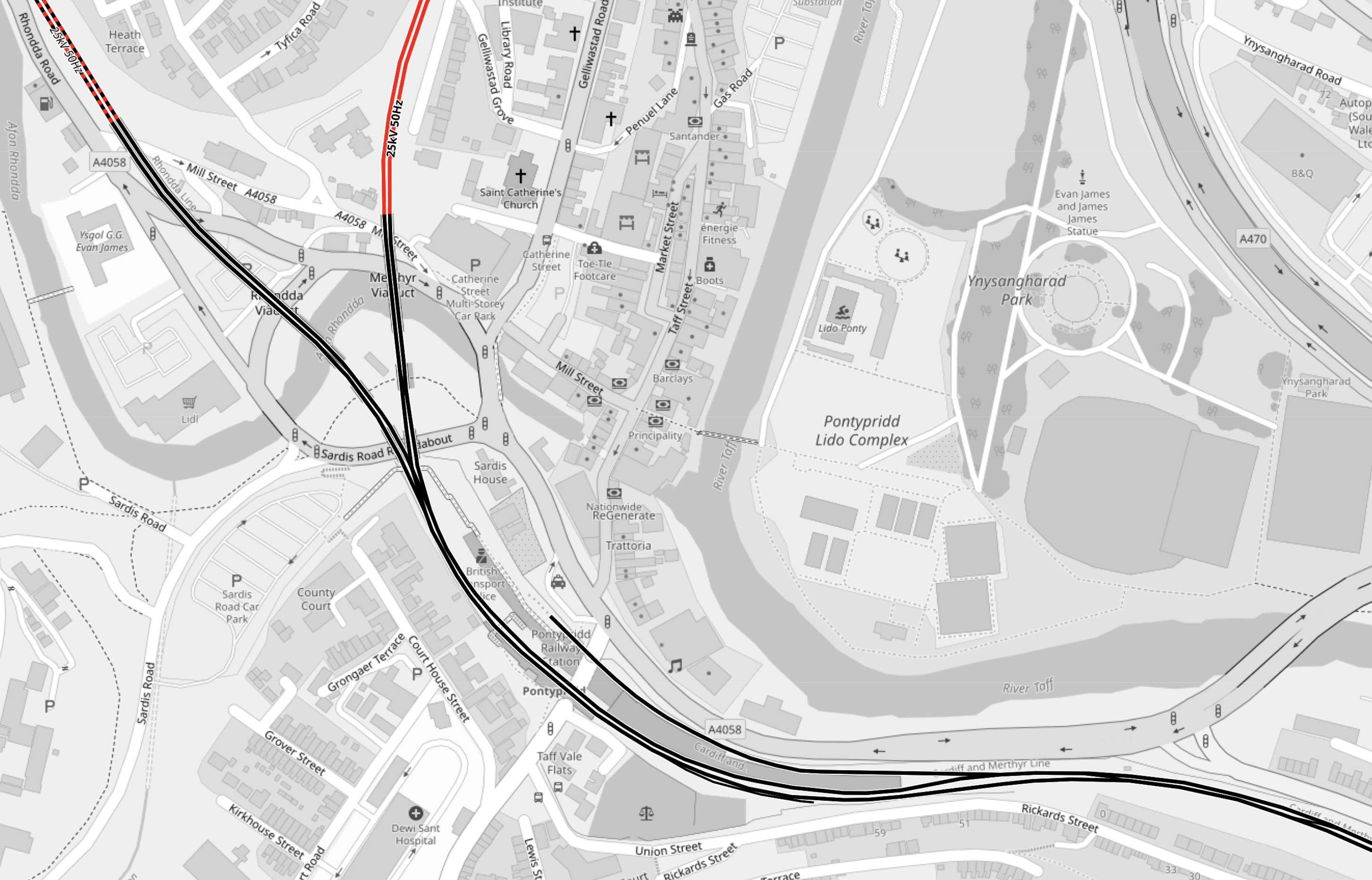
Note.
- There are two long through platforms.
- There is a bay platform on the North side of the station for extra Cardiff services.
- The station is not electrified.
These pictures show Pontypridd station.
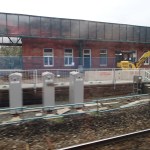
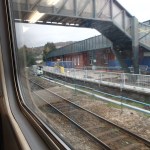
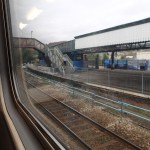

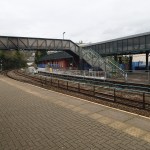
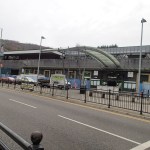
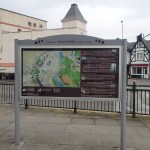
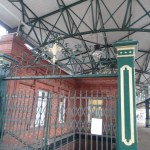
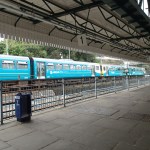
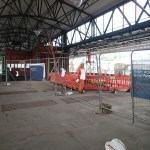




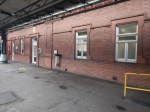







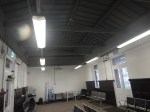

The station is Grade II Listed.
How will the tram-trains be powered through Pontypridd station?
Older Welsh railwaymen have told tales of how the coal trains from the mines in the valleys to Cardiff Docks were powered in part using gravity to propel the trains to the Docks. Steam locomotives then hauled the trains up the hills to get another load of coal.
Will Newton’s Friend be used to help the tram-trains return to Cardiff?
As the tram-trains descend, regenerative braking can be used to recharge the batteries.
A sophisticated computer control system, would choose the source of power from that which is available.
Descending from the terminal stations of Aberdare, Merthyr and Treherbert, and through Pontypridd would probably need a small amount of battery power to nudge the train to descend down the hill.
Fully-electrified stations like Aberdare and Treherbert will have the luxury of being able to use power from the electrification to start the descent.
Climbing the hills will be mainly on battery power, with the batteries being charged, where overhead electrification exists.
Rhymney
This OpenRailwayMap shows the Northern part of the Rhymney Line from Caerphilly to Rhymney.
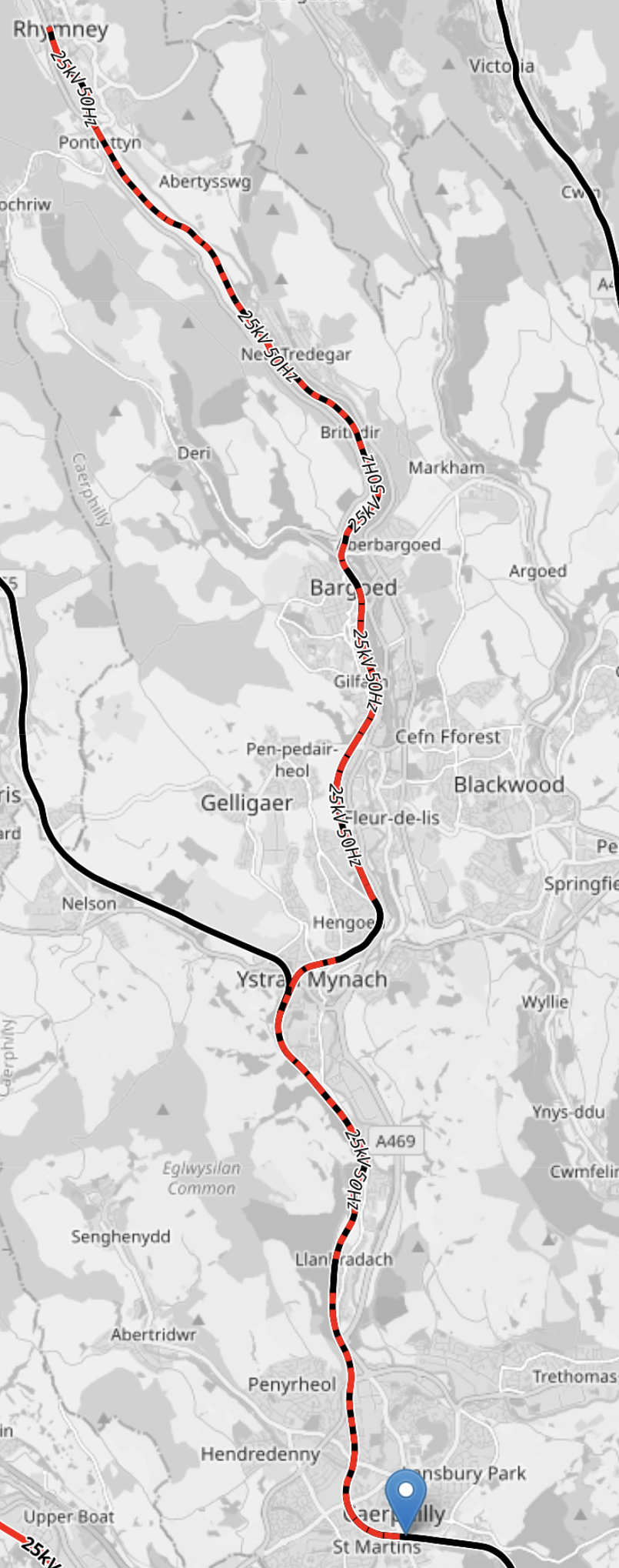
Note.
- Electrified lines are shown in red and unelectrified lines are shown in black.
- Lines where electrification will be installed are shown in red and black.
- Caerphilly is marked by the blue arrow at the bottom of the map.
- Rhymney is at the Northern end of the rail line.
- Bargoed, Hengoed, Llanbradach and Caerphilly stations appear not to be electrified.
- It is planned that the service on the Rhymney Line will be provided using Class 756 trains, that will be fitted with batteries and diesel engines.
The Class 756 trains appear to have been designed to climb to Rhymney in all conditions, including a complete power cut. They will use batteries on the unelectrified sections of the climb.
Treherbert
This OpenRailwayMap shows the three branches of the Cardiff Valley Lines, that go through Pontypridd.
Note.
- Electrified lines are shown in red and unelectrified lines are shown in black.
- Lines where electrification will be installed are shown in red and black.
- The branch to Treherbert is the leftmost of the three branches.
- It is planned that the service on the Theherbert branch will be provided using Class 398 tram-trains, that will be fitted with batteries.
- Electrification will be complete between Treherbert and Pontypridd.
It would appear that a tram-train could run between Treherbert and Pontypridd when the electrification is complete.
Conclusion
Each of the five lines use their own methods of getting trains up the hills.
I suspect we’ll see some of the ideas used here on other stretches of electrification.
New Plan To Lay Out Path For UK Offshore Wind Growth Expected In Early 2024
The title of this post, is the same as that of this article on offshoreWIND.biz.
This is the sub-heading.
RenewableUK, the Offshore Wind Industry Council (OWIC), the Crown Estate, and Crown Estate Scotland are developing a new Industrial Growth Plan (IGP) to boost the long-term growth of the UK offshore wind sector.
These two paragraphs outline the plan.
The industry players have appointed KPMG to support the development of the IGP which is expected to be published early next year.
The IGP will build on the recent Supply Chain Capability Analysis which outlined a GBP 92 billion opportunity for the country if it can develop its capacity and expertise in a number of key areas, according to RenewableUK.
When plans like this are announced, I wish I was still involved in writing project management software.
UK And South Korea Help Secure Millions For World’s Largest Monopile Factory
The title of this post, is the same as that of this article on offshoreWIND.biz.
This is the sub-heading.
UK Export Finance (UKEF) and South Korea’s export credit agency Korea Trade Insurance Corporation (K-Sure) have helped SeAH Wind to secure GBP 367 million in Standard Chartered Bank and HSBC UK financing to build the world’s largest wind monopile manufacturing facility.
These three paragraphs outline the story.
UKEF and K-Sure have secured support worth GBP 367 million for South Korean manufacturer SeAH Steel Holding’s construction of a wind tech factory near Redcar, in the Tees Valley.
Issuing its first-ever “Invest-to-Export” loan guarantee to secure overseas investment in British industry, UKEF together with K-Sure has ensured that SeAH Wind UK can fund the construction project – worth almost GBP 500 million – with GBP 367 million in financing from Standard Chartered Bank and HSBC UK.
SeAH Wind UK, a subsidiary of South Korean steel company SeAH Steel Holding, announced its decision to invest and broke ground at Teesworks Freeport last summer.
The article also says.
- This is SeAH Wind’s first such investment outside Korea.
- The factory will make between 100 and 150 monopiles a year.
- The factory will create 750 jobs when it opens in 2026.
- The factory is conveniently placed for transport to the North Sea.
Everybody seemed to have worked hard during the state visit of the Korean President and his wife.
 The Anonymous Widower