Innovative Battery Delivered To Portsmouth International Port
The title of this post, is the same as that of this article on Renewable Energy Magazine.
This is the introductory paragraph.
A 20-foot container sized battery that can charge four electric cars simultaneously has been safely delivered to Portsmouth International Port in the UK this week as part of the Port Energy Systems Optimization project.
It looks like another case of battery-to-battery transfer to fast-charge one or more battery-powered vehicles or trains.
Linde And RVK Unveil New Hydrogen Station For Buses
The title of this post, is the same as that of this article on H2 View.
This is the introductory paragraphs.
Linde and regional transport company Regionalverkehr (RVK) today presented an innovative hydrogen station for fuel cell buses to the public.
With a capacity of up to 20 refills per day, the new station located near Cologne, Germany features, for the first time, a new high-pressure storage technology developed by Linde: constant pressure tubes ensure that the refuelling pressure always remains at a constant level, even as the storage tank volume decreases.
It does appear that Linde is going to be big in hydrogen, as they already are an investor in electrolyser company;ITM Power.
Beeching Reversal – Magor And Undy Walkway Station
This is one of the Beeching Reversal projects that the Government and Network Rail are proposing to reverse some of the Beeching cuts.
I actually covered this proposal before in ‘Walkway’ Rail Station Plan For Magor As M4 Relief Road Scrapped,
I’ll repeat the start of that post.
The title of this post is the same as that of this article on the BBC.
These are the introductory paragraphs.
A village heavily affected by the decision to scrap the planned M4 relief road is bidding for help to build a £7m railway station there.
Residents of Magor in Monmouthshire have the mainline rail service to London running through the village, but no station.
They want to create a “walkway” station – one with no car parking that travellers will walk or cycle to.
The original Magor station was shut in the Beeching cuts in November 1964.
The Villages Of Magor And Undy
This Google Map shows the villages of Magor and Undy and their relationship to the roads and railway in the area.
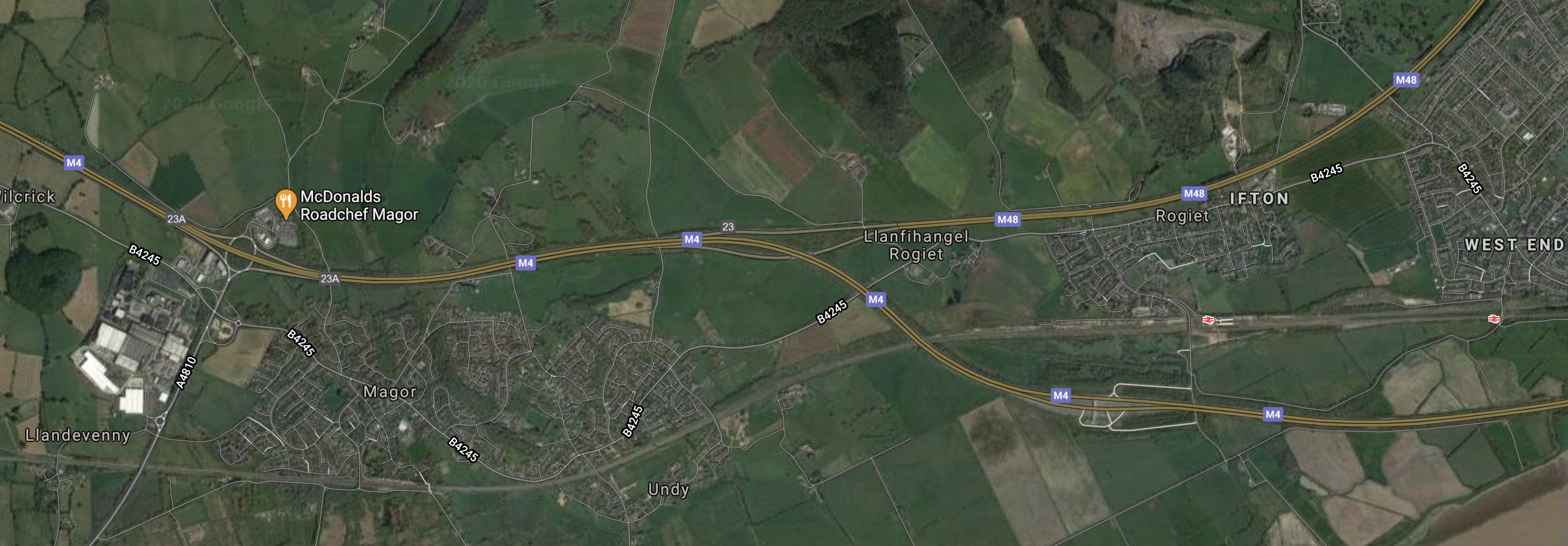
Note.
- The Northern motorway is the M48, which leads to the original Severn Bridge.
- The Southern motorway is the M4, which leads to the newer Second Severn Crossing.
- Between the two lies the South Wales Main Line, with the two stations; Severn Tunnel Junction and Caldicot.
- At the Western end of the map, the railway runs between the two villages of Magor and Undy.
This second Google Map shows the villages.
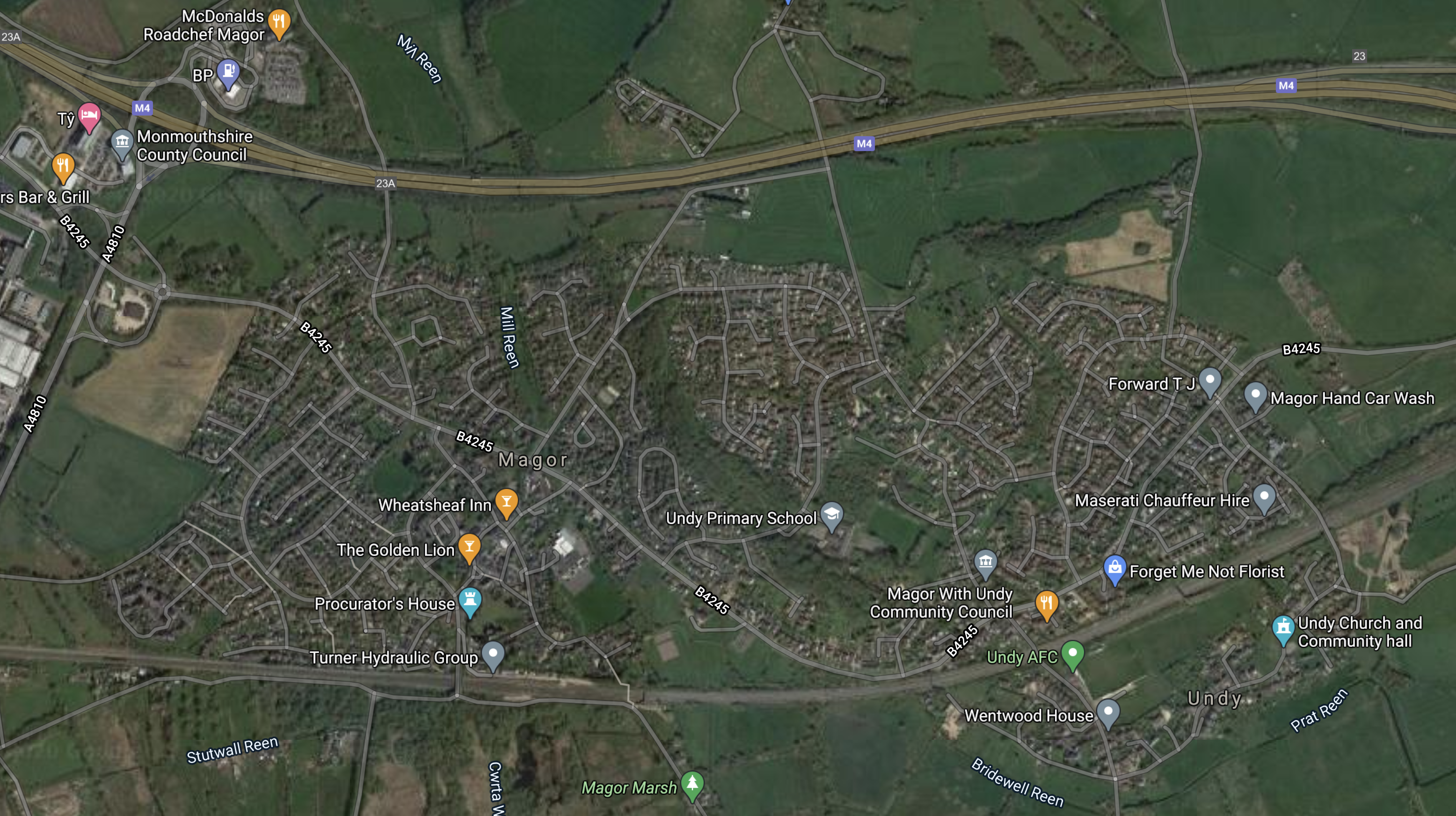
Note.
- The M4 running East-West to the North of Magor.
- Magor services is in the North-West corner of the map.
- The South Wales Main Line running through the villages.
There certainly seems to be a lot of housing to provide passengers for the new station.
The Location Of Magor And Undy Station
On this web page on Rail Future, which is entitled Magor, this is said.
The station site is where the B4245 road passes closest to the railway line. The Monmouthshire County Council traffic survey shows that some 11 – 12,000 cars a day pass along this road through the middle of the villages. The shift from car to train use is primarily aimed at capturing those who at present are not prepared to drive the two and half miles to the east just to catch the train at Severn Tunnel Junction to travel the two and a half miles back passing their homes for the seven and a half mile journey into Newport, and hence at present use their car for the whole journey instead. The site also has the advantage of direct integration with the buses as the bus services pass the entrance to the site of the proposed Station and Community centre every half an hour.
This Google Map shows the B4245 road and the railway.
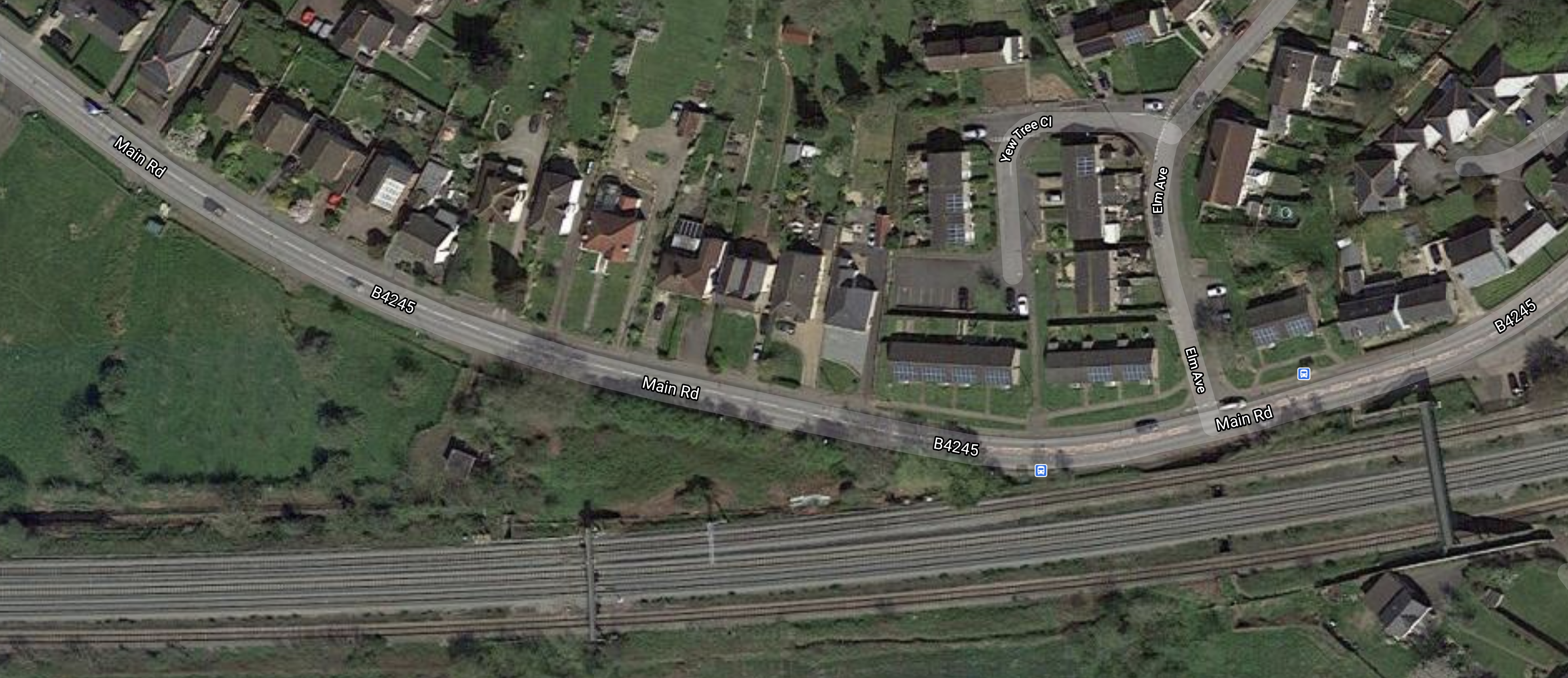
Note.
- The B4245 curving across the map.
- There are already two bus stops, which are marked by blue dots.
- There is a footbridge over the railway, which doesn’t appear to be step-free.
As Rail Future is probably correct, the position of the station is fairly obvious.
Various documents on the Internet talk about the station being built on the Three Field Site, which the local council bought for community purposes some years ago. Could the triangle of land between the B4245 and the railway, be this site?
Thoughts On The Station
Reading the web page on Rail Future, the following seems to be stated.
- The platforms will be on the two outside tracks of the four through the station. These are the Relief Lines.
- The two Fast Lines will be in the centre.
- Existing crossovers will allow trains from the Fast Lines to call in the station.
Unlike at other proposed stations to the West of Newport, the tracks will not need major works to slew them to accommodate the new platforms.
I would also do the following.
Incorporate Wide Platforms
This picture was taken of the new platform at Stevenage station.
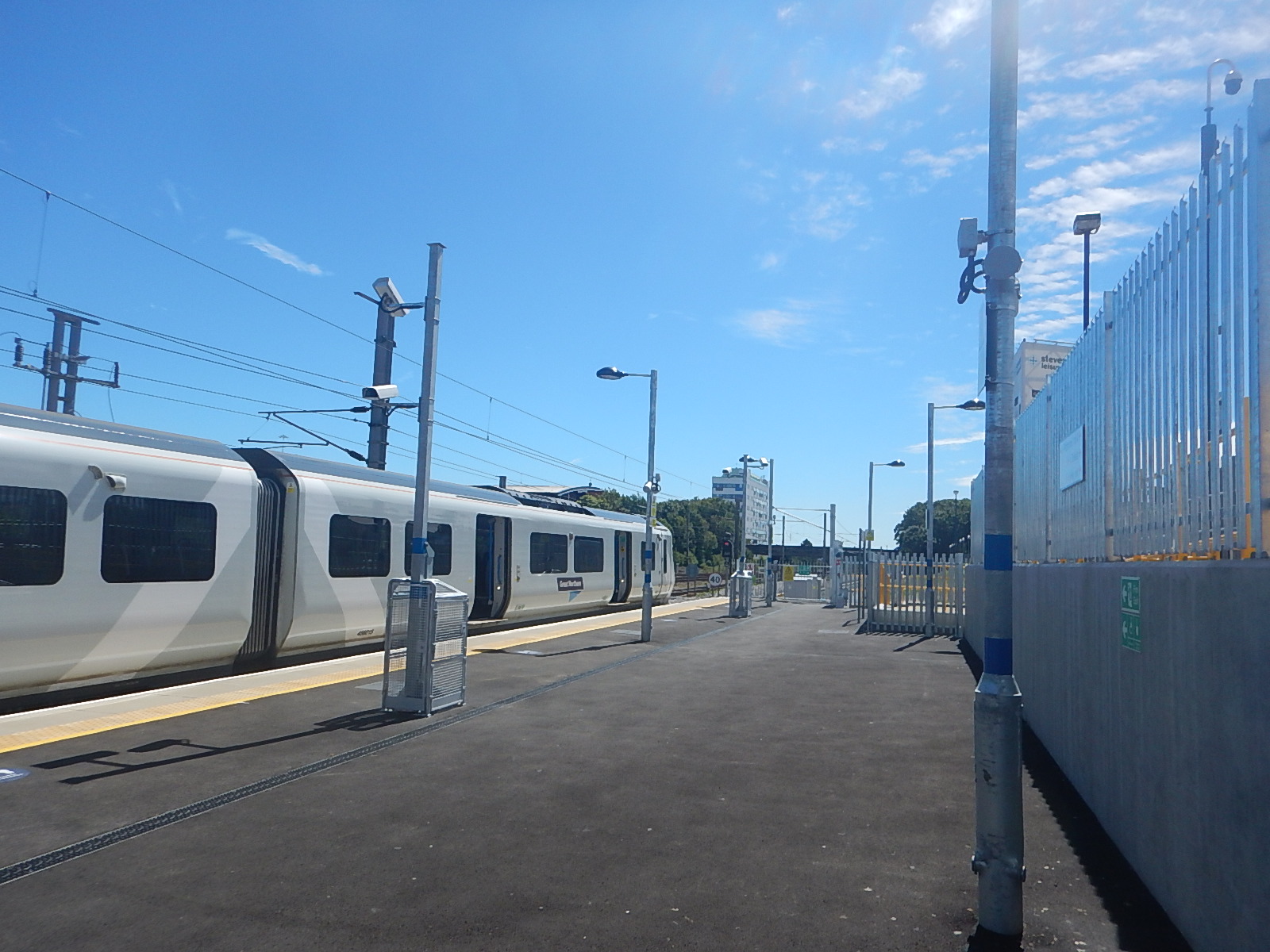
If the station gets busy, a wide platform will ease loading and unloading.
As Magor and Undy station, will be one that encourages passengers to cycle to the station, would a wide platform make it easier for passengers, who are travelling with bicycles?
Step-Free Between Train And Platform
Greater Anglia are using similar trains to South Wales and the Stadler Flirts in East Anglia offer step-free access between train and platform, as this picture shows.
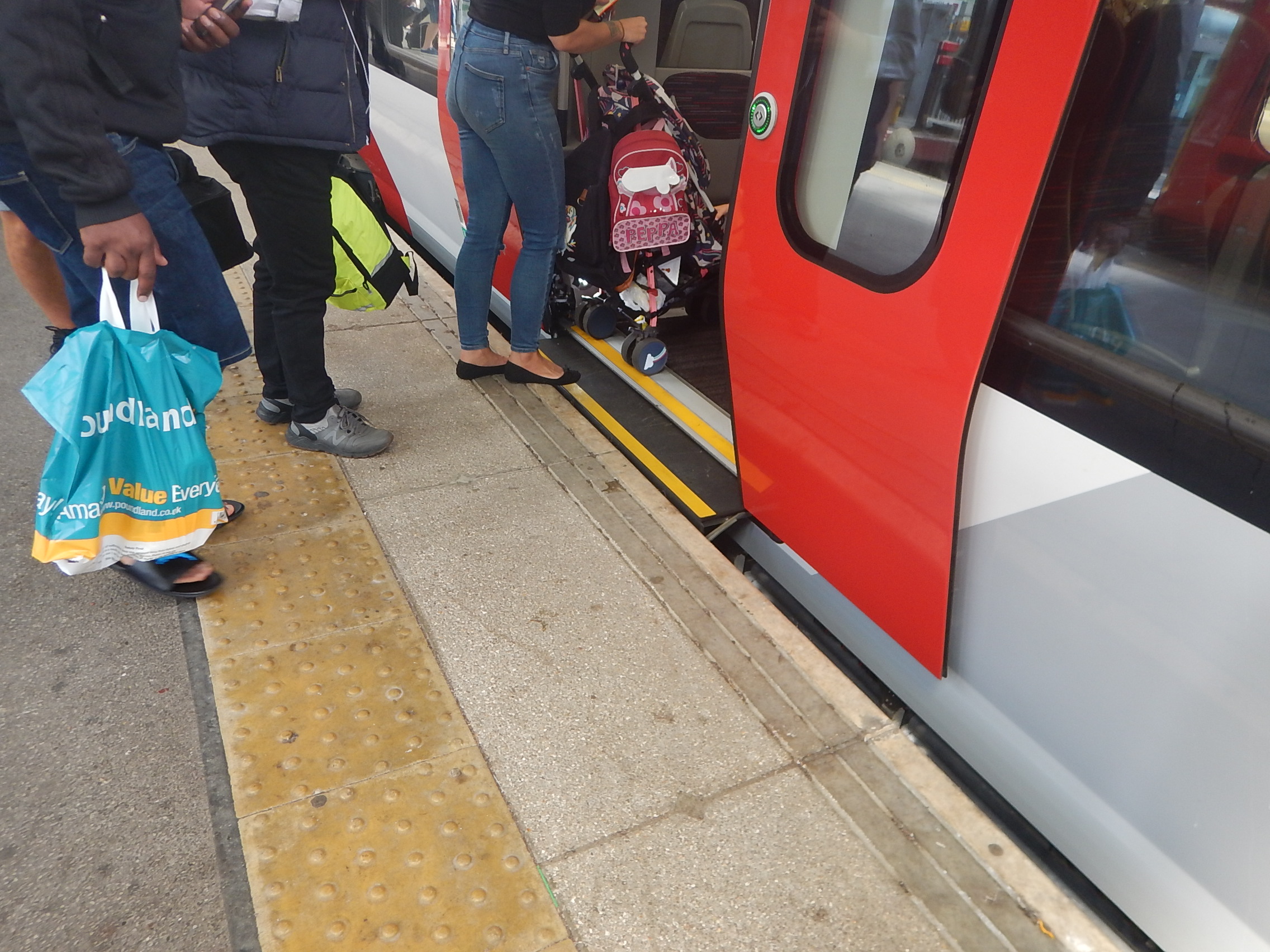
South Wales should offer a similar standard of step-free access. as it eases access and cuts train delays.
A Step-Free Footbridge
In Winner Announced In The Network Rail Footbridge Design Ideas Competition, I wrote how the competition was won by this bridge.
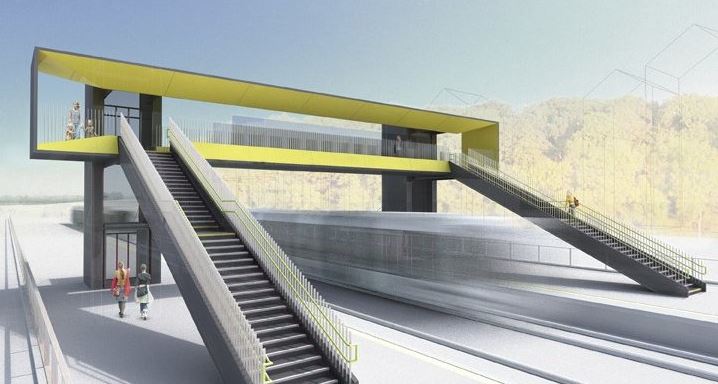
So could a factory-built bridge like this be installed at Magor and Undy station?
- The bridge can be sized to fit any gap.
- If the platforms were wide enough, I think it would be possible.
- It can have lifts that can take bicycles.
- A bridge like this would also reduce the cost.
So the station can have a stylish, affordable, fully step-free footbridge.
A Walkway Along The Railway
It strikes me that a walkway on the Southern side of the railway to connect the communities South of the railway to the station could be very useful.
Electrification
The South Wales Main Line is electrified between London and Cardiff and Great Western Railway’s Class 802 trains between London and Swansea, change between electricity and diesel at Cardiff Central station.
All four lines at Severn Tunnel Junction appear to be electrified, so will all four lines at Magor and Undy station be electrified?
They certainly should be, to improve the reliability of electric services between London and South Wales.
Train Services
I suspect that the calling pattern of train will be similar to that at Severn Tunnel Junction, which is the next station to the East. The Wikipedia entry for Severn Tunnel Junction says this about services at that station.
The station is served by two main routes – Transport for Wales’ Cheltenham Spa to Cardiff Central and Maesteg via Chepstow local service and Great Western Railway’s Cardiff to Taunton via Bristol line. Both run hourly on weekdays & Saturdays, albeit with some two-hour gaps on the Chepstow line. In the weekday peaks, certain Cardiff to Portsmouth Harbour also stop here, whilst there is a daily train to Fishguard Harbour. CrossCountry also provides very limited services to/from Manchester Piccadilly via Bristol and to Nottingham via Gloucester and Birmingham New Street.
On Sundays, the Bristol to Cardiff service is once again hourly (and runs to/from Portsmouth) whist the Cheltenham service is two-hourly.
I think that this could result in these train frequencies in trains per hour (tph), from Magor station.
- Caldicot – 2 tph
- Cardiff Central – 4 tph
- Cjeltenham – 1 tph
- Chepstow – 2 tph
- Gloucester – 1 tph
- Newport – 4 tph
- Severn Tunnel Junction – 4 tph
Note.
- I have assumed that the CrossCountry services don’t stop.
- As there seem to be proposals to add extra stations between Newport and Cardiff Central, these new stations could also get a service with a frequency of between two and four tph.
Working on rules that apply in Liverpool and London, and may apply to the South Wales Metro, I think that a Turn-Up-And-Go service of a train every fifteen minutes is needed between Magor and Undy station and the important Newport and Cardiff stations.
Battery Electric Trains Along The South Wales Main Line
The railways are being decarbonised and plans will have to be made to run all secondary services on the South Wales Main Line without diesel.
Hitachi have already played their cards, with the announcement of a Regional Battery Train, which will be created by replacing some of the numerous diesel engines on a Class 802 train with battery packs.
This is Hitachi’s infographic for the train.

The range of ninety kilometres or fifty-six miles is interesting.
- Cardiff Central and Swansea are 46 miles apart, so with a charging facility at Swansea, Great Western Railway could run diesel-free between London Paddington and Swansea.
- I suspect too, that destinations to the West of Swansea could also be served with intelligent placing of a second charging facility at perhaps Carmarthen.
But it’s not just Hitachi, who have made plans for battery electric trains.
- Transport for Wales have ordered twenty-four Stadler Class 756 trains, which are tri-mode and can run on electrification, diesel or battery power.
- Transport for Wales have also ordered eleven Stadler Class 231 trains, which are only bi-mode.
- Both these fleets seem very similar to Greater Anglia’s Class 755 trains, which Stadler have said can be converted to 100 mph tri-mode operation, with perhaps a forty mile range on battery power.
- I have ridden several times in Class 755 trains and without doubt, they are one of the best diesel-powered trains, I have used in the UK.
So I don’t think it is unreasonable to believe that Transport for Wales have the capability to run battery electric services with the fleet they have ordered given a few simple upgrades, that may already be planned for Greater Anglia.
But will the Welsh train builder; CAF, be happy with Hitachi and Stadler running their battery electric trains at high speed past their factory and onward to England and West Wales?
I doubt it and CAF have already made a response.
In Northern’s Battery Plans, I said this about CAF’s plans to create a battery electric Class 331 train for Northern.
It appears that CAF will convert some three-car Class 331 trains into four-car battery-electric trains.
- A three-car Class 331 train has a formation of DMSOL+PTS+DMSO.
- A fourth car with batteries will be inserted into the train.
- Batteries will also be added to the PTS car.
I suspect that CAF would be happy to convert some of Transport for Wales order for diesel Class 197 trains into one for suitable battery electric trains.
I believe some of the services that are planned to be run by these diesel trains into Birmingham, Liverpool and Manchester, appear to be ideal routes for battery electric trains.
These diesel trains will still be serviceable in 2060, which will be long past the cut-off date for diesel trains in the UK.
So why not replace them before they are built?
- The CAF Civity train is modular, so I doubt it would make much difference to CAF’s manufacturing process.
- The diesel version of the Civity has a noisy transmission compared to the electric version.
It would surely, be better for CAF’s marketing.
Could the various routes through Magor be operated by battery electric trains?
These are my thoughts on the various routes.
Maesteg And Cheltenham Spa
This service is hourly and run by Transport for Wales.
- Currently, the service seems to be running to Gloucester.
- Maesteg and Cardiff Central is not electrified and 28.5 miles long.
- Trains seem to take over 8-9 minutes to turn back at Maesteg.
- Cardiff Central and Severn Tunnel Junction is electrified.
- Severn Tunnel Junction and Gloucester is not electrified and is 35 miles long.
- Trains seem to take over 25 minutes to turn back at Gloucester.
It certainly looks that with charging facilities at Maesteg and Gloucester, this service could be run by a battery electric train with a range of forty miles on battery power.
Fishguard And Gloucester
This service is occasional and run by Transport for Wales.
The problem with this service will be to the West of Swansea.
But if Great Western Railway and Transport for Wales put their heads and services together, I feel there is a cunning plan to run battery electric trains to Fishguard, with perhaps charging facilities at Fishguard, Carmarthen and Swansea.
Cardiff And Bristol Temple Meads
This service is two tph and run by Great Western Railway.
On the Welsh side of the Severn Tunnel, this could be an electric service.
On the English side, there is only ten miles of line without electrification between the South Wales Main Line and Bristol Temple Meads station.
This service in wales can be considered an electric service, as it is only onwards from Bristol Temple Meads to Taunton and Portsmouth Harbour, that charging facilities will be needed.
Conclusion
I like this scheme and as it looks like the trains will be running on electric power, through Magor and Undy station, it could be a very good one.
ANALYSIS: Managing Our Earthworks – The Task Gets Harder Each Year
The title of this post, is the same as that of this article on Rail Magazine.
The on line article is only an introduction and just a taster, of what will be fully available in the magazine.
But it does look to be a serious account of the problems about keeping the railway safe in all this bad weather.
I shall be interested to read the full article, when the magazine hits my door-mat.
Artificial Leaves Make Green Energy With Just Water, Sunlight And CO2
The title of this post, is the same as that of this article on The Times.
The title says it all and the scientists behind the technology are from the Chemistry Department at Cambridge University.
Solving The Problem With Electric Bus Design
The title of this post, is the same as that of this article on Electric & Hybrid Vehicle Technology International.
The article opens with this paragraph.
A number of European cities have committed to securing only zero-emission buses by 2025. However, to achieve this objective, manufacturers must make bold design choices, radically changing bus componentry, systems, and bodywork. Here, it looks at the debate for greater electric bus design standardization.
Standardisation is one thing, but the article doesn’t talk about the major problem with electric bus design – For many countries like the UK, Hong Kong, Singapore and Germany, where there are lots of double-decker or articulated high-capacity buses, battery electric buses are just not big enough.
Battery-electric buses are also generally not big enough to compete with the latest designs of tram and metro systems.
These pictures show the Chinese double-deck electric double-deck buses, that ran in London.





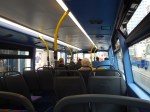
Half of the downstairs was take up by batteries.
Where are they now?
The Belgian firm; Van Hool have a product called Exquicity. This video shows them working in Pau in France.
But these buses are powered by hydrogen.
Similar buses running in Belfast are diesel-electric.
In both the Pau and Belfast applications, I wonderwhy they didn’t use trolley-bus versions of the WxquiCity or conventional trams.
Conclusion
Until we get more efficient battery storage, electric buses will have difficulty competing economically in the high-capacity bus sector.
New Energy Storage “Water Battery” Breakthrough: Look Ma, No Underground Powerhouse
The title of this post, is the same as that of this article on CleenTechnoca.
Pumped hydro storage as used at Dinorwig power station or Electric Mountain in the UK is a good way to store electricity.
But it is expensive to build and one of the major costs is building a large underground powerhouse. This is Wikipedia’s description of the construction of the powerhouse at Dinorwig.
Twelve million tonnes (12,000,000 long tons; 13,000,000 short tons) of rock had to be moved from inside the mountain, creating tunnels wide enough for two lorries to pass comfortably and an enormous cavern 51 metres (167 ft) tall, 180 metres (590 ft) long, and 23 metres (75 ft) wide[10] known as “the concert hall”. The power station comprises 16 kilometres (9.9 mi) of tunnels, one million tons of concrete, 200,000 tons of cement and 4,500 tons of steel.
That is big, but on the other hand, it reportedly paid for itself in two years.
According to the article, a company called Obermeyer Hydro Inc has come up with a new design of pumped storage turbine., which eliminated the need for an underground powerhouse.
- Cost savings of 45 % are claimed.
- Reading the full article, I get the impression, that a radical redesign of the reversible turbine will be a game-changer.
- I suspect, it could be of benefit in small countries like the UK, where pumped storage is expensive and faces strong opposition in certain areas.
It is also significant, that this appears to be successful innovation in an area, where it was thought we had reached the ultimate design.
Eurostar Plans To Start Direct Amsterdam – London Trains In October
The title of this post, is the same as that of this article on Railway Gazette International.
This is the introductory paragraph.
Cross-Channel high speed operator Eurostar has confirmed its intention to launch direct Amsterdam – London St Pancras services from October 26, complementing the London – Amsterdam trains which have run since April 2018.
The article then goes on to give more details of the service.
- Security checks will be undertaken at Amsterdam CS and Rotterdam Centraal stations.
- Amsterdam to London will be nine minutes over four hours.
- There will initially be two trains per day.
- There was a hint of more next year.
- It will carry Shengen area passengers between Amsterdam and Brussels.
Eurostar says it will offer flexible booking options to help, if the Government changes COVID-19 quarantine regulations.
Conclusion
It looks a sensible offering and as I’ve used it between London and Amsterdam three times, I will be trying to fit in a trip before the end of the year.
Nightjet Depot Investment To Support Sleeper Train Network Expansion
The title of this post is the same as that of this article on Railway Gazette International.
This is the introductory paragraph.
Austrian Federal Railways held a groundbreaking ceremony on August 21 to launch the construction of a €40m facility at its Wien Simmering depot for the maintenance of its Nightjet overnight train fleet.
The article then goes on to give more details of Nightjet‘s expansion.
- A service between Vienna and Brussels was introduced earlier this year.
- The Nightjet network currently has nineteen routes.
- A service from Amsterdam to München, Innsbruck and Vienna, will be introduced in December.
- Vienna is the EU city with the most night train services.
- In August 2018, Nightjet ordered thirteen new seven-car trains from Siemens.
- Another twenty seven-car trains were ordered this month.
It does look like Nightjet is linking up with Eurostar to take people far into Europe.
Bletchley Viaduct – 24th August 2020
The Bletchley Viaduct is falling down, as these pictures show.
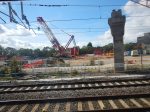

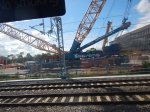
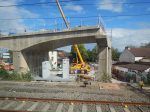
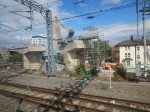
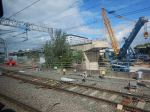
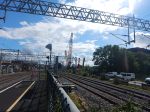
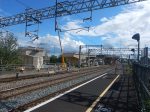
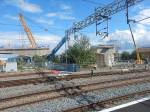
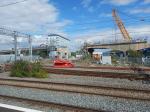
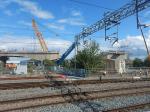
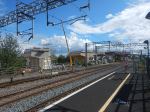
Considering, that Lord Beeching said that the Varsity Line between Oxford and Cambridge shouldn’t be closed, I wonder how much money has been wasted over the years, by questionable engineering and Government decisions on this viaduct.
 The Anonymous Widower