Class 755 Train Details
These pictures are a collection of some of the details of Class 755 trains.
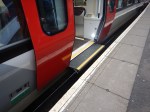

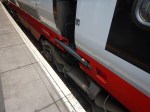
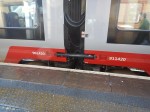
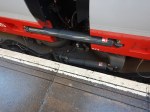





I shall add to this collection of pictures.
If you give me a credit, feel free to use them in anything you write.
An Interloper At West Ealing Station
These pictures show a Chiltern Railway‘s Class 165 train in West Ealing station.



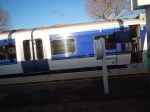
Has the train just been borrowed by Great Western Railway or is there another reason?
It looks like as I passed, that I saw a Parliamentary Train, which uses the Greenford Branch to travel to High Wycombe
Gates, Bezos Bet On Flow Battery Technology, A Potential Rival To Big Bets On Lithium-Ion
The title of this post is the same as that of this article on CNBC.
This is the first paragraph.
The U.S. energy storage market is expected to grow by a factor of 12 in the next five years, from 430MW deployed in 2019 to more than 5GW and a value of more than $5 billion by 2024, says Wood Mackenzie Energy Storage Service.
Those are big numbers and it makes me ask the question of whether Planet Earth has enough lithium.
The title of the article says that Bill Gates and Jeff Bezos are looking at flow battery technology, as a possibly alternative to lithium-ion batteries.
What Is Flow Battery Technology?
This is the first sentence of the Wikipedia entry for flow battery.
A flow battery, or redox flow battery (after reduction–oxidation), is a type of electrochemical cell where chemical energy is provided by two chemical components dissolved in liquids contained within the system and separated by a membrane.
Wikipedia’s explanation is comprehensive.
- There are seven different types.
- There are around twenty different chemistries.
- They have various advantages and disadvantages.
- They seem to be less efficient than lithium-ion batteries.
Applications include; load balancing, uninterruptible power supplies, power conversion, electric vehicles and standalone power supplies.
It looks like they are a lithium-ion replacement.
Conclusion
This technology is one to watch.
With all those types and chemistries someone could strike extremely lucky!
Action This Day!
This was Churchill’s famous phrase and you can read all about it here.
I am getting sick of the indecision of Brexit and I suspect many in this country feel the same.
As I’m retired, it doesn’t make any difference to my business and those that I employ, as there is no business and no employees.
To my mind, Brexit must be sorted by the end of January at the latest, so that we can all move on.
- If we vote in Boris Johnson with a large majority, we might leave, although I suspect there will be challenges in Parliament, the Courts and on the streets.
- If we vote in Jo Swinson with a large majority, she will revoke article 50 and that could be the end of Brexit for at least a few years and hopefully for ever.
- If we vote in Jeremy Corbyn with a large majority, he will dither and prevaricate for a few years years, before we get another close referendum, which gives us more of what we’ve had for the last few years.
As someone, who voted Remain and now quite frankly doesn’t care, I believe the only way to get us out of this mess made by David Cameron, is to hope that Johnson or Swinson get a majority large enough to carry out their stated policies on Brexit.
As for Corbyn, who has a Push-Me-Pull-You policy on Brexit, everybody should make sure, that whoever they vote for, consigns Corbyn, his apparatchiks and their crack-pot policies to the dustbin of history.
Councils Rely On Diesels While Charging Drivers Who Use Them
The title of this post, is the same as that of this article in The Times.
Some points from the article.
- Ninety-two percent of council vehicles are diesel-powered.
- Only three percent are the greenest electric models.
- Sivty-two council fleets are totally diesel.
- Twelve councils are thinking of restricting or charging diesel or petrol vehicles to cut pollution, but all of these councils are reliant on diesel.
It looks like a case of politicians saying “Do as I say, but not as I do!”
Bumpy Ride Over $44m Ferrari’s Missing Gearbox
The title of this post is the same as that of this article in The Times.
Apparently, a guy paid $44 million for a Ferrari without a gearbox.
He must have had more money than sense!
I wonder how much tax, he will pay on that sort of transaction, if we get a Corbynista government?
Highview Power To Build Europe’s Largest Battery Storage System
The title of this post is the same as that as this article on The Chemical Engineer.
This is the first two paragraphs.
HighView Power, the designer and developer of the CRYOBattery, is to build what it claims will be Europe’s largest battery storage system, in the North of England. The project will also be the UK’s first commercial cryogenic energy storage facility at large scale.
The 50 MW/250 MWh clean energy storage facility could help the UK to achieve its goal of decarbonising industry, heat, power, and transport, as CRYOBattery emits zero emissions and could dramatically contribute to emissions savings compared to fossil fuel plants.
I spent long hours in my past modelling chemical plants and processes for ICI and my experience tells me, that this could be the Holy Grail of energy storage.
Consider.
- All of the technology needed is proven and much would have been understood, by Victorian collossi like Brunel, Kelvin and Reynolds.
- There are no expensive rare earths, chemicals or explosive gases.
- The system is scalable.
- There is no combustion and no emissions.
- The system can be built on any suitable site, thus opening up the possibility of distributed energy storage.
- Once the technology is working, this type of system, will be an ideal investment for a Pension Fund or Insurance Company, to get a good long-term return
I can see systems able to store a GWh of electricity being built, that can supply 200 MW of power for five hours.
I also feel non-battery storage like this and mechanical will make chemical batteries redundant for mass energy storage for grid applications.
After all, there’s only so much lithium and other important chemicals and that will be needed for energy storage in transport, like buses, trains and planes.
The Amount Of Energy Storage Needed In The UK
This is also a paragraph from the article.
According to early findings of the Storage and Flexibility Model (SFM) launched by the Energy Systems Catapult (ESC), to achieve an 80% reduction in CO2 emissions by 2050 compared to 1990 levels by 2050 the UK would need nearly 1,400 GWh of electric and thermal storage volume.
1,400 GWh of electricity storage is a very large amount. It would probably need a large proportion of all the lithium in the world, if conventional batteries were used. Highview will need none.
When you consider that the largest energy storage facility in the UK is Electric Mountain, which can only handle 9.1 GWh, building the 1,400 GWh of energy storage will be a massive undertaking.
But building perhaps a hundred or two of larger versions of this type of system and distributing them all over the UK might be a very practical way of providing the energy storage.
Provided the UK economy is good with a healthy City of London, these systems should be easy to fund, as they are the sort of investment, that provides an adequate long-term return, that is ideal to fund pensions and insurance.
Nightjet Plans Mini-Capsules For Private Travellers
The title of this post, is the same as that of this article on Railway Gazette International.
I think they look rather good and they will surely appeal to Japanese tourists.
Opinion: Why Aviation Needs to Go Green, and How
The title of this post is the same as that of this article on Aeronautics Online.
Read the article and especially what it says about the Wright Electric Jet.
This is a paragraph from Wikipedia, talking about co-operation between Wright Electric and easyJet.
In September 2017, UK budget carrier EasyJet announced it was developing an electric 180-seater for 2027 with Wright Electric. Wright Electric built a two-seat proof-of-concept with 272kg (600lb) of batteries, and believes that batteries can be scaled up with substantially lighter new battery chemistries: a 291 nautical mile (540km) range would suffice for 20% of Easyjet passengers. Wright Electric plans to develop a 10-seater and eventually an at least 120 passengers single-aisle, short-haul airliner and targets 50% lower noise and 10% lower costs.
I would assume, that the plane also emits a lot less CO2 and other pollutants.
I would assume that the plane will be built by using the best of these technologies.
- Aerodynamics
- Lightweight structures
- Electric Motors
- Batteries
- Electronics and avionics.
But I also believe that designing an electric aircraft could be a very different process to a conventional one.
There Is No Fuel
Consider.
- Fuel is a high proportion of the weight of an airliner on take-off.
- There are a lot of complicated systems to pump fuel to the engines and also from tank to tank to trim or balance the aircraft
- When a conventional airliner takes off, it is much heavier than when it lands, as fuel has been burned.
- Fuel is dangerous in a heavy landing or crash.
On the other hand, I’m fairly certain, that empty batteries and full ones weigh the same.
This would mean, that the plane aerodynamics and structure, would be designed to be optimal in the various phases of flight.
- Taxiing out to the runway.
- Taking off.
- The climb to the cruising altitude.
- The cruise
- The descent to the destination airport.
- The landing
- Taxiing in to the terminal or stand.
In the climb, cruise and descent phases power would be set and the trim adjusted, by the autopilot to attain the right speed and rate of climb or descent.
Aerodynamics
As the weight of the aircraft would be the same in all three phases and would need more or less the same lift, with clever aerodynamics, I think we will see a very simple wing. In fact, probably more like that of a sailplane than an airliner.
Wikipedia says this about the design.
The aircraft is to run on batteries and handle flights of under 300 miles. It will feature high aspect-ratio wings for energy efficient flight, distributed electric propulsion and swappable battery packs with advanced cell chemistry.
Note that sailplanes have high aspect ratio wings.
Compared to say a small jet airliner like an Airbus A318, I suspect that the wings will be longer, but possibly simpler.
The Wright Electric Jet will probably have various aerodynamic aids, like flaps and winglets. In fact the picture on Wikipedia shows the latter, which reduce drag.
A Simple Flight Profile
The fastest way to fly between A and B is probably to take off and climb as fast as possible to the optimum cruising altitude, where an optimum cruise is maintained, until the time comes to descend into the destination airport. Much of the descent would be straight in to the runway.
I have flown in an easyJet Airbus 320 from Schipol to Southend in much this manner and the plane arrived ahead of schedule.
I suspect that easyJet like to fly like this, as it saves fuel, but Air Traffic Control probably doesn’t allow it that often.
But simple efficient profiles like this would be ideal for electric aircraft.
If as I suspect their aerodynamics would allow a better glide ratio than a jet powered airliner. So to get a longer range, an electric aircraft might do a long approach.
A Low Noise Aircraft
As I said earlier, Wright are talking about fifty percent less noise.
This could be a game-changer for a smaller airport like Luton or Southend, where the approach can be over residential areas.
Especially for Southend, where planes from the East could do a long descent over the sea and come straight in on Runway 23.
Could Southend become London’s short-haul airport for electric aircraft?
- easyJet and Ryanair are already there.
- There’s plenty of wind power in the area
- It has a good rail connection to London and could be served by Crossrail.
Essex is a county that likes to be different.
Airbus
The original article also mentions Airbus.
Airbus has the skills to design the required light and strong airframe, the aerodynamic knowledge.and a large support network.
They also have a lot to lose, if someone else takes away, the smaller part of their masrket.
Ignore Airbus at your peril.
Conclusion
The more I think about it, the more that I think a 120 passenger electric airliner with a range of 540 km, could be a very handy plane.
 The Anonymous Widower