Vivarail Spearheads Development Of Green Fuel Technologies
The title of this post is the same as that of this press release from Vivarail.
The press release describes and shows visuals of their new hydrogen-powered Class 230 train.
These are a few points from the press release.
A Four-Car Train
This is said about the basic philosophy of the design.
Vivarail’s on-going success in launching new technologies to the UK market means it is the only train manufacturer with a fully approved base train to work from. The hydrogen train will follow the design of the Transport for Wales fleet with two driving motor cars powered by Hoppecke batteries, the only difference being that instead of a diesel genset beneath the intermediate car the hydrogen train will have two carriages housing the fuel cells and hydrogen tanks.
Building on an approved base train must be the way to go.
Underfloor Power
This is said about the position of the hydrogen tanks and the fuel cells.
Unlike other trains the Vivarail Class 230s will store all the equipment beneath the floor making a much more stream-lined and efficient vehicle able to carry more passengers and deliver faster journey times.
I would suspect that Vivarail have designed tanks and fuel cells, that take up less space.
Modular Design
The design appears to be modular from this extract.
Vivarail’s standard modular power pack designs allow easy transition from one power source to another – in this case simply adapting a genset to a fuel cell. Both sit in the same space envelope beneath the train and indeed a train built as a diesel unit could be converted to run with hydrogen if required.
Would you design it, any other way?
Range Of 650 Miles
This is a thousand kilometres and seems to be the design range of most hydrogen trains.
Class-Leading Acceleration
It is a good idea to look at the ratio of weight to length of a basic trains, that will be converted to hydrogen power.
- Alstom – The Class 321 train has a figure of 1.72 tonnes/metre.
- Vivarail – The D78 Stock train has a figure of s 1.32 tonnes/metre.
The difference is probably because the D78 Stock is built from aluminium.
Keeping the weight down is a good way to increase the rate of acceleration.
Regenerative Braking
Why would you design a train without it?
Conclusion
The only supplier mentioned in the press release is Hoppecke, who will be making the batteries.
It looks to me that Vivarail have looked at every component for a hydrogen train and chosen the best ones with respect to performance, size and weight.
I shall be looking forward to taking a ride!
Spark Energy Supply Switch To Ovo Energy Going ‘Smoothly’
The title of this post is the same as that of this article on the BBC.
If the article is true, which as it is on the BBC, I feel there is a high chance that it is, I think that this means, that OFGEM has now got a backstop for those customers, who choose an energy company that fails.
It probably means that there is less risk in changing to an energy company, that you don’t know, but was recommended by a trusted friend or a reputable consumer affairs program or magazine.
As to OVO, I have used them for several years now, as have several of my friends.
Pan Up And Pan Down At Drayton Park Station
The years and decades go by and the new Class 717 trains, just like their predecessors; the Class 313 trains, continue to change between 25 KVAC overhead and 750 VDC third rail electrification at Drayton Park station.

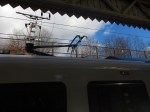
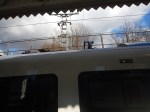


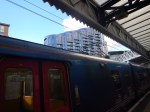

There appears to have been little noticeable development in the forty years since the Class 313 reains were introduced. But the operation of the Class 717 trains appears smoother and quieter.
I would have thought, that for safety reasons, the new trains would have used battery power between Drayton Park and Moorgate stations.
After all it’s only two and a half miles, that is run using third-rail electrification.
I’d be very interested to see how much power is used by the new Class 717 trains South of Drayton Park.
In Weight And Configuration Of A Class 717 Train, I showed that the kinetic energy of a jam-packed Class 717 train at 85 mph is 56.15 kWh.
- I doubt that this sort of speed is achieved in the tunnels.
- At 60 mph, the energy would be 28 kWh
- At 40 mph, the energy would be just 12 kWh.
Obviously, hotel power for air-conditioning and lights will be needed for the train, but even at 5 kWh per car per mile, that would only be 150 kWh.
To carry 200 kWh of batteries on a six-car train is a very practical proposition.
- Vivarail have done it in a three-car train.
- There could be a short length of third-rail electrification to top up the batteries at Moorgate station, if required.
- Battery power could be used in depots to move trains, which would mean depots could have less electrification.
- Trains could be moved to the next station, if the electrification should fail.
The route between Moorgate and Drayton Park stations, is probably one of the best and easiest in the UK for battery operation.
Wi-Fi And Power Sockets On A Class 717 Train
In A First Ride In A Class 717 Train, I didn’t take any pictures of the power sockets, as I didn’t see them.
This picture from a second trip, rectified the error.

There is one 13 amp socket under a pair of seats and you will need a plug.
It is my belief that a USB socket is better, as this armrest installation on a Class 230 train shows.
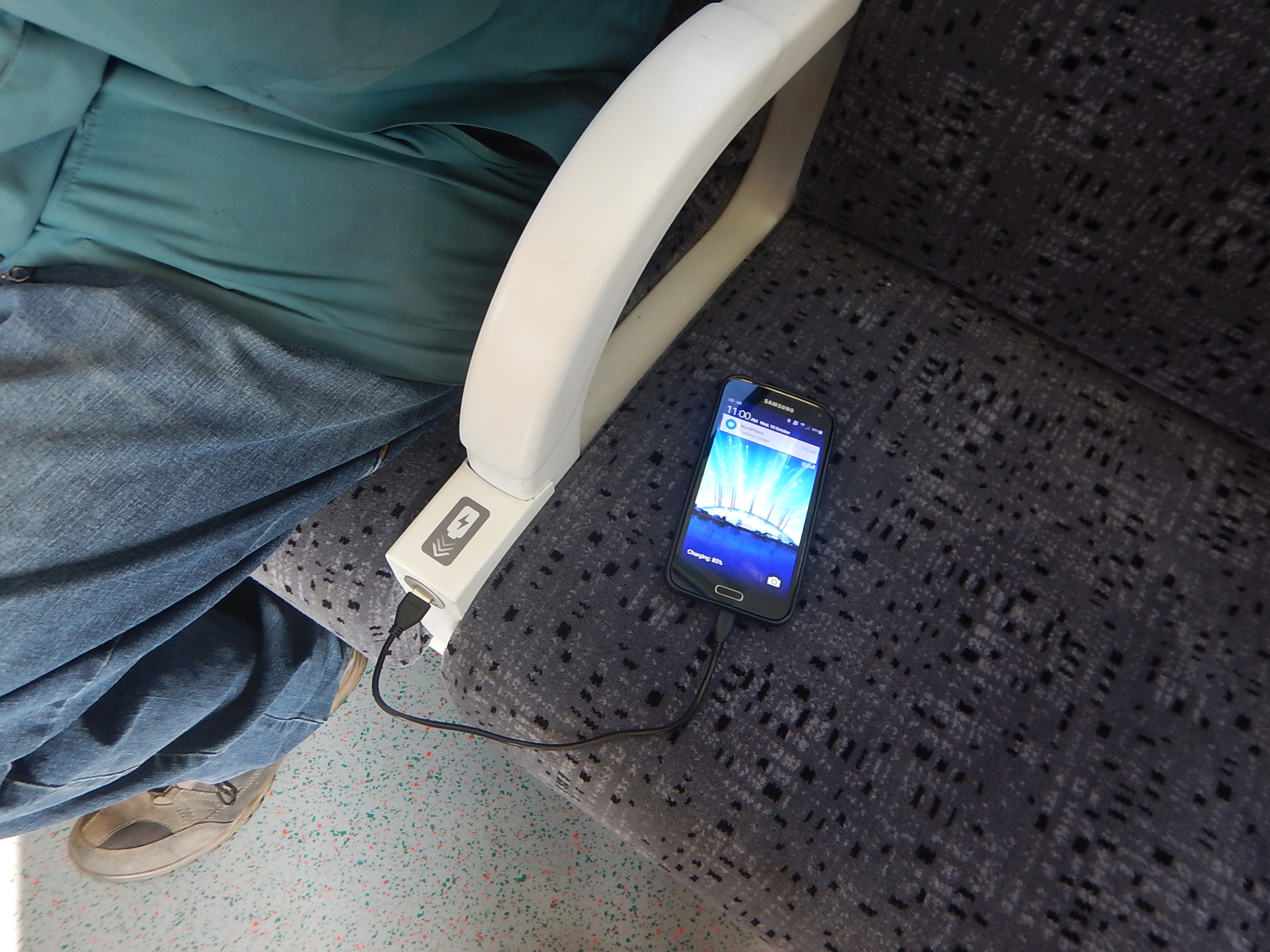
It is certainly a better place, as the wires can be short and can be kept out of the way.
The wi-fi performed well, but Great Northern seemed to want me to register. I never do, as it just gives them an excuse to send you junk mail.
Conclusion
The wi-fi installation can be improved.
It has to, as according to this article on Rail Magazine, Class 710 trains have USB sockets.
My ideal train would have.
- Free wi-fi with no registration.
- USB sockets in the armrests.
- 4G booster, so if the train has a signal, you do.
The current systems can be greatly improved.
Weight And Configuration Of A Class 717 Train
I walked the length of a Class 717 train and noted the various plates.
The formation was as follows.
- DMOSB – Weight – 38.8 tonnes – Seats – 52
- TOS – Weight – 28.8 tonnes – Seats – 68
- TOS(L)W – Weight – 28.7 tonnes – Seats – 61
- MOS – Weight – 35.5 tonnes – Seats – 68
- PTOSB – Weight – 33.9 tonnes – Seats – 61
- DMOSB – Weight – 38.8 tonnes – Seats – 52
Totalling these up and adding other details gives.
- Length – 121.674 metres
- Width 2.80 metres
- Speed – 85 mph
- Seats – 362
- Weight – 204.5 tonnes
This article on Rail Magazine has this paragraph.
Each ‘717’ has capacity for 943 passengers, for which there are 362 seats (including 64 priority seats and 15 tip-ups).
Assuming that each passenger weight 80 Kg with bags and buggies, this gives the following.
- A passenger weight of 75.4 tonnes.
- A train weight of 280 tonnes.
- At a speed of 85 mph the kinetic energy of the train will be 56.15 kWh
This figure would probably mean that batteries could be fitted to these trains to handle regenerative braking.
Germany Agrees To End Reliance On Coal Stations By 2038
The title of this post, is the same as this article on the Guardian.
This is the first two paragraphs.
Germany has agreed to end its reliance on polluting coal power stations by 2038, in a long-awaited decision that will have major ramifications for Europe’s attempts to meet its Paris climate change targets.
The country is the last major bastion of coal-burning in north-western Europe and the dirtiest of fossil fuels still provides nearly 40% of Germany’s power, compared with 5% in the UK, which plans to phase the fuel out entirely by 2025.
Travel across Germany on a train and you see the high chimneys of coal-fired power stations everywhere.
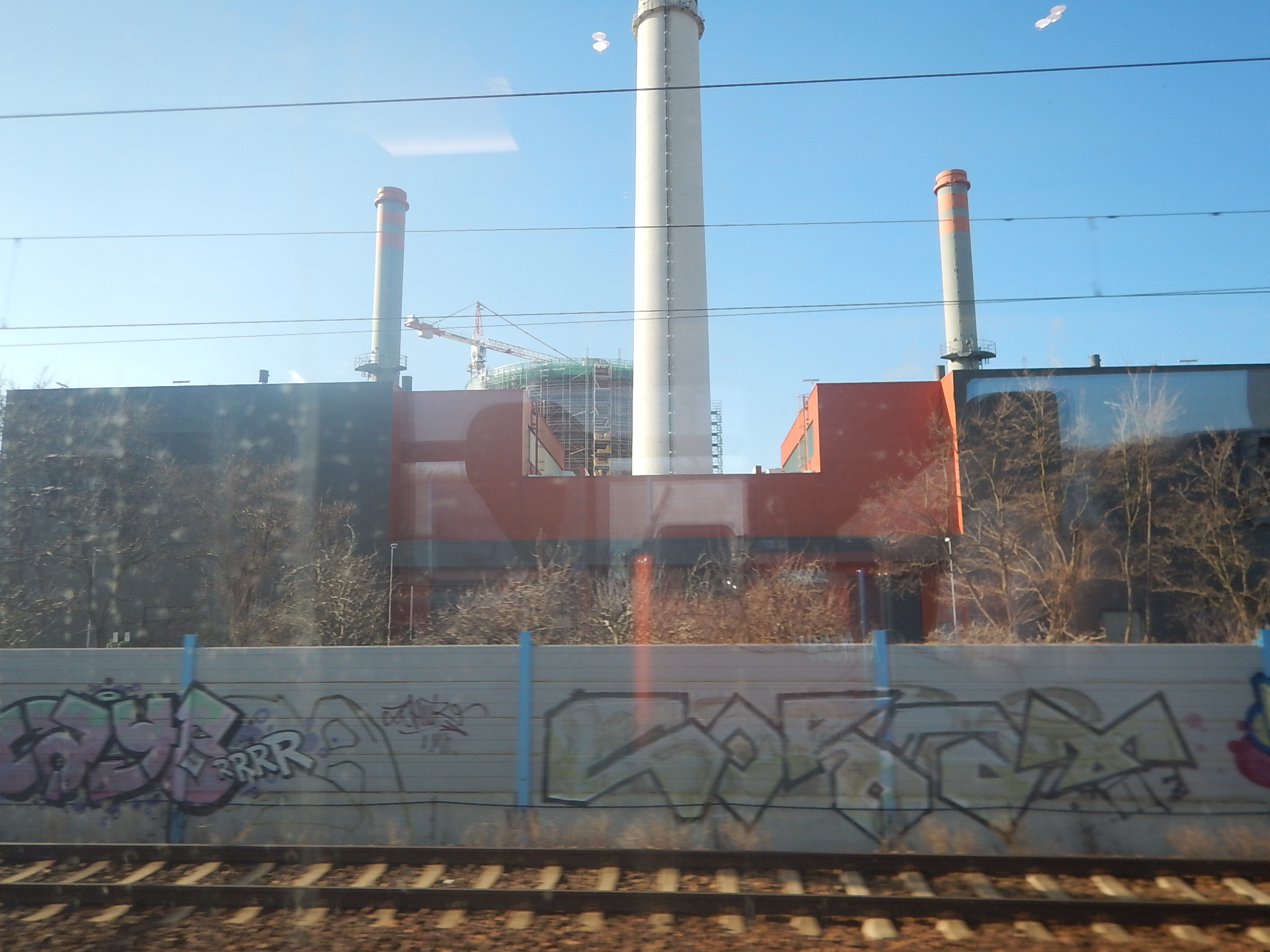
When we can get rid of coal by 2025 and France by 2022, you do wonder why Germany is taking so long.
The Guardian article provides a partial answer in that both the power company; RWE and the trade unions are very much for the continued use of coal.
The Germans are phasing out nuclear power, in response to the Green Party. Surely, unregulated coal-burning is far worse than well-regulated nuclear power?
But then the prevailing winds mean that most of the carbon-dioxide and pollution goes to Poland, who are big coal-burners themselves.
I wonder what would have happened to coal-fired power stations in the UK, if Margaret Thatcher hadn’t taken on the miners and started the run down of the use of coal!
The can would probably have been kicked down the road and we’d probably have coal power stations at German levels.
A First Ride In A Class 717 Train
I took my first ride in a Class 717 train today, between Moorgate and Finsbury Park stations.

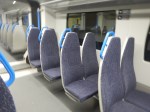
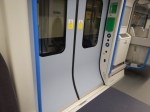

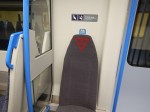
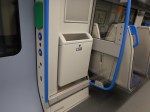


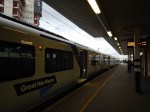
The interior of the train is very like the Class 700 train.
- Seating is 2 + 2, as opposed to 2 + 3 in the current Class 313 trains.
- A walkthrough interior with a wide aisle
- There is wi-fi and power sockets.
- The colour scheme is rather grey.
They are a functional train, rather than a design classic.
I think that some will not like the seats.
- One Class 717 train has 362 seats, whereas two current Class 313 trains will have 462 seats.
- The seats are hard and not particularly comfortable.
- There are no seat-back tables or cup holders.
On the other hand, there is a lot of standing space, so those with sensitive bottoms can easily stand.
Competition From Greater Anglia And The London Overground
Some of Great Northern’s passengers have a choice of route to the centre of London.
Greater Anglia also has a service to the other side of Hertford and this year, the company will be introducing new Class 720 trains.
This article on Railway Gazette is entitled No ‘Ironing Board’ Seats, Greater Anglia Promises.
If they keep their promises, will those that can, change their route to London?
London Overground is also running new Class 710 trains, through Enfield. These trains use longitudinal seating, so won’t be to everyone’s taste, but it will be interesting to see if they increase ridership when they replace the elderly Class 315 trains.
The Class 710 trains will be Transport for London’s fourth train with longitudinal seating, following the S Stock for the Sub-Surface Lines, the Class 345 train for Crossrail and the Class 378 trains for the Overground, so hopefully the new trains will be well-designed.
I travel regularly in S Stock, Class 345 and Class 378 trains and find them preferable to both the Class 700 and Class 717 trains.
Could it be because?
- You can stretch your legs into the aisle.
- You have arm-rests.
- The seat backs have a better profile.
- TfL use jollier colours.
- TfL always uses quality seat covers and has done for decades. I’ve never seen plastic seats on a tube train or bus in London.,
- Passengers opposite are some distance away, so you have your own space.
- London’s deep Underground lines have persuaded passengers that longitudinal seating is OK
To try to solve the problem, I went for a ride in a Class 378 train between Harringay Green Lanes and Barking stations. Passengers were observed to do the following, when sitting in the longitudinal seats..
- Put their bags on the floor between their legs or on their laps.
- Slump back in the seats , often with their head resting on the window or the frame of the train.
- Put their legs out in front, although several had their legs crossed.
All looked to be comfortable.
One thing that is missing is a USB charging point in the armrest.
Shown is the seat on a Class 230 train.
Uncomfortable seats are to my mind, a good way to upset customers.
These are longitudinal seats on a Class 378 train on the Overground.
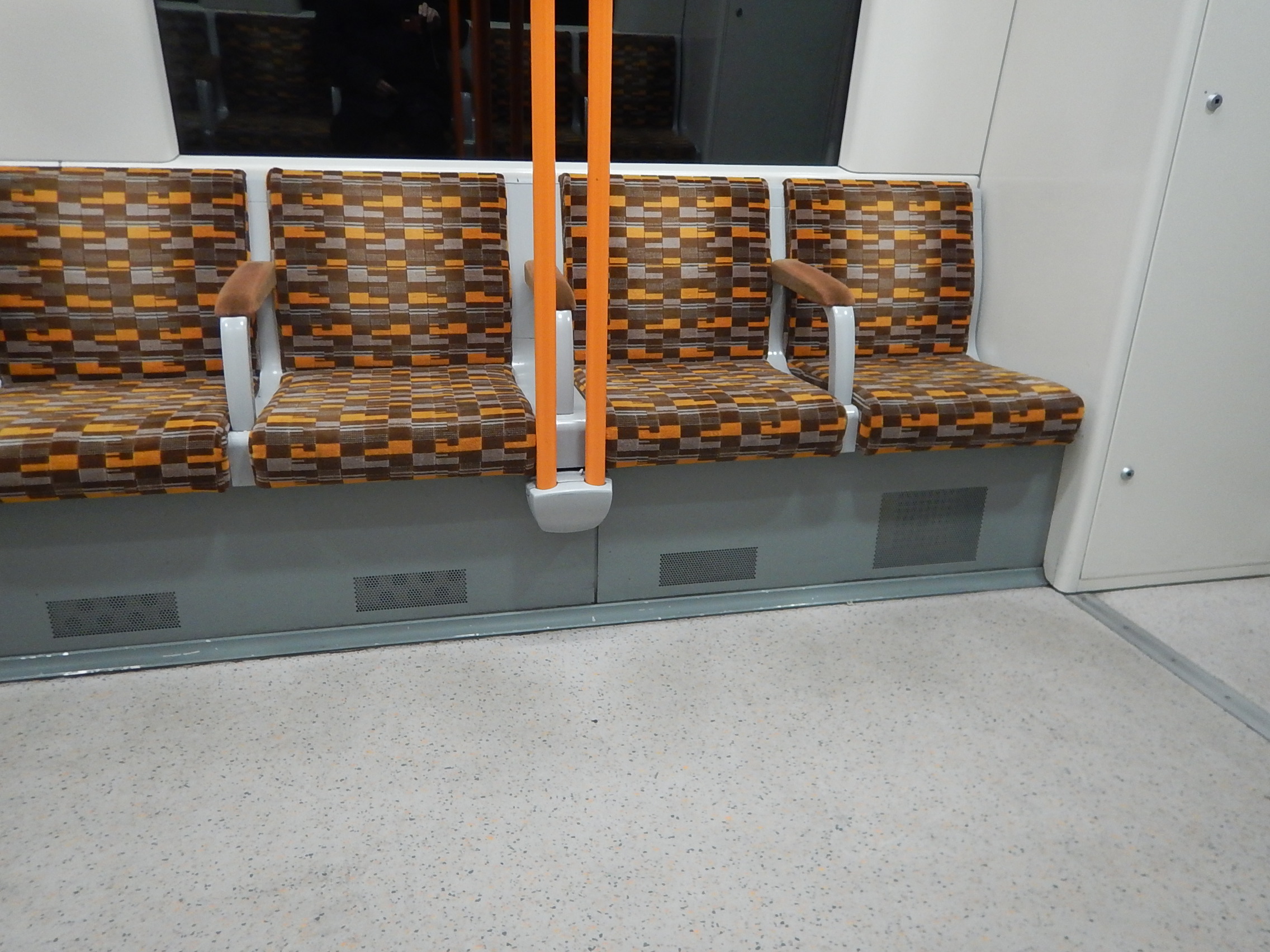
The Class 230 train charging points could surely be added.
How would London’s bottoms respond to these seats on a similar route in Valencia?

They make the seats on Class 700 and 717 trains appear soft!
Conclusion
I used to commute from Kings Cross to Welwyn Garden City. I wouldn’t want to do it every day in these trains.
The Shape Of Things To Come On The Gospel Oark To Barking Line
Since modernisation in 2010, the service on the Gospel Oak To Barking Line has been run using six two-car diesel Class 172 trains.
Today was the first weekday, when one of the diesel trains had been replaced by a four-car electric Class 378 train.
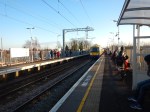
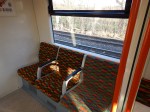
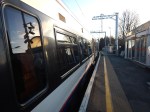
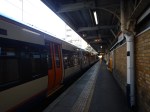
I was able to ride on a Class 378 train between Harringay Green Lanes and Gospel Oak stations. I then doubled back and travelled all the way East to Barking station.
These are a few observations.
Electric Trains
Riding the electric Class 378 trains is a very different experience to riding the diesel Class 172 trains.
- There is a lot less noise and vibration.
- You sit longitudinally in London Undergound fashion, as opposed to transversely.
- There was more capacity in the four cars of the electric train, as opposed to the two-car diesel trains.
I also got the impression that the Class 378 trains accelerated faster and cruised at a higher speed, than the Class 172 trains. I will check this out.
Train Capacity
I said in the previous section, that physical capacity is doubled from two to four cars.
- I actually went from Harringay Green Lanes to Gospel Oak twice in the morning Peak; once in a Class 172 and once in a Class 378.
- The former was jam-packed and the second was very comfortable, with only a few stansdees.
- The Class 172 train has 120 seats in a 47 metre train, which works out as 2.6 seats per metre.
- The Class 378 train has 136 seats in a 80 metre train, which works out at 1.7 seats per metre.
The lower seat density and the wide central isle, probably explains, why the electric train was more comfortable.
Note that in a few months, the Class 378 trains will be replaced with Class 710 trains, which will likely have a similar passenger capacity to the Class 378 trains.
So the capacity and passenger ambience of the Class 378 trains can probably be read across to the internally-similar Class 710 trains.
Platform Length Issues
I did my usual trick of riding in the last car and looking at where the end of the train came on the platform.
The line has been built, so that all platforms fit the standard British Rail four-car length of eighty metres, which applies to both four-car Class 378 and Class 710 trains.
The Possibilities Of Five-Car Trains
London Overground run five-car trains through four-car stations at Shadwell, Wapping, Rotherhithe and Canada Water on the East London Line, by allowing the last car to overhang the platform.
They get away with it without any trouble because.
- The Class 378 trains have selective door opening and a walk-through interior, with large lobbies.
- The announcements on the train are high-quality and advise passengers in the last car to move forward at short platforms.
- East Enders quickly learn how to get in and out of the train with little fuss
So could five-car trains be run the Gospel Oak to Barking Line?
- Barking station has a long platform.
- Some stations like Woodgrange Park, Wanstead Park, Leytonstone High Road, Leyton Midland Road and Upper Holloway originally had longer platforms and these could probably be extended.
- Other stations like Gospel Oak, South Tottenham and Blackhorse Road are probably at maximum length and would use selective door opening.
I suspect that if the demand needed the extra capacity, that the new trains could be lengthened from four to five cars, which would give a twenty-five percent increase in capacity.
Typical Passengers
I have a feeling that the Gospel Oak to Barking Line doesn’t have well-defined typical passengers, like a lot of routes do.
Using the train in the Peak, you notice that many passengers just hopped a couple of stops on the line.
One guy was going from Harringay Green Lanes to Shoreditch High Street, with changes at Gospel Oak and Canonbury.
This journey is probably a reflection on the badly-designed bus routes in the area it serves.
Gospel Oak To Barking Line Connectivity
The line is well-connected to the Underground, especially if you are up for a ten-minute walk.
- District and Hammersmith & City Lines at Barking
- Crossrail at Wanstead Park
- Victoria Line at Blackhorse Road
- Piccadilly Line at Harringay Green Lanes
- Northern Line at Upper Holloway
- North London Line at Gospel Oak
There are also good connections to North-South buses at several stations.
Will Electric Trains Attract More Passengers?
I suspect London Overground will be looking at the passenger statistics on the route with considerable interest, during the period, when some trains are two-car diesels and the others are four-car electrics.
This may well give the answer to my question.
I have a feeling that the reduced crowding on the route will mean that more passengers are attracted.
The new Class 710 trains will have wi-fi and USB charging points, so I wonder how many passengers this will attract.
But as I said earlier, a twenty-five percent increase in capacity may be possible by adding another car to the trains.
Conclusion
I have a very strong feeling that the upgrade to the Gospel Oak to Barking Line and the new electric trains, will change North-East London for the better.
As the London Overground lines to Cheshunt, Chingford and Enfield Town are also getting new trains, I would suspect that the effects will be bigger and more widespread than anybody has predicted.
- Trains will get crowded.
- New stations will be added to the network.
- Existing stations will be upgraded with step-free access
We could even see a serious outbreak of London Overground Syndrome.
Future Additions
These are projects that will or could happen along the Gospel Oak to Barking Line.
- Extension to the new Barking Riverside station.
- Five trains per hour in the Peak
- A new station at Cann Hall.
- A direct link between Walthamstow Queens Road and Walthamsow Central stations, when the latter is upgraded.
- South Tottenham station will be on Crossrail 2 and could be on a future Enfield Town-Stratford service.
- Harringay Green Lanes station could be connected to the Piccadilly Line underneath.
- Reopening of Junction Road station with a link to the Northern Line.
At present only the first two will happen.
 The Anonymous Widower