Are Greater Anglia Buying So Many Class 755 Trains, So They Can Run A Better Service During Constant Works On The Great Eastern?
Yet again, they were rebuilding the Great Eastern Main Line, so I didn’t get to football at Ipswich yesterday.
It’s not that I mind the buses, but it means two things.
- I have to leave so early, that I can’t do my weekly shop before I go.
- I also get back so late that I will miss Strictly on the television.
There is also the problem, that Ipswich is one of the worst places to find a gluten-free meal, unless you go to Pizza Express.
I often have my lunch before I travel or take it on the train from Leon or M & S.
For some time now, I’ve suspected that Greater Anglia have ordered a lot more Class 755 trains, than they need, based on a train-for-train replacement basis
It now becomes obvious why!
At weekends, they will link four-car trains together and run four trains per hour on the following routes.
- Norwich to Cambridge
- Ipswich to Cambridge
One train in four will continue to and from London after Cambridge.
On the other hand, it could be a plot by Norwich fans in Greater Anglia’s headquarters in Norwich to annoy Ipswich fans!
How To Build A Station In Nine Months
This document on the Network Rail web site is entitled Highlights Of The Great North Rail Project.
There is this section which is entitled We Build A Railway Station In Just Nine Months.
It’s about the building of Maghull North station.
This is said.
Network Rail undertook the scheme on behalf of Merseytravel, appointing contractor Buckingham Group.
How did we deliver the station so quickly and carry out most of the works while keeping the railway line open? A head start, line access and a tight summer deadline.
Robert Grey, a project manager of infrastructure projects at Network Rail, said: “Nine months is quite short for a station… The restricting factor is the access. We had quite a bit of flexibility there. We had access for long weekends and a 12-day possession of the line after Christmas… Without those we’d still be there now.”
I also put it down to the Liverpudlian attitude, which in my experience seems to accept disruption to their lives without complaining too much and then joke about it, when it’s all over.
I was in Liverpool during the bus strike of 1968. where Liverpudlians just walked.
Some of this attitude would be of great help in sorting the problem of the Steventon Bridge in Oxfordshire. I wrote about this bridge at the end of The Stone Arch Railway Bridges Of Scotland.
Crossrail-Spoil Wetland Provides Haven For Wildlife
The title of this post is the same as that of this article on the BBC.
This is the first two paragraphs.
A £70m project to create a wetland twice the size of the City of London is nearly finished with wildlife thriving in new lagoons, marsh and fields.
New wetland on Wallasea Island, off the Essex coast, was created from tunnel spoil from London’s Crossrail project.
Wallasea Island shows that large construction projects don’t have to be all about steel and concrete.
Where Will Greater Anglia Deploy The First Class 745 Trains?
This article on Railway Gazette is entitled ‘Gorgeous Beast’ Will Change Perception Of Rail Travel.
This is unusual language, when you’re talking about modern diesel and electric trains, especially when it comes from the CEO of a financial company investing in trains, as a safe long-term investment for money like pension funds.
But if the Class 755 trains cause Mark Swindell to use such language, they must have something about them.
Perhaps, it’s the fact that they follow the layout of the legendary and much-loved by some, Class 442 train, which also had a power-car in the middle. It is informative to compare the Class 442 train with a four-car Class 755/4 train.
- The 442’s power-car is electric, whilst the 755/4’s is diesel/electric and can be diesel/electric/battery.
- The 442 has seats for 346 in two classes, whilst the 755/4 has 229 in a single class.
- The 442 has 1200 kW of power, whilst the 755/4 has 2600 kW on electric power and 1920 kW on diesel-electric power
- Both are 100 mph trains, although the 442 holds the World Record for a third-rail train at 108 mph.
I am drawn to the following conclusions about the Class 755 train.
Passenger Comfort
Passengers will have plenty of space, in addition to the customer comforts, which appear to be of a high standard.
Some passengers might miss First Class, but will the extra space compensate.
Power
The power figures quoted in the Railway Gazette show the following.
- In electric mode, the train will have more than double of the power of the 442.
- In diesel-electric mode, the train has sixty percent more power, than the 442.
This will mean that the train should have superb acceleration.
Top Speed
With all this power, the planned operating speed of 100 mph will be determined more by the track, signalling and other trains, rather than any limitations of the trains.
There are three improvements in Network Rail’s Improvement Pipeline, that will allow faster running by Class 755 trains.
- Trowse Swingbridge
- Haughley Junction doubling
- Ely Area service improvements
The improvement will help these services by Class 755 trains.
- Norwich to Stansted Airport via Ely, Cambridge North and Cambridge.
- Peterborough to Colchester via Ely, Bury St. Edmunds and Ipswich
- Cambridge to Ipswich
I could also see the operating speed on the Breckland Line raised.
Routes
How will the routes be affected by trains with a better performance?
Norwich To Stansted
Currently, the two legs take.
- Norwich to Cambridge – 1:24
- Cambridge to Stansted – 0:39
Which adds up to a convenient 2:03.
With the faster trains and eight stops, it looks like this route could be done several minutes under two hours, with a round trip of four hours, which would need four trains for a one train per hour (tph)service.
Ipswich to Cambridge
Currently, this route takes 1:16 with eight stops.
This is not very convenient and the time savings needed to get the route under an hour will not be easy.
Colchester to Peterborough
Currently, the two legs take.
- Colchester to Ipswich – 0:19
- Ipswich to Peterborough – 1.41
Which adds up to a convenient 2:00.
With the faster trains, it looks like this route could be done several minutes under two hours, with a round trip of four hours, which would need four trains for a one tph service.
Ipswich to Lowestoft
Currently, this route takes 1:26 with nine stops.
With the faster trains, it looks like this route could be done several minutes under one-and-a-half hours, with a round trip of three hours, which would need three trains for a one tph service.
It also looks like up to three trains per day will run from London to Lowestoft.
So Which Route Will Get The New Trains First?
Greater Anglia will obviously deploy them, where there is the greatest need for extra capacity or there is the greatest return to be made!
I think, we’ll see them on the Lowestoft route or between Cambride and Norwich first.
They’ll certainly be worth waiting for, if Mark Swindell is right.
Network Rail Is Open For Business
Network Rail has published this document, which is entitled Open For Business.
The document is subtitled.
Opportunities for third parties to fund, finance or deliver improvements on Britain’s railways September 2018.
The improvements are listed by area.
Anglia – 5 Projects
- Trowse Swingbridge
- Loop north of Witham and associated works
- Haughley Junction doubling
- Ely Area service improvements
- Road vehicle incursion mitigation (various sites)
London And North Eastern and East Midlands – 8 Projects
- Leeds Station
- Ashington Blyth & Tyne
- East Coast Main Line (ECML) South Digital Railway
- West Yorkshire Combined Authority (WYCA) new stations
- Meadowhall Station
- Pontefract Monkhill Station
- Signalling
- Level Crossing Lighting
London North Western – 9 Projects
- Cumbrian Coast Line Upgrade
- Birmingham Airport Connectivity
- University Station, Birmingham
- Watford Junction
- Carlisle Station Masterplan
- Snow Hill Station
- Hest Bank Coastal Defence (CGJ7 W21470) in Lancashire
- Leven Viaduct Major Structure (CBC1 34) in Cumbria.
- CP6 Mining remediation programme
Scotland – 2 Projects
- Perth Station Refurbishment
- CP6 Building Fabric Renewal Programme
South East – 5 Projects
- Stations Capacity Programme (Lewisham, Peckham Rye and Denmark Hill)
- Victoria Station redevelopment
- Thanet Parkway Station
- Marshlink Enhancement
- Cannon St river bridge repair and refurbishment
Wales – 8 Projects
- Cardiff Central Station
- Footbridge (various locations)
- Sea Defence – Sudbrook
- River bank protection
- Ebbw Junction MDU
- Port Talbot MDU
- Shrewsbury MDU
- Cardiff Canton LMD
This totals up to 37 projects.
Brand New Vivarail Train Arrives At Bletchley
The title of this post is the same as that of this article on Rail Advent.
The first Class 230 train has now been delivered to its new home at Bletchley depot for service on the Marston Vale Line.
This unlikely project finally seems to be closing in on a successful conclusion.
But then never underestimate the power of engineering!
The Future Of Great Western Railway’s Class 165 Trains
My excursion to Greenford was to get a detailed look at the Class 165 train that works the Greenford Branch.
I took these pictures.
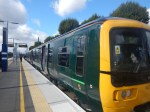
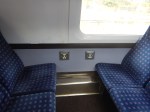
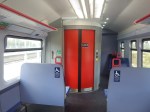
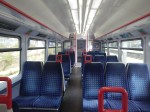
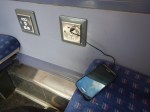
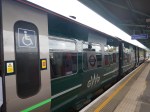
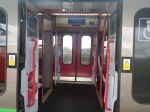
Note.
- The trains are internally in reasonable condition.
- They have a Universal Access Toilet.
- This particular train had a large number of well-placed point points and USB sockets.
The interior would not need much work to bring it up to a very good standard.
Moving To Bristol
The majority of the trains are moving to the Bristol area to provide local services including some longer distance ones to Cardiff, Exeter and Gloucester.
Conversion To Class 165 HyDrive Trains
If the initial conversion of a Chiltern Class 165 train to a hybrid train, that I wrote about in Class 165 Trains To Go Hybrid, is a successful conversion, I think there could be several reasons to look at converting Great Western Railways trains.
- Improved performance.
- Less noise and pollution.
- Lower operating costs.
- The marketing value of a hybrid train
The financial details will decide whether the conversion is worthwhile.
An Illustration Of Why The Greenford Branch Needs Four Trains Per Hour
I wanted to ride the Greenford Branch to photograph a Class 165 train in the livery of Great Western Railway.
So I took one of TfL Rail’s Class 345 trains to West Ealing station.
By the time, that I’d climbed over the bridge and walked to Platform 5 to catch the Class 165 train to Greenford, the train had just left.
So I then spent a miserably cold thirty minutes in a fierce wind on a station without a shelter, whilst I waited for the next train.


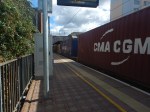
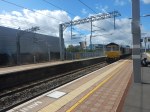

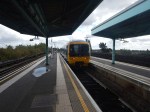
In that time, when I took these pictures, two passenger trains in each direction stopped in the station.
Crossrail
When Crossrail finally opens, West Ealing station is going to get ten trains per hour (tph) in both directions, which will terminate in the West at Heathrow Terminal 4, Heathrow Terminal 5, Maidenhead and Reading.
Passengers interchanging with the Greenford Branch will enjoy the thirty minute wait.
Airport Workers
I have been told several times by train staff and airport workers that getting to Heathrow Airport somtimes needs a car, as the buses are hard to find.
Nothing has been said about Crossrail running through the night, but as Thameslink runs to Gatwick, I wouls suspect this will happen.
And if Crossrail runs through the night, surely the humble Greenford Branch should do the same.
Conclusion
Plans should be developed to get the Greenford Branch running at four tph, throughout the day and perhaps two tph, when Crossrail is running through the night.
Could Class 165 HyDrive Trains Be The Solution To The Greenford Branch?
I ask this question, as I think the Greenford Branch should be developed and run at a frequency of four trains per hour (tph).
I give my reasons in An Illustration Of Why The Greenford Branch Needs Four Trains Per Hour.
The Class 165 HyDrive Train
I described the proposed Class 165 HyDrive trains in Class 165 Trains To Go Hybrid.
These are given as the advantages of these and other hybrid trains.
- Improved acceleration.
- Smooth and powerful regenerative braking.
- Less gaseous and noise emissions.
A two-car Class 165 train can already run on the branch, so I’m pretty sure, that to run on the route,, a Class 165 HyDrive train would require no new major infrastructure, like lengthened platforms or electrification.
The Track Layout Of The Greenford Branch
The Greenford Branch is double-track.
This map from carto.metro.free.fr shows the track layout at Greenford station.
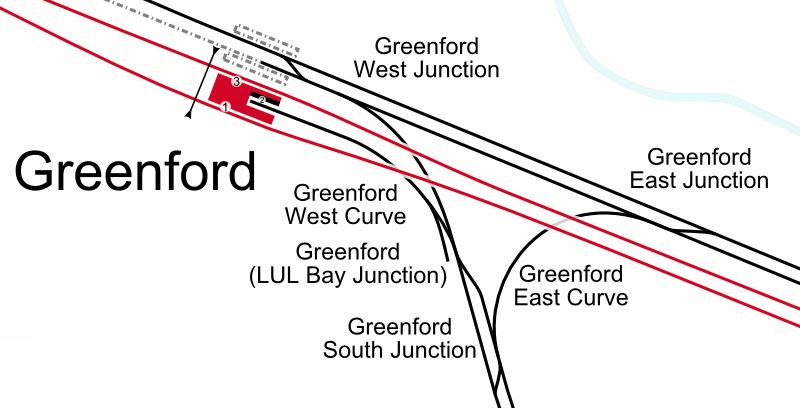
Note that both tracks of the branch, are connected to the following.
- The bay platform in Greenford station, where the service on the branch terninates.
- Both tracks of the Acton-Northolt Line going West using Greenford West Junction.
- Both tracks of the Acton-Northolt Line going East using Greenford East Junction.
It is a well-designed junction, where all required movements seem possible.
This map from carto.metro.free.fr shows the track layout at West Ealing station.
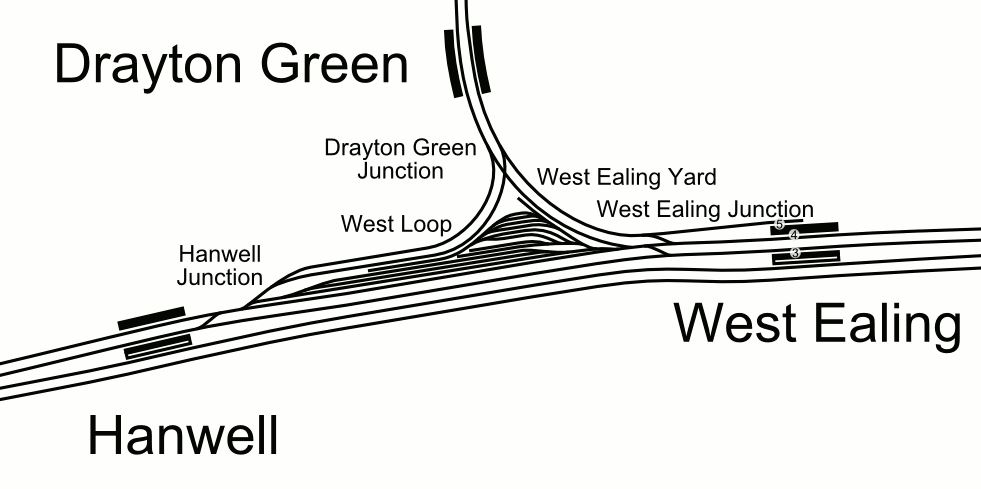
Unlike at Greenford station, it appears that, there is no connection from the bay platform at West Ealing station to the left track towards Greenford station.
This might make it difficult to run the more frequent service of four tph, that this line needs.
So there might be a need for an extra crossover or minor track updates.
The Current Passenger Service On The Greenford Branch
The current service is two tph, which is based on a single train, shuttling backwards and forwards.
- West Ealing to Greenford – 12 minutes
- Turnround at Greenford – 3 minutes
- Greenford to West Ealing – 11 minutes
- Turnround at West Ealing – 4 minutes
Obviously, the train can only do two round trips in an hour.
Service Improvements With The Class 165 HyDrive Train
The proposed Class 165 HyDrive train will not offer and dramatic improvements, but its superior acceleration and braking, could speed up the three intermediate stops by a minute or two.
But I doubt that this would be enough time savings to enable one train to achieve the much-needed four tph.
Four Tph On The Greenford Branch
This could be achieved by two trains.
Train 1 would run as follows.
WE Dep – XX:00
GF Arr – XX:12
GF Dep – XX:15
WE Arr – XX:26
WE Dep – XX:30
GF Arr – XX:42
GF Dep – XX:45
WE Arr – XX:56
Train 2 would run as follows.
WE Dep – XX:15
GF Arr – XX:27
GF Dep – XX:30
WE Arr – XX:41
WE Dep – XX:45
GF Arr – XX:57
GF Dep – XX:00
WE Arr – XX:11
Note how Train 2 is fifteen minutes behind Train 1.
With the track improvements at West Ealing station, two Class 165 trains could run this timetable, if they were well driven and nothing went wrong.
But I believe that if the more agile Class 165 HyDrive trains were to be used, they could use their performance to regain the timetable.
Their extra performance might also allow the creation of some extra paths for freight trains and empty stock movements.
Conclusion
Four tph is possible on the Greenford Branch, but it will need an extra crossover just outside West Ealing station.
Class 165 HyDrive trains with their extra performance would make the four tph timetable more reliable.
The lower noise and emissions of the trains would also please the local residents.
I also feel that a well-designed battery-powered two-car train, with perhaps a charging station at either end could also provide the improved service.
Class 165 Trains To Go Hybrid
There must be something in the DNA of British Rail’s rolling stock.
Mark 3-based trains like the InterCity 125, Class 319 and Class 321 trains seem to have had collectively more lives than a city full of feral cats.
It is also understandable, that MTU are looking at upgrading modern rolling stock built with their engines to be more efficient and environmentally-friendly. They have launched the MTU Hybrid PowerPack, which adds up to four 30 kWh batteries, electric drive and regenerative braking to a typical diesel multiple unit built in the last twenty years.
So now, upgrading the traction systems of the Class 165 trains is being undertaken.
The Wikipedia entry for Class 165 trains, says this under Future Development.
It was reported in September 2018 that Angel Trains were to convert class 165 units for Chiltern Railways to hybrid diesel and battery-powered trains, and that the first Class 165 HyDrive train should be ready by late 2019.
There is more in this article on Rotherham Business, which is entitled Magtec Changes Track To Convert Diesel Trains.
This is said.
Magtec, the UK’s largest supplier of electric vehicle drive systems, is working to deliver the rail industry’s first conversion of a diesel-powered train to hybrid drive.
Founded in 1992, MAGTEC designs and manufactures electric drive systems and components for a wide range of applications including trucks, buses and military vehicles.
This is also said about the modified trains performance.
In future, passengers using the Class 165 HyDrive could benefit from potentially reduced journey times, thanks to the improved acceleration offered by the hybrid technology compared to its diesel-only counterparts. Additionally, when the hybrid system detects proximity to stations or depots, it will turn the engines off and run on its battery, removing gaseous and noise emissions from populated areas.
That sounds very good to me.
There is also a serious article in the Financial Times, which is entitled Hybrid Battery Trains Set To Shorten Commuter Journey Times.
The headline sounds like hype, but then it is the FT, who usually tell it as it is. Read the article and there is a lot of philosophy and reasons behind this avalanche of retrofitting old trains with new innovative traction systems, in Germany, France and the UK.
It should be remembered that Chiltern have a record of doing the right things.
Further Development
MAGTEC look to be a very innovative company.
The Class 465 train is a third-rail electric train, that is closely-related to the Class 165 train.
It should be noted that sixteen miles of the London to Aylesbury Line is electrified using London Underground’s fourth-rail system.
So could we see the creator’s of the Class 165 HyDrive train, raid the Class 465 train’s parts bin, so the trains can use London Underground’s electrification?
Conclusion
If the project produces a successful outcome, there are seventy-five Class 165 trains running on Chiltern and Great Western Railway, which all seem to be in good condition.
 The Anonymous Widower