Should Some Thameslink Routes Be Transferred To Transport for London?
Some commentators and politicians advocate the transfer of some Thameslink services to Transport for London (TfL).
Thameslink has been designed as a single solution to multiple needs, with too much input from politicians worried about losing elections.
Split Fleets And Franchises
If you look at Greater Anglia, Great Western Railway and South Western Railway, who have a similar mix of services as do Thameslink, they have opted for split fleets with short-medium and long distance trains,designed for their tasks.
In the North of England, the short-medium routes are run by Northern and the long distance routes by TransPennine.
Transport for Wales has now split their fleet into three; South Wales Metro, North Wales Metro and long distance.
The Consequences Of Thameslink’s Single Fleet
Services with different needs are using one fleet of Class 700 trains.
Effectively, Thameslink are using a train more suitable for services between St. Albans and Wimbledon stations, on long distance services between Bedford, Cambridge and Peterborough, and destinations along the South Coast.
Going between Brighton and Cambridge stations on an ironing-board seat is not a pleasant experience, as I noted in Observations On Thameslink Between Brighton And Cambridge.
I believe that Thameslink could be split into two; short-medium and long distance routes.
Short-Medium Thameslink Routes
Currently of the twenty-four services planned in the Provisional Timetable, just four are short medium services that run all day.
If we apply the London Overground principle of four tph stopping at all stations, then the Sutton Loop services, are already working to a version of this principle.
Could other services work to the Overground principle?
East Coast Main Line
On the East Coast Main Line, a terminal to the North of Welwyn Garden City station is probably impossible, due to the limited capacity of the Digswell Viaduct.
Welwyn Garden City also has a flyover, so that four tph services to London can reverse in a single platform.
Welwyn Garden City with small modifications should be able to handle four tph on both Moorgate and Thameslink services.
Hertford Loop Line
The Hertford Loop Line services have or could have excellent cross-platform interchanges with Thameslink services at Finsbury Park and Alexandra Palace stations, although they could be improved.


The weak interchange is coming South at Alexandra Palace, which means using a bridge, but it is easy to use Finsbury Park instead.
The Hertford Loop Line also gives access to three terminal stations; Gordon Hill, Hertford North and Stevenage, which could handle four tph.
So could we see Thameslink services using the route?
It would probably need some new six-car trains, which could be shortened from Thameslink’s dreadful Class 700 trains.
Finsbury Park Station
These pictures were taken at Finsbury Park station.
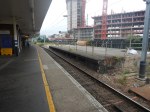


Could a bay platform for Thameslink services by added here?
I suspect that one could, but would it be worthwhile?
Midland Main Line
On the Midland Main Line, in addition to St.Albans City, currently, short-medium distance services terminate at Kentish Town and Luton.
It is a pity, that the Midland Main Line doesn’t have a handy branch!
A Balanced Northern Service
I think for balance that both Northern branches will take an equal number of short-medium distance trains. Perhaps, four tph to two destinations on each branch.
I might choose.
- St. Albans City on the Midland Main Line.
- Luton on the Midland Main Line.
- Welwyn Garden City on the East Coast Main Line.
- Stevenage on the East Coast Main Line via the Hertford Loop.
All services would be four tph.
Southern Destinations
In the South, there are several stations, that could handle four tph.
Traffic will determine which, but I like the claims of Dartford, East Croydon, Orpington and Sutton on the Wimbledon Loop.
Transfer To London Overground
These short-medium distance routes should be transferred to the London Overground.
It should be noted how if the Moorgate services are also transferred to the London Overground, as I outlined in Should The Moorgate Lines Be Transferred To Transport for London?, then the following frequencies would apply.
- 8 tph – Alexandra Palace to Welwyn Garden City
- 12 tph – Alexandra Palace to Gordon Hill
- 8 tph – Gordon Hill to Hertford North
- 4 tph – Hertford North to Stevenage.
There would be 20 tph between Finsbury Park and Alexandra Palace.
With ETCS, I don’t think that last frequency would be unrealistic, as there are two separate lines in each direction between the two stations.
Long Thameslink Routes
Class 700 Trains
These are currently, a disaster for passengers, as travelling between say Brighton and Cambridge in the dreadful Class 700 trains, is possibly the worst train journey in the UK in new train. In some ways Pacers are better!
This article in the Express is entitled ‘One Is Not Amused’ The Queen Is Not Happy With Changes To Trains, Claims Rail Boss.
If the Royal Posterior finds them hard in First Class, the seats must be dreadful there too!
But it’s not just the passengers who don’t like them.
I came back to London recently with a group of East Midlands Trains drivers. Their professional view of the Class 700 trains, is that they are not fast enough with an operating speed of 100 mph, as against the 125 mph of the trains run by East Midlands Trains.
It should be noted that on the East and West Coast Main Lines, the semi-fast medium-distance services are generally run by 110 mph trains.
So I feel very strongly, that the Class 700 trains are not only bad from the customers point-of-view, but totally unsuitable to run services on the Midland and East Coast Main Lines, where all other trains can cruise happily at 125 mph.
They must be assigned to more suitable duties!
The Routes
Get some new trains on these routes designed by people with sense and style and the routes would be transformed.
I also think, that the destinations served South of the Thames should be simplified. Thameslink is trying to serve too main destinations in the South, compared to the North, where long distance routes only serve Bedford, Cambridge, Peterborough and the intermediate stations.
Perhaps, there should be more services linking from all along the South Coast to an improved rail station at Gatwick Airport.
An Airport Route
I have travelled to and from Gatwick Airport several times, since Thameslink reopened through London Bridge a few months ago.
Outside of the Peak, these trains may be busy between London Bridge and Gatwick stations, but in the Central Core, passengers are fairly thin on the uncomfortable seats.
Luton Airport have been campaigning for more services and I suspect Gatwick would like more too.
So why not run a four tph service between the two airports, using well-designed airport trains?
An Increased Frequency Through The Core
Thameslink is currently planning twenty-four tph through the core tunnel, but there are statements that thirty tph could be handled.
The destinations to handle the extra trains exist in the South, especially, if routes out of London Bridge are replaced by Thameslink services, but accommodating more services on the East Coast and Midland Main Lines could be tricky.
Conclusion
I believe it is possible to split Thameslink into two sections.
Long distance services with new trains would stay with National Rail, but short-medium services would go to the London Overground and probably be run by six and eight-car versions of the existing trains.
Should The Moorgate Lines Be Transferred To Transport for London?
This article in Rail Magazine, is entitled TfL Targets Transfer Of Govia Thameslink Services.
One of the services, targeted by Transport for London (TfL) are the Great Northern services into Moorgate station from Hertford North, Stevenage and Welwyn Garden City stations.
I know the line into Moorgate and the various branches well, as I’ve used them in different forms, since I was about eleven.
The section between Moorgate and Finsbury Park stations is often referred to as the Northern City Line.
I wrote about these lines in a series of posts linked to A North London Metro.
The biggest problem, I find with the lines, is the quality of the trains and the stations. But there are other issues that will also effect these services, which I detail in the following sections.
Trains
The current Class 313 trains are some of the oldest on the UK rail network, as they were built around 1976, which makes them only a couple of years older than London Overground’s Class 315 trains.
I ride in both fleets regularly and although both show their age, those on the Overground appear to have had a lot more TLC.
It’s almost as if GTR doesn’t care about the Northern reaches of their Network.
In some ways, when the Lea Valley Lines were managed by Greater Anglia from Norwich, it was the same Out-Of-Site-Out-Of Mind attitude.
Both operators are changing these elderly fleets by the end of next year.
- London Overground’s Class 315 trains with new Class 710 trains.
- GTR’s Class 313 trains with new Class 717 trains.
My worry about moving the Moorgate services to the London Overground would be about the transfer of the new trains, although TfL do have some cards in their favour.
- The Class 717 trains are designed for the rather unusual operating conditions of the Northern City Line.
- Siemens have a contract to build and maintain the Class 717 trains.
- TfL have recently signed a big deal with Siemens, for the New Tube for London.
- The current Class 313 trains are single-manned.
I would hope that the trains and their crews would not be too difficult to transfer to the London Overground.
Stations
Many of the stations like Essex Road are tired and need serious work, which would start with a good deep clean. Is it the same Out-Of-Site-Out-Of Mind attitude?
Highbury & Islington Station
These pictures show Highbury & Islington station.
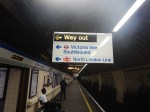
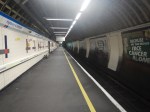



The decor needs a serious refresh.
If I want to go to say Hertford North or Welwyn Garden City, the easiest way is to go via Highbury & Islington station and get a direct train.
Until a few months ago, there used to be no way to buy a ticket at the station.
- The destination is outside my Freedom Pass area.
- I can’t use Oyster or contactless card at the destination.
- There is no ticket machine to buy a ticket.
- There is no ticket office.
However, the latest Underground ticket machines have solved the problem
When you consider that Highbury & Islington station is the fourteenth busiest station in the UK and that it handles more passengers in a year, than Cannon Street, Charing Cross, Edinburgh Waverley and Manchester Piccadilly, the station is a disgrace.
Are other stations as passenger unfriendly?
Crossrail
Crossrail will seriously affect the services into Moorgate station.
Consider the following.
- Changing to and from Crossrail at Moorgate will become a preferred route for many passengers.
- Moorgate is a short walk to much of the City of London.
- Moorgate and Liverpool Street will be one massive interconnected station.
- The new Class 717 trains will attract passengers, if they are better than Thameslink’s terrible Class 700 trains.
- Between Moorgate and Alexandra Palace stations could have a frequency as high as twelve trains per hour (tph), that runs all day.
- The Victoria Line doesn’t connect to Crossrail, but it does have a cross-platform interchange at Highbury & Islington station with the Northern City Line.
- The Piccadilly Line doesn’t connect to Crossrail or serve the City of London, but it will soon have a much-improved connection to the Northern City Line at Finsbury Park station.
Predicting the number of passengers on the services into Moorgate will become one of those classic extremely-difficult multi-variable problems.
Journeys Will Change
As an example of a changed journey take the case of someone living in Walthamstow wanting to go to Heathrow.
Currently, the easy route is.
- Victoria Line to Finsbury Park – 9 minutes
- Piccadilly Line to Heathrow Central – 64 minutes.
This is a total time of 73 minutes.
After Crossrail opens the high-frequency route will be.
- Victoria Line to Highbury & Islington – 12 minutes.
- Northern City Line to Moorgate – 10 minutes.
- Crossrail to Heathrow Central – 33 minutes
This is a total time of 55 minutes.
Thameslink
Thameslink hasn’t been designed with improving the local services on the East Coast Main Line in mind and GTR are hoping that the new trains to and from Moorgate, will provide enough capacity.
As it might be hoped that the new trains on the Moorgate services will be an improvement on the dreadful Thameslink Class 700 trains, with ironing board seats and no wifi, power sockets or tables, will passengers be swapping their London terminal to Moorgate with its better trains and connections?
Hertfordshire
Thirteen of the thirty-one stations served from Moorgate are in Hertsfordshire.
What will that County Council’s reaction be to a transfer of the Moorgate routes to the London Overground?
Relationship With The Underground And Overground
The route between Finsbury Park and Mootgate stations used to be part of the Underground and there are several interchanges between the route and the Underground and Overground.
- Bowes Park station is an out-of-station interchange with Bounds Green station on the Piccadilly Line.
- Harringay station is an out-of-station interchange with with Harringay Green Lanes station on the Gospel Oak to Barking Line.
- Finsbury Park station is an interchange with the Piccadilly and Victoria Lines.
- Highbury & Islington station is an interchange with East London, North London and Victoria Lines.
- Old Street is an interchange with the Northern Line.
- Moorgate is an interchange with the Circle, Hammersmith & City, Metropolitan and Northern Lines, in addition to Crossrail from the end of this year.
When the new Class 717 trains, with their increased frequency of at least four tph, start running, it will be a new high frequency Metro for the London boroughs of Barnet, Enfield, Haringey and Islington.
Future
I can see various changes adn additions to this line in the future.
ETCS On The East Coast Main Line
ETCS is being installed on the East Coast Main Line to increase capacity. It would appear that trains running to Welwyn Garden City station, will need to have ETCS installed.
As the new Class 717 trains are similar to the Class 700 trains, which use ETCS in the Thameslink core between St. Pancras and Blackfriars stations, fitting the system to the trains, shouldn’t be a problem.
But fitting ETCS to all the Class 717 trains, would mean that installing and using ETCS on the routes into Moorgate station would not be a difficult enterprise.
If this were to be done, would trains between Moorgate and Finsbury Park stations be able to attain the Thameslink frequency of twenty-four tph?
I can’t see why not!
Faster Running On The East Coast Main Line
In Call For ETCS On King’s Lynn Route, I talked about an article in Edition 849 of Rail Magazine, with the same title, where I said this.
In addition to ETCS, which could improve capacity on the East Coast Main Line, they would also like to see journey time reductions using trains capable of running at 125 mph or faster on the King’s Lynn to Kings Cross route.
Faster limited-stop 125 mph trains from Cambridge, Kings Lynn and perhaps, Peterborough to King Cross would surely increase capacity and might even help with the double-track bottleneck of the Digswell Viaduct.
One of the problems is that Thameslink’s Class 700 trains are only capable of 100 mph.
They are just not fast enough.
With 125 mph running limited stop into Kings Cross or Thameslink, will this free up capacity on the slow line and perhaps allow extra services from London to Welwyn Garden City station. They can’t go further North because of the Digswell Viaduct, unless the trains use the Hertford Loop Line.
I’m pretty certain that introducing 125 mph trains to Cambridge, Kings Lynn and Peterborough could open up more csapacity for services on the Great Northern route.
Increased Capacity At Moorgate
Crossrail will connect to the routes into and through a rebuilt Moorgate station.
- This connection will attract more passengers.
- Crossrail provides connection to Canary Wharf, the West End, Paddington station and Heathrow.
- The rebuilt station will also provide high-capacity step-free connections to the Central, Circle, Hammersith & City and Northern Lines.
- There will hopefully be better access to walking routes through the City of London.
Looking at the plans for the massive double-ended Liverpool Street-Moorgate station on Crossrail, it would appear that, the station complex is being rebuilt for a large increase in passengers.
Currently, the frequency to and from Moorgate station is around ten tph, which is handled on two platforms.
Consider.
- Brixton and Walthamstow Central stations on the Victoria Line, handle 36 tph with two platforms and Automatic Train Operation (ATO).
- The East London Line will be handling twenty tph Between Dalston Junction and Surrey Quays stations, by the end of next year.
- The Class 717 trains will have a better performance than the current Class 313 trains.
- The signalling could probably be updated and ATO added as I indicated earlier
I would suspect that a frequency upwards of at least sixteen tph to and from Moorgate could be possible.
I’d like to know, what capacity was assumed in the design of the rebuilt Moorgate station, to make sure, the station was future-proofed for all possible services.
Increased Frequencies
All stations between Liverpool Street and Shenfield have had a frequency of ten tph, as long as I can remember and this frequency will be increased to twelve tph, when Crossrail opens.
Alongside this, the frequencies of four tph to and from Hertford North and Welwyn Garden City look measly!
The Hertford Loop Line has three possible terminals; Gordon Hill, Hertford North and Stevenage, all of which could handle four tph. If all were used, this would give these frequencies.
- 12 tph – Finsbury Park to Gordon Hill
- 8 tph – Gordon Hill to Hertford North
- 4 tph – Hertford North to Stevenage.
If what I said earlier is correct and that sixteen tph is possible into Moorgate, then this would still allow the current frequency of four tph to Welwyn Garden City.
Twenty tph into Moorgate would allow an increased frequency of eight tph to Welwyn Garden City, which would match the frequency to Hertford North.
Park-And-Ride
There is a need for at least one parkway station on the Great Northern route.
GNER were intending to provide one at Hadley Wood station.
Parliament held a debate in January 2000 about this and you can read the debate here on the Parliament web site. Generally, MPs were not in favour.
Stevenage has also been proposed for a parkway station and I think this is much more likely.
Incorporation Into The Tube Map
There will soon be calls for the Southern part of the route to be shown on the Tube Map.
Conclusion
I can see serious investment will be needed at stations on the Great Northern route and especially on the deep-level Northern City Line.
It is also likely, that more trains could be needed. Especially, if twenty tph were run through to moorgate.
Do GTR have the will and the resources to invest in this line?
I doubt it, as it is probably seen as an irrelevant backwater, by GTR’s so-called management.
Given the close connection of this route to Crossrail and the Underground and that fifty-eight percent of the stations are in Greater London, then Transport for London would seem to be an ideal owner for this route.
A New Train On The North London Line
I was waiting at Gospel Oak station on the North London Line, when this train went through.
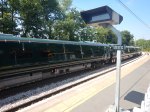
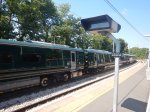
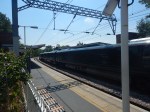
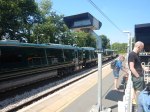

Checking with Real Time Trains, the Class 800 train was going from Hitachi’s depot at Doncaster to North Pole Depot.
Germany Approves Alstom’s Hydrogen Train For Passenger Service
The title of this post is the same as that of this article on Railway Technology.
The title says most of the article, but it also states that the first passenger services in Germany are scheduled for late summer.
Business Case Requested For Middlewich Reopening
The title of this post is the same as that of this article on Rail Magazine.
The Northwich to Sandbach Line provides a link between Northwich station on the Mid-Cheshire Line and Sandbach station on the Crewe-Manchester Line.
In the Wikipedia entry for the Mid-Cheshire Line, this is said under Reopening The Northwich To Sandbach Line To Passenger Trains.
This would allow a direct train service from places on the line to Crewe, which will should reduce journey times to destinations south of Chester, as well as reducing fares to those destinations. It would also allow the former station at Middlewich to re-open, and the possibility of a new station opening at Rudheath. An independent feasibility report found the Benefit to Cost Ratio for the reopening to be 5:1, which is almost four times higher than the recently reopened Borders railway in Scotland
5:1 sounds like a good financial case.
The Rail Magazine article also has this quote from Chris Grayling.
There are two routes in the North that I feel particularly keen to look at seriously reopening. One is the line from Skipton to Colne, the other is the line that passes through Middlewich that, in my view, should be a commuter railway into Manchester.
There is also the question as to whether the Northwich to Sandbach Line should be electrified.
But at 8.5 miles, I suspect that it will be an ideal line for a battery train, if both of the lines it connects, are electrified.
- The Crewe-Manchester Line was electrified in 1959.
- Electrification of the Mid-Cheshire Line has a high priority.
In addition, the Crewe-Chester Line could be electrified to allow Chester to have direct electric trains from London and Manchester.
It was good to see that Chris Grayling also endorsed Skipton to Colne.
Treatment Turns Up Heat On Tumours
The title of this post, is the same as that of an article in Tuesday’s Times.
It describes research at the Oxford Institute of Biomedical Engineering, where ultrasound is used to heat liver cancers to over 39.5 °C. The raised temperature then triggers the release of a drug.
The last quote of the report is from a researcher involved.
We can now begin to realise the promise of precision cancer medicine.
I’ve read about other ideas with the same outcome of precision.
I suspect my grandchildren will have a much higher chance of being cured of cancer.
Hydrogen Is Really Happening
The title of this post, is the same as that of this opinion in Energy Voice.
It is a good summary of where we are with hydrogen.
One interesting point of several is that researchers in the US and Spain can extract hydrogen from plastic waste.
This article from FuelCellWorks describes the Spanish research.
That would surely be a real zero-carbon fuel!
Poland Investigates Use Of Hydrogen Fuel For Rail Freight
The title of this post is the same as that of this article in the International Railway Journal.
This first paragraph, outlines the project.
Polish coal mining company JSW and national rail freight operator PKP Cargo have agreed to cooperate to research, analyse and possibly produce new types of hydrogen-powered freight wagons and shunting locomotives.
Note that one of the collaborating companies is a coal company.
Statements later in the article indicate that JSW can create commercial quantities of hydrogen, as a by-product of making coke.
Some of us of a certain age, still remember coal gas, which was replaced by natural gas from the North Sea in the 1970s.
It looks like Poland are still using the same process to obtain coke and probably other products like coal tar, sulphur and ammonia.
According to Wikipedia, UK coal gas had the following composition.
- Hydrogen 50%
- Methane 35%
- Carbon monoxide 10%
- Ethylene 5%
It was one of the suicide methods of choice for the unhappily married. I don’t miss the foul stuff, with its poisonous carbon monoxide.
But as you can see, it does have a high percentage of hydrogen!
Conclusion
I’m not a fan of using coal gas, but these two Polish companies are another group investigating the use of hydrogen as a method of powering trains and other rail vehicles.
The New Trimley Freight Loop And Trimley Station
Felixstowe Port is the UK’s largest container port and it generates a lot of freight traffic on the Felixstowe Branch Line.
So a 1.4 km. loop is being added to the line at Trimley to enable more freight trains to enter and leave the port.
I took these pictures as I went to and from Trimley station.





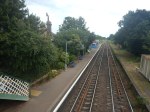
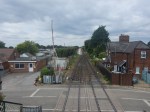



This Google Map shows the section of line, that will effectively be doubled.
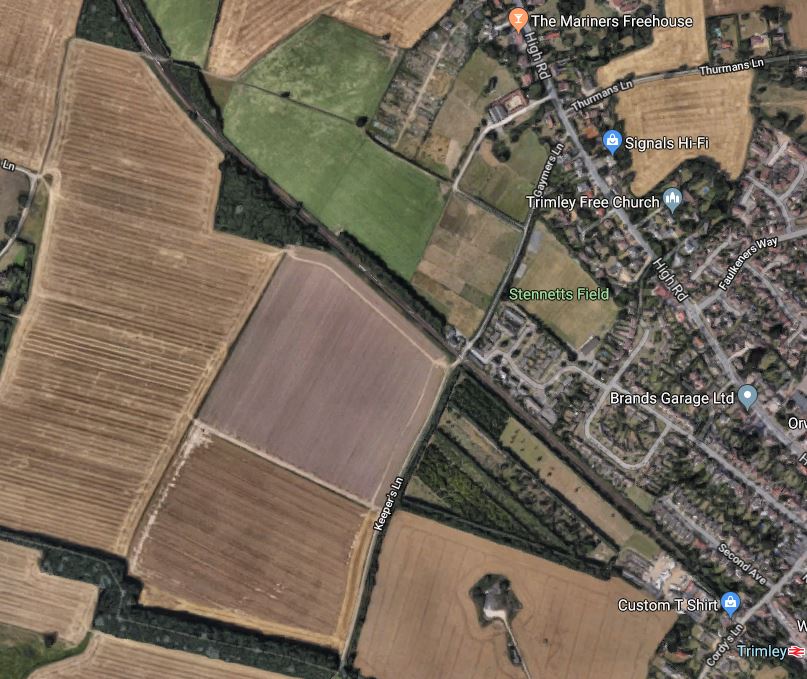
I do have a few thoughts on various issues.
How Many Extra Freight Trains Will Be Possible?
This page on the Network Rail web site, is entitled Felixstowe Branch Line Works To Unlock More Freight And More Reliable Passenger Services.
This is said.
The work on the branch line in this area will support up to 10 additional trains in each direction to move goods to and from the Port of Felixstowe.
I assume the frequency is in trains per day.
I would assume that with careful scheduling of the freight trains, one train per hour (tph) will be able to move reliably to and from each of the two rail freight terminals at the Port.
There are certainly upwards of thirty scheduled trains per day to and from the Port at the present time, so another ten will obviously need the ability to run two tph both ways for most of the day.
Is The Loop Long Enough?
Network Rail are working towards the UK network being able to handle freight trains up to a maximum length of 775 metres.
At a length of 1.4 km, the loop may not be long enough to accommodate two maximum length trains, if perhaps something goes wrong on the Great Eastern Main Line, like a track or signalling failure.
I would hope Network Rail have done their track planning!
Passenger Services
The Network Rail web page implies that passenger services will be more reliable.
So how would a freight loop improve passenger services?
I suspect that just as the number of freight paths each way will be a reliable two in every hour, the number of passenger paths will also be doubled.
The second path in the hour would be useful for two reasons.
- If say there was a train or signalling failure, then the service can be recovered once the fault is fixed using the second path.
- If demand on the branch were to increase substantially or a boost was needed for a special event, Greater Anglia could put on a second service.
Greater Anglia have ordered 38 Class 755 trains and they will be running direct routes to five destinations from Ipswich, so I suspect the operator could station a spare train at Ipswich to deal with disruptions, like the inevitable level crossing accidents that happen in East Anglia.
Will The Felixstowe Branch Line Ever Be Electrified?
This picture is from the Network Rail web page.
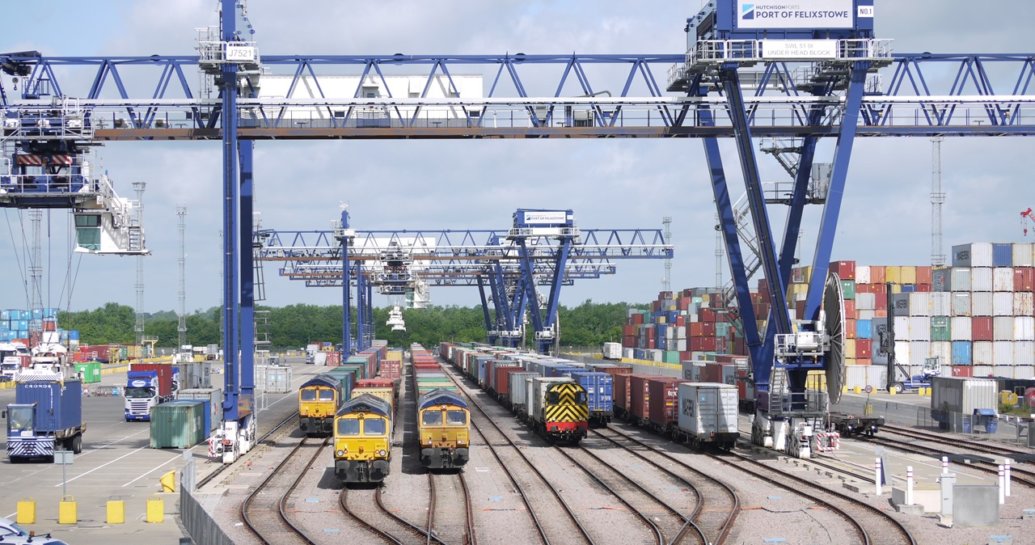
It illustrates why ports are not keen to electrify.
Containers do get dropped and a single mistake by a crane driver or the controlling automation could shut the rail terminal.
Class 66 locomotives may be an environmental disaster, but they are an affordable and reliable locomotive for ports and freight operators.
New locomotive types like the Class 88 locomotive are being ordered, which could work a port without electrification and change to and from electrification at a safe distance outside the port. The Class 88 locomotives can even do this at line speed.
There would also be no point in electrifying the Felixstowe branch line without electrifying the route all the way between Felixstowe and Nuneaton, which is the route a lot of freight trains take.
I think it is more likely, that innovative locomotive engineers will design a locomotive capable of pulling the longest trains on electricity or diesel, efficiently across the country. After all, using large environmentally unfriendly diesel locomotives is not a problem confined to the UK, so there are millions to be made, by designing the right locomotive for today.
The Last Unmodified Rakes Of Mark 3 Coaches In Front Line Service
Greater Anglia runs the last rakes of the unrivalled Mark 3 coaches, with their original doors, on their services between London and Norwich.




This set was going North pushed by an immaculate Class 90 locomotive, which like the coaches is no spring chicken.
The Swiss-built Class 745 trains, will have to be very good, to gain the same hard-won reputation.
One of these rakes of coaches is going to be hauled by 60163 Tornado.
I suspect other rakes will find specialist uses. If not in the UK, then in other countries with standard gauge railways.
 The Anonymous Widower