Regenerative Braking On A Dual-Voltage Train
Yesterday, I found this document on the Railway People website, which is entitled Regenerative Braking On The Third Rail DC Network.
Although, the document dates from 2008, it is very informative.
Regenerative Braking On 25 KVAC Trains
The document says this.
For AC stock, incoming power from the National Grid at high voltage is stepped down by a transformer. The AC power is transmitted via OHL to the trains. When the train uses regenerative braking, the motor is used as a generator, so braking the axle and producing electrical energy. The generated power is then smoothed and conditioned by the train control system, stepped up by a transformer and returned to the outside world. Just about 100% of regenerated power is put back into the UK power system.
But I have read somewhere, that you need a 25 KVAC overhead electrification system with more expensive transformers to handle the returned electricity.
Regenerative Braking On 750 VDC Trains
The document says this.
After being imported from the National Grid, the power is stepped down and then AC power is rectified to DC before being transmitted via the 3rd rail. Regenerated Power can not be inverted, so a local load is required. The power has to be used within the railway network. It cannot be exported.
So the electricity, is usually turned into heat, if there is no train nearby.
The Solution That Was Applied
The document then explains what happened.
So, until such time as ATOC started to lobby for a change, regenerative DC braking was going nowhere. But when they did start, they soon got the backing of the DfT and Network Rail. It takes a real combined effort of all organisations to challenge the limiting assumptions.
In parallel, there were rolling stock developments. The point at which all the issues started to drop away was when the Infrastructure Engineers and Bombardier, helped out by some translating consultants (Booz & Company), started to understand that new trains are really quite clever beasts. These trains do understand what voltage the 3rd rail is at, and are able, without the need to use any complicated switch gear – just using software, to decide when to regenerate into the 3rd rail or alternatively, use the rheostatic resistors that are on the train.
Effectively, the trains can sense from the voltage if the extensive third-rail network can accept any more electricity and the train behaves accordingly.
As most of the electric units with regenerative braking at the time were Bombardier Electrostars, it probably wasn’t the most difficult of tasks to update most of the trains.
Some of the Class 455 trains have recently been updated. So these are now probably compatible with the power network. Do the new traction motors and associated systems use regenerative braking?
This document on the Vossloh-Kiepe web site is entitled Vossloh Kiepe enters Production Phase for SWTs Class 455 EMU Re-Tractioning at Eastleigh Depot and describes the updating of the trains. This is said.
The new IGBT Traction System provides a regenerative braking facility that uses the traction motors as generators when the train is braking. The electrical energy generated is fed back into the 750 V third rail DC supply and offsets the electrical demands of other trains on the same network. Tests have shown that the energy consumption can be reduced by between 10 per cent and 30 per cent, depending on conditions. With the increasing cost of energy, regenerative braking will have a massive positive cost impact on the long-term viability of these trains. If the supply is non-receptive to the regenerated power, the generated power is dissipated by the rheostatic brake.
So thirty-five year old British Rail trains now have a modern energy-saving traction system.
Has The Solution Worked On The Third-Rail Network?
The Railway People document goes on to outline how they solved various issues and judging by how little there is about regenerative braking on the third-rail network, I think we can assume it works well.
One Train, Two Systems
If you have a train that has to work on both the 25 KVAC and 750 VDC networks, as Thameslink and Southeastern Highspeed trains do, the trains must be able to handle regenerative braking on both networks.
So is there a better way, than having a separate system for each voltage?
In Do Class 800/801/802 Trains Use Batteries For Regenerative Braking?, I investigated how Hitachi’s new Class 800 trains handle regenerative braking.
A document on Hitachi’s web site provides this schematic of the traction system.

Note BC which is described as battery charger.
The regenerative braking energy from the traction motors could be distributed as follows.
- To provide power for the train’s services through the auxiliary power supply.
- To charge a battery.
- It could be returned to the overhead wires.
Hitachi’s system illustrates how using a battery to handle regenerative braking could be a very efficient way of running a train.
Hitachi’s diagram also includes a generator unit or diesel power-pack, so it could obviously fit a 750 VDC supply in addition to the 25 KVAC system on the Class 800 train.
So we have now have one train, with three power sources all handled by one system.
What Has Happened Since?
As the Hitachi document dates from 2014, I suspect Hitachi have moved on.
Siemens have produced the Class 700 train for Thameslink, which is described in this Siemens data sheet.
Regenerative braking is only mentioned in this sentence.
These new trains raise energy efficiency to new levels. But energy efficiency does not stop at regenerative braking.
This is just a bland marketing statement.
Bombardier are building the first batches of their new Aventra train, with some Class 345 trains in service and Class 710 trains about to enter testing.
Nothing has been said about how the trains handle regenerative braking.
But given that Bombardier have been experimenting with battery power for some time, I wouldn’t be surprised to see batteries involved.
They call their battery technology Primove and it has its own web site.
There is also this data sheet on the Bombardier web site.
Class 387 Trains
There is another train built by Bombardier, that is worth investigating.
The Class 387 train was the last and probably most advanced Electrostar.
- The trains have been built as dual-voltage trains.
- The trains have regenerative braking that works on both electrification types.
- They were built at around the time Bombardier were creating the Class 379 BEMU demonstrator.
- The trains use a sophisticated propulsion converter system called MITRAC, which is also used in their battery trams.
On my visit to Abbey Wood station, that I wrote about in Abbey Wood Station Opens, I got talking to a Gatwick Express driver about trains, planes and stations, as one does.
From what he said, I got the impression that the Class 387/2 trains, as used on Gatwick Express, have batteries and use them to keep the train and passengers comfortable, in case of an electrification failure.
So do these trains use a battery to handle the regenerative braking?
How Big Would Batteries Need To Be On A Train For Regenerative Braking?
I asked this question in a post with the same name in November 2016 and came to this conclusion.
I have a feeling that using batteries to handle regenerative braking on a train could be a very affordable proposition.
As time goes on, with the development of energy storage technology, the concept can only get more affordable.
Bombardier make a Primove battery with a capacity of 50 kWh, which is 180 mega-Joules.
So the braking energy of what mass of train could be stored in one of these batteries?
I got these figures.
- 100 mph – 180.14 tonnes.
- 110 mph – 148.88 tonnes.
What is the mass of a Class 387 train?
This is not available on the Internet but the mass of each car of a similar Class 378 train averages out at 32 tonnes.
Consider these points.
- A Class 387/2 train, has 219 seats, so if we assume each passenger and baggage weighs eighty kilograms, that adds up to 17.5 tonnes.
- As the Class 387 trains have a maximum speed of 100 mph on third-rail electrification, it would appear that a Primove 50 kWh battery could handle the braking energy.
- A Primove 50 battery with its controller weighs 827 Kg. according to the data sheet.
It all looks like using one of Bombardier’s Primove 50 batteries on a Class 387 train to handle the regenerative braking should be possible.
But would Bombardier’s MITRAC be able to use that battery power to drive the train in the most efficient manner? I suspect so!
If the traction layout is as I have outlined, it is not very different to the one published by Hitachi in 2014 on their web site for the Class 800 train.
Conclusion
Hitachi have got their traction layout right, as it can handle any number of power sources.
Class 800 Trains On The Wharncliffe Viaduct
These pictures show two Class 800 trains working as a pair crossing the Wharncliffe Viaduct.





Note Paddington is to the right.
Campaign For New Cross-Border Rail Link Gathers Pace
The title of this post is the same as that of this article in the Carlisle News And Star.
The interesting thing about the article is that it shows the growing co-operation between Councils and organisations on both sides of the border.
That co-operation and the need to increase capacity on the West Coast Main Line through Carlisle will eventually get a reinstated railway between Edinburgh and Carlisle via Galashield, Melrose and Hawick.
East-West and North-South Railways
When politicians talk about East-West links in the UK, they tend to be very parochial. Some are getting improved and some are not!
These can be considered major East-West links in the UK.
- Inverness to Aberdeen – Being upgraded.
- Glasgow to Edinburgh – Undergoing a major upgrade and electrification.
- Carlisle to Edinburgh via Hawick – Still a study
- Carlisle to Newcastle- Could be improved.
- Carlisle to Leeds – Recently upgraded and safeguarded.
- Preston to Leeds – Needs upgrading.
- Manchester to Leeds – Desperately needs upgrading.
- Manchester to Sheffield- Desperately needs upgrading.
- Holyhead to Manchester – Needs some improvement.
- Nuneaton to Felixstowe – Needs upgrading and electrification.
- Oxford to Cambridge – Being rebuilt slowly.
- Cardiff to London – Being upgraded and electrified slowly.
- Exeter to Ashford via Southampton and Brighton – Needs upgrading.
East-West links are not in the same state as the major North-South routes.
- West Coast Main Line
- Midland Main Line
- East Coast Main Line
- Brighton Main Line
- West Anglia Main Line
- Great Eastern Main Line
It could be argued that the last three are in need of some improvements, but the first three will be augmented by HS2.
Look at the quality of trains on East-West routes compared to those on North-South routes.
HS2’s Needs
It could also be argued that all East-West routes should be substantially improved to compliment the building of HS2.
Carlisle, Crewe, Leeds, Manchester, Nottingham, Preston and Sheffield will probably have excellent single-station interchange between HS2 and classic routes and good East-West connections will benefit a lot of passengers.
However, as things stand at present,Birmingham is getting rather a dog’s breakfast with passengers having to transfer between Curzon Street and New Street stations for onward travel.
Birmingham deserves better!
Abbey Wood Station Opens
Abbey Wood Station partly opened today.


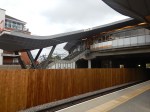

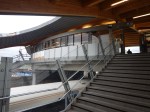
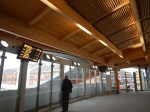

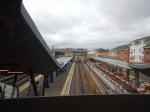








As can be seen, it is not finished, but it can certainly accept all the Southeastern trains calling at the station.
Is it the UK’s first station with three pedestrian bridges and six lifts?
Along The Gospel Oak To Barking Line – 23rd October 2017
This is a random set of pictures from along the Gospel Oak to Barking Line.


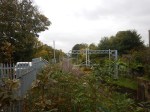
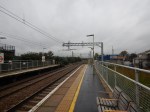
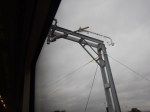

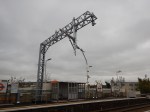
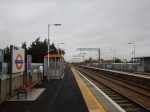
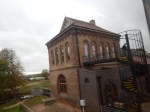

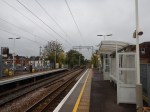

Note the the electrification is not complete.
Sections still to be wired include.
- East of Walthamstow Queen’s Road station.
- The link To The Midland Main Line At Carlton Road Junction.
- The Harringay Curve that links to the East Coast Main Line.
At least most of the gantries seem to have been erected.
According to TfL’s closure list, there is four partial weekend closures planned.
- 28-29 October
- 4-5 November
- 11-12 November
- 18-19 November
Let’s hope that finishes the electrification.
I suspect the two links, which are for freight and empty stock movements can be fitted in without any closures.
Class 172 Trains And The Engine House At Walthamstow Wetlands
The Class 172 trains are running again on the Gospel Oak To Barking Line.



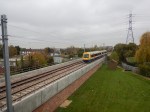

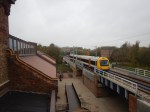
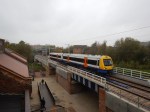

The pictures were taken by or from the Engine House at the Walthamstow Wetlands.
I have a feeling that Network Rail have used techniques to cut down the noise of trains, as when trains passed, they did seem rather quiet.
I have a feeling, when the new Class 710 trains start to run on the Gospel Oak to Barking Line, this will be the place, where the enthusiastic photographers gather.
After all, it’s near to a good cafe!
The Joy Of Physics
On the One Show on BBC television, yesterday there was a report about a man called Ian Tansley, who has invented a vaccine fridge for use in places like Africa, where the electricity is not reliable.
This Wikipedia entry for Sure Chill Technology describes the technology and this report on the BBC, describes how the invention has been backed by the Bill and Melinda Gates Foundation.
Physics to many is a dull subject at school, but to me, it’s the key to so many interesting inventions and ideas that will shape our lives in a better way.
Will Crossrail Go Up The West Coast Main Line?
This report on the BBC from August 2014, is entitled Crossrail Extension To Hertfordshire Being Considered.
This is the opening paragraph.
Proposals to extend Crossrail to Hertfordshire are being considered by the government, Transport Secretary Patrick McLoughlin has announced.
But then in August 2016, the proposal was cancelled as being poor value for money.
The Wikipedia entry for Crossrail has a section called To the West Coast Main Line, under Extensions.
This is said.
Network Rail’s July 2011 London & South East Route Utilisation Strategy (RUS) recommended diverting West Coast Main Line (WCML) services from stations between London and Milton Keynes Central away from Euston, to Crossrail via Old Oak Common, to free up capacity at Euston for High Speed 2. This would provide a direct service from the WCML to the Shenfield, Canary Wharf and Abbey Wood, release London Underground capacity at Euston, make better use of Crossrail’s capacity west of Paddington, and improve access to Heathrow Airport from the north. Under this scheme, all Crossrail trains would continue west of Paddington, instead of some of them terminating there. They would serve Heathrow Airport (10 tph), stations to Maidenhead and Reading (6 tph), and stations to Milton Keynes Central (8 tph)
That sounds all very sensible. So why was the scheme cancelled?
I will look at various factors to see if I can get an idea!
Was It Just Bad Value For Money?
Wikipedia says this.
This proposal was shelved in August 2016 due to “poor overall value for money to the taxpayer”
But it was BC (Before Covid)!
Current Local Services To Milton Keynes
London Midland currently runs five trains per hour (tph) between Euston and Milton Keynes Central stations using Class 350 trains capable of 110 mph.
The new operator; West Midlands Trains will replace these trains with 110 mph Aventras.
Note that both these trains have to be capable of running at 110 mph, as this is necessary for efficient operation of the West Coast Main Line.
Crossrail Local Services To Milton Keynes
Crossrail’s Class 345 trains are only capable of 90 mph running, but then again, West Midlands Trains will have Aventras capable of 110 mph.
So for a start, the current Crossrail trains would be unable to work services to Milton Keynes in an efficient manner.
I would estimate around twenty trains would have to be updated for 110 mph running to provide eight tph.
An Upgrade Of Milton Keynes Central Station
With a fast eight tph running to and from Central London, the nature of the train services at Milton Keynes would change dramatically.
How many of Virgin’s passengers to and from the North would prefer to change to a local train at Milton Keynes, rather than lug heavy baggage on the Underground?
HS2 would have an unexpected competitor.
ERTMS On The West Coast Main Line
Would ERTMS need to be installed on the West Coast Main Line to accommodate al these trains?
This will probably happen soon anyway, but Crossrail to Milton Keynes could bring it forward.
Connecting Crossrail To The West Coast Main Line
Look at this map from carto.map.free.fr, which shows the lines in the Old Oak Common area.
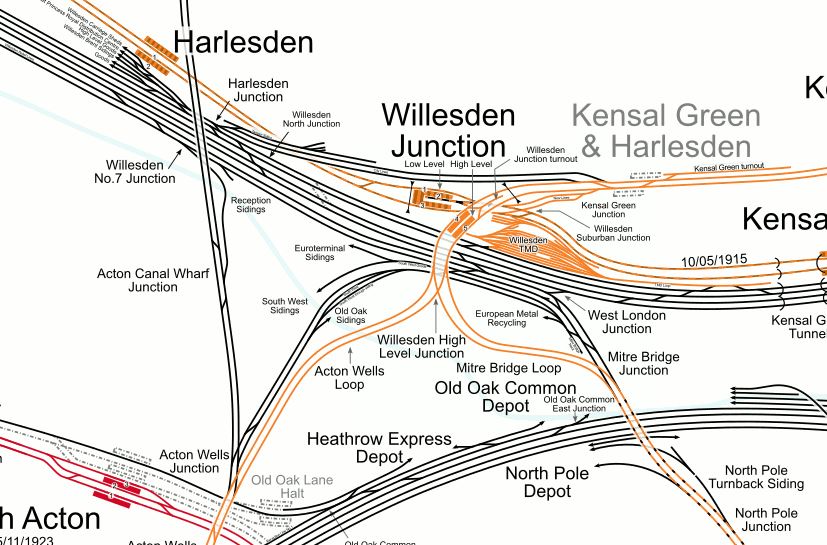
Note.
- The West Coast Main Line is the multi-track railway towards the top of the map.
- The Great Western Main Line is the multi-track railway towards the bottom of the map.
- The Slow Lines on both main lines are on the Northern side of the tracks.
- The Old Oak Common station will be on the Great Western Main Line, just to the West of the North Pole Depot.
This all means that a flyover or a tunnel must be built to connect the two pairs of Slow Lines. It’s not simple!
This Google Map of the area illustrates the problem.
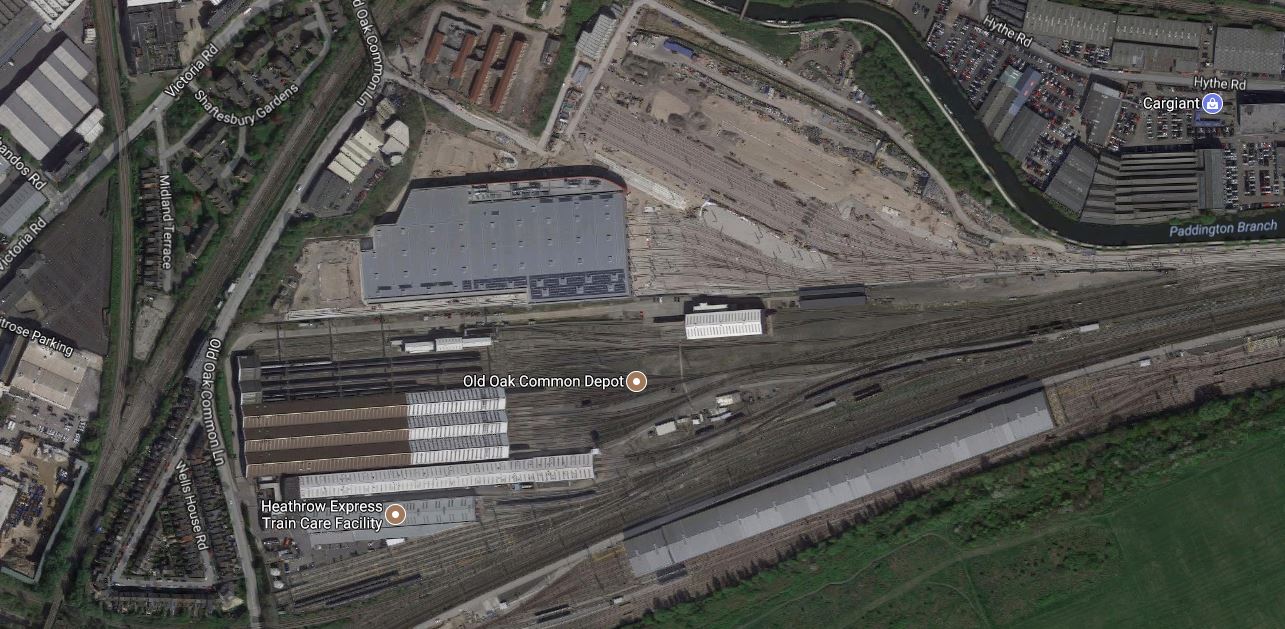
Note.
- The Great Western Main Line going across the bottom of the map.
- The North Pole Depot alongside the Great Western Main Line.
- The Dudding Hill Line and the West London Line at the Western side of the map.
- Crossrail’s newly-built depot is the large grey rectangular building.
- There’s also some housing to the North-West of Crossrail’s Depot
I doubt that a flyover could pass over all that.
But a tunnel starting at the surely soon-to-be-redundant Heathrow Express Depot , that turned North-West would be a possibility.
A tunnel could emerge to the North-West of Harlesden station.
This Google Map shows that area.

Note.
- The silver building in the top-left corner is the Princess Royal Distribution Centre.
- The West Coast Main Line runs diagonally across the map.
- The Dudding Hill Line runs up the Eastern side of the map.
I suspect that space for a tunnel portal can be found.
- Twin tunnels would probably be bored.
- I estimate that they, would need to be just over two kilometres long.
- I suspect too, that they could be built without an additional ventilation shaft in the middle.
Looking at these maps, I’m very much of the opinion, that boring a tunnelled solution, would be possible, but what would be the cost?
The Lee Tunnel in East London is about twice as long and larger in diameter. From the cost of that tunnel, which was opened in 2016, I feel that the two tunnels could be built for just under a billion pounds.
A Tunnel-Free Solution
This Google Map shows Old Oak Common between the Great Western Main Line and the West Coast Main Line.
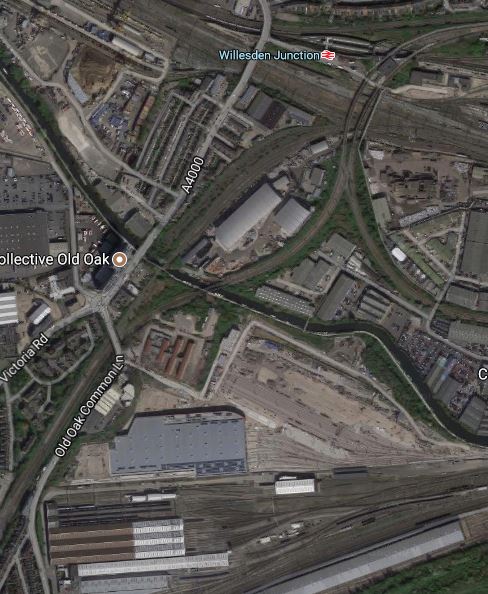
The Crossrail station would be at the bottom just above the North Pole Depot.
I wonder if a line could go through or behind the Heathrow Express site and then follow the North London Line behind the Crossrail Depot to Willesden High Level Junction.
This Google Map shows Willesden High Level Junction and the tracks of the London Overground as they pass over the West Coast Main Line.

I suspect modern three-dimensional design and structural analysis can create a connecting viaduct.
I doubt the track will be much more than a kilometre long and I suspect with the right signalling and a degree of Automatic Train Control, eight tph each way could be handled on a single track.
Conclusion
It looks like updating the Class 345 trains, ERTMS and building a tunnel under Old Oak Common could be a sizeable bill.
Have cost estimates been such, that the project was not deemed to be value for money?
A RAT Sighted At Acton Town Station
I was surprised to see an old train running through North Action station.


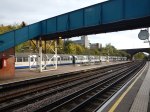
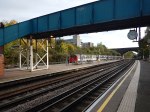
As it said on the side it was a Rail Adhesion Train, that I wrote about in Specialist Trains Lead The Charge Against Leaf Fall on The Piccadilly Line.
This article on Rail Engineer is entitled Leaf Fall On The London Underground and it gives more details on Rail Adhesion Trains and their use.
How Will Chiltern Railways Serve Old Oak Common?
Whilst writing A Proposal For Two London Overground Stations At Old Oak Common, I got to thinking about how Chiltern Railways would use Old Oak Common station as a second London terminus, to relieve pressure on Marylebone station.
Lines At Old Oak Common
This map from TfL shows the lines in the area and the location of the proposed two new stations; Hythe Road and Old Oak Common Lane, for the London Overground.
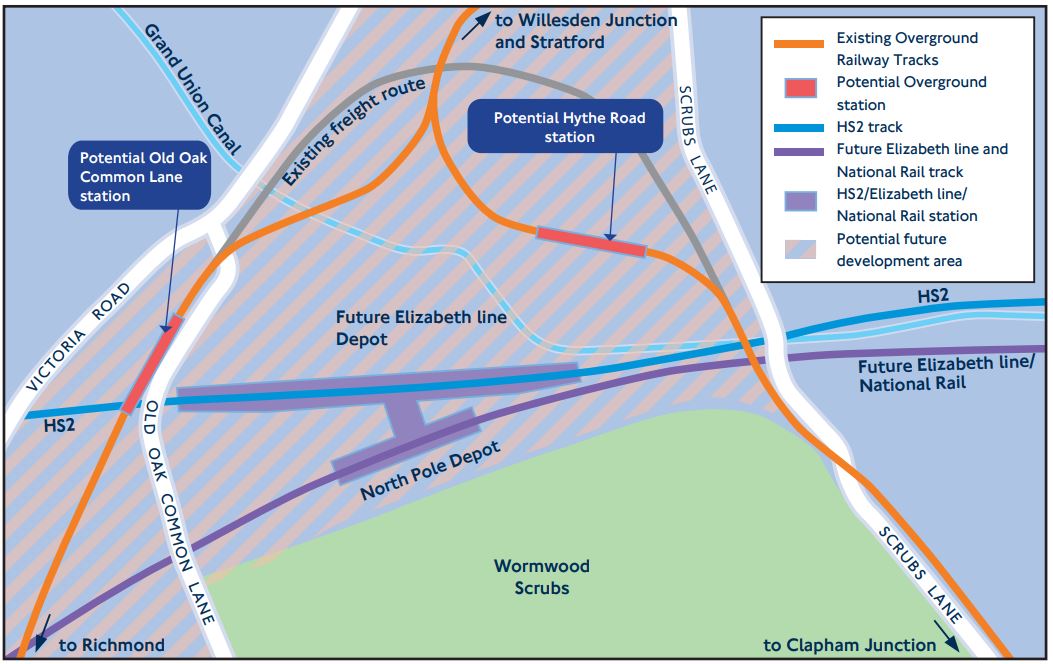
Hythe Road station will be on the West London Line between Willesden Junction and Shepherd’s Bush stations.
Old Oak Common Lane station will be on the North London Line between Willesden Junction and Acton Central stations.
How Will Chiltern Serve Old Oak Common?
Search the Internet for “Chiltern Railways Old Oak Common” and you find little of substance.
So exactly how will Chiltern Railways get trains to the station complex?
Using The Acton-Northolt Line
The Acton-Northolt Line is a logical route from Northolt Junction on the Chiltern Main Line to Old Oak Common.
But there could be problems with the Acton-Northolt Line.
- It will be on top of the tunnel taking HS2 out of London and building HS2 might be difficult.
- It is partly single track and would need to be doubled.
- It might be difficult to find space to build the station at Old Oak Common around the platforms for HS2, Crossrail and the Great Western Main Line.
- Getting tracks to the Northern part of the site for a Chiltern station there, might be difficult.
Points 1 and 2 would probably combine together to delay the Chiltern extension until after HS2 or at least the tunnel, is substantially complete.
This map from carto.metro.free.fr illustrates the problem of finding a place for the station.
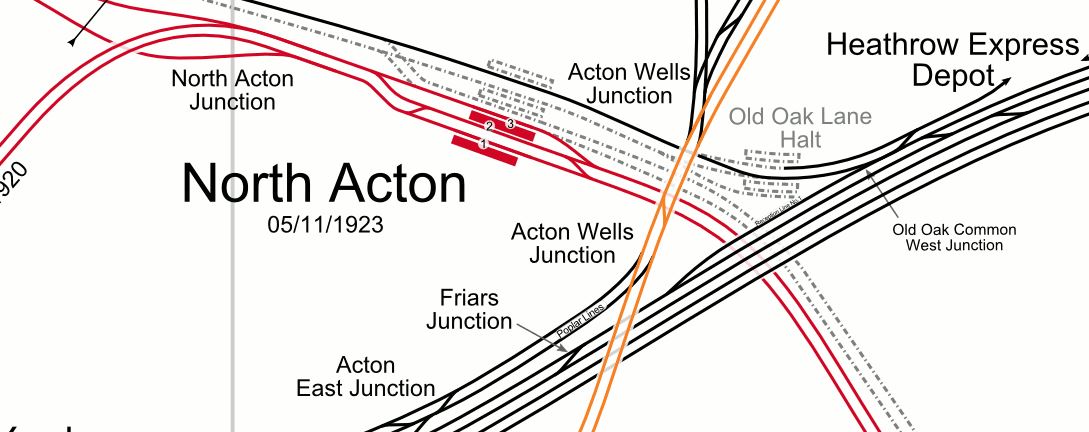
Note.
- The Great Western Railway is the multi-track in black .
- The single track shown in black North of North Action station is the Acton-Northolt Line.
- Old Oak Common Lane station is just to the North of Acton Wells Junction.
- The curves to connect the Acton-Northolt Line to the North London Line would be very tight.
The preferred position for the station is probably in the area of the current Heathrow Express Depot.
An alternative position for the station could be at North Acton station.
This Google Map shows North Acton station and its relation to the proposed Old Oak Common Lane station.
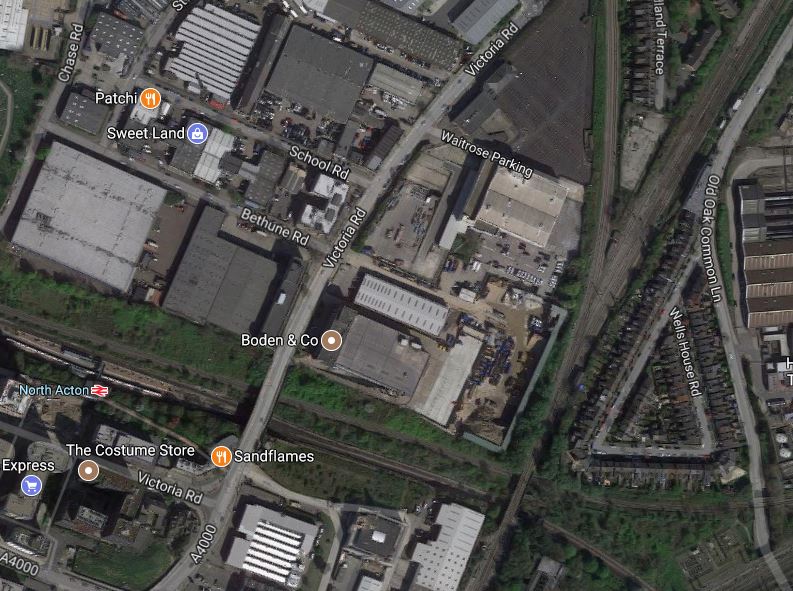
Old Oak Common Lane station would be located North of the Junction, where the Dudding Hill Line and the North London Line split, in the top-right corner of the map.
The rebuilt North Acton station could have the following characteristics.
- Two or possibly three, Chiltern platforms could be built North of the current Central Line platforms.
- The station could have a walking route or moving walkway to connect it to Old Oak Common Lane station and the main Old Oak Common complex.
- It would also fulfil the aims of politicians to link the Central and North London Lines.
It could be a viable alternative with valuable over-site development.
I took these pictures from the bridge, where Victoria Road passes over the Central Line and Acton-Northolt Lines.
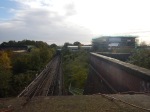

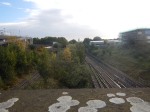
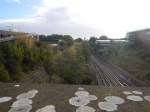
Note.
- The pictures were taken looking East towards Old Oak Common.
- The single-track Acton-Northolt Line is in the shrubbery on the left.
- The Acton-Northolt Line is about two or three metres higher than the Central Line.
- The greyish-blue bridge in the distance carries the North London Line over the cutting.
North Acton station is on the other side of the bridge.
It strikes me that the various levels give possibilities for an improved Central Line layout and a couple of platforms for Chiltern Railways.
Advantages and Problems Of Using The Acton-Northolt Line
The advantages of using this route could include.
- It could open up development sites along the route.
- New stations could be developed at Hanger Lane, Perivale, Greenford, Northolt, South Ruislip, Ruislip Grdens and West Ruoslip.
- The new double-track line could be electrified without disrupting existing services.
- It connects the Chiltern Main Line to HS2 and Crossrail.
- It could enable a Crossrail extension along the Acton-Northolt Line.
The big problem could be doubling the Acton-Northolt Line and building the station, whilst the tunnelling work for HS2 was proceeding.
The Acton-Northolt Line And HS2
I do hope that HS2 is not being designed to block future use of the Acton-Northolt Line.
In fact, I hope the reverse is true and creation of a double-track Acton-Northolt Line is part of the specification for HS2.
Using The Dudding Hill Line
There is a connecting chord between the Chiltern Main Line and the Dudding Hill Line at Neasden.
This map from carto.metro.free.fr shows how trains would get between Wembley Stadium station and the Dudding Hill Line.
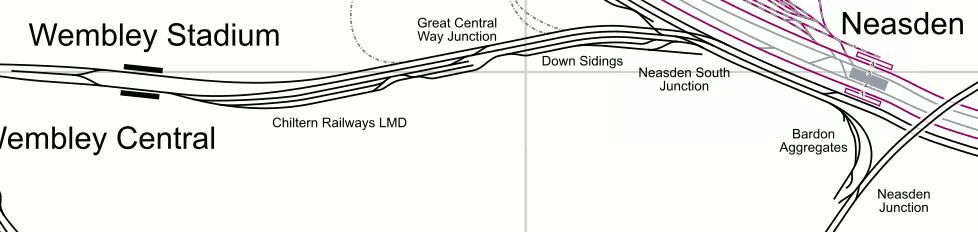
Note.
- The Dudding Hill Line is the line crossing all the tracks to the South of Neasden.
- The route would mean that Chiltern trains would be sent to their destination; Marylebone or Old Oak Common at Neasden.
The biggest problem may be where to put the station, as the Dudding Hill Line passes slightly to the West of the Old Oak Common complex.
But look at TfL’s visualisation for Old Oak Common Lane station.
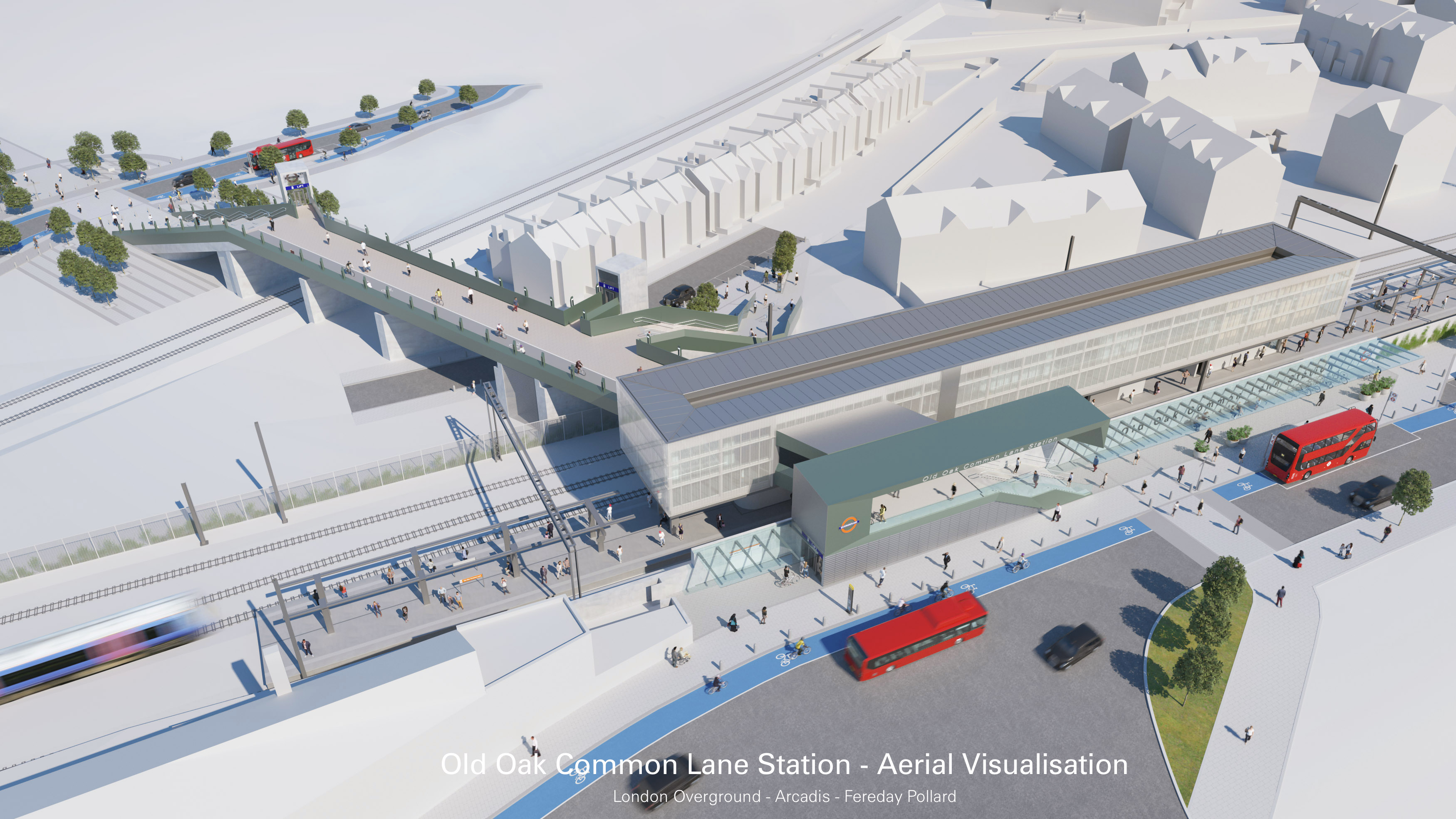
The Dudding Hill Line is shown in the visualisation running under the pedestrian and cycle route to Victoria Road.
This Google Map shows the area in detail.
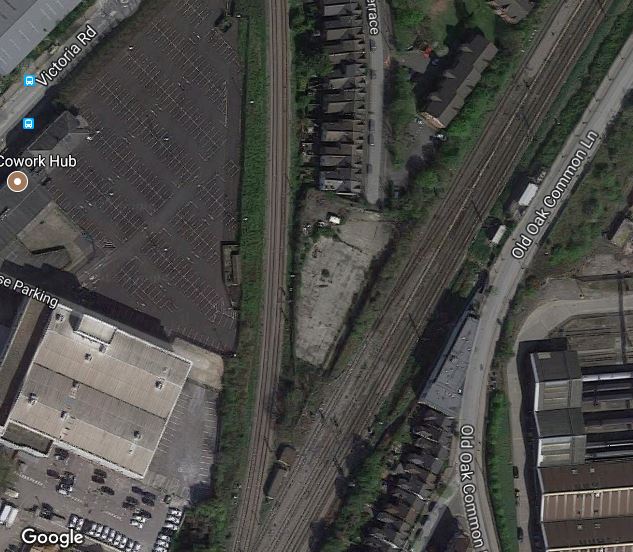
Note.
- The North London Line goes North-East.
- The proposed Old Oak Common Lane station would be built where the road is closest to the North London Line.
- The Dudding Hill Line goes North.
There would appear to be a site ripe for development to the West of the Dudding Hill Line.
Advantages and Problems Of Using The Dudding Hill Line
The advantages of using this route could include.
The station could be built in combination with London Overground’s proposed Old Oak Common Lane station.
- There is a lot of space for the station.
- No new track is required, although the Dudding Hill Line would need upgrading.
- Good connections to HS2 and Crossrail will be built for Old Oak Common Lane station.
- Thestation on the Dudding Hill Line could also be used by the proposed West London Orbital Railway.
- Construction would not be a difficult job and would not affect existing services.
- The site would not be affected by HS2.
The problems are mainly about connectivity to other lines, but well-designed connections to Crossrail and the Central Line would solve a lot of these problems.
Conclusion
There are at least two feasible options for a Chiltern station in the Old Oak Common area.
 The Anonymous Widower