Is This One Of The Most Valuable Sites For New Development In The UK?
I don’t question the engineering behind the Windsor Link Railway, but I do question whether the project is viable financially.
Property Development
Obviously, the key to financial viability is the property development opportunities that the building of the Windsor Link Railway will enable.
I don’t know much about property development, but from conversations with serious property developers over the last few years, I can say this.
- Some of the sums of money that can be involved are immense.
- Location is still as important as it ever was.
- Car parking can be reduced in developments above stations, which reduces construction costs.
An infrastructure investor from a large insurance company, also told me that developments with a new station and possibly a few new trains are easy to finance as a package.
Property Development At Windsor And Eton Riverside Station
Look at this Google Map of the Windsor and Eton Riverside station and the River Thames.
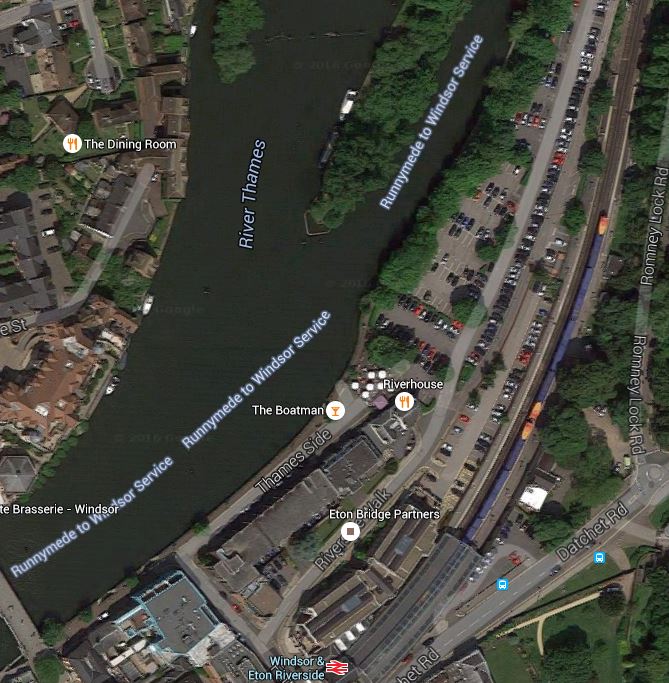
Windsor And Eton Riverside Station And The Thames
The railway and the adjacent car parks, use a surprisingly large amount of land, that would be released by the building of the Windsor Link Railway.
The Windsor Link Railway could be a single track tunnel, as the maximum frequency would only be four trains per hour in both directions, which would enter the tunnel around the end of the current platforms.
Obviously, all of the land where the current station and car parks would be available for development. There would just be a rail tunnel in the basement.
I also feel that done properly, this development with its superb location on the river, should be car-free.
If that is the case, then perhaps Windsor needs a station under this development?
As the development will be pretty grand and very desirable, I would design a station with the following characteristics.
- Single-platform able to accept twelve-car trains. We don’t want to build a restriction for the future.
- All trains could be IPEMUs running on batteries in the tunnel. Quiet, very green and no dangerous electrification.
- Platform-edge doors. They’re probably needed under EU safety legislation.
- Double-ended with one entrance in the development and another in Thames Street. If tourists can’t drive, they need to be in the centre.
I think with modern station design, that a single-platform station would be sufficient, although, it would probably restrict services to four trains per hour in each direction.
We’ve never built a combined up-market station and luxury development in this country yet, although there are quite a few stations like Dalston Junction with lots of dwellings on the top.
Windsor And Eton Riverside could be the place to start.
Property Development At Windsor And Eton Central Station
If the Riverside site could be properly developed, what about, where the Windsor Link Railway are proposing to put their proposed Windsor Royal station.
This is a Google Map of the area to the West of Windsor And Eton Central station.

Note how the area is dominated by coach and car parks. Visitors want to come to see the river and the castle, socialise a bit, have a drink and a meal, and perhaps buy some tatty souvenirs. They don’t want to look at car and coach parks.
In Connecting The Windsor Link Railway To The Slough To Windsor And Eton Line, I looked at the engineering and I don’t think building the rail connection is impossible.
It is my view, that you build the railway and the station in the best way for train operation and passenger convenience. The station would probably have the following characteristics.
It could be a traditional surface station or underground, with minimal buildings above the surface.
I prefer the underground station, as it has other advantages.
- There would be lots of entrances facing in all directions. Think fosteritos!
- It could have a single-platform or a double-platform/island layout, capable of handling twelve-car trains.
- Platform-edge doors.
- A single track would lead to Slough and also to the tunnel under Windsor.
In the hole for an underground station, it would also probably be a good idea to build an adequately-sized underground car and coach park.
But surely visitors need some form of decent Park-And-Ride using an uprated train service. Such a station is envisaged by the Windsor Link Railway at Chalvey Interchange, which is South of Slough close to the M4.
Once the new station and the railway is fully connected, there is a magnificent opportunity to create a world-class park and related development over the top, between the existing railway viaduct and the iconic Thames.
The redundant Central station and the unused part of the massive viaduct would be developed appropriately.
Let’s face it Windsor is rather a crap and tatty tourist dump at the present time. The Windsor Link Railway could give the town the opportunity to give the historic town and castle the environment and status, it needs and deserves.
The Trains
In The IPEMU And The Windsor Link Railway, I wrote how IPEMU trains could make the design and building of the Windsor Link Railway easier and more affordable.
I believe it is essential that the Windsor Link Railway is run using trains with an IPEMU capability.
I also believe that as I saw in Future-Proofing The Uckfield Branch, that all platforms including the bay platform at Slough station must be capable of accepting twelve-car trains.
I am assured that this is in the design.
The Central Tunnel
I would suspect that many people would feel that digging the central tunnel across Windsor will be an enormously expensive operation.
Construction companies put in cut-and-cover tunnels like this all over the world and especially in Germany. The last tunnel, I saw being built was the large Stadtbahn Tunnel in Karlsruhe right down the main street, which would take the German version of the Class 399 tram-train.
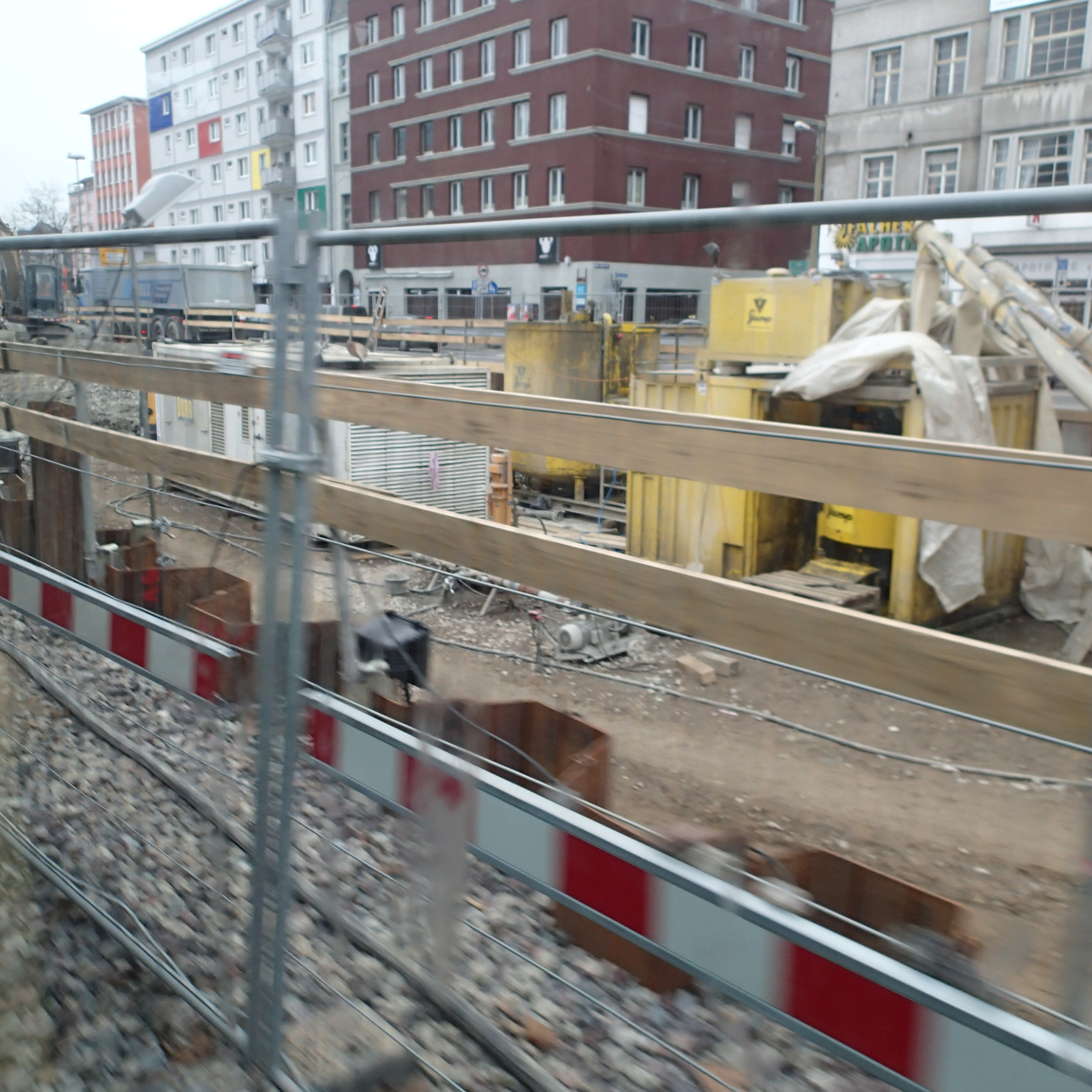
Whilst this tunnel is controversial and has its problems, it is much larger than that proposed through Windsor. The final cost estimate for Karlsruhe eas €588million for a double-track tunnel, which is 3.5km. long and has seven stops.
In the UK, the only similar tunnel is the Dalston Western Curve, where a new tunnel was dug along an existing alignment.
This article in the Londonist describes a visit to the tunnel before it opened.
Intriguingly, the Dalston tunnel was reportedly dug by a German sub-contractor, who specialise in getting trams in tight places.
We sometimes seem too conservative when we dig tunnels. I can’t think of a cut-and-cover tunnel built in the last twenty years in the UK? Not even one built to create an entrance to a car park!
In June last year I wrote Walking The Proposed Route Of The Windsor Link Railway. I felt afterwards that a single-track tunnel between the area of the Riverside station and a new Windsor Royal station to the North of the current Central station would be possible.
Since then, the IPEMU train has become a serious possibility and if trains on the Windsor Link Railway had this capability, then the tunnel could have these characteristics.
- Single-track tunnel.
- Built using cut-and-cover.
- No electrification.
- IPEMU trains only in the tunnel.
- Evacuation walkway like the DLR.
- No massive ventilation and evacuation shafts.
My project management knowledge tells me, that this is the sort of tunnel, that could be built without causing too much disruption to train services and road traffic, by getting all of the jobs in the right logical order.
Conclusion
The Windsor Link Railway, is a project that must be judged as a whole.
But do that and there is a lot of money to be made from property development, which would more than pay for the railway.
The IPEMU And The Windsor Link Railway
The IPEMU or to use its full name, an Independently Powered Electric Multiple Unit, is a form of Electric Multiple Unit, which has on-board electricity storage, so that it has a limited range on lines without electrification.
Bombardier have shown it is a serious concept, by allowing the general public to ride their prototype in passenger service between Manningtree and Harwich during six weeks in early 2015.

An Outwardly Normal Class 379 Train
Note the following about IPEMU trains.
- IPEMUs look and ride like the standard train to passengers, with everything passengers expect.
- On electrified lines, IPEMUs run and accelerate like the standard train.
- IPEMUs can run for up to fifty miles using electricity stored in the on-board energy storage.
- The on-board energy storage is charged when the train is running on electrified lines.
- The train can run on any line without electrification, where a modern diesel multiple unit of the same length or longer can run.
- IPEMUs use regenerative braking, so all energy generated from braking is stored and used to restart the train.
- IPEMUs can be 25 kVAC overhead, 750 VDC third-rail or dual-voltage.
- The on-board energy storage can be batteries, super-capacitors or Formula One-style KERS.
There were rumours in the September 2015 Edition of Modern Railways, that Great Western Railway was going to convert some of their Class 387 trains to IPEMU operation.
How would IPEMUs help in the creation of the Windsor Link Railway?
Click here for a map of the Windsor Link Railway!
I think it is sensible to assume that all trains running on the Windsor Link Railway could have an IPEMU capability and the ability to take power from both third-rail and overhead electrification.
In Phase 1, using IPEMUs would mean.
- Trains from London would run using the existing third-rail electrification and would fully charge the energy storage before Windsor.
- The linking tunnel would not have any electrification and would thus be safer.
- The linking tunnel would only need to be wide and high enough for safe operation of the trains.
- The linking tunnel could be single-track with a passing loop/island platform station, as the proposed maximum frequency is four trains per hour in each direction.
- The Slough to Windsor Line would not be electrified, so would be visually unchanged, with no ugly overhead wires.
- Trains would run through Windsor and on to Slough using the on-board energy storage.
Less than ten miles of a trip from London to Slough via Windsor and back, would be run on batteries.
In Phase 2, using IPEMUs would mean.
- No new lines would need to be electrified.
- The tunnels would not be electrified and just large enough for safe operation.
- Bridges would not need to support overhead electrification gantries.
- Trains would run betwen the main lines and Heathrow Airport using the on-board energy storage.
Only a few miles of each trip would be run on batteries.
Future-Proofing The Uckfield Branch
The Uckfield Branch of the Oxted Line was open today, so as in A Trip To Uckfield, I had to use a Rail Replacement Bus from Crowborough, I took a train to Uckfield station and back from London Bridge. These are some of the pictures I took at Uckfield station.
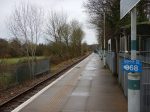
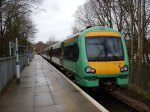
I can’t disagree with what I said in the previous post.
The platform work is certainly being done to a standard and length, that should be good enough, if the Uckfield Branch is used to create a second Brighton Main Line, by extending the line past Uckfield to Lewes on the route of the former Wealden Line.
All of the platforms I have seen on the Oxted Branch seem to be capable of taking a twelve-car train.
Uckfield’s Long Single Platform
Although, I suspect that Uckfield itself could be a bit longer, especially as workers still seemed to be extending it further to the North.
I would think, that this long platform would enable two eight-car trains to be parked in the station, if there was a need in the Peak or because one of the trains had failed.
It’s just more future-proofing.
Oxted’s Bay Platform
Platform 3 at Oxted station is a South-facing bay platform, which is used to provide shuttle and other services down the two branches. In the last couple of years, it has been electrified, which is just more future-proofing, in case it was required to run an electrified shuttle to East Grinstead.
IPEMUs To Uckfield?
The Oxted Line is electrified from London Bridge as far as Hurst Green station, where the two branches split.
- The East Grinstead Branch is electrified.
- Uckfield Branch is not and is about twenty miles long.
As a typical Electrostar IPEMU based on say a Class 387 train, would probably have a range of at least fifty to sixty miles, it would appear that IPEMUs could work the London Bridge or Victoria to Uckfield service.
- Between London Bridge and Hurst Green the trains would take thirty-two minutes, getting power from the third-rail electrification. Batteries would also be charged on this leg.
- Between Hurst Green and Uckfield, they would take forty-two minutes and rely on battery power.
I suspect too, that third-rail IPEMUs could charge their batteries fully before they left London Bridge.
Platform 3 at Oxted station might also be useful for charging an IPEMU running a shuttle service on the Uckfield Branch.
In my view, the work done on the Uckfield Branch in recent months has created a line, that would be an ideal route for IPEMUs to provide the service.
- Platforms have been sufficiently lengthened.
- Signalling can probably already cope with the longer trains.
- There is no more electrification required.
All that is needed is to add an IPEMU-capability to the required number of Class 387 trains and train the staff.
How Long Is An IPEMU?
There is one mathematical and marketing problem, that must be solved before trains are run.
Class 387 trains come in sets of four-cars and on Thameslink, typically run in formations of four-, eight- or twelve-cars.
What is the optimal length to run services on the Uckfield Branch, as determined by passenger demand?
And can this length of train be provided?
I’ve not seen anything for instance, which says how many IPEMUs can form a single train.
But I suspect that Bombardier wouldn’t design a train, without a multiple-working capability.
And of course, the Uckfield Branch has been future-proofed for twelve cars.
I suspect that the capacity of the Uckfield Line will be determined more, by the size of the car parks.
Onward To Lewes
This article in the Uckfield News is entitled £100k Budget pledge for Uckfield to Lewes rail line study.
So it is possible that the Uckfield Branch could be extended by about ten miles to Lewes, along the route of the disused Wealden Line.
Intriguingly, as Lewes is fully electrified an IPEMU train going from London Bridge to Lewes would do less distance on batteries than a train going from London Bridge to Uckfield and back.
One of the problems with extending past Uckfield, is that the trains would have to cross the B2102 by the station in the middle of Uckfield.
This used to be a level crossing and I’m certain, that this option will not be reinstated for safety reasons. It has to be said, that as an IPEMU could cross on battery power, there might be a better solution, than a traditional level crossing.
But IPEMUs have another advantage, in that they could use a short underpass without electrification. I just wonder whether that some clever design could squeeze the railway line under the road.
Conclusion
If the passenger demand is there, there would appear nothing in the design of the upgrade to the Uckfield Line, to stop IPEMUs being used to fulfil that demand.
D-Train Prototype Takes Big Step Forward
This is title of an article in Rail Magazine, which shows a picture of a two-car Class 230 train.
I have a feeling that because of all the other developments in the UK rail industry, that sadly for the project’s backers, that this will be a project filed under Heroic Failures.
If Arriva Rail North can find ways to buy a new fleet of CAF Civity trains and IPEMU technology breaks through as expected, the market in the UK for the D-Train must be getting a lot smaller.
It could be getting to the point, where the train is totally unsaleable in the UK.
We Think We Have Problems With Rail Viaducts
Some of the most impressive structures on the UK’s railways are the Victorian brick viaducts.
- Digswell Viaduct on the East Coast Main Line at Welwyn.
- Dollis Brook Viaduct is the highest point on the London Underground.
- Dutton Viaduct on the West Coast Main Line.
- Imberhome Viaduct is on the Bluebell Railway.
- Kingsland Viaduct is my local viaduct on the East London Line.
- London Bridge – Greenwich Railway Viaduct in South East London is one of the oldest.
- London Road Viaduct on the East Coastway Line in Brighton
- Ribblehead Viaduct on the Settle to Carlisle Line is regularly featured in newspapers, often with steam trains on the top.
- Royal Border Bridge on the East Coast Main Line at Berwick-on-Tweed is Grade 1 Listed.
- Sankey Viaduct was built in the 1820s, is Grade 1 Listed and is considered the earliest major railway viaduct in the world.
- Stockport Viaduct is the largest brick structure in the UK.
- Welland Viaduct is on the Oakham to Kettering Line.
All of this small selection are still in use on the railways and are Grade II Listed or better.
Many have been renovated at great expense in the last few years and I was prompted to write this post after reading this article on the Network Rail web site, which is entitled Bridges improvement plan for Cheshire will revitalise landmarks. This is said.
Network Rail will refurbish four bridges and two viaducts during an 11-day closure of the Crewe to Manchester and Sandbach to Northwich railway lines, from 13 to 24 February 2016.
The vital work will make the railway safer and more reliable for passengers, motorists, pedestrians and canal users across the county.
Two of Cheshire’s most well-known architectural landmarks, the Grade-II listed viaducts at Holmes Chapel and Peover, will have a full makeover as part of the programme. Water stains on the walls of both viaducts will be removed, damaged brickwork repaired and both structures waterproofed.
At the same time, Network Rail engineers will undertake strengthening work to the Hungerford Road bridge in Crewe, Shipbrook Road bridge in Rudheath, and to the Whatcroft underbridge and the Trent and Mersey Canal bridge in Davenham.
In some ways all this work is a tribute to those Victorian engineers and bricklayers, who designed and built them in the first place.
But it’s an awful lot of work to do!
So I asked myself, if these structures are a uniquely British heritage.
Google and Wikipedia revealed this article about the Göltzsch Viaduct on the Liepzig-Hof Line in Germany. This is said.
It is the largest brick-built bridge in the world, and for a time it was the tallest railway bridge in the world.
As you can get a direct train from Liepzip to Hof, I think, it is still one very much in use.
I think next tme, that I’m in the area, I shall visit.
Brexit Referendum Betting Odds
This is a log of the Brexit Referendum Betting Odds or Oddschecker.
- February 20th – Stay 2/5 – Leave 5/2
- February 21st – Stay 4/11 – Leave 5/2
- February 22nd – Stay 2/5 – Leave 15/8 – Boris comes out!
- February 23rd – Stay 4/9 – Leave 21/10 – Business leaders letter in Times
- February 24th – Stay 2/5 – Leave 9/4
- February 25th – Stay 2/5 – Leave 9/4
- February 26th – Stay 2/5 – Leave 9/4
- February 27th – Stay 4/11 – Leave 9/4
- February 28th – Stay 4/11 – Leave 9/4
- February 29th – Stay 4/11 – Leave 9/4
- March 1st – Stay 4/11 – Leave 9/4
- March 2nd – Stay 4/11 – Leave 9/4
- March 3rd – Stay 4/11 – Leave 9/4
- March 4th – Stay 4/11 – Leave 5/2
- March 5th – Stay 4/11 – Leave 5/2
- March 6th – Stay 4/11 – Leave 5/2
- March 7th – Stay 4/11 – Leave 5/2
- March 8th – Stay 4/11 – Leave 5/2
- March 9th – Stay 4/11 – Leave 5/2
- March 10th – Stay 4/11 – Leave 5/2
- March 11th – Stay 4/11 – Leave 12/5
- March 12th – Stay 4/11 – Leave 12/5
- March 13th – Stay 4/11 – Leave 12/5
- March 14th – Stay 4/11 – Leave 12/5
- March 15th – Stay 2/5 – Leave 9/4
- March 16th – Stay 2/5 – Leave 9/4
- March 17th – Stay 2/5 – Leave 2/1 – Budget on the 16th
- March 18th – Stay 2/5 – Leave 21/10
- March 19th – Stay 2/5 – Leave 21/10
- March 20th – Stay 3/8 – Leave 2/1 – DLS Resigns
- March 21st – Stay 3/8 – Leave 2/1
- March 22nd – Stay 7/19 – Leave 2/1
- March 23rd – Stay 4/9 – Leave 15/8 – Brussels Attacks
- March 24th – Stay 4/9 – Leave 15/8
- March 25th – Stay 4/9 – Leave 15/8
- March 26th – Stay 4/9 – Leave 2/1
- March 27th – Stay 2/5 – Leave 15/8
- March 28th – Stay 2/5 – Leave 15/8
- March 29th – Stay 2/5 – Leave 15/8
- March 30th – Stay 4/9 – Leave 15/8
- March 31st – Stay 4/9 – Leave 15/8
- April 1st – Stay 2/5 – Leave 15/8
- April 2nd – Stay 2/5 – Leave 2/1
- April 3rd – Stay 2/5 – Leave 2/1
- April 4th – Stay 2/5 – Leave 2/1
- April 5th – Stay 4/9 – Leave 2/1
- April 6th – Stay 4/9 – Leave 2/1
- April 7th – Stay 4/9 – Leave 2/1
- April 8th – Stay 4/9 – Leave 2/1
- April 9th – Stay 4/9 – Leave 2/1
- April 10th – Stay 4/9 – Leave 2/1
- April 11th – Stay 4/9 – Leave 2/1
- April 12th – Stay 4/9 – Leave 2/1
- April 13th – Stay 4/9 – Leave 2/1
- April 14th – Stay 4/9 – Leave 21/10 – Corbyn comes off the fence
- April 15th – Stay 4/9 – Leave 21/10
- April 16th – Stay 4/9 – Leave 21/10
- April 17th – Stay 4/9 – Leave 21/10
- April 18th – Stay 4/9 – Leave 21/10
- April 19th – Stay 1/2 – Leave 21/10 – Gove speaks
- April 20th – Stay 1/2 – Leave 15/8
- April 21st – Stay 4/9 – Leave 2/1
- April 22nd – Stay 4/9 – Leave 2/1 – Obama speaks
- April 23rd – Stay 4/11 – Leave 12/5
- April 24th – Stay 4/11 – Leave 5/2
- April 25th – Stay 1/3 – Leave 13/5
- April 26th – Stay 2/7 – Leave 3/1
- April 27th – Stay 1/3 – Leave 5/2
- April 28th – Stay 1/3 – Leave 5/2
- April 29th – Stay 1/3 – Leave 5/2
- April 30th – Stay 4/11 – Leave 5/2
- May 1st – Stay 1/3 – Leave 5/2
- May 2nd – Stay 4/11 – Leave 5/2
- May 3rd – Stat 4/11 – Leave 5/2
- May 4th – Stay 4/11 – Leave 12/5
- May 5th – Stay 4/11 – Leave 23/10
- May 6th – Stay 4/11 – Leave 9/4
- May 7th – Stay 4/11 – Leave 12/5
- May 8th – Stay 4/11 – Leave 12/5
- May 9th – Stay 4/11 – Leave 13/5
- May 10th – Stay 4/11 – Leave 13/5
- May 11th – Stay 4/11 – Leave 13/5
- May 12th – Stay 4/11 – Leave 13/5
- May 13th – Stay 4/11 – Leave 13/5
- May 14th – Stay 1/3 – Leave 12/5
- May 15th – Stay 1/3 – Leave 12/5
- May 16th – Stay 1/3 – Leave 5/2
- May 17th – Stay 3/10 – Leave 11/4
- May 18th – Stay 2/7 – Leave 11/4
- May 19th – Stay 2/7 – Leave 16/5
- May 20th – Stay 2/7 – Leave 15/4
- May 21st – Stay 2/9 – Leave 4/1
- May 22nd – Stay 2/9 – Leave 15/4
- May 23rd – Stay 2/9 – Leave 7/2
- May 24th – Stay 2/11 – Leave 4/1
- May 25th – Stay 2/11 – Leave 4/1
- May 26th – Stay 2/11 – Leave 9/2
- May 27th – Stat 1/6 – Leave 17/4
- May 28th – Stay 1/6 – Leave 4/1
- May 29th – Stay 1/5 – Leave 4/1
- May 30th – Stay 1/5 – Leave 4/1
- May 31st – Stay 2/9 – Leave 4/1
- June 1st – Stay 3/10 – Leave 16/5
- June 2nd – Stay 3/10 – Leave 11/4
- June 3rd – Stay 1/3 – Leave 11/4
- June 4th – Stay 4/11 – Leave 5/2
- June 5th – Stay 1/3 – Leave 5/2
- June 6th – Stay 4/11 – Leave 12/5
- June 7th – Stay 2/5 – Leave 9/4
- June 8th – Stay 1/3 – Leave 5/2
- June 9th – Stay 1/3 – Leave 11/4
- June 10th – Stay 3/10 – Leave 11/4
- June 11th – Stay 4/11 – Leave 9/4
- June 12th – Stay 2/5 – Leave 9/4
- June 13th – Stay 5/12 – Leave 2/1
- June 14th – Stay 4/7 – Leave 7/4
- June 15th – Stay 8/13 – Leave 7/5
- June 16th – Stay 6/11 – Leave 13/8
- June 17th – Stay 1/2 – Leave 13/8
- June 18th – Stay 8/15 – Leave 7/4 – The assassination of Jo Cox
- June 19th – Stay 4/9 – Leave 9/4
- June 20th – Stay 4/11 – Leave 12/5
- June 21st – Stay 1/4 – Leave 3/1
- June 22nd – Stay 2/7 – Leave 3/1
- June 23rd – Stay 3/10 – Leave 10/3
I shall let the figures do the talking.
Will We Vote For Cameron’s Deal On Europe?
I don’t know the answer and there are probably only a couple of people who can predict the result with any certainty.
I’ve just looked at the reliable Odds Checker web site for their Brexit Referendum Betting Odds and as I write this post, it is 5/2 On to stay in and 5/2 that we’ll leave.
If I vote and I probably will, as the first time I voted was for the EU Referendum of 1975, it will probably be to stay in, as I am a committed European in habit and probably culture.
I also think that we should be in a reformed Schengen Area and that we need a more flexible payment system.
Schengen is an ideal, but in the modern world of terrorism, international crime and immigration pressures, it falls down a deep hole.
What could replace it, I know not, but surely we can find something, that is better than what we have now.
Flexible payments will happen, as cash is replaced by contactless payments on cards and mobile phones.
How long will it be until I look at my credit card statement and see real -time transactions in pounds despite spending them all over the world in euros, dollars and Ruritanian groats?
We will be moving inexorably towards a World electronic currency, that appears to everybody as the one they want to use.
Let’s face it, it’s only software.
The currency merging will be led by the Anglo-Saxon English-speaking triumvirate; the US/Canada, the UK and Hong Kong/Singapore.
The Eurozone will be unable to keep the Euro out of this juggernaut.
Europe’s biggest problem is migration and despite what you read in the Mail and the Express, because of our island status, we are isolated from the worst excesses of uncontrolled migration into the European Union.
I think it will have further effects after it destroys Schengen in its present form.
There are elections in a lot of European states soon!
Will we see fruit-cake parties campaigning against more migration and for a renegotiating of their relationship with the European Union, as David Cameron has just done?
You bet we will!
David Cameron has truly opened Pandora’s Box!
Putin And Europe’s Far Right
There was a headline in The Times yesterday of Le Pen’s party asks Russia for €27m loan.
So I searched for Putin’s links to far right parties and found this article in the Guardian entitled We should beware Russia’s links with Europe’s right. This is said.
It sounds like a chapter from a cheesy spy novel: far-right European party, in financial trouble, borrows a big sum of cash from a hawkish Russian president. His goal? To undermine the European Union and to consolidate ties between Moscow and the future possible leader of pro-Kremlin France.
Europe isn’t the problem! It’s Putin and Russia!
Searching For What Is Going To Happen On The East London Line After The Thameslink Programme Opens
My E-Mail To Thameslink On The 14th February
On the 14th February, I sent this e-mail to the Thameslink Programme.
At present when I go to Gatwick Airport, I get an East London Line train from Dalston Junction to New Cross Gate or Norwood Junction, from where I pick up a Gatwick Train.
Can you confirm, that the current service will be equally good or even better after the Thameslink Programme is completed?
A Reply From Thameslink On The 17th February
On the 17th February, I got this reply.
Thanks for your email.
The Thameslink Programme is transforming north-south travel through London. This infrastructure and new trains investment programme will increase capacity on one of Europe’s busiest stretches of railway. For more information on the benefits of the programme, you can visit our website here, and an interactive map of our improvement sites here.
We’ve already delivered longer, 12-car trains between Brighton and Bedford, platform lengthening at several stations, track work and upgraded stations including West Hampstead, Farringdon and Blackfriars. The most complex part of the programme is now underway; this includes rebuilding London Bridge station, and laying new track and signalling equipment around the station to create a spacious and better connected transport hub.
We are linking parts of the East Coast Mainline to the Thameslink network, allowing passengers from Cambridge and Peterborough to travel to Blackfrairs and beyond, relieving congestion on the Underground.
There will also be a link with Crossrail at our hub station at Farringdon, giving access to Gatwick, Luton and Heathrow airports and St Pancras International.
Dalston Junction is managed by TfL, and so any enquries about an improved link from this station to Gatwick should be directed to overgroundinfo@tfl.gov.uk.
I hope this is helpful, thanks for getting in touch.
Kind regards,
Jen Pattison, Thameslink Programme
My E-Mail To Overground Info On The 17th February
So I sent off a longer e-mail to Overground Info.
If say you want to go between Dalston Junction and Purley, you will certainly have to change trains.
Currently, it takes between fifty and sixty minutes and you sometimes change at New Cross Gate and at other times the suggested change is Norwood Junction.
It’s alright for me and others who know how to use the various journey calculators or apps, but what about people like my late wife, who never ever owned a smart phone or even sent a text message.
The full simple rule for Dalston Junction to Purley, seems to be something like take a West Croydon train from Dalston Junction to Norwood Junction and then get the first train to Purley from there.
Different rules apply to different stations
Thameslink is going to bring major changes to how we go places along the East London Line and especially, if we venture into any Thameslink territory.
My simple example of Dalston Junction to Purley might get a lot more complicated, as some documents and web pages, say that Thameslink services between London Bridge and East Croydon will not stop. So how do passengers on the East London Line catch these trains to places like Purley, Gatwick and Brighton?
To get to Thameslink, those on the East London Line, will have to go to Whitechapel and get a train to Farringdon or St. Pancras
That will be a pain for anybody, whose local station is anywhere on the East London Line and very much a degradation of the current service.
Those living near Norwood Junction have already lodged a petition with the London Assembly.
My Reply From OvergroundInfo On The 19th February
On the 19th February, I got this reply.
Thank you for contacting London Overground.
I am sorry however I am unable to help with the issue you raise. They will be best addressed by Thameslink.
As a result I have passed your comments to them. I am sure that you will hear from them soon, however if you want to contact them their details are:
You certainly can’t complain about the promptness of the replies but I’m back to square one.
All I want to know, is how the millions of us in East London will get to Gatwick Airport, as conveniently as we do now!
Serial Cooking – Lemon And Spinach Cod Gratin
This recipe is another from Lindsey Bareham in The Times.
Lindsey called it a speedy gratin, based on an idea from a reader.


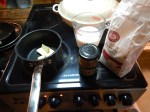






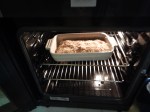


I made it as one large one for two helpings for myself.
 The Anonymous Widower