Green Trains On Their Way To Power One Of The World’s Most Abundant Mining Regions
The title of this post, is the same as that of this article on the Australian Broadcasting Corporation.
It is a comprehensive article, with maps, pictures and background information about the project I wrote about in Anglo American And Aurizon Look To Hydrogen-Powered Trains, that will create hydrogen-powered freight locomotives for Australia.
It should be noted that Aurizon operates a few hundred diesel-electric locomotives, so switching to hydrogen, would probably cut a lot of carbon emissions.
Kawasaki’s Liquefied Hydrogen Carrier Departs To Pick Up First Cargo
The title of this post, is the same as that of this article on Green Car Congress.
This is the first paragraph.
Kawasaki Heavy Industries’ Suiso Frontier, the world’s first liquefied hydrogen carrier, has left Japan to pick up its first hydrogen cargo in Australia. A return to Japan is expected around late February.
As the cargo is only seventy-five tonnes of liquid hydrogen, I have my doubts about shipping hydrogen from Australia to Japan.
Late February is two months away, so this represents a production rate of 37.5 tonnes per month.
In Can The UK Have A Capacity To Create Five GW Of Green Hydrogen?, I said the following.
Ryze Hydrogen are building the Herne Bay electrolyser.
- It will consume 23 MW of solar and wind power.
- It will produce ten tonnes of hydrogen per day.
The electrolyser will consume 552 MWh to produce ten tonnes of hydrogen, so creating one tonne of hydrogen needs 55.2 MWh of electricity.
This would mean that if the Japanese built one Herne Bay-size electrolyser, then it would produce around three hundred tonnes of hydrogen in an average month.
The only possible use for this ship at the moment, is as a research project to identify the problems of the transportation of hydrogen over long distances by sea.
But we may need to use ships for the coastal transportation of hydrogen in the UK and to Europe.
Anglo American And Aurizon Look To Hydrogen-Powered Trains
The title of this post, is the same as that of this article on World Coal.
This is the first paragraph.
Australia’s largest rail freight operator, Aurizon, and leading global mining company, Anglo American, have agreed to work together on a feasibility study to assess the introduction of hydrogen-powered trains for bulk freight in Queensland.
I find it interesting and very ironic, that this partnership has been formed, partly to transport the product, with the most polluting of end uses; coal.
The article also says this about Anglo American’s policy on decarbonisation of their mines.
As part of its commitment to carbon neutral mines by 2040, Anglo American has taken a global lead in the development of green hydrogen solutions for its ultra-class 290 t payload mine haul trucking fleet. Anglo American’s unique combination of powertrain technologies, designed to operate safely and effectively in real-world mine conditions, will displace the use of the majority of diesel at its mining operations, with an advanced trial of the prototype truck at its Mogalakwena platinum group metals mine in South Africa.
It does appear that the partnership are starting from a proven base of hydrogen technology.
Conclusion
This looks like a sound real-world project to produce a hydrogen-powered zero-carbon locomotive.
10GW Green Hydrogen Project Aims To Electrolyze Water Drawn From Desert Air
The title of this post, is the same as that of this article on Hydrogen Fuel News.
This is the first paragraph.
Desert Bloom, an AUD$10.75 billion (USD $7.63 billion) 10GW green hydrogen project will begin construction in Australia’s Northern Territory in 2022.
Desert Bloom is not a small project and uses new technology from Aqua Aerem.
Andrew Forrest, AGL Partner To Explore Hydrogen Option For Hunter Valley Coal Plants
The title of this post, is the same as that of this article on abc.
This is the first paragraph.
Mining billionaire Andrew Forrest said hydrogen would eventually “dwarf” the coal industry as he announced plans to develop a green hydrogen hub in the New South Wales Hunter Valley.
I wish Forrest well with this venture, because if he makes a success of it, it could form a model for lots of other places in the world.
He’s certainly a man on a mission.
Fortescue Unveils Green Investment Framework
The title of this post, is the same as that of this article on Mining Weekly.
This is the first paragraph.
Iron-ore major Fortescue Metals this week launched its Sustainability Financing Framework, enabling the future issuance of green and social debt instruments that will support investments in eligible green and social projects.
I have to admit, that I thought something like this might happen, after seeing all the Fortescue Future Industries publicity on a bus, which I wrote about in Green Hydrogen Can Save Us. But Waiting For It Won’t.
I did say this in that post.
Andrew Forrest is intending to get his message across to the City.
But I didn’t take any action.
I can see other companies and investment trusts following Andrew Forrest’s lead.
Fortescue Future Industries As A First Mover In Global Green Hydrogen And Next Generation Mining Equipment
The title of this post, is the same as that of this article on International Mining.
This is the most significant sentence in the article.
Fortescue has set an industry leading target to be carbon neutral by 2030.
The article details how Andrew Forrest’s company intends to do it.
I found the article a fascinating read.
‘Unique’ Solar-Storage Solution Providers Plot 300MW / 3.6GWh Australia Project
The title of this post, is the same as that of this article on Energy Storage News.
The first two paragraphs outline the system.
A 1,200 hectare site in South Australia has been secured by a developer hoping to use it to build a 300MW solar power site with 3.6GWh of energy storage, based on a novel technology solution.
Europe-headquartered renewables company Photon Energy is working to roll out the technology created by Australian company RayGen. It combines a kind of concentrating solar power (CSP) + solar photovoltaics (PV) hybrid that RayGen calls ‘PV Ultra’, paired to a long-duration energy storage tech dubbed ‘thermal hydro’.
Thermal hydro appears to be an interesting concept, which uses hot and cold water reservoirs to store energy. Electricity is retrieved using a Rankin cycle engine and the claimed roundtrip efficiency is seventy percent.
This power plant might seem to be very futuristic, but a 4MW solar with 3MW / 50MWh of energy storage project is already under construction and should go on-line in the middle of next year.
The developer; Photon Energy hopes to get the giga-plant ready-to-build by the end of 2023.
This concept could be a very useful one, where there is enough sun for concentrating solar power.
Mineral Carbonation International Win COP26 Clean Energy Pitch Battle
The title of this post, is the same as that of this article on Gasworld.
I have been following Australian company; Mineral Carbonation International for a few months and I am glad to see their technology, which turns carbon dioxide into bulk solid materials like building blocks and plasterboard, has now been recognised at a high level.
This is a screen capture of their home page.

The company certainly has a dream!
Read the website.
I believe that it is technology like this that will help to save the world from climate change.
I am glad that the great and good at COP26 are thinking along the same lines as myself!
Australia’s FFI Plans $8.4 Billion Green Hydrogen Project In Argentina
The title of this post, is the same as that of this article on S & P Global.
A couple of weeks ago I had not heard of Fortescue Future Industries (FFI), but then they did the deal with JCB, that I wrote about in JCB Signs Green Hydrogen Deal Worth Billions.
This paragraph gives a few more details of the deal with Argentina.
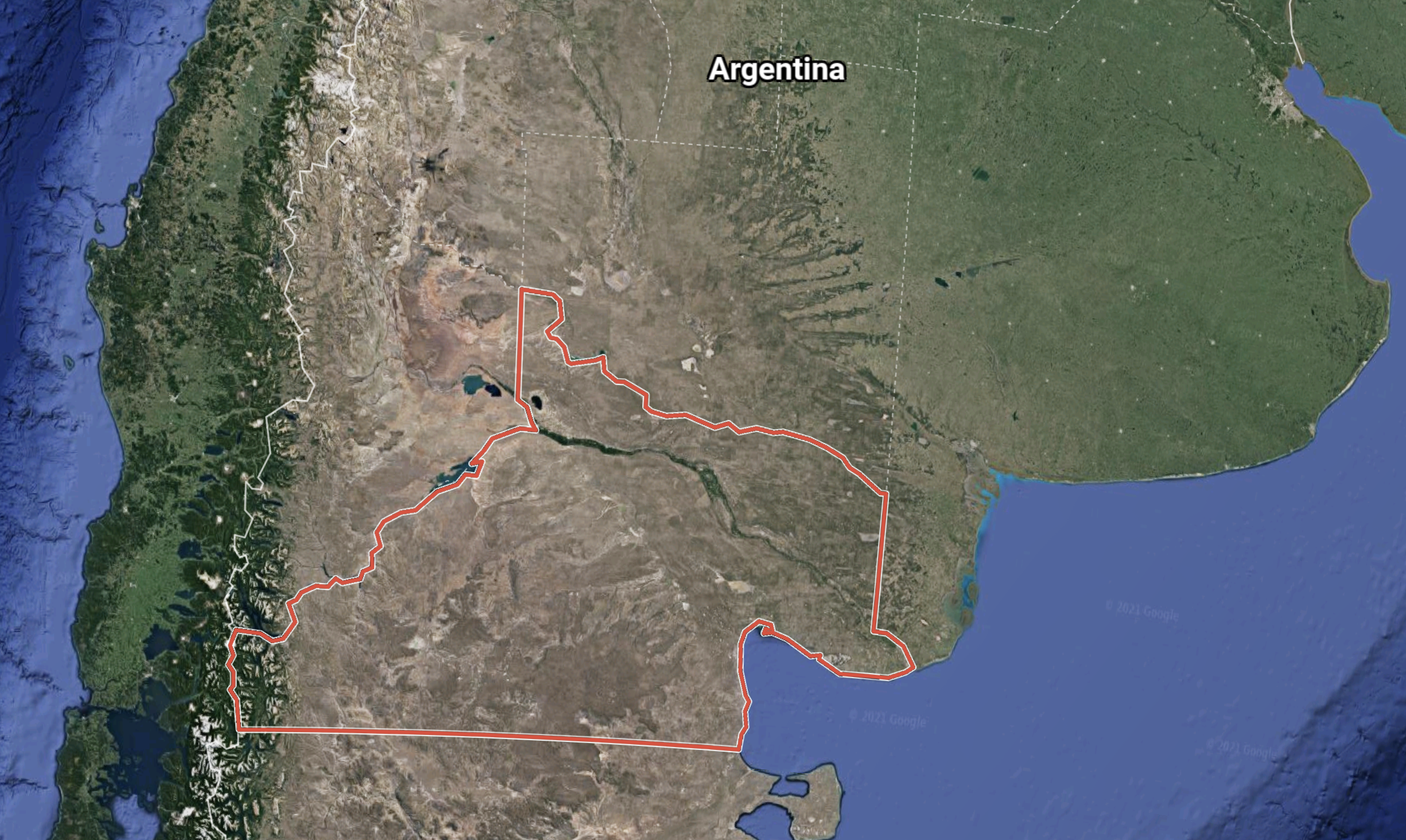
The Australian company, which produces green hydrogen from electrolysis powered by renewable electricity, first plans to test the wind power potential in Rio Negro, a southern province in Patagonia, before building a pilot facility and then shifting into full-scale development.
This Google Map shows the Rio Negro province.
Note.
- The province is outlined in red.
- Buenos Aires is on the estuary of the River Plate in the North East corner of the map.
- Puerto Madryn is a convenient port to the South of Rio Negro, which was founded by the Welsh.
According to the article, it looks like much of the hydrogen will be shipped to Germany.
Conclusion
Fortescue Future Industries is extremely serious about hydrogen.
 The Anonymous Widower