A Quick High-Fibre Meal
I have been told that because of my uncomplicated pancolonic diverticular disease, I should try to stick to a high-fibre diet.
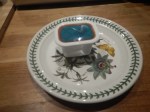
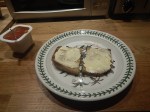
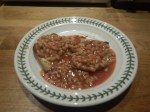
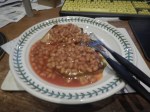
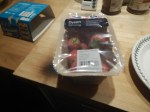
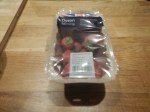
So how about beans on toast followed by strawberries?

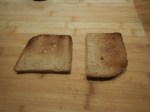
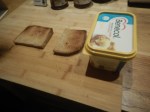
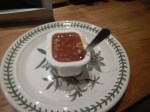

Note.
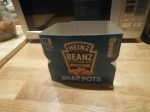
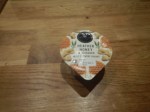
- I use Heinz Snap Pots as it cuts the washing up.
- The beans had 7.4 g. of fibre.
- The bread had 5.25 g. of fibre.
- The yoghurt had <0.5g. of fibre.
- The strawberries had 9.5 g. fibre.
- That is a total of 22.2 g. of fibre.
I used a teaspoon to stir the beans, but then I use a lot of teaspoons, when I’m cooking.
The Aerosol Tales
When I left Liverpool University in 1968, I was very familiar with the use of products distributed in aerosol cans.
- I had used aerosol shaving cream, although about that time, I acquired my beard.
- I certainly used aerosol deodorant, as did most in the 1960s.
- Aerosol paints were common for covering scuffs and scratches in your car.
- Aerosols were often used to apply sun protection.
- Aerosols containing cream or a non-dairy alternative for culinary use were not unknown.
- Aweosol lubricants were starting to appear.
Although, I went to work for the chemical giant; ICI, at that time, I had no idea how an aerosol and its can worked.
As ICI at the time, ICI were major manufacturers of aerosol propellants, I quickly learned how they worked.
The Wikipedia entry for Aerosol Spray Dispenser gives a lot of history about aerosol cans and their propellants.
The Wikipedia entry for Propellant has this paragraph describing propellants of the last century.
Chlorofluorocarbons (CFCs) were once often used as propellants, but since the Montreal Protocol came into force in 1989, they have been replaced in nearly every country due to the negative effects CFCs have on Earth’s ozone layer. The most common replacements of CFCs are mixtures of volatile hydrocarbons, typically propane, n-butane and isobutane. Dimethyl ether (DME) and methyl ethyl ether are also used. All these have the disadvantage of being flammable. Nitrous oxide and carbon dioxide are also used as propellants to deliver foodstuffs (for example, whipped cream and cooking spray). Medicinal aerosols such as asthma inhalers use hydrofluoroalkanes (HFA): either HFA 134a (1,1,1,2,-tetrafluoroethane) or HFA 227 (1,1,1,2,3,3,3-heptafluoropropane) or combinations of the two. More recently, liquid hydrofluoroolefin (HFO) propellants have become more widely adopted in aerosol systems due to their relatively low vapor pressure, low global warming potential (GWP), and nonflammability.
Note that the whole range of these chemicals, effect the ozone layer.
Rocksavage Works
ICI’s Rocksavage Works, was an integrated chemical plant by the Mersey,.
- It made all types of CFCs for aerosols and other purposes.
- It also made the fire suppressant and extinguisher; Bromochlorodifluoromethane or BCF.
- Alongside BCF, it made the anaesthetic Halothane or as ICI called it Fluothane.
- The plant was a poisonous place with all those bromine, chlorine and fluorine compounds.
- Despite this, the plant had a remarkable safety record.
I had the pleasure of working at the plant and it was where, I had most of my excellent Health and Safety training, from the amazing site foreman; Charlie Akers.
Some of the wisdom he distributed has proved invaluable in aiding my stroke recovery.
I suspect that since the signing of the Montreal Protocol, the plant has changed greatly or has even been closed.
All that appears to be left is the 800 MW gas-fired Rocksavage power station and a Facebook page.
Aerosol Baked Beans
In those days, I worked most of the time in a lab at Runcorn Heath.
One of the labs near to where I generally worked, in the large research complex, was a lab, where new aerosol products were developed and tested.
One of the standard jokes about that lab, was that they were working on aerosol baked beans. They said, they would develop the product, even of they had to eject them from the can one at a time.
Gift Time
One afternoon, the boss of the aerosol development lab came through with a tray of goodies.
On the tray, which was much like a cinema usherette’s ice cream tray of the sixties was a whole host of partly-labeled aerosol cans. Only clues to what the product might be were written on the outside in felt-tip pen.
I grabbed two, one of which was marked something like lubricating oil and the other was just marked hand cream, which I of course gave to my new wife; C.
We were married for nearly forty years and often, when she bought hand cream, she would remark, that it wasn’t of the same standard as the little can I brought home from work.
It appears to me, that one of the world’s top cosmetic companies and ICI were trying to create the world’s best and probably most expensive hand creams.
DMW
Fast-forward nearly twenty years and I was approached by Lloyds Bank about two individuals, who had developed an aerosol valve, that instead of using CFCs or other ozone-depleting chemicals.
- By the exploitation of the nether end of fluid dynamics, the propellant of the aerosol was nothing more harmless than pure nitrogen.
- I formed a company called DMW with the two inventors.
- John Gummer, who at the time was my MP and Environment Minister, knew of the aerosol valve and he took the details to Montreal.
So did a device developed in Suffolk help push through the Montreal Protocol?
Osbourne Reynolds
I also wonder, if we had some supernatural help. At the time, I lived in the family home of Osbourne Reynolds.
- He did a lot of the early work on fluid dynamics.
- He was the first UK Professor of Engineering.
- He was professor of Engineering at Manchester University for nearly forty years.
- The Reynolds number is named after him.
- Remarkably, students are sill taught on the equipment Reynolds designed.
- Reynolds was certainly one of our great Victorian scientists.
This Wikipedia entry gives more details of his remarkable life and work.
After Montreal the aerosol valve was sold to Johnson & Johnson.
DMW continued to develop other products and we had one, who no-one had any idea about how it worked.
So I discussed it with the Reynolds’s expert at Manchester University and he said he had no idea either.
But he was absolutely certain, that Reynolds would have known.
Hinkley Point C Fish Protection Plans Attacked By Environmental Organisations
The title of this post, is the same as that of this article on New Civil Engineer.
This is the sub-heading.
Revised plans to protect fish from water intake tubes for the Hinkley Point C nuclear power plant on the Severn Estuary have come under fresh criticism from environmental organisations.
These three paragraphs outline the story.
EDF recenrly proposed plans to create a saltmarsh at the Somerset nuclear plant site as an alternative to an acoustic fish deterrent. This followed the Environment Secretary having ruled in 2021, in line with Environment Agency recommendations, that the plant should install an acoustic fish deterrent.
The plant is scheduled to circulate 120,000l of water per second from the Bristol Channel to the nuclear power station through 8km underground tunnels to provide cooling for the power station’s systems.
A group of environmental non-governmental organisations (eNGOs) issued a statement coordinated by Somerset Wildlife Trust saying Hinkley Point C “will have a significant impact on marine and migratory fish including already vulnerable Atlantic salmon, twaite shad and European eel over its lifetime”.
This Google Map shows Lake Michigan, which was where I came across another tale of fish and nuclear power.
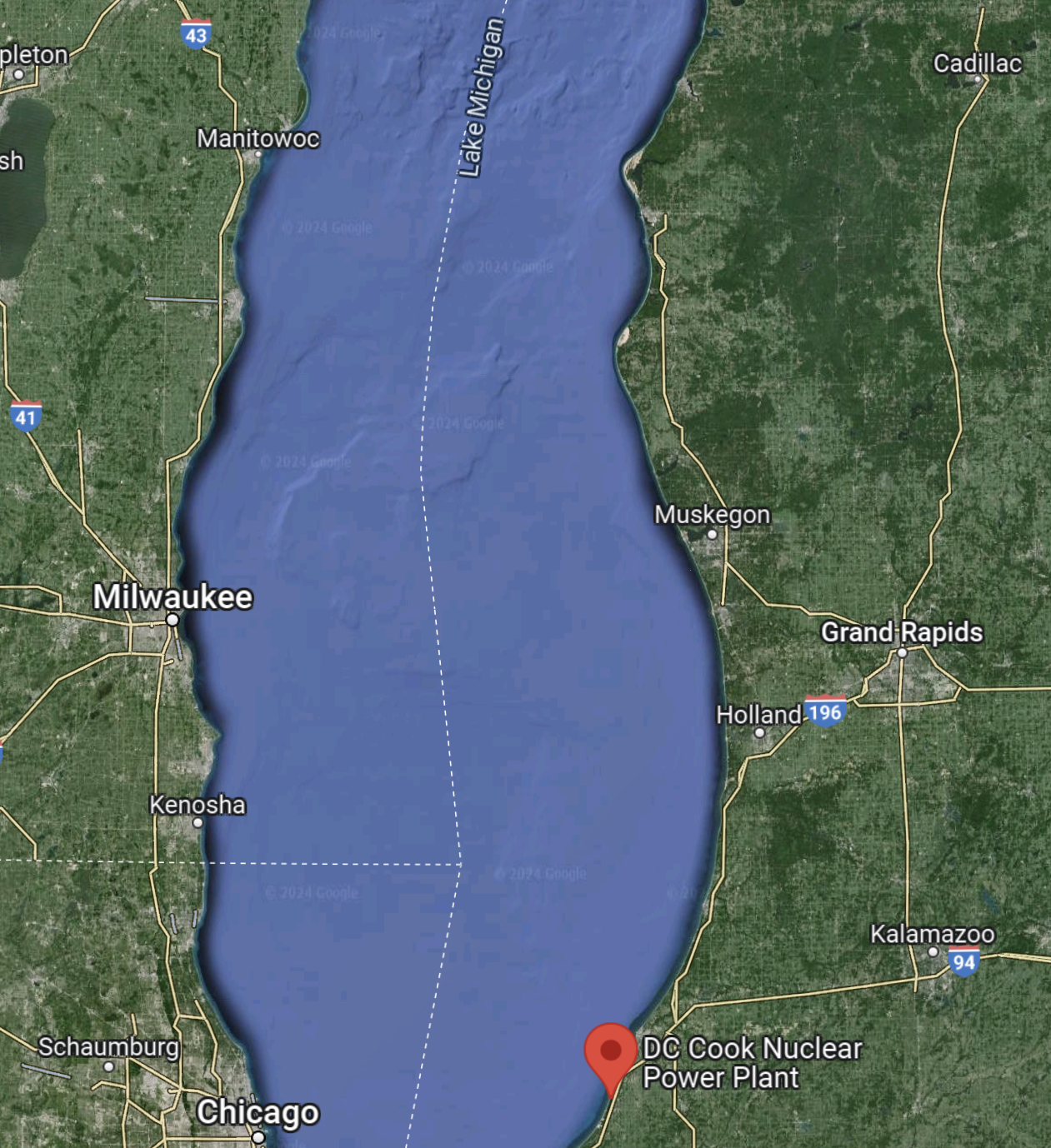
Note the red arrow, which marks the DC Cook Nuclear Power Plant.
This second Google Map shows a close-up of the plant.
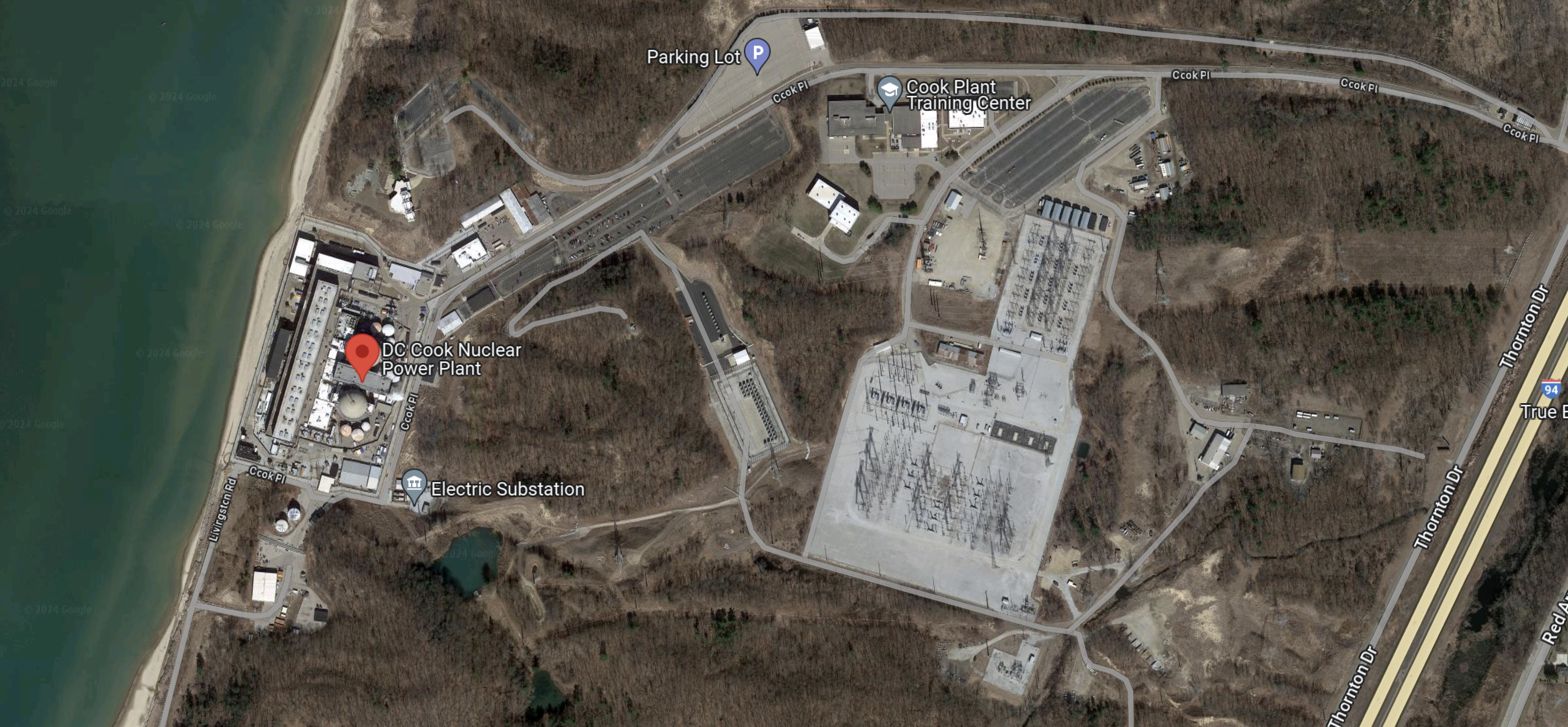
The power plant sits on the shores of Lake Michigan, from which it gets its cooling water.
In the early 1980s, after the Three Mile Island accident in 1979, I was given a tour of two nuclear power stations of which this plant was one and Shippingport or Beaver Valley was the other. Both were Artemis customers and one of the projects they were using the software on, was to plan and document all the Three Mile Island modifications or TMIs.
But it’s the Cook power plant that I remember.
- I’d turned up at Benton Harbor Airport on a very cold, snowy evening and I remember that the Hertz representation had got all the cars running so customers could drive away in the warm.
- DC Cook was impressive and very well run, and it was a very good customer visit.
- The fishy tale, I heard there was that the warm water from the power station attracted the fish and that some locals in the winter took to fishing through the ice of Lake Michigan. Occasionally, they fell through the ice.
- I was told, that some locals felt that the plant should be shut because of this, but it’s still running forty years after my visit.
- Lunch was interesting, as we went to a Michigan version of the famous Rook restaurant in the Two Ronnies. Except that every dish on the menu had something to do with beans, as that is the area of the US, where navy (baked) beans are grown. They even had a bean savoury for afters!
This article from the Huron Daily Tribune is entitled Fish Force Michigan Nuke Plant Shut Down, where these are the first two paragraphs.
Officials shut down a nuclear power plant on the eastern shore of Lake Michigan on Thursday after a large number of fish swam into the plant’s cooling-water system.
The two reactors at Donald C. Cook Nuclear Plant were idled as workers removed the fish and monitored the cooling system. It wasn’t clear when the reactor would be restarted, owner and operator American Electric Power Co. Inc. said in a statement.
It does appear that Cook was suffering from fish in the system.
I hope this doesn’t predict more delays for Hinckley Point C.
Where Are The Small Cooking Spoons?
My mother had a very small wooden cooking spoon about twelve or so centimetres long. It was ideal for warming baked beans or making scrambled eggs in a non-stick milk saucepan.
Her’s had suffered an accident and I can remember that one side was slightly burned, but it was still usable. And absolutely the eight size!
I’ve been looking for over fifty years since I left home and not found one yet!
This is the best I can do!
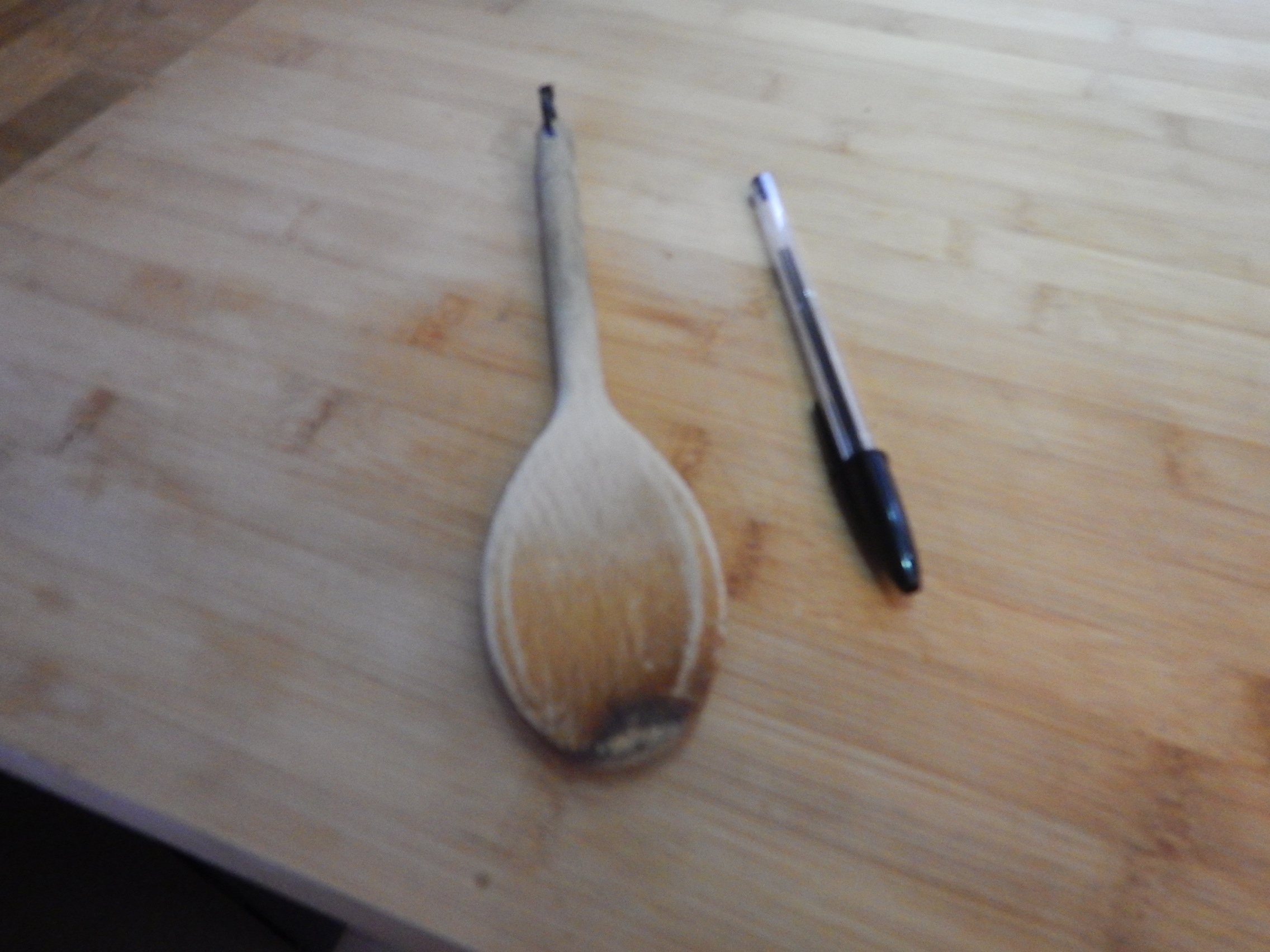
But it’s still too big! Note I have drilled a hole through the handle and fixed a cable-clip in it, so I can hang it up above my cooker.
Is it a Health and Safety requirement that spoons must be big enough, so we don’t get our fingers burned?
I’d actually like one in a high-tech plastic, as it would be easier to clean!
Baked Beans
On the subject of baked beans, I usually buy my small tins in Waitrose.
I should say, that I have a tendency to not eat enough soluble fibre and this was raising my cholesterol. A dietitian recommended that I eat one small tin of baked beans a week and use Benecol instead of margarine. It worked and meant, I avoided going on special drugs.
Last week, I fancied some baked beans with a poached egg for lunch and I was out of stock.
So I went to the corner store close to my house and bought a couple of tins of Heinz baked beans.
Obviously, no problem with cooking, eating or taste, but I found washing up of the saucepan and the spoon much easier!
Which is surely a bonus for the thirty pence extra cost of the beans.
 The Anonymous Widower