Beeching Reversal – Increased Service Provision Bodmin General-Bodmin Parkway
This is one of the Beeching Reversal projects that the Government and Network Rail are proposing to reverse some of the Beeching cuts.
This Google Map shows the relationship of the two Bodmin General and Bodmin Parkway stations.
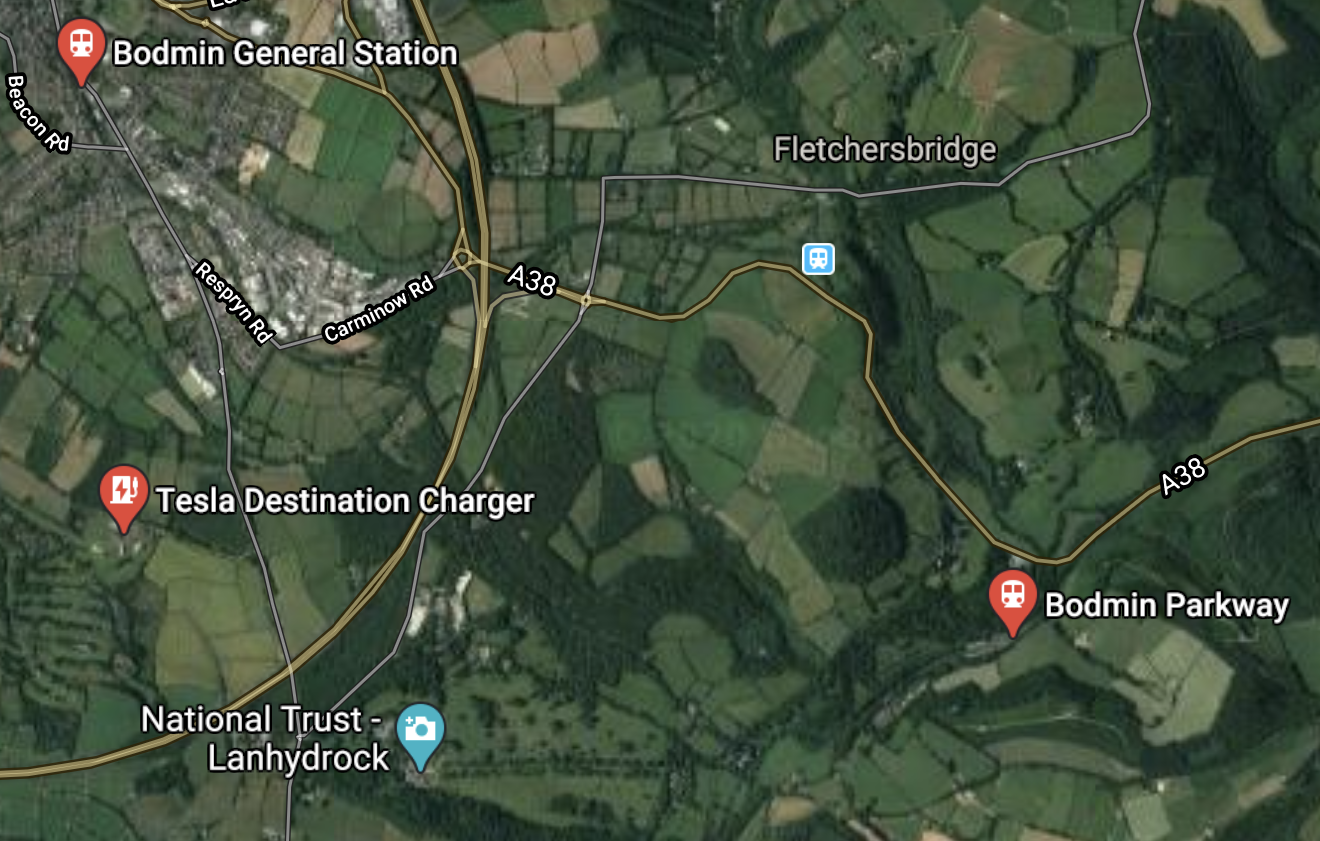
The two stations are clearly visible.
The aim of this Beeching Reversal project would appear to set up a more regular service between Bodmin Parkway station on the Cornish Main Line and Bodmin General station in the town.
This video shows some of the current trains run by the Bodmin and Wenford railway, between the two stations.
This article on Cornwall Live is entitled Plan To Link Heritage Railway At Bodmin To Mainline Train Services, gives a few scant details.
- There will be a second platform at Bodmin General station.
- This will allow extra services.
Looking at the space around Bodmin Parkway station, it should be possible to have a very comprehensive track layout, that connects the Bodmin branch to the main line.
It also appears that the platform is fully-funded from Great Western Railway (GWR) and Cornwall County Council.
Could A Shuttle Be Run Using Vivarail’s Pop-up Metro Concept?
Using Vivarail’s Pop-up Metro between the two stations is surely a possibility, with charging at either station.
What Do GWR Want In Return For Their Funding?
I think that GWR could have a couple of uses for a platform at Bodmin General station.
Reorganising The Services Between London Paddington and the South-West
Currently, there are three services on this route.
- London Paddington and Exeter St. Davids via Reading, Newbury, Pewsey, Westbury, Castle Cary, Taunton, Tiverton Parkway.
- London Paddington and Plymouth via Reading, Taunton, Tiverton Parkway, Exeter St Davids, Newton Abbot, Totnes.
- London Paddington and Penzance via Reading, Taunton, Tiverton Parkway, Exeter St Davids, Newton Abbot, Totnes, Plymouth, Liskeard, Bodmin Parkway, Lostwithiel, Par, St Austell, Truro, Redruth, Camborne, St Erth.
All services have a frequency of one train per two hours (tp2h)
Perhaps by reorganising the train paths, GWR could run another 1 tp2h service between London Paddington and Bodmin or Newquay station after the Transformation Of The Newquay Line.
Joining And Splitting Between London Paddington And The South-West
GWR’s Hitachi Class 80x trains have the ability to run in pairs, that are split and joined at convenient places en route.
This YouTube video, shows them doing it in Plymouth station.
As a means of evening out passenger loadings on pairs of trains running to the South-West, the two large stations of Exeter St. Davids and Plymouth would surely be possibilities for the manoeuvre.
I also think that Bodmin Parkway station could be used to split and join two trains from Cornwall.
- One train would come from Penzance and the West.
- The other could come from either Newquay or Bodmin General stations.
- In the future the second train, might come from a new Wadebridge station.
Bodmin Parkway station might need some small modifications, but it should be remembered that the closely-related Class 395 trains, do the deed and quickly disappear at Ashford International station.
Creating A Bodmin-Wadebridge Railway
There are also plans in the Beeching Reversal projects for the Reinstatement of the Bodmin-Wadebridge Railway
For trains to travel between Bodmin Parkway and Wadebridge stations, trains will need to reverse in the new platform at Bodmin General station.
Local Services From Exeter And Plymouth
From what I have read on the Internet, the Bodmin and Wenford Railway is an important tourist attraction and is one of several around Bodmin including the beaches and the Camel Trail.
So perhaps, a connection between Bodmin and Exeter and/or Plymouth in a vintage InterCity 125 could be a nice little earner for GWR and an appropriate way to arrive at the steam railway.
Steam Local Services From Exeter And Plymouth
Why not?
The new platform at Bodmin General station could probably take a locomotive and four coaches and all the facilities to handle steam engines are in the vicinity of the station.
Could The New Platform Be Used For High Speed Freight Shuttles?
Why not?
Rail Operations Group is looking at the possibility of running Class 769 trains as freight shuttles.
Bodmin could make an ideal Cornish terminal, as it’s the right side of county and has the main A38 close by.
Could The Platform Be Used To Charge Battery Electric Trains?
I feel that First Group are starting to embrace battery trains.
In Hitachi Trains For Avanti, I talked about how a fellow First Group company were reporting, that they might have battery trains.
If Great Western Railway were running extra trains into Cornwall, would a new platform at Bodmin General station, be an ideal place to charge a train?
Conclusion
A second platform at Bodmin General station could open up a lot of possibilities for train operating companies.
Beeching Reversal – Reopening Stratford-upon-Avon And Honeybourne-Worcester/Oxford (SWO) Railway Line
This is one of the Beeching Reversal projects that the Government and Network Rail are proposing to reverse some of the Beeching cuts.
I covered this route in RSC Urges GWR To Provide Stratford Improvements and came to these conclusions.
There are three ways to improve rail access to Stratford-upon-Avon.
-
- The relatively easy and quick, enhancement of the rail services in Warwickshire.
- Provide better one-change routes using Chiltern Railways.
- The more difficult re-connection of Stratford to the Cotswold Line at Honeybourne.
As the last project will take years to implement, I feel, it is important that services to Stratford from Birmingham, Coventry, Leamington Spa and the West Midlands are substantially increased.
I also believe that the responsibility of providing a local service between Leamigton Spa and Stratford should be given to West Midlands Trains.
The Case To Reconnect Stratford-on-Avon and Honeybourne Stations
In Where Is London Midland Going?, I wrote this section in July 2017.
The North Warwickshire Line
The North Warwickshire Line links Birmingham with Stratford-on-Avon and has an alternative name of the Shakespeare Line.
Plans exist to extend this line South to Honeybourne station on the Cotswold Line.
Under Possible Future Development in the Wikipedia entry for the Warwickshire Line, this is said.
The Shakespeare Line Promotion Group is promoting a scheme to reopen the 9 miles (14 km) of line south of Stratford to Honeybourne where it would link to the Cotswold Line. Called the “Avon Rail Link”, the scheme (supported as a freight diversionary route by DB Schenker) would make Stratford-upon-Avon station a through station once again with improved connections to the South, and would open up the possibility of direct services to Oxford and Worcester via Evesham. The scheme faces local opposition. However, there is a good business case for Stratford-Cotswolds link.
I think we’ll see something in the new franchise about developing this line, as there is a lot of potential for a train operator.
-
- Direct services between Stratford-on-Avon and Oxford, where there is a connection to Bicester Village. Tourists would love that!
- Connection of the housing development at Long Marston to Birmingham.
- Could Stratford-on-Avon or Honeybourne become the terminus of a service from Leamington, Coventry and Nuneaton?
It would also give DB Schenker, their freight diversion.
But we didn’t see anything in the new franchise and the project has turned up in the list of Beeching Reversal projects.
The Route Into Stratford-Upon-Avon
This Google Map shows Stratford-upon-Avon station.
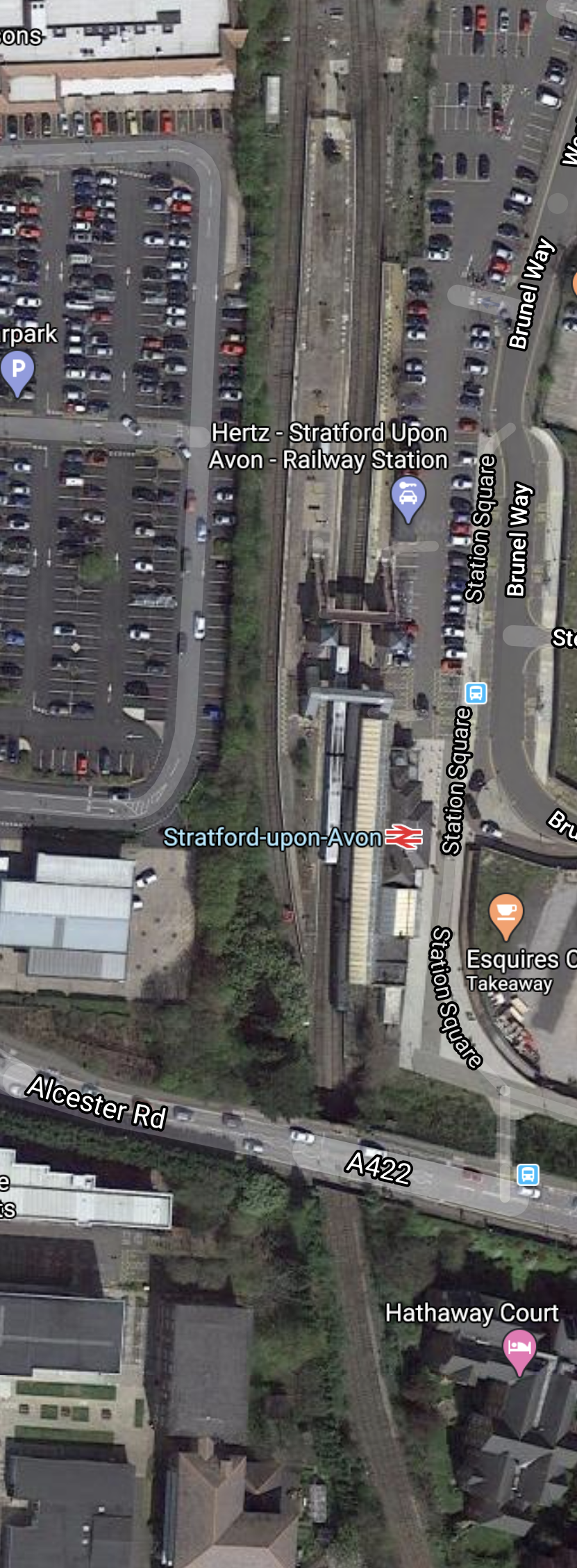
Note.
- The station is well-appointed with step-free access and three platforms.
- The bridge at the Southern end of the station to allow the railway to go South, appears to be intact.
This second Google Map shows the area of the town from the station to the racecourse.
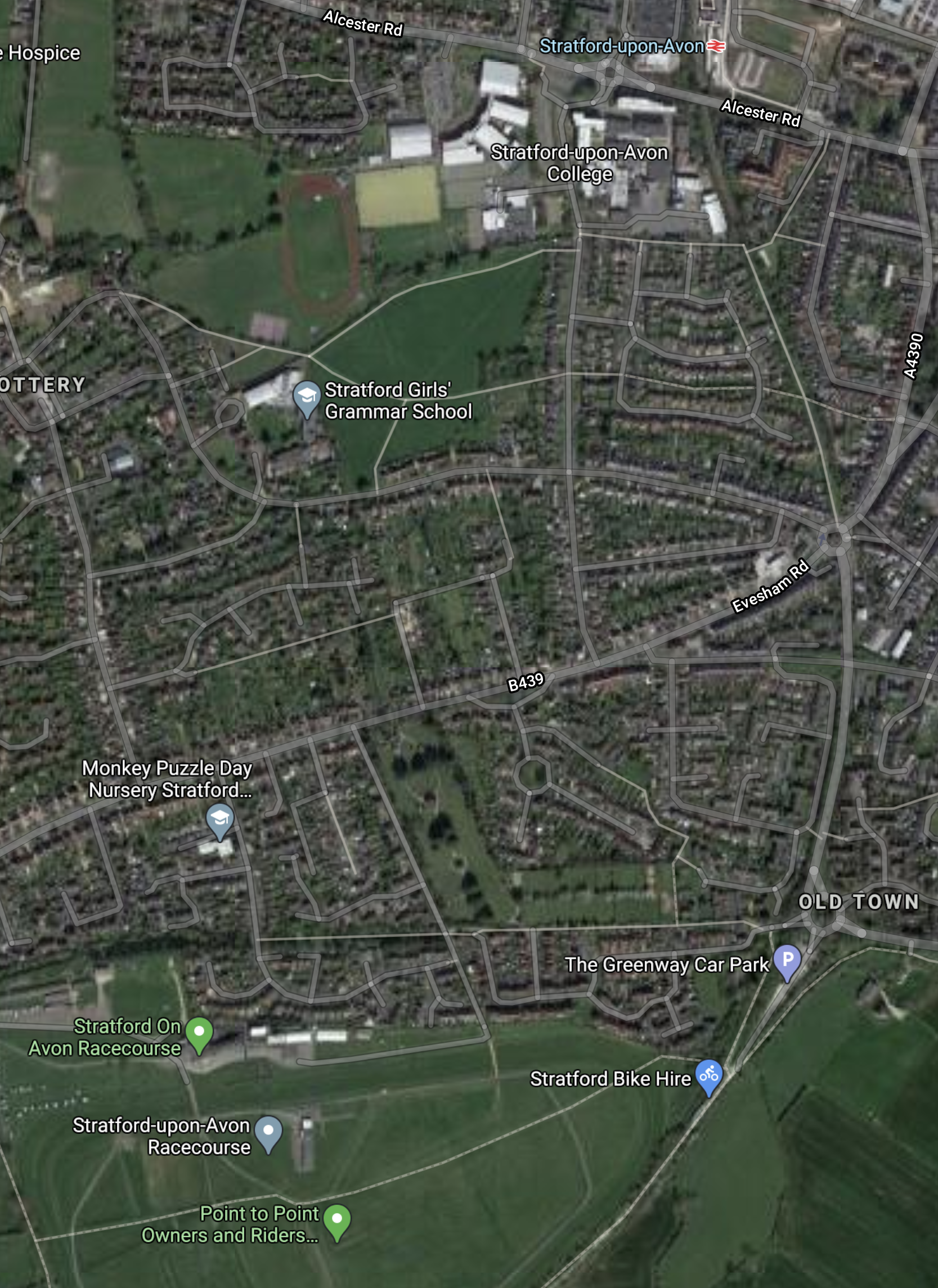
Note.
- Stratford-upon-Avon station at the top of the map.
- Stratford Racecourse at the bottom of the map.
The road curving between the station and the racecourse is the track of the former Stratford to Honeybourne railway.
My first reaction, when I saw this was that those, who want to rebuild this railway can’t be serious.
- Would you want one of DB Schenker’s noisy, smelly and polluting Class 66 locomotives running past your house?
- Would you want the line to be electrified, so they could use electric locomotives on this short stretch of railway? If so would DB Schenker be happy to change locomotives twice?
I have looked at new railways entering towns and cities all over the UK and Europe and feel there is only two possible solutions for Southern access to Stratford-upon-Avon station.
- A single-track passenger-only railway run by battery electric trains.
- A tunnel, which would probably be single-bore for cost reasons.
South of Stratford, the route is easier and it can be picked out on Google Maps until it reaches the Cotswold Line to the East of Honeybourne station.
This Google Map shows Honeybourne station and the junction.
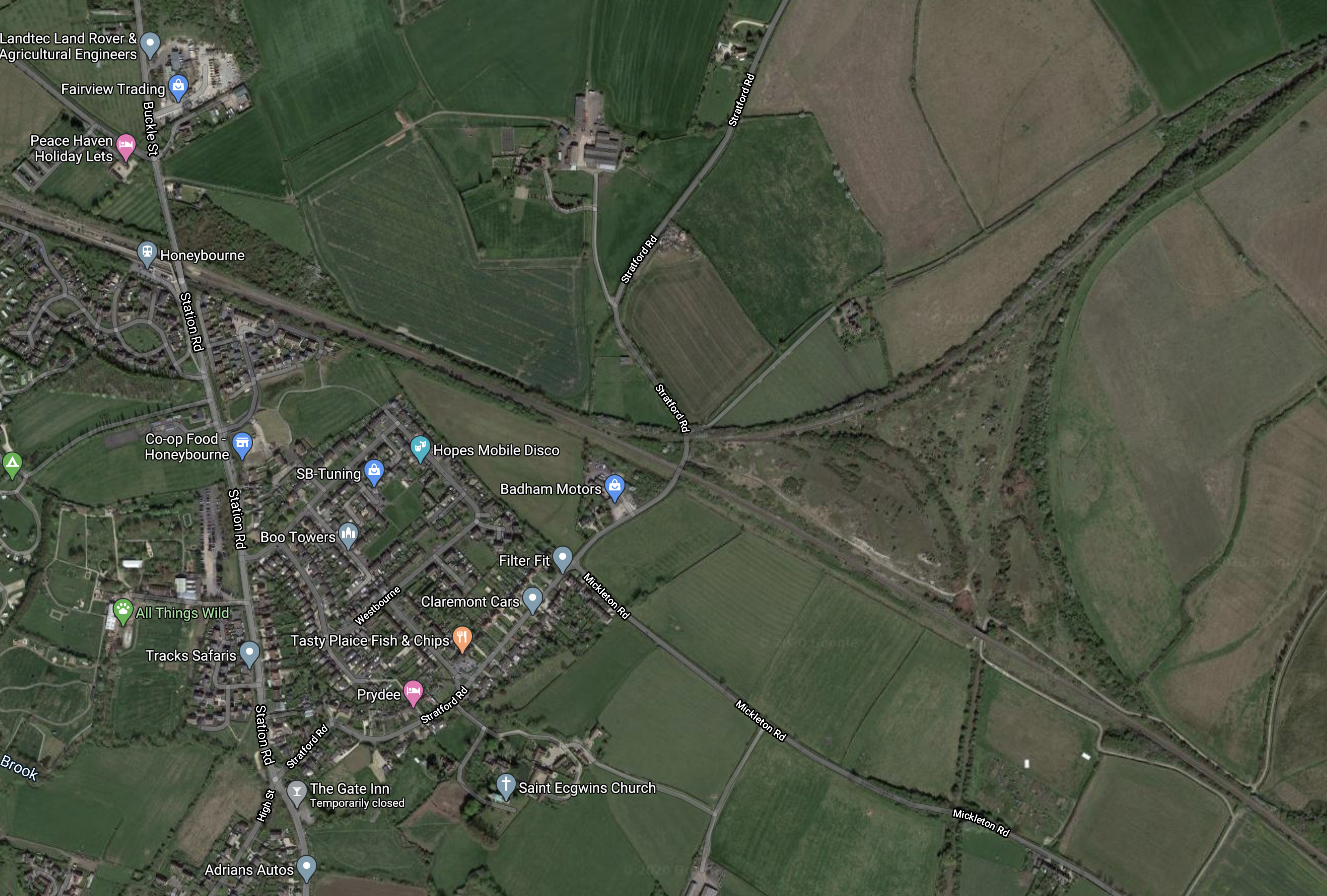
Note.
- The Cotswold Line running NW-SE across the map.
- The large triangular junction that connected the line to Stratford-upon-Avon station, which is to the North-East.
- Another track going South from the junction, can be picked out. This leads to the heritage Gloucestershire Warwickshire Railway at Broadway station, with onward connections to Cheltenham Racecourse.
Honeybourne station could be an important rail hub.
Honeybourne Station And Battery Electric Trains
Consider.
- Hereford and Honeybourne stations are 48 miles apart.
- Didcot East Junction, where trains switch to and from the Great Western Main Line electrification and Honeybourne stations are 48 miles apart.
- Trains to Hereford pass through Great Malvern, Worcestershire Parkway and Worcester Foregate Street.
- Stratford-up-on-Avon and Honeybourne stations would be less than thirty miles apart, if the two stations were to be reconnected by rail.
- Hitachi’s proposed battery electric trains will have a range of 56 miles on battery power.
If the means to charge battery electric trains were provided in the Honeybourne area, the following services could be run by battery electric trains.
- London Paddington and Worcestershire Parkway, Worcester Foregate Street, Great Malvern and Hereford.
- Honeybourne and Stratford-upon-Avon
The charging could be performed, by a ten minute stop at Honeybourne station or a section of electrified line centred on the station.
The two stations either side of Honeybourne are Evesham and Moreton-in-Marsh.
- They are fifteen miles apart.
- Trains take eighteen minutes between the stations.
- This would be enough time to charge the batteries.
- Trains could pan-up and pan-down in the two stations.
I believe modern low-visibility overhead electrification could be used.
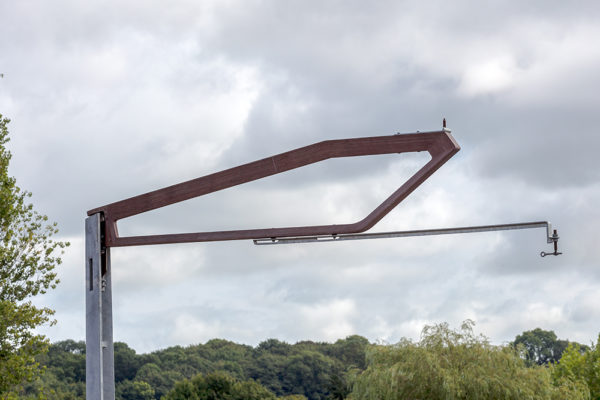
See Prototype Overhead Line Structure Revealed for more details on these gantries.
An Oxford And Stratford-upon-Avon Service
My estimates for the timings of the two sections of the route are as follows.
- Stratford-upon-Avon and Honeybourne – 20 minutes
- Honeybourne and Oxford – 46 minutes
Perhaps not the best for an efficient services, but I’m sure something could be arranged.
Conclusion
This will be a difficult project to get built.
If it is built, I suspect, it will be a passenger-only route using battery trains.
Beeching Reversal – Upper Wensleydale Railway
This is one of the Beeching Reversal projects that the Government and Network Rail are proposing to reverse some of the Beeching cuts.
This map from the Upper Wensleydale Railway web site, shows the location of the proposed reinstated railway.
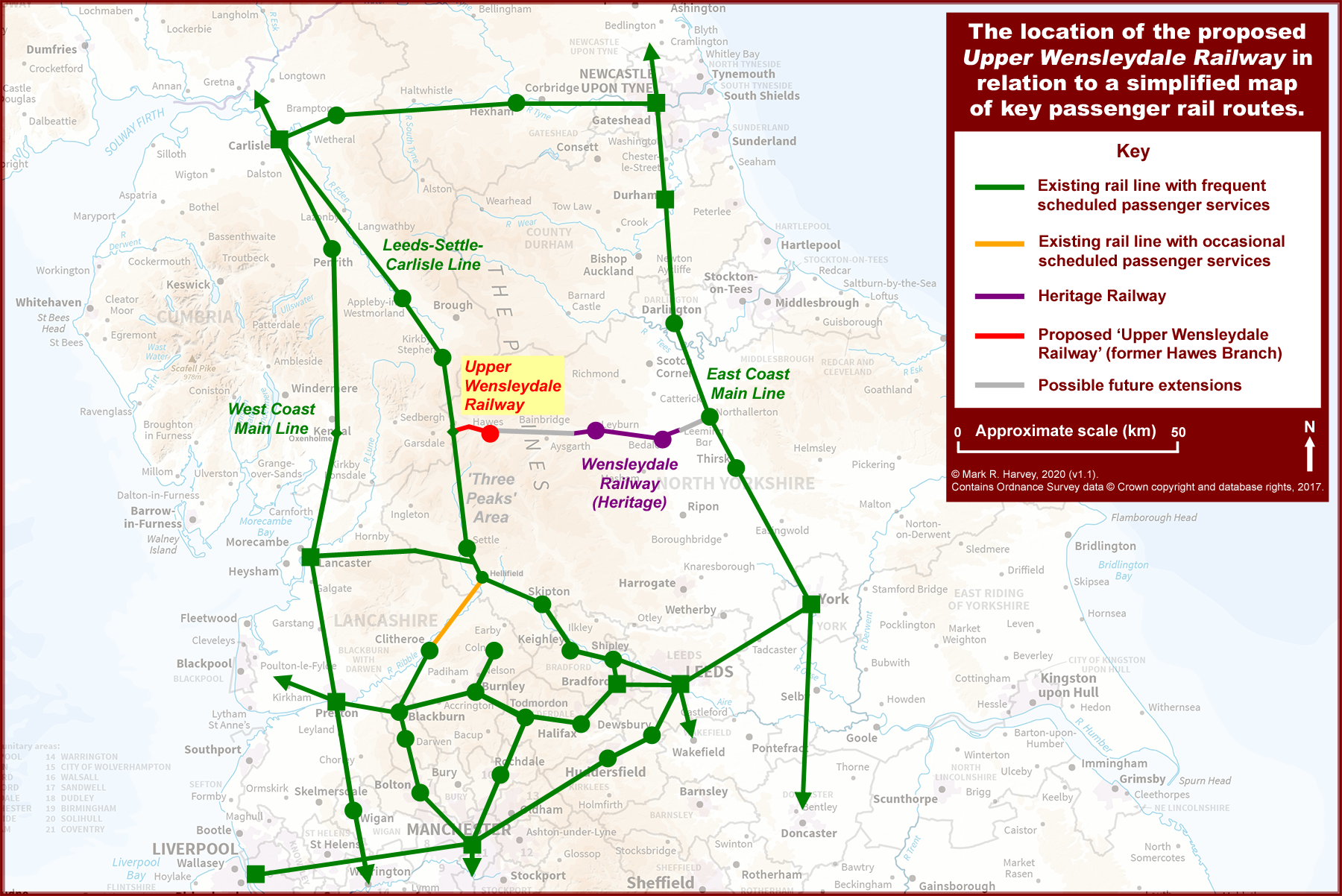
This is the vision of how the railway will be used, taken from the web site.
It is hoped that a reinstated junction with the existing Leeds – Settle – Carlisle railway line at Garsdale will allow ‘through’ trains to run from Hawes via Garsdale Junction, past the Yorkshire Three Peaks to Settle, then onwards through Hellifield and Clitheroe into Lancashire for Preston and Greater Manchester.
We are also hoping that some Manchester – Blackburn – Clitheroe trains can be extended to Garsdale and Hawes thereby linking Lancashire to an enhanced service through Settle to the Yorkshire Peaks and Dales.
Connections with other trains could be made at Hellifield (for West Yorkshire & Lancaster) and at Garsdale (for Carlisle, Scotland & the North East of England).
This Google map shows the current state of the railways at Garsdale.
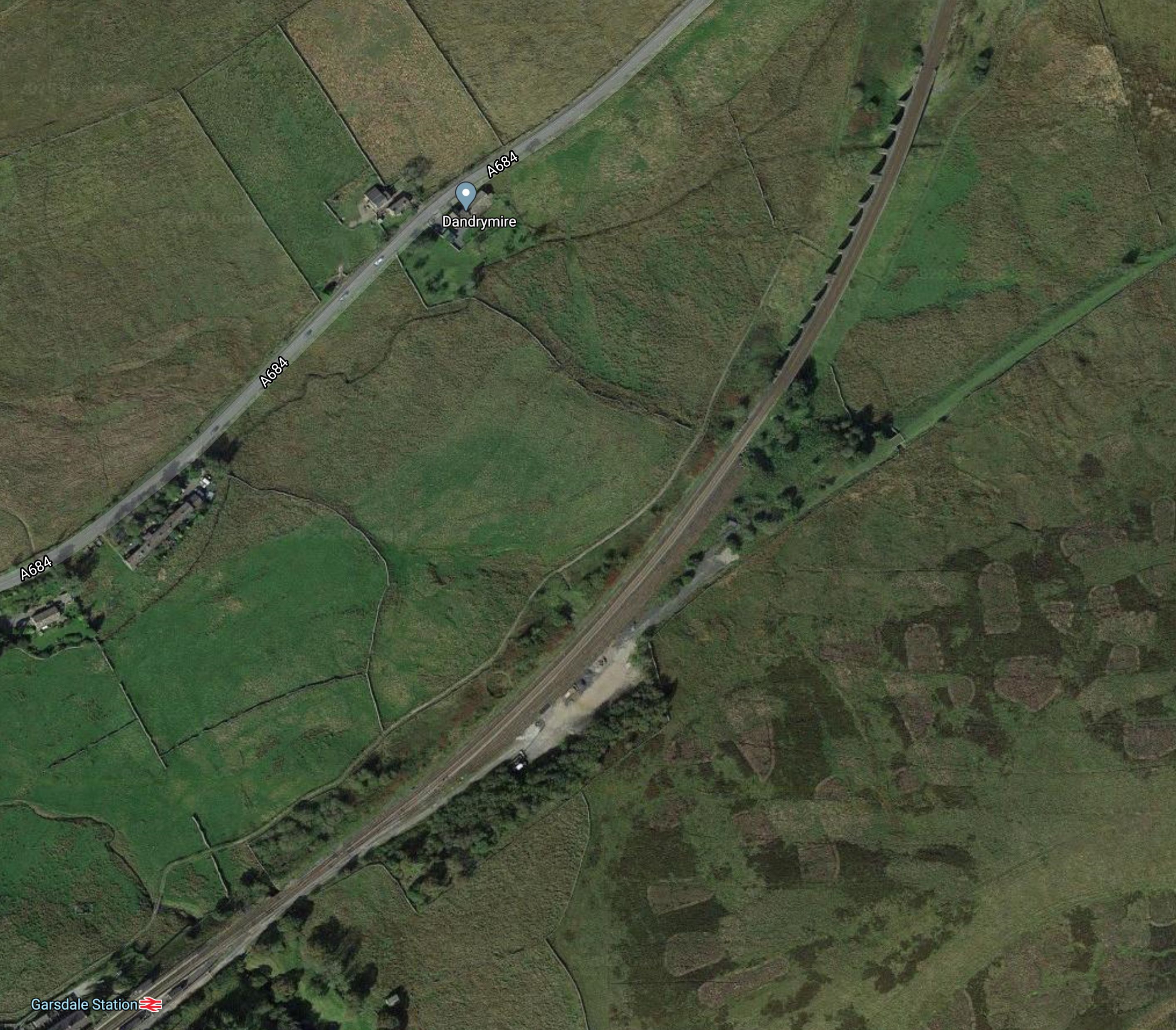
Note.
- Garsdale station in the South-West corner of the map.
- The Settle and Carlisle Line curving away to the North over the Dandry Mire Viaduct.
- The trackbed of the former branch to Hawes stands out as a green scar.
I have followed the route of the railway to Hawes in my helicopter and it doesn’t appear to be a very challenging project to reinstate.
- Although the comprehensive Routes and Structures page on the Upper Wensleydale Railway, indicates there is a lot to do.
- It is about six miles long.
- It is single track with a passing loop at Hawes.
This Google Map shows the town of Hawes,
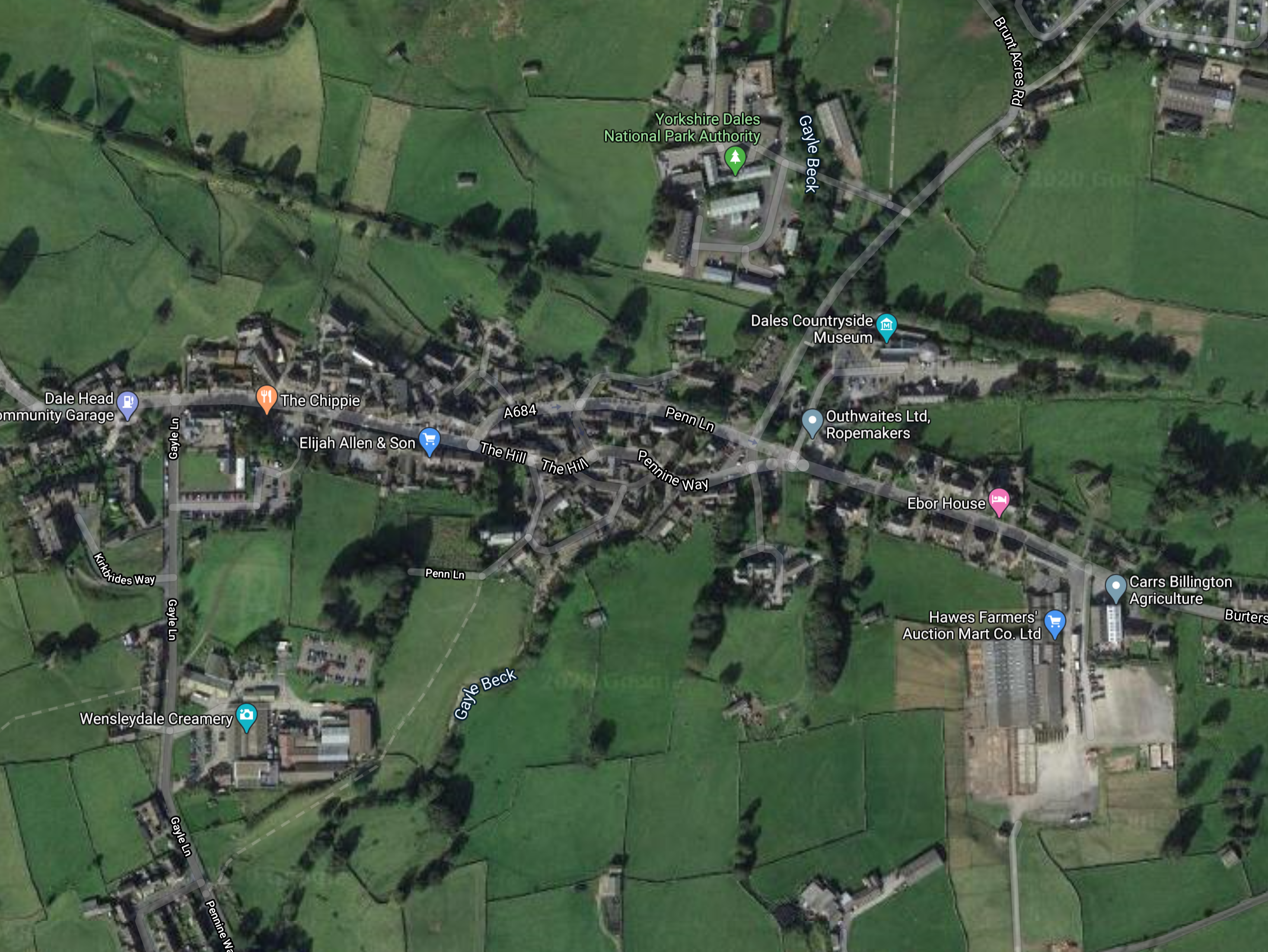
It certainly looks the sort of place, where Wallace and Gromit might rent a cottage for a week and use as a base to explore the countryside.
- There’s a Wensleydale Creamery.
- There’s a traditional ropemaker called Outhwaite, dating from 1905, who have the web site; www.ropemakers.com.
- The headquarters of the Yorkshire Dales National Park Authority are located in the North of the town and shown by a green arrow.
Next to the Park Authority is a blue arrow marking the Dales Countryside Museum, which incorporates the original Hawes railway station.
Services To Hawes
Looking at the data from Real Time Trains, it looks like trains on the Settle and Carlisle average about fifty mph on that line, which is generally double-track with an operating speed of sixty mph.
- I would estimate that a modern diesel or hydrogen-powered train could do the return trip between Garsdale and Hawes station in around thirty minutes.
- This time would probably mean that the Hawes Branch could be worked with only one train operational on the branch.
- It would also fit in well with the service plans for the Upper Wensleydale Railway.
I am fairly certain that an hourly service could be run between Hawes and Hellifield stations, which could be extended as far South as the operator wanted.
Military Traffic To Redmire
In the Wikipedia entry for Redmire village, this is said.
Redmire is the terminus of the Wensleydale Railway. The Ministry of Defence uses trains to transport armoured vehicles from bases in the south to the Catterick military area using Redmire railway station as its terminus.
It looks like there must be a quality railway between Redmire station and the East Coast Main Line at Northallerton.
This Google Map shows the site of Redmire station.
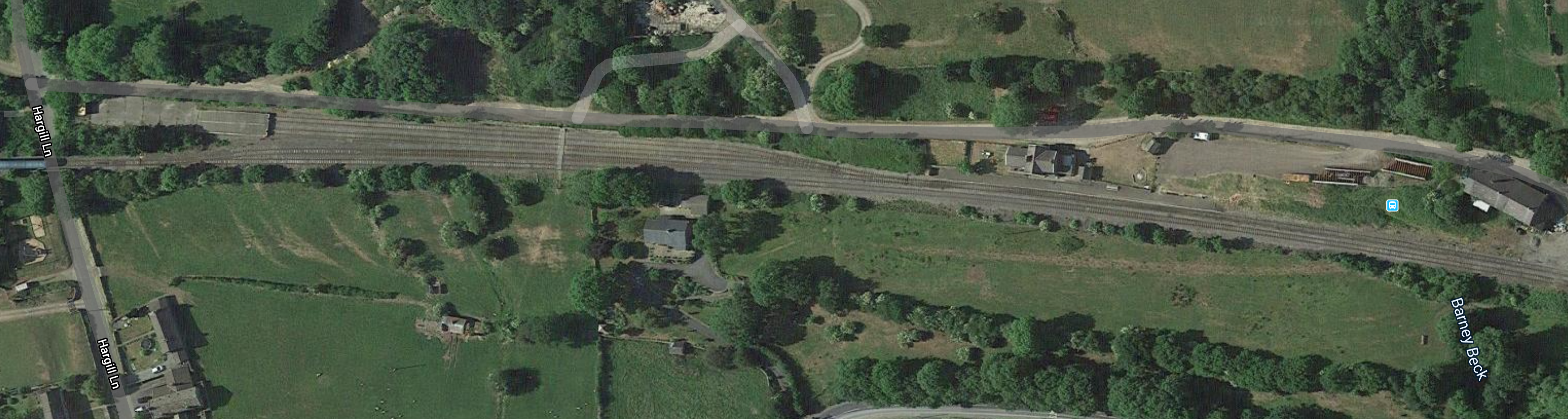
Note.
- At the left hand side of the map, there look to be loading ramps for the military vehicles, at the end of two sidings.
- The building on the North side of the tracks appears to be the old Redmire station buildings.
- The blue dot to the right, is a Google Maps pointer for the station
If you type Redmire into Google Maps, it’s easy to find..
This Google Map shows the rail lines at Northallerton.
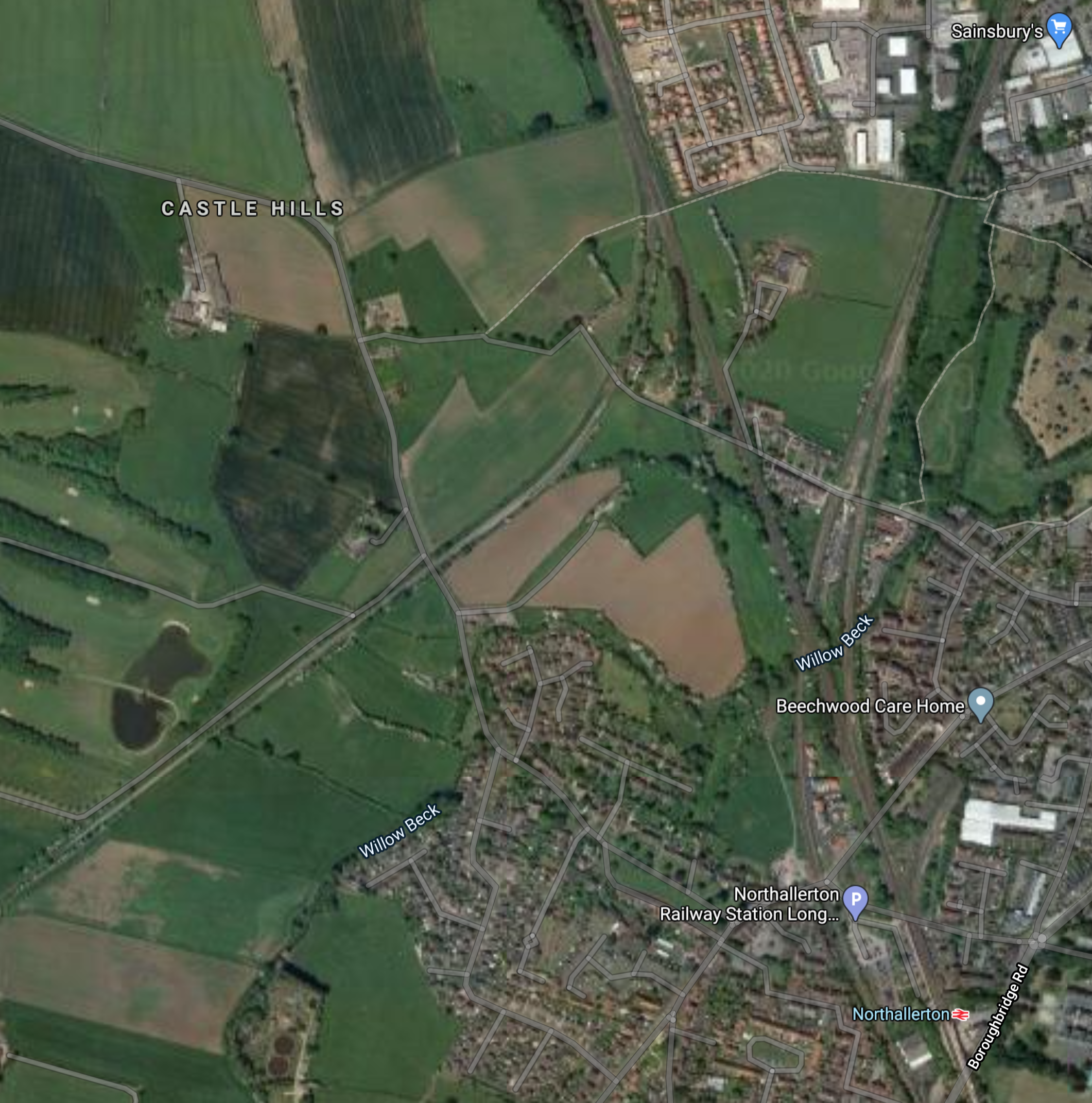
Note.
Northallerton station in the South-East corner of the map.
The East Coast Main Line runs about West-by-North from the station towards Darlington and Scotland.
The line to Middlesbrough branches off in a North-Easterly direction.
The Wensleydale Railway comes in from the West and joins the East Coast Main Line going North.
It also appears there used to be a tight chord that allowed trains to go between the Wensleydale Railway and the South.
It looks like the Army would like that chord for their vehicle trains.
This enlarged Google Map, shows the site of the chord.
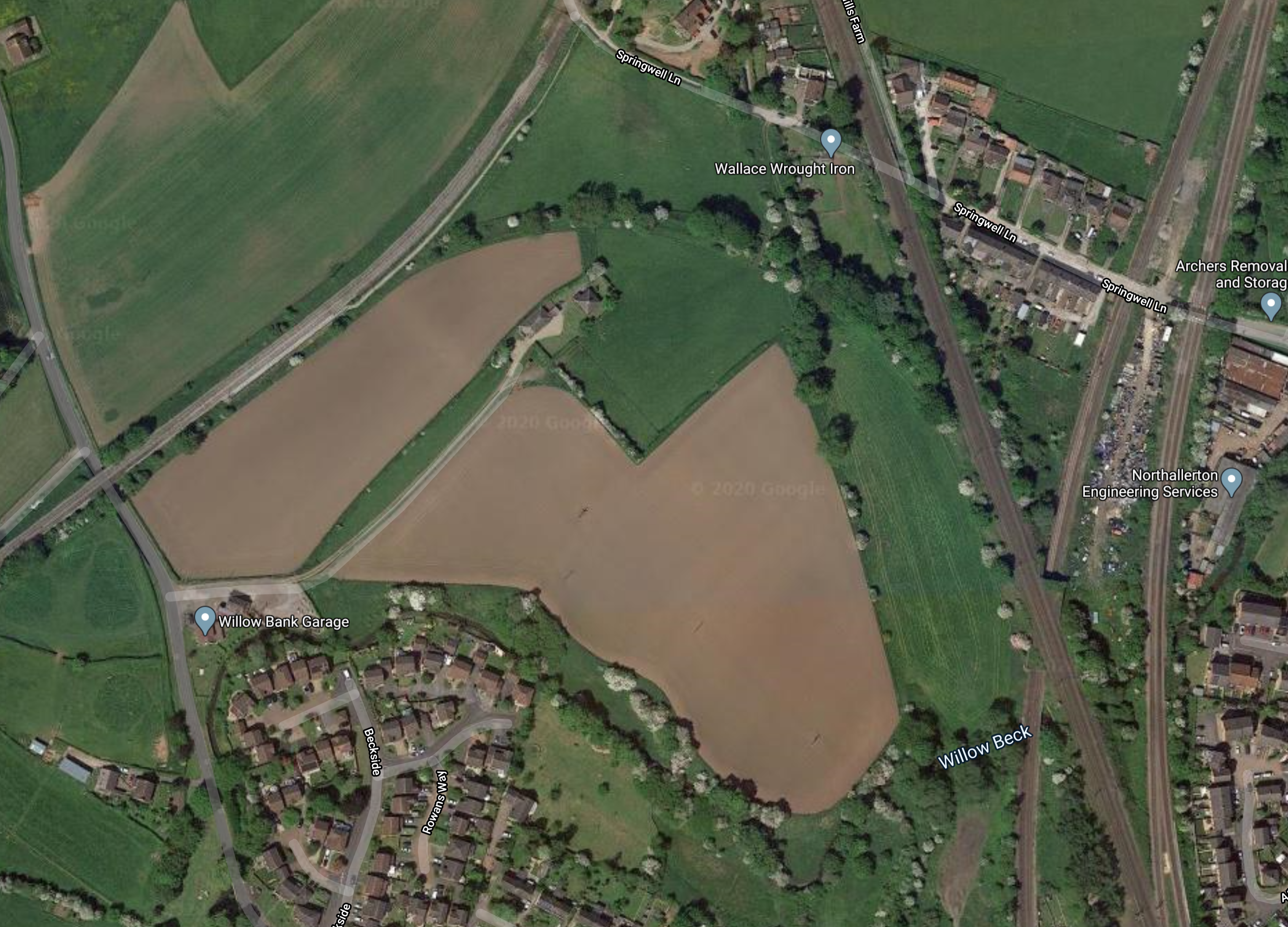
It looks to me, that it was once a chord, but now it’s a substantial wood.
A Bigger Plan
In the Wikipedia entry for the Wensleydale Railway, there is a section, which is entitled Upper Wensleydale Railway, where this is said.
In late 2019/early 2020, a separate company was formed to campaign to reinstate the line between Hawes and Garsdale. The groups’ objective is to have a timetabled year-round service run by a train operating company, rather than a heritage service. This scheme was shortlisted for funding in the second round of the government’s Reverse Beeching Fund, in June 2020.
These are my thoughts on various topics.
The Eastern Terminal
There are three possible Eastern terminals.
- Northallerton
- Middlesbrough – There is no connection to the Wensleydale Railway.
- Darlington – Would probably mean slow trains on the East Coast Main Line.
I think we’re left with Northallerton and the tight connection, which requires the chord to be reinstated.
But, it does say in the Wikipedia entry for Northallerton station, that the station is the terminus for the proposed extended Wensleydale Railway.
This Google Map shows the Northern end of Northallerton station.
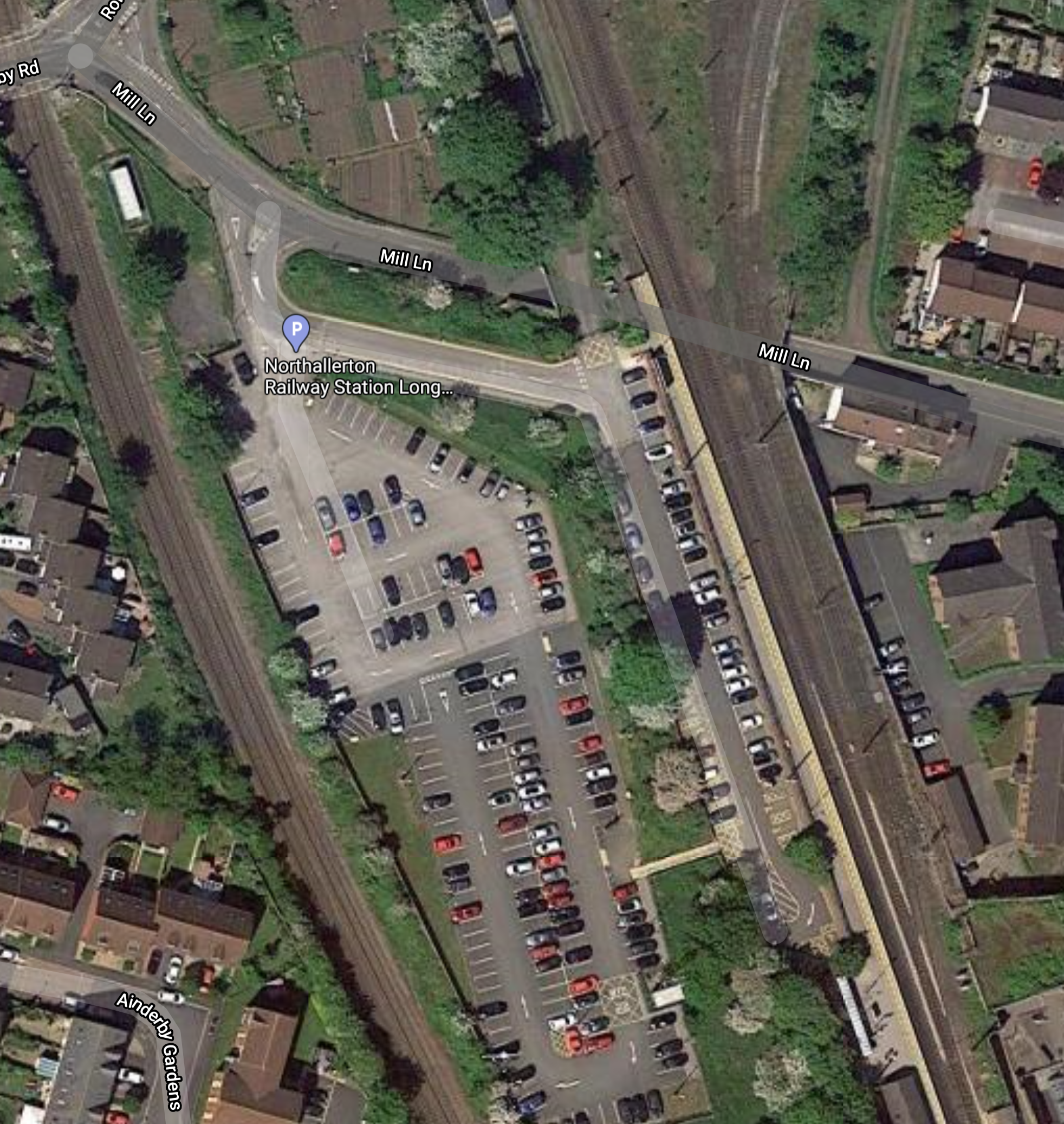
Would it be possible to sneak a line down the Western side of the East Coast Main Line and into a new bay platform at the station?
It would certainly allow trains from the Wensleydale Railway to terminate at Northallerton station.
The Western Terminal
As I said earlier, it’s the operator’s choice.
Personally, I would choose Blackburn station.
- It’s about fifty miles from Gardale station.
- There is a train depot at Blackburn.
- Blackburn station is in the Town Centre.
- Blackburn station has good rail connections to Blackpool, Liverpool, Leeds, Manchester and Preston.
Prior to COVID-19, I regularly stayed in the convenient Premier Inn next to the station.
Rolling Stock
The trains will have to be self-powered, as I don’t think the budget will run to electrification and much of the track-bed is owned by a heritage railway.
So that must mean the trains must be self-powered, which will mean either diesel, electric or hydrogen.
- I think diesel can be ruled out, except as a stop-gap, we are going carbon-neutral on the railways by 2040.
- Blackburn and Northallerton stations are too far for battery power.
So that means it must be hydrogen power.
But as, it appears that Teesside is going for hydrogen, as I wrote about in Fuelling The Change On Teesside Rails, that should be a convenient fuel.
The route might be a candidate for Vivarail’s Pop-up Metro concept, with fast charging at one or two, of any number of the stations.
Conclusion
I like this scheme, as it sorts a lot of problems.
I also think that there’s a fair chance, it will get the nod.
The local MP is the Chancellor of the Exchequer; Rishi Sunak and this could be a case of he who pays the piper, calls the tune!
Beeching Reversal – Restoration Of A Daily Train Service On The Keighley & Worth Valley Railway
This is one of the Beeching Reversal projects that the Government and Network Rail are proposing to reverse some of the Beeching cuts.
The route starts at Keighley station, which is shown in this Google Map.

Keighley station is effectively a double station.
- The Northern pair of platforms are the electrified Airedale Line, which runs between Leeds and Bradford Forster Square stations in the East to Skipton station in the North-West.
- Curving up from the South is the Keighley and Worth Valley Railway, which runs through the Worth Valley to Oxenhope station.
The basic plan appears to be to run daily passenger services on the heritage railway between Keighley and Oxenhope via Haworth.
But there is a lot more than meets the eye.
Commuter Use
The Wikipedia entry of the Keighley and Worth Valley Railway has a section called Commuter Use, where this is said.
On weekends – in particular Saturday mornings, local residents who live in Oxenhope, Haworth, Oakworth and Ingrow catch the early morning diesel service to Keighley, returning later on steam hauled services. During the weekday outside of the summer months, locals instead use the local bus services.
It then says that studies have been done to investigate the railway’s use as a commuter route.
Heritage Use
There are attractions in the area to attract everybody.
In addition to the major centres of Leeds and Bradford, these stations are worth a visit for the sites they serve.
Haworth for the Brontes
Saltaire for the World Heritage Site of Salts Mill and the Hockneys.
Skipton for the Settle and Carlisle Railway.
LNER To Skipton
LNER run a single daily service to Skipton, that calls at Keighley and Shipley and it is rumoured on Wikipedia, that they would like to run more services.
My feeling, is that the company wants to run pairs of five-car Class 800 or Class 801 trains to Leeds, where they will split and go on to places like Bradford, Harrogate, Huddersfield and Skipton.
Skipton And Colne
This project appears to be a favourite of Governments, as I suspect it solves problems across the North. I last wrote about it in May this year in Colne – Skipton Reopening Moves Closer.
Short Breaks In Yorkshire
Is Yprkshire and Leeds and Bradford in particular, making a bit for the short break market?
It all fits!
What Needs To Be Added To The Keighley And Worth Valley Railway?
If the railway is going to run a regular commuter or tourist service on the route between Keighley and Oxenhope, the following issues must be covered.
Rolling Stock
The railway has an extensive collection of rolling stock, which include a couple of diesel multiple units, that should be able to handle the service.
I would think, that if they wanted something more modern with a heritage feel, that a battery electric version of one of Vivarail’s Class 230 trains would fit the bill. They could run using Vivarail’s Pop-up Metro concept.
Stations
The stations on the railway seem to be in good condition, but I’m sure to handle commuters for Leeds and Bradford, there may be some updating required.
Ticketing
There must be through ticketing.
Conclusion
I don’t feel that this would be the most expensive of schemes, as the major expense of an interchange station between the Keighley and Worth Valley Railway and the Airedale Line is already built.
Beeching Reversal – The Aston Rowant Extension Of The Chinnor Railway
This is one of the Beeching Reversal projects that the Government and Network Rail are proposing to reverse some of the Beeching cuts.
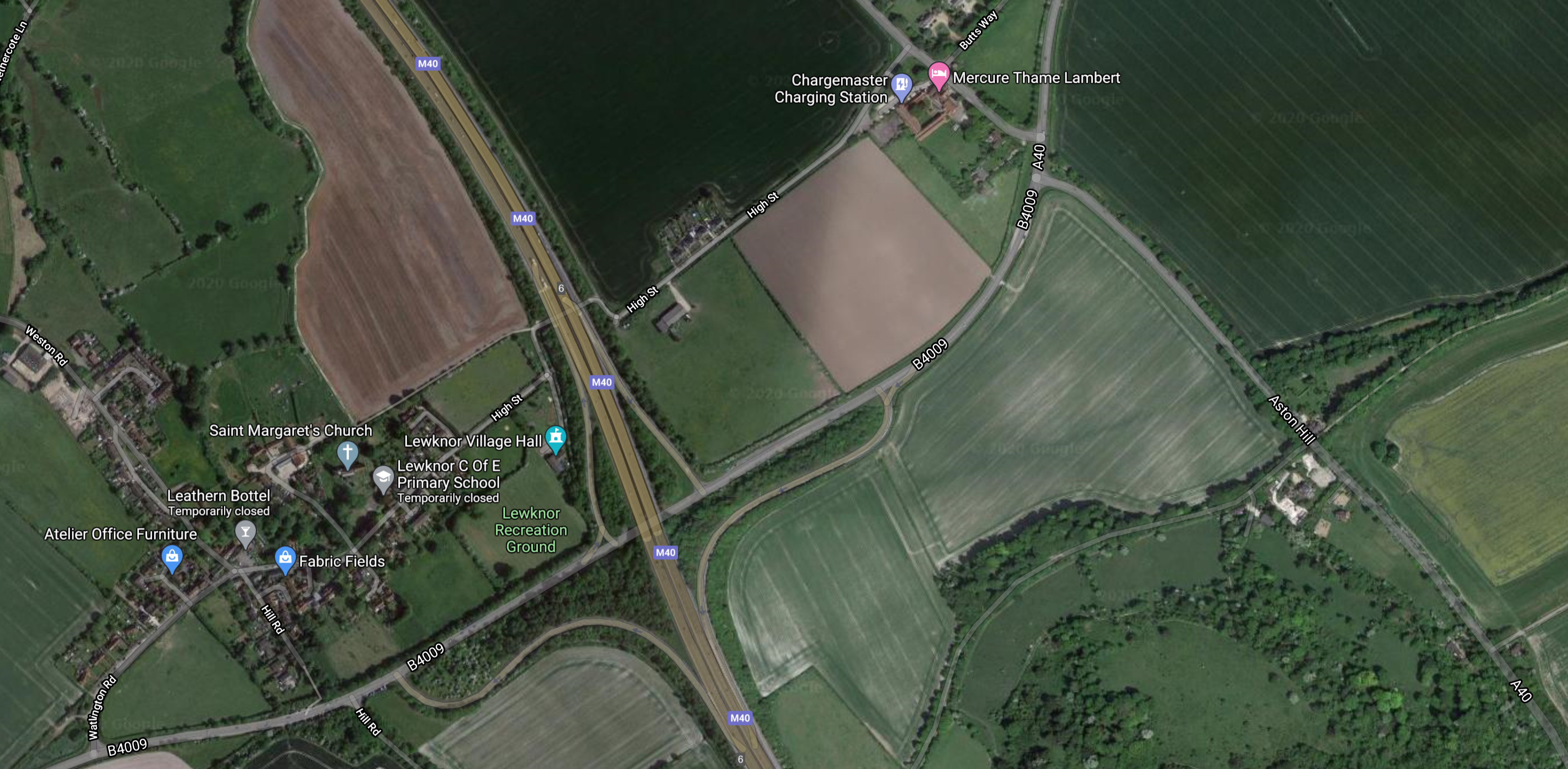
This Googlr Map shows the location of the proposed Aston Rowant station.
Note.
- The motorway junction is Junction 6 of the M40, where it joins the B4009.
- The hotel at the top of the map, which is marked by a pink arrow, is the Mercure Thame Lambert.
- A road passes the hotel and goes South East parallel to the motorway.
The original Aston Rowant station, appears to have been in the triangular piece of land to the East side of the road.
Wikipedia gives a plan for the future of the Aston Rowant station under a section called Future, where this is said.
There were reports in 1997 that the Chinnor and Princes Risborough Railway (CPRR) wished to extend its operations to Aston Rowant. A joint venture between the CPRR and Chiltern Railways was also proposed whereby the national rail operator would construct a new station at Aston Rowant to allow frequent weekday commuter services along the Icknield Line to connect with main line traffic through to London Marylebone, leaving the CPPR to run heritage services at other times. The scheme, which would cost around £3m, would seek to take advantage of Aston Rowant’s location near junction 6 of the busy M40 motorway.
There doesn’t seem to be any more details on the Internet, but I could see the full scheme having the following.
- A car-park by Junction 6 of the M40.
- Minimal station facilities.
- A shuttle train to Princes Risborough station using a diesel or battery Class 230 train or perhaps a heritage diesel.
- At weekends, it would act as parking for the Chinnor and Princes Risborough Railway.
- Given Adrian Shooter;s historic connections, this could be an ideal place for using Vivarail’s Pop-up Metro concept.
It could be a deal, where everyone’s a winner. Local commuters, Park-and-Ride users, the CPRR and Chiltern Railways could all benefit.
Conclusion
This is a simple scheme and I suspect the biggest problem could be getting the planning permission.
 The Anonymous Widower