Would You Trust Your Weight On A Thirty Metre Long Plastic Bridge?
I might as I’m only just over sixty kilograms, but others might not!
But never underestimate the power of World Class engineering.
This article in The Construction Index is entitled Mabey and Arup Launch Plastic Modular Bridge.
The bridge has the following characteristics.
- Built of metre long sections bolted together.
- Up to thirty metre spans.
- Installed without heavy machinery.
- The bridge is 70% lighter than steel.
- Low maintenance
The first bridge has been installed over the railway at a Site of Special Scientific Interest In Oxford.
I feel that Arup have designed this bridge system for purposes other than permanent structures.
This Google Map shows the centre of Tadcaster.

The road bridge that connects the two parts of the town was swept away by floodwater, as this BBC report, which details the destruction and rebuilding shows.
The new system couldn’t replace a road bridge, but there must be many instances around the world, after a an earthquake or floods, where the first thing that the rescuers need is a bridge to access a destroyed town or village.
The size and low weight of this bridge system, means it could be an early arrival.
There is more about the Pedesta bridge on Mabey’s web site.
Relief For Ely
Ely station is not only a bottleneck for trains, but because the A142 only has a headroom of nine foot under the railway, a serious bottleneck for road traffic and an accident blackspot that stops both road and rail traffic.
But this article from the Cambridge News is entitled Work to start on new Ely bypass as final designs get the go-ahead.
This is the article’s simple description of the by-pass.
The new route will bypass the railway level crossing, as well as the accident prone low-bridge underpass, by providing a new link between Stuntney Causeway and Angel Drove to the south of the city.
Preparatory works are set to start on January 9 to mark out the site area to build the 1.7km of road, which will include two new bridges to cross the River Ouse and its flood plain, as well as additional railway lines.
I have been at Ely station a couple of times in the past week and these pictures show that work has now actually started.


The first four pictures were taken from an Ely to Ipswich train and the last one was taken from Plstform 3 at Ely station.
This Google Map shows the area.
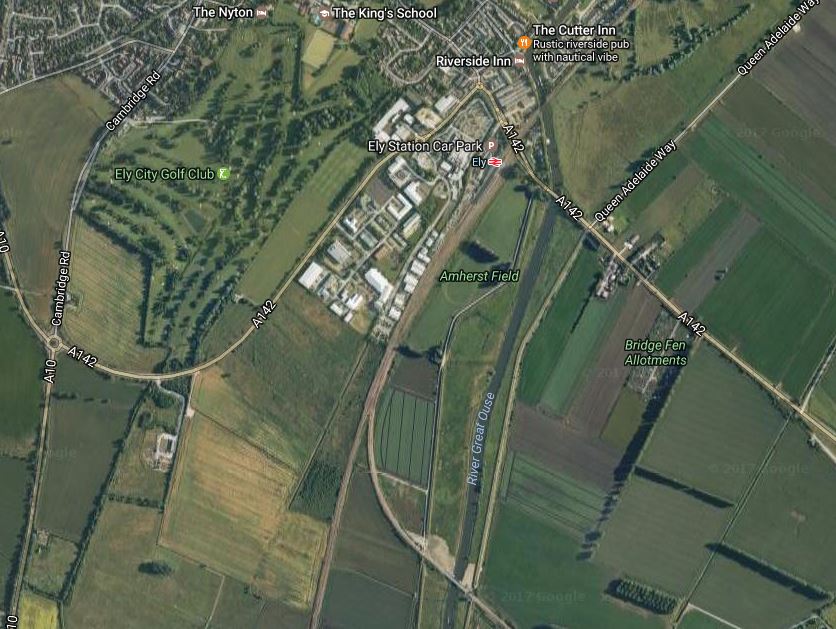
Note.
- Stuntley Causeway is the A142, which leads South-East from the station.
- The Great Ouse.
- The two railway lines meeting at Ely Dock Junction.
- Angel Drove is the road labelled A142, that curves from the city to the roundabout at the West of the map.
- The work site is in the angle between the Great Ouse and the railway line to Bury St. Edmunds, just to the West of the Hawk Bridge, where railway crosses the river.
As the new road crosses the river, the junction with Stuntley Causeway must be somewhere to the South-East of where the A142 currently crosses the river, which must make the road take a widish loop.
The project would appear to be a well-designed solution.
- Is the wide loop of the road, to keep noise of heavy traffic away from the river and the city?
- It should give relief for road traffic at Ely station.
- Hopefully it will cut bridge strikes.
- The viaduct over the railway and the river, incorporates a footbridge.
The question must be asked, if the building of the by-pass and the double-tracking of the railway line to Bury St. Edmunds are two projects that will co-operate.
The Hawk Bridge has already got space for a second track, so could this be laid first, so that it could be used as a siding to bring in the heavy components for the viaduct that will be built over the river? Or will they be floated in, using a barge on the river?
The order of construction on this project could be tricky, but the quality of project management has increased greatly in recent times.
The Holloway Road Bridge Is Now Open
I took these pictures this morning of the reopened bridge by Upper Holloway station.

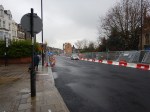

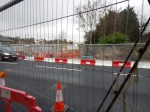

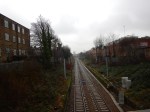
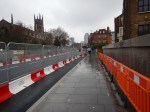
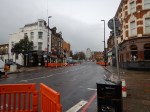
Note there are no wires on the tracks of the Gospel Oak to Barking Line. But it does look, that the line could be run with the current Class 172 trains
All Of Scotland Is Now Twinned With Marlow
This article on the BBC, is entitled Winds close Forth Road Bridge and cut power to homes.
At two this morning a truck overturned on the Forth Road Bridge and the bridge has been closed since.
This is the full story from the BBC report.
The lorry on the Forth Road Bridge blew over at about 02:00 GMT. A spokesman for the bridge-operating company said the bridge had been closed to HGVs from 00:30 GMT.
The truck was travelling north from the Edinburgh side towards Fife, but was blown on to the southbound carriageway, damaging a 40-metre stretch of the central grilling, he said.
It had been lifted off the central grilling by a crane by mid-morning, but it could not be completely cleared from the scene until the weather improves.
The bridge remains closed both north and south-bound.
The driver of the lorry has been charged with dangerous driving, police said.
What an idiot!
But there was also the incident on the historic Marlow Bridge over the Thames. This is from Wikipedia.
On 24 September 2016 the bridge suffered ‘potential structural damage’ following an incident where 37-tonne Lithuanian haulage lorry exceeding the weight limit attempted to pass over the bridge. The bridge was closed for two months to allow Buckinghamshire County Council to undertake a series of stress tests on the suspension bridge hangers and pins, together with ultrasound and magnetic particle tests. No significant damage to the bridge was found, and had given the all-clear to reopen the bridge on Friday 25 November following restoration of sections exposed for weld testing with three coats of paint, removal of scaffolding surrounding the bridge’s two towers, and reinstatement of timber work removed for inspection. To the applause of around 100 onlookers, Marlow Bridge was reopened to traffic at 10am on Friday, 25 November.
Consider that Marlow Bridge was built in 1832, it has survived the better part bof two centruries well.
However Marlow Bridge was built by Bristolian; William Tierney Clark, who was also responsible for Hammersmith Bridge on the Thames.
Internationally, Clark was also responsible for the iconic Széchenyi Chain Bridge across the Danube in Budapest.
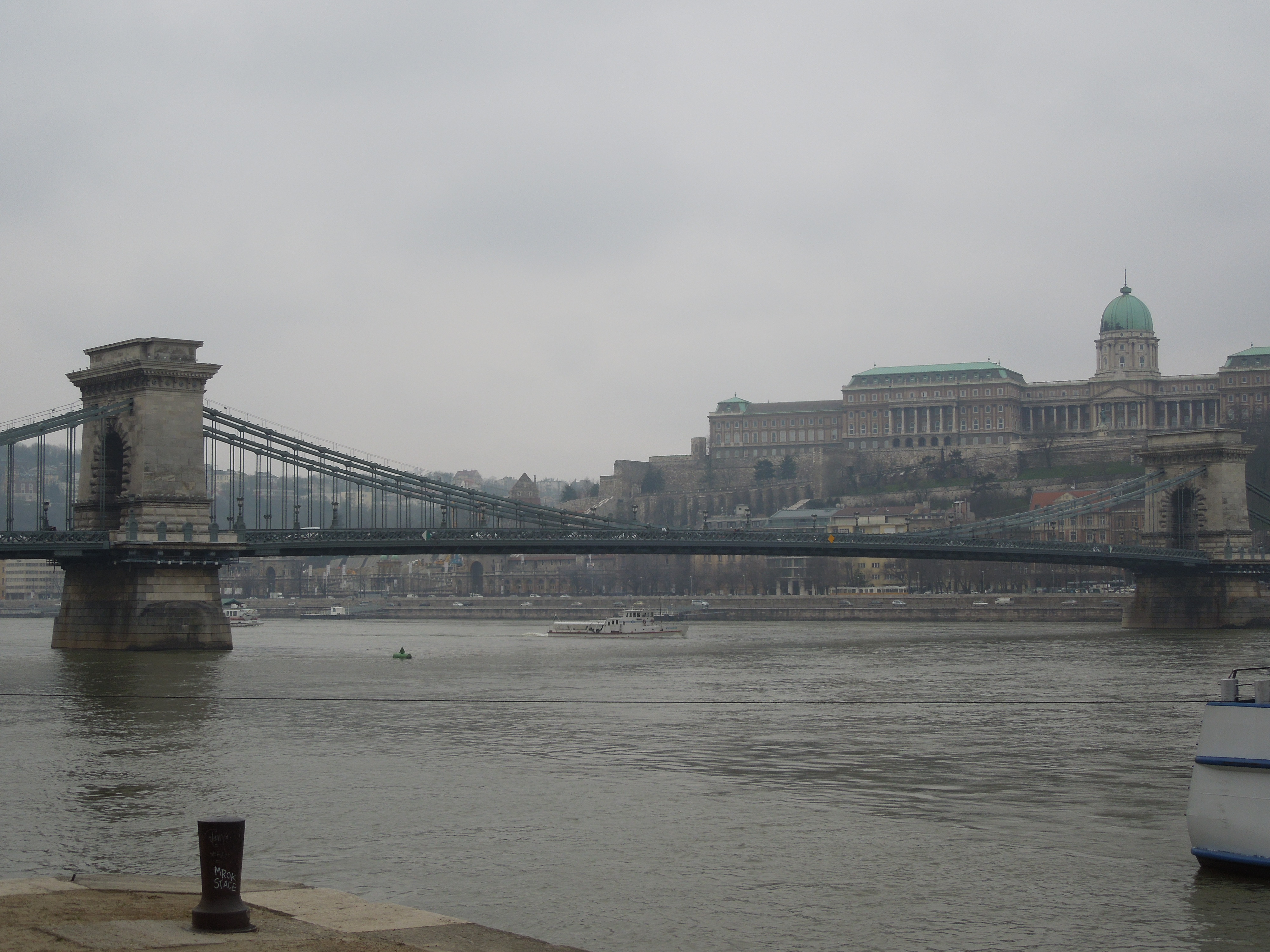
Bada Castle And The Chain Bridge
I took the picture, when I did my Home Run From Budapest in 2013. What you see is not wholly the original, as that was blown up by the Nazis in the Siege of Budapest in 1945.
Incidentally, the engineer who supervised the construction of the bridge from parts sent out from the UK, was the Scot; Adam Clark.
As Adam Clark was born in Edinburgh, I’ve concluded by bringing the narrative back to the Forth Bridge.
Levitation Magic
How do you raise a 200 tonne masonry arch bridge by 900 mm, so that you can fit overhead electrification and freight trains with large containers under the bridge?
You used to call in Paul Daniels, but now he’s gone you have to use other forms of magic!
If finesse doesn’t work, you resort to the brute force technique that IK Brunel used to launch the Great Eastern – hydraulic power.
This article on the Freyssinet web site, describes how the bridge was lifted.
For an encore, the engineers then lowered the bridge by 465 mm.
Why raise a bridge like this?
Surely, to use a simple method, like explosives or a large hydraulic breaker and rebuild is a lot easier.
The trouble is it isn’t as this method disturbs the working railway much less and is quicker.
Network Rail also have five hundred bridges like this that need to be raised.
It would certainly make an interesting live stream from the Internet. Perhaps, a fee could be charged to watch for a charity like Cancer Research UK.
Brunel, who played the showman at times, would have approved of that!
Is This The Worst Bottleneck On The UK Rail Network?
This Google Map shows Norwich station and the various rail lines that serve it.
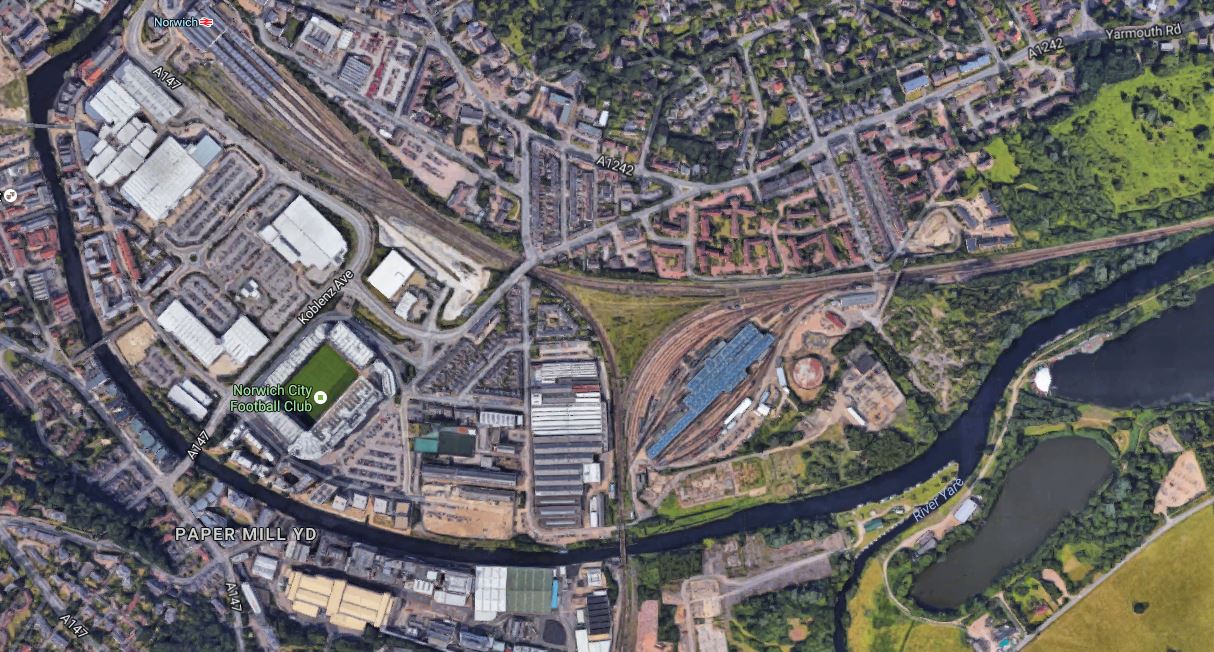
Norwich Station And Approach Lines
All the lines come into the station from the East and they split soon after leaving the station, with lines to Cromer, Lowestoft, Sheringham and Yarmouth taking the Eastern line, with trains to Ipswich and Cambridge taking the Southern line.
Between the two lines, lies Crown Point Traction and Rolling Stock Depot, which looks after much of Greater Anglia‘s rolling stock.
This Google Map shows the bridge at the South West corner of the depot, where the rail line to Ipswich and Cambridge, crosses the River Wensum.
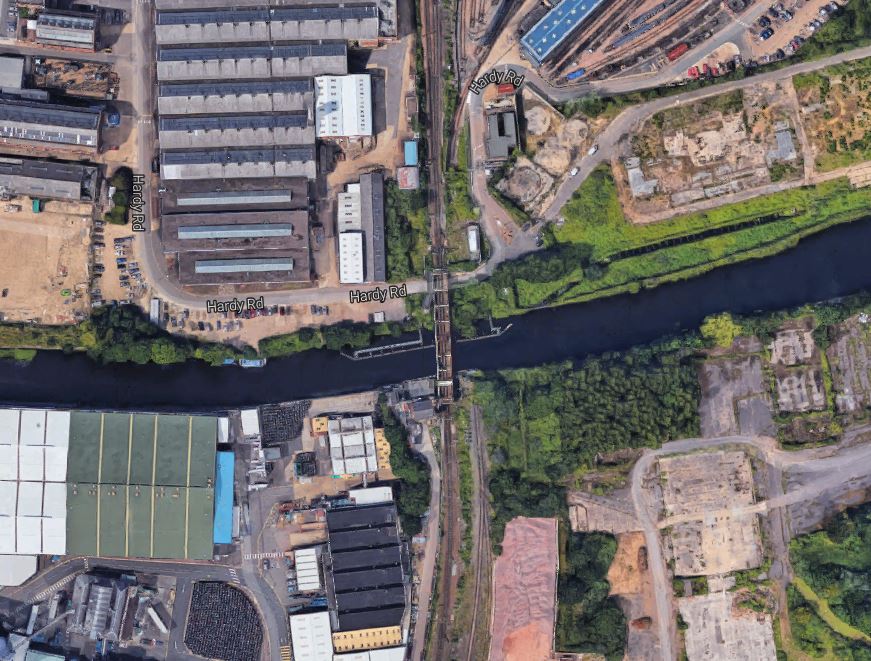
Trowse Bridge
Trowse Bridge is no ordinary bridge.
- It is a single track swing bridge.
- It was built in the 1980s, probably to a low cost design.
- It is electrified by overhead conductor rail, rather than overhead wire.
- It is mandated by an Act of Parliament to open for traffic on the river on demand.
- It is rather unreliable.
It must be a nightmare for both Greater Anglia and Network Rail.
I wonder if this bridge has had effects on projects that are happening in East Anglia.
The New Depot At Brantham
A new depot is being built by Greater Anglia at Brantham, just North of Manningtree station. There are obviously, good reasons for this, but could the access over the Trowse Bridge to Crown Point be a factor.
It would certainly be easier for bi-mode Flirts working Lowestoft-Ipswich and Colchester-Peterborough to be based at Brantham rather than Crown Point. Wikipedia says this.
Scheduled to open in 2018, it will be the home depot for Greater Anglia’s new fleet of Class 745 and Class 755 Stadler Flirts.
Greater Anglia would be a very unusual company, if they didn’t have an efficient plan for the stabling and maintenance of their new trains.
Direct Yarmouth To Lowestoft Trains Via A Reinstated Reedham Chord
There used to be a direct Yarmouth to Lowestoft Line, but now it is possible to use the Wherry Lines, with a reverse at Reedham station.
Network Rail are talking about reinstating the Reedham Chord to create a more direct route between East Anglia’s largest North-Eastern towns. This is said about the Reedham Chord in Direct Yarmouth Services in the Wikipedia entry for Lowestoft station.
In January 2015, a Network Rail study proposed the reintroduction of direct services between Lowestoft and Yarmouth by reinstating a spur at Reedham. Services could once again travel between two East Coast towns, with an estimated journey time of 33 minutes, via a reconstructed 34-chain (680 m) north-to-south arm of the former triangular junction at Reedham, which had been removed in c. 1880. The plans also involve relocating Reedham station nearer the junction, an idea which attracted criticism.
Could one of the reasons for looking at the the reinstatement of the Reedham Chord, be that it would allow diagrams for the trains working the branch lines to the East of Norwich and Ipswich to avoid the Trowse Bridge?
The Design Of The London To Norwich Trains
The current rakes of eight Mark 3 coaches hauled by Class 90 locomotives, that run the service between London to Norwich, only have one pantograph.
So does this mean there are operational problems with the train on the Trowse Bridge, as it does seem that the bridge owes a lot to Mr. Heath Robinson.
A long modern electric multiple unit, like say the Class 345 trains for Crossrail, often has two pantographs. This should be more reliable, if one should fail.
Consider.
- The Class 745 trains, which have been ordered to replace current trains, will be somewhere around two hundred metres long.
- These trains are Stadler Flirts, which in some cases have two pantographs.
- Trowse bridge is less than thirty metres long.
- The other passenger trains that will use bridge, will be bi-mode like the Class 755 trains or diesel.
- On modern trains, pantograph control is automatic and fast.
- Electrification gaps are common on third-rail systems.
Would two pantographs, allow the Class 745 trains to bridge an electrification gap on the bridge.
Suppose, the electrification was removed from the Trowse Bridge!
Would this and other improvements make it possible to simplify the bridge and improve reliability?
|Electric trains could use the following procedure to cross the bridge.
- Trains could approach the bridge with the front pantograph lowered., drawing power from the rear one.
- The train would cross the bridge and when the front pantograph was under the overhead wire on the other side, it would automatically raise and connect, lowering the rear pantograph appropriately.
Bi-mode trains would just use their diesel engines, swapping between modes automatically.
The Replacement Of The Bridge
Eventually, the bridge will have to be replaced, but surely a bridge without electrification would be easier to design and build. It could even be double-track to improve capacity into and out of Norwich.
I suspect that the long-term solution would be a double-track lifting bridge, similar to the Kingsferry Bridge in Kent. This was built in 1960 at a cost of £1.2million, which is £19.3million in today’s money.
When it is completed the Western Gateway Infrastructure Scheme, will incorporate a similar lifting bridge which will carry a road and the Manchester Metrolink over the Manchester Ship Canal.
Both these schemes also incorporate roads, so the Trowse Bridge will be simpler.
I think there could be scope for an engineer or architect to design something special for this crossing.
The Affordable Alternative
It has to be said, that perhaps the most affordable solution would be to build a stylish fixed link, probably with a double-track railway and foot and cycle bridges.
As to the boat users, all boats that need to go under the bridge regularly would be modified so their masts could be lowered at no cost to their owners.
Other bribes could be given to occassional users.
Did The Project Management Go Wrong On The Holloway Road Bridge?
It was originally planned that the bridge decking where Holloway Road crosses the Gospel Oak to Barking Line (GOBlin) at Upper Holloway station would be replaced over Christmas this year.
But plans were obviously changed.
This article in the Islington Gazette is entitled Holloway Road closures: Islington Council threatens to sue TfL over ‘last-minute’ plans.
This is said.
TfL says work to transfer underground pipes and cables from the old bridge to another specially-made bridge has proved problematic because of their “complex layout, poor condition and a leaking water main”.
But Cllr Webbe was having none of it. She said: “This section of Holloway Road will be closed in at least one direction for nearly three months, including over half term, Christmas and New Year.
It looks like the water main is the problem and perhaps this didn’t show up until they started to move everything.
But whatever the problem was, it looks to me like there has been a cock-up by someone.
Was it the surveyor, who looked at the moving of the cables and the water main and didn’t quantify the task properly?
Surely though, the big problem now is that if this bridge problem delays the rebuilding of the trac for the GOBlink, which is needed for the electrification.
It’s a mess!
I took these pictures of the area today.


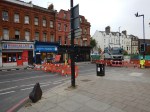
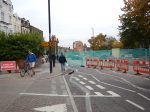


I walked down from Archway station and then caught a free bus to Holloway Road. At least TfL had got the buses right.
But except for Junction Road from Archway to Kentish Town, which was blocked solid, the traffic levels were very low.
The Mayor’s Plans For East London River Crossings
This article on the BBC is entitled Mayor accused of ‘betrayal’ over Silvertown river tunnel.
I made my feeling clear about the tunnel in No To Silvertown Tunnel . I started by saying this.
My personal feelings about the Silvertown Tunnel are that it is irrelevant to me, except that it might help some trucks bring goods that I buy online or at a local shop. Although as a sixty-eight year-old-widower living alone, I don’t think my transport needs through the tunnel will be high.
I don’t drive after my stroke and I like that lifestyle, except when last night it takes me three trains, a coach and a taxi to get back from watching football at Ipswich. But that tortuous late night journey was caused because NuLabor spent my tax money on pointless wars that will haunt us for generations, rather than in extending and renewing our rail system, that will nurture and enrich our future.
I don’t think, that I’ve changed my views much.
The Mayor is actually proposing five river crossings.

Five New Thames Crossings
Here my thoughts on each
Rotherhithe – Canary Wharf Bridge
This is detailed in Wkipedia as the Rotherhithe Crossing or Brunel Bridge.
Wikipedia says this about the location.
The preferred location for the bridge identified in the feasibility study would be between the Impound Lock close to Cascades Tower on the northern (Canary Wharf) bank, and at Durand’s Wharf park on the southern (Rotherhithe) bank.[2]
There is currently a Thames Clippers ferry shuttle between these two points. The Jubilee line parallels the route of the proposed bridge, with the nearest stations at Canada Water and Canary Wharf.
I took these pictures of the current ferry from Canary Wharf pier.
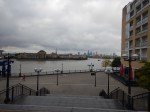
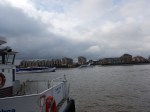
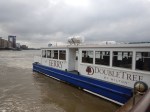
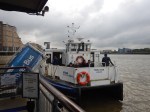
The bridge has its own web site, with a dramatic picture on the home page.
The visualisations show a bridge, that I think few would dislike. I certainly don’t!
- It’s dramatic.
- It would be open to pedestrians and cyclists.
- It would be the longest bascule opening bridge in the world.
- It would allow tall ships to pass through.
But above all I suspect that Marc and Isambard would have approved.
Canary Wharf – North Greenwich Ferry
If Canary Wharf to Rotherhithe can sustain a ferry, then surely a ferry at the other side of Canary Wharf connecting to North Greenwich with the O2, must be viable.
This Google Map shows the Thames between Canary Wharf and North Greenwich.

Canary Wharf And North Greenwich
It is not the longest ferry link, but there are questions to be answered.
- Does the ferry go right into the heart of Canary Wharf or only as far as the bank of the Thames?
- Does the ferry go all round the O2 to North Greenwich Pier or call at a new pier on the west side of the Greenwich Peninsular?
- Will the ferry be fully accessible?
- Will the ferry accommodate bicycles?
- Will the ferry be free, as is the current Woolwich Ferries?
- How many boats will be used?
I think that there could be an opportunity to design an integrated ferry and pier, that would be all things to all users.
It certainly shouldn’t be boring and if possible it should call at the heart of Canary Wharf.
Silvertown Tunnel
In my view the Silvertown Tunnel is just another route for some travellers and possibly their goods to take between the two banks of the Thames.
Categories of traffic across the river through a new Silvertown Tunnel would include.
- Individuals, groups and families, who don’t necessarily need a vehicle. But sometimes choose to take one.
- Individuals, groups and families, who absolutely need to take a vehicle.
- Vans and trucks collecting or delivering goods.
- Buses and coaches
- Taxis, mini-cabs and private hire vehicles.
One thing that has been said about the Silvertown Tunnel is that it will be funded by a toll and some reports have said that the Blackwall and Rotherhithe Tunnels will be tolled as well.
London already has a congestion charging system for areas in the centre and I suspect that this could be updated to charge for the cross-river tunnels.
We’ve never had a toll to get across the Thames in London, with even the Woolwich Ferry being free, so I suspect that a toll would reduce cross-river vehicular traffic.
Remember that, when tunnels were built under the Thames in Central London, there was few quality alternatives with the exception of the Northern and Victoria Lines and the original undeveloped Thameslink.
But over the last few years, cross-river and other public transport has been getting better. And it still is!
Consider.
- In the last year, a lot has been disclosed about Crossrail and its enormous Class 345 trains.
- We’ve also seen the opening of the new London Bridge station and can see the improvements taking place in South London.
- We’ve also seen the arrival of the Night Tube.
- Capacity is being increased on the cross-river East London Line and the Jubilee, Northern and Victoria Lines.
- We have Night Thameslink, so will we see a Night Crossrail?
Other developments will follow.
The only certainty is that we will be seeing a large increase in quality public transport, over, under and on the Thames.
I think for the first time in my life, there could be two competing ways of getting across the Thames; driving through a tunnel or using public transport.
Cost, convenience, needs and possibly an all-singing-and-dancing computer or phone app will tell you where to go.
As I said earlier, if the Silvertown Tunnel is built, it will be just another route for travellers, with perhaps a higher, but fixed cost.
If it is built, I think there should be conditions.
- The Blackwall, Rotherhithe and Silvertown Tunnels should all have tolls.
- Crossrail and Thameslink should have a great deal more Park-and-Ride capacity.
- All buses, coaches, mini-cabs, taxis and trucks in Central London should be low emission.
I also think that large areas of Central London, like the City and Oxford Street should be pedestrianised and some are on track for this to happen.
Much of the decision about the Silvertown Tunnel revolves around politics.
Sadiq Khan, has said he’s in favour of the tunnel with conditions, but he is up against a formidable movement that don’t want the tunnel built at any price.
I also find it interesting, that Ken Livingstone was in favour of the Silvertown Tunnel. But Ken brought in congestion charging.
I wouldn’t be surprised, if there’s some researchhanging aroiund in TfL, that says that a tolled road crossing will cut traffic. But it’s the sort of research no-one would believe.
So perhaps a tolled Silvertown Tunnel with conditions will be a good idea.
But only because there are now alternatives!
Gallions Reach DLR
The BBC article says this about this proposal.
A DLR crossing at Gallions Reach, helping support the development of around 17,000 new homes across Newham and the Royal Borough of Greenwich
It is different to the original proposal of a Docklands Light Railway extension to Dagenham Dock, which stayed on the North bank of the Thames.
This map shows the area of London from Gallions Reach to Abbey Wood.
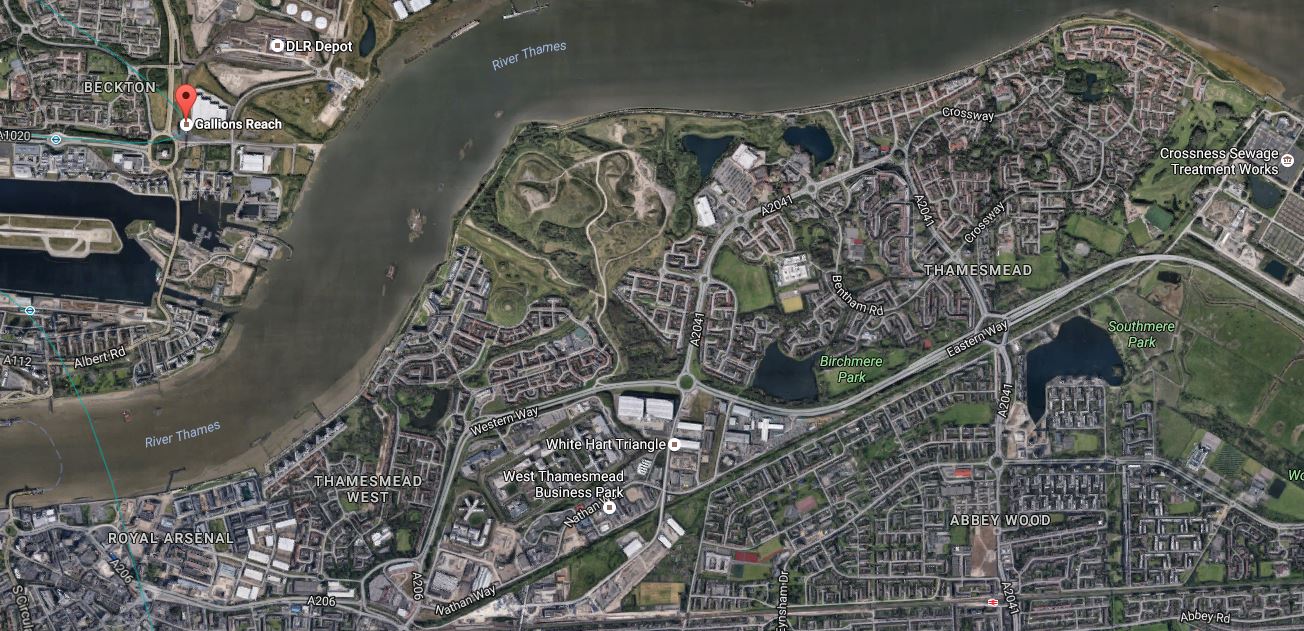
Gallions Reach To Abbey Wood
Note.
- Gallions Reach DLR station is marked with the red arrow.
- Just to the North of Gallions Reach station is the main DLR depot, which would probably be an excellent site to start a tunnel.
- The tunnel would probably emerge on the South bank of the Thames to the West of Thamesmead.
- It could then weave its way along the side of the main road.
- The North Kent Line with Abbey Wood and Belvedere stations runs along the bottom of the map.
- Crossrail could be extended to Gravesend.
- Crossrail should also be extended Ebbsfleet International for European rail services.
If the DLR extension went from Gallions Reach DLR station to Abbey Wood station it will be a loop on Crossrail serving a lot of areas ripe for quality housing and commercial development.
It certainly looks a feasible area to think about taking the DLR.
Barking Riverside Overground Extension
When I first heard about the Thamesmead Extension of the Gospel Oak to Barking Line, I thought it was a good idea.
As it is mentioned in the Mayor’s plans, I suspect that building the extension is getting nearer to reality.
Certainly provision has been made in the design of the Barking Riverside Overground Extension to extend the line under the river if required.
Joined Up Connections
If you take out the Silvertown Tunnel, which is the only one of the five crossings for which you need a vehicle, you get a route along the Thames from Canada Water To Barking.
- Walk from Canada Water to the Rotherhithe – Canary Wharf Bridge
- Cross the Rotherhithe – Canary Wharf Bridge
- Walk to the Canary Wharf – North Greenwich Ferry
- Take the Canary Wharf – North Greenwich Ferry to North Greenwich
- Take the Emirates Air-Line to Royal Victoria
- Take the DLR to Gallions Reach and on to Thamesmead
- Take the Gospel Oak to Barking Line to Barking
It’s an interesting route using various means of transport.
Changing Trains At Carmarthen Station
Carmarthen station is on a spur from the West Wales Line from a triangular junction.
This Google Map shows the station and the junction.
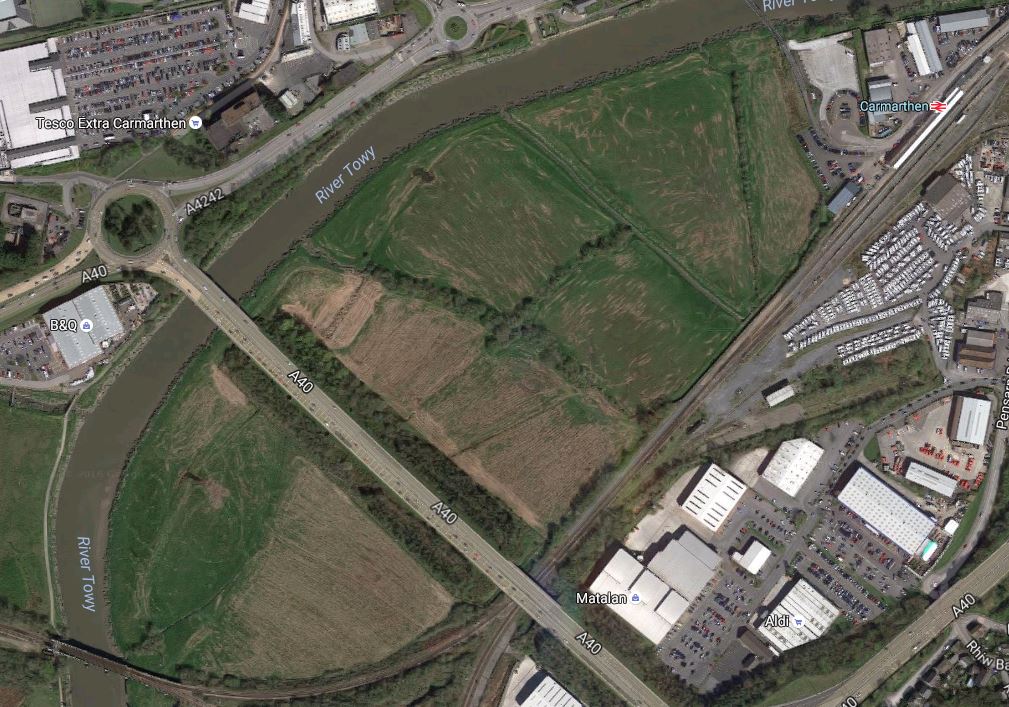
Carmarthen Station
My train from Swansea arrived in the station and I crossed the tracks to the other platform to get my onward train to Pembroke.
These are some pictures of the station.

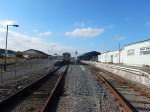
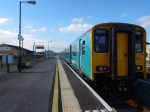
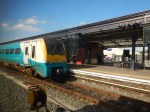

There aren’t many stations, where passengers are allowed to cross the lines.
This Google Map shows the station layout in detail.
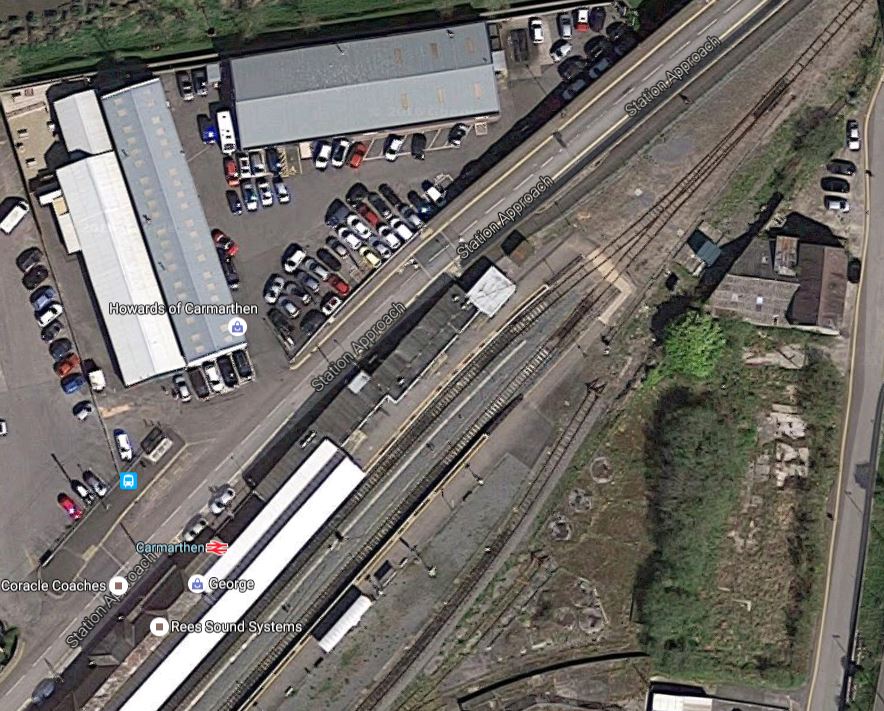
Carmarthen Station Layout
It is a good example of how a reversing siding works.
Note in the larger map, the railway crosses over the River Towy, as it goes to the West.
There is a lifting bridge over the river called Carmarthen Bridge.
This web page on Movable Bridges, describes the bridge and has a picture.
The bridge was built in 1911 and hasn’t worked since about 1956.
The Sheppey Crossing
The Sheppey Crossing is the bridge onto the island for road traffic.
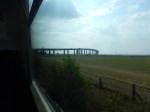
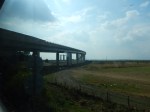
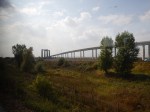
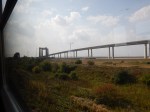
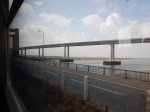
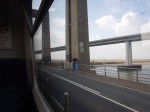
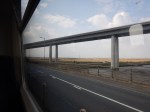
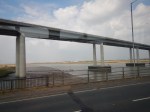
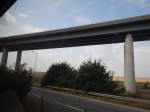
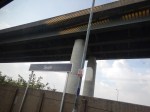
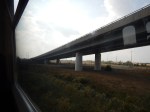
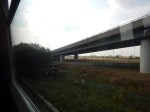
Note the towers of the older Kingsferry Bridge, which carries the railway across. It is a rare vertical-lift bridge that carries both road and railway.
One of the others of this type in the UK is the Newport Bridge on Teesside.
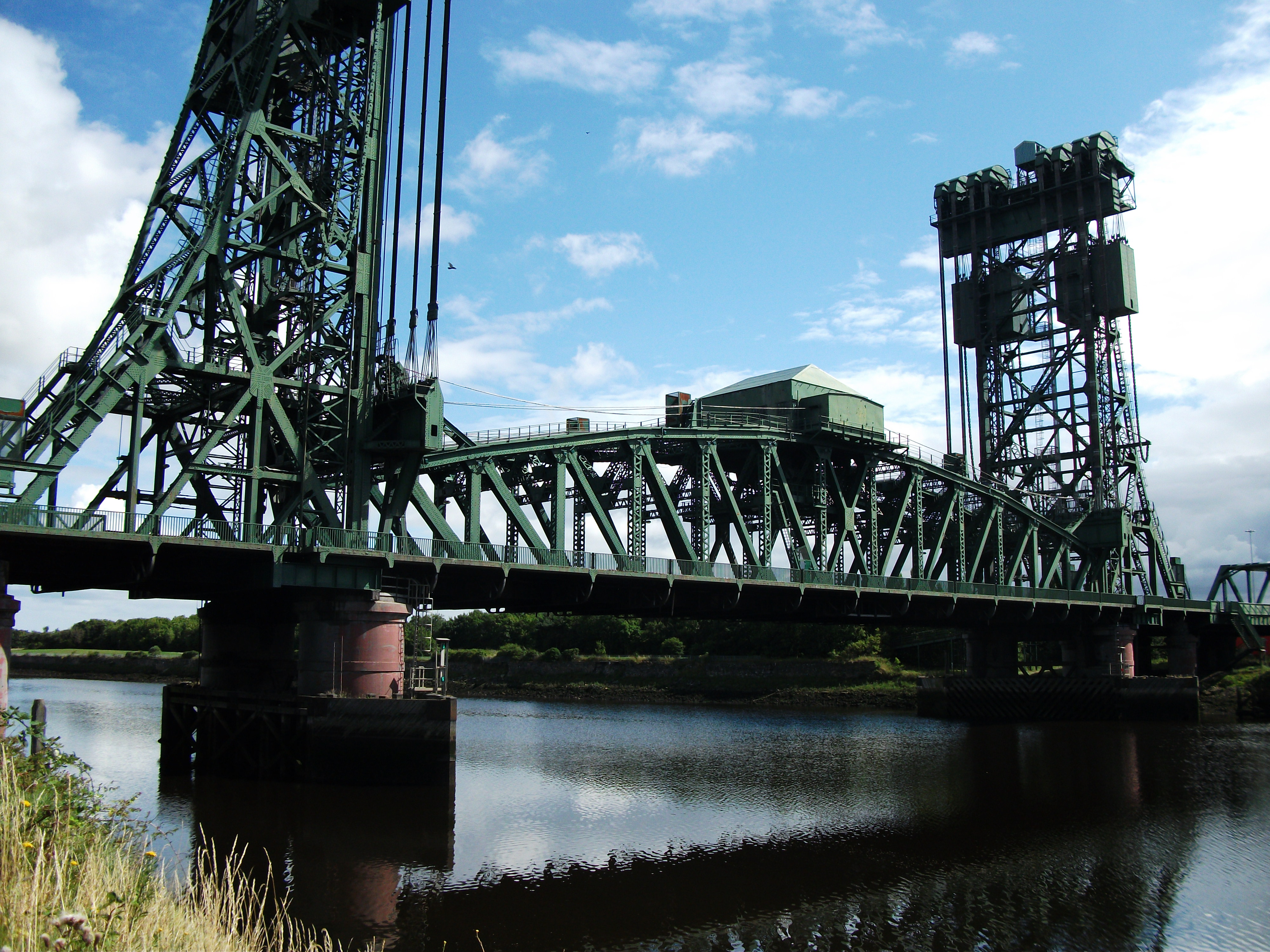
The Newport Lifting Bridge
I wrote about it in The Tees Bridges and Barrage in 2010.
 The Anonymous Widower