Bombardier and CAF To Make 413 Carriages For New West Midlands Franchise
The title of this post is the same as this article on Global Rail News.
This is said.
Future operator West Midlands Trains has made a £680 million order with Bombardier and CAF for 413 carriages.
Bombardier will manufacture 36 three-car and 45 five-car Aventra trains at its Derby site, while CAF will produce 12 two-car and 14 four-car Civity trains. In total, 107 new trains will be delivered.
The electric three-car Aventras will operate on metro services, the electric five-car units for outer suburban and long distance, while CAF’s DMUs will run on dedicated services to the towns and cities around Birmingham.
These are my thoughts on the various parts of the order.
The Three-Car Aventras
The thirty-six three-car Aventras will probably replace the twenty-six Class 323 trains, which lack wi-fi and other passenger-friendly features.
It should also be noted that the Aventra has a slightly unusual and innovative electrical layout.
This article in Global Rail News from 2011, which is entitled Bombardier’s AVENTRA – A new era in train performance, gives some details of the Aventra’s electrical systems. This is said.
AVENTRA can run on both 25kV AC and 750V DC power – the high-efficiency transformers being another area where a heavier component was chosen because, in the long term, it’s cheaper to run. Pairs of cars will run off a common power bus with a converter on one car powering both. The other car can be fitted with power storage devices such as super-capacitors or Lithium-ion batteries if required.
This was published six years ago, so I suspect Bombardier have refined the concept, which is probably more to do with spreading weight around the train for better dynamics than anything else!
Obviously for West Midlands Trains, there is no need for 750 VDC, but will there still be a pair of power cars?
So it looks like there may be a reorganisation of the electrical system in the trains.
A few other points.
- I am surprised that some of the trains aren’t six-cars, as every other set of new trains seem to be single and double lengths.
- According to Wikipedia, the trains will have end gangways.
- The trains are air-conditioned and have free wi-fi and power sockets.
Hopefully, the full specification and Tops-number will be disclosed soon.
Are Batteries An Inherent Part Of The Operation Of Three Car Aventras?
Suppose each car in the train was a self-contained power car.
- Each car could also have a 75 kWh battery, which is the size of one on a New Routemaster hybrid bus.
- Regenerative braking would be efficient as it would use the battery in the same car.
- Batteries can be topped up using the 25 KVAC overhead wires.
- Passenger services like power-points would be powered from the battery.
If we assume that each car needs 5 kW to do a mile, this would give the train a range away from the wires of 15 miles.
Would it be possible for trains to run on the Camp Hill Line and the proposed Camp Hill Chords into Birmingham Moor Street station solely using battery power?
I think it is possible and after the battery-powered trams on the Midland Metro, it’s another case of emphasising the B in Birmingham.
The Five-Car Aventras
These will probably be vaguely similar to the other two five-car Aventras; Class 701 and Class 720.
Differences highlighted in the various articles and Wikipedia include.
- According to Wikipedia, the trains will have end gangways.
- The trains will be 110 mph units.
Both are firsts for Aventras.
I don’t think it will be long before a train operator buys an Aventra capable of 125 mph.
The CAF Civity Trains
The CAF Civity are a mixture of two-car and four-car units and will be used to replace some older diesel multiple units and augment some of the more modern Class 170 and Class 172 trains.
Class 230 Trains
West Midlands Trains have also ordered three Class 230 trains for the Marston Vale Line.
The route has the following characteristics.
- It is roughly twenty-four miles long.
- Trains take just over forty minutes for the journey between Bletchley and Bedford stations.
- There are plans to extend the service to Milton Keynes Central station.
- It is a diesel island in a sea of electrified lines.
Wikipedia says this about the Infrastructure.
Apart from a short length of single track at both ends, the line is double track, and is not electrified (barring short lengths at either end). It has a loading gauge of W8 and a line speed of 60 miles per hour (97 km/h). The line’s signalling centre is at Ridgmont.
I would suspect that two trains are needed to provide an hourly service, so buying three trains gives a spare, that might augment the services at busy times.
The flexibility of the Class 230 trains will give a choice of operating modes.
- Using 25 KVAC overhead electrification at the ends.
- Using onboard diesel power.
- Using batteries charged at the ends of the route.
I suspect that the most efficient will be a mix of all three.
The trains are also designed for remote servicing, so they could be based in a siding at Bedford, Bletchley or Wolverton and supported by a well-designed service vehicle and a fuel bowser.
Conclusions
West Midlands Trains seem to have gone for a sensible Horses-for-Courses solution.
I have a feeling that their concept for the Marston Vale Line will be used elsewhere.
The Intelligent Multi-Mode Train And Affordable Electrification
Some would say we are at a crisis point in electrification, but I would prefer to call it a crossroads, where new techniques and clever automation will bring the benefits of electric traction to many more rail lines in the UK.
Lines That Need Electric Passenger Services
I could have said lines that need to be electrified, but that is probably a different question, as some lines like the Felixstowe Branch Line need to be electrified for freight purposes, but electric passenger services can be provided without full electrification.
Lines include.
- Ashford to Hastings.
- Borderlands Line.
- Caldervale Line from Preston to Leeds
- Camp Hill Line across Birmingham.
- Huddersfield Line from Manchester to Leeds via Huddersfield.
- Midland Main Line from Kettering to Derby, Nottingham and Sheffield.
- Uckfield Branch Line
There are many others, too numerous to mention.
What Is A Multi-Mode Train?
If a bi-mode train is both electric and diesel-powered, a multi-mode train will have at least three ways of moving.
The Intelligent Multi-Mode Train
The intelligent multi-mode train in its simplest form would be an electric train with these characteristics.
- Electric drive with regenerative braking.
- Diesel or hydrogen power-pack.
- Onboard energy storage to handle the energy generated by braking.
- 25 KVAC and/or 750 VDC operation.
- Automatic pantograph and third-rail shoe deployment.
- Automatic power source selection.
- The train would be designed for low energy use.
- Driver assistance system, so the train was driven safely, economically and to the timetable.
Note the amount of automation to ease the workload for the driver and run the train efficiently.
Onboard Energy Storage
I am sure that both the current Hitachi and Bombardier trains have been designed around energy storage. Certainly, there are several quotes from Bombardier executives that say so.
The first application will be to handle regenerative braking, so that energy can be stored on the train, rather than returned to the electrification.
Onboard energy storage is also important in modern electric trains for other reasons.
- Features like remote train wake-up can be enabled.
- Moving the train short distances in case of power failure.
- When Bombardier started developing the use of onboard energy storage, they stated that one reason was to reduce electrification in depots for reasons of safety.
Onboard energy storage will improve in several ways.
- The energy density will get higher, meaning lighter and smaller storage.
- The energy storage capacity will get higher, meaning greater range.
- The cost of energy storage will become more affordable.
- Energy storage will last longer before needing replacement.
- CAF use a supercapacitor to get fast response and a lithium-ion battery for good capacity.
We underestimate how energy storage will improve over the next few years at our peril.
Automatic Onboard Storage Management
The use of the energy storage will also be optimised for route, passenger load, performance and battery life by the trains automatic power source selection system.
Diesel Power Pack
A conventional diesel power pack to drive the train on lines without electrification.
As the train is electrically-driven, when running under diesel, regenerative braking can still be used, with the generated energy being stored onboard the train.
Hydrogen Power Pack
I believe that hydrogen could be used to generate the electricity required, as it is in some buses.
Operation Of The Multi-Mode Train
I’ve read somewhere that Greater Anglia intend to run their Class 755 trains using electricity, where electrification is available, even if it only for a short distance. This is enabled, by the ability of the train to be able to raise and lower the pantograph quickly and at line speed.
The train’s automatic power source selection will choose the most appropriate power source, from perhaps electrification, stored energy and diesel, based on route, load and the timetable.
Do Any Multi-Mode Trains Exist?
The nearest is probably the Class 800 train, which I believe uses onboard energy storage to handle regenerative braking, as I outlined in Do Class 800/801/802 Trains Use Batteries For Regenerative Braking?.
This article in RailNews is entitled Greater Anglia unveils the future with Stadler mock-up and says this.
The bi-mode Class 755s will offer three or four passenger vehicles, but will also include a short ‘power pack’ car to generate electricity when the trains are not under the wires. This vehicle will include a central aisle so that the cars on either side are not isolated. Greater Anglia said there are no plans to include batteries as a secondary back-up.
So does that mean that Class 755 trains don’t use onboard energy storage to handle regenerative braking?
At the present time, there is no bi-mode Bombardier Aventra.
But in Is A Bi-Mode Aventra A Silly Idea?, I link to an article on Christian Wolmar’s web site, which says that Bombardier are looking into a 125 mph bi-mode Aventra.
My technical brochure for the new Class 769 train, states that onboard energy storage is a possibility for that rebuild of a Class 319 train.
I don’t think it is a wild claim to say that within the next few years, a train will be launched that can run on electric, diesel and onboard stored power.
The Pause Of Electrification
Obviously, for many reasons, electrification of all railway lines is an ideal.
But there are problems.
- Some object to electrification gantries marching across the countryside and through historic stations.
- Network Rail seem to have a knack of delivering electrification late and over budget.
- The cost of raising bridges and other structures can make electrification very bad value for money.
It is for these and other reasons, that the Government is having second thoughts about the direction of electrification.
Is There A Plan?
I ask this question deliberately, as nothing has been disclosed.
But I suspect that not for the first time, the rolling stock engineers and designers seem to be getting the permanent way and electrification engineers out of trouble.
As far as anybody knows, the plan seems to be to do no more electrification and use bi-mode trains that can run under both electrification and diesel-power to provide new and improved services.
Use Of Bi-Mode Trains
Taking a Liverpool to Newcastle service, this would use the electrification to Manchester, around Leeds and on the East Coast Main Line, with diesel power on the unelectrified sections.
If we take a modern bi-mode train like a Class 800 train, some features of the train will help on this route.
- The pantograph can raise or lower as required at line speed.
- It is probably efficient to use the pantograph for short sections of electrification.
- Whether to use the pantograph is probably or certainly should be controlled automatically.
On this route the bi-mode will also be a great help on the fragile East Coast Main Line electrification.
Improving Bi-Mode Train Efficiency
Bi-mode trains may seem to be a solution.
However, as an electrical engineer, I believe that what we have at the moment is rather primitive compared to how the current crop of trains will develop.
Onboard Energy Storage
I said this earlier.
- I am sure that both the current Hitachi and Bombardier trains have been designed to use energy storage.
- CAF use a supercapacitor to get fast response and a lithium-ion battery for good capacity.
This is an extract from the the Wikipedia entry for supercapacitor.
They typically store 10 to 100 times more energy per unit volume or mass than electrolytic capacitors, can accept and deliver charge much faster than batteries, and tolerate many more charge and discharge cycles than rechargeable batteries.
Supercapacitors are used in applications requiring many rapid charge/discharge cycles rather than long term compact energy storage: within cars, buses, trains, cranes and elevators, where they are used for regenerative braking.
Pairing them with a traditional lithium-ion battery seems to be good engineering.
The most common large lithium-ion batteries in public transport use are those in hybrid buses. In London, there are a thousand New Routemaster buses each with a 75 kWh battery.
In the past, there has have been problems with the batteries on New Routemasters and other hybrid buses, but things have improved and I suspect there is a mountain of knowledge both in the UK and worldwide on how to build a reliable, affordable and safe lithium-ion battery in the 75-100 kWh range.
As on the New Routemaster the battery is squeezed under the stairs, these batteries are not massive and I suspect one or more could easily be fitted underneath the average passenger train.
Look at this picture of a Class 321 train.
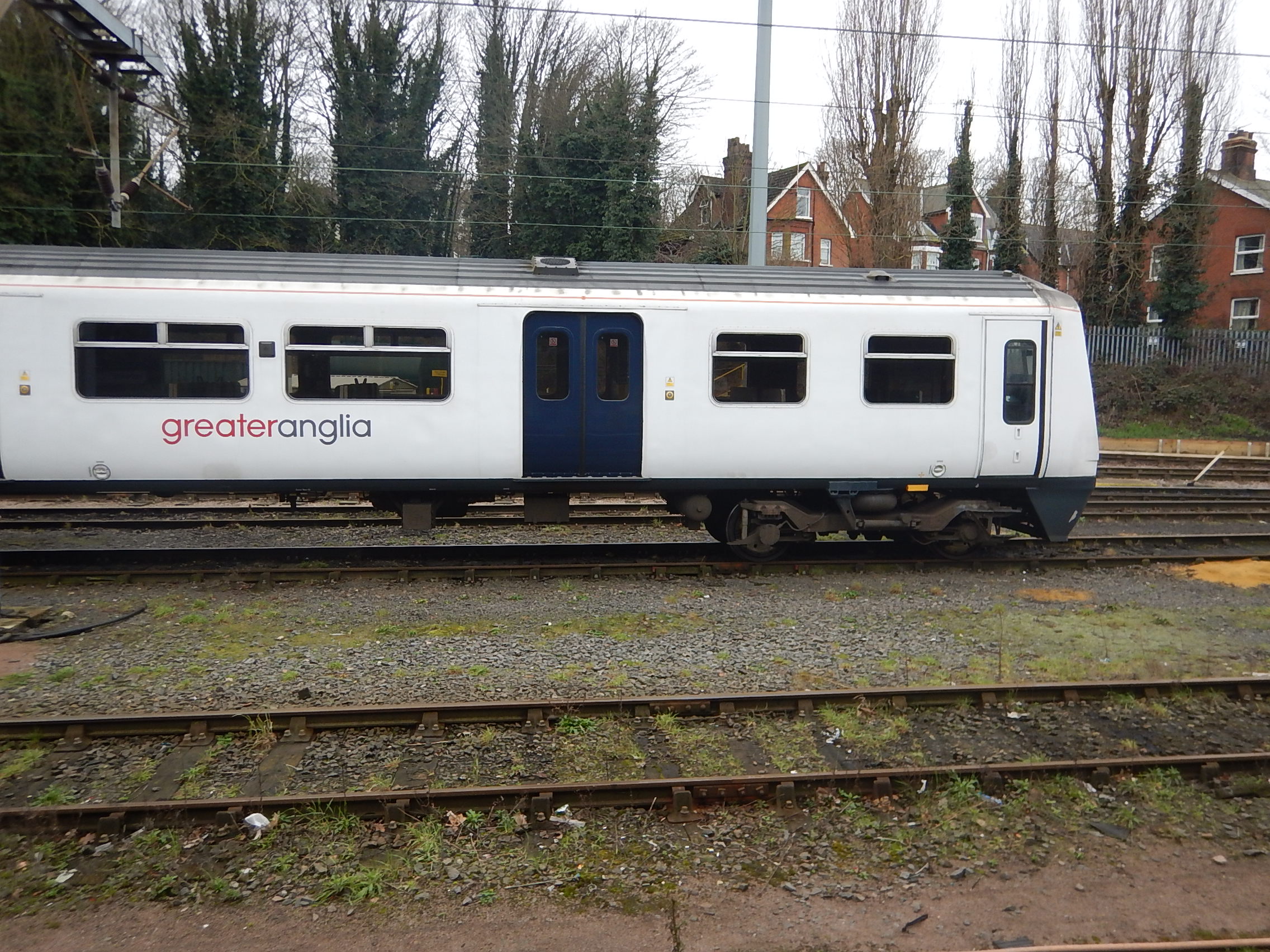
The space underneath is typical of many electrical multiple units.
How Far Could A Train Travel On Stored Energy?
In an article in the October 2017 Edition of Modern Railways, which is entitled Celling England By The Pound, Ian Walmsley says this in relation to trains running on the Uckfield Branch.
A modern EMU needs between 3 and 5 kWh per vehicle mile for this sort of service.
So if we take a battery from a New Routemaster bus, which is rated at 75 kWh, this would propel a five-car electric multiple unit between three and five miles.
Suppose though you put a battery of this size in every car of the train. This may seem expensive, but a typical car in a multiple unit and a double-deck bus carry about the same number of passengers.
A battery in each car would give advantages, especially in a Bombardier Aventra.
- Most cars in an appear to be powered, so each traction motor would be close to a battery, which must reduce electrical transmission losses and ease regenerative braking.
- Each car would have its own power supply, in case the main supply failed.
- The weight of the batteries is spread along the train.
If you take any Aventra, with a 75 kWh battery in each car, using Ian’s figures, they would be able to run between fifteen and twenty-five miles on battery power alone.
Quotes by Bombardier executives of a fifty mile range don’t look so fanciful.
What Onboard Energy Storage Capacity Would Be Needed For Fifty Miles?
This article in Rail Engineer, which is entitled An Exciting New Aventra, quotes Jon Shaw of Bombardier on onboard energy storage.
As part of these discussions, another need was identified. Aventra will be an electric train, but how would it serve stations set off the electrified network? Would a diesel version be needed as well?
So plans were made for an Aventra that could run away from the wires, using batteries or other forms of energy storage. “We call it an independently powered EMU, but it’s effectively an EMU that you could put the pantograph down and it will run on the energy storage to a point say 50 miles away. There it can recharge by putting the pantograph back up briefly in a terminus before it comes back.
What onboard energy storage capacity would be needed for the quoted fifty miles?
I will use these parameters.
- Ian Walmsley said a modern EMU consumes between 3 and 5 kWh for each vehicle mile.
- All vehicles are powered and there is one battery per vehicle.
This will result in the following battery sizes for different EMU consumption rates.
- 3 kWh/vehicle-mile – 150 kWh
- 4 kWh/vehicle-mile – 200 kWh
- 5 kWh/vehicle-mile – 250 kWh
These figures show that to get a smaller size of battery, you need a very energy-efficient train. At least lighting, air-conditioning and other electrical equipment is getting more efficient.
The 379 IPEMU Experiment On The Mayflower Line
In 2015, I rode the battery-powered Class 379 train on the 11.2 mile long Mayflower Line.
I was told by the engineer monitoring the train on a laptop, that they generally went to Harwich using the overhead electrification, charging the battery and then returned on battery power.
Ian Walmsley in his Modern Railways article says that the batteries on that train had a capacity of 500 kWh.
This works out at just over 11 kWh per vehicle per mile.
Considering this was an experiment conducted on a scheduled passenger service, it fits well with the conssumption quoted in Ian Walmsley’s article.
Crossrail’s Emergency Power
If you look at Crossrail’s Class 345 trains, they are nine cars, with a formation of
DMSO+PMSO+MSO+MSO+TSO+MSO+MSO+PMSO+DMSO
All the Ms mean that eight cars are motored.
Suppose each of the motored cars have a battery of 75 kWh.
- This means a total installed battery size of 600 kWh.
- Suppose the nine-car train needs Ian’s Walmsley’s high value of 5 kWh per vehicle mile to proceed through Crossrail.
- Thus 45 kWh will be needed to move the train for a mile.
- Dividing this into the battery capacity gives the range of 13.3 miles.
If this were Crossrail’s emergency range on stored energy, it would be more than enough to move the train to the next station or place of safety in case of a complete power failure.
Trains Suitable For Onboard Energy Storage
I have a feeling that for any train to run efficiently with batteries, there needs to be a lot of powered axles and batteries distributed along the train.
Aventras certainly have a lot of powered axles and I think Hitachi trains are similar.
Perhaps this explains, why after the successful trial of battery technology on a Class 379 train, it has not been retrofitted to any other Electrostars.
There might not be enough powered axles!
Topping Up The Onboard Energy Storage
There are three main ways to top up the onboard energy storage.
- From regenerative braking.
- From the diesel or hydrogen powerpack.
- From the electrification, where it is available.
The latter is probably the most efficient and is ideal, where a route is partly electrified.
Affordable Electrification
Although the Government has said that there will be no more electrification, I think there will be selective affordable electrification to improve the efficiency of multi-mode trains.
Why Is Electrification Often Late And Over Budget?
The reasons I have found or been told are varied.
- Electrification seems regularly to hit unexpected infrastructure like sewers and cables on older routes.
- There have been examples of poor engineering.
- There is a large amount of Victorian infrastructure like bridges and stations that need to be rebuilt.
- There is a certain amount of opposition from the Heritage lobby.
- Connecting the electrification to the National Grid can be a large cost.
My experience in Project Management, also leads me to believe that although Network Rail seems to plan large station and track projects well, they tend to get in rather a mess with large electrification projects.
Electrification Of New Track
It may only be a personal feeling, but where new track has been laid and it is electrified Network Rail don’t seem to have the same level of problems.
These projects are generally smaller, but also I suspect the track-bed has been well-surveyed and well-built, to give a good foundation for the electrification.
It was interesting to note a few weeks ago at Blackpool, where they are electrifying the line, that Network Rail appeared to be relaying all of the track as well.
I know they were also re-signalling the area, but have Network Rail decided that the best way to electrify the line was a complete rebuild?
Short Lengths Of New Electrification
Short lengths of new electrification could make all the difference on routes using multi-mode trains with onboard energy storage.
As a simple example, I’ll take the Felixstowe Branch Line, that I know well. Ipswwich to Felixstowe is about sixteen miles, which is probably too far for a train running on onboard energy storage. But there are places, where short lengths of electrification would be beneficial to both the Class 755 trains and trains with onboard energy storage.
- Ipswich to Westerfield
- On the section of double-track to be built in 2019.
- Felixstowe station
There is also the large number of diesel-hauled freight trains passing through the area, quite a few of which change to and from electric haulage at Ipswich.
So would some selective short lengths of electrification enable the route to be run by trains using onboard energy storage?
Electrification Of Tunnels
Over the last few years, there has been some very successful electrification of tunnels like the seven kilometre long Severn Tunnel. This is said about the problems of electrification in Wikipedia.
As part of the 21st-century modernisation of the Great Western Main Line, the tunnel was prepared for electrification. It has good clearances and was relatively easy to electrify, although due to its age, the seepage of water from above in some areas provided an engineering challenge. The options of using either normal tunnel electrification equipment or a covered solid beam technology were considered and the decision was made to use a solid beam. Over the length of the tunnel, an aluminium conductor rail holds the copper cable, which is not under tension. A six-week closure of the tunnel started on 12 September 2016. During that time, alternative means of travel were either a longer train journey via Gloucester, or a bus service between Severn Tunnel Junction and Bristol Parkway stations. Also during that time, and possibly later, there were direct flights between Cardiff and London City Airport. The tunnel was reopened on 22 October 2016.
It appears to have been a challenging but successful project.
This type of solid beam electrification has been used successfully by Crossrail and Chris Gibb has suggested using overhead beam to electrify the three tunnels on the Uckfield Branch Line.
In the North of England, there are quite a few long tunnels.
Could these become islands of electrification to both speed the trains and charge the onbosrd energy storage?
Third-Rail Electrification Of Stations
Ian Walmsley in his Modern Railways article proposes using third rail electrification at Uckfield station to charge the onboard energy storage of the trains. He also says this.
This would need only one substation and the third rail could energise only when there is a train on it, like a Bordeaux tram, hence minimal safety risk.
There needs to be some serious thought about how you create a safe, affordable installation for a station.
I also feel there is no need to limit the use of short lengths of third-rail electrification to terminal stations. On the Uckfield Branch, some stations are very rural, but others are in centres of population and/or industry, where electricity to power a short length of third-rail might be available.
Overhead Beams In Stations
This picture shows the Seville trams, which use an overhead beam at stops to charge their onboard energy storage.
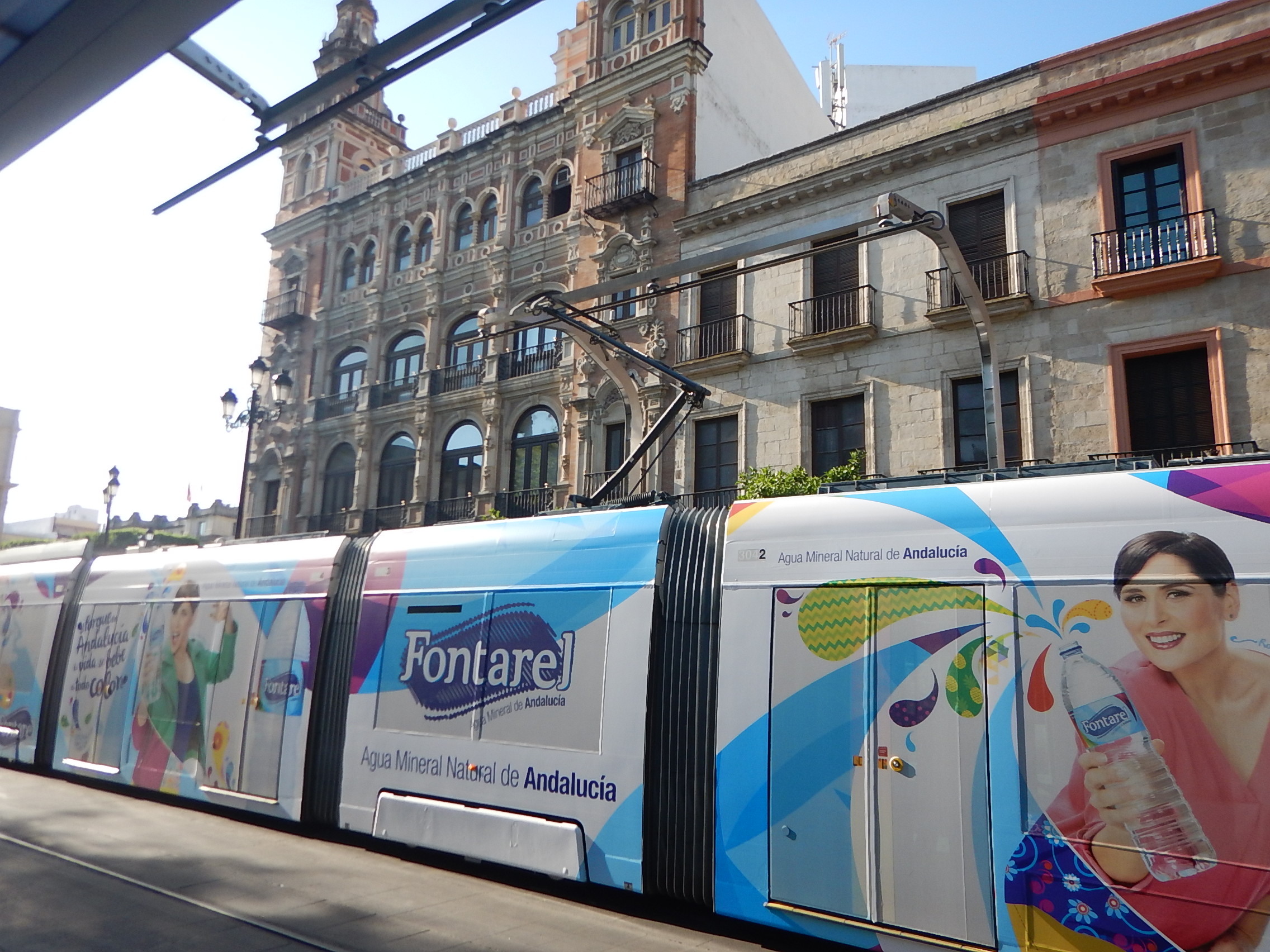
Surely devices like these can be used in selective stations, like Hull, Scarborough and Uckfield.
Third-Rail Electrification On Bridges And Viaducts
Some bridges and high rail viaducts like the Chappel Viaduct on the Gainsborough Line, present unique electrification problems.
- It is Grade II Listed.
- Would overhead electrification gantries be welcomed by the heritage lobby?
- It is 23 metres high.
- Would this height present severe Health and Safety problems for work on the line?
- The viaduct is 320 metres long.
Could structures like this be electrified using third-rail methods?
- The technology is proven.
- As in stations, it could only be switched on when needed.
- The electrification would not be generally visible.
The only minor disadvantage is that dual-voltage trains would be needed. But most trains destined for the UK market are designed to work on both systems.
Getting Power To Short Lengths Of Electrification
One thing that is probably needed is innovation in powering these short sections of electrification.
Conclusion
There are a very large number of techniques that can enable a multi-mode train to roam freely over large parts of the UK.
It is also a team effort, with every design element of the train, track, signalling and stations contributing to an efficient low-energy train, that is not too heavy.
?
Where Is London Midland Going?
This excellent article on Rail News is entitled Franchising timetable slips again.
This is the first two paragraphs.
THE Department for Transport’s franchising timetable is slipping again, possibly because of delays introduced by the snap General Election.
The winner of the West Midlands franchise should have been announced in June, ready for the new contract to start in October.
It is now getting very tight for a new West Midlands franchise, currently held by London Midland, to start in October.
The Current Fleet
The current fleet is a mixture of diesel and electric multiple units, most of which are in reasonable condition, although it does need a certain amout of updating and the addition of some new or refurbished trains.
- I don’t think any of the trains have wi-fi, whereas some of their competitors have it installed.
- The several Class 153 trains probably need replacing or augmenting with larger units.
- More 100 mph electric units are probably needed for the West Coast Main Line.
- More Class 350 trains from TransPennine Express must be a possibility.
- I wouldn’t be surprised to see some Class 769 trains going to the new franchise to work partially-electrified routes.
But the train fleet doesn’t look like it will need a massive number of replacement trains.
Planned And Proposed Lines Around Birmingham
The next few sections detail some of the developments either in progress or proposed.
The Chase Line
The Chase Line electrification should be complete by May 2018 and this will need more electric trains.
Although, I do wonder if the new franchise might use the new electrified route to introduce new services.
The Cross City Line
The Cross-City Line electrification to the newly-rebuilt Bromsgrove station should allow a new three trains per hour (tph) electric service to start across Birmingham in May 2018.
Unless of course, the electrification is late.
The Camp Hill Line
The Camp Hill Line is another cross-Birmingham route and effectively acts as a loop for the Cross-City Line.
It is a long term aim of Birmingham to reopen this line to passengers and the new franchise could include this line in their plans.
Wikipedia talks of a £170million pound scheme to reopen the line with the following features.
- Three tph
- Three new stations
- A connection to Moor Street.
But as the line is open to freight and long distance passenger traffic, I do wonder if now that responsibility for this line has been devolved, that something simpler could be done in the short term to increase services across Birmingham.
Kenilworth Station
Kenilworth station should open this year on the Coventry to Leamington Line.
It will probably open with single-car Class 153 trains, which will probably be totally inadequate.
I wonder if the Coventry and Leamington Line could run back-to-back services with the Coventry to Nuneaton Line, thus creating a Leamington to Nuneaton service via Kenilworth, Coventry and Coventry Arena.
The North Warwickshire Line
The North Warwickshire Line links Birmingham with Stratford-on-Avon and has an alternative name of the Shakespeare Line.
Plans exist to extend this line South to Honeybourne station on the Cotswold Line.
Under Possible Future Development in the Wikipedia entry for the Warwickshire Line, this is said.
The Shakespeare Line Promotion Group is promoting a scheme to reopen the 9 miles (14 km) of line south of Stratford to Honeybourne where it would link to the Cotswold Line. Called the “Avon Rail Link”, the scheme (supported as a freight diversionary route by DB Schenker) would make Stratford-upon-Avon station a through station once again with improved connections to the South, and would open up the possibility of direct services to Oxford and Worcester via Evesham. The scheme faces local opposition. However, there is a good business case for Stratford-Cotswolds link.
I think we’ll see something in the new franchise about developing this line, as there is a lot of potential for a train operator.
- Direct services between Stratford-on-Avon and Oxford, where there is a connection to Bicester Village. Tourists would love that!
- Connection of the housing development at Long Marston to Birmingham.
- Could Stratford-on-Avon or Honeybourne become the terminus of a service from Leamington, Coventry and Nuneaton.
It would also give DB Schenker, their freight diversion.
A Bi-Mode Train For The West Midlands
The lines around Birmingham are very much like those around Liverpool and Manchester, with a mix of electrified and non-electrified lines.
More trains are needed and needed very soon to make the most of the following.
- New stations like Bromsgrove and Kenilworth.
- New electrification like the Chase Line to Rugeley and the Cross-City Line to Bromsgrove.
- Reopened lines like the Camp Hill Line.
- Capacity on electrified lines through Birmingham, Coventry and Wolverhampton.
I suspect that an ideal train for the West Midlands would have the following characteristics.
- 100 or even 110 mph on 25 KVAC overhead electrification.
- Perhaps 90 mph on diesel power.
- Possibly a range of perhaps a dozen miles on batteries.
- Four coaches.
- A modern interior.
- Wi-fi
This specification could have been written for one of Porterbrook’s Class 769 trains. Batteries might need to be added, which is something Porterbrook may do if a customer needs the feature.
But it doesn’t have to be a rebuilt train from the 1980s, as I suspect Class 755 trains, which are bi-mode Stadler Flirts as ordered by Greater Anglia would do the job well.
And who’s in the mix to run the new West Midlands franchise? Abellio, who recently won the new Greater Anglia franchise.
So could we see some flirting around Birmingham?
Regional Services
The current franchise runs services to Liverpool, but not Manchester.
Applications in the past have been made to run to Preston and I suspect that the new franchise will seek to improve services to Crewe, Liverpool, Manchester, Manchester Airport and Preston, although some of these routes will be opposed by Virgin.
As Manchester Airport seems to be developing as a rail hub, perhaps we’ll see the new franchise serving the important airport!
Conclusion
It will be interesting to see the plans of the new franchise, when they are announced.
But as this brief analysis and speculation shows, I think that there will be an order for new or refurbished bi-mode trains.
After The Northern Hub, Is Network Rail Planning A Midland Rail Hub?
The study on Network Rail’s web site is entitled West Midlands and Chilterns Route Study, proposes a concept of a Midland Rail Hub.
By adding the following infrastructure.
- Bordesley Chords and new platforms at Moor Street
- More tracks through Water Orton
- Kings Norton upgrade
- Snow Hill Platform 4
- Begin rollout of Digital Railway
Network Rail feel, it will bring the following benefits.
- Up to 10 extra trains every hour
- More freight trains
- New journey opportunities between East and West Midlands
- Unlocking new jobs
- Maximising benefits of HS2.
It doesn’t appear to be as radical as the Northern Hub.
These are my notes and thoughts on the various proposals.
Bordesley Chords
This Google Map shows the Bordesley area of Birmingham.
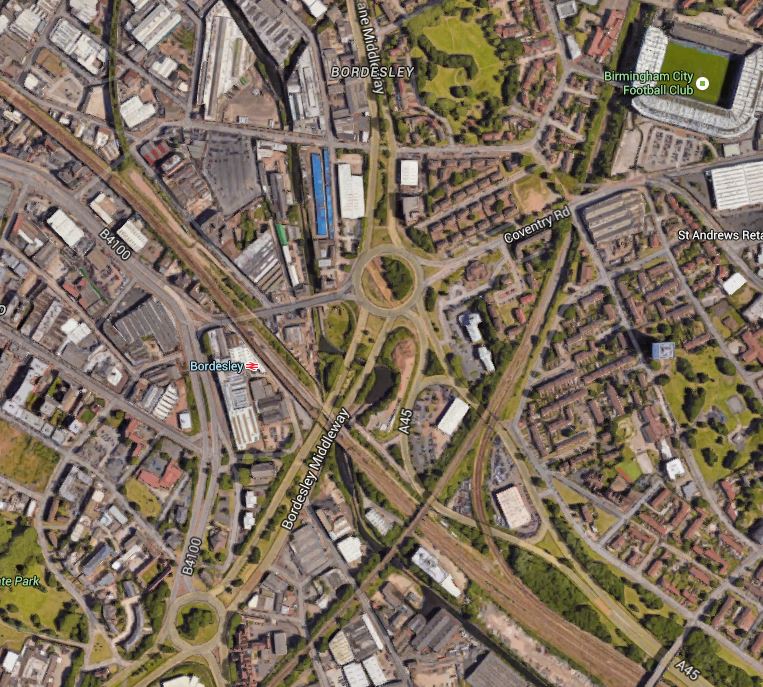
Bordesley Chords
In the top-right or north-eastern corner of the map is Birmingham City Football Ground.
In the middle of the map is Bordesley Circus, which is a roundabout, that is one of the most dangerous for pedestrians in the country. When I was last there, it was being improved and I wrote My Least Favourite Roundabout Gets Pedestrian Lights. I hope they’re working on Tuesday, 13th December, when I’ll be going to see Ipswich play.
Bordesley station, which is one of the worst stations in the UK, lies to the South-West of this roundabout and is on the Chiltern Main Line into Birmingham Moor Street station, although services don’t stop.
Running almost North-South across the map is the Camp Hill Line, which incidentally passes behind the stands at the football ground.
Where it crosses the Chiltern Main Line, there is a chord allowing limited connection between North and East.
I would assume that as the report says Bordesley Chords, that there will be some extra connectivity between these two lines.
Under the future of the Camp Hill Line on Wikipedia, this is said.
The reinstatement of local rail services to the former Camp Hill Line has been a long term aspiration of the City, and during 2007, Birmingham City Council announced that they were looking into the possibility of reopening the line between Kings Norton and Birmingham Moor Street via the construction of a railway viaduct from Sparkbrook to Bordesley, where trains would be taken into the “old” Birmingham Moor Street station. In October 2007, a 1500-name petition was handed in to the council asking for the line to be re-opened. In 2013 the proposal was shelved indefinitely.
As Kings Norton is to the South, this would need a West to South connection at Bordesley.
These pictures show the area from a Chiltern Train going into Moor Street.


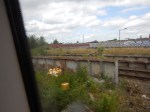
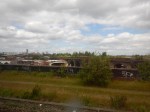
Salubrious it is not! There is certainly a lot of space on the North side, but there might be less on the South. This Google Map shows the area between the station and where the two lines cross.
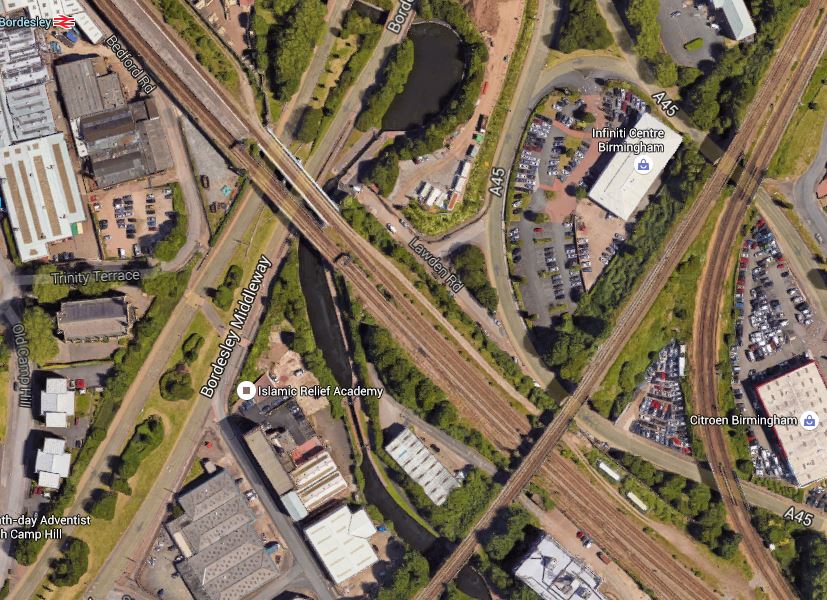
Bordesley Station And Chords
Note the double-track chord between the Camp Hill Line to the North and the Chiltern Main Line to the East. This chord gives services from the Chiltern Main Line to access Birmingham New Street station. If you take a train from Oxford to Birmingham New Street, it will take this chord, if it doesn’t go via Coventry.
From what I have seen in Manchester and some parts of London, the area could surely be put to a better purpose, perhaps driven by a rebuilt Bordesley station, with regular services to Moor Street, Kings Noton and Solihull. The area does have the added factor of water in the shape of one of Birmingham’s numerous canals.
Hopefully, the first piece of development in a very run-down area, the sorting of a decent walking route between Bordesley station and Birmingham City Football Ground has been completed.
New Platforms At Birmingham Moor Street Station
This Google Map shows Birmingham Moor Street station.
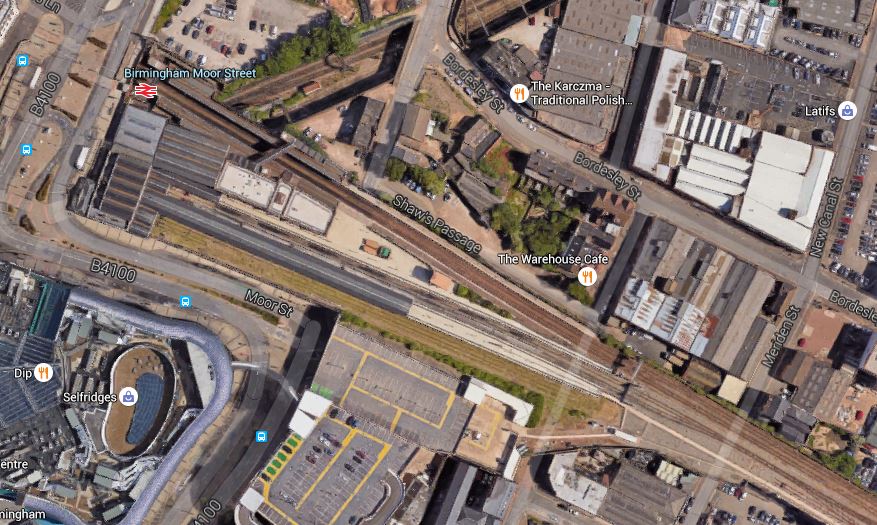
Birmingham Moor Street Station
The most northerly pair of platforms in the station are numbered 1 and 2 and are for the through lines to Birmingham Snow Hill station.
Over the last few years, work has opened the next pair of bay platforms 3 and 4. On my last trip to Birmingham in June, I arrived in Platform 4.
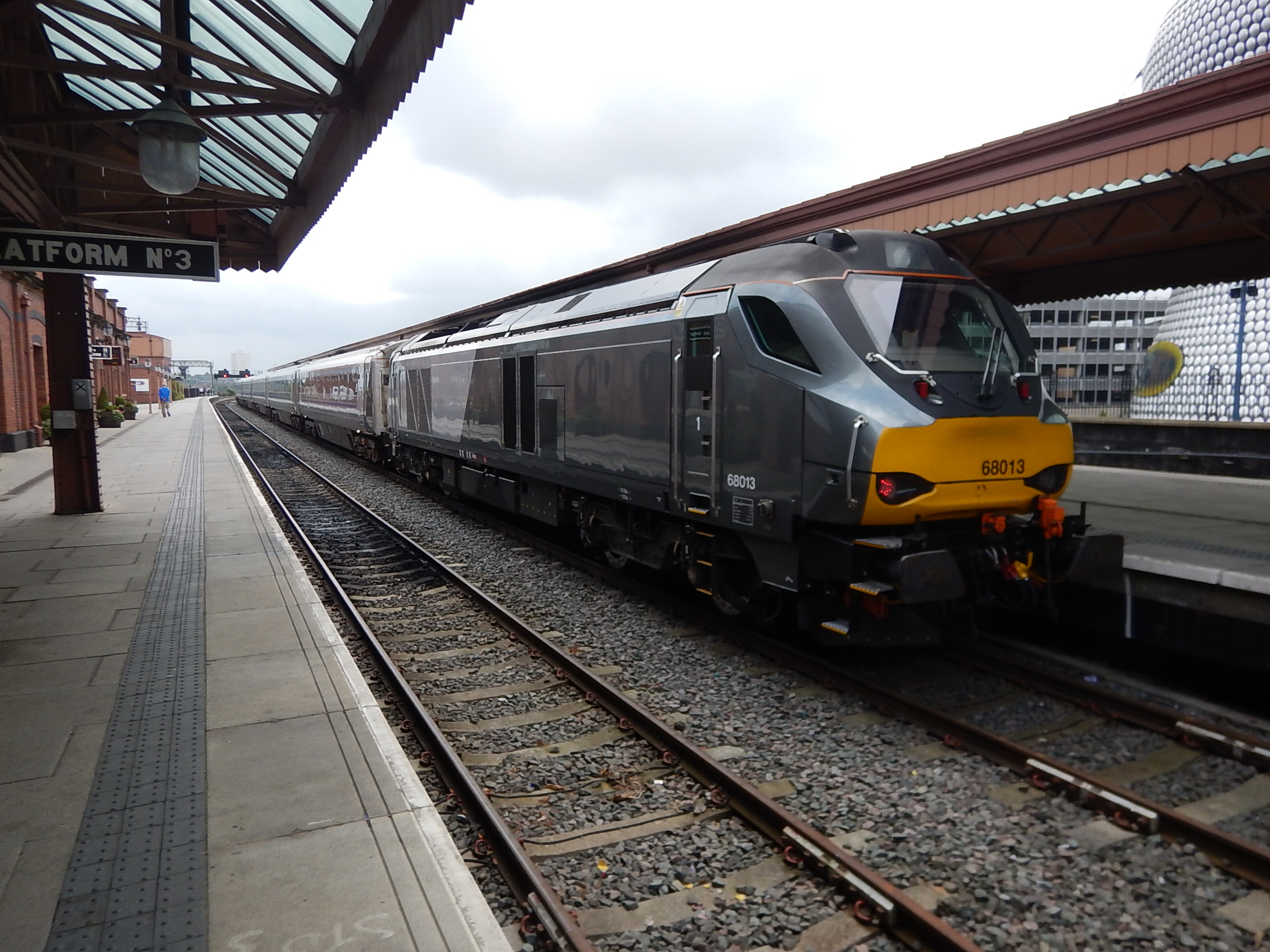
A Chiltern Main Line Train In Platform 4 At Birmingham Moor Street Station
Platform 5 on the other side of Platform 4 may have been reinstated, but there doesn’t seem to be any trains using it, as yet!
The map shows that there would appear to be space to open Platforms 3, 4 and 5, but could a clever architect squeeze in a Platform 6?
These pictures show the space for a possible Platform 5 and 6.

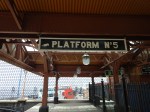

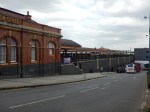
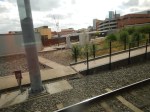
There would certainly appear to be space to shoe-horn two tracks and a new Platform 6 between the current Platform 5 and the retaining wall.
As the pictures show, Platform 5 is a platform that is long enough for any train currently envisaged that might call at Moor Street station.
Looking at the map of the station, it might even be possible to make Platform 6 even longer, if this were thought to be needed.
More Tracks Through Water Orton
This Google Map shows Water Orton station and the lines through it.

Lines Through Water Orton Station
If you look up services from Water Orton and Coleshill Parkway stations, they are certainly of the turn-up-and-wait-forever variety.
Water Orton has one train every two hours to Birmingham, but at least Coleshill Parkway has a train every half-hour.
Perhaps more lines through Water Orton will enable more trains through the area.
Looking at the rail map of Birmingham, it would be possible to go from Water Orton via the Camp Hill Line to Kings Norton and if the North to West chord was built at Bordesley to Moor Street.
It would certainly be the view of many, including myself, that a Parkway station needs a train or tram every fifteen minutes.
Kings Norton Upgrade
If the Camp Hill Line is reopened to passenger trains, then Kings North station will be the terminus.
This Google Map shows the station.
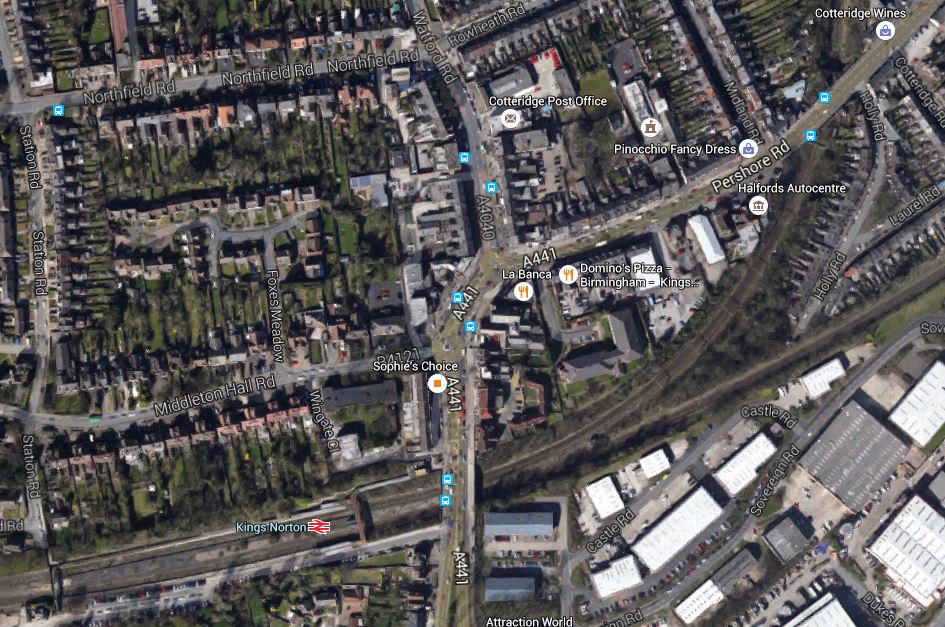
Kings Norton Station
It is a large station with an unused island platform in the middle.
These pictures show Kings Norton station.
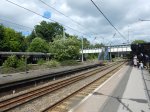
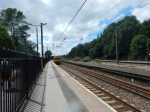
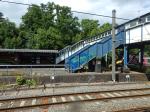
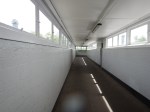
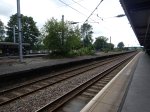
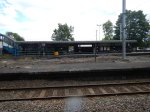
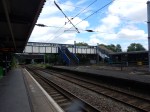
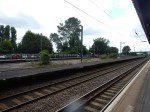
There is certainly work to be done.
But the station also has a lot of potential and space that can be utilised. It might even be possible to fit in a bay platform to turn trains back to Moor Street and New Street.
Birmingham Snow Hill Platform 4
Wikipedia says this about platforms at Birmingham Snow Hill station,
The present Snow Hill station has three platforms for National Rail trains. When it was originally reopened in 1987 it had four, but one was later converted in 1999 for use as a terminus by Midland Metro trams. The original tram terminus closed in November 2015, in order for the extension of the Midland Metro through Birmingham city centre to be connected. This includes a dedicated embankment for trams alongside the station, and will also include a new through stop serving Snow Hill. This will eventually allow the fourth platform to be returned to main-line use.
As the Midland Metro now has its own new platform outside the station, the fourth platform can soon be converted back to heavy rail use.
These pictures show the current state of the closed tram platform.


I don’t think that converting it back to heavy rail will be the most difficult of jobs.
Birmingham Station Connectivity
Although, not on the Network Rail infrastructure list, I feel that to gain the full benefits of HS2, then the line must be properly connected to Moor Street and New Street stations.
I can easily walk between Moor Street and New Street stations, but I do feel that Birmingham’s solution of using the Midland Metro as a link and to the Curzon Street HS2 station, is not the way to do it.
It needs some form of people mover. Perhaps a travelator would be better.
City Centre Ticketing
In Liverpool, a ticket to Liverpool stations, allows you to use the Underground to any of the other stations in the City Centre.
In London, many visitors by rail, add a Travelcard to their rail ticket.
Perhaps, in Birmingham, a ticket to Birmingham stations, should include the Midland Metro in the City Centre? Or a simple add-on for the Metro between Jewellery Quarter and Five Ways could be added for a few pounds.
At present, you have to buy a separate ticket. How visitor-friendly is that? At least a short journey is only a pound
If Birmingham is to make the most out of the opportunity of HS2, then they must use easy and understandable ticketing.
Chiltern’s Superb Trains
My trip down to Birmingham was in a Class 168 train, which although was a good experience for a diesel multiple unit, was spoilt as one engine went AWOL and we were late in to Moor Street.
But going home to London, I rode in what I think are one of the best long distance trains anywhere in Europe; Chiltern’s rakes of Mark 3 coaches pulled and pushed by a modern Class 68 locomotive.
- Nearly every seat gets a table and a window aligned to it.
- The seats are spcious and comfortable.
- The ride is the superb one, you always get from a Mark 3 coach.
- Trolley-service of drinks and a buffet on most services.
- Free wi-fi.
- London to Birmingham return for £19.20 with a Railcard.
- I’ve never travelled on Chiltern’s Mark 3 coaches and been unable to read my paper flat in front of me on the table.
The experience may be slower than Virgin’s, but give me Standard Class on Chiltern against First on Virgin every time between London and Birmingham.
The only problem, is that Marylebone station, isn’t as accessible as Euston from where I live. However, when Crossrail opens, times will be within a few minutes.
I can’t help feeling that Transpennine’s decision to use Class 68 locomotives and rakes of new CAF Mark 5 coaches across the Pennines, was influenced by the success of Chiltern’s flagship service and its superb rolling stock.
I’m looking forward to riding the CAF coaches in a few years, to see how they stand up to an almost forty year old British Rail coach.
I wonder how many Spanish engineers have ridden Chiltern’s trains?
I also feel that the Class 68 locomotive is an asset to a passenger service, in that so many diesel locomotives look dirty and smelly, but Class 68s seemed to have been designed to keep clean and also look how a locomotive should; powerful, purposeful and sleek.
For those, who don’t like that the trains are still diesel-hauled, there is even a Spanish solution for that, if the lines ever get electrified, in the shape of the new Class 88 electro-diesel locomotive, which is a sister of the Class 68 locomotive.
And of course, if Chiltern need some more trains and can’t find the Mark 3 coaches, they can always buy some new coaches from CAF.
Conclusions
It’s a very sensible plan and it will open up all sorts of possibilities for Birmingham.
The chords at Bordesley and the extra tracks through Water Orton would seem to open up a new route for trains across the city from Moor Street band Kings Norton to Water Orton and Nuneaton.
- New subsurban services could link Nuneaton and Kings Norton to Moor Street.
- Cross-country services might use Moor Street with a reverse, rather than New Street.
- Extra services from Moor Street to Nuneaton might take pressure off the heavily-loaded New Street to Birmingham route.
- How would the new station at Kenilworth station fit in?
But there are railways all over this area and I’m sure that the Bordesley and Water Orton improvements, will not be the last.
Already there is talk of reopening, the Sutton Park Line and the Stonebridge Railway.
I asked about Kenilworth station. I don’t know, but after Bordesley and Water vOrton are upgraded, there would be the possibility of a Warwickshire Circle, starting and finishing at Moor Street.
- Moor Street
- Solihull
- Warwick Parkway
- Warwick
- Leamington Spa with a reverse.
- Kenilworth
- Coventry
- Coventry Arena
- Bedworth
- Bermuda Park
- Nuneaton
- Coleshill Parkway
- Water Orton
- Moor Street
It would be a route, where several stations could be reopened or built from scratch. Leamington Spar incidentally already has a bay platform for the reverse.
I also think, that one of the biggest beneficiaries of all this will be Chiltern Railways.
Consider.
- Their two Birmingham termini of Show Hill and Moor Street are getting extra capacity.
- Moor Street will become a big terminal with two through and four bay platforms, all of which will be able to handle the longest Chiltern trains.
- Birmingham New Street station lacks capacity.
- The Birmingham New Street to Coventry route is seriously crowded.
- In Will Chiltern Railways Get A Second London Terminal At Old Oak Common?, I talked about Network Rail’s ideas to link the Chiltern route to the new station.
- Banbury station has been upgraded for more traffic.
- Chiltern will be running to Oxford station by the end of this year.
- Chiltern have plans in hand to run to Milton Keynes station.
We’ll certainly see extra services from London to Birmingham and possibly beyond, but will we see a triangular route going between London – Oxford – Birmingham – London?
It will depend on whether the passengers want it, but from Chiltern’s point of view, it might mean that their platforms in London, Oxford and Birmingham, and their trains, saw higher utilisation.
I suspect too, that the Oxford -Birmingham leg has more paths available and that Chiltern’s capacity problems are mainly at the London end of the Chiltern Main Line, especially now, that Banbury has been remodelled.
Chiltern Railways are an ambitious company and if they get a second terminal in London at Old Oak Common, they will certainly use it profitably.
I think that the Network Rail report shows that a few simple improvements, when thought through and executed with care can produce improvements not suspected in the original plans.
But all rail planning has to discount the London Overground Syndrome, where new stations, routes and trains, attract more passengers than originally expected.
Is The West Midlands Going To See A Boom In Rail Station Building?
Yesterday, when I wrote West Midlands To Get A New Freight Interchange, I wondered, if the original Four Ashes station would be rebuilt.
On looking at the list of proposed stations on Wikipedia, I noticed the first was Brinsford Parkway station, which I’d never heard of before.
But it turned out it was just a couple of miles South of Four Ashes. Wikipedia says this about Brinsford Parkway station.
It would be located on the Rugby-Birmingham-Stafford Line loop of the West Coast Main Line, and would give the north of Wolverhampton local commuter trains easing congestion on the A449, M6 and M54 motorways. Penkridge is the only station that still remains open on the line between Wolverhampton and Stafford.
The proposed station would serve a new development on the MoD depot at Brinsford (whose builder would fund the station), other local communities and passengers drawn from the motorway network. It would provide Park and Ride facilities, with a large car park.
It sounds like Wulfrunians are thinking holistically!
It looks like a good idea to me, as it ticks a lot of boxes.
So, I then went through Wikipedia’s lists of current and proposed station projects, to see what other interesting ones were in the pipeline. I found these in the West Midlands.
- Aldridge on the Sutton Park Line, which has been proposed for reopening
- Castle Bromwich on the Birmingham to Peterborough Line
- Fort Parkway on the Birmingham to Peterborough Line
- Hazelwell on the Camp Hill Line, which has been proposed for reopening
- Kenilworth – Crawling into reality, quite a few years late
- Kings Heath on the Camp Hill Line
- Moseley on the Camp Hill Line
The West Midlands has certainly expanded its suburban services with electrification, new trains and the Midland Metro in the last couple of decades and it looks like they will be building more train and tram lines in the future.
Birmingham To Peterborough Line
In my view the most interesting proposal is the two new stations on the Birmingham to Peterborough Line. Except for Water Orton, this line is station free between Coleshill Parkway and Birmingham New Street.
If Fort Parkway and Castle Bromwich stations were to open, surely two trains per hour on this line will not be enough, so I do wonder if there are plans to add extra services to and from somewhere like Nuneaton with its connections up and down the West Coast Main Line and possibly extend them the other way to perhaps the new Bromsgrove station to the West of Birmingham.
It strikes me that there will be some reorganisation. I suspect though, that one of the problems is that it would appear that the line from Nuneaton to Birmingham is not electrified, although Nuneaton and Birmingham New Street stations are. There is also incomplete electrification between Birmingham New Street and Bromsgrove stations.
It looks to me like a cash of call in some Aventra IPEMUs. The only problem might be hauling a full load of passengers up the Lickey Incline on the on-board energy storage.
Along The Cross-City Line
The Cross-City Line stretches across Birmingham between Lichfield Trent Valley and Redditch stations, calling in the city centre at New Street. There pictures are from Wednesday’s trip from Lichfield into the centre.





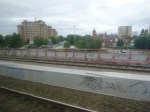
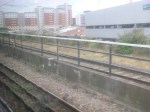
And these are some images from between New Street and Redditch.
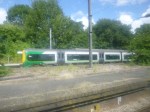


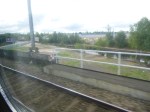
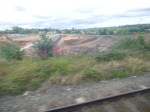
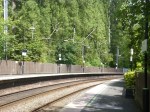
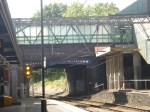
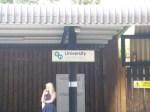
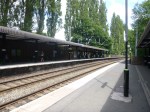
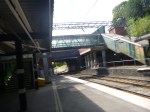
The line has the feel and in some cases look of the London Overground, except that a lot of the stations were obviously built using a kit of standard parts.
The Cross-City Line has an advantage that a lot of the London Overground would like – Space and platforms long enough for more than six carriages.
If I have a criticism of the Cross-City Line, it is that it doesn’t have enough stations in the city centre, with too much reliance on the busy New Street. As the line passes underneath Moor Street and through important areas east and west of the major station, surely a couple of extra stations would make the line much more customer-friendly. Especially, if it could link up better with the Midland Metro.
, The frequency is higher than the London Overground’s four trains an hour, which is becoming the accepted lower limit for a Metro service.
Camp Hill Line
There are aspirations to incorporate the Camp Hill Line into the system, to effectively give another East-West route, south of the city centre. With the West Midlands getting responsibility for transport in the next few years, this will happen. But if you look at Birmingham’s rail lines, history says, it might not be done in the obvious way, but in something much better.
According to Wikipedia, the Council is talking about a three trains per hour service between reopened platforms at Kings Norton and Moor Street.
Without doubt in Germany, this service would be operated by tram-trains, which on arriving at Moor Street would join the Midland Metro. This Google Map shows Moor Street station.
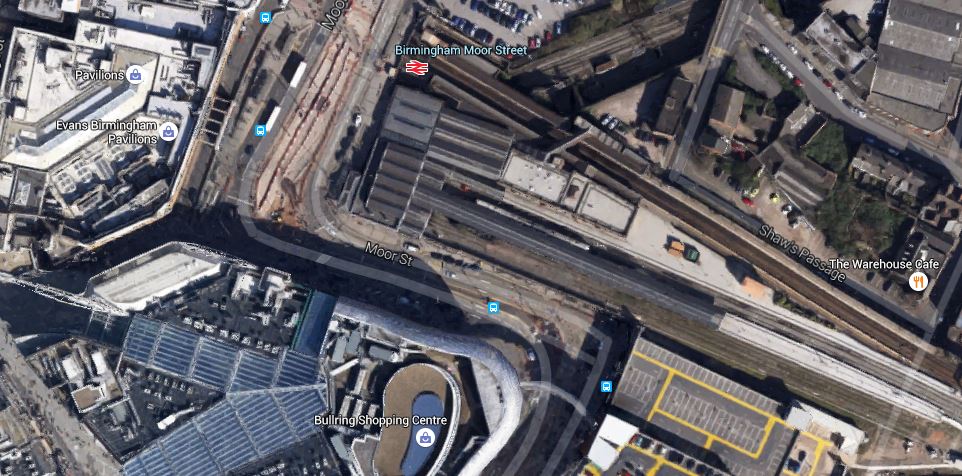
Could The Metro Squeeze Through Here?
It is a tight area, but then so it was at Snow Hill and they have got the Midland Metro through that concrete jungle.
Sutton Park Line
The Sutton Park Line is another aspiration of the authorities for opening as a passenger route between Rugeley and Water Orton. At its northern end, it will connect to the route between Rugeley and Walsall, which is currently being electrified and at the southern, it will connect to the route between New Street and Nuneaton.
The line also crosses the Cross-City Line at Sutton Coldfield. This map show the two-level crossing.
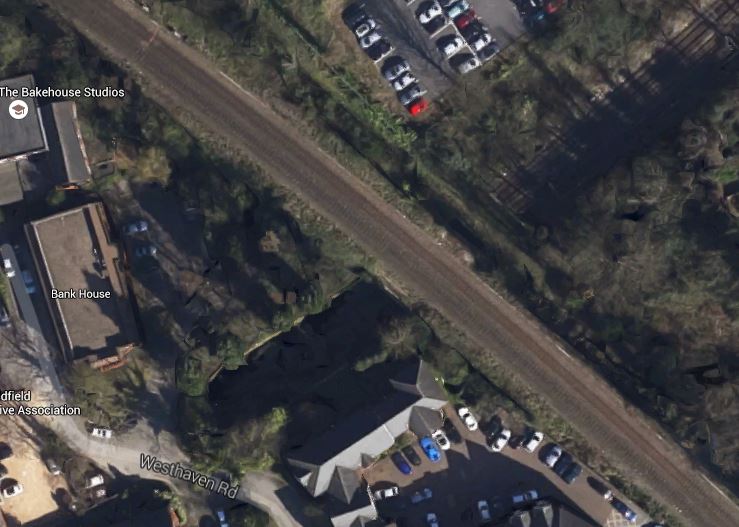
Sutton Park And Cross-City Lines
So is there scope for a new interchange station here. Only traffic statistics will know.
But above all the future for the Cross-City Line must be very bright, even if the direction of expansion has yet to be decided.
The Future Of The Midland Metro
The Test Match being in Birmingham this week, got me thinking about the new extension to the Midland Metro, I saw this week.
Unlike the tram systems in Blackpool, Croydon, Manchester, Nottingham and Sheffield, the Midland Metro hasn’t really caught the public’s imagination and been a rip roaring success.
When I visit other places with trams, I often use them, even if like in Nottingham, it’s just to get up the hill. But I’ve never used the Midland Metro, unless my trip has been taken to ride on the tram. A section in Wikipedia entitled Line One (Birmingham City Centre) Extension starts like this.
The fact that the existing line does not run into Birmingham City Centre has been identified as one of the reasons why it has failed to attract the predicted patronage. The Birmingham City Centre Extension (BCCE) will extend Line 1 into the streets of central Birmingham. Originally it was planned to terminate the extension at Stephenson Street, adjacent to New Street railway station. In September 2013, Centro started consultation on proposals to extend the city-centre extension from New Street station to Centenary Square. This would be another stage towards extending the line to Five Ways the original planned destination. The plan was approved by Birmingham City Council in October 2013, allowing the line to add an additional stop at Birmingham Town Hall.
I have watched this project unfold from a distance and it doesn’t seem to have had the strongest leadership or most intelligent design, when and since it was first opened in 1999.
As my pictures earlier this week showed construction is well underway and hopefully the line will arrive at New Street station this year. Perhaps this line across the city centre will give the Midland Metro an uplift.
On a selfish note, when I go to Birmingham, the places I want to get to are the football grounds and Brindley Place for lunch with friends.
Aston Villa and Wolverhampton have good train access and Birmingham is through the terrible station at Bordesley, but A stop at Brindley Place is on the next part of the Line 1 extension, which won’t be built until 2017 at the earliest. I don’t think it has even been started and possibly even fully planned, judging by the several alternatives talked about in Wikipedia. At present the line is going to Five Ways station, which is shown on this Google Map of the city centre.
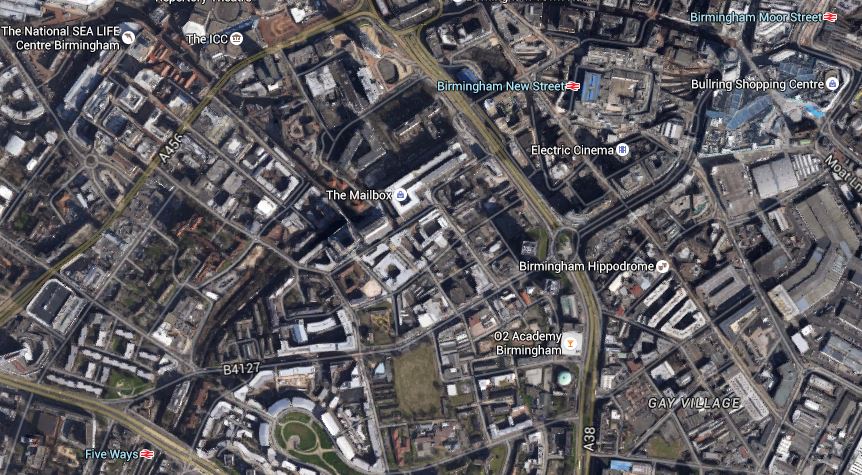
Midland Metro In Birmingham City Centre
I’ve included Birmingham Moor Street station on this map, but it won’t be connected to this phase of Midland Metro extension. However, Birmingham Snow Hill station will be, but that is not on the main lines from Euston, Liverpool and Manchester.
Will the line finish at Five Ways or will it continue past Edgbaston Cricket Ground, Birmingham University and the Queen Elizabeth II Hospital?
This second map shows the area between Five Ways and University station, with the cricket ground marked by a red arrow
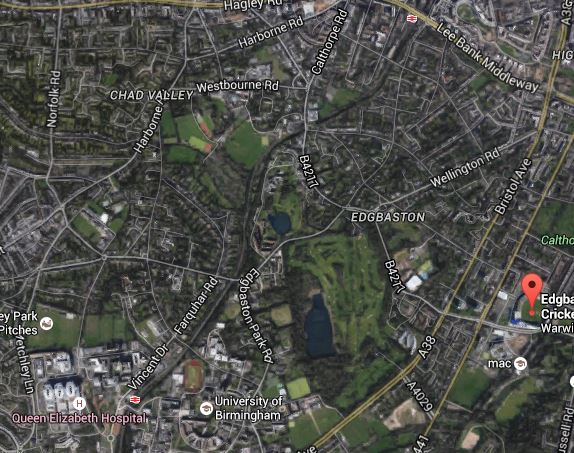
Midland Metro Line 1 Extension And Edgbaston
Note the university, the hospital, the Alexandra Stadium and University station clustered together in the bottom left corner of this map.
It is worth noting that Five Ways and University stations are both on the Cross-City Line that goes from Redditch to Lichfield via New Street. It is the busiest commuter line outside London and has upwards of six services an hour in both directions. The frequency of the Midland Metro is one tram every eight minutes, so the Cross-City Line is only a little bit less frequent.
The Cross-City Line is currently being extended to Bromgrove and there are unfulfilled plans to reopen the Camp Hill Line, that my train from Oxford to Birmingham used.
There seem to be a lot of competing proposals for money to be spent in the West Midlands, so perhaps if a West Midlands Combined Authority was setup properly, then it could decide what happens.
Perhaps, then Birmingham would get the local transport system it needs and deserves. After all, I think it was very much short-changed in the 1960s with the creation of the unloved New Street station. Let’s hope the new station opening in September, solves at least some of those fifty year old problems.
One of the biggest problems is that Birmingham effectively has two independent sets of local rail lines, with no common interchange.
The Snow Hill Lines though Snow Hill and Moor Street were built by the Great Western Railway and are operated by diesel trains. They carry about twenty percent of the rail services into the city. According to this Future section in the Wikipedia entry for Moor Street station, there are plans for more local services out of Moor Street
There are also an extensive mainly electrified network centred on New Street, which includes the Cross-City and Chase Lines and some services on the West Coast Main Line.
The trouble is there is no obvious connections between the two sets of lines, as is described here in Wikipedia. This Google Map shows the two stations and the shopping centres in between.
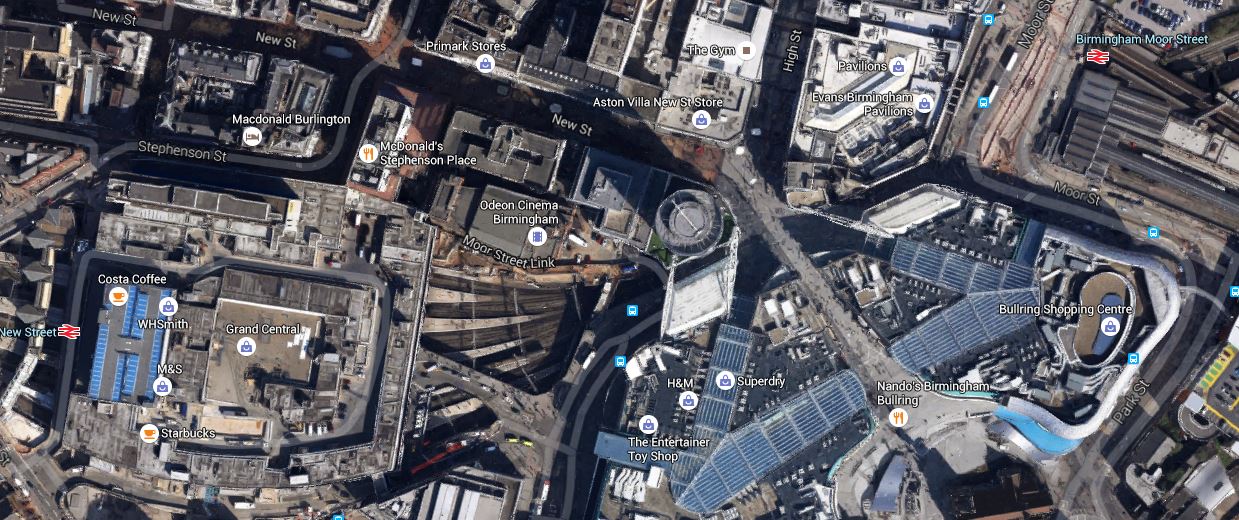
Birmingham New Street And Moor Street Stations
It would seem to my untrained mind, that there must be possibilities for putting a low level station under Moor Street with platforms on the local lines through New Street. I can’t find any proposals or ideas on the Internet, but then I don’t probably know where to look.
One proposal that might help is the opening of the Camp Hill Line into Moor Street, as this would link up to the Cross-City Line at Kings Norton.
Birmingham seems to be a mass of railway lines, which an intelligent planner could probably use to create transport links in the Greater West Midlands.
In the meantime, the arrival of the Midland Metro to New Street station, the Cross-City Line reaching Bromsgrove and the electrification of the Chase Line to Rugeley, will bring more people into the city centre and hopefuly make interchange easier.
It does appear, that the electric services on the Cross-City Line and Chase Line may need more trains, but at least there will be plenty of Class 315 trains available for cascade from London.
From Oxford To Birmingham
As there wasn’t much of interest to photograph in Oxford, I grabbed myself some gluten-free sandwiches and a drink in Marks and Spencer at the station and took a train to my next destination, Birmingham New Street.
I’ve never done that trip before on the Cross Country Route via Banbury and it was an easy journey of about an hour.
I missed photographing all of the work near Harbury, which is reported here on the BBC. It was a major landslip that closed the railway for some weeks.
As we approached Birmingham, the train seemed to take a circuitous route into Birmingham and at one point, the train passed behind Birmingham City’s football ground.



We were on the Camp Hill Line, which is being proposed for passenger services, according to Wikipedia.
At least such a project would probably be appreciated in Birmingham.
 The Anonymous Widower