Should Crossrail Be Extended From Old Oak Common?
In How Will Chiltern Railways Serve Old Oak Common?, I looked at the possibilities of how Chiltern Main Line services will use the Old Oak Common station complex as an additional London terminus to ease the overcrowding at Marylebone station.
In Will Crossrail Go Up The West Coast Main Line?, I looked at why the extension of Crossrail to Milton Keynes was announced and then cancelled as it was thought to be bad value for money.
But is the general principle of extending Crossrail from Old Oak Common onto a new branch or branches a good idea?
Crossrail Revenue And Profit
If you’re running any railway, you get the highest revenue by running as many trains as you can and making sure that they are full with passengers all the time.
The Central Section of Crossrail between Stratford and Paddington stations will be very heavily used, as it will have to handle the following passenger flows.
- Passengers from the Abbey Wood Branch going to and from Central London
- Passengers from Heathrow going to and from Central London
- Passengers from the Reading Branch going to and from Central London
- Passengers from the Shenfield Branch going to and from Central London
- Passengers from National Rail services at Liverpool Street going to and from Central London
- Passengers from National Rail services at Paddington going to and from Central London
In addition it will also be used as an extra Underground line in Central London
The Central Section will be a cash cow for the Crossrail operator!
The various branches to and from Abbey Wood, Heathrow, Reading and Shenfield, may well be less heavily used, but will probably see a different type of passenger to the Central Section, who might need more space and hopefully a seat.
The Class 345 Trains
The Class 345 trains have been designed for efficiency and flexibility.
- I believe that each car is a separate one-car electric train with its own function.
- Most cars will be motored to distribute traction and braking forces along the train.
- I wouldn’t be surprised to see a battery in each car to handle regenerative braking.
- Cars are joined together to make a train of an appropriate length.
- Initially, the trains are starting at seven cars, but will go to nine cars and possibly ten.
- The interiors have been designed to satisfy both needs of a long distance commuter train and a London Underground train.
The operator will be able to configure the trains as new routes are added and passenger levels change.
Comparing Crossrail And The Victoria Line
It is worthwhile to compare the Central Section of Crossrail with the Victoria Line.
Crossrail’s Central Section has the following characteristics.
- Twenty-four trains per hour (tph) in both directions
- Automatic train operation (ATO)
- Full-size trains of up to ten carriages long
- Platform-edge doors
- Large stations with lots of wide platforms and passages.
- Double-ended stations ay Liverpool Street-Moorgate, Barbican-Farringdon, Tottenham Court Road and Bond Street.
- Step-free access
- Easy access to connecting lines
- Cross-platform reverse at most stations
Whereas the Victoria Line has the following characteristics.
- Thirty-six tph in both directions
- Automatic train operation
- Tube-size trains of six carriages
- Small stations with lots of narrow platforms and passages
- Some step-free access
- Some easy access to connecting lines
- Cross-platform reverse at most stations
The two lines show a difference in design, very much in keeping with their construction dates.
One comparison is surprising.
Crossrail is planned to run twenty-four tph through the Central Section, but if Dear Old Vicky can manage 36 tph on a line built in the 1960s with generally cramped stations, surely Crossrail with the benefit of some of the best modern design can do a bit more.
I’ve read that Crossrail could handle thirty tph, but then we wondered in the 1960s at the Victoria Line’s fast trains and high frequency in the twenties between Seven Sisters and Brixton. And look at the old girl now!
Dear Old Vicky is second in frequency to parts of the Moscow Metro, which run a train every 95 seconds, as opposed to the 100 seconds of the Victoria.
I suspect that grates with the engineers of the London Underground, as no-one likes being second.
A few years ago, the engineers thought 33 tph between Brixton and Seven Sisters was the limit but now there is 36 tph all the way along the line.
So will we see further improvements to the Victoria Line like these?
- A loop at Brixton via Herne Hill station to turn trains at the Southern end of the line.
- Higher capacity stations at Oxford Circus, Euston, Kings Cross St. Pancras, Highbury and Islington, Finsbury Park and Walthamstow Central.
- Air-conditioned, walk-through articulated trains
- Full step-free access at all stations and platforms
- Improved train control software
- Improved methods of working
These and other improvements will push the frequency towards the magic forty tph.
Do I think that forty tph is achievable on a line built in the 1960s?
As a Control Engineer, trained in the 1960s, I can only give one answer. And that must be yes!
I feel that the stations are the key, as at times stations like Oxford Circus and Walthamstow Central are struggling to handle the number of passengers. Victoria was like that a few years ago, but the addition of a new entrance and more and wider passages has made the station seem a lot less crowded.
Surely, Dear Old Vicky has shown what is possible, when you take a well designed railway and try to ramp up the capacity!
Various commentators have said Crossrail will handle thirty tph, but why are they not being more ambitious?
Comparing Crossrail And Thameslink
Crossrail and Thameslink have a lot in common.
- Frequencies of twenty-four tph through their central sections
- High capacity step-free central stations
- High-capacity purpose-built trains
- Automatic Train Control in the central sections.
But there are differences.
- Crossrail’s central section is straight through from Paddington to Stratford, whereas Thameslink has a junction at Blackfriars.
- Crossrail’s central section has seven stations, whereas Thameslink has just five.
- Blackfriars station is also a terminal station on Thameslink’s central section.
- Crossrail’s stations are generally island platforms, which ease reversing direction, whereas Thameslink’s generally aren’t.
- Crossrail is 25 KVAC overhead electrification throughout, whereas Thameslink has a voltage change at St. Pancras.
I think that although both lines will be opened at a frequency of 24 tph, raising the frequency on Crossrail will be easier than Thameslink.
The Importance Of Increasing Frequency On Crossrail and Thasmeslink
The train capacity on the two routes are as follows.
- A nine-car Crossrail Class 345 train can carry 1,500 passengers
- A twelve-car Thameslink Class 700 train can carry 1,754 passengers
- A eight-car Thameslink Class 700 train can carry 1,146 passengers
Compare this with an eight-car Victoria Line 2009 Stock train, which holds just 876 passengers.
So if Crossrail went from 24 to 30 tph through the central section, that would add extra capacity for 9,000 passengers per hour, between Stratford and Paddington.
Building Crossrail and upgrading Thameslink will bring London two high-capacity cross-London Underground Lines.
The more the frequencies on those lines can be increased the higher will be the capacity of the Underground network in Central London.
Crossrail’s Shenfield Branch
The Branch to Shenfield station has the following characteristics.
- It is an almost completely separated double-track railway between Stratford and Shenfield.
- All stations will be step-free.
- Most trains on the route will be Crossrail’s Class 345 trains.
- A few of Greater Anglia’s similar Aventra trains may use the route.
- The route will have modern signalling and ERTMS.
- It is proposed that initially twelve tph will serve the branch
I believe the track, stations and signalling of the Shenfield Branch could handle up to twenty-four tph.
That figure might seem high, but consider the following.
- Shenfield station has three platforms where Crossrail trains can be turned back.
- Walthamstow Central and Brixton stations handle thirty-six trains tph with just two platforms.
- The track layout at Shenfield can accommodate through trains.
Passenger access to the platforms is probably more of a limiting factor, than the track and platforms.
Timings
Currently, Class 315 trains are scheduled to go between Stratford and Shenfield in thirty-six minutes, with faster Longer distance services doing the trip non-stop in fifteen minutes.
- Crossrail is claiming on their web site, that the Class 345 trains will do the trip in thirty-two minutes or four minutes less.
- But there are eleven station between Stratford and Shenfield. So that is a saving of only around twenty-two seconds a station.
I feel Crossrail is playing their timings very safe.
Future Services
I think the following will happen in a few years.
- The current proposal of twelve tph to Shenfield will be increased to something like fifteen or twenty tph.
- Crossrail timings between Stratford and Shenfield will approach the current fastest time of fifteen minutes between the two stations.
- Fast services to and from North of Chelmsford will stop at Shenfield to enable faster and easier journeys.
- Crossrail could be extended to stations like Beaulieu and Southend Victoria.
- Shenfield will become a major rail interchange.
The East of England will see major changes to its rail network.
Crossrail’s Abbey Wood Branch
The Branch to Abbey Wood station has the following characteristics.
- It is a tunnelled double-track railway between Whitechapel and Abbey Wood stations.
- All stations will be step-free.
- All trains on the route will be Crossrail’s Class 345 trains.
- The route will have modern signalling and ERTMS.
- It is proposed that initially twelve tph will serve the branch
I believe the track, stations and signalling of the Abbey Wood Branch could handle up to twenty-four tph.
Future Services
I think the following will happen in a few years.
- The current proposal of twelve tph to Abbey Wood will be increased to something like fifteen or twenty tph.
- Services on the Abbey Wood Branch will continue to match those on the Shenfield Branch, as this makes journeys between the two Eastern branches easier.
- Crossrail could be extended to stations like Ebbsfleet and Gravesend.
- Abbey Wood will become a major rail interchange.
South East London and Kent will see major changes to its rail network.
Summing Up The Two Eastern Branches
The two Eastern Branches can probably provide as many as twenty-four tph for Crossrail.
As the maximum frequency through the Central Section is probably in the thirties, they can allocate services according to where the traffic lies.
It would also appear that as the two services will use the same platforms at Whitechapel station and trains will be every few minutes, that Crossrail is designed to make journeys between say Ilford and Abbey Wood much quicker than by car.
Crossrail’s Reading Branch
The Branch to Reading station has the following characteristics.
- It is a semi-separated double-track railway between Paddington and Reading.
- All stations will be step-free.
- Most trains on the route will be Crossrail’s Class 345 trains.
- Other services may share the tracks.
- The route will have modern signalling and ERTMS.
- It is proposed that initially six tph will serve the branch; four to Reading and two to Maidenhead.
I believe the track, stations and signalling of the Reading Branch could handle up to twenty-four tph,
Future Services
I think the following will happen in a few years.
- The current proposal of six tph to Reading and Maidenhead will be increased increased.
- Crossrail could be extended to stations like Basingstoke and Oxford.
- Reading will become an even more major rail interchange.
West London and Berkshire will see major changes to its rail network.
Crossrail’s Heathrow Branch
The Branch to Heathrow has the following characteristics.
- It is a fully-separated double-track railway between Airport Junction and Heathrow.
- All stations are step-free.
- Most trains on the route will be Crossrail’s Class 345 trains.
- Other services may share the tracks.
- The route will have modern signalling and ERTMS.
- It is proposed that initially six tph will serve the branch.
I believe the track, stations and signalling of the Heathrow Branch could handle in excess of twelve tph.
Future Services
I think the following will happen in a few years.
- The current proposal of six tph to Heathrow is increased.
- Crossrail could be extended to stations beyond Terminal 5.
- Heathrow Express will fade away.
Heathrow will see major changes to its rail network.
Turning Back Crossrail Trains At Paddington
These services will call at Paddington from the East.
- 12 tph from Abbey Wood
- 12 tph from Shenfield
And these from the West
6 tph from Heathrow
2 tph from Maidenhead
4 tph from Reading
This gives an imbalance, so twelve tph will have to be turned back to the East at Paddington.
Crossrail Services
The provisional service pattern is shown in the Wikipedia entry for Crossrail under Services.
It effectively shows the following services, with times are from Crossrail’s provisional journey time calculator.
- 4 tph – Reading to Abbey Wood – 80/78 minutes
- 2 tph – Maidenhead to Abbey Wood – 67/66 minutes
- 4 tph – Heathrow Terminal 4 to Abbey Wood – 60/60 minutes
- 2 tph – Heathrow Terminal 5 to Abbey Wood – 60/60 minutes (assumed same as previous)
- 12 tph – Paddington to Shenfield – 51/51 minutes
It should also be noted that Paddington to Abbey Wood is 29/28 minutes.
Note.
- The first figure is for the West to East journey.
- The second figure is for the East to West journey.
- There isn’t much difference between West to East and East to West journeys.
This leads me to give these numbers for the trains on each route.
- Reading to Abbey Wood – 12 trains
- Maidenhead to Abbey Wood – 5 trains
- Heathrow Terminal 4 to Abbey Wood – 10 trains
- Heathrow Terminal 5 to Abbey Wood – 5 trains
- Paddington to Shenfield – 24 trains
This totals up to 56 trains.
Note.
- My numbers of trains figures, are very rough and are minimum numbers.
- Provisionally, Crossrail will also be running 4 tph between Liverpool Street and Gidea Park in the Peak, which could need four trains.
- Crossrail have ordered 70 trains.
- Some trains will be in maintenance and others will be held in reserve.
Crossrail seem to have ordered a sensible number of trains for the initial services.
Ceossrail Extension To Gravesend
It would appear that a typical Abbey Wood to Gravesend service takes just under half an hour.
This is with slower twenty-five year old Class 465 trains, so extending services to Gravesend would just add an hour to the round trip.
This would make train timetabling easy.
If the Heathrow Terminal 4 service to Abbey Wood was extended to Gravesend, it would require another two trains.
In addition.
- The Class 345 trains have been designed to run on 750 VDC third-rail electrification, with the addition of third-rail shoes.
- I think that the new track layout at Abbey Wood station could cope with four tph running to Gravesend using the North Kent Line.
- A single platform at Gravesend could turn back four tph.
It does look that to choose Gravesend as an extension for Crossrail could be a very good decision.
The New South Eastern Franchise
This will be a key factor in extending Crossrail to Gravesend and I suspect all bidders will give co-operation with Crossrail, a high priority.
I suspect a new franchise will replace a large proportion of the train fleet with new 100 mph traqins and that the Class 465 trains will be retired.
The new franchise is due to start in December 2018.
When Could A Crossrail Service To Gravesend Start?
I believe that the following infrastructure is ready for a four tph Crossrail service to Gravesend.
- The link between Crossrail and the North Kent Line at Abbey Wood station.
- Platform 0 at Gravesend is a twelve-car London-facing bay platform, that could handle the trains.
- Dartford, Gravesend, Greenhithe stations are step-free.
However, certain things must happen before a Crossrail service to Gravesend could start.
- The new Southeastern franchise must be up and running.
- ERTMS must be installed along the North Kent Line.
- All trains running along the North Kent Line must be 100 mph trains, able to take advantage of modern signalling.
- All stations between Abbey Wood and Gravesend must be made step-free.
The new franchise will probably have its new service pattern and modern trains in place by the end of 2023, which would probably make the Crossrail extension easier.
Before a decision is made on the extension, Crossrail needs a couple of years to find out how passengers use the new line and the other services, which will include Thameslink, that call at Abbey Wood station.
Can Crossrail Be Extended From Old Oak Common?
Before answering the question, the related question of whether it is possible should be answered.
Extending Trains From Paddington
Current proposals envisage twelve trains turning back at Paddington.
It would not be difficult if a number of these trains continued to Old Oak Common station.
Can Paddington To Old Oak Common Handle The Extra Trains?
The current proposals envisage just twelve tph using the route between Paddington and Old Oak Common station, with perhaps a few wxtra trains going to and from Old Oak Common Depot.
As the tunnelled section of Crossrail can handle double that frequency, I suspect there will be no problems extending extra trains to Old Oak Common station.
It would appear that there would be no problems extending services to Old Oak Common station.
Where Would The Extra Services Go?
The choices lie between the Chiltern Main Line and the West Coast Main Line.
If we take Crossrail’s well-thought out choice of Gravessend, I think we need a destination, that is ideally just under thirty minutes from Old Oak Common station.
In the next few sub-sections, I’ll look at possibilities.
Extending To High Wycombe On The Chiltern Main Line
A service between High Wycombe and Wembley Stadium stations takes 27 minutes with stops at Beaconsfield, Gerrards Cross and South Ruislip stations. Taking the Acton-Northolt Line and even with stopping at Seer Green and Jordans, Denham Golf Club, Denham, West Ruislip and Greenford, I’m pretty sure, that a train could go from Old Oak Common to High Wycombe and back in comfortably under an hour.
Four tph between High Wycombe and Shenfield would require twelve trains, which is four more than would be needed for the same service between Paddington and Shenfield.
Consider.
- Four tph could easily be turned back in a single platform at High Wycombe station.
- High Wycombe station has plenty of space.
- However, it would need the route between Old Oak Common and High Wycombe to be electrified.
- But, it is a long-term aim of Chiltern Railways to electrify the Chiltern Main Line.
I believe that High Wycombe station could be a viable terminal for Crossrail.
Extending To Milton Keynes Central On The West Coast Main Line
A service between Milton Keynes Central and Wembley Central stations takes 51 minutes with seven stops.
This would mean that a train could go from Shenfield to Milton Keynes Central in comfortably under two hours.
Four tph between Milton Keyns Central and Shenfield would require sixteen trains, which is eight more than would be needed for the same service between Paddington and Shenfield.
Consider.
- Four tph could easily be turned back in a single platform at Milton Keynes Central station.
- Milton Keynes Central station has space for a terminal platform.
- Except for creating the connection at Old Oak Common and updating stations to full step-free access, the infrastructure is pretty good.
- Crossrail would be linked to the East-West Rail Link.
I believe that Milton Keynes Central station could be a viable terminal for Crossrail.
Should Crossrail Be Extended From Old Oak Common?
It is certainly possible to extend to either High Wycombe or Milton Keynes Central.
If a decision were to be made to extend Crossrail, passenger statistics would probably decide, which would be the extra terminal or terminals.
How Will Chiltern Railways Serve Old Oak Common?
Whilst writing A Proposal For Two London Overground Stations At Old Oak Common, I got to thinking about how Chiltern Railways would use Old Oak Common station as a second London terminus, to relieve pressure on Marylebone station.
Lines At Old Oak Common
This map from TfL shows the lines in the area and the location of the proposed two new stations; Hythe Road and Old Oak Common Lane, for the London Overground.
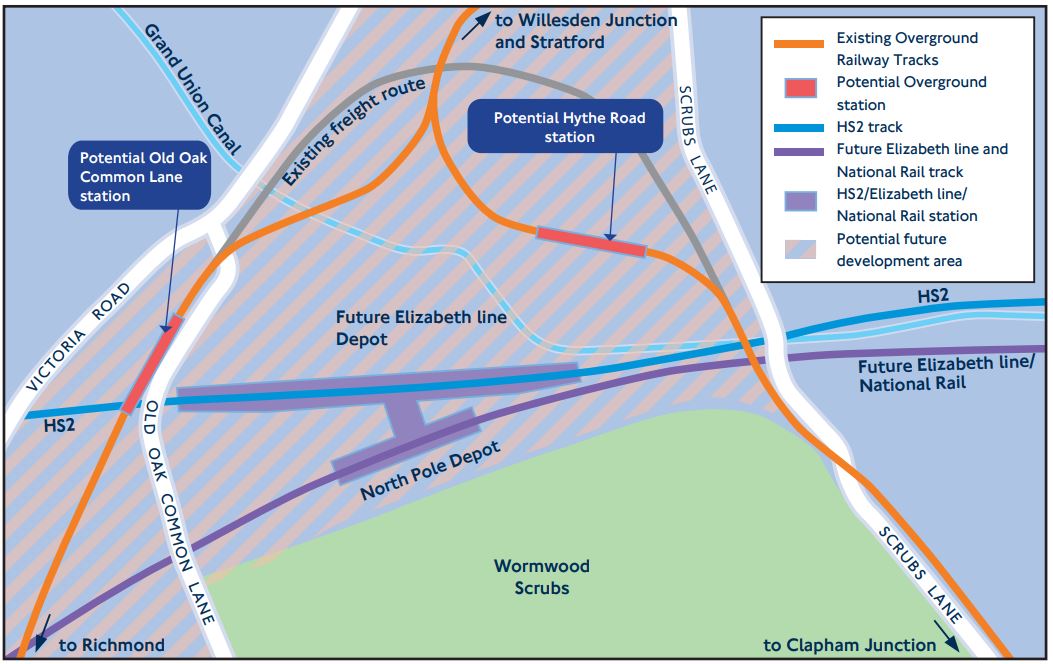
Hythe Road station will be on the West London Line between Willesden Junction and Shepherd’s Bush stations.
Old Oak Common Lane station will be on the North London Line between Willesden Junction and Acton Central stations.
How Will Chiltern Serve Old Oak Common?
Search the Internet for “Chiltern Railways Old Oak Common” and you find little of substance.
So exactly how will Chiltern Railways get trains to the station complex?
Using The Acton-Northolt Line
The Acton-Northolt Line is a logical route from Northolt Junction on the Chiltern Main Line to Old Oak Common.
But there could be problems with the Acton-Northolt Line.
- It will be on top of the tunnel taking HS2 out of London and building HS2 might be difficult.
- It is partly single track and would need to be doubled.
- It might be difficult to find space to build the station at Old Oak Common around the platforms for HS2, Crossrail and the Great Western Main Line.
- Getting tracks to the Northern part of the site for a Chiltern station there, might be difficult.
Points 1 and 2 would probably combine together to delay the Chiltern extension until after HS2 or at least the tunnel, is substantially complete.
This map from carto.metro.free.fr illustrates the problem of finding a place for the station.
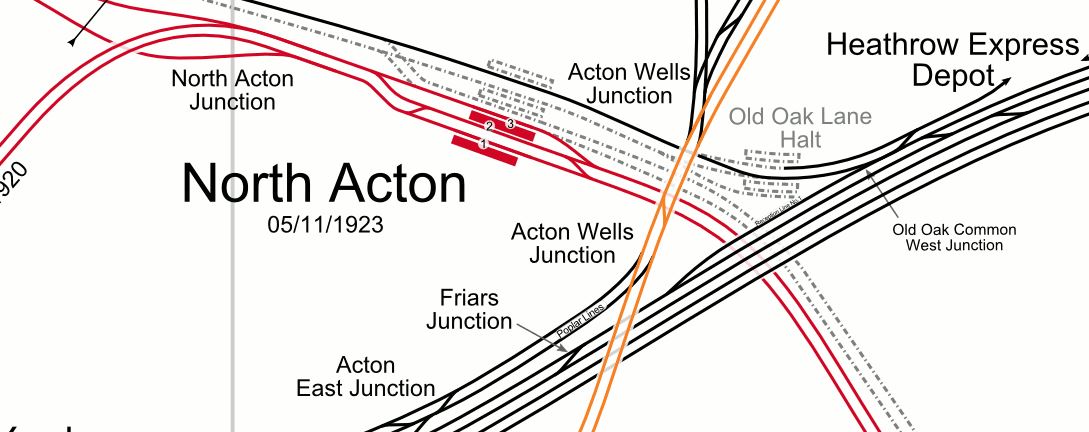
Note.
- The Great Western Railway is the multi-track in black .
- The single track shown in black North of North Action station is the Acton-Northolt Line.
- Old Oak Common Lane station is just to the North of Acton Wells Junction.
- The curves to connect the Acton-Northolt Line to the North London Line would be very tight.
The preferred position for the station is probably in the area of the current Heathrow Express Depot.
An alternative position for the station could be at North Acton station.
This Google Map shows North Acton station and its relation to the proposed Old Oak Common Lane station.
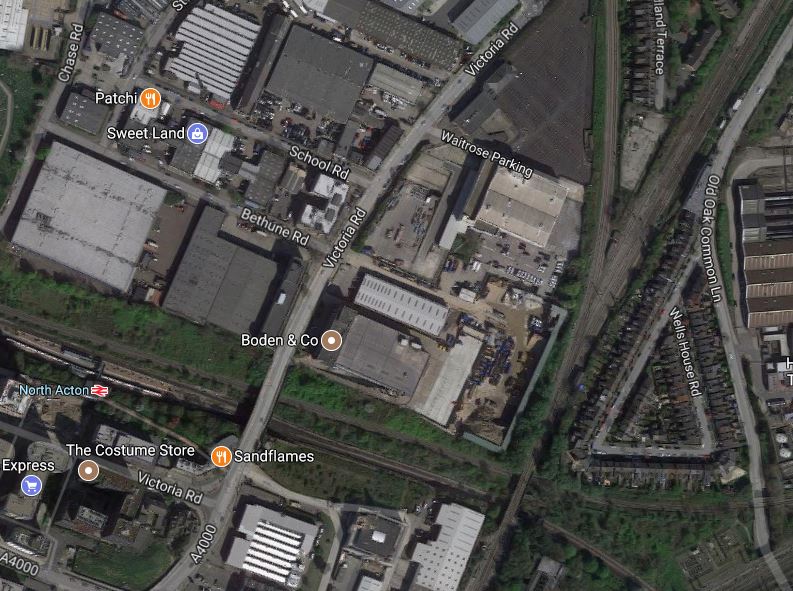
Old Oak Common Lane station would be located North of the Junction, where the Dudding Hill Line and the North London Line split, in the top-right corner of the map.
The rebuilt North Acton station could have the following characteristics.
- Two or possibly three, Chiltern platforms could be built North of the current Central Line platforms.
- The station could have a walking route or moving walkway to connect it to Old Oak Common Lane station and the main Old Oak Common complex.
- It would also fulfil the aims of politicians to link the Central and North London Lines.
It could be a viable alternative with valuable over-site development.
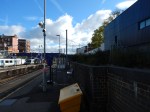
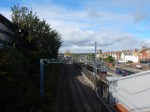
I took these pictures from the bridge, where Victoria Road passes over the Central Line and Acton-Northolt Lines.
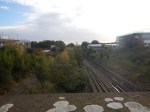
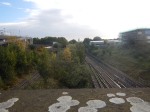
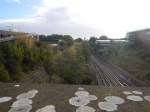
Note.
- The pictures were taken looking East towards Old Oak Common.
- The single-track Acton-Northolt Line is in the shrubbery on the left.
- The Acton-Northolt Line is about two or three metres higher than the Central Line.
- The greyish-blue bridge in the distance carries the North London Line over the cutting.
North Acton station is on the other side of the bridge.
It strikes me that the various levels give possibilities for an improved Central Line layout and a couple of platforms for Chiltern Railways.
Advantages and Problems Of Using The Acton-Northolt Line
The advantages of using this route could include.
- It could open up development sites along the route.
- New stations could be developed at Hanger Lane, Perivale, Greenford, Northolt, South Ruislip, Ruislip Grdens and West Ruoslip.
- The new double-track line could be electrified without disrupting existing services.
- It connects the Chiltern Main Line to HS2 and Crossrail.
- It could enable a Crossrail extension along the Acton-Northolt Line.
The big problem could be doubling the Acton-Northolt Line and building the station, whilst the tunnelling work for HS2 was proceeding.
The Acton-Northolt Line And HS2
I do hope that HS2 is not being designed to block future use of the Acton-Northolt Line.
In fact, I hope the reverse is true and creation of a double-track Acton-Northolt Line is part of the specification for HS2.
Using The Dudding Hill Line
There is a connecting chord between the Chiltern Main Line and the Dudding Hill Line at Neasden.
This map from carto.metro.free.fr shows how trains would get between Wembley Stadium station and the Dudding Hill Line.
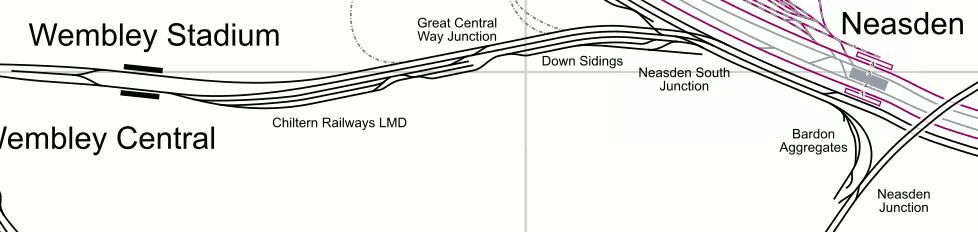
Note.
- The Dudding Hill Line is the line crossing all the tracks to the South of Neasden.
- The route would mean that Chiltern trains would be sent to their destination; Marylebone or Old Oak Common at Neasden.
The biggest problem may be where to put the station, as the Dudding Hill Line passes slightly to the West of the Old Oak Common complex.
But look at TfL’s visualisation for Old Oak Common Lane station.
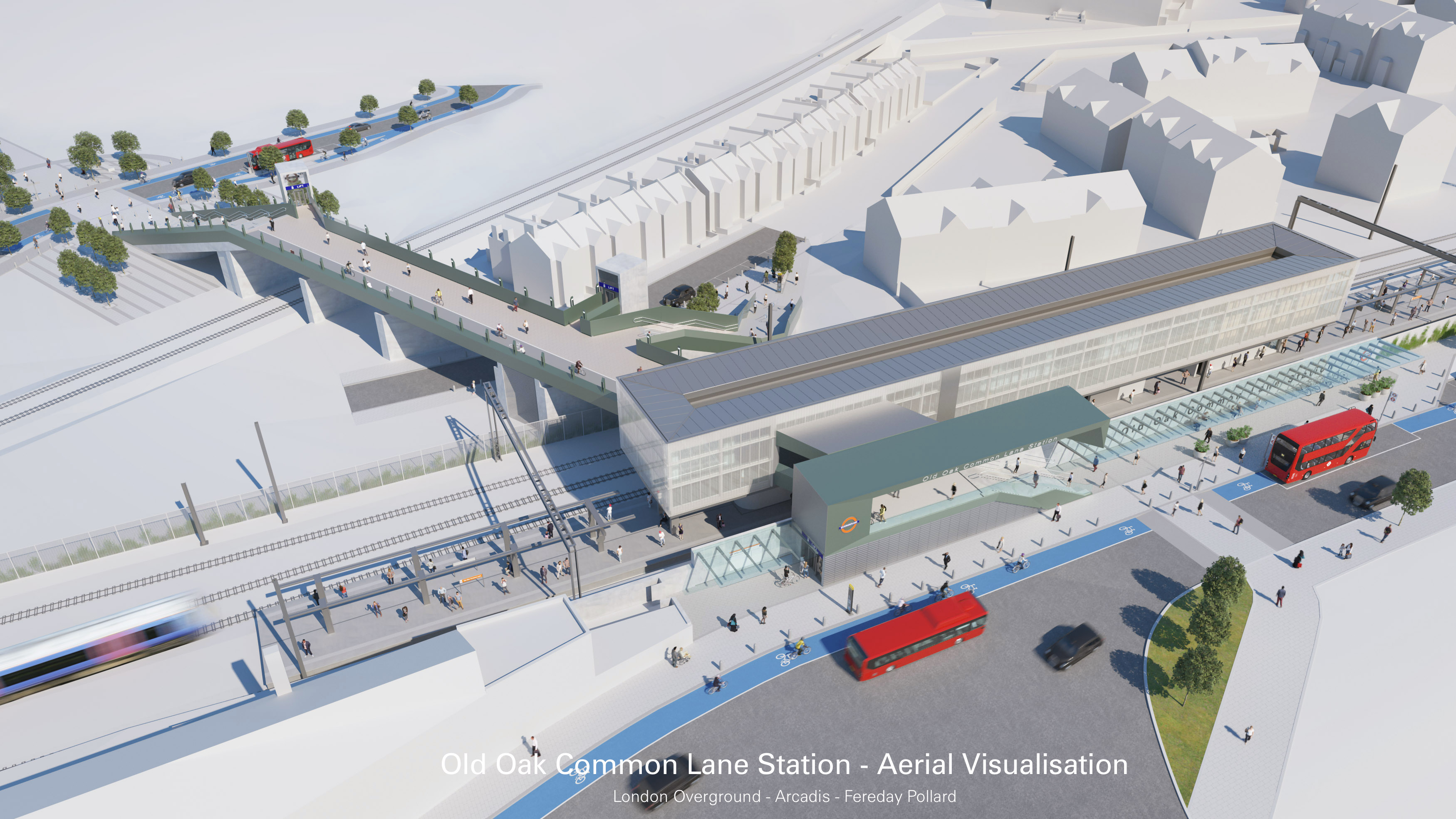
The Dudding Hill Line is shown in the visualisation running under the pedestrian and cycle route to Victoria Road.
This Google Map shows the area in detail.
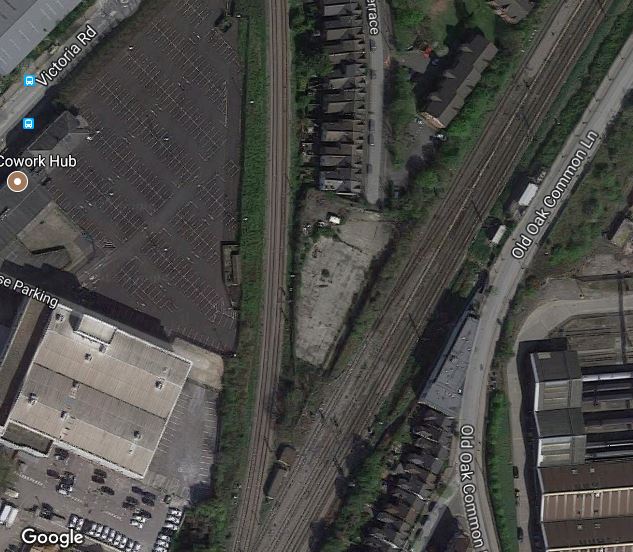
Note.
- The North London Line goes North-East.
- The proposed Old Oak Common Lane station would be built where the road is closest to the North London Line.
- The Dudding Hill Line goes North.
There would appear to be a site ripe for development to the West of the Dudding Hill Line.
Advantages and Problems Of Using The Dudding Hill Line
The advantages of using this route could include.
The station could be built in combination with London Overground’s proposed Old Oak Common Lane station.
- There is a lot of space for the station.
- No new track is required, although the Dudding Hill Line would need upgrading.
- Good connections to HS2 and Crossrail will be built for Old Oak Common Lane station.
- Thestation on the Dudding Hill Line could also be used by the proposed West London Orbital Railway.
- Construction would not be a difficult job and would not affect existing services.
- The site would not be affected by HS2.
The problems are mainly about connectivity to other lines, but well-designed connections to Crossrail and the Central Line would solve a lot of these problems.
Conclusion
There are at least two feasible options for a Chiltern station in the Old Oak Common area.
New Railway Line For West London Proposed
The title of this post is the same as this article on Ian Visits.
I’ve also found this article on the Hendon Times, where the railway line is called the West London Orbital Railway.
The West London Orbital Railway now has a section in the Wikipedia entry for the Dudding Hill Line, which is entitled West London Orbital Railway Proposal. This is said.
In September 2017, a proposal for a new West Orbital Railway from Hounslow to Hendon using the disused Dudding Hill Line could go via a new station at Old Oak Common which would be located at Victoria Road and other new stations at Staples Corner, Harlesden and Old Oak Common Victoria Road. 4 trains per hour would run from Hendon to Hounslow and another service from Hendon to Kew Bridge via Old Oak Common.
The proposal seems to be creeping into the media.
The Preamble
I will describe a few of the lines in the area first.
The Dudding Hill Line
The Dudding Hill Line is one of London’s unknown and almost forgotten railway lines.
- It is just four miles long.
- It is double track.
- It runs from the Midland Main Line, North of Cricklewood station to the North London Line at Acton.
- It is not electrified.
- Signalling is not electrified.
- It is part of a freight route, which connects the Gospel Oak to Barking Line with the Great Western Main Line.
- It is connected to the West Coast Main Line and the Chiltern Main Line.
Passenger services ceased in 1902, although even today the occasional charter service uses the line.
This map from carto.metro.free.fr shows the Dudding Hill Line.
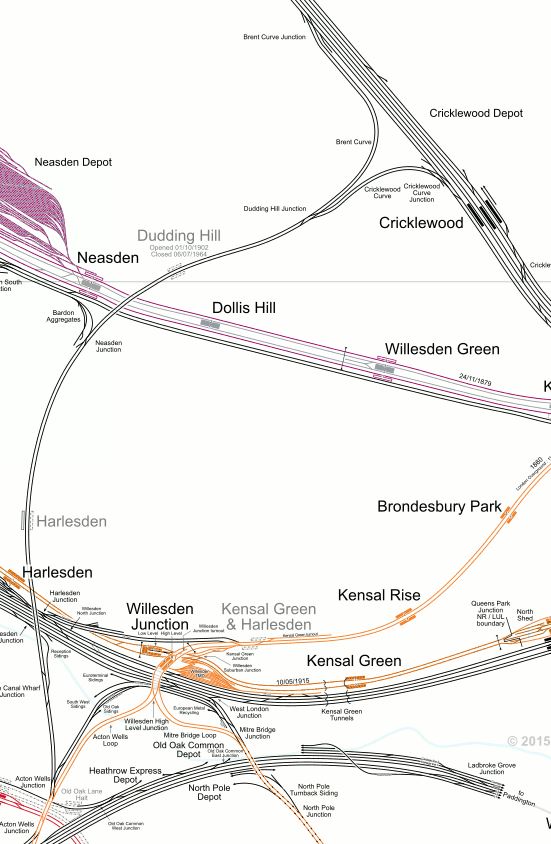
Note.
- How the line joins the Midland Main Line in a triangular junction, which is North of Criklewood station, enabling North and South connections.
- How the line crosses the Chiltern Main Line by Neasden station.
- How the line crosses the electrified West Coast Main Line by Harlesden station.
- How the line joins the North London Line just North of the electrified Great Western Main Line.
This connectivity makes it a very useful freight line.
The Hendon Freight Lines
These two lines run on the Western side of the Midland Main Line between West Hampstead Thameslink and Hendon stations,
North of Hendon they cross the tracks of the Midland Main Line on a flyover and merge with the Slow Lines at Silkstream Junction.
This map from carto.metro.free.fr shows the lines at Hendon.
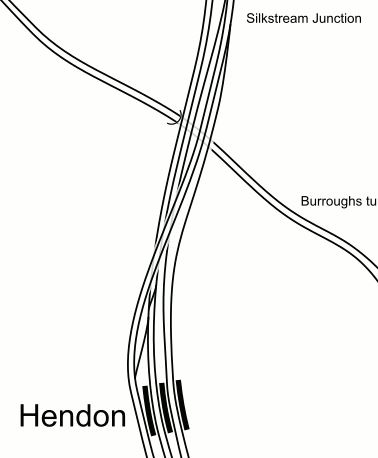
The Hendon Freight Lines have following properties.
- They are only partially electrified.
- They have double-track connections from the North to the Dudding Hill Line, which is named the Brent Curve and Brent Curve Junction.
- They have double-track connections from the South to the Dudding Hill Line, which is named the Cricklewood Curve and Cricklewood Curve Junction.
- As shown at Hendon in the map, the Hendon Up Line passes behind Platform 4 at Hendon, Cricklewood and West Hampstead Thameslink stations.
The innovative use of these lines will be an important part of the proposal for a new passenger service in West London.
The Gospel Oak To Barking Line
The Gospel Oak To Barking Line and the Dudding Hill Line are linked together by the Midland Main Line,
- Between the two lines is fully electrified
- The Gospel Oak to Barking Line will be electrified from May 2018.
- The connecting lines between the Midland Main Line and the Gospel Oak to Barking Line are being electrified around Carlton Road Junction.
This will enable electrified freight trains from East London to the Midlands, using the following route.
- Gospel Oak To Barking Line
- Carlton Road Junction
- Midland Main Line.
Note that there is no flyover between Carlton Road Junction and the Dudding Hill Line, which means they have to cross the Midland Main Line on the flat.
For this reason, electrified freight trains for the West Coast Main Line and the Great Western Main Line must probably take the North London Line from Gospel Oak station.
This probably rules out passenger services between Barking and Acton, using the Dudding Hill Line.
However passenger trains from East London could continue up the Midland Main Line to a suitable terminal.
Class 710 Trains
The Class 710 trains that will be delivered for the Gospel Oak to Barking Line have the following characteristics.
- They are Aventras
- They are dual-voltage and can operate on both 25 KVAC overhead and 750 VDC third-rail electrification.
- They may be fitted with onboard energy storage to operate without electrification for a few miles.
If the last point is true, they will be able to run between West Hamsted Thameslink or Hendon and South Acton stations, with a change of voltage at Acton Central station, using onboard energy storage on the Dudding Hill Line.
The Proposal
The West London Railway has been proposed by a consortium of West London Councils and other interests, that the Dudding Hill Line be reopened to passenger trains.
- ,Services would start in the North at either the proposed Brent Cross Thameslink station or West Hampstead Thameslink station.
- New stations could be built at Gladstone Park and/or Neasden, Harlesden and Old Oak Common,
- The service could be running by the mid-2020s.
The passenger service would open in two phases.
- West Hampstead to Hounslow via Cricklewood, Neasden, Harlesden, OOC, Acton Central, South Acton, Brentford, Syon Lane and Isleworth.
- Hendon to Kew Bridge via Hendon, Brent Cross/Staples Corner, Neasden, Harlesden, OOC, Acton Central and South Acton.
Four trains per hour (tph) would run on both routes.
How Does The Proposal Stack Up?
In the following sub-sections, I’ll discuss the various issues.
Track And Signalling
This is said about the current state of track and signalling in Wikipedia.
In 2009, the track has received considerable maintenance in parts, including complete track and ballast removal and replacement. It was informally thought locally by Network Rail staff that replacement signalling, controlled from Upminster, was planned for Christmas 2010, leading to the closure of the three signal boxes (staffed 24-hours a day, at least during the working week). However, financial constraints within Network Rail have now delayed this timescale.
It looks like the track is in good condition, but the signalling needs replacing.
How Would The Service Be Run?
The Hendon Freight Lines connect to the Dudding Hill Line to give all possible access needed.
It should also be relatively easy to put a single platform on the Up Hendon Line at the following stations.
- West Hampstead – It would act as a terminus.
- Cricklewood
- Brent Cross – When the station is built.
- Hendon – It could act as a terminus.
The new platforms would have the following characteristics.
- They would probably be numbered 5.
- They would probably be able to share platform access and other services with current Platform 4 at each station.
- Little demolition of existing buildings and structures would be required.
A Phase One service coming North from Neasden could do the following.
- Take the Cricklewood Curve from the Dudding Hill Line.
- Join the Up Hendon Line.
- Stop in the new Platform 5 at Cricklewood.
- Continue on the Up Hendon Line to the new Platform 5 at West Hampstead Thameslink.
- Reverse the train at West Hampstead.
- Proceed to and stop in Platform 5 at Cricklewood. Existing cross-overs would allow use of both Hendon Lines.
- Cross over to the Down Hendon Line and take the Cricklewood Curve to rejoin the Dudding Hill Line.
As the service is four tph, provided a train can leave and return to the Dudding Hill Line in fifteen minutes, there should be no problem.
Currently, Cricklewood to West Hampstead takes three minutes, so the Phase One service looks possible.
The Phase Two service to Hendon could do the following.
- Take the Brent Curve from the Dudding Hill Line.
- Join the Up Hendon Line.
- Stop in the new Platform 5 at Hendon.
- Reverse the train at Hendon
- Take the Brent Curve to rejoin the Dudding Hill Line
It looks to be a simple plan, that makes good use of the existing infrastructure.
- Building the extra platforms at Hendon, Cricklewood and West Hampstead shouldn’t be difficult.
- The new routes don’r cross the Midland Main Line.
- The Hendon Lines seem to have plenty of cross-overs and I don’t think any new ones are needed.
- Dual voltage trains would be at home on all existing electrification.
At the Southern end of the route, everything appears fairly simple.
Why Are There Two Phases?
If it’s so simple, why is the service proposed to have two phases?
Look at this map from carto.map.free.fr, which shows the railways around Brent Cross.
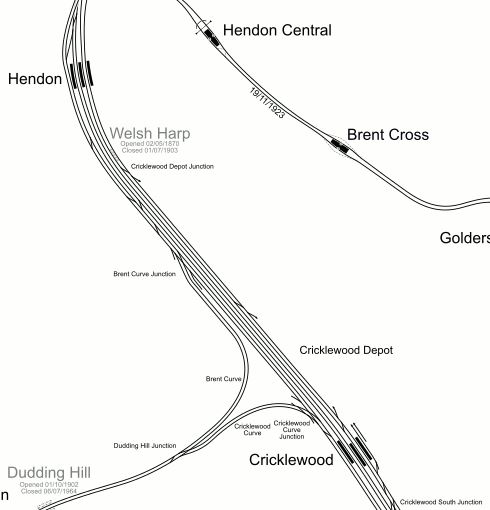
The development of Brent Cross Cricklewood and the building of Brent Cross Thameslink station is going to be a massive undertaking. This describes the development in Wikipedia.
Brent Cross Cricklewood is a planned new town centre development in Hendon and Cricklewood, London, United Kingdom. The development is planned to cost around £4.5 billion to construct and will include 7,500 homes, 4,000,000 sq ft (370,000 m2) of offices, four parks, transport improvements and a 592,000 sq ft (55,000 m2) extension of Brent Cross Shopping Centre. The developers of the scheme are Hammerson and Standard Life. Construction is planned to start in 2018 and be completed in 2021-22
The development will include the building of Brent Cross Thameslink station and the redevelopment of Cricklewood station.
Looking at the Phase One route to West Hampstead Thameslink, the following applies.
- The route doesn’t go past the Brent Cross development.
- The terminal platform at West Hampstead Thameslink would be step-free with a lift.
- The Up Hendon Line is electrified at \West Hampstead Thameslink, but it is not at Hendon.
- Hendon station needs a lot of work to make it step-free.
- West Hampstead Thameslink could be part of a growing West Hampstead Interchange with excellent connections.
- The service could even go straight through Cricklewood station, until it was redeveloped.
It would thus appear that for an easy and affordable construction, the service should serve West Hampstead Thameslink first.
Once Brent Cross Thameslink station is open, Hendon and Kew Bridge stations are updated, Phase Two can open.
Electrification
The electrification of the twelve mile route on the Chase Line between Rugeley and Walsall was budgeted at £78 million.
So hopefully, the four miles of the Dudding Hill Line should be able to be electrified for a reasonable cost.
Consider.
- The track is in reasonable condition and probably well-surveyed.
- There are a few bridges that might need to be raised.
- There are no stations to electrify, just provision to be made.
- Both ends of the route are electrified.
- The route connects to three electrified main lines.
- Electrification of the line would cause little if any disruption to passenger services.
I think that the needs of electrified freight will decide whether this route is electrified.
A Passenger Service Without Electrification
Dudding Hill Line Electrification is not necessary to run s passenger service using Class 710 trains.
- Class 710 trains with onboard energy storage could easily bridge the four-mile electrification gap between the Midland Main Line and the North London Line.
- There would be no problem charging the onboard energy storage at each end of the routes.
- At various places, Aventras will share station platforms with Thameslink’s Class 700 trains and the North London Line’s Class 378 trains, so there should be no station issues.
- From Acton Central to Hounslow and Kew Bridge, the trains would use the third-rail electrification.
Class 710 trains wouldn’t mind if the line is electrified or not.
Stations
The following stations will need to be built or modified.
- Brent Cross Thameslink – New station to be built as part of large development – Might need a platform suitable for use as a terminus.
- Gladstone Park – New station on the site of the old Dudding Hill station – Might be and/or with Neasden.
- Harlesden – New station – Could be linked to the existing station on the Bakerloo Line?
- Hendon – Existing station – Might need a platform suitable for use as a terminus.
- Hounslow – Existing station – Might need a platform suitable for use as a terminus.
- Kew Bridge – Existing station – A new terminus platform would need to be added.
- Neasden – New station – Could be linked to the existing station on the Jubilee Line?
- Old Oak Common – New station to be built as part of large development
- West Hampstead Thameslink – Existing station – Might need a platform suitable for use as a terminus.
The next sections give my thoughts on specific stations.
Brent Cross Thameslink Station
Brent Cross Thameslink station is a planned new station to serve the £4.5 billion Brent Cross Cricklewood development in the area.
I wouldn’t be surprised to see this station built as a close-to-London interchange station, in much the same way as Clapham Junction and Abbey Wood stations work and will work in South London.
At a minimum it will have the following characteristics.
- Two slow platforms for Thameslink services.
- Two fast platforms for long distance services.
- Extra platforms for future services.
- Full step-free access.
The design of the station will be key to extra services using the Midland Main Line.
Cricklewood Station
This Google Map shows the layout of Cricklewood station.
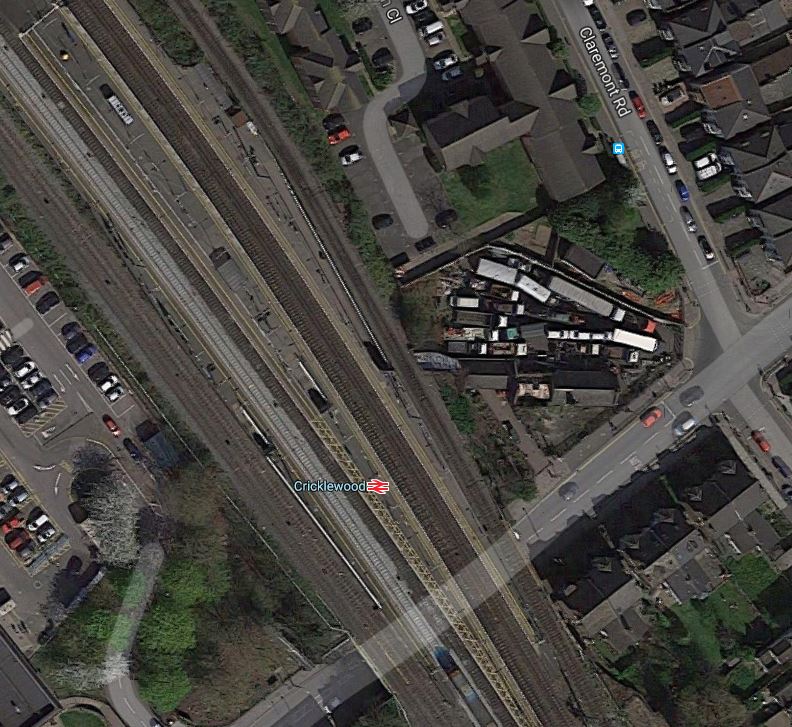
These pictures show the station.



Cricklewood station is one of four stations that need to be modified or built with a Platform 5 on the Up Hendon Line.
The station is also not step-free and this will probably be added in the redevelopment of the station to serve the Brent Cross Cricklewood development..
Harlesden Station
This Google Map shows the layout of Harlesden station.
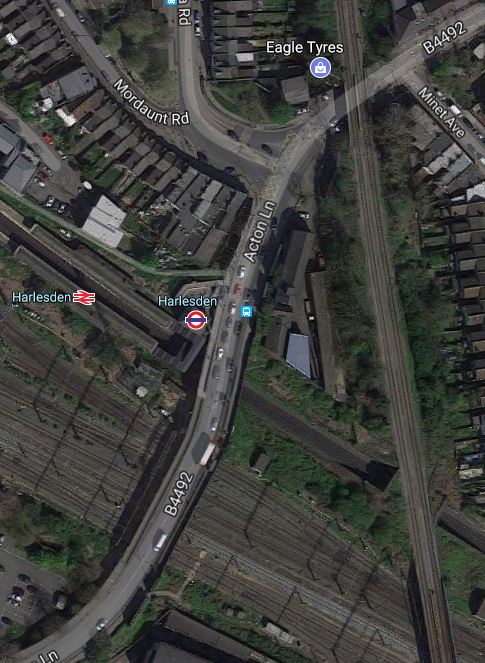
The Dudding Hill Line runs down the map at the right and it crosses the shared tracks of the Watford DC Line and the Bakerloo Line, just to the West of Harlesden station.
These pictures show the station.

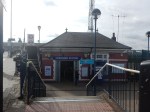

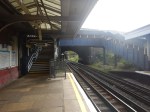
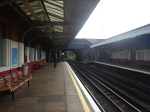
I think that, I am being very truthful, if I said that Harlesden station is not one of the London Underground’s finest stations. Ian in his article said this.
The other station, at Harlesden could also see the old station of the same name rebuilt, but again, the freight line runs close to the current Harlesden station, so a combined building would again be likely, this time with just a modest footbridge needed to link the new platforms to the existing station.
I very much feel that a station can be built at Harlesden on the other side of Acton Lane, that has platforms on both the Watford DC/Bakerloo Lines and the Dudding Hill Line. The high level platforms on the would be connected by steps and/or lifts to the low-level ones.
The new station could even be built without closing any of the lines and once completed the old Harlesden station could be demolished.
It would have the following services.
- Three tph between Watford Junction and Euston.
- Nine tph on the Bakerloo Line
- Four tph between West Hampstead Thameslink and Hounslow.
- Four tph between Hendon and Kew Bridge
The last two proposed services would provide an eight tph service to Old Oak Common for Crossrail, HS2, the North London Line and most importantly, a very healthy amount of employment opportunities.
Hendon Station
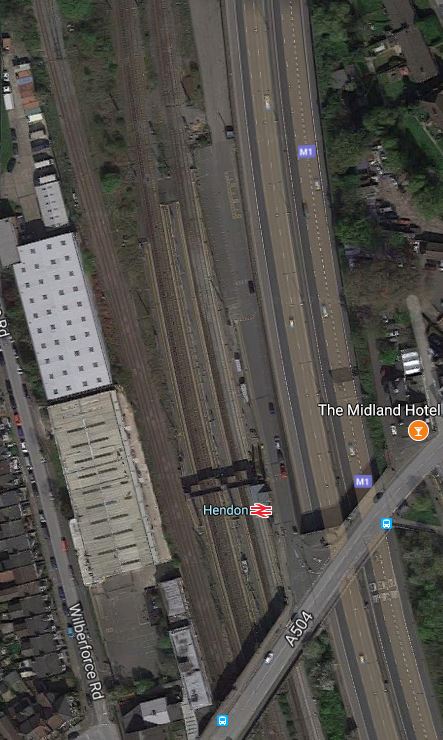
This Google Map shows the layout of Hendon station.
These pictures show the station.

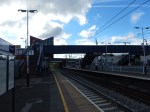

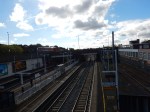


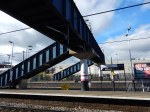

Note.
- The footbridge is not step-free.
- The footbridge is used to support the electrification.
- The electrified fast lines in Platforms 3 and 4.
- The electrified slow lines in Platforms 1 and 2.
- The two freight lines without electrification behind the white metal fence on Platform 4.
In my view, this needs to be done.
- Make the station step-free.
- Build a Platform 5 on the Up Hendon Line, that backs onto Platform 4, so it can share steps and the lift.
- Electrify the line through the platform.
The created Platform 5, will be the terminus of the Phase Two service to Kew Bridge.
Hounslow Station
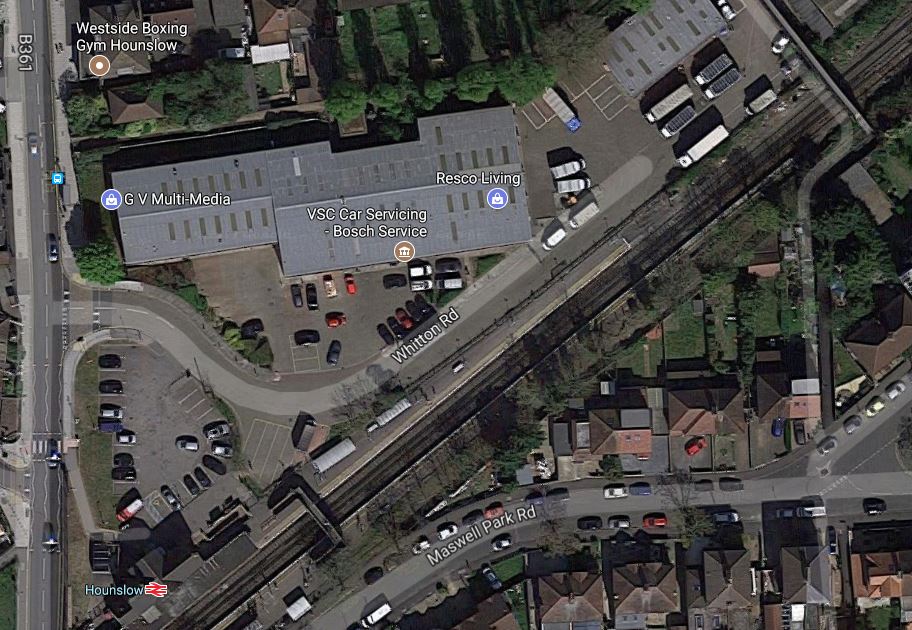
This Google Map shows the layout of Hounslow station.
These pictures show the station.
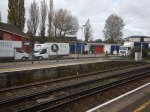
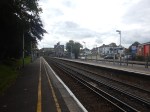
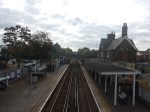
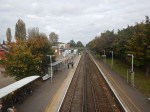

It will be tight to fit a bay platform into the station, but I suspect, it will be placed on the Up (London-bound) side of the station, in what is now an access road and yard to some business premises, where one is labelled Resco Living.
- It will need some changes to the cross-overs at the station to allow trains to access the new platform.
- The station needs a new step-free bridge.
This Google Map shows Hounslow station’s location with respect to Heathrow.
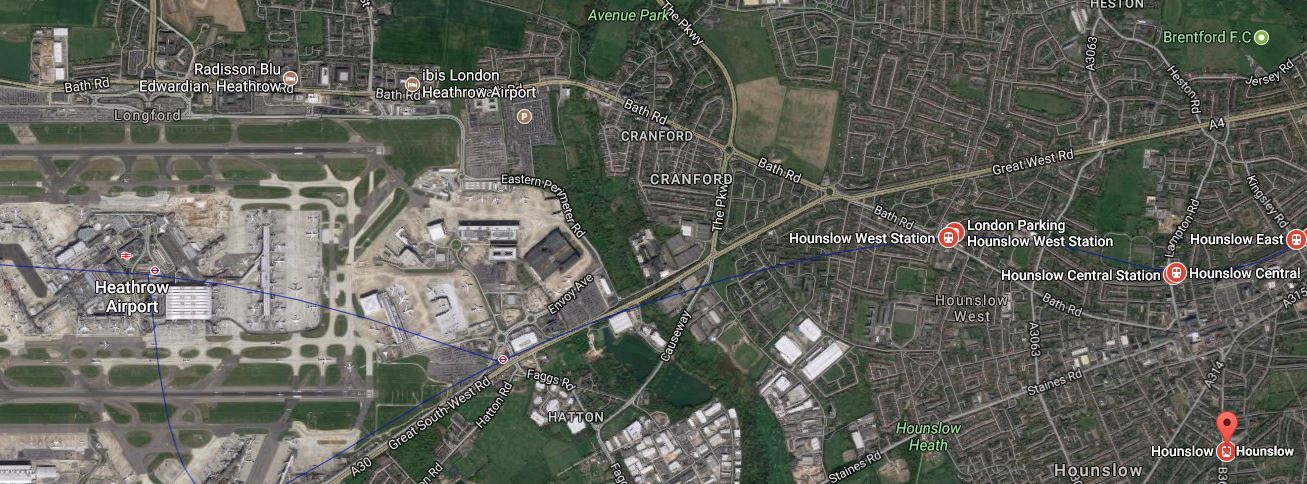
Hounslow station is in the bottom right-hand corer of the map.
I do wonder if Hounslow station, needs a frequent bus to Heathrow Airport. After all the extra four train per hour across London will make it a very busy station.
Kew Bridge Station
This Google Map shows the layout of the lines and the location of Kew Bridge station.
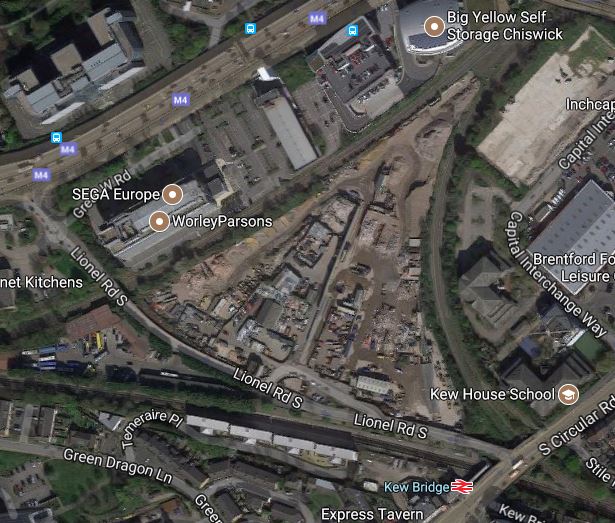
Note.
- The triangal of lines, of which only the bottom side has any trains.
- The top angle leads to South Acton station.
- The proposed Phase One service would use the left side of the triangle.
- The proposed Phase Two service to Kew Bridge would use the right side of the triangle and terminate in a reopened platform at Kew Bridge station.
These pictures show the station.
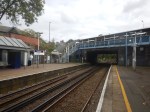
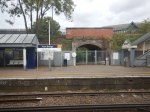


The work needed at Kew Bridge station would appear to be very simple.
- Reinstate the former Platform 3 to handle four tph.
- Replace the footbridge with a better step-free example.
It would also appear that there is a siding to the East of the station, that could be used to reverse trains if necessary.
This map from carto.metro.free.fr shows the lines at Kew.
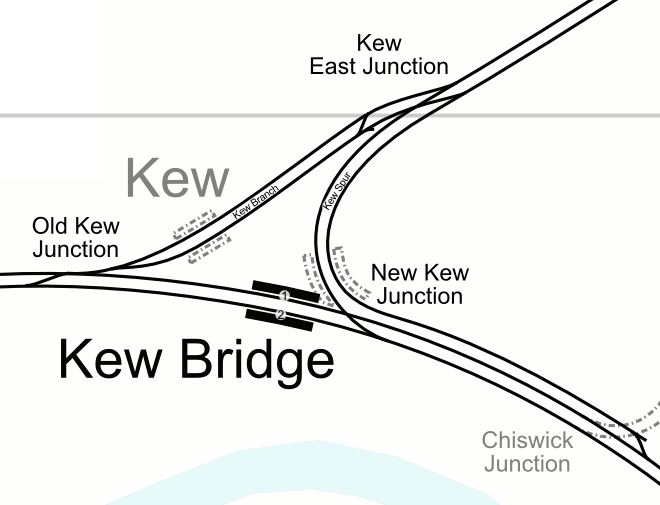
As Brentford’s new stadium and other large developments are being built in the area, I wonder if the proposed Phase One Hounslow service should call at a reopened Kew station.
Neasden Station
This Google Map shows the layout of Neasden station.
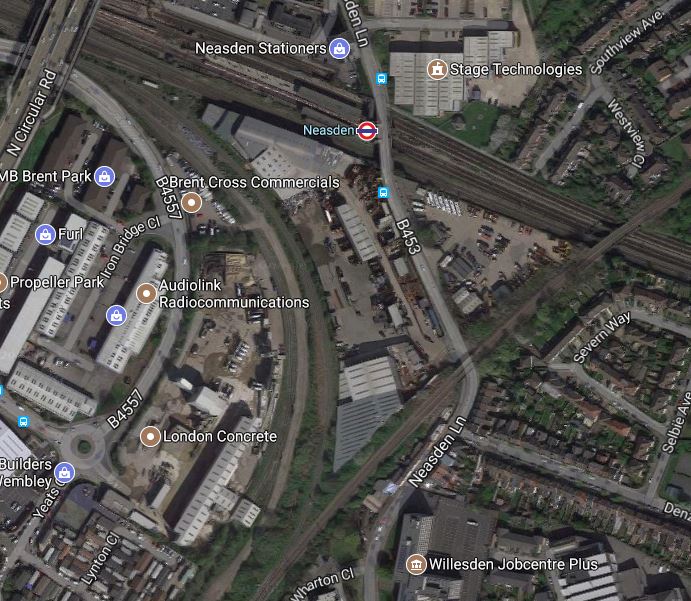
And this map from carto.metro.free.fr shows the lines at the station.

These pictures show the station.
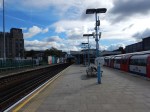


Ian says this about Neasden in his article.
The station at Gladstone Park could see the disused station called Dudding Hill brought back into use, although the likelyhood is that a new station closer to Neasden on the Jubilee line would be favoured for the shorter interchange walk.
There may even be enough space to flip the existing Neasden station southwards and link up with the new Overground line to create a single station linking the two lines.
Whether the funding for that would be available will doubtless depend on getting new housing developers to pick up some of the bill.
There are certainly possibilities.
A combined station would give the following services.
- Upwards of twenty tph on the Jubilee Line
- Four tph between West Hampstead Thameslink and Hounslow.
- Four tph between Hendon and Kew Bridge
The last two proposed services would provide an eight tph service to Old Oak Common for Crossrail, HS2, the North London Line and most importantly, a very healthy amount of employment opportunities.
Old Oak Common Station
Old Oak Common station will be a major interchange between the following lines and services.
- Crossrail
- HS2
- Great Western Main Line
- West Coast Main Line
- Chiltern Tailways
- Bakerloo Line
- Central Line
- North London Line
- West London Line
Whoever sorts this lot out, deserves a Turner Prize.
But after seeing some very complicated stations in both the UK and Europe, I believe that it would be possible to create a station that provided easy step-free interchange between the various lines without walking halfway round the London Borough of Hammersmith and Fulham.
Connecting the West London Orbital Railway to Crossrail would be a very valuable interchange.
West Hampstead Thameslink Station
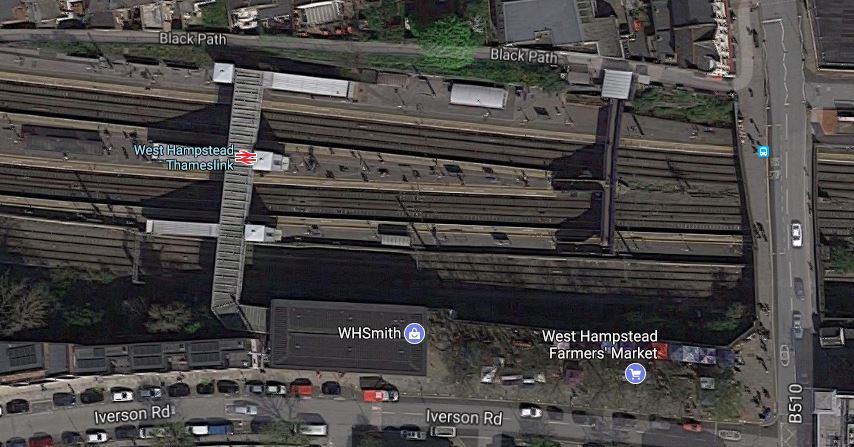
This Google Map shows the layout of West Hampstead Thameslink station.
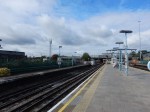
These pictures show the station.
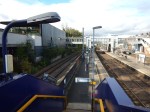

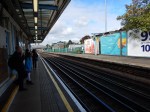
Note.
- In the Google Map, the lines are Slow, Fast and Freight from top to bottom.
- The station is fully step-free.
- The freight lines are electrified.
- The last picture shows how the other West Hampstead stations are being improved.
In my view, all that needs to be done is build Platform 5 for the Phase One service behind Platform 4, so that it can share the steps and the lift.
As other improvements are appearing, West Hampstead will become an important interchange. It’s now got the absolute necessity for a Grade A Interchange; an Marks and Spencer Food Store.
Employment, Housing And Social Benefits
In the seven years since I moved to Dalston, the area has improved considerably.
- New apartment blocks have appeared.
- The shops, restaurants and cafes have got better.
- It also appears to me, that the amount of idle youths hanging around has reduced.
I put a lot of all this, down to considerable investment in both buses and railways. It’s probably not surprising as the London Borough of Hackney doesn’t have an Underground station of its own.
The Overground has been a conspicuous success, offering train services of the following nature.
- Safe, clean stations.
- Visible, well-trained staff.
- New modern trains.
- Train services at a frequency of four tph.
The only problem, is that every time the capacity is expanded it quickly fills.
But then that is only new travellers opting for quality.
On Sunday, I took a ride on top of a bus between Willesden Green and Harlesden stations. These are some pictures I took.






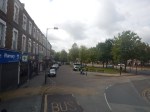
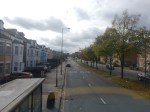

The two most impressive buildings I passed were Courts.
It is my belief that after my experience in Dalston, that improving the transport links in an area of deprivation improves the area considerably, in any number of ways, some of which are rather surprising.
From speaking to people in Dalston, decent reliable transport links seem to have the benefit that those who are unemployed often benefit substantially, by being able to get to nre-found work easily and on time.
So if the proposed line is built with stations at Neasden, Harlesden and Old Oak Common will we see the improvement in North West London, that the Overground has brought to Dalston?
Unfortunately, the only way to test my theory is to build the line.
Building The Line
This is no Crossrail or HS2, where billions need to be spent.
The three largest sub-projects would be.
- Electrification of the Dudding Hill Line, if it is to be done.
- Resignalling of the Dudding Hill Line.
- Necessary track replacement and updating.
In addition, there are around ten station projects.
There will also be a need for up to perhaps sixteen Class 710 trains. This could be around £90-100 million.
Other Possible Rail Services
It might be possible to connect the West London Orbital Railway to other rail services and stations.
Changing At Old Oak Common
All stations on the West London Orbital Railway will have at least a four tph connection to Old Oak Common, with Harlesden and Neasden having an eight tph connection.
Provided that the connection at Old Oak Common is well-designed, I think passengers will be happy to change here for the following services.
- Six tph on Crossrail to Heathrow.
- Twelve tph on Crossrail to Central London.
- West Coast Main Line
- HS2
- Chiltern
- North London Line
- West London Line
I’ve left out the Bakerloo and Central Lines, as it will probably be quicker to take Crossrail and change.
Thameslink And The Midland Main Line
All stations on the West London Orbital Railway will have at least a four tph connection to Thameslink, with Harlesden and Neasden having two separate four tph connections.
Depending on how the new East Midlands franchise arranges services, it might also be possible change onto some services to Derby, Leicester, Nottingham and Sheffield.
Hopefully, the interchange will be step-free. West Hampstead Thameslink already is step-free and I would assume Brent Cross Thameslink will be built that way!
A direct connection from Midland Main Line or Thameslink services to the West London Orbital Railway may be possible, but the current track layout would appear to make it difficult.
Changing At Hounslow And Kew Bridge
The two Southern termini are on the Hounslow Loop Line, which gives valuable connections in South West London, including Clapham Junction.
Affect On Other Services
The West London Orbital Railway affects other passenger services in two places.
The North London Line Through Acton Central And South Acton
Acton Central and South Acton stations on the North London Line are both served by a four tph service between Stratford and Richmond.
- There are also other trains.
- Both stations also have a level crossing.
So would it be possible to fit the eight tph of the West London Orbital Railway through this section of the North London Line?
I suspect the answer is positive, otherwise the impossibility would have killed the proposal.
The Hounslow Loop Line Between Kew Bridge And Hounslow
This section of line has a four tph service in both directions, so it should be able to handle an extra four tph.
Collateral Benefits
There are some benefits to existing services.
Services Through Acton
The two Acton stations; Acton Central and South Acton, receive a big boost to services.
Currently, they have just four tph between Stratford and Richmond.
After Phase Two of the West Ortbital Railway is complete, these servicesc will be added.
- Four tph between West Hampstead Thameslink and Hounslow
- Four tph between Hendon and Kew Bridge
All twelve tph will stop at Old Oak Common.
Major Developments Get New Or Improved Rail Connections
The following developments get new or improved rail connections.
- Brent Cross Cricklewood
- Old Oak Common
- Brentford
How many housing and commercial developments will the passenger serviceencourage?
Conclusion
I believe that the West London Orbital Railway is an elegant proposal.
- No new track or electrification, just signalling and stations.
- Four tph on two routes through areas of London that need much better public transport.
- It links to the major rail hub at Old Oak Common for Crossrail and HS2.
- It can be built without major disruption to existing services.
- It can use the London Overground’s standard Class 710 trains.
- It is very much a self-contained railway, that has little chance to affect existing services.
But above all, it is very much an affordable proposal, with a projected high return.
Chiltern Railways Must Be Chuffed
This article in the Oxford Mail is entitled One Million Passengers Use New Rail Link Between Bicester And Oxford In First Six Months.
Chiltern Railways spokesman, says they are delighted.
The article also discloses that the proportion of visitors to Bicester Village, travelling by train has gone up from three to ten per cent.
I haven’t been to Bicester Village since C died, but it was always a difficult place to park, so if nothing else the economics of Bicester Village, must be improved, if visitors come by train. That must mean the ratio of shops to parking can go up.
There must be a lot of data about rail-connected shopping centres, as the UK has several.
- Eastfield at Stratford.
- Grand Central in Birmingham
- Meadowhall
- Metro Centre at Gateshead
- Oxford Street
- Westfield at Shepherds Bush
It will be interesting to see what happens after the following.
- Oxford Street gets two double-ended Crossrail stations at Tottenham Court Road and Bond Street.
- The Trafford Centre is connected to the Manchester Metrolink.
- Merry Hill is connected to the Midland Metro.
I don’t think that the rail and tram companies would be making these investments, if they felt they would be losing money.
There must be a very strong link to the bottom line of Shopping Centres.
Consider.
- Provision of car parking spaces must be expensive.
- Provision of car parking uses up space that could be used for retail outlets or leisure facilities.
- Lots of car parking produces traffic jams.
- Car parking regularly gets full.
- Cars get broken into and damaged.
- Increasing capacity on a rail or tram link is not the Shopping Centre’s capital investment.
But most importantly, does a rail/tram link attract people like me, who can’t or don’t drive.
I also think, that Shopping Centres benefit from passing trade from the rail or tram link.
If I’m passing Eastfield or Westfield in London or Meadowhall in Sheffield and need lunch or a gluten-free sandwich from Marks and Spencer, I will often break my journey and have a quick shop.
In many cases, this is easier on a train or tram, than in a car, as the driver parks the former for you and you’re often immediately in the Shopping Centre.
I’m particularly looking forward to the opening of the Western entrance to Tottenham Court Road station when Crossrail opens next year. This entrance will be next door to the flagship Marks and Spencer store at the Pantheon.
The Future Of East West Rail
There is an article with this title in Rail Technology Magazine.
This is the opening paragraph.
Shortly before the end of last year, transport secretary Chris Grayling announced unprecedented proposals to create a new and independent East West Rail operation tasked with designing, managing and running services between Oxford and Cambridge.
After the opening of the first section of the route, from Oxford to Bicester and on to Marylebone, which I wrote about in Oxford To Marylebone Opens For Business, things seem to be moving on.
- The Government has announced that the East West Rail Link could be privately financed, built and run.
- This article in Rail Magazine, which is entitled Verster to leave ScotRail for East West Rail, states that Phil Verster from ScotRail will head up the East West Rail Project.
Let’s hope it all means full steam ahead.
Crowded Roads In West London
Today, I tried to get to West Drayton station to have a lunchtime drink with an old mate from Cambridge, who had called me up yesterday, as he might have needed a second person to help him with one of his robotic machines.
But it all went pear-shaped at Paddington, where trains to West Drayton were very much delayed and I was advised to take the Underground to Greenford station and then use a bus.
But at Greenford, there wasn’t a bus map or anybody to ask, so in the end I took a bus to Ealing Hospital, where I thought I knew I could get a bus to West Drayton. But there wasn’t! So I thought about giving up and instead, I got a bus to Ealing Broadway station, to get back to Paddington. But I arrived at Ealing Broadway station, just before a train to West Drayton arrived. I caught that, had a drink with my friend and then caught a train back to Paddington. He didn’t need me to help, as all he needed was a pair of eyes to tell him what was happening at the sharp end of his machine and the client had turned up with his glasses.
So I achieved my objective and also had a wander round the Boroughs of Ealing and Hillingdon on buses and trains.
I trundle round North and East London most of the time and sometimes I even cross the River and go to the Deep South.
But I do find West London the most crowded, with buses slowed by all the traffic on the roads and infrequent very busy trains.
The West of London needs improvement in public transport.
I sometimes think, the traffic has got worse over the forty-six years, I had a driving licence.
Rail And Underground Lines
There are several lines going West from Central London, which include.
- The Chiltern Line from Marylebone to West Ruislip
- The Central Line to West Ruislip
- The Metroplitan Line to Uxbridge
- The Piccadilly Line to Uxbridge
- The Great Western Main Line tfrom Paddington to Reading and Heathrow
- The Piccadilly Line to Heathrow
Going further round, there are several lines from Waterloo going to the South West.
Only one line; the West London Line goes North South, although there used to be others.
The network is probably more sparse than some other directions from London.
Reliance on Cars And Buses
I think this rather thin coverage, puts a heavy radiance on cars and buses, which might explain the crowded roads.
Crossrail
Crossrail will bring improvement with the following Off Peak services in trains per hour (tph), along the slow lines of the Great Western Main Line.
- 4 tph to Heathrow Terminal 4
- 2 tph to Reading
- 2 tph to Maidenhead
Note.
- The central core tunnel probably has a limit of 24 tph.
- The service has a good balance between the various destinations.
- There will also be Great Western Railway services.
- Looking at the Crossrail schedule, there is scope to adjust the schedule on each branch.
I think that as Crossrail develops and the line and its passengers learn more about each other, the service pattern of Crossrail will change.
If I have a worry about Crossrail, it is that few of the stations towards Central London have many parking spaces, so will walking, cycling and the buses be adequate for Crossrail to tap its full potential?
The West London Tram
The West London Tram was proposed by Ken Livingstone in 2002.
These paragraphs from Wikipedia describes the tram and its route.
The West London Tram was a proposed on-street light rail line that was to run along the Uxbridge Road (A4020) corridor in West London, England. The scheme is promoted by Transport for London (TfL) but opposed by the councils of all three London Boroughs through which it would run. It was postponed indefinitely on 2 August 2007
The tram route was planned to run between Uxbridge and Shepherd’s Bush, serving Hillingdon, Southall, Hanwell, West Ealing, Ealing and Acton en route and would have completely replaced a number of equivalent London Bus routes.
If it had been built it would have had good connectivity to Crossrail and the Central Line. But the view of those against the project prevailed.
In my trip today, you could see why probably every car driver in the area, would be against a scheme like the tram. Only at places on the route, where there was a wide island of grass dividing the carriageways, would the tram not have increased congestion.
It looks like the thirty million pounds spent was wasted.
Crossrail And/Or West London Tram?
This Google Map shows the area around the three stations of Hanwell, West Ealing And Ealing Broadway.
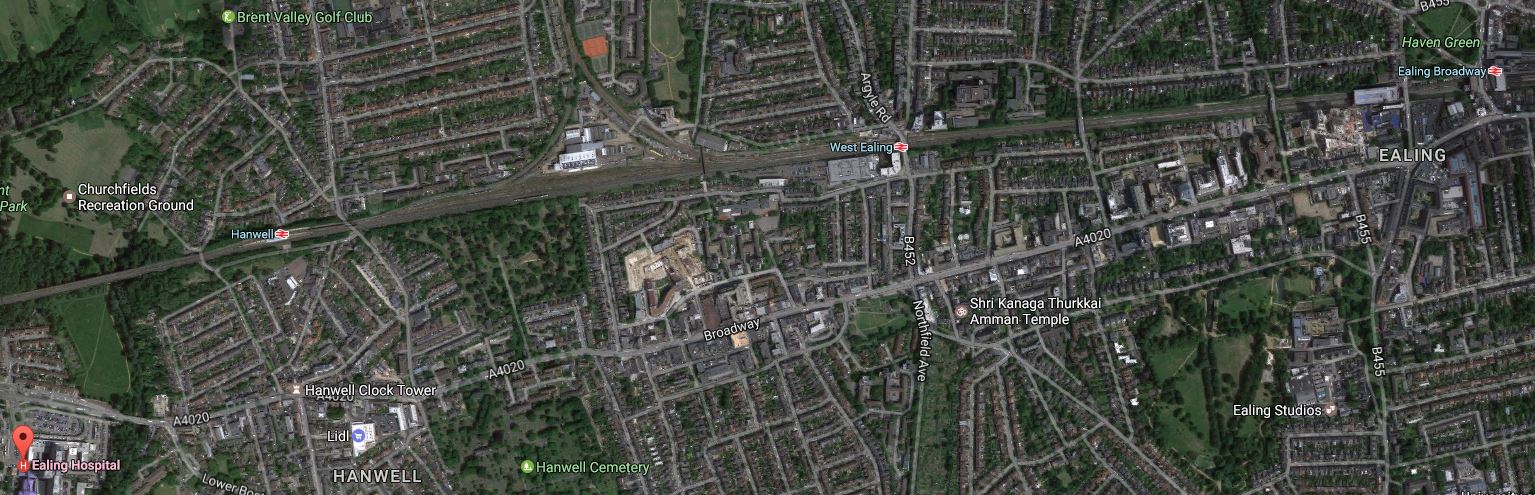
Great Western Main Line And The A4020 Through Ealing
Note.
- The Great Western Main Line across the middle.
- The A 4020 runs South of and parallel to the railway.
- Ealing Hospital is marked by the red arrow in the bottom left of the map.
I asked in the Header to this section if it should be And/Or between the projects.
Undoubtedly, it should be Or! Taxpayers can’t afford both!
In comparing the two, I believe the following points are valid.
- Trams stop about three or four more times than trains.
- The train is faster.
- The tram doesn’t serve Old Oak Common station or Heathrow.
- Trams annoy drivers in the same way that bendy buses do.
- Crossrail has a rich connection pattern compared to the tram.
- Pedestrians probably prefer trams, whilst drivers prefer trains.
The politicians decided and chose the trains.
Making More Of The Railways
If the streets are crowded can we use the existing railways to inject greater capacity into the existing railways in West London?
The key to this, as it sits in the middle of so many lines is the creation of a new station at Old Oak Common.
I will now summarise the possible rail projects that can be developed in West London
Chiltern Railways To Old Oak Common
Chiltern Railways have a capacity problem at Marylebone and one way to alleviate it would be for Chiltern to create a second terminal at Old Oak Common station, which could be accessed using an improved New North Main Line.
There is a real possibility of this project going forward and it could have many worthwhile features.
It would add another East-West route across West London, but with the comprehensive connectivity of Old Oak Common.
Chiltern Metro Creation
Wikipedia says this about a Chiltern Metro.
New Chiltern Metro Service that would operate 4+tph for Wembley Stadium, Sudbury & Harrow Road, Sudbury Hill Harrow, Northolt Park, South Ruislip and West Ruislip. This would require a reversing facility at West Ruislip, passing loops at Sudbury Hill Harrow, and a passing loop at Wembley Stadium (part of the old down fast line is in use as a central reversing siding, for stock movements and additionally for 8-car football shuttles to convey passengers to the stadium for events).[73] This ‘Chiltern Metro’ service was not programmed into the last round of franchising agreements.
When I wrote Could A Chiltern Metro Be Created? and came to the conclusion, that it might be possible, I got several positive responses.
Greenford Branch Improvements
The Greenford Branch Line connects the Great Western Main Line and the New North Line.
This map from carto.metro.free.fr shows the Northern end of the branch, where it joins the New North Line.
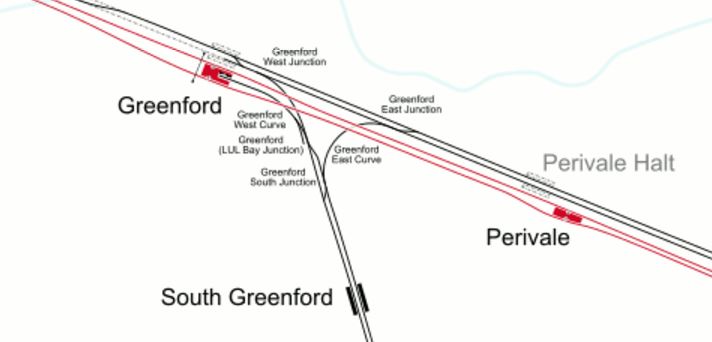
Northern End Of The Greenford Branch
Whilst this map from carto.metro.free.fr shows the Southern end of the branch, where it joins the Great Western Main Line.
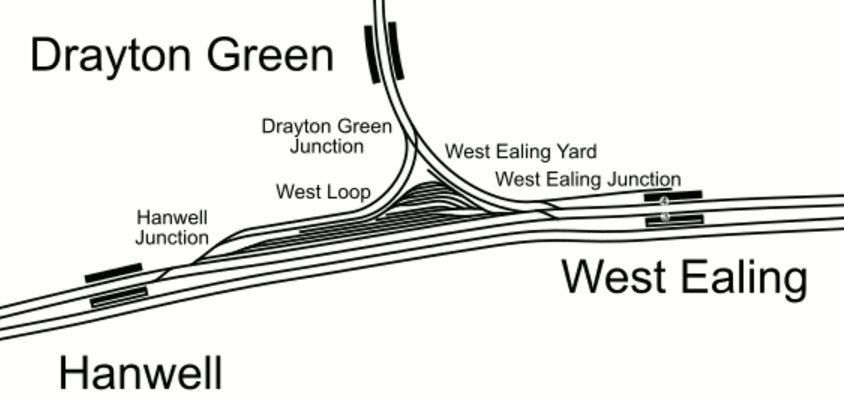
Southern End Of The Greenford Branch
What service the line will get after Crossrail opens has still to be decided,
- 4 tph between West Ealing and Greenford stations is certainly possible.
- There are those, including Ealing Council, who don’t like Greenford losing its direct connection to Paddington.
- A rebuilt Greenford station could incorporate Chiltern services.
As the connections at both ends of the branch allow trains to go in either an East or West direction, could this be useful in creating services between the two main lines?
Brentford Branch Reopening
I wrote about this in Could The Golden Mile In Houslow Get A Station?
The Brentford Branch could be a useful branch, worked by a shuttle train!
Hounslow Loop Line Improvements
The Hounslow Loop Line, which has a strong presence on both sides of the river and takes passengers to and from Waterloo, is being improved to increase capacity.
Could we see the Overground opening new services along the North London Line to perhaps Brentford, Hounslow and Feltham stations?
The route is used by freight trains, and Transport have suggested using the route to create an orbital Overground route.
Conclusions
The railways will take the strain in West London, after the abandonment of the West London Tram.
Can Mark 3 Coaches Come To The Rescue?
The Mark 3 coach is one of the mainstays of UK railways.
- Chiltern Railways use thirty one coaches on Birmingham and Oxford services from Marylebone.
- CrossCountry have thirty-eight coaches as part of InterCity 125s.
- East Midlands Trains have over a hundred as part of InterCity 125s
- Greater Anglia use one hundred and thirty coaches between Liverpool Street and Norwich.
- Great Western Railway have over four-hundred and fifty coaches as past of InterCity 125s.
- Virgin Trains East Coast have over a hundred coaches as part of InterCity 125s.
It should be said, that some are in better condition than others and very few meet the latest access regulations.
But even the table hides a few strength and problems.
Chiltern Trains
Chiltern Trains run their Mark 3 sets with a driving van trailer (DVT) and a Class 68 locomotive on some Birmingham and Oxford services.
- Marylebone to Birmingham Moor Street is a two trains per hour (tph) service and the journey takes ten minutes under two hours.
- Marylebone to Oxford is a two tph service and the journey takes a few minutes over an hour.
The Birmingham service needs eight trains for a 2 tph service.
The Oxford service would need six trains for a 2 tph service, but if the journey could be under the hour, there could be a reduction in the number of trains needed.
If Chiltern decided to run a 2 tph service between Oxford and Birmingham, as I suggested in Where Next For Chiltern?, this would need another four trains.
This leads me to say.
- As Chiltern only have six sets of Mark 3 coaches, they will have to use Class 168 trains for some of the services.
- Probably by clever timetabling, they would need at least a dozen trains to run a quality two tph service on both routes.
- They would probably like all their services to Birmingham and Oxford to share a common train type, for operational and marketing reasons.
So where do Chiltern find another probably ten trains?
- The Class 68 locomotives would have to be hired.
- There are up to a dozen DVTs in storage at Long Marston according to Wikipedia, so creating some for the trains, might be a reasonably predictable refurbishment.
But where do they find the sixty coaches needed?
This article from Rail Magazine in June 2012, is entitled Making the Mk 3s even better, describes Chiltern’s methods.
This is an extract.
Economics dictate that it is cheaper to rebuild the Mk 3s than to order brand new DMUs. Indeed, because of track access and fuel costs, if a LHCS formation is more than five coaches (as they are in Chiltern’s case), then the costs favour locomotive-hauled trains.
The freedom to be able to do this is also a factor for Chiltern. The franchise is owned by Deutsche Bahn, which also owns the coaches. This means that vehicles can be tailored to exactly what the operator wants, rather than thinking about the re-sale value. No expensive engineering will be needed, again because this is what Chiltern wants.
Note the trains are in the same ownership as Chiltern; Deutsche Bahn.
As a passenger, the proof of the pudding is in the eating.
The product looks, feels and tastes good!
Greater Anglia
Greater Anglia could be a good source of quality Mark 3 coaches.
- Greater Anglia have 130 of them, which are leased from Porterbrook.
- The trainsare due to be replaced by new Flirt electric multiple units during 2019/2020.
- The trains have recently been refurbished and have been fitted with wi-fi and retention toilets.
The problem is that they are still slam-door stock and don’t meet the latest access regulations.
But this is not a great problem, as Chiltern have form in updating Mark 3 coaches to meet the latest standards.
Greater Anglia are also replacing fifteen sets of carriages with just 10 electric multiple units, which will provide Norwich in ninety minutes at 3 tph, as opposed to the current service of Norwich in two hours at just 2 tph.
Incidentally, just eight trains are needed to provide the current service, so Greater Anglia could have a few spares.
So it looks to me, that immediately each Flirt is in service, there will be a Mark 3 set sitting in Crown Point ready to go on its next task.
But as just ten Flirts will be replacing fifteen Mark 3 sets, it looks to me, Chiltern might be able to raid Greater Anglia’s stock of spare trains earlier than has so far been thought.
Suppose three trains could be released, this would release twenty-four refurbished coaches and three DVTs.
If another DVT could be sources from Long Marston, then there would be another four rakes of coaches for refurbishment to Chiltern’s standards.
One of the great advantages of modifying the Greater Anglia coaches, is that they have all been refurbished to a high standard, so I suspect that all the mechanicals and structure of the coaches are in virtually in as-new condition.
This page on the Greater Anglia web site, gives full details of the refurbishment.
This is said.
The significant refresh will see all of the train operator’s MkIII fleet enhanced, with improvements throughout for both First Class and Standard carriages including, plug points; new LED lighting; new carpets; new tables; new seat covers; upgraded environmentally-friendly controlled emission toilets with new floors and new taps; re-painting of the carriage interior saloon and vestibule panels, walls and ceilings.
It also appears that Greater Anglia set up a special work-shop in Crown Point TMD to do the update.
Could Greater Anglia have stolen a copy of Chiltern’s rule-book? More likely, they used the same consultant.
After a recent trip in one of these coaches with a friend, I wrote The Power Of Three! To say she was impressed, could be an understatement!
Chiltern just need to fit the new doors and their own interiors.
The Various InterCity 125 Coaches.
There are several ideas as to what to do with the various High Speed Trains formed from two Class 43 locomotives and an appropriate number of Mark 3 coaches.
This according to Wikipedia is Abellio’s Scotrail’s plan.
Abellio ScotRail will also introduce 9 four-car (2+4) and 17 five-car (2+5) refurbished High Speed Trains by December 2018 on longer-distance services between Edinburgh, Glasgow, Aberdeen and Inverness. Scotrail will receive the first locomotives and carriages late 2017, with the refurbishment program taking place at Brush Loughborough (power cars) and Wabtec Doncaster (carriages) between late 2017 and May 2019.
There have been rumours that Great Western Railway will do something similar with a few more trains.
As the InterCity 125s will each be shortened by a few coaches this will release more coaches for use by other operators.
Lots Of Mark 3 Rakes Of Coaches
There are probably enough Mark 3 coaches in excellent condition and DVTs, that can be refurbished, to create perhaps another twenty-five rakes of between five-car and eight-car Mark 3 coaches, tailored to an individual customer’s need.
All of the design work has been done and proven by Chiltern or their contractors.
Obviously, you wouldn’t fit the doors and do the final parts of the refurbishment, until you actually had a customer, but it looks to me, that Porterbrook, who own the Greater Anglia Mark 3 coaches, seem to be doing a bit of speculation. Obviously, they have a plan in there to make money, as ROSCOs don’t do charity!
There is also this article from Rail Magazine, which is entitled Refurbished Mk 3s for Tornado.
It describes how, a rake of Greater Anglia’s Mark 3 coaches, will be acquired to be used with the new-build steam locomotive 60163 Tornado. One would even be fitted with a water tank to extend the range of the engine. Surely, a Mark 3 can handle that sort of weight.
Porterbrook have done well in the last few months out of a speculative order for Class 387 trains, that helped tide some train companies through rolling-stock shortages.
So have they seen a market niche to create an affordable train for longer routes based on Mark 3 coaches hauled by a Class 68 locomotive or perhaps a Class 88 electro-diesel locomotive.
Consider.
- It would meet all the access and environmental regulations.
- It would probably be quieter than a shortened InterCity 125.
- According to the Rail Magazine article, track access charges are affordable.
- As Chiltern and Greater Anglia are showing, it would deliver a superb customer experience.
- Chiltern like the package and could be a customer or do something similar themselves.
- It would be ideal for some of CrossCountry’s long routes like Aberdeen to Plymouth.
- It would be ideal for an open-access operator, developing a new route.
- Virgin West Coast might like it for Euston to Holyhead.
- With a faster version of the Class 88 locomotive, it might have a maximum speed in excess of 100 mph.
It would do anything a Class 800 train can do, at probably a more affordable purchase price, lower track access charges and an earlier delivery date.
Conclusion
Their is something behind Porterbrook’s decision to refurbish Greater Anglia’s Mark 3 coaches, when they knew there was a good chance they would be replaced by new trains, as the clapped Class 90 locomotives certainly couldn’t do London to Norwich in ninety minutes, as mandated in the new East Anglian franchise.
I suppose that Abellio could have been keen to upgrade the coaches, as the interiors were very much on the tatty side and the upgraded coaches would hold the fort until the Flirts arrived, without too much grief.
On the other hand, if the Great Western Electrification gets later and Abellio ScotRail lose their source of shortened InterCity 125s, locomotive-hauled Mark 3s to a high standard would be a very acceptable and affordable alternative.
I must also ask this question.
Could Greater Anglia’s Mark 3 coaches have been refurbished, so that to fulfil Scotrail’s requirements, all that needs to be done is the following?
- Fit doors that are compliant with the access regulations.
- Shuffle the coaches to the length and First and Standard Class capacities required.
- Give the rake of coaches a Scotrail livery.
- Couple a Class 68 or Class 88 locomotive on one requisite end.
I suspect the negotiation would be quite convivial, as both Greater Anglia and Scotrail are owned by Abellio.
The only problem would be that Scotrail need 9 four-car and 17 five-car trains and there may not be enough DVTs. However, some sets could be to the original plan of shortened InterCity 125s.
Scotrail certainly have a Plan B, if the Great Western Electrification gets even more pear-shaped.
Appendix – Posted on December 24th, 2016
In the January 2017 Edition of Modern Railways, under a heading of Pennine Pretendolino, there is a picture of a Class 68 locomotive hauling, the jokily named spare rake of Mark 3 coaches to Laira depot for attention, so that it can be used for driver training purposes by TransPennine Express, prior to the arrival pg the new Mark 5A coaches from CAF.
The Pretendolino is described under rolling stock on the Virgin Trains entry in Wikipedia. This is said.
Following the loss of a Class 390 Pendolino in the Grayrigg derailment, a Mark 3 set with a Driving Van Trailer was leased with a Class 90 hired from English Welsh & Scottish as required. In 2008 Virgin looked at leasing two Class 180[49] but decided to retain the Mark 3 set. Nicknamed the Pretendolino, this received re-upholstered seating, power points, wi-fi and a full external re-paint at Wabtec, Doncaster in 2009.[50] Virgin used this set with a Class 90 locomotive hired from Freightliner on a Euston to Crewe (via Birmingham) service on Fridays only until December 2012. From 9 December 2013 it was utilised to operate a London Euston -Birmingham New Street train on Thursdays and Fridays only, until its withdrawal in October 2014. The Mk.III set was also occasionally hired out as a private charter train. It was used in the filming of Harry Potter and the Deathly Hallows and can be seen at King’s Cross station at the end of the film. It is currently in use as a ‘hot spare’ with Abellio Greater Anglia
Like most of its siblings, it is showing a very strong survival instinct and keeping well away from the scrapyard.
Over the last year or so, I’ve ridden to and from Ipswich in the train several times, as it has been filling in whilst, the operator was updating their own Msrk 3 coaches.
Where Next For Chiltern?
Chiltern Railways have now got their Marylebone to Oxford service up and running.
Wikipedia gives a list of their future plans. Included are the following.
- Platform lengthening.
- Restoration of former tracks.
- Remodelling Banbury, which has already been done.
- Building of the West Hampstead Interchange.
- Development of services between Aylesbury and Milton Keynes.
- Creation of a Chiltern Metro.
- Reopening various branch lies.
In addition there has been talk of electrification and opening a route along the New North Line to Old Oak Common.
Building On Oxford
As of yesterday, as I wrote in Oxford To Marylebone Opens For Business, they now have a two-platform terminus at Oxford station.
I can’t believe they have made this investment there, without other plans to use it. Wikipedia says this about the platforms at Oxford station.
The scheme also includes two new platforms at Oxford station, to be built on the site of the disused parcels depot. The new platforms will initially be five carriages in length, but provision will be made for them to be extended southwards to eight carriages.
A two platform terminus like this, will have a large capacity, when fully developed.
- Two of Chiltern’s Class 68 locomotive hauled sets of Mark 3 coaches could be accommodated at the same time.
- Two shorter trains could be handled in one platform at the same time.
- Rebuilding plans for Oxford station would improve passenger handling.
- The two-platform underround terminus at Moorgate handles 12 tph.
It could probable handle the proposed two trains per hour (tph) for the East West Rail Link with ease.
I can’t believe that these two platforms, won’t become a vibrant mini-station within Oxford station.
But where will trains and passengers go?
Expansion At Birmingham Moor Street
Birmingham Moor Street station is one of those stations, that spent decades in the wildeness and has now become an important alternative station.
Wikipedia says this about Proposed Future Developments concerning expansion of the station.
The currently disused third bay platform would be reopened, and an additional new fourth bay platform would be opened to accommodate the new services.
This is also said about HS2.
The High Speed 2 terminus in Birmingham is planned to be built on an adjacent site and will likely be linked to Moor Street, though have a separate name (either Fazeley Street or Curzon Street). The station and high-speed line is proposed to be completed by the mid-2020s.
So it looks as if Moor Street will become a more important Birmingham station for commuters and a gateway to high speed vservices from the city.
Services Between Oxford And Birmingham
Currently around two tph run between Oxford and Birmingham.
- Typically, they call at places like Banbury, Leamington Spa, Coventry and Birmingham International.
- Services are run by Cross-Country.
- Services take between sixty and seventy minutes.
- Services continue to places like Bournemouth, Manchester Piccadilly and Newcastle.
I’ve travelled on the route several times.
- It tends to be overcrowded.
- Service quality is not of the quality, you get with Chiltern, London Midland or TransPennine Express.
I think there could be a niche for an extra service between Oxford and Birmingham,, just as Chiltern hope and probably know, there’s room for one between London and Oxford.
- Services would go between the bay platforms at Oxford and Birmingham Moor Street.
- The Banbury remodelling must have helped the timetabling of the service.
- A Chiltern quality service would be provided.
- Two tph would leave at the same minutes past the half-hour.
- Services could call at Banbury, Leamington Spa, Warwick, Warwick Parkway and Solihull, or whatever was appropriate.
- Journey time could be sixty minutes or just under.
- 2 tph on an hourly service would need four trains to run a service all day.
- The Oxford Birmingham route would get four tph.
The only loser would be Cross-Country, who might lose passengers to the new service.
But then like Chiltern, they are ultimately owned by Deutche Bahn.
But, you can’t run a service without trains.
From 2019, Greater Anglia will start to receive new twelve-car Flirts for Liverpool Street to Norwich services. Currently, to run this service Greater Anglia uses 15 sets of eight Mark 3 carriages, with Class 90 locomotives and driving van trailers. In the last couple of years, all have been superbly refurbished with the addition of wi-fi and retention toilets. All the trains need is to fit sliding doors, as Chiltern have done for their Mark 3 coaches and replace the Class 90 with a Class 68 locomotive.
This would enable, Chiltern to offer a Mark 3 -only service between Marylebone and Birmingham and Oxford and the release of other trains for the Oxford to Birmingham service.
As every operator is short of trains and delivery timescales slip, it might be worth looking at the availability of suitable trains.
- According to Wikipedia, as many as twelve driving van trailers could be in store at Long Marston. How many could be brought back into service?
- Greater Anglia are replacing fifteen sets of Mark 3 carriages and a DVT, with ten electric Flirts, that will increase the frequency from 2 tph to 3 tph. Could this mean that one or two sets could be released before the Flirts enter service?
- Hopefully, InterCity 125s will start to be available, as they are replaced with Class 800 trains from Summer 2017.
There are also other possibilities if events go to plan.
This is certainly a development to file under Watch This Space.
Oxford To Marylebone Opens For Business
I took these pictures, at Oxford station today, as the Great and Good opened the Chiltern’s new service to Oxford.
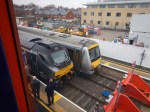
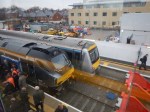

Compare the pictures, with these, I took on the 1st of December.




It does appear a lot of work has been done, in the intervening ten days.
Improving Train Services Through Oxford
As the Didcot Parkeay to Oxford electrification is now going to be delayed until the mid-2020s, I thought this article in the Oxford Times offered an interesting solution.
It proposes that Chiltern’s Marylebone to Oxford service goes on to Didcot Parkway.

