An Interloper At West Ealing Station
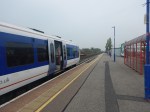
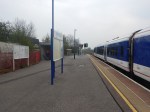
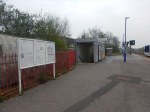
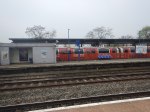
These pictures show a Chiltern Railway‘s Class 165 train in West Ealing station.

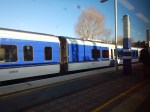
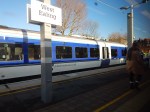
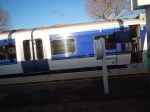
Has the train just been borrowed by Great Western Railway or is there another reason?
It looks like as I passed, that I saw a Parliamentary Train, which uses the Greenford Branch to travel to High Wycombe
HS2 Railway To Be Delayed By Up To Five Years
The title of this post is the same as that of this article on the BBC.
These first few paragraphs indicate the current situation.
The first phase of the HS2 high-speed railway between London and Birmingham will be delayed by up to five years, Transport Minister Grant Shapps says.
That section of the line was due to open at the end of 2026, but it could now be between 2028 and 2031 before the first trains run on the route.
HS2’s total cost has also risen from £62bn to between £81bn and £88bn, but Mr Shapps said he was keeping an “open mind” about the project’s future.
The second phase has also been delayed.
What are the short term consequences of this delay in the building of High Speed Two?
- No Capacity Increase Between London And Birmingham., until three or five years later.
- Capacity increases to Glasgow, Hull, Leeds, Liverpool, Manchester, Nottingham and Preston will probably be five years or more later.
Are there any other things we can do to in the meantime to make the shortfall less damaging to the economy?
East Coast Main Line
Much of the East Coast Main Line (ECML) has been designed for 140 mph running. Wikipedia puts it like this..
Most of the length of the ECML is capable of 140 mph subject to certain infrastructure upgrades.
Wikipedia also says that Greengauge 21 believe that Newcastle and London timings using the shorter route could be comparable to those using HS2.
Track And Signalling Improvements
There are a number of improvements that can be applied to the ECML, with those at the Southern end summed up by this paragraph from Wikipedia.
Increasing maximum speeds on the fast lines between Woolmer Green and Dalton-on-Tees up to 140 mph (225 km/h) in conjunction with the introduction of the Intercity Express Programme, level crossing closures, ETRMS fitments, OLE rewiring and the OLE PSU – est. to cost £1.3 billion (2014). This project is referred to as “L2E4” or London to Edinburgh (in) 4 Hours. L2E4 examined the operation of the IEP at 140 mph on the ECML and the sections of track which can be upgraded to permit this, together with the engineering and operational costs.
Currently, services between London and Edinburgh take between twenty and forty minutes over four hours.
Who would complain if some or even all services took four hours?
To help the four hour target to be achieved Network Rail are also doing the following.
- Building the Werrington Dive-under.
- Remodelling the station throat at Kings Cross.
- Adding extra tracks between Huntingdon and Woodwalton.
- Devising a solution for the flat junction at Newark.
Every little helps and all these improvements will allow faster and extra services along the ECML.
Obviously, running between London and Edinburgh in four hours has implications for other services.
In Changes Signalled For HS2 Route In North, I said this.
Currently, the fastest non-stop trains between London and Doncaster take a few minutes over ninety minutes. With 140 mph trains, I think the following times are easily possible.
- London and Doncaster – 80 minutes
- London and Hull – A few minutes over two hours, running via Selby.
- London and Leeds – A few minutes less than two hours, running on the Classic route.
For comparison High Speed Two is quoting 81 minutes for London Euston and Leeds, via Birmingham and East Midlands Hub.
I suspect that North of Doncaster, improving timings will be more difficult, due to the slower nature of the route, but as services will go between Edinburgh and London in four hours, there must be some improvements to be made.
- Newcastle – Current time is 170 minutes, with High Speed Two predicting 137 minutes. My best estimate shows that on an improved ECML, times of under 150 minutes should be possible.
- York – Current time is 111 minutes, with High Speed Two predicting 84 minutes. Based on the Newcastle time, something around 100 minutes should be possible.
In Wikipedia, Greengauge 21 are quoted as saying.
Upgrading the East Coast Main Line to 140 mph operation as a high priority alongside HS2 and to be delivered without delay. Newcastle London timings across a shorter route could closely match those achievable by HS2.
My estimate shows a gap of thirteen minutes, but they have better data than I can find on the Internet.
Filling Electrification Gaps East Of Leeds And Between Doncaster And Sheffield
In Changes Signalled For HS2 Route In North, I said this.
These are the lines East of Leeds.
- A connection to the East Coast Main Line for York, Newcastle and Edinburgh.
- An extension Eastwards to Hull.
These would not be the most expensive sub-project, but they would give the following benefits, when they are upgraded.
- Electric trains between Hull and Leeds.
- Electric trains between Hull and London.
- Electric access to Neville Hill Depot from York and the North.
- An electric diversion route for the East Coast Main Line between York and Doncaster.
- The ability to run electric trains between London and Newcastle/Edinburgh via Leeds.
Hull and Humberside will be big beneficiaries.
In addition, the direct route between Doncaster and Sheffield should be electrified.
This would allow the following.
- LNER expresses to run on electricity between London and Sheffield, if they were allowed to run the route.
- Sheffield’s tram-trains could reach Doncaster and Doncaster Sheffield Airport.
A collateral benefit would be that it would bring 25 KVAC power to Sheffield station.
Better Use Of Trains
LNER are working the trains harder and will be splitting and joining trains, so that only full length trains run into Kings Cross, which will improve capacity..
Capacity might also be increased, if Cambridge, Kings Lynn and Peterborough services were run with 125 mph or even 140 mph trains. GWR is already doing this, to improve efficiency between Paddington and Reading.
Faster Freight Trains
Rail Operations Group has ordered Class 93 locomotives, which are hybrid and capable of hauling some freight trains at 110 mph.
Used creatively, these might create more capacity on the ECML.
Could the East Coast Main Line be the line that keeps on giving?
Especially in the area of providing faster services to Lincoln, Hull, Leeds, Huddersfield,Bradford Newcastle and Edinburgh.
Conclusion On East Coast Main Line
There is a lot of scope to create a high capacity, 140 mph line between London and Edinburgh.
An Upgraded Midland Main Line
Plans already exist to run 125 mph bi-mode Hitachi trains on the Midland Main Line between London and Leicester, Derby, Nottingham and Sheffield.
But could more be done in the short term on this line.
Electrification Between Clay Cross North Junction And Sheffield
This 15.5 mile section of the Midland Main Line will be shared with High Speed Two.
It should be upgraded to High Speed Two standard as soon as possible.
This would surely save a few minutes between London and Sheffield.
140 mph Running
The Hitachi bi-modes are capable of 140 mph, if the signalling is digital and in-cab.
Digital signalling is used by the Class 700 trains running on Thameslink, so would there be time savings to be made by installing digital signalling on the Midland Main Line, especially as it would allow 140 mph running, if the track was fast enough.
Extension From Sheffield To Leeds Via New Stations At Rotherham And Barnsley
Sheffield and Transport for the North are both keen on this project and it would have the following benefits.
- Rotherham and Barnsley get direct trains to and from London.
- A fast service with a frequency of four trains per hour (tph) could run between Leeds and Sheffield in a time of twenty-eight minutes.
This extension will probably go ahead in all circumstances.
Use Of The Erewash Valley Line
The Erewash Valley Line is a route, that connects the Midland Main Line to Chesterfield and Sheffield, by bypassing Derby.
It has recently been upgraded and from my helicopter, it looks that it could be faster than the normal route through Derby and the World Heritage Site of the Derwent Valley Mills.
The World Heritage Site would probably make electrification of the Derby route difficult, but could some Sheffield services use the relatively straight Erewash Valley Line to save time?
Faster Services Between London And Sheffield
When East Midlands Railway receive their new Hitachi bi-mode trains, will the company do what their sister company; Greater Anglia is doing on the London and Norwich route and increase the number of hourly services from two to three?
If that is done, would the third service be a faster one going at speed, along the Erewash Valley Line?
I suspect that it could have a timing of several minutes under two hours.
Conclusion On An Upgraded Midland Main Line
There are various improvements and strategies, that can be employed to turn the Midland Main Line into a High Speed Line serving Leicester, Derby, Nottingham and Sheffield.
West Coast Main Line
The West Coast Main Line is not such a fruitful line for improvement, as is the East Coast Main Line.
Digital signalling, 140 mph running and faster freight trains, may allow a few more trains to be squeezed into the busy main line.
Increasing Capacity Between London and Birmingham New Street
I’ve seen increased capacity between London and Birmingham quoted as one of the reasons for the building of High Speed Two.
Currently, both Virgin Trains and West Midlands Trains, have three tph between London and Birmingham New Street.
- This is probably not enough capacity.
- The line between Birmingham New Street and Coventry stations is probably at capacity.
These points probably mean more paths between London and Birmingham are needed.
High Speed Two is planned to provide the following services between London and Birmingham after Phase 2 opens.
- Three tph – London and Birmingham Curzon Street stations via Old Oak Common and Birmingham Interchange (2 tph)
- Fourteen tph – London and Birmingham Interchange via Old Oak Common.
That is a massive amount of extra capacity between London and Birmingham.
- It might be possible to squeeze another train into each hour.
- Trains could be lengthened.
- Does Birmingham New Street station have the capacity?
But it doesn’t look like the West Coast Main Line can provide much extra capacity between London and Birmingham.
Increasing Capacity Between London and Liverpool Lime Street
Over the last couple of years, Liverpool Lime Street station has been remodelled and the station will now be able to handle two tph from London, when the timetable is updated in a year or so.
Digital signalling of the West Coast Main Line would help.
Increasing Capacity Between London and Manchester Piccadilly
Manchester Piccadilly station uses two platforms for three Virgin Trains services per hour to and from London.
These platforms could both handle two tph, so the station itself is no barrier to four tph between London and Manchester.
Paths South to London could be a problem, but installing digital signalling on the West Coast Main Line would help.
Conclusion On The West Coast Main Line
Other improvements may be needed, but the major update of the West Coast Main Line, that would help, would be to use digital signalling to squeeze more capacity out of the route.
The Chiltern Main Line
Could the Chiltern Main Line be used to increase capacity between London and Birmingham?
Currently, there are hourly trains between Birmingham Moor Street and Snow Hill stations and London.
As each train has about 420 seats, compared to the proposed 1,100 of the High Speed Two trains, the capacity is fairly small.
Increasing capacity on the route is probably fairly difficult.
Digital Signalling
This could be used to create more paths and allow more trains to run between London and Bitmingham.
Electrification
The route is not electrified, but electrifying the 112 mile route would cause massive disruption.
Capacity At Marylebone Station
Marylebone station probably doesn’t have the capacity for more rains.
Conclusion On The Chiltern Main Line
I don’t think that there is much extra capacity available on the Chiltern Main Line between London and Birmingham.
Conclusion
I have looked at the four main routes that could help make up the shortfall caused by the delay to High Speed Two.
- Planned improvements to the East Coast Main Line could provide valuable extra capacity to Leeds and East Yorkshire.
- The Midland Main Line will increase capacity to the East Midlands and South Yorkshire, when it gets new trains in a couple of years.
- Planned improvements to the West Coast Main Line could provide valuable extra capacity to North West England.
- The Chiltern Main Line probably has little place to play.
As Birmingham has been planning for High Speed Two to open in 2026, some drastic rethinking must be done to ensure that London and Birmingham have enough rail capacity from that date.
A Trip Around The West Midlands
Today, I did a trip around the West Midlands, using five different trains.
Tain 1 – 19:10 – Chiltern – London Marylebone To Leamington Spa
This was one of Chiltern’s rakes of Mark 3 coaches hauled by a Class 68 locomotive.
I like these trains.
- They are comfortable.
- Everybody gets a table and half sit by a big window.
- There is more space than Virgin Train’s Class 390 trains.
- They may be slower, but they are fast enough for most journeys I make.
The train arrived seven minutes late at Leamington Spa at 11:32.
Train 2 – 12:02 – West Midlands Trains – Leamington Spa To Nuneaton
This is a new West Midlands Trains service, via the new station at Kenilworth and Coventry.
The trains are Class 172 trains, that used to run on the Gospel Oak to Barking Line.
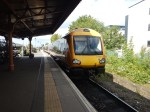


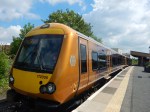


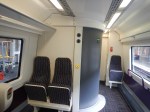


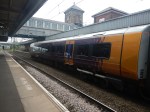

Note.
- The have been repainted and refreshed.
- The seat cover on the driver’s seat is a relic of the London Overground.
- The train now has a toilet.
The train was about half-full and I got the impression, that the new service had been well-received.
The train arrived on time at Nuneaton at 12:38.
Train 3 – 12:54 – West Midlands Trains – Nuneaton to Rugeley Trent Valley
The train was a Class 350 train and it arrived eight minutes late at 13:29.
These pictures show Rugeley Trent Valley station.

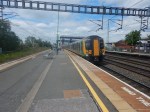
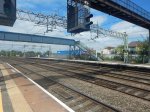
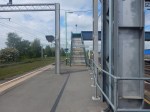
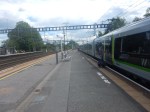
It is very minimal with just a shelter, a basic footbridge and no information on how or where to buy a ticket.
Passengers deserve better than this!
Train 4 – 13:43 – West Midlands Trains – Rugeley Trent Valley to Birmingham New Street
This is a new West Midlands Trains electric service.
Compared to the Leamington Spa to Nuneaton service, passengers were spread rather thinly in the train.
The train was a Class 350 train and it arrived five minutes late at 14:44.
Train 5 – 15:55 – Chiltern – Birmingham Moor Street to London Marylebone
Another comfortable Chiltern Railways train back to London, which arrived four minutes late at 17:47.
Customer Service
Customer service and especially that from West Midlands Trains was rather patchy.
- Leamington Spa station was rebuilding the entrance, but staff were around.
- Nuneaton station was very quiet.
- Rugeley Trent Valley station needs a lot of improvement.
- The two Birmingham City Centre stations were much better.
I actually had to travel ticketless from Rugeley Trent Valley to Birmingham New Street, as the Conductor on the train didn’t check the tickets.
But Virgin Trains were very professional at Birmingham New Street.
Service Pattern
I have some observations on the service patterns.
- For comfort reasons, I would prefer that Chiltern ran Mark 3 coaches and Class 68 locomotives on all Birmingham services.
- In the future, it looks like Leamington Spa and Nuneaton needs at least a half-hourly service.
- There definitely needs to be more services on the Chase Line.
There also is a serious need for staff and better facilities at Rugeley Trent Valley station.
No-one even a hardened member of the SAS would want to spend thirty minutes changing trains there on a blustery and cold winter’s day.
Conclusion
I tried two new services today, that started on the May 2019 timetable change.
- A diesel service between Leamington Spa and Nuneaton via Kenilworth and Coventry.
- An electrified service between Rugeley Trent Valley and Birmingham New Street.
The first would appear to be what passengers want, but the second needs a bit of promoting.
A Neat Cup-Holder On Chiltern Railways
The picture shows a cup-holder on a Chiltern Railways’ train.
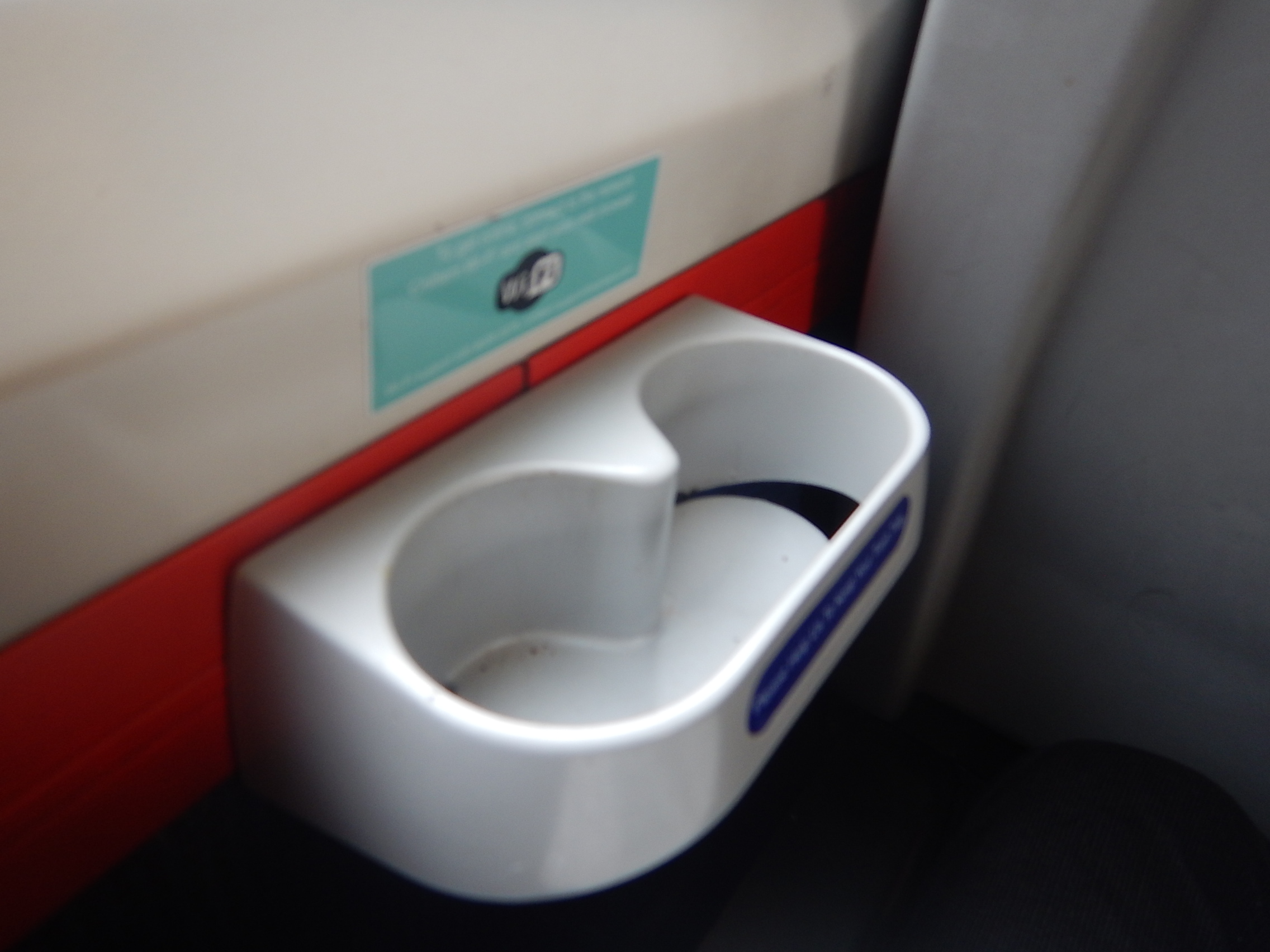
It is neat and well-designed.
It probably didn’t cost a fortune too!
Irish Rail And Porterbrook Order MTU Hybrid PowerPacks
The title of this post is the same as that of this this article on the International Rail Jotnal..
This is the first paragraph.
Irish Rail (IE) and British rolling stock leasing company Porterbrook have signed contracts with Rolls-Royce for the supply of 13 MTU Hybrid PowerPacks, the first firm orders for the hybrid rail drives.
Other points are made in the article.
- IE has ordered nine PowerPacks for Class 22000 trains. If the technology works they intend to convert all 63 trainsets, which will need 234 PowerPacks, as each car has a diesel engine.
- Porterbrook has ordered four for Class 168 and Class 170 trains.
- The PowerPacks will be delivered between mid-2020 and 2021.
- The MTU engines are built to EU Stage 5 emission regulations.
- The PowerPacks can switch to battery power in stations and sensitive areas.
- Under battery power, noise is reduced by 75 % and CO2 emissions by up to 25 %
- Operating costs are significantly reduced.
- The PowerPacks have regenerative braking, thus they reduce brake pad wear.
- Due to electric power, the trains have been acceleration, which may reduce journey times.
It seems that passengers, train operating companies, train leasing companies and those that live by the railway are all winners.
If the concept works reliably and meets its objectives, I can see MTU selling a lot of Hybrid PowerPacks.
Which Operators Will Be Used For Trials?
This is a valid question to ask and I’ll put my thoughts together.
Irish Rail Class 22000 Train
These trains only run in Ireland with one operator;Irish Rail, so they will be used for trials.
As each car has one MTU diesel engine and Irish rail are stated in Wikipedia as wanting to run three-car and six-car sets, could they be converting one train of each length?
British Rail Class 168 Train
All the nineteen Class 168 trains of various lengths are in Chiltern Railway’s fleet, they will be the trial operator.
Chiltern also have nine two-car trains, which could be ideal for trial purposes as they will need two Hybrid PowerPacks.
British Rail Class 170 Train
Porterbrook own upwards of thirty two-Car Class 170 trains with CrossCountry, Greater Anglia and West Midlands Trains.
As Greater Anglia and West Midlands Trains are replacing their Class 170 trains, this means that CrossCountry will soon be the only user of two-car units.
The four two-car trains from Greater Anglia, will be going to Trains for Wales (TfW).
TfW currently has thirty two-car Pacers in its fleet, which must be replaced by the end of 2019.
TfW is bringing in the following trains.
- Nine four-car Class 769 trains from Porterbrook.
- Eight three-car Class 17 trains from Greater Anglia
- Four two-car Class 17 trains from Greater Anglia
This is a total of sixty-eight cars.
So TfW are replacing a load of scrapyard specials with quality, more powerful trains, with approximately 13 % more capacity.
TfW are proposing to use the Class 170 trains on the following routes.
- Heart of Wales line (from 2022)
- Regional services between South and West Wales
- South Wales metro lines – Ebbw Vale/Maesteg (until 2022)
- Crewe-Shrewsbury local services (from 2022)
There is a mixture of routes here and it would be a good trial,
Other Trains
If the MTU PowerPack proves successful and leads to widespread conversion of the Class 168 and Class 170 fleets, will we see the twenty Class 171 trains and thirty-nine Class 172 trains converted to hybrid power?
Conclusion
It looks like a good solid project to me!
Interchange Between Chiltern Railways And The Central Line At South Ruislip Station
After my trip to Beaconsfield station, which I wrote about in Beaconsfield Station To Go Step-Free, I needed to get to West Ealing station.
So I took a direct train to South Ruislip station, where I changed to the Central Line for Greenford station and the Greenford Branch to West Ealing.
These pictures show the subway at South Ruislip station.

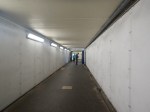
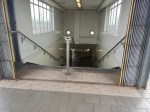

It is a subway with inadequate steep steps.
According to the Wikipedia entry for Chiltern Railways, one of their active plans is for a Chiltern Metro. This is said.
New Chiltern Metro Service that would operate 4+tph for Wembley Stadium, Sudbury & Harrow Road, Sudbury Hill Harrow, Northolt Park, South Ruislip and West Ruislip. This would require a reversing facility at West Ruislip, passing loops at Sudbury Hill Harrow, and a passing loop at Wembley Stadium (part of the old down fast line is in use as a central reversing siding, for stock movements and additionally for 8-car football shuttles to convey passengers to the stadium for events).
So there could be four trains per hour (tph) through South Ruislip station, in addition to the current hourly service to High Wycombe.
Also.
- When Chiltern Railways have a second London terminal at Old Oak Common station, there could be more stopping trains.
- There is also pressure to run services along the Greenford Branch to West Ruislip and High Wycombe.
- The Central Lione will be getting new larger trains in the next few years.
There is certainly, a lot of potential to improve services and South Ruislip station could need to go step-free.
This Google Map shows the station.
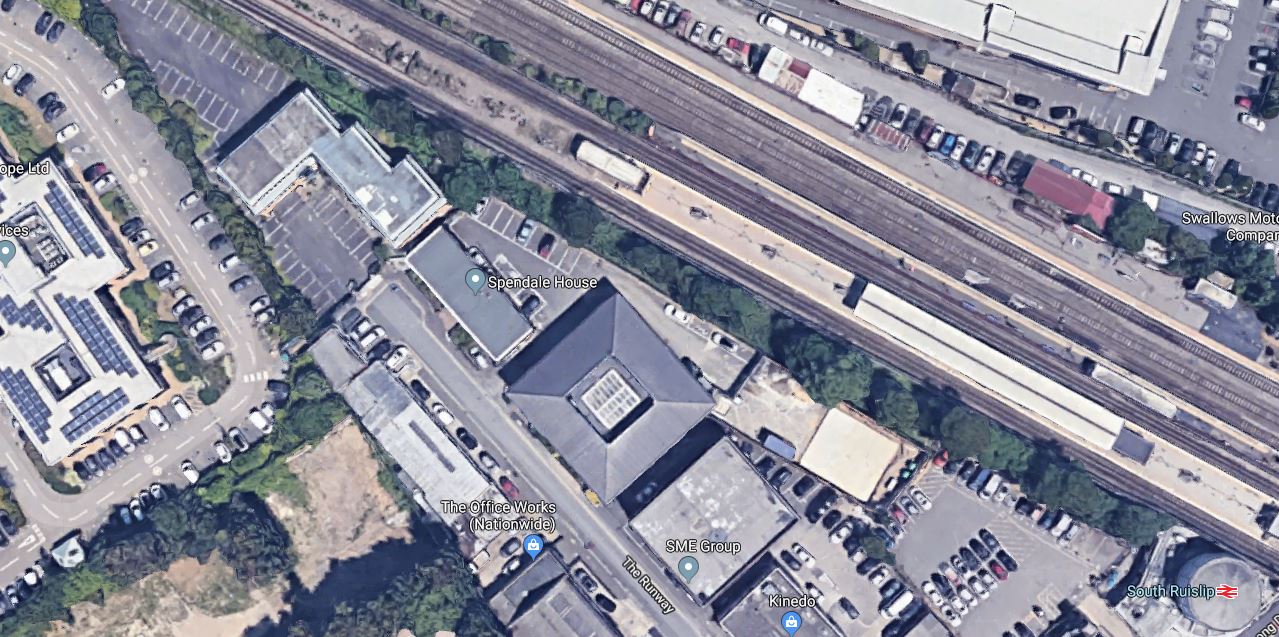
Putting lifts into the subway to access platforms has been done many times and wouldn’t be the most major of projects.
Whether it is worth doing, would be solely down to passenger numbers.
- Currently, the station handles about two million passengers per year, most of whom are using the Central Line.
- There will probably be a lot of new housing built in the next few years.
- With the disruption of building High Speed Two, through the area, this might mean new passengers start using the station.
I predict that South Ruislip station will go step-free.
A406 North Circular Road ‘Most Congested’ In The UK
The title of this post is the same as that of this article on the BBC.
This is the first paragraph.
Motorists on the UK’s most congested road spend an average of two and a half days a year sitting in traffic.
The section of the A406 between the Hangar Lane Gyratory and Chiswick Roundabout has always been a dreadful road to drive on, as long as I can remember.
These pictures show typical traffic around eleven o’clock in the morning.
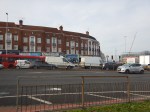

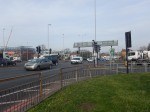




There does seem to be rather a lot of private cars and small commercial vehicles, with only a few HGVs and buses.
I would love to see an analysis of where these journeys start and finish.
Converting the road to a multi-lane dual carriageway wouldn’t be possible, as much of it is lined with private houses and even if it could be built it would just attract more traffic and would need to be widened even more.
There are circular routes further out of London like the M25 and the A412, but this road is an intractable problem.
Perhaps, it needs to be in a Congestion Charge Zone?
But is a solution at hand?
Crossrail
Crossrail, if and when it opens, will not be a direct solution, as it goes East-West and not North-South like the A406 through the area.
But it will give better access to Heathrow, which is a large traffic generator in West London.
Crossrail will link the following to the Airport.
- Canary Wharf
- The City of London
- East London and Essex
- South-East London and Kent
- West End and Paddington
It will do little to help those in North and South London to travel to and from the Airport.
Old Oak Common Station And High Speed Two
The connection of High Speed two and Crossrail could make a difference.
- Passengers using High Speed Two travelling to and from Heathrow, would have an easy route.
- North and North-East Londoners will be able to use the North London Line with a change at Old Oak Common.
- South Londoners will be able to use the West London Line with changes at Old Oak Common and Clapham Junction stations.
But Old Oak Common station won’t open under 2026 at the earliest.
It is needed now.
It also does nothing for those travellers in wide swathes of North-West London.
The West London Orbital Railway
If there is a trusty knight on an immaculate white charger, coming to the rescue, it could be the West London Orbital Railway, although as it would be stitched together from parts of existing and underused infrastructure, it has more of the Dirty Dozen about it.
There would be two routes.
- West Hampstead Thameslink and Hounslow via Cricklewood, Gldstone Park, Neasden, Harlesden, Old Oak Common, Acton Central, South Acton, Brentford, Syon Lane and Isleworth.
- Hendon and Kew Bridge via Brent Cross West, Gldstone Park, Neasden, Harlesden, Old Oak Common, Acton Central and South Acton.
The project has various advantages.
- No substantial amount of new track will be needed.
- It could be run using battery-powered trains.
- Costs would be well under half a billion pounds.
- It would connect to Thameslink and Bakerloo, Jubilee and North London Lines.
When Old Oak Common and High Speed Two open, it would have a direct connection.
I wrote about this railway in detail in New Railway Line For West London Proposed.
North Acton Station
As stated under Development in the Wikipedia entry for North Acton station, there may be reasons to rebuild the station to create a connection between the North London and Central Lines.
This Google Map shows the area around North Acton station.
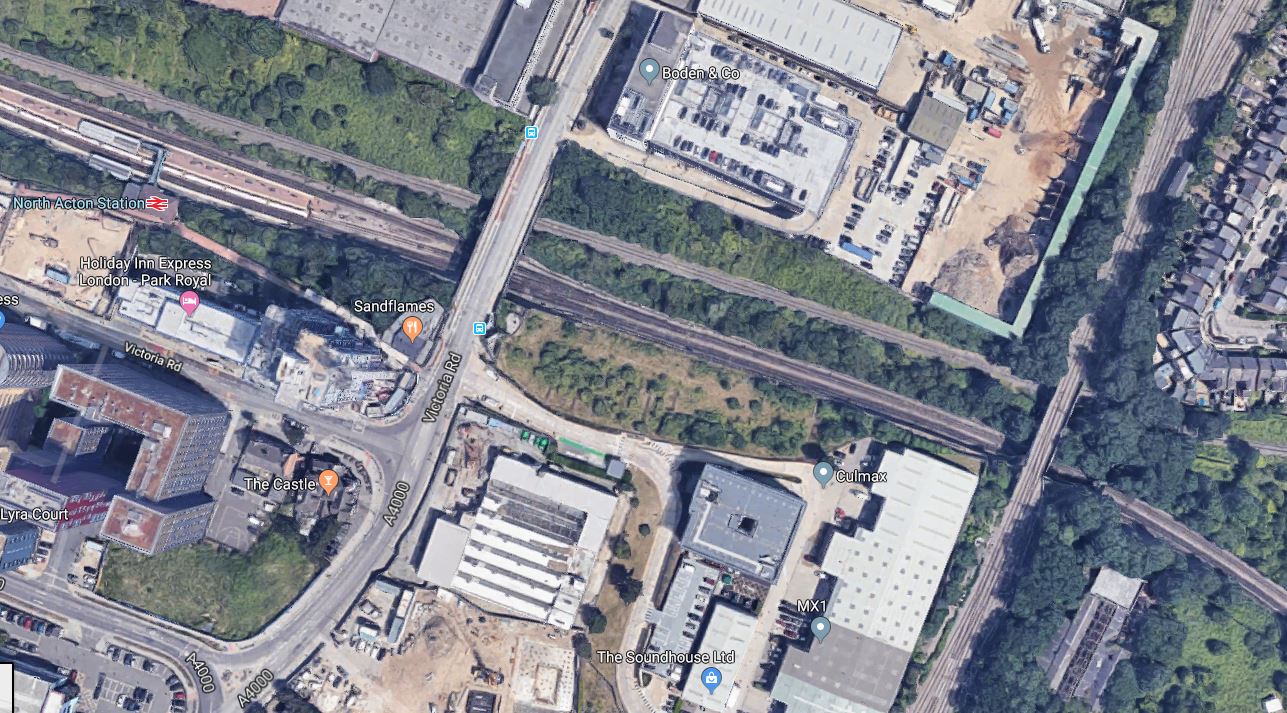
Note.
- North Acton station in the North-West corner of the map.
- The North London Line running North-South to the right of the map.
- The Dudding Hill Line branches off the North London Line at the top of the map.
- The Central Line running East-West through North Acton station and under the North London Line.
- Threading its way through North of the Central Line is the Acton-Northolt Line.
- The Acton-Northolt Line could be developed by Chiltern Railways to give access to a second London terminal at Old Oak Common.
To develop a successful station at North Acton, that tied everything together would be a hard ask.
- The bridge carrying the North London Line is very high.
- The height would make step-free access expensive.
- The frequency of trains on both the North London and Central Lines could be twelve trains per hour (tph).
- At least, there does appear to be plenty of space from the map.
On the other hand, an architect with vision might be able to create a station that was affordable and provided high benefits for passengers.
Conclusion
There’s certainly potential in West London to improve the rail routes, although I’m not sure whether rebuilding North Acton station would be viable.
But, we should start building the West London Orbital Railway immediately.
Class 165 Trains To Go Hybrid
There must be something in the DNA of British Rail’s rolling stock.
Mark 3-based trains like the InterCity 125, Class 319 and Class 321 trains seem to have had collectively more lives than a city full of feral cats.
It is also understandable, that MTU are looking at upgrading modern rolling stock built with their engines to be more efficient and environmentally-friendly. They have launched the MTU Hybrid PowerPack, which adds up to four 30 kWh batteries, electric drive and regenerative braking to a typical diesel multiple unit built in the last twenty years.
So now, upgrading the traction systems of the Class 165 trains is being undertaken.
The Wikipedia entry for Class 165 trains, says this under Future Development.
It was reported in September 2018 that Angel Trains were to convert class 165 units for Chiltern Railways to hybrid diesel and battery-powered trains, and that the first Class 165 HyDrive train should be ready by late 2019.
There is more in this article on Rotherham Business, which is entitled Magtec Changes Track To Convert Diesel Trains.
This is said.
Magtec, the UK’s largest supplier of electric vehicle drive systems, is working to deliver the rail industry’s first conversion of a diesel-powered train to hybrid drive.
Founded in 1992, MAGTEC designs and manufactures electric drive systems and components for a wide range of applications including trucks, buses and military vehicles.
This is also said about the modified trains performance.
In future, passengers using the Class 165 HyDrive could benefit from potentially reduced journey times, thanks to the improved acceleration offered by the hybrid technology compared to its diesel-only counterparts. Additionally, when the hybrid system detects proximity to stations or depots, it will turn the engines off and run on its battery, removing gaseous and noise emissions from populated areas.
That sounds very good to me.
There is also a serious article in the Financial Times, which is entitled Hybrid Battery Trains Set To Shorten Commuter Journey Times.
The headline sounds like hype, but then it is the FT, who usually tell it as it is. Read the article and there is a lot of philosophy and reasons behind this avalanche of retrofitting old trains with new innovative traction systems, in Germany, France and the UK.
It should be remembered that Chiltern have a record of doing the right things.
Further Development
MAGTEC look to be a very innovative company.
The Class 465 train is a third-rail electric train, that is closely-related to the Class 165 train.
It should be noted that sixteen miles of the London to Aylesbury Line is electrified using London Underground’s fourth-rail system.
So could we see the creator’s of the Class 165 HyDrive train, raid the Class 465 train’s parts bin, so the trains can use London Underground’s electrification?
Conclusion
If the project produces a successful outcome, there are seventy-five Class 165 trains running on Chiltern and Great Western Railway, which all seem to be in good condition.
RSC Urges GWR To Provide Stratford Improvements
The title of this post is the same as that of an article in Issue 860 of Rail Magazine.
This is the first paragraph.
The Royal Shakespeare Company and the Shakespeare Birthplace Trust have written a joint letter to Great Western Railway Managing Director Mark Hopwood, urging him to improve services between London and Stratford-upon-Avon should GWR retain the Great Western franchise.
Stratford-upon-Avon station may have step-free access, but the services are not of a level for such an important tourist destination.
- 2 trains per hour (tph) to Birmingham Snow Hill and Stourbridge Junction.
- 1 train every two hours to Leamington Spa with some continuing to London Marylebone.
It really isn’t enough trains.
Coventry And Stratford-upon-Avon
In 2021 Coventry will be the UK City Of Culture, so surely there should be a direct rail link between one of the most important cities of the West Midlands and one of its biggest cultural attractions.
But no there isn’t a direct link, despite the rail lines being in place.
You have to change at Leamington Spa. But the journey only takes a reasonable 70 minutes.
I have read somewhere, that West Midlands Trains are going to link up these two services.
- Nuneaton and Coventry
- Coventry and Leamington Spa
This would create a single service between Nuneaton and Leamington Spa stations..
Could this service be extended to Stratford-upon-Avon?
- They are acquiring eight Class 172 trains from London Overground, to run services in Warwickshire.
- All the tracks are in place.
- The service would connect the West Coast Main Line and the Chiltern Main Line to Stratford-upon-Avon.
How long would it take?
These are current average times for the three legs
- Nuneaton to Coventry – 22 minutes
- Coventry to Leamington Spa – 12 minutes
- Leamington Spa to Stratford – 35 minutes
This totals to 69 minutes.
- There are thirteen stations stops, one of which is a reverse at Leamington Spa station.
- There will be a need to add a few minutes for turnround at Nuneaton and Stratford-upon-Avon stations.
- The Class 172 trains are 100 mph trains, whereas the current Class 153 trains are only 75 mph trains.
- Much of the track has an operating speed of 100 mph.
If a round trip can be done in under three hours, the following number of trains would be needed.
- One tph would need three trains.
- Two tph would need six trains.
The number of trains are actually the same that would be needed, if the routes were run as three separate sections. But by joining them together passengers don’t need to change trains.
With the faster trains, I do wonder if a round trip of two hours is possible, which would mean that just four trains would be needed for a two tph service.
Hopefully, a better service will be in place before Coventry is UK City of Culture.
An Improved Chiltern Service
Chiltern Railways don’t have the capacity on the Chiltern Main Line to run more direct services to Stratford, but I feel they could improve the current service.
If you are going to Stratford from Marylebone, most of Chiltern’s Birmingham services offer a one-change route to Stratford. But it is not always the same interchange station and I have found routes with changes at Birmingham Moor Street, Dorridge and Leamington Spa.
The Chiltern service to Stratford could be improved by just ensuring that to go between Marylebone and Stratford, you always changed at the same station and waited just a few minutes.
This map from Wikipedia, shows the rail connections around Leamington Spa.

Note the lines to Stratford and Coventry.
The direct service to Stratford is one train every two hours, whereas the service to Coventry is two trains per hour running fifteen minutes apart.
As I said earlier, perhaps what is needed is a unified Nuneaton to Stratford service, which ideally should do the following.
- Run every thirty minutes.
- Be timed to connect with Chiltern’s London trains at Leamington Spa.
- Run a bit quicker than the current Class 153 trains.
The problem would be that a Chiltern service would be replaced with one run by West Midlands Trains.
Avon Rail Link
Under Possible Future Development in the Wikipedia entry for Stratford-upon-Avon station, this is said.
The Shakespeare Line Promotion Group is promoting a scheme to reopen the 9 miles (14 km) of line south of Stratford to Honeybourne where it would link to the Cotswold Line. Called the “Avon Rail Link”, the scheme (supported as a freight diversionary route by DB Schenker) would make Stratford-upon-Avon station a through station once again with improved connections to the South, and would open up the possibility of direct services to Oxford and Worcester via Evesham. The scheme faces local opposition. There is, however, a good business case for Stratford-Cotswolds link.
This is the scheme, that has prompted, the letter from the RSC and SBT to GWR.
The link would connect Stratford to Oxford, Reading and Paddington.
I suspect that you could argue that it would create a useful railway in an arc connecting the Thames Valley to the West Midlands.
A lot of things said about the East West Rail Link, would probably apply to this railway.
Honeybourne station on the Cotswold Line between Worcester and Oxford, would be the Southern end of the Avon Rail Link, where a connection to the privately-owned herotage raily; the Gloucestershire Warwickshire Railway, has been allowed for by Network Rail.
This section entitled North From Honeybourne on the Wikipedia entry for the Gloucestershire Warwickshire Railway, says this about building the extension.
The section between Stratford and Stratford Racecourse has been utilised to improve road access around the town, especially the A4390, making reinstatement of rail to the main station at Stratford extremely difficult.
Given the local opposition, it looks like it will be a struggle to get this line built.
Conclusion
There are three ways to improve rail access to Stratford-upon-Avon.
- The relatively easy and quick, enhancement of the rail services in Warwickshire.
- Provide better one-change routes using Chiltern Railways.
- The more difficult re-connection of Stratford to the Cotswold Line at Honeybourne.
As the last project will take years to implement, I feel, it is important that services to Stratford from Birmingham, Coventry, Leamington Spa and the West Midlands are substantially increased.
I also believe that the responsibility of providing a local service between Leamigton Spa and Stratford should be given to West Midlands Trains.
First Designs For A New Railway Station In Oxford Revealed
The title of this post is the same as that of this article on the Oxford Mail.
The article talks about opening a new station at Oxford Science Park on the freight line that is used to access the Mini factory at Cowley.
There is also this map in the article.
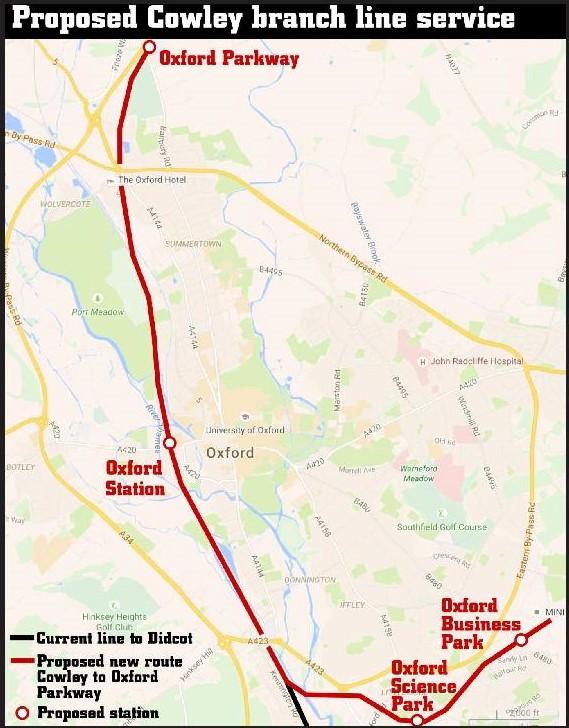
The service would be run by Chiltern Railways, so will it be a shuttle to Oxford Parkway station or a full service to Marylebone?

