Progress On The Cowley Branch
I first wrote about the Cowley Branch in Oxford Takes A Leaf Out Of Cambridge’s Book In November 2014.
Much of my post was based on this article on the BBC, which is entitled Cowley line passenger train service planned for Oxford.
So how is the planning of the branch progressing?
In the November 2016 Edition of Modern Railways, there is an interview with Dave Penney of Chiltern Railways, as the company is opening their service to Oxford station on the twelve of December.
In Science Park Next?, this is a paragraph.
Extending services from Marylebone through Oxford’s platform 3 to Kennington Junctionfor the Cowley Branch might be trouble; the problem is coming back, with Oxford Parkway-bound services having to cross the main lines on the flat at Kennington and into constrained line capacity on the route into Oxford station Extending the down goods loop into the station would help here, but that is some way down Network Rail’s list of priorities, so an Ocford Science Park service seems unlikely to happen anytime soon.
But help might be at hand, in that a new Oxford station might be built, which I wrote about in Could This Be A Ground-Breaking Idea In Station Design?
Surely, if a new station is built, current and possible future services will be taken into account, in the design.
I have no idea if the Cowley Branch will be opened to passenger trains.
I do think that there could be good reasons to create this service.
- Oxford Science Park, Oxford Business Park, Oxford United Stadium and the Mini Factory would gain a passenger rail link.
- Extending Along The Cowley Branch may make operation easier.
- It fits well with the East West Rail Link
- It would greatly increase Chiltern’s catchment area in Oxford.
But, I don’t think we’ll see any progress until planning and building of the new Oxford station has started.
This is Google Map shows the route of the Cowley Branch.
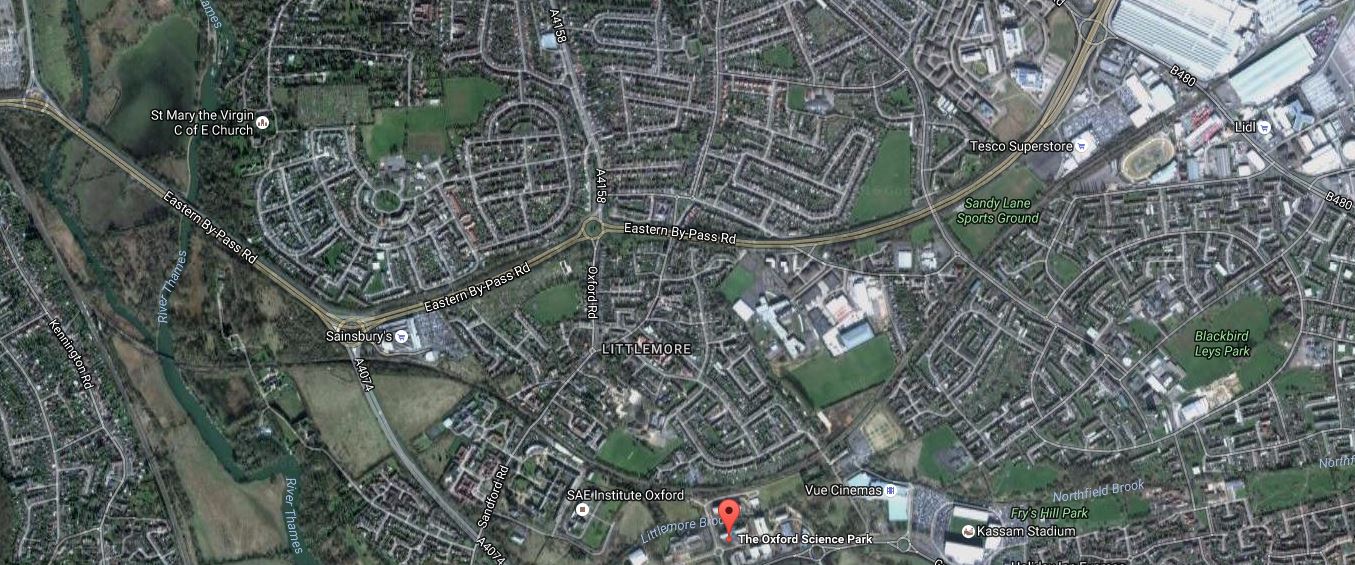
Kennington Junction is where the branch leaves the Oxford to Didcot Line and then curves across the South of the City to the Mini Factory, which is the massive set of light-coloured buildings in the North-East corner of the map.
The Oxford Science Park is indicated by the red arrow, with the stadium to its East.
Chiltern Are Being Very Serious
This article in the Oxford Mail is entitled Train timetable released for new Oxford to London Marylebone route.
This is said.
The new timetable shows services running every 30 minutes, starting at 6.02am from Oxford and returning at 23.10pm.
The line will open on Monday, December 12.
That is certainly a passenger magnet of a timetable.
Looking at the timetable of both Chiltern and Great Western,
- Both services run at least two trains per hour (tph) all day.
- Both services run fairly late in the evening.
- Great Western has the fastest trains, with some doing the journey in under an hour.
It will certainly be interesting to see how these two heavyweights slug it out.
But this is only Round 1One.
Consider.
- In December 2018, Crossrail services between Paddington and Abbey Wood, via Liverpool Street and Canary Wharf start.
- In May 2019, Crossrail services between Paddington and Shenfield start.
- In December 2019, full Crossrail services start.
- The East West Rail Link will open.
- Oxford to Didcot should be electrified, allowing electric trains to Oxford.
These developments may appear to favour Great Western services over Chiltern, but I doubt that Chiltern will sit back and do nothing.
So what will Chiltern do?
Consider.
- Will the Marylebone to Oxford route be improved to allow services to run faster and more frequent services? There are certainly some possible plans for this on Wikipedia.
- Will the West Hampstead Interchange be created?
- I doubt that it would be easy to shoehorn more services between High Wycombe and Marylebone, so this route will probably be limited to 2 tph.
- The Oxford to Marylebone trains will go to Class 68 locomotives and rakes of Mark 3 coaches, as Chiltern use to Birmingham at the present time.
- Greater Anglia could be releasing some high-quality Mark 3 coaches in 2019-2020.
- There has been speculation that Chiltern could open a second London terminus at Old Oak Common for Crossrail. I wrote about it in Will Chiltern Railways Get A Second London Terminus At Old Oak Common?.
- Will electrification come to the Chiltern Line? Or at least enough to run modern bi-mode or battery-electreic trains.
- The Guardian says that Bicester Village is one of the top tourist destinations in the UK.
What is needed is a comprehensive plan for Chiltern’s future.
I can’t believe that they’re not working on one!
It could include the following.
- Line improvements to reduce journey times between Marylebone and Oxford.
- Improvements to allow the longest possible locomotive-hauled sets to run the route.
- Development of West Hampstead Interchange.
- Creation of a second terminus at Old Oak Common.
One or both of the last two options will have to be implemented, due to the lack of capacity at Marylebone and that station’s bad connectivity.
But what would I do?
The Southern end of the Chiltern Main Line needs better connectivity and the best way to do this would be to link it to Crossrail.
When Crossrail opens to Paddington in December 2018, the direct link I wrote about in Paddington Is Operational Again, will enable passengers taking the Bakerloo Line from Marylebone to change easily to Crossrail.
Together with line improvements and longer trains, this should handle the traffic for a few years.
It is interesting to look at a few journey times.
- Chiltern has trains scheduled between Marylebone and High Wycombe in around 24-28 minutes.
- Crossrail services from Paddington will take 27 minutes to Sloughbold step of creating a Crossrail .
- Crossrail services from Paddington will take 45 minutes to Reading.
I would take the bold step of creating a Crossrail branch to High Wycombe.
- High Wycombe would receive 4 tph from Crossrail.
- There could be cross-platform interchange between Crossrail and Chiltern services to Oxford and Birmingham.
- The Acton-Northolt Line would be double-tracked and electrified to connect Crossrail at Old Oak Common to the Chiltern Main Line at Northolt Junction.
- The Chiltern Main line would be electrified from Northolt Junction to High Wycombe.
- Chiltern’s Oxford and Birmingham services could use Class 88 electro-diesel locomotives, to take advantage of the limited electrification.
- Extra services could run from High Wycombe to Oxford and Birmingham, if traffic required more capacity.
Except for the electrification and some track layout changes, there is no substantial investment required in new lines and stations.
If this approach is taken, there will probably be eough eletrification on the Chiltern routes to use Aventra trains with an IPEMU-capability to provide the services out of Marylebone.
Will Chiltern Connect Oxford To London On December The 12th 2016?
This article on the Eailway Gazette web site is entitled Tracklaying completed for Chiltern to Oxford.
|So that’s another hurdle jumped and there are probably others like a platform at Oxford station.
But everybody seems hopeful!
I shall be there on the twelfth.
If it all works out fine, I think that Chiltern opening to Oxford on time and on budget, it could set a very worthwhile precedent.
So where will be the next smaller project to be set in motion?
- Camp Hill Line in Birmingham
- Coventry-Leamington Line
- Hall Farm Curve in Walthamstow
Who knows? But if the Chiltern extension gets loaded with passengers, there could be a lot of bandwagon jumping.
I
A Hundred Days To A New Rail Link
The title of this article in the Oxford Mail says it all.
New rail link between central Oxford and London Marylebone ‘complete in 100 days’
It will hopefully all be complete for the first train between Oxford and Marylebone on December 12th.
I think people will look back in a few years and see this date as extremely significant in the development of new rail services.
If it is as successful, as Chiltern hope it will be, I think we’ll see other companies start to develop new routes. Some which probably include.
- The East West Rail Link between Oxford and Cambridge via Milton Keynes and Bedford.
- Marylebone to Milton Keynes
- Bristol Metro
- Routes from Cambridge and Cambridge North station
- Routes from Old Oak Common in London
- Gospel Oak to Barking Line Extensions
- Cardiff Metro
- Merseyrail Extensions
- Teesside Metro
- Oxford Branch Lines
I have left out any extensions to the two vast railways lines in London and the South East; Crossrail and Thameslink.
December 12th, 2016 could be the dawn of a new Railway Age.
After The Northern Hub, Is Network Rail Planning A Midland Rail Hub?
The study on Network Rail’s web site is entitled West Midlands and Chilterns Route Study, proposes a concept of a Midland Rail Hub.
By adding the following infrastructure.
- Bordesley Chords and new platforms at Moor Street
- More tracks through Water Orton
- Kings Norton upgrade
- Snow Hill Platform 4
- Begin rollout of Digital Railway
Network Rail feel, it will bring the following benefits.
- Up to 10 extra trains every hour
- More freight trains
- New journey opportunities between East and West Midlands
- Unlocking new jobs
- Maximising benefits of HS2.
It doesn’t appear to be as radical as the Northern Hub.
These are my notes and thoughts on the various proposals.
Bordesley Chords
This Google Map shows the Bordesley area of Birmingham.
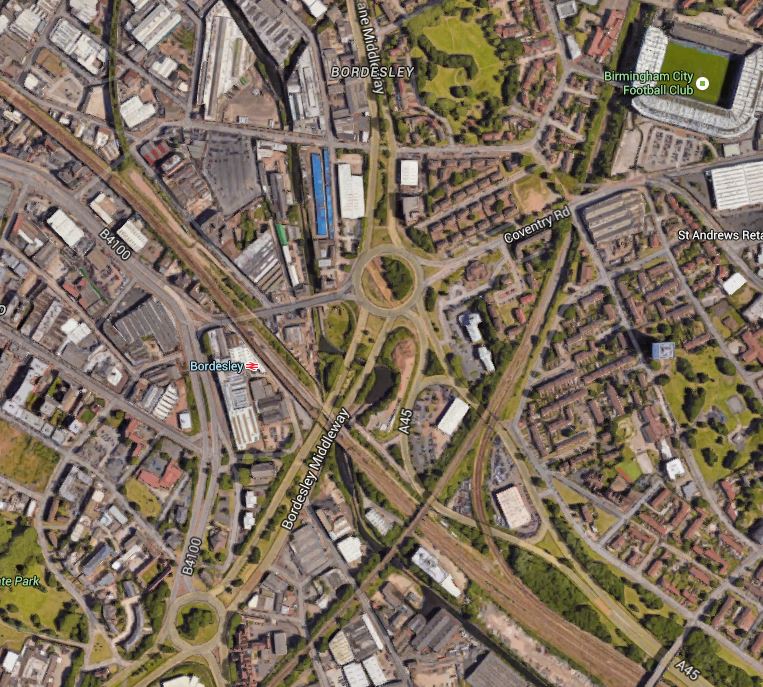
Bordesley Chords
In the top-right or north-eastern corner of the map is Birmingham City Football Ground.
In the middle of the map is Bordesley Circus, which is a roundabout, that is one of the most dangerous for pedestrians in the country. When I was last there, it was being improved and I wrote My Least Favourite Roundabout Gets Pedestrian Lights. I hope they’re working on Tuesday, 13th December, when I’ll be going to see Ipswich play.
Bordesley station, which is one of the worst stations in the UK, lies to the South-West of this roundabout and is on the Chiltern Main Line into Birmingham Moor Street station, although services don’t stop.
Running almost North-South across the map is the Camp Hill Line, which incidentally passes behind the stands at the football ground.
Where it crosses the Chiltern Main Line, there is a chord allowing limited connection between North and East.
I would assume that as the report says Bordesley Chords, that there will be some extra connectivity between these two lines.
Under the future of the Camp Hill Line on Wikipedia, this is said.
The reinstatement of local rail services to the former Camp Hill Line has been a long term aspiration of the City, and during 2007, Birmingham City Council announced that they were looking into the possibility of reopening the line between Kings Norton and Birmingham Moor Street via the construction of a railway viaduct from Sparkbrook to Bordesley, where trains would be taken into the “old” Birmingham Moor Street station. In October 2007, a 1500-name petition was handed in to the council asking for the line to be re-opened. In 2013 the proposal was shelved indefinitely.
As Kings Norton is to the South, this would need a West to South connection at Bordesley.
These pictures show the area from a Chiltern Train going into Moor Street.



Salubrious it is not! There is certainly a lot of space on the North side, but there might be less on the South. This Google Map shows the area between the station and where the two lines cross.
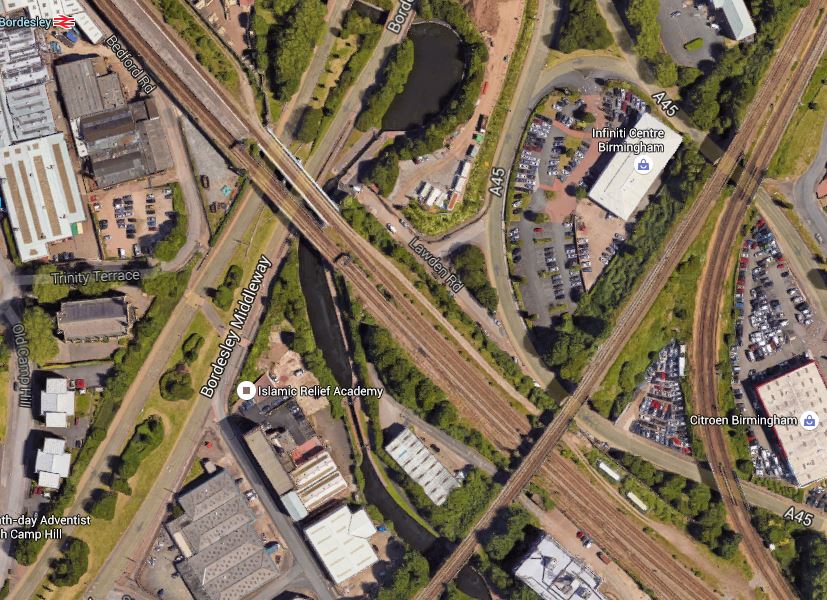
Bordesley Station And Chords
Note the double-track chord between the Camp Hill Line to the North and the Chiltern Main Line to the East. This chord gives services from the Chiltern Main Line to access Birmingham New Street station. If you take a train from Oxford to Birmingham New Street, it will take this chord, if it doesn’t go via Coventry.
From what I have seen in Manchester and some parts of London, the area could surely be put to a better purpose, perhaps driven by a rebuilt Bordesley station, with regular services to Moor Street, Kings Noton and Solihull. The area does have the added factor of water in the shape of one of Birmingham’s numerous canals.
Hopefully, the first piece of development in a very run-down area, the sorting of a decent walking route between Bordesley station and Birmingham City Football Ground has been completed.
New Platforms At Birmingham Moor Street Station
This Google Map shows Birmingham Moor Street station.
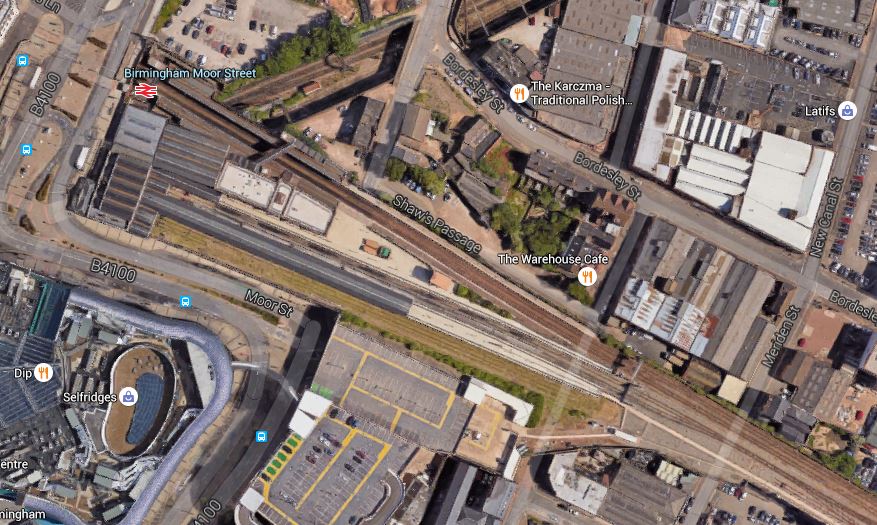
Birmingham Moor Street Station
The most northerly pair of platforms in the station are numbered 1 and 2 and are for the through lines to Birmingham Snow Hill station.
Over the last few years, work has opened the next pair of bay platforms 3 and 4. On my last trip to Birmingham in June, I arrived in Platform 4.
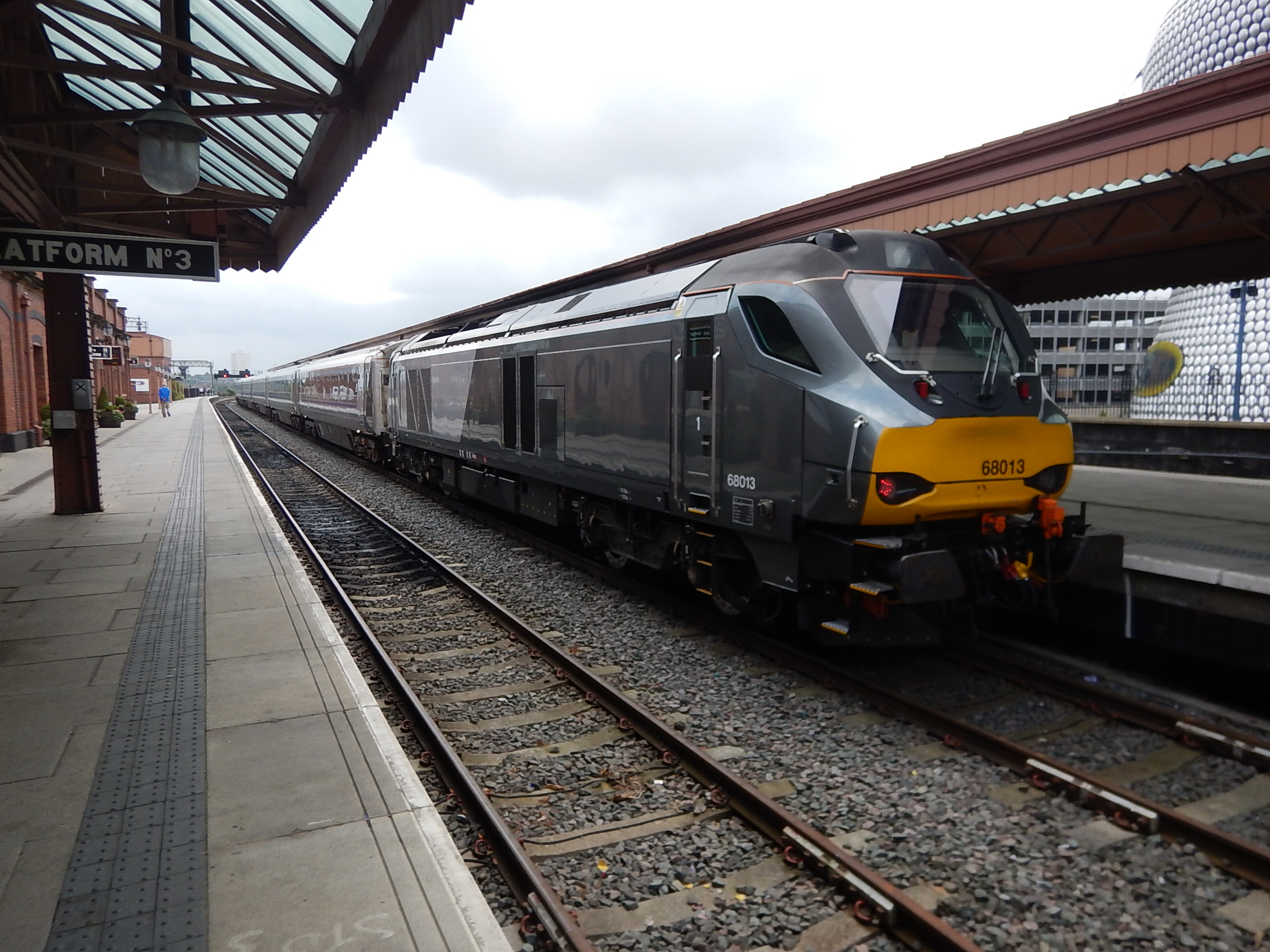
A Chiltern Main Line Train In Platform 4 At Birmingham Moor Street Station
Platform 5 on the other side of Platform 4 may have been reinstated, but there doesn’t seem to be any trains using it, as yet!
The map shows that there would appear to be space to open Platforms 3, 4 and 5, but could a clever architect squeeze in a Platform 6?
These pictures show the space for a possible Platform 5 and 6.

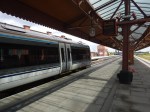
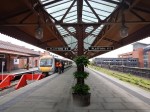
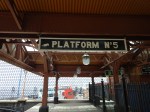

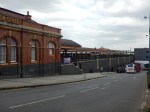

There would certainly appear to be space to shoe-horn two tracks and a new Platform 6 between the current Platform 5 and the retaining wall.
As the pictures show, Platform 5 is a platform that is long enough for any train currently envisaged that might call at Moor Street station.
Looking at the map of the station, it might even be possible to make Platform 6 even longer, if this were thought to be needed.
More Tracks Through Water Orton
This Google Map shows Water Orton station and the lines through it.

Lines Through Water Orton Station
If you look up services from Water Orton and Coleshill Parkway stations, they are certainly of the turn-up-and-wait-forever variety.
Water Orton has one train every two hours to Birmingham, but at least Coleshill Parkway has a train every half-hour.
Perhaps more lines through Water Orton will enable more trains through the area.
Looking at the rail map of Birmingham, it would be possible to go from Water Orton via the Camp Hill Line to Kings Norton and if the North to West chord was built at Bordesley to Moor Street.
It would certainly be the view of many, including myself, that a Parkway station needs a train or tram every fifteen minutes.
Kings Norton Upgrade
If the Camp Hill Line is reopened to passenger trains, then Kings North station will be the terminus.
This Google Map shows the station.
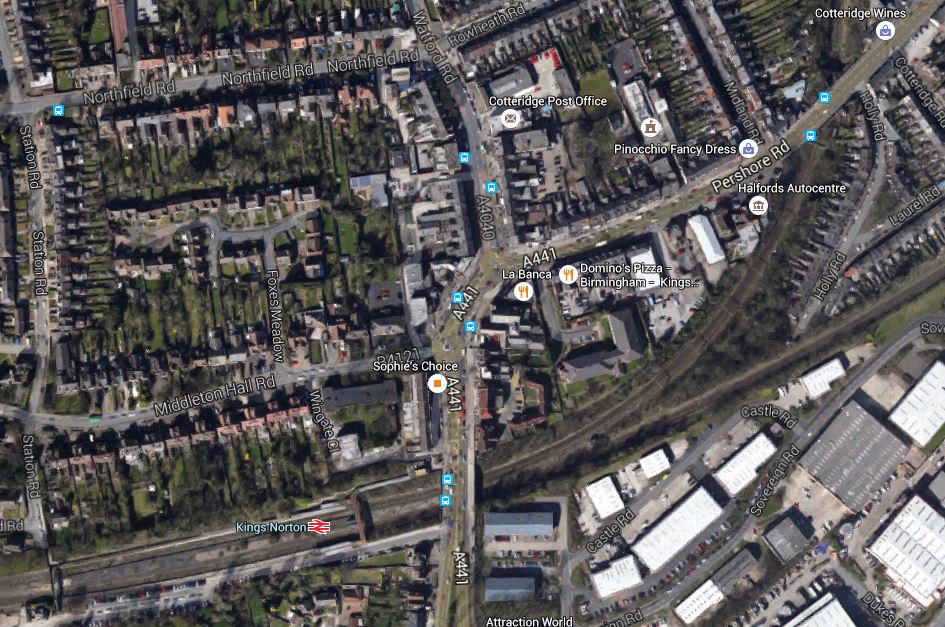
Kings Norton Station
It is a large station with an unused island platform in the middle.
These pictures show Kings Norton station.
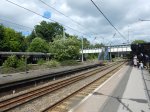
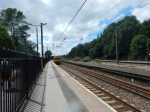
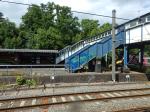
There is certainly work to be done.
But the station also has a lot of potential and space that can be utilised. It might even be possible to fit in a bay platform to turn trains back to Moor Street and New Street.
Birmingham Snow Hill Platform 4
Wikipedia says this about platforms at Birmingham Snow Hill station,
The present Snow Hill station has three platforms for National Rail trains. When it was originally reopened in 1987 it had four, but one was later converted in 1999 for use as a terminus by Midland Metro trams. The original tram terminus closed in November 2015, in order for the extension of the Midland Metro through Birmingham city centre to be connected. This includes a dedicated embankment for trams alongside the station, and will also include a new through stop serving Snow Hill. This will eventually allow the fourth platform to be returned to main-line use.
As the Midland Metro now has its own new platform outside the station, the fourth platform can soon be converted back to heavy rail use.
These pictures show the current state of the closed tram platform.



I don’t think that converting it back to heavy rail will be the most difficult of jobs.
Birmingham Station Connectivity
Although, not on the Network Rail infrastructure list, I feel that to gain the full benefits of HS2, then the line must be properly connected to Moor Street and New Street stations.
I can easily walk between Moor Street and New Street stations, but I do feel that Birmingham’s solution of using the Midland Metro as a link and to the Curzon Street HS2 station, is not the way to do it.
It needs some form of people mover. Perhaps a travelator would be better.
City Centre Ticketing
In Liverpool, a ticket to Liverpool stations, allows you to use the Underground to any of the other stations in the City Centre.
In London, many visitors by rail, add a Travelcard to their rail ticket.
Perhaps, in Birmingham, a ticket to Birmingham stations, should include the Midland Metro in the City Centre? Or a simple add-on for the Metro between Jewellery Quarter and Five Ways could be added for a few pounds.
At present, you have to buy a separate ticket. How visitor-friendly is that? At least a short journey is only a pound
If Birmingham is to make the most out of the opportunity of HS2, then they must use easy and understandable ticketing.
Chiltern’s Superb Trains
My trip down to Birmingham was in a Class 168 train, which although was a good experience for a diesel multiple unit, was spoilt as one engine went AWOL and we were late in to Moor Street.
But going home to London, I rode in what I think are one of the best long distance trains anywhere in Europe; Chiltern’s rakes of Mark 3 coaches pulled and pushed by a modern Class 68 locomotive.
- Nearly every seat gets a table and a window aligned to it.
- The seats are spcious and comfortable.
- The ride is the superb one, you always get from a Mark 3 coach.
- Trolley-service of drinks and a buffet on most services.
- Free wi-fi.
- London to Birmingham return for £19.20 with a Railcard.
- I’ve never travelled on Chiltern’s Mark 3 coaches and been unable to read my paper flat in front of me on the table.
The experience may be slower than Virgin’s, but give me Standard Class on Chiltern against First on Virgin every time between London and Birmingham.
The only problem, is that Marylebone station, isn’t as accessible as Euston from where I live. However, when Crossrail opens, times will be within a few minutes.
I can’t help feeling that Transpennine’s decision to use Class 68 locomotives and rakes of new CAF Mark 5 coaches across the Pennines, was influenced by the success of Chiltern’s flagship service and its superb rolling stock.
I’m looking forward to riding the CAF coaches in a few years, to see how they stand up to an almost forty year old British Rail coach.
I wonder how many Spanish engineers have ridden Chiltern’s trains?
I also feel that the Class 68 locomotive is an asset to a passenger service, in that so many diesel locomotives look dirty and smelly, but Class 68s seemed to have been designed to keep clean and also look how a locomotive should; powerful, purposeful and sleek.
For those, who don’t like that the trains are still diesel-hauled, there is even a Spanish solution for that, if the lines ever get electrified, in the shape of the new Class 88 electro-diesel locomotive, which is a sister of the Class 68 locomotive.
And of course, if Chiltern need some more trains and can’t find the Mark 3 coaches, they can always buy some new coaches from CAF.
Conclusions
It’s a very sensible plan and it will open up all sorts of possibilities for Birmingham.
The chords at Bordesley and the extra tracks through Water Orton would seem to open up a new route for trains across the city from Moor Street band Kings Norton to Water Orton and Nuneaton.
- New subsurban services could link Nuneaton and Kings Norton to Moor Street.
- Cross-country services might use Moor Street with a reverse, rather than New Street.
- Extra services from Moor Street to Nuneaton might take pressure off the heavily-loaded New Street to Birmingham route.
- How would the new station at Kenilworth station fit in?
But there are railways all over this area and I’m sure that the Bordesley and Water Orton improvements, will not be the last.
Already there is talk of reopening, the Sutton Park Line and the Stonebridge Railway.
I asked about Kenilworth station. I don’t know, but after Bordesley and Water vOrton are upgraded, there would be the possibility of a Warwickshire Circle, starting and finishing at Moor Street.
- Moor Street
- Solihull
- Warwick Parkway
- Warwick
- Leamington Spa with a reverse.
- Kenilworth
- Coventry
- Coventry Arena
- Bedworth
- Bermuda Park
- Nuneaton
- Coleshill Parkway
- Water Orton
- Moor Street
It would be a route, where several stations could be reopened or built from scratch. Leamington Spar incidentally already has a bay platform for the reverse.
I also think, that one of the biggest beneficiaries of all this will be Chiltern Railways.
Consider.
- Their two Birmingham termini of Show Hill and Moor Street are getting extra capacity.
- Moor Street will become a big terminal with two through and four bay platforms, all of which will be able to handle the longest Chiltern trains.
- Birmingham New Street station lacks capacity.
- The Birmingham New Street to Coventry route is seriously crowded.
- In Will Chiltern Railways Get A Second London Terminal At Old Oak Common?, I talked about Network Rail’s ideas to link the Chiltern route to the new station.
- Banbury station has been upgraded for more traffic.
- Chiltern will be running to Oxford station by the end of this year.
- Chiltern have plans in hand to run to Milton Keynes station.
We’ll certainly see extra services from London to Birmingham and possibly beyond, but will we see a triangular route going between London – Oxford – Birmingham – London?
It will depend on whether the passengers want it, but from Chiltern’s point of view, it might mean that their platforms in London, Oxford and Birmingham, and their trains, saw higher utilisation.
I suspect too, that the Oxford -Birmingham leg has more paths available and that Chiltern’s capacity problems are mainly at the London end of the Chiltern Main Line, especially now, that Banbury has been remodelled.
Chiltern Railways are an ambitious company and if they get a second terminal in London at Old Oak Common, they will certainly use it profitably.
I think that the Network Rail report shows that a few simple improvements, when thought through and executed with care can produce improvements not suspected in the original plans.
But all rail planning has to discount the London Overground Syndrome, where new stations, routes and trains, attract more passengers than originally expected.
Will Chiltern Railways Get A Second London Terminus At Old Oak Common?
This article on the Rail Magazine web site is entitled Chilterns Route Study to tackle capacity challenges and it describes how Chiltern Railways may gain a second terminal in London at Old Oak Common, which would link to the following lines.
And that’s only for starters as a couple of Underground and other lines pass through the general area.
The full study on Network Rail’s web site is entitled West Midlands and Chilterns Route Study. This is said about Chiltern Railways.
The Chiltern Route provides an important commuter route into London with connections to the Underground.
- London continues to grow, and evolve with economic hubs expanding beyond the traditional City
- Growing towns with major housing development planned at Aylesbury, Bicester and Princes Risborough
- Marylebone Station is approaching its maximum capacity, in terms of train numbers and passengers
- Any expansion of Marylebone is likely to be expensive, and disruptive due to its constrained location.
The report suggests using Old Oak Common as an additional terminal, connected to the Chiltern route. It gives these benefits.
- Up to 4 additional trains per hour, with more travel options in to London.
- Access to HS2, Crossrail and Great West Main Line.
- Reduced cost and disruption compared to upgrading Marylebone.
The report is recommending building a new station at Old Oak Common, rather than upgrading Marylebone.
I think that this is a very sensible use of the space and existing railways in West London.
In Could A Chiltern Metro Be Created?, I looked at the lines between Marylebone and West Ruislip, where Chiltern Railways have ambition to create a Chiltern Metro. I said this.
I think Chiltern too, will make a bid to get into running services on the Greenford Branch and the Acton-Northolt Line, as it would give them a very useful destination in London of Old Oak Common.
Whatever happens, there will be some interesting rail developments involving Chiltern Railways in West London.
Old Oak Common Station And The Acton-Northolt Line
This map from carto.metro.free.fr shows the lines around Old Oak Common.
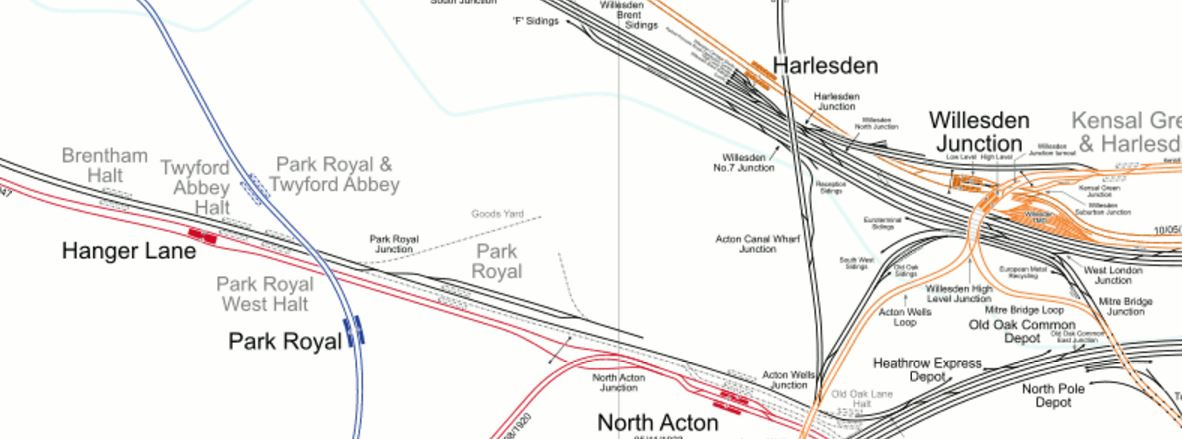
Old Oak Common Station And The Acton-Northolt Line
Note the West Coast Main Line and Great Western Main Line go to the North and South respectively of the Old Oak Common site.
The line going to the West alongside the Central Line is the Acton-Northolt Line which links in the West to the Chiltern Main Line, just to the East of South Ruislip station.
This is the best map, I can find of the proposals for Old Oak Common station.
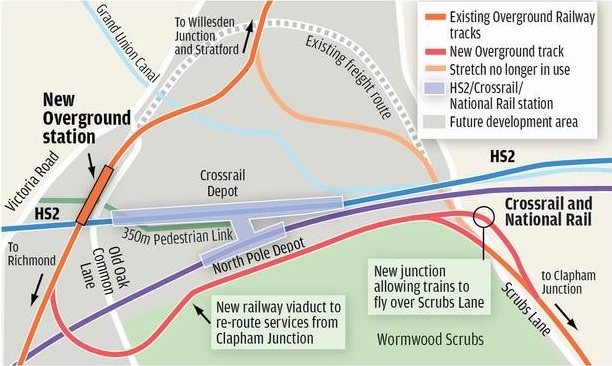
Rail Lines At Old Oak Common
And this map from carto.metro.free.fr shows roughly the same area.
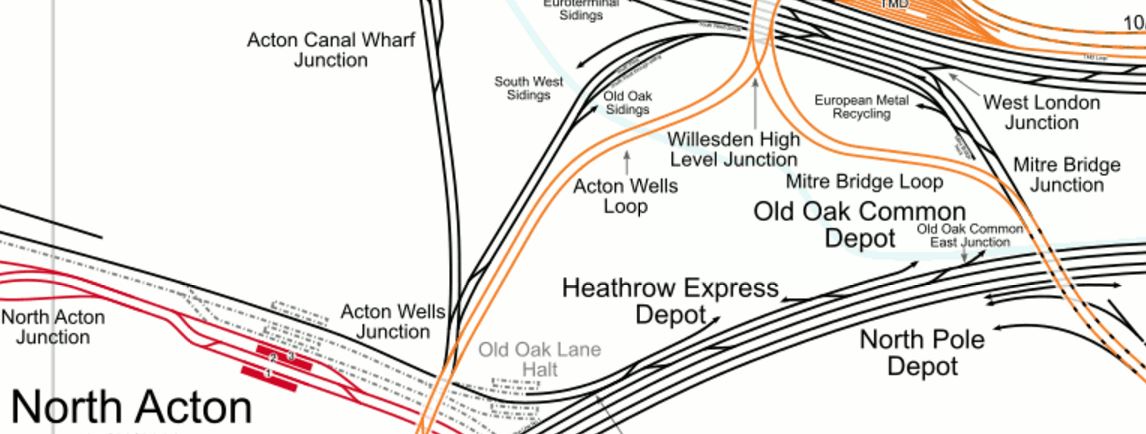
Current Lines At Old Oak Common
The Acton-Northolt Line is currently single-track and without electrification or any stations, other than South Ruislip and West Ruislip after Northolt Junction, where it joins the Chiltern Main Line.
From following the line both on a Central Line train and on Google Maps, it would appear that restoring the Acton-Northolt Line to its original double-track should be possible.
With regard to electrification, as Old Oak Common station will be electrified for Crossrail, the North London Line and other lines, it would at least have power at one end.
The Current And Proposed Service Pattern
Wikipedia lists the current services, outside the peak from Marylebone on Chiltern as the following.
- 2 trains per hour (tph) to/from Birmingham (one fast, first stop Bicester North, and one semi-fast, first stop High Wycombe).
- 1tph to/from Banbury (semi-fast, first stop High Wycombe). Some extend to Stratford-upon-Avon.
- 1tph to/from Bicester North (semi-fast, first stop Gerrards Cross)
- 1tph to/from Princes Risborough (semi-fast, first stop Gerrards Cross)
- 1tph to/from High Wycombe (stopping service)
- 1tph to/from Gerrards Cross (stopping service)
- 2tph to/from Aylesbury (via Amersham). One of these services in each hour continues on to serve Aylesbury Vale Parkway
- 2tph to/from Oxford Parkway (fast)
So that is nine trains an hour through West Ruislip, two up the Aylesbury Line and eleven between Marylebone and Neasden.
The Network Rail report, is saying that another four trains per hour would run from Old Oak Common station, which would mean thirteen trains an hour through West Ruislip.
Where these four trains will go will be up to Chiltern, but I’m sure they’ll find the passengers to fill them.
Gerrards Cross Station
I’d never been to Gerrards Cross before and when a friend suggested I go to see her for lunch, I got on a train.

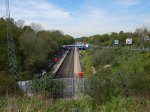

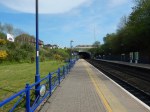

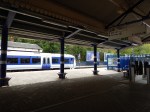
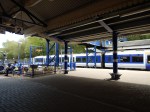
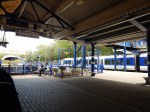
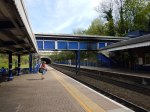
The journey had been complicated because there had been a complete signal failure at Marylebone, so in the end I took the Central Line to West Ruislip station. Checking the Oracle as I came out from London, I was able to determine, that the odd train was running and I was likely to catch one a couple of minutes after my tube arrived. I did and I arrived in Gerrards Cross station an hour later than I’d planned.
This Google Map shows the station and the local area.
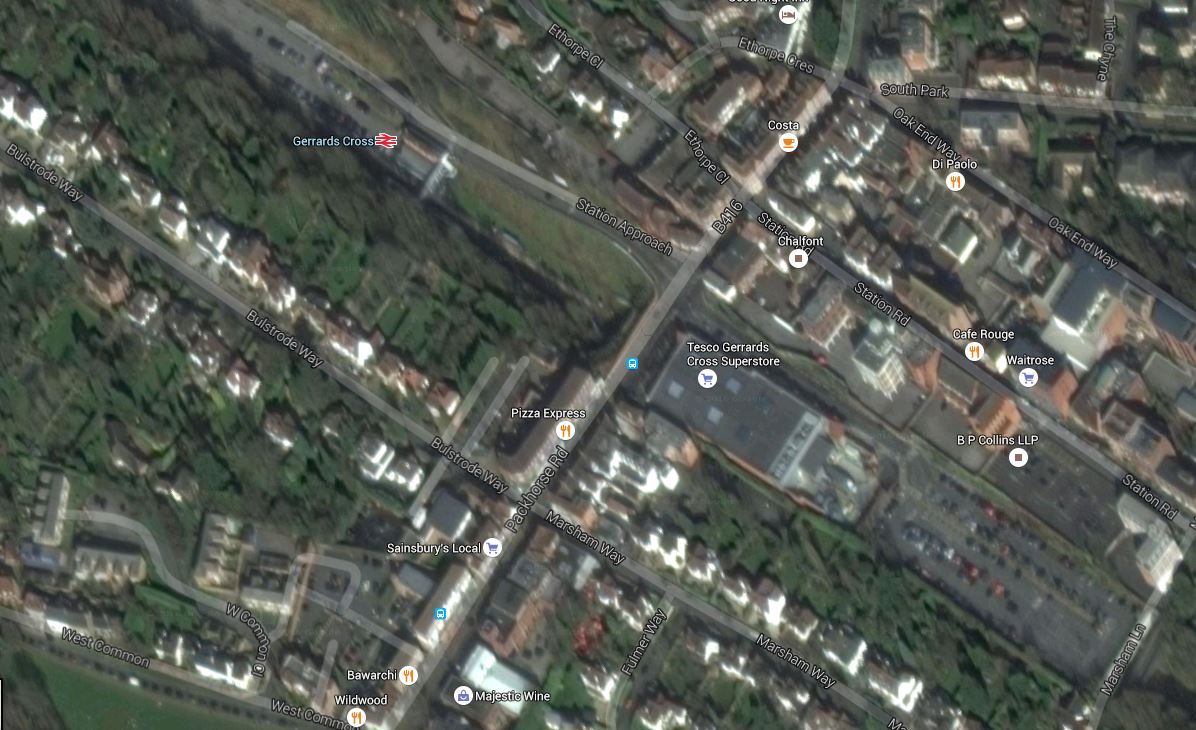
Gerrards Cross
I had a pleasant lunch in Pizza Express with my friend.
Gerrards Cross is certainly not a town, where I would chose to live, but it is one of those rare towns, where you could get together to have a pleasant lunch or conduct a business meeting close to the railway station.
Note that the pictures and the map show how the Tesco supermarket, is built over the railway.
This tunnel collapsed during building and blocked the railway for a few months. Luckily no-one was hurt, but I do think Tesco got a bit of a bruising to their ego.
My view is that we need more schemes like this to reclaim railway land, so we can build over the top. Although, housing, offices and public buildings like hospitals would be preferable to yet another unnecessary Tesco supermarket.
In Could A Chiltern Metro Be Created?, I looked at Chiltern Railways’s plan for a metro service between Marylebone and West Ruislip stations.
In the post, I asked if it would be better if the service was extended past West Ruislip.
At present, Gerrards Cross has an off-peak stopping service of one train per hour into Marylebone.
If the Metro does get created, I’m sure Gerrards Cross could benefit from more stopping services into Marylebone, but as Gerrards Cross is a station with only two tracks, I doubt it would be used as a terminus, as on my trip, trains were going through without stopping every few minutes.
West Ruislip and Beaconsfield stations, which both have two platforms and enough space for four tracks would appear to be better choices for the Western terminus of the Chiltern Metro.
In an ideal world, I would like to see island platforms between the fast and slow lines at the terminus of the Chiltern Metro, so that passengers travelling between stations on the Metro and Chiltern Main Line services.
But I doubt there is sufficient space at any current station for this layout.
Demolition Has Started For The New Platforms At Oxford Station
Demolition has finally started of the old parcels office at Oxford station to create the two platforms for the Chiltern service to the station.


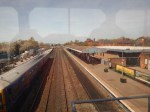

I can’t see this being a large project, as hopefully, it will just be creating the platforms and making sure there are shelters and the other platform details.
Wikipedia says this about the two new platforms.
The scheme also includes two new platforms at Oxford station, to be built on the site of the disused parcels depot. The new platforms will initially be five carriages in length, but provision will be made for them to be extended southwards to eight carriages.
Will they be in Chiltern’s or Great Western Railway’s house style?
As Chiltern Railways coaches are in sets of six, will these platforms be built initially to handle eight coaches? It would seem to be prudent!
Also according to this section in Wikipedia, services will start in December 2016.
Could A Chiltern Metro Be Created?
In the Wikipedia entry for Chiltern Railways, there is a section under plans labelled Active.
Three of the entries in this section refer to the stations between London Marylebone and West Ruislip or a Chiltern Metro.
- Lengthening of platforms at South Ruislip, West Ruislip, Sudbury Hill Harrow, Sudbury and Harrow Road and Northolt Park to accommodate eight vehicles, thereby obviating the need for vehicles to be locked out of use on departure from London Marylebone.
- The restoration of the quadruple track between South Ruislip (Northolt Junction) and West Ruislip, allowing trains to call at both stations without blocking the line. Triple track currently exists at West Ruislip, with the up platform loop still in situ, and at South Ruislip, with the Down Main through line also in situ. This would involve the reconstruction of the new down platform at West Ruislip, and the reconstruction of the up platform at South Ruislip. This ‘Chiltern Metro’ service was not programmed into the last round of franchising agreements.
- New Chiltern Metro Service that would operate 4+tph for Wembley Stadium, Sudbury & Harrow Road, Sudbury Hill Harrow, Northolt Park, South Ruislip and West Ruislip. This would require a reversing facility at West Ruislip, passing loops at Sudbury Hill Harrow, and a passing loop at Wembley Stadium (part of the old down fast line is in use as a central reversing siding, for stock movements and additionally for 8-car football shuttles to convey passengers to the stadium for events)
So could a Chiltern Metro be created between Marylebone to at least as far as West Ruislip.
In A Modern Electrified Metro Network Using IPEMU Technology, I postulated what a local metro would be like.
- Services are run by modern four-car electric trains, that meet all current and envisioned access and customer requirements.
- Services are run by a standard train, so if the network expands, more trains can be easily built!
- The ability to lengthen the trains, say for an important sporting or cultural event.
- Enough trains to run four trains per hour services on important lines and perhaps one per hour on lines that get much lesser use.
- Most services run out and back from the central station.
- As little disruption as possible, whilst creating the metro.
So does Chiltern’s broad plan of a metro between Marylebone and West Ruislip fit those rules?
- Modern four- car trains like Class 710 trains could run the service.
- Bombardier’s Aventra, which is the basis of the Class 710 will be around for some time, so extras will probably be available.
- Three-train formations of twelve-cars can probably be created, but eight-car would probably be an initial maximum need.
- Not a problem on a short metro line, which would probably need four sets for a four train per hour service.
- All services go to and from Marylebone.
- I’m sure, if IPEMU technology were to be used, electrifying between Marylebone and at least West Ruislip, could be done without major blockades of the line.
It would appear that the objectives can be easily met and using standard Aventra trains with an IPEMU capability would help.
The Current Service Pattern
Wikipedia lists the current services, outside the peak from Marylebone as the following.
- 2 trains per hour (tph) to/from Birmingham (one fast, first stop Bicester North, and one semi-fast, first stop High Wycombe).
- 1tph to/from Banbury (semi-fast, first stop High Wycombe). Some extend to Stratford-upon-Avon.
- 1tph to/from Bicester North (semi-fast, first stop Gerrards Cross)
- 1tph to/from Princes Risborough (semi-fast, first stop Gerrards Cross)
- 1tph to/from High Wycombe (stopping service)
- 1tph to/from Gerrards Cross (stopping service)
- 2tph to/from Aylesbury (via Amersham). One of these services in each hour continues on to serve Aylesbury Vale Parkway
- 2tph to/from Oxford Parkway (fast)
So that is nine trains an hour through West Ruislip, two up the Aylesbury Line and eleven between Marylebone and Neasden.
What Would A Chiltern Metro Look Like?
Wikipedia is fairly precise, that the inner section between Marylebone and West Ruislip would stop at the following stations.
- Wembley Stadium
- Sudbury & Harrow Road
- Sudbury Hill Harrow
- Northolt Park
- South Ruislip.
Although other documents on the web suggest a first stop at a new station of West Hampstead Interchange.
My journey today on the line took twenty minutes.
Some questions occur to me.
- Will extra stations be added?
- Will some trains go on to places like Gerrards Cross, High Wycombe and Princes Risborough?
- With modern signalling and extra tracks in places, what is the capacity of the various sections of the line.
- How many extra services to what destinations, do Chiltern want to run?
Chiltern’s answers will be better than my speculation.
What Trains Should Work The Metro?
Ian Walmsley in the April 2015 Edition of Modern Railways writes enthusiastically about Bombardier’s new Aventra train, where under Potential he starts with this sentence.
As a platform, the design will be offered in various guises for future contracts up to 125 mph.
He then goes on to say this about a possible future order for Aventras.
But the interesting one to me is East Midlands Trains electrics. As a 125 mph unit it could cope well with Corby commuters and the and the ‘Master Cutler’ crowd – It’s all about the interior.
Could Chiltern use a similar train, that was equally at home, running at over hundred miles per hour to and from Birmingham or trundling through North West London on the Metro?
Consider.
- The advantages of an identical fleet that can work all lines and services must be immense!
- I believe a universal high-class interior is possible, as Class 387 trains are almost there. Remember, Chiltern don’t do low class!
- All trains would have an IPEMU capability to reduce electrification and running costs.
- In a few years time, all IPEMUs will have automated pantograph up and down, to use electrification where available.
- Some could be dual-voltage to work on London Underground lines through Amersham.
Chiltern passengers certainly live in interesting times.
The Chiltern Metro And the Chiltern Main Line
In the following sections, I shall now look at the various parts of the route of the proposed proposed Chiltern Metro and its shared route with the Chiltern Main Line as far as West Ruislip.
Marylebone Station To Neasden
Marylebone station has a simple track layout, that is unlike most of the other London termini.
This Google map shows the station.
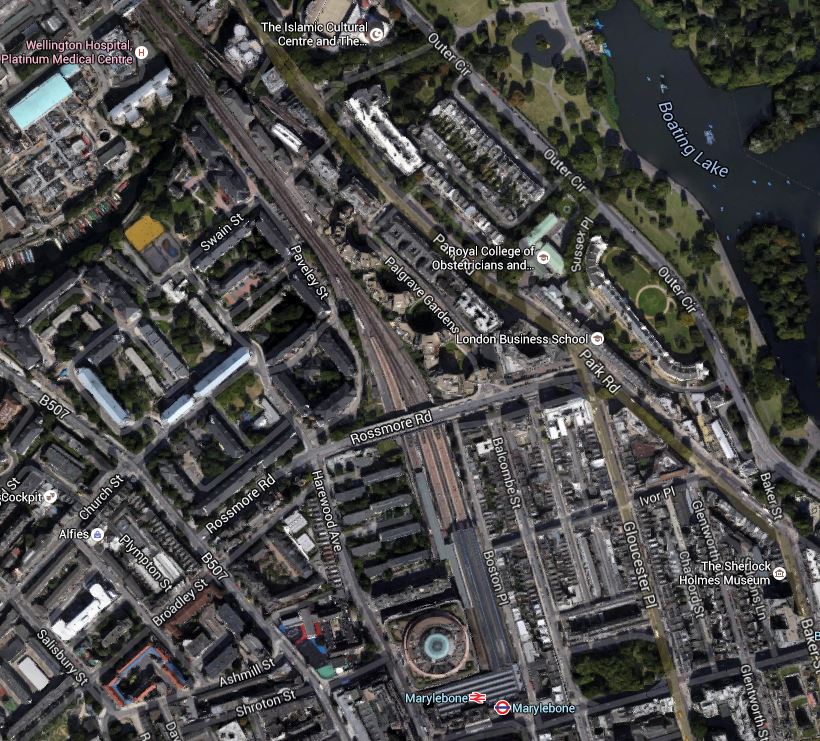
Marylebone Station
Complicated it is not, as it appears just two lines lead into and out of the station, and there are no major junctions until Neasden South Junction.
This map from carto.metro.free.fr shows the lines at Neasden.
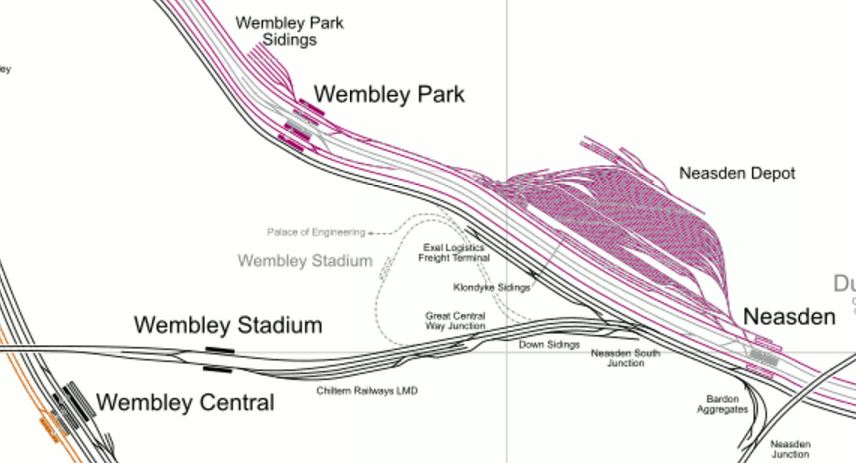
Lines Through Neasden
Note how the Chiltern Lines, which are shown in black, divide opposite Neasden Depot.
- The Chiltern Main Line goes off to the west through Wembley Stadium station.
- The London to Aylesbury Line goes off to the North West through Wembley Park station.
It certainly isn’t a complicated layout.
If you are going to use IPEMUs on Chiltern, I believe that it would be relatively easy to electrify the five miles of the lines from Marylebone to Neasden and what was felt necessary of the tracks in the platforms, to ensure that the trains reached Neasden South Junction on the way to West Ruislip with the on-board energy storage nearly full.
If this could be achieved, then some or all of the line and its stations between Neasden and West Ruislip could be left without electrification.
West Hampstead Interchange
If any station sums up the complicated nature of the UK’s railways it is the proposed West Hampstead Interchange.
This map from carto.metre.free.fr, shows the various lines go through the area.
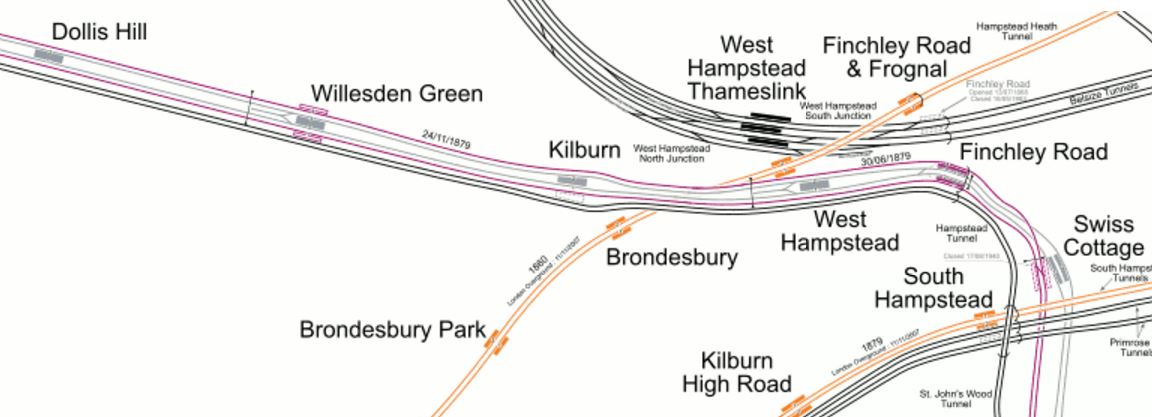
West Hampstead Lines
From North to South the stations and lines are.
- West Hampstead Thameslink station is electrified to 25 KVAC and Midland Main Line services, Thameslink services and freight services between the Gospel Oak to Barking Line and the Dudding Hill Line go through.
- West Hampstead station is electrified to 25 KVAC and North London Line services go through.
- West Hampstead tube station is electrified to 630 VDC and Jubilee Line services go through.
- The Metropolitan Line passes to the south of the tube station. There are no platforms.
- The Chiltern Lines are the Southernmost lines and are not electrified. There are no platforms.
The layout of the Chiltern Lines from Marylebone to Neasden may be uncomplicated, but West Hampstead is a lot of railway to sort.
It might be easy to add platforms for the Metropolitan Lines and Chiltern, but given the narrow pavements and large amount of traffic in the area, creating a new West Hampstead Interchange won’t be easy.
The Wrong Kind Of Electrification?
If the Chiltern Line is to be electrified, it is very much entwined with the London Underground.
- From Marylebone to Neasden the Chiltern Lines follow London Underground’s Jubilee and Metropolitan Lines, which have London’s 630 VDC fourth-rail electrification.
- After Neasden, Chiltern trains on the Aylesbury Line actually run on electrified London Underground tracks between Harrow-on-the Hill and Amersham..
- Between South Ruislip and West Ruislip stations the Chiltern Lines run alongside the Central Line.
- According to Wikipedia, London Underground are updating their fourth-rail electrification to deliver the standard 750 VDC commonly used by third-rail electrification in the UK.
Given that a major cost of electrification is getting power to the electrification, I just wonder if any electrification of the Chiltern Lines would piggy-back off the London ~Underground in London and off the 25 KVAC systems around Birmingham and the East-West Rail Link.
The sections that would not be electrified, would be handled by IPEMUs working from their on-line energy storage.
As Digby said to Dan Dare, “It’s not very pretty! But it works!”
I can’t believe that engineers working on the development of Chiltern Railways are not looking at the possibility of using some of the infrastructure, London Underground has already installed.
Bombardier are already building some dual-voltage Class 710 trains for the London Overground, so rolling stock won’t be a problem.
Wembley Stadium Station To Sudbury Hill Harrow Station
This Google Map shows the line Chiltern Main Line between Wembley Stadium to Sudbury Hill Harrow stations.
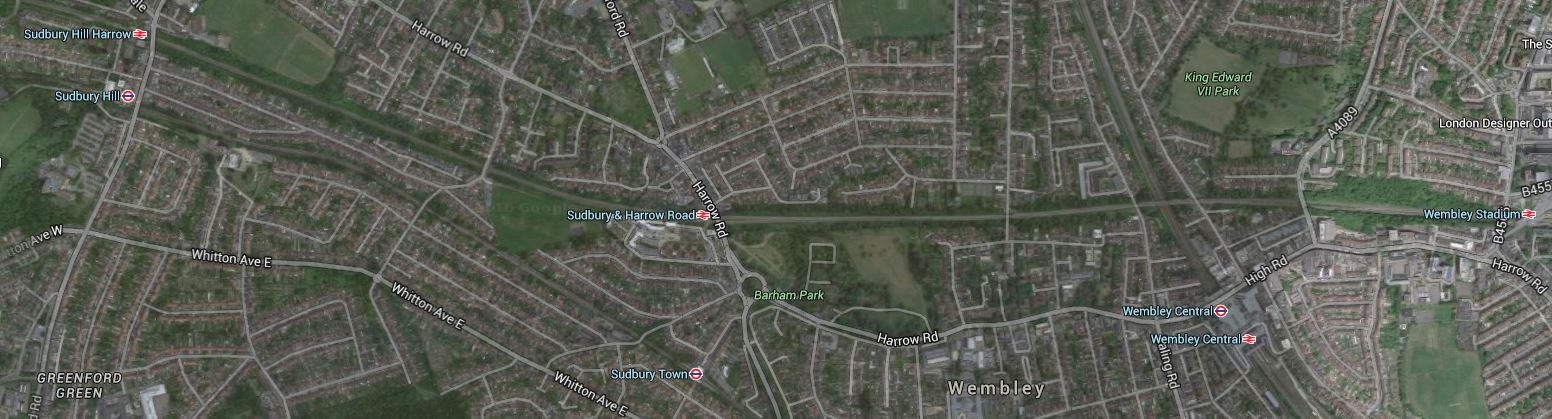
Wembley Stadium Station To Sudbury Hill Harrow Station
The only station in the middle is Sudbury & Harrow Road.
The line in this section is very reminiscent of the Gospel Oak to Barking Line and it shows as a green scar on the map.
This map from carto.metro.free.fr shows the same area.
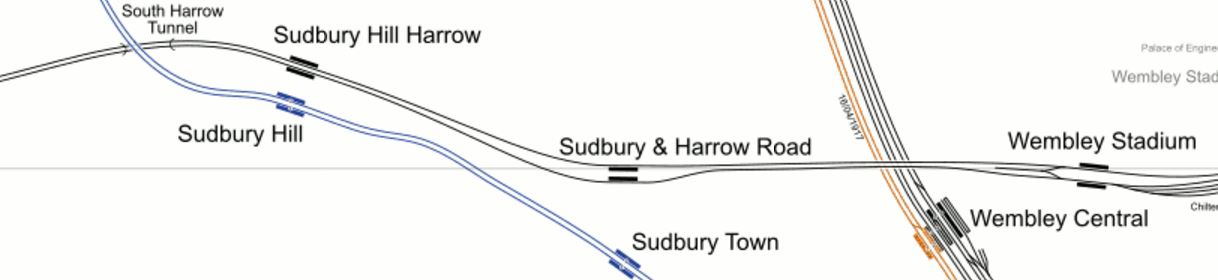
Chiltern Main Line Through Wembley And Harrow
These are some pictures I took of the line.
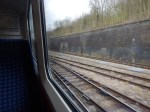
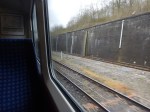

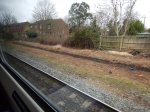
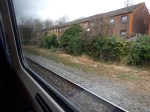
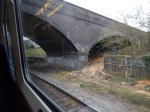
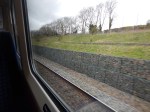
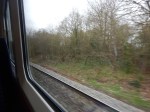
If it were to be decided to electrify this part of the line, I suspect it would no more difficult than the Gospel Oak to Barking Line.
Electrification Or Passing Loops?
Some stations like Sudbury Hill Harrow and Wembley Stadium are down to have passing loops to allow faster trains to overtake stopping ones.
But as the line is likely to be run by electric trains, does their superior braking and acceleration mean that at some stations, the need for passing loops is avoided.
Obviously, Chiltern and Network Rail have done extensive calculations and optimised the number of passing loops against the trains that will be run on the line.
Trains with an IPEMU capability, which includes regenerative braking, may also reduce the need for passing loops.
Wembley Stadium Station
Wembley Stadium station is planned to be the first station on the Chiltern Metro, although others think that the first station should be West Hampstead.
This Google Map shows the station.
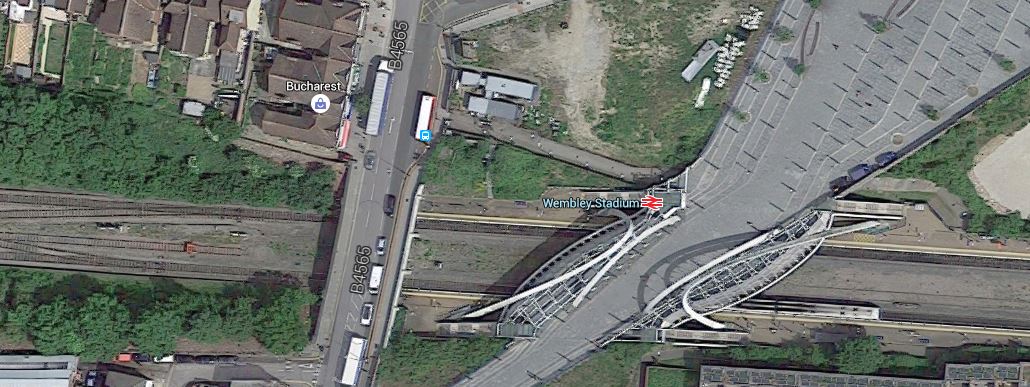
Wembley Stadium Station
Note.
- There is a large space between the two platforms and lines in the station.
- There is certainly enough to create one or two passing loops, so that fast trains can pass trains calling at the station.
- The station has probably been designed for twelve-car trains.
- There would be no need to electrify through the station.
I took these pictures as my train went through today.


It certainly is a wide space in the middle.
Sudbury And Harrow Road Station
Sudbury And Harrow Road Station is not a very busy station and my train didn’t stop. I also didn’t get any pictures.
This Google Map shows the rather cramped layout of the station, squeezed between the two lines.
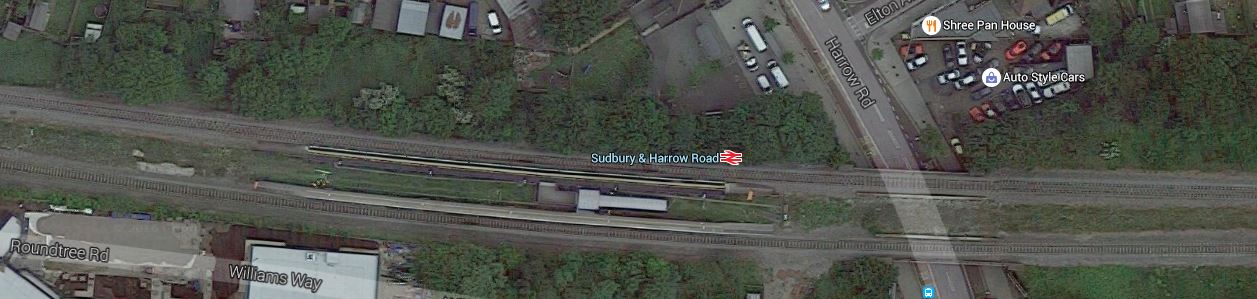
Sudbury And Harrow Road Station
Note.
- The station in an island layout.
- The platforms could be lengthened for the Metro.
- A passing loop could be squeezed through if possible.
- Electrification would probably be possible if required.
Hopefully the changes would attract more passengers to this station.
I visited this station once before and wrote about it in The Station With The Least Passengers In London.
Sudbury Hill Harrow Station
Sudbury Hill Harrow Station is a basic station.
This Google Map shows the layout of the station and the area around it.
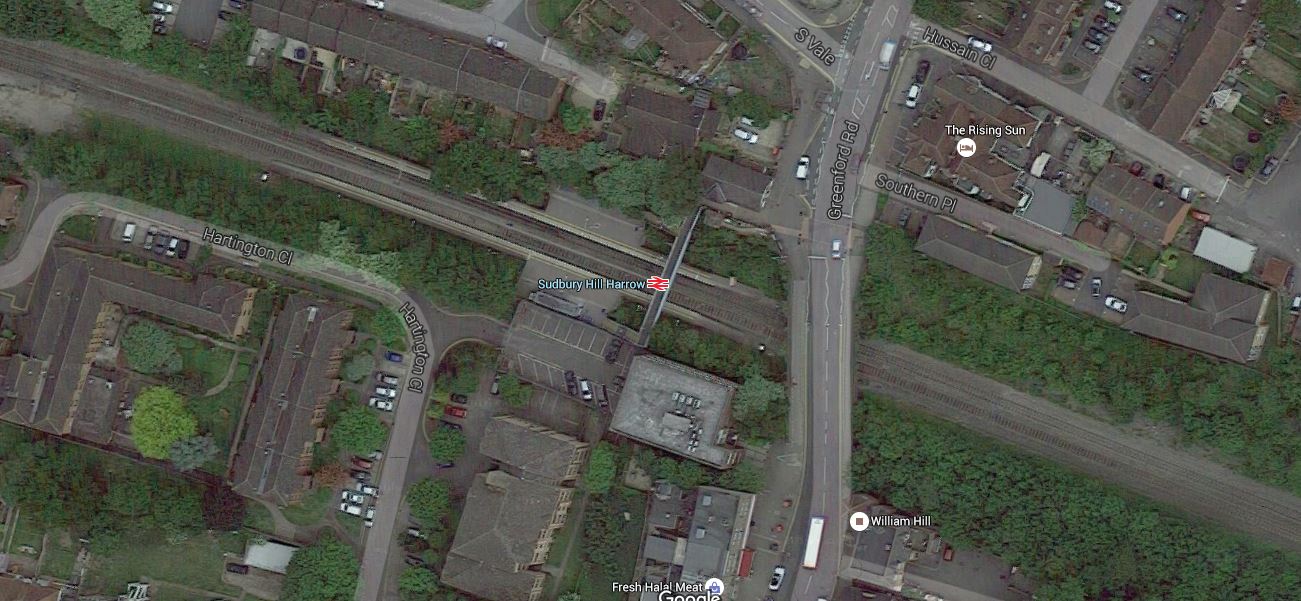
Sudbury Hill Harrow Station
I took these pictures as I passed through today.
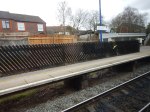
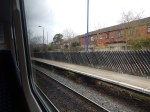
This station is down for platform lengthening and the addition of passing loops, so I suspect this will mean a complete rebuild.
This could be tricky, as the line is a main line with nine trains an hour in both directions.
But there would appear to be space to the East of the road bridge and if the station was to be rebuilt provision could be made for electrification.
Northolt Park Station
Northolt Park Station is another basic station.
This Google Map shows the station.
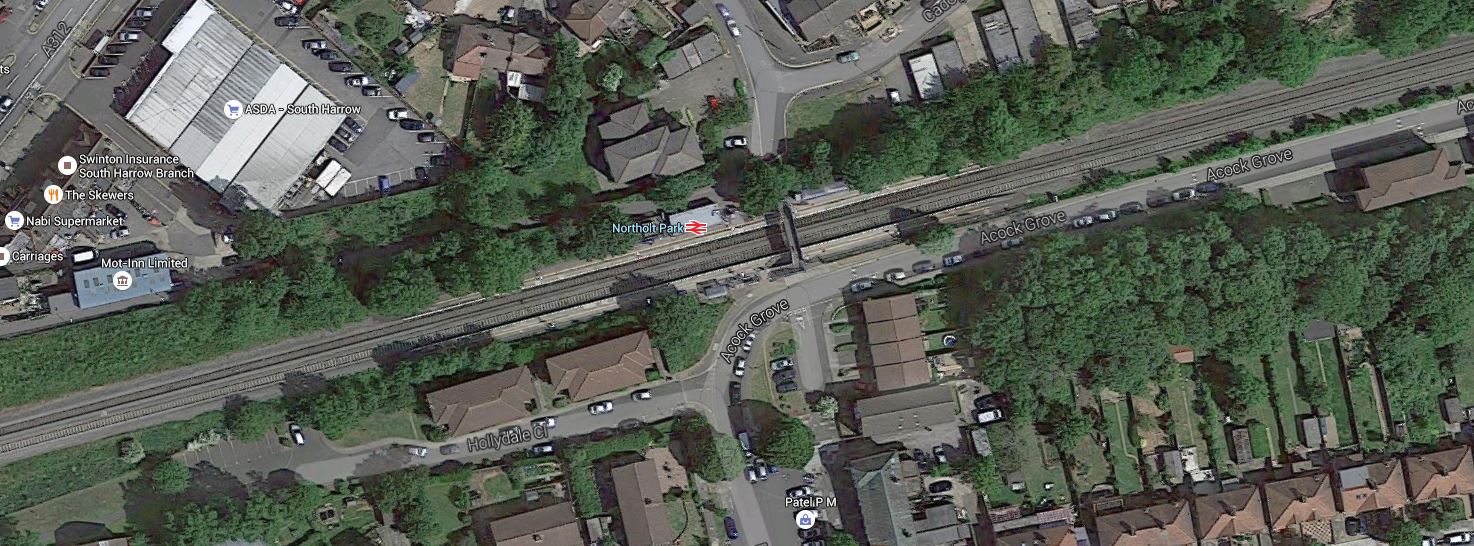
Northolt Park Station
I took these pictures today.
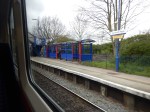
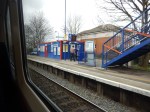
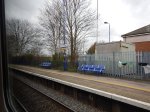
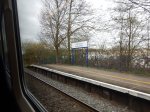
This station is another one, that is down for lengthened platforms. But it will be tight and there is no place for passing loops.
Northolt Junction
Northolt Junction is where the Chiltern Main Line meets the Acton-Northolt Line to form the Great Western and Great Central Joint Line, that goes on to High Wycombe and eentually Birmingham.
This Google Map shows the junction.
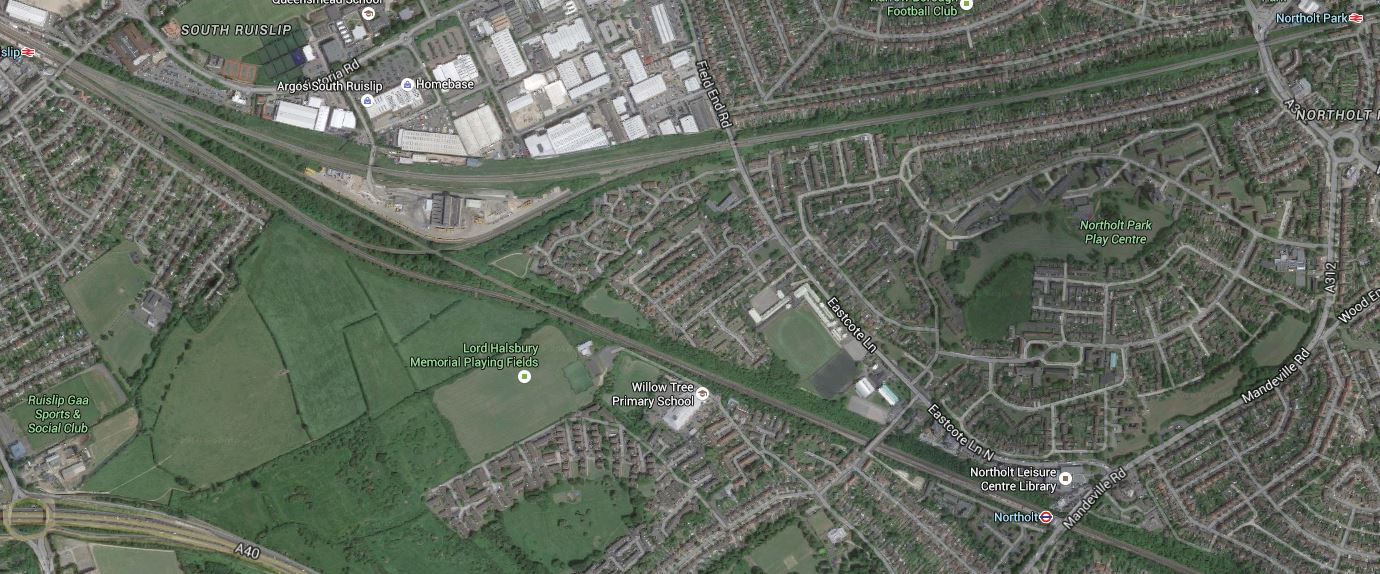
Northolt Junction
Note the waste recycling plant in the middle of the junction.
This map from carto.metro.free.fr shows the lines in the area.
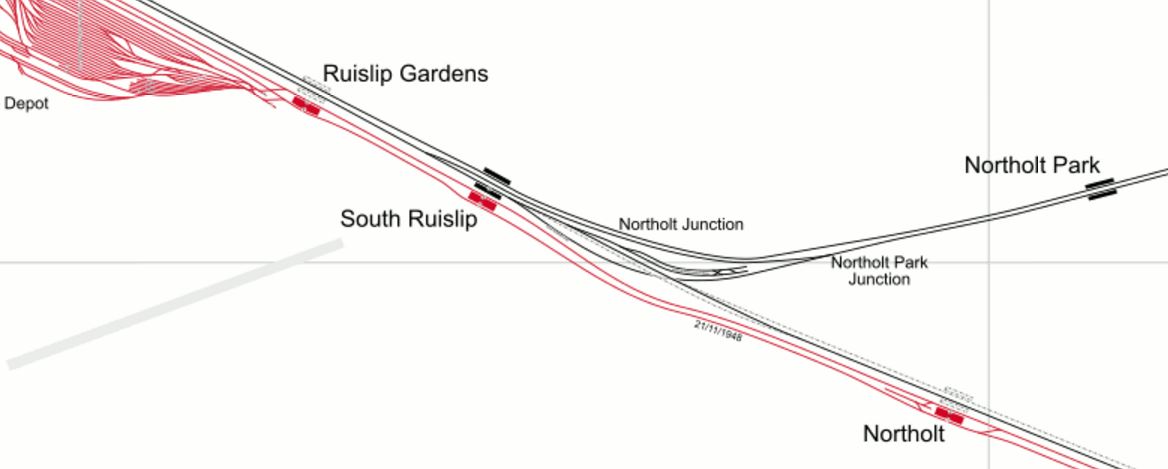
Northolt Junction
Note the large Ruislip Depot for the Central Line.
These are pictures, I took from the Chiltern train.

It’s certainly all rather cramped in the middle of the junction.
South Ruislip Station
South Ruislip Station is an interchange with the Central Line, located to the West of Northolt Junction.
I only managed one quick picture as my train rushed past.
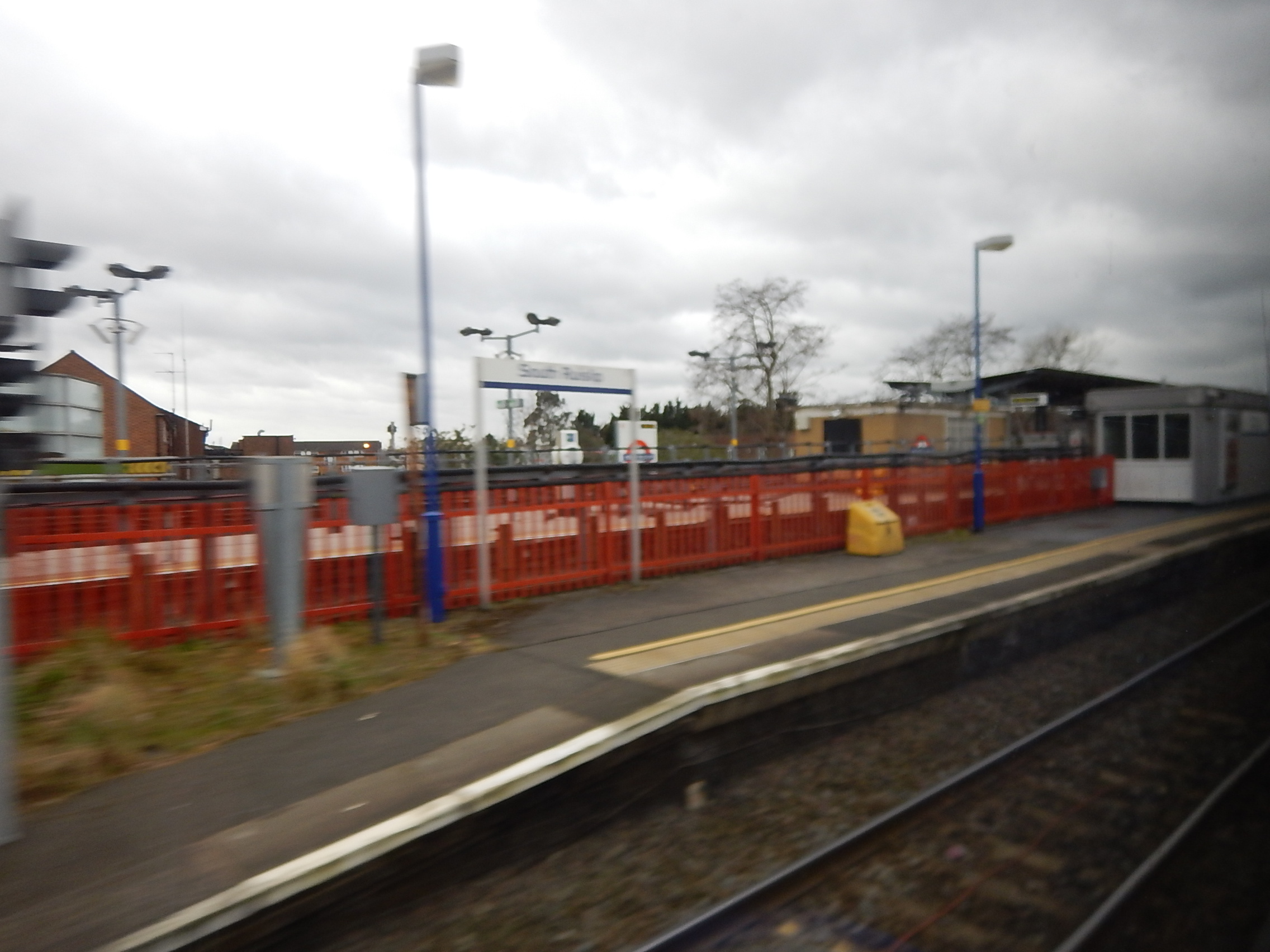
South Ruislip Station
This Google Map shows the station and the surrounding area.
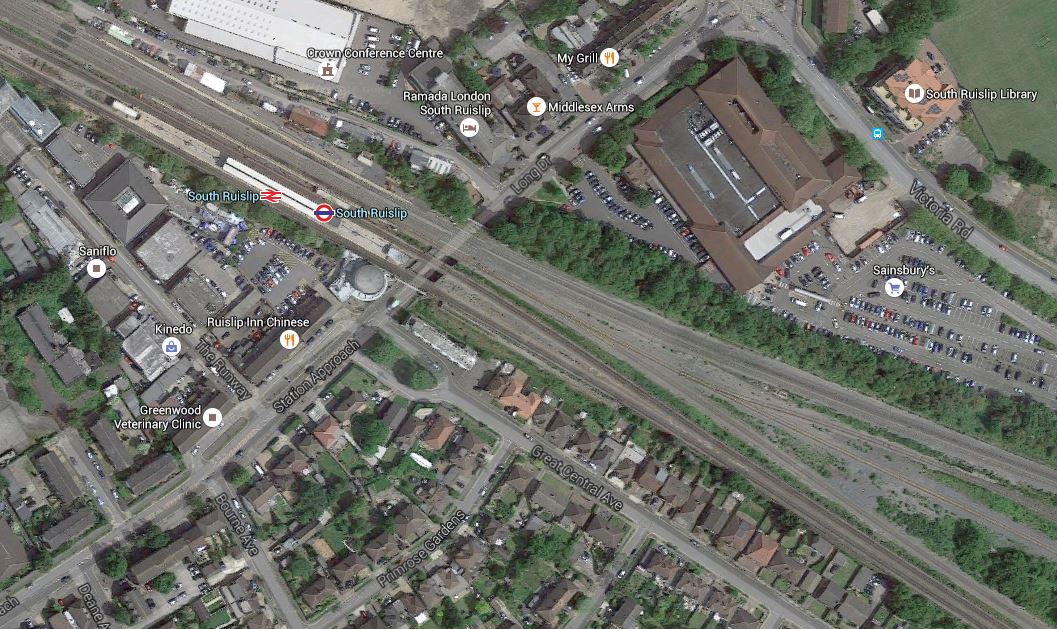
South Ruislip Station
Note.
- Going East the lines divide here, with the Northern tracks going to Marylebone and the Southern ones going to Paddington, alongside the Central Line.
- The platforms at South Ruislip station will be lengthened for the Chiltern Metro.
- The heavy rail lines through here will be four-tracked and there is certainly space for that.
Given that the Acton-Northolt Line leads from here to an electrified Paddington and Old Oak Common, there could be pressure to fully electrify through South Ruislip. If that were to be decided, I can’t see that being a difficult task compared to some in the UK.
West Ruislip Station
West Ruislip Station has been proposed as the outer terminus of the Chiltern Metro.
This Google Map shows the station and the surrounding area.
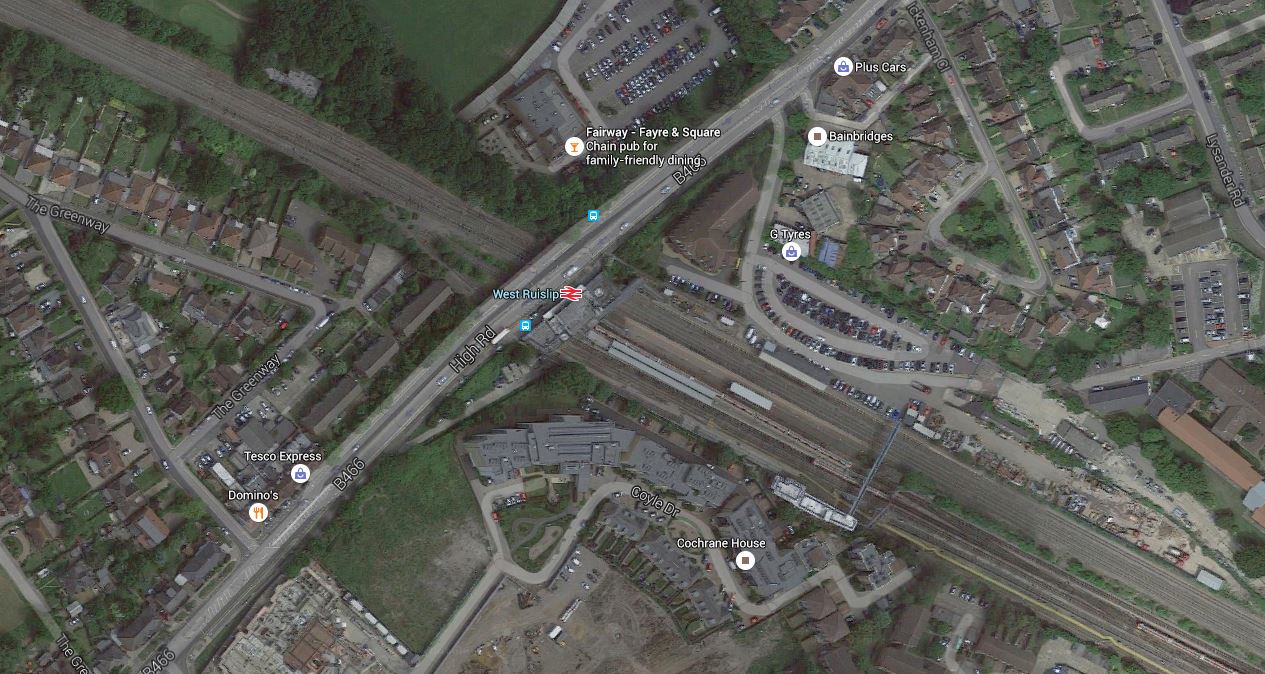
West Ruislip Station
These are pictures I took of the station.
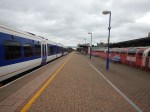
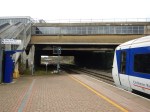
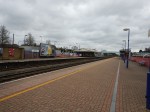
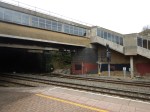
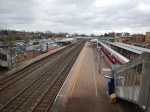
Note.
- A turnback facility is needed and this would probably be a siding on the West side of the station. It should be no problem to install.
- Platforms need to be lengthened for eight-car trains.
- There is plenty of space for two fast tracks through the centre of the station.
- Electrification if required wouldn’t be a problem.
I changed trains from the Chiltern service to a Central Line train.
Sorting Out Lines At West Ruislip
Before I went to West Ruislip station, I hadn’t realised how many lines pass through the area.
This Google Map shows a wider view of West Ruislip station.
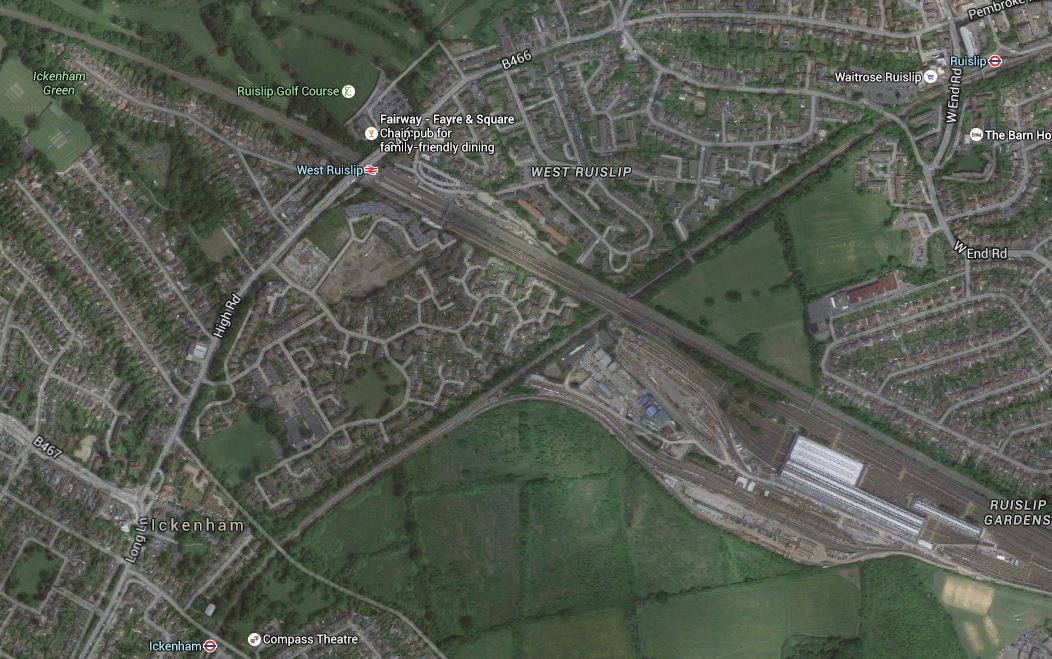
Lines Through West Ruislip
These lines are shown on the map, or connect to these lines within a few stations.
- The Chiltern Main Line opened in 1906 as the Great Western and Great Central Joint Railway.
- The Great Western and Great Central Railway used to run passenger trains to Paddington along the Acton-Northolt Line.
- The Central Line opened in 1948 to Central London.
- The Piccadilly Line crosses to the East of West Ruislip station opened in 1933.
- The Metropolitan Line shares tracks with the Piccadilly Line opened in 1910.
- The Greenford Branch of the Great Western Main Line opened in 1903, joins the Central Line, four stations from West Ruislip station.
It shows how the various private companies went their own way. I’m sure if Borken had been in charge of London all of those years ago, we’d have a better pattern of rail lines in the area.
But some dreamers have plans. I discuss them in the next three sections.
Central Line To Uxbridge
In the Wikipedia entry for West Ruislip station, this is said.
The London Borough of Hillingdon announced in June 2011 that it would be lobbying Transport for London to have the Central line extended from West Ruislip to Uxbridge tube station. Such a project would require a business case approved by TfL and the completion of signal upgrade work on the Metropolitan line.
It is probably a valid aspiration, but could similar connectivity be created by perhaps adding platforms on the Metropolitan/Piccadilly Line, where it passes under the Chiltern Main Line and Central Line to the East of West Ruislip station and connecting everything together with a moving walkway?
If this were to be combined with the desired lengthening of the Chiltern platforms, this could be a worthwhile project, if the numbers add up.
Denham To Uxbridge
In the Wikipedia entry for Chiltern Railways under Active Plans, this is said.
Re-opening the former Great Western Railway branch line to Uxbridge High Street, continuing the route to Heathrow Airport. This would give Birmingham a direct rail link with Britain’s largest airport.
Uxbridge High Street station closed completely in 1964.
I would assume, that this would use the route of the Uxbridge (Vine Street) Branch to get to the Great Western Main Line at West Drayton station, from where it could use either of these routes to get to the Airport.
- Crossrail
- An extension of the Staines and West Drayton Railway
This could be the sort of ambitious plan that appeals to Chiltern.
This is a Google Map of Uxbridge Town Centre.
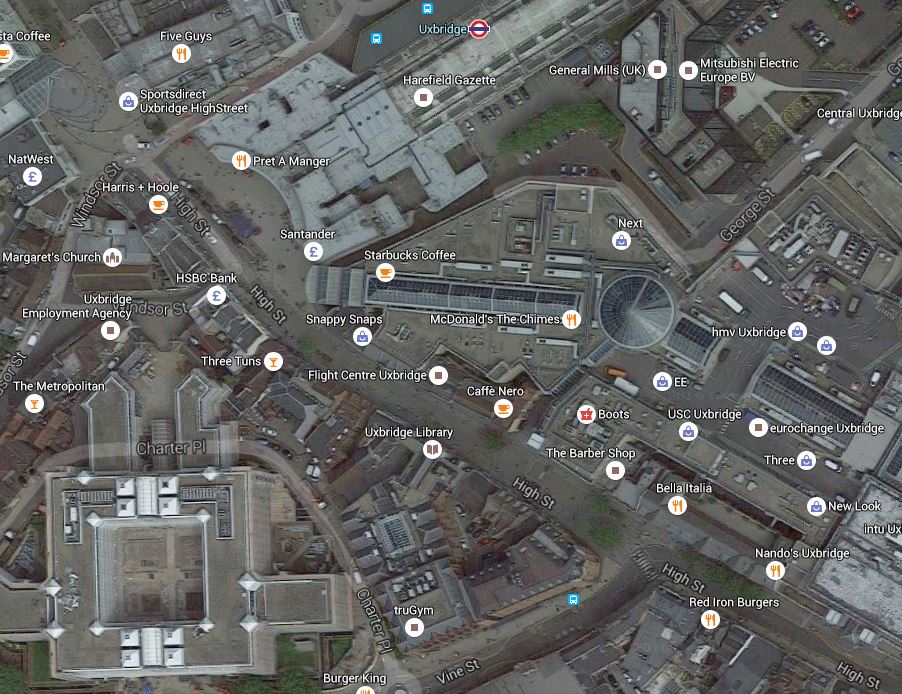
Uxbridge Town Centre
Note Uxbridge Underground station, High Street and Vine Street are all close together.
In Germany, they wouldn’t mess about, but would use a tram-train on the route.
- West Ruislip to Uxbridge as a train on a rebuilt rail line.
- Through Uxbridge Town Centre as a tram.
- Uxbridge to West Drayton and Heathrow as a train on a rebuilt rail line.
Obviously, the route could be adjusted to serve property, leisure and employment hotspots.
Greenford Branch Line
The Greenford Branch Line is like an elderly aunt, who gets forgotten to be asked to family parties, but when she does come, is extremely useful and entertaining, because she can do things, that others can’t.
The Wikipedia entry under Future says this.
In 2017 Crossrail is due to begin using two of the four tracks of the Great Western Main Line and the Greenford service will terminate at West Ealing, rather than continue to Paddington, to obviate interference with Crossrail, and to create track capacity for increased services to Heathrow. In compensation the branch line service will increase from two to four trains per hour. Ealing Council desires to have the line connected to the south west to Clapham Junction via the West London Line, and to the north west to West Ruislip.
I think Ealing Council’s plan is a non-starter, if it envisages trains travelling along the Great Western Main Line.
But look at this map of the rail lines from carto.metro.free.fr.
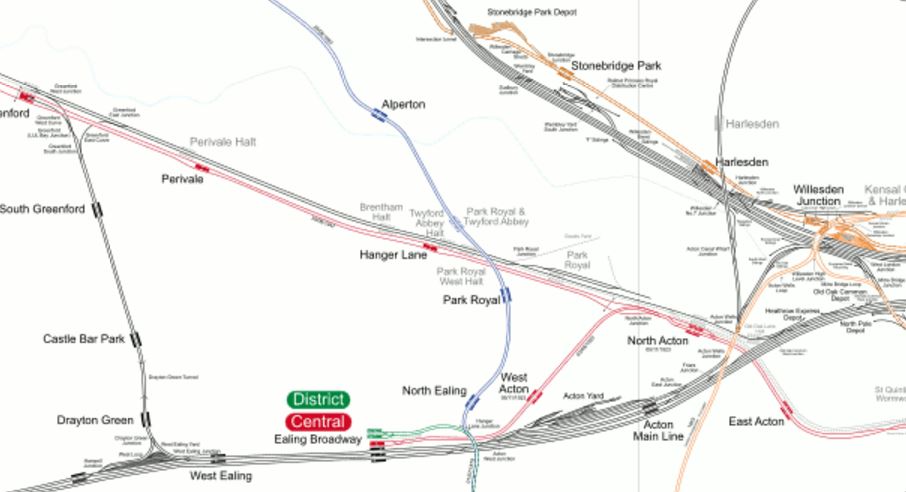
Lines In West London
Note that it would appear that the track layout at Greenford could allow trains to go from the Greenford Branch towards West Ruislip and South Ruislip in the West or North Acton and Old Oak Common in the East.
These are pictures I took of the lines and the junction at Greenford station.


The current Greenford Branch platform would probably be augmented or replaced by platforms on the Acton-Northolt Line.
This Google Map shows the area around Greenford station.
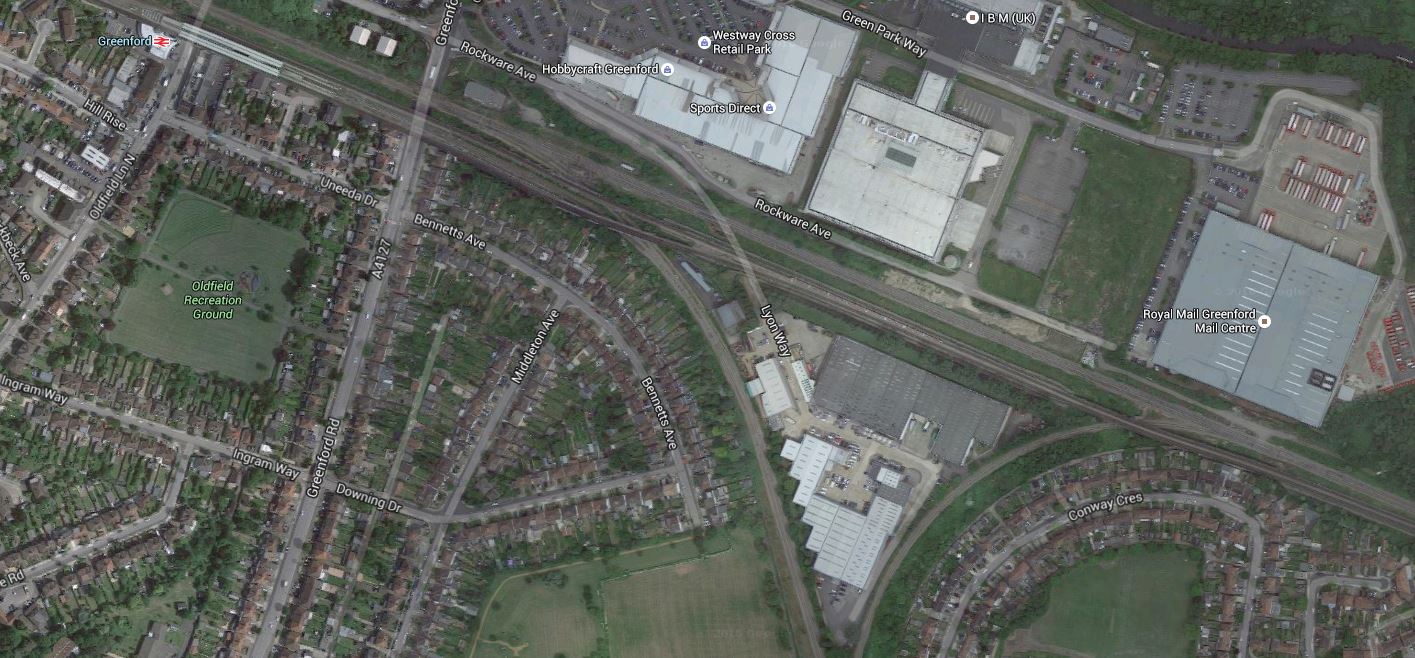
Greenford Station And The Junction To The East
It would appear that parts of the junction have been built on, but it looks like it could easily be made possible for trains to pass in all directions, between the Acton-Northolt Line and the Greenford Branch.
The Greenford Branch is under three miles long and appears to be mainly double-track, but it does have a level crossing close to the Southern end.
I also took some pictures of the bay platform at West Ealing station, that is currently under construction.







I can’t be sure yet, but it does appear that the platform will be electrified.
So what does this say about how the rumoured four trains per hour that work the branch will be powered?
I think there are two possibilities.
- Diesel power as now.
- IPEMUs charged in the bay platform.
Given that one of London Overground’s Class 710 trains with an IPEMU capability and one of Great Western Railway’s Class 165 trains, that currently work the line, could use the same infrastructure, the choice of train would be up to the operator.
One problem that would have to be addressed is the short platforms at Drayton Green, Castle Bar Park and South Greenford.
At least if the branch was not electrified, there would be no wires to get in the way.
Look at this Google Map.
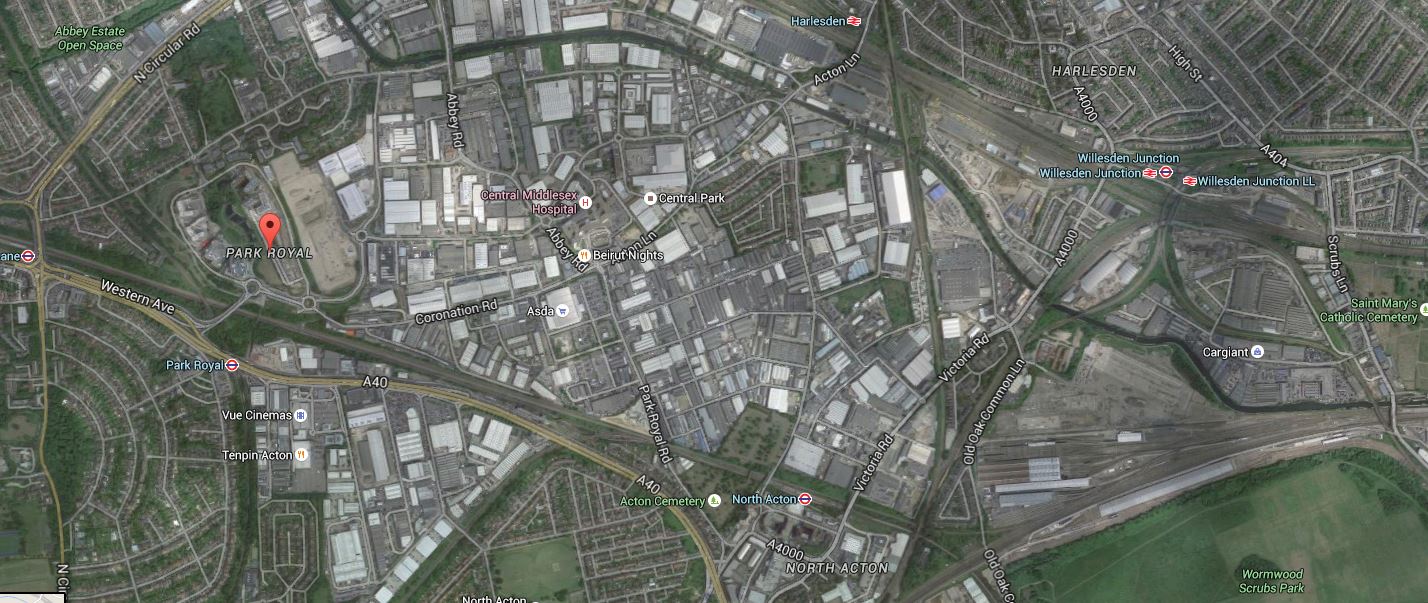
Park Royal To Old Oak Common And Wormwood Scrubs
Note.
- The red arrow points at Park Royal, which at 500 hectares, is the largest business park in London.
- The green area in the East is Wormwood Scrubs, which is one of the largest areas of common land in London.
- North of Wormwood Scrubs is Old Oak Common, which is mainly old railway land, that is being regenerated.
- Old Oak Common station, with connections to HS2, the West Coast Main Line, the Great Western Main Line, North London Line, West London Line, Crossrail and other lines is being created to serve the developments in the area.
Across the South of Park Royal and connecting to Old Oak Common station, runs the Acton-Northolt Line.
If transport planners and railway designers, can’t make a feast of these tasty ingredients, I’d be very surprised.
I said that the choice of rolling stock would be down to the operator.
As Ealing Council would like to see the Greenford Branch go to Clapham Junction, the obvious route is to go via the Acton-Northolt and West London Lines, stopping at appropriate stations en route, like Old Oak Common and possible new ones; South of Park Royal.
This would be a good fit with London Overground services and their four-car Class 710 trains would be ideal for the route.
With the full development of Old Oak Common station, this would not only give access to West Coast Main Line and HS2 services, but also direct access to the North London Line from West Ealing and West Ruislip.
The latter connection would make so many of those journeys across the North of the capital, so much easier and avoid going by the centre.
I think Chiltern too, will make a bid to get into running services on the Greenford Branch and the Acton-Northolt Line, as it would give them a very useful destination in London of Old Oak Common.
These services would also be a good fit with Chiltern’s services and trains.
Conclusion
The Chiltern Metro is certainly possible from an infrastructure point of view.
I also believe that with selective and appropriate electrification, that a 100 mph version of Bombardier’s new Aventra train with an on-board energy storage or IPEMU capability could handle all their services.
My project management and engineering knowledge (Note! Not experience!), also leads me to believe that most of the upgrade to electric trains could be done without too many blockades and disturbance, as much of the line is already to a very high standard with sufficient loading gauge to accept Aventras, when running on the on-board power source.
Just because you want to swap your diesel Mercedes for an electric Tesla of vaguely the same size, it doesn’t mean you have to move house or even build a new garage, as both cars run on the same roads. You just make sure the battery gets charged, rather than fill it up with fossil fuel.
It’s the same if you replace your diesel train with an Aventra IPEMU. Except that in places, you can charge your train as you’re running on any traditionally-electrified line.
The only problem, is to make sure, your trains get enough chances to charge their on-board energy storage devices. But railways have had the organisation of trains to various places down to a fine art for well over a hundred years.
It’s called timetabling!
A Trip To Aylesbury Vale Parkway Station
Aylesbury Vale Parkway station is one of Chiltern Railway’s termini in Buckinghamshire.
It is on the London to Aylesbury Line with services to Marylebone via Amersham, with a journey time of five minutes over the hour.
Plans also exist for the station to be calling point on the proposed service between Marylebone and Milton Keynes. The plans for the station in Wikipedia say this.
East West Rail plans to extend passenger services northwards to Bletchley and Milton Keynes by 2019 using parts of the former Varsity Line. The platform has been built to accommodate a second track if ever implemented, which would create an island platform. At present trains (currently run only as specials onBank Holidays) between Aylesbury and Quainton Road cannot serve Aylesbury Vale as there is no platform on the through route.
The track between Aylesbury and the new station was upgraded to continuous welded rail with a maximum line speed for DMU passenger trains of 60 mph (97 km/h). It is proposed that when services are extended to the north, trains will run via High Wycombe and not Amersham. Trains currently serving the station will thereafter terminate at Aylesbury.
These are some pictures I took of the station.




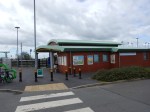
It is just a simple affair with a bus stand, car parks and the usual facilities, that appears will be soon surrounded by houses.
Chiltern Railways And Electrification
Before discussing how services will link up and down the London to Aylesbury Line, I will look at Chiltern Railways and electrification.
Under Developments and Announcements in the Wikipedia Entry for the East West Rail Link, this is said.
On 10 January 2013 Network Rail announced its intention to construct the western section between Bedford and Oxford, Aylesbury and Milton Keynes, as part of their five-year strategic business plan (2014–2019). The target date for train services to be operational on this section is December 2017. Electrification of the line between Oxford and Bedford was also included in the budget and target completion date was March 2017.
So electrification of the East West Rail Link is included in the project, even if the dates in the announcement are very much out of date now.
Given the following facts about the Chiltern Main Line, I believe it is likely that at some point, everybody will look seriously at providing electric trains from Marylebone to Birmingham Snow Hill station.
- The line has a close relationship with the East West Rail Link and other electrified or soon-to-be electrified lines.
- Chiltern finds it difficult to acquire more diesel-powered trains to fulfil their ambitions.
- Chiltern would like to run faster, larger, more efficient and greener electric multiple units.
Under Electrification in the Wikipedia entry for Chiltern Railways, this is said.
No section of the line is electrified, but in 2010 the chairman of Chiltern Railways, Adrian Shooter, indicated that electrification is being considered, though not in the immediate future. He added: “We could do some very interesting things with high-acceleration EMUs and possibly some further infrastructure work.
At some time in the next ten years, we’ll probably see electric trains between Marylebone and Birmingham Snow Hill.
But there will not necessarily be full electrification, as I believe IPEMU technology will change the way electrification is carried out.
Consider as well that the Chiltern Main Line is just one hundred and eighty kilometres long and the current maximum range of an IPEMU is being quoted as about sixty miles or just under a hundred kilometres, so with the following electrification.
- Marylebone and for perhaps twenty miles or so to handle local metro services.
- Birmingham Snow Hill, Birmingham Moor Street and the Snow Hill Lines, where there are local metro services.
- Banbury to Leamington Spa and other places, so that freight trains powered by bi-mode Class 88 locomotives, could use the line efficiently.
The Local lines from Marylebone and the Snow Hill Lines would be electrified using the techniques in A Modern Electrified Metro Network Using IPEMU Technology
IPEMUs would be able to run the full length of the line without the need for full electrification in an environmentally-sensitive area, inhabited by touchy people.
Northward To The East West Rail Link And Milton Keynes
Northward from Aylesbury Vale Parkway station, the Wikipedia entry for East West Rail Link, says that the line will be single track and allow 90 mph working. But as my pictures and a quick gander on Google Maps show, there is quite a bit of space available around the current single track. So as the East West Rail Link seems to be being designed as a double-track 100 mph railway, with full electrification, I think there are three possible options between the East West Rail Link and Aylesbury Vale Parkway and Aylesbury stations.
- Double-track 100 mph with electrification.
- Single-track 90 mph with electrification.
- Single-track 90 mph without electrification.
I think the line will be built with some form of electrification, so that electric trains can run from Aylesbury to Milton Keynes.
The line is also used by some freight trains, so double-track might be a good idea.
Aylesbury To London Via Amersham
Returning from Aylesbury today, I was surprised to see that the train ran from Amersham to Harrow-on-the-Hill on the same tracks as the Metropolitan Line. In fact for sixteen of the thirty-nine miles of the line from Marylebone to Aylesbury Vale Parkway, the line has full London Underground electrification.
Amersham to Aylesbury is about fifteen miles, with the distance between the two Aylesbury station being four miles, which means that Harrow-on-the-Hill to Marylebone is just a few miles.
So if an IPEMU could use the London Underground’s rail-based electrification, starting at Milton Keynes the train would easily arrive at Harrow-on-the-Hill with a full battery, that would take the train to Marylebone and back.
I don’t believe that the technical problems of an IPEMU starting at any station between Aylesbury and Milton Keynes and going to Marylebone and back are insurmountable.
Aylesbury To London Via High Wycombe
This uses the single-track Aylesbury to Princes Risborough Line, which is about a dozen miles long, before running to Marylebone along the Chiltern Main Line, which is another forty miles or so.
So some electrification will be needed.
According to Wikipedia, Chiltern have various plans to improve their network.
- The restoration of the quadruple track between South Ruislip (Northolt Junction) and West Ruislip, allowing trains to call at both stations without blocking the line. Triple track currently exists at West Ruislip, with the up platform loop still in situ, and at South Ruislip, with the Down Main through line also in situ. This would involve the reconstruction of the new down platform at West Ruislip, and the reconstruction of the up platform at South Ruislip. This ‘Chiltern Metro’ service was not programmed into the last round of franchising agreements.
- Restoration of fast through lines at Beaconsfield as part of a longer-term aspiration for a 90-minute journey time between London and Birmingham
- Double-track the line from Princes Risborough to Aylesbury.
- New Chiltern Metro Service that would operate 4+tph for Wembley Stadium, Sudbury & Harrow Road, Sudbury Hill Harrow, Northolt Park, South Ruislip and West Ruislip. This would require a reversing facility at West Ruislip, passing loops at Sudbury Hill Harrow, and a passing loop at Wembley Stadium (part of the old down fast line is in use as a central reversing siding, for stock movements and additionally for 8-car football shuttles to convey passengers to the stadium for events)
Some would also fit well with adding electrification, so I think that enough electrification can be added to allow an IPEMU to go from Aylesbury to Marylebone.
Oxford To London
Given that there will be electrification between Oxford and Bicester Village stations courtesy of the East West Rail Link, IPEMUs could start at Oxford and reach Princes Risborough, from where they used the same methods as Aylesbury and Birmingham services to get to London.
This article on the BBC, which is entitled Cowley line passenger train service planned for Oxford, says this.
Chiltern Railways has revealed plans for a passenger service to run on the Cowley branch in Oxfordshire.
The line, currently only used for freight, would see two new stations on the route at Oxford Science Park and Oxford Business Park.
So if this service goes to London, it would certainly be another job for an IPEMU.
Watford Junction To Amersham And Aylesbury
The Croxley Rail Link has been designed so it can have a link to Amersham. Wikipedia says this about the link.
A further proposal is to use the existing but seldom-used Metropolitan line chord which allows trains to run from Watford towards Amersham via Rickmansworth. In conjunction with the Croxley Rail Link, this route would allow direct services between Watford Junction and Amersham, thus improving local public transport in Hertfordshire and Buckinghamshire.
These are pictures I took, as the train passed the junction of the branch line to Watford.
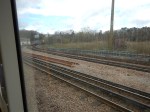
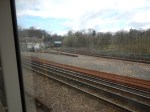
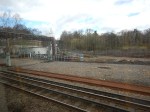
It would certainly be a new use for a substantial piece of infrastructure, but would it do much more than link Amersham to Watford Junction.
Chiltern Trains could run an IPEMU from Watford Junction to Aylesbury Vale Parkway calling at all stations, but as passengers could also get to Aylesbury from Milton Keynes, I wonder if it would be well used.
 The Anonymous Widower