A First Ride In A Nine-Car Class 345 Train
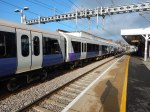
This morning, I had a first ride in a nine-car or full length Class 345 train.
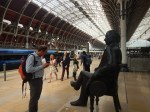
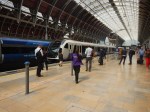
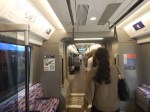


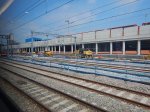
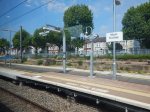

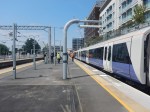
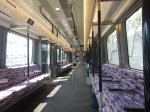
I just took it between Paddington and Hayes & Harlington stations and back again.
The overall impression, is how much longer they seem, than the seven-car version currently working between Liverpool Street and Shenfield.
Transport for London’s New Rail Line
Today, Transport for London have taken over Heathrow Connect, in preparation for the full Crossrail.
The service is now run by TfL Rail, just like the Liverpool Street to Shenfield service in the East of London.
It’s even shown on some of the new Underground maps.
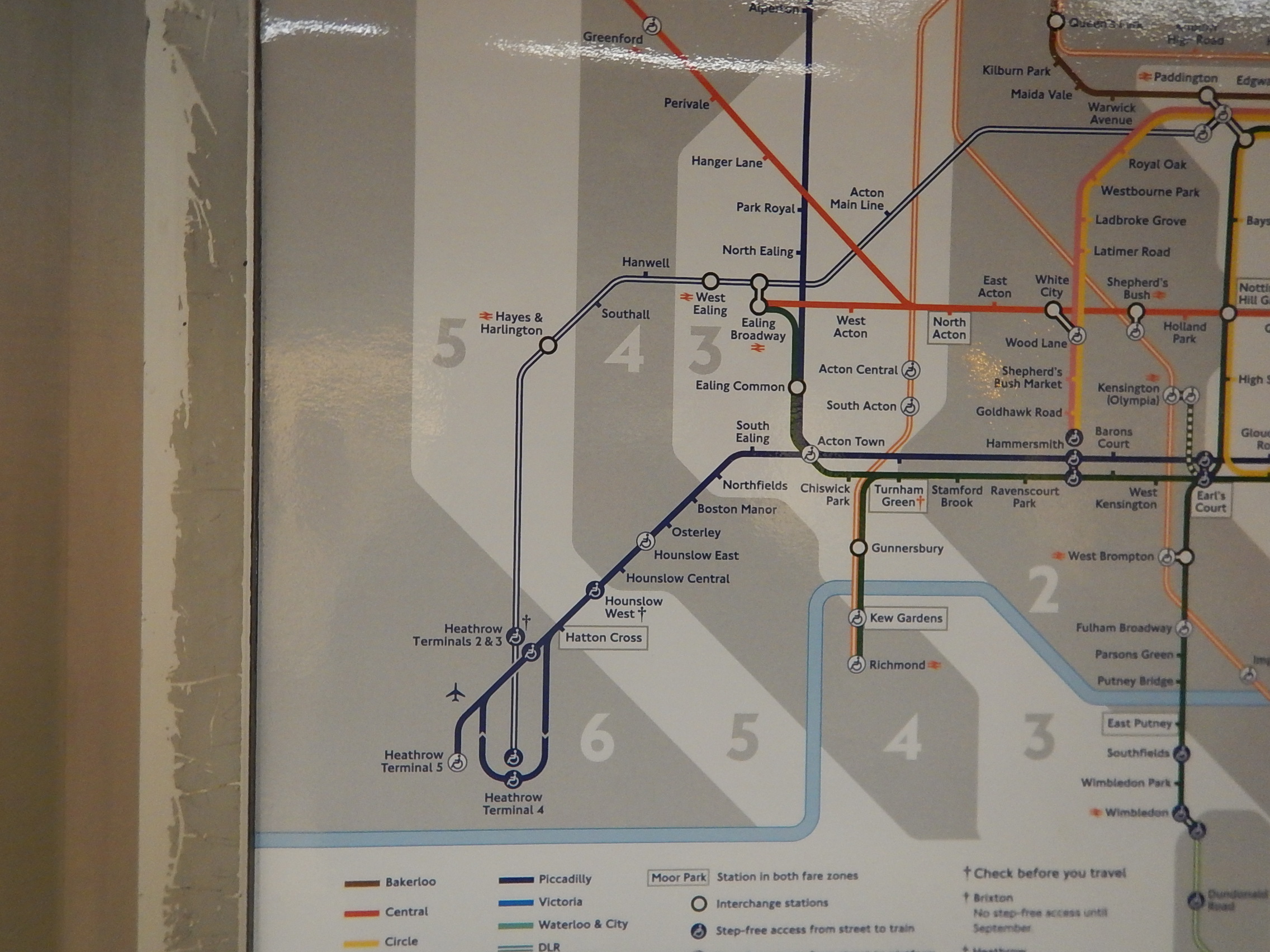
I photographed this map at Kings Cross St. Pancras.
Note the double blue line, which indicates the new route of the former Heathrow Connect, running from Paddington in the top-right corner of the map to Heathrow Terminal 4 towards the bottom-left.
The intermediate stations shown are.
- Acton Main Line
- Ealing Broadway – Change for Central and District Lines.
- West Ealing
- Hanwell
- Southall
- Hayes and Harlington
- Heathrow Terminal 2 & 3 (Heathrow Central) – Change for Piccadilly Line.
Note that TfL use Heathrow Terminal 2 & 3 for the main railway station at Heathrow and Wikipedia uses Heathrow Central.
A Trip To Heathrow From Paddington
This morning, I checked into the new TfL Rail service at Paddington, using my Freedom Pass and took the 09:11 service to Heathrow Airport.
I got out at Heathrow Terminal 2 & 3 station before returning later on another TfL Rail service to Paddington.
I took these pictures on the route.


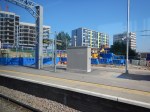
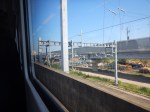
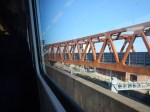

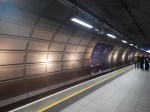
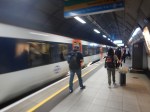

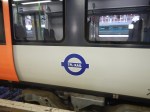
Note that the Class 360 trains are still running on the route, as there are operational issues with Crossrail’s new Class 345 trains in the tunnel to Heathrow.
Contactless Card/Oyster To Heathrow
TfL Rail also accepts contactless card or Oyster on this route.
According to TfL’s Single Fare Finder, the single fare is £10.20 in the Peak and £10.10 in the Off-Peak.
But,I’m not sure about railcards, the affect of capping or the price if you buy the ticket on line.
Freedom Passes To Heathrow
As I’d used my Freedom Pass, the two journeys cost me a big fat nothing!
It won’t be long before the many Freedom Pass holders, will realise, that Heathrow will be in their free travel area by a comfortable train and they will possibly use it more often, than the Piccadilly Line.
TfL Rail Service Frequency
Currently, the frequency between Paddington and Heathrow is two trains per hour (tph).
Provisional service details are shown under Services in the Wikipedia entry for Crossrail, when the line opens fully in December 2019.
- Four tph between Abbey Wood and Heathrow Terminal 4 stations
- Two tph between Abbey Wood and Heathrow Terminal 5 stations
All services will call at the following stations.
- All stations between Abbey Wood and Paddington stations.
- Ealing Broadway station
- Heathrow Terminal 2 & 3 station.
Plans for stopping at Acton Main Line, West Ealing, Hanwell, Southall and Hayes & Harlington stations are yet to be decided.
I suspect that TfL would like all Heathrow trains to stop at all intermediate stations, just as services do between Liverpool Street and Shenfield, in the East of London.
But Great Western Railway may have other ideas!
Speaking for myself, I’d like to see four tph on the TfL Rail route between Paddington and Heathrow, as soon as possible.
The Future Of The Class 360 Trains
When Crossrail sort out the Class 345 trains, the five sets of five-car Class 360 trains will be surplus to requirements.
They will also be joined in the sidings in a couple of years, by twenty-one similar four car trains, that are being replaced with new Class 720 trains, by Greater Anglia.
As they are modern 100 mph trains, they should find a home somewhere!
They could even be exported to Thailand, where a similar fleet operates.
Calculating Kinetic And Potential Energies
I used to be able to do this and convert the units, manually and easily, but now I use web calculators.
Kinetic Energy Calculation
I use this kinetic energy calculator from omni.
Suppose you have a nine-car Crossrail Class 345 train.
- It will weigh 328.40 tonnes, according to my detective work in Weight And Dimensions Of A Class 345 Train.
- There will be 1,500 passengers at 90 Kg. each or 135 tonnes.
- So there is a total weight of 463.4 yonnes.
- The train has a maximum speed of 90 mph.
Put this in the calculator and a full train going at maximum speed has a kinetic energy of 104.184 kWh.
The lithium-ion battery in a typical hybrid bus, like a New Routemaster has a capacity of 75 kWh.
So if a full Class 345 train, were to brake from maximum speed using regenerative braking, the energy generated by the traction motors could be stored in just two bus-sized batteries.
This stored energy can then be used to restart the train or power it iin an emergency.
Out of curiosity, these figures apply to an Inter City 125.
- Locomotive weight – 2 x 70.25 tonnes
- Carriage weight – 8 x 34 tonnes.
- Train weight – 412.5 tonnes
- Passengers – appromiximately 700 = 63 tonnes
- Speed – 125 mph
This gives a kinetic energy of 206.22 kWh
And then there’s Eurostar’s original Class 373 trains.
- Weight- 752 tonnes
- Speed 300 kph
This gives a kinetic energy of 725 kWh.
If a 75 kWh battery were to be put in each of the twenty cars, this would be more than adequate to handle all the regenerative braking energy for the train.
There would probably be enough stored energy in the batteries for a train to extricate itself from the Channel Tunnel in the case of a complete power failure.
Potential Energy Calculation
I use this potential energy calcultor from omni.
Suppose you have the typical cartoon scene, where a ten tonne weight is dropped on a poor mouse from perhaps five metres.
The energy of the weight is just 0.136 kWh.
I’ve used kWhs for the answers as these are easily visualised. One kWh is the energy used by a one-bar electric fire in an hour.
Weight And Dimensions Of A Class 345 Train
If you look at the Wikipedia entry for a Class 345 train, dimensions and weight are rather sketchy.
- Train length is given as 205 metres.
- Train width is given as 2780 milli-metres, with a note saying a citation is needed.
- Train weight is given as less than 350 tonnes.
These would be for a full nine-car train.
This picture shows the identification plate on the end of an MS1 car in the current seven-car train.

These figures can be read.
- MS1 car weight is given as 36.47 tonnes
- MS1 car length is given as 22.50 metres
- MS1 car with is given as 2.78 metres.
- MS1 car seats are given as 52
- Train maximum speed is given as 90 mph
- Train weight is given as 255.46 tonnes.
- Train length is given as 159.74 metres.
- Train width is given as 2.78 metres.
- Train seats are given as 350.
Note.
- It’s all clearly there in white-on-black.
- The Wikipedia figure for car width is correct.
- The Wikipedia figure for maximum speed is correct.
- I was also able to read the plate on a PMS car, which gave a weight of 37.12 tonnes.
So can I deduce the figures for a full nine-car train, which have two extra cars.
I did find this snippet on the Internet which gives the formation of the nine-car trains.
When operating as nine-car trains, the Class 345 trains will have two Driving Motor Standard Opens (DMSO), two Pantograph Motor Standard Opens (PMSO), four Motor Standard Opens (MSO) and one Trailer Standard Open (TSO). They will be formed as DMSO+PMSO+MSO+MSO+TSO+MSO+MSO+PMSO+DMSO.
The snippet has a date of August 13th, 2016, so it could be out of date.
But is compares well with the current seven-car trains which appear to have a formation something like.
- Driver-motor car
- Pantograph car
- Motor car
- Trailer car
- Motor car
- Pantograph car
- Driver-motor car
So to convert from a seven to a nine-car train two motor cars are added.
Nine-Car Train Length
This would appear to be 159.74 + 22.50 +22.50 = 204.74 metres.
That would agree with Wikipedia’s figure of 205 metres.
Nine-Car Train Weight
This would appear to be 255.46 +36.47 + 36.47 = 328.40 tonnes.
That would agree with Wikipedia’s figure of less than 350 tonnes.
Details Of The Driver Motor Car
Once I have these details, I’ll have everything I need.
Underneath A Class 345 Train
I was at Shenfield station on Friday waiting for a train to Rayleigh.
Opposite was a Class 345 train waiting to return to London.
As the lighting was just right, I took a few pictures.
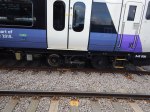
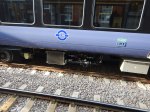
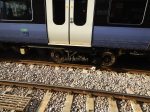
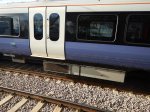
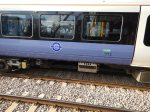
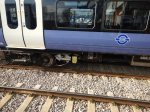
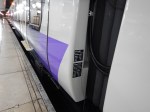
There’s some complicated gear underneath.
Big On The Inside And The Same Size On The Outside
This morning, I took a ride in one of London Overground’s Class 378 trains to Shoreditch High Street station, so that I could have Leon’s version of a Full English Breakfast and a real mug of tea, in their restaurant in Spitalfields. And all for £5.25!
Afterwards, I walked the short distance to Liverpool Street station and took one of Crossrail’s new Class 345 trains to Stratford station.
As the Class 345 train was more or less empty, I was able to take these pictures of the inside.
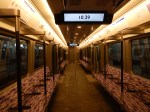
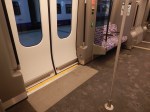

Several design features are noticeable.
- The wide flat floor
- The walk-through design of the train.
- The wide aisle in the centre.
- The seats cantilevered from the side of the train.
- The heating under the seats.
- The spacious lobbies.
- The large windows.
- The way the body sides bulge outwards to create more width at just below shoulder height.
The design seems to create more room for passengers and because of the wide aisle and large windows, the room might even look more spacious than it actually is.
It is certainly a more pleasing train to ride in, than the Class 378 train, I rode ealier, which is very much one of the better trains from the previous generation.
Later I rode on one of Thameslink’s Class 700 trains.
- The lobbies are wide.
- Seats obscure the view, as they are not aligned with the windows.
- The heating takes up space along the side of the train.
But as the sides of the train don’t seem to be so curved, the aisle between the seats seems to be narrower. A lady wheeling a case between the seats would have hit people, if anybody had been sitting in the seats.
I should ride in a full Aventra in the Peak and see if my everybody appears to have more space. I did later!
On the 19th of December, I rode from Romford to Liverpool Street in an Aventra during the morning Peak.
- The train was perhaps three-quarters full.
- For some parts of the journey, all seats were taken, but the standees didn’t seem to have too much trouble standing in the smooth-riding train.
- Only a few were strap-hanging and several were using the backs of seats for support.
It did seem to be a better experuience than other commuter trains.
Others ideas and consequences have emerged in recent months.
Aventras Have Underfloor Heating
The Greater Anglia Class 720 trains have underfloor heating as I detailed in Aventras Have Underfloor Heating.
Underfloor heating would appear to release space for passengers. Especially when it is coupled with seats cantilevered from the sides of the train.
Aventras Have No Doors Between Cars
Tthis article on Global Rail News, which is entitled First look around Greater Anglia’s Bombardier Aventra mock-up, says this.
There will be no doors separating vehicles.
There is just a wide lobby, where the cars are joined together.
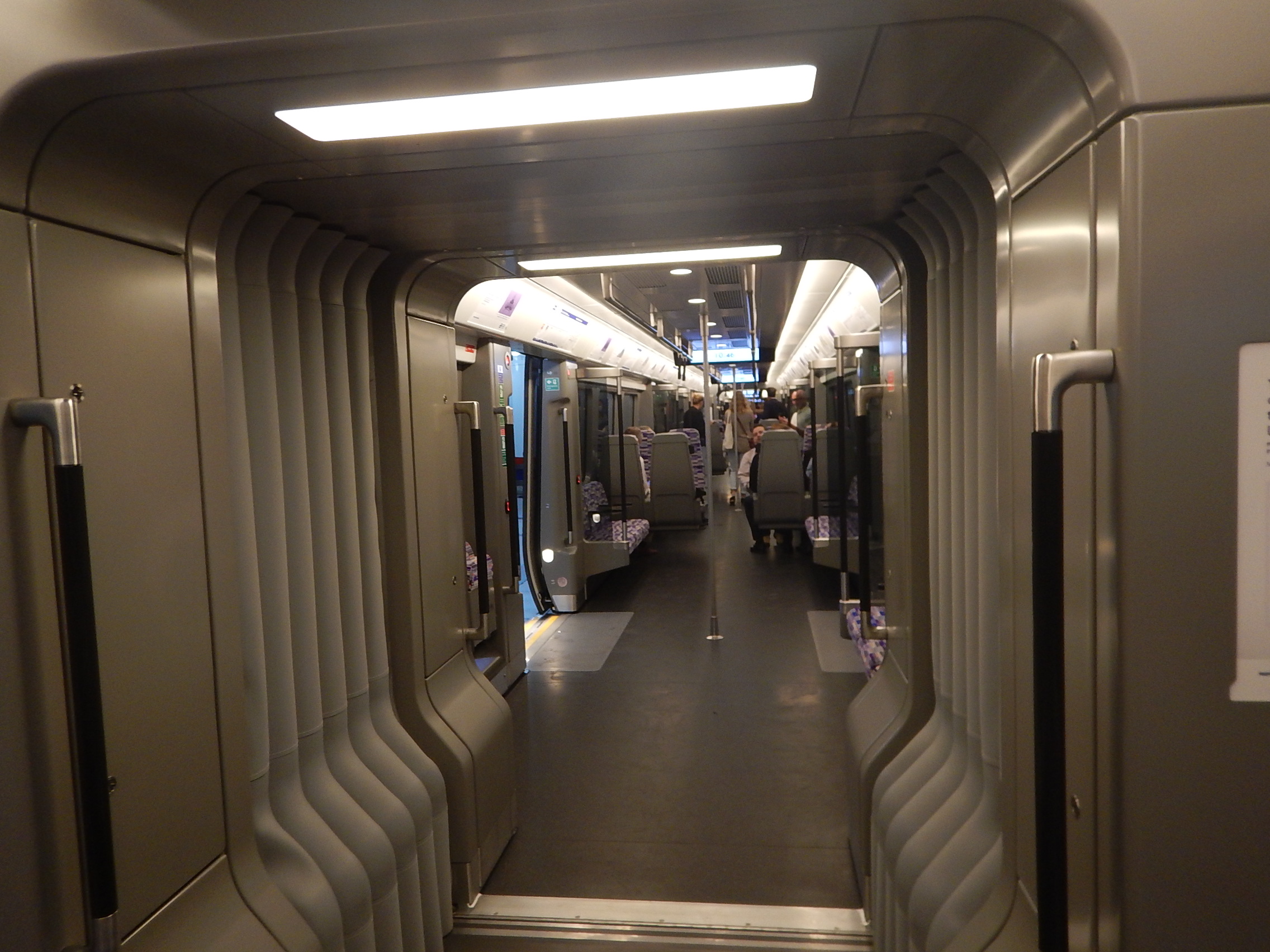
This shows the join in a Class 345 train.
Regularly in busy times on London Overground’s Class 378 trains or London Underground’s S Stock, similar areas are full with people.hanging on to the vertical handles or wheelie cases.
It’s a design that seems to work well and again it makes more space available for passengers.
Aventras Can Have 2+3 Seating
This picture shows the inside of Greater Anglia’s Aventra mockup.
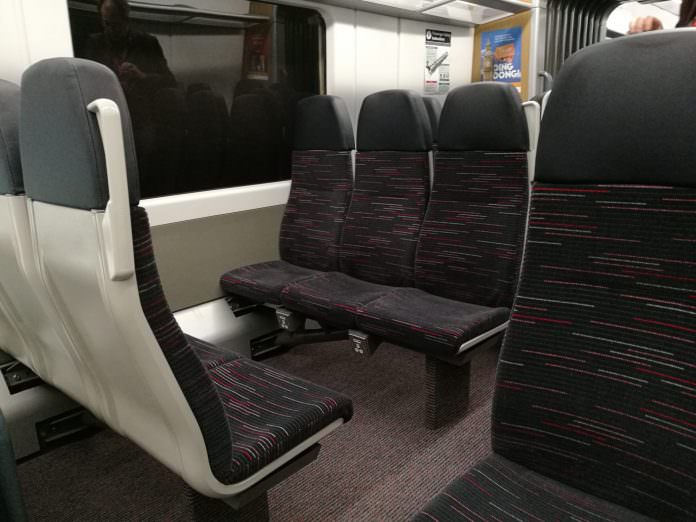
Could the 2+3 seating be wider and more comfortable, as Aventras seem to be wider inside at shoulder height, due to the innovative body design?
Note the power sockets in the front of the seats.
Aventra Car Length And Number of Cars Is Flexible
The first two fleets of Aventras ordered had different length cars and different number of cars.
Orders have now been placed for trains with twenty and twenty-two metre length cars and three, four, five, seven, nine and ten cars.
It also seems that it is very simple to change train length by adding and removing cars as required.
Greater Anglia
Greater Anglia have stated that they are ordering ten-car Aventras with similar train lengths to twelve-car sets of their current rolling stock.
Lengths and passenger capacity are given as follows in Wikipedia.
- Ten-car Class 720 – 243 metres – 1,145 seats
- Twelve-car Class 321 – 239.4 metres – 927 seats
- Twelve-car Class 360 – 244.08 metres – 840 seats
This looks like an over thirty percent increase in seats in a train around the same length, with the following advantages
- Little if any expensive platform extensions. Especially at Liverpool Street station.
- Trains will fit existing depots and sidings.
- Nearly all trains will be fixed formations.
The only disadvantage is that Greater Anglia won’t be providing any First Class seats. Judging by the lack of complaints, few seem to be bothered.
But being less complicated, it would probably be a more affordable train to run and maintain.
In this Greater Anglia example, another factor helps.
The Aventra will only have two cabs, whereas three Class 321 or Class 360 trains will have six.So the length released by four cabs is available for passengers.
c2c
It would appear that the c2c order, where ten-car Aventras replace twelve-car Electrostars, is another application of the same philosophy, that was used by Greater Anglia.
This is an extract from c2c’s Press Release.
The Aventra is one of the fastest-selling trains in the UK rail industry, and these new trains will be manufactured at Bombardier’s factory in Derby. Each new train, which will operate in a fixed set of 10-carriages, will include over 900 seats, plus air-conditioning, wifi, plug sockets and three toilets onboard. Each new carriage is larger and contains more seats than on c2c’s current trains, so each 10-carriage new train provides capacity for 15% more passengers onboard compared to a current 12-carriage c2c train.
So three x four-car trains working as a twelve-car train are replaced by one ten-car train, just as with Greater Anglia. Note the claimed fifteen percent capacity increase!
West Midlands Trains
West Midlands Trains have ordered three sets of Aventras.
- 16 x five-car 110 mph trains for long-distance services.
- 29 x five-car 110 mph trains for electrified suburban services.
- 36 x three car 90 mph trains for Redditch to Lichfield Trent Valley.
Consider.
- Fleet 1 will probably be used to augment the Class 350 trains in pairs on long distance services.
- Could these work in pairs that split and join en route to save paths into Euston?
- Fleet 3 will be direct replacements for the Class 323 trains and will probably work in pairs.
- Would a five-car train have a similar capacity to two three-car trains working as a pair?
- Would some of the five-car trains in Fleet 2 be fitted with diesel powere-packs or batteries, so they could run services on lines without electrification?
West Midlands Trains must have a plan, or there will be a large number of trains sitting in sidings.
Conclusion
It looks to me like Bombardier have designed a train, where more passengers can be accommodated, without sacrificing passenger comfort.
How Much Energy Does A Crossrail Class 345 Train Use?
I will start with the Crossrail Rolling Stock Technical Fact Sheet, which dates from 2012.
The Class 345 trains were built to this specification.
This is said about the power required.
Energy efficiency of 24 KWh per train kilometre (equivalent of 55g CO2 per passenger kilometre)
So what does this mean now that trains are running and trains will have been designed and probably accepted to this specification.
Assuming, that trains will be nine-car when completed, 24 KWh per train per kilometre translates into 2.67 KWh per car per kiometre or 3.29 KWh per car per mile.
Ian Walmsley’s Train Energy Usage Figure
In an article in the October 2017 Edition of Modern Railways, which is entitled Celling England By The Pound, Ian Walmsley says this in relation to trains running on the Uckfield Branch.
A modern EMU needs between 3 and 5 kWh per vehicle mile for this sort of service.
My calculated value is in line with this figure, as the Uckfield Branch is not that different to some of the Crossrail branches.
What Is The Kinetic Energy Of A Crossrail Train?
I ask this question to show the energy values involved.
If I take a nine-car Class 345 train, this has a mass of less than 350 tonnes and a maximum speed of 145 kph.
1500 passengers at 80 kg each works out at another 120 tonnes.
So for this crude estimate I’ll use 450 tonnes for the mass of a loaded train.
This gives the train an energy of 365 megajoules or 101 KWh.
This amount of energy is only a couple of KWh larger than the largest battery size of a Tessla Model S car.
It leads to the conclusion, that batteries could be large enough to store the regenerative energy generated by the train, when it stops.
How Far Could A Crossrail Train Run On Batteries?
If the batteries were sized for the regenerative braking, then a battery of 100 KWh would probably be sufficient in most circumstances.
Using Crossrail’s figure of 24 KWh per train per kiometre, gives a convenient range of four kilometres, which is probably in excess of the largest distance between stations.
But Crossrail trains are effectively two half-trains with two pantographs.
So perhaps they will be fitted with two batteries!
The battery capacity would be arranged to give the desired amount of emergency power.
Conclusion
There’s a lot more to learn about these Crossrail trains.
Will Crossrail Go Up The West Coast Main Line?
This report on the BBC from August 2014, is entitled Crossrail Extension To Hertfordshire Being Considered.
This is the opening paragraph.
Proposals to extend Crossrail to Hertfordshire are being considered by the government, Transport Secretary Patrick McLoughlin has announced.
But then in August 2016, the proposal was cancelled as being poor value for money.
The Wikipedia entry for Crossrail has a section called To the West Coast Main Line, under Extensions.
This is said.
Network Rail’s July 2011 London & South East Route Utilisation Strategy (RUS) recommended diverting West Coast Main Line (WCML) services from stations between London and Milton Keynes Central away from Euston, to Crossrail via Old Oak Common, to free up capacity at Euston for High Speed 2. This would provide a direct service from the WCML to the Shenfield, Canary Wharf and Abbey Wood, release London Underground capacity at Euston, make better use of Crossrail’s capacity west of Paddington, and improve access to Heathrow Airport from the north. Under this scheme, all Crossrail trains would continue west of Paddington, instead of some of them terminating there. They would serve Heathrow Airport (10 tph), stations to Maidenhead and Reading (6 tph), and stations to Milton Keynes Central (8 tph)
That sounds all very sensible. So why was the scheme cancelled?
I will look at various factors to see if I can get an idea!
Was It Just Bad Value For Money?
Wikipedia says this.
This proposal was shelved in August 2016 due to “poor overall value for money to the taxpayer”
But it was BC (Before Covid)!
Current Local Services To Milton Keynes
London Midland currently runs five trains per hour (tph) between Euston and Milton Keynes Central stations using Class 350 trains capable of 110 mph.
The new operator; West Midlands Trains will replace these trains with 110 mph Aventras.
Note that both these trains have to be capable of running at 110 mph, as this is necessary for efficient operation of the West Coast Main Line.
Crossrail Local Services To Milton Keynes
Crossrail’s Class 345 trains are only capable of 90 mph running, but then again, West Midlands Trains will have Aventras capable of 110 mph.
So for a start, the current Crossrail trains would be unable to work services to Milton Keynes in an efficient manner.
I would estimate around twenty trains would have to be updated for 110 mph running to provide eight tph.
An Upgrade Of Milton Keynes Central Station
With a fast eight tph running to and from Central London, the nature of the train services at Milton Keynes would change dramatically.
How many of Virgin’s passengers to and from the North would prefer to change to a local train at Milton Keynes, rather than lug heavy baggage on the Underground?
HS2 would have an unexpected competitor.
ERTMS On The West Coast Main Line
Would ERTMS need to be installed on the West Coast Main Line to accommodate al these trains?
This will probably happen soon anyway, but Crossrail to Milton Keynes could bring it forward.
Connecting Crossrail To The West Coast Main Line
Look at this map from carto.map.free.fr, which shows the lines in the Old Oak Common area.
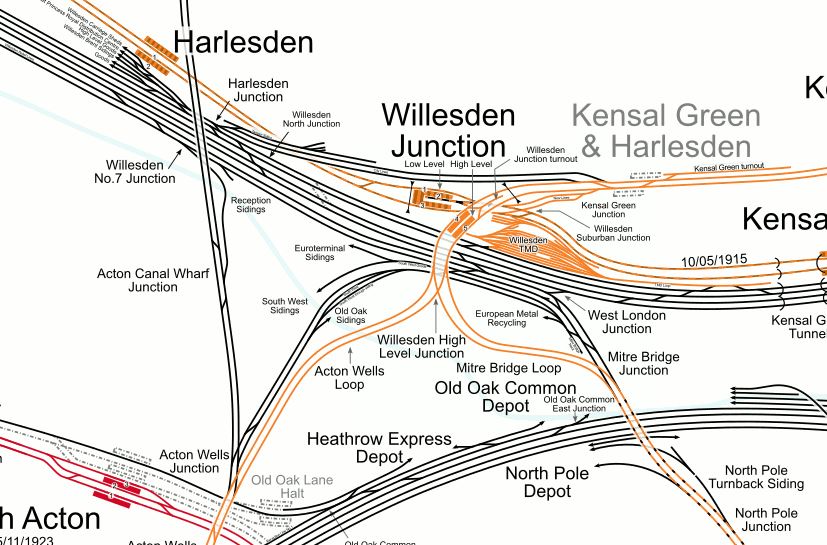
Note.
- The West Coast Main Line is the multi-track railway towards the top of the map.
- The Great Western Main Line is the multi-track railway towards the bottom of the map.
- The Slow Lines on both main lines are on the Northern side of the tracks.
- The Old Oak Common station will be on the Great Western Main Line, just to the West of the North Pole Depot.
This all means that a flyover or a tunnel must be built to connect the two pairs of Slow Lines. It’s not simple!
This Google Map of the area illustrates the problem.
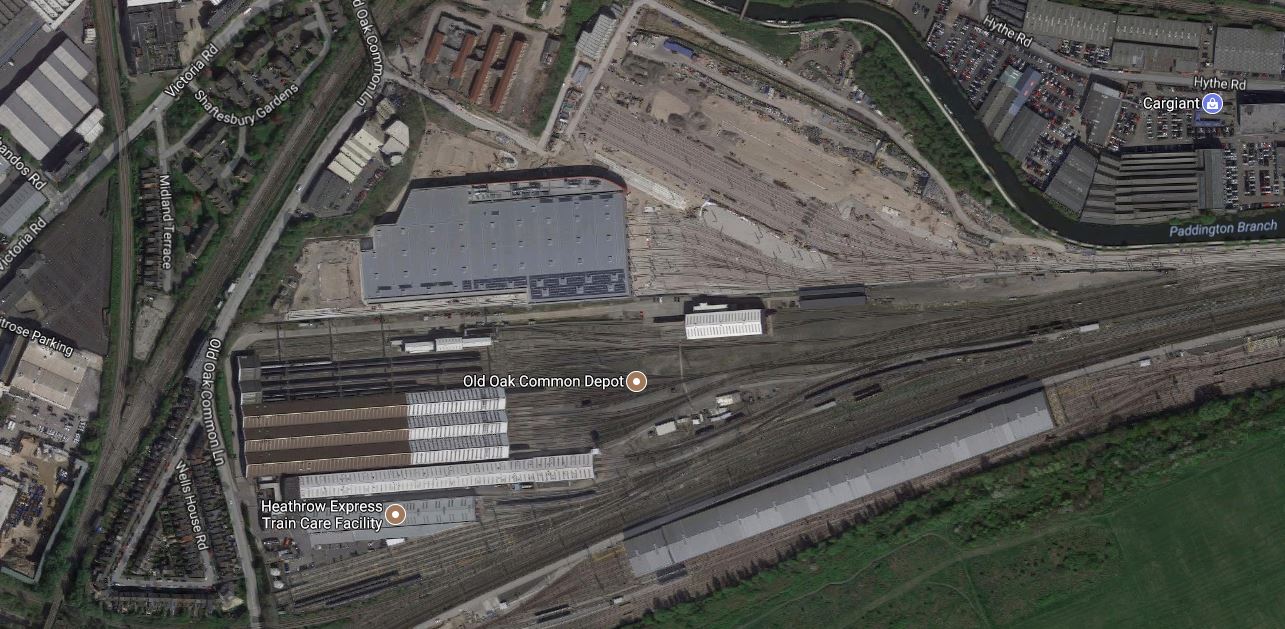
Note.
- The Great Western Main Line going across the bottom of the map.
- The North Pole Depot alongside the Great Western Main Line.
- The Dudding Hill Line and the West London Line at the Western side of the map.
- Crossrail’s newly-built depot is the large grey rectangular building.
- There’s also some housing to the North-West of Crossrail’s Depot
I doubt that a flyover could pass over all that.
But a tunnel starting at the surely soon-to-be-redundant Heathrow Express Depot , that turned North-West would be a possibility.
A tunnel could emerge to the North-West of Harlesden station.
This Google Map shows that area.

Note.
- The silver building in the top-left corner is the Princess Royal Distribution Centre.
- The West Coast Main Line runs diagonally across the map.
- The Dudding Hill Line runs up the Eastern side of the map.
I suspect that space for a tunnel portal can be found.
- Twin tunnels would probably be bored.
- I estimate that they, would need to be just over two kilometres long.
- I suspect too, that they could be built without an additional ventilation shaft in the middle.
Looking at these maps, I’m very much of the opinion, that boring a tunnelled solution, would be possible, but what would be the cost?
The Lee Tunnel in East London is about twice as long and larger in diameter. From the cost of that tunnel, which was opened in 2016, I feel that the two tunnels could be built for just under a billion pounds.
A Tunnel-Free Solution
This Google Map shows Old Oak Common between the Great Western Main Line and the West Coast Main Line.
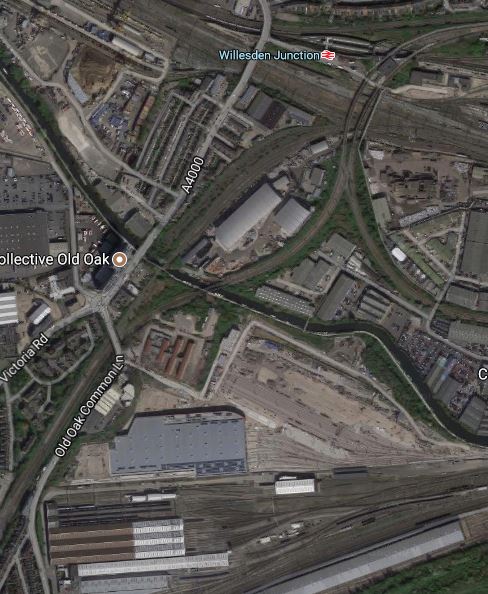
The Crossrail station would be at the bottom just above the North Pole Depot.
I wonder if a line could go through or behind the Heathrow Express site and then follow the North London Line behind the Crossrail Depot to Willesden High Level Junction.
This Google Map shows Willesden High Level Junction and the tracks of the London Overground as they pass over the West Coast Main Line.

I suspect modern three-dimensional design and structural analysis can create a connecting viaduct.
I doubt the track will be much more than a kilometre long and I suspect with the right signalling and a degree of Automatic Train Control, eight tph each way could be handled on a single track.
Conclusion
It looks like updating the Class 345 trains, ERTMS and building a tunnel under Old Oak Common could be a sizeable bill.
Have cost estimates been such, that the project was not deemed to be value for money?
Transport for London Warns Crossrail 2 Could Be Delayed By Decade
The title of this post is the same as that of an article in the Financial Times.
It’s all about funding and probably the Government not wanting to finance all of the large rail projects.
- HS2
- Crossrail 2
- Northern Powerhouse Rail
- East West Rail
HS2 is funded and underway and the last two projects are being sorted, but the cost of Crossrail 2 is too much to digest.
I have believed for some time, that Crossrail 2 is a number of separate projects.
- Increasing capacity on the Waterloo suburban lines
- Increasing capacity on the Lea Valley Lines
- Creation of the mega-station at Euston-St. Pancras
- New trains
- The high capacity central tunnel
I will now look at each in detail.
Increasing Capacity On The Waterloo Suburban Lines
In An Analysis Of Waterloo Suburban Services Proposed To Move To Crossrail 2, I showed that it would be possible to run a service with Crossrail 2’s characteristics terminating in Waterloo.
I said the following were needed.
- More platform capacity in Waterloo.
- Modern high-performance 100 mph trains like Class 707 trains or Aventras.
- Some improvements to track and signals between Waterloo and Wimbledon stations.
- Wimbledon station would only need minor modifications.
- A measure of ATO between Waterloo and Wimbledon stations.
Much of the infrastructure works have been completed as I reported in It’s All Over Now, Waterloo!.
All it needs is Bombardier to build the new Class 701 trains for South Western Railway.
Increasing Capacity On The Lea Valley Lines
In Could A Lea Valley Metro Be Created?, I looked at the possibility of creating a Lea Valley Metro with the following characteristics.
- Four-tracks between Tottenham Hale and Broxbourne stations.
- Step-free stations.
- Termination in the unused loop at Stratford.
- 10-15 trains per hour.
- Links to Crossrail, the Underground and Southeastern Highspeed services at Stratford.
I came to the conclusion it was very much possible.
Creation Of The Mega-Station At Euston-St. Pancras
In Should A Mega-Station Be Created At Kings Cross-St. Pancras-Euston?, I looked at this mega station project for Crossrail 2.
I came to these conclusions.
- If Crossrail 2 is built, there will obviously be a mega station at Euston St. Pancras.
- But I believe that all the other improvements that will happen before HS2 opens may well be enough to cope with the extra capacity needed.
- Obviously though, any improvements must not compromise the building of Crossrail’s mega-station.
In Should A Mega-Station Be Created At Kings Cross-St. Pancras-Euston?, I proposed a four-level mega-station.
- Surface level – National Rail and HS2
- Sub-surface level – Circle, Hammersmith and City and Metropolitan Lines
- Deep level – Northern, Piccadilly and Victoria Lines.
- Very deep level – Crossrail 2
Lines would be connected by escalators, travelators and lifts going all over the place.
It would not be that different to the double-ended Crossrail station at Moorgate-Liverpool Street station, which I described in London’s First Underground Roller Coaster, except that it connects three stations instead of two.
This would enable Crossrail 2 to be bored through at a deeper level after Euston station had been rebuilt for HS2.
In terms of Crossrail 2, the creation of the mega station at Euston St. Pancras could be the last project to be completed.
New Trains
This should be the easy bit, as surely using the same Class 345 trains on Crossrail and Crossrail 2, would be an objective, if it were possible.
The High Capacity Central Tunnel
I’ve never built a tunnel, although my software; Artemis helped to build the Channel Tunnel, but I would suspect that building the central tunnel for Crossrail 2 will be easier than building that for Crossrail.
So many things like riding a bike or sex are a lot easier the second time.
There must be so many lessons from Crossrail that can be applied to Crossrail 2.
If all of the central stations on the tunnel, from Dalston to Wimbledon, where there is interchange with Crossrail 2 can be made tunnel-ready, then I don’t see why boring the central tunnel can’t be one of the last jobs to be started.
The tunnel boring machines would then just pass through the stations to link them all together.
It’s probably not as simple as that, but it is going to be a lot easier job than Crossrail.
The Importance Of The Victoria Line
I’ve never seen this said before, but one of the keys to building Crossrail 2 is the Victoria Line or Dear Old Vicky.
I believe the Victoria Line should be updated as follows to be as near the standard of Crossrail as possible, by using the existing trains, track and signalling and by updating the stations.
- Addition of the missing escalators and other features left out to save money in the 1960s..
- Full step-free access at all stations.
- Addition of new entrances at Oxford Circus, Highbury and Islington and Walthamstow Central.
- Better interchange with the Overground at Blackhorse Road and Walthamstow Central.
- Better interchange with National Rail at Brixton, Vauxhall, Finsbury Park, Seven Sisters and Tottengham Hale.
- Forty tph between Brixton and Walthamstow Central.
Forty tph may need a reversing loop at Brixton and an extra one-platform station at Herne Hill.
I believe that an update of this type and scale could be applied to the Victoria Line without causing too much grief for passengers. The work on the stations is necessary to cope with the current and increased passenger numbers and could be carried out in much the same way as the upgrade at Victoria station has been done in the last few years.
The Victoria Line would then offer a high capacity link between Tottenham Hale and Vauxhall prior to the building of Crossrail 2’s central tunnel.
Passengers from say Broxbourne to Hampton Court would take the following route.
- Lea Valley Line from Broxbourne to Tottenham Hale – (10 tph)
- Victoria Line from Tottenham Hale to Vauxhall – (>30 tph)
- South Western Railway from Vauxhall to Hampton Court – (4 tph)
Two changes (both hopefully step-free) would be needed, but with improvement to the National Rail routes at both ends, it would be faster than now.
The Importance Of The Bakerloo Line
Ask TfL’s Journey Planner, which is the quickest way from Tottenham Hale to Waterloo and it gives the following route.
- Victoria Line from Tottenham Hale to Oxford Circus
- Bakerloo Line from Oxford Circus to Waterloo
There is a simple cross-platform interchange at Oxford Circus, with the two legs taking 16 and 8 minutes respectively.
Currently, the Bakerloo Line has a frequency of twenty-two tph and plans have been mooted, that will see this going to twenty-seven tph by 2033.
It looks like when combining an updated Victoria Line with the current Bakerloo Line, you get a excellent connection that can stand-in for the Crossrail 2 central tunnel between Tottenham Hale and Waterloo.
But the Bakerloo Line might be extended to Lewisham, so will this extension make the combined Victoria/Bakerloo route more important.
The extended Bakerloo Line is not planned to have a connection with Crossrail 2, so using the Victoria Line across Central London will probably be the fastest way from say Lewisham to Enfield Lock.
It looks to me, that the cross-platform interchange at Oxford Circus between the Bakerloo and Victoria Lines is more important than anybody thinks and will continue to be so.
The Splitting Of The Northern Line
TfL would like to split the Northern Line into two branches, but this can’t be done until Camden Town station is rebuilt around 2024.
The only effect this split will have on Crossrail 2, is it will give extra routes to Euston station, which may probably make it less important that Crossrail 2 is completed before HS2.
A Possible Timetable
This is very much speculation on my part.
- 2020 – Improved Overground services to Cheshunt, Chingford and Enfield Town using new Class 710 trains.
- 2021 – Increased Greater Anglia services on the Lea Valley Lines using new Class 720 trains.
- 2021 – Waterloo suburban branches running at four tph using new Class 701 trains.
- 2024 – Extended Camden Town station opens.
- 2024 – Splitting of the Northern Line
- 2024 – More capacity on the Victoria Line
- 2025 – Increased services on the Lea Valley Line after four-tracking.
- 2025 – Upgraded Euston station opens with better connection to the Underground.
- 2026 – Old Oak Common statio opens
- 2026 – HS2 opens to Birmingham
The Crossrail 2 central tunnel could be built, when traffic levels are predicted to be too much for the Victoria Line.
Conclusion
This analysis says to me that Crossrail 2 could be planned as a series of much smaller projects, that would give passengers benefits from the early-2020s and also ease the funding problems for the line.
But the analysis also says that if the central tunnel is not built before the 2040s, then the Victoria Line must be upgraded to create a high capacity link between Tottenham Hale and Vauxhall or Waterloo using the Bakerloo Line.
Details In A Class 345 Train Interior
These pictures were taken of internal details of a Class 345 train.


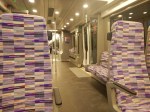

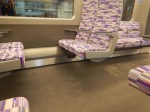





Various thoughts.
Cantilevered Seats
The bays of four-seats are cantilevered to the sides of the train, which means the space underneath the seat is available for luggage and well-behaved dogs.
Heating
It would appear that the heating is under the Metro-style seating.
As I said in Aventras Have Under Floor Heating, it would appear that the Greater Anglia Aventras do have under-floor heating, so perhaps this is a customer-chosen option, more suited to longer-distance routes.
The Lobbies
East car in the Class 345 train, has three sets of doors and lobbies.
Note how each lobby has a central handrail and two vertical handrails in each corner. One of these is just behind the door and you can grab it from outside.
Metro-Style Seating
I have not travelled in the Peak, so I don’t know how the seats perform with a full load, but this type of seating works well in the Overground’s Class 378 trains.
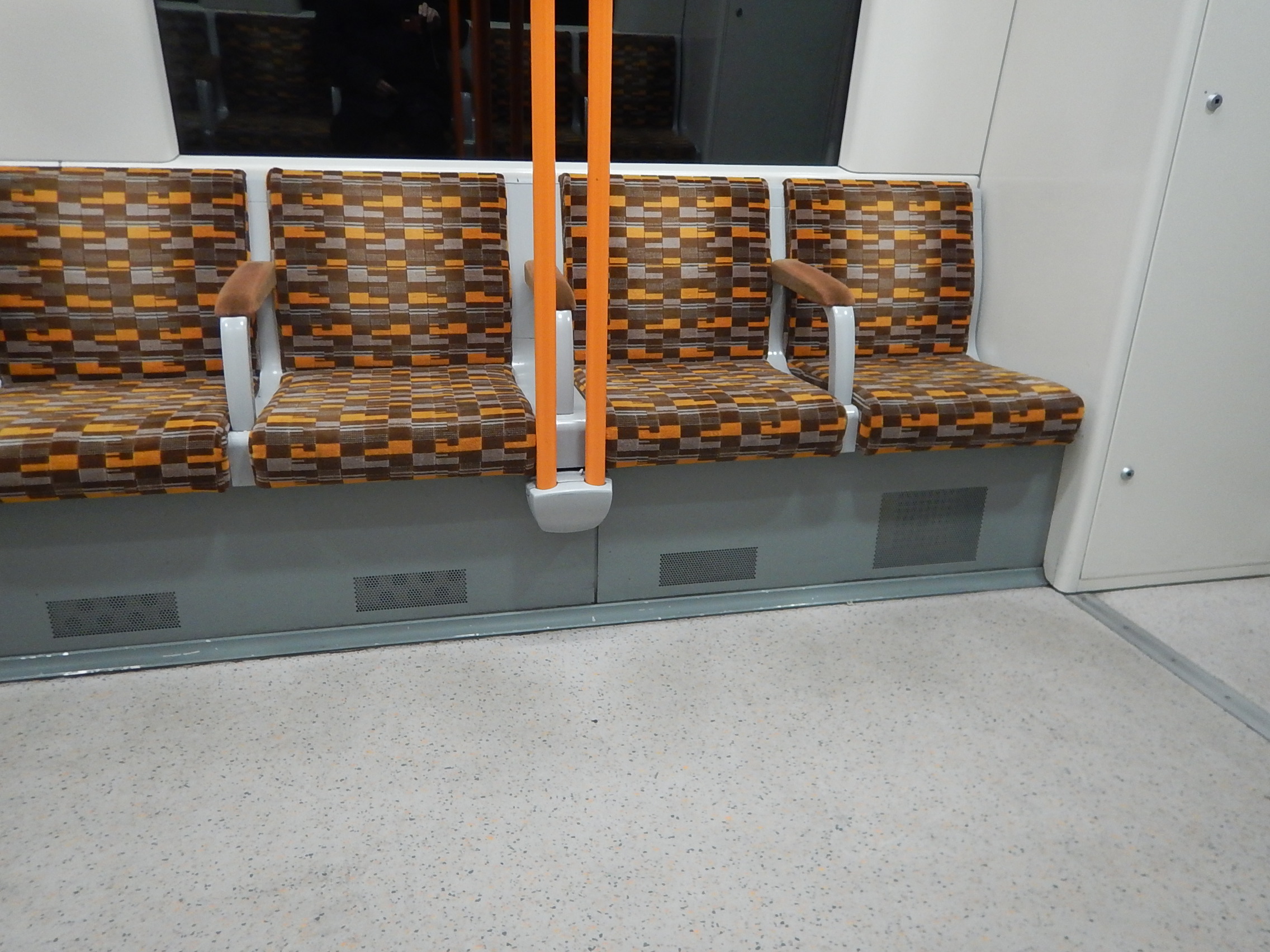
Note how the Class 378 seats have wider armrests and are not so open underneath. That vertical handrail in front of the seats can get in the way too!
The Class 378 trains were introduced in 2009, so the differences are probably down to eight years of design and advanced manufacturing.
Armrests
The armrests have received praise in some reports and they appear to work.
Note how in the metro-style seating the armrests have two levels.
Conclusion
As the first Aventra to enter service, it is a very good effort.
Certainly finding criticism of these interiors is difficult.
If you’re in London and want to go to the Olympic Park or the Eastfield Shopping Centre at Stratford, why not forsake the Jubilee and Central Lines of the Underground and take one of these new trains from Liverpool Street.
There are four trains in service at the present time, but by the end of the year, there will be eleven, so there is an improving chance you’ll get a ride in the best commuter train, in which I’ve ever ridden.
 The Anonymous Widower