The New Clock At London Bridge Station
These pictures show the new clock at London Bridge station.

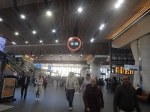
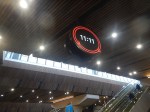

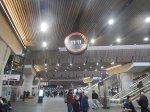
This story on the Network Rail web site, which is entitled A New Timepiece For The Railway, gives more details.
Worcester – 11th June 2023
On Sunday, I took a train to Worcester Foregate Street station and then walked across the City Centre to the other station; Worcester Shrub Hill station.
I took these pictures of Worcester Foregate Street station.
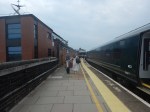
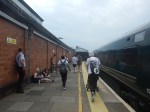
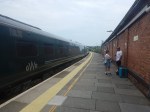
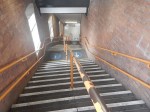

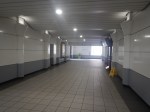
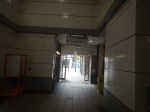
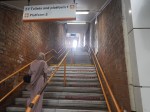
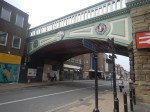
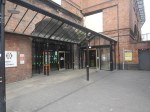
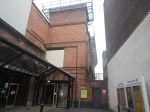
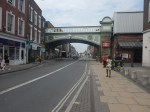
Note.
- There are no lifts.
- It had one of the worst set of stairs, I’d seen in a station.
- Wikipedia doesn’t list any improvements to the station in the future.
The station is an utter disgrace.
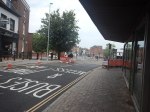
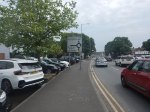
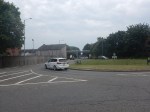
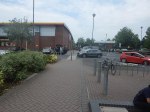
I took these pictures, as I walked between the two stations.
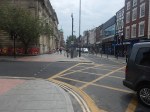
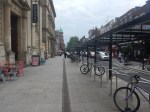


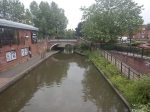
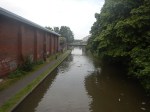
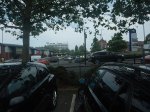
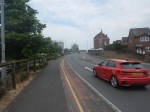
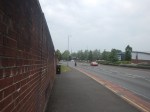
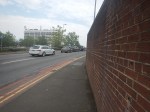
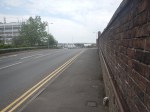
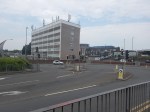
Note.
- It was not a particularly long walk.
- The last section was up a steep hill.
- There was virtually no signage.
- The roads were dominated by private cars.
- I didn’t see a sign to the cathedral or the bus station.
- There was even a crude handrail on the pavement to help people up the hill.
- The only good thing I saw was a defibrillator half-way up the hill, which was where you might need it.
No-one in their right mind would spend a few days in Worcester, unless they drove a car. In which case, it would probably be better to stay in a friendlier nearby town.
I took these pictures of Worcester Shrub Hill station.
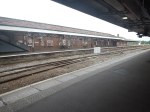
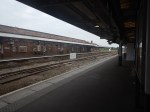
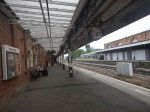
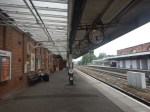
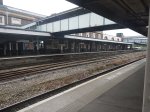
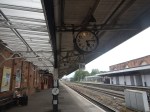
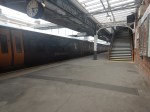
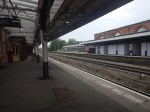


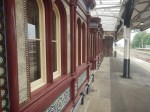
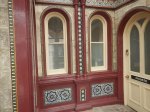
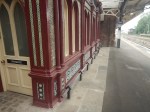

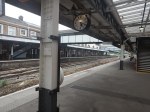
Note.
- There is no sign outside to indicate it’s a station.
- There are no lifts to get across the tracks.
- Both clocks are showing the wrong time.
- The station needs a deep clean.
- Wikipedia doesn’t list any improvements to the station in the future.
The only thing in good condition was the Victorian waiting room. But it was locked.
Conclusion
Worcester is not a town, I could recommend for anything.
It has two dreadful, disabled-unfriendly stations, no working signage or maps and is dominated by private cars.
I also would have liked some refreshment, as I walked across the City. I didn’t see anything I fancied, but that often happens when you’re coeliac.
Kentish Town Station – 30th April 2023
This article on the BBC is entitled Kentish Town Tube Station Set To Close For Year.
This is the sub-heading.
Kentish Town Tube station is set to close for up to a year while its 26-year-old escalators are replaced.
Other works will also be performed during the closure.
- The ticket office will be removed.
- The ticket barriers will be realigned.
- New paintworks, flooring, wall tiling, and new signage will also be fitted.
These pictures show the current state of Kentish Town station.
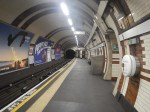
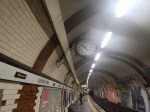
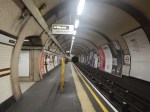
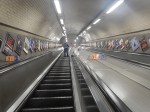
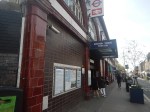
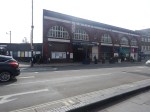
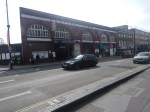
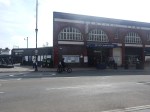
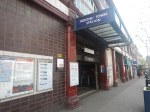
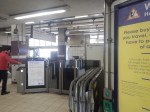
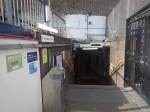
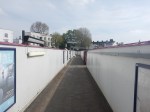
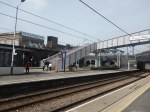
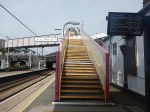
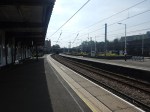

Note.
- The Victorian frontage of the station could do with a refurbishment.
- The platforms need to be restored to be the same standard as the clock.
- The escalators don’t look as bad as the article says, but new ones will give them forty years.
- Information around the gate-line for both the Underground and Thameslink, is not to the standards this passenger expects.
- The stairs connecting the London Underground station to the Thameslink bridge could be improved.
- The Thameslink information is good.
- The bridge needs lifts.
There is even a side-gate to access the Thameslink platforms, if the main entrance is closed.
Are More Trains Needed?
For a Sunday morning, both stations were surprisingly busy.
But there were only two Thameslink trains per hour (tph) between Luton and Rainham.
On all days except Sunday, the four tph Sutton Loop Line is usually running, but on Sunday it appears it’s only the Luton and Rainham service.
I suspect the Sunday service will be boosted for the duration of the closure.
Could The Side Gate Be Used Permanently?
The side-gate to the Thameslink platforms will have to be used during the station closure.
But could some arrangement be designed, so that it could be used all of the time?
Conclusion
With an unlimited budget, there’s a lot that could be done at this station.
New Escalators And Moving Walkways Between The Central And Northern Lines At Bank Station – 29th October 2022
This important link in the Bank Station Upgrade opened yesterday.
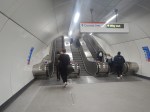
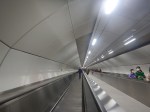
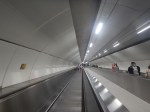
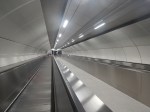
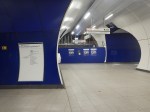
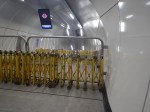
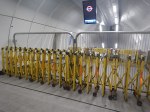
So this afternoon, I went and took these pictures, as I walked from the Central to the Northern Line interchange plaza at the Monument end of the station.
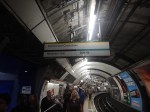
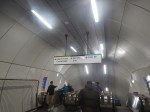

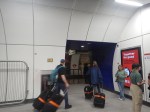
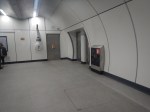
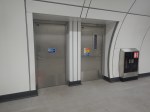
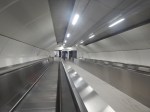
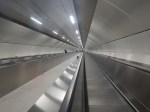
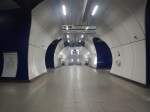

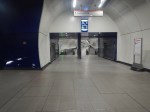
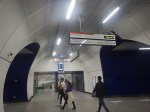
Note.
There is only a short bank of escalators between the Central Line and the moving walkways.
A good-sized landing for the escalators has been squeezed in at the top of the escalators between the two Central Line platforms.
At the bottom of the escalators, there is a generous space to accommodate the ninety-degree turn to and from the moving walkway.
The moving walkway appears wider than others on the Underground and is very well-lit.
At its Southern end, the moving walkway connects to the spacious interchange plaza, I wrote about in New Escalators At Bank Station Between The Northern Line And The DLR and showed in these pictures.
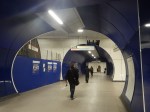
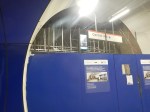
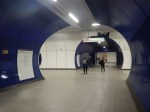
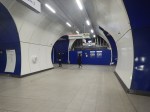
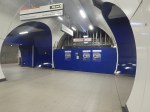
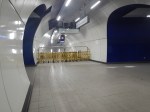
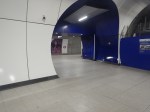
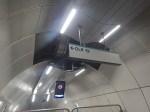
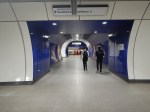
The interchange rule at the Bank/Monument station complex appears to be make for the interchange plaza and moving walkway and follow the signs.
- The Central Line is at the Northern end.
- The Northern Line is on either side.
- The DLR is underneath the plaza.
- The District/Circle Lines are at the Southern end.
I was surprised to see, that there were no staff in the interchange plaza.
Or would one of the Lizzie Line signposts be a good idea?
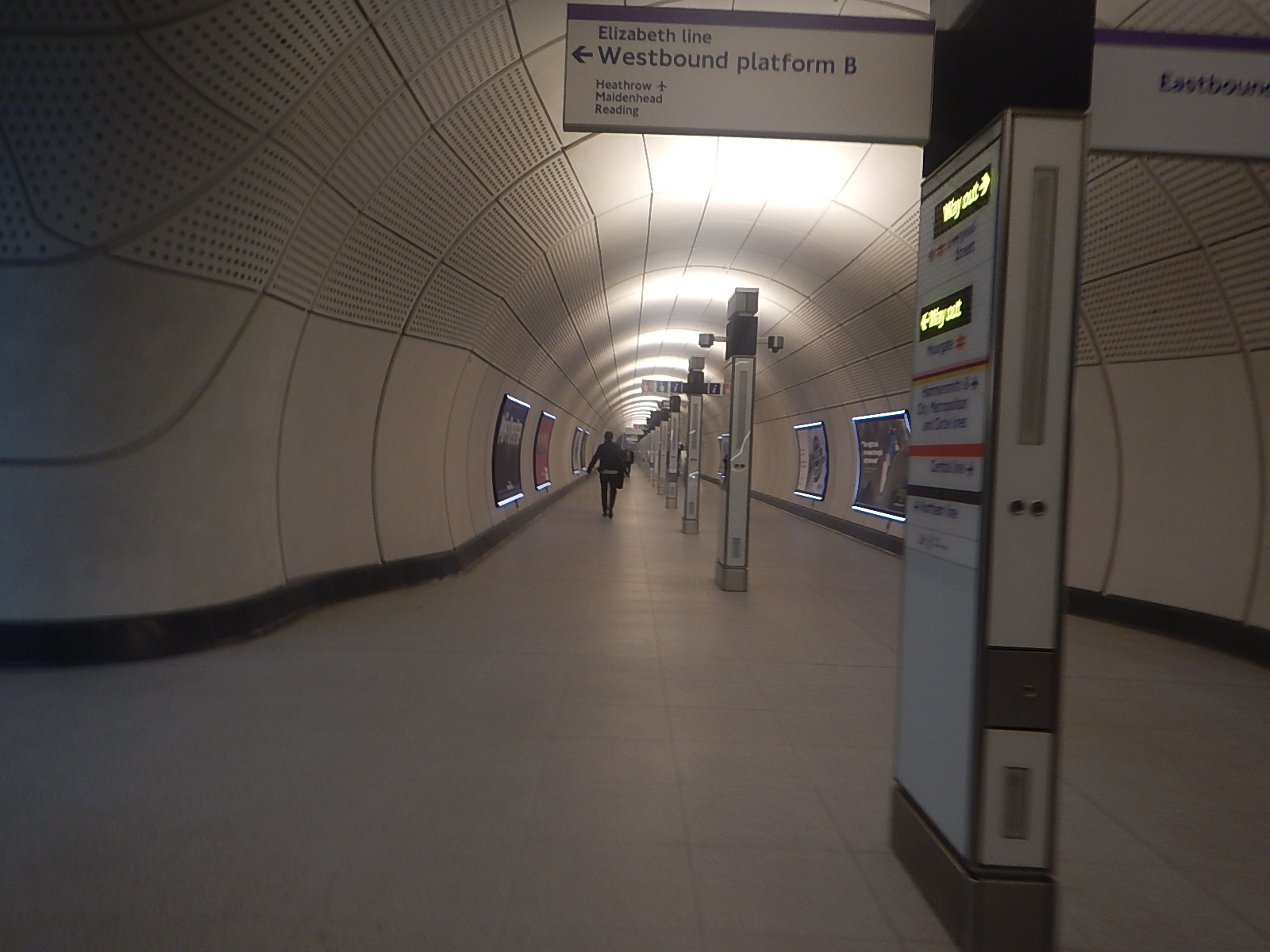
It could also have a clock.
New Escalators At Bank Station Between The Northern Line And The DLR
This picture shows the triple-barrelled escalator that runs between the Northern Line and the Docklands Light Railway.
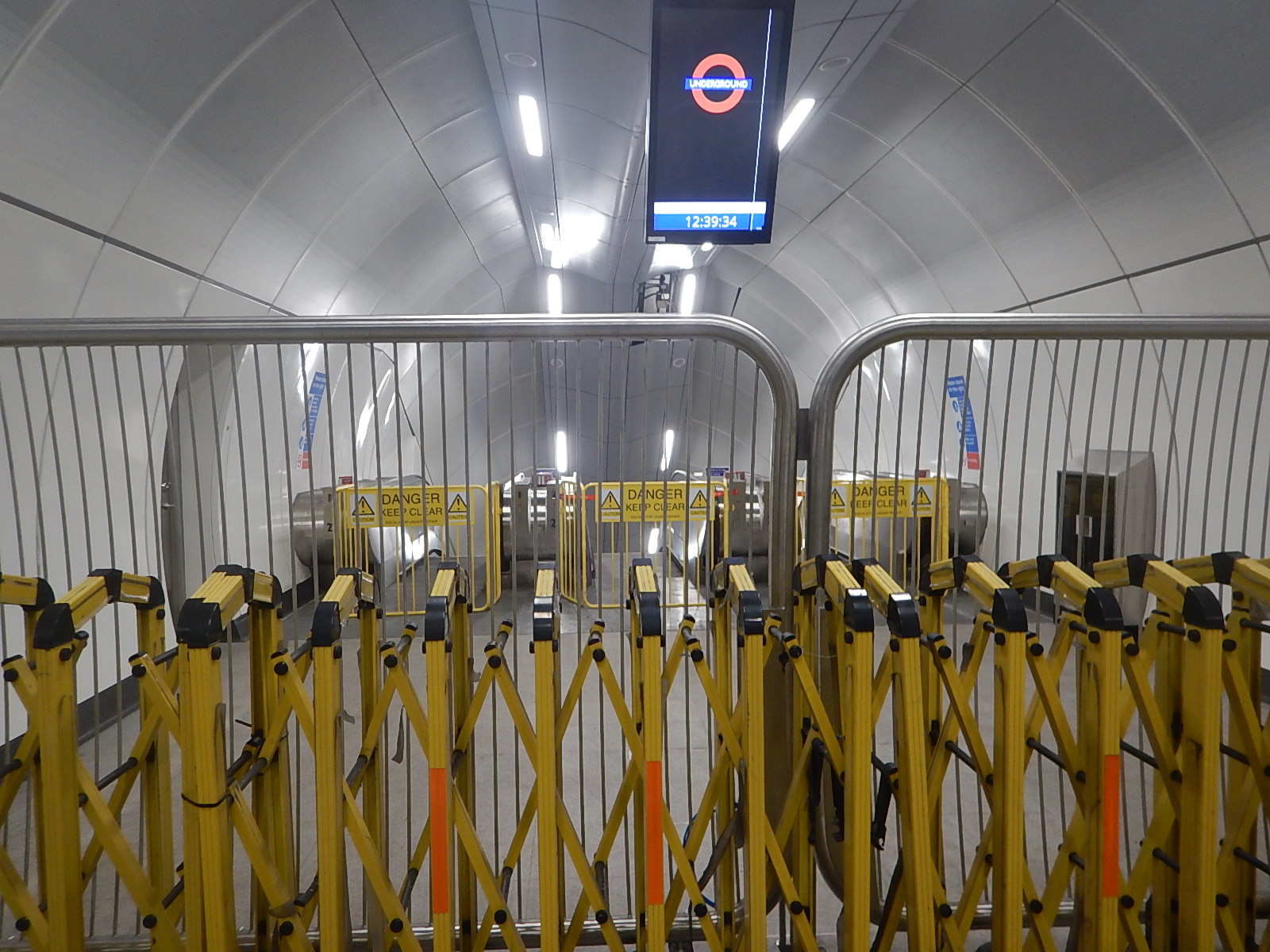
Note.
- The digital clock was showing the right time.
- There are three escalators.
- Peering over the barrier, it looked to be that construction has almost finished.
This visualisation shows the station.
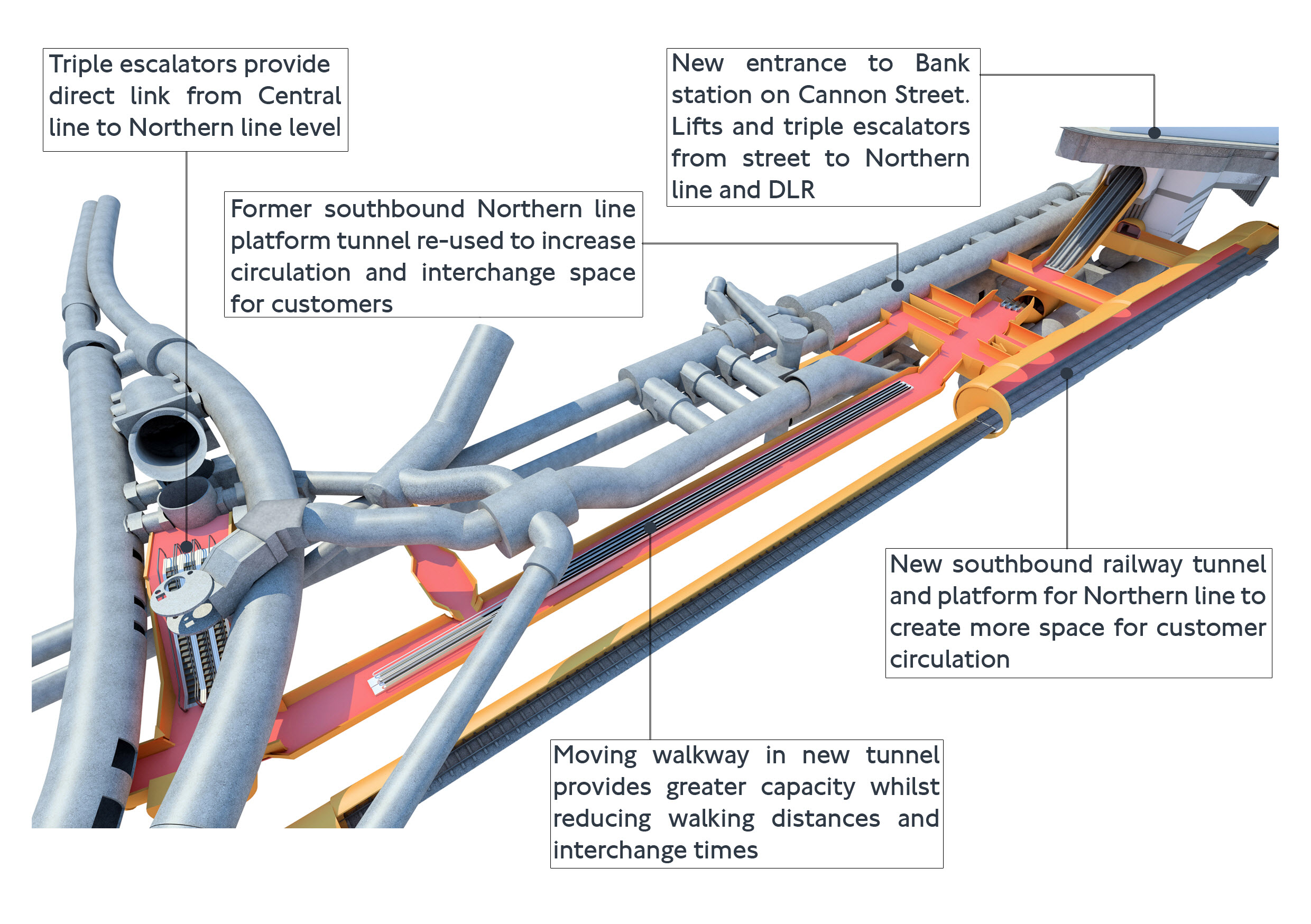
Where was I standing when I took the picture?
The label at the top right says.
New entrance to Bank station on Cannon Street. Lifts and triple escalators to Northern Line and DLR.
The triple escalator leading down from the Cannon Street entrance to the Northern Line level is clearly visible.
- It looks like passengers can go between the bottom of the escalators and both the Northbound and Southbound platforms of the Northern Line, using the cross-passage shown.
- I suspect that the triple escalators to and from the DLR in-line with the escalators to the entrance.
- Lifts would probably serve all three levels.
It is an intricate design, that looks like it minimises conflicting passenger routes, at the Cannon Street or Southern end of the station.
Move towards the North and you can see the moving walkway in a new tunnel parallel to the two Northern Line tracks, which connects to the Central Line.
At its Southern end, there is a spacious plaza.
- It has two cross passages to the two Northern Line platforms.
- It is a short walk to the moving walkway to and from the Central Line
- It appears that on the Southern side, is the triple-escalator leading down to the DLR.
These pictures show this plaza and the connecting tunnels and escalators.
Note.
- The entrance to the tunnel with the moving walkway is opposite the escalators to the DLR.
- There are two cross-tunnels connecting the two Northern Line platforms and the plaza.
- All tunnels are wide.
It looks like pedestrian routes are as follows.
Cannon Street Entrance And Northern Line
The large three-barrel escalator between the Cannon Street and Northern levels.
Cannon Street Entrance And Docklands Light Railway
The large three-barrel escalator between the Cannon Street and Northern levels and a shorter escalator between the Northern and DLR levels.
Cannon Street Entrance And Central Line
The large three-barrel escalator between the Cannon Street and Northern levels, a walk to the moving walkway and the escalators to the Central Line.
Cannon Street Entrance And Waterloo And City Line
I suspect, this will use the new route to the DLR and then the existing route between the DLR and the Waterloo and City Line.
Northern Line And Central Line
The moving walkway and the escalators to the Central Line.
Northern Line And Docklands Light Railway
It looks like there are two-banks of three escalators between the Northern and DLR levels.
Northern Line And Waterloo And City Line
Not sure of this route, but it could be via the DLR.
Central Line And Docklands Light Railway
Via the moving walkway and escalators at both ends.
Central Line And Waterloo And City Line
As now?
Docklands Light Railway And Waterloo And City Line
As now?
Conclusion
It would be an ideal location for a chase thriller!
I can’t wait until it opens.
But I do believe that the moving walkway should be extended under the roads to Moorgate station.
Darlington Station – 28th October 2020
I went to Teesside to have a look round yesterday.
These are my thoughts on Darlington station.
Platform 1 And Platform 4
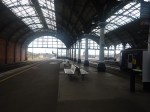
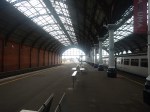
These pictures show the two main platforms at Darlington station.
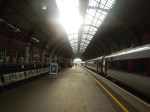
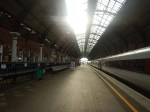
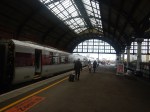
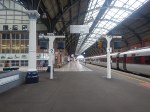
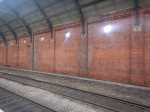
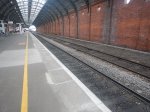
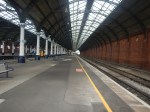
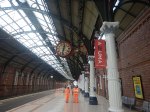
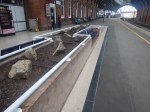
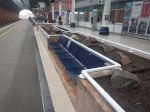
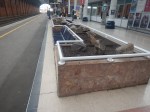
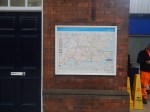
Note.
- They are affectively a very wide island platform.
- Platform 1 handles all trains going South and East to Middlesbrough and Saltburn.
- Platform 4 handles all trains going North and West to Bishop Auckland.
- The platforms are well over 200 metres long.
- Both the main platforms have a second track, between the current track and the walls of the station.
- Both main platforms have a large clock.
- Platform 1 has some innovative seating.
- Uniquely, there is a London Rail Map on the London-bound Platform 1. Every London-bound platform needs a copy of this map, but they are very rare.
They appear to handle all the current services easily.
There is certainly a lot of space to improve the station.
Station Structure
The station stricture is probably best described as grand, stylish and Victorian and it appears to be in good condition.
- The tracks through the station are enclosed in two large brick walls.
- A roof of the period, is supported on the walls and a number of perhaps forty cash-iron columns.
These pictures give a flavour of the station.
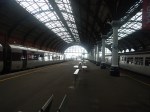
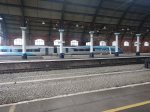
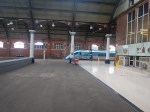
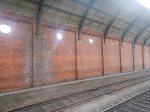

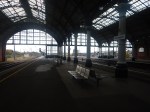
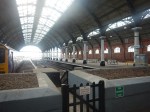
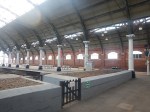
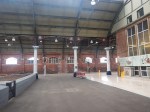
There must be few better station structures than Darlington in the UK and as it is Listed Grade II*. I would expect this is recognised by English Heritage.
The Southern Bay Platforms
There are two bay platforms at the Southern end of the station.

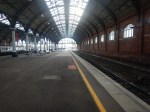
There were bay platforms at the Northern end, but these have now been removed.
I wonder, if these two bay platforms could be invaluable in the expansion of services both on the Tees Valley Line and generally in the area.
Current plans envisage the following.
- Four trains per hour (tph) between Saltburn and Darlington.
- Two tph between Darlington and Bishop Auckland.
One obvious way to achieve this objective would be to do the following.
- Run two tph between Saltburn and Bishop Auckland. These trains would run as now with Saltburn services using Platform 1 and Bishop Auckland services using Platform 4 at Darlington station.
- Run two tph between Saltburn and Darlington. These trains would use Platform 2 at Darlington station.
The advantages of this are.
- To get to Middlesbrough or Saltburn, you would go to the island Platform 1/2, as you do now.
- To get to Bishop Auckland, you would go to Platform 4, as you do now.
- If battery trains were to be used the bay platforms would be ideal for a Vivarail Fast Charge system
There would probably need to be some changes to the tracks serving Platform 1 and 2.
Other possibilities might include.
- Darlington might also be a useful terminal for a service to Whitby via Middlesbrough.
- Using the station as a Northern terminus for an Express Parcels Service from London.
Lengthened platforms able to take a five-car Class 802 train, could be useful for service recovery.
The Western Pedestrian Entrance To The Station
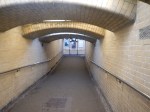
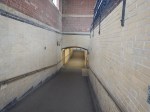
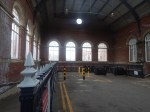
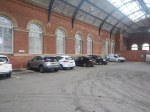
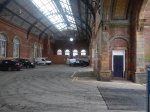
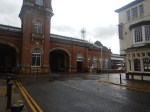
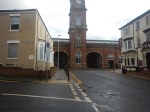
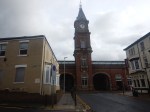
Darlington Town Centre lies to the West of the station and these pictures show what probably was a very grand entrance to the station connected to it by a subway.
This Google Map shows the size of the entrance.
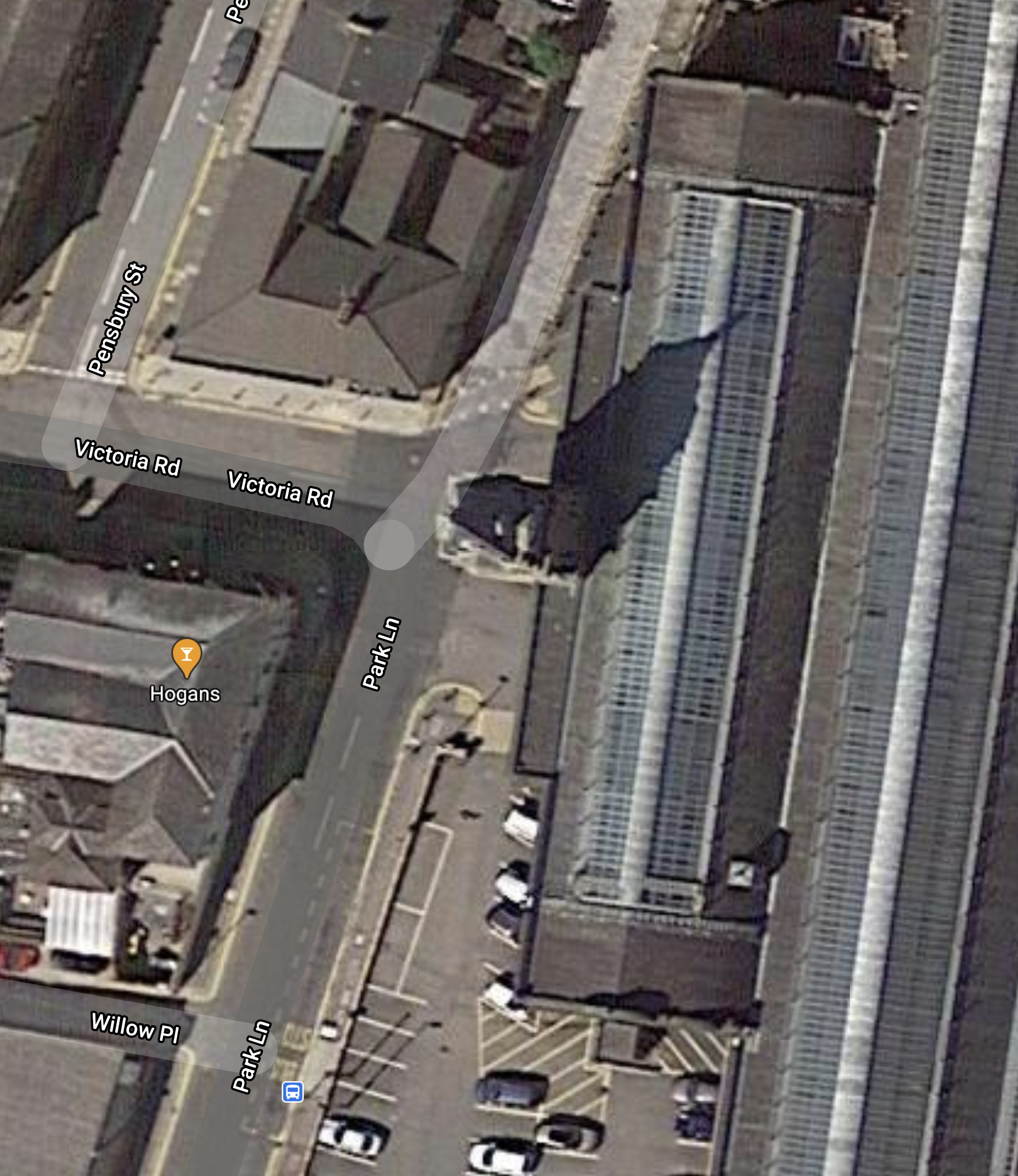
It is one of those buildings that would be described by a certain breed of estate agent, as having development potential.
- There are no lifts to the subway.
- It could be turned into a retail experience.
- Does the clock tell the right time?
- Buses were signposted in this direction, but there appeared to be little information.
Surely, it could be turned into an asset to both the railway and the town.
The Southern Approaches To The Station
These pictures show the Southern approach to the station.

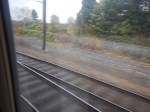
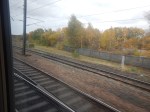
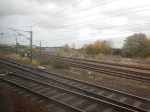
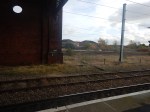
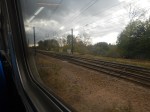

The Tees Valley Line to and from Middlesbrough and Saltburn joins to the South of the station and trains going to Bishop Auckland have to cross over the two tracks of the East Coast Main Line.
This Google Map shows the track layout just to the South of the station.
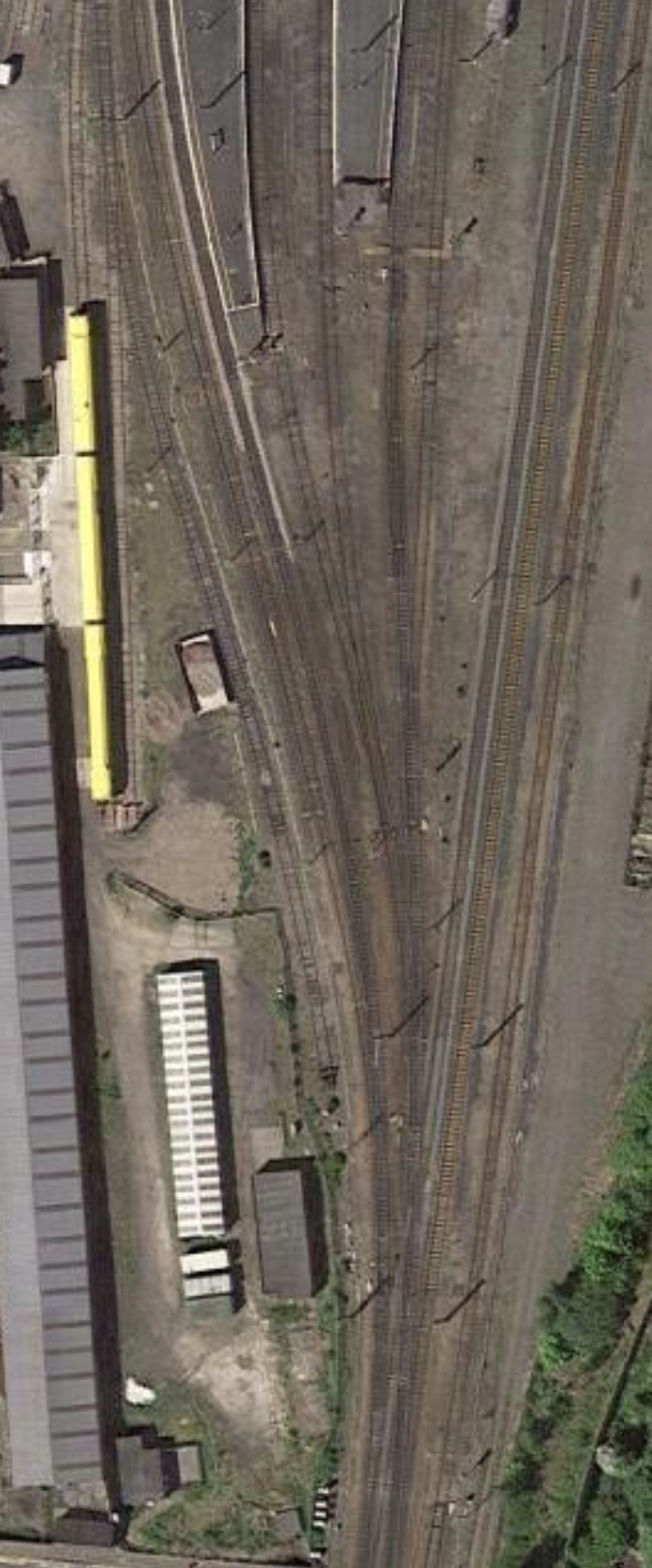
Note.
- The Southern ends of the platforms can just be seen at the top of the map.
- Platforms are numbered 1 to 4 from West to East.
- The two avoiding lines going past the East side of the station.
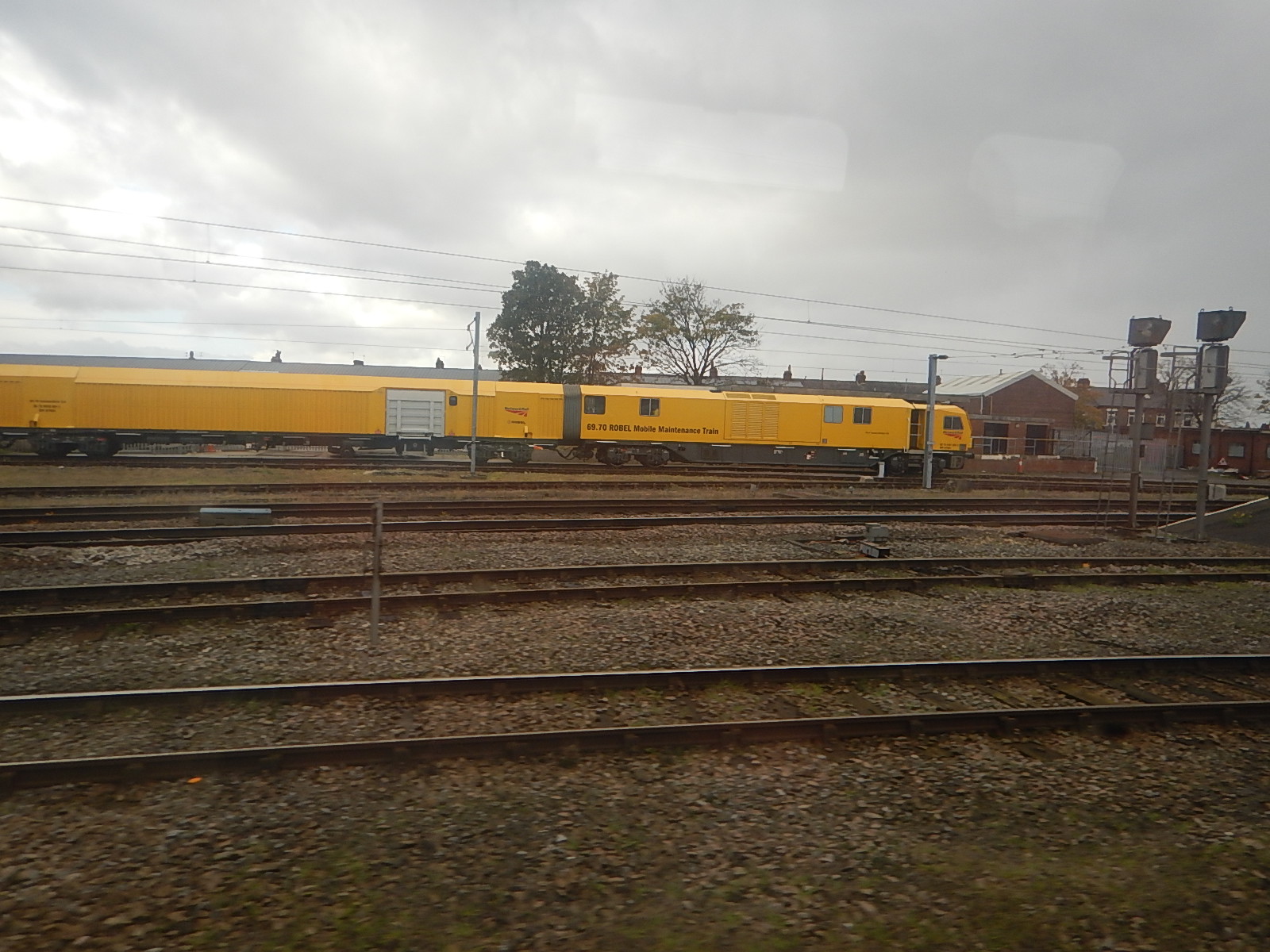
- The yellow train is one of Network Rail’s Mobile Maintenance Trains.
The Mobile Maintenance Train was parked in the same place yesterday, as this picture shows.
The second Google Map shows Darlington South Junction, where the Tees Valley Line from Middlesbrough joins the East Coast Main Line.
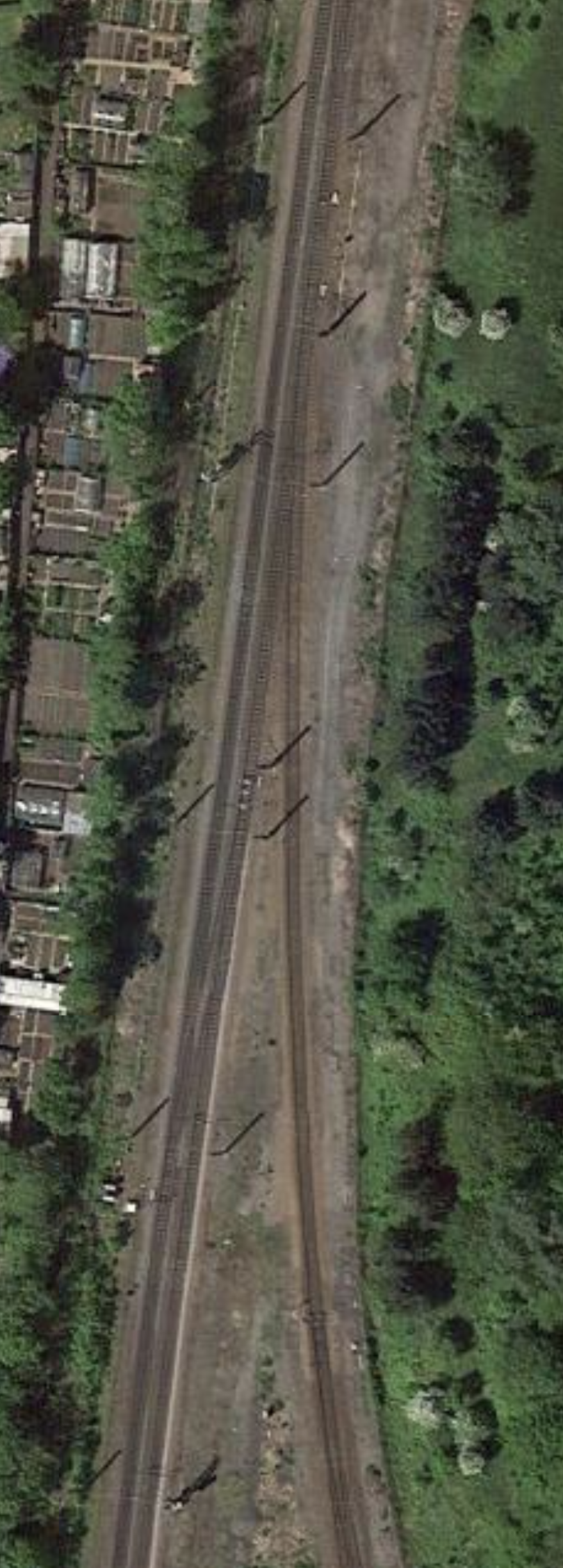
These two maps indicate the problem of train operation at Darlington.
A train between Bishop Auckland in the West and Middlesbrough and Saltburn in the East, can sneak down the Southbound East Coast Main Line and take the Tees Valley Line to continue on its way.
But a train going the other way, needs to cross both tracks of the East Coast Main Line on the flat, which means precision working by drivers and signallers, to avoid causing delays to both main line and local trains.
I suspect all the following are true.
- The number of London and Scotland expresses will increase.
- London and Scotland expresses will be running faster.
- The number of freight services on the route will increase.
- The number of services between Bishop Auckland and Saltburn will increase from the current hourly only service.
- High Speed Two will eventually start to run services between London and Birmingham, and at least as far North as Newcastle
All will make the need for improvements South, and probably North, of Darlington station increasingly important.
Could it be that the simplest solution would be to create a dive-under?
- It would only need to be single-track.
- It could probably be built without affecting current services, as was the Acton dive-under.
- There would appear to be plenty of space.
It would only need to allow trains from the Eastern branch of the Tees Valley Line to access Platform 4 at Darlington station.
High Speed Two Is Coming
High Speed Two is coming to Darlington and I wrote about that in £100m Station Revamp Could Double Local Train Services.
This was my conclusion about what will happen to services at Darlington in that post.
I think that this will happen.
- The Tees Valley Line trains will be greatly improved by this project.
- Trains will generally run at up to 140 mph on the East Coast Main Line, under full digital control, like a slower High Speed Two.
- There will be two high speed platforms to the East of the current station, where most if not all of the High Speed Two, LNER and other fast services will stop.
- There could be up to 15 tph on the high speed lines.
With full step-free access between the high speed and the local platforms in the current station, this will be a great improvement.
So what will the step-free access be like?
The young assistant in WH Smith told me that a hole will be made in the wall on the East side of the current Platform 1.
It does seem that a new bridge could reach over all the platforms with an entrance for the Town Centre in a refurbished Western entrance.
Passengers would arrive by high speed train every few minutes from the South, Newcastle or Scotland.
- Those for the Town Centre would walk across the bridge and exit the station in a refurbished Western entrance.
- Those needing onward local train travel would descend into the current station to catch another frequent train.
- Hopefully, there would be space somewhere for a bus station.
It would be a real gateway station for Darlington.
A Map, An M & S, But No Clock At Manchester Victoria Station
Manchester Victoria station has improved recently, with a map and an M & S Simply Food.


But it doesn’t have a proper clock.
New Lifts At Newbury Park Station
Newbury Park station now has lifts.
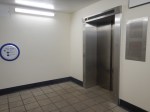
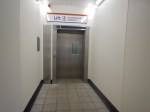
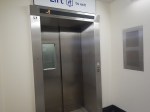
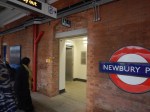
It also looks like the station has had a bit of upsprucing, as well!
The two clocks looked superb, alongside what is a top quality lift installation.
Two mothers with babies in prams were especially pleased, as neither knew that the station now had lifts, as they didn’t live in the area.
Transport for London are putting in several step-free installations at the outer reaches of the Central Line and like a thousand American lawyers at the bottom of the sea, it’s a good start!
Exploring The Historic Centre Of Las Palmas
I took a 30 bus from the port to the bus station at San Telmo and walked to the cathedral and back.
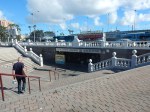
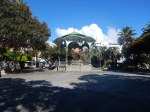
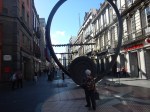
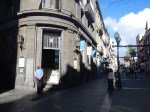


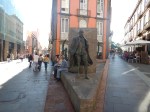


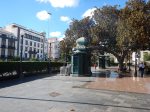
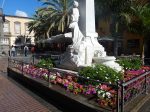



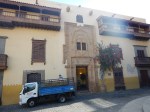





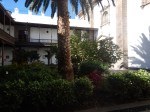







There is a lot to see as the pictures show.
Krakow – A City Of Maps, Clocks, Trams And Gluten Free Food
Krakow is well-known for its buildings, but I found some other things equally fascinating in a delightful city.
-
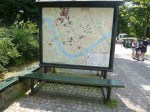
- A Large Map With Seats
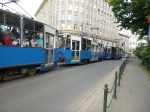
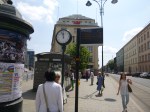


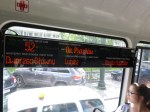
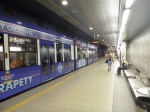

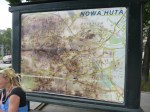

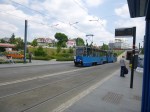

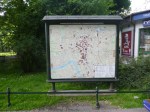
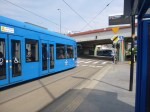
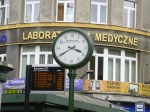

All of the maps, clocks, trams and excellent gluten-free food, made the city a real joy to explore and I would recommend the city to anybody.
To see all the posts for my Home Run From Krakow click here.
 The Anonymous Widower