Coach Chaos At The Finchley Road Coach Stop On A Sunday Lunchtime
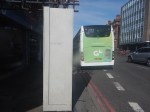
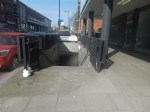
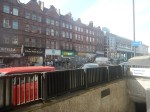
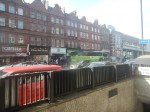
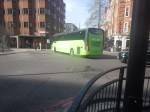
I went to Finchley Road coach stop at lunchtime today and took these pictures.

























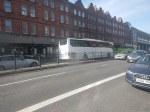




















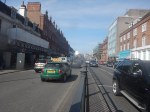
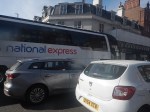
Note.
- Finchley Road coach stop is on the Finchley Road, just to the North of Finchley Road tube station.
- The Finchley Road coach stop is lavelled CL.
- Not all coaches stopped at the Finchley Road coach stop.
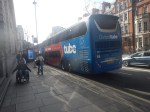
- I did see a double-deck coach taking visitors to the Harry Potter Attraction pass through ar Victoria Coach station and the Finchley Road.
- There is a pedestrian subway under Finchley Road.
- There is a second stop for Southbound coaches on the other side of the Finchley Road.
- There are a few tatty shops along the pavement selling snacks, coffee, tea and other travellers needs.
- In the early pictures note, the large number of travellers queuing along the pavement in front of those shops.
- It looks like a lot of those travellers, were waiting for the Flixbus.
- The Flixbus stayed parked for several minutes.
- Finchley Road tube station is not step-free.
- Finchley Road tube station is served by the Metropolitan and Jubilee Lines.
I took most of the pictures from the opposite site to the Northbound coach stop, as the pavement was rather crowded.
This Google Map shows Finchley Road, the tube station and the coach stop.
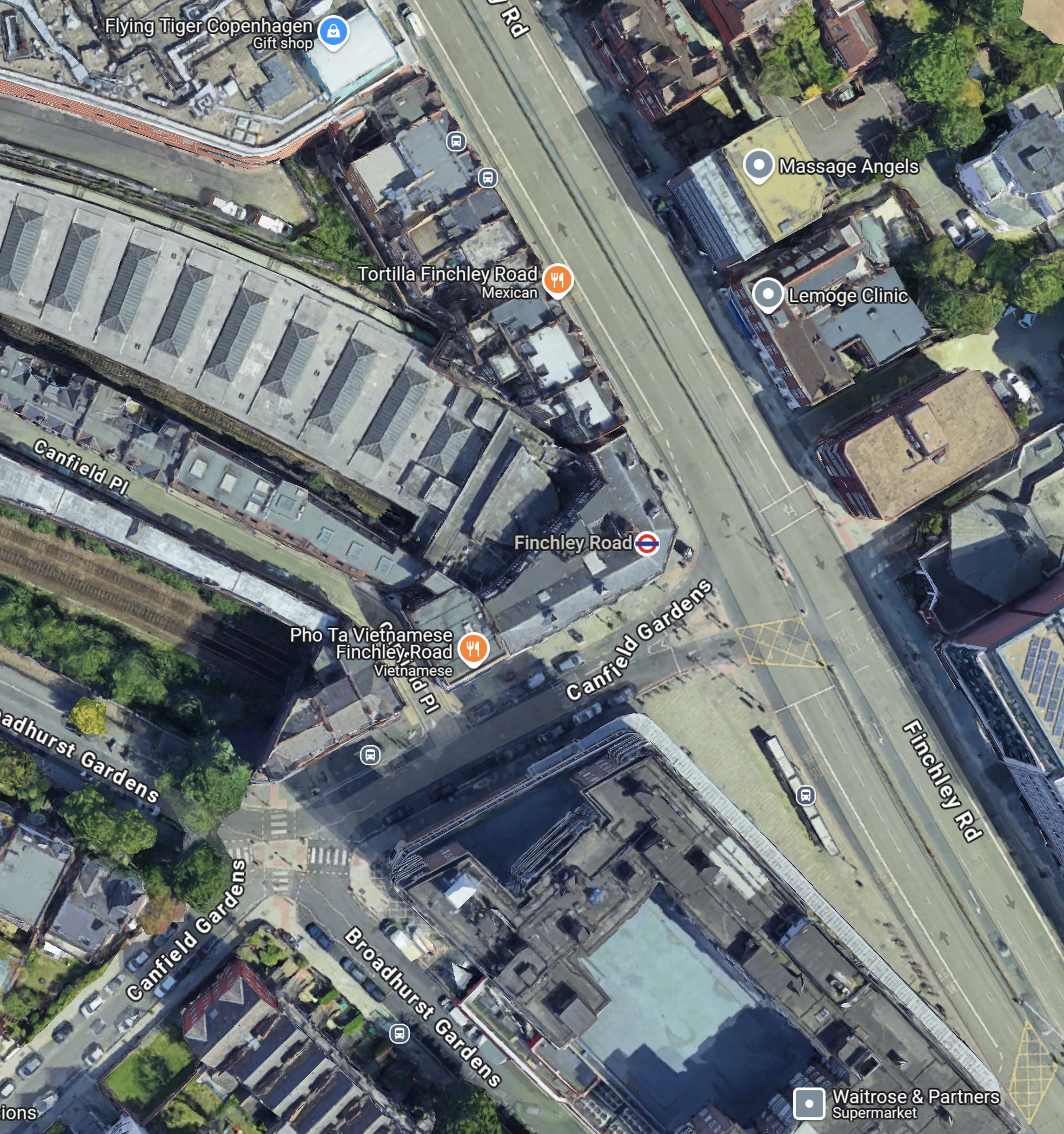
Note.
- The Finchley Road is the dual-carriageway road.
- The two grey dots at the Northend end of the Finchley Road, indicate the Coach stop and to its North a bus stop.
- The larger orange dot indicates the Tortilla restaurant, which is visible in several of the pictures.
- The London Underground roundel indicates Finchley Road tube station.
- The building curving away to the North-West is the train shed for the four platforms of Finchley Road tube station.
South of Finchley Road tube station, is a large Waitrose in the old John Barnes building.
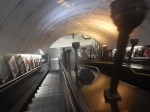
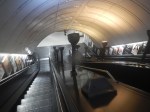
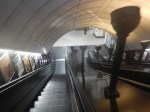
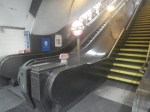
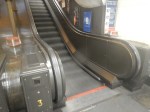
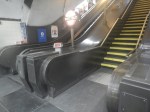
This pictures show some of the Train to Street access at Finchley Road station.
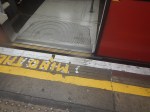
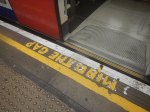
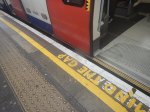
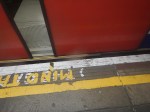
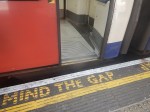
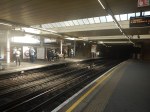
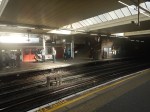
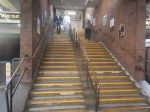
Note.
- There is a high step out of the Jubilee Line trains.
- The steps from platform to the street are steep with a heavy case or a baby in a buggy.
But it’s a long time, since I’ve done any travelling with a baby.
I have some further thoughts.
Travelling With Heavy Luggage, In A Wheelchair Or A Baby Buggy
It might be better to take a 13 or 113 bus to Finchley Road tube station, as the stop is just South of the station and no more than fifty metres from the Finchley Road coach stop.
You could even get the bus from Swiss Cottage station, which is the next station South from Finchley Road and has a complete set of traditional escalators with uplighters.


Note.
A Busy Saturday Lunchtime At Victoria Coach Station
I went to Victoria Coach station at lunchtime today and took these pictures.

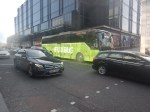







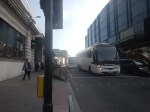



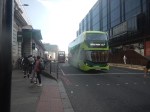
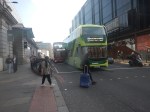
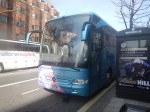






These are my thoughts.
Where Are The British Coaches?
The nearest I saw were the smart coaches of the Oxford Tube, which were built by Plaxtons on a Volvo chassis.
The National Express coaches were made by Caetano in Spain.
I can certainly understand, why Wrightbus’s first product of a new era of British coach-building is an affordable Chinese-built coach, that is fitted with a Cummins engine, that possibly can be converted to hydrogen, as is the case, with some Cummins diesel engines.
As the coach will have a delivery time of six months, I think we’ll see them on the road fairly soon.
There Were Several Three Axle Coaches
In fact, I didn’t know they were very common.
- I suspect that three axles is better for the weight.
- But then you don’t see too many coaches in Central London unless you go to Victoria.
Wrightbus are saying that their hydrogen coach will have three axles.
The Wrightbus Effect
This article on Route One, says of the new Wrightbus Contour coach.
- It will be released this year.
- It will be an affordable product and Chinese-built.
- It will be a 55-seat diesel coach.
- It will have a Cummins engine.
In Wrightbus StreetDeck Ultroliner Next-Gen To Get Cummins Power, I describe how Wrightbus’s new Cummins-powered double-deck bus will be able to be converted to hydrogen-power. I suspect the same option will be available with the Contour diesel coaches.
The article on Route One, says this about the availability of the new coaches.
The Contour’s “competitive price” and lead time of six months promises an edge over some current industry norms, the business says.
That fits with what my finance company found forty years ago, when it was leasing coaches. If there were more coaches, you could lease more.
It looks to me, that the Cummins-powered, Chinese-built Wrightbus Contour coach will be affordable, available and convertible to zero-carbon hydrogen power.
If the quality and reliability of the coaches are high, then these coaches should sell and more coach operators will be wanting to run services from Victoria coach station, with their new affordable Wrightbus Contour coaches.
After what I saw on Saturday, will Victoria coach station have the space to accommodate them?
Coaches To Attractions
I saw coaches to Harry Potter, Legoland and other attractions.
Will this be an area that develops, if there were to be a greater availability of coaches, which Wrightbus, appears to be offering?
FLiXBUS
This is the first paragraph of the Wikipedia entry for FLiXBUS.
FlixBus (styled FLiXBUS) is a German brand that offers low-cost intercity coach services in Europe, North America, South America, and Asia. It is owned by Flix SE , which also operates FlixTrain, FlixCar, Kâmil Koç, and Greyhound Lines. FlixBus operates buses or, in many cases, just handles marketing, pricing, and customer service for a commission, on behalf of bus operators. In 2023, FlixBus had revenues of €2 billion and carried 81 million passengers of which 55 million were in Europe, 14 million were in Turkey, and 12 million were in North America.
They certainly seem to be an ambitious low-cost company, who serve a lot of places in the UK.
As they are a German company and Wrightbus have sold scores of zero-carbon buses to Germany could Wrightbus and FLiXBUS have been talking about affordable, quality coaches?
Riding Rail Air Between Reading Station And Heathrow Terminal 5
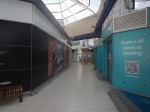
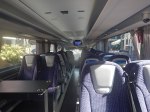
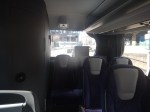
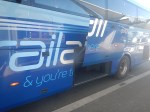
Today, I rode on a Rail Air coach between Reading station And Heathrow Terminal 5.
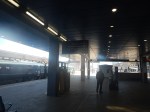
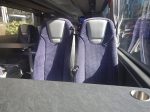
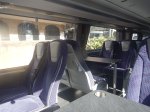
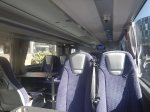
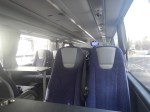
I took these pictures as I walked through Reading station and from the coach.
































































These are my thoughts on various topics.
Catching The Coach At Reading
Consider.
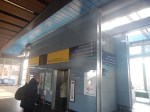
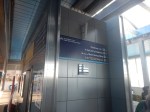
- The route to Rail Air from the trains at Reading station is well signed.
- The entrance to the Rail Air terminal at Reading station is behind the M & S Simply Food store.
- I estimate that the time between arriving at Reading station and the coach leaving was only a few minutes.
- Rail Air coaches run every twenty minutes.
- My coach had about ten passengers.
- My single fare was £17.30 with my Senior Railcard.
It was all a rather painless process.
On The Coach
Consider.
- The coach was more-or-less what you would expect on a quality route.
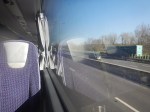
- The view was good.
- I had a table, with four seats.
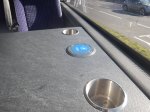
- The table had contactless charging and drink holders.
- There was no charging for my phone and camera, which use USB or 13 amp plugs.
- The seat was reasonably comfortable.
- There was a toilet.
- There was typical storage for heavy luggage underneath the seats.
I would have thought if Wrightbus fit USB ports on their buses, that they are needed.
The Route
This Google Map shows Reading and Heathrow
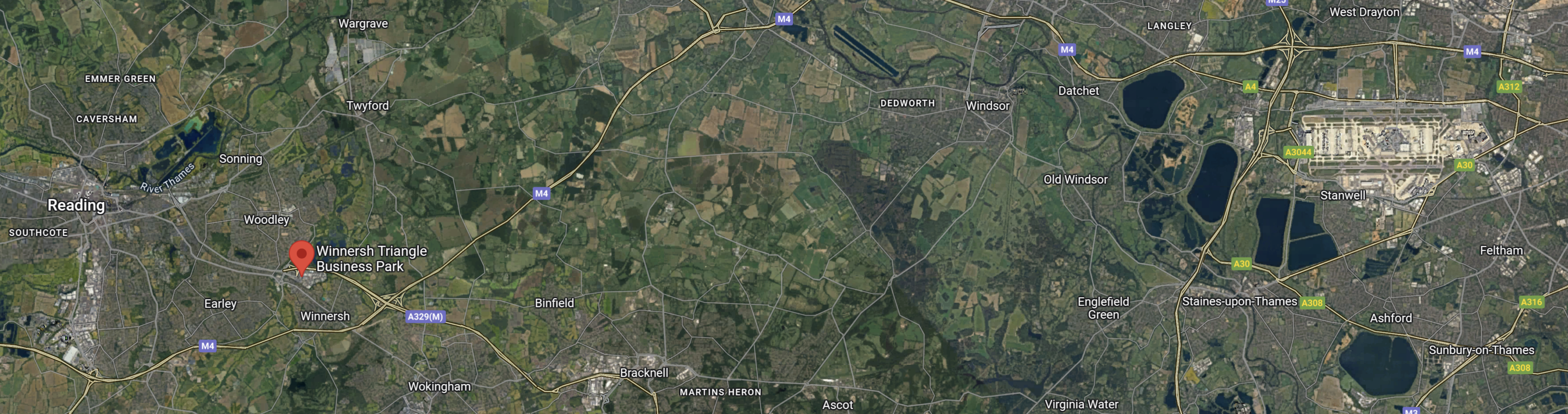
Note.
- Reading is at the Western end of the map.
- Heathrow is at the Eastern end of the map.
- The red arrow indicates Winniersh Triangle station on the Eastern side of Reading.
- The coaches stop at Reading Cemetery and Winnersh Triangle station.
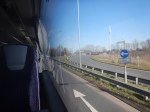
- Most of the route between Winnersh Triangle and Heathrow Airport is on the M4 Motorway or dual-carriageway roads.
- The distance appears to be just under 27 miles and is scheduled to take forty minutes.
- Click the map to show to a larger scale.
It looks to me that it is an ideal route for a coach.
On The Journey
Consider.
- Once clear of Reading and past the stop at Winnersh Triangle, the coach held a good speed all the way to Heathrow, as the motoway was not busy.
- In the UK coaches under twelve metres long, can run at 70 mph and I estimated that this coach was probably at 60 mph.
- The stops were called out like stations on a train.
- Strangely, the roadholding was not as good as that of the Wrightbus hydrogen bus, that I took to Gatwick, a couple of weeks ago.
- The big problem though was the noise of the diesel engine, which was very loud compared to the noise of the fuel cell and electric transmission of the Wrightbus hydrogen bus.
I suspect that transforming the hydrogen bus into a coach, could result in a very high quality coach, with the performance and range of a diesel coach, without the noise, pollution, vibration and carbon emissions.
Will Hydrogen Buses and Coaches Make Good Rail Replacement Buses?
My near-twenty-mile-ride in a Wrightbus hydrogen-powered bus yesterday, got me thinking.
I believe they would make excellent Rail Replacement Buses.
- The 280 mile range would allow them to both deploy over a l long distance to an incident or cover over a hundred miles or more.
- The quality of the interior is more main line train, than suburban bus.
- Every seat has a charging point.
- The performance of the hydrogen-powered bus, should mean that less time is lost and less compensation will be paid.
- This performance could be used to advantage if the rail line being replaced is alongside a motorway.
I feel it could be good PR for train companies, that they are using quality, fast Rail Replacement Buses.

