Irizar Hydrogen Coach With Bosch 190 kW Fuel-Cell System Faces Test Operation In Madrid
The title of this post, is the same as that of an article on Hydrogen Central.
Irizar have a page on their web site, which describes their hydrogen-powered coaches.
This paragraph describes their range.
The way our clients operate will not be changed, because the Irizar i6S Efficient Hydrogen has a range of up to 1000 km and minimal charging times, of around 20 minutes. In addition, it can run in 100% electric mode for short times, if required.
All hydrogen-powered coaches seem to claim a 1,000 km. range.
Hopes Railway Station In Picturesque Village Could Become ‘Gateway’ To Northumberland Coast
The title of this post, is the same as that of this article on the Chronicle Live.
This is the sub-heading.
A rail company boss said there was a “real opportunity” for the station to have a bigger role
These three paragraphs add more details.
A key railway boss has provided hope that one of Northumberland’s quietest railway stations could finally see more trains pulling in. Chathill Station on the East Coast Mainline is close to two of the county’s most popular tourist destinations in Seahouses and Bamburgh.
Despite the excellent location it is one of the county’s least-used stations. Just 1,580 passengers were recorded between April 2024 and March 2025 – although this was up 25% on the previous 12 months.
Locals have been urging rail companies to make more stops in the village. Now, the boss of operator First Rail Open Access, which runs Lumo services, has visited the station and claimed there is a “real opportunity” to strengthen its role. Lumo provides services on the East Coast between King’s Cross and Edinburgh Waverly, passing through Chathill.
It seems that Lumo must think it is worthwhile stopping at Chathill.
Chathill: The Station That The Nation Forgot
This feature has the same title as this section.
It is well worth a read and gives a good background to the history of Chathill station and the other stations on the East Coast Main Line, and the former branch to Seahouses.
Could Modern Digital Signalling Be The Key For Lumo?
Lumo runs between London Kings Cross and Edinburgh Waverley and Glasgow Queen Street six time per day, calling at Stevenage, Newcastle, Morpeth, Edinburgh Waverley, Haymarket and Falkirk High.
Note.
- Stevenage calls only pick up Northbound and put down Southbound, so have Lumo developed procedures to get passengers on and off the train, as fast as possible?
- The East Coast Main Line is also under control of full digital signalling at Stevenage, so is that used to expedite the stop?
- Going North the trains seem to have a time where they leave Stevenage like 0606 and in reality they might arrive at 0604 and leave at 0606. So do they go as fast as traffic will allow between Kings Cross and Stevenage, using the digital signalling and the Mark 1 eyeball to keep tabs on the train in front?
- Going South a similar procedure seems to be used.
A typical stop at Stevenage seems to take between one and two minutes.
I have just checked Morpeth and all Lumo services seem to stop at Morpeth and they seem to take between one and two minutes.
It looks to me, as a Graduate Control Engineer, that full digital signalling on the East Coast Main Line might allow a couple extra stops to be added to Lumo’s timetable.
Will East Coast Main Line Digital Signalling Allow 140 mph Running?
I asked Google AI the question in the title of this section and received this reply.
Yes, the digital signalling being installed via the East Coast Digital Programme is a key technical enabler for future 140 mph (225 km/h) operation on parts of the East Coast Main Line.
This will surely, allow trains to pick up enough time on 140 mph sections of the line, to give enough time for the extra stops.
How Much Time Will 140 mph Running Save?
A quick calculation shows that if a train ran at 140 mph instead of 125 mph for a hundred miles, there would be approximate five minutes saved.
I suspect this would allow two extra stops.
Could An Extra Stop Be Made At Reston?
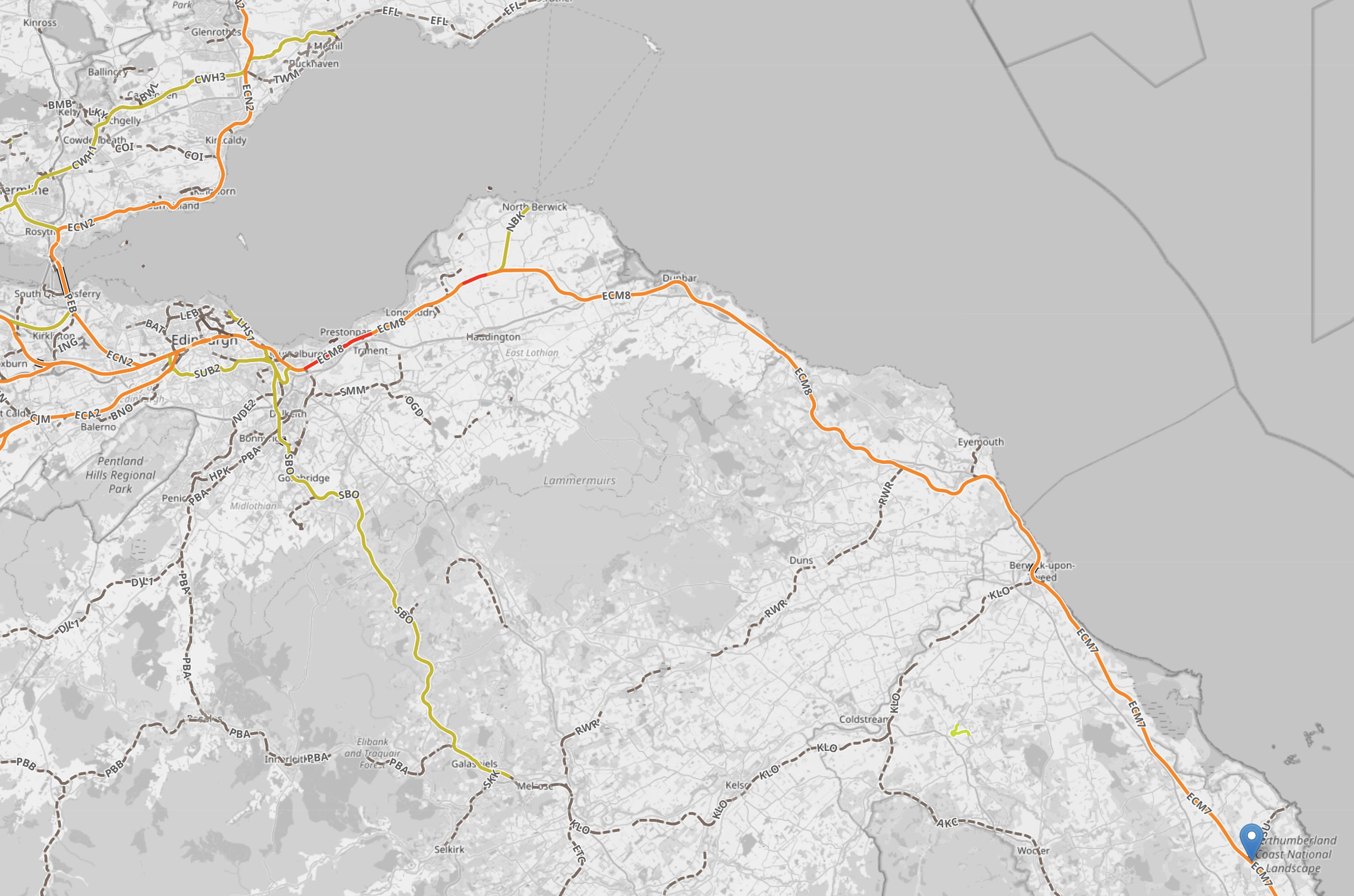
This OpenRailwayMap shows Chathill and South-East Scotland.
Note.
- The orange track going up the coast is the East Coast Main Line between London Kings Cross and Edinburgh.
- Chathill station is marked by the blue arrow in the South-East corner of the map on the East Coast Main Line.
- The East Coast Main Line crosses the Firth of Forth on the Forth Bridge to the West of Edinburgh.
- The yellow track coming down from the Edinburgh area is the Borders Railway to Galashiels and Tweedbank.
- Two former railways lead between Tweedbank and Berwick-upon-Tweed and Reston stations on the East Coast Main Line.
- Important stations, that are North of Chathill, are Berwick-upon-Tweed, Reston, Dunbar and East Linton.
- Berwick-on-Tweed and Dunbar are well-served by LNER, with Reston getting one train per day.
I could see Lumo stopping at Reston, just as they share business at Morpeth with LNER.
Are There Any Plans To Connect The Borders Railway To Berwick-On-Tweed?
Looking at the map, I just had to ask Google AI the question in the title of this section.
I received this reply.
Official feasibility and business case studies are instead focused on extending the current Tweedbank terminus south toward Hawick and Carlisle along the old Waverley Route.
Grassroots Proposals
Tweed Valley Campaign: A volunteer group called the Tweed Valley Railway Campaign has lobbied to restore a link running east from St Boswells toward Berwick-upon-Tweed.
Local Benefits: Proponents argue an east-west connection would link the Borders directly to the East Coast Main Line, helping tourism and commuters.
Official Status: Despite local campaigns, transport authorities and councils have not adopted the Berwick route as part of official funded transport strategies.
Official Extension Plans
Carlisle Route: Government backing and funding are directed toward an extension study heading toward Hawick and Carlisle.
Timeline: Consultants are advancing a strategic business case for the Carlisle alignment, expected to report by late 2027.
I wonder if there might be a simpler interim plan.
Consider.
- Galashiels has a vert smart rail and bus interchange.
- Google AI says that Galashiels interchange can handle coaches.
- Wrightbus are launching hydrogen coaches in the next year or so.
- Hydrogen coaches will be powerful and silent.
- Hydrogen coaches will have a working range of 1,000 km.
I could see that hydrogen coaches running from Galashiels to Carlisle and Berwick-on-Tweed could be a winner.
A Quick Visit To Okehampton Interchange Station – 4th August 2026
Today, I went to the new Okehampton Interchange station and took these pictures, between Exeter St. Davids and the new station.












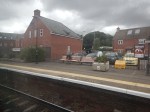



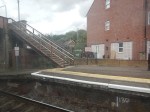

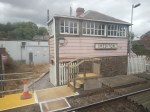


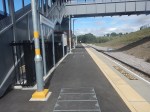

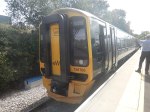



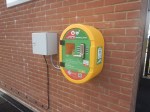
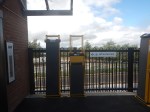



















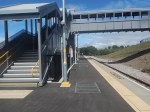
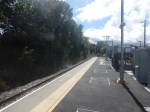



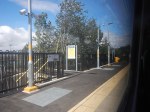


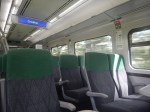
Note.
- Exeter St. Davids station has some interesting artwork and some less than ideal stairs.
- Have you ever seen accident hotspot signs in a station before? I haven’t!
- Crediton station is shared with trains to Barnstaple.
- The bridge at Okehampton Interchange is an unusual cost-saving design, that only uses one lift.
- The car park is generous with 200 spaces.
- All-day parking is available for £2.
- There is storage for cycles.
- There is a defibrillator on the platform.
- The platform is 100 metres long.
- I suspect that with selective door opening a five-car Class 800 or 802 train could use the station.
- The Class 158 train was in excellent condition and was rattling along at a good speed without too much fuss.
I caught the same Class 158 train back to Exeter St. David’s on its return from Okehampton station.
I have some further thoughts.
Buses From Okehampton Interchange Station
Google AI gave me this information.
Bus services connecting directly to the newly opened Okehampton Interchange station include local and regional routes linking to Tavistock, Bude, Exeter, and Launceston.
Active Bus Routes
Service 6: Runs between Bude, Holsworthy, and Okehampton (Stagecoach South West).
Service 66: Connects Okehampton, Cheriton Bishop, and Exeter (Dartline / Stagecoach).
Service 118: Links Tavistock, Brentor, and Bridestowe to the new Interchange station instead of the older town station (Stagecoach).
Service 306: Connects Launceston and Okehampton via Lifton and Lewdown (Go Cornwall Bus).
Okehampton Interchange station appears not to be for just trains only.
The Location Of Okehampton Interchange Station
This Google Map shows the location of Okehampton Interchange station.
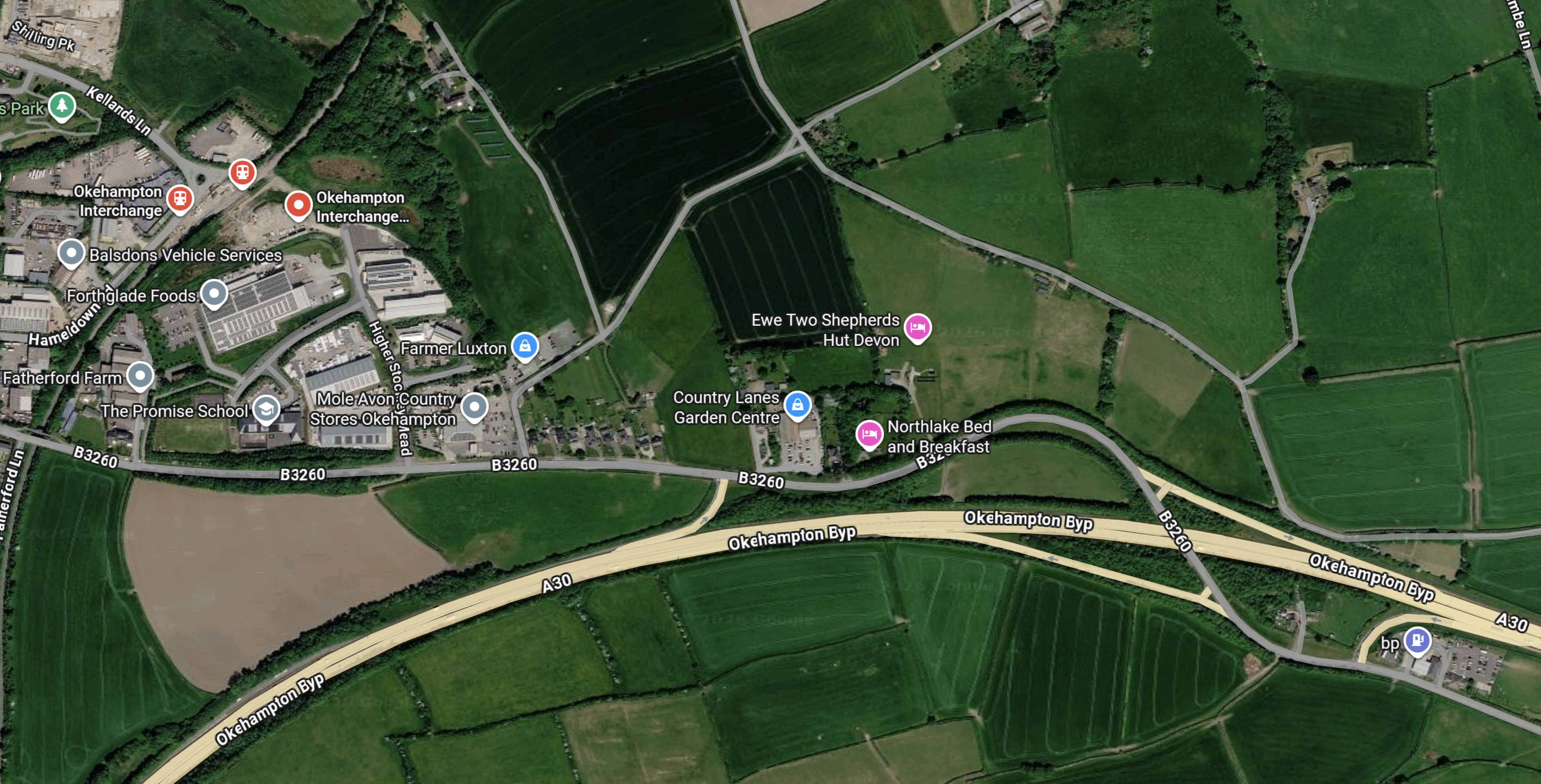
Note.
- This map was created before the station opened.
- Okehampton Interchange station is towards the North-West corner of the map and is indicated by three red dots and
- The distinctive roundabout by the station, that is shown in the pictures, can clearly be seen.
- The station is to the East of the town.
- Running across the bottom half of the map is the Okehampton by-pass.
- The B 3260 appears to connect the town and Okehampton Interchange station to the Okehampton by-pass in the South-East corner of the map, at a comprehensive interchange.
This opening paragraph from the Wikipedia entry for the route, gives a brief description of the road.
The A30 is a major road in England, running 284 miles (457 km) WSW from London to Land’s End.
These towns and cities are served.
- Heathrow Airport
- Staines-upon-Thames
- Basingstoke
- Salisbury
- Shaftesbury
- Yeovil
- Honiton
- Exeter
- Okehampton
- Launceston
- Bodmin
- Newquay
- Truro
- Redruth
- Penzance
Note.
- A good proportion of the route is dual-carriageway.
- It is dual-carriageway between Exeter and Cambourne.
- I suspect some people in North Cornwall may find it more convenient to drive to Okehampton Interchange station for access to trains.
- I wouldn’t be surprised to see some of the new generation of mouse-quiet hydrogen coaches connecting Okehampton Interchange station and the far South-West.
I believe that the usage of the station will exceed the predictions, by a large margin.
Could Okehampton Interchange Station Have Trains To And From London?
This OpenRailwayMap show how the various lines connect at Exeter St. David’s station.
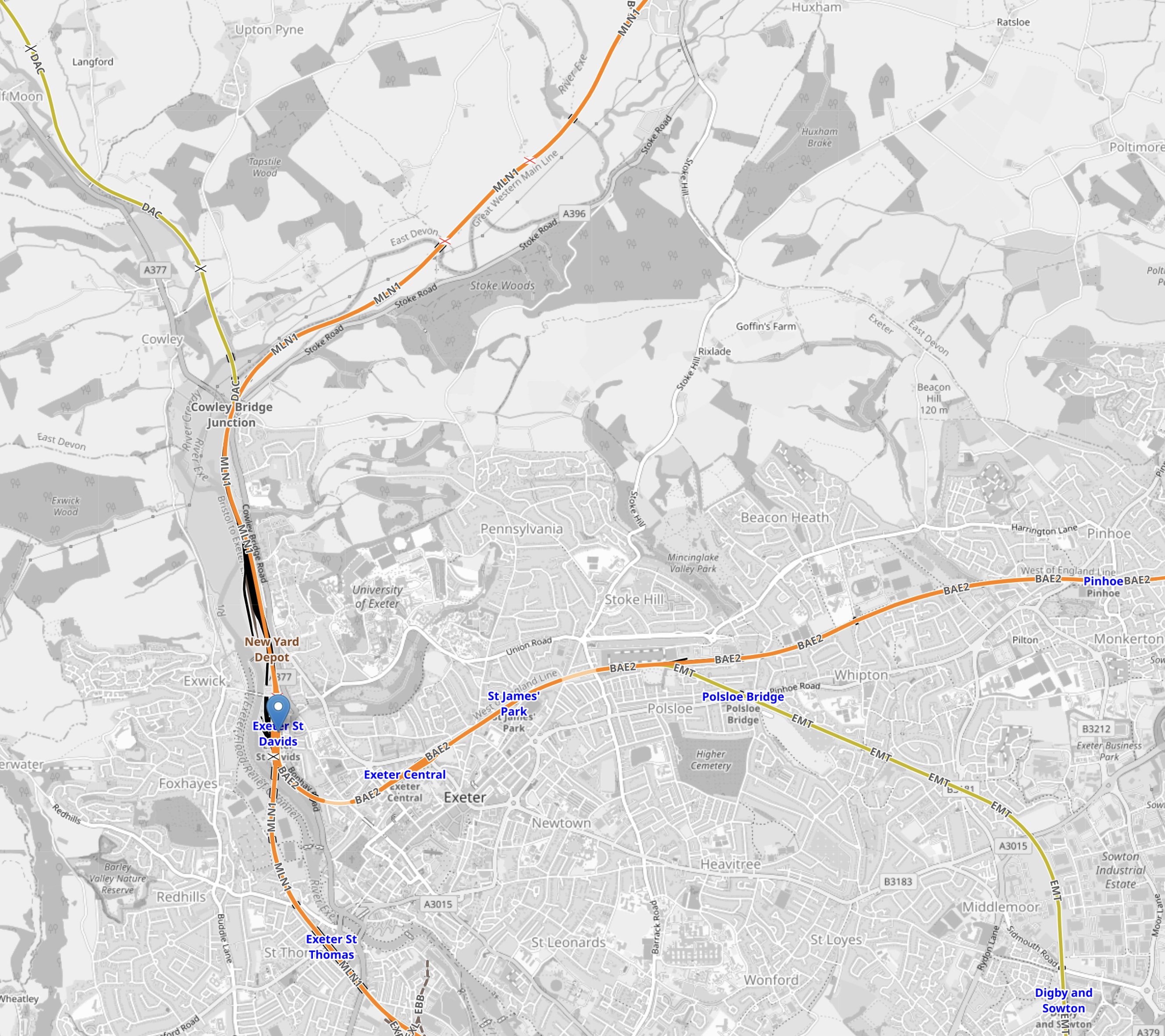
Note.
- Exeter St. David’s station is indicated by the blue arrow.
- The yellow track going North-West leads to the Tarka Line for Barnstaple station and the Dartmoor Line to the Okehampton stations.
- The orange track going North-East is the Great Western Main Line to Taunton, Swindon, Reading and London Paddington.
- The orange track going East is the West of England Main Line to Salisbury, Basingstoke and London Waterloo.
- The yellow track going South-East is the Avocet Line to Exmouth station.
- The orange track going South is the South Devon Main Line to Dawlish, Newton Abbot, Plymouth and ultimately to Penzance.
To access the Dartmoor Line and Okehampton Parkway station.
- Trains from the Great Western Main Line would need to reverse in Exeter St. David’s station.
- Trains from the West of England Main Line would go straight through Exeter St. David’s station.
Note.
- Currently, some trains go between the Tarka Line and Exmouth, by going straight through Exeter St. David’s station.
- I said earlier in this post, that trains serving Okehampton Parkway station would need to be short or use selective door opening.
- South Western Railway have an hourly service between Exeter St. David’s and London Waterloo, that starts from Exeter St. David’s station and could be occasionally extended to Okehampton Parkway station.
- Great Western Railway have a two-hourly service between Exeter St. David’s and London Waterloo, that starts from Exeter St. David’s station and could be occasionally extended to Okehampton Parkway station.
I believe it would be possible to run occasional services between London and Okehampton Parkway station.
Okehampton Interchange Station Opens
Okehampton Interchange station was officially opened yesterday.
This OpenRailwayMap shows the station.

Note.
- Okehampton is to the West.
- There is a single 100 metre long platform on the North side of the single-track Dartmoor Line.
- I suspect, that by using selective door opening, a five-car Class 800/1/2 train could serve the station.
- There is a bridge with lifts between the platform and the car-park.
- It appears there is a drop-off point on the North side of the station.
I have a few thoughts on the design.
Could A Second Track And Platform Be Added?
It would obviously depend on passenger numbers and how they used the station, but it does look as if the station has left space for a second track and platform.
The lifts, that would be needed to cross the tracks have already been installed.
It looks like the station has been designed with this possibility in mind.
Will Any Local Buses Serve Okehampton Interchange Station?
I asked Google AI, the question in the title of this section and received this reply.
New timetables are due 30th August 2026.
118 Tavistock to Okehampton service will be the only bus to connect to the new station, all the other buses currently serving the old station will continue to do so.
That seems to be sensible.
Could Okehampton Interchange Station Be Used As The Eastern End Of An Alternative Route To Cornwall?
This paragraph has been taken from the Wikipedia entry for Dawlish station.
After a major storm in 2014 washed out the track bed and made an 80-metre (260 ft) breach in the sea wall north of the station, plans were developed to reinforce and replace the sea wall around the station area. This work, which was expected to cost £80 million, started in 2020[10] and was largely completed in late summer 2022. During this time, the sea wall walkway was raised to platform level and both platforms were resurfaced. The platform lighting was also improved. An accessible footbridge, built to replace the previous at-grade crossing for passengers who can’t use stairs, opened on 15 March 2024.
The seas along the coast can be ferocious and it would be unwise to say that another major storm will never wash the railway away again.
An in any case, the line to Cornwall will be occasionally closed for engineering works.
But given, that Okehampton Interchange, Launceston and Bodmin Parkway stations are all handy for the a30 road, which is a fast dual carriageway.
I believe that between Okehampton Interchange and Bodmin Parkway stations would be an ideal route for one of the new 10000 km. range hydrogen-powered coaches, that are being developed by Wrightbus and Mercedes among thers.
Wrightbus Launches In Australia With Battery And Hydrogen Buses On Show
The title of this post, is the same as that of this article on Fuel Cell Works.
These two bullet points, act as sub-headings.
- Wrightbus has officially launched its Australian expansion, introducing a range of battery-electric and hydrogen fuel cell buses backed by local sales, service and long-term support
- The move strengthens the company’s international growth strategy as Australia increases investment in zero-emission public transport and heavy-duty decarbonization
This first paragraph adds more details.
Wrightbus has officially entered the Australian market, marking a significant milestone in the Northern Ireland manufacturer’s international growth strategy. The company unveiled its expansion during the Australasia Bus & Coach Expo in Sydney, where it presented its battery-electric and hydrogen fuel cell bus portfolio to operators, government agencies and transport stakeholders. The launch will be led locally by a dedicated Australian team and is supported by a long-term commitment to aftersales service, technical support and partnerships with Australian industry.
I believe that this is the start of something big.
- Wrightbus know how to sell large numbers of buses to conurbations like London, Manchester and Leeds.
- An operator can decarbonise their network in a way that suits them.
- In the Ultroliner, Wrightbus have a bus that can be introduced as a diesel and then converted to hydrogen or electric, when the operator has sorted the fuel.
- Australia must surely be a big market for Wrightbus’s hydrogen-powered coach, with a 1,000 km range on one fill-up.
- It should be born in mind, that the average Wrightbus zero-carbon bus, makes the competition from China look like junks.
Will Wrightbus manufacture the buses and coaches in Ballymena, Malaysia or Australia?
FlixBus Launches New Coach Services For Luton DART Parkway
The title of this post, is the same as that of this article on Luton Today.
These paragraphs describe the service.
Coach brand FlixBus is announcing the launch of a new service between Norwich and Luton DART Parkway from 25 May.
Tickets between Norwich and Luton DART Parkway start at £8.99, while tickets between Thetford and Luton DART Parkway start at £8.49, and tickets between Cambridge and Luton DART Parkway start at £6.99.
Six daily departures each way will offer travellers a convenient, affordable link between East Anglia, Cambridgeshire and Luton airport, ahead of the busy summer season.
Could This Service Be Run By A Hydrogen-Powered Coach?
Luton and Norwich is around 160 km.
So six round trips would be under 2,000 km, which could be run, by two coaches having one fill-up per day.
The Coach Calls At The University Of East Anglia
This will be very convenient for some.
Should The Coach Stop At Newmarket?
Because of the horse racing industry, there are a lot of people travelling between Newmarket and the Dublin area, and the most convenient route is to fly between Luton and Dublin.
Conclusion
This service will be a winner.
Does Okehampton Interchange Have A Secondary Function To Be Used As A Backup To Cornwall Should Dawlish Be Destroyed Again?
I asked Google AI the question in the title of this post and received this answer.
The new Okehampton Interchange (opening summer 2026) acts as a local transport hub to increase capacity on the Dartmoor Line to Exeter, but it is not a direct backup to Dawlish.
While the Okehampton line via Tavistock is frequently considered as a strategic alternative to the vulnerable coastal route, the new Interchange itself is designed as a single-platform parkway station to serve the local community, not to act as a diversionary route for mainline trains to Cornwall.
Key Details on Okehampton Interchange & Strategic Role:
Purpose:
The £15m Interchange, located near the A30, is designed to relieve parking pressure at the existing Okehampton station and promote sustainable travel with a 200-space car park and bus connections.
Station Setup: It will have a single platform, making it incapable of handling the volume of diverted mainline trains.
Strategic Context: Following the 2014 Dawlish collapse, a northern route via Okehampton/Tavistock was identified as a potential resilient alternative.
However, implementing this would require hundreds of millions in investment to rebuild the track from Okehampton through to Tavistock, not just the new Interchange station.
The Dartmoor Line: The restored line between Okehampton and Exeter, which includes this new interchange, is primarily a local commuter route rather than a main line for Cornish traffic.
This Google Map shows the Okehampton by-pass.
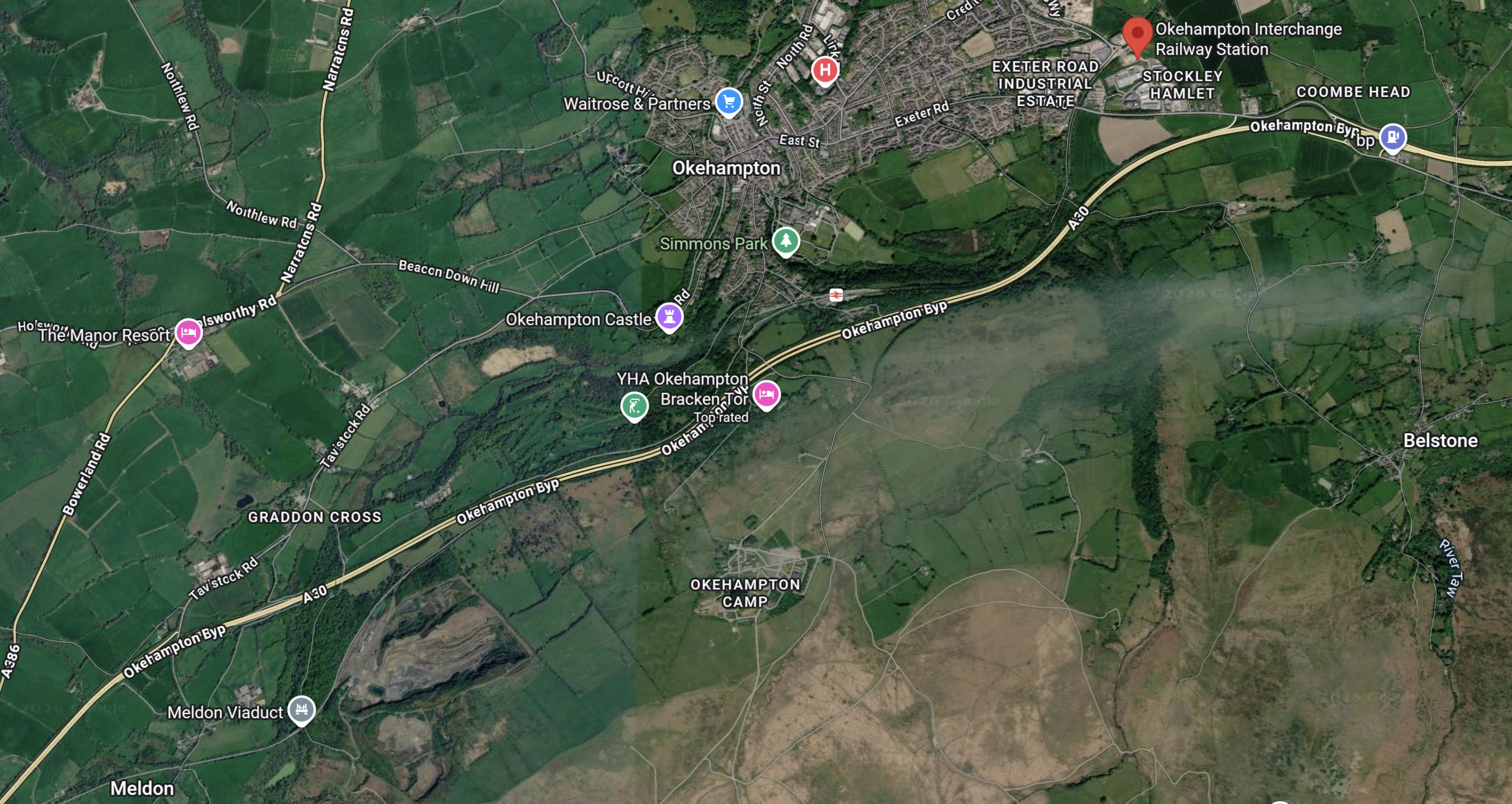
Note.
- Okehampton Interchange station is shown by the red arrow in North-East corner of the map.
- The town of Okehampton is to the West of the station.
- South of the town is the station symbol, which indicates Okehampton station.
Running across the map is the A30 road, which is described in its Wikipedia entry like this.
The A30 is a major road in England, running 284 miles (457 km) WSW from London to Land’s End.
This Google Map shows the A30 between Okehampton and Bodmin.
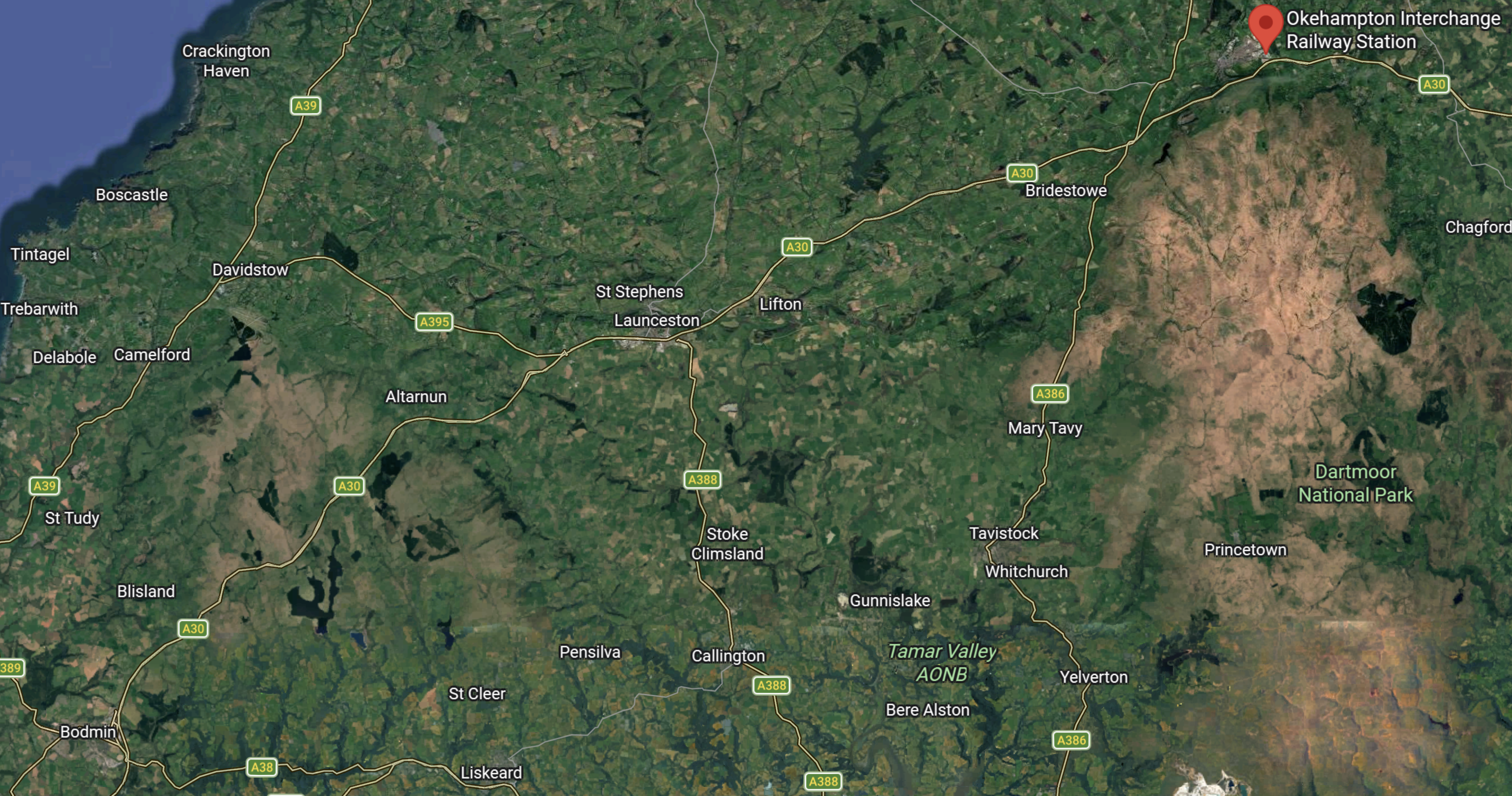
Note.
- Okehampton interchange station is in the North-East corner of the map.
- Bodmin with Bodmin Parkway station is in the South-West corner of the map.
- In the middle of the map is Launceston, which is on route of the A30.
Wikipedia says this about the road.
The A30 is dual carriageway through Devon and into Cornwall, bypassing Whiddon Down, Okehampton and Launceston.
I believe that if the railway was blocked again at Dawlish, it would be possible for passengers to be taken to Cornwall like this.
- Five-car Class 802 train to either of the Okehampton stations.
- Coach to Launceston and Bodmin Parkway.
- Class 802 trains to Penzance, which called at all stations.
That looks to me to be a practical alternative.
It should also be noted, that high-capacity, hydrogen-powered coaches, with a thousand-kilometer range will be coming into service soon and these will surely be ideal for a duty like this.
Could A Feeder Network Of Local Trains Be Developed For HS2 At Macclesfield Station?
Macclesfield station is one of the less important stations that will be served by High Speed Two.
I visited in July 2020 and afterwards wrote Macclesfield Station And High Speed Two.
This OpenRailwayMap shows the railway network around Macclesfield.
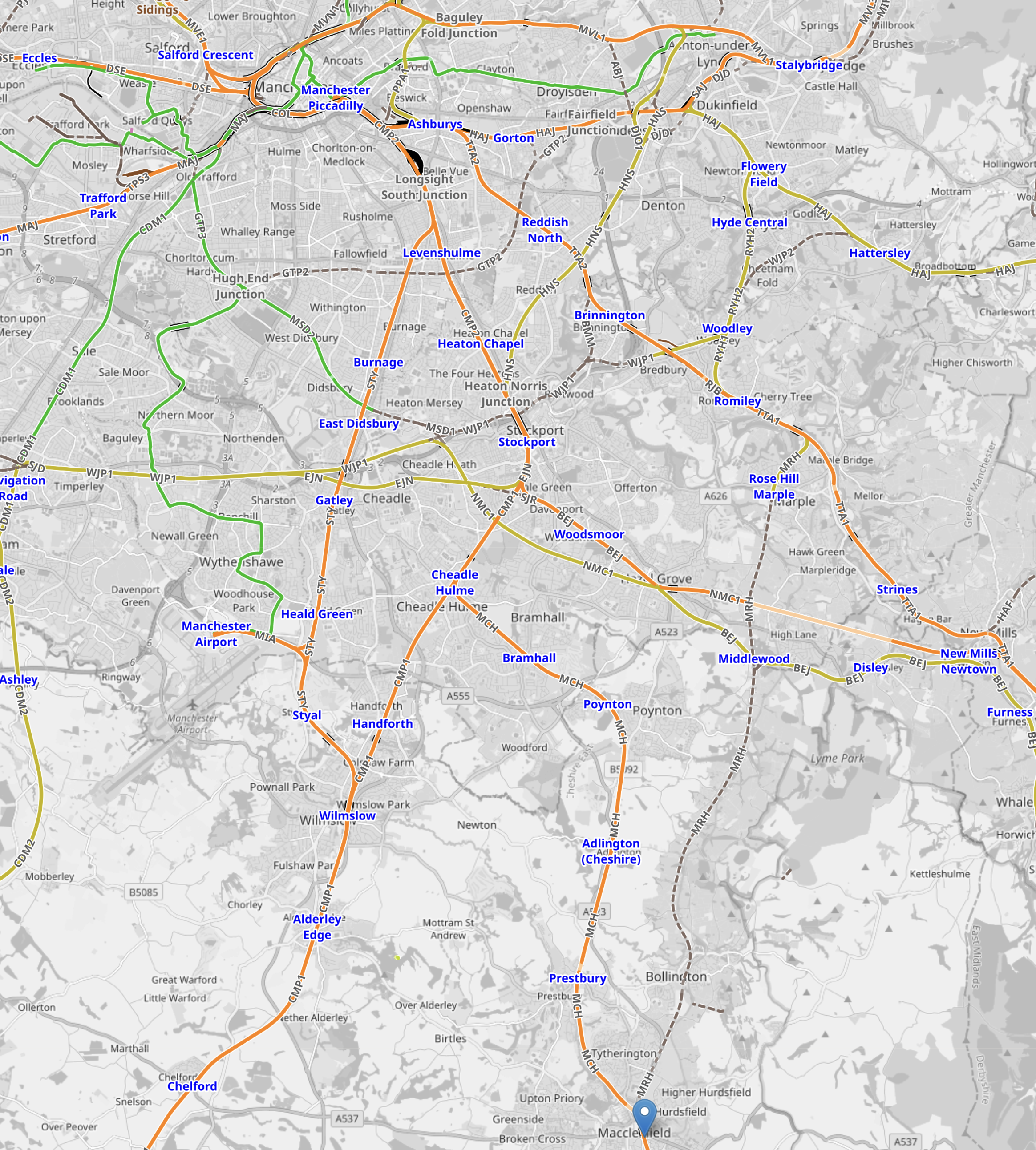
Note.
- Manchester Piccadilly station is at the top of the map .
- The station is surrounded by the green tracks of the Manchester Metrolink.
- Macclesfield station is at the bottom of the map and indicated by a blue arrow.
The West Coast Main Line can be followed North as it threads through Prestbury, Adlington (Cheshire), Poynton, Bramhall, Cheadle Hulme, Stockport, Heaton Chapel, Levenshulme and Ashburys on its way to Manchester Piccadilly.
This summary from the Wikipedia entry for the station outlines the services at the station.
Macclesfield is served by three train operating companies: Avanti West Coast, CrossCountry and Northern Trains.
Northbound to Stockport and Manchester Piccadilly, Avanti West Coast and Northern operate hourly services, with some peak time extras, and CrossCountry runs two services an hour.
Southbound, there are also four trains per hour: one stopping service to Stoke-on-Trent, operated by Northern Trains; one inter-city service to London Euston, operated by Avanti West Coast; one to Bournemouth, via Birmingham New Street and Reading; and one to Bristol Temple Meads, both operated by CrossCountry.
Sunday services are similar, but the local stopping service operated by Northern Trains no longer runs on Sunday, with rail replacement bus services operating between Stockport and Stoke-on-Trent.
It is not as busy a station, as the map suggests it is.
Searching in detail, I found these local trains.
- CrossCountry – 1 – tph – Manchester Piccadilly and Bournemouth via Stockport, Macclesfield, Stoke-on-Trent and Stafford
- CrossCountry – 1 – tph – Manchester Piccadilly and Bristol Temple Meads via Stockport, Macclesfield, Stoke-on-Trent and Stafford
- Northern – 1 tph – Manchester Piccadilly and Stoke-on-Trent via Stockport, Cheadle Hulme, Bramhall, Poynton, Adlington, Prestbury, Macclesfield, Congleton and Kidsgrove
Three trains per hour is not many.
The train and bus network from Macclesfield station needs to be developed, so travellers can make full use of HS2.
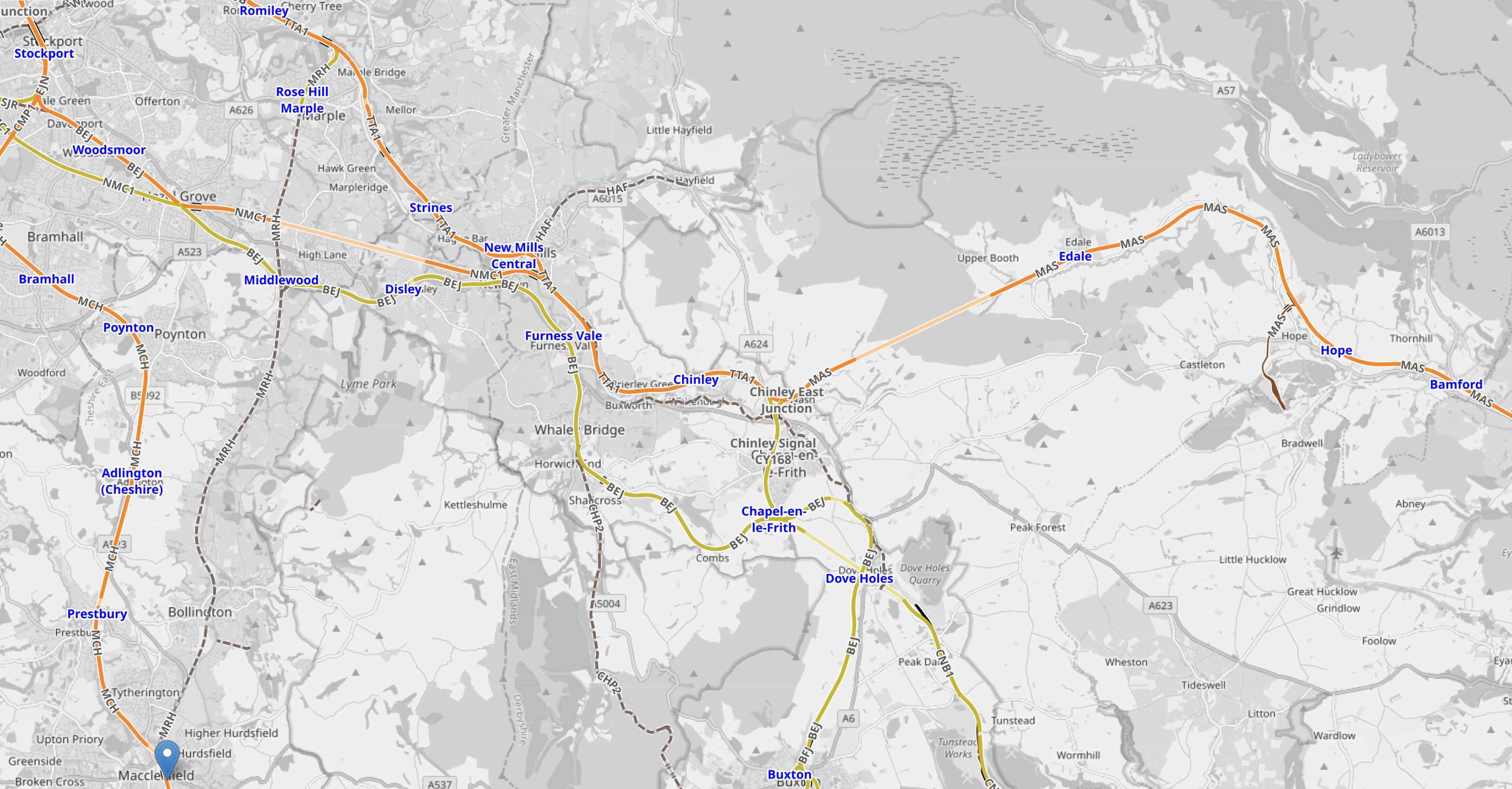
This second OpenRailwayMap shows the railway network to the East of Macclesfield.
Note.
- Macclesfield is in the South-West corner of the map.
- Stockport is in the North-West corner of the map.
- The orange track that stretches across the map is the busy Hope Valley Line, which is an important passenger route between Manchester and Sheffield and an important freight route for the quarry products of the Peak District to the South.
- The Buxton Line comes South from the Hope Valley Line to Chapel-en-le-Frith, Dove Holes and Buxton.
I believe a strong case can be made to link the area to the East of Macclesfield to HS2.
These points must be considered, when designing a road transport network to feed travellers from the East of Macclesfield.
Bakewell
Bakewell is the largest settlement and only town within the boundaries of the Peak District National Park.
I believe that travellers to Bakewell, would use a quality transport network to HS2 at Macclesfield.
Buxton
These are facts from Buxton’s Wikipedia entry.
- Buxton is a spa town of 20,000 people.
- It is England’s highest market town, sited at some 1,000 feet (300 m) above sea level.
- The University of Derby is a noted employer.
- Tourism is a major industry, with over a million visitors to Buxton each year.
- The Buxton Line connects Buxton to Stockport and Manchester Piccadilly.
I believe that travellers to Buxton, would use a quality transport network to HS2 at Macclesfield.
The Cat And Fiddle Inn
The road between Macclesfield and Buxton passes the famous Cat and Fiddle Inn.
This is the first paragraph of the Wikipedia entry for the public house.
The Cat and Fiddle Inn is a former public house in the English Peak District, close to the border between Cheshire and Derbyshire. It sits on the A537 road from Macclesfield to Buxton, which runs across a high and remote area of moorland. A section of the road is known as the “Cat and Fiddle Road” after the inn. The building is some 1,689 feet (515 m) above sea level, and it was the second-highest public house in Britain before it closed in 2015 (the Tan Hill Inn in Yorkshire is slightly higher). In 2020, it reopened as a distillery, shop and bar.
I visited it once in the 1960s with my future wife and two friends.
These roads in the Peak District will be challenging roads for modern electric buses.
Chatsworth House
I have never been to Chatsworth House and no very little about the house and its history.
So I asked Google AI,”Is Chatsworth House A Major Tourist Attraction?” and received this reply.
Yes, Chatsworth House is a major tourist attraction, frequently cited as one of the UK’s most popular country houses and a top destination in the Peak District. Located in Derbyshire, it draws hundreds of thousands of visitors annually to explore its historic house, 105-acre garden, farmyard, and massive parkland.
Key Reasons for Its Status:
Cultural Significance: As the home of the Cavendish family since 1549, it holds significant art collections (Old Masters, modern sculpture, Egyptian artifacts).
“Palace of the Peak”: Known for its grand interiors, including the Painted Hall and Sketch Galleries.
Famous Grounds: Features a 105-acre garden with a maze, cascading water features, and the impressive Emperor Fountain.
Media Appearance: Known as the real-life Pemberley from the 2005 Pride & Prejudice film.
Family Activities: The estate includes a popular farmyard and adventure playground.
Chatsworth is often ranked as a favorite stately home in Britain and is a key visitor attraction in the East Midlands region.
As with Buxton, I believe that travellers to Chatsworth House, would use a quality transport network to HS2 at Macclesfield.
Chesterfield Station
Chesterfield station is a major station on the Midland Main Line, close to the East side of the Peak District.
Chesterfield station is the following distances from these towns and attractions.
- Bakewell – 12-13 miles
- Buxton – 24-25 miles
- Chatsworth House – 12 miles
- Macclesfield – 35-40 miles
Chesterfield has no direct rail connection to any of these towns, but I think you can get to Buxton with changes at Sheffield and Hazel Grove.
The Wikipedia entry for Chesterfield station gives this description of services at the station.
Chesterfield is served by three train operating companies:
- East Midlands Railway operates regular inter-city services on the Midland Main Line between Sheffield and London St Pancras, via Derby and Leicester; this includes the 07:45 southbound departure, the Master Cutler. It also runs a route between Liverpool and Norwich, via Manchester Piccadilly and Nottingham.
- Northern Trains runs an hourly service between Nottingham and Leeds.
- CrossCountry operates a regular service between Sheffield and Derby; trains continue on to a variety of final destinations including Glasgow Central, Edinburgh Waverley, Plymouth, Reading, Southampton Central and Bristol Temple Meads.
There are typically 12 passenger trains per hour passing through the station on weekdays (six in each direction), with ten of those calling.
I believe that if a transport network is developed to the East of Macclesfield, it should call at Chesterfield station.
Dore & Totley Station
Dore &Totley station is the nearest station to Sheffield at the Sheffield end of the Hope Valley Line.
I wrote about the station in Dore & Totley Station – 1st April 2025 and after a sympathetic restoration, it is now a superb step-free station.
These pictures give a flavour of the station.





The second picture, appears to show a pair of bus stops on the main road.
If these aren’t considered adequate, I’m sure space could be found in the car park for a bus stop with level access to the station.
Hazel Grove Station
Hazel Grove station is the nearest station to Stockport at the Manchester end of the Hope Valley Line.
I wrote about the station in Hazel Grove Station and it is a rather ordinary station with car parking and step-free access.
Passengers can also change trains for the Buxton Line.
HS2 Day Trips
Toyota’s Trial Of Hydrogen Buses In The Peak District
To find out more of this, I typed the title of this section into Google AI, and received this answer.
Toyota conducted a two-week trial of hydrogen fuel cell buses in the Peak District National Park in September 2022 to promote sustainable tourism and reduce carbon emissions. Using CaetanoBus H2.City Gold vehicles, the trial aimed to connect key tourist sites without relying on private cars. This initiative supports a long-term goal of launching the “Peak Express” service by 2025.
Key Details of the Peak District Hydrogen Bus Trial
Purpose: The trial was designed to reduce the high reliance on cars (85% of visitors) in the national park, aiming to cut emissions by 3.6 million kg a year once fully operational.
Vehicles: The trial used hydrogen fuel cell electric buses manufactured by CaetanoBus, which is part of Toyota’s European partner network. These buses provide a range of up to 200 kilometers and can be refueled in 10-15 minutes.
Route: The hydrogen buses operated in and around the Peak District, connecting major spots including Chesterfield railway station and Chatsworth.
The “Peak Express” Initiative: Led by the Gateway at Peak development, this project plans a full service by 2025 to offer sustainable transport options.
Multi-technology Strategy: Toyota is testing both hydrogen fuel cell electric vehicles (FCEV) and battery electric vehicles (BEV) to determine which is most suitable for different types of journeys.
The trial was part of a larger push to test hydrogen infrastructure, with long-term plans to create multiple hubs around the Peak District National Park boundary.
The experience from my trip to Gatwick, that I described in Sutton Station To Gatwick Airport By Hydrogen-Powered Bus, has convinced me, that where bus and hills are involved, you need to have hydrogen buses, as they torque the torque.
Conclusion
I believe that the Peak District and Toyota are on the right track, but I strongly believe that any buses ferrying passengers around the Peak District, need the extra torque that hydrogen will provide.
The bus also must be large enough.
I also wonder, if as the service will be serving Chatsworth, that a hydrogen-powered coach might be a better choice of vehicle.
Hydrogen-Powered Coaches
The first hydrogen-powered coaches will becoming into service this year.
- Mercedes and Wrightbus have both said they will launch vehicles.
- Two and three-axle models have been talked about.
- Ranges of a thousand kilometres on a single tank of hydrogen seem to have been promised.
- Typical load will be about eighty passengers, which will include wheelchairs.
- Like the bus between Sutton station and Gatwick Airport, they will be mouse-quiet.
I believe they will become a valuable part of the public transport network.
- Running long distance coach services.
- Extending long-distance rail services.
- Running special services over long distances, like those for football supporters.
- Running rail replacement bus services for rail companies.
I can’t wait to have my first ride.
Toyota Won’t Give Up On Hydrogen, Teams Up With Truck Giants
The title of this post, is the same as that of this article on TorqueCafe.
This is the sub heading.
Japanese car giant Toyota has signed a non-binding MoU to collaborate with Daimler Truck and Volvo Group on hydrogen fuel cells.
These three paragraphs add more details.
Toyota just won’t let its hydrogen-fuelled dreams die, this week announcing it wants to further develop fuel cell technology with two big players in the heavy vehicle market.
Daimler Truck (makers of Mercedes-Benz, Freightliner, Western Star and Fuso trucks) and the Volvo Group (responsible for Volvo, Mack and Renault trucks), already have a joint venture, cellcentric, which Toyota has signed a non-binding Memorandum of Understanding to join.
Split between equal shareholding, a joint press release said “the combination of the parties’ complementary experience and know-how will support and advance their joint objective to develop, produce and commercialise fuel cell systems for heavy-duty vehicles and other heavy-duty applications with comparable requirements”.
The rest of the article gives a summary of where Toyota are with hydrogen.
It is worth a thorough read.
Backing hydrogen you have Centrica, Ceres, Cummins, Daimler, Hyundai, JCB, INEOS, Kia, Ryse, Volvo, Wrightbus and a few others.
Will they prevail against a cynical world?
I think it will be one iconic vehicle, that excites the world. I will nominate.
- A 1000 km. range hydrogen-powered coach from Mercedes, Solaris, Volvo or Wrightbus.
- A large American-style pickup from Dodge with a Cummins engine or from Toyota.
- A large American-style truck.
- A remodelling of the iconic London new Routemaster bus with a hydrogen Cummins engine by Wrightbus.
- A small affordable hydrogen hatchback from the French, Toyota or the Koreans, based on a fuel cell and an electric transmission.
When I was a child the icon was a dragline called Big Geordie, who is shown in this video.
I suspect for some of the mining projects in the world today, a hydrogen-powered Big Geordie would make a good fist of it.
FEV And Daimler Buses Create Hydrogen Coach Demonstrator
The title of this post is the same as that of this article on Automotive World.
This is the sub-heading.
Daimler Buses and engineering firm FEV have developed a hydrogen fuel cell-powered Setra coach, marking the first hydrogen demonstrator vehicle in the coach segment for the Daimler Truck subsidiary. The H₂ Coach technology demonstrator, which was handed over to Daimler Buses in summer 2025 following approximately two years of development and approval by German technical inspection authority TÜV, offers a range of at least 800 kilometres per tank filling and is intended for testing purposes.
The article also has a picture, which shows.
- A typical modern coach design with three axles.
- Setra H2 Coach branding.
- A Slogan of “Travelling Towards a Sustainable Future”
It looks very similar to images of Wrightbus’s three-axle Contour design. But that would mean, they could fit similar infrastructure.
But when I asked Google AI, when the Wrightbus three-axle hydrogen coach would enter passenger service, I received this answer.
Wrightbus’s three-axle hydrogen fuel cell electric coach is planned for launch in 2026. The company, which is developing the vehicle in Ballymena, Northern Ireland, has confirmed the project is aimed at decarbonising long-distance travel, with a projected range of up to 1,000 km.
It would appear that Wrightbus are ahead on range and timescale.

