Thameslink To Rainham
Modern Railways in August 2016, said that Thameslink would be running a two trains per hour (tph) service between Luton and Rainham via Greenwich and Dartford.
GTR’s Proposals
This document on their web site gives these outline proposals for Kent Thameslink services.
This is the opening paragraph.
Proposed new all-day Monday to Friday, Saturday and Sunday Thameslink service on the North Kent line via Greenwich, Dartford and Medway Towns.
They describe it in more detail later.
New cross-London journey opportunities providing multiple connectivity opportunities will be created between Luton – St Albans City – West Hampstead Thameslink – Central London (via London Bridge) – Greenwich – Abbey Wood – Dartford – Rochester – Rainham. This new route will provide multiple new connections with the new east to west Elizabeth Line (formally Crossrail) at Abbey Wood. The route can also be operated by 8 or 12 car trains.
I will now add a few comments.
The Eastern Terminal
In Rainham (Kent) Station, I took a look at the proposed terminal.
- Rainham station is Thameslink-ready with a bay platform 0 of sufficient length for a twelve-car Class 700 train.
- Rainham station can probably handle the two trains per hour (tph) from Luton without undue fuss.
- Rainham as a terminal means the string of important stations in the Medway towns, which includes Gravesend, Strood, Rochester, Chatham and Gillingham, could all be served by Thameslink.
- The only other station beyond Gravesend with a bay platform is Rochester.
- Terminating at Rainham doesn’t increase the train frequency over the busy level crossing.
- Terminating at Rainham gives 5 tph from Gravesend to Rainham and 7 tph between Rochester and Rainham, which creates a high-capacity frequent route through the Medway Towns.
It would appear to be the sort of choice, that is difficult to fault.
Should The Thameslink Service Stop At More Stations?
Coming back from Rainham today, I took a Highspeed service to Gravesend, from where I caught a Gillingham to Charing Cross service that was following a few minutes behind.
As there are several stopping services on the line, perhaps stopping at a few important stations will be sufficient.
- Greenhithe for the shopping at Bluewater.
- Dartford for all the connectivity.
- Abbey Wood for Crossrail.
- Greenwich for the culture and the Docklands Light Railway.
Stopping patterns could be altered to fit traffic patterns, passengers requirements and new property developments
Eight-Or Twelve-Car Trains
It would all depend on the traffic, but there doesn’t seem to be any reason why either train size can’t be used between Luton and Rainham.
Related Posts
A Design Crime – Ebbsfleet International Station
Between Abbey Wood And Belvedere Stations
Connecting North Kent And The Medway Towns To Ebbsfleet International Station
Extending Crossrail To Gravesend
What Do You Do With A Problem Like Sheppey?
A Twelve-Car Ready Railway
On my trip to Rainham station in Kent, I went through numerous stations.
I took this picture.

A Twelve-Car Ready Railway
Note the blue 10-12 sign, which indicates the stopping point for trains between ten and twelve cars.
I’m pretty certain that all stations between London Bridge and Rainham can accommodate trains of this length, as there were blue twelves everywhere.
To the East of Rainham, a good proportion of the services are run by six-car Class 395 trains. As these can run in 12-car formations, I suspect that most platforms have been made long enough.
This railway is probably future-proofed with regards to train length.
It will certainly accept.
- Crossrail’s Class 345 trains.
- Highspeed’s Class 395 trains running as a twelve-car.
- Thameslink’s Class 700 trains, running as eight-car or twelve-car.
- Electrostars in various lengths.
Sadly, not all rail lines in the UK have been built with long enough platforms and extending some will be difficult.
Related Posts
A Design Crime – Ebbsfleet International Station
Between Abbey Wood And Belvedere Stations
Connecting North Kent And The Medway Towns To Ebbsfleet International Station
The Great Northern Metro
Govia Thameslink Railway have just announced their proposals to create a Great Northern Metro.
This was something I speculated about in A North London Metro.
GTR’s Proposals
This document on their web site gives these outline proposals.
- 2018 timetable will provide new connections and increase capacity.
- More frequent trains to provide a ‘true’ metro service.
- New air-conditioned trains from 2018.
It looks like I got those right
These are other proposals.
14 Trains Per Hour To/From Moorgate in The High Peak
Currently, a maximum of 12 trains per hour (tph) can get in and out from Moorgate station in the High Peak.
Raising it by two to 14 tph surprised me, but it says that they have found a way with the new trains to save time possibly by using better technology to change the voltage quicker at Drayton Park.
Effectively, the headway between trains is being reduced from five minutes to four and a half minutes.
One big advantage for people like me, who live close to a Southern station on the line, as I do with Essex Road station, is that going North in the morning rush and South in the evening rush, will be easy.
Services To/From Moorgate in The Off Peak
This is a summary of the changes in the Off Peak.
- 6 tph to Hertford North – Up from 3 tph
- 4 tph to Welwyn Garden City – Up from 3 tph
- 2 tph to Stevenage – Up from 1 tph
- Sunday services are 4 tph to both branches and 2 tph to Stevenage.
On the other hand, it appears there will now be no direct trains between Moorgate and Letchworth Garden City.
My local station is Essex Road and I regularly use the line to go North and South between Moorgate and Alexandra Palace.
Instead of a measly six tph, I’ll now be getting 10 tph all day, with 8 tph on Sundays.
I thought it would be four tph to Hertford North and Welwyn Garden City, so they’re actually going to do better than I thought they would.
An Eastward Shift In Services
The two branches used to be treated fairly equally with 3 tph on each.
But now it appears that Hertford North gets preference.
But then the East Coast Main Line will be getting Thameslink services.
- 6 tph stopping at Finsbury Park
- 0 tph stopping at Alexandra Palace
- 2 tph stopping at Potters Bar
- 2 tph stopping at Welwyn Garden City
- 6 tph stopping at Stevenage
Note that these are very much a summary.
Problem! – Will Thameslink Stop At Alexandra Palace?
,I do hope that Thameslink services not stopping at Alexandra Palace, when they stop at places like Oakleigh Park is a typo.
Consider.
- Alexandra Palace is the last station before the Hertford Loop Line splits from the East Coast Main Line.
- Alexandra Palace has an attraction that passengers might want to visit.
- Alexandra Palace station may well be served by Crossrail 2.
But most importantly, Alexandra Palace could have a cross-platform and/or same-platform interchange between Great Northern Metro services on both routes and Thameslink.
So it would be a good interchange for eighty-year-old Aunt Mabel going from Enfield Chase to Gatwick Airport with her suitacse full of presents for her grandchildren.
My Link To Thameslink Going North
I laid this out in My Links to Thameslink and I suspect from 2018, I’ll take bus to Essex Road station and then take the Great Northern Metro to Finsbury Park.
I don’t think I’ll be alone, in using the Great Northern Metro to get access to Thameslink to go North.
My Link To Thameslink Going South
I laid this out in My Links to Thameslink and I suspect from 2018, I accept what GTR offer or take the Essex Road and Finsbury Park route.
- Highbury And Islington Station
But what would help everybody within a couple of miles or so of Highbury and Islington station, is to upgrade the station to the Twentieth Century.
- Provide a second entrance on the North side of Highbury Corner roundabout, where there is a disused station entrance.
- Provide a better connection between the Northbound and Southbound deep-level platforms.
- Provide full step-free access to the deep-level platforms.
- Improve the lighting and ambience in the deep-level platforms.
Talking to someone who works in the station and is obviously familiar with the tunnels, he felt, as I do, that there are fairly simple solutions to sorting out the deep-level platforms.
I would do the following.
- Open up the second entrance.
- Create a subway under Holloway Road.
- Improve the walking routes and access to buses outside the station.
- Put lift access from the new entrance to a passage that would cross all four deep-level lines.
- Provide step-free access from the cross-passage to the four deep-level lines.
- Replace the stairs connecting the two Southbound platforms
Unfortunately, I suspect that the new road bridge over the railway in front of the station has probably been built without leaving space for the subway.
The Link To Crossrail
In Liverpool Street Crossrail Station Disentangled, I showed that changing between Crossrail and the Northern City Line at Moorgate could be easy.
Now that the service into Moorgate will be 10 tph all day, with 8 tph on Sundays, the line will become an important link to Crossrail for a large area of North London.
Consider.
- The Piccadlly Line has no connection with Crossrail, so changing at Finsbury Park for Moorgate might be the quickest way to get to the new line.
- The Victoria Line has no connection with Crossrail, but there is cross-platform interchange at Highbury and Islington with the Great Northern Metro.
- The North London Line connects to the Great Northern Metro at Highbury and Islington.
Taken together, the Piccadilly Line, Victoria Line and the Great Northern Metro, with help from more local transport methods like bikes and buses, will certainly improve the link to Crossrail for a large area of Enfield, Hackney, Haringey, Islington and Waltham Forest.
My only worry, is that as the Great Northern Metro gives such good access to Crossrail for such a wide area of London and South Hertfordshire, that the planned 10 tph into Moorgate all day, with 8 tph on Sundays, will be too low.
At least the improvements to the service are coming in around 2018, which would be before Crossrail opens in 2019.
Once Crossrail opens, I suspect, it will give me a better link to Thameslink, especially when I need to go South.
Conclusions
The service is a great improvement on the current one. But I predicted that!
The service is going to meet what I suspect, GTR hope it will.
As an average punter on the Northern City route from Essex Road, I will get a lot more trains.
I shall certainly use Essex Road and Finsbury Park to get to Cambridge.
It’s a pity it doesn’t help to use Thameslink in the difficult direction to the South.
Related Posts
GTR’s 2018 Timetable Consultation
Liverpool Street Crossrail Station Disentangled
Along The North Kent Line
The North Kent Line has seen some changes in the last few years and could see some more in the next few.
Starting from the terminal in London Bridge, which itself is going through a massive upgrade, these improvements have been done or will happen.
Woolwich Arsenal
Woolwich Arsenal station has from 2009 provided a direct link to the Docklands Light Railway, giving a direct connection to London City Airport and Bank.
In 2019, Woolwich station on Crossrail will open, which will be two hundred metres away from Woolwich Arsenal station. This will probably not have a direct effect on Woolwich Arsenal station, but two stations will certainly stimulate development in the area.
I doubt many will use this station to interchange between the North Kent Line and Crossrail, as it looks like the connection at Abbey Wood station could be easier.
Abbey Wood
Abbey Wood station is being rebuilt and in December 2018, Crossrail will start services at the station to Paddington via Canary Wharf and the central tunnel.
Wikipedia says this about Crossrail services at Abbey Wood station.
Abbey Wood is the terminus of one of two eastern branches of Crossrail and will offer cross-platform interchange between terminating Crossrail services (at 12 trains per hour on new line) and existing Southeastern services (along existing tracks)
Plans are always being talked about to link Abbey Wood station to the North Bank of the Thames at either Gallions Reach or Barking Riverside.
I doubt it will happen in the next ten years.
Dartford
Dartford station has from the beginning of this year been one of London’s contactless ticketing stations, as is reported in Oyster and Contactless Bank Cards, under the station’s Wikipedia entry.
Don’t be surprised if this creeps outwards from London.
Greenhithe
Greenhithe station was rebuilt in 2008 and is the station for Bluewater.
Because of the Shopping Centre, Greenhithe will probably be a station that could benefit from contactless ticketing.
Northfleet
Northfleet station is the closest to Ebbsfleet International and we could see an improved link between the two stations.
As Northfleet could have upwards of four trains per hour (tph) stopping in both directions, a frequent shuttle bus, could be an affordable option.
Smaller Stations
There are several smaller stations between London Bridge and Gravesend.
I’m obviously not sure, but on a quick look all of them seem ready to accept the long trains, that will be used by both Thameslink and Crossrail.
Gravesend
Gravesend station was remodelled in 2013 and now has two long through platforms and a bay platform.
Crossrail to Gravesend
Under Future in the Wikipedia for Gravesend station, this is said.
In December 2008, the local authority for Gravesend (Gravesham Council), was formally requested by Crossrail and the Department for Transport, to sanction the revised Crossrail Safeguarding. This safeguarding provides for a potential service extension, from the current south of Thames terminus at Abbey Wood, to continue via the North Kent Line to Gravesend station. The Crossrail route extension from Abbey Wood to Gravesend and Hoo Junction, remains on statute. With current services from Gravesend to London Bridge, Waterloo East and London Charing Cross being supplemented by highspeed trains from the end of 2009 to St Pancras, the potential in having Crossrail services from central London, London Heathrow, Maidenhead and/or Reading, terminating at Gravesend, would not only raise the station to hub status but greatly contribute towards the town’s regeneration.
At present, Gravesend station has the following services.
Typical off-peak services are:
- 2 tph Highspeed services in each direction between London St. Pancras, Ebbsfleet intewrnation and Faversham and the East.
- 2 tph Southeastern services between London Charing Cross and Gillingham.
- 4 tph Southeastern services between London Charing Cross and Gravesend.
From 2019, Thameslink are saying that they will be running two tph between Rainham and Luton via Dartford and Greenwich.
This will mean that eight tph in each direction will go between Gravesend and Dartford, with another two tph going between Gravesend and Ebbsfleet International.
Because of the new Thameslink service, the train frequency between Gravesend and Gillingham will increase from the current four tph to six tph.
I think that although Gravesend will be the nominated terninal for Crossrail, the trains will actually reverse direction at Hoo Junction, so there will no need to use any platform space at Gravesend to prepare the train for its return journey.
At present, Wikipedia is saying this will be the Morning Peak service from Abbey Wood station.
- 4 tph to Heathrow Terminal 4
- 6 tph to Paddington
- 2 tph to West Drayton
With this Off Peak service.
- 4 tph to Heathrow Terminal 4
- 4 tph to Paddington
What the current North Kent Line can handle would probably determine how many Croosrail trains went to Gravesend and Hoo Junction.
But Crossrail won’t be short of seats to really provide a superb service to and from the Medway Towns.
I have a feeling that once Crossrail is running successfully, the traffic will define, if, when and how any extension to Gravesend is built.
But the creation of the extension to Gravesend and Hoo Junction will not be a massive undertaking.
- The depot and other facilities at Hoo Junction will have to be built.
- Could the depot at Hoo Junction be without electrification? If the Class 345 trains have sufficient onboard energy storage, which I believe could be the case and I wrote about in Bombardier’s Plug-and-Play Train, then this is a serious possibility, which would save money and time in building the depot.
- All platforms are probably long enough for the Class 345 trains.
- The Crossrail train specification says that trains must have the potential to be converted for third rail operation. The similar Class 710 trains will have this capability.
- Judging by my observations in Between Abbey Wood And Belvedere Stations, I feel that Abbey Wood station is probably capable of handling the same number of trains going further down the line.
- The signalling would have to be adjusted for the new service pattern.
But there would be no tunnelling and no major electrification on the North Kent Line.
Perhaps, the only major expenses would be.
- Building the depot/reversing sidings and facilities at Hoo Junction.
- Any extra trains needed.
- The cost of any rail link into Ebbsfleet International station.
So I doubt, we’ll be talking large numbers of billions.
Class 395 Trains
The Class 395 trains are normally six-car trains, but they can work in pairs as twelve-cars.
This probably means that any station, where the Highspeed service calls can handle a twelve-car train.
Strood
Strood station was updated in 2009 for the Highspeed service. Ready for Crossrail/Thameslink.
Rochester
Rochester station was rebuilt in 2016. Ready for Crossrail/Thameslink.
Chatham
Chatham station accepts twelve-car trains. Ready for Crossrail/Thameslink.
Gillingham
Ready for Crossrail/Thameslink.
Gillingham station is an interchange with two long platforms and a bay platform.
Five tph including two Highspeed services pass through the station and two tph go to and from London Charing Cross.
From 2019, there will be another two Thameslink tph between Luton and Rainham stopping at the station.
All this adds up to comprehensive service which stretches out to several London termini and the Kent Coast.
London Bridge, Abbey Wood and Gravesend all have at least four tph from Gillingham.
Rainham
Ready for Crossrail/Thameslink.
Rainham station has been updated in the last couple of years. An Update section in the Wikipedia entry, says this.
As part of the rebuild of Rochester Station, a new Up Bay Platform has been added.
Trains are now able to use this new platform as the East Kent Resignalling Project has been completed. At present, only a couple of trains use it in the evening rush hour.
The East Kent Resignalling Project is described on this page of the Southeastern web site.
These improvements are noted.
- New £26 million station at Rochester
- 250 new signals to replace old signalling equipment
- Disabled access at Strood station
- New bay platform at Rainham
- Safer level crossings fitted with obstacle detection technology at Aylesford, Yalding, Beltring, Wateringbury, East Farleigh, Cuxton and Snodland
- Centralisation of signalling control to Gillingham and the decommissioning of several signal boxes.
It would appear that a updated railway and a short series of good stations through the Medway Towns has been created, that can handle the increased frequencies.
Thameslink To Rainham
Modern Railways in August 2016, said that Thameslink would be running a two tph service between Luton and Rainham via Greenwich and Dartford.
The new bay platform at Rainham would be ideal for this service.
Onward From Rainham
There doesn’t seem to be many changes to what services are run now.
Conclusions
Everything seems to fit together rather well.
- Twelve-car platforms seem universal or at least where needed.
- The signalling is up to scratch.
- The new bay platform at Rainham makes the new two tph Thameslink service to Luton deliverable.
- To extend Crossrail to Gravesend probably just needs the new depot at Hoo Junction.
- Dartford to Rainham gets at least a four tph service with six car or longer trains.
The only area, where nothing has been published, is how to incorporate Ebbsfleet International station into the network.
I think it could suffer from London Overground Syndrome. This is my definition of the disease.
This disease, which is probably a modern version of the Victorian railway mania, was first identified in East London in 2011, when it was found that the newly-refurbished East London Line and North London Line were inadequate due to high passenger satisfaction and much increased usage. It has now spread across other parts of the capital and across the UK, despite various eradication programs.
It is usually solved by adding more capacity.
Related Posts
A Design Crime – Ebbsfleet International Station
Between Abbey Wood And Belvedere Stations
Connecting North Kent And The Medway Towns To Ebbsfleet International Station
Extending Crossrail To Gravesend
What Do You Do With A Problem Like Sheppey?
Under Crossrail And The DLR
Walking between the Queen Elizabeth Olympic Park and Pudding Mill Lane DLR station takes you under both Crossrail And The DLR.
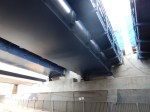
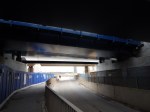
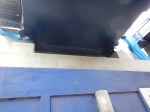

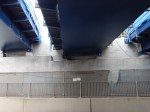
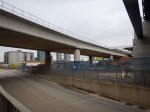


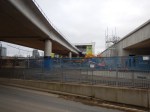
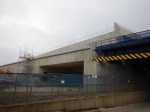
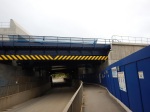
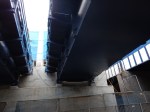
Note that the Crossrail bridge is blue steel and theat for the DLR is concreate.
They are certainly a set of impressive bridges from underneath.
From The Greenway To Stratford International Station
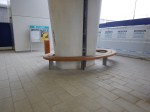
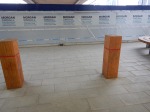
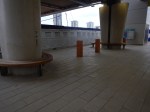
These are pictures, I took whilst walking and riding from the ~Old Ford Recycling Centre on the Greenway to Stratford station.
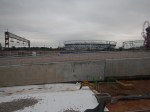

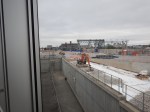
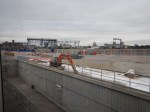

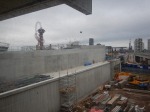




Note.
A North London Metro
My Memories Of The Lines Out Of Moorgate And Kings Cross
I grew up in North London and I can remember when the suburban services into Kings Cross were hauled by N2 tank engines and later when these were replaced by the Class 105 diesel multiple units.
Around 1970, I used to commute to Welwyn Garden City from Kings Cross and I regularly got Cambridge trains, that were coaches with compartments pulled by the then ubiquitous Class 31 diesel locomotives.
All changed in 1976, when the Northern City Line out of Moorgate and the East Coast Main Line out of Kings Cross were electrified and Class 313 trains started to work the lines.
They still do!
The Current Route
The East Coast Main Line, running North through Finsbury Park is four-tracked with separate fast and slow lines.
There is also the Hertford Loop Line, which effectively gives the route a second set of slow lines between Alexandra Palace and Stevenage.
The two lines have a network of fourteen suburban stations,, where each links with a rather measly three tph into Moorgate.
The line has a few good features.
- The Hertford Loop has grade-separated junctions at both ends and is electrified throughout.
- There are decent termini for the services at Gordon Hill, Hertford North, Letchworth Garden City and Welwyn Garden City.
- There is a flyover at Welwyn Garden City to enable prompt turnaround of the trains.
- The lines allow the trains to use their maximum speed.
- Interchange between the two services at Finsbury Park and Alexandra Palace is generally good.
But the route has the problem of a voltage change between the tunnel to Moorgate and the rest of the line at Drayton Park station, which adds a couple of minutes to every journey.
The Current Service
The current service is three trains per hour (tph) that trundle as fast as their 75 mph top speed and age will allow to the two main destinations of Welwyn Garden City and Hertford North stations. One of the trains from Hertford North in every hour continues to Letchworth Garden City.
This is not the frequent service that attracts new passengers and at least an extra train per hour is needed.
As an example, I can get a direct bus every two or three minutes or so to Essex Road station, from where I can get trains to the North.
But three tph to the two destinations and six tph to Alexandra Palace is not the sort of service on a commuter route out of London. Four trains would reduce my maximum wait for say a Hatfield train from twenty to fifteen minutes.
But there are reasons for this level of service.
- There probably aren’t enough trains.
- Their performance is inadequate.
- The complications of the route, which involves changing voltage at Drayton Park station, slows the service.
Even so they do manage to squeeze 12 tph into Moorgate in the rush hours.
Service Improvements In 2018
In the Wikepedia entry for Bowes Park station, the following is said.
From 2018, the pattern is due to change when Moorgate services via the Hertford loop are curtailed at Stevenage using a new terminating platform there:
- 2 tph Great Northern service Moorgate – Stevenage
- 2 tph Great Northern service Moorgate – Hertford North
This information is not given elsewhere, so I suspect it’s either from someone, who’s got good knowledge or wrong. There is no reference to the source of the information.
But, 2018 is when the new trains will start serving the line. So the Hertford Loop Line could be getting an extra train per hour.
Infrastructure Improvements
There are various infrastructure improvements that need to be done to squeeze the maximum capacity out of the system.
- The archaic voltage change at Drayton Park should be replaced with one using the best modern technology and practice.
- The maximum line-speed on the Hertford Loop Line should be increased to 100 mph wherever possible.
- Platforms should be improved to ease getting on and off trains and facilitate easy interchanges between trains.
- It looks like a bay platform is being built at Stevenage to serve the Hertford Loop Line.
- Would there be any advantage in creating a passing loop or adding a fourth platform at Gordon Hill station?
In addition, I do think that there are opportunities for new stations on the Hertford Loop Line.
The New Class 717 Trains
New Class 717 trains have been ordered to send the Class 313 trains to the scrapyard.
These are similar to the Class 700 and Class 707 trains, so I think we can assume.
- They will have a top speed of 100 mph, where the track allows it.
- They will brake and accelerate faster than the current trains and with better door machinery should save time at every stop.
But I would also suspect that they will handle the voltage change at Drayton Park more efficiently.
It would appear from my calculation in A Numerical Analysis Of Great Northern’s Class 717 Trains, that there are enough Class 717 trains on order for a four tph service to all stations, with 2 tph onwards to Letchworth Garden City or more likely Stevenage.
As the Wikipedia entry for Bowes Park station says 4 tph from 2018, I think it is reasonable to expect that Welwyn Garden City gets the same treatment.
This would produce an eight tph service between Alexandra Palace and Moorgate.
Current timings from Moorgate are.
- Hertford North – 50 minutes
- Welwyn Garden City – 51 minutes
- Stevenage – 63 minutes
So this means one shorter round trip could be done in two hours and a combination of a short and Long one in four.
This would mean.
- 4 tph to Welwyn Garden City would require 8 trains
- 6 tph to Welwyn Garden City would require 12 trains
- 4 tph to Hertford North/Stevenage would require 8 trains
- 6 tph to Hertford North/Stevenage would require 12 trains
But because the Class 717 trains are faster, have a better stopping performance and would probably save time in changing voltages, I wonder if the shorter round trip could be reduced to ninety minutes, with the combined trip at three hours.
This would mean.
- 4 tph to Welwyn Garden City would require 6 trains
- 6 tph to Welwyn Garden City would require 9 trains
- 4 tph to Hertford North/Stevenage would require 6 trains
- 6 tph to Hertford North/Stevenage would require 9 trains
So if the trains and the drivers can perform, it might be possible to have enough trains for a six tph service on both branches with a 12 tph service between Moorgate and Alexandra Palace.
One consequence of running 12 tph into Moorgate all day, might be that there would be no room for extra trains in the Peak. But the service in the Peak of twelve six-car tph would still have the same capacity as the current one
I think that Great Northern’s objective is to run twelve trains into Moorgate all day, with half serving each branch.
The full service to and from Moorgate would probably need 18 trains.
In A Numerical Analysis Of Great Northern’s Class 717 Trains, I said that a 2 tph service between Kings Cross and Foxton would require six trains, that would see the fleet fully utilised.
The Link To Crossrail
In Liverpool Street Crossrail Station Disentangled, I showed that changing between Crossrail and the Northern City Line at Moorgate could be easy.
I have a feeling that with eight or even twelve tph running into Moorgate, many passengers will change at Moorgate to and from Crossrail, even if they want to go to and from places like Hatfield or Potters Bar, for which they can also use Thameslink and a change at Farringdon.
Consider.
- Running twelve tph into a two-platform terminal like Moorgate is way below the frequency of the Victoria Line at Walthamstow Central.
- Half of all trains at Moorgate will go up the East Coast Main Line, with the other half taking the Hertford Loop Line.
- Only one-in-four trains at Farringdon will go up the East Coast Main Line.
- The Moorgate service will stop at all stations to Welwyn Garden City.
- There is a split with suburban trains out of Moorgate and Thameslink out of Farringdon.
- Farringdon to a station on the Hertford Loop Line, would need a second change.
- Canary Wharf to North London and Hertfordshire would be a single change at Moorgate.
Never underestimate the capacity of Londoners to duck and dive to find their best route.
All of this could lead to a lot of passengers on the trains between Moorgate and Alexandra Palace.
The Great North London Metro And Thameslink
If you take the Welwyn Garden City branch of the routes out of Moorgate, it could be running four or possibly six tph between Finsbury Park and Welwyn Garden City. On the same route, according to their latest plans Thameslink will also be running six tph.
Even if they don’t run alternatively, there will certainly be plenty of opportunities to choose to go to Moorgate or take the main Thameslink route.
You might even argue that the Hertford Loop Line and the Northern City Line are just branch lines from Thameslink, with cross- or same-platform interchanges.
But however you put it, the two lines are strongly bound together.
Conclusions
Four tph on both branches with eight tph into Moorgate is certainly possible with the fleet of new trains.
But if the trains can save time at each stop and there are some signalling, voltage-changing and track improvements, I feel it could be possible to run six tph on each branch with twelve tph into Moorgate.
Those sort of frequencies would transform the services out of Moorgate.
They would create a frequent link, which would serve at the Southern end
- Crossrail
- Northern Line
- The City of London
- Canary Wharf
And at the Northern end.
- Thameslink
- Victoria Line
- Piccadilly Line
- North London
- Hertfordshire
It would truly be a Great North Northern Metro.
Related Posts
A Numerical Analysis Of Great Northern’s Class 717 Trains
Could A Reversing Siding Be Built At Alexandra Palace?
Liverpool Street Crossrail Station Disentangled
Liverpool Street station on Crossrail is a massive double-ended beast that stretches as far as Moorgate station, where it has a second entrance.
At the Liverpool Street end, it will connect to the following in addition the the Main Line services out of the station.
- Central Line
- Circle Line
- Hammersmith and City Line
- Metropolitan Line
At the Moorgate end, it will connect to the following lines.
- Circle Line
- Hammersmith and City Line
- Metropolitan Line
- Northern Line
- Northern City Line
This is a visualisation of how Moorgate station will look after it has been rebuilt for Crossrail, that I found on this web page from May 2009, so it may be out-of-date and wrong.
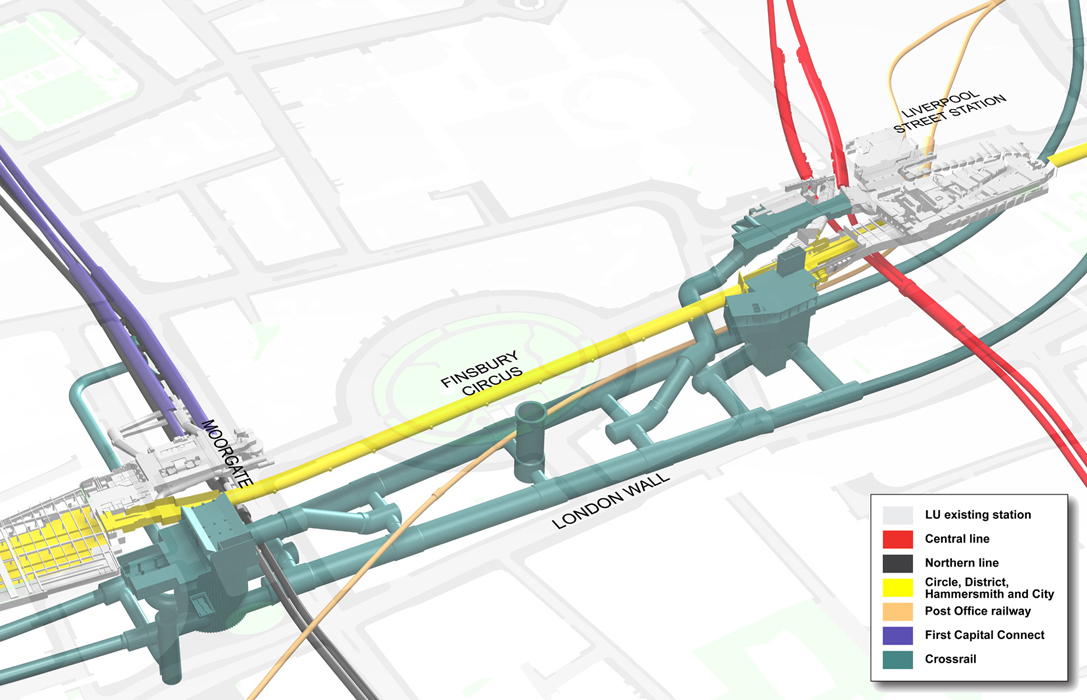
Liverpool Street-Moorgate Station Schematic
Note.
- The royal blue line is labelled at First Capital Connect, for which I use the term Northern City Line.
- Turquoise is used for new Crossrail work, with red and yellow for the Central and sub-surface lines.
- If you enlarge the image by clicking on it, you can clearly see the escalators, that currently connect the Northern City and Northern Lines to the ticket hall.
- Crossrail appears to have an escalator connection to an enlarged Moorgate ticket hall
- The deep level Northern Line, which is shown in black, passes over Crossrail, but underneath the escalators that lead down.
I have since seen a cross-section of the station from Liverpool Street to Moorgate and it would appear that a few improvements have been made.
- A pedestrian tunnel is now planned to run between the Crossrail platforms, which will effectively link the escalators at both ends, which connect into the station entrances and ticket halls upstairs.
- It could be possible that the entrance to the station has been moved towards the East.
The interchanges possible at the combined station are best described as comprehensive.
Changing Between Crossrail And The Northern Line
The Northern Line crosses the Moorgate end of the Crossrail platforms at a right angle and it would appear to have a short escalator or step connection to a cross-passage between the two Crossrail platforms.
The only problem, is that you’ll have to make sure, you’re at the Western end of the Crossrail train.
Changing Between Crossrail And The Northern City Line
It would appear that Crossrail and the Northern City Lines are at roughly the same level and are very well connected.
- Passengers would appear to be able to take an escalator or lift from one set of platforms to the ticket hall and then take another set down to the other line.
- There also appears to be another independent passage, which starts midway down the Northern City Line platforms and takes a circuitous route to the Crossrail platforms.
- There may be another convenient route, where you go via the Northern Line and reappear on the other set of platforms.
It certainly won’t be a difficult interchange for passengers, although you’ll have to remember to position yourself at the Western end of the Crossrail train.
Changing Between Crossrail And The Central Line
The Central Line crosses the Liverpool Street end of the Crossrail platforms at a right angle and it would appear to have a short escalator or step connection to a cross-passage between the two Crossrail platforms.
The connection is not as neat as the Northern Line one at the other end of the Crossrail platforms
The only problem, is that you’ll have to make sure, you’re at the Eastern end of the Crossrail train.
Changing Between Liverpool Street And Moorgate
I’ve read somewhere, that the double-ended station is designed so that passengers can walk easily between the two ends of the station.
My view of the cross-section of the station from Liverpool Street to Moorgate confirms it is a feasble route.
- Passengers at Liverpool Street will descend to an intermediate level, from where the Central Line can be accessed.
- A walk of perhaps fifty metres will take you under the Central Line tunnels and to an escalator, that will descend to a wide passage between the Crossrail platforms.
- A walk of perhaps a hundred metres will give several entrances to the Crossrail platforms and take you to an escalator, which takes you to the intermediate level at Moorgate station.
- A level walk of perhaps thirty metres or so, will take you over the Northern Line tunnels and to an escalator, that gives direct access to the booking hall at Moorgate.
So a passenger from perhaps Ipswich to Hatfield on a very wet day, will dive on arrival at Liverpool Street into the Crossrail station and use it as a dry walking route to the Northern City platforms at Moorgate.
I suspect that an Oyster card or a contactless bank card will give free access to the route.
The same route will give Moorgate passengers access to the Central Line and Liverpool Street passengers access to the Northern Line.
Related Posts
A Numerical Analysis Of Great Northern’s Class 717 Trains
Could A Reversing Siding Be Built At Alexandra Palace?
Could A Reversing Siding Be Built At Alexandra Palace?
Could Passenger Services Be Run On The Canonbury Curve?
The Future Of Commuting
I take the title from this article in this Guardian, which is entitled Cattle-class: are Thameslink’s new ‘tube-style’ trains the future of commuting?
This is the sub-title to the article.
As the UK south-east’s rail nightmare continues, a new class of commuter trains has been quietly revealed – long, metro-style carriages without tables, built to accommodate as many standing passengers as possible. Is this the new normal?
The New Class 700 Trains
I have travelled on the new Class 700 trains and I wrote about my journey in A First Ride In A Class 700 Train.
These are things I thought some people might not like.
- The lack of audible messages. – I liked the quiet, but I’m not blind.
- The lack of tables in Standard Class compared with say the Class 387 trains, that currently work the line.
- The lack of wi-fi.
- The length of the train at 242.6m., if they get in the wrong carriage.
- The high step up into the train.
The last one is possibly to be compatible with other trains and is being addressed at East Croydon station, by raising the platforms. I didn’t go to Gatwick, but imagine large numbers of heavy cases being loaded and unloaded.
I think that the problem is that some bright spark in the Department of Transport or the Treasury, decided that the trains should be a one size fits all and that they had to cope with a lot of stations, where the platforms wouldn’t be seriously modified.
Thank goodness this idiot didn’t order the same trains for Crossrail.
The Routes Compared
It is interesting to compare the route and trains of Thameslink with Crossrail
The trains are similar in length, with about a third of the passengers getting seats at full capacity of 1500 for Crossrail’s Class 345 trains and 1800 for Thameslink’s Class 700 trains.
But I think there will be a big difference in passenger loading between the two lines.
These are times from four selected end points to Farringdon, where the two lines cross.
- Bedford (Thameslink) – 60 minutes
- Brighton (Thameslink) – 86 minutes
- Reading (Crossrail) – 58 minutes
- Shenfield (Crossrail) – 43 minutes
So it looks like the average commute on Thameslink could be longer, so possibly their trains should reflect that, with wi-fi, lots of tables etc.
But whereas Brighton and Bedford will get a few trains every hour to Central London, Shenfield will get ten.
Shenfield and Reading will also have long distance services coming in from further out and going direct to the capital.
Unfortunately, trains can’t start further South than Brighton.
Another big difference, is that Crossrail serves a lot of the places, commuters and visitors to the capital want to go. For example.
- Bond Street for the shops and the Underground
- Canary Wharf with a cross-platform change, if not direct.
- Heathrow for the planes
- Liverpool Street for long distance trains and the Underground.
- Moorgate for a walk to the City.
- Old Oak Common for long distance trains and the Overground.
- Paddington for long distance trains.
- Stratford for the Queen Elizabeth Olympic Park, shopping and the Underground.
- Whitechapel for the Overground.
Thameslink’s list is shorter and less impressive.
- Blackfriars for a walk to the City.
- City Thameslink for a walk to the City.
- Gatwick for the planes.
- Kings Cross St. Pancras for Eurostar and long distance trains.
- London Bridge for a walk to the City and the Underground.
I might be wrong, but this leads me to think that Crossrail will act like a high-capacity Underground Line across Central London,and will for example, be used by visitors wanting to have a walk in the City and then go to do some shopping in Oxford Street. Thameslink doesn’t have similar casual uses across Central London.
Another difference, is that Crossrail’s Shenfield and Reading branches are very much all-stations branches, whereas Thameslink’s have a lot of semi-fast trains.
This thinking leads to an important difference.
Crossrail’s train design and capacity depends heavily on the needs from Stratford to Old Oak Common, wheras Thameslink’s trains are more about the needs of long-distance commuters.
But then, Crossrail has been designed as a system of trains and routes to satisfy the capital’s needs, whereas Thameslink has been created by stitching together a series of Victorian lines, that all have different needs.
A Redesign For Thameslink
I think a few years after Crossrail and Thameslink open, Thameslink services will have a big redesign.
So what will happen?
It will be driven by the statistics of where passengers need to go.
But I can see the following happening.
Upgrading Of The Class 700 Trains
The more I read about the two sets of trains, the more I feel that passengers will moan about the Class 700 trains on Thameslink, when they experience the Class 345 trains on Crossrail.
Points of annoyance could include.
- The lack of wi-fi and charging sockets.
- Nowhere to put a coffee.
- The number of tables.
- The layout of the seats.
- Bicycles
But then these trains weren’t specified by the operator, unlike those on Crossrail, where Transport for London had a big input.
Creation Of More Cross-Platform And Same-Platform Interchanges
The only quality interchange between Thameslink and other services is London Bridge. But that has been designed recently.
East Croydon has been the victim of make-do-and mend for decades.
Gatwick Airport could be so much better.
St. Pancras is truly terrible and was designed so that passengers are kept fit, by walking long distances underground to reach other services.
West Hampstead Thameslink could be another Stratford, but it falls short.
I think we’ll see improvements to some of these stations to create better same-platform or cross-platform interchange between Thameslink and longer distance services.
As an example Alexandra Palace and Finsbury Park seem to have been improved so that Thameslink has a good interchange with local services out of Kings Cross and Moorgate.
On Thameslink East Croydon, Gatwick and West Hampstead Thameslink must be updated to improve connectivity between Thameslink and longer distance services.
Separation Of Short And Longer Distance Trains South Of The River
On Crossrail, passengers going further East can change at Liverpool Street or Stratford in the centre or Shenfield in the East and those going further West can change at Paddington in the centre or Reading in the West.
Four of the five interchange stations; Liverpool Street, Paddington, Reading, Shenfield and Stratford, are large stations with excellent facilities and lots of trains and I can see that Shenfield will be improved by some pragmatic use of the current platforms and the nearby High Street.
North of the River on Thameslink, the interchange between short and longer distance distance trains isn’t perfect, but Finsbury Park, Kentish Town, Welwyn Garden City and West Hampstead are better and have more spare capacity than East Croydon.
The only decent interchange South of the River is the recently-updated London Bridge. But it is too close to the centre of London.
South of the River, Thameslink needs a station like Reading or Shenfield, where passengers have a cross-platform or same-platform change to and from a proper long-distance commuter train to a comfortable high-density shuttle across London, as an alternative to getting one train all the way.
The Brighton Belle Will Return
The Brighton Belle was the way to commute between London and Brighton until it ceased running in the 1970s.
I may have ridden it once as a child of about seven with my father, but we may have made our trip to Brighton on an ordinary train.
Having travelled to Brighton many times, the route could probably sustain a higher quality service than it currently gets.
Currently, there are three services on the route.
- Thameslink, that when complete will go via Gatwick, East Croydon and London Bridge to all points North of the River.
- Southern to Victoria, that will go via Gatwick Airport, East Croydon and Clapham Junction.
- Gatwick Express to Gatwick and Victoria.
All are operated by the same franchise, Govia Thameslink Railway.
In my view, this is part of the commuting problem to the South Coast and especially Brighton.
There are no paths for a high-class operator on the route between either Victoria or London Bridge and Gatwick, but I think that better use could be made of the current services to increase capacity and the quality of the trains.
So I believe that as it was after the initial privatisation, Gatwick Express should become a separate franchise.
In its simnplest reincarnation, it would offer a high-class operator between Vicrtoria, Gatwick and Brighton, perhaps calling at Three Bridges and/or Horsham, just as did the original Brighton Belle called at Horsham.
But I’ve believed for some time that with the electrification of the Great Western Railway, that a service between Reading and Gatwick, should come under the control of Gatwick Express.
Consider.
- A network of upmarket Gatwick Express services could be developed centred on Gatwick.
- A Class 387 train, running from Reading to Gatwick would do the journey faster than using Crossrail/Thameslink, without all the problems of even a simple change.
- A Gatwick to Ebbsfleet or Ashford service would be possible.
- Gatwick could have Gatwick Express services to Luton Airport using Thameslink via London Bridge and St. Pancras.
- The current services to Victoria and Brighton would continue.
- It would have dedicated platforms at Brighton, Gatwick, Victoria and possibly Reading.
Properly structured it could be a mix of high-class Airport and commuter services.
- It must have nothing to do with Govia Thameslink Railway.
- The Class 387 trains are probably good enough for the franchise.
- Something like a Chiltern-style Class system might be best.
- Surely, modern technology should be able to create a decent buffet car.
- Ticketing would be as now and must include contactless bank card and Oyster.
- If it wants to extend services to Eastbourne, Portsmouth and Southampton, it should be taken seriously.
I’m certain, a bright marketing man would come up with an iconic name for the service.
The only problem would be that Govia Thameslink Railway would object like mad, but in some ways they’ve brought it on themselves.
Only Twelve-Car Trains Through The Central Tunnel
It is essential that to maximise capacity of the line, that in the most restricted section through the central tunnel, that all trains through the tunnel are twelve-car trains.
So this would mean that Sutton Loop Line services would have to terminate at Blackfriars station, as was originally intended until MPs intervened.
In the Wikpedia entry for The Sutton Loop Line, this is said.
Recent proposals were to increase the frequency of the Thameslink service but terminate at Blackfriars. This would allow the trains through the core section to be replaced with longer trains which could not use the loop, but this has not proceeded due to objections from loop passengers about the withdrawal of their through service.
It might be difficult to bring in now, due to the layout of Blackfriars station. This means that passengers going South will need to Cross under the lines to get to the bay platforms on the other side of the station.
It should be noted, that under the latest plans, passengers coming South on Thameslink and wanting to go to Sevenoaks, will have to negotiate this down and up at Blackfriars. It will be easier, if they are on the Midland branch, as they could get any of the four Sutton Loop Line trains and change at Elephant and Castle. But those passengers on the East Coast branch have only the 2 tph Maidstone East service that goes through Elephant and Castle.
Sufficient Trains On Each Section Of Thameslink
If you look at the current proposed timetable in All Change On Thameslink, you can summarise each section as follows.
- Bedford to St. Pancras – 16 trains per hour (tph)
- Bedford to Luton – 8 tph
- Luton to St. Albans – 10 tph
- St. Albans to Kentish Town – 14 tph
- Kentish Town to St. Pancras – 16 tph
- Peterborough/Cambridge to St. Pancras – 6 tph
- Peterborough to Hitchin – 2 tph
- Cambridge to Hitchin – 4 tph
- Hitchin to St. Pancras – 6 tph
- St. Pancras to Blackfriars – 22 tph
- Blackfriars To Elephant and Castle – 8 tph
- Elephant and Castle to Sutton Loop – 4 tph
- Elephant and Castle to Swanley- 4 tph
- Swanley to Maidstone East- 2 tph
- Swanley to Sevenoaks – 2 tph
- Blackfriars to London Bridge 16 tph
- London Bridge to Orpington – 2 tph
- London Bridge to Rainham via Greenwich and Dartford – 2 tph
- London Bridge to East Croydon- 12 tph
- East Croydon to Gatwick – 10 tph
- Gatwick to Brighton – 4 tph
- Gatwick to Horsham – 2 tph
- Gatwick to Littlehampton – 2 tph
My numbers are probably not totally correct, but it does show there are reasonable frequencies everywhere.
Note.
- Rainham to Luton via Dartford, Greenwich and London Bridge looks a service for an area of South East London that needs development.
- Rainham to Luton calls at Abbey Wood for Crossrail, so it also is a valuable extension to Crossrail services at Abbey Wood.
- Swanley seems to be developing into an interchange for services to Kent, with four tph to Blackfriars and two tph to each of Maidstone East and Sevenoaks.
- Gatwick gets a frequency of 10 tph to London on Thameslink.
- There are 8 tph between Gatwick and Luton airports.
These frequencies have changed from those given in Wikipedia
The Effect Of The Northern City Line
The original service plan for Thameslink to the North of London, showed the following.
- 4 tph to Bedford
- 2 tph to Peterborough
- 4 tph to Cambridge
In total sixteen sixteen services were planned go up the Midland Main Line and eight up the East Coast Main Line and the Cambridge Branch.
But as I showed in All Change on Thameslink, it is now planned to be.
- 8 tph to Bedford
- 2 tph to Peterborough
- 4 tph to Cambridge
The service to Finsbury Park and Welwyn Gsrden City has also disappeared, so although the total number of services on the Midland Main Line remains the same, the number of services on the East Coast Main Line has dropped to six.
Could this be because the Northern City and the Hertford Loop Lines are going to be given an increased role in providing services, when the new Class 717 trains arrive in a couple of years?
It certainly looks as if Govia Thameslink Railway could be organising their services out of Kings Cross and Moorgate to augment the Thameslink services.
It looks like the following is happening.
- Short distance services up to about Hitchin and Letchworth Garden City are being served by trains from Kings Cross and Moorgate.
- The increase in the number and quality of the Class 717 trains is being used to provide an improved local service.
- Trains from Thameslink and Great Northern will provide the bulk of the long distance commuter services to Cambridge and Peterborough.
- GTR have also said that their Class 387 trains, will be working between Kings Cross, Cambridge, Peterborough and Kings Lynn.
I don’t think anybody will be complaining.
Embracing The East London Line
If you were going from say Gatwick Airport to Hatfield, when Thameslink is fully open in a few years time, you would probably get one of the direct trains, which will run at a frequency of 4 tph.
But rail enthusiasts and masochists might travel by this route.
- Gatwick Airport to East Croydon on Thameslink or Southern.
- East Croydon to Norwood Junction on Southern
- Norwood Junction to Highbury and Islington on the East London Line
- Highbury and Islington to Finsbury Park on the Northern City Line
- Finsbury Park to Hatfield on Great Northern or Thameslink.
I know it’s rather convoluted, but it does show how the East London Line is an important cross-London route, with strong links to railways controlled by Govia Thameslink Railway.
It is well-connected at the North, but connections at the South to Southern and Thameslink at the important station of East Croydon are woeful.
Thameslink must embrace the East London Line fully, just as it is embracing the Northern City Line.
Swanley Station
Swanley station could prove to be an important station for Thameslink.
Currently services call at the station are as follows.
- 4tph to London Victoria via Bromley South
- 2tph to West Hampstead Thameslink via Catford
- 2tph to Sevenoaks via Bat & Ball
- 1tph to Ashford International via Maidstone East
- 1tph to Canterbury West via Maidstone East
- 1tph to Dover Priory via Chatham
But if the current plans for Thameslink are fulfilled there will be the following Thamesline services through Swanley.
- 2 tph – Maidstone East to Cambridge
- 2 tph – Sevenoaks to Blackfriars
Adding these to the current services gives.
- 4tph to London Victoria via Bromley South
- 4tph to Blackfriars via Catford
- 2tph to Cambridge via Catford and Blackfriars
- 2tph to Sevenoaks via Bat & Ball
- 4 tph to Maidstone East
Effectively, Swanley will get a turn-up-and-go 4 tph service to Blackfriars, Maidstone East and Victoria.
This map from carto.metro.free.fr shows the layout of lines at Swanley station.
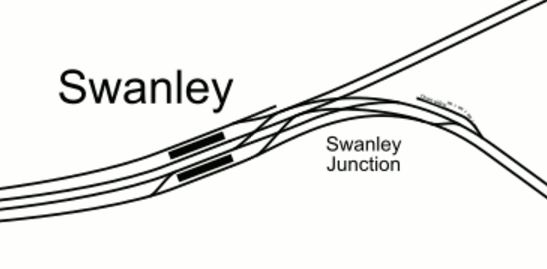
Swanley Station
Note.
- Swanley station has two island platforms.
- The line going North-East is the Chatham Main Line.
- The line going South-East is the Maidstone Line, leading to Maidstone East and Sevenoaks stations.
- At present, the platform arrangement is not one island platform for each direction.
This station could be dramatically improved to be a cross-platform interchange with London-bound and coast-bound services each with their own island platform. If of course, this were to be possible for other operational reasons.
The only passengers who would be inconvenienced, would be those who were travelling between stations on different lines to the East.
- The East London Line having cross-platform interchange vwith Thamesllink.
- Sortout the dreadful St. Pancras with good interchange between Thameslink and other lines.
- Gatwick acts as a collector station, where passengers from all over the South change trains to a high-capacity Gatwick to Luton/Bedford shuttle.
Thameslink will be radically different to how it is planned to be today.
Slow Line Traffic Into Paddington
I was thinking today, as I came back from my trip from Paddington, that I described in A Low Key Launch Of New Electric Trains, that when all of the new trains are running on Crossrail and the GWR, the slow lines will be very busy.
According to Wikipedia, Crossrail will be running.
- 4tph Abbey Wood – Heathrow Terminal 4
- 2tph Abbey Wood – West Drayton – Peak Hours Only
- 2tph Shenfield – Reading
- 2tph Shenfield – Maidenhead
In addition there will be non Crossrail services on the line.
- 4 tph Heathrow Express
- 2 tph Paddington Main Line – Bedwyn
- 2 tph Paddington Main Line – Oxford
- 2 tph Paddington Main Line – Hayes and Harlington
So that gives eighteen services an hour, with probably all except the Heathrow Express on the slow lines.
As the Shenfield Branch of Crossrail is going to handle 16 tph, 14 tph would seem to be within the capacity of the slow lines to Reading, even leaving some space for freight.
I do wonder that as GWR has ordered forty-five Class 387 trains, which in view of today will probably be run mainly as eight-car trains, for where they are going to add services to the network.
So how many trains will they need for current services?
- 2 tph to Hayes and Harlington – Under half an hour, so 2 trains, or 4 if running as a pair.
- 2 tph to Oxford (stopping) – Two hours, so 8 trains or 16 if running as a pair.
- 2 tph to Bedwyn – 90 minutes, so 6 trains or 12 if running as a pair.
Oxford and Bedwyn will also be served by fast Class 800 long distance trains.
This gives a total of 32 Class 387 trains.
So what happens to the other thirteen trains?
There has been talk of giving some of the trains an IPEMU-capability, which I reported in Rumours Of Battery Powered Trains to run the branch lines to Henley, Marlow and Windsor and the Reading to Gatwick service.
I just wonder, if the Electrostar might have made a good demonstrator for the IPEMU technology, but that an IPEMU based on an Aventra is so much better, that there is little point in creating an Electrostar IPEMU.
Or are Bombardier wanting to get the Aventra fully designed in all its variants before they tackle creating an Electrostar IPEMU?
So how many trains with an IPEMU-capability would be needed for the branch lines and Reading to Gatwick?
- Gatwick to Reading takes 90 minutes, so 6 trains could provide 2 tph.
- 4 tph on the Greenford Branch, would need 2 trains charging at West Ealing.
- 2 tph on the Henley Branch, would need 1 train charging at Twyford.
- 2 tph on the Marlow Branch would need 2 trains charging at Maidenhead. – By a bit of fiddling, the trains might pass at Bourne End or there could be a passing loop.
- 2 tph on the Windsor Branch, would need 1 train charging at Slough.
This adds up to the missing thirteen trains, if you add in a spare. In Modern Railways for June 2016, one paragraph in a larger article gives some news about the progress of Bombardier’s IPEMU technology. This is said.
Industry sources confirm that options for some of the GWR order to be produced as independently powered EMU (IPEMU) variants fitted with batteries for operation away from electrified routes are still being explored. This would enable GWR services to Gatwick Airport and on some of the Thames Valley branches to be worked by ‘387s’ prior to electrification. Any decision to look seriously at this proposal will depend on final electrification timescales being confirmed by Network Rail.
Ordering the number of trains they have means that GWR can offer a workable solution on all routes in the Thames Valley, depending on what Network Rail deign to deliver and if Bombardier come up with an affordable IPEMU solution.
- No electrification, no IPEMU – Use refurbished diesel multiple units.
- Electrification – Use Class 387 trains as electric multiple units.
- No electrification, IPEMU – Use Classs 387 trains in IPEMU mode.
Obviously, if Network Rail decide to electrify any part of the network later, the trains can be driven and controlled accordingly.
I’m also sure, there will be routes in the Bristol area, where a Class 387 train with an IPEMU-capability could be very useful.
 The Anonymous Widower