Increased Frequencies On The East London Line
This article from the South London Press is entitled More Trains For The London Overground. The article says Transport for London (TfL) wants to make two service improvements are on the East London Line.
- From 2018, there will be an extra two trains per hour (tph) between Dalston Junction and Crystal Palace.
- From 2019, there will be four additional trains between Dalston Junction and Clapham Junction, making the frequency 8 tph.
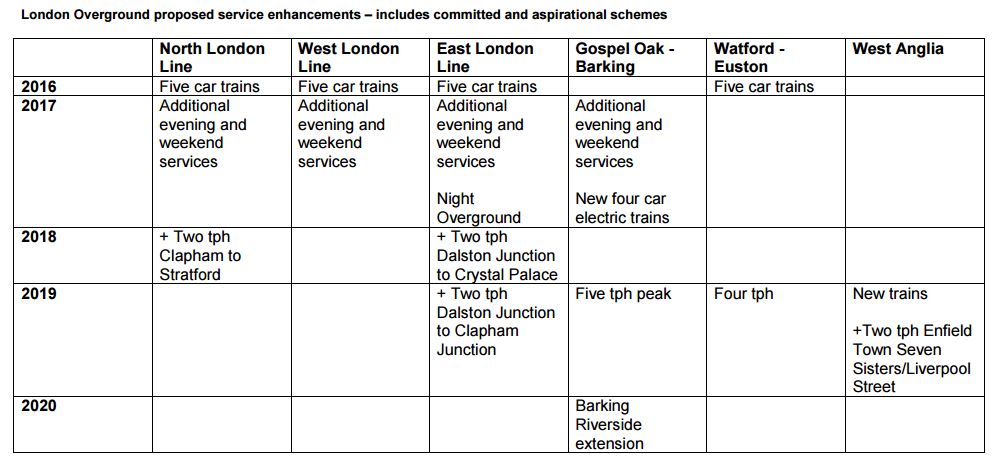
I found the source of the report on TfL’s web site. This is a handy summary from the Appendix.
LO Improvements
It looks like the pattern of extra trains is as follows.
- From 2018, there will be an extra two trains per hour (tph) between Dalston Junction and Crystal Palace.
- From 2019, there will be an extra 2 tph between Dalston Junction and Clapham Junction, making the frequency 6 tph.
Currently both these services go to Highbury and Islington.
It’s interesting that these increased services are starting in 2018-2019! This times them to start just as Crossrail and Thameslink are opening, which probably means that TfL are expecting that a lot of Crossrail passengers will change to and from the East London Line at Whitechapel. As I will, no doubt!
Buried in TfL’s Transport Plan for 2050 says are possible plans on improving the service on the East London Line.
- Better late night and overnight services on the Overground.
- Automatic Train Operation on the core of the line from Dalston Junction to Surrey Quays to increase service frequency from 16 tph to possibly as high as 24 tph.
- Six car trains on the Overground.
At the moment the East London Line has 16 four-car trains an hour in the core route, so 24 six-car trains will mean an increase of capacity of 2.25.
The announced service improvements will mean that 20 tph will be passing Whitechapel and Canada Water.
So will we see other services started to bring the line up to the 24 tph capacity?
This would give London three almost-new 24 tph lines crossing the city; Crossrail, Thameslink and the East London Line, in an H-shape.
TfL don’t sem to be planning it yet!
The increase in frequency from Dalston Junction to Clapham Junction station is very welcome to me, as I often take a train to Clapham Junction to go south to Brighton, Gatwick or other places.
Increasing the frequency to Clapham Junction may also be needed, as extra stations and other changes are added to this branch of the East London Line.
- New Bermondsey station will be opened to take advantage of the six services per hour between Dalston Junction and Clapham Junction.
- Clapham Junction might be served by the Northern Line Extension some time in the early 2020s.
- Clapham Junction may well be served with other services to take the pressure off Victoria and Waterloo. It always strikes me as a station, that since its latest improvements could handle more services.
- Camberwell station, which has been promised for some time, could finally be under way, to connect the East London Line to Thameslink at Loughborough Junction station. A design based on the split-level principles of Smethwick Galton Bridge station may solve the connection problem.
The only difficulty of this frequency could be that there might need to be upgrades at Clapham Junction to turnback more trains.
Increasing the frequency to Crystal Palace station will be of less use to me, as I’ve rarely used that service.
If it linked to Tramlink, I might use it more, but that extension to Tramlink was dropped by Boris and there seems to be no enthusiasm on anybody’s part to build it.
I do wonder if Transport for London have other plans for Crystal Palace in their mind.
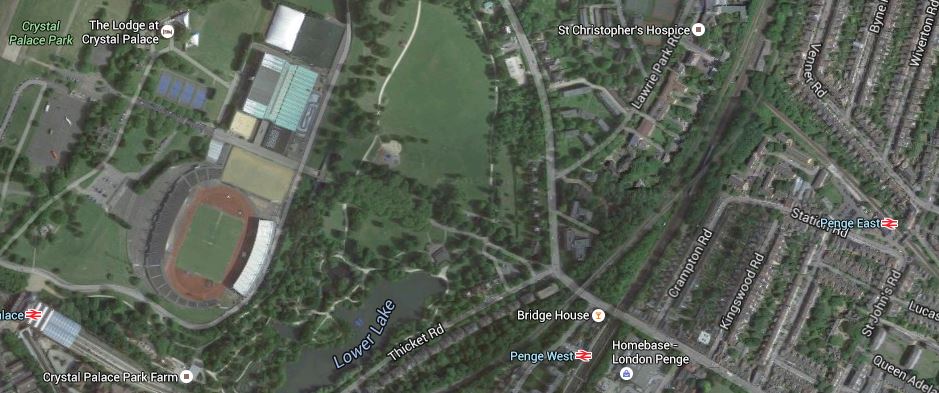
Look at this Google Map showing Crystal Palace, Penge West and Penge East stations.
Crystal Palace And Penge
Crystal Palace is a fully modernised and accessible station with lifts, a cafe and lots of platforms, so it makes an ideal terminus for trains on the East London Line.
Penge West is not the best appointed of stations and I suspect if a much better alternative was provided nearby, no-one would miss the station.
Penge East is on the Victoria to Orpington Line and needs upgrading for step-free access. But it has the problem of a Listed footbridge, that should be burnt. I wrote about it in An Exploration At Penge.
Buried in TfL’s Plan for 2050, is the one-word; Penge, as a possible new station. The line through Penge East passes under both the Brighton Main Line and the branch to Crystal Palace, in an area of railway land.
After looking at Smethwick Galton Bridge station or as I called it, Birmingham’s Four-Poster station, I do feel that a good architect could design a station, that solved the challenging problem of the difference in height and created a fully-accessible interchange. This station could have a lot going for it, as services passing through the station would include.
- 4 tph between Victoria and Orpington on the Victoria to Orpington Line
- 6 tph between Dalston Junction and Crystal Palace and 4 tph between Dalston Junction and West Croydon on the East London Line.
- A selection of the East London Line services would go to Highbury and Islington.
- 2 tph between London Bridge and Caterham on the Brighton Main Line.
- Services between Bedford/St. Albans/St. Pancras and Beckenham Junction on the Victoria to Orpington Line
It would increase connectivity greatly all over East London, both North and South of the river.
I suspect too, that the station would open up the brownfield land around the railway for property development.
I think there is a strong case to watch that area of Penge!
An Opportunity For Dalston?
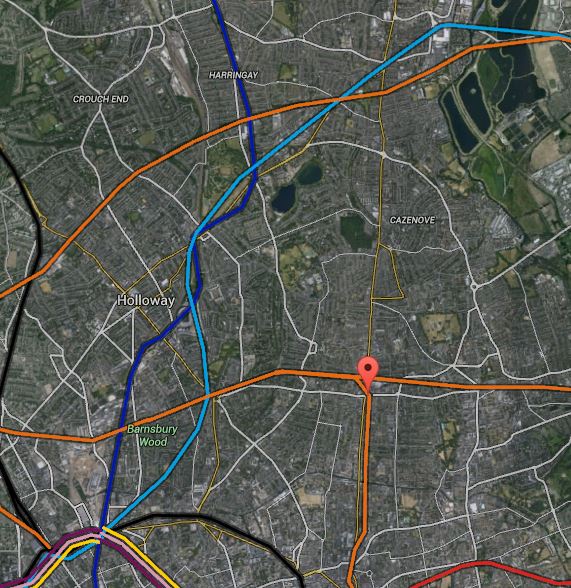
Look at this map of the rail and Underground lines in East London going north around Dalston Junction.
Map 1. Rail Lines Around Dalston
The light blue,dark blue, black and orange lines are the Victoria, Northern and Piccadilly lines and Overground respectively. Stations to note are.
1. Dalston Junction which is marked by the red arrow.
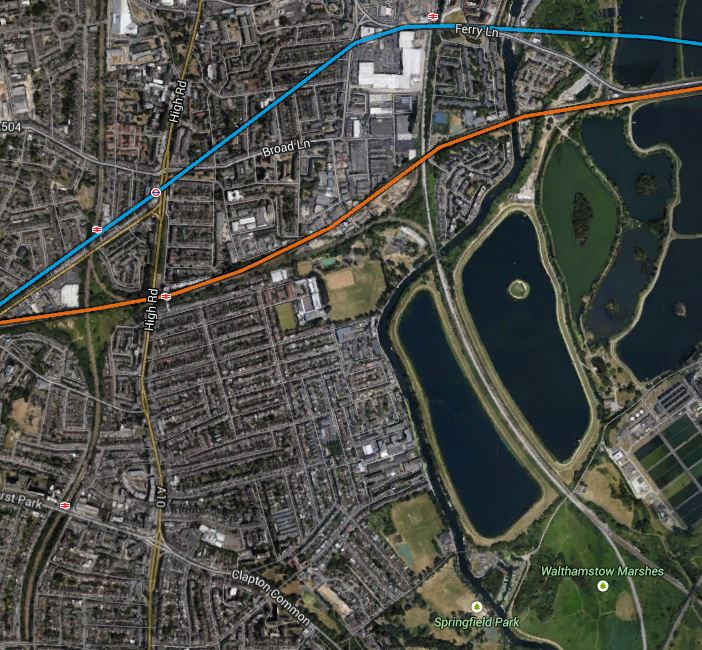
2. Tottenham Hale at the top right and is shown in more detail on this larger scale map.
Map 2. Tottenham, Seven Sisters Area
3. Seven Sisters is the next station as you come south-westerly from Tottenham Hale and is marked by both tube and national rail symbols on the second map.
4. Below and slightly to the right of Seven Sisters is South Tottenham on the Gospel Oak to Barking Line.
5. On the original map, Angel is towards the left at bottom, approximately south west from Dalston Junction. This is a larger scale map of the area.
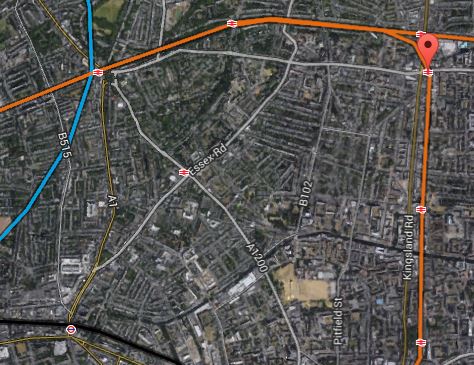
Map 3. Angel To Dalston Junction
In this map, Angel is close to the bottom left. Note how you can see Highbury and Islington, Essex Road and Canonbury stations north of the Angel and Haggerston and Hoxton stations south from Dalston Junction on the East London Line.
Roads, like Essex Road, Balls Pond Road and New North Road are visible, as is the Regent’s Canal.
From the limited information that has been published about Crossrail 2, I believe that the New Southgate branch will pass under Seven Sisters and very close to South Tottenham before meeting the other branch from Tottenham Hale somewhere near Walthamstow Marshes shown on Map 2 and in detail below.
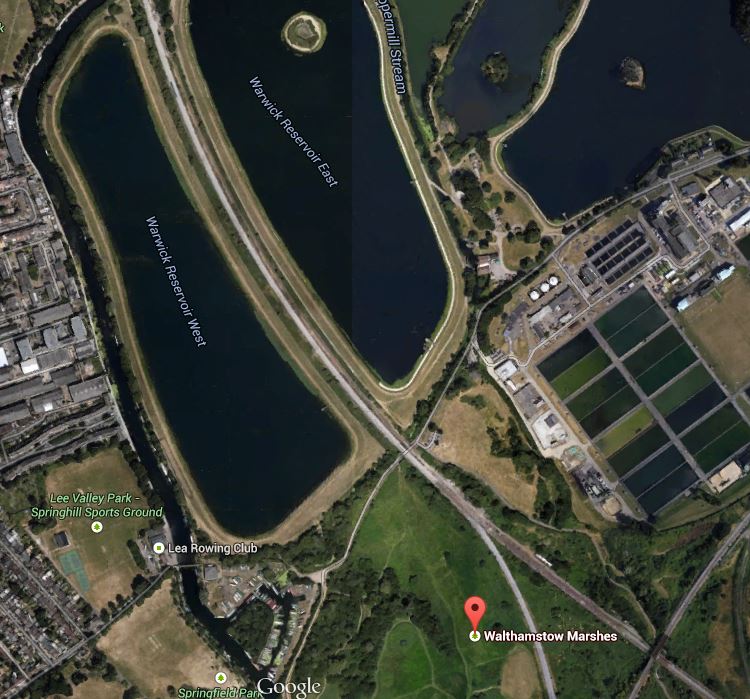
Walthamstow Marshes
The map shows how Walthamstow Marshes could also make an ideal site from where to build the tunnels.
1. It is a spacious site with good road access, where the running tunnels to New Southgate, Tottenham Hale and Central London may all meet.So if a big deep shaft could be dug here, as Crossrail 1 did on the Limmo Peninsular, it could be used to launch and retrieve the tunnel boring machines (TBM). Looking at how far the TBMs went from Limmo to Farringdon on Crossrail 1, which is a distance of 8.3 km, I suspect that their successors on Crossrail 2 could go a long way under London and given the right ground conditions, perhaps even all the way to Wimbledon.
2. The site is close to the West Anglia Main Line and surely this could be used to bring in heavy equipment and materials.
3. Around the west of the Marshes, the map shows the River Lea, which could be another transport artery into the site.
4. As there are several reservoirs there is plenty of raw material for the drink that builds the railways; tea.
5. The one problem is that the Marshes are a Site of Special Scientific Interest. But having seen how Crossrail 1 handled the potentially tricky situation at Stepney City Farm, I suspect that if they follow similar rules, then an amicable solution can be found.
From the junction near Walthamstow Marshes, Crossrail 2 has said that the line will go to the next two stations; Dalston Junction and the Angel.
This would mean that the line would run roughly north east to south west from the junction of the two branches of the line to the Angel. Whether it is aligned under a road, a railway or even the Regent’s Canal, would obviously be a matter for the engineers.
On this map, I have drawn the possible route in pink.

Map 4. Possible Crossrail 2 Route At Dalston
Not shown on Map 4 is the line of the Channel Tunnel Rail Link, which runs in a tunnel underneath the North London Line.
I believe that it might be possible to dig the tunnel so that it passes underneath both Dalston stations, despite the presence of the Channel Tunnel Rail Link. In this respect, I have great faith in the ability of London’s finest hole diggers to navigate correctly and not connect New Southgate and Tottenham Hale to France.
One of my Google Alerts today, picked up this article from the Hackney Gazette, entitled Crossrail 2 threatens another Georgian terrace in Dalston.
As someone who lives close to Dalston Junction and whose roots are very much in the area, I want what is best for the local area. I also have my own list of buildings that should be saved.
So I went down to Dalston Junction and took pictures of the area between and around the two stations, starting just south of Dalston Junction and then walking north, picking up some shopping in Sainsburys and having a coffee in fed on the way.
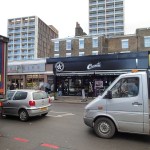
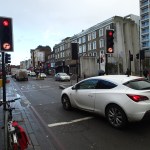

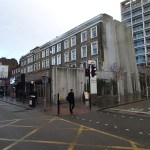
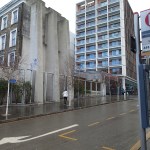

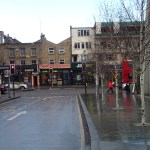
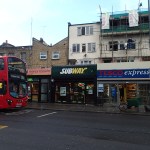
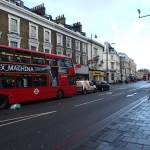
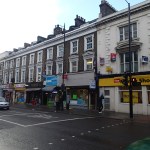
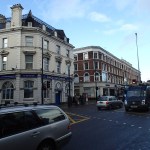
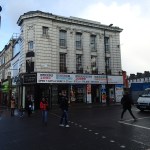
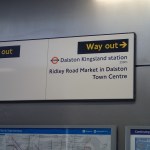
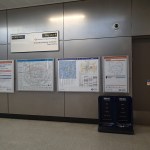
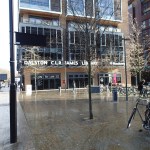
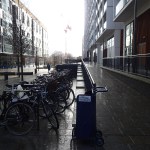
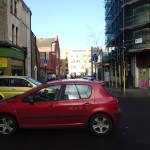
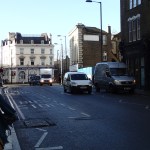

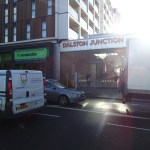
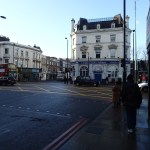
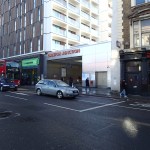
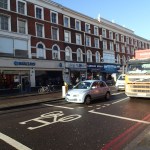
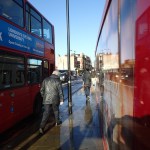
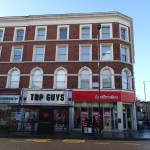
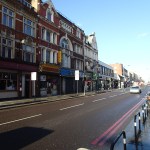
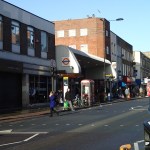
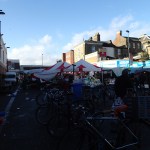
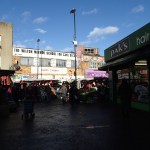
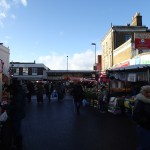
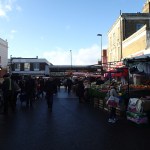
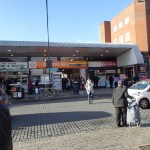
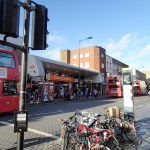

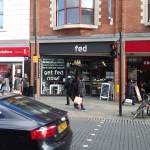
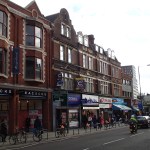
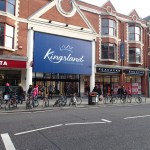

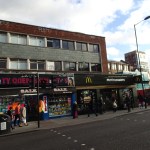
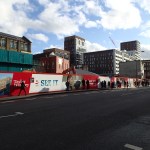
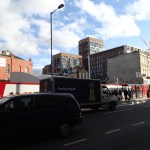
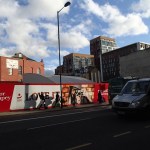
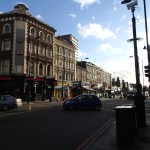
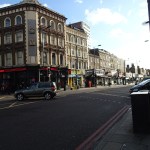
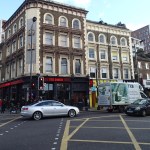
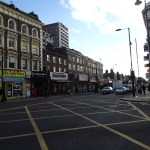
Quite frankly, I think that for most of the buildings, only some of the frontages and some interiors like that of the former eel and pie shop, are worth saving.
But as my pictures show the two main problems in the area are the movement of large volumes of both vehicular traffic and pedestrians.
As I don’t drive, I have no personal interest in the former, if the buses still get through.
But I regularly walk up and down the Kingsland Road to Sainsburys, Boots and the Market. The pavements are a nightmare, as they are narrow and very busy.
The new Dalston Junction part of the solution to the walking problem has been built, with a draughty but rain-free passage between the two station entrances.
So wouldn’t it be nice, if this passage could extend up to at least Dalston Kingsland station? If it did it might be a traffic generator for the underused bus station, which could do with more routes. A passage would of course make the interchange between the two stations easier.
At least the Kingsland Shopping Centre is proposed to be redeveloped to a more modern layout. Pictures in the link, give hope that there could be a traffic-free route from at least Kingsland station to Dalston Lane, which somehow has to be crossed. The current arrangements of a light-controlled crossing works, but could be improved upon.
The walking link between the two stations will hopefully be improved when the new Dalston Kingsland station is rebuilt, as someone from London Overground indicated to me it will be, a few months ago.
Could something bigger be rolling through Dalston?
Something is and it’s called Crossrail 2.
In one of the pictures it shows a sign at Dalston Junction station, showing that it is 250 metres between the two stations.
I will make an assumption here, that Crossrail 2 will use the same Class 345 trains and platforms matched to their size as Crossrail 1. I think it would be a reasonable assumption to make, as this would mean a common fleet and a lot of repeated platform design.
And how long are the platforms on Crossrail 1?
They are 260 metres long.
So would it be possible to fit a double-ended station for Dalston, that avoided the Channel Tunnel Rail Link and was connected to the platforms at the two Dalston stations at each end?
I don’t know as I haven’t got the detailed dimensions, but the last time London Overground threaded a rail line under Kingsland High Street, they managed it without mishap. If the station followed the traditional hump-backed design, then it would rise up to the platforms, which would be deep under the area and could be connected to the two stations by escalators and lifts. If the Crossrail 2 station had a wide centre platform between the tracks, then it could also be used by passengers transferring between the two stations. The platforms would have platform edge doors, so there would be no safety or draught issues. It might even be possible to make the central Crossrail 2 platform wide enough for a cafe, kiosks and an information office.
The design would have advantages for passengers.
1. It would give full interchange between the North London Line, East London Line and Crossrail 2, which would make so many more journeys possible, like for example Turnpike Lane to Homerton or Shoreditch High Street to Ware, with just a single step-free change.
2. Dalston Junction is the first station on Crossrail 2, after the two northern branches have joined, so just as at Whitechapel on Crossrail, you could come down one branch walk across the platform, perhaps picking up a coffee on the way, and get on a train up the other branch.
3. In the case of an interchange between either the North or East London lines and Crossrail 2 it would be up or down on an escalator or in a lift, but between the East and North London Lines, you would have a nearly 250 metre walk as well. But the walk would be easier and more pleasant than the current one on the surface.
4. Would the ability to transfer at Dalston between the North London Line and Crossrail 2 serve Hackney sufficiently well, so that the need for the possible Hackney branch of Crossrail 2 could be delayed?
There could possibly be some advantages to Dalston
1. As the interchange between the East and North London Lines is now a safe walk out of the weather and traffic, would this be a good enough connection to make it unnecessary to reopen the Dalston Eastern Curve, thus releasing this land for something better in perpetuity.
2. But the great advantage of this plan to Dalston, is that it doesn’t require any demolition of buildings on the surface, except for the unloved Dalston Kingsland station.
3. Dalston Junction station already has a building that is big enough, but could you do away completely with buildings at Dalston Kingsland station? You might just have escalators ending level with the street and a simple glass front like the new Tottenham Court Road tube station. The money saved on the building could be used to add extra escalators and lifts. Perhaps on both sides of Kingsland High Street.
I probably have all this totally wrong, but I believe that Crossrail 2 could be a bigger opportunity for Dalston, if a double-ended station is built to serve both Junction and Kingsland.
It is only possible because the Victorians had the foresight to build the two Dalston stations the same distance apart as the length of a Crossrail station.
The Overground And Its Class 378 Trains Turn Up In A Computer Game
My Google Alert picked up this article onPCGames, entitled Train Simulator 2015: hands on with the London Overground train.
It’a well-written article and worth reading.
But I won’t be investing in the game, as I’ve never played a computer game and probably never will.
I certainly wouldn’t play this game, as it seems to be South London-based and doesn’t simulate the iconic East London Line, with the historic Thames Tunnel.
If I want to experience a Class 378 train and the East London Line, all I need to do is walk to Dalston Junction station and take any southbound train.
And with my Freedom Pass, it’s all free! Although the excellent cafes in Dalston aren’t!
Dalston Junction As An Interchange On The London Overground
Last night, I came back to Dalston Junction from Highbury and Islington, on an Overground train with a friend, who was going on to Anerley in the Deep South.
They needed a West Croydon train and were going to pick one up at Canada Water later on.
I’ve remarked about interchanges on the London Overground before in this post, but I’ve never investigated Dalson Junction, as I usually get on the Overground there, rather than chsnge trains.
I hadn’t realised that to get on a West Croydon train at Dalston Junction, you always go to Platform 3, which is alongside Platform 4, where the trains from Highbury and Islington arrive.
So it has been laid out to make things easy.
Trains going south, start at the following places.
West Croydon – Platform 3 at Dalston Junction
Crystal Palace – Platform 1 at Highbury and Islington
Clapham Junction – Platform 2 at Highbury and Islington
A Vending Machine With Healthy Foods
I saw this vending machine at Dalston Junction station today.
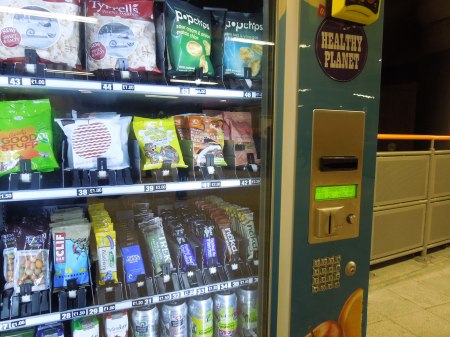
A Vending Machine With Healthy Foods
How refreshing to see foods I can eat on sale on the platform. Note the EatNakd bars. This was just what I needed at Ulm, when I was kept alive by some awful paprika flavoured crisps.
As I haven’t noticed it before, I must assume it has probably just arrived. I couldn’t find the company on the Internet and I’d be interested to know more or hear of other locations.
Searching For A Genius Loaf
I generally have a soft brown, Genius loaf in the bread bin and today, I threw the remains of the last one out, as all I had left was the wrapping and two rather battered crusts.
So as I wanted to get a paper, I thought I’d get a new one at the littleWaitrose at Highbury Corner. But they only had the soft white bread, which would not be my first choice.
I know I can usually get the desired bread at Sainsburys at the Angel, but that would have meant coming back from there in the scrum of the rush hour. so I took the Overground to Dalston Junction, to try to buy the bread at the Co-Operative store at the station.
They did have a loaf, but the sell-by date was not very far away and the loaf felt, as though it was not that fresh.
So I took the bus home.
It’ll teach me not to do all my shopping at a bigger Waitrose like Canary Wharf or Bloomsbury. I don’t think I’ll bother with buying food at that Co-operative again.
Full Function Ticketing On The Overground
As I came up the stairs at Dalston Junction station, this morning, I thought the ticket machines at the station had been updated for ticket collection.
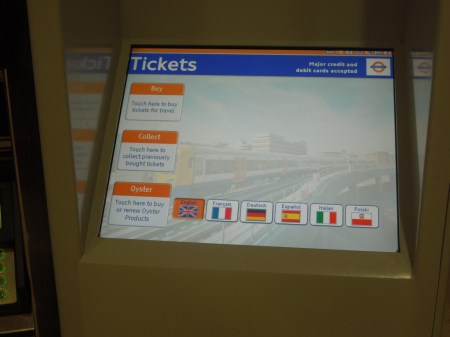
Full Function Ticketing On The Overground
So after I’d bought my ticket to return from Sheffield on Saturday on-line, I visited the station and picked it up. Not only does the updated machine deliver on-line tickets, but you can buy a ticket to any station in the country.
A similar machine is in operation at Dalston Kingsland station, but not at Highbury and Islington station.
This development will make some of the journeys I do a lot easier, as I now have a convenient place to pick up on-line tickets.
Often big improvements can be made to travel, by doing small improvements all over the place. I suspect, this was just a software change.
Dalston Junction Station Gets Free Wi-Fi
My local station now has free wi-fi.

Dalston Junction Station Gets Free Wi-Fi
Not that I had my tablet with me this morning!
Dalston Junction To Gatwick Airport
Since it opened, I’ve usually taken the Overground to Clapham Junction station and changed for Gatwick Airport there.
This morning, for my flight out on Monday to Budapest, I looked up to see what the standard train information site said. They recommended changing at Clapham Junction station.
I’ve just bought a ticket from Clapham Junction to Gatwick Airport on-line. No problem there, but why can’t I pick it up at Dalston Junction station?
A New Bus For London In The Snow
Coming back from Dalston Junction station, this morning after my circular tour, I took a New Bus for London to very close to my house.
Not only were the crew wrapped up well, but they had closed the rear door to make the bus more welcoming.
This is the first time, I’ve seen one running with the door closed. Before they were introduced, TfL said that they’d run with the door closed at night, but they have decided to make sure they are in bed soon after 20:00.
 The Anonymous Widower