Kirkstall Forge – A New Station For Leeds
Kirkstall Forge station is currently being built on the line between Leeds and Bradford. I took this ratrher bad picture from a crowded train, as my train took me into Leeds.
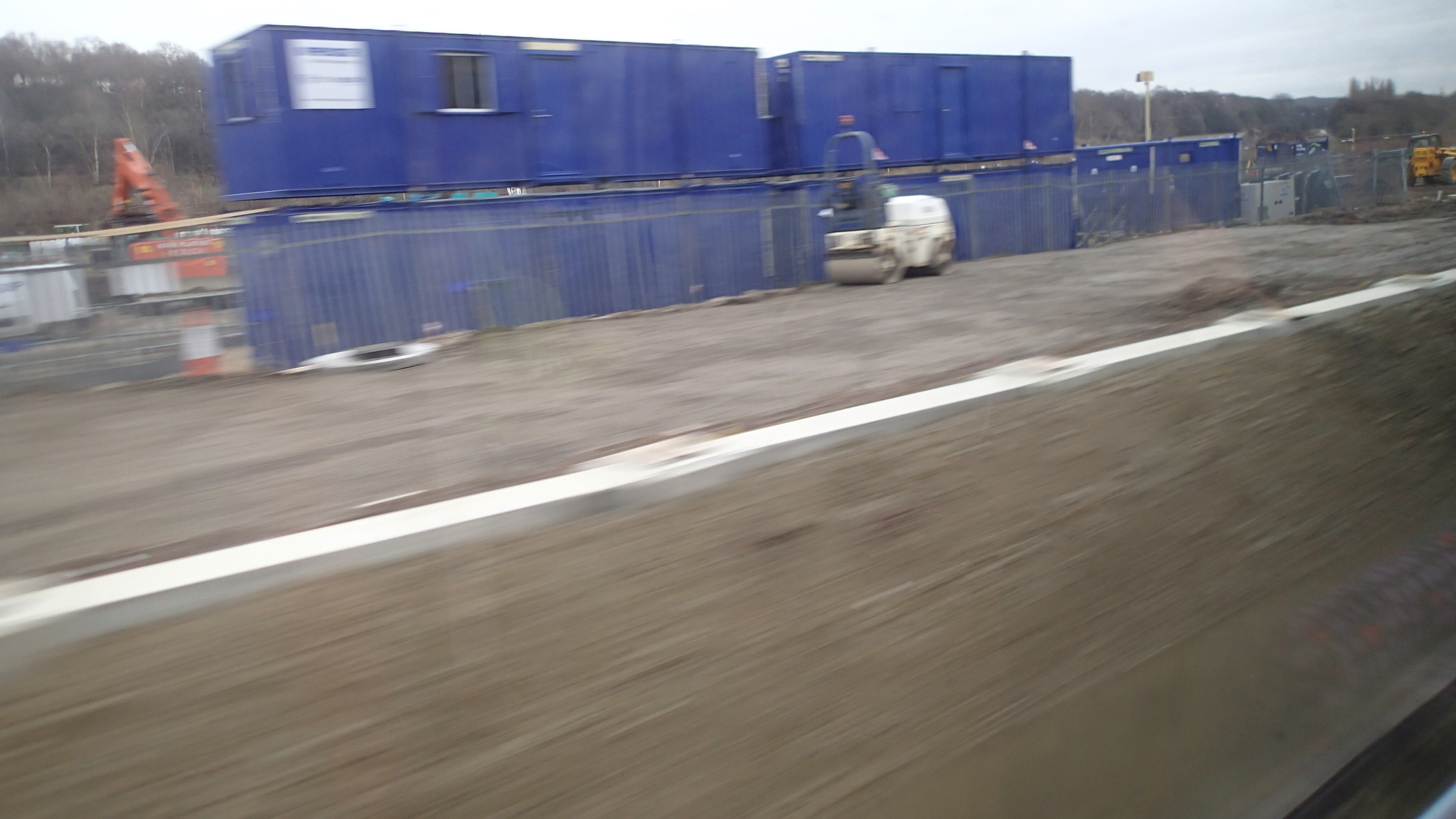
Kirkstall Forge – A New Station For Leeds
The station is being built to serve the large residential and business development at Kirkstall Forge.
Surely, every large development needs to be connected properly to the local public transport system. This would appear to be a good example, which is good for everyone. The property developers must have a big selling point to their properties, as frequent electric trains will take people to nearby city centres and business districts. We must not commit the mistakes of the 1960s, where we built large new towns or estates, like Skelmersdale and Thamesmead without a rail or rapid transit connection
Should An Overground Station Be Built At Hythe Road?
Some weeks ago Transport for London (TfL) launched a consultation on transport links and stations in the Old Oak Common area of West London.
A report in the Kilburn Times has said that the public have said that they’d prefer Option C of the TfL consultation, which involves two new Overground stations.
1. Old Oak Common on the North London Line, which would link to Crossrail and HS2.
2. Hythe Road on the West London Line.
This TfL map shows their locations.
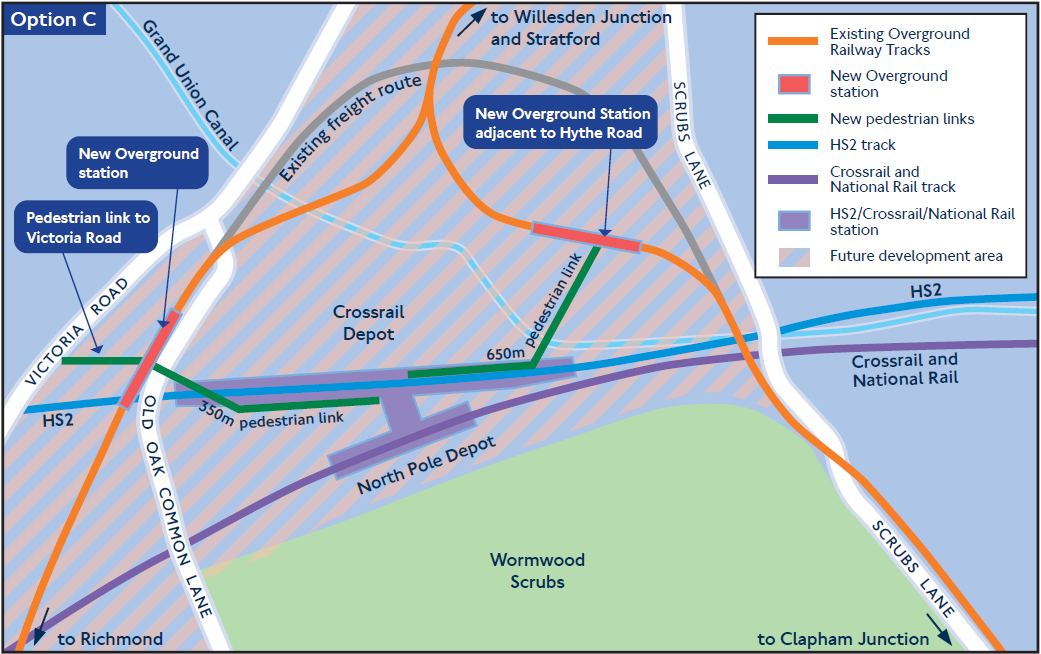
Option C Proposal At Old Oak Common
And this is a Google Earth image.
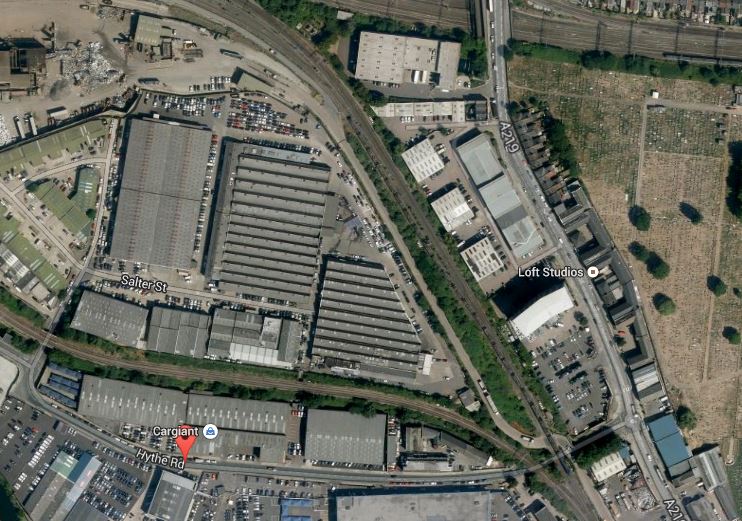
West London Line At Hythe Road
As TfL are saying that service frequencies on the West London Line will be four trains per hour, which is the same as that of trains to Heathrow on Crossrail, it strikes me that these two new stations will greatly ease access to Heathrow from South London and beyond.
From where I live in Dalston, the two station idea has the benefit that if I want to get on Crossrail to go to Reading or Heathrow, it is just a single change at either of the two stations, depending on where my westbound North London Line train is going. Old Oak Common would appear to be a shorter walk however.
But surely, if you are doing a big development as at Old Oak Common, you need as many connections as you can reasonably afford.
The Saddest Building In London
Others will have their own favourite building vying for this title, but surely Millennium Mills, the derelict flour mill by the Royal Victoria Dock is close to the top of a lot of lists of sad buildings.








For years it has stood there unloved between the dock and the Docklands Light Railway, pleading to be put out of its misery.
One of the problems with the building, is that it is full of asbestos and removal and disposal will cost millions.
But help is at hand according to this article in the Newham Recorder, which details a Government grant to kick-start the development. Here’s an extract.
The former flour factory, which was built in 1905, has been vacant since the early 1980s but will get a new lease of life as a hub for start-up businesses, while homes will be built on the surrounding land..
The £12m, which has come from the government’s Building Foundations for Growth Enterprise Zones capital grant fund, is being used to speed up the redevelopment.
It means work to remove asbestos can get under way much earlier than originally scheduled, speeding up the renovation by five years.
Judging by the picture in the report, it would appear that something positive is at last being done with one of London’s saddest buildings.
An Ideal Place For A New Station
This map shows the development site at Kirkstall Forge in Leeds.
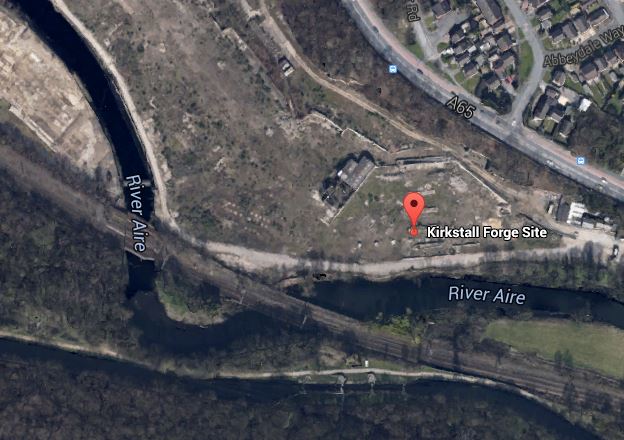
Kirkstall Forge
The site is being developed between the A65 and the River Aire and the Leeds to Bradford rail line in a £400million scheme. This is from the developer’s web site.
Kirkstall Forge will be transformed into a thriving mixed-use community in a wooded riverside setting. Ultimately it will deliver new homes, a high quality office park, shops, restaurants, a gym, crèche and other facilities. The scheme will create in the region of 2,400 new jobs, boosting the local economy by more than £5 million per year.
The DfT will provide a maximum of £10.3m towards the £16.9m needed to deliver railway stations on this site and at Apperley Bridge. The remaining 40% of the cost is made up of a local funding package comprising a private sector contribution of over £5m, supplemented by funding from the West Yorkshire Combined Authority.
Surely, this is the type of development that is good for everyone.
It will be interesting to know the extra return that developers get, by having a rail station in their plans. In London, a station is being provided at Barking Riverside for developments there, but stations in new developments seem to be fairly rare.
Birmingham Gets A Big Snow Job
It is said by many in the regions of the UK, that London gets and eats all the pies.
At present there are four main rail projects on the go in London; Thameslink, Crossrail, the Northern Line Extension and the London Overground.
Thameslink is a government funded project, whereas Crossrail and the NLE are paid for wholly or in part by property developers and business.
The smaller Overgroundisation of London surface railways is more a methodology that is starting to be copied and expanded in places like Merseyside, the Cardiff Valleys and the West Midlands. Although you could argue that other railways in the UK have had the same idea of frequent clean and sometimes new trains, smart stations and good staffing levels, working for some time. Some of the stations on the Overground, have been or will be expanded, in conjunction with property development.
But other projects where co-operation between Network Rail, rail companies.local government and property developers are starting to be proposed and implemented, Often these projects are led by a major redevelopment of a station.
1. Leeds Station
Leeds station was rebuilt and extended a few years ago, but little use was made of the space above the station.
Leeds Station And City Centre
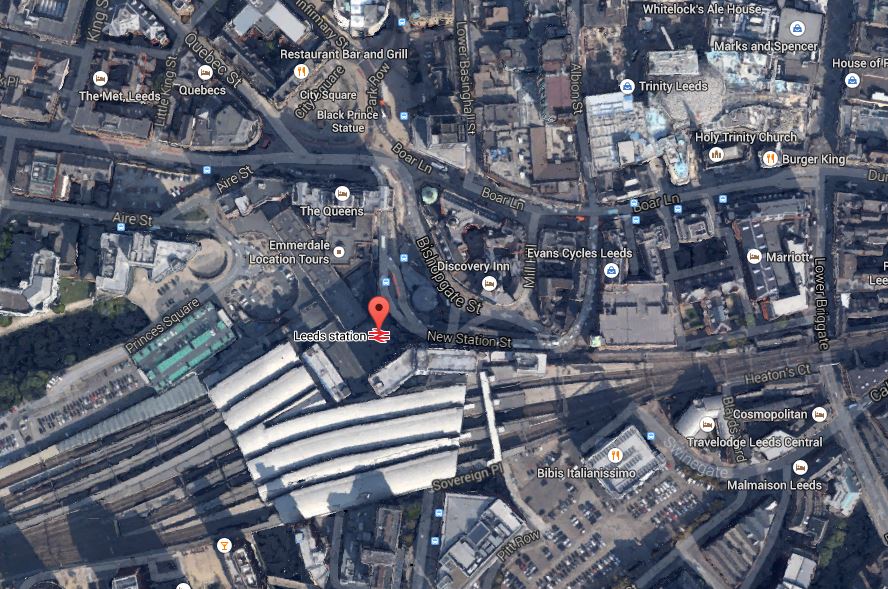
This Google Earth map shows the central location of the station and also its closeness to the main Trinity Shopping Centre at the top right of the map. Walking routes between the two are not good and the station should have been improved with development on the northern side to link it to the city centre. According to Wikipedia. future plans are in place to add much needed extra platforms and develop the south side of the station.
I believe, that you should walk out of a station into an open space, from where you can get your bearings of the city. This has been done well at London Kings Cross, Liverpool Lime Street, Huddersfield and Cardiff Central and some station rebuilding and expanding, is embracing such a concept.
I hope that Leeds develop the concept to a new level, when they create a new southern entrance. Perhaps on a personal level, they could create an easy way to get a bus to Elland Road.
2. Reading Station
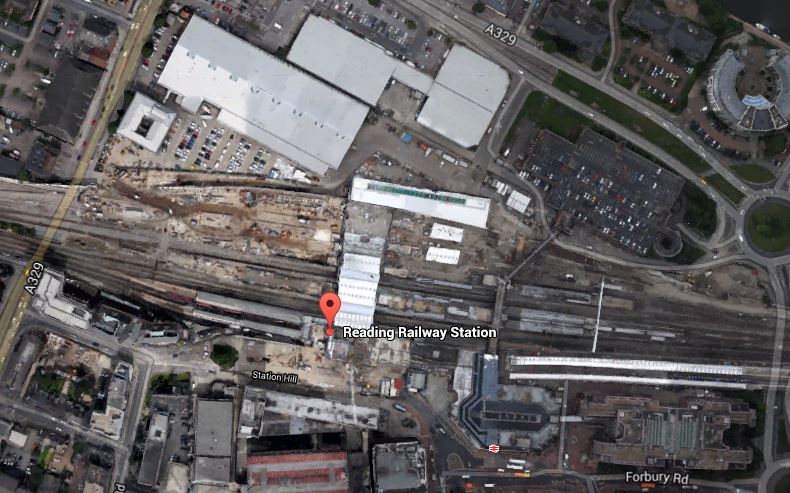
Reading station has also been rebuilt and is surrounded by development, as this Google Earth map shows.
Around Reading Station
In the future it will be getting Crossrail,the new western link to Heathrow and probably more offices around the station. Network Rail, who now manage the station, have already created entrances on both sides of the station and I hope that development in the next few years, will make what is a spectacular station, a true gateway to the City.
3. Birmingham New Street
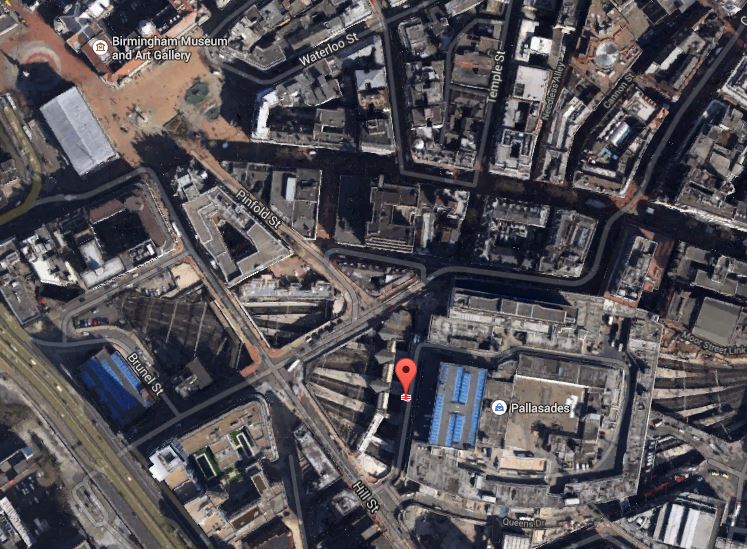
Birmingham New Street station is approaching the end of its rebuilding, which is now Gateway Plus. It includes a lot of retail including a new John Lewis. The station will also be connected to the Midland Metro. This Google Earth map shows the station and it’s surroundings.
Birmingham New Street
It shows the problem that the station suffers, when compared to many. It is in a deep dark hole surrounded by busy roads, with the buses some way away. I don’t think you would design a station like that these days, as they did in the 1960s.
The station has a problem, as does Leeds, that there is not enough lines and platforms, but whereas at Leeds space is available, it would appear that at Birmingham New Street, it will be difficult to find.
The design of the station means that natural light on the platforms is difficult to provide. Hopefully, though by providing that light on the concourse and lots of lifts and escalators to get to the trains, the architects may have improved things. At present, it’s a bit like a bad Underground station experience arriving and departing at the station. One of the reasons, I generally travel between London and Birmingham by Chiltern Railways, is that Moor Street is a light and airy station, that has been tastefully updated for the modern age.
One of the biggest problems at New Street, is getting onward connections around the City Centre. On my visits to Birmingham, I often walk to Brindley Place to have a drink or lunch with friends. It’s not a difficult walk, but in a few years time, I’ll be able to do this sort of journey on the Midland Metro from the stop in Stephenson Street. When HS2 opens, this tram will be used as the connection between all four Birmingham city centre stations.
4. Manchester Victoria Station
The updating of Manchester Victoria station is the centrepiece of two big projects in Manchester; the Northern Hub and the extensions to the Manchester Metrolink like the Second City Crossing. This Google Earth map shows The station and the surrounding area.

Manchester Victoria
This image is quite old and doesn’t show the new roof, but it does show the roof of Manchester Arena next door, how the tram lines call at the station, the nearby green space and the river. All the station needs now is completing, the Metrolink extensions and new electric train services to Liverpool, Preston, Blackpool, Bolton, Leeds, Huddersfield, Sheffield, Newcastle and Hull.
I would also personally, like to see an hourly service to the South and Euston, so that I can avoid, the mostly dreadful Piccadilly. This will be possible once the Ordsall Chord is opened, although some might say that it is a real pity, the Picc-Vic tunnel was never built. Perhaps Virgin will get permission to run a service to Huddersfield via both main Manchester stations.
5. Newcastle Station
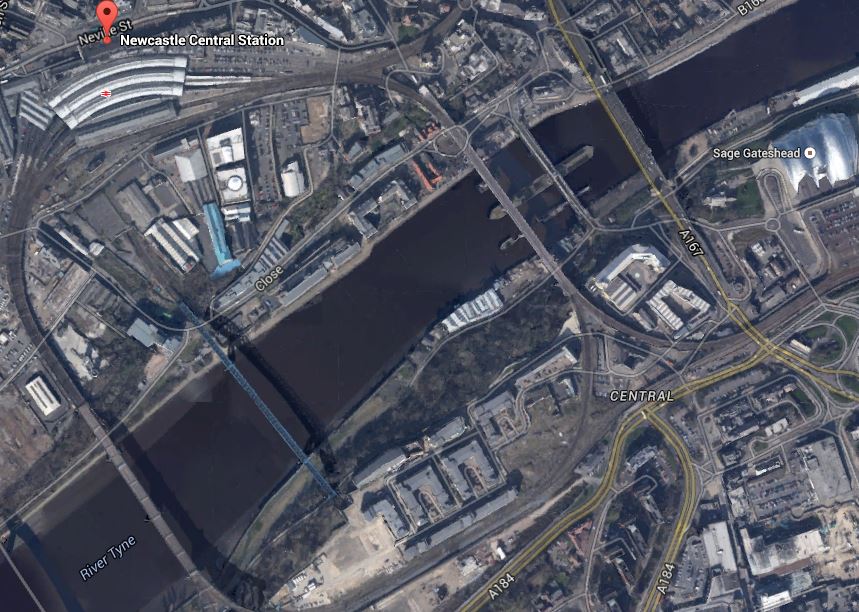
Newcastle station is a station that I don’t remember as anything special from my last visit some yeas ago, although it is a Grade I Listed Building. But since then, several millions have been spent according to Wikipedia, mainly on internal and retail facilities and on opening up the area round the station. So perhaps I should pay the city a visit. This Google Earth image shows the unique position of the station.
Newcastle Station
It is high above the Tyne on the edge of the city centre and uniquely the station is on a curve. It must be a very difficult to add extra tracks and platforms, which seem to be needed, as both through and local services are going to increase significantly.
I have only given five major examples, but they show how stations are becoming the focus of development.
One of my manual searches on the Internet picked up this article on Modern Railways entitled Snow Hill ‘transformation’ plan. This is the first paragraph.
Birmingham City Council has released its Snow Hill Masterplan, which outlines plans to grow the business district surrounding the station and includes proposals for the ‘transformation’ of the station into a transport hub.
Snow Hill is Birmingham’s station that is ignored by visitors from around the country, although it is important for commuters and others brought into the city on the Snow Hill Lines.
The Snow Hill Masterplan is here on the Birmingham Post website. Some of those who have commented don’t like it and they could be right. But the principles behind the plan of creating high quality offices, retail and apartments over a well-connected station is one that has been proven to work at Canary Wharf. After all it does actually make double use of the same piece of land. This is a Google Earth image of the Birmingham Snow station and its location.

Birmingham Snow Hill
You don’t see much of the actual station, as it is covered by a multi-story car park. As someone who can’t drive and manages well without a car, I can’t see why cities don’t do what London, Cambridge and Oxford have done and discourage people from driving in by providing top quality public transport.
The Snow Hill Masterplan would need an updated Midland Metro and also extra trains and routes through Snow Hill station.
I think that if I could get trains direct from Marylebone to Snow Hill, then that would be my preferred way of going. Snow Hill is in a much friendlier and welcoming part of the City than New Street.
I think on balance it is a good plan.
Sunderland Port Gets A Rail Connection
I’m all for freight traffic to be on the railways, even if it sometimes means that noisy and smelly freight trains pass through residential areas. But on the plus side, I’ve seen how rail improvements connecting the Port of Ferlixstowe to the wider rail network, has taken so much traffic off the busy A14. It is my belief, that one of the best ways to increase motorway capacity, is to remove as much long distance freight as possible.
DB Schenker obviously want to promote rail freight for commercial reasons and they seem to be backing a lot of new rail developments like the Northern Hub.
So I was not surprised to see the company very much behind the re-opening of a rail link into the Port of Sunderland, as reported in this piece in Modern Railways. DB Schenker’s spokesman says this.
‘Ports play a crucial part in DB Schenker Rail’s growth strategy and we are delighted to bring rail back to Port of Sunderland.
It will be interesting to see how busy this rail link becomes in the next few years.
Increasingly, these last mile rail links are being created or renewed. The only losers are probably the drivers of heavy good vehicles.
This small rail link has been renewed in an area that could see a lot of development in the next few years. This Google Earth map shows the rough route of the rail link along the coast.
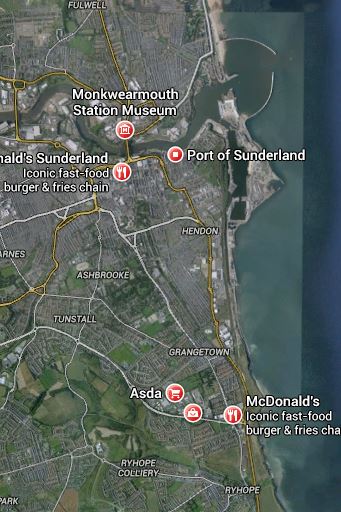
The Durham Coast South Of Sunderland
Sunderland Port is marked by the two curved breakwaters at the top and the link joins the Durham Coast Line that runs from Newcastle via Sunderland and Hartlepool to Middlesbrough, at Ryhope Grange junction, which is near to the marked McDonalds.
The Durham Coast Line has an hourly service between Newcastle and Middlesbrough and also connects various ports and sites to the rail freight network. It is also used by Grand Central services between Sunderland and London and as a diversionary route for the East Coast Main Line. Local groups are also keen that the line be upgraded with a better passenger service between the Tyne, Wear and Tees areas.
In a sane world, this line would be a prime candidate for electrification linked to the East Coast Main Line at Newcastle and Darlington. A few points.
1. It would be an important electrified diversion for the increasingly crowded East Coast Main Line.
2. I suspect Grand Central and other East Coast Main Line operators are pushing for this electrification, as it would enable direct high speed services between Newcastle and London via Sunderland, Hartlepool and Middlesbrough.
3. After the completed electrification of the Trans-Pennine routes, it would also improve services from towns and cities not on the East Coast Main Line to the western side of the Pennines.
However full electrification is probably not possible as the northern part of the line has been electrified for the Newcastle Metro to a different standard. But the new passenger trains like the Class 800 and new freight locomotives like the Class 88, would just switch to their on-board diesel power,
As an aside here, Tees Valley Metro, is being developed around Middlesbrough, in rather a stop-go fashion. Surely if the Durham Coast Line is electrified and that electrification is extended to Darlington and then perhaps on the Tees Valley Line to Bishops Auckland to serve both the National Railway Museum at Shildon and the Hitachi train factory at Newton Aycliffe. It would seem a bit mad to build a large factory to make electric trains and then have to haul them in-and-out with a diesel locomotive.
If nothing else, all of these options prove to me, that the North East should have a similar sort of autonomy as Greater Manchester is getting. That would enable the area to bring together all of the ideas about extending the transport system.
Looking at Wikipedia’s list of proposed rail infrastructure projects, these are in the North East.
Newcastle Station Redevelopment
Tyne And Wear Metro Developments
It’s not a long list. Other areas south of Hadrian’s Wall, like Bristol, Birmingham, Cardiff, Leeds, London, Merseyside and Manchester have much better developed plans on the drawing board, even if they know some will be a long time coming.
I wonder if Department of Transport officials when talking to representatives from the North East, say to them, you’ve got an electrified railway to London, the Tyne and Wear Metro, rebuilding of Newcastle station and a brand new train factory, so what more do you want?
Surely, local elected representatives should decide what is best value to the communities they serve. No-one based outside an area, can ever know all of the subtle local reasons, why things should or should not be done. As an example, Greater Anglia’s stations in East London are managed from Norwich. I don’t think they manage them very well and not for good reason are most being put under the care of Transport for London.
Most transport in the North East should be under the control of a single body, so that the limited finances available will be better allocated.
Will Modern Construction Techniques Create New Stations For The London Underground/Overground?
London is under tremendous pressure to provide more and more housing and in some ways it seems we’re using up the obvious sites like Stratford, Barking Riverside and Old Oak Common. So we’re going to start building on perhaps less obvious and more cramped sites.
The area round Shoreditch High Street station is being developed more and more with tower blocks. I have talked about linking the station to the Central Line and also about a new main line station in the area, so what happens here in the next few years is going to be an experience that will be worth watching.
I also feel that the area to the east of Gospel Oak station could be opened up for development, which might involve a link to the Northern Line.
Yesterday, I mused about reopening Maiden Lane station, which would involve a lot of properly development and a possible link to the Piccadilly Line.
So all three of these developments could involve a connection to a deep level underground line, something which five years ago would have been very difficult.
A few months ago, I talked about using an uphill excavator at Whitechapel station to connect the deep level Crossrail tunnels to the other lines. I have also found this article on the New Civil Engineer website, which gives more details of the amazing construction going on at Whitechapel.
My only comment is – You ain’t seen nothing yet!
If I take the three examples above, they would all mean connecting to a working twin-bore deep Underground line between two stations. I suspect that some clever construction engineers will develop a methodology to do this, with the minimum of disruption to the working line. If the first time, they do it, it is on time and on budget, the engineers will have a job for life in adding connections to deep underground lines not just in London, but all over the wider world.
To return to London, I think we’ll be surprised at some of the seemingly crazy schemes put forward for new or extended stations in the future, that have become possible with the improvement of tunneling and other construction techniques.
Would Extending The Gospel Oak to Barking Line Unlock Land For Development?
If the Gospel Oak To Barking Line (GOBlin) is extended to Hounslow, it looks like it will branch off the current line at Junction Road, to join the Midland Main Line through West Hampstead Thameslink and on to the Dudding Hill Line for Old Oak Common and Acton.
This map shows the lines to the east of Gospel Oak station towards Kentish Town.
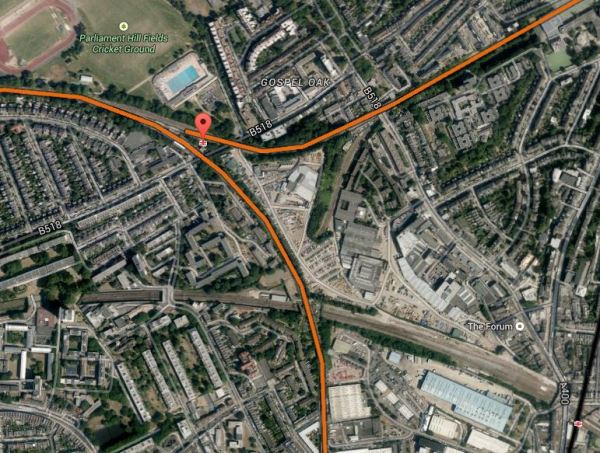
Railways Between Gospel Oak and Kentish Town
The GOBlin runs across the top, with the other orange line being the North London Line. Across the bottom of the picture there is the Midland Main Line. The link between the GOBlin and the Midland Main Line is clearly shown., but note that the area to the east of this link is industrial. It is the headquarters and main London site of the Murphy Group.
Think about the area in the triangle defined by the railways to the east of Gospel Oak station and further east towards Kentish Town.
1. In my A-Z, the area is a big white space.
2. When Thameslink is complete, there will probably some release of land near Kentish Town station.
3. An extended and electrified GOBlin could have a station in this area, giving any new developments better transport links. This station could also give an interchange to the North London Line. This would be a better interchange than the current one at Gospel Oak station.
4. One of the reasons given for linking the GOBlin at Junction Road to the Northern Line at Turnell Park tube station, is to link the GOBlin to a North-South route. But an extended GOBlin going through a properly sorted West Hampstead Interchange, gives passengers access to a multiplicity of North-South routes, including Thameslink, Chiltern, North London line and the Underground.
5. Unless it is needed for freight trains, the stub of the line to Gospel Oak might be closed.
6. The northern part of the site could be linked in a sympathetic way to Parliament Hill Fields. There could even be a green walk to the new station, if one is built.
7. There used to be a link to allow trains coming west on the GOBlin to go South on the Midland Main Line. If there was a need for it, then it could be reinstated.
There is every reason to believe in the next few years, Transport for London will extend the GOBlin and if they do, this site’s development potential could be fully unlocked.
Junction Road And Tufnell Park Stations
When there is speculation about new stations on London’s railways, the possibility of a new Junction Road station on the Gospel Oak to Barking line, linked to Tufnell Park tube station by escalator sometimes crops up.
This map shows the area.
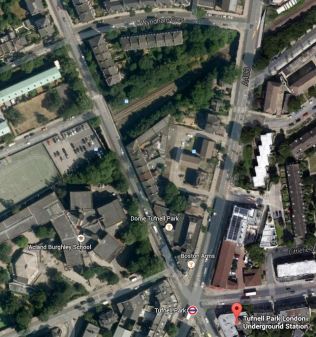
Tufnell Park
Tufnell Park tube station is indicated at the bottom and Junction Road leads up from that station to the top right. The Gospel Oak to Barking line runs across the image to the top right corner at a thirty degree angle to the horizontal. The old Junction Road station was where the road and railway cross. Only Station Road survives.
What is interesting is to follow the railway under Dartmouth Park Road towards the top left and you can see some cars parked. This is a school, that has been built over some of the tracks of the railway.
If Junction Road station was to be reinstated, it is not that close to Tufnell Park tube station, so some heroic engineering would probably have to be employed to connect them.
But a better idea for the area must be being considered by Transport for London and property developers! After all, just as the school was created on the west side of Dartmouth Park Road, surely a similar method could be used to build something else over the railway. This map shows the area to a bigger scale.
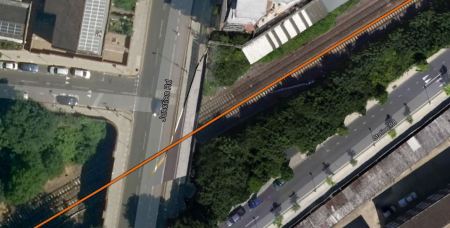
Junction Road Station
If this should lead to a rebuilt Junction Road station, then this will be a bonus for everybody in the area and a good selling point for the developers.
I have since taken a few pictures of the area.
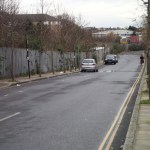
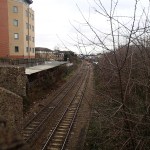

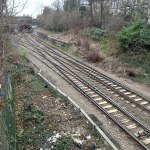
It’s quite a large area and it does seem to my engineering rather than property development brain, that it could be developed to either create housing or perhaps a school. A reinstated Junction Road station is probably not feasible as it is quite a walk to Tufnell Park tube station, which means crossing a busy road.
Note in the picture the actual junction, where the connection to the Midland Main Line, diverts from the Gospel Oak to Barking Line. This would be used if the line is extended to Hounslow.
The question has to be asked that if the line is extended, would the Gospel Oak to Barking Line still terminate at Gospel Oak station?
A Rebuilt Station For Guildford
It is has just been posted on Modern Railways, that Guildford station is to be redeveloped. The report is subtitled.
£150m investment at no cost to tax or fare payer
I think we’ll see a lot more developments like this, where everybody wins. In Guildford’s case, this means a new station building, a transport hub, 445 new homes and 1,600 sq. metres of office space. It also claims 300 jobs will be created.
Look at this aerial view of the station.
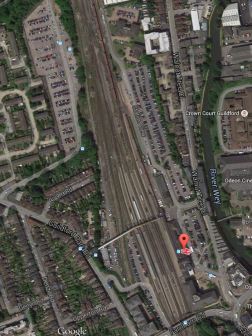
Guildford Station
The development is to use surplus land around the station. There seems to be a lot of that and a lot of space devoted to car parking.
So an imaginative development would be an improvement. I would like to see homes and offices developed over the station.
 The Anonymous Widower