Zero/Low-Emission Locomotive Global Roundup
The title of this post, is the same as that of this article on Railway Age.
This is the introduction.
By 2050, in accordance with the Paris Climate Agreement, zero-emission locomotives may have completely replaced conventional diesel-powered equipment on the railways of the world.
Current development of zero-emission switcher locomotives, combined with practical operating experience, increases this likelihood in the foreseeable future.
It will be increasingly possible to determine the optimal type or types of zero- or low- emission locomotives to replace conventional diesel units.
They then give a roundup, which includes American, Canadian Chinese, French, Indian and Polish locomotives.
There was no mention of Clean Air Power‘s conversion of a Class 66 locomotive to dual-fuel operation, that I wrote about in Clean Air Power Adds Hydrogen To Class 66 Fuel Mix.
World First As HS2 Trials Dual-Fuel Piling Rig On London Site
The title of this post, is the same as that of this news item on HS2.
This is the piling rig.
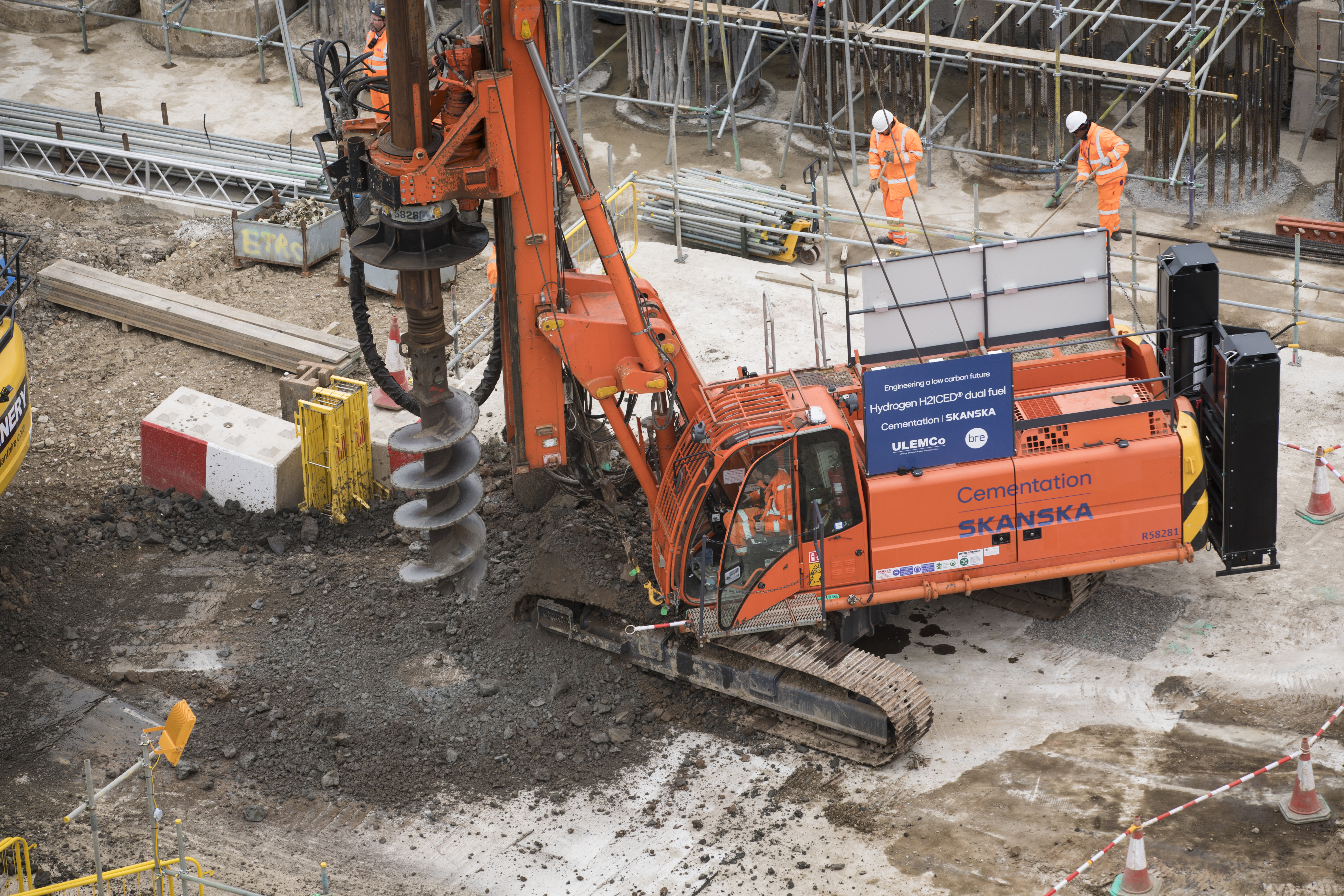
These are the two bullet points.
- Four piles installed using a hydrogen dual-fuel piling rig, cutting the use of traditional fuel by 36%.
- Trial is the first real world use of the technology on a construction site.
These three paragraphs outline the project.
HS2 has taken a further step forward in decarbonising the constructure sector, completing a world first by installing four 30-metre deep piles on a London site using a hydrogen dual-fuel piling rig.
The trial took place as part of work done in partnership by ULEMCo and Cementation Skanska, working with the world-leading Business Research Establishment (BRE), funded through the BEIS Phase 1 Red Diesel Replacement competition.
ULEMCo and Cementation Skanska successfully modified a medium sized CFA piling rig, converting it so that the machine component operated using energy from on-board hydrogen tanks. Using the dual-fuel system, both diesel and biofuels (HVO) can be mixed with hydrogen, displacing the fuel with hydrogen, resulting in a reduction in fuel use and lower CO2 emissions.
Note.
- We’re going to see a lot more large machines converted to dual-fuel and pure hydrogen.
- ULEMCo from Aintree, seem to be one of the leaders in the field of dual-fuel conversions.
You certainly see lots of these machines working around London and other big cities.
Grand Central DMU To Be Used For Dual-Fuel Trial
The title of this post, is the same as that of this article on Railway Gazette.
This is the first two paragraphs.
An Alstom Class 180 Adelante diesel-hydraulic multiple-unit is to be converted to run on a combination of diesel and liquefied natural gas in a dual-fuel technology demonstration project.
One car of the DMU which Arriva-owned open access inter-city operator Grand Central leases from Angel Trains is to be equipped with dual-fuel technology company G-volution’s Optimiser system, which is used in the road sector. The modifications are expected to be straightforward, enabling trials on the national network to start later this year.
The article dates from May 2019 and I suspect the small matter of the pandemic and Grand Central’s resulting three closures due to lockdowns are the reason this development hasn’t been heard of since.
But this was the London end of the Class 180 train, that I rode from Mirfield to King’s Cross.
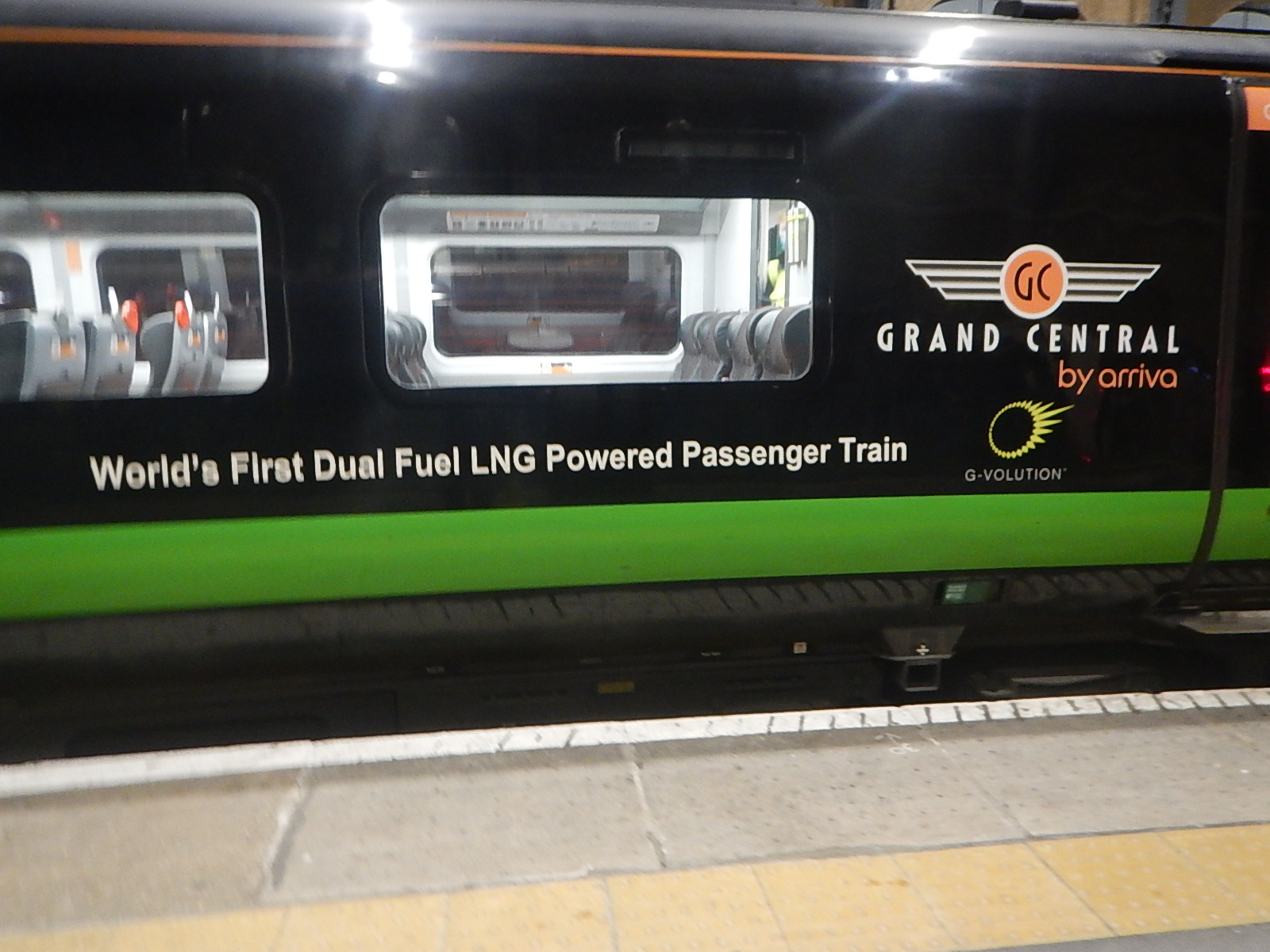
I haven’t ridden in a Class 180 train for some years and there was nothing to indicate from the performance, that it was not a standard train.
There are fourteen of these 125 mph trains.
This explanatory video of G-volution’s technology is on the G-volution web site.
Note that in the video, one of G-volution’s Managing Director; Chris Smith says that the technology is fuel agnostic and will work with a range of fuels including ammonia, biodiesel, bio-LPG, hydrogen and methanol.
Conclusion
It will be very interesting to see what is decided to be the ideal fuel-combination and how much reduction is possible for the various emissions.
I’ll end with two questions.
Will Passengers Like The New Trains?
What is there not to like! Same train and performance with lower emissions.
Will Cummins Like What G-volution Have Done To Their Engines?
Cummins might be a bit miffed, as they built the QSK19 engines for the Class 180 trains and may have their own plans for them. But they are a pragmatic and flexible company in my experience and generally they do what the customer needs or wants. Decarbonisation is surely in everybody’s interest.
Incidentally, the same Cummins diesel engines are used in the TransPennine Express, Class 185 trains, I’ve been riding in most of today.
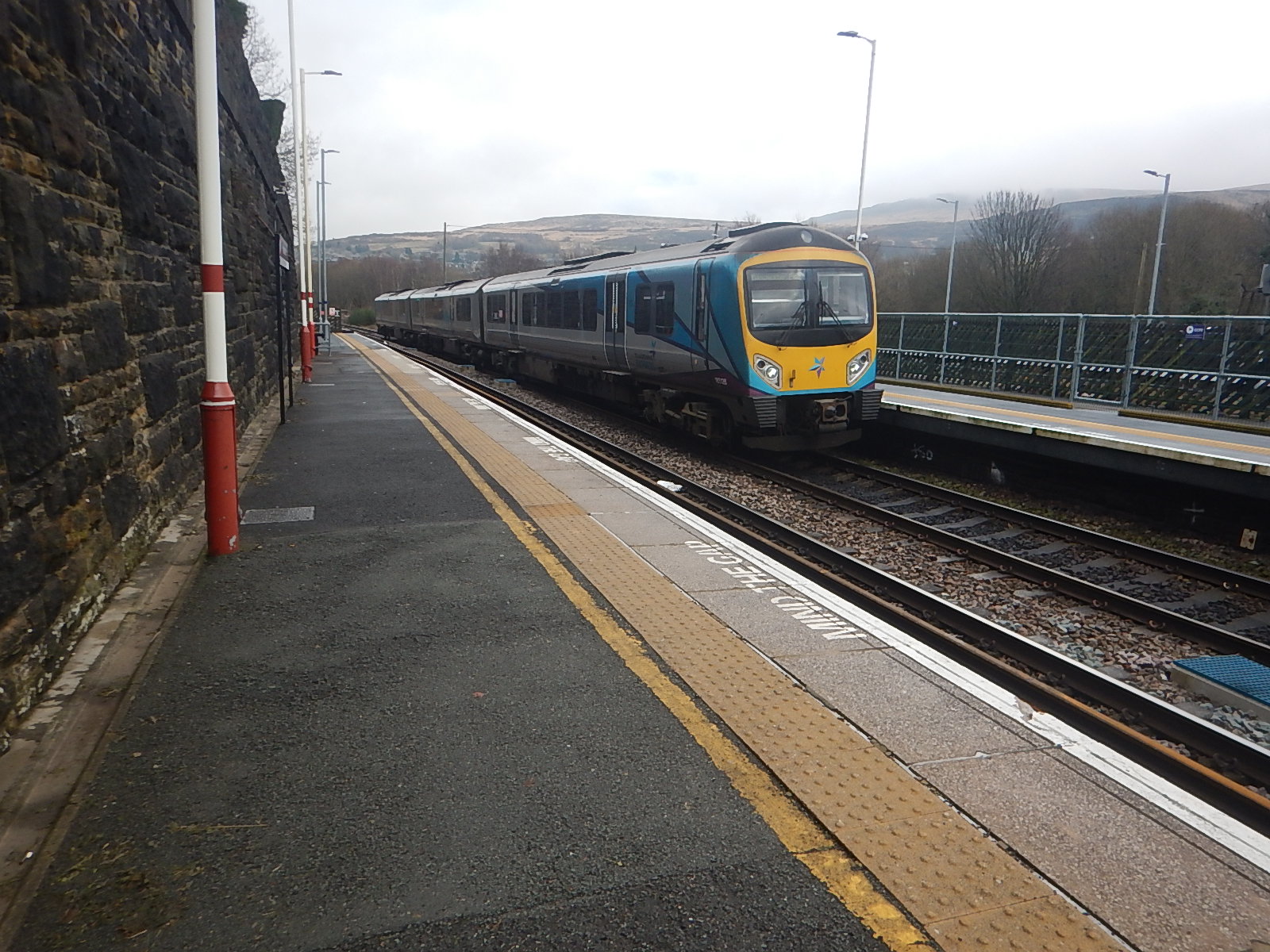
There are fifty-one of these 100 mph trains in use in the UK. They could be ideal for some long routes, if they could be converted to low-emission.
Green Tugboats? ‘Revolutionary’ Hydrogen Ship Engine Unveiled In Belgium
The title of this post, is the same as that of this article on Business Green.
This is the first paragraph.
A “revolutionary” hybrid ship engine powered by green hydrogen and diesel has been unveiled today in Belgium, with developers claiming the innovation could cut CO2 emissions from ships, trains and electricity generators by up to 85 per cent.
The engine has been given the name BeHydro.
The first order has been received by the developers; ABC, for two 2MW dual fuel engines that will be installed on a hydrogen-powered tug for the Port of Antwerp.
Motors up to the size of 10 MW are under development.
This is the last sentence of the article.
In theory, any large diesel engine can be replaced by a BeHydro engine. The hydrogen future starts today.
It is a quote from the CEO of one of the companies involved.
Conclusion
This is a development to follow.
The BeHydro engine, with its dual-fuel approach, is claimed to cut carbon emissions by 85 %.
In the Wikipedia entry for ABC or Anglo Belgian Corporation, there is a section called Products. This is a paragraph.
The engines are found in use on large river barges such as those found on the Rhine, coastal freighters, fishing boats, ferries, tugboats (which typically use 2 engines), and other ships. Other applications include electricity generation, and pumping engines, engines for cranes, and locomotives (including the Belgian Railways Class 77 and Voith Maxima), as well as dual fuel (gas/oil) DZD engines.
I feel that that the BeHydro engine will keep the company busy.
 The Anonymous Widower