The Stone Arch Railway Bridges Of Scotland
There are a lot of stone arch railway bridges in the UK, but they do seem to more numerous in Scotland, than in England.
These pictures show a selection of bridges on the Borders Railway.


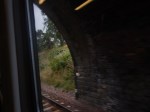
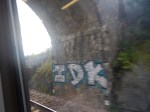


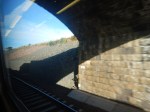
I counted to about fifteen between Edinburgh Waverley and Galashiels stations.
There were probably about an equal number of bridges where a stone arch bridge had been replaced by a modern concrete structure, like this one.
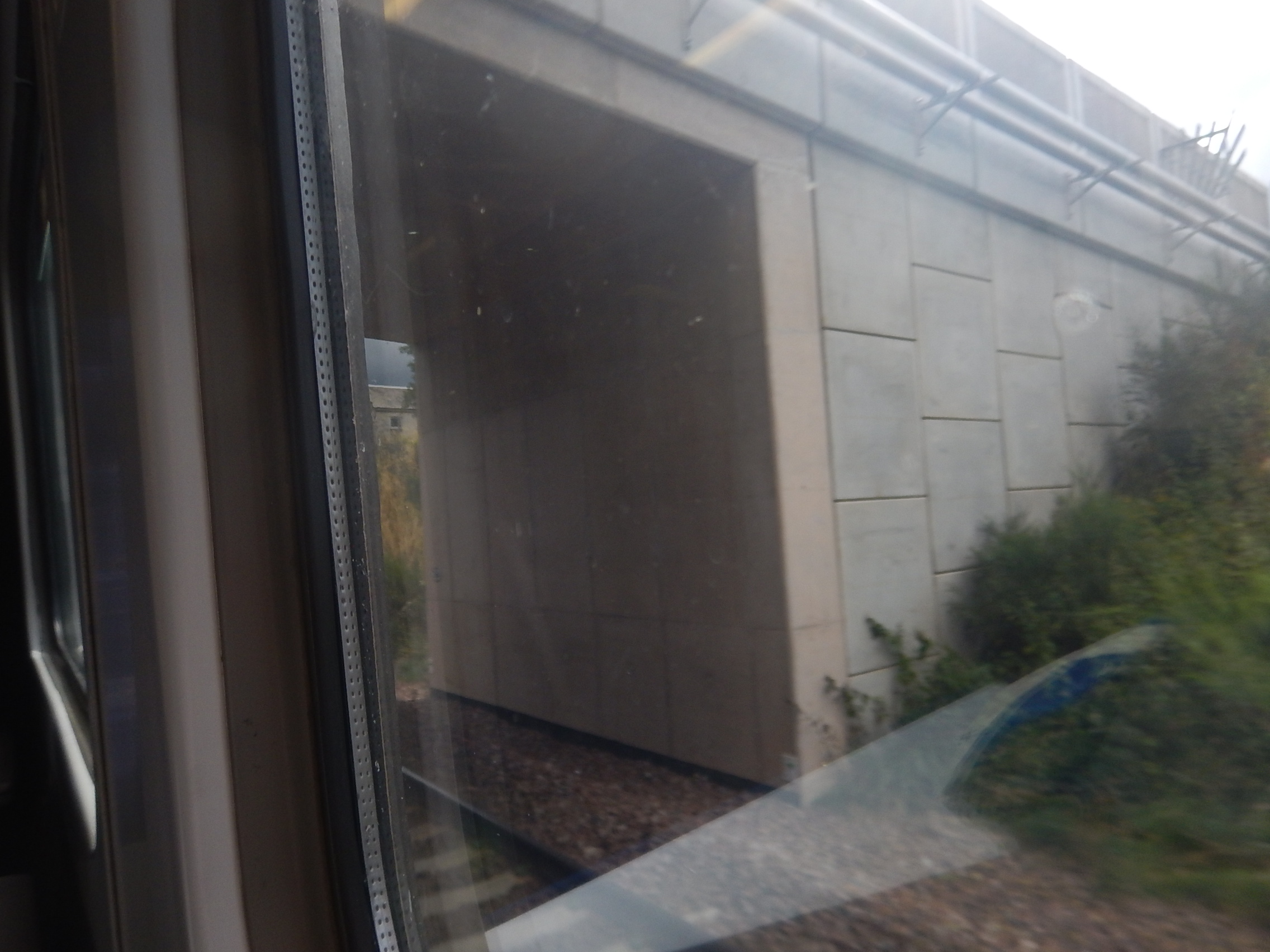
They’ll probably last a thousand years, but they lack the charm of the stone arch bridges.
These pictures show a selection of bridges on the Busby Railway between Glasgow Central and East Kilbride stations.

These pictures show a selection of the many bridges between Aberdeen and Montrose stations on the Edinburgh – Aberdeen Line.


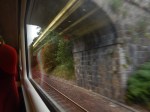
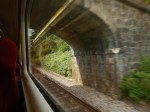

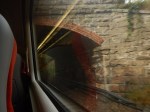


I took pictures of at least twenty.
Freight Trains
Freight trains, especially those with the larger containers need a loading gauge, that is big enough to accept them.
The loading gauge in the UK, is summed up by these two sentences from Wikipedia.
Great Britain has (in general) the most restrictive loading gauge (relative to track gauge) in the world. This is a legacy of the British railway network being the world’s oldest, and having been built by a plethora of different private companies, each with different standards for the width and height of trains.
These are the commonest gauges.
- W6a: Available over the majority of the British rail network.
W8: Allows standard 2.6 m (8 ft 6 in) high shipping containers to be carried on standard wagons.
W10: Allows 2.9 m (9 ft 6 in) high Hi-Cube shipping containers to be carried on standard wagons and also allows 2.5 m (8 ft 2 in) wide Euro shipping containers.
W12: Slightly wider than W10 at 2.6 m (8 ft 6 in) to accommodate refrigerated containers.
W12 is recommended clearance for new structures, such as bridges and tunnels
The Borders Railway appears to have been built to at least W8, so it could handle standard freight containers.
But the line doesn’t carry freight!
On the other hand, I suspect the following were considered, when designing the Borders Railway.
- Network Rail and rail maintenance companies, may need to bring some large rail-mounted equipment along the line for regular or emergency maintenance.
- If the line is extended to Carlisle, the route could be used as a diversion for freight trains, if the West Coast Main Line is closed, due to weather or engineering works.
- There may be a need to use the Borders Railway to extract timber from the forests of the Borders.
The need for freight on the Borders Railway, explains why there are so many new overbridges.
Electrification
Electrification with overhead wires needs extra clearance.
It looks to me, that the Borders Railway has been given enough clearance for future electrification.
Problems With EGIP
Electrification under the Edinburgh to Glasgow Improvement Program (EGIP), proved to be difficult.
It wasn’t helped by the standards changing half-way through the project and the numerous bridges and tunnels that had to be rebuilt.
An important route like Edinburgh to Glasgow probably needs to be fully-electrified, but the difficulties encountered and those in Lancashire have encouraged Network Rail and the engineering consultants to look at other methods of electrifying lines in the UK.
Electrification Between Edinburgh And Aberdeen
I doubt this will ever happen in a conventional manner.
- Would electrification of the Forth Bridge and Tay Rail Bridge be allowed?
- The disruption of rebuilding the stone bridges would be enormous.
- The line only has a maximum speed of 100 mph.
Diesel and alternative power sources like hydrogen will be able to maintain the fastest speeds, that are possible on the line.
Money would probably give better value, if it were to be used to increase line speed.
Opposition To Rebuilding Bridges
This article on Rail Technology Magazine is entitled Network Rail Electrification Plans Stalled After Council Rejects Bridge Removal Bid.
This is first paragraph.
Campaigners are celebrating after plans from Network Rail to demolish a bridge as part of its electrification scheme were rejected by a local council.
The bridge in question is a Grade II listed overbridge at Steventon in Oxfordshire.
It is not unlike those in Scotland, that are shown in my pictures.
In the 1960s, British Rail would have just blown it up and replaced it with a concrete monstrosity.
I am not advocating a return to this policy, but Network Rail has a problem at Steventon, that they need to fully electrify the line, if electric trains are to use the route on electric power, rather than using environmentally-unfriendly diesel power.
Since the new Class 800 trains for the route were designed and ordered, the technology has moved on.
In South Wales, discontinuous electrification and trains with a battery capability will be used.
Conclusion
Scotland and other parts of the UK, like the Pennines and in the valleys of South Wales, have a serious problem with the way the Victorians built our railways.
\development of the UK rail network with electrification and an enhanced freight capability needs to be thought out carefully and with great ingenuity.
HS2 To Kick Off Sheffield Wiring
The title of this post is the same as that of a small article in the August 2018 Edition of Modern Railways.
This is the first paragraph.
HS2 Ltd is to begin preparatory works for electrification of the Midland Main Line between Clay Cross North Junction and Sheffield
This will mean that the current Midland Main Line will be electrified at both ends, which will surely make it easier to design new trains for the line.
Grayling Confirms Electrification Will Form Part Of £3bn TransPennine Upgrade
The title of this post is the same as that of this article on Rail Technology Magazine.
his is a key section of the article.
But now, in a letter to the Railway Industry Association (RIA), Grayling has finally confirmed that the TransPennine upgrade will be a “rolling programme of enhancements,” including both major civil engineering projects and electrification.
He wrote: “The key to delivering improved journey times on what is a very circuitous route through the Pennines involves rebuilding and relaying most of the track bed from Manchester to York.
“We are awaiting Network Rail’s final project plan, but we have instructed them to prioritise those elements which bring the quickest passenger benefits. This will include things like straightening lengths of track to improve line speed.”
If nothing else Chris Grayling’s comments appear to have been measured ones and not a quick response to ht out to shout down the various groups for whom nothing short of full electrification is an acceptable solution.
The Routes Across The Pennines
There are three main routes across the Southern section of the Pennines. From North to South they are.
The Calder Valley Line from Manchester Victoria and Preston in the West to Leeds, Selby and York in the East via Hebden Bridge, Halifax and Bradford.
The Huddersfield Line from Manchester Airport, Piccadilly and Victoria in the West to Leeds, Hull and York in the East via Stalybridge, Huddersfield and Dewsbury.
The Hope Valley Line from Manchester Piccadilly in the West to Sheffield in the East.
Note.
- The three routes are much of a muchness with operating speeds in the region of 70-90 mph.
- There are good connections in the West with Blackpool, Chester, Liverpool and the West Coast Main Line.
- There are good connections in the East with Hull, Newcastle, York and the East Coast Main Line.
- Some connecting routes like the East and West Coast Main Lines are electrified 125 mph routes, but others like the connections to Chester, Hull and Scarborough are slower diesel routes.
- Some electrified routes like Liverpool to Manchester via Chat Moss, although they are electrified need speed improvements.
- The four major cities served by the three cross-Pennine routes; Leeds, Liverpool, Manchester and Sheffield all Have sizeable local tram or rail services.
If all these routes could be improved, they would create a core network of cross-Pennine routes.
There is also two other secondary routes that could be improved or created as diversion routes, whilst work is carried out on the main routes.
- A conductor pointed out to me, that passenger trains can go between Blackburn and Leeds via the Ribble Valley Line and Skipton with a reverse at Hellifield station.
- And then there’s the reopening of the route between Sklipton and Colne, which appears to be top of a lot of politicians and train companies lists.
Surely, these could be used to provide extra capacity if one of the Calder Valley or Huddersfield Lines was closed for improvement.
Some suggestions, I’ve seen about the Skipton to Colne Line, even say it could be used for freight.
I believe that with some measure of careful planning, the number of train paths across the Pennines can be increased, to an extend that would ease the improvement of the three main routes.
The Project Has A High Degree Of Difficulty and Complexity
The biggest upgrades of a UK railway in my time has been the electrification of these three main lines from London.
- West Coast Main Line, which was modernised and electrified by British Rail in the 1960s and 1970s.
- East Coast Main Line, which was electrified by British Rail in the 1980s.
- Great Western Main Line, which has been undergoing a tortuous and expensive upgrade and electrification for several years.
So how did Network Rail mess up on the Great Western, when British Rail completed the other lines without massive amounts of trouble?
Various reasons have been put forward, but I believe it has a lot ot do with the change of attitudes on the public’s behalf and new regulations in the intervening forty years.
As an example consider the electrification of the Grade II* Listed Digswell Viaduct in the 1970s. British Rail just did it and I don’t even know, if there were any objections.
Today, the Heritage lobby and various other pressure groups, would have had a field day. In the 1970s, most people accepted that the Government and Bitish Rail knew best.
Forty years ago, passengers accepted the disruption caused by works on the railways. Now they don’t and there are millions more regular travellers to complain.
Upgrading the main routes across the North have a lot of problems that will rear their ugly heads as the routes are upgraded.
- Many of the routes are double-track lines hemmed in by cuttings, villages and towns.
- There are large numbers of bridges, viaducts and level crossings on the routes.
- Many of the routes have speed limits around 80 mph.
- How good is the documentation of the routes?
- Sitting in the middle of the routes is the Grade I Listed Huddersfield station and the Grade II Listed Hebden Bridge station.
To see the problem of these lines take the following trains.
- Blackburn to Hebden Bridge
- Hebden Bridge to Leeds
- Leeds to Huddersfield
- Huddersfield to Manchester Airport.
Take a break at the three intermediate stations.
- Hebden Bridge station is a gem of a Victorian station.
- Leeds is a modern station overflowing with passengers.
- Huddersfield station is one of the North’s great buildings.
In addition, note the number of arched stone bridges, that are probably not high enough for electrification.
To upgrade and electrify these lines is not the simpler project of say electrifying the Midland Main Line, where much of the route is in flat open country.
Throw Every Possible Proven Technique At The TransPennine Improvement
If ever there was a project, where one method doesn’t fit all, then this is that project.
Every sub-project of the work must be done in the best way for that sub-project.
Decisions must also be taken early, about factors that will influence the overall project.
I believe that Crossrail and the new South Wales Metro were designed using an holistic approach.
- New trains have been designed in conjunction with the route.
- Electrification has been simplified by innovations, like batteries on the trains.
- Trains and platforms will fit each other.
- Station design has evolved for efficient train operation.
- Signalling will be digital to allow higher frequencies.
Because of the complexity and importance of the overall TransPennine project, only the best solutions will do!
Some will definitely not be invented here!
A few of my thoughts follow!
A Rolling Programme Of Improvements
This would be a good idea, as improvements can be done in what is the best order for all the stakeholders.
For instance there might be a bridge that will need to be replaced because it is too low and/or structurally, it is approaching the end of its life.
- But it will cause massive disruption to replace.
- On the other hand once replaced it might cut perhaps ten minutes from journeys passing through, as the track can be straightened.
Perhaps it will be better to bite the bullet and get this project done early? In the past, I feel Network Rail has often delayed tackling difficult projects. But if they did a good on-time job, it might help to convince people, that they mean what they say in future.
Improving The Tracks
I said earlier, that Chris Grayling wrote this.
The key to delivering improved journey times on what is a very circuitous route through the Pennines involves rebuilding and relaying most of the track bed from Manchester to York.
No building, no matter how humble or grand can be built without sound foundations.
What Chris Grayling said would be a good way to start the project.
It would give the following benefits.
- Operating speeds might be raised in places.
- Important loops and crossovers, that have been needed for decades could be added.
- Structures like bridges, past their useful life could be replaced.
- Some level crossings could be removed.
If it were done thoroughly, passengers would see reduced journey times.
The new rolling stock that is already on order for the route would be able to work the various TransPennine routes when they are delivered.
At the end of the work, Network Rail would also have a fully-surveyed railway in tip-top condition.
Electrification
It is my belief that to electrify a new or well-surveyed rebuilt existing railway, is much easier than electrifying an existing route.
If parts of the improved route are to be electrified, it would be like electrifying a new railway.
These points should be noted.
- Old mine workings and other Victorian horrors were found, when trying to electrify through Bolton.
- On the Gospel Oak to Barking Line in North London, they found an undocumented sewer.
- To sort out the electrification between Preston and Blackpool, Network Rail shut the route and rebuilt the railway before electrifying it.
A similar approach to Preston and Blackpool might help on sections of the main TransPennine routes.
It may be a more expensive process with all the surveying and rebuilding, but it would appear to a more safety-first approach.
The Stone Bridges And Discontinuous Electrification
I’d be very interested to know how many of those bridges could be handled using discontinuous electrification.
The wires go through the bridge in the normal way, but the section under the bridge that possibly could be a safety hazard, is earthed so that there is a dead section of wire.
The section is insulated from the 25 KVAC wires on either side by something like a ceramic rod, so that the trains’ pantographs can ride through easily under the bridge.
The disadvantage is the trains need batteries for power, where there is none coming from the overhead wire.
The technique has already been earmarked for the electrification of the South Wales Metro.
Tunnel Electrification
Crossrail and the Severn Tunnel do not use conventional electrification. A rail is fixed in the roof and the pantograph runs on the rail.
The TransPennine routes have numerous tunnels and I believe that many could be electrified in this way.
It might even be possible to automate the process, as it was in the Crossrail tunnels. But they were modern concrete tunnels, not Victorian ones with uneven surfaces.
On the other hand there are a lot of old tunnels in the UK, that need to be electrified.
Viaduct Electrification
This picture shows Bank Top Viaduct in Burnley
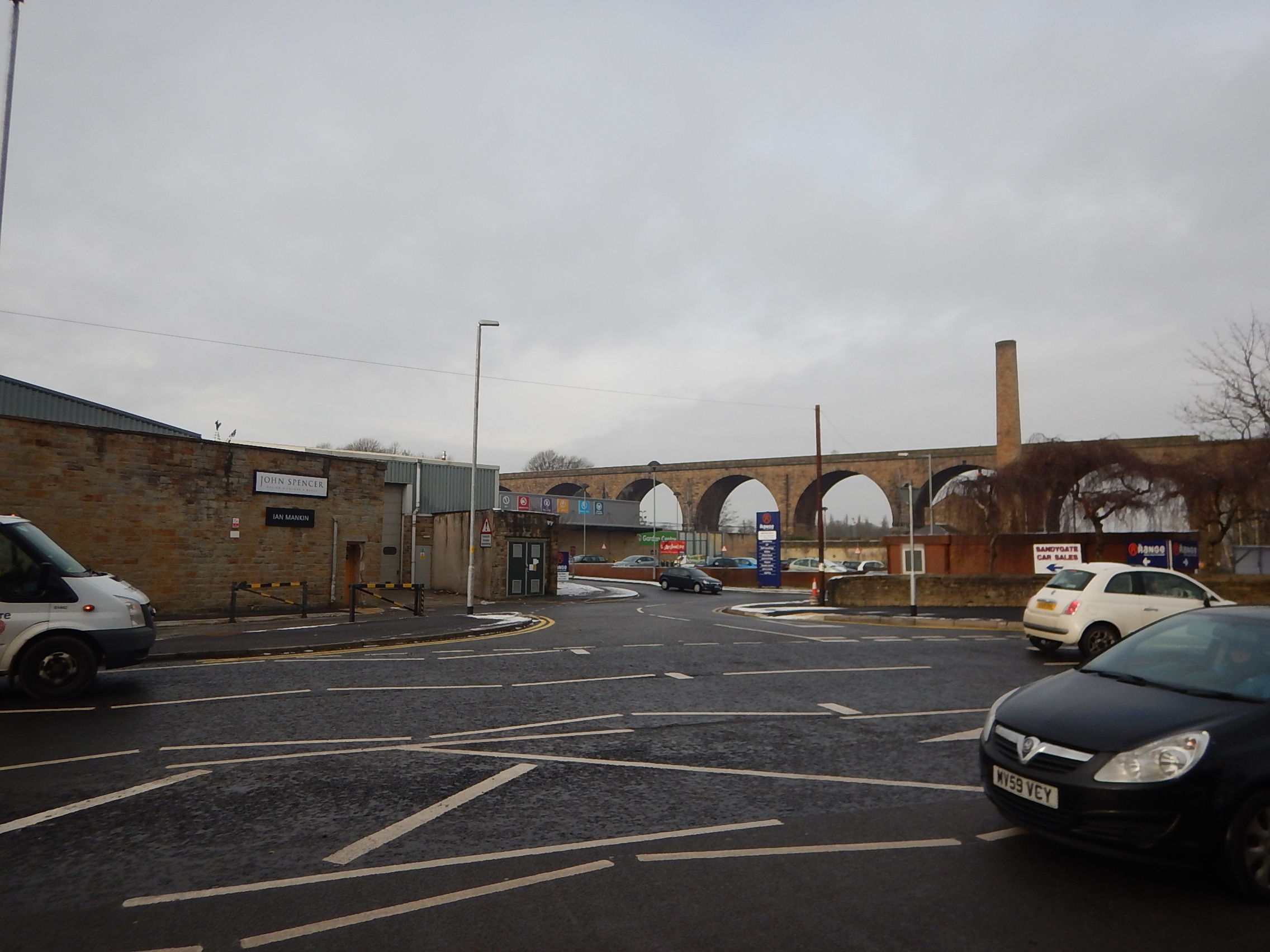
I can’t understand why, viaducts like these aren’t electrified using a third-rail.
- Third rail electrification works for most applications as well as overhead.
- Working on overhead electrification on a viaduct, is not a job for some.
- There is no visual intrusion with third rail.
- The power could only be switched on, when a train is connected.
On the other hand dual-voltage trains, that could switch quickly between systems at line speed would be needed.
Station Electrification
I also think that third-rail electrification can be used in stations where overhead electrification would be difficult or intrusive.
Battery,Bi-Mode And Hydrogen Trains
Train manufacturers are not stupid and want to increase their profits.
- Alstom are developing fleets of hydrogen trains.
- Bombardier are developing 125 mph bi-mode trains with batteries.
- CAF are developing battery and bi-mode trains.
- Stadler are developing trains with batteries and/or diesel power.
I suspect all these companies and others, see more trains can be sold, if innovative trains can run without the necessity of full electrification.
I also suspect many rail operators would prefer to spend money on shiny new trains, than on disruptive and ugly electrification.
Remember too, that batteries will improve.
Conclusion
I can see several techniques that could be applied to make electrification of some parts of the TransPennine routes.
Business Case Requested For Middlewich Reopening
The title of this post is the same as that of this article on Rail Magazine.
The Northwich to Sandbach Line provides a link between Northwich station on the Mid-Cheshire Line and Sandbach station on the Crewe-Manchester Line.
In the Wikipedia entry for the Mid-Cheshire Line, this is said under Reopening The Northwich To Sandbach Line To Passenger Trains.
This would allow a direct train service from places on the line to Crewe, which will should reduce journey times to destinations south of Chester, as well as reducing fares to those destinations. It would also allow the former station at Middlewich to re-open, and the possibility of a new station opening at Rudheath. An independent feasibility report found the Benefit to Cost Ratio for the reopening to be 5:1, which is almost four times higher than the recently reopened Borders railway in Scotland
5:1 sounds like a good financial case.
The Rail Magazine article also has this quote from Chris Grayling.
There are two routes in the North that I feel particularly keen to look at seriously reopening. One is the line from Skipton to Colne, the other is the line that passes through Middlewich that, in my view, should be a commuter railway into Manchester.
There is also the question as to whether the Northwich to Sandbach Line should be electrified.
But at 8.5 miles, I suspect that it will be an ideal line for a battery train, if both of the lines it connects, are electrified.
- The Crewe-Manchester Line was electrified in 1959.
- Electrification of the Mid-Cheshire Line has a high priority.
In addition, the Crewe-Chester Line could be electrified to allow Chester to have direct electric trains from London and Manchester.
It was good to see that Chris Grayling also endorsed Skipton to Colne.
The UK’s New High Speed Line Being Built By Stealth
Wikipedia has a section called High Speed Rail. This is the first paragraph.
High-speed rail is a type of rail transport that operates significantly faster than traditional rail traffic, using an integrated system of specialised rolling stock and dedicated tracks. While there is no single standard that applies worldwide, new lines in excess of 250 kilometres per hour (160 miles per hour) and existing lines in excess of 200 kilometres per hour (120 miles per hour) are widely considered to be high-speed.
In the UK we have both types of high speed line mentioned in this definition.
High Speed One and High Speed Two have or will have operating speeds of 300 kph and 400 kph respectively and by any definition are true high speed lines.
There is also the East Coast Main Line and Great Western Main Line and West Coast Main Line, which are lines with long stretches, where continuous running at 200 kph is possible.
These lines certainly meet the 200 kph definition now and will likely exceed it, as digital in-cab signalling is deployed in the future and allows running at up to 225 kph in certain places.
Electrification Between Sheffield And Clay Cross On The Midland Main Line
This article on Rail Technology Magazine is entitled Grayling Asks HS2 To Prepare For Electrification Of 25km Midland Main Line Route.
If this electrification happens on the Midland Main Line between Sheffield and Clay Cross North Junction, it will be another project in turning the line into a high speed route with a 200 kph operating speed, between London and Sheffield.
Currently, the electrified section of the line South of Bedford is being upgraded and the electrification and quadruple tracks are being extended to Glendon Junction, where the branch to Corby leaves the main line.
The proposed electrification will probably involve the following.
- Upgrading the line to a higher speed of perhaps 225 kph, with provision to increase the speed of the line further.
- Rebuilding of Chesterfield station in readiness for High Speed Two.
- Full electrification between Sheffield and Clay Cross.
Clay Cross is significant, as it is where the Midland Main Line splits into two Southbound routes.
- The main route through the Derwent Valley Mills World Heritage Site and Derby station.
- The secondary route of the Erewash Valley Line to the East Midlands Hub station.
Note.
- Some of the tunnel portals in the Derwent Valley are Listed.
- Trying to electrify the line through the World Heritage Site will be a legal and engineering nightmare.
- Network Rail has spent or is spending £250million on upgrading the Erewash Valley Line.
- High Speed Two will reach The East Midlands Hub station in 2032.
When High Speed Two, is extended North from the East Midlands Hub station, it will take a route roughly following the M1. A spur will link High Speed Two to the Erewash Valley line in the Clay Cross area, to enable services to Chesterfield and Sheffield.
But until High Speed Two is built North of the East Midlands Hub station, the Erewash Valley Line looks from my helicopter to be capable of supporting 200 kph services.
- It is mainly double track, with sections where extra lines have been added.
- It is reasonably straight.
- There seem to be generous margins on either side.
- There is only one tunnel at Alfreton, which is 770 metres long.
- There is only three stations at Ilkeston, Langley Mill and Alfreton.
As many of the bridges seem new, has the Erewash Valley Line been prepared for electrification?
Electrification Around East Midlands Hub Station
I wouldn’t be surprised to see that by the opening of the East Midlands Hub station in 2032, that the following will have happened.
- The route between East Midlands Hub station and Sheffield via the Erewash Valley Line and Chesterfield has been fully electrified.
- A higher proportion of services between London and Sheffield will use the Erewash Valley Line, with times under two hours.
- From 2022, the trains running on the Midland Main Line will be 200 kph bi-mode trains.
As the East Midlands Hub Station and High Speed Two is developed, various electrified routes will open through the area, thus grdually reducing journey times between London and Sheffield.
Once the station is fully open, I suspect there will be services between London and Sheffield via High Speed Two and the Erewash Valley Line.
But when the High Speed 2 spur towards Sheffield is opened, the trains will take the high speed route.
Electrification From London To Kettering, Glendon Junction And Corby
Currently, the electrified section of the line South of Bedford is being upgraded and the electrification and quadruple tracks are being extended to Glendon Junction, where the branch to Corby leaves the main line.
When completed, this electrification will enable the following.
- Two electric trains per hour (tph) between London and Corby.
- Much of the route between London and Glendon Junction will be improved to allow 200 kph running.
- Much of the route between London and Glendon Junction will be quadruple tracks.
It will be a quality high speed line to a similar standard to that of much of the East Coast Main Line.
The True 200 kph (125 mph) Bi-Mode Train
In the Wikipedia entry for Leicester station, this is said about electrification of the Midland Main Line.
From 2022, services will be operated using bi-mode electro-diesel trains running in electro-pantograph mode between London St Pancras and Kettering North Junction, switching to electro-accumulator/diesel-electric mode northwards from there.
Bombardier have been quoted as developing a 200 kph bi-mode Aventra with batteries.
- 200 kph on 25 KVAC overhead electrification.
- 200 kph on diesel.
- Batteries for Last Mile operation.
- Better ambience than current bi-modes.
- Low and level floors.
If Bombardier can produce such a train, surely other train manufacturers can?
Electrification Between Glendon Junction And Market Harborough
I talked about this in MML Wires Could Reach Market Harborough, where I said this.
It appears that Network Rail have a problem.
- Electrification of the Midland Main Line (MML) is to run as far as Kettering and Corby stations.
- The power feed is to be located at Braybrooke, which is just South of Market Harborough station.
So Network Rail are now looking for a twelve mile long extension lead.
A Network Rail spokesman, says they are looking at various options, including an underground cable or extending the Overhead Line Equipment.
Since I wrote that post a few weeks ago, I have looked at that section of line and have had various messages, which lead me to the belief, that all bridges and structures have been raised to allow electrification to be added to the line.
These points are in favour of electrification!
- The only station is Market Harborough, where the track is s being realigned to increase linespeed.
- Bridges, structures and track appear to have been upgraded for electrification.
- There are only two tracks.
- Network Rail need a power connection.
It will be a matter of heads and tails, as to whether Glendon Junction and Market Harborough station will be electrified.
The Electrification Gap Between Market Harborough And East Midlands Hub Stations
These are my thoughts on various sections going North from Market Harborough station.
Between Market Harborough And Leicester
This doesn’t appear to be too difficult to electrify, if that were to be decided, until approaching Leicester station, where there are several bridges over the track.
A driver also told me, that under one bridge the track can’t be lowered, due to the presence of a large sewer.
If the proposed bi-mode trains have a Last Mile battery capability, discontinuous electrification as proposed for South Wales could be used on these bridges.
But the track is fairly straight and the speed limits could be fairly high enabling the proposed bi-mode trains to be cruising near to 200 kph.
Whatever is done, I suspect that the track improvements and the electrification work South of Kettering will enable the new bi-mode trains to go between Leicester and London in comfortably under an hour.
Leicester Station
I think Leicester station is both a problem and a solution.
I don’t think it is possible to electrify the current station without a lot of disruption and major works because of the number of bridges South of the station.
But according to Wikipedia, plans exist to regerenate the station, which could be a big opportunity to create the most cost-effective solution to powering the trains.
Northwards From Leicester
This section looks an ideal one for the proposed 200 kph bi-mode train, with fairly straight tracks.
Operation Of The Bi-Mode Trains
Battery Use
I believe that Bombardier’s design for a 200 kph bi-mode train, doesn’t just use batteries for Last Mile operation.
Using discontinuous electrification on the bridges South of Leicester, which would be the sensible way to electrify that section, but would need the new trains to have a battery capability to jump the gaps.
I also believe that Aventras use batteries to handle regenerative braking, as do Hitachi on their Class 800 trains.
Bombardier Aventras seem to have lots of powered axles and Bombardier have stated that the bi-mode will have distributed power.
As an Electrical and Control Engineer, I believe that the most efficient battery strategy with distributed power, would be to distribute the batteries to each car.
- Batteries would be close to the traction motors, which is electrically efficient.
- Batteries would be smaller and easier to install on the train.
- Battery power could be used to power the train’s systems, as Hitachi do!
- Battery power could be used to move the train and assist in acceleration
Each car would have its own computer to use the most efficient strategy.
I would also put an appropriately sized diesel generator in each car.
In the mathematical modelling of systems consisting of several identical units working together, it is a common technique to look at an individual car.
Consider the following, where I estimate the weight of a car in a proposed bi-mode Aventra.
- A motor car for a Class 345 train, which is another Aventra variant, weighs 36.47 tonnes.
- I estimate that a typical car in the proposed bi-mode train will accommodate a total of about 70 seated and standing passengers.
- With bags, buggies and other things passengers bring on, let’s assume an average passenger weight of 90 kg, this gives an extra 6.3 tonnes.
- Suppose the battery and the diesel were to weigh a tonne each
So I will assume that a typical car weighs 44.77 tonnes.
When running at 200 kph, the car will have a kinetic energy of around 19.5 kWh.
The 30 kWh battery in a Nissan Leaf could handle that amount of energy.
The kinetic energy of a passenger train is surprisingly small.
I suspect that each car has a battery size of about 50 kWh, so that it can adequately power the train in all modes.
Acceleration
Acceleration of a train, is the part of the journey that uses most power.
These trains will need to have the same or better acceleration to the Class 222 trains, that currently work the route, as otherwise timings would be slower and a marketing disaster.
In Have Bombardier Got A Cunning Plan For Voyagers?, I did the calculation of the kinetic energy for a four-car Class 220 train, which is in the same Voyager family as the Class 222 train.
Voyagers are an interesting train, as they cruise at 200 kph and have a diesel engine in each car, which generates electricity to power the train.
Consider these facts for a four-car Class 220 train.
- The train has a weight of 185.6 tonnes, so the average car weight is 46.4 tonnes
- The train has seats for two hundred passengers or 50 per car.
- If we assume that each passenger weighs 90 Kg. with their baggage this gives a total car weight of 50.9 tonnes.
This one car of a Class 222 train running at 200 kph has a kinetic energy of 22 kWh.
As both trains are assumed to be travelling at the same speed, the difference in kinetic energy is down to the weight of the car and the number of passengers.
I have assumed more passengers in the Aventra, as I suspect modern design will improve the figure.
Consider each of these trains doing a stop from 200 kph on the Midland Main Line.
The Aventra will convert the train’s kinetic energy into electricity in the batteries, so if I assume that the efficiency of the regenerative braking is eighty percent, this would mean that 19.5 * 0.8 or 15.6 kWh will be stored in the battery in each car. To accelerate back to 200 kph, the onboard diesel engines will have to supply 3.9 kWh for each car.
The Class 222 train will convert the train’s kinetic energy into heat. To accelerate back to 200 kph, the onboard diesel engines will have to supply 22 kWh for each car.
Bombadier have said that their design for a bi-mode Aventra will have distributed power. So if this includes the batteries and the diesel engines, I wouldn’t be surprised if each car has a battery and a diesel engine.
On the Class 222 train a 560 kW diesel is used in each car to provide the 22 kWh to accelerate the train.
So what size of diesel engine would be needed to supply the 3.9 kWh needed to accelerate the train?
Assuming the diesel is as efficient as that in the Class 222 train, the diesel engine would only be in the region of 100 kW.
Which seems very small!
But suppose something like the quiet Cummins ISBe engine, that is used in a New Routemaster bus is installed.
- This engine has a capacity of 4.5 litres and a rating of 185 bhp/138 kW.
- It is a quarter the size of the engine in the Class 222 train.
- One of the major uses of a larger 5.9 litre version of this engine is in a Dodge Ram pickup.
The engine would only run when the power in the battery was below a certain level.
Cruising At 200 kph
Once at 200 kph, I suspect that most of the power required would come from the batteries.
These would be topped up as required by the diesel engine.
Charging The Batteries
Expecting a small diesel engine to charge the batteries sufficiently between London and Sheffield is probably a big ask, especially if the new franchise wanted to run a train that stopped everywhere North of Kettering.
South of Kettering the train would use the electrification and I suspect trains going North will say good-bye to the electrification with full batteries.
So this is why Chris Grayling’s statement of possible electrification between Sheffield and Clay Cross is important.
Southbound trains from Sheffield would leave Clay Cross junction with full batteries, whether they are going via Derby or the Erewash Valley Line.
Between London And Sheffield
Trains between London and Sheffield would only be relying on the diesel engines to top up the batteries between Glendon Junction and Clay Cross.
This is probably about eighty miles. Trains currently take an hour with stops at Leicester and Derby.
It’s a tough ask!
But it might be possible, if an efficient, aerodynamically slippery train is launched with full batteries at full speed at Clay Cross and Glendon Junctions into a route without electrification, which is as straight and level as possible with only gentle curves.
Between London And Nottingham
The distance on the related route between Glendon Junction and Nottingham is about sixty miles with a couple of stops.
This could be an even tougher ask! A charging system at Nottingham might make all the difference.
Bombardier
Obviously Bombardier have done extensive simulations and they wouldn’t be offering the train for the new East Midlands Franchise, if they knew it wasn’t a viable solution!
If they can develop a train that can jump an eighty mile electrification gap at 200 kph, they’ll have a train, that will be a serious export possibility.
The following would also help.
- Any extra electrification.
- Launching the train at a higher speed into the gap. 225 kph would be the equivalent of an extra 5kWh in the battery.
- Batteries with a higher energy density will emerge.
- More efficient regenerative braking.
- Better aerodynamics.
I also believe that big improvements could come from a more sophisticated train control system.
Bombardier are developing a totally different philosophy of train design.
Conclusion
It looks like the reality of mathematics and dynamics will be able to satisfy the seemingly impossible dreams of Chris Grayling!
More On Discontinuous Electrification In South Wales
In the July 2018 Edition of Modern Railways, there is an article entitled KeolisAmey Wins Welsh Franchise.
This is said about the electrification on the South Wales Metro.
KeolisAmey has opted to use continuous overhead line equipment but discontinuous power on the Core Valley Lnes (CVL), meaning isolated OLE will be installed under bridges. On reaching a permanently earthed section, trains will automatically switch from 25 KVAC overhead to on-board battery supply, but the pantograph will remain in contact with the overhead cable, ready to collect power after the section. The company believes this method of reducing costly and disruptive engineering works could revive the business cases of cancelled electrification schemes. Hopes of having money left over for other schemes rest partly on this choice of technology.
Other points made include.
- A total of 172 km. of track will be electrified.
- The system is used elsewhere, but not in the UK.
- Disruptive engineering works will be avoided on fifty-five structures.
- Between Radyr and Ninian Park stations is also proposed for electrification.
Nothing is said about only electrifying the uphill track, which surely could be a way of reducing costs.
Ystrad Mynach To Rhymney
The article also states that on the Rhymney Line, the section between Ystrad Mynach and Rhymney stations will be run on batteries.
- The distance is about ten miles.
- The altitude difference is is about 125 metres.
- The station area at Rhymney station will be electrified.
- Rhymney will be an overnight stabling point.
- Trains will change between overhead and battery power in Ystrad Mynach station.
- Trains could charge the batteries at Rhymney if required.
Effectively, there is a avoidance of at least fourteen miles of electrification.
- Four miles of double track between Ystrad Mynach and Bargoed.
- Six miles of single track between Bargoed and Rhymney.
But as Rhymney to Ystrad Mynach currently takes about fourteen minutes, there will have to be some extra double-track, so that the required frequency of four trains per hour (tph) can be achieved.
None of this extra track will need electrification.
As the trains working the Rhymney Line will be tri-mode Stadler Flirts, with the capability of running on electricity, diesel or battery, I don’t think that KeolisAmey are taking any risks.
The Merthyr Line
The Merthyr Line splits North of Abercynon station into two branches to Aberdare and Merthyr Tydfil stations.
- South of Abercynon the branch is double-track.
- Both branches are single track.
- The Aberdare branch is about eight miles long.
- Aberdare is around 40 metres higher than Abercynon.
- Trains take 27 minutes to climb between Abercynon and Aberdare stations and 21 minutes to come down.
- The Merthyr Tydfil branch is about ten miles long
- Merthyr Tydfil is around 80 metres higher than Abercynon.
- Trains take 27 minutes to climb between Abercynon and Merthyr Tydfil stations and 21 minutes to come down.
If the proposed four tph are to be run on these branches, there would need to be some double-tracking North of Abercynon.
Will both tracks be electrified, or will it be possible with just electrifying the uphill track?
The Rhondda Line
The Rhondda Line splits from the Merthyr Line to the North of Pontypridd station and goes North to Treherbert station.
- South of Porth station, the line is double-track.
- North of Porth station, the line is single-track with a passing loop at Ystrad Rhondda station.
- Treherbert is 90 metres higher than Porth..
- Trains take 28 minutes to climb between Porth and Treherbert and 20 minutes to come down.
If the proposed four tph are to be run on this branch, there may need to be some double-tracking North of Porth.
Will both tracks be electrified, or will it be possible with just electrifying the uphill track?
Conclusion
I suspect there’ll be more savings, as the engineers get to grips with the capabilities of battery trains and discontinuous electrification.
As I said, will it be necessary to electrify downhill tracks?
The tri-mode Stadler Flirts and the Stadler Citylink Metro vehicles could use regenerative braking to their batteries.
The use of gravity in this way to charge the batteries, would increase the efficiency of the South Wales Metro.
West Ealing Station – 21st June 2018
The progress to create new station buildings at West Ealing station seems to be painfully slow, as these pictures show.
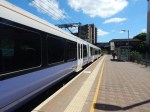
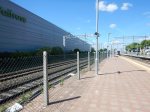


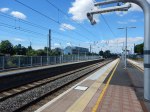
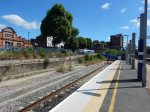
It looks like there are now no platforms on the fast lines and the actual platforms for Crossrail and the Greenford Branch Line appear to be complete except for finishing off.
There appeared to be no if any work going on to built the new station building and the fully-accessible bridge.
But there did appear to be some electrification gantries and wires over the Western end of the bay platform.
Were Network Rail making sure that if it were decided to electrify the Greenford Branch Line, it would not be a difficult job?
If on the other hand, it was decided to use battery trains on the Greenford Branch, I suspect that sufficient electrification could be installed to charge the batteries.
Surprising Electrification At Oxenholme
I took these pictures of the Windermere platform, which is numbered 3, at Oxenholme station on the 7th May 2018.

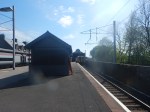
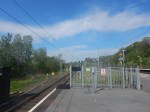

Note the overhead wires for electric trains.
This picture is from an earlier post dated the 1st May 2015.
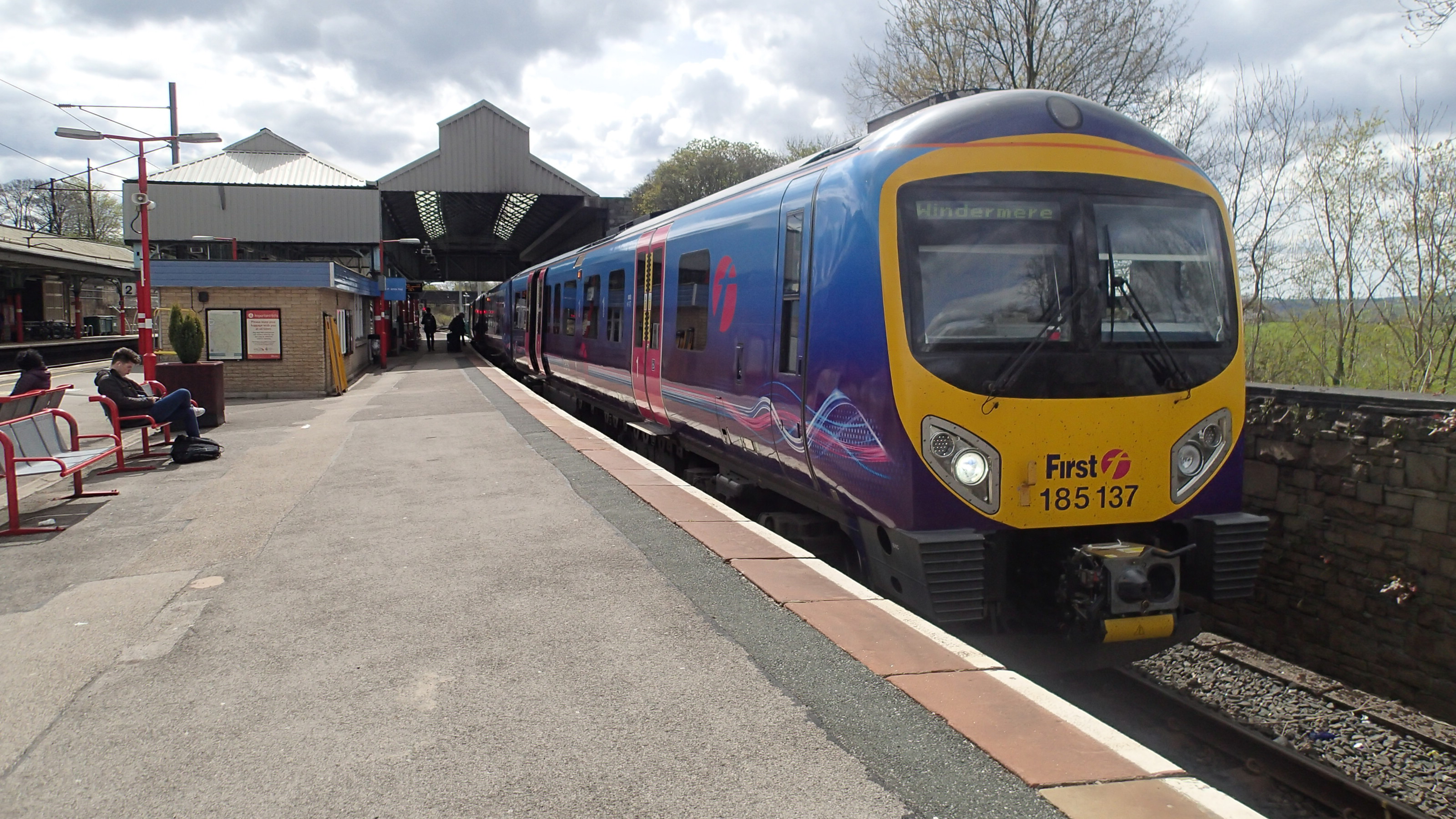
There are no overhead wires in the picture.
In the Electrification Proposal section of the Wikipedia entry for the Windermere Branch Line, this is said.
On 20 July 2017, it was announced that electrification of the Windermere branch was cancelled. As an alternative, Northern plan to utilise Class 769 multiple units on the route; these are Class 319 electric multiple units converted to function as bi-mode units, capable of operating under electric power between Manchester and Oxenholme, and under diesel power on the Windermere branch.
Did Grayling’s announcement come too late to stop these wires being erected?
This Google Map shows the station.
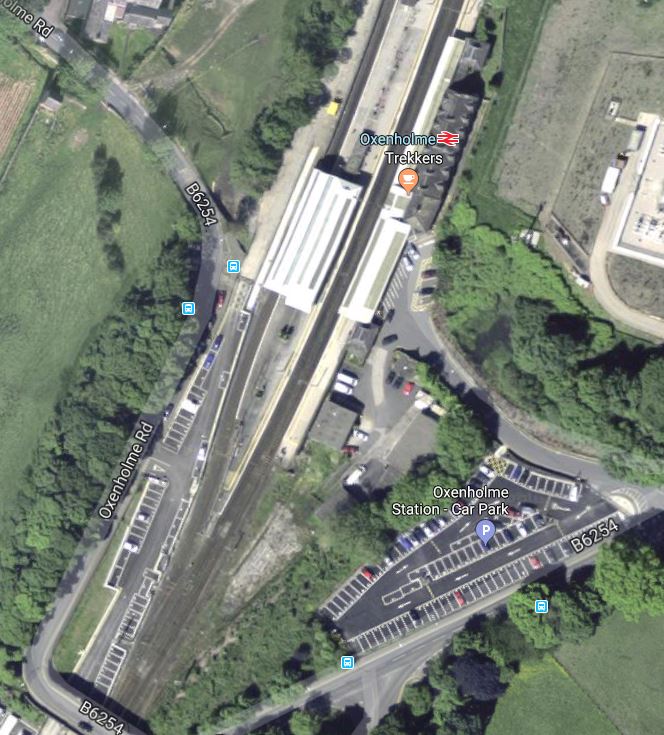
Note how Platform 3 is accessible from the South. North of the station, Platform 3 only leads to the Windermere Branch Line.
Bi-Mode Trains
The short length of additional electrification would be ideal for a bi-mode train, like the Class 769 train, which will be working the line in the near future.
Going towards Windermere, the train would arrive in Platform 3 having used electrical power at speeds of up to 100 mph from Manchester Airport. The pantograph would be lowered and the train would move on to Windermere using diesel power.
Coming from Windermere, the train would change from diesel to electric power in Platform 3.
It is a very conservative method of changing power source, to do it in a station, as if anything goes wrong, the passengers are only stranded in a station, rather than in the middle of nowhere.
In their previous incarnation as dual-voltage Class 319 trains, the voltage changeover was always done in Farringdon station.
Battery Trains
The Windermere Branch Line is ten miles long, so out and back from Oxhenholme should be well within range of a battery electric multiple unit, if not now, in a couple of years time.
A battery electric multiple unit, perhaps developed from Bombardier’s Class 379-based BEMU demonstrator, would be ideal for the Windermere to Manchester Airport service.
- The Class 379 trains were built in 2010-2011, for the Stansted Airport service.
- They will be released by Greater Anglia in 2019.
- They are 100 mph trains.
And then there’s the Class 230 train!
These trains would do a good job running an hourly shuttle between Oxenholme and Windermere, but they could be unsuitable for long-term use.
- The capacity would be too low.
- They are too slow to run on the West Coast Main Line.
- Running a service between Windermere and Manchester Airport might be too far.
But undoubtedly, a well-designed battery train would be able to work the Windermere Branch Line.
- Services between Windermere and Manchester Airport would charge batteries on the electrified lines.
- Batteries could be topped up as required in Oxenholm station.
- There would be no need to electrify the Windermere Branch Line.
Wordsworth would have written a poem about battery trains gliding quietly through the Lake District.
Conclusion
Network Rail have future-proofed the electrification at Oxenholm station in a very professional way.
The Third Track Between Northumberland Park And Lea Bridge Stations – 12th June 2018
The third track between Northumberland Park and Lea Bridge stations is substantially complete, as these pictures show.
Now that the track is laid, it becomes apparent, that with a bit of a squeeze, a fourth track could be laid.
Electrification Progress
Progress also seems to be being made with the overhead gantries.
Yet again, there seems to be better performance in electrification, where it is carried out on a new or totally rebuilt line.
This may be only a single track, but it is all new, with no buried Victorian unknowns.
Raising The Bridges
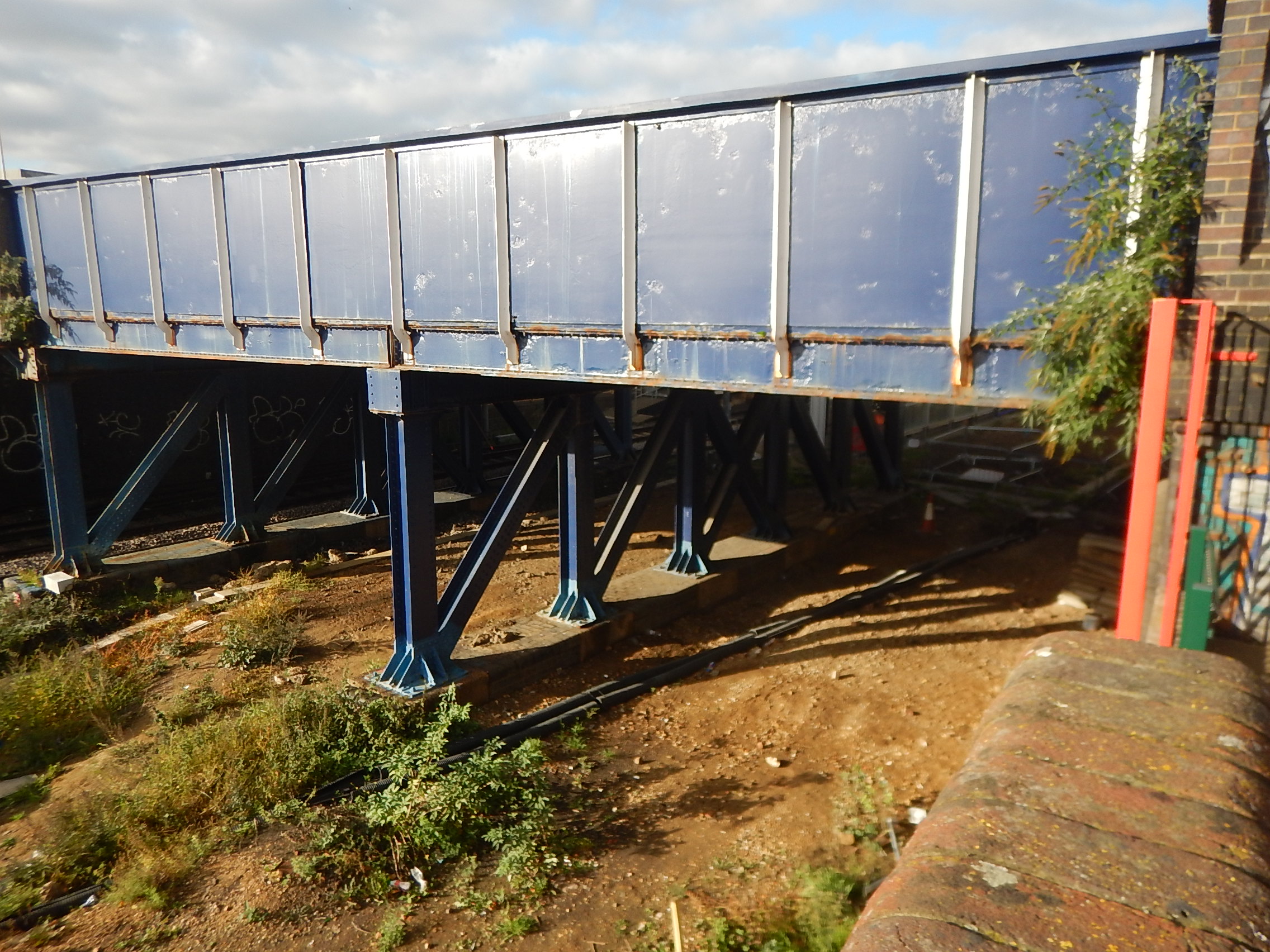
Steel footbridges, that are so numerous in South Wales, are notable by their rarity and where they do exist, they were raised or built to a safe height, when the West Anglia Main Line was electrified in 1969.
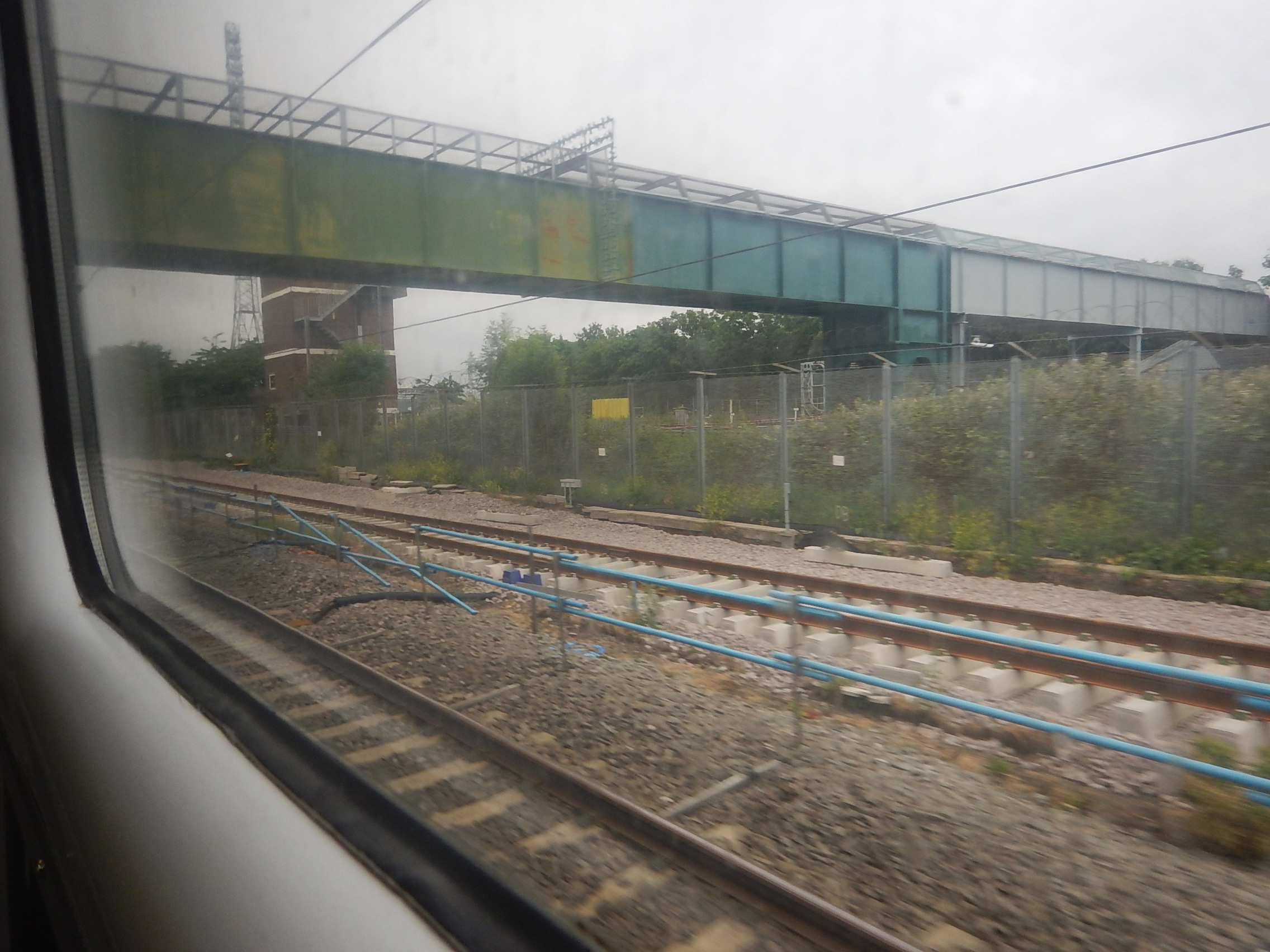
This bridge spans both the West Anglia Main Line and the Victoria Line‘s Northumberland Park Depot.
I walked across it in March 2017 and there are some pictures in From Tottenham Hale To Northumberland Park.
The only bridge that could be a problem, is the road bridge at Tottenham Hale station.
It might be possible to squeeze one electrified track underneath.
I suspect methods that will be used on the South Wales Metro, that I wrote about in How Can Discontinuous Electrification Be Handled?, could be used to electrify this section.
At some point, this bridge looks like it will have to be rebuilt.
Caerphilly Station
Caerphilly station is an important one on the South Wales Metro.
The current service is a four trains per hour (tph) service to Cardiff Queen Street and Cardiff Central stations. Some trains travel through to Penarth station
In 2023, the service will be upgraded.
- Two tph between Barry Island and Rhymney stations via Cardiff Central.
- Two tph between Bridgend and Rhymney stations via Cardiff Central and Rhoose Airport
- Two tph between Penarth and Caerphilly stations via Cardiff Central.
In 2023, the service will be three minutes quicker to and from Cardiff.
In addition, note the following about Caerphilly station.
- The station is on the Rhymney Line, which will be worked by Tri-Mode Stadler Flirts.
- The station lies just to the North of the Caerphilly Tunnel, which is not being electrified and trains are expected to transit using battery power.
- The station has a bay platform.
- The station appears to be a hub for buses.
This Google Map shows the station.
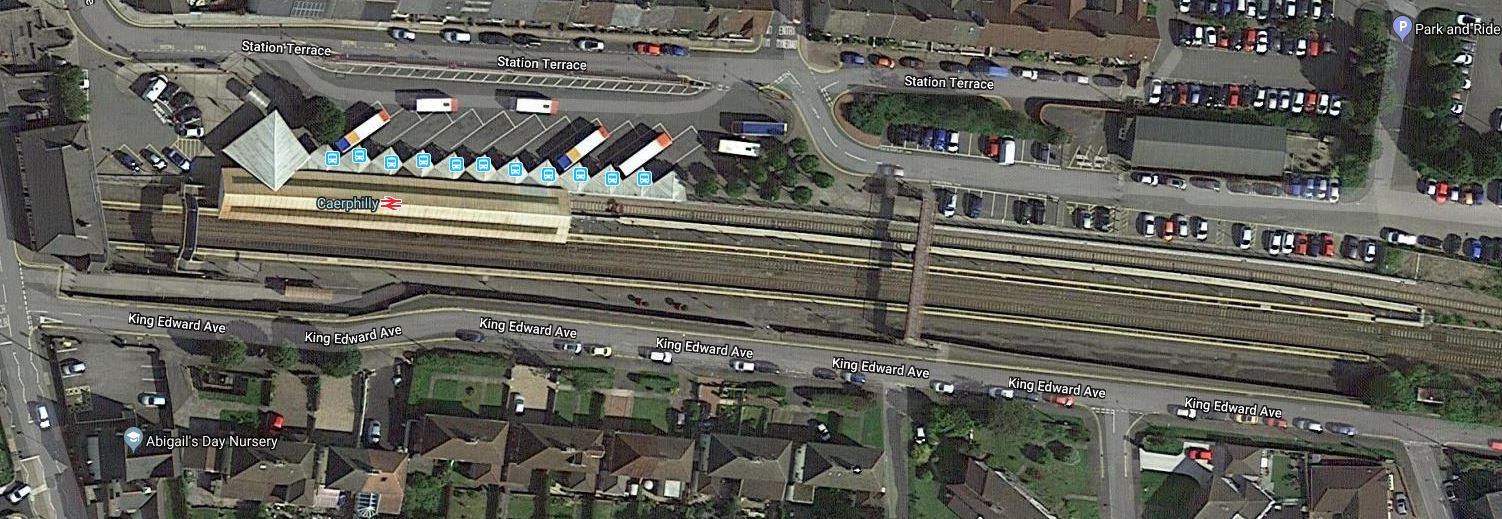
Note.
- The long bay platform on the North side of the station. It may be long enough to accommodate two of the Tri-Mode Stradler Flirts, which are 65/80 metres long. This means that the bay platform could be very valuable for service recovery.
- The station serves as a Park-and-Ride.
- Three structures cross the track, which from the left are the old station buildings, the station footbridge and a footbridge independent from the station.
- Looking at the track layout on the Eastern approach to the station, the cross-overs are within fifty metres of the platform end.
These pictures show the station.
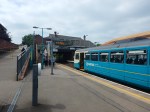
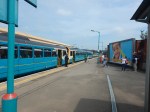
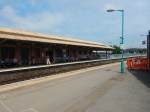
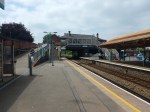
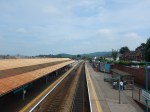
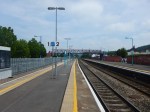
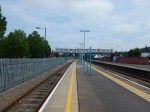
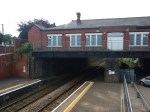
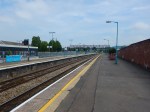
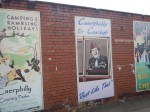
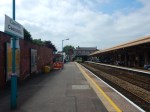
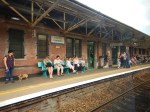
These are my thoughts on various issues.
Electrification Under The Bridges And The Old Buildings
I think there would be serious issues with standards for electrification at this station.
The three structures will have to be handled in the way I described in How Can Discontinuous Electrification Be Handled?
The Old Station Building
The old station building is integral with a road bridge and would be a costly and very disruptive operation to replace.
So if the structure will safely last a hundred years or so and the wires can be squeezed underneath using discontinuous methods, everybody wins.
The Easternmost Footbridge
The Easternmost bridge at the far end of the platforms looks to be a fairly recent structure and is independent of the station, as it just gives pedestrians a route across the railway. It might even have been built, when the bay platform was built a few years ago.
The Station Footbridge
So that leaves the elderly footbridge, which probably dates from 1871, when the station was moved to its present position.
It is the main way that passengers cross the line and given that Caerphilly station has nearly a million passengers a year, it would be classed by disabled activists as a disgrace.
A few stations up the line, lifts were added to the footbridge at Ystrad Mynach station, in conjunction with other works. Wikipedia says this.
In 2014, the station underwent a £1.6 million refurbishment with new ticket machines, waiting areas and ticket office, with disabled toilet being installed in addition to major work carried out on the footbridge with lifts being installed to improve accessibility.
Surely some of the money saved on electrification could be spent on improving access?
Electrification Between The Structures
25 KVAC wires have to be several metres away from any staff and passengers.
The Northbound Platform 3 is wide and if the overhead wire can be suspended high enough, I suspect that the latest regulations can be met.
The Southbound Platform 2 is narrower and the platform has a low roof, which might mean electrification is trickier.
But if as I suspect, battery power and gravity will be used to power the trains on the downhill track, then there could be a case for leaving the downhill track without wires.
That could save half the costs on some sections of the route.
Electrification Of The Crossover
On a railway with full electrification all crossovers must be electrified..
But on the Rhymney Line, all the trains will be Swiss all-purpose trains, that can work on all power sources, probably including cuckoo-clock motors.
So imagine a Tri-Mode Stadler Flirt arriving from Penarth, which will be turning back in the bay platform at Caerphilly.
- It would use the electrification between the unelectrified Caerphilly Tunnel to just before the crossover to come up the hill and probably add some charge to the batteries, that have been depleted in the run through the mile-long tunnel.
- \\\the train would probably rate at a signal just before the crossover, until told to proceed by the signalling system.
- The pantograph will be dropped and the train switched to battery or diesel power.
- When giving the green by the signal, the train would move into the bay platform.
All done efficiently and safely without any electrification, which would not be installed on the crossover or in the bay platform.
Train Failure In The Caerphilly Tunnel
There will have to be a plan for handling train failures in the tunnel. I suspect that as Switzerland has lots of railways in the mountains, some with extensive tunnels, that the Swiss have pretty good methods for dealing with failures.
One Train Rescues Another
Trains are generally designed, so that a second train can rescue a failed train of the same class or even a similar type. This makes good sense, as a train operator generally has several trains of the same type and their Thunderbird locomotive may be working miles away.
I’m sure that the Tri-Mode Stadler Flirts will have this capability.
Rescuing A Train Going Downhill
If a train should fail in the Caerphilly tunnel on the downhill track, a second train would probably couple up and shepherd the train slowly down the hill to the depot at Canton.
Rescuing A Train Going Uphill
If a train should fail in the Caerphilly tunnel on the downhill track, a second train would probably couple up and push the stricken train into the bay platform at Caerphilly station.
Conclusion
The more I look at the South Wales Metro, it has been designed in an holistic manner with routes, tracks, electrification, stations and trains all designed to work together.

