Hydrogen-Powered Railway Electrification
This may seem rather bizarre, but I’m not talking about electrifying whole lines.
There appears to me to be a need for small power sources to power railway electrification and other rail-related equipment and facilities, that are not connected to the electricity grid.
Opportunities could be.
- Electrifying tunnels.
- Boosting supply on third-rail systems, which need a connection every two or three miles.
- Electrifying short branch lines.
- Powering level crossings.
- Powering drainage pumps.
- Powering isolated stations.
But anywhere close to a railway that needed a reliable electricity source would be a possibility.
Hydrogen As A Source Of Electricity
If hydrogen is used in a fuel cell to generate electricity, the only by-product is water.
Hydrogen is already used to power buses in London
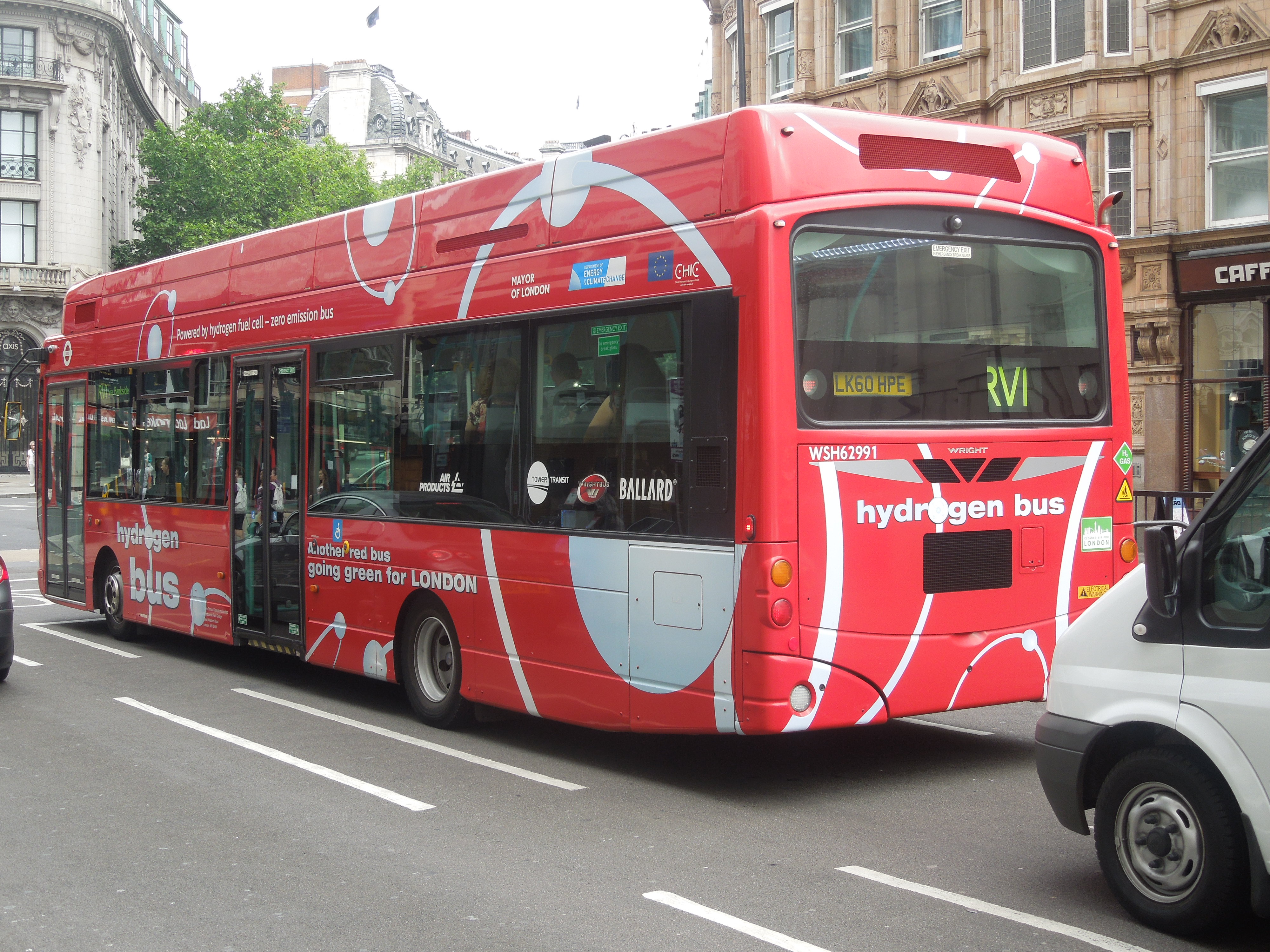
It obviously works, but I’ve always been puzzled about why it isn’t used in more road vehicles. It could be that the logistics problems of refuelling are too complicated and expensive.
Could it be less complicated with trains?
Alsthom have recently launched a hydrogen-powered train, which I talked about in Is Hydrogen A Viable Fuel For Rail Applications?. So they must think it is a viable fuel for trains.
According to the Alsthom video in my related post, the Alsthom Coradia iLint train uses a combination of a hydrogen-powered electricity generator and batteries to provide continuous power and handle regenerative braking.
So why not use hydrogen-power to generate electricity at locations alongside the railway?
Suppose the small power station was providing power to a 750 VDC third-rail electrified railway. In a remote area, the small power station could be using solar panels or wind turbines coupled with batteries to provide a continuous electricity supply.
Intelligent Control System
The power station would be controlled so that it was efficient.
Ensuring Safety
People worry about the safety of hydrogen, as we’ve all seen film of the Hindenburg.
I would design a hydrogen-powered electricity generator for rail use to be buried at the side of the track, with only necessary connections above the surface.
The hydrogen-powered generators would also be contained within the railway security fencing.
What Trains Could Be Powered?
Using hydrogen at track-side means that any unmodified electric or bi-mode train can benefit from zero-carbon hydrogen-power.
Distributing The Hydrogen
The obvious way to distribute the hydrogen would be by train. It would surely be possible to design a hydrogen-powered locomotive and tanker, which could deliver the hydrogen between the production source and the various generators.
Hydrogen Availability
Hydrogen is variable around the UK, but in certain areas there are large amounts of the gas created in chemical plants with rail access.
Conclusion
I won’t be consigning this idea to the bin.
Between Hebden Bridge And Burnley Manchester Road Stations In The Snow
I took these pictures from a train between Hebden Bridge and Burnley Manchester Road stations on the Calder Valley Line.







I believe that the area has some of the most scenic rail lines in the UK.
Electrification
It runs between the hills with lots of bridges and viaducts.
There are four tunnels; Weasel Hall , Castle Hill , Horsfall and Millwood on this section of the route.
It would not be an easy line to electrify with 25 KVAC overhead wires, from an engineering, political or environmental point of view.
This is a route though that needs to be improved.
I travelled on a Class 158 train, which are a 90 mph diesel multiple unit. But it was struggling to do 40 mph in the conditions.
Conclusion
Electrification may be an ideal, but Network Rail should first improve the line, so that the current trains and the future 100 mph Class 195 trains can realise their full potential.
Hebden Bridge Station
Hebden Bridge Station is Grade II Listed and is a busy station in West Yorkshire on the Calder Valley Line.
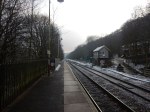

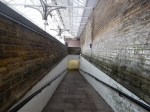
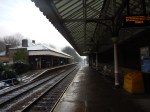
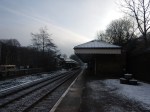

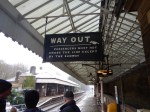
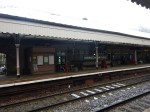
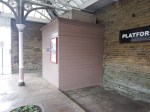
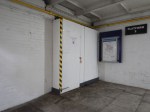
The service through the station is being improved.
The Wikipedia entry for the station has a section called Future Improvements. This is said.
The station will see a variety of improvements to facilities and train services from March 2017 onwards, as part of an investment package for the Calder Valley line as a whole. New lifts are finally to be installed to make both platforms fully accessible, whilst track and signalling upgrades will help reduce journey times in both directions and allow more trains to run to/from Bradford. This will result in the closure of the listed signal box here by October 2018, with control passing over to the Rail Operating Centre at York. New rolling stock and timetable improvements will then follow, with regular through trains to Liverpool Lime Street, Manchester Airport and Chester by late 2019.
Note the parcel lifts in the pictures, which will be converted for passenger use.
Turnback Facility
The pictures also show the turnback facility at the station, which allows trains to arrive from the West in the Westbound platform and then changeover to the Eastbound platform to go back to Manchester or Preston or perhaps other destinations in the future.
Electrification
When I first saw this Victorian station, I came to the conclusion, that it would be difficult to electrify in a sympathetic manner with 25 KVAC overhead wires, without upsetting English Heritage.
Now the Government has decided that there will only be selective electrification, I suspect Network Rail will file Hebden Bridge station in the tray marked Too Difficult.
But I also think that the station could be electrified using innovative methods to improve the passenger service in terms of frequency and times.
Consider.
- Modern bi-mode trains can switch between power sources automatically.
- Modern electric trains can raise and lower the pantograph quickly and automatically.
- Most modern electric trains made for the UK, can be fitted with third-rail contact shoes.
- To the West of the station, there are a succession of tunnels, that might be possible to electrify using overhead rails.
- Zero-carbon power sources for short lengths of electrification exist, as I wrote about in Solar Power Could Make Up “Significant Share” Of Railway’s Energy Demand.
- Although solar power might not be appropriate here, short lengths of third-rail electrification may be suitable.
- The turnback facility could also be electrified with third-rail to charge trains fitted with batteries.
Somewhere in my ramblings, I’m sure a solution exists to make Hebden Bridge an environmentally-friendly power station in the heart of the Pennines.
The Ordsall Effects
There is now a large brown steel elephant in the North, in the shape of the Ordsall Chord in Manchester, that connects most of Central Manchester’s stations together and to the Airport.
- Hebden Bridge is between thirty and forty-five minutes from Manchester Victoria station, depending on if you get a semi-fast or stopping train.
- Northern have plans to extend these Manchester Victoria to Leeds services all the way to the Airport.
- In fact from Monday, some of these services now terminate at Manchester Oxford Road station.
- When I mentioned to the lady in the cafe, that services would go to Manchester Airport within months, she was surprised and very pleased.
I suspect that Hebden Bridge will be one of the tourism centres of the North that will substantially benefit from a direct link to Manchester Airport created by the Ordsall Chord.
But this could only be the start.
To maximise the benefits of the Ordsall Chord, Northern and Network Rail will want to connect services that go North and South of Manchester, back-to-back across the City.
Northern have already said, that they’ll be trains going from Hebden Bridge to Chester and Liverpool by late 2019.
But I suspect these two cities won’t be the only ones getting a quality service from Hebden Bridge.
If the service ran directly over the Ordsall Chord, then historic Buxton and well-connected Crewe must be possibilities.
That turnback facility is starting to look important, as not all services will be needed to cross the Pennines.
Westwards To Preston, Blackpool and Liverpool
Currently, the only Westbound service is an hourly train to Preston and Blackpool North.
It is not enough.
The proposed Liverpool service from Hebden Bridge, that starts in late 2019, can either go via Manchester or Preston.
If it were to be the latter, a second fast train every hour, connecting Burnley, Blackburn and Preston would certainly be welcomed on what can be a very overcrowded line.
As all Calder Valley Line services stop at Hebden Bridge, the Ordsall Chord and Northern’s plans seem to be giving the town, a more than worthwhile economic boost.
Solar Power Could Make Up “Significant Share” Of Railway’s Energy Demand
The title of this post is the same ass this article in Global Rail News.
This is the first three paragraphs.
Solar panels could be used to power a sizeable chunk of Britain’s DC electric rail network, a new report has suggested.
Climate change charity 10:10 and Imperial College London’s Energy Futures Lab looked at the feasibility of using solar panels alongside the track to directly power the railway.
The report claims that 15 per cent of the commuter network in Kent, Sussex and Wessex could be powered directly by 200 small solar farms. It suggested that solar panels could also supply 6 per cent of the London Underground’s energy requirements and 20 per cent of the Merseyrail network.
In another article in today’s Times about the study, this is said.
Installing solar farms and batteries alongside lines also could provide the extra energy needed to power more carriages on busy routes that otherwise would require prohibitively expensive upgrades to electricity networks.
Note the use of batteries mentioned in the extract from The Times. This would be sensible design as power can be stored, when the sun is shining and used when it isn’t!
If you want to read the full report, click here!
I will lay out my thoughts in the next few sections.
Is This Technique More Applicable To Rail-Based Direct Current Electrification?
All of the routes mentioned for application of these solar farms,; Southern Electric (Kent, Sussex and Wessex), London Underground and Merseyrail are electrified using one of two rail-based direct current systems.
Consider the following.
Powering The Track
In the September 2017 Edition of Modern Railways, there is an article entitled Wires Through The Weald, which discusses electrification of the Uckfield Branch in Sussex, as proposed by Chris Gibb. This is an extract.
He (Chris Gibb) says the largest single item cost is connection to the National Grid, and a third-rail system would require feeder stations every two or three miles, whereas overhead wires may require only a single feeder station for the entire Uckfield Branch.
It would appear that as rail-based direct current electrification needs a lot of feeder stations along the line, this might be better suited for solar power and battery electrification systems.
Consider.
- Most of the feeder stations would not need a connection to the National Grid.
- Solar panels generate low direct current voltages, which are probably cheaper to convert to 750 VDC than 25 KVAC.
- In installing electrification on a line like the Uckfield Branch, you would install the extra rails needed and a solar farm and battery system every two or three miles.
- With the situation mentioned in the extract from The Times, you might add a solar farm and battery system, to a section of track, where more power is needed.
- For efficiency and safety, power would only be sent to the rail when a train was present.
I trained as an Electrical Engineer and I very much feel, that solar power and battery systems are better suited to powering rail-based electrification. Although, they could be used for the overhead DC systems we use in the UK for trams.
Modular Design
Each of the solar farm and battery systems could be assembled from a series of factory-built modules.
This would surely make for a cost-effective installation, where capacity and capabilities could be trailored to the location.
Regenerative Braking
Modern trains use regenerative braking, which means that braking energy is converted into electricity. The electricity is handled in one of the following ways.
- It is turned into heat using resistors on the train roof.
- It is returned through the electrification system and used to power nearby trains.
- It is stored in a battery on the train.
Note.
- Option 1 is not efficient.
- Option 2 is commonly used on the London Underground and other rail-based electrification systems.
- Option 2 needs special transformers to handle 25 KVAC systems.
- Option 3 is efficient and is starting to be developed for new trains and trams.
If batteries are available at trackside, then these can also be used to store braking energy.
I believe that using solar farm and battery systems would also enable efficient regenerative braking on the lines they powered.
But again, because of the transformer issue, this would be much easier on rail-bassed direct current electrification systems.
Could Wind Turbines Be Used?
Both solar farms and wind turbines are not guaranteed to provide continuous power, but putting a wind turbine or two by the solar farm would surely increase the efficiency of the system, by generating energy in two complimentary ways and then storing it until a train came past.
Wind energy could also be available for more hours in the day and could even top up the battery in the dark.
In fact, why stop with wind turbines?
Any power source could be used. On a coastal railway, it might be wave or tidal power.
Could Hydrogen Power Be Used?
I think that hydrogen power could be another way to create the energy needed to back up the intermittent power of solar farms and wind turbines.
I put a few notes in Hydrogen-Powered Railway Electrification.
Would The Technique Work With Battery Trains?
Most certainly!
I haven’t got the time or the software to do a full simulation, but I suspect that a route could have an appropriate number of solar farm and battery systems and each would give the battery train a boost, as it went on its way.
Would The Technique Work With 25 KVAC Electrification?
It would be more expensive due to the inverter involved to create the 25 KVAC needed.
But I feel it would be another useful tool in perhaps electrifying a tunnel or a short length of track through a station.
It could also be used to charge a train working a branch line on batteries.
Would The Technique Work With Dual Voltage Trains?
Many trains in the UK can work with both third-rail 750 VDC third-rail and 25 KVAC overhead electrification.
Classes of trains include.
- The Class 319 trains built for Thameslink in the 1980s.
- The Class 345 trains being built for Crossrail.
- The Class 387 trains built for various operators.
- The Class 700 trains recently built for Thamelink.
There are also other classes that could be modified to run on both systems.
Provided they are fitted with third-rail shoes, there is no reason to stop dual-voltage trains running on a line electrified using solar farms and batteries.
The technique could surely be used to electrify a branch line from a main line electrified using 25 KVAC.
Consider the Henley Branch Line.
- It is four-and-a half miles long.
- It is not electrified.
- It connects to the electrified Great Western Main Line at Twyford station.
- The line can handle trains up to six-cars.
- All services on the line are worked by diesel trains.
Services consist of a shuttle between Henley-on-Thames and Twyford, with extra services to and from Paddington in the Peak and during the Regatta.
Network Rail were planning to electrify the line using 25 KVAC overhead electrification, but this has been cancelled, leaving the following options for Paddington services.
- Using battery trains, possibly based on the Class 387 trains, which would be charged between Paddington and Twyford.
- Using Class 800 bi-mode trains.
- Using Class 769 bi-mode trains.
All options would mean that the diesel shuttle continued or it could be replaced with a Class 769 bi-mode train.
An alternative would be to electrify the branch using third-rail fitted with solar farm and battery systems.
- All services on the line could be run by Class 387 trains.
- Voltage changeover would take place in Twyford station.
There are several lines that could be served in this way.
Installation Costs
I’ll repeat my earlier quote from the Modern Railways article.
He (Chris Gibb) says the largest single item cost is connection to the National Grid, and a third-rail system would require feeder stations every two or three miles, whereas overhead wires may require only a single feeder station for the entire Uckfield Branch.
If you were going to electrify, the twenty-four non-electrified miles of the Marshlink Line, with traditional Southern Electric third-rail, you would need around 8-12 National Grid connections to power the line. As the Romney Marsh is probably not blessed with a dense electricity network, although it does have a nuclear power station, so although putting in the extra rails may be a relatively easy and affordable project, providing the National Grid connection may not be as easy.
But use solar farm and battery systems on the remoter areas of the line and the number of National Grid connections will be dramatically reduced.
Good National Grid connections are obviously available at the two ends of the line at Hastings and Ashford International stations. I also suspect that the electricity network at Rye station could support a connection for the electrification.
This could mean that six to eight solar farm and battery systems would be needed to electrify this important line.
I obviously, don’t have the actual costs, but this could be a very affordable way of electrifying a remote third-rail line.
Which Lines Could Be Electrified Using Solar Farm And Battery Systems?
For a line to be electrified and powered by solar farm and battery systems, I think the line must have some of the following characteristics.
- It is a line that is suitable for rail-based direct current electrification.
- It is not a particularly stiff line with lots of gradients.
- It is in a rural area, where National Grid connections will be difficult and expensive.
- It has a connection to other lines electrified by rail-based systems.
Lines to electrify are probably limited to Southern Electric (Kent, Sussex and Wessex), London Underground and Merseyrail.
- Borderlands Line between Bidston and Wrexham.
- Kirkby to Skelmersdale
- Marshlink Line
- North Downs Line between Reading and Gatwick Airport.
- West of England Line between Basingstoke and Exeter
- Uckfield Branch
I also suspect there are several branch lines that could be reopened or electrified using rail-based electrification.
Riding Sunbeams
Note that the project is now called Riding Sunbeams.
Conclusion
It’s a brilliantly simple concept that should be developed.
It is well suited to be used with rail-based direct current electrification.
It would be ideal for the electrification of the Uckfield Branch.
Hybrid Trains Proposed To Ease HS1 Capacity Issues
The title of this post is the same as an article in Issue 840 of Rail Magazine.
This is the first paragraph.
Battery-powered hybrid trains could be running on High Speed 1, offering a solution to capacity problems and giving the Marshlink route a direct connection to London.
Hitachi Rail Europe CEO Jack Commandeur is quoted as saying.
We see benefit for a battery hybrid train, that is being developed in Japan, so that is an option for the electrification problem.
I found this article on the Hitachi web site, which is entitled Energy-Saving Hybrid Propulsion System Using Storage–Battery Technology.
It is certainly an article worth reading.
This is an extract.
Hitachi has developed this hybrid propulsion system jointly with East Japan Railway Company (JR-East) for the application to next-generation diesel cars. Hitachi and JR-East have carried out the performance trials of the experimental vehicles with this hybrid propulsion system, which is known as NE@train.
Based on the successful results of this performance trial, Ki-Ha E200 type vehicle entered into the world’s first commercial operation of a train installed with the hybrid propulsion system in July 2007.
The trains are running on the Koumi Line in Japan. This is Wikipedia’s description of the line.
Some of the stations along the Koumi Line are among the highest in Japan, with Nobeyama Station reaching 1,345 meters above sea level. Because of the frequent stops and winding route the full 78.9 kilometre journey often takes as long as two and a half hours to traverse, however the journey is well known for its beautiful scenery.
The engineers, who chose this line for a trial of battery trains had obviously heard Barnes Wallis‘s quote.
There is no greater thrill in life than proving something is impossible and then showing how it can be done.
But then all good engineers love a challenge.
In some ways the attitude of the Japanese engineers is mirrored by those at Porterbrook and Northern, who decided that the Class 769 train, should be able to handle Northern’s stiffest line, which is the Buxton Line. But Buxton is nowhere near 1,345 metres above sea level.
The KiHa E200 train used on the Koumi Line are described like this in Wikipedia.
The KiHa E200 is a single-car hybrid diesel multiple unit (DMU) train type operated by East Japan Railway Company (JR East) on the Koumi Line in Japan. Three cars were delivered in April 2007, entering revenue service from 31 July 2007.
Note that the railway company involved is JR East, who have recently been involved in bidding for rail franchises in the UK and are often paired with Abellio.
The Wikipedia entry for the train has a section called Hybrid Operation Cycle. This is said.
On starting from standstill, energy stored in lithium-ion batteries is used to drive the motors, with the engine cut out. The engine then cuts in for further acceleration and running on gradients. When running down gradients, the motor acts as a generator, recharging the batteries. The engine is also used for braking.
I think that Hitachi can probably feel confident that they can build a train, that can handle the following.
- High Speed One on 25 KVAC overhead electrification.
- Ore to Hastings on 750 VDC third-rail electrification.
- The Marshlink Line on stored energy in lithium-ion batteries.
The Marshlink Line has a big advantage as a trial line for battery trains.
Most proposals say that services will call at Rye, which is conveniently around halfway along the part of the route without electrification.
I believe that it would be possible to put third-rail electrification in Rye station, that could be used to charge the batteries, when the train is in the station.
The power would only be switched on, when a train is stopped in the station, which should deal with any third-rail safety problems.
Effectively, the battery-powered leg would be split into two shorter ones.
OLE Changes To Boost Midland Main Line Speeds
The title of this post is the same as that of an article in Issue 840 of Rail Magazine.
Currently, the overhead line equipment (OLE) between St. Pancras and Bedford is rated at 100 mph.
But the new OLE between Bedford and Corby via Kettering is going to be built to a standard that will allow 125 mph running.
The article goes on to say that to make the best use of 125 mph bi-mode trains, the possibility of upgrading the St. Pancras to Bedford electrification to the 125 mph standard.
This must give advantages.
Auckland Rows Back On Battery Train Plan
The title of this post is the same as this article on the International ailway Journal.
This is said.
Following approval by Auckland Council, the proposal went to the New Zealand Transport Agency (NZTA) for final sign-off. However, in the run-up to New Zealand’s general election on September 23, a political consensus emerged in favour of bringing forward electrification of the Papakura – Pukekohe line, prompting the NZTA to reject the case for battery trains.
Can we assume the reason for the change of order is political?
Certainly, CAF, who are building the trains seem to have the required battery technology. This is also said.
CAF says the contract will include an option to equip the trains with battery packs at a later date if required.
I just wonder if battery trains are just too risky for politicians, who tend to be rather conservative and badly-informed about anything technological.
The Rigid Overhead Conductor Rails At St. Pancras Thameslink Station
Whilst waiting for a train in St. Pancras Thameslink station, I noticed that the station has been fitted with rigid overhead conductor rails.
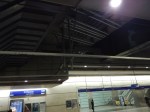
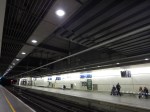
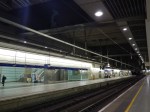
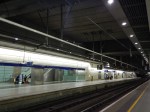
I couldn’t remember it being there before. But I don’t often go to the station.
However, I did find this page in Rail Forums, which is entitled Conductor Rail At St. Pancras Thameslink.
Apparently, the change was made at Easter 2013. This is one reply.
Installed over Easter. Known as conductor beam. The contact wire is fixed to the underside. Much more robust than regular OLE, and practically zero maintenance.
It has replaced a tricky tension length of OLE between approx half way along St Pancras LL platforms and the middle of the old KX Thameslink platforms. The curvature, cant and gradient change through this section made the OLE pretty difficult to keep in the right place and had high wear rates.
Likely the conductor beam will be extended north through to Dock Jn and through the new Canal tunnels, not confirmed yet.
Given the robust nature and lower maintenance costs, I think we’ll be seeing lots more of this type of electrification.
UK Rolling Stock Strategy: Diesel, Bi-mode and Fuel Cell-Powered Trains
The title of this post is the same as that on an article in Global Rail News.
I will not repeat myself here, but I laid down my thoughts in The Intelligent Multi-Mode Train And Affordable Electrification.
In that post, I said that an Intelligent Multi-Mode Train would have these characteristics.
- Electric drive with regenerative braking.
- Diesel or hydrogen power-pack.
- Onboard energy storage to handle the energy generated by braking.
- 25 KVAC and/or 750 VDC operation.
- Automatic pantograph and third-rail shoe deployment.
- Automatic power source selection.
- The train would be designed for low energy use.
- Driver assistance system, so the train was driven safely, economically and to the timetable.
Note the amount of automation to ease the workload for the driver and run the train efficiently.
After discussing affordable electrification, I came to the following conclusion.
There are a very large number of techniques that can enable a multi-mode train to roam freely over large parts of the UK.
It is also a team effort, with every design element of the train, track, signalling and stations contributing to an efficient low-energy train, that is not too heavy.
Just Add Trains
I took these pictures of the Gospel Oak to Barking Line, as it passes past the Engine House on the Walthamstow Wetlands site.
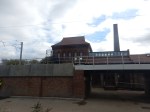

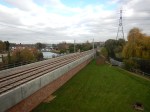
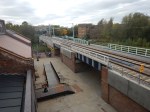

This section, which is probably one of the easiest bits to electrify, looks to be ready for the trains.
Note that the pictures looking down on the line were taken from the fire escape on the side of the Engine House, shown in the last picture.
This Google Map shows the Gospel Oak To Barking Line crossing the area.
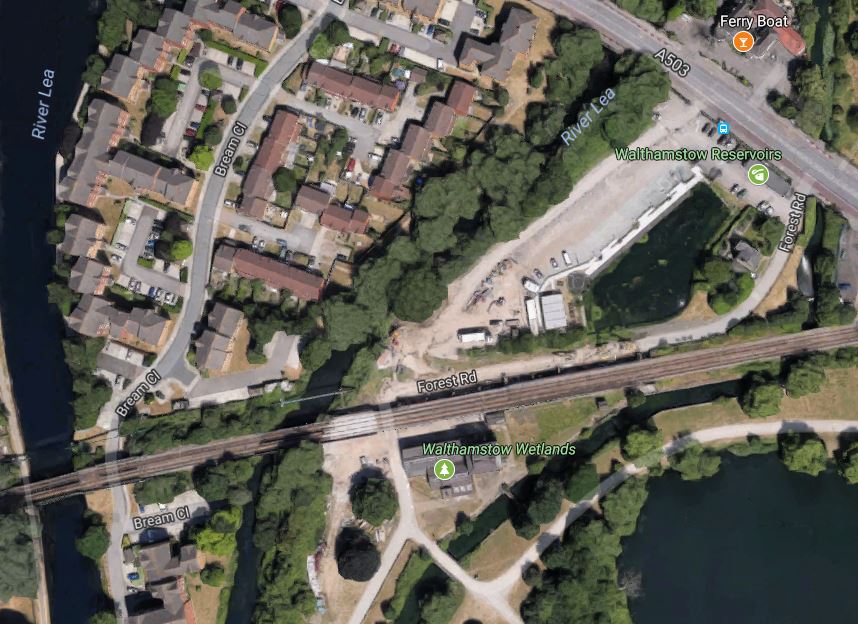
Note.
- The Engine House has a green label saying Walthamstow Wetlands.
- The bus stops by the Ferry Boat Inn have buses to and from Tottenham Hale and Blackhorse Road stations.
- The Engine House is about a hundred metres from the bus stops and
- The Engine House has a step-free entrance and a lift inside.
The Engine House is certainly worth the walk.
 The Anonymous Widower