Hammond To Announce ‘More Money’ For Northern Powerhouse Rail
This title of this post is the same as that on this article on the BBC.
This is said.
Chancellor Philip Hammond is to announce an extra £300m to improve rail links in northern England, in a speech to the Conservative Party conference.
Plans to electrify the whole Trans-Pennine route have been in doubt.
But the new money will be used to ensure HS2 will link to faster trains between Liverpool and Manchester, Sheffield, Leeds and York – so-called Northern Powerhouse rail.
What would I do with £300 million to improve the rail lines in the North?
To Electrify Or Not!
If we don’t electrify a few routes it will make things difficult.
As an example, you might want to create an HS2 route from London to Middlesbrough, using the Northallerton to Middlesbrough Line.
HS2 trains would probably travel from the HS2 terminus at Leeds along the East Coast Main Line to Northallerton.
If the last few miles were not electrified, then the train would need to be a bi-mode.
However, the dead weight of a diesel engine might reduce the performance sufficiently, so the train couldn’t run at full speed on HS2.
So the HS2 trains would probably need electrified track at all time!
I don’t think that all the destinations that might need an HS2 service are on all-electric route from HS2.
How about these stations?
- Barrow
- Blackburn
- Burnley
- Edinburgh
- Huddersfield
- Lincoln
- Middlesbrough
- Newcastle
- Sheffield
- York
Note that Carlisle and Glasgow are not on my list, but four important stations , that are served by the East Coast Main Line, cannot be reached by an electric train from HS2, because of gaps in the electrification.
Splitting And Joining
I am assuming that trains can join and split like the Class 395 trains to Kent.
As a simple example two five-car trains might start from London as a ten-car train and split at Crewe or Nottingham, with perhaps each train going to different destinations.
Going southward, two trains would join for the dash to London.
Cross-And Same-Platform Interchanges
By clever station design, it might be possible for interchanges at places like Crewe, Nottingham, Preston and York to be a simple procedure, where passengers get off one train and get on the connecting service either immediately or after a few minutes, without negotiating any steps, escalators or lifts.
Electrification
Possible routes to electrify would be as follows.
Batley To Selby Via East Leeds Parkway, Leeds and White Rose Centre
Leeds are keen to build two new stations; East Leeds Parkway and White Rose Centre. The line could be electrified between these two stations to form a new electrified CrossLeeds service perhaps between Batley in the West and Selby in the East.
There is the 4km. long tunnel at Morley and this could be easy to electrify, by using an overhead rail, as was used in the Severn Tunnel.
Leeds to York
This would give the following advantages.
- It would complete a fully electric route from Leeds to York, Newcastle, Edinburgh and Glasgow.
- A time saving of upwards of upwards of five minutes between Leeds and York.
- Direct connection for HS2 to the East Coast Main Line.
- It would allow electric trains to be moved between York and Neville Hill depot in Leeds.
It would also be a fairly simple piece of electrification.
Northallerton To Middlesbrough
This line is only twenty miles long and it would allow electric trains and HS2 to go to Middlesbrough.
Preston To Burnley via Blackburn
I’m very keen on this electrification.
- It would give a lift to the area.
- Electric and bi-mode trains could run between Blackpool, Blackburn, Clitheroe, Burnley, Colne, Liverpool and Manchester.
HS2 trains would be able to reach Blackburn and/or Burnley.
Tunnels
There are several long tunnels in the Pennines. I believe that these should be electrified, as Network Rail seem to be able to handle tunnels.
Bi-mode trains would run through using the electrification.
Improved Lines
These lines could be improved and might even be electrified.
Camp Hill Line
This would create a second line across Birmingham. Extra chords at Bordesley, a couple of stations and electrification would make it a quality improvement.
Carnforth To Barrow
Barrow and the nearby Sellafield need a lift and perhaps, if the line were to be improved bi-mode trains could reach Barrow from Crewe, where there will be an easy interchange with HS2.
Electrifying the line might be possible, but the Heritage lobby won’t want the Lake District spoiled.
Derby To Nottingham Via East Midlands Hub
When HS2 gets to the East Midlands Hub station between Nottingham and Derby, it will need good connections to both cities.
This could be heavy rail or an extended Nttingham Express Transit.
Liverpool To Manchester Via Chat Moss
The electrified route between Liverpool Lime Street and Manchester Victoria stations has a very low operating speed.
Sort it!
New And Reopened Lines
There are a couple of lines thsat could be built or reopened.
MerseyRail’s Northern Line to Skelmersdale
I like this idea and it could be an improvement with a high return.
Skipton And Colne
This missing link should be created, so that there is another route across the Pennines.
As Skipton is electrified, why not electrify the link and the existing Colne to Rose Grove line, which would be on the Preston to Burnley route that I think should be electrified.
Conclusion
I’ve probably spent £300 million now!
But I do think, if Network Rail are innovative, things can be made a lot better.
Is Existing UK Electrification Up To Scratch?
I ask this question after a very delayed rail journey from Leeds to London after the football yesterday.
I left Leeds on the 19:15 and all went well until between Grantham and Peterborough the train ground to a halt.
The driver informed us, that the previous train had had a pantograph failure and had brought the overhead wires down.
So we were stuck.
Free water was offered and I took a carrier bag to the buffet and looted half-a-dozen bottles for myself and a few fellow travellers.
But we waited and waited as the the train awaited a tow from a diesel locomotive.
Eventually, one arrived and it towed us to Peterborough, where the train started on its own power to London on the unaffected electrification.
We finally arrived at 02:10 at Kings Cross or four and a half hours behind schedule.
Virgin were rounding up taxis for everyone at Kings |Cross. But the length of queue was such, I came home using that lady of the night;Victoria and a 277 bus.
But consider other facts from last night.
- At least four Southbound trains were delayed upwards of four hours.
- Some Northbound trains, got no further than Peterborough.
- Virgin probably had to make arrangements for large number of disgruntled passengers.
- Taxis appeared to be in short supply.
- The train ran out of snacks.
I also think from comments from friends, that problems with the overhead wires are not uncommon.
This article in Rail Magazine is entitled MPs Debate Reliability Of ECML Wiring. This is a paragraph.
Maskell had asked: “We already know that there is six times higher spend in the South than in the North on rail and transport infrastructure, but we also seem to have an east-west divide in rail – the East Coast route has received £3 billion less than that of the West. Will the Government bring forward their funding to upgrade the East Coast Main Line infrastructure, since the passenger performance measure is now at 25.1% because of overhead line failure?”
Rachel Maskell is MP for York Central.
It would appear that the electrification needs to be made more robust and improved in reliability.
East Coast Main Line Power Supply Upgrade
This page on the VolkerRail web site describes a project called East Coast the Main Line Power Supply Upgrade, which has the following project scope.
The Rail Electrification Alliance (REAL) is responsible for the delivery of Network Rail’s East Coast Main Line Power Supply Upgrade Project. The alliance, comprising of Network Rail, VolkerRail, Siemens, J Murphy and Sons, Jacobs and TSP, will construct new substations, install over 600km of new cabling and renew overhead line equipment (OLE) and structures over 246km of the ECML, from Wood Green in London to Bawtry near Doncaster.
The new power supply upgrade (PSU) is in direct support of the InterCity Express Programme, providing an enhanced traction power supply to enable the introduction of the new faster, more environmentally friendly Class 800 and 801 trains at the end of 2018, providing an improved service for passengers. The improvements will also reduce the amount of maintenance required for OLE.
Hopefully, this will reduce the likelihood of incidents like yesterday’s!
How Will The Class 800 and Class 801 Trains Deal With Line Problems?
In Do Class 800/801/802 Trains Use Batteries For Regenerative Braking?, I looked at the electrical systems of how Class 800 and Class 801 trains and how they would cope with various problems, based on this document on the Hitachi Rail web site, which is entitled Development of Class 800/801 High-speed Rolling Stock for UK Intercity Express Programme.
I found the following.
All Class 801 Trains Have At Least One Generator Unit
All Class 801 trains have at least one generator unit, so it can obviously provide hotel power and probably enough power to limp to the next station, in case of overhead line failure.
So if yesterday’s problem hit and the line was not physically blocked the electric Class 801 train could move to the next station or perhaps cross to an unaffected line.
The Class 800 train would just continue on its onbopard diesel power.
Locomotive Haulage Is Possible
So a rescue similar to yesteday’s is possible.
Automatic Coupling And Uncoupling
This is definitely in line with Class 395 train performance.
Automatic Train Identification Function
This is said in the Hitachi document.
To simplify the rearrangement and management of train configurations, functions are provided for identifying the train (Class 800/801), for automatically determining the cars in the trainset and its total length, and for coupling and uncoupling up to 12 cars in
normal and 24 cars in rescue or emergency mode.
I suspect most modern trains can do this.
One Twelve-Car Train Can Rescue Another
That would have been very useful yesterday.
Conclusion
The design of the new Class 800 and Class 801 trains will probably help in the coping with some of the problems on the East Coast Main Line and any other routes on which they operate.
I suspect there is already a lot of provision of crossovers for trains to cross between slow and fast lines and also to allow trains to run bi-directionally to get around various problems.
Running Electric Trains Across The Forth Bridge
Search for something like Electrification of the Forth Bridge and you find a lot of speculation and no one who.believes it can be done easily.
A ScotRail conductor said very firmly that it wouldn’t be done.
I think that in addition to the engineering problems of electrifying the Forth railway bridge, there will probably be a lot of opposition from the heritage lobby!
I also think, that if you could solve the engineering oroblems, they will.cost a lot and mean closing the bridge for at least several.months.
Bi-Mode Trains
Virgin are proposing to use Class 800 trains, which are bi-mode and will use diesel power on the bridge. These trains will have no problems crossing the bridge.
They will probably even be quieter than the current InterCity 125s, that will be continued to be used by ScotRail.
Trains With Energy Storage
The bridge is not very long at 2.5 km. and an electric train with onboard energy storage could prossibly cross the bridge, if the tracks were electrified as far as the approaches.
So do I think it is possible that a train with onboard energy storage could cross the Forth Bridge?
The Energy Storage Could Be Full Before Crossing
If the overhead electrification reached to perhaps five hundred metres from the bridge, then the onboard storage would be full.
The train would lower the pantograph and then raise it again, when under the wires on the other side.
The Maximum Speed On The Bridge Is 50 mph
This must help.
The Bridge Deck Appears Level
This must help.
Any Train Manufacturer Who Creates A Train With Onboard Energy Storage Will Gain A Worldwide Reputation
There is a lot of scepticism about trains with onboard energy storage or batteries and this would dismiss it for ever, once the crossing was shown on world-wide television with headlines like.
Battery Train Crosses Forth Rail Bridge Carrying Three Hundred Passengers
I believe that any train manufacturer, who felt they could achieve this feat would be willing to have a go, as the rewards would be immense!
Scotland Would Have A Unique Tourist Attraction
Although, I wouldn’t think it would be unique for long, as other countries would do the same to solve transport problems.
But nothing would ever be as iconic as the Forth Bridge!
I also doubt Scotland and ScoRail would say No!
Could A Class 385 Train Cross The Bridge On Stored Power?
In Hitachi Class 385 Trains, Batteries And Charging Stations, I discussed whether batteries or energy storage could be put into a Class 385 train.
I said this after giving details of Hitachi’s battery trains in Japan.
So will Scotrail’s new Class 385 trains have a battery capability?
Probably not initially!
But Hitachi have obviously been doing a lot of research into battery trains and the JR Kyushu is the first practical application.
Scotland’s rail system outside Edinburgh and Glasgow is not electrified, but it is well-known that Scotland’s Government would like more electrified services and also links to places like Leven and St. Andrews.
Both of these places, and there are probably others as well, are a few miles from a main line, that is very likely to be electrified.
So could we see a battery train charged as the JR Kyushu train on a main line, serving these branch lines on battery power?
I feel that the chance of this happening is very high.
So I feel it is highly likely, that if some form of stored power was fitted to Class 385 trains, that they would be able to bridge the gap between electrification systems North and South of the Forth Bridge.
Electrification Of The Fife Circle Line
Electrification of the Fife Circle Line would be the simplest way to improve the local rail service from North of the Forth Bridge to Edinburgh.
This shows a map of the line North from Edinburgh Gateway station.
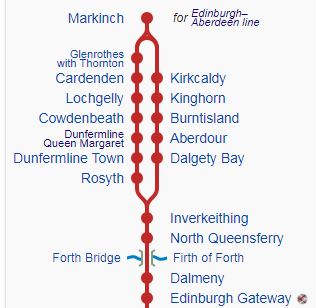
It would need the electrification from Haymarket station through Edinburgh Gateway station to be completed South of the Bridge to an appropriate point on the bridge approach.
North of the Bridge, the circle could be electrified from an appropriate point on the bridge approach, all round the circle to Markinch station.
Running The Fife Circle Service With Class 385 Trains With Onboard Energy Storage
A belt and braces approach might see North Queensferry and Dalmeny stations being the changeover point from overhead to onboard power, so that with any problems, the train is safely in a station, rather than stuck on the bridge.
Currently, the two routes between Glenrothes With Thornton and Edinburgh stations take the following times.
- Via Kirkaldy – 59 minutes with ten stops.
- Via Dunfermline – 62 minutes with eleven stops.
This means a train doing a round trip from Edinburgh takes just over two hours with twenty-one stops.
The Class 385 trains will have the following characteristics compared to the current diesel trains on the route.
- They will be faster.
- They will accelerate better and have smoother regenerative braking.
- They will have a much shorter dwell time at stations.
It would not be unreasonable to assume that the new electric trains could be several minutes under two hours for the round trip.
Trains that didn’t reverse could also go straight round the circle with the driver only changing ends at Edinburgh.
Currently, the route has three trains per hour (tph), so to run this level of service would require six trains.
Running four tph would need an extra two trains and if two tph used each direction, all stations would have a two tph service.
The trains would only need the ability to run between Dalmeny and North Queensferry stations on onboard storage.
Bi-Mode Trains Between Edinburgh And Aberdeen
Virgin Trains East Coast and possibly other operators wlll be running bi-mode Class 800 trains between Edinburgh and Markinch stations.
They will have to use diesel power where there is no electrification, but if the Fife Circle Line were to be electrified, they could use it, to run the trains more efficiently.
Onward From The Fife Circle
The Fife Circle Line could be a bridgehead to extend electrified services to the North.
Consider these distances.
- Markinch to St. Andrews – 20.7 miles
- Markinch to Dundee – 25.1 miles
- Markinch to Perth – 22.7 miles
- Glenrothes to Leven – 7.1 miles
All of these destinations could be reached by a combination of short lengths of electrification and trains with onboard energy storage.
Scotrail’s Extra Ten Class 385 Trains
Scotrail have an extra ten Class 385 trains on option, if the franchise is extended by 7 to 10 years and the trains would enter service in 2023.
Could these trains be to run an electrified Fife Circle Line service and perhaps running to Leven?
Conclusion
Scotrail have some ambitious plans for Scotland’s railways and I wonder, if they include using Class 385 trains with onboard energy storage to get electric trains across the Forth Bridge.
A Trip To Romantic Paisley Canal Station
Paisley Canal station has the same ring to it, that I talked about in Now You Can Take A New Bus For London To Romantic Clapton Pond.
So I had to take a trip.
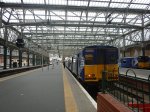

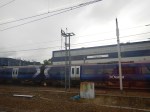
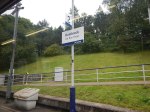
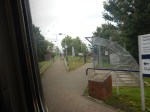
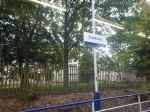
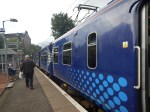

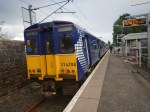
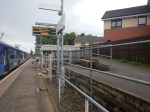
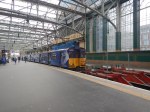
The Paisley Canal Line is very much a line of simple stations, many of which are just a single platform.
Judging by the amount of cars strewn around Hawkhead station, there would appear to be a need for Park-and-Ride station on the line.
The Class 314 Trains
This is a line, that would benefit from some replacement trains for the current Class 314 trains.
Like London’s Class 315 trains, the Class 314 trains are a reliable set of relics from the British Rail era. London’s 313 and 315 trains are all being replaced and I wonder if the new Class 385 trains will enable better stock to run on this line.
Currently, the 75 mph Class 314 trains take eighteen minutes with five stops from Glasgow Central and twenty-one minutes for the return.
As the service is half-hourly, the service requires two trains.
If the service were to be run by modern Class 385 or 380 trains, which are 100 mph trains with much shorter dwell times at stations, the trains would appear to spend a lot of time at Glasgow Central station waiting to return to Paisley Canal.
Unless of course, they are fast enough to do the return trip in under half-an-hour, which would enable the current service to be run with a single train.
Extension To Kilmalcolm
Under Future in the Wikipedia entry for the Paisley Canal Line, this is said.
The reopening of the section between Paisley Canal station and Kilmacolm has been proposed.
The distance is probably not more than a few miles and the length of the extended line would probably allow a modern train to do the round trip in an hour.
If this were the case, a half-hourly service could be performed by two Class 380 or 385 trains.
I also suspect, that should a Class 385 train with onboard energy storage be developed, that such a train might be able to run the service, using stored energy between Paisley Canal and Kilmalcolm stations.
If this were possible, then no extra electrification would be needed.
As the Paisley Canal Branch is single-track from Corkerhill station, would it be possible to build the extension as single-track?
A single-track extension without electrification would surely do wonders for the economics of the project.
The Pressure For More Rail Electrification
Over the last few days, there have been several articles on the media pushing for more electrification.
This article in Rail Technology Magazine, which is entitled TfGM To Fight Corner For Full TransPennine Electrification.
This article in the Carlisle Times and Star, which is entitled Campaigners Urge Backtrack On Axed Electric Rail Projects.
This article in the Times, which is entitled New Oxford-Cambridge Rail Route Must Rely On Diesel Trains.
This article in the Nottingham Post, which is entitled Strong Condemnation Of Government Plan To Abandon Rail Electrification.
I feel that electric trains are the future, but like members of the current Government, I feel that we need an alternative approach to creating a modern railway network in the UK.
What Do Passengers Want?
Passengers in general want a comprehensive rail service, that is affordable, reliable, fast and frequent and gives them good comfort and service on trains and at their terminal stations.
What Do Train Operating Companies Want?
Train companies need and want to make profits.
Judging by the latest franchise awards to Northern, TransPennine Express, Greater Anglia, South Western Railway and West Midlands Trains, part of their philosophy to achieve this is to buy fleets of new trains to replace old ones, with the following characteristics.
- More carriages and increased capacity.
- Higher speed and performance.
- Power and USB points, wi-fi and 4G connectivity.
- Easier entrance and exit.
- Better facilities for persons of reduced mobility.
- Shorter dwell times at stations.
- Better driver assistance systems.
The best way to pay for these trains and make a profit is to fill them with happy passengers.
So Where Does Electrification Give Advantages?
In summarising what passengers and train companies want, I didn’t mention electrification, although electric trains do give advantages to both groups.
- It must be easy to fit electrical equipment into an electric train.
- Electric trains accelerate faster.
- Electric trains can be fitted with regenerative braking to save energy
Electrification is not needed in all cases as electricity for the train can be provided by diesel or hydrogen-powered generators or some form of onboard energy storage can be used.
Why Are So Many Elecification Schemes In The UK Over Budget And Late?
With my experience of writing Project Management software and talking about it with numerous Project Managers all over the world, I suspect the following about electrifying an existing railway in the UK.
- The drawings and documentation for some of the existing lines which go back well over a hundred years is questionable.
- Politicians put undue pressure to keep costs down and corners are cut.
- The scope of the project changes as it progresses.
- Those against the electrification have lots of routes to delay the project.
- We don’t have enough engineers or qualified personnel to do the work.
- Often work is on constricted sites and the locals get annoyed.
I’m coming to the conclusion, that electrification is one of the most difficult of projects.
I do feel though there is hope for the future judged on what happened at Waterloo during August.
The Future Of Road Transport
We are seeing more and more electric and hybrid vehicles on the roads and this article in the Guardian, says that Britain will ban the sale of all diesel and petrol cars by 2040.
For this to happen, there needs to be a vast improvement in the efficiency and size of energy storage systems.
A few years ago, if you’d fitted solar panels to your house, your neighbours would have laughed at you. Now they don’t as technology has improved the performance of solar panels, just like it will improve energy storage in the next few years.
What Will Improved Energy Storage Mean For Trains?
The first trains with onboard energy storage are starting to appear on the UK’s railways.
Class 800 trains – Intercity Express Programme
This document on the Hitachi Rail web site, which is entitled Development of Class 800/801 High-speed Rolling Stock for UK Intercity Express Programme.
The document provides this schematic of the traction system of a Class 800 train.

Note BC which is described as battery charger.
This is said in the text.
The system can select the appropriate power source from either the main transformer or the GUs. Also, the size and weight of the system were minimized by designing the power supply converter to be able to work with both power sources. To ensure that the Class 800 and 801 are able to adapt to future changes in operating practices, they both have the same traction system and the rolling stock can be operated as either class by simply adding or removing GUs. On the Class 800, which is intended to run on both electrified and non-electrified track, each traction system has its own GU. On the other hand, the Class 801 is designed only for electrified lines and has one or two GUs depending on the length of the trainset (one GU for trainsets of five to nine cars, two GUs for trainsets of 10 to 12 cars). These GUs supply emergency traction power and auxiliary power in the event of a power outage on the catenary, and as an auxiliary power supply on non-electrified lines where the Class 801 is in service and pulled by a locomotive. This allows the Class 801 to operate on lines it would otherwise not be able to use and provides a backup in the event of a catenary power outage or other problem on the ground systems as well as non-electrified routes in loco-hauled mode.
Note that GU refers to Generator Unit, which in these trains are diesel-powered.
This is all very comprehensive, but if you look at how the braking system of the trains work and if it uses regenerative braking, you won’t find anything on the web.
But note how the four traction motors in the diagram are connected to the system. When they are in braking mode, what happens to the electricity?
- It is returned to the overhead wires. Difficult when using GUs on lines without electrification.
- It is passed to resistors on the roof of the train and burnt off as heat.
- It is stored in some form of onboard energy storage, so it can be reused later.
I feel that Hitachi are using Option 3, as it would work in both modes of the train and would save a lot of energy.
Note that in the above extract from the Hitachi document, the company states that the electric Class 801 trains have at least one GU to provide auxiliary and traction power in the event of catenary failure.
It looks like the only difference between the Class 800 and Class 801 trains, is that the Class 800 trains have more GUs.
Could this explain why Hitachi seem to be doing all their testing with Class 800 trains, as the differences between the two trains are minimal?
If the Class 800 works, then the Class 801 will!
Hitachi are also testing the Class 802 trains, but then these are built in Italy, have more powerful engines and bigger fuel tanks.
Bombardier Aventras
Bombardier have been developing battery technology for some years and as I described in Is The Battery Electric Multiple Unit (BEMU) A Big Innovation In Train Design?, I rode in the prototype converted from a Class 379 train in February 2015.
I believe that the Class 345 trains are fitted with onboard energy storage for the following reasons.
- Onboard energy storage is the logical way to handle regenerative braking in tunnels.
- Onboard energy storage means that each train reuses its own braking energy and draws less current from the electrification.
- Onboard energy storage is the only way to move a train to a safe place, when the Russians or North Koreans hack the power suppky.
- Some of the features announced for Aventras, like remote wakeup as I discussed in Do Bombardier Aventras Have Remote Wake-Up?, need onboard energy storage.
- Bombardier have won awards for the technology.
Until Bombardier say otherwise, I’ll assume that Aventras like the Class 345 trains have onboard energy storage.
Overhead Power In Long Tunnels
It should also be noted that the overhead power supply in the Crossrail tunnels is a rail fed with power at both ends, as incidentally is the Severn Tunnel.
Could it be that money could have been saved on the electrification of these tunnels as all electric trains using them; IEPs and Aventras, can handle their own regenerative braking energy?
The Effect Of Large Onboard Energy Storage On Trains and Trams
There is a big difference between adding weight to a pneumatic-tyred vehicle like a car or truck, and adding weight to that of a steel-wheel-on-steel-rail vehicle like a train or tram.
With the former, the rolling resistance is increased, which means more power is needed to move the vehicle, but with the latter, surprisingly, the reverse is true.
This allows locomotives to pull iron ore, coal and stone trains carrying hundreds of tonnes.
So adding a heavy energy storage device under a train may not be as detrimental to performance as you may think.
I suspect Bombardier, Hitachi and others have determined the optimal size of storage device for their trains.
I believe the following, if an appropriately-sized online storage device is fitted to a train.
- It will be able to handle all the regenerative braking energy.
- It will give the train a range of up to fifty kilometres on stored energy.
Without doubt, all trains driven by electricity and having regenerative braking will use onboard energy storage.
This applies even if their main power source is not electricity, but perhaps diesel, hydrogen or extra-strong knicker elastic!
Discontinuous Electrification
Modern trains like Aventras and Hitachi Class 80x trains have another ability.
They can raise and lower their pantographs under GPS control, so that they only connect with the electrification, when it is there.
They can also do it at line speed.
This raises the possibility of discontinuous electrification, where the easy-to-electrify sections have wires and the difficult bits are run using either diesel, hydrogen or onboard storage power.
An example would be between Batley and Morley stations on the Huddersfield Line, between which is the Morley Tunnel.
- The tunnel is four kilometres long and hopefully could be electrified using a conductor rail in the tunnel roof.
- Morley station is hard by the Northern portal of the tunnel.
- The line from Morley to the electrification at Leeds doesn’t appear to have any serious bridges to replace and the double-track line has wide margins.
- Batley, Morley and Cottingley stations are all stations with platforms either side of the track and could probably have the gantries on the platform.
Would it be possible to electrify short sections of line like this and let the trains and the driver decide to use onboard or overhead power?
The TransPennine Route
I will look at the TransPennine route in detail.
Mainly Electrically-Driven Trains
Looking at the various trains on TransPennine routes, we see the following ways of driving the trains and locomotives.
- Class 156 trains – hydraulic
- Class 158 trains – hydraulic
- Class 170 trains – hydraulic
- Class 185 trains – hydraulic
- Class 195 trains – mechanical – six-speed epicyclic
- Class 220 trains – electric
- Class 221 trains – electric
- Class 802 trains – electric – bi-mode
- Class 66 locomotives – electric
- Class 68 locomotives – electric
- Class 88 locomotives – electric – bi-mode version of a Class 68 locomotive.
The last three trains and all the locomotives in this list are electrically driven, where on-board diesel engines generate electricity to power the train.
In addition the Class 802 trains and the Class 88 locomotives are bi-mode and can use electrification to power the trains directly, if it is available.
So a Liverpool to Newcastle service using Class 802 trains or Class 88 locomotives and Mark 5 carriages could use the overhead electrification on the following sections of track.
- From Liverpool to Stalybridge via Manchester Victoria
- Through Leeds
- On the East Coast Main Line
Electrifying between Leeds and the East Coast Main Line would seem to be a lot easier than that between Leeds and Manchester, so I suspect that there is some seriously difficulty that has prevented it being done already, as it would allow Kings Cross to Edinburgh services to stop at Leeds, if that was desired.
Improving The Current Service
Currently Liverpool Lime Street to Newcastle takes three hours and three minutes, with the following sectional times.
- Liverpool to Manchester Victoria – 39 minutes
- Manchester Victoria to Huddersfield – 30 minutes
- Huddersfield to Leeds – 22 minutes
- Leeds to York – 25 minutes
- York to Newcastle – 67 minutes
Some places to save times are apparent.
- Liverpool to Manchester Victoria could be speeded up by a couple of minutes, after the addition of the fourth track at Huyton.
- According to the time table, most dwell times are reasonable, but nine minutes is allowed at Manchester Victoria.
- Manchester Victoria to Stalybridge is being electrified.
- Virgin’s fastest trains take 56 minutes between York and Newcastle, so I would assume that a TransPennine Class 802 train could match this.
- If Leeds to York were to be electrified, I would think that the same percentage decrease in journey time could be expected, which would give a Leeds to York time of 21 minutes.
Could we see the following times on the route?
- Liverpool to Manchester Victoria – 30 minutes
- Manchester Victoria to Huddersfield – 28 minutes
- Huddersfield to Leeds – 22 minutes
- Leeds to York – 21 minutes
- York to Newcastle – 56 minutes
This gives a timing of 157 minutes, which is a saving of twenty-three minutes.
Is The Track Up To It?
Under Timings And Line Speeds in the Wikipedia entry for Liverpool and Manchester Lines, this is said.
As of 2016, the fastest journey times are around half an hour, which is little better than over a century earlier. The fastest recorded run was from Manchester Exchange to Liverpool Lime St in 30 minutes 46 seconds by a 1936 built Jubilee 5707 with 7 coaches. An 1882-built compound steam locomotive was timed on the same route in 38 minutes 18 seconds. Until 1968 trains from Liverpool to Manchester by all 3 routes were scheduled to take 40 minutes and often took less. The southern route via Warrington is now restricted to 85 mph and the northern route via Earlestown to 90 mph, with 75 mph over Chat Moss.
Work is under way to four-track the line between Huyton and Roby which is scheduled for completion in December 2017.
Surely, Twenty-First Century engineering can sort out Stephenson‘s problems of nearly two centuries ago!
If it’s like this between Liverpool and Manchester on a fully-electrified line, what’s it like between Manchester and Leeds?
I believe that modern engineering should be able to create a 100 mph route between Liverpool and Leeds.
Are The Other Trains Slowing The Expresses?
Northern run an assortment of trains between Liverpool and Leeds via Manchester Victoria.
Between Liverpool and Manchester Victoria are all the services timed for and run by 100 mph Class 319 trains, or do some of the assortment of 75 mph trains share the route? If it’s the latter then they will delay the expresses.
Between Manchester Victoria and Hudderfield, I’m sure that slower trains are on the route.
Help is at hand as Northern have ordered fifty-five Class 195 trains, which have a 100 mph capability.
Should Stalybridge To Leeds Be Electrified?
Only when slow trains have been eliminated and the track has been improved to allow 100 mph running between Liverpool and Leeds should we answer this question!
Using rough estimates, I feel we might see the following timings with a Class 802 train.
- Liverpool to Manchester Victoria – 26 minutes
- Manchester Victoria to Huddersfield – 21 minutes
- Huddersfield to Leeds – 16 minutes
- Leeds to York – 21 minutes
- York to Newcastle – 56 minutes
This gives a timing of 140 minutes, which is a saving of forty-three minutes on the current times.
Improving Leeds To Newcastle
The Class 802 trains are stated in Wikipedia as being capable of running at 140 mph with minor modifications.
How many minutes would this take off the journey, if this were to be possible?
Conclusion
There are a lot of things to do before the decision to electrify Stalybridge to Leeds is taken.
- Sort the track for at least 100 mph running.
- Remove all passenger trains not capable of 100 mph from the line.
- Perhaps add some passing loops.
- Electrify Leeds to Colton Junction.
- Remove all level crossings.
- Raise all bridges and other structures, so that electrification is possible.
- Get the planning permission for electrifying the sensitive areas.
Hopefully these actions in themselves would deliver a time of under forty minutes between Manchester and Leeds.
That would be a spoonful of sugar for the passengers and the train operating companies.
Any attempt to electrify without doing all of these actions before the decision to electrify is taken, will result in the sort of mess seen in some of the electrification schemes of the last few years.
The East West Rail Link
I will look at the East West Rail Link in detail.
Linking To Electrified Lines
The East West Rail Link joins or crosses the following electrified lines.
- The Great Western Main Line at Didcot
- The West Coast Main Line at Bletchley
- The Midland Main Line at Bedford
- The East Coast Main Line at Sandy
- The West Anglia Main Line at Cambridge
As connecting the National Grid to electrification is a major cost, if the line were to be electrified, then there are several places to connect at a cheaper cost.
Building For Electrification
The instructions from the Department for Transport seem to have stated the following.
- The line will be double track.
- The line will have an operating speed of at least 100 mph or possibly 125 mph.
- All bridges and structures, will be built to accommodate overhead electrification.
I wonder if the specification suggests preparing the margins of the route, so putting up overhead gantries wouldn’t be a case of digging and hitting important cables or pipes.
Electrification of new lines like the East London Line, Crossrail and the Hitchin Flyover seem to have proceeded much smoother than schemes like the Gospel Oak to Barking Line.
Trains For The East-West Rail Link
The proposed services include.
- Oxford to Bedford
- Bletchley to Bedford
- Oxford to Milton Keynes Central
- Aylesbury to Milton Keynes Central.
I have also seen suggestions that the trains terminate at Reading.
The trains will need the following.
- A 100 mph capability to make good use of the route.
- Ability to use overhead electrification to get to Bedford, Milton Keynes Central and Reading.
- Ability to use diesel to use the Chiltern routes to Aylesbury and Marylebone.
To meet all these requirements, it would appear bi-mode trains like a Class 800 train are needed.
Should The East-West Rail Link Be Electrified?
Consider.
- The trains chosen for the route will be bi-mode and so the line doesn’t need to be electrified.
- Freight trains using the route would be hauled by a diesel locomotive or possibly a bi-mode locomotive like a Class 88 locomotive.
However, if at a future date, all or part of the electrification were to be deemed needed, if the line had been built with electrification in mind, putting up the wires would be a lot easier than on the TransPennine route.
Conclusions
I have come to these conclusions from these two examples.
- The bi-mode route allows a lot of flexibility and means that electrification with all its problems can be done when it is really necessary.
- The bi-mode route, also means that passengers get the benefits of modern, faster and more frequent trains at an earlier date.
- Electrification of a new line is easier than electrifying an old Victorian one.
- All new or reopened lines should be built to allow electrification at a future date.
Don’t underestimate the ingenuity of railway engineers to make a more comprehensive railway powered by electricity possible.
Electrification ‘Very Unlikely’ To Come Back Into EWR Scheme
The title of this post is the same as this article on Rail Technology Magazine.
This is a quote from Andy Free, who is head of engineering of the alliance that is building the East West Rail Link.
The steer from the DfT is that wherever the Alliance is building a new structure it needs to be clear and suitable for electrification, “and we must do nothing that hinders future electrification, but it is not on the short- or medium-term horizon.
Given the developments in bi-mode trains in recent years, I suspect this is a sensible policy.
Electrification is probably cheaper to fit to a train in a nice warm factory in Derby or Newton Aycliffe, than at a remote location in the pouring rain and the howling wind.
In the case of the East West Rail Link, where sections of the route are well defined, as they are existing rail alignments, building the route would involve.
- Raising any over-bridges to be clear of future electrification.
- Building any bridges or flyovers, where the new railway crosses over roads and other railways.
- Preparing the track bed.
- Laying the track.
- Building or rebuilding the stations.
Note I have ignored signalling, as ideally that will be in-cab by radio.
Building the line without electrification must give advantages.
- Network Rail seem to find it impossible to do electrification projects to time and budget.
- Stations without electrification are safer places and easier to design and build.
- There is less visual intrusion for Nimbys to complain about.
- The cost of connecting the electrification to the National Grid is zero.
- There is less copper cable to steal.
In Is A Bi-Mode Aventra A Silly Idea?, I outlined what I believe the ultimate bi-mode train will be like.
A bi-mode Aventra would be a sophisticated train with the following characteristics.
- Electric drive
- Regenerative braking.
- 25 KVAC overhead and 750 VDC third rail capability.
- Automatic pantograph deployment.
- Onboard energy storage.
- Automatic power source selection.
- Diesel or hydrogen power-pack
The first four are probably already in service in the Class 345 train.
A train going from between Reading and Bedford on the East West Rail Link, would charge its energy storage at the terminals and then use this power along the route. If the train detected that the stored energy was running low, the diesel or hydrogen power-pack would cut in and charge the energy storage.
Conclusion
It is my view, that if you are building a new rail line that is not high speed or high frequency, that there is no need to electrify the line, as intelligent bi-mode trains will be able to work the route economically and without the noise, pollution and vibration problems of their diesel engines working all the time.
Will Innovative Electrification Be Used On The Uckfield Line?
Chris Gibb’s report into the Govia Thameslink Railway franchise recommended electrification of the Uckfield Line. The September 2017 Edition of Modern Railways has a detailed examination of the proposals.
Reasons For Electrification
Various reasons are given for the electrification.
- Removing diesel trains from London Bridge station.
- Operational flexibility.
- More capacity
- Stabling and refuelling considerations with the current Class 171 trains at Selhurst depot.
- Increasing operational efficiency.
The Class 171 trains would probbly be better suited to other routes.
25 KVAC Ovhead Electrification
One of Chris Gibb’s recommendations is to use 25 KVAC overhead rather than 750 VDC third-rail electrification in an area, where third-rail is the norm.
He states that this is on cost grounds.
- Third-rail needs a feed to the National Grid every two to three miles.
- Overhead wires might need just one.
- DC has higher transmission losses, than AC.
He also suggests the following.
- Changeover between the existing third-rail and the new overhead systems would be South of Hurst Green Junction.
- The three tunnels on the route would be electrified using overhead conductor rail.
- Dual-voltage trains would be needed, which would change system on the move.
- Class 377 or Class 700 trains would be used.
He also indicxates that Class 379 trains would be available from 2020.
Stabling At Crowborough
Chris Gibb suggests building stabling for four twelve-car trains at Crowborough for the following reasons.
- It would improve crew efficiency.
- Itwould give more time overnight for maintenance and train cleaning.
- It would eliminate 75,000 miles of empty running a year.
- It would give a £3.6 million a year cost saving.
- It would give more space at Selhurst depot.
This sounds like a good idea.
Project Management And Finance
Chris Gibb gets very innovative about how the project should be managed, by suggesting that SNCF do the design for the electrification and then directly hire the contractor, bypassing Network Rail.
He also suggests an innovative way of financing the project, using private finance.
The Government’s Response
Chris Gibb recommendations of electrification and the stabling of trains at Crowborough have been accepted by the Government.
Conclusion
Surely, if private finance and planning permission can be obtained, this project should go ahead.
Is A Bi-Mode Aventra A Silly Idea?
In How Long Will It Take Bombardier To Fulfil Their Aventra Orders?, when discussing the new West Midlands Trains franchise, that has recently been awarded, I said this about the proposed eighty new carriages for the Snow Hill Lines.
As it is unlikely that the Snow Hill Lines will be electrified in the near future, could we be seeing an Aventra bi-mode for the Snow Hill Lines?
So is the bi-mode Aventra a silly idea?
The Five-Car Aventra
It looks like the formation of a five car Aventra like a Class 720 train is something like DMSLW+MS+MS1+PMS+DMSL
The codes are as follows.
- D – Driving
- L – Lavatory
- M – Motor
- S – Standard Class
- W – Wheelchair
So this means the following.
- All cars are motored for fast acceleration and smooth regenerative braking.
- As all cars are motored, there must be a heavy-duty electrical power bus running the length of the train.
- Both driving cars have a toilet.
- The wheelchair area and the fully-accessible toilet are probably together in one driving car.
- The pantograph is on one of the middle three cars.
It should also be noted that the Aventra has a slightly unusual and innovative electrical layout.
This article in Global Rail News from 2011, which is entitled Bombardier’s AVENTRA – A new era in train performance, gives some details of the Aventra’s electrical systems. This is said.
AVENTRA can run on both 25kV AC and 750V DC power – the high-efficiency transformers being another area where a heavier component was chosen because, in the long term, it’s cheaper to run. Pairs of cars will run off a common power bus with a converter on one car powering both. The other car can be fitted with power storage devices such as super-capacitors or Lithium-ion batteries if required.
This was published six years ago, so I suspect Bombardier have refined the concept
It would appear that this could be the reason, why in the document I found MS1 was used for one of the intermediate cars, as this is the car with space for the energy storage.
Do Aventras Have Batteries For Regenerative Braking?
Until I get a definitive statement from Bombardier, that they don’t, I will believe that they do for the following reasons.
- In Do Class 800/801/802 Trains Use Batteries For Regenerative Braking?, I said I would be very surprised if the answer to this question is No!
- In Class 345 Trains And Regenerative Braking, I showed that there were no giveaway electric fires on the roof to handle regenerative braking.
- Batteries would be the ideal way to drag a Class 345 train to safety in case of complete electrical failure in the Crossrail tunnel.
- The Germans, the Japanese, the Swiss and probably the Basques are experimenting with batteries to handle regenerative braking.
- Hybrid vehicles like cars and buses do it all the time.
But the main reason, is that as an Electrical Engineer, I believe it to be stupid and seriously bad design to not use some form of energy storage to handle the energy produced by regenerative braking.
Energy Storage In A Bi-Mode Train
If you look at the five-car Class 720 train, all axles are motored. This will give fast acceleration and smooth regenerative braking, which is just what both train operators and passengers want.
If a bi-mode train had energy storage, if say its speed was checked by a yellow signal, it would be able to regain line speed using the energy stored when it slowed down. So passengers wouldn’t have to endure the vibration of the diesel engine and the jerks as it started.
No competent engineer would ever design a modern bi-mode train without energy storage.
Where Would You Put The Power Pack On An Aventra?
Although space has been left in one of the pair of power cars for energy storage, as was stated in the Global Rail News article, I will assume it is probably not large enough for both energy storage and a power pack.
So perhaps one solution would be to fit a well-designed power pack in the third of the middle cars, which would then be connected to the power bus to drive the train and charge the battery.
This is all rather similar to the Porterbrook-inspired and Derby-designed Class 769 train, where redundant Class 319 trains are being converted to bi-modes.
Diesel Or Hydrogen Power Pack
Diesel will certainly work well, but London and other cities have hydrogen-powered buses.
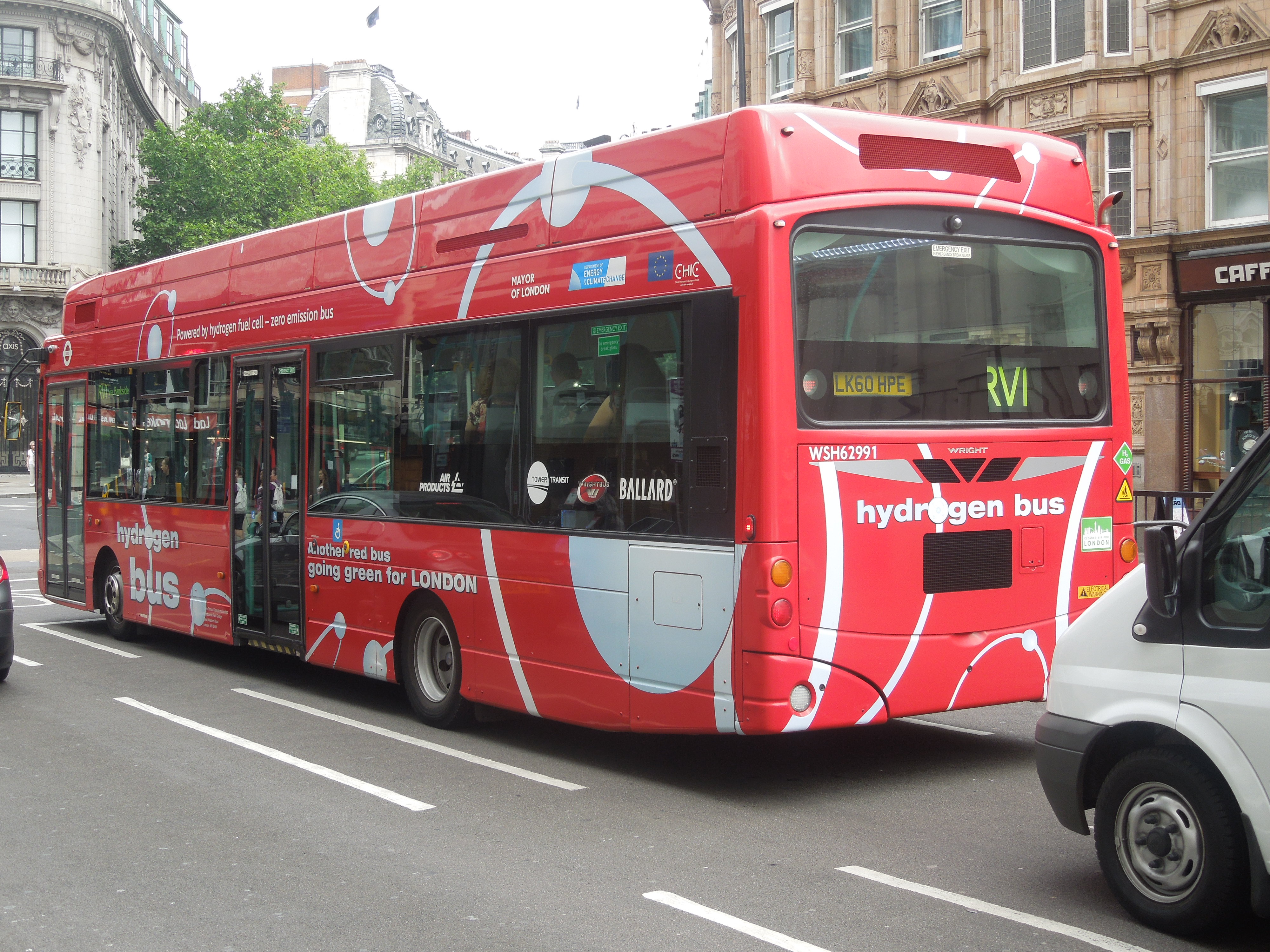
The picture is from 2013, so the technology has probably moved on. This Fuel Cell Bus section in Wikipedia gives the up-to-date picture.
Automatic Power Source Selection
Effectively, the ideal bi-mode train will be a tri-mode and will have the following power sources.
- Traditional electrification.
- On board diesel or hydrogen power.
- Energy storage, charged from the electrification or from regenerative braking.
The power source would be chosen automatically to minimise the use of both diesel/hydrogen power and electric power from the electrification.
Modern trains like an Aventra can raise and lower the pantograph automatically, so they can do this to make best use of what electrification exists to both power the train and charge the energy storage.
Techniques like these will be used to minimise the use of the diesel or hydrogen power pack.
Intermittent And Selective Electrification
On lines like the Snow Hill Lines sections could be electrified, where the engineering is easy and affordable, to with time reduce the use of unfriendly diesel or expensive hydrogen.
Strangely, one of the first places to electrify, might be the tunnels, as after the electrification of the Severn Tunnel, our engineers can probably electrify any railway tunnel.
I also don’t see why third rail electrification can’t be used in places like on top of viaducts and in well-designed station installations.
The 125 mph Bi-Mode Aventra
This article on Christian Wolmar’s web site is entitled Bombardier’s Survival Was The Right Kind Of Politics. This is said.
Bombardier is not resting on its laurels. Interestingly, the company has been watching the problems over electrification and the fact that more of Hitachi’s new trains will now be bi-mode because the wires have not been put up in time. McKeon has a team looking at whether Bombardier will go into the bi-mode market: ‘The Hitachi bi-mode trains can only go 110 mph when using diesel. Based on Aventra designs, we could build one that went 125 mph. This would help Network Rail as it would not have to electrify everywhere.’ He cites East Midlands, CrossCountry and Wales as potential users of this technology.
So Bombardier don’t think it is silly. Especially, the statement that Bombardier could build an Aventra that could do 125 mph running on diesel.
Applying, what we know about the power in the bi-mode Class 800 and Class 769 trains, which have three and two diesel power-packs respectively, I suspect that to create a five-car Aventra, that is capable of 125 mph on diesel, would need the following.
- At least three diesel power-packs.
- Regenerative braking using onboard energy storage.
- Automatic pantograph deployment.
- Automatic power source selection.
The light weight of the Aventra would be a big help.
It is my belief that energy storage is key, for the following reasons.
- Stored energy from braking at a station from 125 mph, would be used to get the train back to operating speed, without using a large amount of diesel power.
- Braking and acceleration back to operating speed, perhaps after being slowed by another train, might not need the diesel engines to be started.
- Starting a journey with an optimum amount of power in the battery might make getting to operating speed easier.
It would be a rough engineering challenge, but one I believe is possible.
Consider the routes mentioned.
East Midlands
Consider.
- 125 mph running would certainly be needed on this route.
- Battery power could be used to boost the trains to 125 mph.
- Electrification will be available between St. Pancras and Kettering.
- Electrification might be impossible between Derby and Sheffield because the Derwent Valley is a World Heritage Site.
Some form of charging might be needed at Derby, Nottingham and Sheffield.
A bi-mode train would be ideal for Norwich to Liverpool, although there’s not a great deal of electrification.
Cross Country
CrossCountry use several electrified lines on their various routes..
- York to Edinburgh
- Birmingham New Street to Manchester Piccadilly
- Bournemouth to Basingstoke
- Stansted Airport to Ely
Note that parts of some of these routes allow125 mph and Bournemouth to asingstoke is electrified using third-rail.
A dual voltage, 125 mph bi-mode train would probably fit CrossCountry’s routes well.
Wales
Except for the South Wales Main Line, there’s little electrification in Wales, but a 125 mph bi-mode train could be used on the following several partially-electrified routes.
- Carmarthen to Manchester Piccadilly.
- Holyhead to Manchester Piccadilly
- Holyhead to Liverpool via the Halton Curve.
- Birmingham to Shrewsbury.
- Swansea to Newport
Currently most of these services are served by 100 mph Class 175 trains. If nothing else, they would probably be more spacious, faster and fuel-efficient.
Conclusion
A five-car Aventra bi-mode is definitely not a silly idea.
It would be a sophisticated train with the following characteristics.
- Electric drive
- Regenerative braking.
- 25 KVAC overhead and 750 VDC third rail capability.
- Automatic pantograph deployment.
- Onboard energy storage.
- Automatic power source selection.
- Diesel or hydrogen power-pack
- 125 mph capability.
The first four are probably already in service in the Class 345 train.
.
Construction Of The Platform Structures And Tracks For Crossrail At Abbey Wood Was Cimpleted By Network Rail In May 2017
The title of this post, was stated under a picture in the August 2017 Edition of Modern Railways.
The picture had been taken on site from the other side of the fence through the station to this picture I took in July 2017.
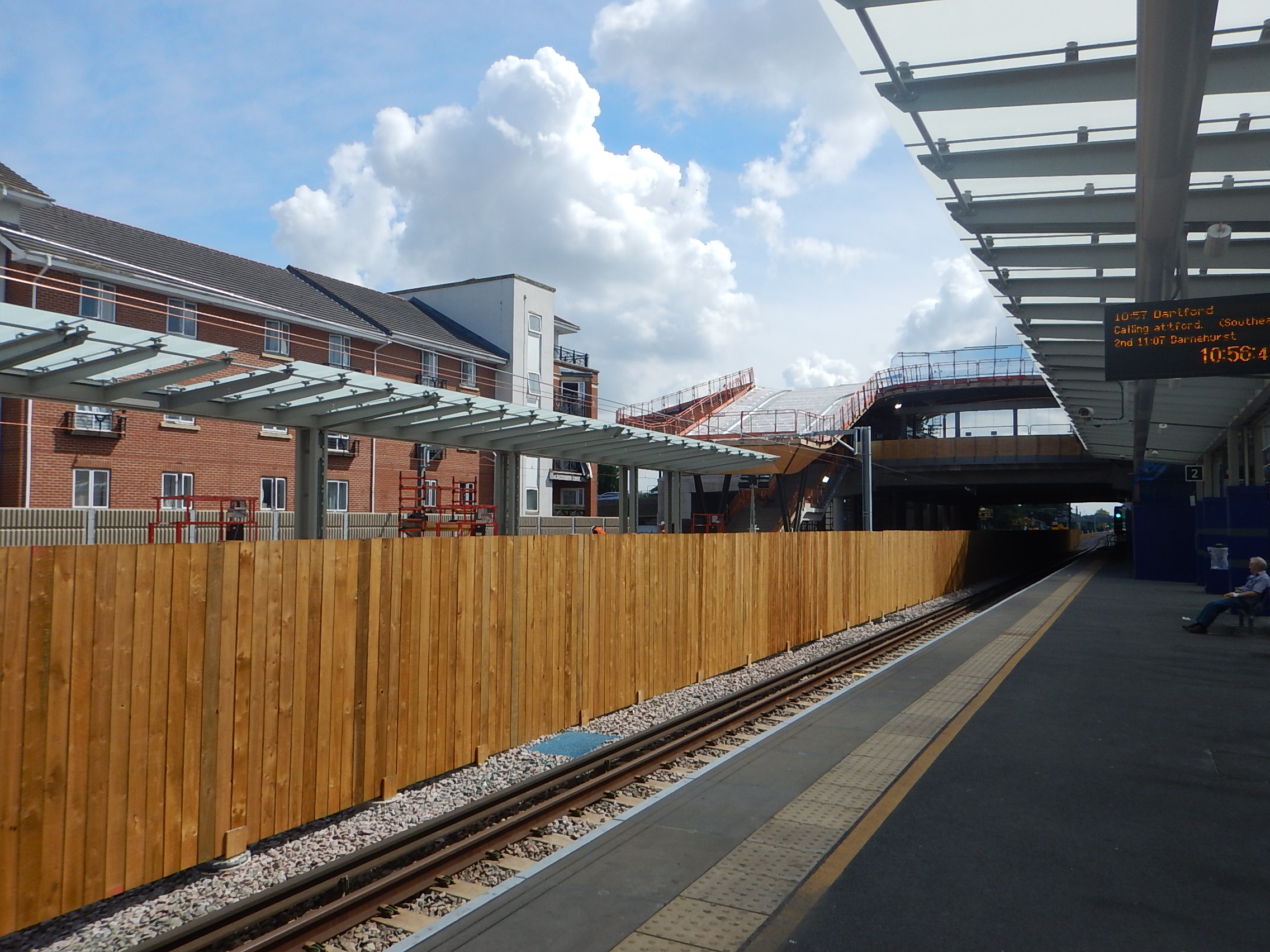
My later picture shows some of the canopies for the Crossrail platforms in position.
If Network Rail’s statement that formed the title of this post is correct, then is the track layout to the East of the station complete?
This picture shows the unelectrified line leading away from the station.
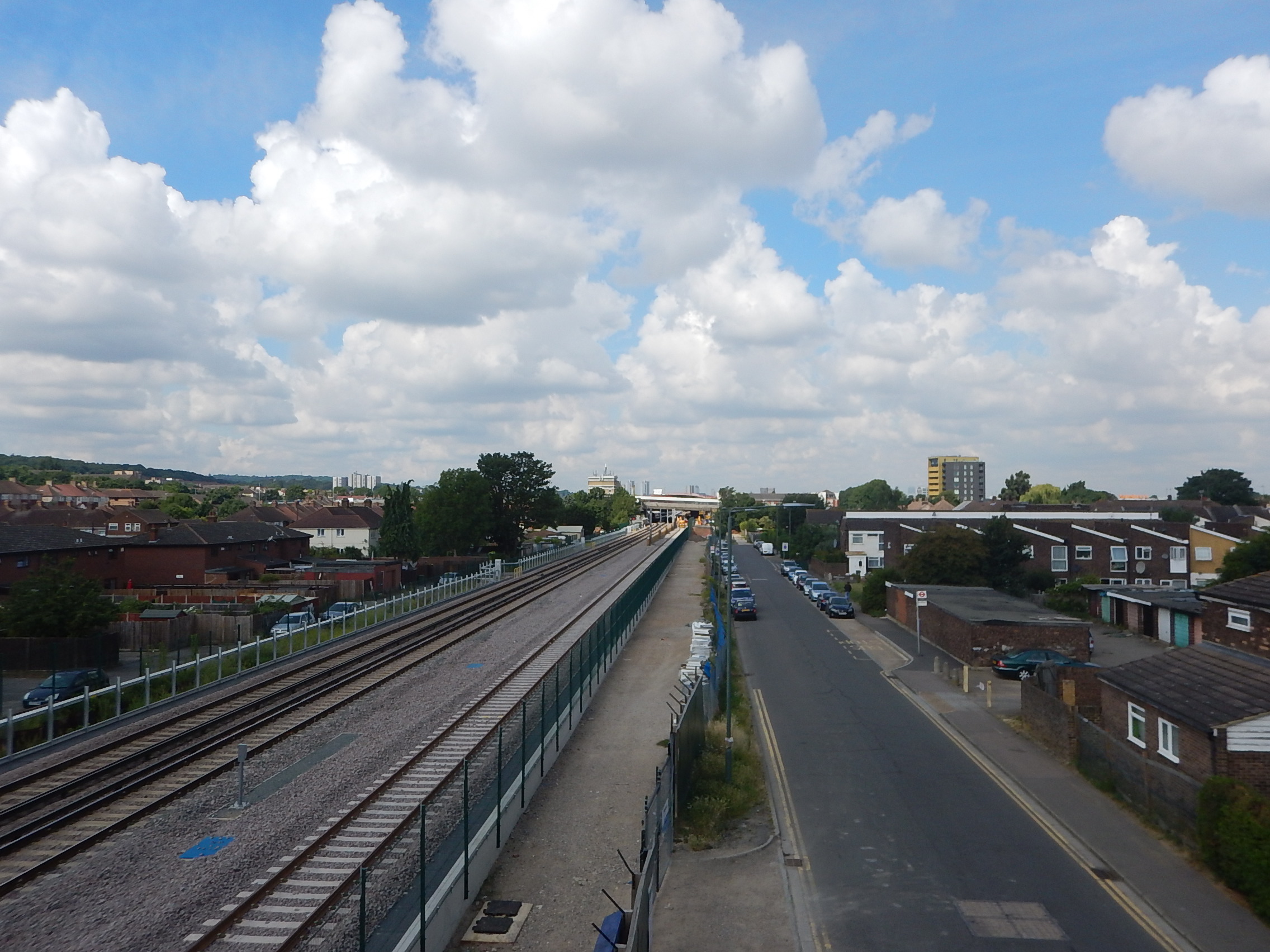
Note the track without any electrification by the fence in the right foreground and the two third-rail electrified North Kent tracks in the left background.
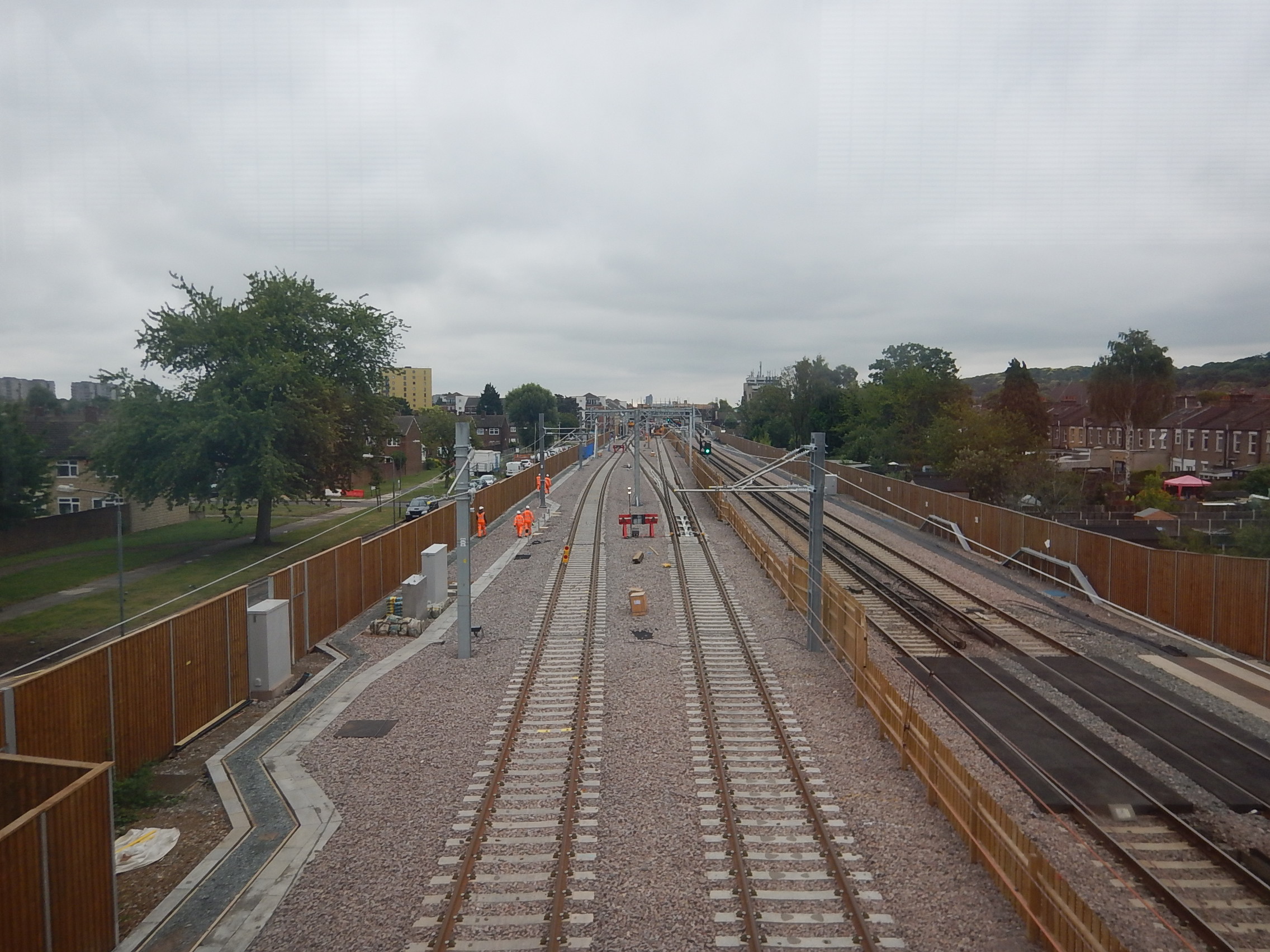
This picture shows the track going towards Belvedere station.

Note the cross-over by the signal.
Can Crossrail Reverse All The Scheduled Trains At Abbey Wood?
Crossrail have now published a more detailed schedule for the services.
The schedule shows that a maximum of twelve trains need to be reversed at each of Abbey Wood, Paddington and Shenfield stations.
In this article on Rail Engineer, which is entitled Signalling Crossrail.
The Class 345 trains are fitted with a system called Auto-Reverse, which I explained in Crossrail Trains Will Have Auto-Reverse.
The driver selects auto-reverse and walks back through the train, as it changes platforms automatically. By the time the driver is in the other cab, the train is in position in the other platform, ready to go back to London.
But the article in Rail Engineer also says this.
Auto reverse (AR) is not provided on Network Rail infrastructure. There will also be the possibility to use AR into and out of the stabling sidings at Abbey Wood so the driver will be at the correct end of the train to finish a shift or, when coming on duty, to start a new run westwards. Service trains will, however, normally reverse in the station. AR may also be used at Custom House and anywhere using crossovers in the central section.
As the normal twelve trains per hour (tph) making up the service, will be using both platforms, cross-overs are provided to the West of Abbey Wood station, as is shown in this picture.
The system used at Abbey Wood will also be used at Shenfield.
Why Has The Reversing Siding Not Been Electrified?
In my view there can only be two explanations, if Modern Railways have got their picture caption right, which categorically said work was finished.
- My reconnaissance was wrong.
- Full electrification is not needed to reverse the trains.
On digging deeper, I took these four pictures at Abbey Wood station.


The pictures show in order.
- The overhead wires for Platform 4 fixed to the station building. Look under the top of the staircase.
- The overhead wires for Platform 3 passing under the station building.
- The overhead wires for Platform 3 passing under the station building.
- The overhead wires for Platform 3 anchored to a solid girder on the other side of the station building.
I couldn’t see the track layout because the wooden fence was in the way, but it would seem logical that the track through Platform 4 will eventually connect to the track through Platform 3.
This would allow the following.
- Trains arriving in Platform 4 to transfer to Platform 3 using the reversing siding.
- Crossrail trains to continue East on the North Kent Line using the single track and the crossovers to the East of the station.
- A failed train could be pushed into the reversing siding, which could probably accommodate two trains.
- Service and maintenance trains to access Crossrail’s Plumstead depot from the East.
But even if there is no connection, two independent platforms can handle the twelve trains per hour, as they will do at Shenfield.
Cardiff To Gloucester And Cheltenham In A Class 769 Train
As the time gets nearer for the entry of the Class 769 train into service at the end of the year, speculation is mounting about how the trains will be used.
In the August 2017 Edition of Modern Railways, there is an article, which is entitled Class 769s For Wales.
After discussing how the trains will be used to deputise for the current Class 150 trains so that they can be made compliant with the Persons of Reduced Mobility regulations, the article goes on to say this.
None of the electrical equipment will be removed from ‘769s’ destined for Wales. After completion of Great Western Electrification to Cardiff, they could operate electrically from Cardiff to Severn Tunnel Junction, where they would switch to diesel operation for the rest of the route to Gloucester and Cheltenham.
The fastest direct trains take one hour fifteen minutes for the journey, so a round trip could be a few minutes under three hours, so that an hourly service would need three trains.

