Colne – Skipton Reopening Moves Closer
The title of this post, is the same as that of this article on the Railway Gazette.
This is the introductory paragraph.
Rail minister Chris Heaton-Harris has confirmed that investigations have been commissioned into the proposed reinstatement of the 19·3 km Colne – Skipton ‘missing link’ connecting east Lancashire and west Yorkshire.
Investigations will look into.
- Capital costs
- Passenger demand forecasts
- Service options.
- Gauge enhancement measures necessary to increase rail freight capacity on TransPennine routes including between Accrington and Todmorden stations.
- Proposals for a rail freight terminal on the site of the demolished Huncoat power station near Accrington.
This sounds more than a simple proposal to reopen the route between Skipton and Colne stations.
These are a few of my thoughts.
The Rail Route Between Preston And Skipton
The rail route between Preston on the West Coast Main Line and Skipton can be summarised as follows.
- Preston and Rose Grove via Huncoat – double-track – electrification at Preston
- Rose Grove and Colne – single-track
- Colne and Skipton – to be reinstated – electrification at Skipton
Colne and Skipton might not be the easiest route to reinstate, as a dual carriageway has been built across the route to the North of Colne station.
Could Colne And Skipton Be Double-Track All The Way?
Consider.
- The new section between Skipton and Colne could be built with single or double tracks.
- The section between Rose Grove and Colne stations was built as a double-track and singled in 1971. British Rail’s accountants strike again!
- The single-track section includes the Bank Top Viaduct, in the centre of Burnley.
- Trains currently take twenty-one minutes between Rose Grove and Colne stations.
This picture shows Bank Top Viaduct.
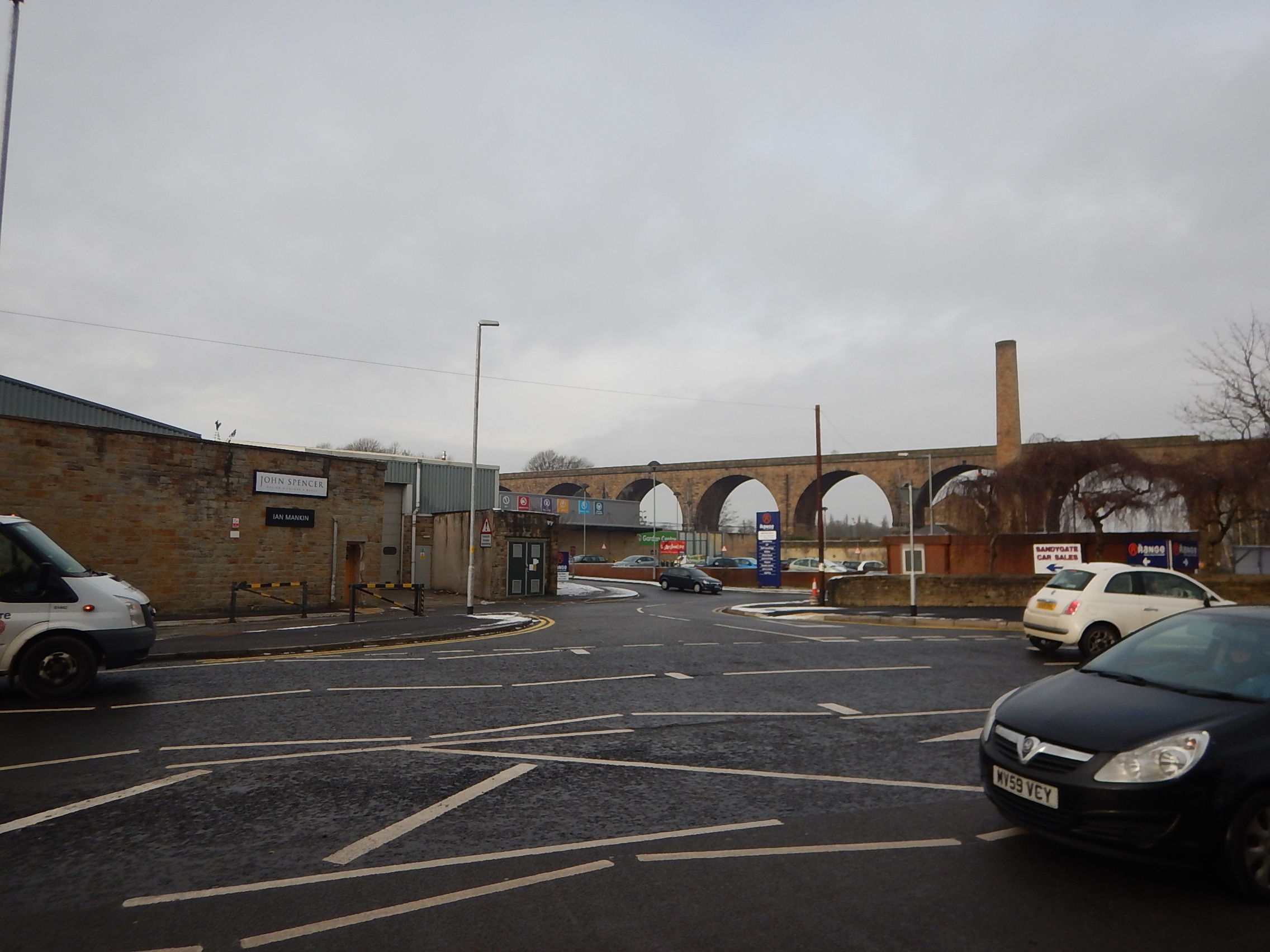
I think the viaduct could be key to whether the route is double-track all the way.
- If the redoubling can be performed at a reasonable cost, then that will be the way to go, as it might be possible to squeeze up to three trains per hour (tph) between Skipton and Rose Grove via Colne.
- If on the other hand, doubling is too difficult or expensive, I estimate that no more than two tph would be possible.
For both solutions, there will need to be double track or a long passing loop, between Skipton and Colne.
Could Colne And Skipton Be Electrified?
Consider.
- Preston is a fully-electrified station on the West Coast Main Line.
- Skipton is a fully-electrified station with electric trains to and from Leeds.
- Full electrification would create an electrified route between Leeds and Blackpool, Liverpool and Preston.
- It could be a useful diversion route for electric passenger trains across the Pennines, when their are engineering works on the Huddersfield Line or due to the building of Northern Powerhouse Rail.
- Electrification of the route, would allow electric haulage of freight trains to and from the proposed Huncoat Rail Freight Terminal.
- Electrification of the Calder Valley Line between Preston and Leeds is always being proposed.
- Electrication of Bank Top Viaduct could be tricky!
It should also be noted that this article on Rail Magazine was published on May 12th, 2020 and is entitled Electrification Key to Decarbonisation – Government. Views in Government about electrification have changed, so this might affect the decision to electrify the route.
The power is already there at both ends and electrification systems with low visual intrusion could be used.
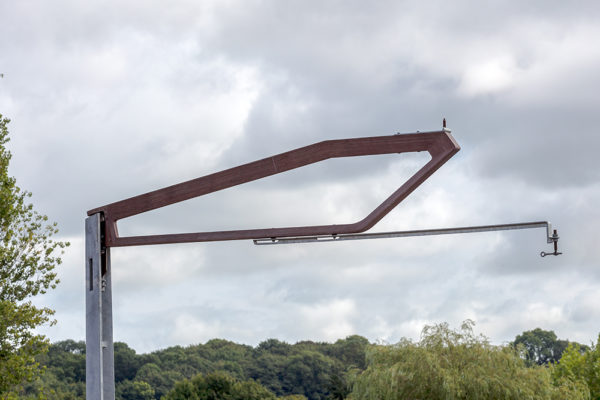
On the other hand, some might consider electrification of the route inappropriate.
Could Colne And Skipton Be Partially Electrified?
Consider.
- I estimate that the distance between Preston and Skipton will be 41 miles.
- If Blackpool North station were the final destination, there would be 34 miles (2 x 17) to charge the batteries.
- If Liverpool Lime Street station were the final destination, there would be 70 miles (2 x 35) to charge the batteries.
- If Leeds station were the final destination, there would be 52 miles (2 x 26) to charge the batteries.
- Manufacturers’ estimates of distances, indicate that battery electric trains could cover up to 65 miles on battery power.
As both ends of the route are electrified and trains would run extra miles under the wires, it would seem likely that a battery electric train could run between Preston and Skipton, without needing a charge en route.
Drax Group And Colne And Skipton Reinstatement
Drax power station uses Flue Gas Desulphurisation. Wikipedia says this about the process at Drax.
All six units are served by an independent wet limestone-gypsum flue gas desulphurisation (FGD) plant, which was installed between 1988 and 1996. This diverts gases from the boilers and passes them through a limestone slurry, which removes at least 90% of the sulphur dioxide (SO2). This is equivalent to removing over 250,000 tonnes of SO2 each year. The process requires 10,000 tonnes of limestone a week, sourced from Tunstead Quarry in Derbyshire. A byproduct of the process is gypsum, with 15,000 tonnes produced each week. This goes to be used in the manufacture of plasterboard. The gypsum is sold exclusively to British Gypsum, and it is transported by rail to their plant at Kirkby Thore (on the Settle-Carlisle Line).
The gypsum trains go through Skipton to access the Settle-Carlisle Line.
Drax power station is part-fuelled with biomass, which comes from all over the place including the United States via the Port of Liverpool.
It is no surprise that Drax Group are in favour of the Colne and Skipton reinstatement, as it would give them a new route between Drax and the Port of Liverpool.
This press release from Drax Group gives more details including this paragraph.
It will have a direct impact on improving our supply chain at Drax, allowing freight trains to travel much more quickly to the power station in North Yorkshire – reducing journey times from the Port of Liverpool to less than three hours, a journey which can take up to nine hours at the moment.
Trains will avoid the busy Huddersfield Line and Manchester Victoria station.
Drax’s statement would appear to be a powerful reason to reinstate Colne and Skipton.
These smart new or refurbished wagons, used by Drax to move woodchip should be much faster than the typical 20-30 mph freight speed of TransPennine routes.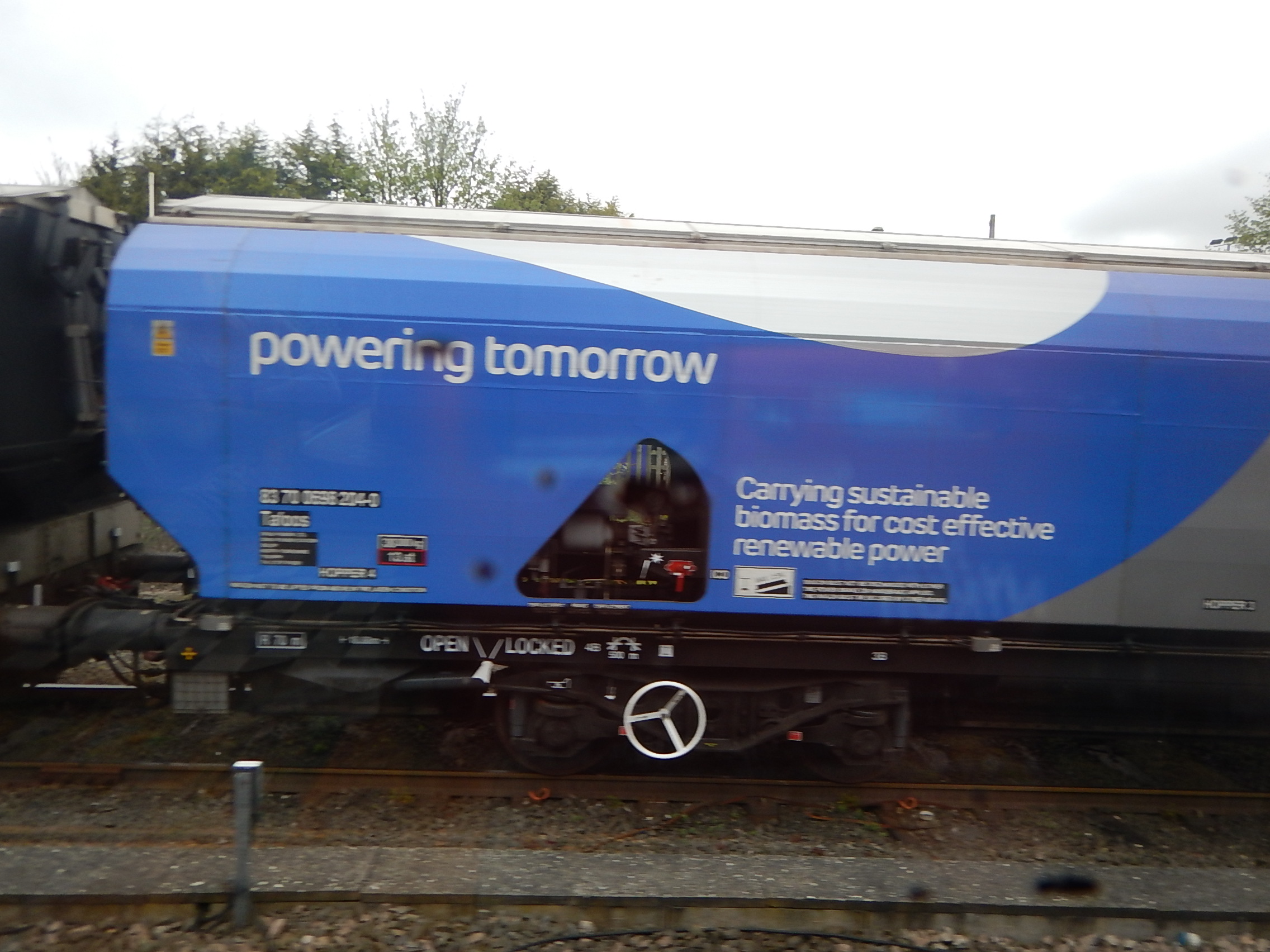
This page on the Drax web site, is entitled This train isn’t like any other in the UK, and it gives more details about the wagons.
- They were custom-designed and built in the last few years.
- The roofs open automatically for loading.
- A twenty-five wagon train can be loaded in 37 minutes.
- A full train can carry between 1,700 and 1,800 tonnes of biomass.
- Each train can unload in forty minutes.
- They are the largest wagons on UK railways by a margin of 30 %.
- Each wagon is nineteen metres long and can carry over seventy tonnes of biomass.
- Approximately 14 trains per day arrive at Drax, bringing 20,000 tonnes of biomass.
I suspect to minimise journey times, Drax would like to see a fully electrified route between Preston and Skipton and a new double-track route between Colne and Skipton.
The Huncoat Rail Freight Terminal
This Google Map shows the position of the former Huncoat power station.
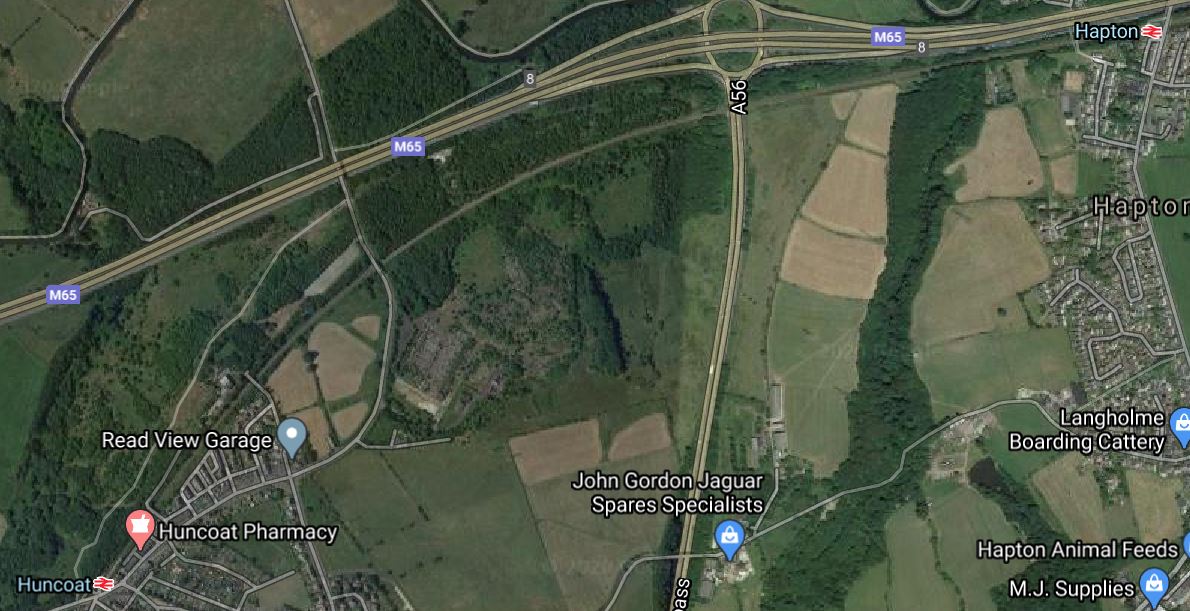
Note.
- Hapton station in the North-East corner of the map.
- Huncoat station in the South-West corner of the map.
- The East Lancashire Line running between the two stations.
- The M65 running across the top of the map.
- The A56 or Accrington bypass running North-South from the motorway junction at the top of the map.
Huncoat power station appears to have been in the South West corner of the rough-looking area, South of the M65 and the railway and West of the A56.
There is no Wikipedia entry for the demolished power station, but this page on The View From The North has some details and pictures.
It does appear to be a well connected site for a Rail Freight Terminal.
- There could be a direct connection to the motorway network.
- There is space for a connection with the East Lancashire Line, that would allow trains to access the interchange from both directions.
- Trains could go West to the Port of Liverpool and the West Coast Main Line via Preston.
- Trains could go East to Leeds and Yorkshire and on to the East Coast ports of Felixstowe, Hull, Immingham and Teesport.
- If the East Lancashire Line were to be electrified, electric haulage could be used.
The Rail Freight Terminal could be bigger than a hundred hectares.
Gauge Enhancement On TransPennine Routes Including Between Accrington And Todmorden
Consider
- Most freight trains passing through Hebden Bridge station use the route via Rochdale and Todmorden to get to and from Liverpool and the West.
- Few if any use the East Lancashire Line via Accrington.
- Some passenger trains do take the Accrington route.
- There are five tunnels between Accrington and the Todmorden Curve.
- The building of the Huncoat Rail Freight Terminal, must mean that trains between the Rail Freight Terminal and Leeds and the East would need to use the Calder Valley Line as far as the Todmorden Curve. or the East Lancashire Line to Colne for the new route.
As freight trains rarely seem to use the East Lancashire Line to the East of Accrington could it be that this section of track needs gauge enhancement?
But if this gauge enhancement were to be completed, that could give two routes between Huncoat Rail Freight Terminal and the East, for the largest freight trains.
Thoughts On The Project Management
It would appear that there are a series of sub-projects to be done.
- Perform gauge enhancement and route improvement on the East Lancashire Line between Rose Grove and Colne. This would include any doubling of the route, if that were to be done.
- Start building the link between Skipton and Colne.
- Start building the Huncoat Rail Freight Terminal.
- Finish building the link between Skipton and Colne.
- Start passenger and freight services between Skipton and Colne.
- Finish building the Huncoat Rail Freight Terminal.
- Perform gauge enhancement on the Calder Valley Line between Accrington and Todmorden.
My objectives would be.
- Open the Skipton and Colne route as a TransPennine diversion, as early as possible.
- Upgrade the East Lancashire Line between Rose Grove and Colne with minimum disruption.
- Open the Huncoat Rail Freight Terminal as early as possible.
- Create multiple freight routes to and from Huncoat Rail Freight Terminal.
Electrification would be a future aspiration.
Whither Drax?
Drax Gtroup and their flagship power station have a major environmental problem in that the power station is a large emitter of carbon dioxide.
They also run a lot of diesel locomotive hauled trains carrying biomass, fly ash, gypsum, limestone and other materials to and from Drax power station, which is on the Drax branch of the Pontefract Line.
- The Pontefract Line was built to serve the coalfields in the area.
- It runs between Leeds and Hull via Pontefract and Goole.
- It is not electrified, but it connects to the electrification at Leeds.
- In the East is has good connections to Cleethorpes, Goole, Grimsby, Hull and Immingham.
- The Port of Immingham is a major port, that is used by Drax to import biomass, which is hauled to the power station by diesel locomotives.
- The route between Drax and Immingham has been improved recently, by the addition of the North Doncaster chord.
- High Speed Two will run alongside the Pontefract Line on its approach to Leeds.
- Freight trains between Drax and Skipton use an electrified diversion South of Leeds via Armley, that avoids the need for freight trains to pass through Leeds station.
I can see that in a more favourable climate for electrification, that electrification of the Pontefract Line would be recommended.
Given, the environmental record of Drax, which is both good and bad, I would suspect they would like to see electrification of the Pontefract Line, as it would create a lower carbon route for biomass trains between Immingham and the power station.
A New Electrified TransPennine Route For Passengers And Freight
I sense that a grander plan might exist behind all my thoughts.
If the following routes were to be electrified.
- Preston and Skipton
- The Pontefract Line between Leeds and Hull.
- Knottingley and Immingham via Thorne
Hull and Liverpool would be connected for passenger electric trains and Liverpool and Immingham would be connected for freight.
Drax could also be on an electrified branch and they could say, they were hauling all their trains using renewable electricity. Marketing and environment are always important
Go Ahead For West Midlands Interchange Development
The title of this post, is the same as that of this article on Rail Technology Magazine.
This is the introductory paragraph.
Expansion for a new Strategic Rail Freight Interchange and other supporting infrastructure works near Junction 12 of the M6 motorway in South Staffordshire District has been given development consent.
This Google Map shows the location of the West Midlands Interchange.
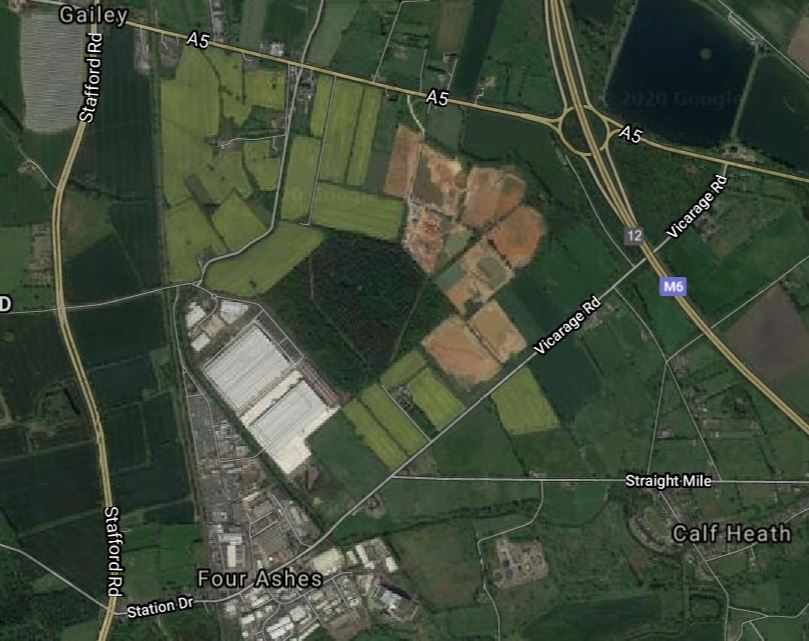
Note.
- Junction 12 of the M6, where it connects with the A5 is in the North-East corner of the map.
- The village of Four Ashes is in the South-West corner of the map.
- The Birmingham Loop of the West Coast Main Line runs North-South between Four Ashes and Gailey.
- The railway is double-track and electrified.
- There are typically about four passenger trains per hour (tph) in both directions along the railway.
The developers of the West Midlands interchange have ambitious plans according to this extract of their home page.
West Midlands Interchange is a proposed Strategic Rail Freight Interchange (SRFI) with warehousing and other associated development that would be built on land west of Junction 12 of the M6 in South Staffordshire.
West Midlands Interchange will be linked directly to the West Coast Main Line, one of the country’s principal rail freight routes, and will be well placed to serve the West Midlands, the Black Country, Staffordshire, Birmingham, the northern M6 corridor and parts of Warwickshire.
When built, it will provide up to 743,200 square metres (sq m) of new rail-served and rail-linked warehousing allowing the region’s important logistics industry to grow. The scheme will create 8,550 direct jobs boosting opportunities for people in South Staffordshire, the Black Country, the West Midlands and other surrounding areas.
As the railway is electrified, they also have the chance to use electric haulage for freight trains serving the interchange.
Class 319 Train Used In GB Railfreight Parcel Test At London Euston
The title of this post is the same as that of this article on Rail Advent.
This is the introductory paragraph.
GB Railfreight has used a Class 319 train during a successful trial of former commuter trains for express parcel delivery services.
Other points from the article.
- Standard roll-cages can be loaded and offloaded at most major stations.
- A substantial amount of cargo can be carried.
- GBRf is talking to the Government about deliveries to hospitals.
It should be noted that the Class 325 trains that are used to move goods for Royal Mail are based on Class 319 trains.
- Both trains are based on the legendary Mark 3 coach.
- There are sixteen of these Royal Mail trains.
- Each train is four cars.
- Each car can hold up to twelve tonnes.
- They are capable of 100 mph like the Class 319 trains.
- Class 319 trains are being converted into bi-mode Class 769 trains for use by Rail Operations Group as parcel trains.
As there are still at least fifty Class 319 trains still available for modification, will it mean a more will be converted into parcels trains?
DB Launches New Spanish-Anglo Freight Service
The title of this post is the same as that of this article on Rail Magazine.
This is the introductory paragraph.
A 72-hour freight service carrying essential hygiene, medical and food products from Spain to London has been launched by DB Cargo UK and sister company Transfesa Logistics.
These are some points made in the article.
- Trains will run between Valencia and Murcia in Spain and Barking in London.
- Obviously the Channel Tunnel and High Speed One, will be used.
I think in the coming days and months, we’ll see more services like this.
Ripple Lane Intermodal Terminal And Cross-Channel Freight Traffic
Wikipedia has a sub-section about Ripple Lane.
Some points from the sub-section.
- The terminal was developed by Ford to deliver parts from Europe to their massive Dagenham complex.
- It is now a base for various Continental services.
- Since 2009, there has been a refrigerated service from Valencia in Spain, which takes pallets back on the return journey.
Will the new Spanish service replace or augment the current one?
DHL Targets 10-day China – Europe Transit Time
The title of this post, is the same as that of this article on Railway Gazette.
A few points from the article.
- The route is 9,400 km long.
- The train goes through Kazakhstan, Russia, Belarus, Lithuania and Russia’s Kaliningrad exclave.
- Entry to the EU is at Braniewo in Poland.
- The current terminals are Xi’an in China and Hamburg and Neuss in Germany.
- Other proposed terminals include Budapest and Milan.
- Estimated transit time is 10-12 days, as opposed to the current 15-plus days.
I’ve actually been to the area around Braniewo, which before the Second World War was partly in Germany. I wrote Railways In North East Poland about my trip, which was mainly to see wildlife.
We also got to see the Russian border.




The tag Poland In Winter shows all the posts from that trip.
Will A Rail Link Be Built Between Pitsea And Ingatestone?
In Issue 903 of Rail Magazine, there is a long article, which is entitled Felixstowe: Is 47 Trains A Day Achievable?.
The article details a large number of improvements that could be carried out to attain this frequency.
This is an interesting paragraph.
If anything. long-term plans could entail the building of a new rail link between Pitsea and Ingatestone, so that London Gateway traffic can run via Ipswich instead of Stratford.
So could a rail link between Pitsea and Ingatestone stations be built and how would it be used?
The Route
If you look at a map, that shows Pitsea and Chelmsford, you’ll notice that the dual-carriageway A130 links the two places.
- At the Chelmsford end it joins the A12 at junction 17.
- At the Pitsea end it joins the A13 to the East of the town.
- Sections of the road appear to have three-lane carriageways.
- Much of the road has been improved in recent years.
I feel a lot of the route of the rail link could follow the A130, with the rail link running down the Western side of the road.
Use Of The Shenfield-Southend Line
The Shenfield-Southend Line could be used for part of the route.
- It already connects to the Great Eastern Main Line (GEML) at Shenfield, though a flying junction.
- There is no connection between the Shenfield-Southend Line and the GEML to Chelmsford and Ipswich.
- The Shenfield-Southend Line crosses the A130 in an area of farmland.
Between Shenfield and the A130 are two important stations Billericay and Wickford.
The Connection At Shenfield
This Google Map shows the junction between the GEML and the Shenfield-Southend Line.
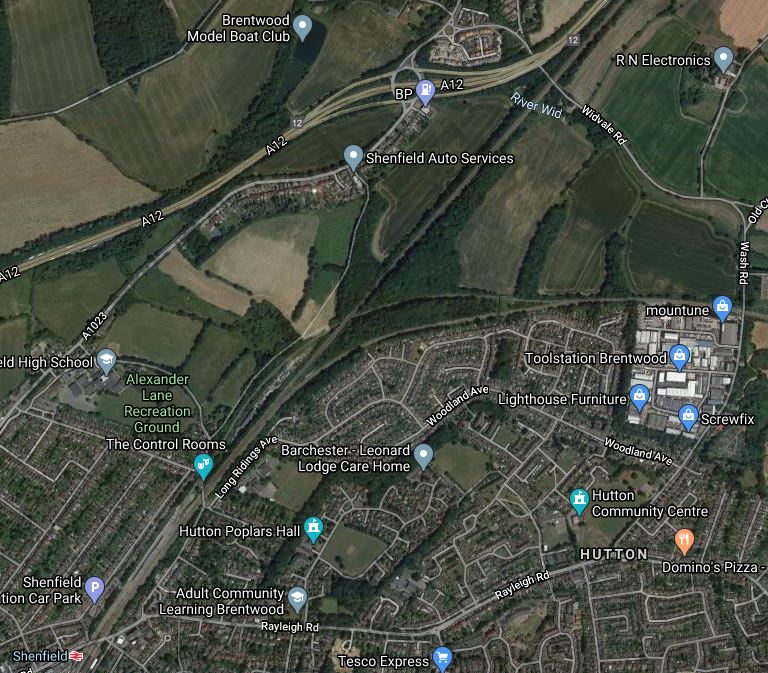
Note.
- Shenfield station is in the South-West corner of the map.
- The GEML goes straight in a North-Easterly direction to Ingatestone and Chelmsford.
- Ingatestone and Shenfield stations are about 3.5 miles apart.
- The Shenfield-Southend Line goes off to the East and connects to the GEML with a flying junction.
There would appear to be space to convert the flying junction into a full triangular junction by building chords, that allow access between the Shenfield-Southend Line and the GEML to Chelmsford.
Turning South At The A130
This Google Map shows where the Shenfield-Southend Line crosses the A130.
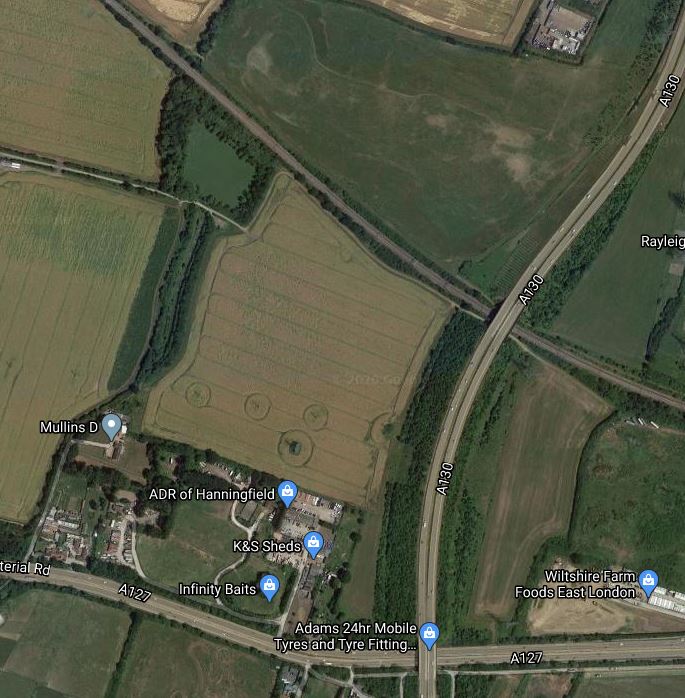
Note.
- The two major roads; the A130 and the A127 are clearly labelled.
- The Shenfield-Southend Line crosses the A130 from North-West to East.
- Billericay and Shenfield are to the North-West.
- Southend is to the East.
It looks like there is sufficient space to create a junction, which would allow trains to take a new rail line to and from the South, built alongside the A130.
The Connection At Pitsea Station
This Google Map shows the Southern section of the A130 that connects to the A13.
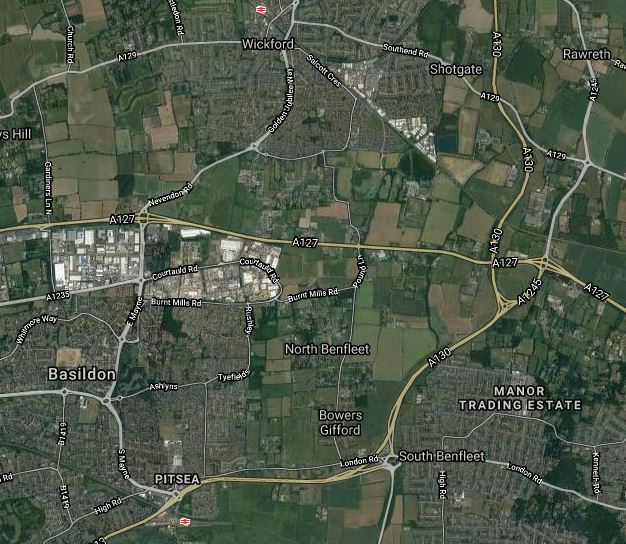
Note.
- Pitsea station is at the Southern side of the map.
- The A130 weaves its way North-South down the Eastern side of the map.
- The rail link could follow the A130.
The Google Map shows Pitsea station, the A13 and its junction with the A130.
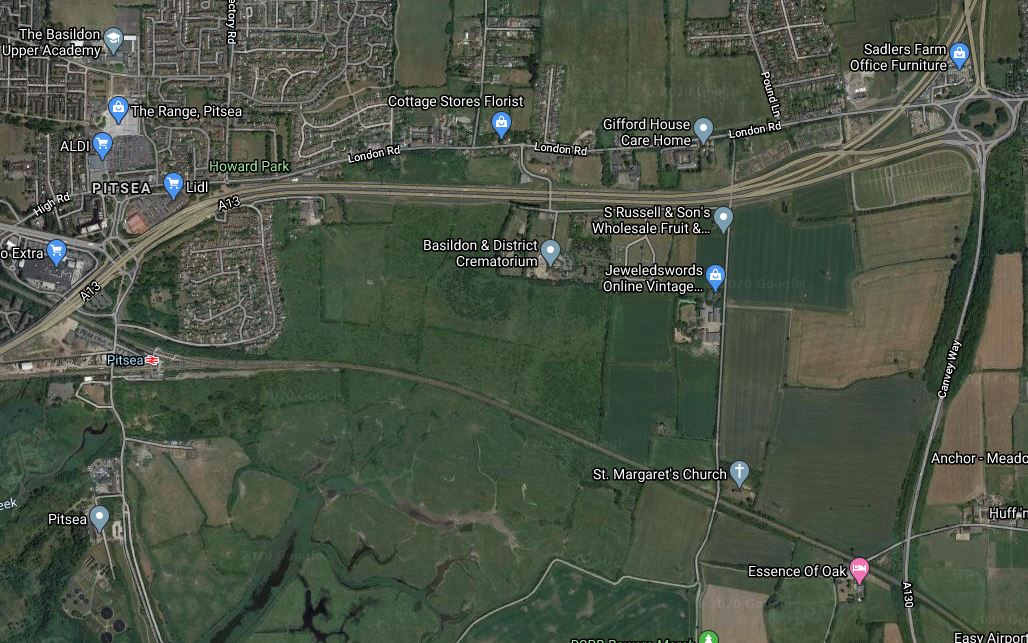
Note.
- The A13 going across the Northern side of the map.
- The A130 going down the Eastern side of the map.
- Pitsea station in the middle of the Western side of the map.
- The c2c railway between Pitsea and Southend Central stations going East from Pitsea station and passing to the South of St. Margaret’s Church.
It appears to me, that there would be enough space to build a full triangular junction between the rail link and the c2c railway.
A full triangular junction would enable trains to go between Chelmsford and all stations as far as Shoeburyness.
A Few Questions
These are a few questions.
Will Passenger Trains Use The Rail Link?
Consider.
- It would make it possible to create a direct train service that connected all the major towns in Essex; Colchester, Chelmsford and Southend.
- Chelmsford is the county town of Essex.
- Southend Central station has two West-facing bay platforms.
- Colchester station has a South-facing bay platform.
I think that the route must be built to perhaps allow an hourly CrossEssex service in both directions, at some date in the future.
Would There Be Any Stations On The Rail Link?
The route goes through Billericay and Wickford stations and also has a connection to the Crouch Valley Line.
How Long Is The Rail Link?
I estimate, it’s just under seventeen miles.
How Long Will Freight Trains Take Between Pitsea And Ingatestone?
The Felixstowe Branch is about twenty miles long and trains take a few minutes over the hour.
Will The Rail Link Be Single Or Double Track?
Despite the Covid-19 pandemic, there are still about a dozen trains going in and out of London Gateway on a typical day.
- This would be a train every ninety minutes in both directions on the rail link if they were all using it.
- London Gateway will expand.
- A passenger service on the rail link in the future, is a possibility.
- The Shenfield-Southend Line is double-track.
I feel that a single track railway would be short on capacity, so for preference, I’d build a double-track railway.
Will The Rail Link Be Electrified?
Consider.
- All passenger trains run by Greater Anglia and c2c to and from Southend are electric.
- Essex is a county where all rail lines are electrified, except for the spur that leads into London Gateway.
- The GEML and the lines to Southend have recently updated electrification.
- Freight trains can be hauled on the GEML by electric or bi-mode locomotives.
- Te section between the GEML and the A130 is already electrified.
It would be logical that the rail link should be electrified.
Thoughts About Capacity
Although a rai link between Pitsea and Ingatestone may be feasible, it doesn’t mean that it will be built.
- Will there be enough capacity across the Midlands or on the various routes to the North?
- Greater Anglia have ambitions and the trains to run more services.
- Would digital signalling on the GEML create extra capacity?
Extra Infrastructure
Coming Or Going?
I took the pictures of this lorry carrying concrete staircases in the Balls Pond Road.

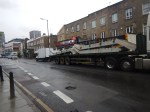
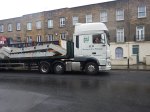
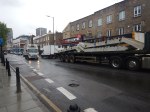
I like a good puzzle. So where were these three staircases going on a truck, that was obviously from Cornwall?
- They look to be very well-made, with a quality finish.
- Had they been made in Cornwall and were being delivered to a skyscraper in the City?
- Had they been made in East London and were being taken to Cornwall?
The truck was facing Highbury Corner, so would the second be the most likely?
On the other hand, Google found a company called Cornish Concrete Products at Bissoe, only a few miles from Redruth.
Varamis Plans Electric Freight To Carry Light Goods
The title of this post, is the same as that of an article in Issue 902 of Rail Magazine.
This is the introductory paragraph.
Freight trains using electric multiple units could be operating on the East Coast Main Line by the end of the year, in plans unveiled by Varamis Rail.
This is their promotional video.
From the video and the Rail Magazine article, the following can be ascertained.
The Route
From the video, the basic route is circular and the concept is explained in the article, by Phil Read; the Managing Director of Varamis Rail.
Our vision is to create a circular network around the UK via both the East Coast Main Line and West Coast Main Line, with a stop/go method of service delivery serving major towns and cities en route.
And we could move goods in both directions.
Longer term, there could be extensions to Bristol and South Wales and into East Anglia.
Note.
- From the video is looks like the main loop will start and finish in London.
- Trains on the main loop will call at Doncaster, Newcastle, Edinburgh, Glasgow, Carlisle, Manchester and Birmingham.
- Varamis have said they will stick to electrified lines.
I like the concept of the route.
- It covers a lot of the country.
- It can be easily extended.
- Extra stops could be easily added. Darlington, Leeds, Peterborough, Preston and Reading come to mind.
With dual-voltage trains, it could even be extended South of London.
The Trains And The Organisation
Varamis are certainly looking to keep the operation efficient and low-cost. This is said about the trains.
The plan is to remove all the internal furnishings in the umits we lease utilise them without altering any of the loading or dynamic characteristics that the trains had when formerly used as passenger trains. I’m in discussions with rolling stock leasing companies and the DfT at present to lease the trains.
The DfT owns all 40 Class 365 trains.
In addition, the following is said.
- Maintenance would be outsourced, with one of two likely companies.
- Operations Director will be appointed soon.
- Company headquarters would be in Doncaster.
- Varamis will employ all their own staff, including drivers, fitters and logistics operators.
A small point is that Phil Read has worked for the Rail Operations Group.
Class 365 Trains
Class 365 trains have the following characteristics.
- Four cars
- Up to three trains can be coupled together.
- 100 mph operating speed.
- Two pairs of wide double doors on the side of each car.
- They are not a train with a reputation for unreliability.
This is a picture of a Class 365 train.

Note.
- They could probably be converted to dual-voltage, by adding third-rail gear.
- The trains could probably be made available at short-notice.
The company talks about an end-on cross-transfer system at their hubs, where goods can be moved through the train.
I will be interested to see what this means, but I suspect it will give a quick and easy transfer of pallets of goods between trains and the trucks doing the local delivery.
Green Logistics
Varamis are marketing their services as Green Logistics.
Conclusion
As someone, who needed this sort of system in the early days of Metier to distribute new copies of the Artemis software, I think the service will fulfil a large need.
I said earlier that I like the concept of the route.
But thinking about it more, I suspect it can be very easily extended.
- Brighton, Portsmouth and Southampton could be served by dual-voltage trains.
- Could for instance a hub in Edinburgh, distribute pallets and parcels to and from the North of Scotland?
- Could bi-mode trains serve the towns and cities on the Midland Main Line?
- A connection to Heathrow would be very valuable.
A large proportion of the country could be connected.
If it existed now, would it help in the fight against COVID-19?
Short-Notice Spaghetti Trains Organised To get Pasta Across The Alps
The title of this post is the same as that of this article on Railway Gazette.
This is the introductory paragraph.
DB Schenker has organised the transport of several hundred tonnes of pasta by rail from Italy to Germany, enabling 650 Aldi supermarkets to replenish supplies which had been depleted by customers stocking up during the coronavirus pandemic.
I can’t help feeling that this story pays homage to Richard Dimbleby‘s classic April Fool story about the spaghetti harvest in Switzerland.
 The Anonymous Widower