Digital Signalling Implications For North London
As I write this post, two big digital signalling projects are ongoing.
Four Lines Modernisation
This project is described in this document on the TfL web site.
This video is from that document.
The TfL web site says this about the new signalling system.
Work to install a new signalling and control system began in summer 2016. This will eventually allow the trains to be driven automatically, with a train operator in the cab to open and close the doors. The train operator will be responsible for managing customer information and safety.
Similar technology introduced in recent years on the Jubilee and Northern lines improved performance. The new signalling system allows trains to be run closer together, meaning a more frequent service and shorter waiting times, allowing more people to be carried. This new technology will enable us to reduce delays and improve reliability.
The programme will allow us to operate 32 trains per hour, a 33% increase in peak-hour capacity. Installation work will require some line closures.
So it looks that by around 2023, there will be a lot more trains running on the Circle, District, Hammersmith & City and Metropolitan Lines.
The Four Lines Modernisation will have implications for other services.
North London Line
Between Gunnersbury and Richmond stations, the District Line and the North London Line share track, stations and signalling.
This map from carto.metro.free.fr shows the complexity of the tracks around Gunnersbury station.

Obviously, whatever signalling is installed, it must be capable of handling both District and North London Line trains at Gunnersbury Junction and to and from Richmond.
Metropolitan Line To Amersham
Between Harrow-on-the-Hill and Amersham stations, the Metropolitan Line and the London-Aylesbury Line, share track, stations and signalling.
This map from carto.metro.free.fr shows the lines at Harrow-on-the-Hill station.
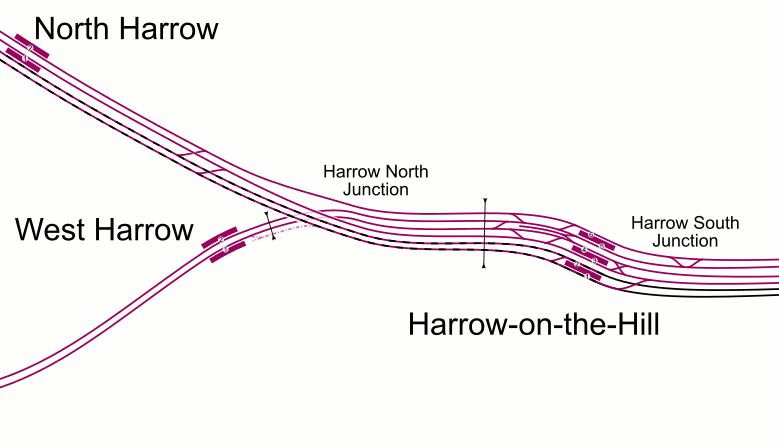
and this one shows the layout at Amersham station.
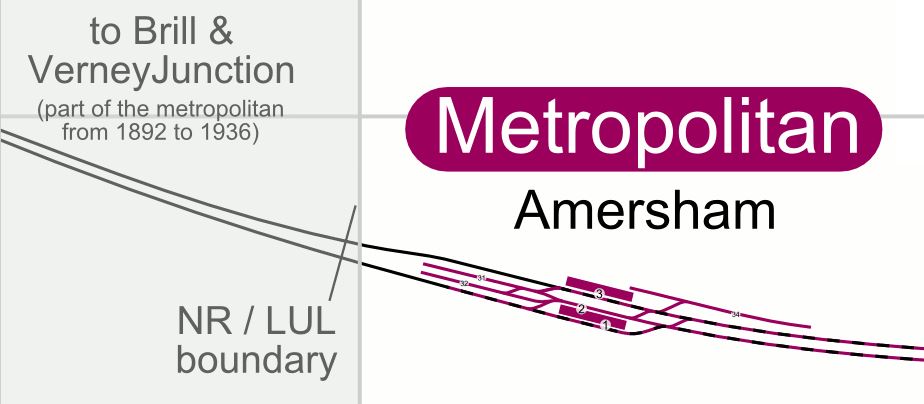
The solution for this section of track is detailed in the Wikipedia entry for the Metropolitan Line, where this is said.
Trackside signals with automatic train protection (ATP) will remain on the line north of Harrow-on-the-Hill, shared with Chiltern Railways DMUs
It is a solution, but will it last for ever?
And what about the Croxley Rail Link, if that is ever built?
Freight Trains Are Going Digital
This page on the Network Rail web site is entitled Freight Trains In Britain To Be Upgraded With Delay-Busting Digital Technology In Multi-Million Pound Deal.
The article says that all 750 freight locomotives will be upgraded.
This project must have implications for the freight services that run across North London on the Gospel Oak to Barking Line and North London Line, especially if these lines were in the future to be digitally signalled.
A Digitally-Signalled Bakerloo Line
At some tie in the next few years a decision will be made about what to do with the Bakerloo Line.
- It will be extended to Lewisham.
- It will receive new trains.
- It will be left as it is.
Options one and two would probably involve new digital signalling.
Addition of digital signalling to the Bakerloo Line would mean implications for the Watford DC Line, with which the Bakerloo Line shares the track between Queens Park and Harrow & Wealdstone stations.
Conclusion
I am drawn to the conclusion, that digital signalling in North London could bring capacity benefits.
Colne To Skipton Rail Line Re-Opening Campaign Moves Forwards
The title of this post, is the same as that of this article in the Lancashire Telegraph.
This is the first paragraph.
A meeting at the House of Commons hosted by Pendle MP Andrew Stephenson and his Labour counterpart for Keighley John Grogan convened senior officials from the Department of Transport (DfT), Transport for the North (TfN), Network Rail and commercial companies with an interest in East-West rail links.
Like many at the meeting, I feel very strongly that this link should be built.
There are obviously local reasons, like better passenger services between the conurbations of Blackburn/Accrington/Burnley and Leeds/Bradford, but there is something far more important.
Extra Train Paths Across The Pennines
Currently, trains take about twenty minutes between Rose Grove and Colne stations, over the mainly single track line.
I think it would be possible for experts to design a railway between Rose grove and Skipton stations via Colne, that would offer paths for three trains per hour (tph) across the Pennines in both directions. It might even be possible to accommodate four tph, using a combination of passing loops and digital signalling.
It should be noted that currently, the traffic through Accrington on the Calder Valley Line, which is to the West of Rose Grove station is around three tph in both directions. As the route is double-track, with modern trains and modern signalling, surely a higher frequency can be achieved.
These extra paths would be invaluable during the upgrading of the main TransPennine routes from Leeds to Manchester via Huddersfield.
I have some questions about the link.
Should The Link Be Double-Track?
Given that it will probably be difficult to put a double track on the Bank Top Viaduct over Burnley, I feel that to get the needed extra capacity, where it is possible to squeeze in a double-track, this should be done.
Should The Link Be Electrified?
Operationally, this would probably be preferable, but there are reasons why it could be difficult.
- There are a lot of quality stone bridges over all routes in the area.
- The heritage lobby might object to gantries marching across the Pennines.
- Network Rail’s abysmal performance on installing electrification.
It would also be sensible to electrify between Preston and Rose Grove stations, which would add substantially to the cost.
Passenger services wouldn’t be too much of a problem, as I am fairly certain that hydrogen-powered or battery trains could be used. The four-car Class 321 Hydrogen would probably by ideal.
Freight trains are probably better under electric power, rather than the awful Class 66 locomotives. Especially, if freight trains were run in the middle of the night.
I think the budget will decide on electrification.
Conclusion
I feel it is imperative, that to reduce the chaos of the TransPennine upgrade, work should start on the creation of the Skipton to Colne Link immediately.
DB Says Innovative Freight Train Project ‘Very Promising’ So Far
The title of this post is the same as that of this article in Global Rail News.
This is the first paragraph.
A project to design innovative freight wagons, which is being financed by Germany’s Federal Ministry of Transport and Digital Infrastructure (BMVI), DB Cargo and VTG, is producing ‘very promising’ results.
The article is worth reading in full and in my mind it could be important in the development of efficient and reliable freight trains.
I remember in the 1960s, British Rail were trying to run faster freight trains and a lot of four-wheel wagons kept derailing.
Research at Derby using computer simulation solved the problem and went on to lead to a greater understanding of the dynamics of steel wheel on steel rail.
I do know that British Rail Research had one of the best tools for this job; a PACE 231-R analogue computer.

This is the one, that I worked on at ICI.
They were a powerful computer, which were capable of solving a hundred simultaneous differential equations.
They were late 1950s technology, based mainly on electronic valves, that responded to tender loving care.
But two of them working together, did the dynamic calculations for the moon landings, when linked to the digital computers of an Apollo capsule and lander.
On Apollo 13, when Jack Swigert said “Houston we have problem”, it was these machines, that were used to find a way to bring everyone home.
And the rest, as they say is history!
In my view, after over fifty years in computing, the rescue of Apollo 13 was the greatest piece of computing ever done with an electronic machine.
I’d love to know, whether the superb dynamics of the Mark 3 coach, are down to the work that was done on British Rail’s PACE 231-R
The second paragraph of the Global Rail News article has this phrase.
feature new digital systems which optimise handling.
Does this mean the Germans are worried about the handling?
I do sometimes wonder, if dynamic systems are best analysed using analogue computers and the demise of the technology means the same problems keep returning in different guises.
There can’t be many of us left, who’ve used an analogue computer seriously.
Peak District Freight Sidings Get £18m Network Rail Boost
The title of this post is the same as this article on Rail Technology Magazine.
This Google Map shows the spa town of Buxton and the surrounding countryside.
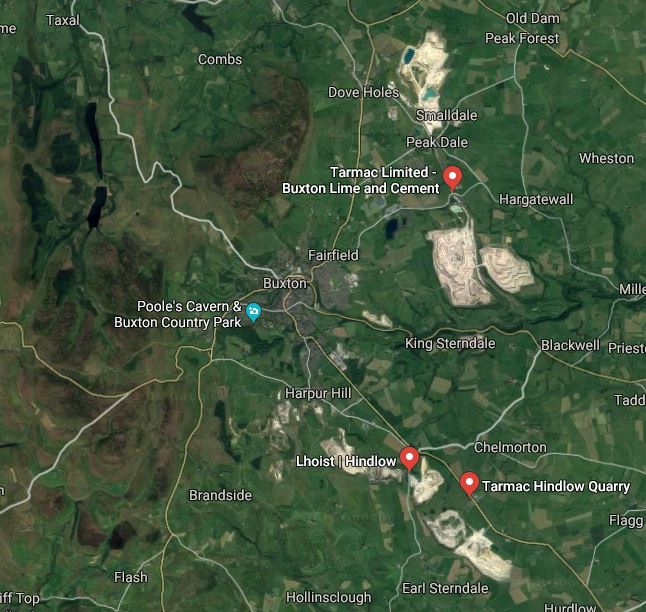
One of the towns major industries is quarrying and the white areas to the East of the town are the quarries. The large quarry at the top of the map is Tunstead Quarry, which produces 5.5 million tonnes of limestone a year.
This paragraph from Wikipedia, sums up the uses of limestone.
Limestone has numerous uses: as a building material, an essential component of concrete (Portland cement), as aggregate for the base of roads, as white pigment or filler in products such as toothpaste or paints, as a chemical feedstock for the production of lime, as a soil conditioner, or as a popular decorative addition to rock gardens.
So how does all this limestone get to where it is needed?
This map from this document on the Network Rail web site, shows the rail lines to the quarries

Note the two freight lines.
- The Great Rocks Freight Line goes between a junction near Chinley station on the Hope Valley Line to Buxton via Tunstead Quarry and is used to take heavy trains into and out of the area.
- The Quarry Freight Line connects other quarries to Buxton.
Trains going to and from the quarries on the Quarry Freight Line must reverse in sidings at Buxton to access the Great Rocks Freight Line.
This Google Map shows the various lines at Buxton.
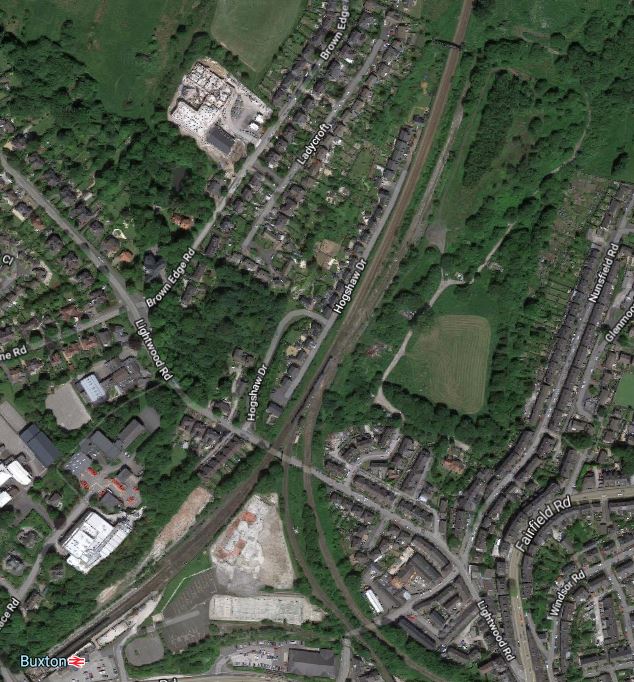
Buxton station is in the South West corner of the map and the Buxton Line to Manchester goes out at the North.
The two freight lines come to Buxton from the South East and join in the sidings that run along the Buxton Line.
I took these pictures in March 2017.
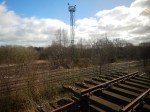
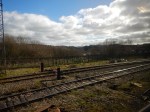
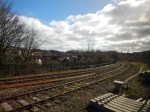
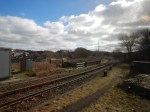

They show the sidings, as my train approached Buxton station.
It would be desirable to be able to run longer trains to and from Hindlow and Dowlow quaries on the Quarry Freight Line, but these sidings are not long enough to reverse the longer trains.
The £18million project will lengthen the sidings, so trains can consist of 26 instead of 18 wagons.
- Each train will transport 2,500 tonnes of materials.
- Each train will take 76 lorry loads from the roads.
The longer trains will mean that no new train paths will be needed on the crowded rail network.
Conclusion
This is only a small project, but it will increase freight capacity to and from Hindlow and Dowlow quarries by forty-four percent.
The Stone Arch Railway Bridges Of Scotland
There are a lot of stone arch railway bridges in the UK, but they do seem to more numerous in Scotland, than in England.
These pictures show a selection of bridges on the Borders Railway.







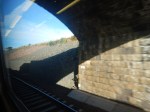
I counted to about fifteen between Edinburgh Waverley and Galashiels stations.
There were probably about an equal number of bridges where a stone arch bridge had been replaced by a modern concrete structure, like this one.
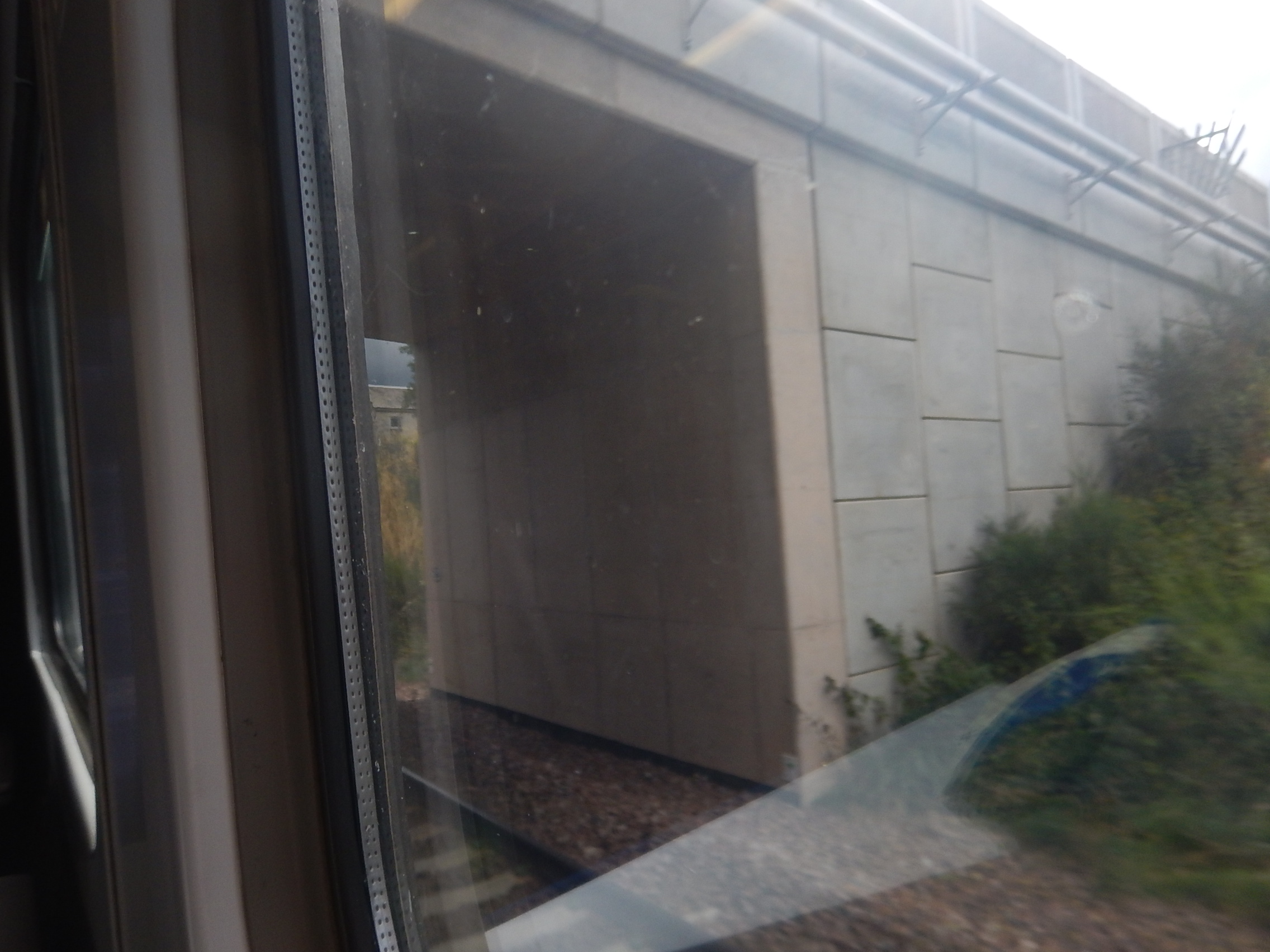
They’ll probably last a thousand years, but they lack the charm of the stone arch bridges.
These pictures show a selection of bridges on the Busby Railway between Glasgow Central and East Kilbride stations.

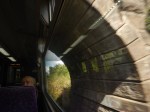


These pictures show a selection of the many bridges between Aberdeen and Montrose stations on the Edinburgh – Aberdeen Line.


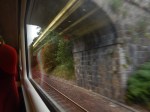
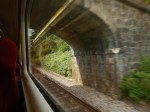




I took pictures of at least twenty.
Freight Trains
Freight trains, especially those with the larger containers need a loading gauge, that is big enough to accept them.
The loading gauge in the UK, is summed up by these two sentences from Wikipedia.
Great Britain has (in general) the most restrictive loading gauge (relative to track gauge) in the world. This is a legacy of the British railway network being the world’s oldest, and having been built by a plethora of different private companies, each with different standards for the width and height of trains.
These are the commonest gauges.
- W6a: Available over the majority of the British rail network.
W8: Allows standard 2.6 m (8 ft 6 in) high shipping containers to be carried on standard wagons.
W10: Allows 2.9 m (9 ft 6 in) high Hi-Cube shipping containers to be carried on standard wagons and also allows 2.5 m (8 ft 2 in) wide Euro shipping containers.
W12: Slightly wider than W10 at 2.6 m (8 ft 6 in) to accommodate refrigerated containers.
W12 is recommended clearance for new structures, such as bridges and tunnels
The Borders Railway appears to have been built to at least W8, so it could handle standard freight containers.
But the line doesn’t carry freight!
On the other hand, I suspect the following were considered, when designing the Borders Railway.
- Network Rail and rail maintenance companies, may need to bring some large rail-mounted equipment along the line for regular or emergency maintenance.
- If the line is extended to Carlisle, the route could be used as a diversion for freight trains, if the West Coast Main Line is closed, due to weather or engineering works.
- There may be a need to use the Borders Railway to extract timber from the forests of the Borders.
The need for freight on the Borders Railway, explains why there are so many new overbridges.
Electrification
Electrification with overhead wires needs extra clearance.
It looks to me, that the Borders Railway has been given enough clearance for future electrification.
Problems With EGIP
Electrification under the Edinburgh to Glasgow Improvement Program (EGIP), proved to be difficult.
It wasn’t helped by the standards changing half-way through the project and the numerous bridges and tunnels that had to be rebuilt.
An important route like Edinburgh to Glasgow probably needs to be fully-electrified, but the difficulties encountered and those in Lancashire have encouraged Network Rail and the engineering consultants to look at other methods of electrifying lines in the UK.
Electrification Between Edinburgh And Aberdeen
I doubt this will ever happen in a conventional manner.
- Would electrification of the Forth Bridge and Tay Rail Bridge be allowed?
- The disruption of rebuilding the stone bridges would be enormous.
- The line only has a maximum speed of 100 mph.
Diesel and alternative power sources like hydrogen will be able to maintain the fastest speeds, that are possible on the line.
Money would probably give better value, if it were to be used to increase line speed.
Opposition To Rebuilding Bridges
This article on Rail Technology Magazine is entitled Network Rail Electrification Plans Stalled After Council Rejects Bridge Removal Bid.
This is first paragraph.
Campaigners are celebrating after plans from Network Rail to demolish a bridge as part of its electrification scheme were rejected by a local council.
The bridge in question is a Grade II listed overbridge at Steventon in Oxfordshire.
It is not unlike those in Scotland, that are shown in my pictures.
In the 1960s, British Rail would have just blown it up and replaced it with a concrete monstrosity.
I am not advocating a return to this policy, but Network Rail has a problem at Steventon, that they need to fully electrify the line, if electric trains are to use the route on electric power, rather than using environmentally-unfriendly diesel power.
Since the new Class 800 trains for the route were designed and ordered, the technology has moved on.
In South Wales, discontinuous electrification and trains with a battery capability will be used.
Conclusion
Scotland and other parts of the UK, like the Pennines and in the valleys of South Wales, have a serious problem with the way the Victorians built our railways.
\development of the UK rail network with electrification and an enhanced freight capability needs to be thought out carefully and with great ingenuity.
Poland Investigates Use Of Hydrogen Fuel For Rail Freight
The title of this post is the same as that of this article in the International Railway Journal.
This first paragraph, outlines the project.
Polish coal mining company JSW and national rail freight operator PKP Cargo have agreed to cooperate to research, analyse and possibly produce new types of hydrogen-powered freight wagons and shunting locomotives.
Note that one of the collaborating companies is a coal company.
Statements later in the article indicate that JSW can create commercial quantities of hydrogen, as a by-product of making coke.
Some of us of a certain age, still remember coal gas, which was replaced by natural gas from the North Sea in the 1970s.
It looks like Poland are still using the same process to obtain coke and probably other products like coal tar, sulphur and ammonia.
According to Wikipedia, UK coal gas had the following composition.
- Hydrogen 50%
- Methane 35%
- Carbon monoxide 10%
- Ethylene 5%
It was one of the suicide methods of choice for the unhappily married. I don’t miss the foul stuff, with its poisonous carbon monoxide.
But as you can see, it does have a high percentage of hydrogen!
Conclusion
I’m not a fan of using coal gas, but these two Polish companies are another group investigating the use of hydrogen as a method of powering trains and other rail vehicles.
The New Trimley Freight Loop And Trimley Station
Felixstowe Port is the UK’s largest container port and it generates a lot of freight traffic on the Felixstowe Branch Line.
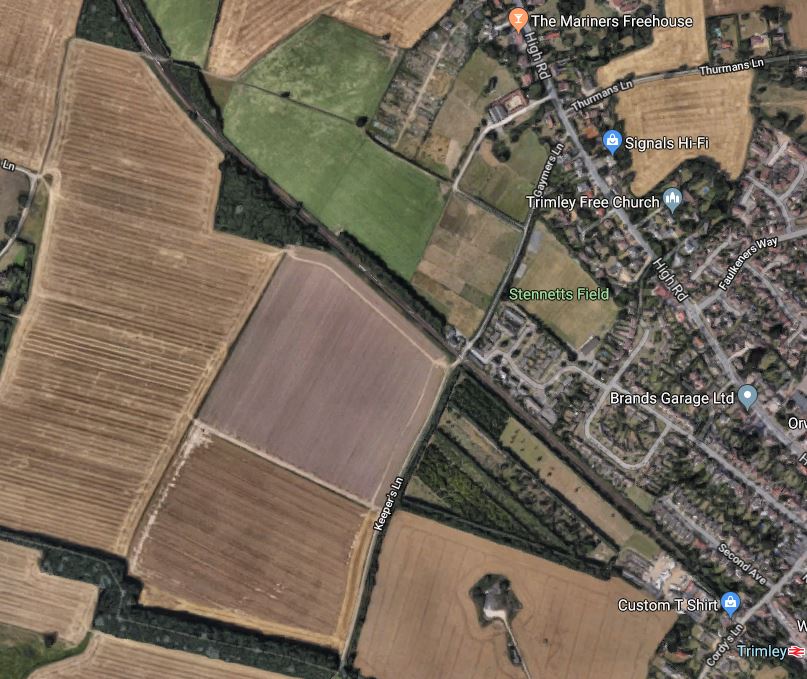
So a 1.4 km. loop is being added to the line at Trimley to enable more freight trains to enter and leave the port.
I took these pictures as I went to and from Trimley station.


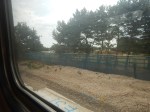
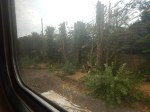


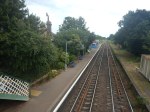
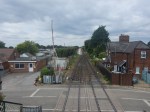



This Google Map shows the section of line, that will effectively be doubled.
I do have a few thoughts on various issues.
How Many Extra Freight Trains Will Be Possible?
This page on the Network Rail web site, is entitled Felixstowe Branch Line Works To Unlock More Freight And More Reliable Passenger Services.
This is said.
The work on the branch line in this area will support up to 10 additional trains in each direction to move goods to and from the Port of Felixstowe.
I assume the frequency is in trains per day.
I would assume that with careful scheduling of the freight trains, one train per hour (tph) will be able to move reliably to and from each of the two rail freight terminals at the Port.
There are certainly upwards of thirty scheduled trains per day to and from the Port at the present time, so another ten will obviously need the ability to run two tph both ways for most of the day.
Is The Loop Long Enough?
Network Rail are working towards the UK network being able to handle freight trains up to a maximum length of 775 metres.
At a length of 1.4 km, the loop may not be long enough to accommodate two maximum length trains, if perhaps something goes wrong on the Great Eastern Main Line, like a track or signalling failure.
I would hope Network Rail have done their track planning!
Passenger Services
The Network Rail web page implies that passenger services will be more reliable.
So how would a freight loop improve passenger services?
I suspect that just as the number of freight paths each way will be a reliable two in every hour, the number of passenger paths will also be doubled.
The second path in the hour would be useful for two reasons.
- If say there was a train or signalling failure, then the service can be recovered once the fault is fixed using the second path.
- If demand on the branch were to increase substantially or a boost was needed for a special event, Greater Anglia could put on a second service.
Greater Anglia have ordered 38 Class 755 trains and they will be running direct routes to five destinations from Ipswich, so I suspect the operator could station a spare train at Ipswich to deal with disruptions, like the inevitable level crossing accidents that happen in East Anglia.
Will The Felixstowe Branch Line Ever Be Electrified?
This picture is from the Network Rail web page.
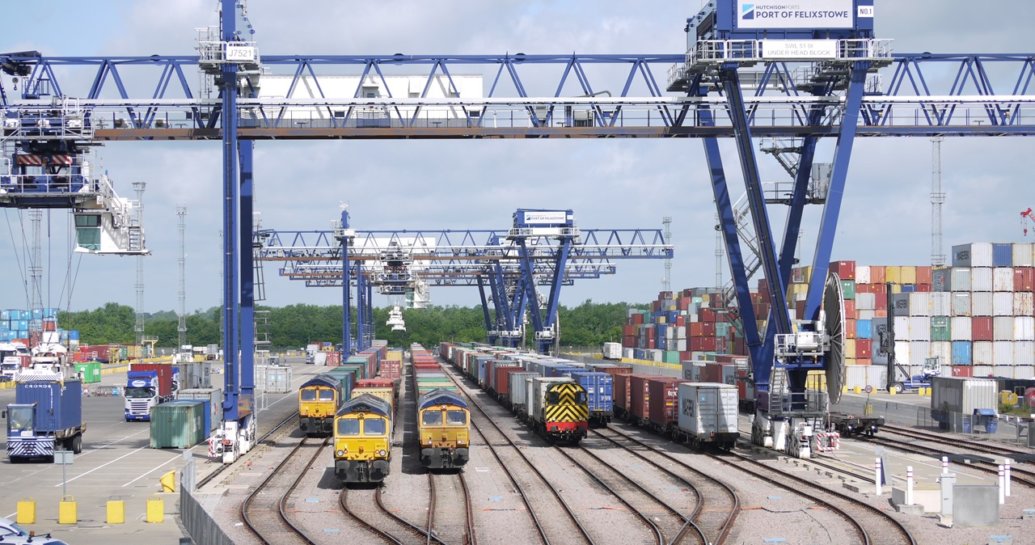
It illustrates why ports are not keen to electrify.
Containers do get dropped and a single mistake by a crane driver or the controlling automation could shut the rail terminal.
Class 66 locomotives may be an environmental disaster, but they are an affordable and reliable locomotive for ports and freight operators.
New locomotive types like the Class 88 locomotive are being ordered, which could work a port without electrification and change to and from electrification at a safe distance outside the port. The Class 88 locomotives can even do this at line speed.
There would also be no point in electrifying the Felixstowe branch line without electrifying the route all the way between Felixstowe and Nuneaton, which is the route a lot of freight trains take.
I think it is more likely, that innovative locomotive engineers will design a locomotive capable of pulling the longest trains on electricity or diesel, efficiently across the country. After all, using large environmentally unfriendly diesel locomotives is not a problem confined to the UK, so there are millions to be made, by designing the right locomotive for today.
Piggy-Back Freight At Novara Station
Novara station is on a main rail freight route and I saw a couple of trains carrying trucks go through.
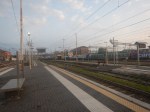
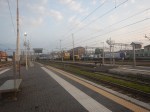
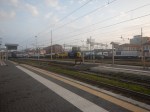
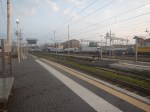
There were certainly a lot of wagons going through. Note the passenger coach behind the locomotive.
I suspect the trains were using the Alpine Rolling Highway, which is described like this in Wikipedia.
The Alpine rolling highway is a combined transport service, in the form of a rolling highway on special wagons ravelling a distance of 175 km between France and Italy by the Mont Cenis Tunnel (aka Fréjus rail tunnel).
Some might think, that we should use a rolling highway from the Channel Tunnel to the North of England and Scotland.
The reason we don’t is that the loading gauge on the routes to the North is just too small.
A Hydrogen-Powered Locomotive
If Alstom’s ventures in Germany and the UK with hydrogen-powered trains, are successful, I don’t think it will be long before engineers start thinking about a hydrogen-powered locomotive.
Consider some of the various locomotives used in the UK.
- Class 66 – Diesel – 2,500 kW – Over 400 in service
- Class 67 – Diesel – 2,400 kW – 30 in service
- Class 68 – Diesel – 2,800 kW – 34 in service
- Class 70 – Diesel – 2,800 kW – 37 in service
- Class 88 – Diesel – 700 kW – Electric – 4,000 kW – 10 in service
- Class 90 – Electric – 3,700 kW – 50 produced.
- Class 91 – Electric – 4,800 kW – 31 produced
- Class 92 – Electric – 5.000 kW – 46 produced.
Note.
- Many of the diesel locomotives, like the Class 66, don’t meet the latest emission regulations.
- Class 66 locomotives spent a lot of time pulling freight trains on electrified lines.
- The Class 90 electric locomotives are getting old and need careful maintenance.
- The Rail Minister, Jo Johnson, would like to see diesel power on UK railways gone by 2040.
I have not included some of the heritage locomotives, that are regularly seen on the UK rail network pulling freight.
This picture shows a pair of Class 86 locomotives hauling a freight train through Hackney Wick station.
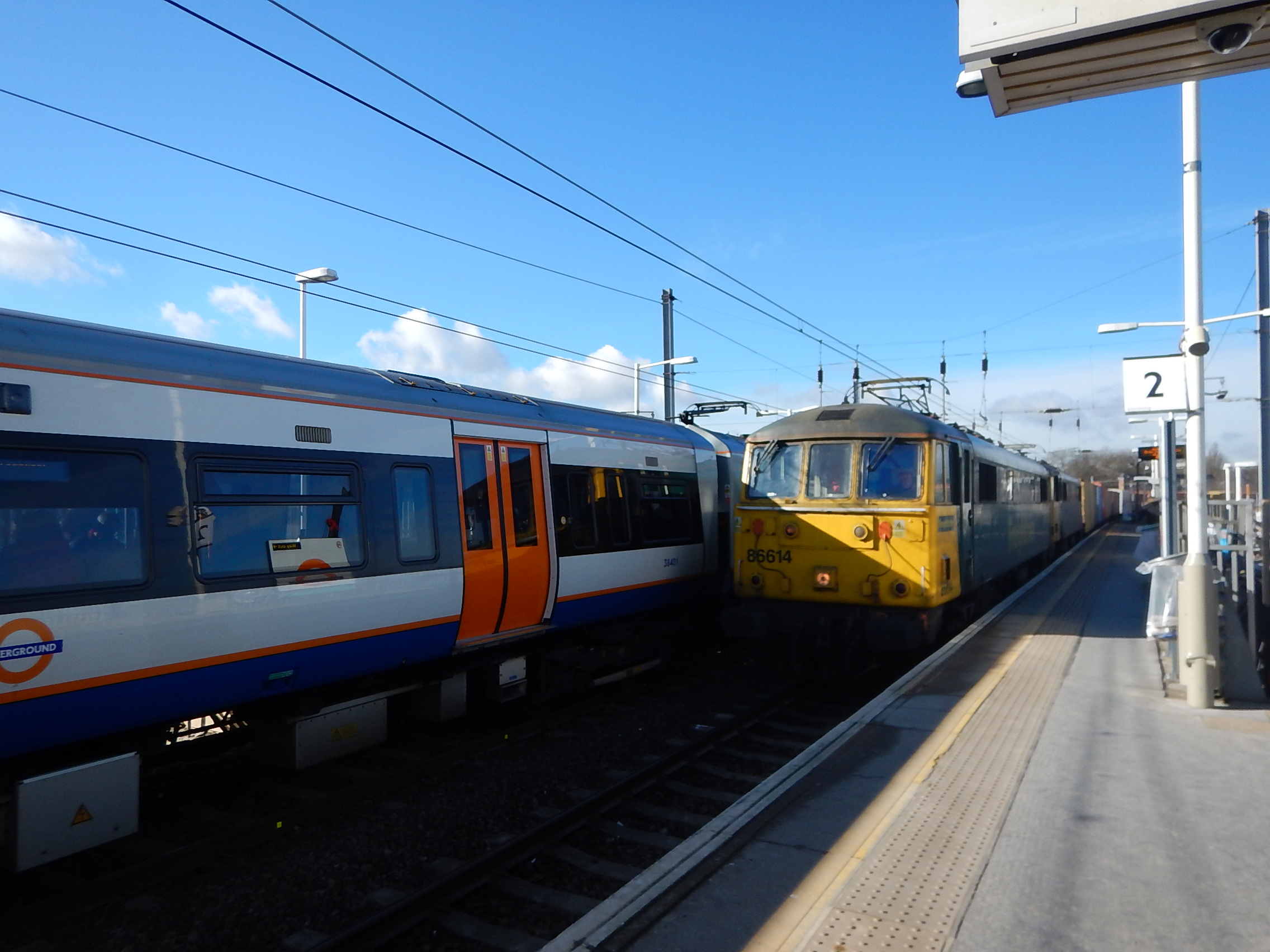
These two Class 86 locomotives date from the mid-1960s. But they do have 2,700 kW of power. Each!
According to Wikipedia, fourteen of Freightliner‘s thirty Class 86 locomotives are still in regular use.
Not only is this a tribute to 1960s engineering, but it does show that there is a shortage of suitable locomotives in the UK.
So could a modern environmentally-friendly locomotive be developed to fill the gap?
A Look At The Class 88 Locomotive
There could be a clue as to what could be a useful power output in the design of the Class 88 locomotive.
- These are a modern design from Shadler that entered service in 2017.
- They have a power output of 4,000 kW from electricity.
- They have a power output of 700kW from diesel.
- They can switch between power sources automatically.
- They can haul passenger trains, as well as heavy freight trains.
- They comply with Euro III B emission limits.
Did Direct Rail Services make sure they got a correctly-sized locomotive with the right capabilities?
They obviously find the diesel Class 68 locomotive to their liking, as they have bought over thirty.
So they probably knew very well, the sort of power that they would need from a dual-mode electro-diesel locomotive.
On electricity, the Class 88 locomotive is more powerful than a Class 90 electric locomotive, which commonly haul heavy freight trains on the electrified network.
In this article in Rail Magazine, the following is said about Class 88 locomotives, operating from Preston to Glasgow.
When hauling the maximum permitted load of 1,536 tonnes on the 1 in 75 banks on this route, Class 88 has a balancing speed of 34mph in electric mode or 5mph in diesel mode.
This shows how a well-delivered 700 kW, isn’t that inadequate.
I suspect that there is sufficient power to bring a heavy freight train out of Felixstowe and the other ports without electrification.
So perhaps, we should take the specification of a Class 88 train, as a starting point for the specification of a proposed hydrogen locomotive?
Possible Routes And Duties
There are also some specific problems associated with various routes and duties, where the current UK fleet of locomotives are used.
InterCity 225 Trains
There are currently thirty-one InterCity 225 trains, running on the East Coast Main Line.
- They are hauled by a 4,800 kW Class 91 electric locomotive.
- The trains consist of nine Mark 4 coaches and a driving van trailer.
- The trains were designed for 140 mph, but normally run at 125 mph.
- The trains have a capacity of over five hundred passengers.
- The trains could be made to meet all proposed access regulations for those with reduced mobility, with not a great deal of expensive work.
- Most of the trains will be replaced by Class 800 trains in the next couple of years.
- The trains are owned by Eversholt Rail Group, who are gaining a reputation for innovation.
The trains could probably give a few more years of service.
One suggestion, that has been made, would be to run the trains on the Midland Main Line.
- Sections of the route allow running at 125 mph.
- The route needs an urgent replacement for InterCity 125 trains.
- The route is only to be electrified as far as Kettering and Corby.
So an alternative and powerful locomotive would be needed, that could run on both lines with and without electrification.
The Class 91 locomotives are powerful beasts running on electricity, but with careful calculations, I’m sure that the power needed on lines with and without wires should be known.
The trains might also be formed of less coaches and selective electrification could be used in stations to accelerate the trains.
Note that accelerating the train to 125 mph, will be the major use of electricity. Hence, electrified stations would be welcome.
Expect some innovative proposals to use Mark 4 coaches from the InterCity 225 on the Midland Main Line.
Initially, could two Class 88 locomotives working in push-pull mode, handle say six Mark 4 coaches between London and Derby, Nottingham and Sheffield?
Who knows? But there are probably teams of engineers working away to create plausible solutions for the bidders for the new East Midlands Franchise, which will be awarded in April 2019.
Class 66 Locomotive Replacement
Because of their number, you see Class 66 locomotives everywhere on the UK network.
- They haul long inter-modal freight trains.
- They haul freight into and out of docks like Felixstowe, that are without electrification.
- They haul engineering trains.
- They are often seen hauling trains using diesel power on electrified lines.
But they are one of the most environmentally-unfriendly of diesel trains, which don’t meet the latest emission regulations.
How long before residents and rail passengers, start to complain about these locomotives, where electric haulage is possible?
I believe there is an increasingly urgent need for a go-anywhere replacement for the Class 66 locomotive.
It would appear, that the Class 88 locomotive, was specified so it can take over some of the duties of a Class 66 locomotive,
Could this see more orders for the Stadler locomotive?
I also believe that we could see other types of locomotive built to replace the Class 66 locomotive.
We might even see a locomotive with a lower power rating able to use electric or hydrogen power for work with all the smaller trains, that Class 66 locomotives haul.
Hydrogen Instead Of Diesel
The 700 kW diesel engine in a Class 88 locomotive is a Caterpillar C27, which drives an ABB alternator.
The engine alone weighs three tonnes.
By comparison Ballard make a hydrogen fuel cell that has an output of 100 kW, for a weight of 385 Kg.
This gives a weight of 2.7 tonnes for an output of 700 kW.
There will need to be a substantial battery. I estimate that a 500 kWh battery will weigh about eight tonnes.
On balance, the hydrogen-powered locomotive will probably be heavier than a diesel one, but it will have environmental advantages.
But with good design, I do think that a locomotive with similar performance to a Class 88 can be produced.
It might need to be longer or articulated and have more axles, to cope with extra weight.
Conclusion
I am led to the belief that a hydrogen-powered locomotive with sufficient power is possible.
They may be able to handle a lot of the duties of Class 66 locomotives, but I doubt they would be powerful enough for hauling full rakes of Mark 4 coaches.
It will be interesting to see, what solutions are proposed to solve the forthcoming rolling stock shortage on the Midland Main Line.
£250m Bypass Will Destroy Woodland
The title of this post, is the same as that of an article in today’s copy of The Times.
This is the first paragraph.
A four-mile bypass will be built partly in the South Downs National Park under a plan that conservation groups fear will set a precedent for development in other protected areas.
This map shows the route of the proposed bypass.
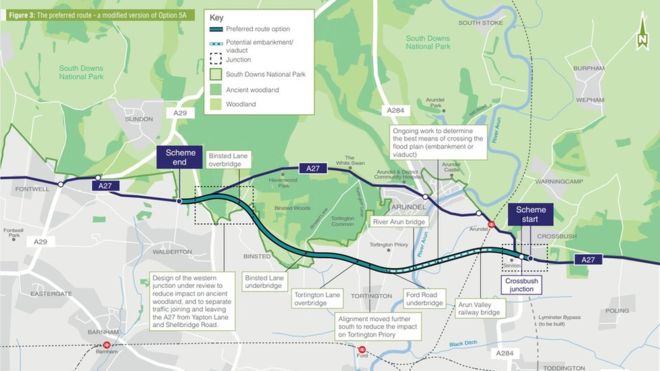
The route may be the best solution, but I believe we need to be more radical.
Overcrowded and inadequate roads exist all along the South Coast of England and in many other scenic places in the UK.
I think we need to develop a philosophy to solve the problems of roads in these crowded places.
Building a four-mile bypass at Arundel, may be needed, but we should do many other things to ease traffic congestion and improve transport capacity.
So what do I believe we should do?
We could introduce negative measures like road pricing or other restrictions, but I believe there are positive things we could do.
Broadband
You might think, what has broadband got to do with reducing the need to build roads.
I believe that as more houses and businesses get very high speed broadband, this will reduce the number of journeys taken.
Mobile Phone Coverage
I am not sure, what effect excellent mobile phone coverage will have on traffic, but it certainly will have one.
Cycling
We will all be cycling more and one of the consequences of excellent mobile phone coverage will be the growth of park-it-anywhere bike schemes like ofo and Mobike.
I think a few years time, many short distance journeys will be done by bicycle.
But expect some Luddite councils to legislate against ofo, Mobike and their ilk!
Rail
Fast forward five years and a train journey in an area like along the South Coast or in East Anglia or the West Country, will be very different.
- Digital signalling will increase the capacity of all lines and mean that most stations will have at least four trains per hour (tph) in both directions.
- Digital signalling will also allow more routes.
- Advances in train design will mean that journeys are faster.
- Ticketing will use contactless bank cards or mobile phone payment systems.
- Trains will be a much more comfortable and work-friendly experience, with wi-fi, 4G and power sockets.
- Track layouts will be improved and level crossings will be removed., to allow trains to operate more efficiently.
- Improved information on trains and stations.
- The improved dwell times of modern trains, will allow new stations to be added without degrading services.
The biggest development along the South Coast, will be an improved service between Ashford and Portsmouth/Southampton/Bournemouth.
- Existing tracks will be used, with the addition of short stretches of new track at possibly Brighton and Eastbourne.
- Line speeds will be at least 100 mph.
- Most stations will have a Turn-Up-And-Go four tph service.
There will also be other improved routes to and from London and Gatwick Airport for many of the coastal towns.
This improvement in rail services will be impossible with a rail company like Govia Thameslink Railway providing services.
- They are more conservative, than the RMT.
- They look after their core commuter traffic, at the expense of other passengers.
- The franchise is just too big.
However, digital signalling will allow Open Access Operators to compete and create new services geared to customers needs.
Thameslink
The current Thameslink service will have the following characteristics, when it is completed in December 2019.
- Twenty-four tph through London.
- A well-designed track layout at Bermondsey that unlocks London’s North-South railway.
- Services at a level of at least two tph to many stations in Kent, Surrey and Sussex.
- A set of uncomfortable Class 700 trains, designed by a moronic civil servant in the Department of Transport.
The major Thameslink upgrade was designed totally without vision and charisma.
However, the basics and possibilities are there to do the following.
- Increase the frequency to thirty tph through the Central London core.
- Increase the frequency on the Brighton Main Line through Gatwick, substantially, by using digital signalling.
- Rebuild the trains, with what passengers need.
- Add extra services all along the South Coast.
- Develop a massive rail-air interchange station at Gatwick.
I believe that Gatwick could develop into the busiest station in the UK.
I also think, that anybody going between London and the South Coast, will have a frequency of at least four tph from their local station, using either a direct service or a single change at Gatwick.
Freight
This Google Map shows the A27 through Arundel.

Note the number of trucks on the roads.
Where are they going?
The bypass would get the trucks out of Arundel, but would it just encourage more to use the South Coast route as a bypass for the crowded M25?
We need a proper philosophy for freight in this country.
- As much freight as possible should be by rail.
- Trucks should be for short distance or specialist needs only.
Does Southampton Docks have good enough access to the UK rail network?
I think not, especially as it would be very difficult to increase freight traffic through Southampton Central station, due to the restriction of the double-track Southampton Tunnel.
Conclusion
There is a lot to do, before we spend £250million n a bypass.
 The Anonymous Widower