From Villach To Munich
This section of route had the major stop at Salzburg.










It was still raining, but at least I was clean and dry in First Class.
It would have been a much better trip in the sun, as for a lot of the route, the train runs on the Tauern Railway
Even my wet pictures show how spectacular it could be.
We Think We Have Problems With Rail Viaducts
Some of the most impressive structures on the UK’s railways are the Victorian brick viaducts.
- Digswell Viaduct on the East Coast Main Line at Welwyn.
- Dollis Brook Viaduct is the highest point on the London Underground.
- Dutton Viaduct on the West Coast Main Line.
- Imberhome Viaduct is on the Bluebell Railway.
- Kingsland Viaduct is my local viaduct on the East London Line.
- London Bridge – Greenwich Railway Viaduct in South East London is one of the oldest.
- London Road Viaduct on the East Coastway Line in Brighton
- Ribblehead Viaduct on the Settle to Carlisle Line is regularly featured in newspapers, often with steam trains on the top.
- Royal Border Bridge on the East Coast Main Line at Berwick-on-Tweed is Grade 1 Listed.
- Sankey Viaduct was built in the 1820s, is Grade 1 Listed and is considered the earliest major railway viaduct in the world.
- Stockport Viaduct is the largest brick structure in the UK.
- Welland Viaduct is on the Oakham to Kettering Line.
All of this small selection are still in use on the railways and are Grade II Listed or better.
Many have been renovated at great expense in the last few years and I was prompted to write this post after reading this article on the Network Rail web site, which is entitled Bridges improvement plan for Cheshire will revitalise landmarks. This is said.
Network Rail will refurbish four bridges and two viaducts during an 11-day closure of the Crewe to Manchester and Sandbach to Northwich railway lines, from 13 to 24 February 2016.
The vital work will make the railway safer and more reliable for passengers, motorists, pedestrians and canal users across the county.
Two of Cheshire’s most well-known architectural landmarks, the Grade-II listed viaducts at Holmes Chapel and Peover, will have a full makeover as part of the programme. Water stains on the walls of both viaducts will be removed, damaged brickwork repaired and both structures waterproofed.
At the same time, Network Rail engineers will undertake strengthening work to the Hungerford Road bridge in Crewe, Shipbrook Road bridge in Rudheath, and to the Whatcroft underbridge and the Trent and Mersey Canal bridge in Davenham.
In some ways all this work is a tribute to those Victorian engineers and bricklayers, who designed and built them in the first place.
But it’s an awful lot of work to do!
So I asked myself, if these structures are a uniquely British heritage.
Google and Wikipedia revealed this article about the Göltzsch Viaduct on the Liepzig-Hof Line in Germany. This is said.
It is the largest brick-built bridge in the world, and for a time it was the tallest railway bridge in the world.
As you can get a direct train from Liepzip to Hof, I think, it is still one very much in use.
I think next tme, that I’m in the area, I shall visit.
Do The English, Scots And Welsh Work Better Together Than The Belgians, Dutch And Germans?
If we take these two groups of three countries, they all have different railway companies, but do they illustrate a problem in the relations between various EU countries.
I know my experience of travelling between these six countries is mainly on the trains, but to travel between England, Scotland and Wales by train, is a lot easier than travelling between Belgium and The Netherlands and the Netherlands and Germany is full of little difficulties.
Strangely if you add France into the mix, that is generally as easy as the three home nations.
Judging by my experience in Europe, there are many ways that the Scots and Welsh could make the English unwelcome. But they don’t, except for the Seniors Bus Pass, although the same Senior Railcard is valid everywhere in the UK.
I know we’re all part of the same country, but I think where something has to be agreed across a border, we generally find a solution that is acceptable enough!
In the important area of rail ticketing, there seems little agreement on common standards between Belgium, The Netherlands and Germany.
Imagine how difficult it would be if ScotRail had different ticketing rules to say Virgin.
Surely, if Europe can’t get its act together in something like rail ticketing, how can it get something important like dealing with migrants working?
German Lawyers Prove They Have A Sense Of Humour
There has been a YouTube video entitled Für Laura, which shows a German getting his own back on his wife, by cutting everything they own in half.
It now turns out that it was all a hoax by the German Bar Association in their on-line magazine .
Who said lawyers don’t have a sense of humour?
And who said Germans don’t have a sense of hunour?
Don’t Let’s Be Beastly to the Germans
The title of this post comes from Noel Coward’s wartime comic song – Don’t Let’s Be Beastly to the Germans.
Generally, the Germany has got more visitor-friendly and on this trip their restaurant menus have improved beyond recognition for coeliacs and other allergy sufferers.
But there is one thing, where the reality does not live up to the German reputation for good design, reliability and efficiency.
Deutsche Bann, their trains and some stations just doesn’t cut the mustard. Or whatever they say in Germany.
In a related area, the local trams, metros and buses I’ve used are much better, even if in some cities, the maps and information aren’t up to the standard of the better cities like Munich or Leipzig!
On the train from Brunswick to Osnabruck, I was talking with a commuter and he was saying his commute was often late.
Service Frequency
One thing you notice in Germany, as that on important main-line routes, trains are not as frequent, as you’d find in say France, Italy or the UK, which seems to have the most frequent trains in Europe.
Comparing Berlin-Hamburg with the London-Liverpool route I know well, shows that for direct trains, the cost is about the same and there is one train an hour on both routes. But Liverpool also has two extra trains each hour, which are only a few minutes slower with a change at Crewe.
But the journeys on this trip, where I was doing an hour or so journey on a main line, I usually had the choice of just one train every two hours.
So when planning a train trip in Germany, make sure you plan well and never rely on if you miss a train, they’ll be another one along soon!
I have found that it is often better to take the slower regional trains, as I did several times on this trip, as although they are slower, many are double-deck and you can hide yourself upstairs and watch the countryside go by.
But I think German regional trains are more under control of the individual state or area, rather than Deutsche Bahn.
If this is the case and coupled with the often excellent interchanges at stations to trams and buses, this must be a good argument for local control of train services. But then as a Londonder could I believe anything else?
Finger-Aching Ticketing
The German automatic ticketing machines work well, but be prepared to wear out your fingers.
I counted that to buy a simple ticket from Liepzig to Braunschweig took a dozen menu choices and that didn’t count typing in the names.
Train Design
Increasingly, in the UK, our trains are a level step from train to platform and vice-versa. Look at this wide easy-entry door on a Class 378 train.
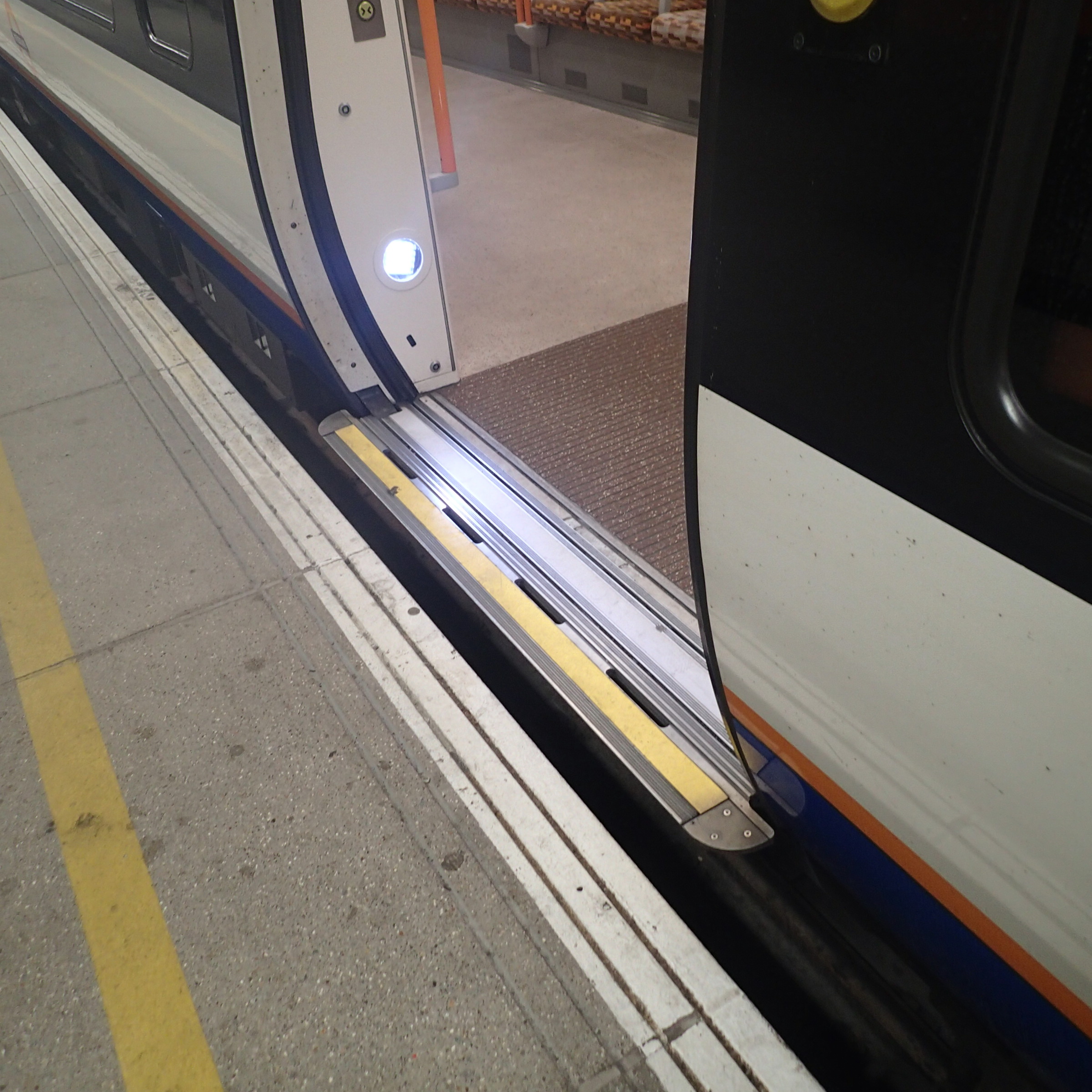
Regularly you see wheelchair-users push themselves across. This is a typical entrance to a Deutsche Bahn IC train.
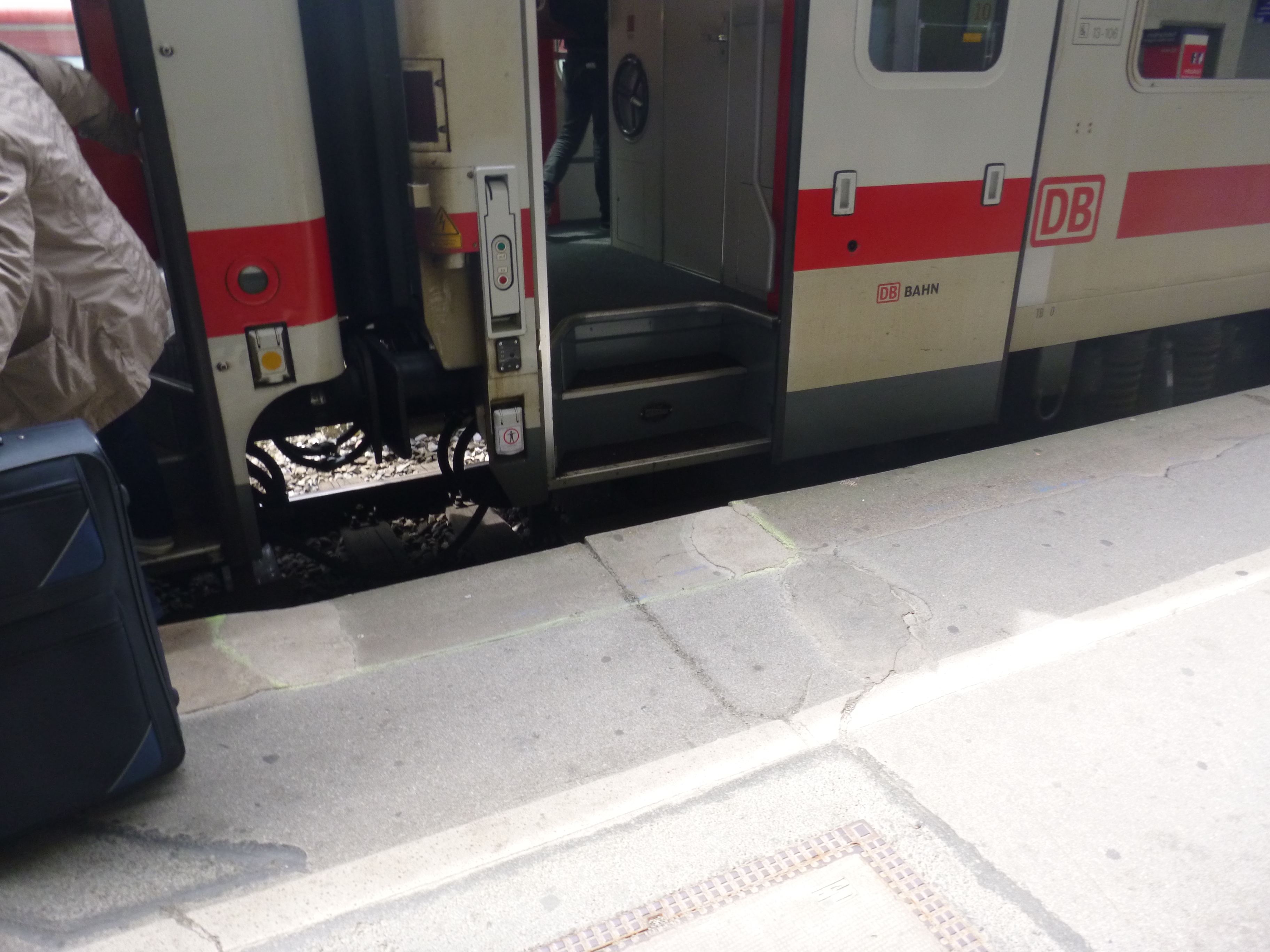
With my eye-sight, I sometimes miss my footing and in Germany, I worry about putting my foot in the often big gap between train and platform, which is never level.
As to wheelchair users in Germany they must despair. I thought that EU disability regulations meant trains had to be disabled-friendly.
On-Train Information
Nearly all the trains had displays for traffic announcement, but the information was a bit thin. As the Belgians were more comprehensive, I suspect it’s just the way they’ve programmed the system.
When you are a tourist in an area you don’t know well, you really do need adequate warning of your station. With Deutsche Bahn you don’t get it every time!
I shall finish this rant later!
A Station With An Attached Chapel And Hotel
Cologne station is one of those stations, which is an ideal place to break a journey.
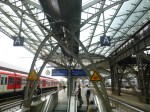
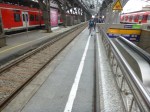
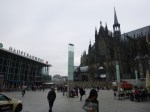
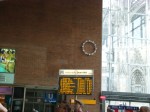


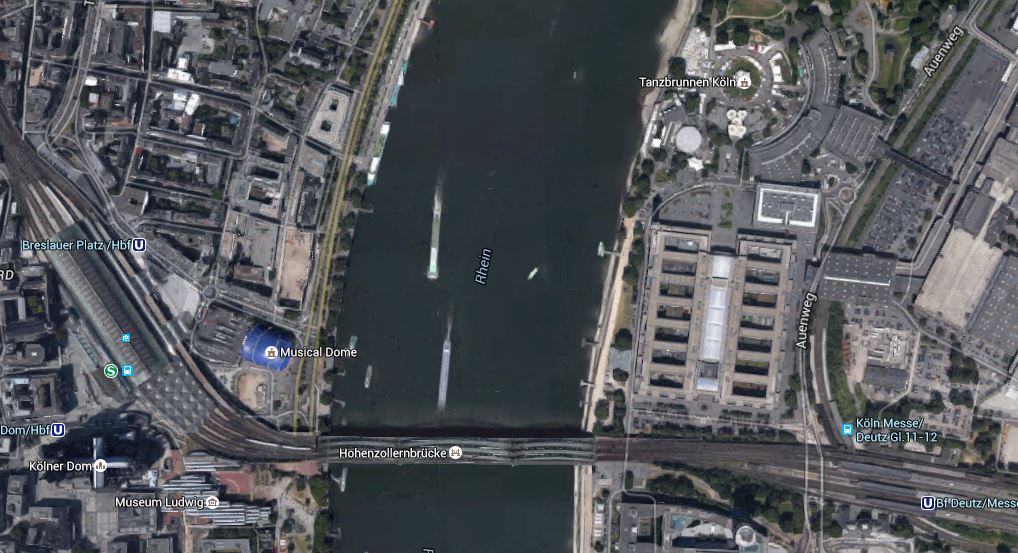
This Google Map image shows the closeness of the station, the cathedral and the river.
As Cologne from 2018 or so, a service will run direct from London, Cologne will become more important for those travelling to and from London.
A Railway Station In A Tent
Leipzig Airport station is unusual.
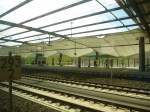
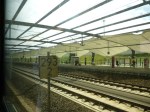
But why shouldn’t a railway station have a tented roof, if it’s good enough for Lords and Goodwood Racecourse?
An Unusual Cancer Story From Germany
I have just read this story on the BBC web site entitled The Blind Breast Cancer Detectors. Here’s the first paragraph.
Women being screened for breast cancer in Germany may find themselves in the hands of a blind examiner. The idea has been around for a few years, and unpublished research suggests that it really works – that blind people can in fact detect tumours earlier than their sighted counterparts.
Now I’ve never had cancer, but C had breast cancer and she found the lump herself, which the GP discounted. It was later confirmed by a specialist.
But in Penang in Malaysia, we were staying at the Mutiara hotel. My back was giving me trouble, so C suggested I had a massage.It was probably the most successful massage I’ve ever had.
And the masseur was blind! They explained that the Malaysian government was training them to work in the luxury hotels of the country.
I thought at the time, it was a good idea. I still think it is and after reading the BBC article, I think that the sensitive fingers of the blind may go a lot further than relieving tension in my spine.
 The Anonymous Widower