Virgin Trains Glasgow Services
Inevitably in the last couple of weeks, I’ve ended up on some of Virgin Trains services that have started at or are going to Glasgow. If I take Day 21, where I went from London to Milton Keynes and then from Crewe to Lancaster for Morecambe, before going from Lancaster to Carlisle, all on trains going to Glasgow. The early train had plenty of space, although, a lot of people use it to commute to Milton Keynes, but the other two were very overcrowded. I didn’t have a seat reservation on either leg and although I got a seat from Crewe to Preston, it was stand up for the rest of the way.
It almost seems that there is a division, where trains are bearable south of Warrington, Wigan or Preston, but often unbearable to the north. More capacity is urgently needed, both on the Pendolino and Super Voyager services. I think the problem is compounded, by the fact, that the trains get used by locals, travelling just one or two stops. I met one guy commuting from Lancaster to Carlisle.
There are a few TransPennine services from Manchester Airport to Glasgow that use the route, but they are short 100 mph trains, which at best add a few seats to the route and at worst make it more congested. I experienced one going south and detailed it in this post. Perhaps, there is a case for a couple of High Speed Diesel Trains to replace the small Class 185‘s on this route until the line is fully-electrified and electric multiple units arrive.
It has been announced that extra Pendolino trains will be available soon, but some seem to have been put into store, rather than service. Surely, if the sums added up four years ago, and we’ve had an increase in passengers since then, that they are better earning revenue rather than getting rusty.
Remember that my particular expertise is resource scheduling. I just think, that someone’s objective function is not comprehensive enough or there are some dark politics involved. If nothing, adding extra seats to the Glasgow services might encourage people to use them rather than flying, which would reduce our carbon footprint.
Given the overcrowding, something should be done as soon as possible.
At present all I can advise, is make sure you have a seat reservation when you travel anywhere between Warrington and Glasgow.
But the real problems of the West Coast Main Line are historic, as Wikipedia states.
Because of opposition by landowners along the route, in places some railway lines were built so that they avoided large estates and rural towns, and to reduce construction costs the railways followed natural contours, resulting in many curves and bends. The WCML also passes through some hilly areas, such as the Chilterns (Tring cutting), the Watford Gap and Northampton uplands followed by the Trent Valley, the mountains of Cumbria with a summit at Shap, and Beattock Summit in southern Lanarkshire. This legacy of gradients and curves, and the fact that it was not originally conceived as a single trunk route, means the WCML was never ideal as a long-distance main line, with lower maximum speeds than the East Coast Main Line (ECML) route, the other major main line from London to Scotland.
And this still means that for long distances north of Crewe, that only a double track is possible. So this limits the number of paths available, which means that running say a slower connecting service from Warrington to Carlisle, is just not on, even though it would remove the one or two station travellers.
And then you have the freight trains!
So perhaps the problem is not actually about trains, but is more about tracks and paths. The only way then, to get more through, would be to increase the size of the trains from nine to eleven coaches, for which many of the carriages have been built and are in store.
But at some point, the West Coast Main Line will have to have extra tracks, especially if more and more freight trains need to run to and from Scotland from the south. As I believe has been shown around Ipswich, the more freight trains you can run, the less trucks use the roads and you get greater capacity for cars and coaches.
I add the latter, as there is now a London to Glasgow coach service with sleeping berths.
Why Do We Still Mine Coal?
Mining coal is a dangerous business as this report from South Wales shows.
Our mines are safe compared to some. This report in the Guardian from 2009, says that in 2008, over 3,000 miners died in China.
So why do we do it, when burning fossil fuels are the major creator of greenhouse gases, that cause global warming? If you look at the science, to get the same amount of energy from coal and natural gas, you get forty percent more CO2 if you burn coal. It’s all because coal is pure carbon, whereas natural gas contains a lot of hydrogen atoms, which on combustion produce nothing but water.
You also get a lot of other pollution when you burn coal. Let’s face it, coal is a very dirty fuel.
One of the biggest mistakes we made in this country was not to get rid of coal mines, steam trains and coal-fired power stations a lot earlier.
The first real modern electrification of rail lines in the UK, were the Liverpool and Manchester lines, which were completed in the mid-1960s. It is totally crazy that only now, we’re still planning the electrification to Bristol and South Wales from London. It should have been done by 1970.
Good Riddance To The Sixty Watt Light Bulb!
People have a lot of misplaced love for the old sixty watt light-bulb, as this story on the BBC shows.
It doesn’t bother me, as I won’t have an incandescent bulb in the house because of the safety risk, when they fail. An A & E doctor once told me, that they’d had several people come into hospital after falls, where an incandescent bulb had failed and this had tripped out all the lights, which meant they had fallen over the cat, dog or whatever.
But the lights I hate are those halogen MR16 and GU10 bulbs. There average life span is very short and the light they give out, used to give me headches until I went gluten free. I have a lot of those size of bulb in this house and all have been replaced with LED versions, which are brighter, use less energy and rarely fail.
My real problem in this house is finding some lights to replace some of the awful ones that Jerry installed to boost his profits.
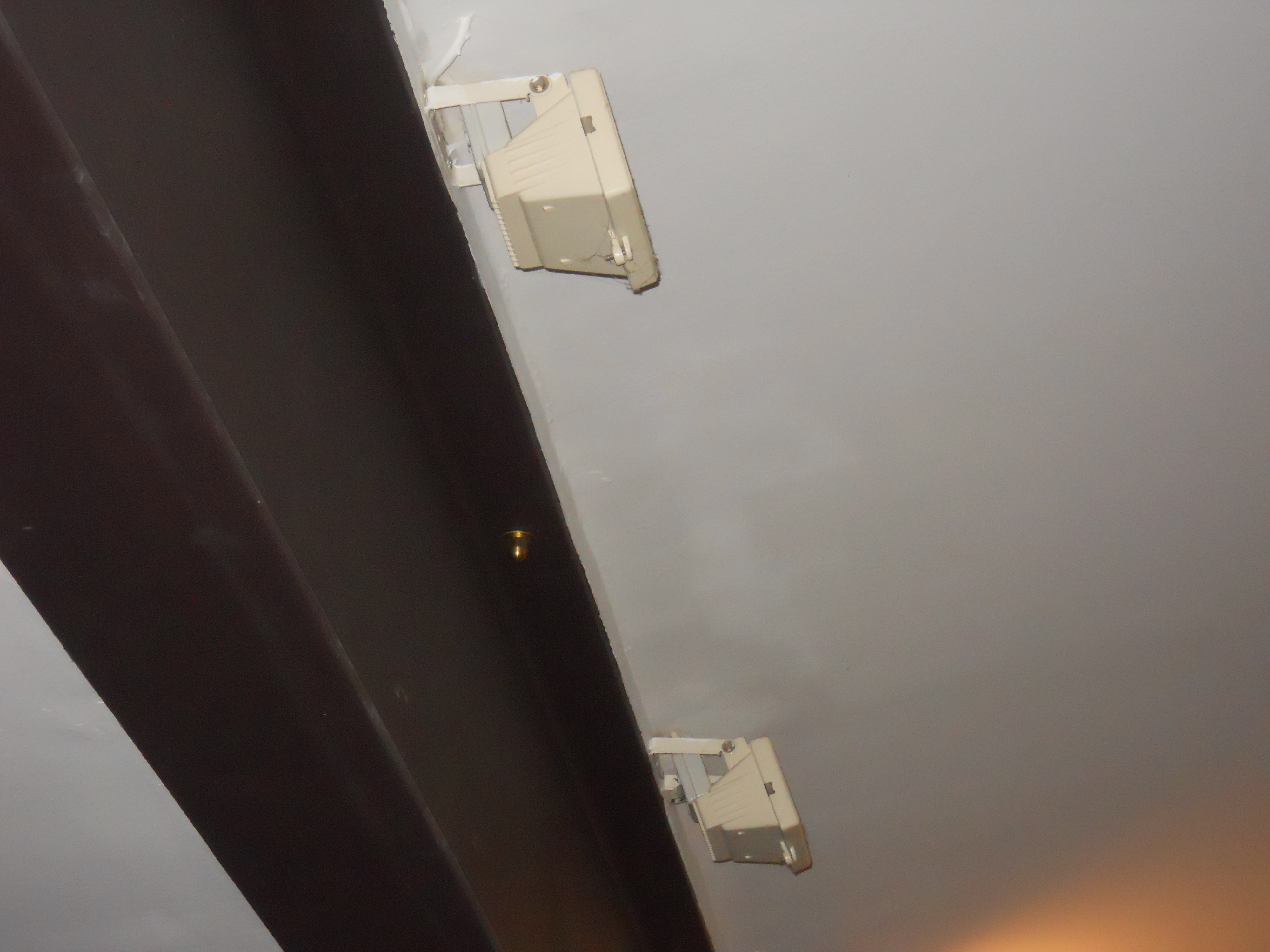
Some Truly Hideous Lights
They really are truly hideous. Some of the lights he used were even worse and when I left them on the front patio for someone to take if they wanted, they didn’t remove one. But they did take a couple of old incandescent bulbs!
Could a Balaena-Like Structure Be Used As a Wind Power Platform?
Last night I was watching reports on the BBC about the Ormonde Offshore Wind Farm.
Again, I can’t help thinking that a Balaena like structure could be used. It would be tall and thin and the wind-turbine could just be lifted onto the top.
It would be built in a shipyard horizontally and would have a steel tank at the bottom to give it stability. As with the original Balaena weight and the gum-boot syndrome would keep it in place.
It would also be towed out horizontally and then upended by filling the tank. I proved that this would work nearly forty years ago and I’m sure if you get the sizes right, it would be very stable. You then just lift the power unit on the top in the normal way.
But then I’m no structural engineer. On the other I have a memory like an elephant and never forget anything useful.
Where is Buckminster Fuller when you need him?
The Simple Logic Of An Engineer or Scientist
Let’s face it we’ve got to generate more electricity in a zero-carbon way. Or should I say capture more energy?
One way to do this is to put photo-voltaic cells everywhere. But they are expensive and in many places can’t be used for aesthetic reasons.
So I was pleased to see in today’s Sunday Times, that a company, called Oxford Photovoltaics, is developing a solar cell that can be built into a window.
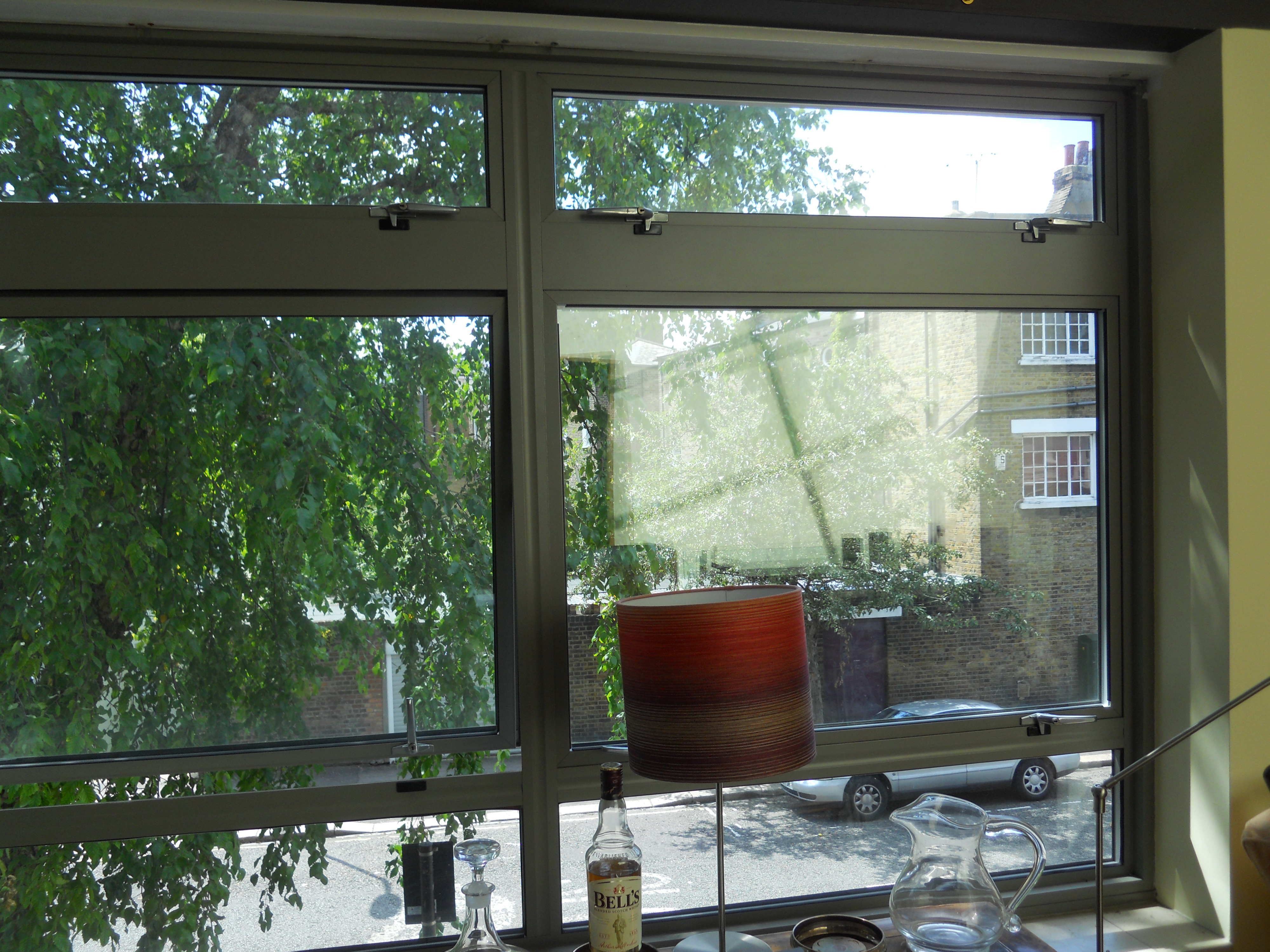
My Front Window
The picture shows one of my two front windows, which are actually glazed as many windows are by double-glazed panels that slot into aluminium or plastic frames. So to mount one of these sandwich glass photo voltaic cells could be a simple replacement.
I suspect too, that with a proper control system, the windows could be controlled to let the appropriate amount of sunlight through for lighting and warmth purposes. Most of the energy absorbed would become electricity, which could be fed back into the grid or used in the building.
The great advantage of this system, is that to be ready for it, when it is fully developed, you don’t have to do anything now except to ensure that all new houses, flats and offices are built to accept simple drop-in glazing panels.
This compny may not be the one that succeeds, but one definitely will.
Australia Proposes a Carbon Tax
Australia depends heavily on coal, which is the fuel that in my view should be banned beause of the large amounts of carbon dioxide it emits when it is burned. Because of the hydrogen in natural gas, when you burn that you get less carbon dioxide for the same energy. But in truth, it would be better if we didn’t burn fossil fuels.
So I was very surprised that the Australian Prime Minister has announced a carbon tax. It doesn’t appear to be popular.
Australia is one of the world’s worst emitters of greenhouse gases per head of population.
The country relies on coal for 80% of its electricity generation, and is a major coal exporter.
The energy industry and the political opposition have mounted a vociferous campaign against a carbon tax, with protests in all of Australia’s major cities in March.
Critics argue a levy would damage economic competitiveness.
Opinion polls show roughly 60% of voters against the policy.
The government hopes to win them over by spending some of the cash raised by the carbon tax to compensate households for higher energy bills.
It is promising tax cuts for low and middle-income households, as well as increased state pension and welfare payments.
At least it is a start and the United States, China, Europe and the other polluting country should follow suit.
The Selfish Fuel Protestors Are At It Again!
I’ve said it before but energy prices are too low, if we are to meet our commitments to our descendents to stop global warming.
So what do those who object to fuel prices do? They blockade Ellesmere Port and demand that fuel prices are lowered by 24p a litre. They should probably be raised and more money put into the provision of much-needed charge points for electric cars and also subsidies for those like the disabled to buy electric cars.
After all, I used to drive 40,000 kilometres a year, but now because of my stroke I can’t and manage very well on public transport.
I could also argue that the real selfish ones are those that live a long way from their work and do hundreds of kilometres a week ferrying children to schools in the other direction, before they burn up the motorway to London or Manchester, when they could easily live in the city or work over the Internet.
After all cutting the miles you drive by 25% would be equivalent for you as a similar drop in the price of fuel.
Here where I live, I get the impression that many walk or cycle their children to school and then carry on to their place of work, perhaps by taking a bus.
If I can manage public transport after a stroke, that some say nearly killed me, then others who are fit and well surely can. Or are they more unfit than I am and just too selfish?
I shouldn’t worry about it, as in a couple of years time, we will all have to make those lifestyle changes, that circumstances have forced me to take.
Unholy Water
There are reports on BBC London that Zam Zam water from Mecca containing arsenic is being sold in the UK. According to Wikipedia, Zam Zam water is prohibited from being exported from Saudi Arabia. So what does that mean about the water being sold in the UK?
I’ve never found any problems with London tap water.
Or is it just that religion gets people to do things, that their knowledge, intelligence or just common sense tells them is wrong? After all, transporting water half way around the world is an ecological crime anyway, as it generates just so much carbon dioxide.
But then many religions have been used by dodgy characters to fleece believers for thousands of years.
 The Anonymous Widower