Grace’s Guide
This web site is an interesting one, for those who want to research British industrial history.
Do Historians Ignore Facts?
Terry Deary, the author of Horrible Histories, thinks so and said as much on BBC Breakfast this morning.
I agree!
I once dealt with an archaeologist, who analysed a database of fragments found in peublas all over the South Western United States with Daisy. When we analysed the whole database we got totally different answers to those of an eminent professor, who’d discarded all of those entries that didn’t fit his personal theory.
A lot of people have been saying that the riots were caused by X and doing Y will stop it. Have they even got any facts, and if they have have used all the facts to get the answer.
Fourth of July Tomorrow
Remember it’s Darrell’s Day tomorrow.
If Nathanial Darrell and his brave band of Marines hadn’t repelled the UK’s last attempted invasion, we’d all now be wearing clogs!
Boadicea Stands Guard
Standing guard opposite the Houses of Parliament is Boadicea, or as she is more normally spelled these days, Boudica.
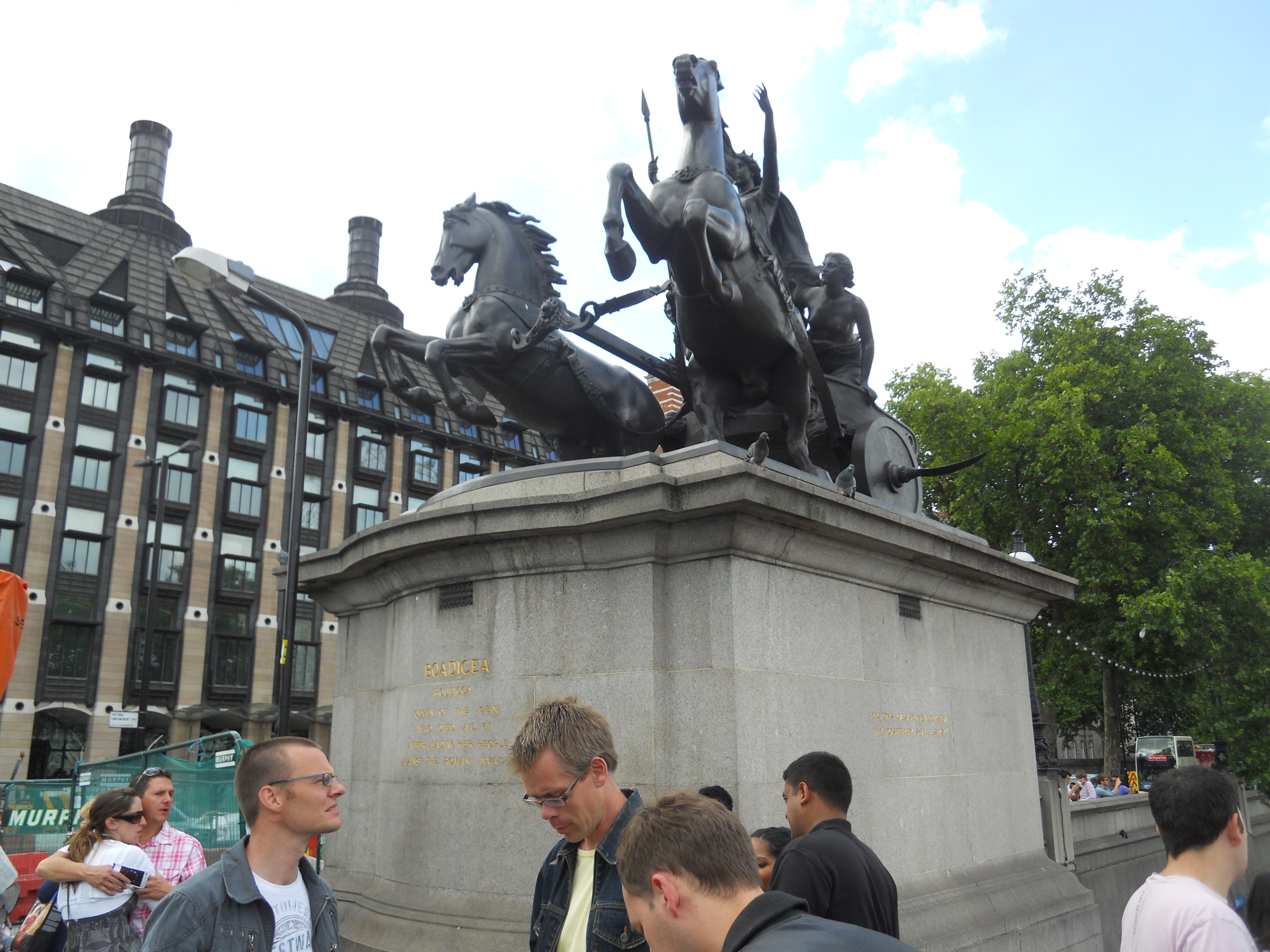
Boadicea Stands Guard
She may or may not have defeated the Romans, as whatever happened they remained in Britain.
Her spirit lives on, especially in East Anglia. She probably came from that region, although no-one is sure quite where! I have heard several people say, including my father, that if the Germans had landed in Suffolk in the Second World War, they would have got similar treatment to that meted out by Boadicea and her ragbag army of upwards of 100,000 men. When questioned as to the legitimacy of this treatment under the Geneva Convention, a common reply was “What would Boadicea have done?” I don’t know the truth of all these reports, but I know Suffolk people well and they wouldn’t have taken an invasion lightly.
Some also say that her tribe, the Iceni, were the supreme horsemen, who when their horses were suffering from horse sickness, looked for a new and healthier place to raise them. They found this valley in the chalk downs and moved there, calling the place New Horse Market. In time this was corrupted to Newmarket. The town is the world centre of horse racing and breeding, known amongst racing people as Headquarters. Every thoroughbred can trace their ancestry back to this small town in Suffolk.
A Piece of Concrete With a Lot of History
This piece of concrete in the Victoria Town Gardens behind the Palace of Westminster, looks like a very rudimentary and hurried repair.

A Repair to the River Thames Wall
But behind it all is a bit of forgotten history. This picture shows a steel girder, which could be a piece of railway line in the concrete.

Steel Girder in the River Thames Wall
And this shows that the detail on the river side, that is a feature of the Thames river wall is missing.
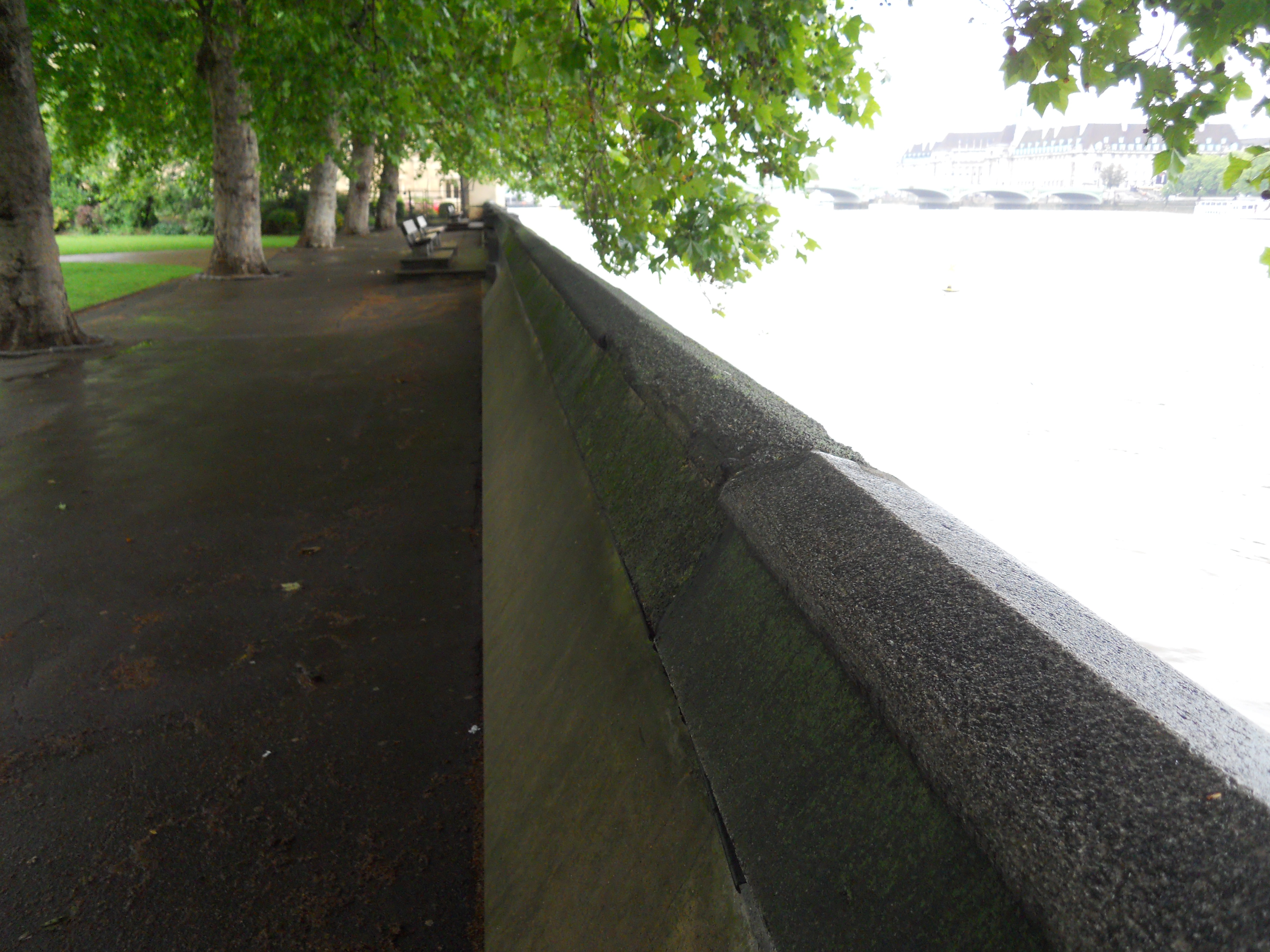
Missing Details in the River Thames Wall
So what is it all about?
I went to a lunchtime lecture at University College London about archaeology on the River Thames. The lecturer explained that during the Second World War, we identified that a serious break in the wall of the River Thames could have flooded much of the central part of the city. This would have probably flooded the London Underground as well.
So a top secret repair unit was set up to fix any breakages in the wall immediately. As the lecturer said, even today little is known about the unit. During the war they kept it quiet, as they didn’t want the Germans to know how vulnerable London was. After all, the Germans only needed to be lucky once.
But as you can see, even if the repair would not be acceptable today, it has fulfilled its purpose for seventy years.
The Tudor Way of Death
This report is on the BBC web site. Judging by the number of gun accidents, we haven’t got much better, although we don’t drown in cess pits so often.
In Search of Jack Nissenthal
In the web site on the BBC relating the story of Jack Nissenthal, it says that he was born in Cottage Row in Bow.
Yesterday, I decided to find out more. searching the Internet, showed no trace of Cottage Row in Bow, so I took the bus to my nearest big library; the City of London, library in the Barbican Centre. There displayed in a cabinet was a map of poverty for London and a Cottage Grove could be easily seen in Bow Neighbourhood, but not a Cottage Row. My up-to-date A-Z didn’t show Cottage Grove at all. So the librarian and myself concluded that development had taken place and the street pattern had been changed. Rhondda Grove seemed to occupy the same place as Cottage Grove.
So it was a tube ride to Mile End station via Bethnal Green to see what I could find.
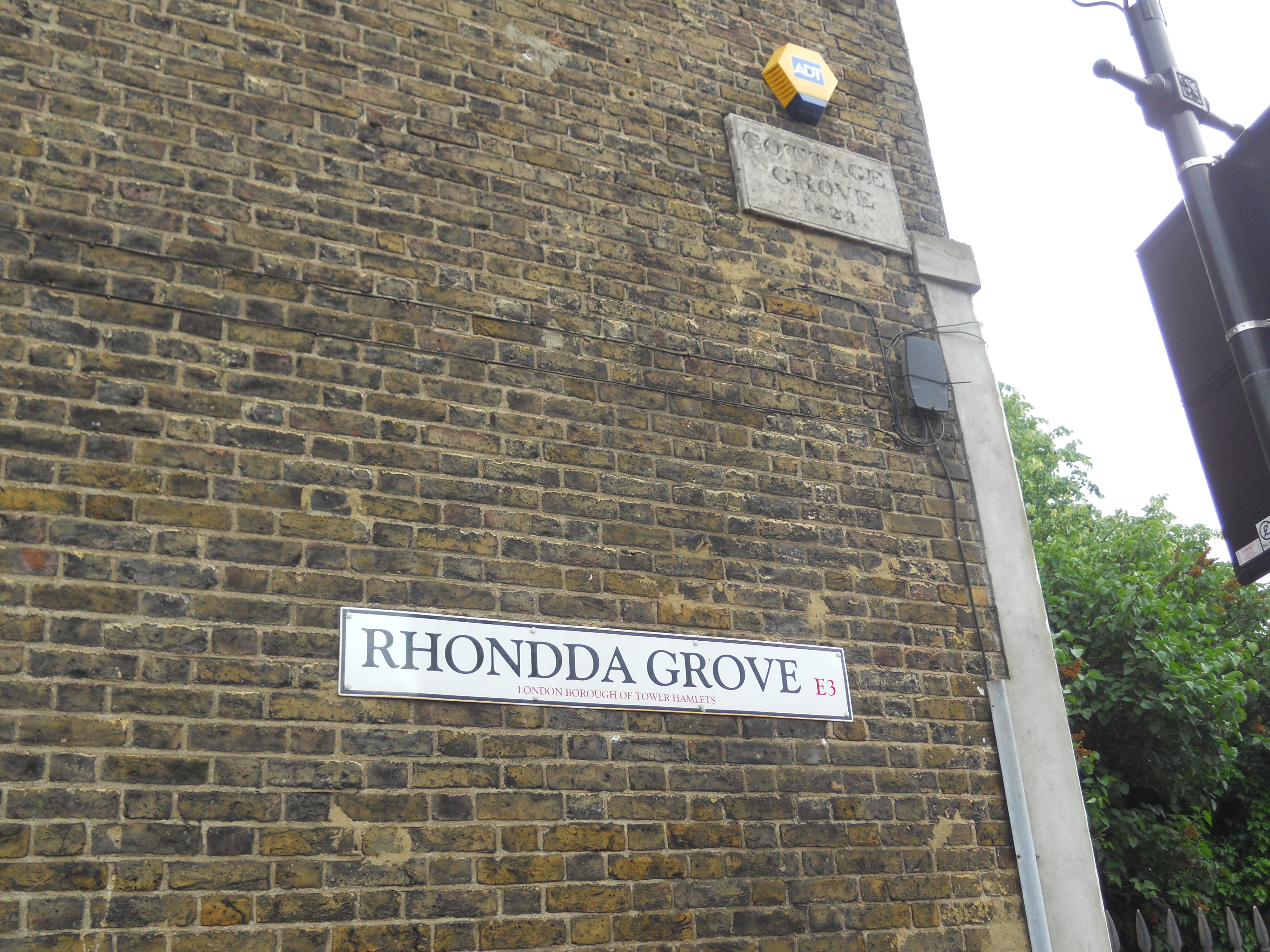
Rhondda Grove/Cottage Grove in Bow
This picture shows the end of Rhondda Grove. Note the Cottage Grove sign with a date of 1823.
It is a pleasant street now with most of the terrace and other houses now fully modernised.
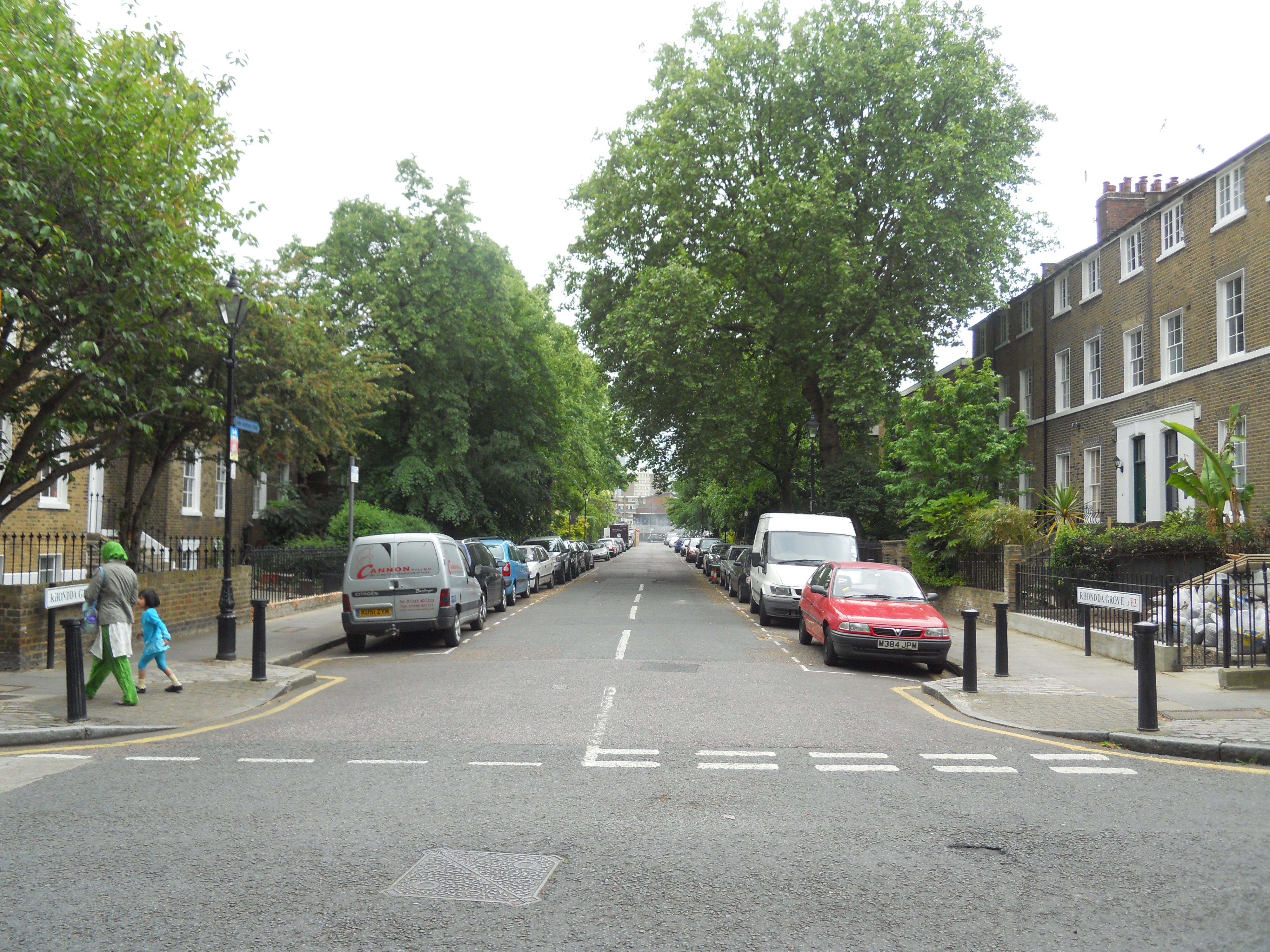
Rhondda Grove, Bow
There appeared to be not too many spaces or new properties, that would be typical of bomb damage.
So was this the street where Jack Nissenthal grew up?
I then went to Tower Hamlets Archive Centre in Bancroft Road just around the corner.
They did confirm from a 1920s London Street Atlas, that there was only one Cottage Row in London at the time of Jack’s birth and that was in South East London. Cottage Grove had not yet been renamed. On searching the large scale maps of the area, I did find that the street seemed to have been renamed in the late nineteenth century. There were also a few mews houses behind the street. So could one of these been known locally as Cottage Row?
Anyone for a Cold Bath?
I’ve not had a bath in some months, as these days I have a shower, when I smell like I need one. But this curious sign was on the wall of a building in Clerkenwell.

Coldbath Square
It must be surely one of the strangest road names in the UK, let alone London. You can read about the area here.
For many years there was a grim prison on the site and this is taken from the article.
The prison, built on a plan of the benevolent Howard’s, soon became a scene of great abuses. Men, women, and boys were herded together in this chief county prison, and smoking and drinking were permitted. The governor of the day strove vigorously to reform the hydra abuses, and especially the tyranny and greediness of the turnkeys. Five years later he introduced stern silence into his domain. “On the 29th of December, 1834, a population of 914 prisoners were suddenly apprised that all intercommunication, by word, gesture, or sign, was prohibited.” “This is what is called the Silent Associated System. The treadmill had been introduced at Coldbath Fields several years before. This apparatus, the invention of Mr. Cubitt, an engineer at Lowestoft, was first set up,” says Mr. Pinks, “at Brixton Prison, in 1817. At first, the allowance was 12,000 feet of ascent, but was soon reduced to 1,200.”
I think it is true to say that our justice system is much more enlightened these days.
Today is St. Edmund’s Day
St. Edmund should still be the patron saint of England.
Today is his feast day and in the place of his death, Bury St. Edmunds, they had a mini-festival with a charity market and some other events.
The Bury MP, David Ruffley is quoted in the East Anglian Daily Times as saying. “No one will persuade me that we are not the most gloriously historic county town in England” He also said that the Magna Carta was not about Runnymede in Surrey in 1215, but about Bury, where it originated in 1214.
Giving It To a Museum
Today I contacted The Centre for Computing History in Haverhill and later they collected some of my boxes of software. They may also take some of my old hardware, like a DecWriter, a very early and powerful HP Vectra and the Artemis 1000 system.
They certainly need help in all forms.
 The Anonymous Widower