A Circular Walk Through York
At York station, I took a circular walk to the City Centre and back to get some lunch.
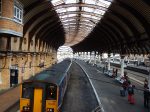
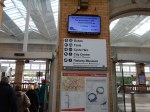







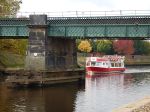
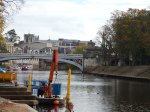
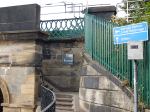
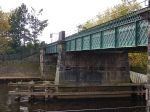



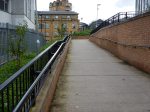
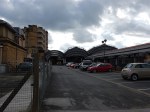
The return route from the centre was as follows.
- Through the Museum Gardens
- Along the River Ouse.
- Across the Pedestrian Bridge by the York to Scarborough Line
- Directly into the station through the cycle parking.
The installation of the new bridge was talked about in Dancing With Cranes And A Bridge With Help From Lego.
My return route along the river and over the new bridge was a lot easier, as you’re away from the traffic on pavements that are better.
This map shows the area where I walked back to the station.
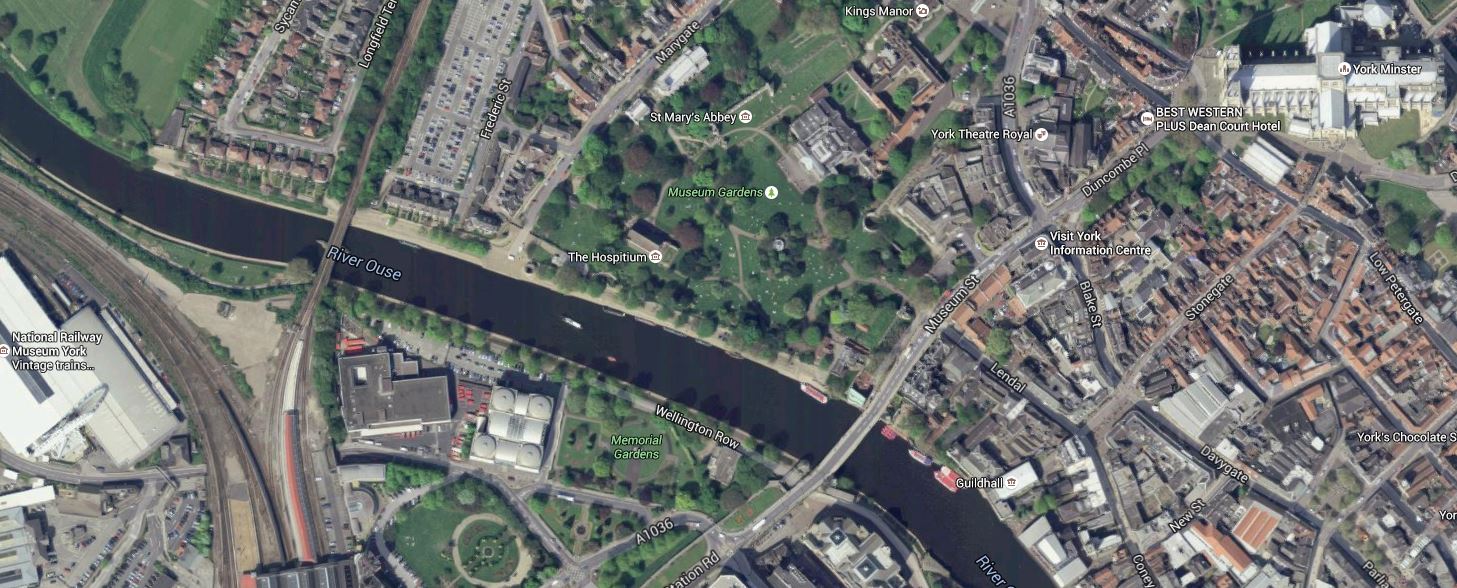
York Minster To York Station
The Scarborough Bridge is the most westerly one over the River Ouse.
I would also think it’s easier to go this way between the National Railway Museum and York Minster and the City Centre.
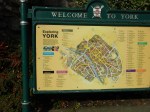
For a city that relies on tourism, it is not blessed with decent and numerous, maps and information.
Of the major cities in Yorkshire that I’ve visited only Sheffield seems to have a large number of decent maps. None are up to the standard of Glasgow, Krakow and Preston.
TPOD or Blockade?
This article on the Rail Engineer web site is entitled Preparing The Way For Bath Electrification.
It is a good read and it brings a new acronym into the English language – TPOD. This is said about the change of wording.
Normally, closing a 20 mile stretch of the main line, from Thingley Junction to Bath Station, for six weeks would be referred to as a ‘blockade’ but, during the consultation process, the word blockade became a very sensitive issue. It implied that Bath was closed for business, which wasn’t the case. Therefore, to ensure that tourists were not put off travelling to the city, it was suggested that Network Rail should use a different description for the closure. As a result the acronym TPOD was created – Temporary Period of Disruption! So the work was carried out during a six week TPOD. You’ll get used to it.
Only time will tell, if this friendlier word TPOD becomes accepted. Or will it have the same connotations as Rail Replacement Bus?
But words are important!
As an example, I object to messages on trains and buses using the word terminate at the end of a journey.
It sounds so final!
At least, it seems to be becoming more common for a message like.
This train finishes its journey here.
To be used. Especially, where train staff are giving an announcement.
Manchester’s Metroshuttle
Manchester has a network of three free Metroshuttle buses that you can use in the City Centre.
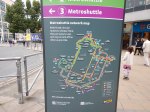

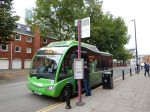
My big complaint about the system is the limited hours. Surely, in a busy City Centre a bus service like this should go on later than 19:00.
I also feel that the stops away from Piccadilly station could be better designed with more information and local maps.
Transport for London’s Visitor Centre At Liverpool Street
One of the things that Transport for London said it would do, when it closed Ticket Offices, was to open Visitor Centres at major stations.
This one at Liverpool Street station has been rebranded. It is one of several at main line stations and airports.
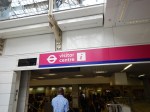
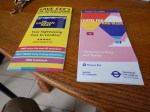
I know it was early on a Saturday, but I was the only person looking at what was on offer.
Looking at the London Pass, I think it could be something that a serious visitor would buy.
I can’t help feeling though, that as time progresses, the Visitor Centres in Central London will see fewer and fewer visitors, as London’s contactless ticketing system, will make travel advice something that can be handled easily by the station staff.
I may be wrong, but I think only Liverpool and Edinburgh have proper Visitor Centres. The one in Liverpool is placed on the platform where Virgins arrive from London and the one in Edinburgh is on Princes Street at the top of the escalators from the station.
Every large destination should have a comprehensive Visitor Centre, especially if they are a major interchange to other trains, trams and buses. The oferinmgs in some places is certainly not good enough.
Network Rail Displays Must Work On Windows XP
I saw this screen at Finsbury Park station.

Network Rail Displays Must Work On Windows XP
There’s not much wrong with Windows XP compared to some of the later versions.
From The Charles Bridge To The Station
To get out of Prague, I needed to catch the 14:30 train to Dresden. I left it a bit tight and in the end I had to walk across a lot of the city, whilst trying to find a Metro station. I took these pictures as I walked.
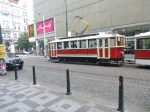
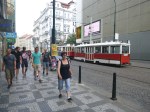
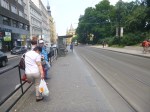
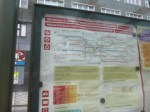
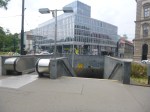
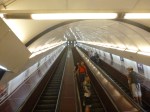
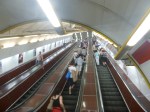
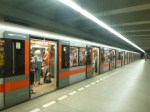
What complicated matters was that when I changed from Line B to Line C at Florenc, there was a power cut. Luckily, I used another escalator to get to the surface and then entered gain through another entrance direct to the other line.
Add to this these features of Prague’s transport system.
1. There are no maps of either the trams or the metro on the surface that are readable.
2. Each separate Metro line has a different colour of signs and not all entrances to the Metro are signed.
3. There are no walking maps, even at important places, unlike in Krakow, Dresden and Leipzig
4.Prague is not in Poland, where the locals have good English and don’t have to be asked before they offer help.
5. Prague has too many visitors for its transport system.
I also had to get to the station in good time, as I’d left my bag in the Left Luggage Office and as it was lunch time, it might be closed whilst the guys had their lunch. But once I got to the main station all went well. Even if I was a bit early!
After I’d left Prague, it all reminded me of Vaclav Havel‘s play; The Memorandum, which I heard on Radio 4, probably over thirty years ago.
TfL Rail Starts To Appear
It is not until next Sunday, the thirty-first, that Transport for London take over the Shenfield Metro services that will become part of Crossrail, but the signs are starting to appear.
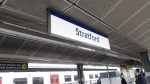
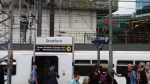


It would appear that the only different between the Abellio Greater Anglia and TfL Rail version of the station nameplate, is the banding at the top.
An Excursion To Windermere
I caught a train from Preston direct to Windermere to have a look at the town.

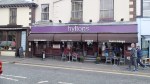





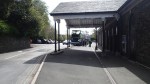
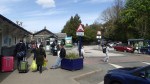
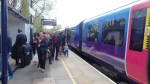


I walked from Windermere station to the town, which is a couple of miles downhill and rather badly signposted. Coming back I took a taxi up the hill, as I wanted to catch a train, which was dead on time and dumped me right in it at Oxenholme. But that wasn’t their fault and as expected there was a ready Virgin waiting.
I should note, that I had an excellent gluten-free lunch at Hyltons close to the lake.
The Windermere Branch Line is almost an oddity on the UK rail network, in that it is a very simple out-and-back line with no passing loops from Oxenholme that runs a better than hourly service using modern trains ( Class 185 trains). Signalling at present is non-existent and it relies on just one train being on the line at a time.
So now sixteen million pounds is going to be spent to electrify the line. Unless the line is given a modern signalling system and a better track layout, this won’t in itself give a better train service, than that at present.
Could the one platform Windermere station cope with anything more than a half-hourly four coach train?
So I suspect there is another motive behind electrifying this line.
The line has to be operated by diesels at present and this may give problems about where the trains are stabled at night, as they will need to be refuelled. And where would you park it overnight, as there is no siding at Oxenholm, so you’d have to leave it in a platform at either end of the line.
Currently, I suspect the first train in the morning comes in from Preston and then the last train of the day goes there for fuelling and an overnight clean and service.
My train direct from Preston to Windermere actually split at Preston, with the front half going to Blackpool. When Blackpool is electrified and electric trains serve that route, this splitting will not be possible, as you’d need to send a diesel train to Windermere, unless the branch was electrified.
Does an electric train working the branch give much greater flexibility in planning the schedules and providing a top class frequent service?
I think it probably does.
The only alternative to electrifying the Windermere branch is to use a battery-assisted electric train, like the one I rode in at Manningtree. But although that technology appears to be very successful, no train company would have just one of these, as what happens when it fails?
A Quick Exploration In Mulhouse
On the way from Basel to Strasbourg, I stopped off at Mulhouse to have a look at the city and ride its tram-trains.
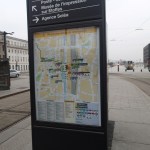

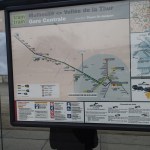
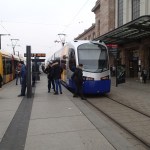
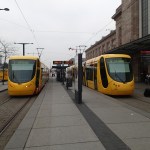
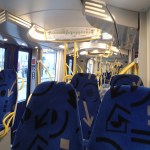

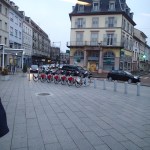
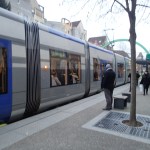

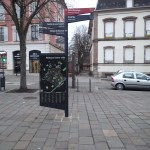
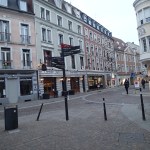
The line is a good bit short of its planned length and rather infrequent at the moment, but compared to the two German systems in Karlsruhe and Kassel, it is a step up in design quality.
I should also say, I was impressed with both Mulhouse and its trams and tram-trains.
There was a lot of information maps everywhere and this was an order of magnitude better than anything I’d seen in Germany.
The Germans could do a lot worse than hop over the border with a camera and pinch the designs used in Mulhouse.
I particularly liked the red finger on the finger post, which always pointed to the historic city centre. So simple, I wonder why I’ve not seen it before!
If you look at the proposal for the extension of the Sheffield Supertram to Rotherham using a tram-train, it has similarities to the system in Mulhouse.
The Siemens S70/Avanto tram-trains used in Mulhouse are dual voltage capable of running on 750 V DC or 25kV AC. The Class 399 Sheffield tram-trains which are being made by Vossloh are said to have a similar capability. You could argue that being able to run on both these voltages is akin to the dual-voltage Class 378 which run on both voltages. The Class 378 halts for the changeover at places like Acton, but surely modern electric systems can be designed that handle the changeover between voltages automatically.
An Information Free Journey
This afternoon, I took an Abellio Greater Anglia train from Bruce Grove to Hackney Downs.
An Information Free Journey
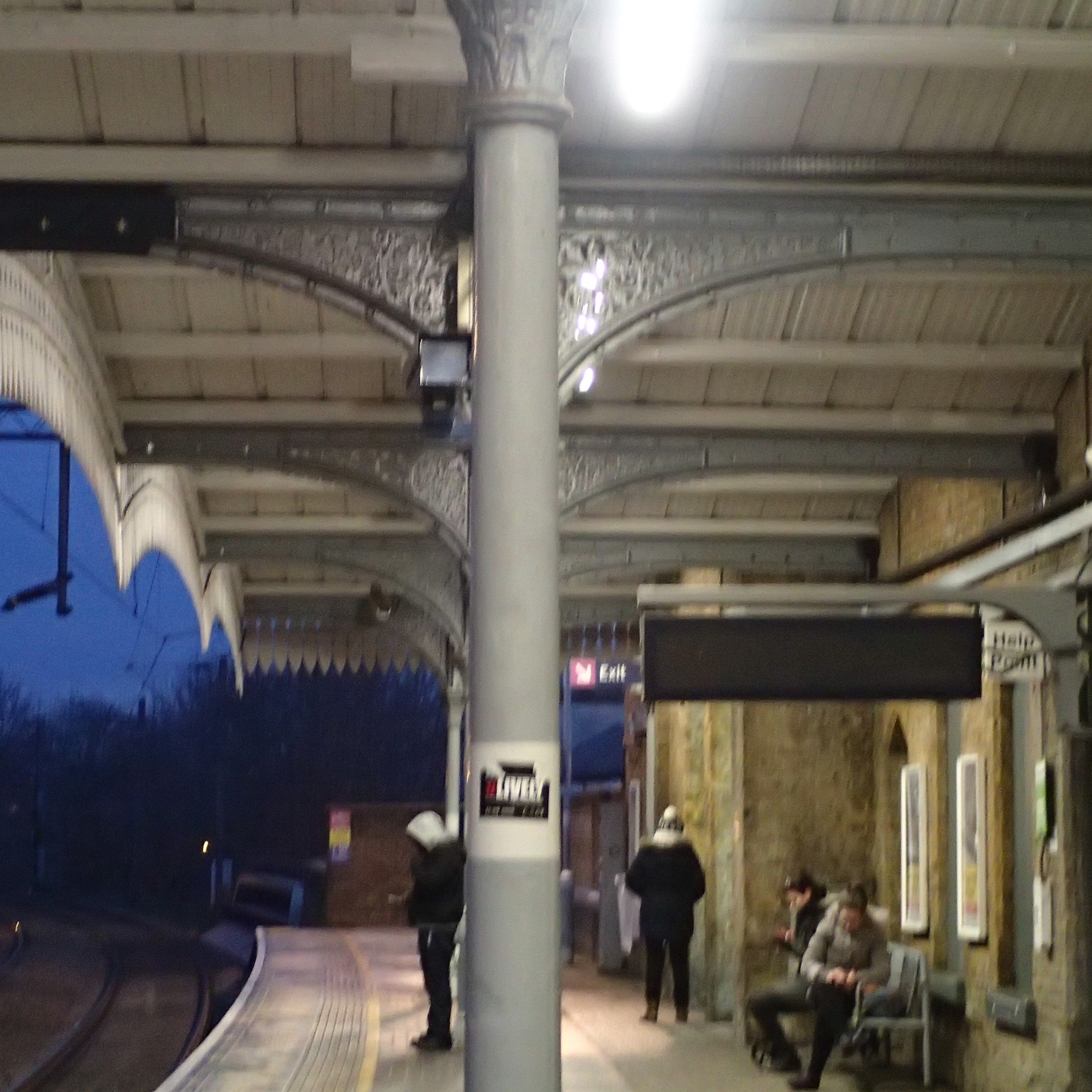
The displays weren’t working on both platforms at Bruce Grove station and the only way to tell where the train was going, was to read the display on the cab, as the train trundled out of the gloom.
The Class 315 train, resplendent inside in all its girlie pink, doesn’t have information displays and as the driver was economical with his announcements, you were left peering into the dark to determine the stations, from the names on the badly-lit platforms.
Luckily, just before Hackney Downs station, is the floodlit blue Mossbourne Community Academy, and I was forewarned of our arrival, and didn’t end up in Liverpool Street.
I know that on the thirty-first of May this year, the Lea Valley Lines will come under the control of Transport for London, so Abellio may think they have reasons to provide minimal service on these lines.
But that is no reason to keep passengers in the dark!
 The Anonymous Widower