Vivarail D-Train To Be Tested In US Cities
The title of this post, is the same as that of this article in the International Railway Journal.
Why not?
Siemens Unveils Plans For £200m Train Factory In East Yorkshire
The title of this post, is the same as that of this article in Rail Technology Magazine.
This is a key paragraph.
While the factory is only in the planning stage at the moment, Siemens hopes to begin construction later this year if the company can confirm some “major future orders.”
As to major future orders in the UK, the following would appear to be possibilities.
- New London Underground train orders for the Piccadilly, Bakerloo and Central Lines.
- New trains for HS2.
- New trains for the new East Midlands Franchise.
- New trains for the new Southeastern Franchise.
Note.
- Siemens have shown designs for the Underground, which I discussed in Siemen’s View Of The Future Of The Underground.
- HS2 will be built to the same standard as most European High Speed Lines.
- The trains for the East Midlands could probably be based on German ICE trains.
- Desiro City trains would handle a lot of Southeastern’s needs.
I suspect, that Siemens have designs that could be adapted for most of the UK’s possible large orders.
I shall a few thoughts to these orders.
New Tube For London
The New Tube For London is a very large project, that will do the following.
- Replace the current rolling stock on the Bakerloo, Central, Piccadilly and Waterloo and City Lines.
- Initially, there will be 250 new trains.
- Increase capacity.
- Increase frequency.
- Run under a much higher level of automation.
- Hopefully, the first train will run on the Piccadilly Line by 2023.
- It is also intended that the new trains will replace the current trains on other lines.
Wikipedia says this about the project cost.
The project is estimated to cost £16.42 billion (£9.86 bn at 2013 prices)
The following companies were on an approved short list.
- Alstom
- Siemens
- Hitachi,
- CAF
- Bombardier
Since this list was published, Bombardier and Hitachi have said they will propose a joint bid and Siemend and Alstom have merged their train-building interests.
So we are left with the following bidders.
- Alstom-Siemens, who have various small factories in the UK.
- Bombardier-Hitachi, who have two large factories in the UK.
- CAF, who are building a factory at Newport in South Wales.
Various factors will come into the choice of manufacturer.
- The London Underground order, is probably one of the largest train orders, that will be placed in the next few years and fulfilling it will most likely require a large manufacturing capacity in the UK.
- Bombardier-Hitachi and Alstom-Siemens have the resources to create such a manufacturing capacity. Would CAF have that capacity?
- Bombardier has been working with Transport for London for about thirty years and their recent trains for London have been generally well received.
- Hitachi will add Japanese technology and finance to the bid.
- Do Hitachi have a lot of space at Newton Aycliffe?
- Siemens are Europe’s biggest industrial company, so they can invest heavily to ensure they get the order.
- Delivering the first trains for the Piccadilly Line in 2023, could be a tough ask!
In a Brexit World, it will be interesting to see who gets the order.
Trains For HS2
Note these points about Siemens, High Speed Trains and the trains required for HS2.
- It would appear that most German ICE trains are built by Siemens or the company is involved in a consortium.
- Siemens latest trains for Eurostar have been well-received.
- The High Speed Train market around the World is increasing in size.
- The initial HS2 contract will be sixty trains, each of which will hold a thousand passengers.
As trains will be of two types;HS2-only and classic-compatible, the designing of the trains will be a challenging exercise.
But Siemens experience from Germany, where classic-compatible trains have to be extensively used, may give them an edge.
I have ridden High Speed Trains in France, Germany, Italy, Spain and Kent, and single-deck trains are very similar, especially where trains are classic-compatible.
They are certainly more similar, than say commuter trains, which all seem to suffer from lots of local preferences.
Another factor is the size of the site at Goole, which is 23 hectares or the size of 23 football pitches.
- Could Siemens be planning a new site to build its High Speed Trains?
- Are Siemens short of space for expansion at Krefeld?
- There is probably space for a test track at Goole, that could be connected to the factory.
- The site would be well-connected to the East Coast Main Line and the rest of the UK’s High Speed Network and the Channel Tunnel.
- Exports to the Rest of the World, could use the ports of the Humber.
- Siemens have a lot of investment in other industries in East Yorkshire.
It looks to be a logical choice of location to manufacture and commission trains.
If they get the order for the new trains for HS2, it would be the ideal manufacturing site.
But if they do, will Siemens manufacture High Speed Trains for export?
This could explain, why Chris Grayling was present for the announcement in Goole.
New Trains For The New East Midlands Franchise
With these trains, which will likely be bi-modes, it depends on whether they are trains like Hitachi Class 800 trains or classic-compatible versions of High Speed Trains.
But this order will be smaller than the London Underground or HS2 orders, so9 I wouldn’t be surprised if it went to the company with the best of the previous generation of 125 mph bi-mode trains.
New Trains For The New Southeastern Franchise
Surely, if Siemens get this order it will be for Desiro City trains and like the Class 700 trains for Thameslink, Siemens would seriously, think about building them in Germany.
On the other hand, Southeastern’s routes could be very much in Crossrail territory and as I showed in Is Crossrail Having An Affect On Train Purchases In The South East?, I think it is very likely that the nod will go to Aventras for the franchise.
But I estimate, there are 1,300 trains needed, so with the right offer, they might get the order and decide to build them at Goole.
Once this franchise is settled, there probably aren’t too many large train orders left in the UK, for this class of train.
And Then There Is Hydrogen!
I believe that just as Alstom converted a Alstom Coradia Lint, into a hydrogen version, that Siemens could apply the same process to create a hydrogen-powered Class 707 train, which would probably be a useful train for a train operating company to have in its fleet.
I describe my thinking in Could The Unwanted Class 707 Trains Be Converted To Hydrogen-Power?
Perhaps, the current unwanted thirty trains could be converted to dual-voltage hydrogen-powered trains?
But this is not a project that would require a large factory!
Unless of course, it was linked to the 1,300 new trains that the new Southeastern franchise could need.
Conclusion
I feel that Siemens is in pole position to build the High Speed Trains, but it could be more than that!
Are Siemens developing Goole as their main manufacturing site for High Speed Trains, due to limitations at Krefeld in Germany?
Does this leave the Bombardier-Hitachi consortium to pick up the London Underground order?
It’s all getting very interesting!
Is The Answer To Transport Problems 42?
This article in Rail Magazine is entitled Adaptable Carriage Secures Government funding.
This is the first two paragraphs.
Product development company 42 Technology has secured £350,000 worth of Government funding towards developing a system that can turn passenger carriages into goods vehicles.
The Adaptable Carriage system allows seats and tables to be stowed within three minutes, creating space for cargo that would normally be sent by road. 42 Technology envisages the system being employed on quieter off-peak services to carry low-density, high-value goods. It could also be used to create storage space for wheelchairs and bicycles, if required.
It is an idea that could work.
Take a route like Felixstowe to Ipswich, that I used to know well.
It gets commuter traffic at both ends of the working day.
But if it’s sunny and fine, the service would need extra space for bicycles and buggies for passengers going to enjoy the sea air.
The ability to be able to convert seats to bicycle, buggy and wheel-chair spaces might generate extra traffic.
That is only a simple example, but surely there are possibilities on routes between big cities for high-value traffic.
Red Star Parcels used to work well fifty years ago, so why shouldn’t a high speed parcels service work in this day and age?
During the Peak Hours all carriages would be setup for seats. but at other times, seats would be stowed to allow freight and parcels on wheeled pallets to be carried.
The Hitchhiker’s Guide to the Galaxy
Surely, only a company specialising in unusual designs in Cambridge, Shoreditch or California would call itself 42 Technology.
Will Some Of The New Buildings For Heathrow Be Built In Scotland?
It’s all explained in this article on the Offsite Hub website, which is entitled Heathrow To Offer Offsite Hubs To Other Mega Projects.
This is the first two paragrahs.
Airport says schemes such as HS2 and Hinkley could make use of planned offsite manufacturing hubs
Heathrow Airport has said it hopes its idea for a series of offsite manufacturing hubs to help with its £16bn expansion plans will be used by other major projects, including the new nuclear power station at Hinkley and the HS2 railway.
Sounds a good idea to me.
A few other points.
- Offsite accounts for 10% of the construction industry.
- Heathrow are aiming for between 25% and 40%.
- It will reduce the peak on-site workforce at Heathrow.
- Offsite was safer, cleaner and less weather dependent.
- Four hubs are plans, with one definitely in Scxotland.
A few months ago I talked to one of the managers building Custom House station, which was largely built offsite in Sheffield.
He told me, that the quality was so much better, than if it had been built traditionally.
The quality certainly wasn’t traditional pre-fab either.
Could this be part of the solution to our housing crisis?
Funding Gives Weight To Idea For Storing Electricity
The title of this post, is the same as that of an article on Page 45 of today’s copy of The Times.
It talks of a company called Gravitricity, which has used the same principle as every weight-operated clock to store energy and especially energy generaed from intermittent sources like wind and solar power.
The company has just secured a £650,000 grant from Innovate UK.
In Solar Power Could Make Up “Significant Share” Of Railway’s Energy Demand, I looked at how solar farms and batteries could be used to power third-rail railway electrification.
Because of energy losses, third-rail electrification needs to be fed with power every three miles or so. This gives a problem, as connection of all these feeder points to the National Grid can be an expensive business.
A series of solar farms, wind turbines and batteries, controlled by an intelligent control system, is an alternative way of providing the power.
In an article in the October 2017 Edition of Modern Railways, which is entitled Celling England By The Pound, Ian Walmsley says this in relation to trains running on the Uckfield Branch.
A modern EMU needs between 3 and 5 kWh per vehicle mile for this sort of service.
If I assume that trains are five cars and will be efficient enough to need only 3 kWh per vehicle mile, then to power a train along a ten mile section of track will take 150 kWh.
As the control system, only powers the track, when a train needs it, the whole system can be very efficient.
So why will Gravitricity battery ideas be ideal in this application?
Appropriate Size
By choosing the right weight and depth for the Gravitricity battery , appropriate energy storage can be provided at different points on a line.
Some parts of a journey, like accelerating away from stations will need more electricity than others, where trains are cruising along level ground.
Supposing my five-car example train is travelling at 60 mph, then to cover ten miles will take 10 minutes, with 15 kW being supplied in every minute.
If the train weighs 200 tonnes, then accelerating the train to 60 mph will need about 20 kWh.
I’m sure that a Gravitricity battery could handle this.
I would suspect that batteries of the order of 100 kWh would store enough power for the average third-rail electrified line.
A proper dynamic simulation would need to be done. I could have done this calculation in the 1960s, but I don’t have the software now!
Response Time
For safety and energy-efficiency reasons, you don’t want lines to be switched on, when there is no train present.
I suspect that if there is energy in the battery, response would be fast enough.
Energy Efficiency
The system should have a high efficiency.
How Big Would A 100 kWh Gravitricity Battery Be?
A quick calculation shows the weight would be 400 tonnes and the depth would be 100 metres.
Installing the batteries
Each battery will need a 100 metre deep hole of an appropriate diameter.
This sequence of operations would be performed.
- A rail-mounted drilling rig would drill the hole.
- The heavy weight of the battery would arrive by train and would be lifted into position using a rail-mounted crane.
As the equipment will generally be heavy, doing all operations from the railway will be a great help.
Alstom Wins The Europe 1 Mobility Trophy For Its Hydrogen Train
The title of this post is the same as that of this article on WebWire.
This is the first paragraph.
Alstom has been awarded the Mobility Trophy for Coradia iLint, its hydrogen train, in the context of the French leading radio Europe 1 Trophies of the Future.
Winning an award can be a mixed blessing.
For some it is a precursor to outstanding success.
But for others, the reverse is true!
I’ve never ridden on or even seen a Coradia iLint, but the theory behind the train is sound.
As soon as these trains are taking passengers in Germany, I’ll go and have a ride.
Stealing With Pride: Testing Automotive Industry Tech On Swiss Trams
The title of this post, is the same as this article on Global Rail News. This is first two paragraphs.
Swiss public transport operator Baselland Transport (BLT) is testing Bosch Rail Transport’s light rail collision-warning system in collaboration with Stadler.
Should the tests prove successful, BLT plans to equip its entire fleet of Tango trams with the technology – which is already established in the automotive industry.
In my working life, I often stole ideas and especially methods from other industries and obscurer mathematical papers.
This use of an automotive system on a tram is a good way of the application of proven technology in another area.
Rail Engineer On Hydrogen Trains
This article on Rail Engineer is entitled Hydrail Comes Of Age.
It is a serious look at hydrogen-powered trains.
This is typical information-packed paragraph.
Instead of diesel engines, the iLint has underframe-mounted traction motors driven by a traction inverter. Also mounted on the underframe is a lithium-ion battery pack supplied by Akasol and an auxiliary converter to power the train’s systems. On the roof is a Hydrogenics HD200-AT power pack which packages six HyPMTM HD30 fuel cells, with common manifolds and controls, and X-STORE hydrogen tanks supplied by Hexagon xperion which store 89kg of hydrogen on each car at 350 bar. These lightweight tanks have a polymer inner liner, covered with carbon fibres soaked in resin and wrapped in fibreglass.
They have interesting things to say about the trains and the production and delivery of the hydrogen, which can be what they call green hydrogen produced by electricity generated by wind power.
This is said about supplying the hydrogen.
It takes 15 minutes to refuel the iLint, which holds 178kg of hydrogen supplied at a pressure 350 bar. It consumes this at the rate of 0.3kg per kilometre. Thus, Lower Saxony’s fleet of 14 trains, covering, say, 600 kilometres a day, will require 2.5 tonnes of hydrogen per day. If this was produced by electrolysis, a wind farm of 10MW generating capacity would be required to power the required electrolysis plant with suitable back up. This, and sufficient hydrogen storage, will be required to ensure resilience of supply.
These are the concluding paragraphs.
With all these benefits, a long-term future in which all DMUs have been replaced by HMUs is a realistic goal. However, the replacement, or retrofitting, of 3,000 DMUs and the provision of the required hydrogen infrastructure would be a costly investment taking many years.
Germany has already taken its first steps towards this goal.
For myself, I am not sceptical about the technology that creates electricity from pure hydrogen, but I think there are design issues with hydrogen-powered trains in the UK.
The German trains, which are built by Alsthom and should start test runs in 2018, take advantage of the space above the train in the loading gauge to place the tanks for the hydrogen.
Our smaller loading gauge would probably preclude this and the tanks might need to take up some of the passenger space.
But in my view, we have another much more serious problem.
Over the last twenty years, a large number of high quality trains like electric Desiros, Electrostars and Junipers, and diesel Turbostars have been delivered and are still running on the UK network.
It could be that these trains couldn’t be converted to hydrogen, without perhaps devoting a carriage to the hydrogen tank, the electricity generator and the battery needed to support the hydrogen power.
It is for this reason, that I believe that if we use hydrogen power, it should be used with traditional electrification and virtually unmodified trains.
A Typical Modern Electric Train
Well! Perhaps not yet, but my view of what a typical electric multiple unit, will look like in ten years is as follows.
- Ability to work with 25 KVAC overhead or 750 VDC third-rail electrification or onboard battery power.
- Ability to switch power source automatically.
- Batteries would handle regenerative braking.
- Energy-efficient train design.
- Good aerodynamics.
- Most axles would be powered for fast acceleration and smooth braking.
- Efficient interior design to maximise passenger numbers that can be carried in comfort.
- A sophisticated computer with route and weather profiles, passenger numbers would optimise the train.
The battery would be sized, such that it gave a range, that was appropriate to the route.
In an article in the October 2017 Edition of Modern Railways, which is entitled Celling England By The Pound, Ian Walmsley says this in relation to trains running on the Uckfield Branch.
A modern EMU needs between 3 and 5 kWh per vehicle mile for this sort of service.
As I’m talking about a train that has taken energy efficiency to the ultimate, I think it would be reasonable to assume that 3 kWh per vehicle mile is attainable.
As I believe that most axles would be powered, I feel that it would be electrically efficient for a battery to be fitted into each car.
Suppose we had a five-car train with a 30 kWh battery in each car.
This would give a total installed battery capacity of 150 kWh. Divide by five and three and this gives a useful emergency range of ten miles.
These facts put the battery size into perspective.
- , 30 kWh is the size of the larger battery available for a Nissan Leaf.
- A New Routemaster bus has a battery of 75 kWh.
Where will improved battery technology take us in the next decade?
Use Of Hydrogen Power With 750 VDC Third-Rail Electrification
This extract from the Wikipedia entry for third-rail, explains the working of third-rail electrification.
The trains have metal contact blocks called shoes (or contact shoes or pickup shoes) which make contact with the conductor rail. The traction current is returned to the generating station through the running rails. The conductor rail is usually made of high conductivity steel, and the running rails are electrically connected using wire bonds or other devices, to minimize resistance in the electric circuit. Contact shoes can be positioned below, above, or beside the third rail, depending on the type of third rail used; these third rails are referred to as bottom-contact, top-contact, or side-contact, respectively.
If a line is powered by third-rail electrification, it needs to be fed with power every two miles or so, due to the losses incurred in electricity passing along the steel conductor rail.
I suspect that Network Rail and our world-leading rail manufacturers have done as much as they can to reduce electrical losses.
Or have they? Wikipedia says this.
One method for reducing current losses (and thus increase the spacing of feeder/sub stations, a major cost in third rail electrification) is to use a composite conductor rail of a hybrid aluminium/steel design. The aluminium is a better conductor of electricity, and a running face of stainless steel gives better wear.
Suppose instead of having continuous third-rail electrification, lengths of electrification with the following characteristic were to be installed.
- Hybrid aluminium/steel rails.
- Power is supplied at the middle.
- Power is only supplied when a train is in contact with the rail.
All trains would need to have batteries to run between electrified sections.
The length and frequency of the electrified sections would vary.
- If a section was centred on a station, then the length must be such, that a train accelerating away can use third-rail power to get to operating speed.
- Sections could be installed on uphill parts of the line.
- On long level sections of line without junctions, the electrified sections could be more widely spaced.
- Battery power could be used to take trains through complicated junctions and crossovers, to cut costs and the difficulties of electrification.
- Electrified section woulds generally be placed , where power was easy to provide.
So where does hydrogen-power come in?
Obtaining the power for the track will not always be easy, so some form of distributed power will be needed.
- A small solar farm could be used.
- A couple of wind turbines might be appropriate.
- In some places, small-scale hydro-electric power could even be used.
Hydrogen power and especially green hydrogen power could be a viable alternative.
- It would comprise a hydrogen tank, an electricity generator and a battery to store energy.
- The tank could be buried for safety reasons.
- The installation would be placed at trackside to allow easy replenishment by tanker-train.
- It could also be used in conjunction with intermittent solar and wind power.
The tanker-train would have these characteristics.
- It could be a converted electrical multiple unit like a four-car Class 319 train.
- Both 750 VDC and 25 KVAC operating capability would be retained.
- One car would have a large hydrogen tank.
- A hydrogen-powered electricity generator would be fitted to allow running on non-electrified lines and give a go-anywhere capability.
- A battery would probably be needed, to handle discontinuous electrification efficiently.
- It might even have facilities for a workshop, so checks could be performed on the trackside power system
Modern digital signalling, which is being installed across the UK, may will certainly have a part to play in the operation of the trackside power systems.
The position of all trains will be accurately known, so the trackside power system would switch itself on, as the train approached, if it was a train that could use the power.
Use Of Hydrogen Power With 25 KVAC Overhead |Electrification
The big difference between installation of 25 KVAC overhead electrification and 750 VDC third-rail electrification, is that the the overhead installation is more complicated.
- Installing the piling for the gantries seems to have a tremendous propensity to go wrong.
- Documentation of what lies around tracks installed in the Victorian Age can be scant.
- The Victorians used to like digging tunnels.
- Bridges and other structures need to be raised to give clearance for the overhead wires.
- There are also those, who don’t like the visual impact of overhead electrification.
On the plus side though, getting power to 25 KVAC overhead electrification often needs just a connection at one or both ends.
The electrification in the Crossrail tunnel for instance, is only fed with electricity from the ends.
So how could hydrogen help with overhead electrification?
Electrifying some routes like those through the Pennines are challenging to say the least.
- Long tunnels are common.
- There are stations like Hebden Bridge in remote locations, that are Listed Victorian gems.
- There are also those, who object to the wires and gantries.
- Some areas have severe weather in the winter that is capable of bringing down the wires.
In some ways, the Government’s decision not to electrify, but use bi-mode trains is not only a cost-saving one, but a prudent one too.
Bi-mode trains across the Pennines would have the advantage, that they could use short lengths of electrification to avoid the use of environmentally-unfriendly diesel.
I have read and lost an article, where Greater Anglia have said, that they would take advantage of short lengths of electrification with their new Class 755 trains.
Electrifying Tunnels
If there is one place, where Network Rail have not had any electrification problems, it is in tunnels, where Crossrail and the Severn Tunnel have been electrified without any major problems being reported.
Tunnels could be developed as islands of electrification, that allow the next generation of trains to run on electricity and charge their batteries.
But they would need to have a reliable power source.
As with third-rail electrification, wind and solar power, backed by hydrogen could be a reliable source of power.
Electrifying Stations With Third Rail
It should be noted, that the current generation of new trains like Aventra, Desiro Cities and Hitachi’s A-trains can all work on both 25 KVAC overhead or 750 VDC third-rail systems, when the appropriate methods of current collection are fitted.
Network Rail have shown recently over Christmas, where they installed several short lengths of new third-rail electrification South of London, that installing third-rail electrification, is not a challenging process, provided you can find the power.
If the power supply to the third-rail is intelligent and is only switched on, when a train is on top, the railway will be no more a safety risk, than a route run by diesel.
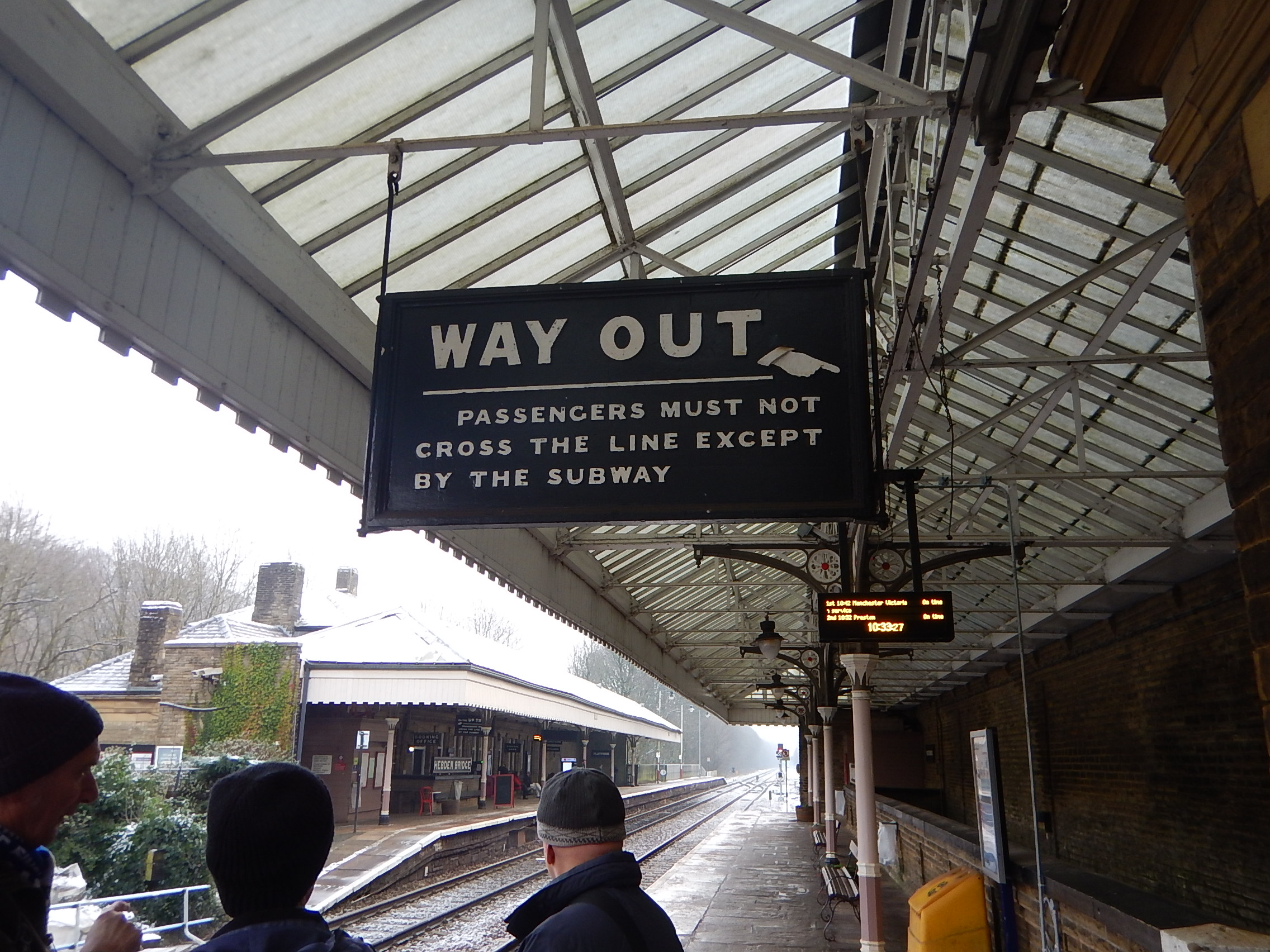
The picture shows the Grade II Listed Hebden Bridge station.
Third-rail electrification with an independent reliable power supply could be a way of speeding hybrid trains on their way.
Power Supply In Remote Places
Communications are essential to the modern railway.
Trains and train operators need to be able to have good radio connections to signalling and control systems.
Passengers want to access wi-fi and 4G mobile phone networks.
More base stations for communication networks will be needed in remote locations.
Wind, solar and hydrogen will all play their part.
I believe in the future, that remote routes in places like Wales, Scotland and parts of England, will see increasing numbers of trains and consequently passengers., many of whom will be walking in the countryside.
Could this lead to upgrading of remote stations and the need for reliable independent power supplies?
Conclusion
I am very much coming to the conclusion, that because of the small UK loading gauge, hydrogen-powered trains would only have limited applications in the UK. Unless the train manufacturers come up with a really special design.
But using hydrogen as an environmentally-friendly power source for UK railways to power electrification, perhaps in combination with wind and solar is a definite possibility!
.
Plastic Platforms At East Croydon Station
Platforms 1 and 2 at East Croydon station now have glass reinforced plastic surfaces.



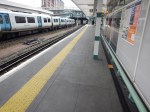
They look good and feature.
- Shorter stepping distance into and out of trains.
- Underfloor heating to prevent ice and snow build up.
- Blue LED edge lighting.
- The lights are blue, so they can’t be confused for signals by the drivers.
- The lighting is designed to deter suicides.
The keen-eyed will notice that the lights aren’t switched on. Apparently, some have failed!
The Electric Taxis Are Coming
London’s new electric black taxis will soon be seen on the streets.
From the pictures, I’ve seen, they could be an interesting ride.
- There is a panoramic glass roof.
- They are roomier, than the current black cabs and can seat six instead of five.
- Wi-fi and charging points are standard.
- Air-conditioning.
- A small petrol engine is used to boost range up to nearly 400 miles.
I shall search one out for a ride.
The Times though points out an interesting point about the design. This is said.
The bigger story is LEVC will now use the technology behind the TX to build far greater volumes of hybrid electric vans, the sort that deliver all our online shopping.
That certainly is a bigger story.
A few points of my own.
Geo-Fencing
Will geo-fencing be used to ensure that in central and sensitive areas and those with high air pollution, the taxi will run on batteries only.
This would also be particularly useful with the delivery van, where delivery depots tend to be outside the centre of a city.
Wireless Charging
London’s black cabs use rabjs and only yesterday, I picked up one from the rank at the Angel.
Milton Keynes has buses that can be charged using an inductive system.
So why not install inductive charging on taxi ranks?
Online Shopping Delivery
Parcel delivery companies don’t have the best of images. Electric last-mile delivery would certainly help.
For too long, vans have just been a crude metal box, with a couple of seats and an engine at the front.
So why not design a complete system around the taxi chassis?
- If the depot was outside the city centre, charging could be done at both the depot and on the journeys to and from the centre
- The van could also be designed so that containers packed at the depots could be loaded for each delivery.
- The containers could also be brought into the centre of the city at night into the main station by a purpose-designed train.
- A sophisticated onboard computer could control the driver and the deliveries.
There is a wonderful opportunity here to develop parcel delivery systems that are truly efficient and as pollution-free as possible.
Service Vans
If I walk down my road of about 150 houses and a couple of tower blocks on any weekday during working hours, I will probably count around half-a-dozen service vans of various types for small builders, plumbers. Most have not come further than a dozen miles.
If the economics of the electric van are pitched right, I think a large proportion of these vehicles will go electric, as they often sit around for large periods during the working day.
Conclusion
I can’t wait to get a ride in one of these taxis.
 The Anonymous Widower