Pedestrian Tunnels In London’s Transport System
I take particular interest in pedestrian tunnels, as I believe properly designed tunnels can be a solution to improving access to stations.
This list will be extended as I photograph more.
Bank – Bank And Monument Escalator Connection
I still think of this tunnel, as an escalator connection, as that was how it was marked on the tube map in the 1950s.



It is two escalators down a walk between the Docklands Light Railway platforms and then two escalators up at the other end.
Verdict – The connection is being upgraded.
Bank- Central To Northern Interchange Tunnel
This is the shortest way from the Central Line to the Northern Line.
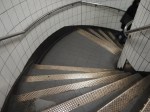
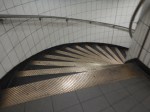
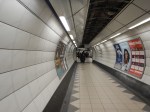

It does involve a descent of a circular staircase.
When the Bank station upgrade is complete this route will be replaced by an escalator connection between the two lines.
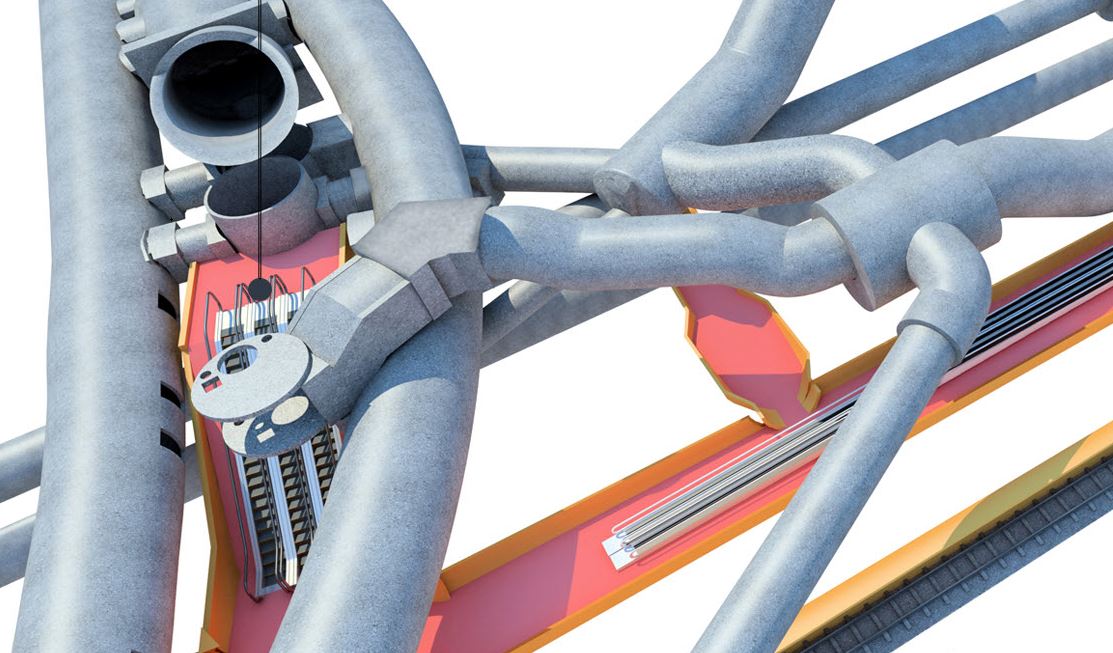
This visualisation shows the connecting escalators.
Note.
- The two wide highest level tunnels are the Central Line.
- The infamous curved Central Line platforms,create a large gap to mind.
- The two mid-level crossed tunnels are the existing Bank and Monument Escalator Connection and the Waterloo & City Tunnel.
- The four narrower lowest level tunnels are from bottom to top; the Southbound Northern Line, a new tunnel with a travelator; the old Southbound Northern Line tunnel and the Northbound Northern Line tunnel.
- The old Southbound Northern Line tunnel will become a passenger walkway.
Poking through all this spaghetti are the three escalators connecting the Central Line level with the Northern Line level.
Verdict – This connection will become much better.
Bank – Waterloo & City Inclined Travelator
The inclined travelators that link the Waterloo & City Line platforms and the main station entrances around Bank junction, are unique on the London Underground.
There are other travelators, but no others are inclined.


Verdict – I wonder why there are no others, as this pair seem to work very well.
Bank – Waterloo & City Tunnel
This tunnel connects the Waterloo & City Line platforms at Bank station to the central tunnel at Bank station.

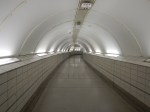


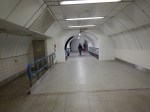
Verdict – It is a linear oasis in an otherwise dingy and cramped station.
Bond Street – Northern Entrance Tunnel
This new tunnel connects the new Northern entrance at Bond Street station to the platforms.


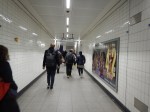
Incidentally, I’d arrived at Bond Street station through the main entrance and it was an awfully overcrowded scrum. The Northern entrance was quiet, as the pictures show.
The entrance is steps or a lift between the street and its own gate line and then a well-lit wide passage to the escalators.
In future, it will link to a wide tunnel to the Western end of the Crossrail platforms at the station.
It is much better way to enter Bond Street station.
Verdict – London and other cities with underground railways, need more new station entrances like this.
Green Park – Interchange Tunnel
This tunnel connects the Jubilee, Piccadilly and Victoria Lines at Green Park station.
The opening dates of the three lines, through the station were.
- Piccadilly Line – 1906 – Modernised in the 1930s with escalators.
- Victoria Line – 1969
- Jubilee Line – 1979
Since 1979 the station has been continually improved and is step-free.
This map from carto.metre.free.fr shows the lines at Green Park station.
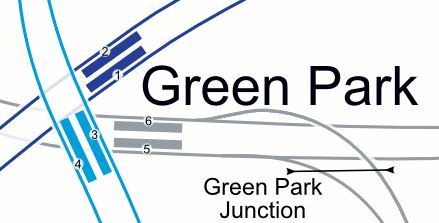
Note that the Jubilee Line is below the other lines and when the extension was built, it was a radical change to what was originally planned. The lines to the right lead to Charing Cross station and those going South to Westminster station.
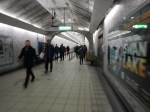
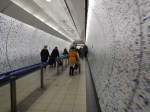

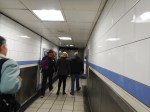

The interchange tunnel is long and usually very crowded. I had an incident recently, where I was walking slowly to the Victoria Line and a group of tourists all with four-wheeled cases, were nudging me to go faster. When we all got to the steps at the end, there was an enforced slow down.
Verdict – I avoid interchanging at Green Park like the plague.
Kings Cross – Eastern Tunnel
This tunnel runs which used to be part of the access to the old Kings Cross Thameslink station, runs from East of Kings Cross station and then has access to the main tunnel connecting the Northern, Piccadilly and Victoria Lines.

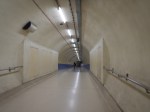

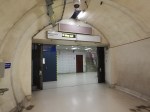

It has partial escalator access at the Eastern end, where the buses from Islington and the East stop outside the old station entrance. Although getting buses to the East mens crossing the busy Pentonville Road.
Verdict – Needs improvement
Kings Cross – Interchange Tunnel
This tunnel connects the Eastern Tunnel at Kings Cross to the escalators and lifts that lead to the Northern ticket hall Kings Cross St. Pancras tube station. On the way is connects to the Victoria, Piccadilly and Northern Lines.


It is a long walk, especially, if you have accessed it, as I often do, from the Eastern Tunnel which is convenient for buses from Islington and Dalston.
Verdict – Too long and boring
Kings Cross – St. Pancras Tunnel
This tunnel connects St. Pancras station to the Northern ticket hall at Kings Cross St. Pancras tube station.
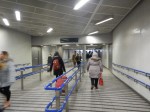


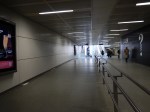

It is a wide, comfortable tunnel with a double handrail down the middle.
Note that the middle picture shows the connection to the next tunnel.
Verdict – Useful and a better walk than the surface alternative in cold or wet weather.
Kings Cross – Pancras Square Tunnel
This tunnel connects St. Pancras Square to the underground tunnel, that links St. Pancras station to the Northern ticket hall of Kings Cross St. Pancras tube station.


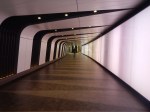

It is a good example of how to create a tunnel.
It has up and down escalators at the St. Pancras Square entrance.
Verdict – Good design and a pleasant walk.
Knightsbridge – Northern Exit Tunnel
This tunnel at Knightsbridge station was built in 2010 to connect the new entrance on the North side of Knightsbridge.


It looks to me that Transport for London had to make do with less space than they needed.
Verdict – Rather narrow and utilitarian.
Paddington – Bakerloo Line Link
This project to create a pedestrian link between the Bakerloo Line and Crossrail at Paddington is currently being built.
- It will be one hundred and thirty metres long.
- It will be twenty-five metres below the Paddington station concourse.
- The design uses a route to avoid existing station facilities.
- The tunnel is being built without major disruption to Bakerloo Line passengers.
- It will have lifts and escalators at both ends.
- The tunnel will handle five thousand passengers per hour in the Peak.
In August 2016, I wrote Paddington Is Operational Again, which describes the tunnel in detail.
Verdict – I have a feeling that this could be one of the most impressive parts of Crossrail.
I can’t wait for this tunnel to open.
South Kensington – Exhibition Road Pedestrian Tunnel
The Exhibition Road Pedestrian Tunnel at South Kensington station is unique in London, as it was built in 1885 and it is Grade II Listed.


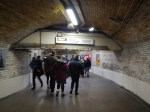
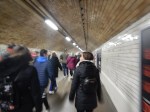
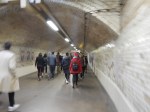
As the pictures show, it can get very busy.
Verdict – A Victorian idea, that hasn’t been copied much.
Tottenham Court Road – Interchange Tunnel
This tunnel connect the Central and Northern Lines at Tottenham Court Road station.
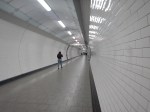


It is a bit lacking in colour to my liking. But at least there is some of Eduardo palotzi’s tiles at one end.
Verdict – Bland and too long.
Victoria – New Tunnels
Victoria station has had a new entrance at Cardinal Place and a lot of new tunnels to sort out the poor connectivity, added in the last couple of years.




As the pictures show, not all the tunnels are finished.
Verdict – Victoria is no longer a station yo avoid
Waterloo – Interchange Travelator
This map from carto.metro.free.fr shows the Underground lines at Waterloo station.
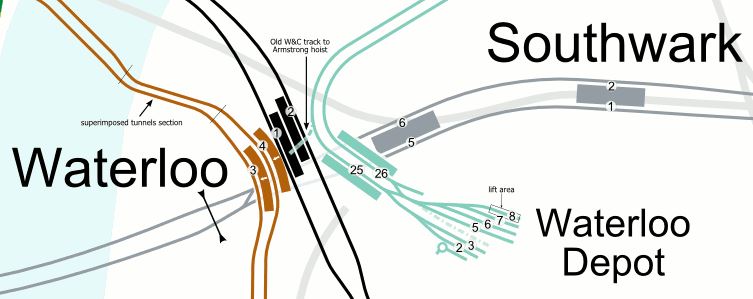
Note the large separation of the platforms of the Jubilee Line and those of the Bakerloo and Northern Lines.
The solution was to install a travelator, when the Jubilee Line Extension was built.


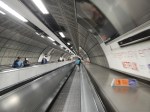
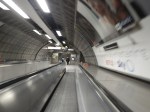
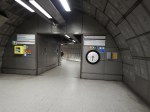


Although expense wasn’t spared on the project, I think we would give it a more decorative lining today.
Verdict – It works.
Whitechapel – Refurbished Overground Staircases
There are two staircases between the District/Hammersmith & City Lines and the East London Line, that are being refurbished for Crossrail.

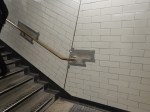
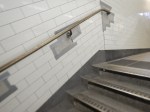

It looks like the work is of a high quality and that the old rails have not been replaced.
Verdict – These were scruffy tunnels a couple of years ago.
Summing Up
Some tunnels are obviously better than others, but what surprised me, was how well the Exhibition Rpad Tunnel to the museums coped with large numbers of passengers.
Perhaps, the Victorians got it right, as some of the best tunnels in my examples are the wider ones.
Comparing the Northern Exit Tunnel at Knightsbridge with the Northern Entrance Tunnel at Bond Street, shows how a wide tunnel and entrance, built with a lift, is a much better solution, than a narrow tunnel and entrance, without a lift.
The only narrow tunnel, that seems to work well is the tunnel connecting the Waterloo & City Line to the main Bank station complex.
But this tunnel is well-lit and I suspect tends to have passengers going the same way most of the time.
It also appears that recent tunnels like those at Bond Street and Victoria, are much better than those built about ten years ago, like the tunnel at Knightsbridge.
The Future
After Crossrail, London has a number of large station projects in the pipeline, some of which will require new connecting tunnels for passengers.
- The upgrading of Bank station is underway, where tunnels are being dug and escalators, travelators and lifts and being installed.
- The upgrading of Knightsbridge station is underway, but this will be simpler and I don’t think the upgrade includes more tunnels.
- The upgrading of Camden Town, Holborn and Walthamstow stations are in the planning stage. All will probably involve creating a new entrance connected to the existing platforms with lifts and escalators, but no long tunnels.
- Oxford Circus station is likely to be the subject of a major upgrade.
- Euston and Euston Square stations are being upgraded for the arrival of High Speed Two and there will be new tunnels to dig, between the two stations.
There are also possible new lines to consider, which may or may not be built.
- Bakerloo Line Extension
- Crossrail 2
- Docklands Light Railway to Thamesmead
- Docklands Light Railway to Euston, St. Pancras and Victoria.
All will be built with lots of entrances and exits, and interchanges with existing lines, so it is likely, there will be quite a few connecting tunnels.
Conclusion
I think that three tunnel projects will define a lot of the thinking about pedestrian access in the future.
- The Northern Entrance Tunnel at Bond Street, which surfaces in a commercial development.
- The Paddington Bakerloo Line Link, which appears to be setting new standards of design and construction.
- The narrow well-lit tunnel at Bank.
Could we see lessons learned with these newly-built tunnels applied to projects like Oxford Circus and Euston stations?
Google Grabs The Best Site In London For Its Massive Groundscraper
This Google Map the site where the massive groundscraper is being built.

Note.
- Kings Cross station, which is on the right of the map, has extensive connections to the North-East of England and Scotland.
- St. Pancras station, which is on the left of the map, has extensive connections to the Midlands and Belgium, France and the Netherlands, with more services to come including Germany, Switzerland and Western France.
- Thameslink runs North-South beneath St. Pancras station, has extensive connections to Bedfordshire, Herfordshire, Kent, Surrey and Sussex.
- There are also six Underground Lines.
- Gatwick and Luton Airports have direct connections and City, Heathrow and Southend Airports only need a step-free change.
- Improvements in the next few years could mean that HS2 and all of London’s five airports will have a fast direct connection to the area.
In the middle of all these railway lines, sits Google’s groundscraper, which shows as a white structure towards the top of the map.
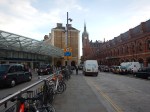
These pictures show the area between the two stations, the under-construction groundscraper and the new blocks.
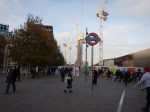





And these pictures show the progress on the site.
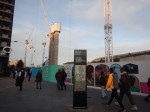



There is not much that is visible yet!
More Pictures!
But the building will be more visible soon! For those who can’t wait, this article from the Daily Mail has a lot of visualisations.
Call For ETCS On King’s Lynn Route
The title of this post, is the same as that on an article in Edition 849 of Rail Magazine.
The article is based on this document on the Fen Line Users Aoociation web site, which is entitled Joint Response To Draft East Coast Main Line Route Study.
In addition to ETCS, which could improve capacity on the East Coast Main Line, they would also like to see journey time reductions using trains capable of running at 125 mph or faster on the King’s Lynn to King’s Cross route.
The Fen Line
The Fen Line runs between Ely and King’s Lynn stations.
- It is mainly single -track with a double-track section at Downham Market station.
- The line has an operating speed of 90 mph.
- The line is electrified.
- All stations have two platforms.
- Looking at the line from my virtual helicopter, I suspect that redoubling would be possible.
- Passenger numbers are increasing at stations on the line.
- There are several level crossings.
It also would appear that because of the complicated nature of timetabling trains on the East Coast Main Line to the South of Hitchin, that there are often delays on the Fen Line, as there is only one passing place at Downham Market.
I therefore agree with the opinions expressed on the Fen Line Users Association, that restoring double-track could help reduce delays on the Fen Line.
The Cambridge Line
The Cambridge Line connects Cambridge to the East Coast Main Line at Hitchin.
- It is double-track throughout.
- It is fully electrified.
- It has a 90 mph operating speed.
- King’s Lynn to King’s Cross services use the line.
- Currently four trains per hour (tph) run between Cambridge and Kings Cross.
- This will be increased by two tph, when Thameslink is fully operational.
King’s Lynn to King’s Cross services use this line.
The Current Timetable
Trains seem to take around an hour and forty minutes to go from King’s Cross to King’s Lynn, where they take under ten minutes to turnround and then they take around an hour and forty minutes to return to King’s Cross. I suspect, it isn’t the easiest service for an operator to mrun, as a train could be sitting in King’s Cross for thirty minutes.
How Could The Service Between King’s Lynn and King’s Cross Be Improved?
From the Rail Magazine article, the views of the Fen Line Users Association and the details of the route, the following could help.
ERTMS And ETCS
ERTMS and the closely related; ETCS are digital systems that enable trains to run faster and closer together, which could increase the capacity of the line and reduce journey times.
The Wikipedia entry for the East Coast Main Line says this about recent and future development of the signalling.
A new Rail Operating Centre (ROC), with training facilities, opened in early 2014 at the “Engineer’s Triangle” in York. The ROC will enable signalling and day-to-day operations of the route to be undertaken in a single location. Signalling control/traffic management using ERTMS is scheduled to be introduced from 2020 on the ECML between London King’s Cross and Doncaster – managed from the York ROC.
I would think it likely that if the whole route from King’s Lynn and King’s Cross were digitally signalled, there would be advantages.
- It would help the merging of trains at Hitchin.
- It would help in managing trains on the single-track sections of the Fen Line.
The Rail Magazine article mentions flighting trains on the single-track sections, where two or more trains in the same direction, went though in succession.
It would also allow closer spacing and higher frequencies on the East Coast Main Line.
All trains using the route, including freight trains, would need to be fully equipped for digital signalling.
Improving The Fen Line
The biggest improvement would come by redoubling the line between Littleport and King’s Lynn.
- Trains could pass anywhere on the Fen Line.
- It might also be possible to avoid complicated operating procedures.
- Timetabling should be easier.
- Extra services would be possible.
- Delays should be reduced, as there would be less knock-on effects from problems on the East Coast Main Line.
On the flat lands of the fens, it might also be possible to increase the operating speed.
Improving Ely
Ely is a mess, where trains always seem to be waiting for something.
Hopefully, improvements are on the way, as I wrote in Are The Trains In Ely Finally To Be Sorted?
According to an e-mail and comments on this post, Ely North Junction needs improvement.
This Google Map shows the junction.
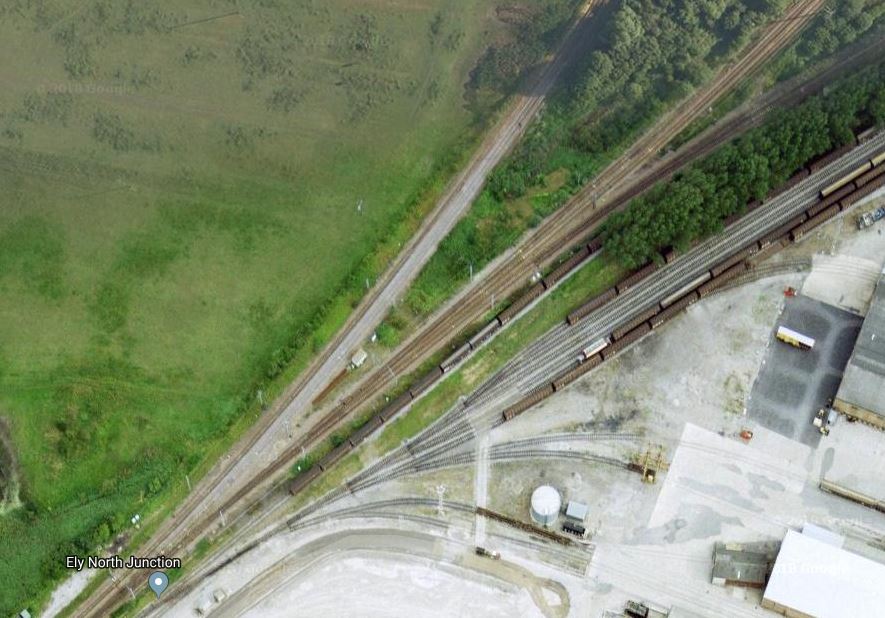
Note.
- Ely station is to the South West.
- starting at the top-left and going clockwise, lines go to Peterborough, Ely and Norwich.
- The last set of lines are sidings.
There would appear to be two solutions.
- Extra lines and flat junctions can be added. Flat junctions mean that trains have to cross each other.
- From what I’ve read digital signalling is very good at handling junctions, by making sure trains present themselves correctly, so this may be a better solution.
Either solution could be make to work very well!
Improving The Cambridge Line
There don’t appear to be any projects on the Cambridge Line, but I suspect that Network Rail are looking for small things, that will save minutes here and there.
125 Mph Trains
Who’d have thought forty or fifty years ago, that someone would seriously suggest running trains capable of 125 mph to King’s Lynn?
The Class 387 trains are 110 mph trains and I have recorded one at that speed on the East Coast Main Line.
Would a 125 mph train, be able to use that speed South of Hitchin?
If it could then.
- It could cruise on the fast lines with all the fast trains to and from the North.
- It would cut a couple of minutes from the journey time.
Once digital signalling is operational, the trains could be closer together, which would increase line capacity.
There are several fast electric multiple units, that have been built in recent years or are on order.
- Bombardier Class 387 – 110 mph – In service.
- Bombardier Aventra – 110 mph -In development for West Midlands Trains.
- CAF Class 397 – 125 mph – In development for TransPennine Express.
- Hitachi Class 801 – 125 mph On test for service entry this year.
- Siemens Class 350 – 110 mph – In service.
Bombardier are also showing ideas for a 125 mph bi-mode Aventra to various train operating companies, which I wrote about in Bombardier Bi-Mode Aventra To Feature Battery Power.
To build a 125 mph bi-mode train, you probably start with a 125 mph electric train.
So have Bombardier designed a 125 mph version of the Aventra?
It would appear, that Bombardier, Hitachi and possibly CAF and Stadler will be offering 125 mph electric multiple units, with a bi-mode version if needed, for lines without electrification.
But there are several routes in addition to Kings Cross to King’s Lynn
- St. Pancras to Corby
- Euston to the West Midlands
- Liverpool/Manchester to Edinburgh/Glasgow
- Leeds/York to Edinburgh/Glasgow.
- Waterloo to Bournemouth/Southampton/Weymouth
Train travel could be getting faster?
Conclusion
The ultimate benefit would come if trains could do a round trip in under three hours.
This would probably need a journey time of perhaps an hour and twenty-four minutes between King’s Cross and King’s Lynn. It is certainly not possible now, but it might be with the following.
- 125 mph-capable trains.
- Digital signalling on the East Coast Main Line and on the Cambridge and Fen Lines.
- 125 mph running, where possible on the East Coast Main Line.
- Improvements at Ely.
- Full double-tracking of the Fen Line.
- If possible, 100 mph running on the Cambridge and Fen Lines.
A three-hour round trip would allow the current service of one tph to be run with just three trains.
If both of the twice-hourly fast services between Kings Cross and Cambridge were extended to King’s Lynn, instead of the current one, this would mean that the following service could be possible with just six trains.
- Two tph
- Stops at Cambridge, Cambridge North, Waterbeach, Ely, Littleport, Downham Market and Watlington.
- Ten x 23 metre cars or twelve x 20 metre cars.
- Possibly a bistro.
- Trains might stop at Royston, Hitchin and/or Stevenage.
It would be a passenger-attracting 125 mph Metro.
There is improvement to come between King’s Cross, Cambridge and King’s Lynn, if the financial case stacks up.
Should A Mega-Station Be Created At Kings Cross-St. Pancras-Euston?
The three important stations of Kings Cross, St. Pancras and Euston sit like three isolated islands on Euston Road.
Kings Cross Station
Kings Cross station was extended and refurbished in 2012 and is the most modern of the three, with a well-designed square in front of the station.
Kings Cross serves as a terminus for East Coast Main Line and some Cambridge services.
Underground
Kings Cross has connections to the following Underground lines at Kings Cross St. Pancras tube station.
- Circle, Hammersmith and City and Metropolitan.
- Northern
- Piccadilly
- Victoria
On the whole, the connections to the Underground are generally good, but crowded.
Buses
If you want to go East connectivity is good, but when taking a bus to the West or South, finding the stop can be difficult.
Taxis
The taxi rank at Kings Cross generally works well, as it was reconfigured when the station was updated.
Summing Up Kings Cross Station
Kings Cross has a lot of space both inside and outside and using the station can be an easy process compared to many.
St. Pancras Station
St. Pancras station was rebuilt and extended for Eurostar and Southeastern Highspeed services in 2007.
I always describe St, Pancras as a Fur-Coat-And-No-Knickers station.
It may look spectacular, but it wasn’t designed for passengers or staff, due to the dreadful connectivity between the various services at the station.
- Continental
- Midland Main Line
- Southeastern Highspeed
- Thameslink
With all these services set to expand, I have a feeling that St. Pancras faces a capacity problem.
Underground
To further complicate matters, it’s a often a long walk to the Underground line you need, as these were designed to serve Kings Cross.
- Circle, Hammersmith and City and Metropolitan.
- Northern
- Piccadilly
- Victoria
There is a ticket hall at the front of the station, but it’s often very crowded with large numbers of Eurostar passengers queuing for tickets.
Buses
It’s a walk to Kings Cross in most cases unless you can find a way across the busy Euston Road.
Taxis
I always walk to Kings Cross, as like most passenger facilities at St. Pnncras, the taxi rank wasn’t well-designed.
Summing Up St. Pancras
St. Pancras doesn’t have the space inside or outside that Kings Cross has and often feels cramped with every seat taken.
With the increase in all services expected in the next few years, passengers should think hard about how they can avoid the station,
Euston Station
Euston station is going to be rebuilt in the next few years for HS2.
Currently, it serves as a terminus for West Coast Main Line and a few suburban services.
Underground
The Underground at Euston is a mess with Euston tube station handling the following lines.
- Both branches of the Northern
- Victoria
Round the corner is the cramped Euston Square station which handles the Circle, Hammersmith and City and Metropolitan Lines.
Neither station is fully step-free and the Underground connection will need expansion for HS2.
Buses
Euston has a good bus station if you’re going East, but going West means crossing the busy Euston Road.
Taxis
Euston has an underground taxi rank, that seems to work well.
Summing Up Euston Station
Space is at a premium in Euston station and the Underground connections need urgent improvement.
Crossrail 2
Crossrail 2 is being put forward as the project that will sort out the problems of the three stations on the Euston Road.
A mega station is to be built called Euston St. Pancras, which will serve all three stations.
But Euston and St. Pancras need extra capacity in connecting services now, not in the early 2030s!
Existing Lines
This map from carto.metro.free.fr shows the current Underground Lines at the three stations.

Can these lines be improved to help solve the capacity problems?
Victoria Line
If you want an example of the quality of the engineers working on the London Underground, you only have to look at the Victoria Line.
Fifty years old next year, the line was built on the cheap, but with superb automatic systems and some clever station layouts and now every year, more trains seem to be squeezed down its pair of tunnels. Currently, the frequency of trains is thirty-six trains per hour (tph) along its whole length.
As the Victoria Line calls at all three stations, any improvements to Dear Old Vicky, like step-free access at Euston, will help.
Northern Line
The Northern Line has three major projects underway.
- The extension to Battersea
- The upgrading of Camden Town station.
- The upgrading of Bank station
When these are complete around 2024, it will be possible to split the line into two separate lines each handling 36 tph.
But more trains will be needed.
Piccadilly Line
The major upgrade for the Piccadilly Line will be new trains, which should arrive from 2022, which will bring a double-digit increase in capacity.
It should also be noted that the frequency in the core is only twenty-one tph, so upwards of thorty tph must be an objectve.
Unlike the Northern And Victoria Lines, the Piccadilly Line doesn’t call at Euston station.
Circle, Hammersmith and City and Metropolitan Lines
The Circle, Hammersmith and City and Metropolitan Lines are being upgraded. This is said on Wikipedia.
Together with the introduction of S Stock trains, the track, electrical supply and signalling systems are being upgraded in a programme planned to increase peak-hour capacity on the Circle and Hammersmith & City lines by 65 per cent by the end of 2018. A single control room for the sub-surface railway is to be established in Hammersmith and an automatic train control (ATC) system will replace signalling equipment installed from the 1940s. The cross-London Crossrail line, planned to open in 2018, is expected to reduce crowding between Paddington and Whitechapel.
This should result in a large increase in capacity between Baker Street and Liverpool Street.
Crossrail
Although Crossrail doesn’t fully open until December 2019, and doesn’t even call at Kings Cross, St.Pancras and Euston stations, the new line will have an effect on passengers travelling to the three stations.
- In my quote from Wikipedia, it says that Crossrail is expected to reduce crowding between Paddington and Whitechapel.
- Crossrail is expected to have a link with HS2 at Old Oak Common station.
- Crossrail may be extended up the West Coast Main Line.
The latter two points would allow passengers to bypass Euston.
Thameslink
Thameslink when it is running fully at the design frequency of 24 tph will certainly have effects on passenger traffic.
But it is difficult to say what they will be.
Difficult Interchanges
If you look at the interchanges between the various lines, in my opinion, the following are the more difficult interchanges.
- Euston Square tube station to Euston station.
- Euston station to St. Pancras station.
- Victoria Line to Thameslink at St. Pancras station.
- Circle, Hammersmith and City and Metropolitan Lines ro Thameslink at St. Pancras station.
- Euston Square tube station to Northern Line at Euston station.
In addition Euston Square and Euston stations are not step-free.
Transport for London probably know the improvements that would offer the most benefit.
Euston Square Station And Euston Station
The poor connectivity between Euston Square tube station and Euston station, is a major problem.
Sort this bad connectivity, when Euston station is rebuilt for HS2 and world’s oldest underground railway, dating from 1863, will be providing a high-frequency service to the UK’s premier high-speed railway.
Euston Road
Euston Road, which can be very busy, is a major problem for passengers needing to cross to perhaps use buses going to the West.
The experience of using the stations could be improved for a proportion of travellers, if crossing the road was easier.
Should A Mega-Station Be Created At Kings Cross-St. Pancras-Euston?
I’ll return to the original question I asked.
- If Crossrail 2 is built, there will obviously be a mega station at Euston St. Pancras.
- But I believe that all the other improvements that will happen before HS2 opens may well be enough to cope with the extra capacity needed for a few years.
Obviously though, any improvements must not compromise the building of Crossrail 2’s mega-station.
Conclusion
I believe it is possible to improve connectivity to the three major stations of King Cross, St. Pancras and Euston, by doing the following.
- Improving the frequency and capacity on the various Underground lines serving the three stations.
- Splitting the Northern Line into two separate lines.
- Improving the links between the existing Nation Rail and Underground Lines.
- Integrating Euston Square station into Euston station, when Euston is rebuilt for HS2.
- Improving the crossing of Euston Road on foot.
In some ways the last-but-one point is the most important, as it cures the worst interchange.
Please Do Not Wait In The Green Lanes
These pictures show an experiment in Kings Cross St. Pancras tube station, on the Southbound Victoria Line platform, which aims to make boarding and unloading of trains faster.


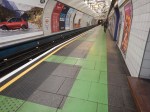
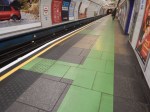
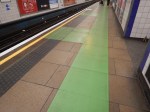
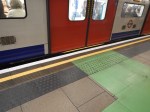
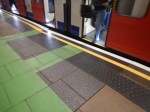
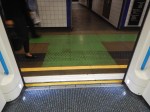
The idea is you don’t wait on the green lines, which are reserved for those getting on and off the trains.
The pictures were taken at ten in the morning, so I’ll go back one day in the Peak, to see how it works at a busy time.
But I do think it could be a good idea and a bit like platform edge doors, without the expense of the doors.
Note how the train stops precisely as indicated by the green lines. But then the stopping position of the train is determined automatically and has been since the Victoria Lie opened in 1967.
17 Tube Stations That Face Chronic Overcrowding If Crossrail 2 Is Stopped
The title of this post is the same as that of an article in today’s Standard.
This is the first two paragraphs.
Hundreds of thousands more Londoners will suffer chronic overcrowding on the Tube if Crossrail 2 does not go ahead, it was claimed today.
Transport for London released a list of 17 Underground stations that could buckle under the strain of too many commuters within a few years.
It then lists the stations.
- Euston
- King’s Cross St. Pancras
- Liverpool Street
- London Bridge
- Victoria
- Waterloo
- Finsbury Park
- Stockwell
- Stratford
- Oxford Circus
- Highbury & Islington
- Clapham Common
- Clapham North
- Clapham South
- Holborn
- Warren Street
- Leicester Square
It then quotes Caroline Pidgeon, who obtained the list, as follows.
Overcrowding on the Underground is already a daily battle, with many passengers facing regular delays to simply get through barriers at stations.
Unless Crossrail 2 is built these delays will increasingly build up until drastic measures are necessary at 17 key Tube stations, not to mention Clapham Junction railway station.
“Planning ahead for Crossrail 2 is not an optional extra for London’s transport network but of vital importance to keep London moving.
She has certainly highlighted a serious problem.
Call For Crossrail 2
Two years ago to the day, I wrote a post called Call For Crossrail 2 in response to a letter in The Times, from a wide cross section of business leaders calling for a start to be made on the line.
In the post, I talked about improving various stations, just by building Crossrail 2, so in the following notes on the list of crowded stations, I will refer to this post several times in the following.
Euston
Euston tube station is a particular problem in that in the next decade or so, the following will or could happen.
- HS2 will arrive at the station.
- Euston main line station will be rebuilt.
- Crossrail 2 will pass under the station.
- A connection will be created to Euston Square station for the Circle and Metropolitan Lines.
- There might even be an extension of the Docklands Light Railway to Euston.
- Step-free access must be added for all platforms.
Hopefully, the rebuilding for whichever comes first of HS2 or Crossrail 2, will make provision for even the most fanciful of expansions.
One Transport for London engineer told me that one of the main reasons for building HS2 and terminating it at Euston, is to be able to sort out the dreadful Euston tube station.
Kings Cross St. Pancras
Kings Cross St. Pancras tube station had a pretty good makeover around the time of the 2012 London Olympics, but it does suffer congestion and travellers have to walk long distances.
The Wikipedia entry for Kings Cross St. Pancras tube station has a section for Crossrail 2. This is said.
Since 1991, a route for a potential Crossrail 2 has been safeguarded, including a connection at King’s Cross St Pancras and Euston, forming the station Euston King’s Cross St Pancras. The proposed scheme would offer a second rail link between King’s Cross and Victoria in addition to the Victoria line. The locations for any new stations on the route will depend on the loading gauge of the final scheme. In the 2007 safeguarded route, the next stations would be Tottenham Court Road and Angel.
There is also a proposal to reopen the closed York Road tube station. In the Wikipedia entry for York Road station under Proposed Reopening, this is said.
One of London’s largest redevelopment projects, King’s Cross Central, began construction in 2008 across the road from the station. Islington council and Transport for London commissioned a study in 2005 to consider the possible reopening of the station. At the same time, however, it was recognised that other transport priorities reduced the likelihood of such a project moving forward in the near future. The site would need extensive overhauls to bring the station up to modern day standards, at a cost estimated at £21 million in 2005. Local political groups have been keen to see the station reopened in order to reduce passenger congestion at King’s Cross St. Pancras and to encourage development in the surrounding community. The Islington Liberal Democrats advocated the reopening of the station in their 2006 local election manifesto, and at least one candidate for the Islington Conservative Party similarly campaigned for the station to be reopened. However, to date, the reopening proposal has not been taken forward.
I wonder if York Road tube station will ever be reopened.
Liverpool Street
The Liverpool Street station complex will be even bigger and busier after Crossrail opens.
The main difference will be that the current Shenfield Metro will now disappear into the ground at Stratford and go under Central London to Heathrow and Reading.
Crossrail 2 will effectively channel the Lea Valley services, that current go into Liverpool Street station under London to emerge in the Wimbledon area.
Effectively, Crossrail and Crossrail 2 major effect on Liverpool Street station are to free up capacity in both tracks and platforms, thuis allowing more longer distance services to use the station.
London Bridge
London Bridge station is being rebuilt and expanded, but little seems to be planned for London Bridge tube station to cope with more passengers.
In Call For Crossrail 2, I said this about Crossrail 2 and the Northern Line.
Crossrail 2 will have interchanges with the Northern Line at Angel, Kings Cross St. Pancras, Euston, Tottenham Court Road, Tooting Broadway and possibly Clapham Junction. So it looks like that Crossrail 2 will certainly make journeys easier for users of the Northern Line.
This should mean that travellers on the Northern Line will be able to avoid a congested London Bridge tube station.
Victoria
Victoria tube station is being extended and rebuilt, which should result in sufficient capacity for more than a few years.
In Call For Crossrail 2, I said this about Crossrail 2 and the Victoria Line.
Crossrail 2 will effectively by-pass the central part of the Victoria Line as the two lines connect at Tottenham Hale, Seven Sisters, Kings Cross, Euston and Victoria.
This should take some of the pressure from Victoria tube station.
Waterloo
Waterloo tube station is a very busy tube station, as it has to cope with all the passengers using Waterloo station.
Crossrail 2 will allow passengers to bypass Waterloo, when travelling to and from Central London.
However, three major improvements will be delivered this year.
- The old Eurostar platforms are being brought back into use.
- Extra capacity is being added to the Underground station.
- I also think that when they have completed the improvements at the Bank end of the Waterloo and City Line.
- Will improvements follow at the Waterloo end?
I think Waterloo shouldn’t be judged until the current round of work is completed.
Finsbury Park
Finsbury Park station is a station that suffered badly when the Victoria Line was tunnelled through in the 1960s.
Lifts are being installed, but extra services will be added.
- Thameslink will call regularly at the station.
- The services on the Northern City Line will become the Great Northern Metro with an increased frequency.
Crossrail 2 will provide relief for Finsbury Park, as it provides a by-pass for the Victoria Line.
But the station needs to have quite a bit of rebuilding.
Stockwell
Stockwell tube station is where the Victoria and Northern Lines meet South of Victoria.
This map from carto.metro.free.fr shows the lines at Stockwell station.
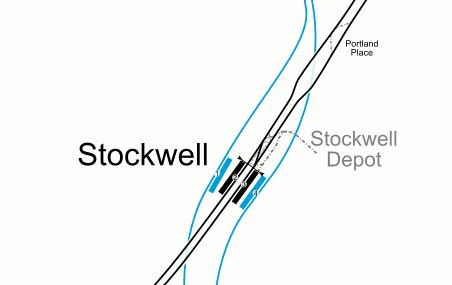
I’m not sure how Crossrail 2 helps here, but I suspect Transport for London hope that the new line will divert passengers away from Stockwell.
Stratford
Stratford station is another station that will be partially bypassed by Crossrail 2.
I do think that after Crossrail opens, that changes will be made at Stratford station to perhaps move some Liverpool Street services to Stansted and Cambridge.
This would bring more services to some not very busy platforms.
In West Anglia Route Improvement – The High Meads Loop, I described how it might all work.
This map from carto.metro.free.fr shows the lines in this area.
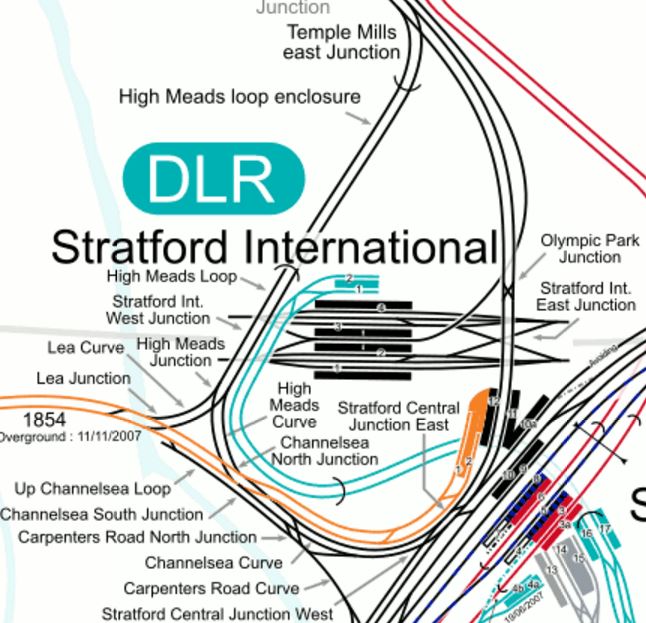
Trains from Cambridge and Stansted would arrive at Temple Mills East Junction and would go round the High Meads Loop dropping and picking up passengers in Platforms 11 and 12 bwfore returning North.
An extra platform could even be added to serve services in Stratford International station.
The tunnels under the platforms at Stratford station would probably need improvement, but who knows how Eastenders will duck and dive after Crossrail opens.
As an example, passengers from Shenfield to Canary Wharf will probably use the cross-platform change at Whitechapel station, rather than pick up the Jubilee Line or the DLR at Stratford.
Oxford Circus
Oxford Circus tube station has needed improvement for years.
Crossrail will give some relief, as there will be new additional entrances to Tottenham Court Road and Bond Street stations closer to Oxford Circus.
I did look at what might happen in What Will The Elizabeth Line Do For Oxford Street?.
I came to this conclusion about Crossrail 2 and Oxford Street.
Crossrail 2 has just one interchange in the Oxford Street area at Tottenham Court Road station.
I would be very surprised in that in the massive rebuilding of the current station for Crossrail, that provision hasn’t been made to connect to Crossrail 2.
There have been surface issues around the station concerned with Crossrail 2, but given good planning of the project, I feel that the building of Crossrail 2 would only effect the area in a similar way to the replacement of a major block on Oxford Street.
Crossrail 2 will have two major effects.
- It will bring large numbers of visitors to the Oxford Street area.
- Just as Crossrail and the Central Line will work as a high-capacity pair, it will work closely with the Victoria Line to relieve that line.
This leads me to the conclusion, that the wider Oxford Street area needs to be and will be pedestrianised.
In some ways preparation for the pedestrianisation has already started by reorganising the buses.
Oxford Circus tube station is also high on Transport for London’s improvement list.
This map from carto.metro,free.fr shows the lines through the station.
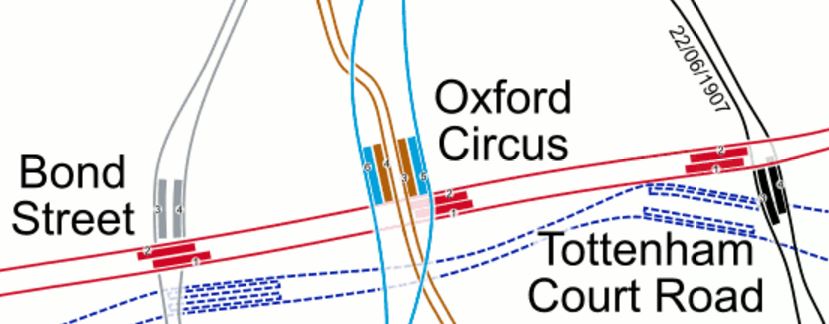
I suspect that if developers were interested in rebuilding any of the buildings on the South side of Oxford Street or perhaps even around the BBC to the North, that there could be arm-twisting and deal-making to sneak new entrances into Oxford Circus tube station.
Highbury & Islington
Highbury & Islington station, is one of my local ones and it is getting some much-needed improvement.
- The Northern City Line will be getting frequent new Class 717 trains to create the Great Northern Metro.
- Highbury Corner will be remodelled to improve pedestrian access to the station.
- Bus and taxi access is being improved..
But nothing has been announced about improving the chronic access to the two deep-level lines at the station.
Speaking to staff at the station, they feel that a solution is possible, using the second entrance on the other side of the road.
In some ways the Great Northern Metro with its cross-platform interchange with the Victoria Line could be the saviour of this station, as it gives direct access to the City and to Crossrail at Moorgate station.
One of London’s forgotten lines could be riding to the rescue.
Clapham Common
Clapham Common tube station is one of my least favourite. This picture shows why.
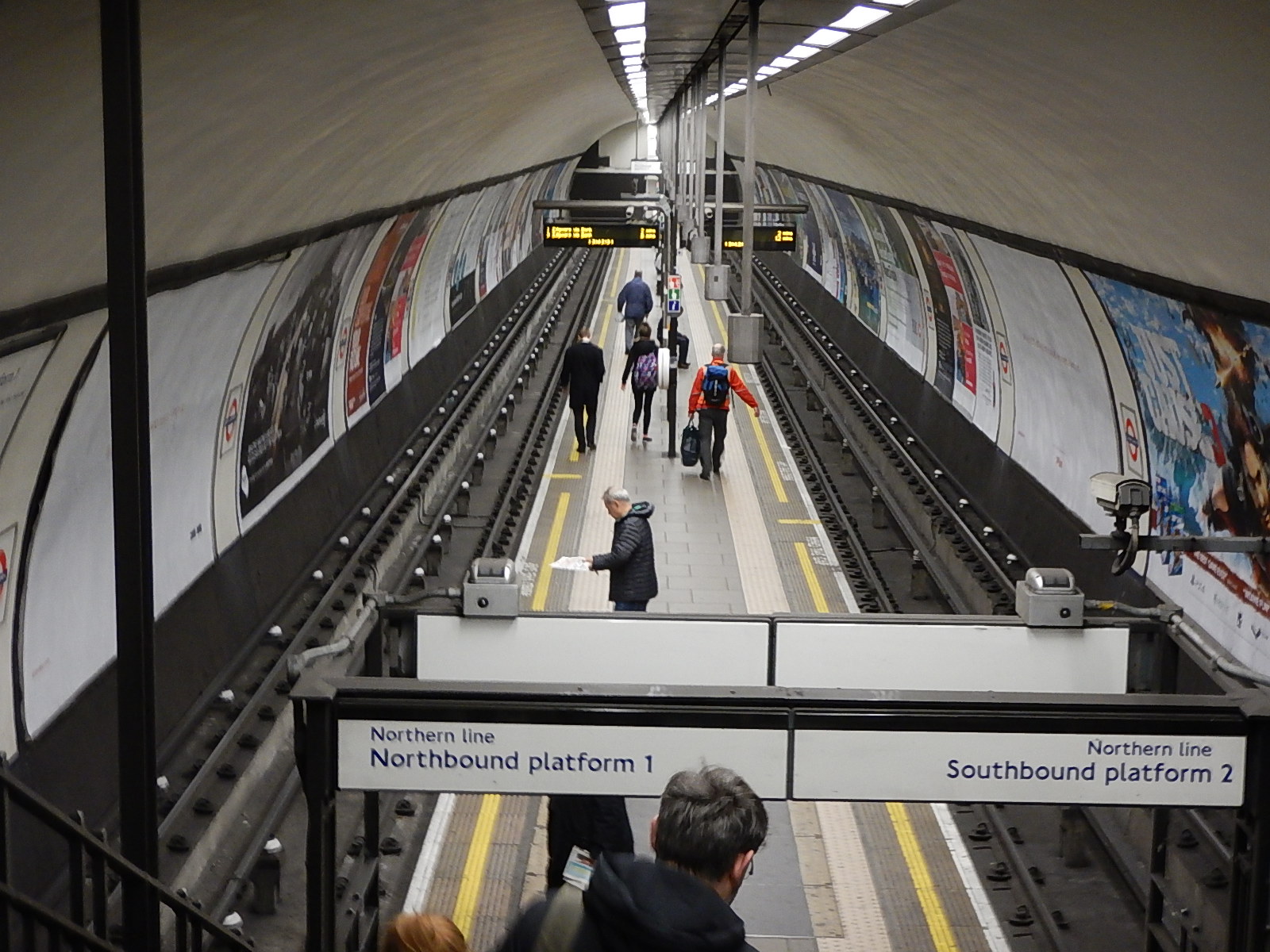
It’s downright dangerous now, so when the Northern Line frequency is increased will the station cope?
Clapham North
Clapham North tube station is another dangerous island platform.
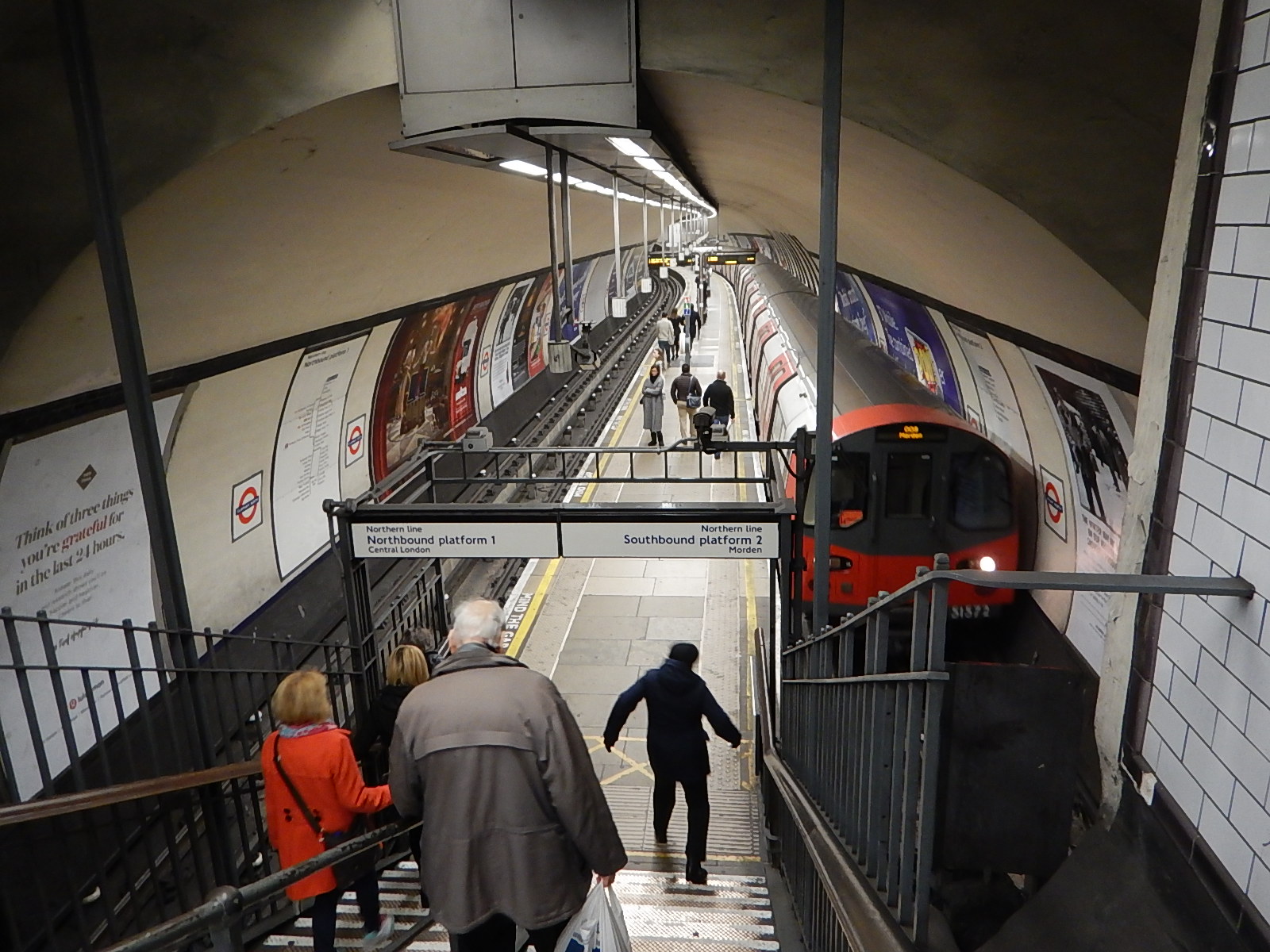
But at least the station has escalators.
In A Journey Round The Clapham Stations, a post I wrote in December 2015, I said this.
Having seen Clapham North and Clapham Common stations today, I do wonder if a diversion could be dug as at Angel, Bank and London Bridge, to create safe new stations. This new tunnel could surely be part of the works to add step-free access to one or both stations and connect the tunnels to Clapham High Street station.
What with the Northern Line Extension to Battersea, the rebuilding of Bank and Camden Town stations and all the resignalling of the past few years, the Northern Line could at last be fulfilling its potential.
This could go a long way to sorting the problem of the Clapham stations.
Clapham South
Clapham South tube station is not as bad as the other two Clapham stations discussed earlier.
Crossrail 2 may reduce the level of overcrowding on the Northern Line trains through the three Clapham stations, as passengers could change at Balham or Tooting Broadway stations to and from the new high-capacity line.
However, nothing short of some serious building work will solve the island platform problems at Clapham Common and Clapham North stations.
Holborn
Holborn tube station is very busy, but is one that could benefit from Crossrail, due to that line’s relationship with the Cerntral Line.
Crossrail 2 will certainly benefit the station, as it will relieve the pressure on the Piccadilly Line.
But Transport for London have published plans to add a second entrance and full step-free access. This is a 3-Dview of the plans.

Note the second entrance will be in Procter Street.
The only problem is that it could be 2021 before a decision is made.
However as a Piccadilly Line station, Holborn will benefit from the New Tube For London, before the upgrade.
Warren Street
Warren Street tube station is another Central London station on the Victoria Line, that could benefit from Crossrail 2’s duplication of the Victoria Line.
Leicester Square
Leicester Square tube station is just one stop on the Northern Line from the major new interchange of Tottenham Court Road station, which will be served by both Crossrail and Crossrail 2.
The station has needed more capacity since I first used it in the 1950s.
It needs step-free access.
This map from carto.metro.free.fr shows the lines around Leicester Square station.
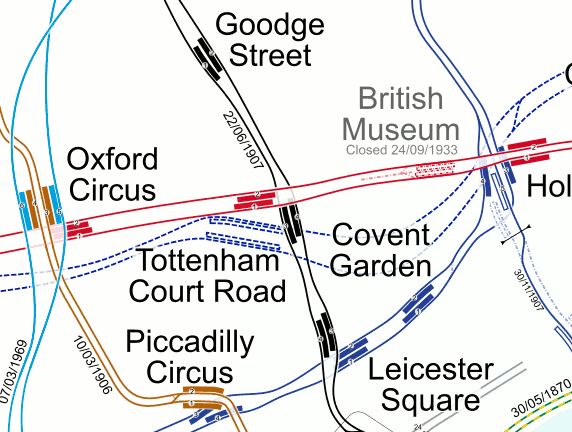
There is quite a tight knot of stations, of which only Tottenham Court Road has both escalators and lifts, although Goodge Street and Covent Garden have lifts only.
Leicester Square is an unusual station in that both the Northern and Piccadilly Lines are accessed by short passages and a short staircase from a fair-sized lobby at the bottom of a long set of escalators.
Clapham Junction
Clapham Junction station is the only non-Underground station in the seventeen stations named, where overcrowding could become chronic if Crossrail 2 is not built.
It is the busiest station by number of trains in Europe, so it must be difficult to keep on top of increasing numbers of passengers.
In the Wikipedia entry for the station under Future Proposals, this is said.
In 2007 the alignment of one of the two variants of Crossrail 2, that via the station rather than Putney and Wimbledon, was safeguarded. The Department for Transport and Transport for London continue to discuss proposal for a Clapham Junction Northern Line extension and its London Underground alignment has been legally reserved through Battersea Park, and would connect Clapham Junction to the London Underground for the first time.
Government and Network Rail funding for in the early 2010s of £50 million of improvements was granted. This comprised an upgrade to the main interchange: new entrances and more retail.
Surely something needs to be done, if Crossrail 2 is not built.
My proposals would include.
- Developing the West London Line services.
- Extending the Northern Line from Battersea Power Station station.
- Improving the frequency of trains into Waterloo.
- Make the station subway step-free.
There may be a need for more platforms, but the London Overground found this difficult.
This map from carto.metro.free.fr shows the platforms in the station.
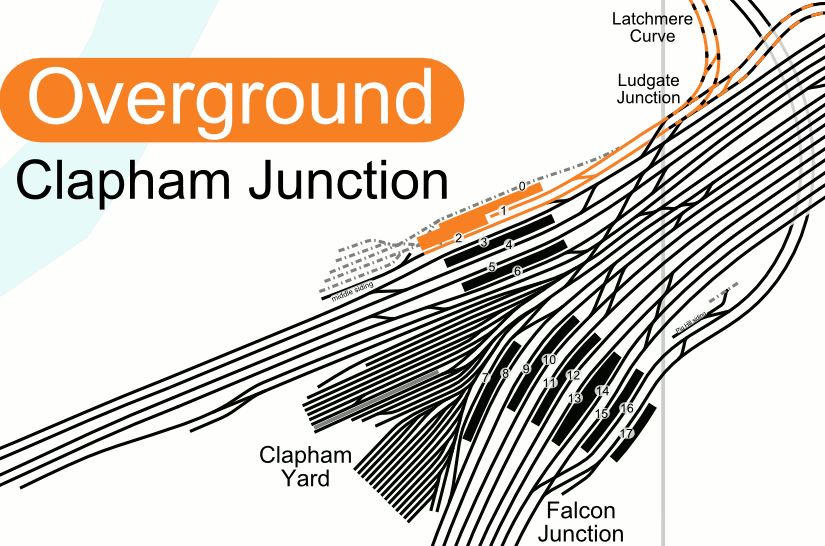
Simple it isn’t!
Conclusions
It surprised me how many of these stations will need substantial building work to cure the overcrowding.
Note.
- Every Victoria Line station between Oxford Circus and Finsbury Park is on the list.
- Four Northern Line stations between Stockwell to Clapham South is on the list.
- I think this shows how the designers of the Northern and Victoria Lines didn’t expect the traffic the lines now handle.
But overall, I think it shows how when you design a station, you don’t cut corners.
I also think to blame all these problems on the uncertainty about Crossrail 2, is probably a bit strong.
Consider.
- Liverpool Street will probably have enough capacity when Crossrail opens, especially as the station will incorporate Moorgate and be substantially step-free.
- The new London Bridge effectively adds high-frequency rail lines to Blackfriars, Cannon Street, Charing Cross and St. Pancras and when Thameslink and Southeastern are fully developed, the station will cope.
- Victoria shouldn’t be judged until the current upgrade is complete.
- Waterloo shouldn’t be judged until the current upgrade is complete.
- Finsbury Park shouldn’t be judged until the current upgrade is complete.
- Stratford will probably have enough capacity when Crossrail opens, especially as the station is substantially step-free.
- Oxford Circus should see improvement when Crossrail opens, especially as there’ll be new step-free entrances to Tottenham Court Road and Bond Street, that will be closer to Oxford Circus, than the current stations.
- Highbury & Islington should see marginal improvement, when the Northern City Line is updated.
However, nothing short of substantial construction will sort Euston, Clapham Common, Clapham North, Holborn, Leicester Square and Clapham Junction.
Crossrail 2 Will Be Threaded Through This
The map from carto.metro.free.fr, shows all the lines around Kings Cross station.

Lines Around Kings Cross
It certainly isn’t the easiest place to connect Crossrail 2, which will call at Angel, King’s Cross St. Pancras and Euston stations into the system. From a map in this document, it would appear that Crossrail 2 runs across to the north of the Victoria and Northern Lines.
Thank Heaven for 3-D computer design systems!
Wot No Adverts!
I took this picture at Kings Cross station.
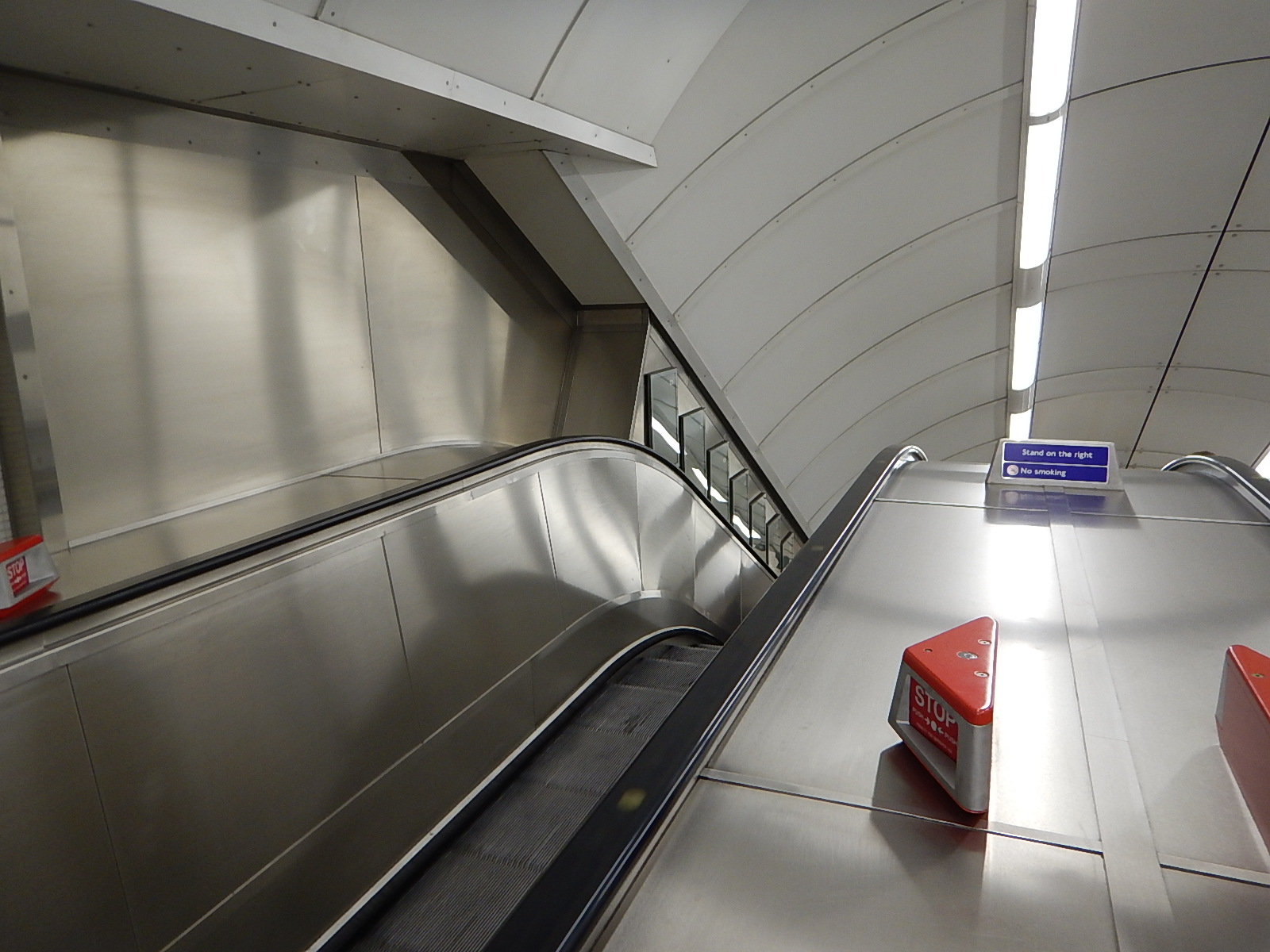
Wot No Adverts!
It was a surprise and probably to be welcomed in some ways.
However, although I don’t like advertising, unless it is informative about a new film or play, say, I did miss something to read, as I went up the escalator.
Now that these adverts are often screens, I’m surprised that no-one has developed an art installation using them.
Up Close And Personal With Kings Cross Station Roof
I was walking on the balcony at Kings Cross station to board my train to Stirling, when I took these pictures of the roof.
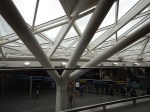


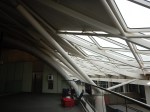
Did the architect design the building, so that passengers could look at the intricacies of the roof?
Wires In The Canal Tunnels
It would appear that the Canal Tunnels have now got overhead wires to connect it to the East Coast Main Line. If you want to know more about this important but forgotten part of London’s rail infastructure, read this page on Network Rail’s web site.
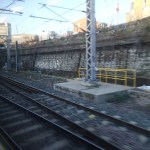

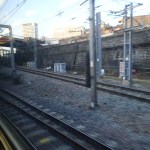
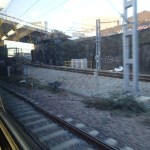
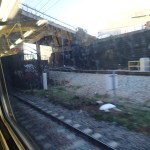
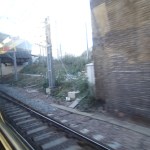
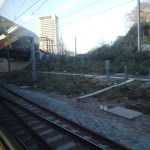
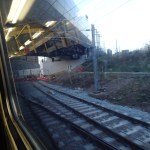
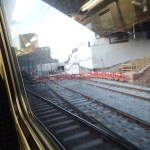
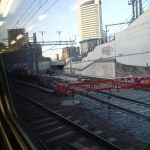
So it looks like the work that caused the chaos at Christmas is substantially complete. In a document on the Carillion web site, it says that the work will be complete by May 2015.
I took this series of pictures early today, which is looking to be a clear sunny one, from a rather dirty Class 313 train going from Finsbury Park to Kings Cross Stations.
 The Anonymous Widower