Approaching Kings Cross – 16th September 2020
I took these pictures yesterday, as my train approached Kings Cross station from Doncaster.

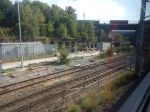
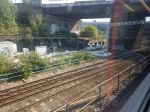
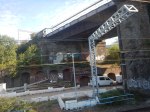
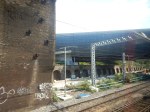
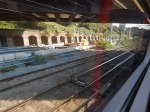
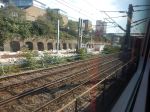
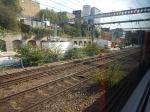
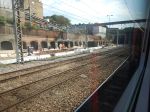
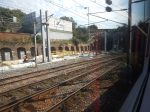

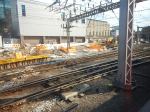
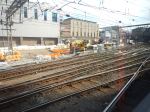
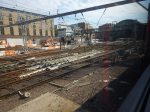
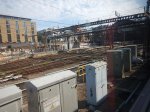

They seem to be making progress on adding two extra tracks into the station, which will be squeezed in on the Eastern side, and through an unused tunnel.
This is a Network Rail video, which explains the project.

Trackside Tim Overview of KX. Aug 19
The Capacity Increase At Kings Cross Station
Theoretically, increasing the number of tracks from four to six could increase the number of trains serving Kings Cross by fifty percent.
This Google Map shows Kings Cross station.
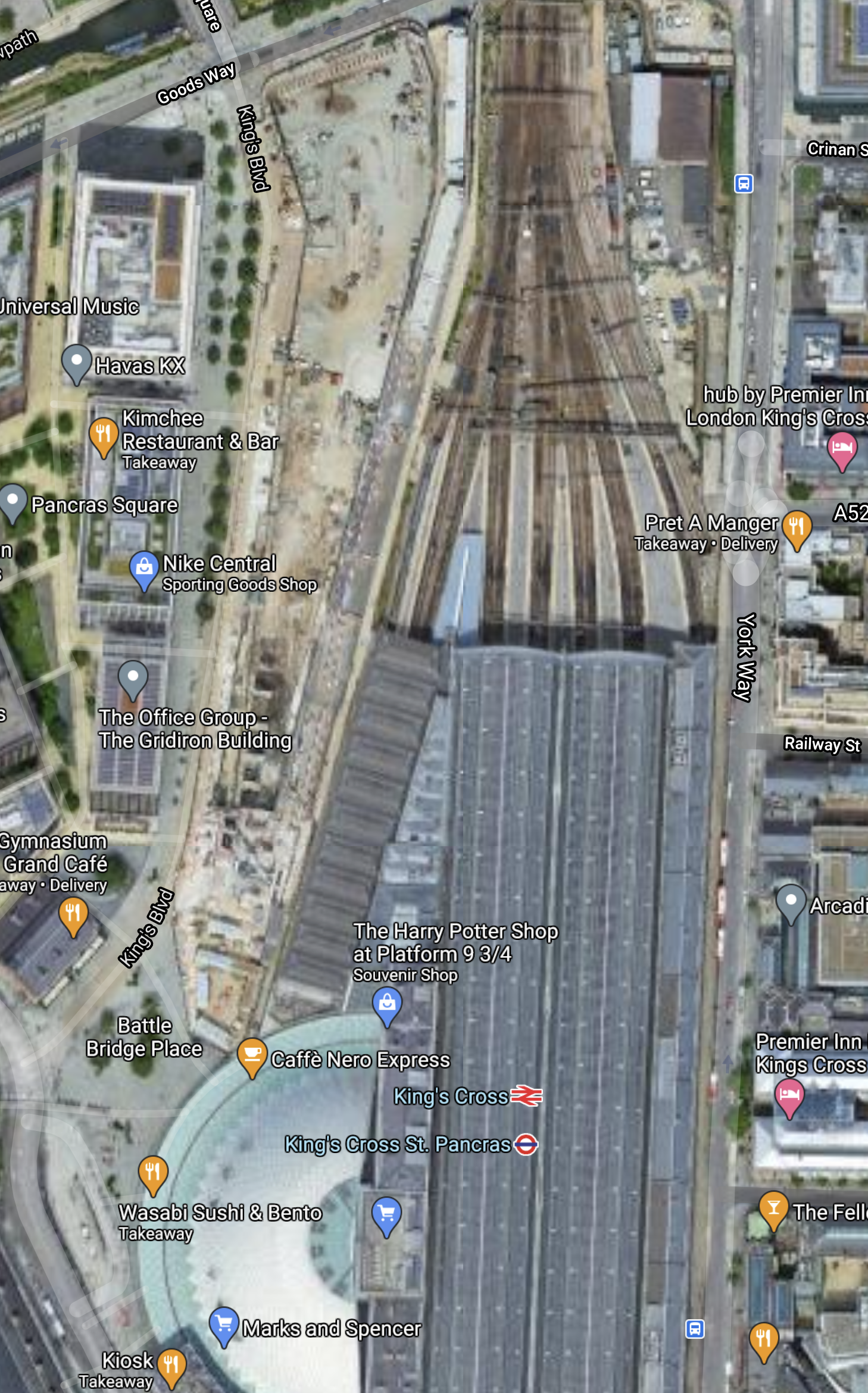
Note.
- Kings Cross station has twelve platforms, which are numbered 0-11, with 0 on the Eastern side.
- Platform 10 is due to be removed in the works.
This second Google Map shows the station throat to a large scale.
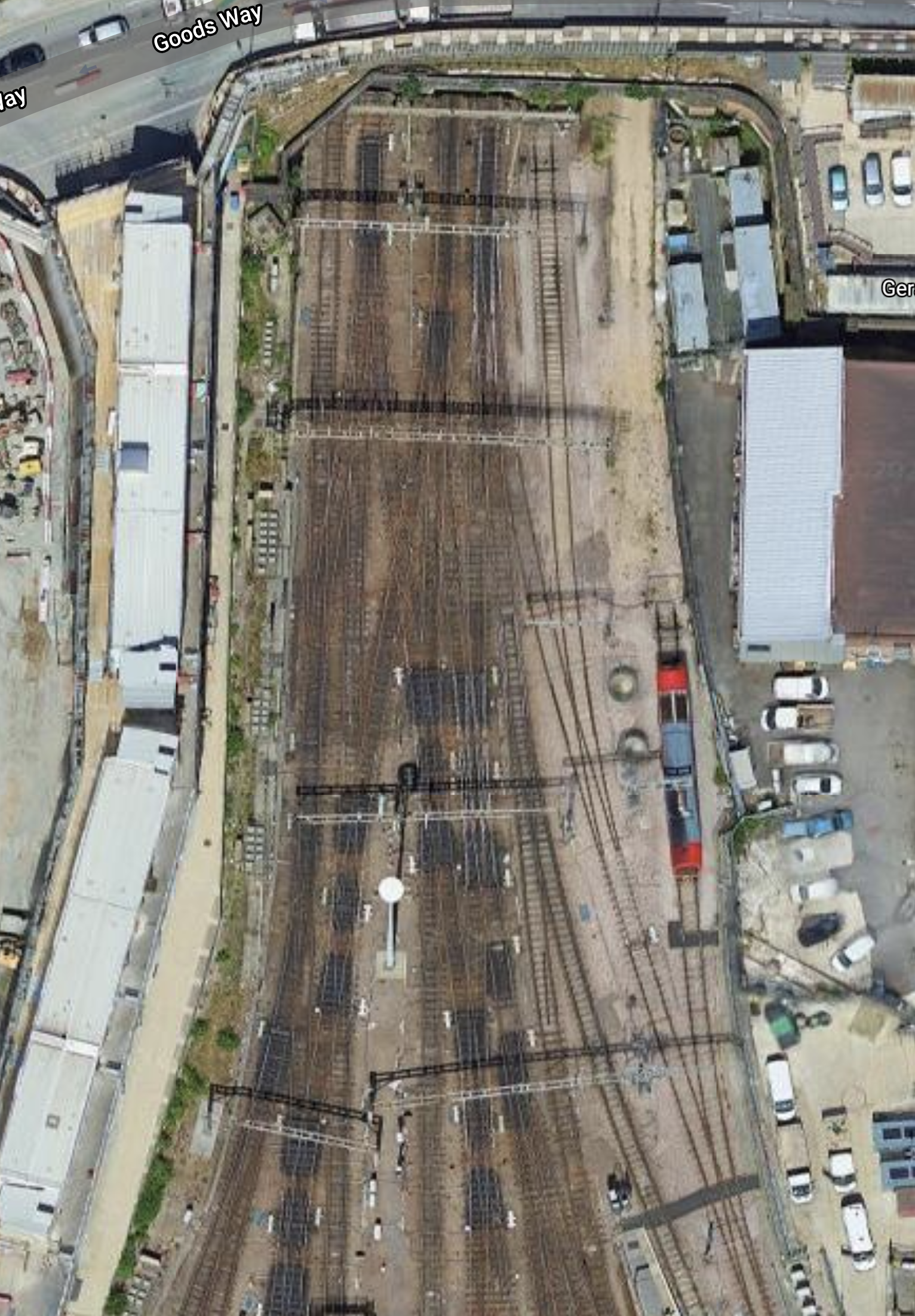
Note.
- The pairs of tracks leading to the current two tunnels can be clearly seen.
- Note how the track from Platform 0 comes right across to go through, what will be the middle tunnel.
- I would assume that six tracks going into eleven platforms would produce a less constricted layout.
Hopefully, when the new layout is complete, everything will be much easier.
I shall repeat this map, when the works are finished.
!40 mph Electric Trains At Kings Cross Station
This picture shows LNER’s old and new 140 mph electric trains at Kings Cross station.
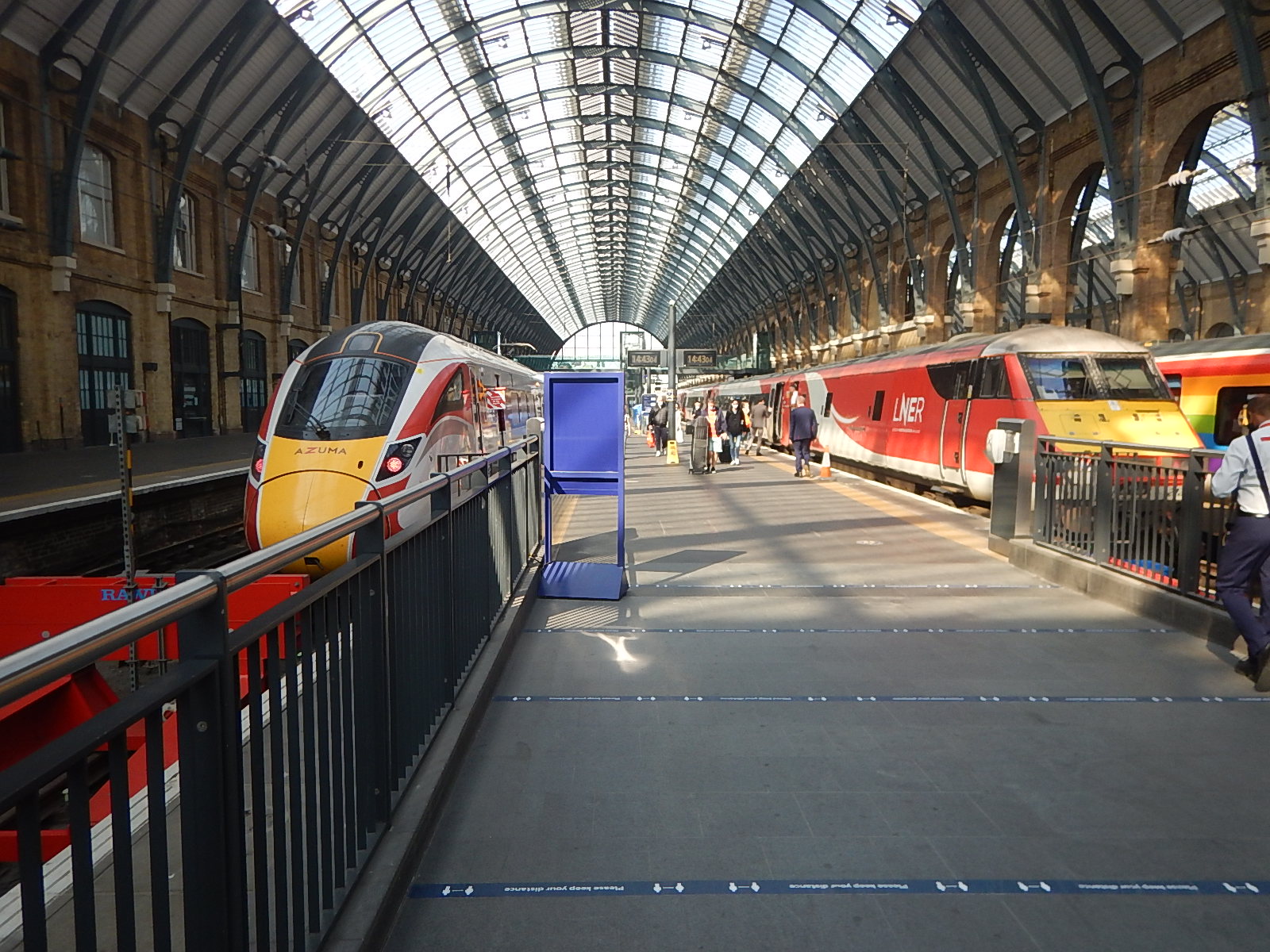
On the left is a nine-car Class 801 train.
- Introduced into service in 2019
- 234 metres long
- Capacity – 510 Standard and 101 First
- One diesel engine for emergency power.
On the right is an InterCity 225.
- Introduced into service in 1988-1991.
- Nine Mark 4 coaches
- 245 metres long
- Capacity 406 Standard and 129 First
- No emergency power
- As I wrote in Overhauls for LNER’s Remaining Class 91s And Mk 4s, the InterCity 225s are being updated to offer electric services between London Kings Cross and Bradford, Leeds, Skipton and York.
Both trains are designed for 140 mph and will be able to attain this speed, when in-cab digital signalling is available.
It looks like LNER will have the following full-size electric fleet.
- Thirty Class 801 trains
- Seven InterCity 225 trains and spare coaches, driving van trailers and locomotives.
Both trains will be able to work any route with full electrification.
Changes In The Future To LNER Services
I predict that the following will happen.
140 mph Running Between Woolmer Green And Doncaster
This will happen and the following trains will take advantage.
- LNER’s Class 800 and Class 801 trains
- Hull Train’s Class 802 trains
- East Coast Trains’s Class 803 trains
The odd ones out will be Grand Central’s Class 180 trains, which are diesel and only capable of 125 mph.
How long will the other train operating companies accept slow trains on the 140 mph railway?
Digital In-Cab Signalling And 140 mph Running Will Speed Up Services
In Thoughts On Digital Signalling On The East Coast Main Line, I said that following train times would be possible., in addition to a London Kings Cross and Leeds time of two hours.
- London Kings Cross and Bradford Forster Square – two hours and thirty minutes
- London Kings Cross and Harrogate – two hours and thirty minutes
- London Kings Cross and Huddersfield – two hours and twenty minutes
- London Kings Cross and Hull – two hours and thirty minutes
- London Kings Cross and Middlesbrough – two hours and thirty minutes
- London Kings Cross and Scarborough – two hours and thirty minutes
- London Kings Cross and Skipton – two hours and thirty minutes
- London Kings Cross and York – two hours
Note.
- All timings would be possible with Hitachi Class 80x trains.
- Timings on Fully-electrified routes would be possible with InterCity 225 trains.
It appears that Grand Central will be stuck in the slow lane.
Grand Central Will Acquire Hitachi Trains Or Give Up
Grand Central‘s destinations of Bradford Interchange and Sunderland can’t be reached by all-electric trains, so will either have to follow Hull Trains and purchase Hitachi bi-mode trains or give up their routes.
The Diesel Engines In The Class 801 Trains Will Be Replaced By Batteries
East Coast Trains’ Class 803 trains have a slightly different powertrain to LNER’s Class 801 trains, which is explained like this in Wikipedia.
Unlike the Class 801, another non-bi-mode AT300 variant which despite being designed only for electrified routes carries a diesel engine per unit for emergency use, the new units will not be fitted with any, and so would not be able to propel themselves in the event of a power failure. They will however be fitted with batteries to enable the train’s on-board services to be maintained, in case the primary electrical supplies would face a failure.
I wouldn’t be surprised to see a similar battery system fitted to the Class 801 trains.
The Diesel Engines In Hull Trains Class 802 Trains Will Be Replaced By Batteries
In Hull Issues New Plea For Electrification, I showed how Hitachi’s Class 802 trains with batteries instead of diesel engines could work long-distance services to and from Hull.
This will happen, as electric trains to London, would be a dream for a marketing man or woman.
Will The InterCity 225 Trains Lose Some First Class Seats?
This may happen, so that the seating layout in both trains is almost identical.
I’m certain, that it could be arranged, that seat numbers in both trains could have a similar position.
This would mean that if an InterCity 225 train replaced a Class 801 train, there wouldn’t need to be a seat reallocation.
Could InterCity 225 Trains Be Fitted With Emergency Batteries?
If LNER thought they were needed, I’m sure that this would be possible and Hyperdrive Innovation would oblige!
Conclusion
British Rail last hurrah, is giving Hitachi’s latest trains, a run for their money!
Thoughts On Digital Signalling On The East Coast Main Line
I came up to Doncaster yesterday on a new Hull Trains Class 802 train.
According to my pocket dynamometer car, the train seemed to be at or nearly at 125 mph, most of the time I looked from possibly around Stevenage to just South of Doncaster.
I came back today on an LNER Class 801 train and the train’s performance seemed very similar.
I also noted the following.
- The two stops at Newark and Peterborough, took seven and nine minutes respectively from the start of slowing for the station until back up to speed.
- Between Peterborough and Stevenage the train kept below a maximum of 110 mph.
- The train went through the two tunnels before Welwyn North station and the station itself at 75 mph.
- I timed the train at 100 mph over the Digswell Viaduct, when it reached the South side after accelerating on the viaduct.
- 90 mph was maintained between Potters Bar and New Southgate stations.
- Speed gradually reduced from New Southgate into Kings Cross.
Note.
- 125 mph is the maximum allowable speed of the train.
- The 110 mph running was probably to be compatible with the Class 387 trains.
- I will do the trip again and get some accurate figures.
It appears to me, that the driver was obeying a simple but fast plan.
The Wikipedia entry for the East Coast Main Line, says this about the opiating speed of the line, with the new trains.
Increasing maximum speeds on the fast lines between Woolmer Green and Dalton-on-Tees up to 140 mph (225 km/h) in conjunction with the introduction of the Intercity Express Programme, level crossing closures, ETRMS fitments, OLE rewiring and the OLE PSU – est. to cost £1.3 billion (2014). This project is referred to as “L2E4” or London to Edinburgh (in) 4 Hours. L2E4 examined the operation of the IEP at 140 mph on the ECML and the sections of track which can be upgraded to permit this, together with the engineering and operational costs
It also says this about the implementation of digital signalling.
A new Rail operating centre (ROC), with training facilities, opened in early 2014 at the “Engineer’s Triangle” in York. The ROC will enable signalling and day-to-day operations of the route to be undertaken in a single location. Signalling control/traffic management using ERTMS is scheduled to be introduced from 2020 on the ECML between London King’s Cross and Doncaster – managed from the York ROC.
The signalling could probably work in one of two ways.
- The signalling tells the driver the required speed and they drive the train accordingly.
- The signalling drives the train and the driver monitors what is happening.
Both methods are used in the UK.
A Possible London Kings Cross and Leeds Service
The combined affect of both track and signalling improvements is illustrated by this simple calculation.
- As Dalton-on-Tees is North of Doncaster, the route between Woolmer Green and Doncaster should be possible to be run at 140 mph
- Woolmer Green and Doncaster stations are 132.1 miles apart.
- Non-stop York and London Kings Cross trains are currently timed at 70 minutes between Doncaster and Woolmer Green stations.
- This is an average speed of 113.2 mph.
If 140 mph could be maintained between Doncaster and Woolmer Green, the section of the journey would take 56.6 minutes, which is a saving of 13.4 minutes.
Consider.
- The fastest current trains between London Kings Cross and Leeds take between two hours and twelve minutes and two hours and fifteen minutes.
- I suspect that the extra tracks into Kings Cross, that are currently being built will save a few minutes.
- There must be some savings to be made between Doncaster and Leeds
- There must be some savings to be made between London Kings Cross and Woolmer Green.
- There could be a rearrangement of stops.
I think it is highly likely that in the future, there will be at least one train per hour (tph) between London Kings Cross and Leeds, that does the trip in two hours.
- There is no reason why all London Kings Cross and Leeds trains could not take two hours.
- London Kings Cross and Doncaster could be several minutes under an-hour-and-a-half.
- High Speed Two is predicting one hour and twenty-one minutes for their future service between London Euston and Leeds, which is a saving of 38 minutes.
- London and Leeds in two hours will attract passengers.
There will be serious competition between London and Leeds.
Other Timing Improvements
I also think these times would be possible
- London Kings Cross and Bradford Forster Square – two hours and thirty minutes
- London Kings Cross and Harrogate – two hours and thirty minutes
- London Kings Cross and Huddersfield – two hours and twenty minutes
- London Kings Cross and Hull – two hours and thirty minutes
- London Kings Cross and Middlesbrough – two hours and thirty minutes
- London Kings Cross and Scarborough – two hours and thirty minutes
- London Kings Cross and Sheffield – two hours
- London Kings Cross and Skipton – two hours and thirty minutes
- London Kings Cross and York – two hours
I would be fairly certain that London Kings Cross and Huddersfield could be slowed by ten minutes, which would give the London Kings Cross and Yorkshire a certain symmetry.
- London Kings Cross and Leeds and York would take two hours.
- London Kings Cross and all the others would take two hours and thirty minutes.
It would probably make arrangement of a fast timetable easier.
Will The East Coast Main Line Give High Speed Two A Run For Its Money To The North East Of England?
I have looked up High Speed Two timings on their Journey Time Calculator and compared them with current LNER timetables.
- London-Leeds – Current – 136 minutes – HS2 – 81 minutes
- London-York – Current – 111 minutes – HS2 – 84 minutes
- London – Darlington – Current – 141 minutes – HS2 – 112 minutes
- York- Darlington – Current – 27 minutes – HS2 – 26 minutes
- London – Durham – Current – 170 minutes – HS2 – 138 minutes
- York – Durham – Current – 45 minutes – HS2 – 44 minutes
- London – Newcastle – Current – 170 minutes – HS2 – 137 minutes
- York – Newcastle – Current – 55 minutes – HS2 – 51 minutes
- London – Edinburgh – Current – 259 minutes – HS2 – 220 minutes
- Newcastle – Edinburgh – Current – 83 minutes – HS2 – 83 minutes
- York – Edinburgh – Current – 138 minutes – HS2 – 134 minutes
Note.
- I have assumed that Newcastle and Edinburgh takes 83 minutes, which is the current timing.
- The time savings possible to the North of Leeds are only a few minutes.
- As an example, the straight route between York and Darlington is 34 miles, which means an average speed of only 75 mph.
Serious work needs to be done North of York to improve timings.
Improvements To The East Coast Main Line
Various improvements to the East Coast Main Line are in process of building designed or built.
Extra Tracks
These example of more tracks are from the Wikipedia entry for the East Coast Main Line.
- Four tracks are being restored between Huntington and Woodwalton.
- Freight loops between York and Darlington.
There are probably other places, which will see extra tracks in the next few years.
Power Supply And Electrification
Wikipedia identified places where the power supply and the electrification could be better.
This sentence indicates the comprehensive nature of the planned work.
Power supply upgrades (PSU) between Wood Green and Bawtry (Phase 1 – completed in September 2017) and Bawtry to Edinburgh (Phase 2), including some overhead lines (OLE) support improvements, rewiring of the contact and catenary wires, and headspan to portal conversions (HS2P) which were installed at Conington in January 2018.
The Hertford Loop Line is also due to have some power supply upgrades.
Station Improvements
Darlington, Kings Cross, Stevenage and York will have track improvements, which will improve the capacity of the tracks through the stations.
Werrington Dive Under
The Werrington Dive Under will be a big improvement. This is an extract from the Wikipedia entry.
The project will see the construction of 1.9 miles (3 km) of new line that will run underneath the fast lines, culverting works on Marholm Brook and the movement of the Stamford lines 82 feet (25 m) westwards over the culverted brook. This will mean that trains for the GN/GE line no longer need to cross the fast lines on the level, nor use the Up Fast line between Peterborough station and the junction. The project, coupled with other ECML improvement schemes (such as the four tracking from Huntingdon to Woodwalton) will improve capacity on the line through Peterborough by 33% according to Network Rail. This equates to two extra train paths an hour by 2021, when the work is scheduled to be completed. In turn, this will remove 21 minutes from the fastest King’s Cross to Edinburgh Waverley service, and 13 minutes from the fastest King’s Cross to Leeds service. It will also see an increase of 1,050 ‘intercity’ seats per hour on express trains through Peterborough.
The upgrade will add two more train paths to the route and knock 21 and 13 minutes off the faster Edinburgh and Leeds services respectively.
The Newark Flat Crossing
This is the railway equivalent of a light-controlled pedestrian crossing in the middle of a motorway.
This Google Map shows the crossing.
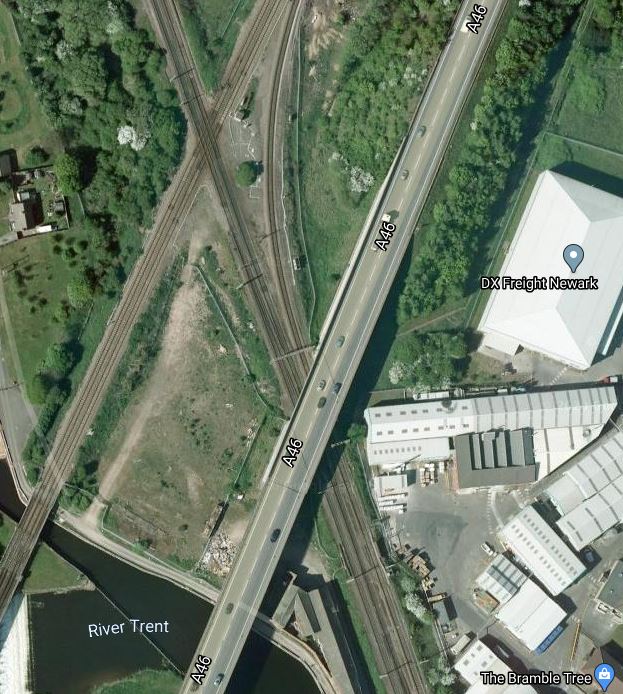
Note.
- The East Coast Main Line running roughly North-South
- The A 46 road crossing the line.
- The Nottingham-Lincoln Line running parallel to the railway.
- A chord allowing trains to go between the Nottingham-Lincoln Line and Newark North Gate station, which is to the South.
- The River Trent.
Complicated it certainly is!
I wrote about the problems in The Newark Crossing and felt something radical needed to be done.
Looking at the numbers of trains at the Newark Crossing.
- The number of trains crossing the East Coast Main Line, is typically about three to five trains per hour (tph) and they block the East Coast Main Line for about two minutes.
- But then there could be a fast train around every four minutes on the East Coast Main Line, with eight tph in both directions.
The numbers of trains and their speeds would probably cut out a Control Engineer’s solution, where all trains are computer controlled through the junction.
Although, it might be possible to reduce the number of conflicting trains on the East Coast Main Line dramatically, by arranging a Northbound and a Southbound express passed each other at the flat junction.
There’s also the problem of what happens if a crossing train fails, as it goes over the East Coast Main Line. But that must be a problem now!
Whatever happens here will be a well-thought through solution and it will add to the capacity of the East Coast Main Line and increase the line-speed from the current 100 mph.
Level Crossings
Wikipedia says this about level crossings.
Level crossing closures between King’s Cross and Doncaster: As of July 2015 this will no longer be conducted as a single closure of 73 level crossings but will be conducted on a case-by case basis (for example, Abbots Ripton Level Crossing will close as part of the HW4T scheme).
It is my personal view that all should be removed.
ERTMS Signalling
Wikipedia says this about the installation of ERTMS digital in-cab signalling.
The line between London King’s Cross and Bawtry, on the approach to Doncaster, will be signalled with Level 2 ERTMS. The target date for operational ERTMS services is December 2018 with completion in 2020.
Note that, ERTMS is needed for 140 mph running.
140 mpg Running
Wkipedia says this about 140 mph running.
Increasing maximum speeds on the fast lines between Woolmer Green and Dalton-on-Tees up to 140 mph (225 km/h) in conjunction with the introduction of the Intercity Express Programme, level crossing closures, ERTMS fitments, OLE rewiring and the OLE PSU – est. to cost £1.3 billion (2014). This project is referred to as “L2E4” or London to Edinburgh (in) 4 Hours. L2E4 examined the operation of the IEP at 140 mph on the ECML and the sections of track which can be upgraded to permit this, together with the engineering and operational costs.
A rough calculation indicates that up to eleven minutes could be saved by this upgrade, between London and Darlington.
Prospective Timings On The East Coast Main Line
Consider.
- The package of new trains level crossing closures, ERTMS, OLE rewiring and the OLE PSU, which is collectively known as L2E4 should deliver Edinburgh in four hours.
- Nineteen minutes need to be saved on current times.
- I believe that if the train takes four hours or less, travellers will switch from the airlines.
- High Speed Two are aiming for a time of 220 minutes, but is this by the West or East Coast routes?
- As their proposed Glasgow service has a similar time, I assume it is by the West Coast route.
- Wikipedia states that an Open Access Operator was thinking of running Class 390 trains or Pendelinos between London Kings Cross and Edinburgh in 223 minutes.
If the managers of LNER are the least bit ambitious, I can see them wanting to run a service between London and Edinburgh, in a time that is several minutes under four hours.
It should always be remembered that the East Coast Main Line was built for speed, as these true stories illustrate.
- Mallard set the world speed record for steam locomotives in 1938 of 126 mph, on the line.
- The record time between London and Edinburgh was set in 1991 by an InterCity 225 train at a minute under three-and-a-half hours.
I even have my own special memory of the line, which I wrote about in The Thunder of Three-Thousand Three-Hundred Horses. Behind a Deltic or Class 55 locomotive, I went from Darlington to London in two hours and fifteen minutes, which is faster than today’s fastest trains. Not bad for a 1960s design, but the train was a coach short and had a clear run. And was probably extremely-well driven.
Is the East Coast Main Line and especially the section South of Darlington, a route, where a knowledgeable driver can coax the maximum out of a high speed train?
Possible savings over the next few years include.
Werrington Junction
When this is completed, it could knock twenty-one minutes off the timings to Edinburgh.
Newark Crossing
How much time could be saved here?
There must be some time savings if the line speed can be increased from 100 mph.
140 mph Running
The various improvements in L2E4 are intended to enable services to run between London and Edinburgh in under four hours.
- Does L2E4 include any possible time savings from the Werrington Dive Under?
- Does L2E4 include any possible time savings from improvements at Newark?
- What is the completion date for L2E4?
- Most of the time savings for L2E4 will be South of Darlington as the track is straighter.
As I said earlier a rough calculation indicates that L2E4 will save about eleven minutes to the South of Darlington.
Conclusion
There must be over thirty minutes of savings to be accumulated on the East Coast Main Line. Much of it because of the Werrington and Newark improvements will be South of Darlington.
I wouldn’t be surprised to see timings like these.
- London-Leeds – Current – 136 minutes – HS2 – 81 minutes – Possible ECML – 120 minutes
- London-York – Current – 111 minutes – HS2 – 84 minutes – Possible ECML – 90 minutes
- London – Darlington – Current – 141 minutes – HS2 – 112 minutes – Possible ECML – 115 minutes
- London – Durham – Current – 170 minutes – HS2 – 138 minutes – Possible ECML – 130 minutes
- London – Newcastle – Current – 170 minutes – HS2 – 137 minutes – Possible ECML – 130 minutes
- London – Edinburgh – Current – 259 minutes – HS2 – 220 minutes – Possible ECML – 210 minutes
It looks to me, that the East Coast Main Line could be fulfilling the aspirations of British Rail’s engineers of the 1980s.
Braving The London Underground
I took these pictures today, in a short Underground trip between Angel and Kings Cross St. Pancras tube stations.



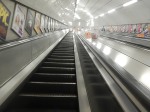

It’s not very busy! Is it?
- There was no-one else in the tunnel as I walked between the escalators at Angel station.
- There was only two other people in my carriage on the train.
- There were few people in the tunnels at Kings Cross.
Isuspect that I travelled during lunchtime helped.
First Of Five FirstGroup Class 803s Arrives In UK
The title of this post is the same as that of this article on Rail Magazine.
The Class 803 trains will be used by East Coast Trains for their low-cost, one-class, open-access service between London Kings Cross and Edinburgh.
The trains would appear to be being delivered in time for services to start in Autumn 2021.
The article says the trains are the first to have a new feature.
They will be fitted with batteries, although these will not provide traction performance – instead, they can power on-board services should the train fail.
The Class 803 trains are electric trains and are these batteries a replacement for the single diesel-engine on the electric Class 801 trains? This diesel-engine has two main purposes.
- Provide emergency power for on-board services.
- Move the train to a safe place foe evacuation of passengers.
The article also says that Hitachi could fit traction batteries to existing bi-mode fleets.
LNER Services To Double Between Bradford And London
The title of this post is the same as that as this press release from LNER.
This is the introductory paragraph.
London North Eastern Railway (LNER) is pleased to confirm it will be doubling the number of Azuma weekday services between Bradford Forster Square and London King’s Cross from Monday 18 May 2020.
The timetable is as follows.
Southbound
- Leave Bradford Forster Square at 06:30 and arrive London Kings Cross at 08:59
- Leave Bradford Forster Square at 08:43 and arrive London Kings Cross at 11:31
Northbound
- Leave London Kings Cross at 16:33 and arrive Bradford Forster Square at 19:29
- Leave London Kings Cross at 18:33 and arrive Bradford Forster Square at 21:29
All services appear to call at Shipley between Leeds and Bradford Forster Square.
The press release doesn’t say if the trains split and join at Leeds station, but the timings are generous enough, if it is needed.
I wonder, if there will be more services between London and Bradford Forster Square in a few months. It probably depends on the level of success.
LNER Expands To Huddersfield
This press release from LNER is entitled LNER Announces Direct Services Between Huddersfield And London.
These are the introductory paragraphs.
LNER is proud to announce new Azuma services will be introduced between Huddersfield and London King’s Cross from Monday 18 May 2020.
The daily weekday service in each direction will be LNER’s first direct link between the West Yorkshire market town and the capital.
They will also connect nearby Dewsbury directly with London King’s Cross, after more than a generation of no direct services between Huddersfield and London.
The timetable will be as follows.
The new southbound service will depart from Huddersfield at 05:50 and Dewsbury at 06:01. The Azuma service will arrive in Leeds at 06:16, where it will couple to another five-car Azuma to form the 06:40 Leeds to London King’s Cross service, which will arrive in the capital at 08:51 on weekdays.
The evening northbound service will depart from London King’s Cross at 18:03 and will be formed of two five-car Azuma trains, which will split in Leeds, with one train continuing to Skipton and the other to Dewsbury, arriving at 20:45 and then Huddersfield at 20:58.
Joining and splitting is definitely being brought to Yorkshire by LNER.
I wonder, if there will be a London to Huddersfield service in the reverse direction in a few months.
Chaos Between London And Leeds
On Tuesday, I had booked myself between Kings Cross and Leeds on the 11:03 LNER train. My idea was to do a short round trip to Harrogate from Leeds before going across the Pennines to Manchester and sign in to my hotel, before going to see Ipswich play at Rochdale in the evening.
But it all went wrong, as someone decided to commit suicide and was hit by a train at Grantham.
Finally, I got to Leeds at around two, which was too late to carry out my plan.
- I just missed a Harrogate train and it was getting too dark for photographs.
- I eventually got a very crowded TrainsPennine Express to Manchester Victoria.
- My supper was just a gluten-free egg and waterfresh sandwich from Marks and Spencer.
At least, I’d only paid just under thirty pounds for my First Class ticket to Leeds, which was only six pounds more than I paid to cross the Pennines.
Conclusion
This is the second time recently, after Did Someone Try To Steal The Electrification?, when I’ve been seriously delayed by problems on the railways, which are nothing to do with the trains or train companies.
Staff at LNER told me that suicides are common in November, as Christmas approaches.
Short of putting a security guard every hundred metres along the railway, I don’t think there’s a certain way of stopping these incyursions.
Tortillas From Kings Cross Square
If you are arriving at Kings Cross station and feel a little peckish, it is often worthwhile to check out the offerings in Kings Cross Square in front of the station.




I found these delicious gluten-free tortillas last week.

